

Description
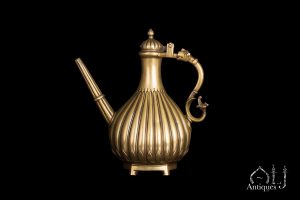
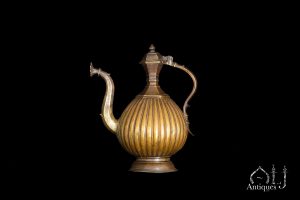
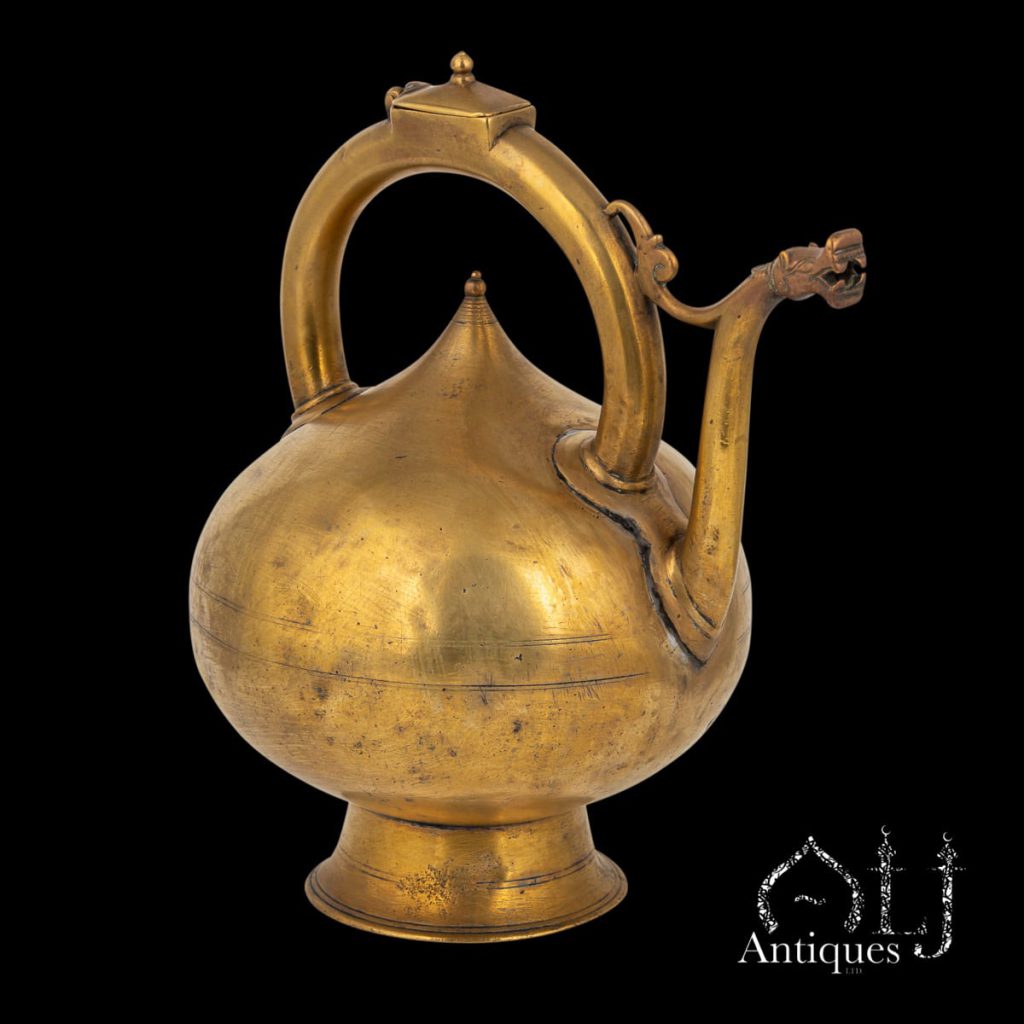
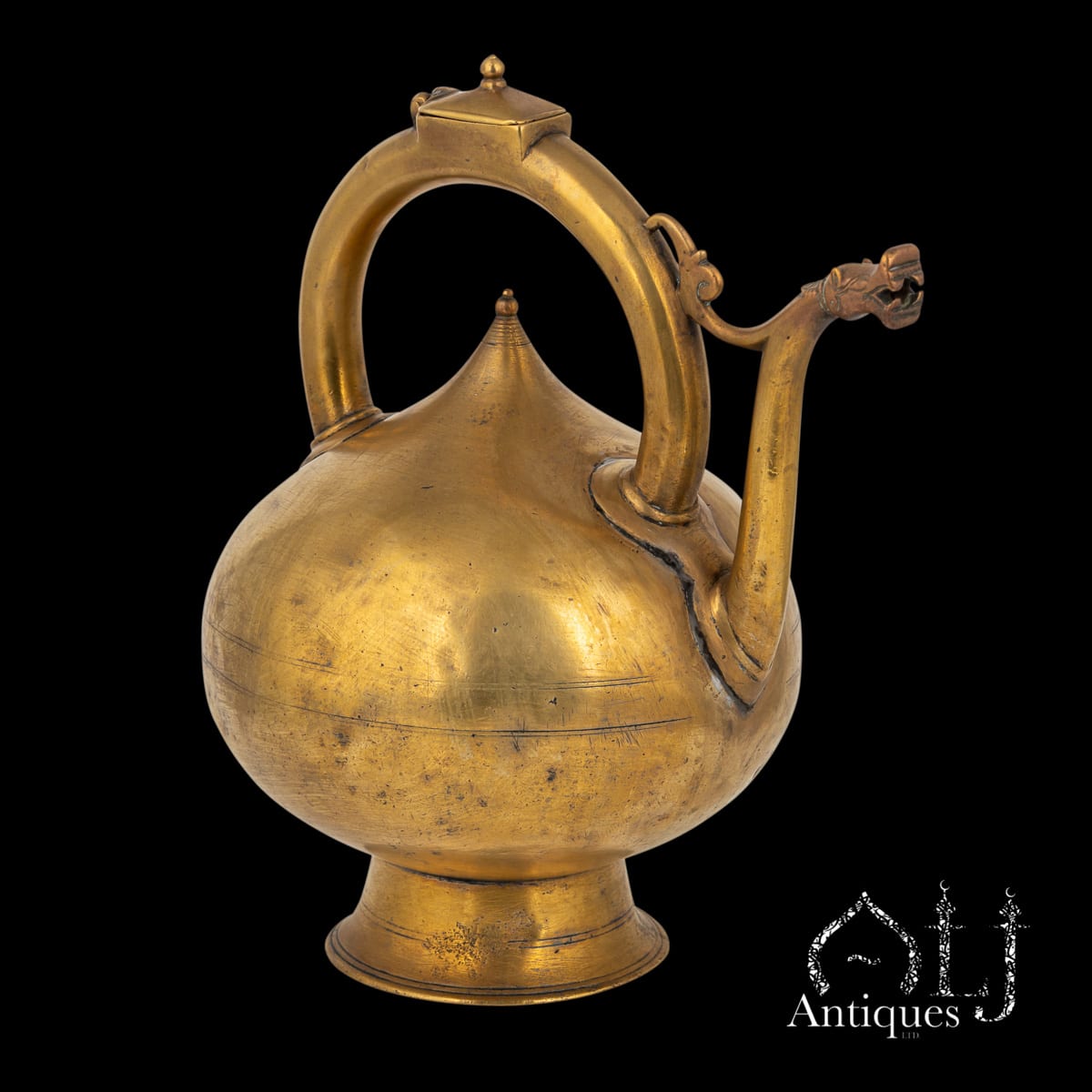
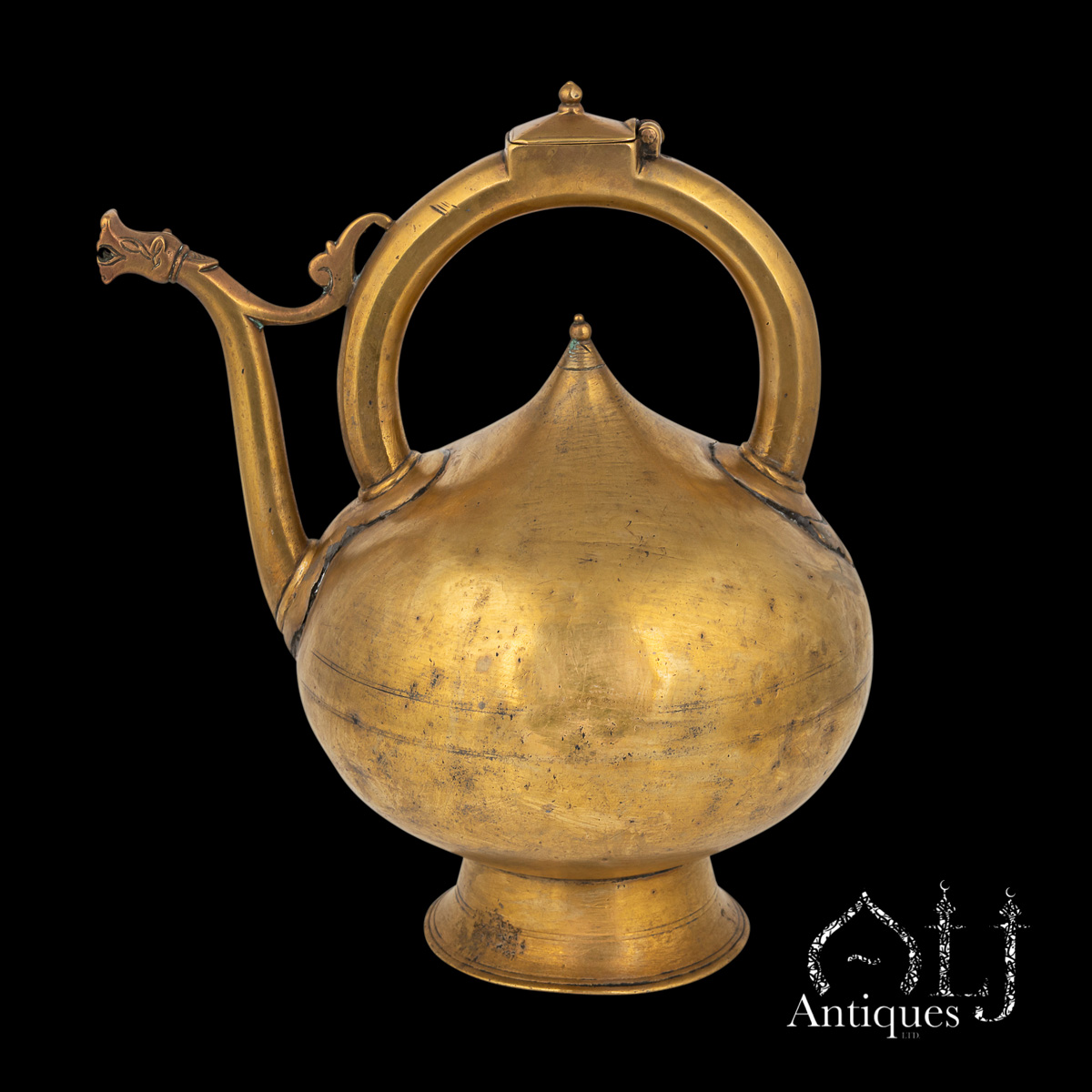
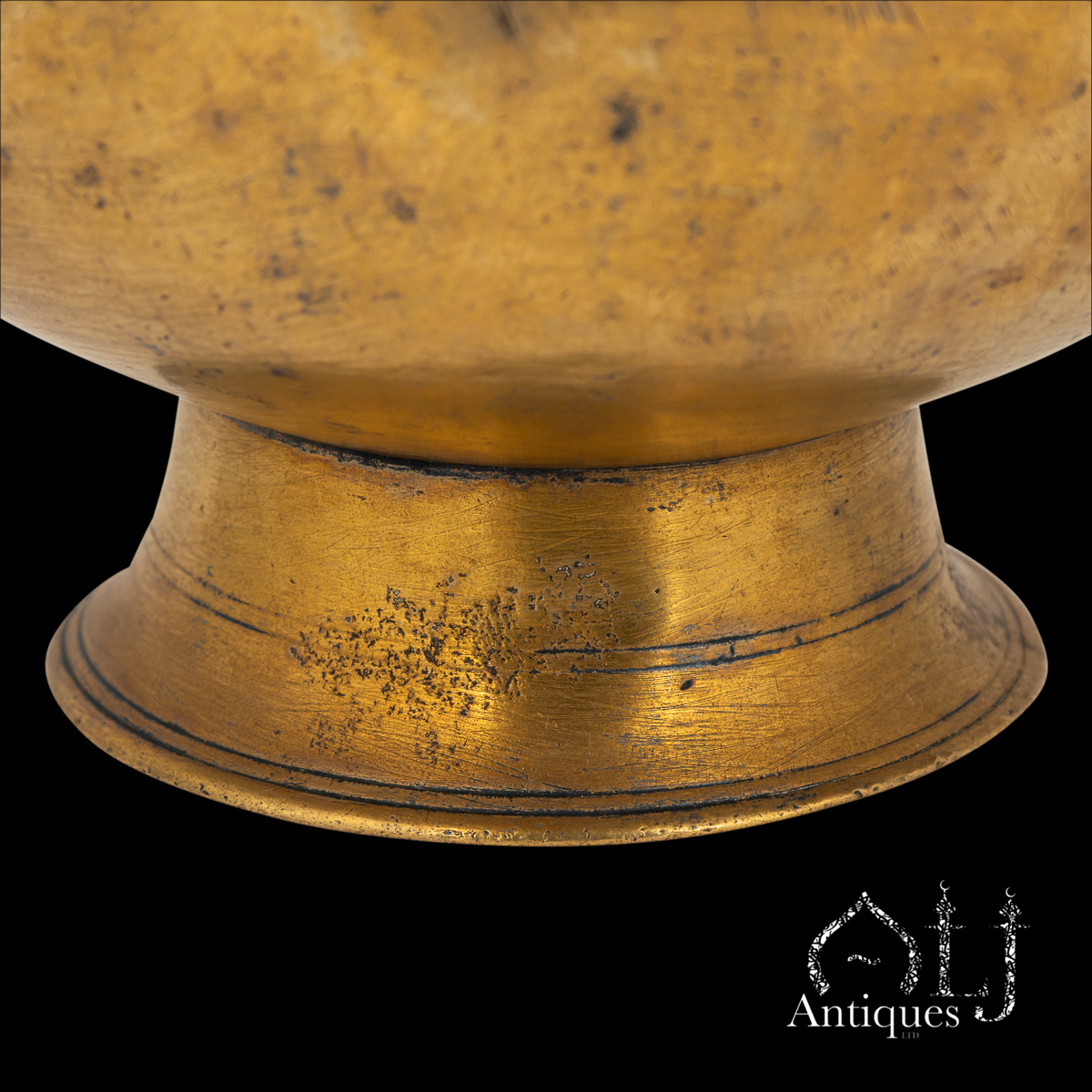
This rare and impressive drop-shaped brass ewer, also known as an aftaba, is of bulbous, pear-shaped form, rising from a tall, trumpet-shaped flaring foot and swelling elegantly into a rounded body before tapering upwards toward the neck. The type was particularly fashionable during the late 16th and early 17th centuries, both across the Islamic world, especially under the Safavid dynasty in Persia, and within the Deccan Sultanates and the Mughal Empire in India.
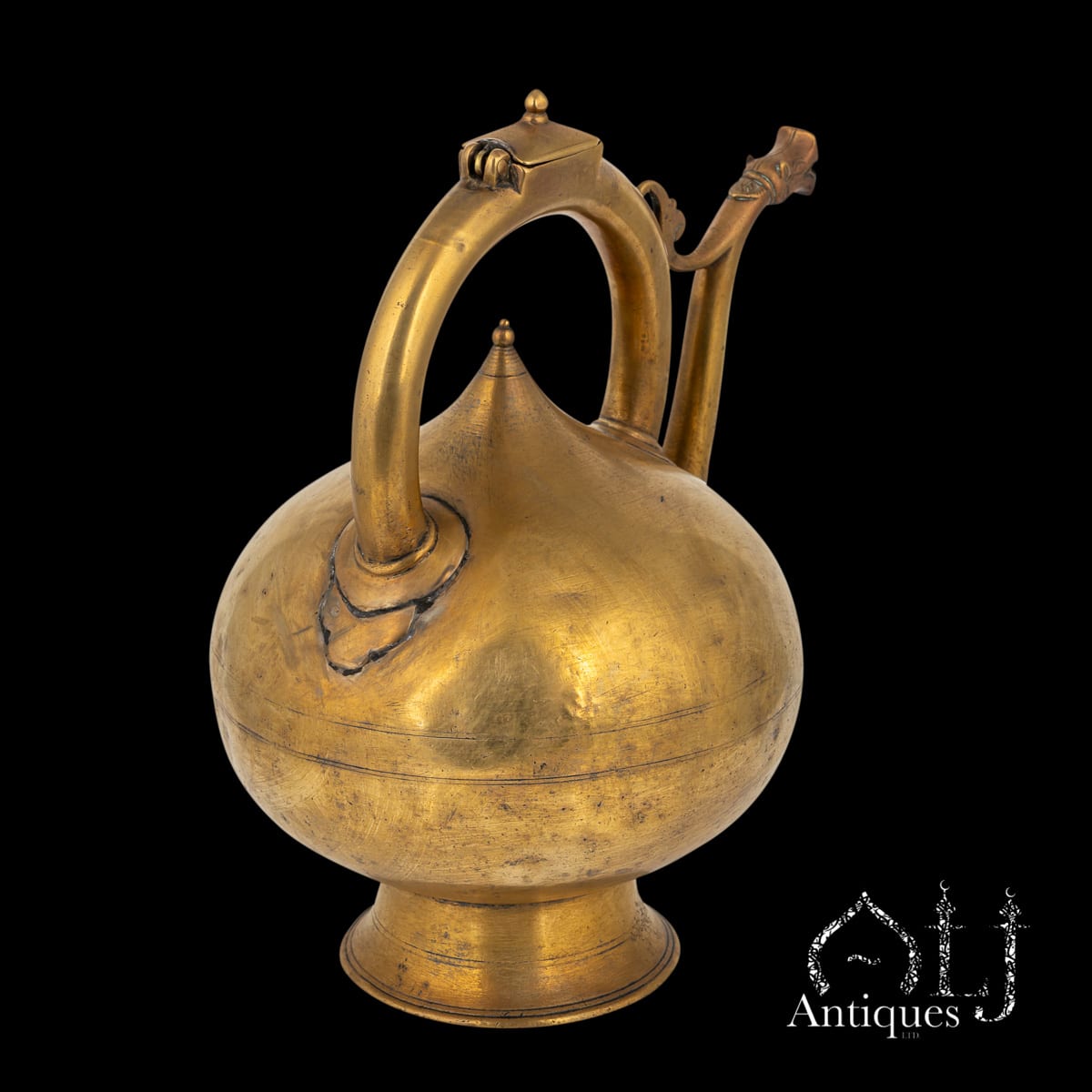
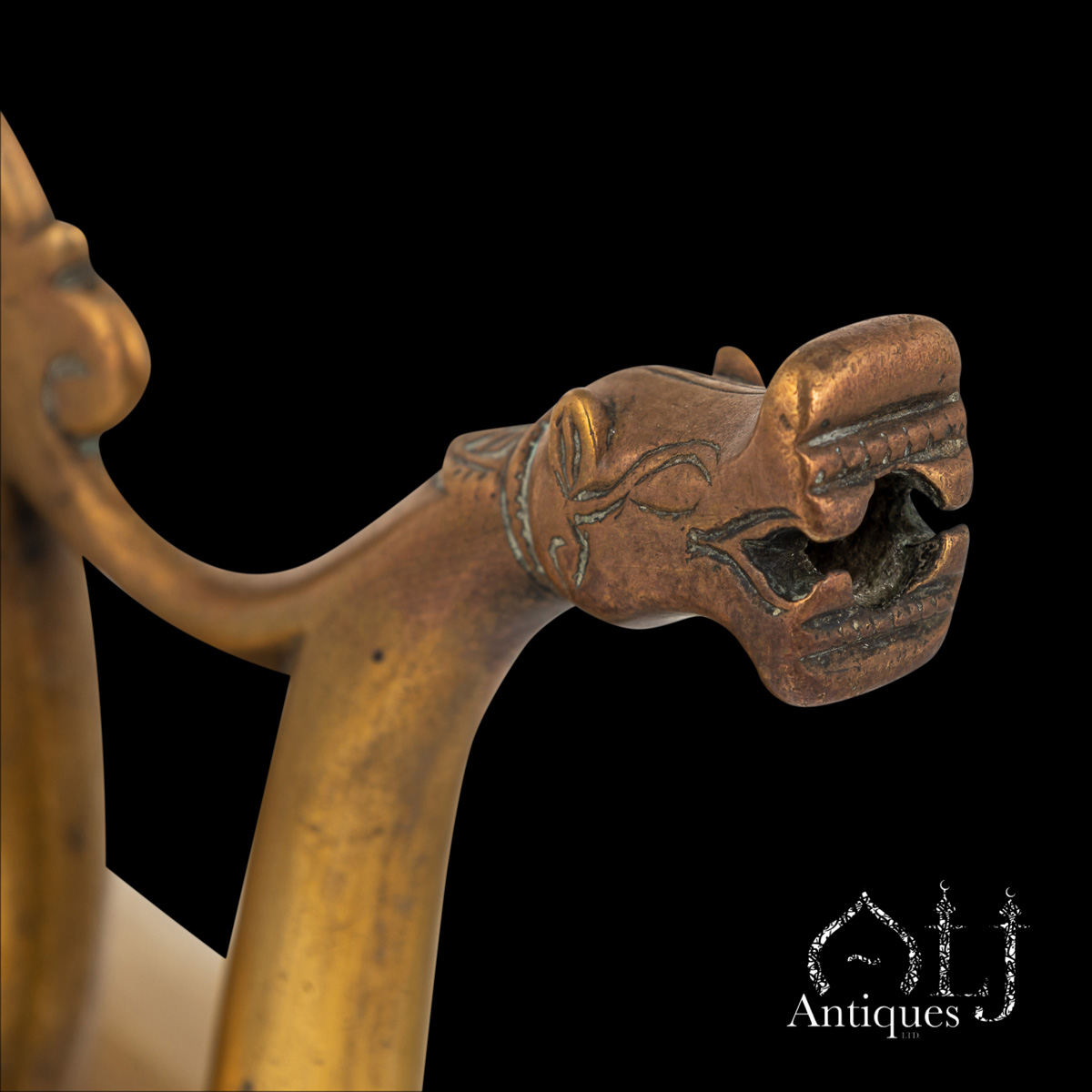
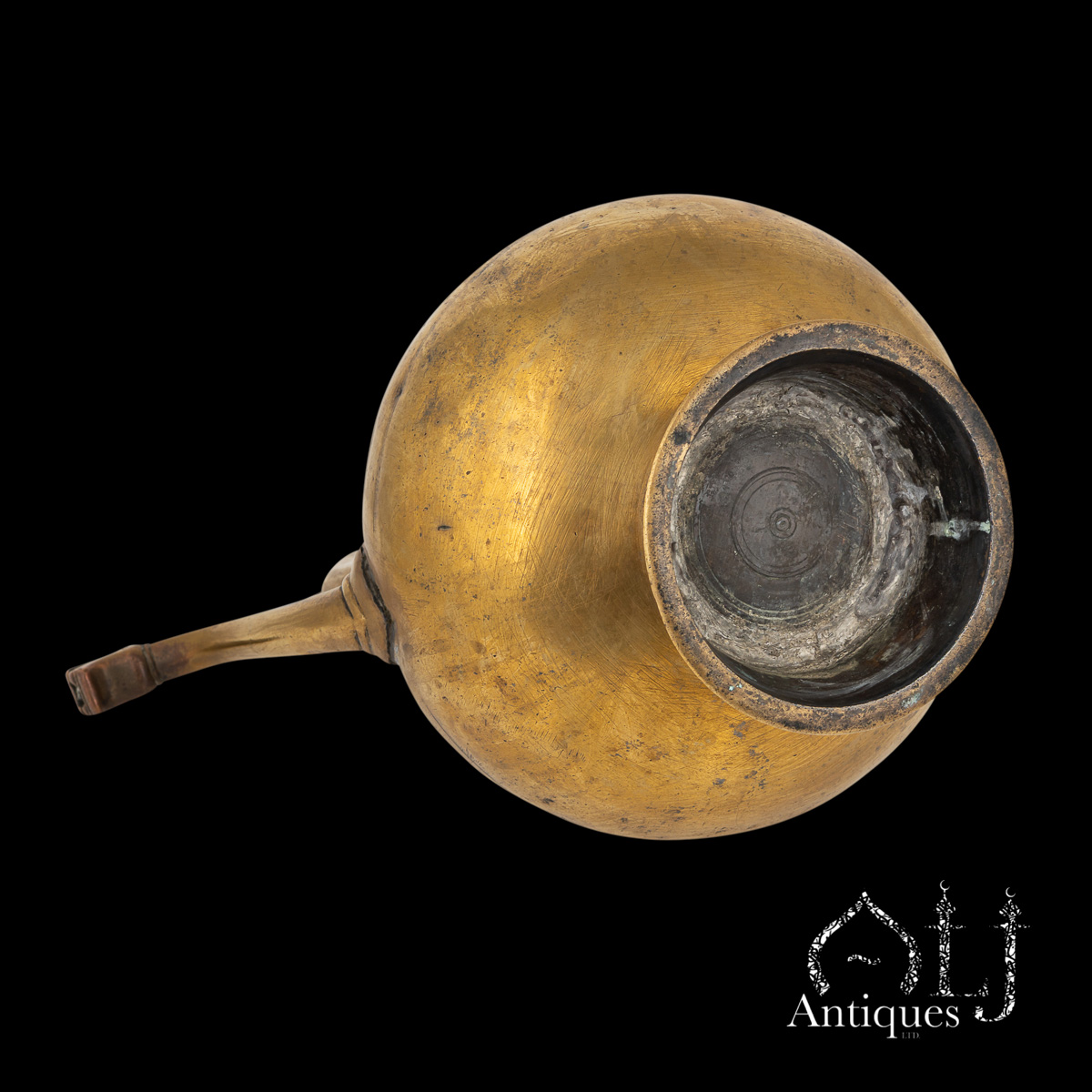
The ewer is fitted with a serpentine spout terminating in a stylised Deccani dragon’s head, an emblematic motif within Indian Islamic metalwork. Most unusually, the dragon’s form extends into a tail-like element, curving back toward the body and ending in a sculpted palmette leaf, ingeniously linked to the vessel’s robust horseshoe-shaped handle. This sculptural integration of spout and handle is both technically sophisticated and visually powerful.
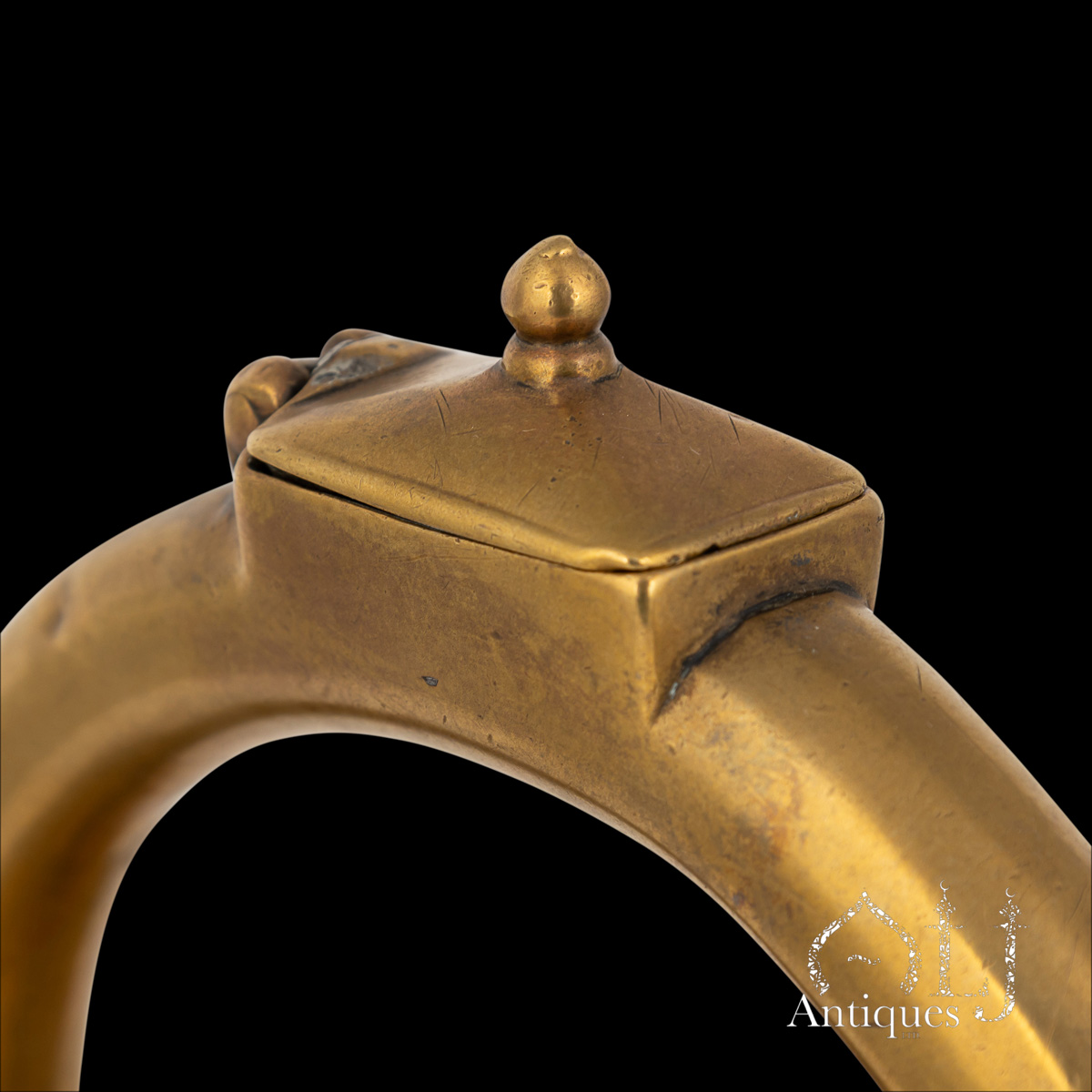
Mounted at the apex of the handle is a boxed, rectangular lid with a hinged cover and a drop like knob on top, an unusual and elegant structural feature that distinguishes this ewer from more conventional examples. The lid’s position atop the curved handle, rather than over the neck, highlights the inventive approach of Deccani metalworkers.
The body of the ewer is intentionally left largely undecorated, bearing only a few finely engraved concentric ring-like lines, echoed on the underside of the base. This restraint in surface ornament may be deliberate rather than economical, suggesting that the ewer was designed to appeal across religious, cultural, and courtly boundaries. Such visual neutrality would have made the vessel suitable for use by a wide spectrum of elite patrons in India, including the Muslim aristocracy of the Deccan, the Mughal court, as well as Hindu maharajas and Sikh rulers.
This interpretation is particularly compelling given that almost identical drop-shaped brass ewers are preserved within Sikh collections, notably the celebrated example associated with Guru Hargobind, now recorded in the Sangha family collection. The absence of overt religious imagery or inscriptions would have allowed the ewer to transcend sectarian identity, functioning as a prestigious utilitarian object appreciated purely for its form, craftsmanship, and symbolic strength.

Lot 516, 17th. Century Deccani Cast Silver Ewer, Mark Zebrowski, Gold, Silver & Bronze from Mughal India, 1977.