Description
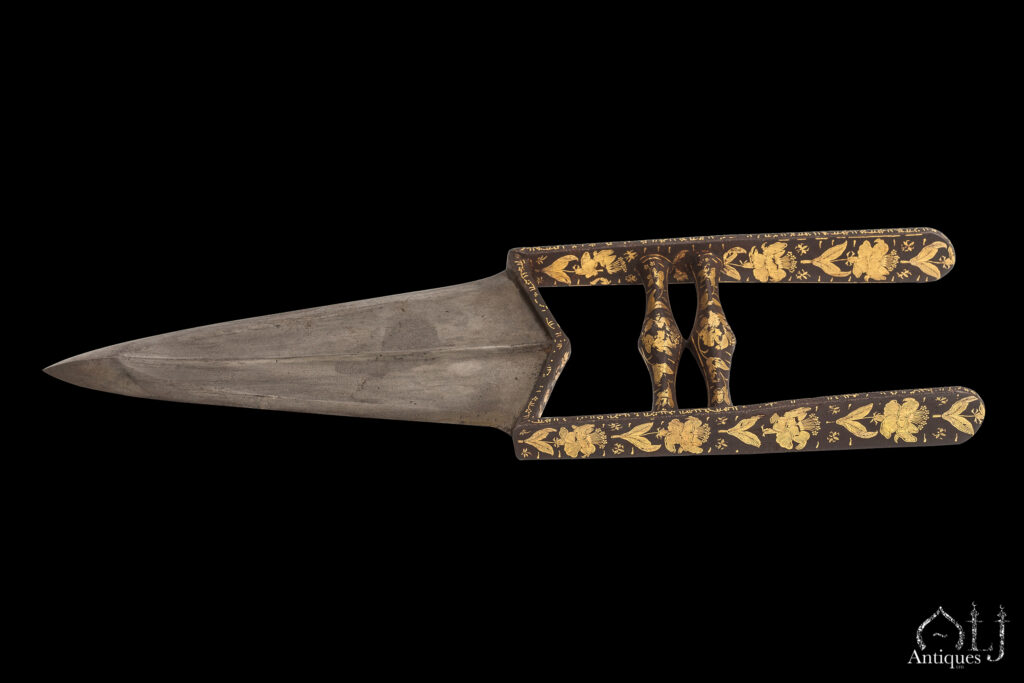
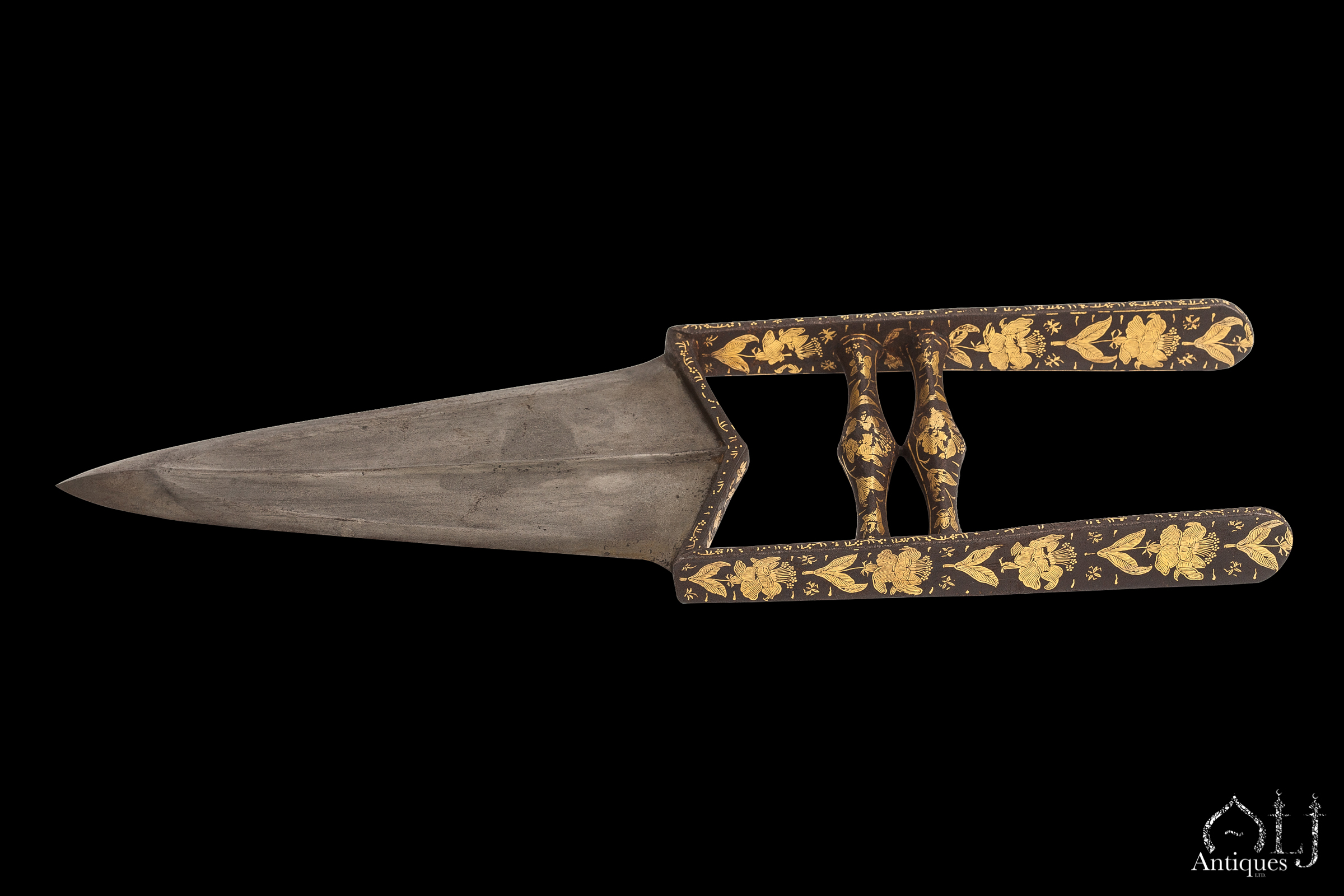
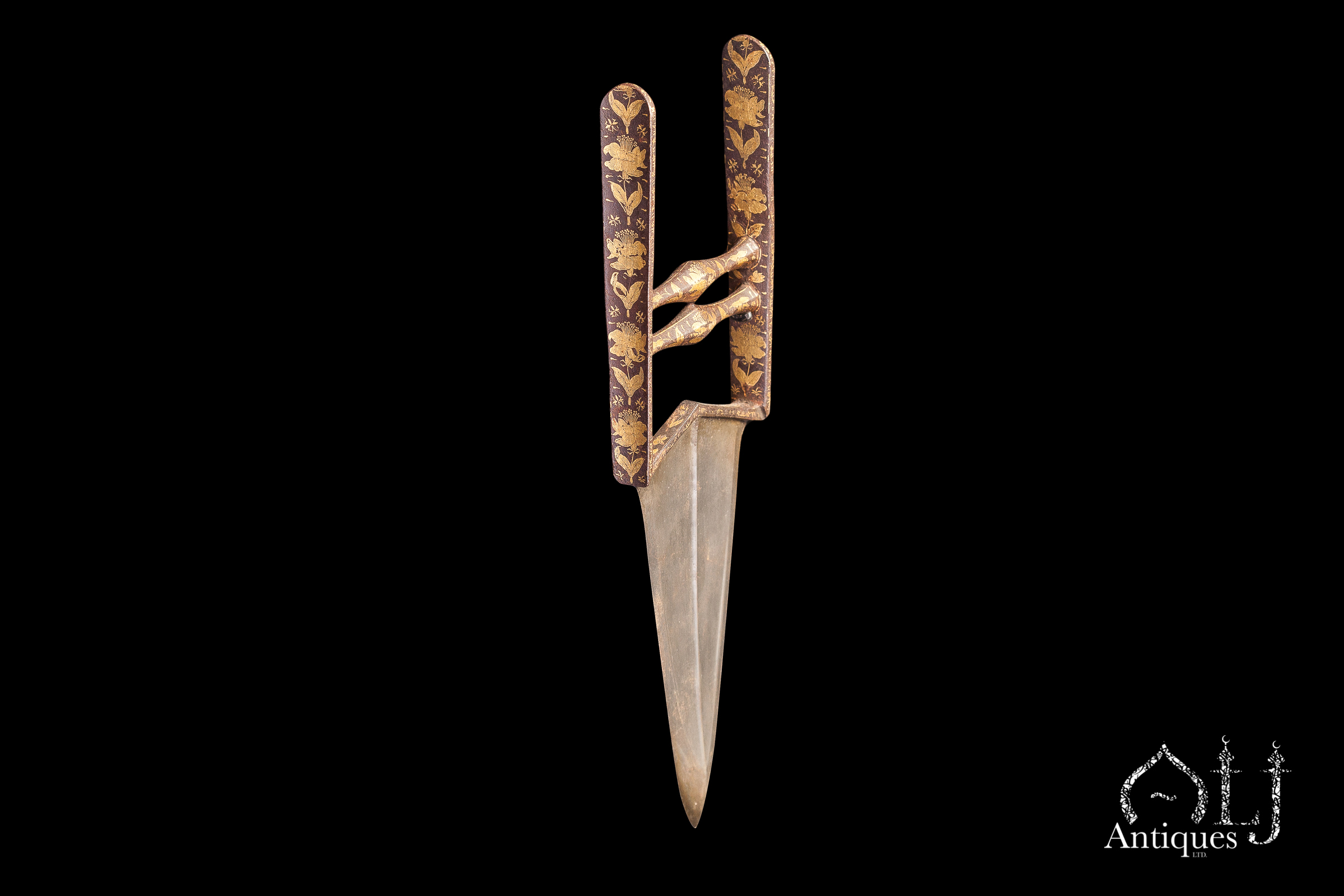
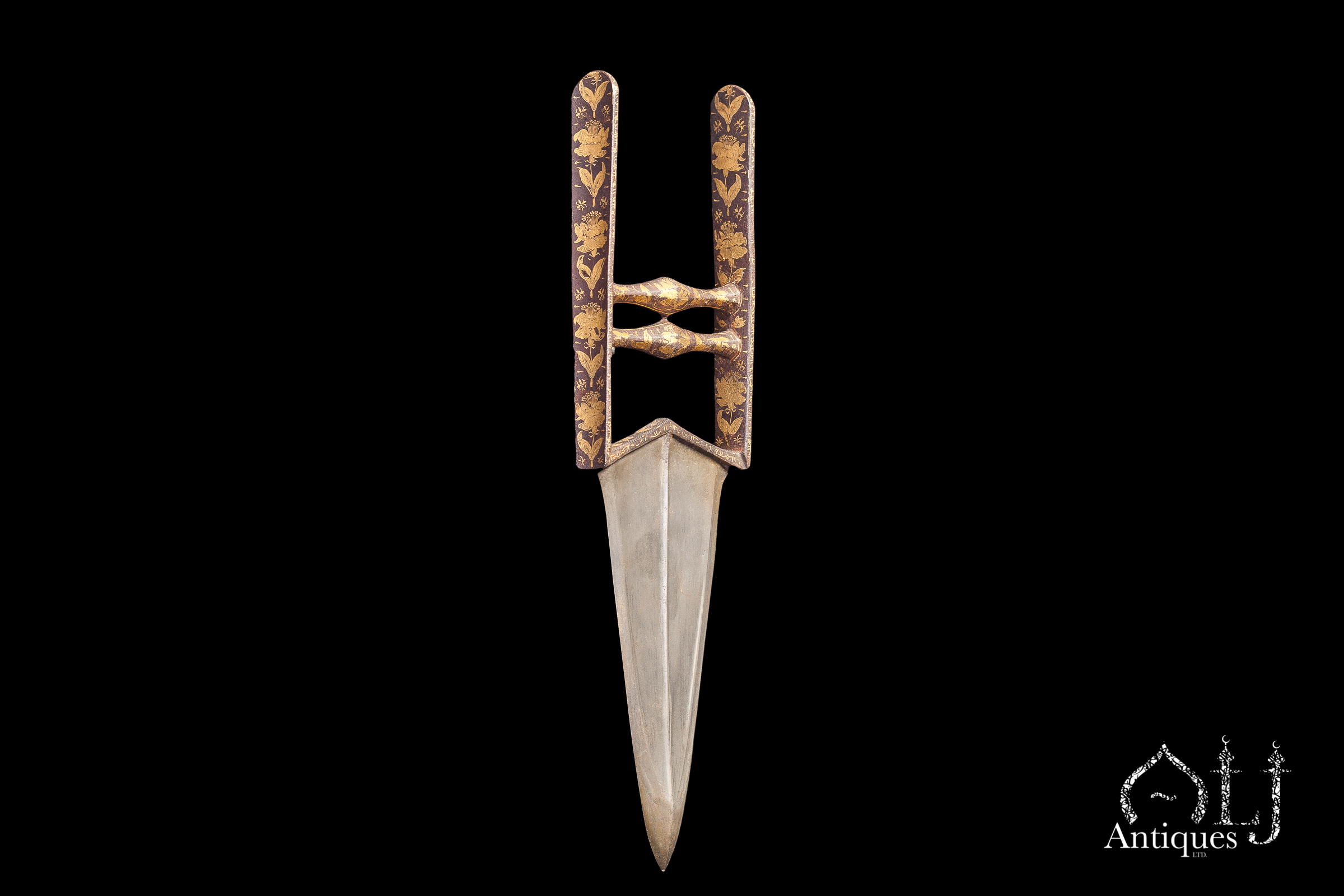
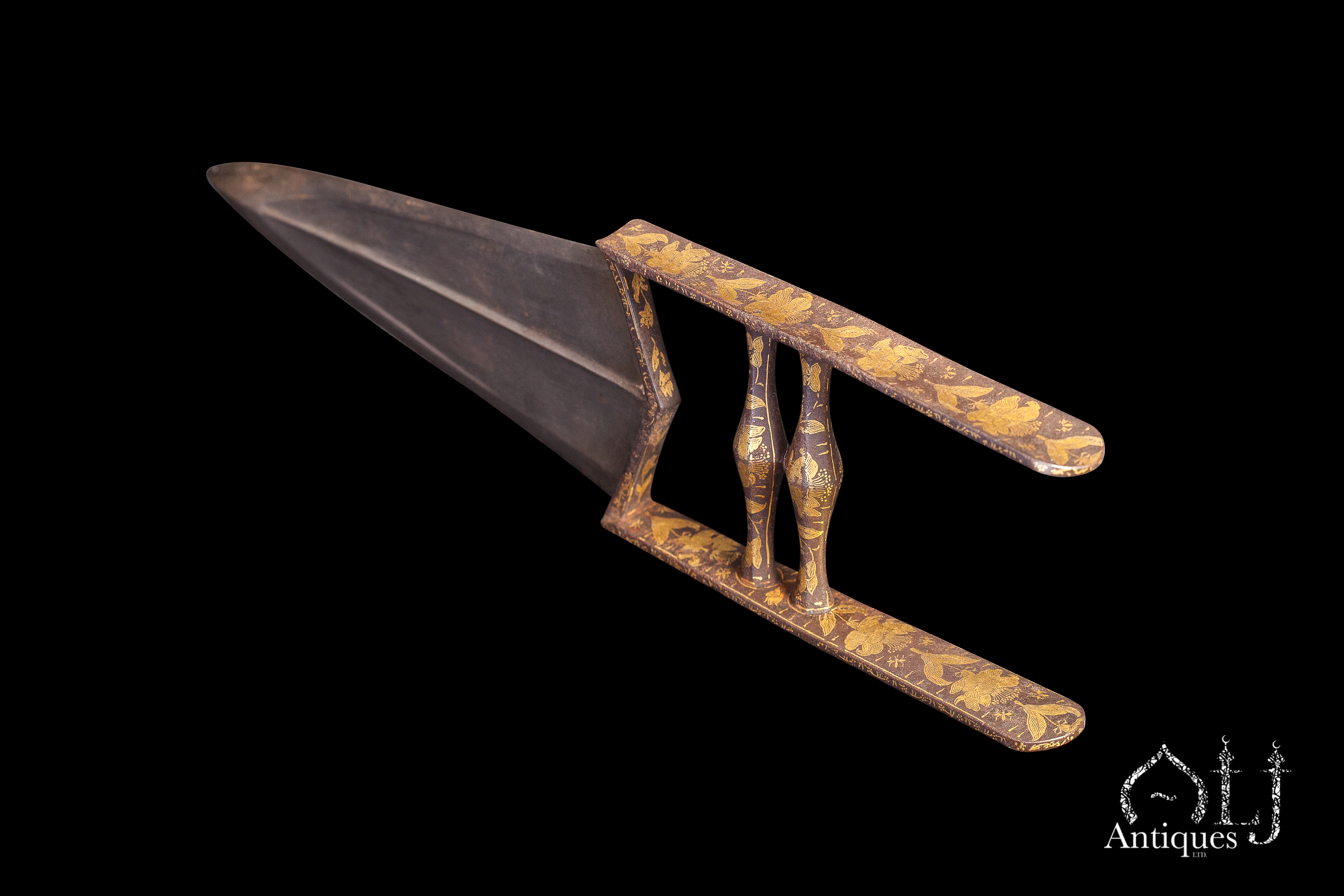
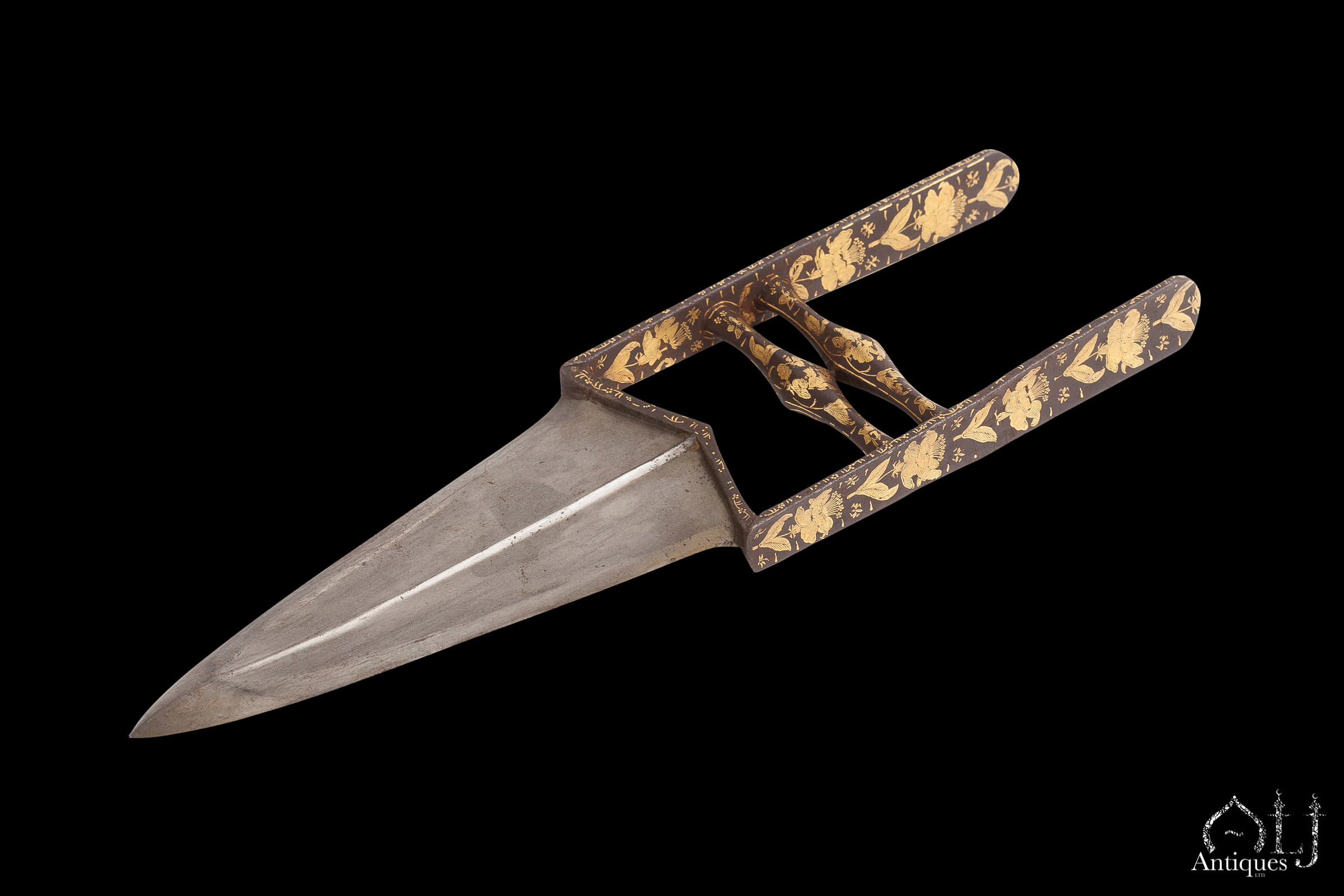
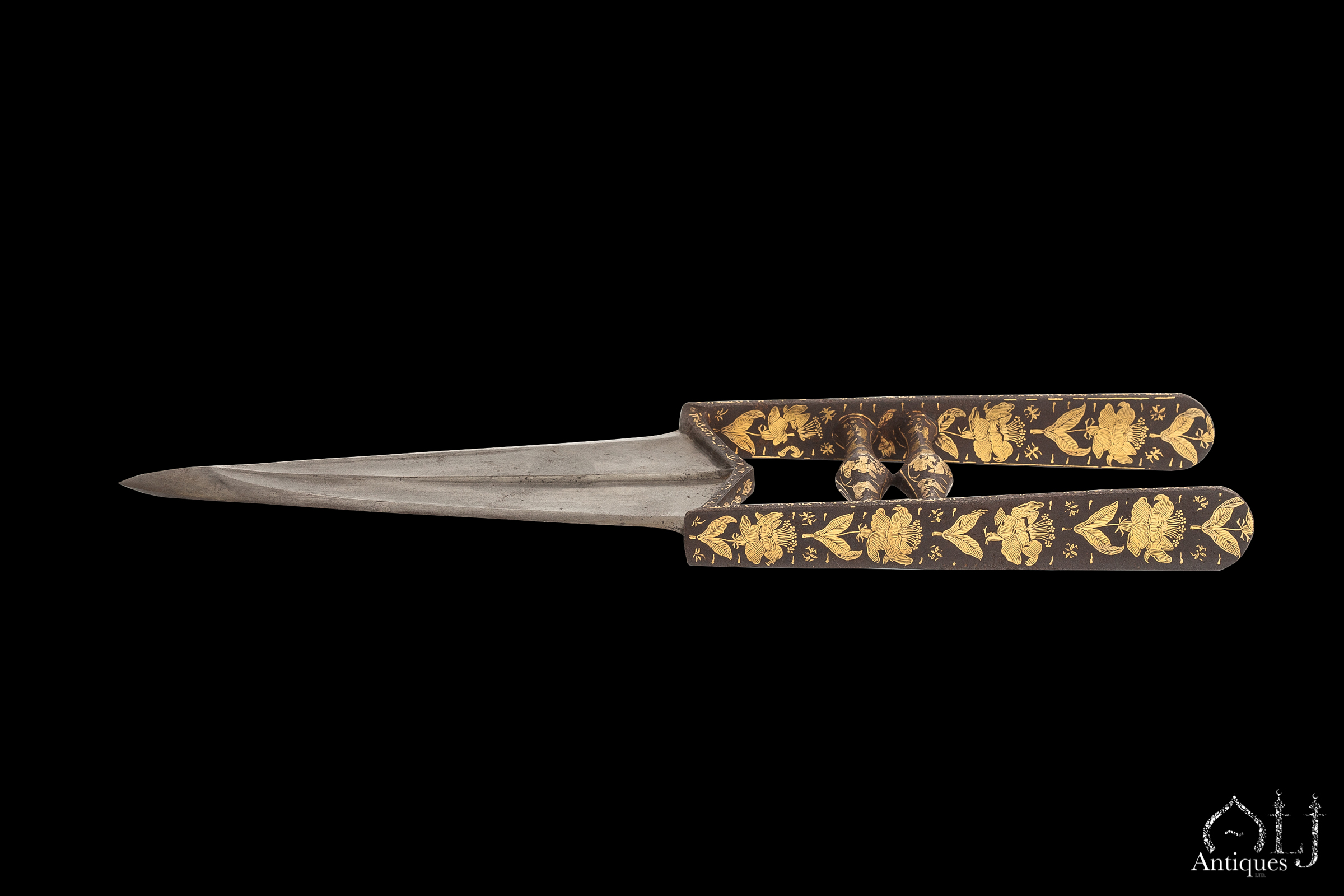
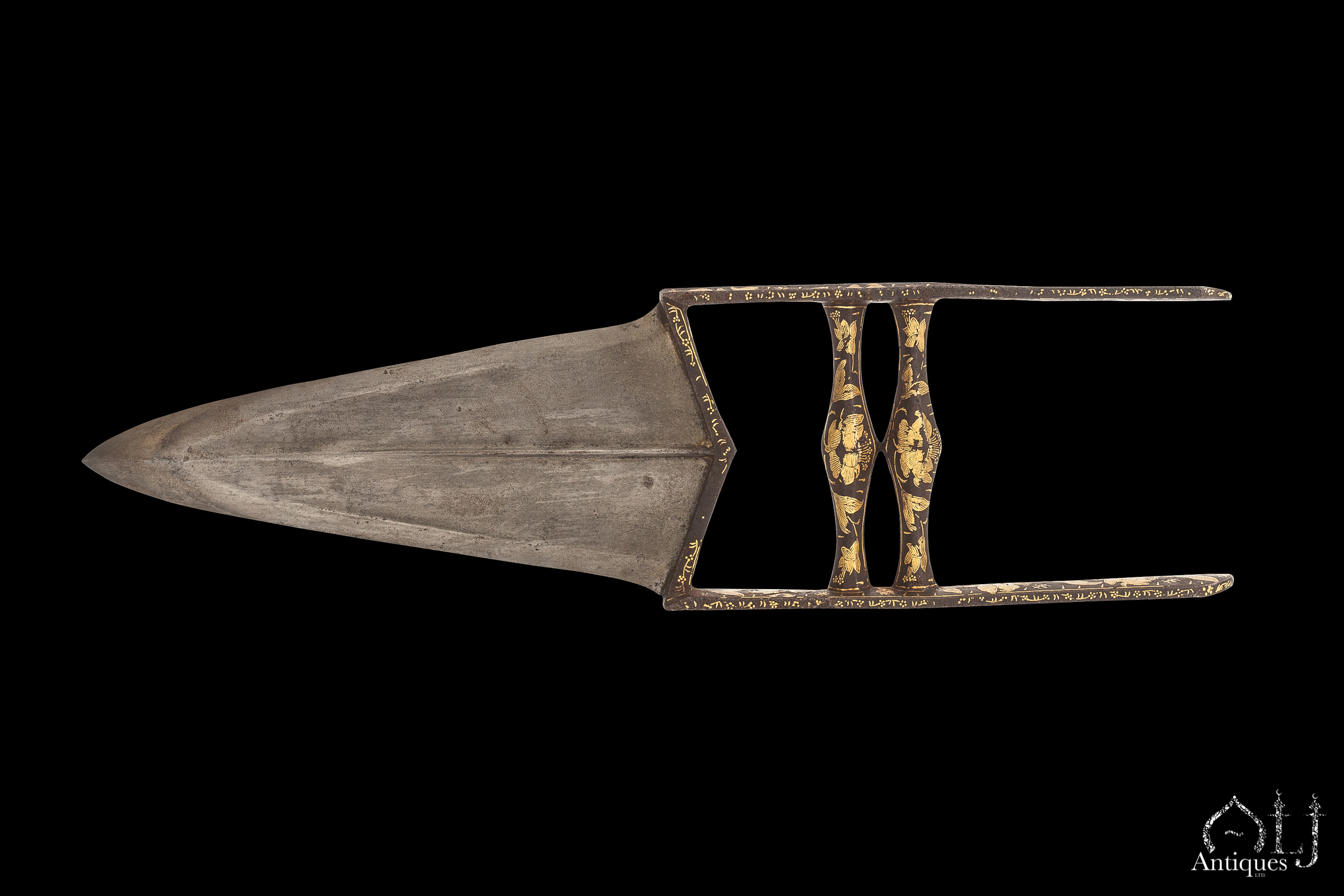
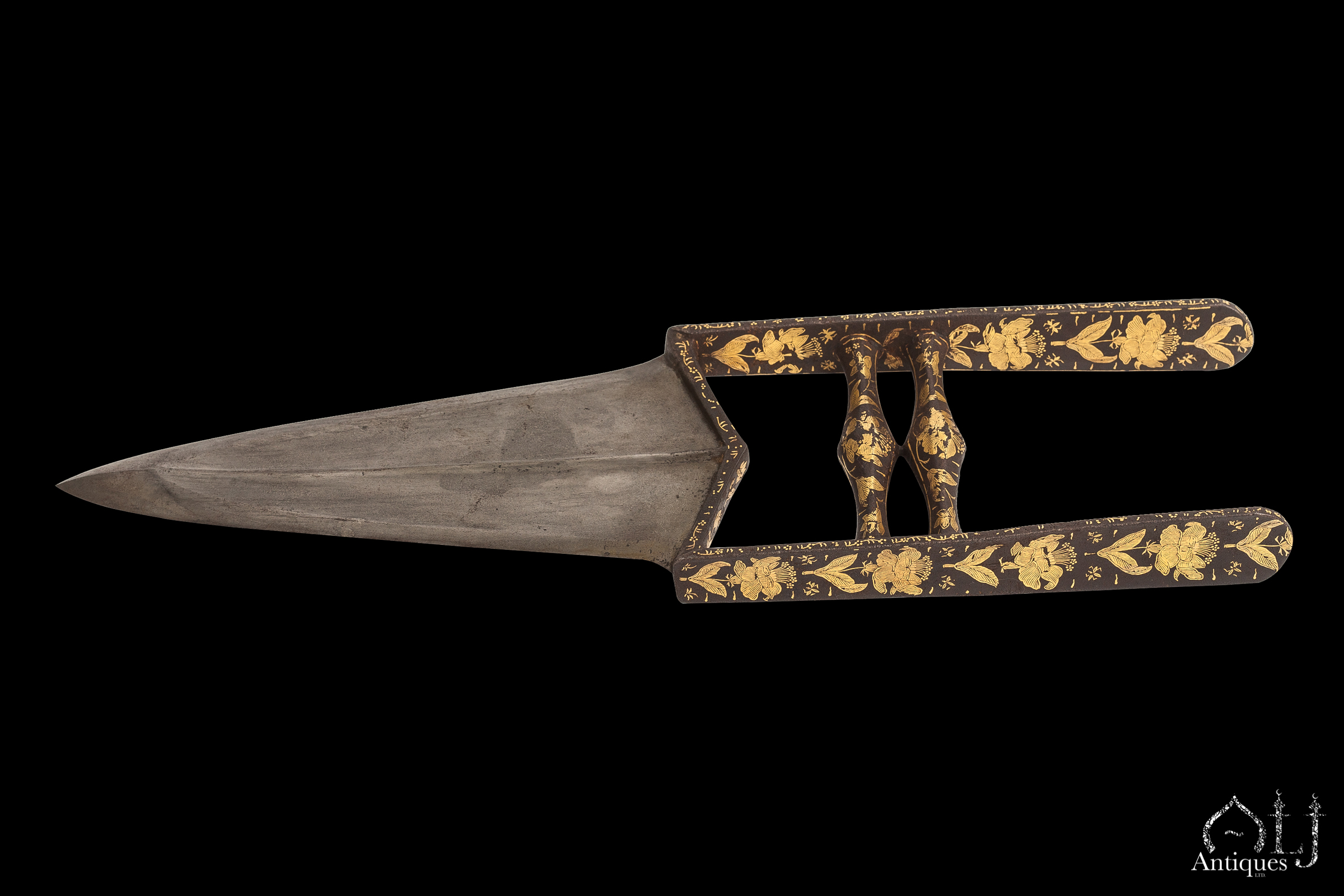
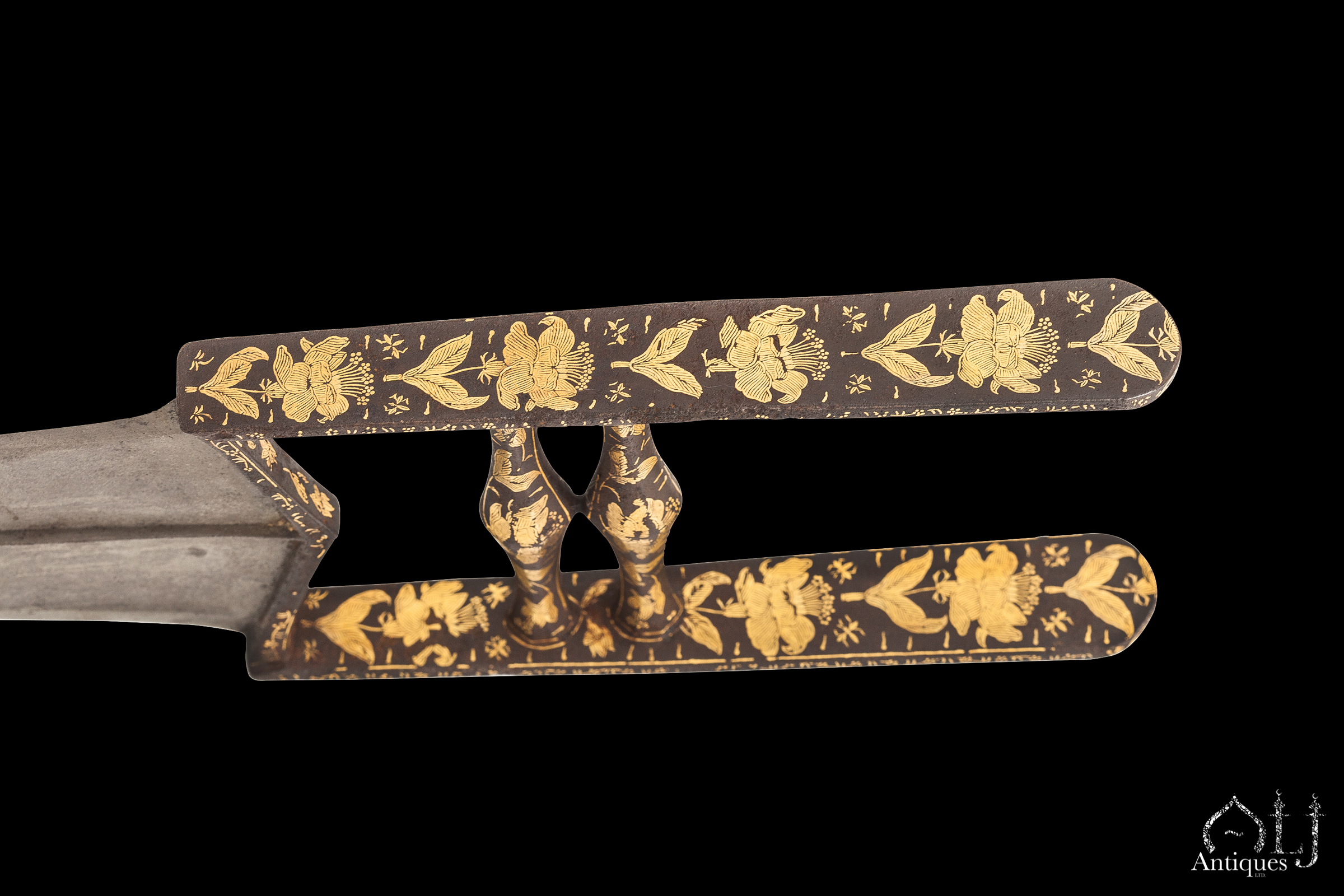
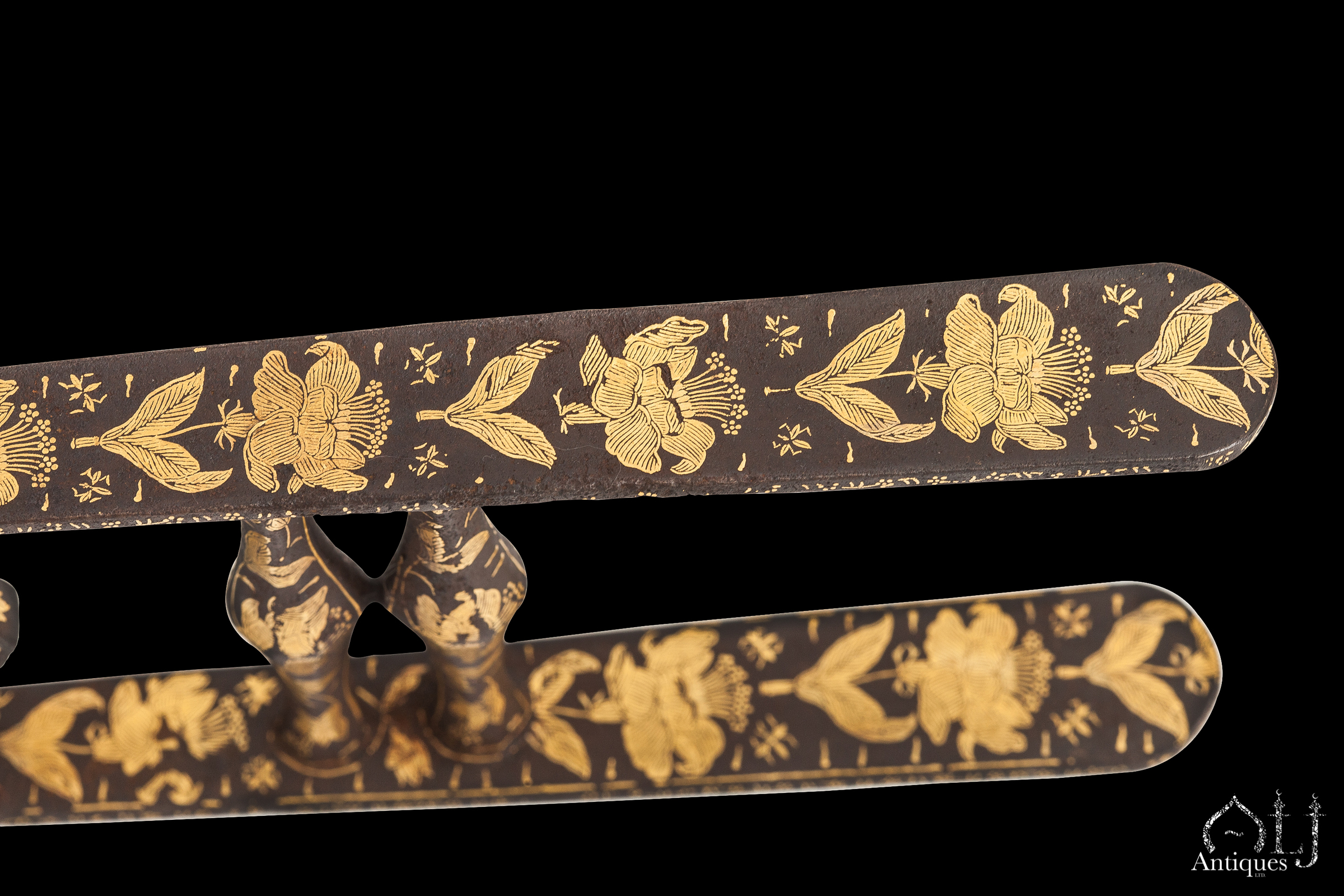
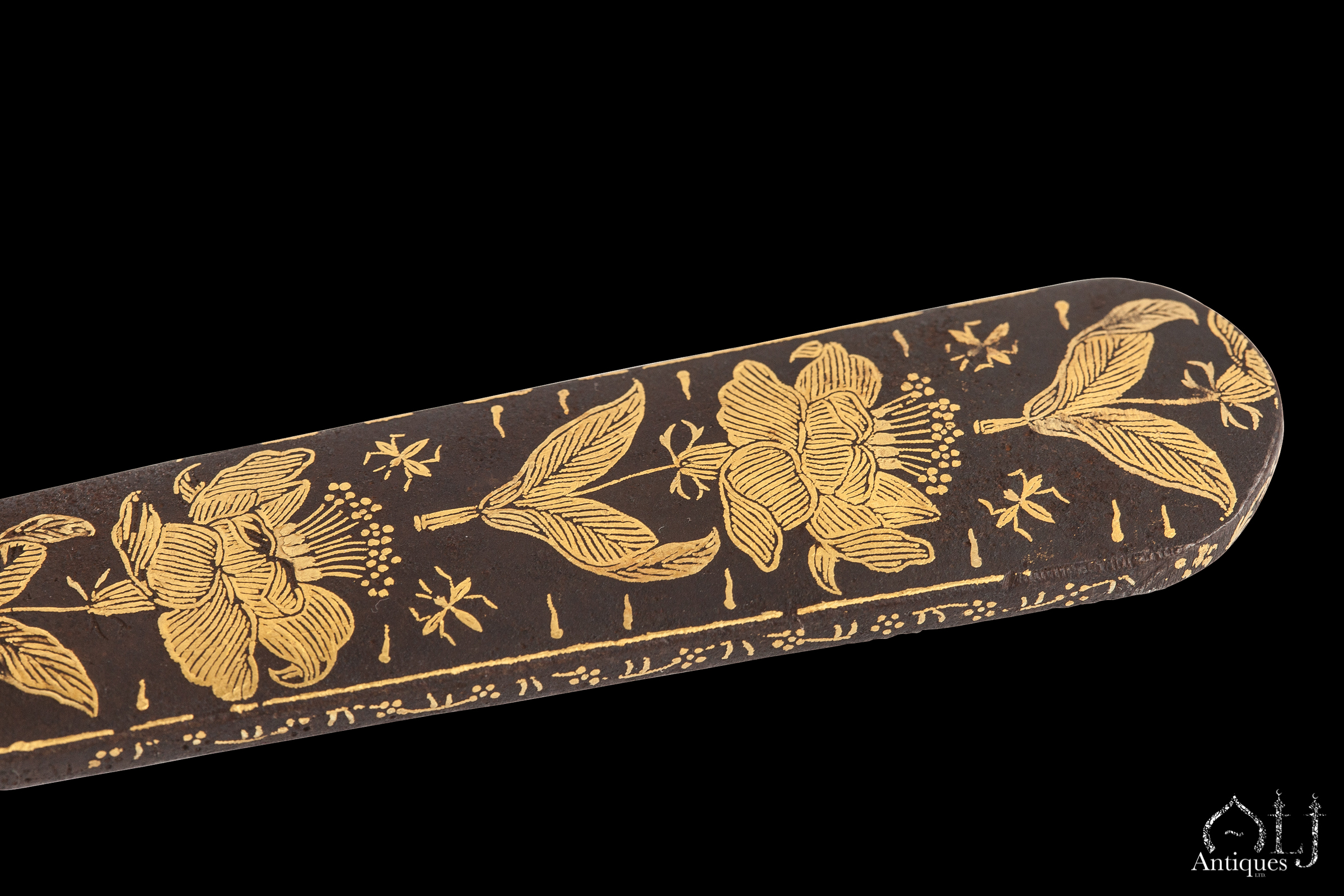
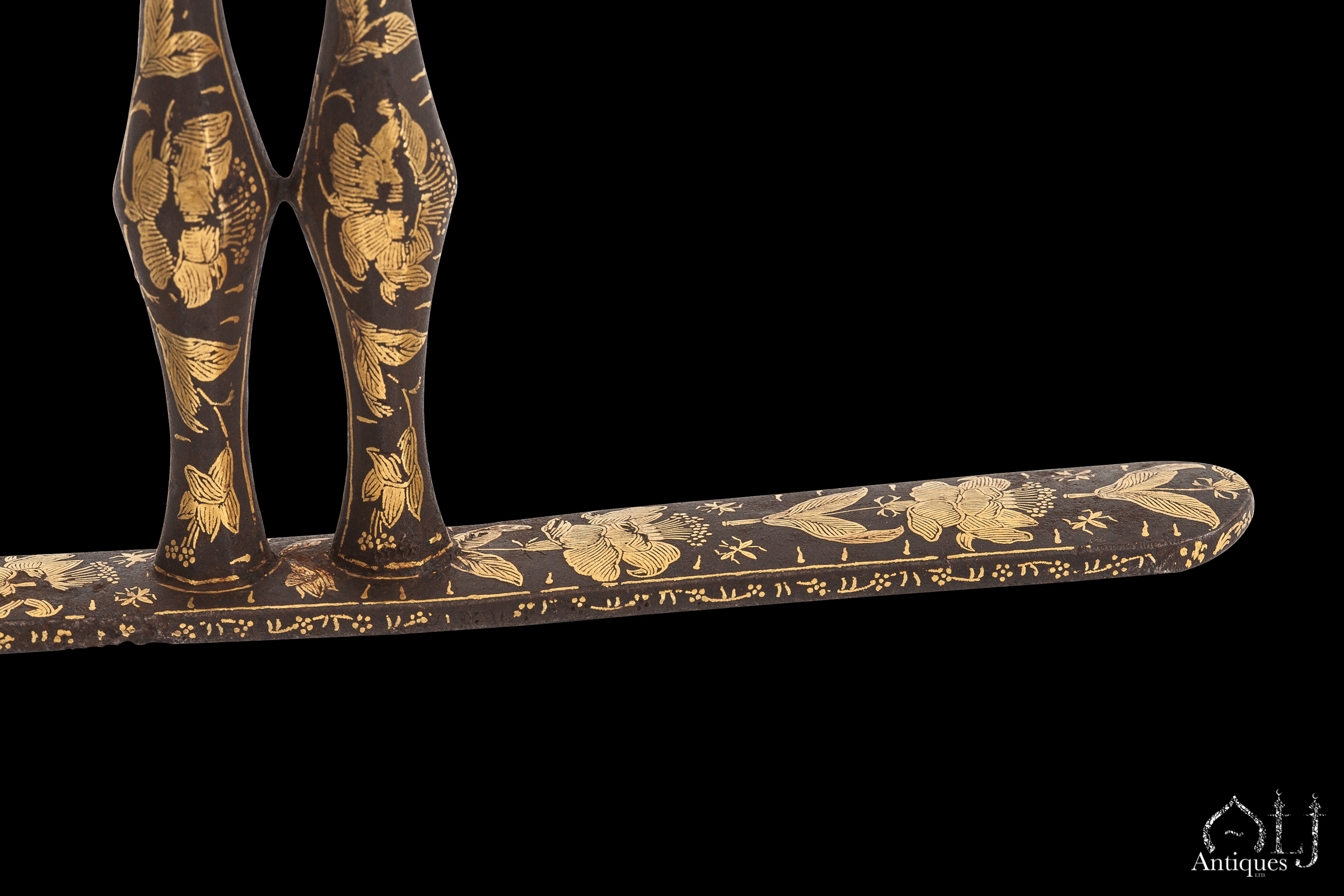
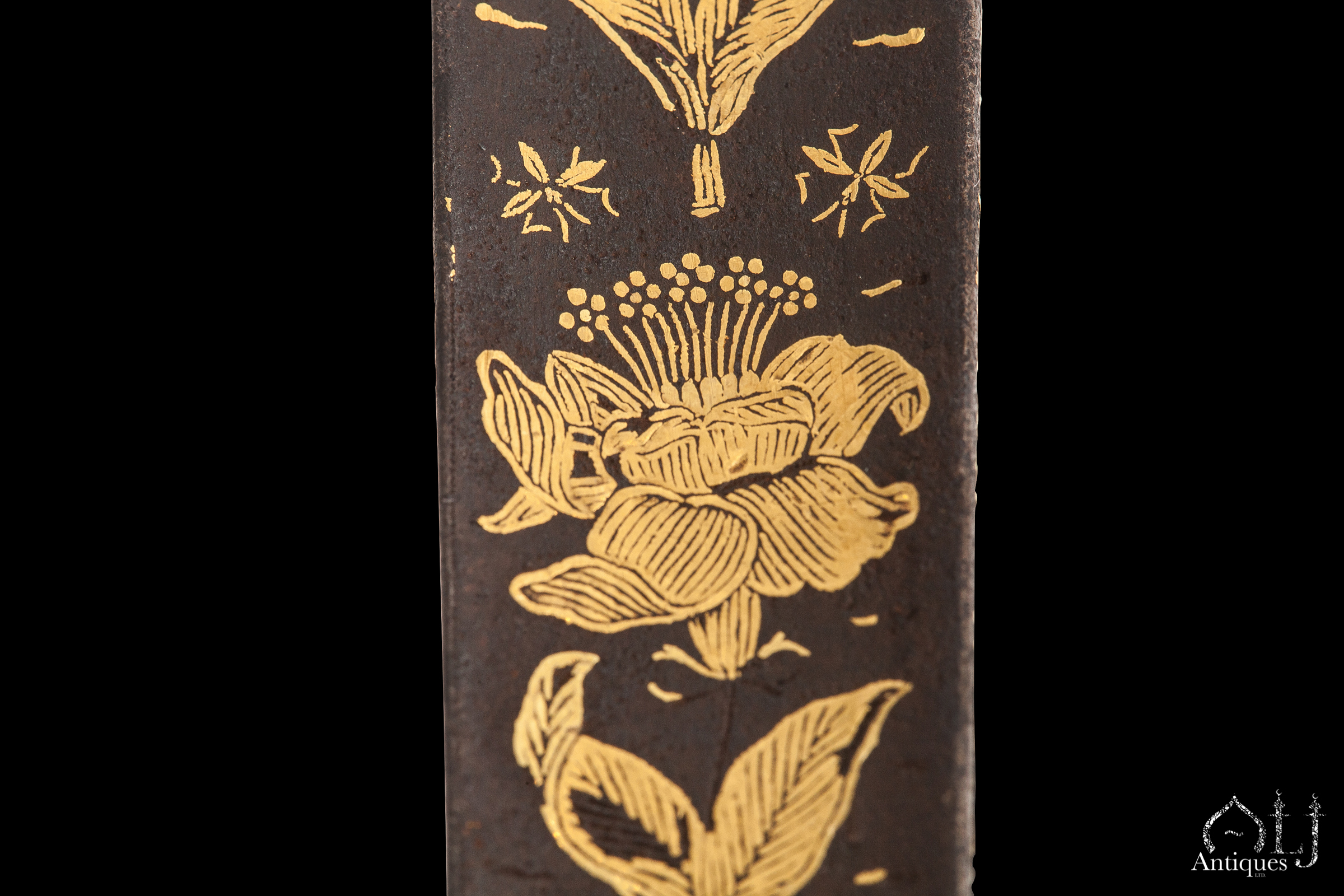
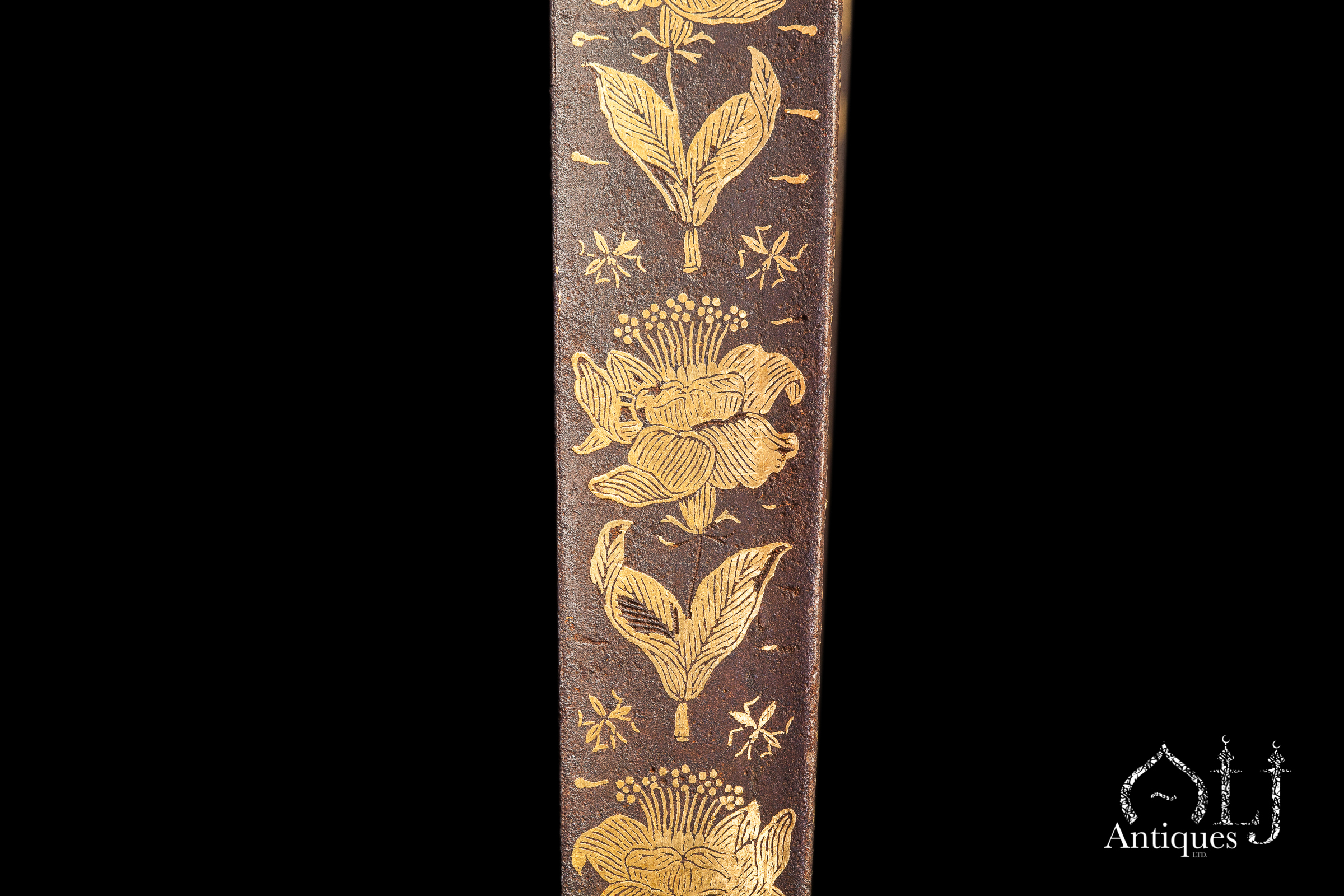
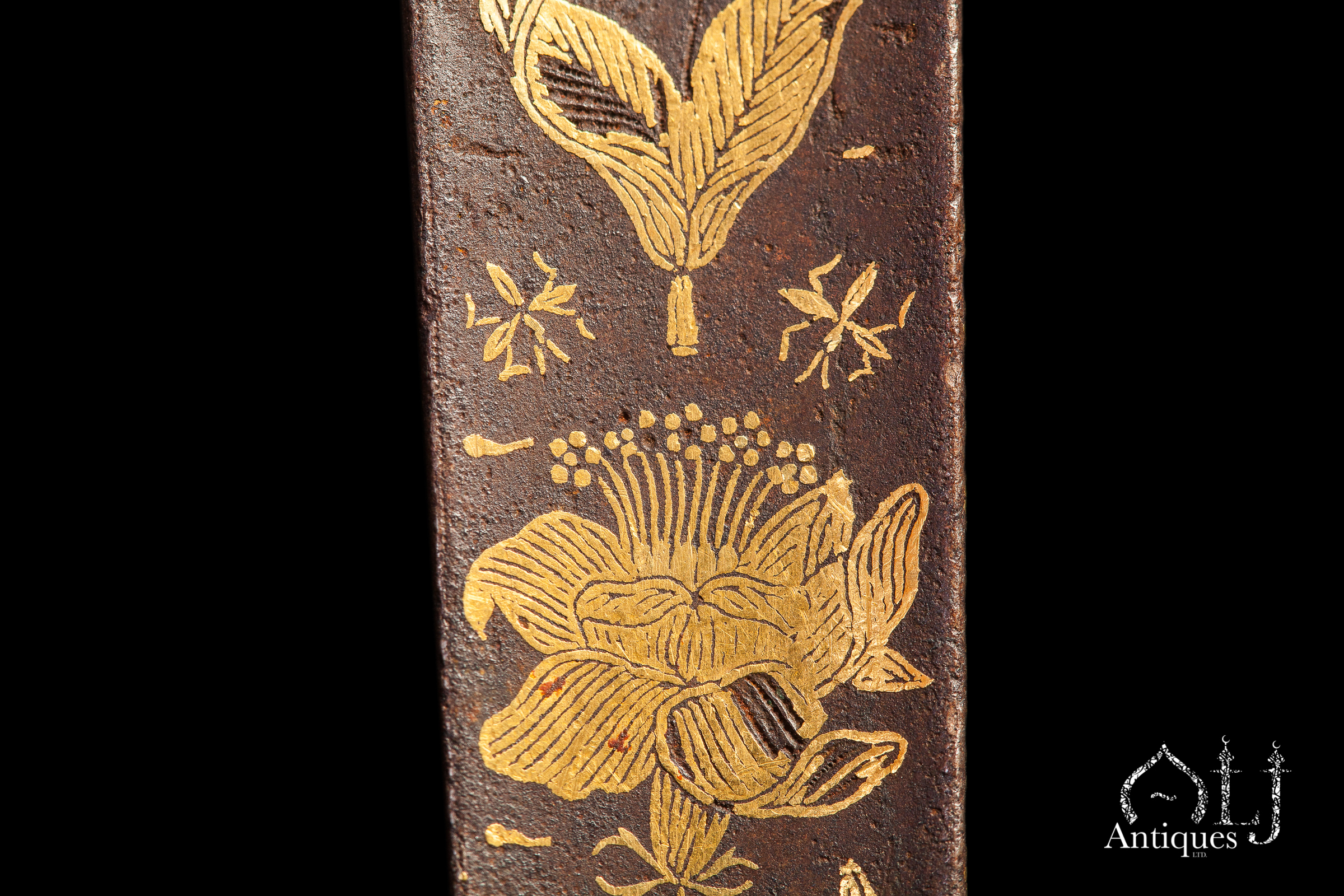
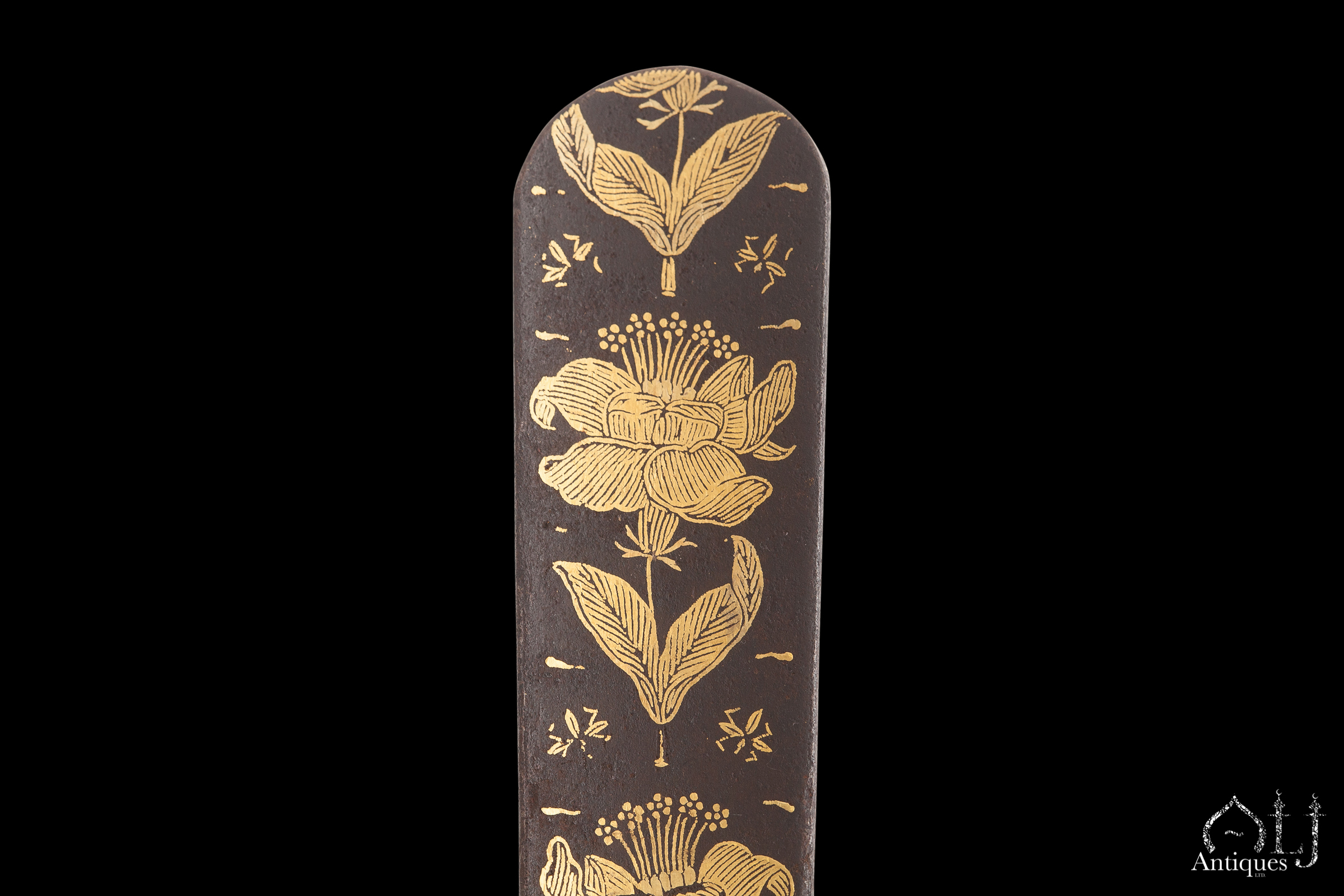
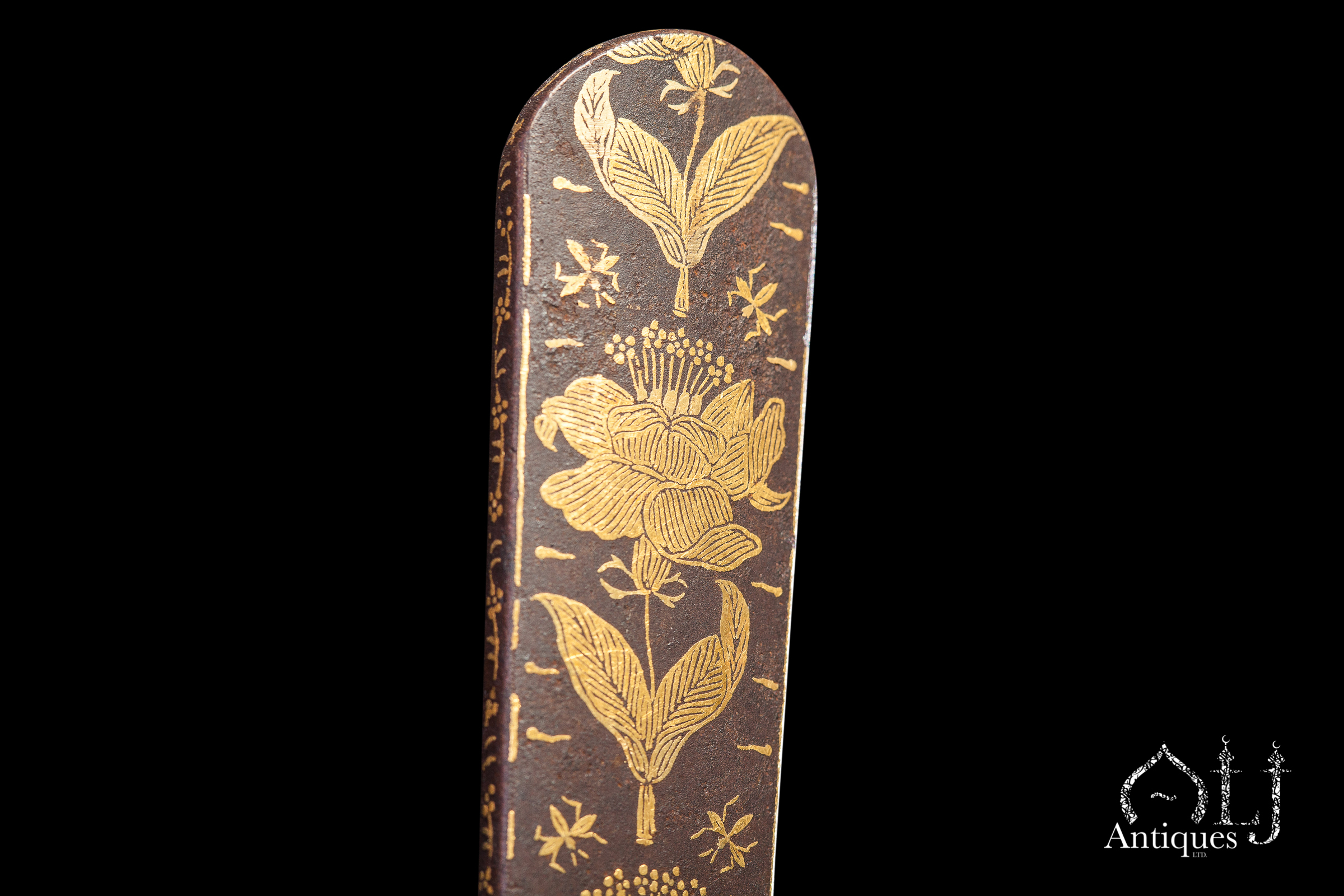
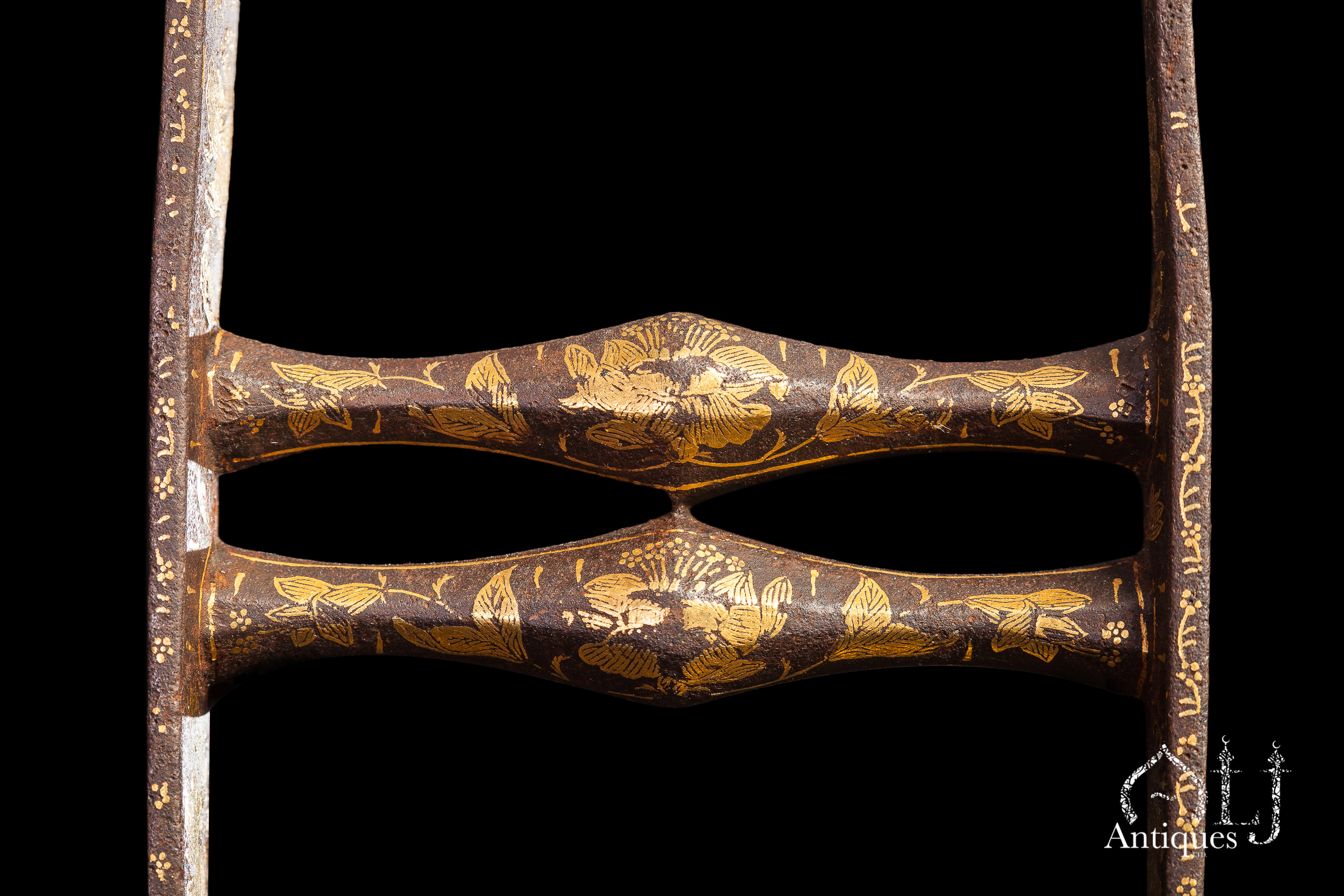
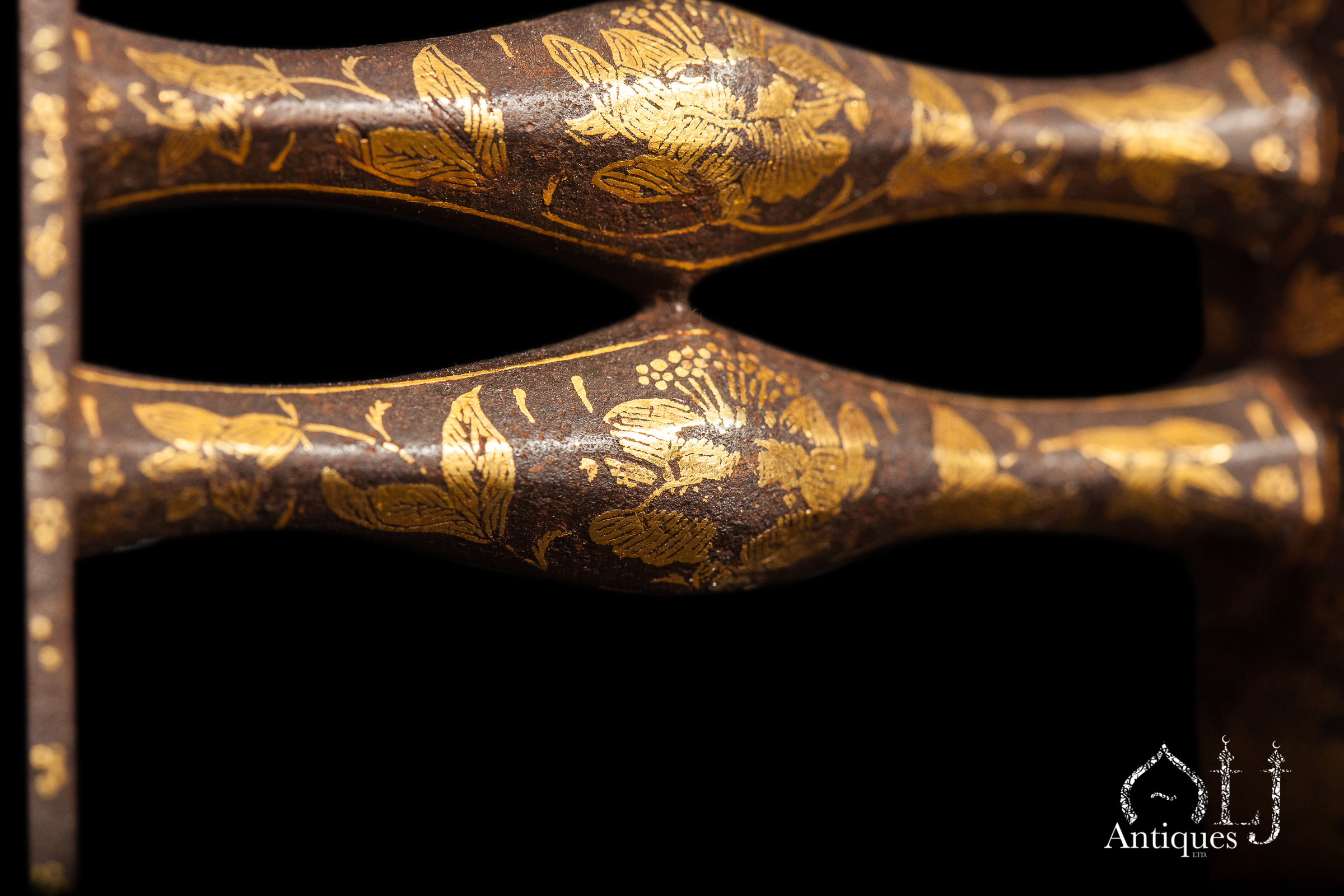
A rare and finely crafted Mughal kattar (push dagger) formed with the characteristic W-shaped frame and two almost cylindrical parallel grip bars joined by baluster-shaped side struts. The hilt is richly decorated with finely executed gold damascening (koftgari) depicting blossoming iris flowers accompanied by hovering bees, framed by delicate flowering branches and vegetal ornament.
This refined naturalistic decoration reflects the distinctive Mughal artistic taste, in which botanical imagery inspired by imperial gardens became a dominant decorative language across architecture, manuscript illumination, textiles, and luxury metalwork during the seventeenth century, particularly under the reigns of Jahangir and Shah Jahan. Flowers such as irises, tulips, lilies, and narcissus appear frequently in Mughal artistic production and are also seen in the decorative programmes of imperial monuments such as the Taj Mahal, where naturalistic floral imagery symbolised refinement, harmony, and the beauty of imperial gardens.
The presence of bees hovering among the blossoms reflects the Mughal fascination with the careful observation of nature, which flourished during the reign of Jahangir. In Mughal painting and decorative arts, insects interacting with flowers were sometimes included to enhance the realism and vitality of naturalistic compositions. Bees also carry symbolic significance within the broader Islamic tradition and are referenced in Surah Al-Nahl (The Bee) in the Qur’an, where they are described as part of the divine order of nature and as producers of honey, regarded as a source of healing:
Arabic (Qur’an 16:68–69)
وَأَوْحَىٰ رَبُّكَ إِلَى النَّحْلِ أَنِ اتَّخِذِي مِنَ الْجِبَالِ بُيُوتًا وَمِنَ الشَّجَرِ وَمِمَّا يَعْرِشُونَ
ثُمَّ كُلِي مِن كُلِّ الثَّمَرَاتِ فَاسْلُكِي سُبُلَ رَبِّكِ ذُلُلًا ۚ يَخْرُجُ مِن بُطُونِهَا شَرَابٌ مُّخْتَلِفٌ أَلْوَانُهُ فِيهِ شِفَاءٌ لِّلنَّاسِ ۗ إِنَّ فِي ذَٰلِكَ لَآيَةً لِّقَوْمٍ يَتَفَكَّرُونَ
English Translation
“And your Lord inspired the bee, saying: ‘Make your homes in the mountains, the trees, and in what people construct. Then eat from all the fruits and follow the ways of your Lord made easy.’ From their bellies comes a drink of varying colours in which there is healing for people. Indeed in this is a sign for those who reflect.”
(Qur’an 16:68–69)
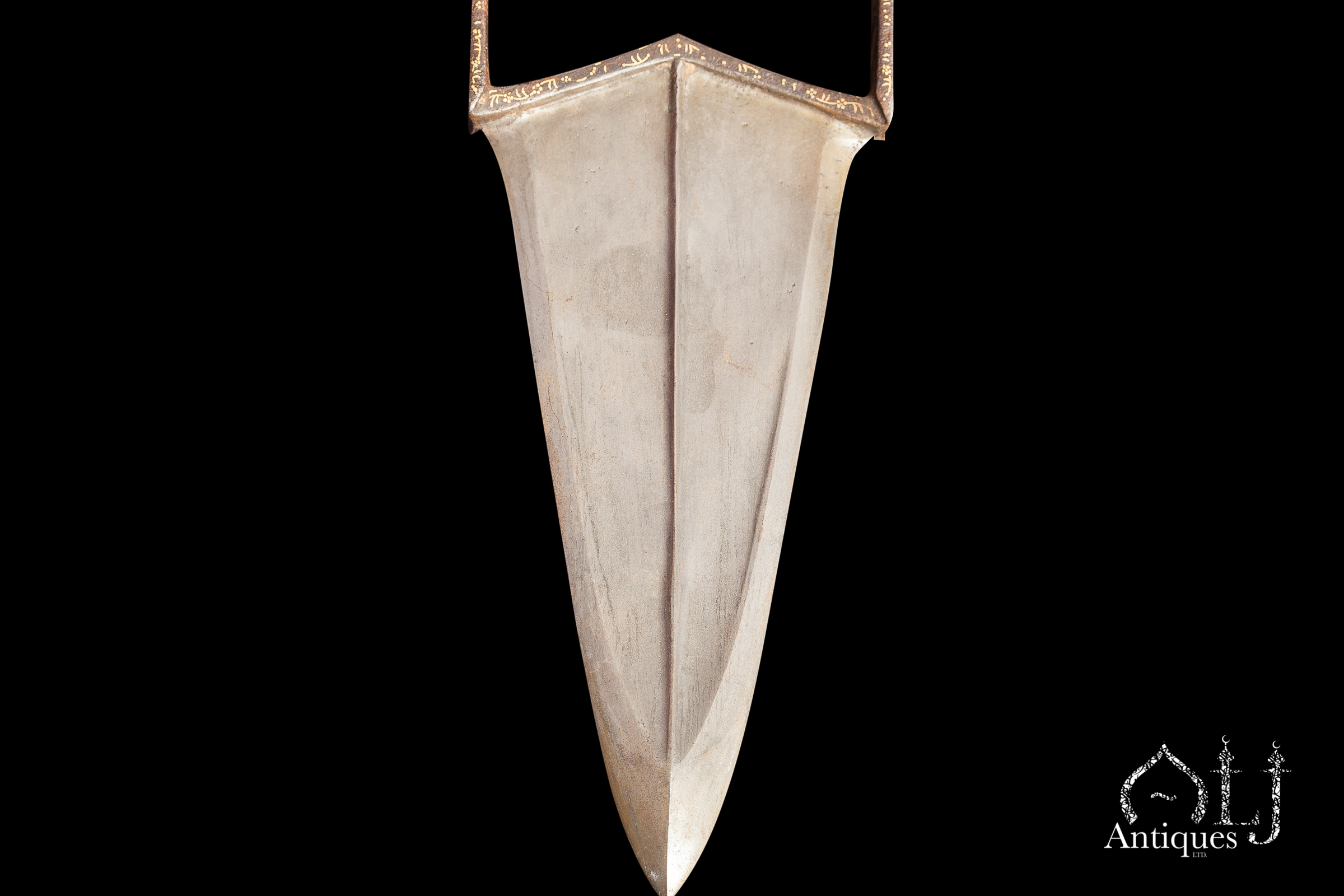
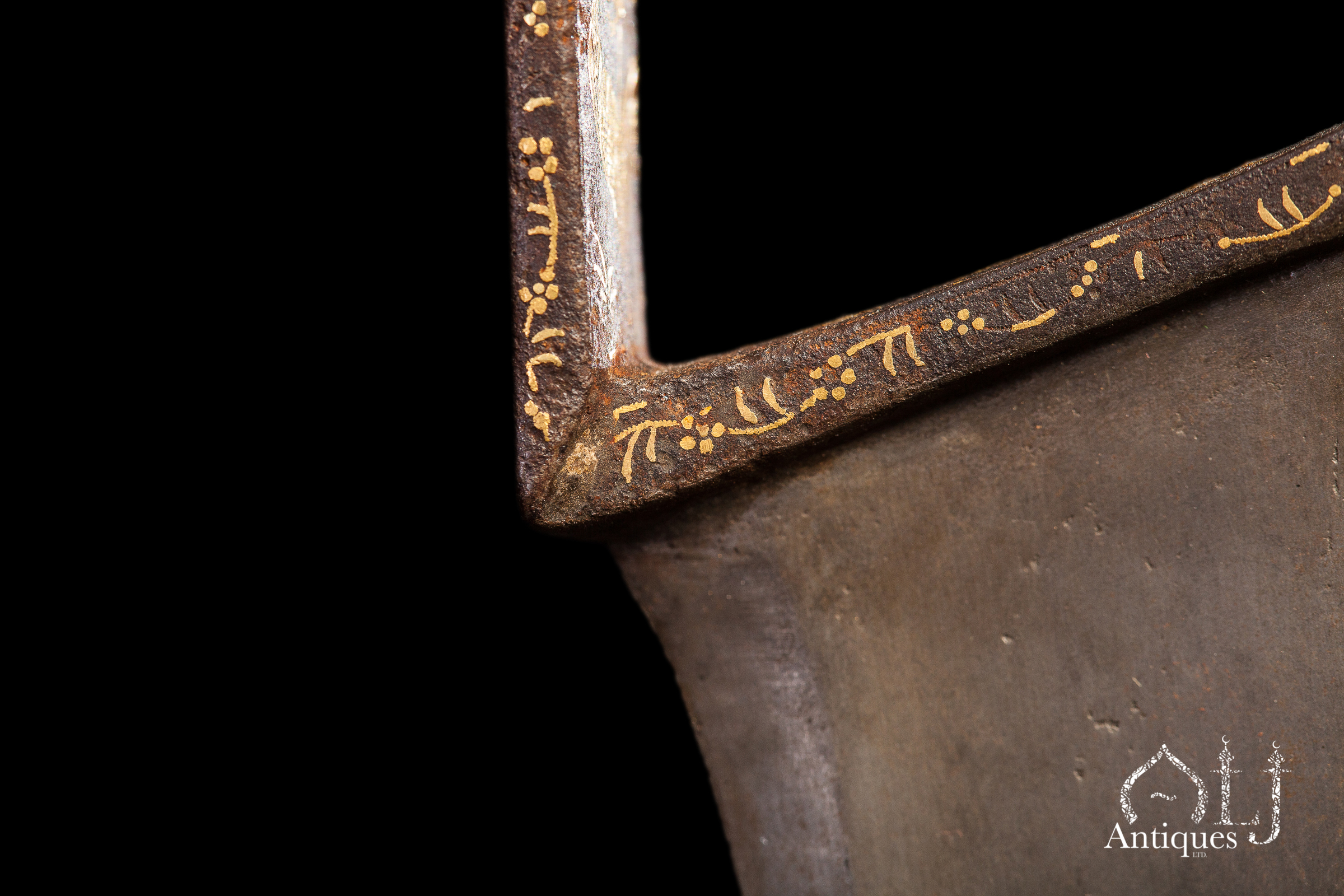
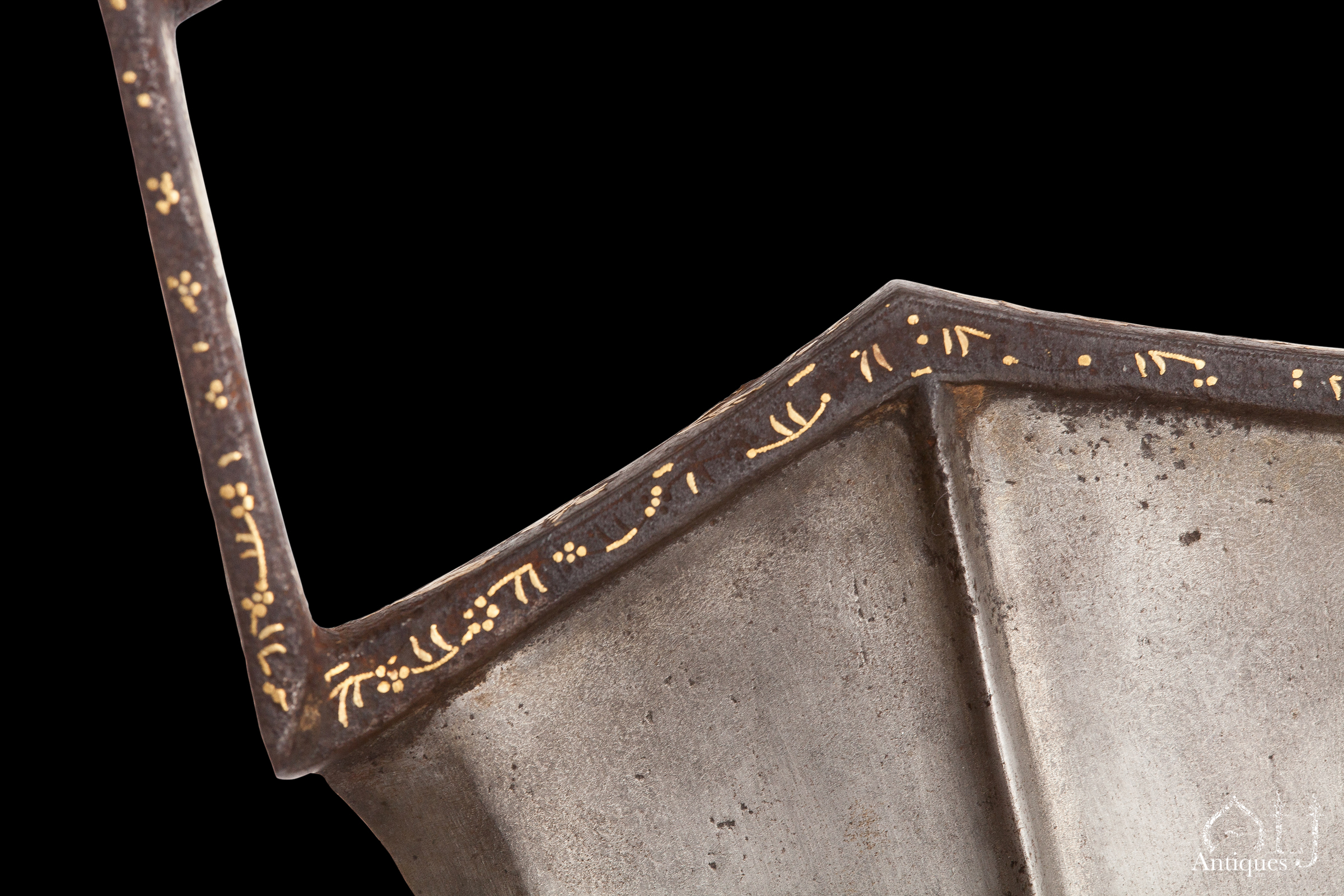
The dagger is mounted with a grey watered steel blade of triangular form, featuring a pronounced central ridge and a reinforced thrusting point designed for powerful penetration. The visible watered pattern suggests that the blade may be composed of wootz steel (fulad), a highly prized crucible steel historically produced in the Indian subcontinent and admired for both its strength and distinctive patterned surface.
Near the blade shoulders, the decoration on the two oval protective projections shows intentional interruptions where elements of the iris motif appear deliberately abbreviated or cut. These interruptions appear to form part of the original decorative programme rather than representing later damage. The surrounding rim continues with consistent gold-inlaid vegetal ornament, suggesting that this adjustment was made during manufacture, possibly to maintain the desired proportions of the dagger while preserving the harmony of the floral composition.
The relatively compact proportions suggest that the dagger was likely produced primarily for courtly or ceremonial use, worn by nobles and courtiers during formal appearances and processions at the Mughal court. It is also possible that the smaller scale indicates that the dagger was intended for a young nobleman or prince, as finely decorated arms were sometimes presented to younger members of elite households as symbols of status and preparation for martial life.
A comparable katar was sold at Sotheby’s, London, 6 October 2015 (The Sven Gahlin Collection, Lot 146), where the dagger was attributed to Moradabad. However, the refined naturalistic floral ornament and delicate gold damascening of the present example are more consistent with the artistic traditions associated with the northern Mughal imperial centres such as Agra, Delhi, and Lahore, where luxury arms were produced for elite patrons during the height of the Mughal Empire.