
Description
Description
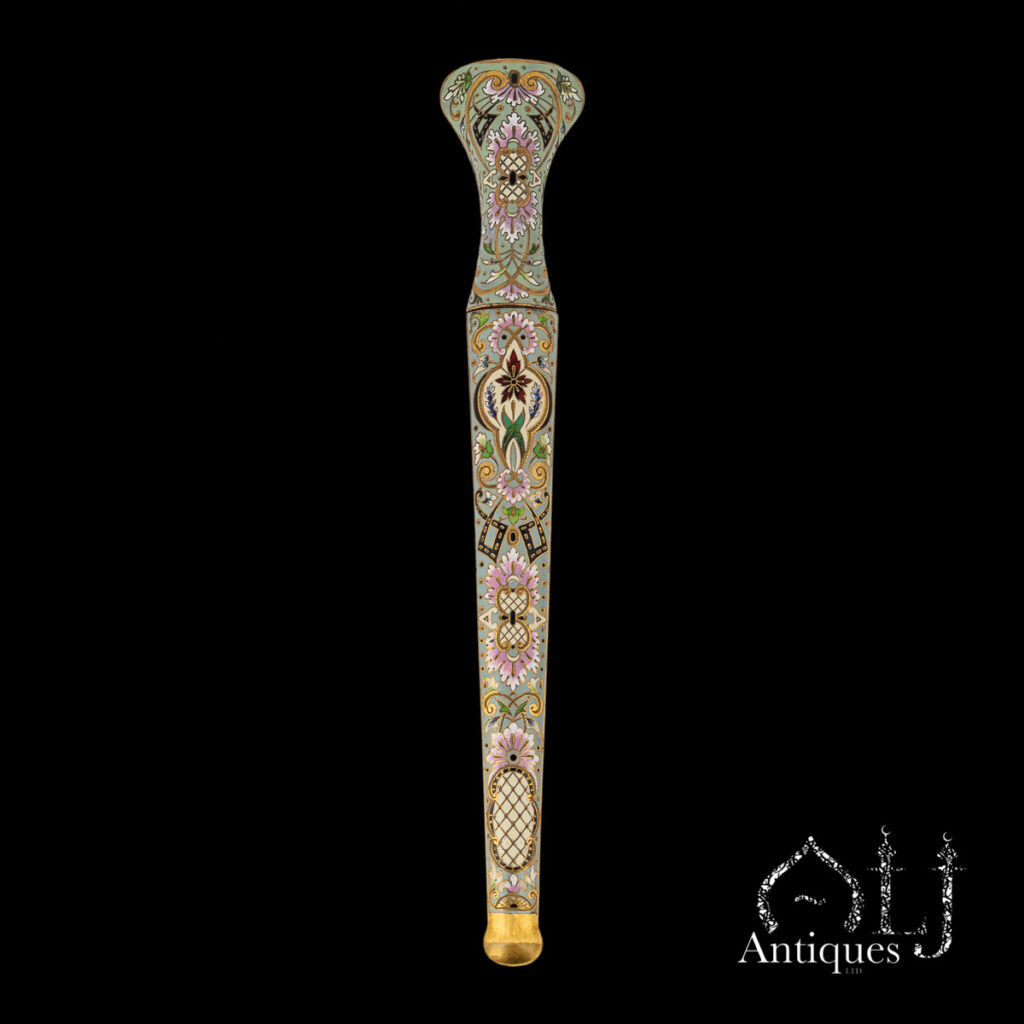
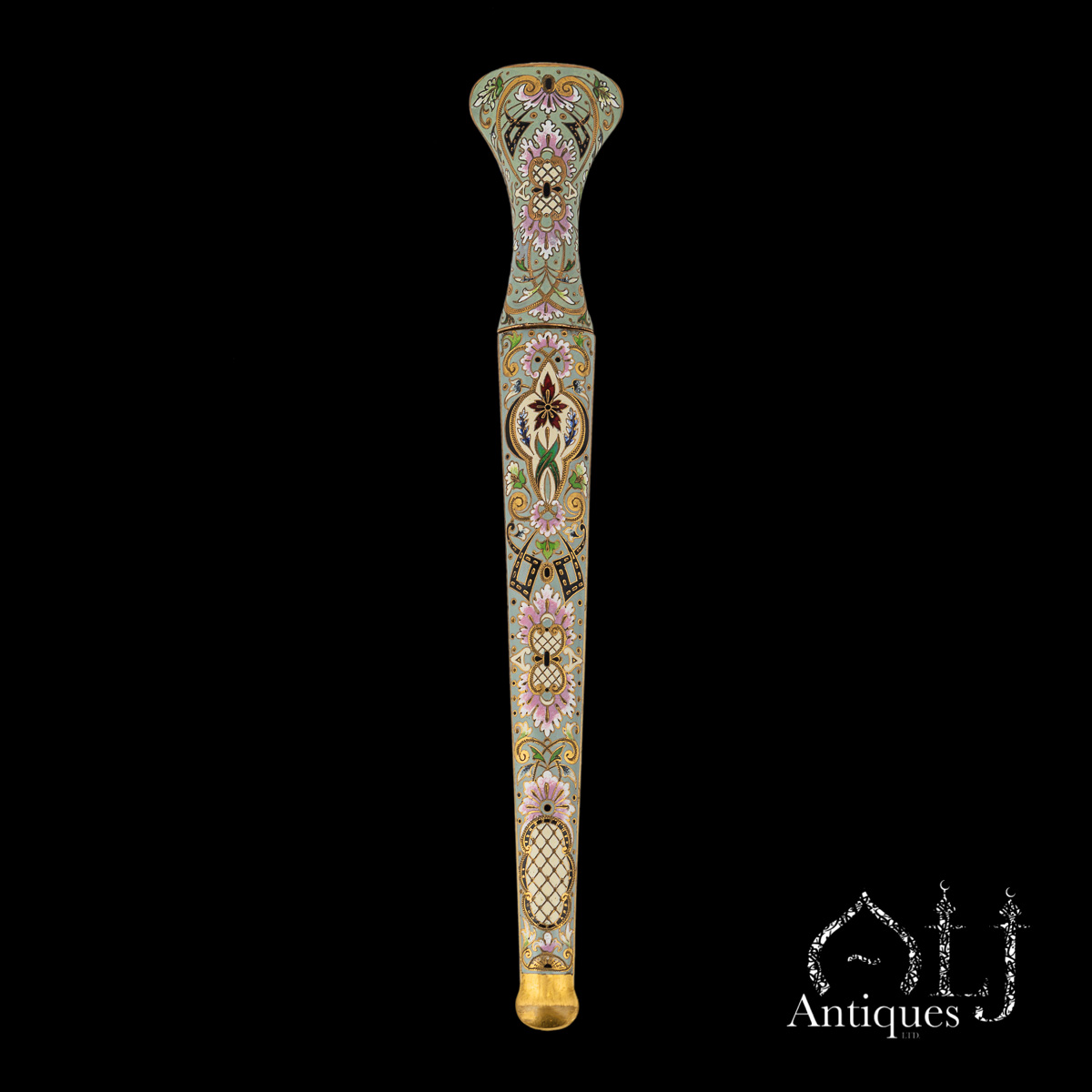
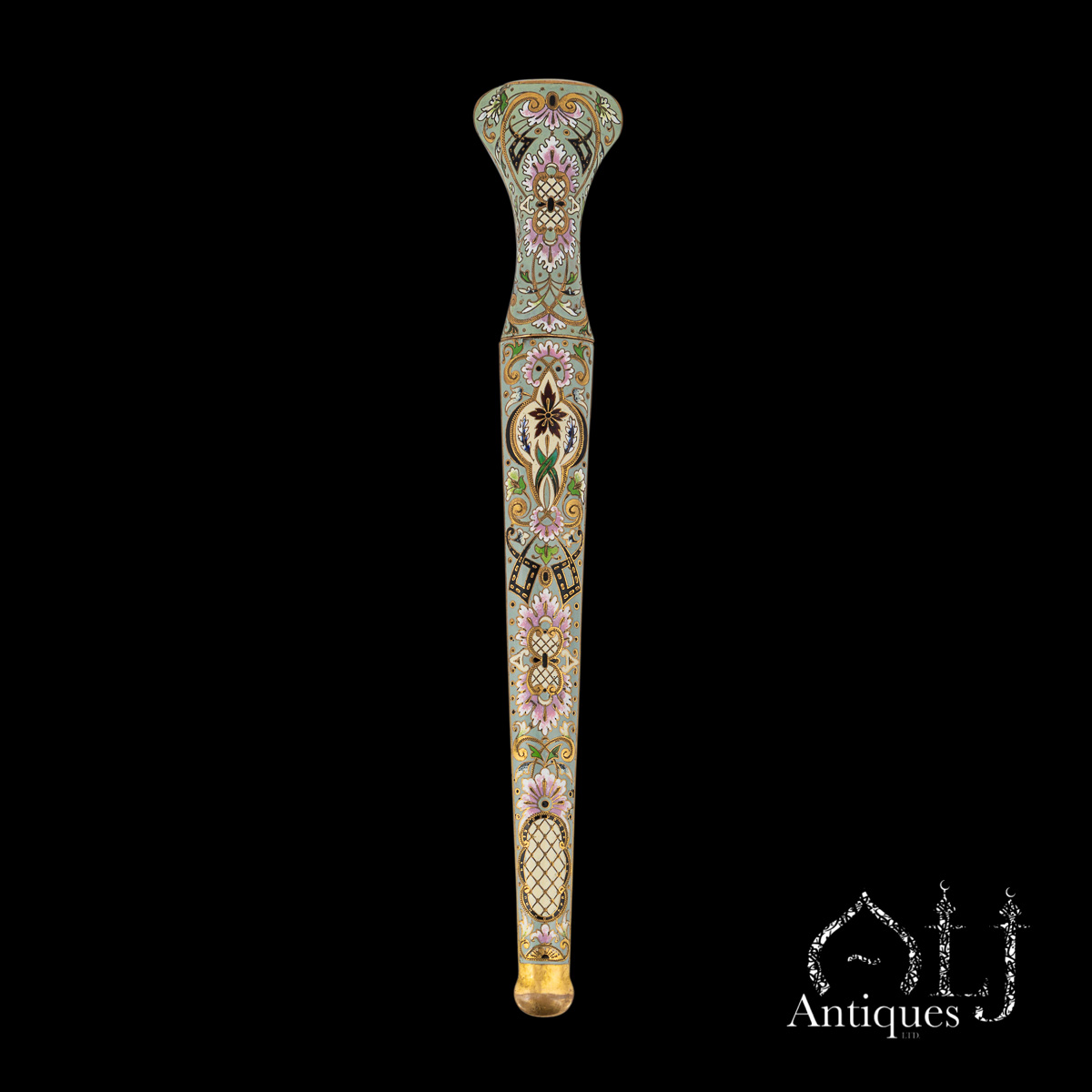
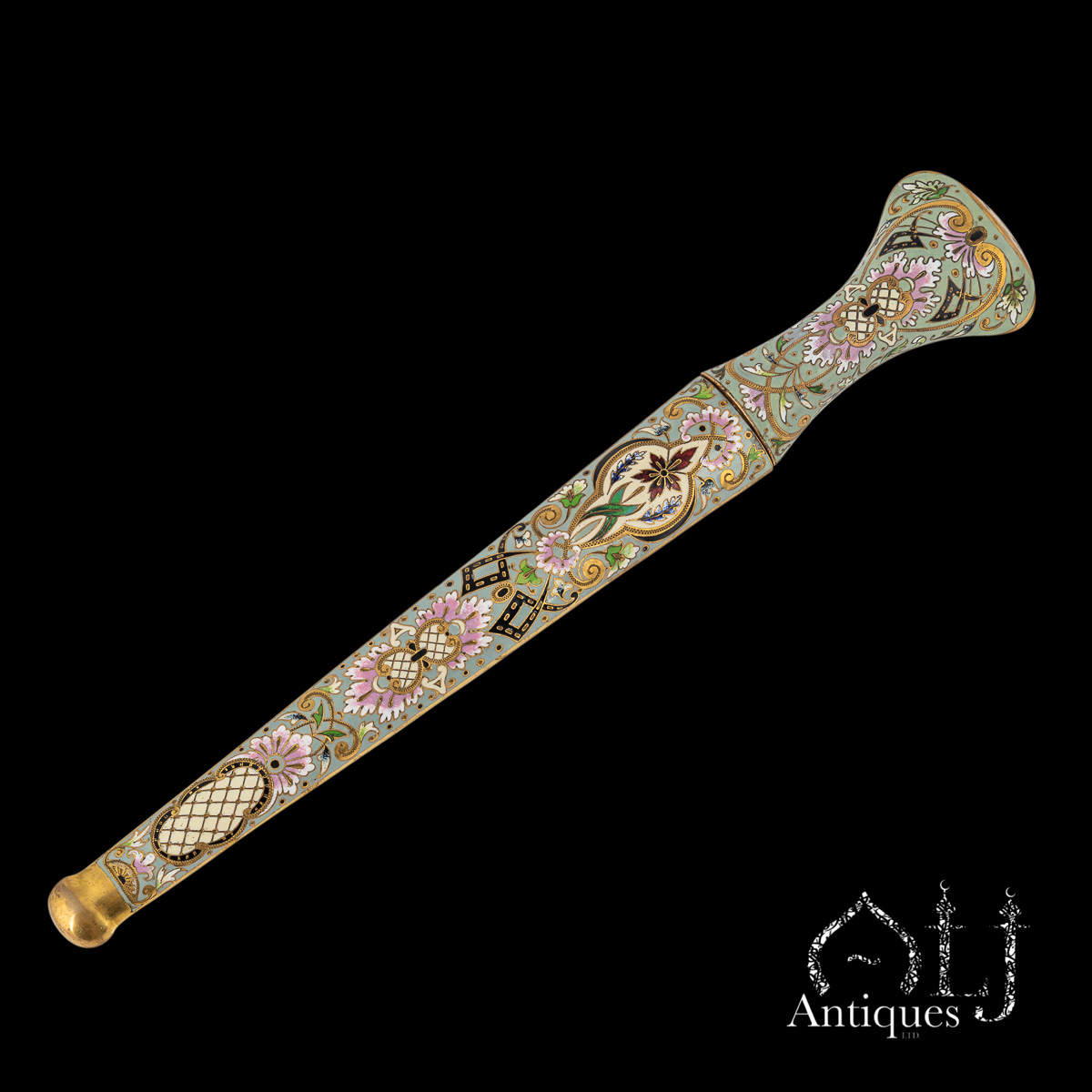
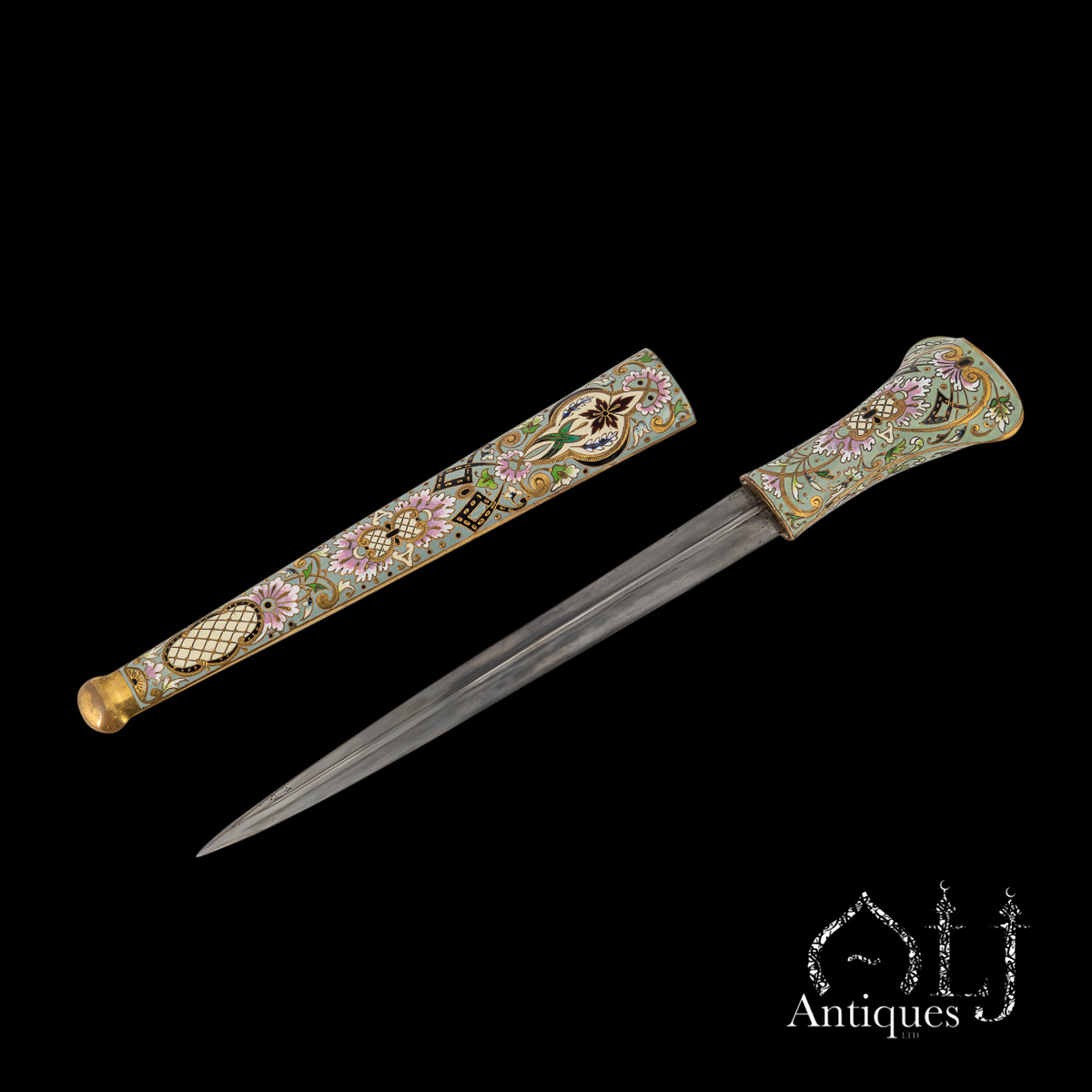
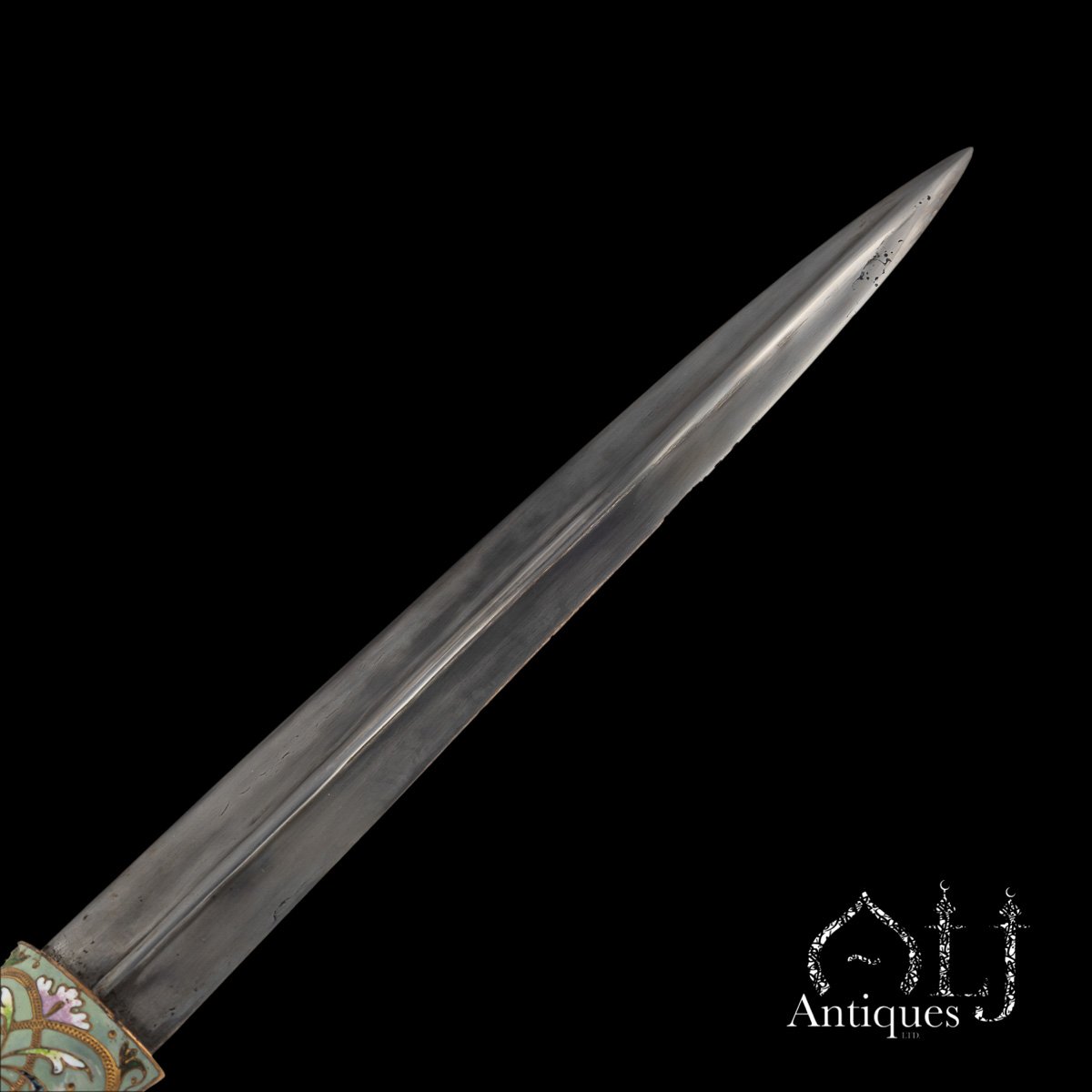
A rare and finely decorated Ottoman knife (bıçak) featuring a straight double-edged steel blade with a pronounced central ridge spine, mounted in a richly ornamented gilt copper (tombac) hilt and scabbard decorated with vibrant polychrome enamel.
Context within Ottoman Enamelled Arms
The present dagger belongs to a small but distinctive group of Ottoman edged weapons decorated with gilt copper (tombac) mounts and polychrome enamel ornament, produced during the late eighteenth and early nineteenth centuries. Within this tradition, weapons were transformed into luxury objects that combined the functional qualities of arms with the refined aesthetics of Ottoman decorative arts.
Examples such as the present serpentine-bladed dagger and the related enamelled knife described elsewhere in this catalogue illustrate how Ottoman craftsmen applied the same decorative vocabulary—comprising dense floral arabesques, architectural cartouches, and vibrant enamel colours—to a variety of weapon forms. Although differing in blade shape and proportions, both pieces reflect the same artistic environment in which arms were designed not only as weapons but also as symbols of prestige, refinement, and ceremonial display.
The combination of gilt tombac surfaces, vibrant polychrome enamel, and scrolling vegetal ornament influenced by Rococo design situates these objects within the broader artistic developments of the Ottoman Empire during the late eighteenth century, when traditional Ottoman decorative forms increasingly interacted with European stylistic influences.
The blade is forged from steel and formed with a straight tapering profile terminating in a sharply defined point. Both cutting edges converge symmetrically towards the tip and are divided by a raised medial ridge, strengthening the blade while producing a refined triangular cross-section typical of elegant Ottoman knives of the late eighteenth and early nineteenth centuries.
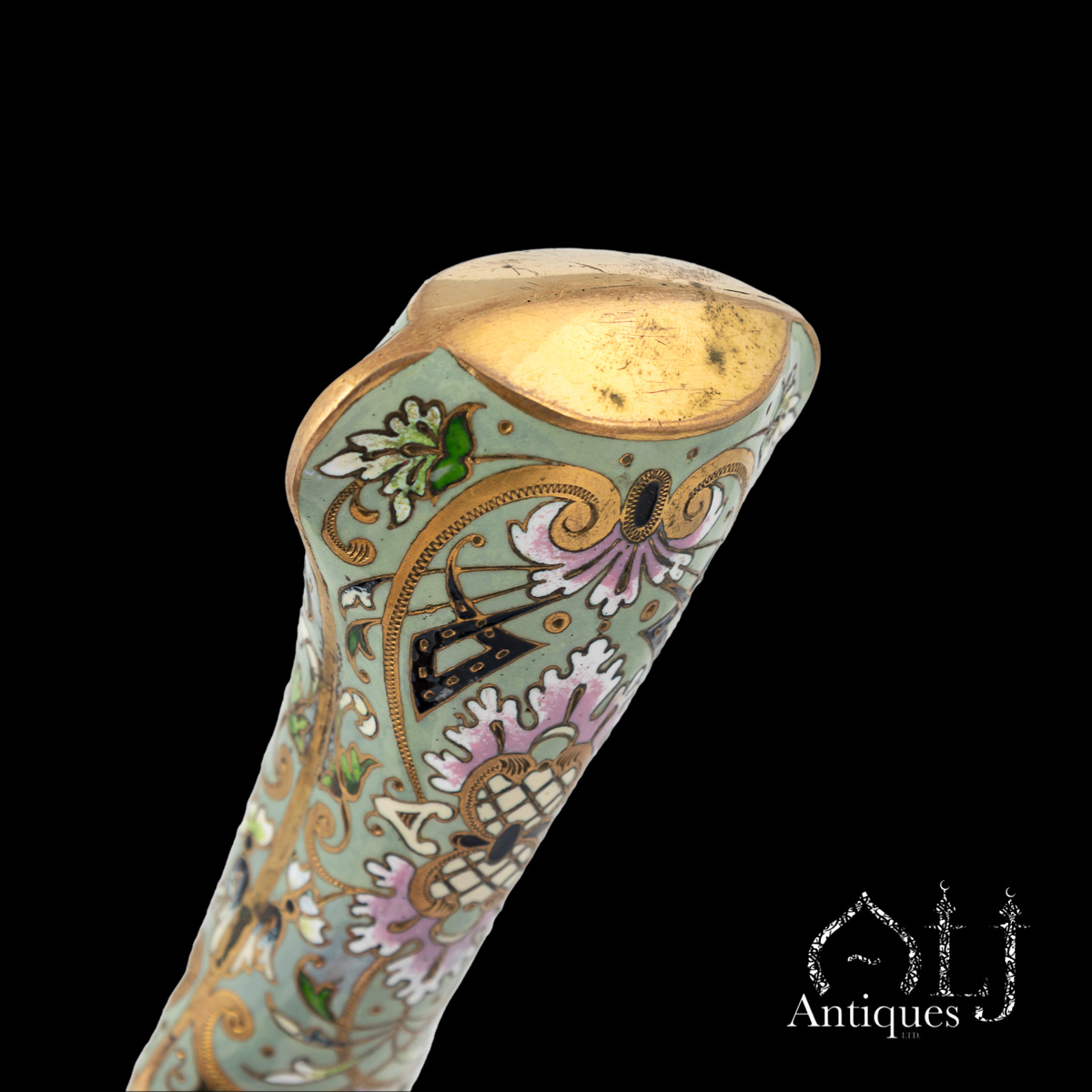
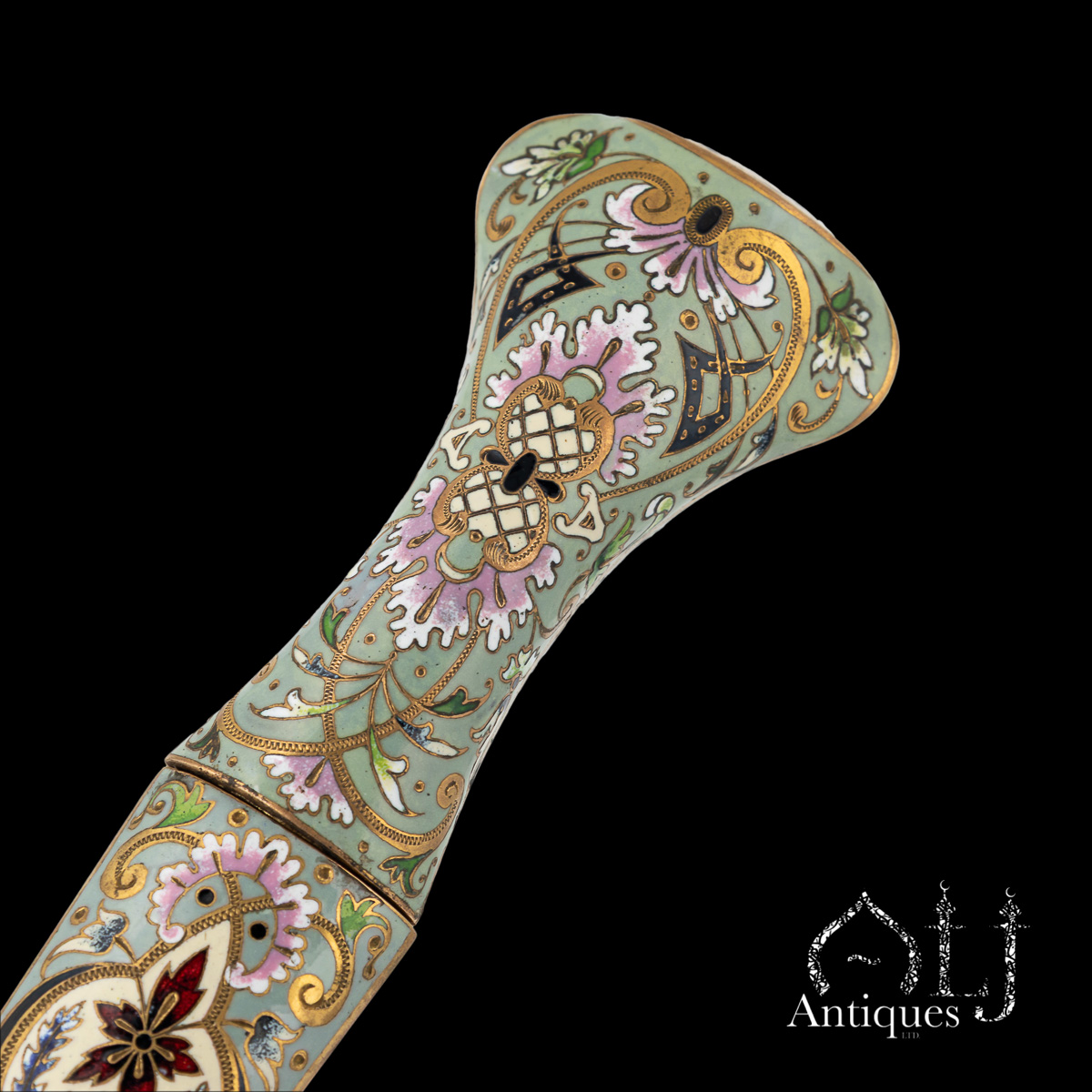
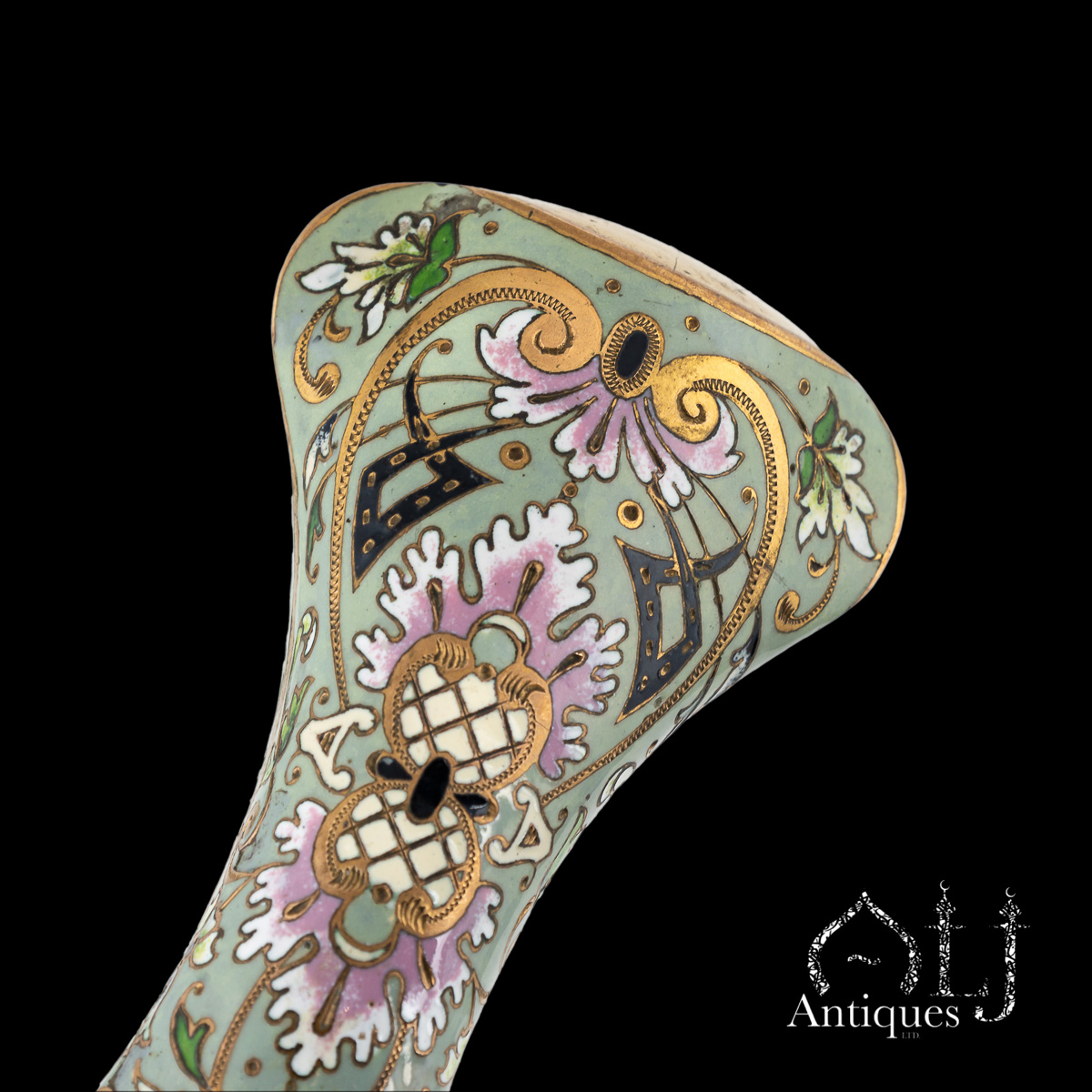
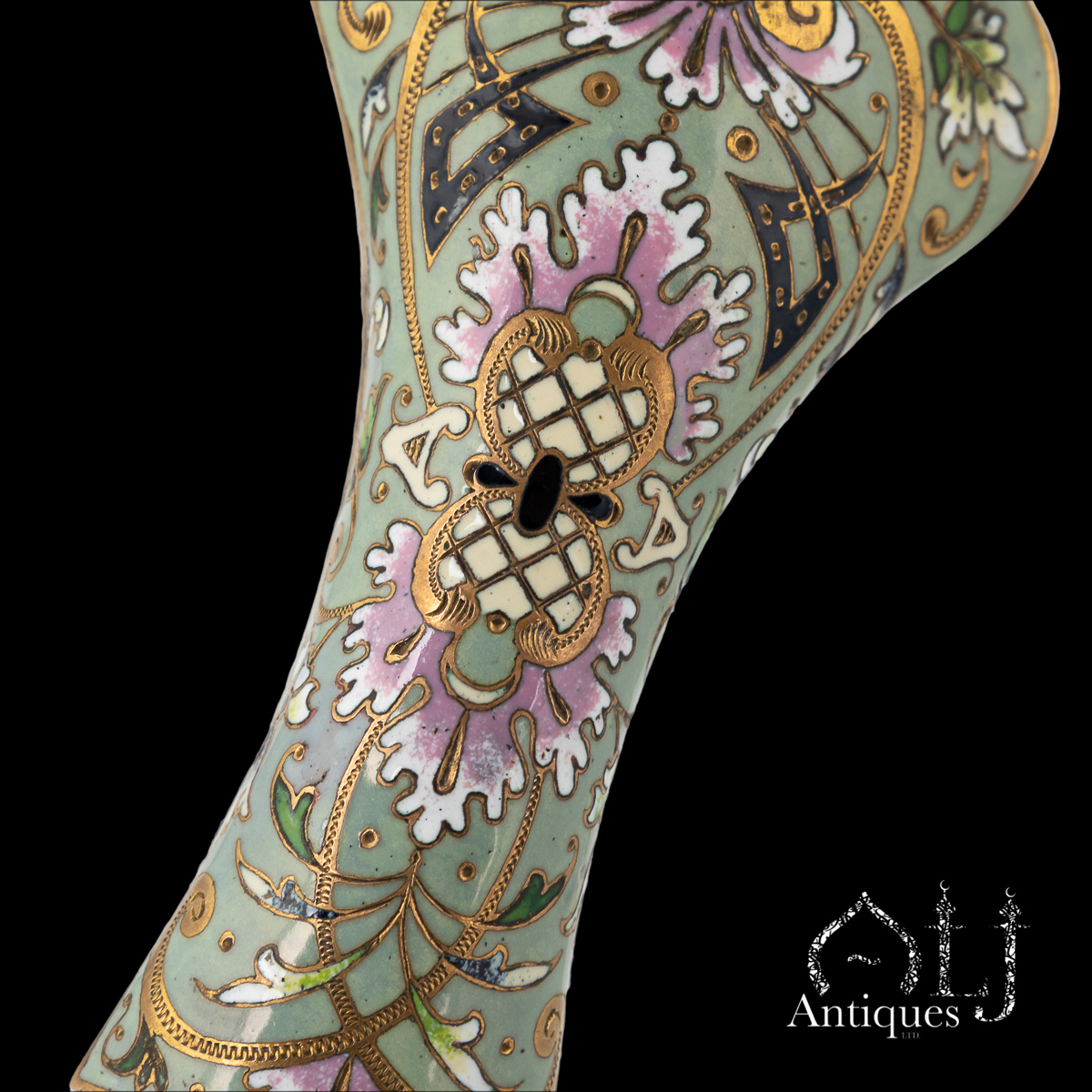
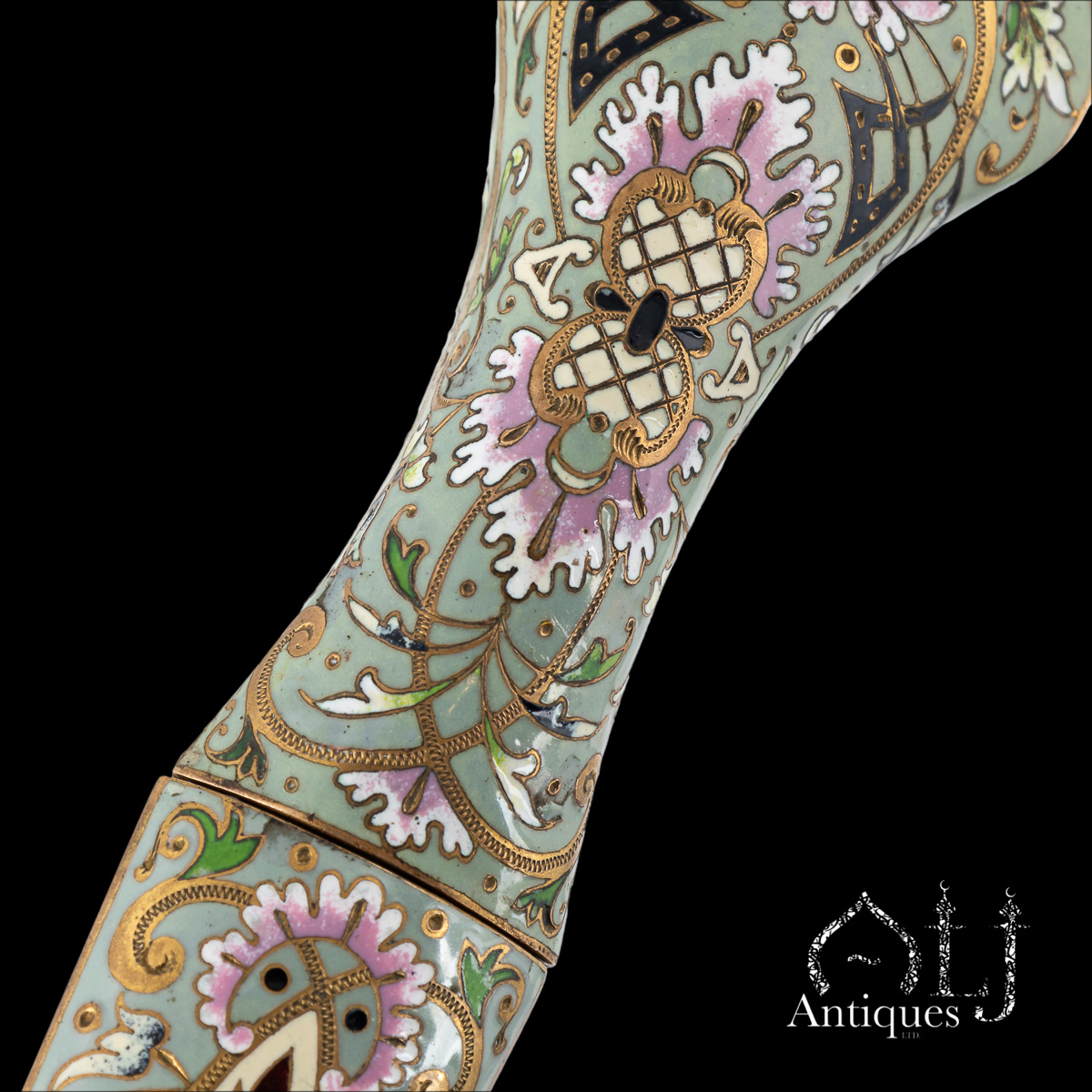
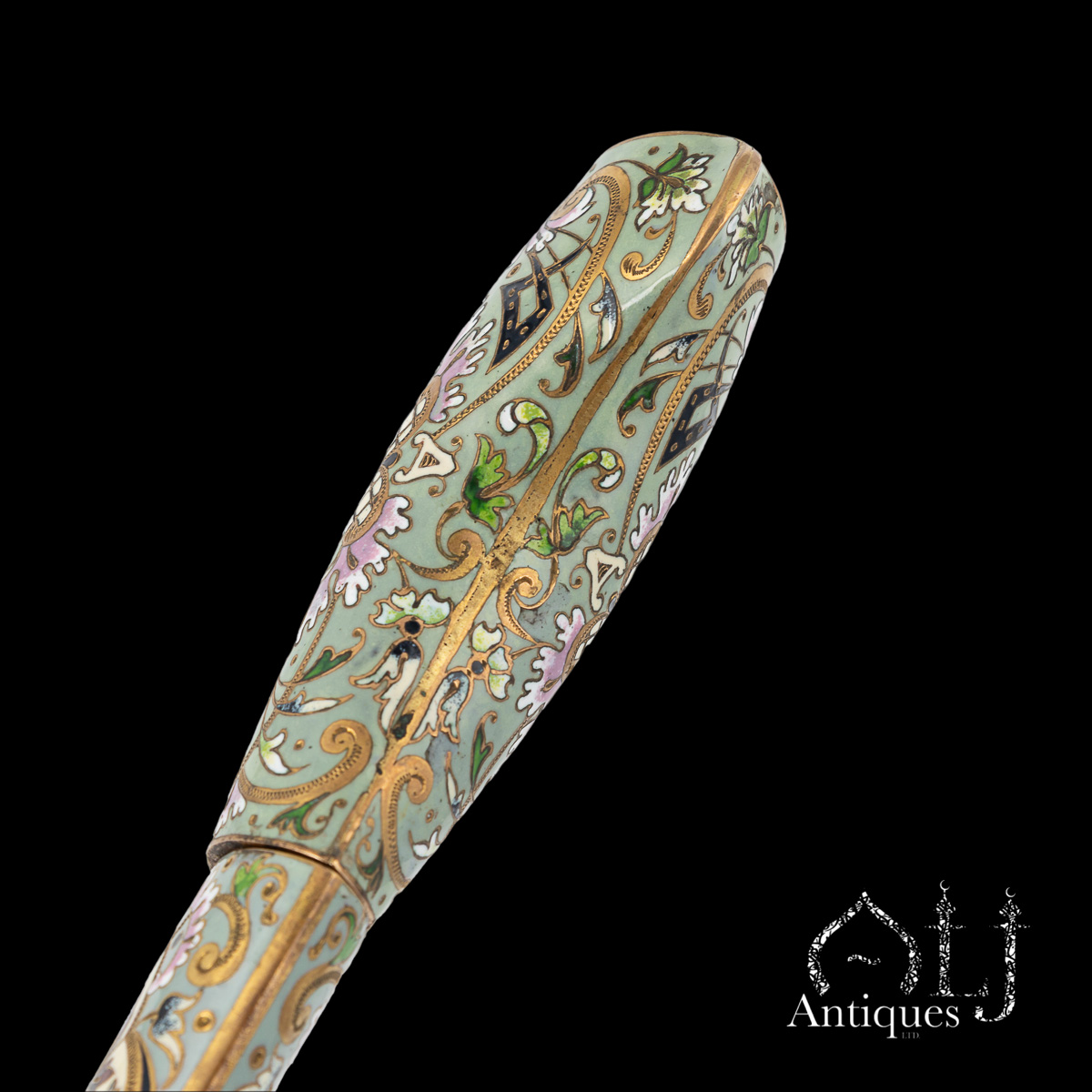
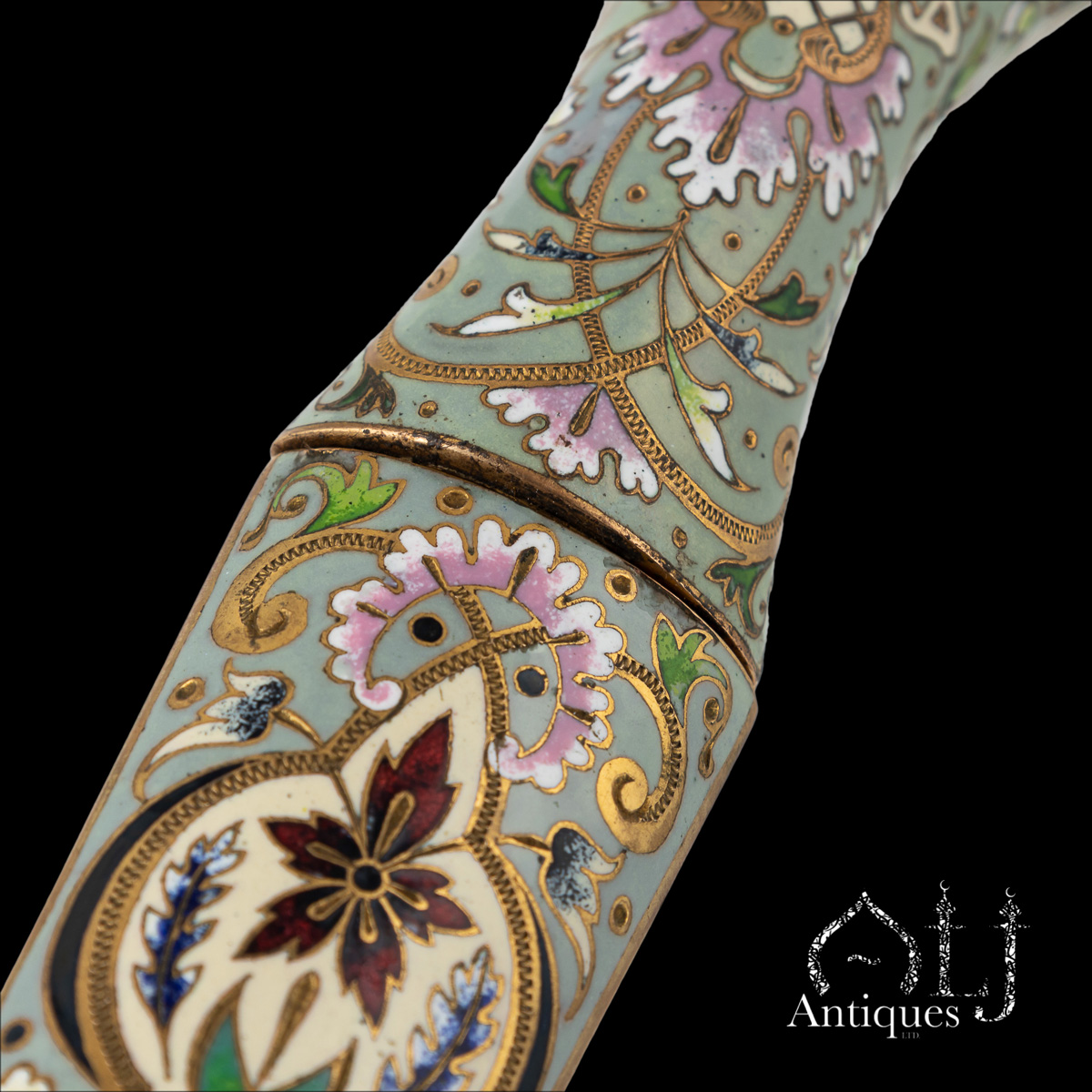
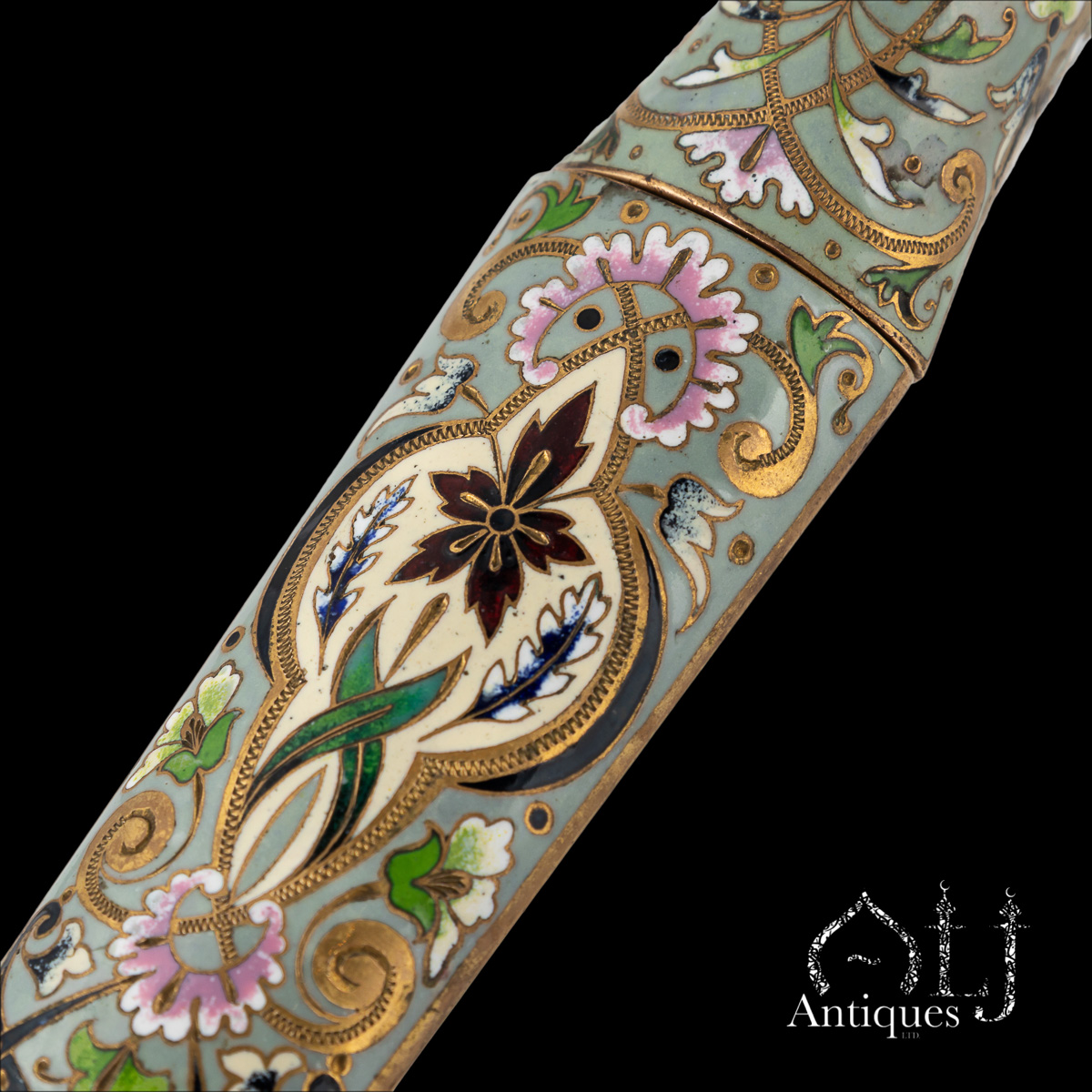
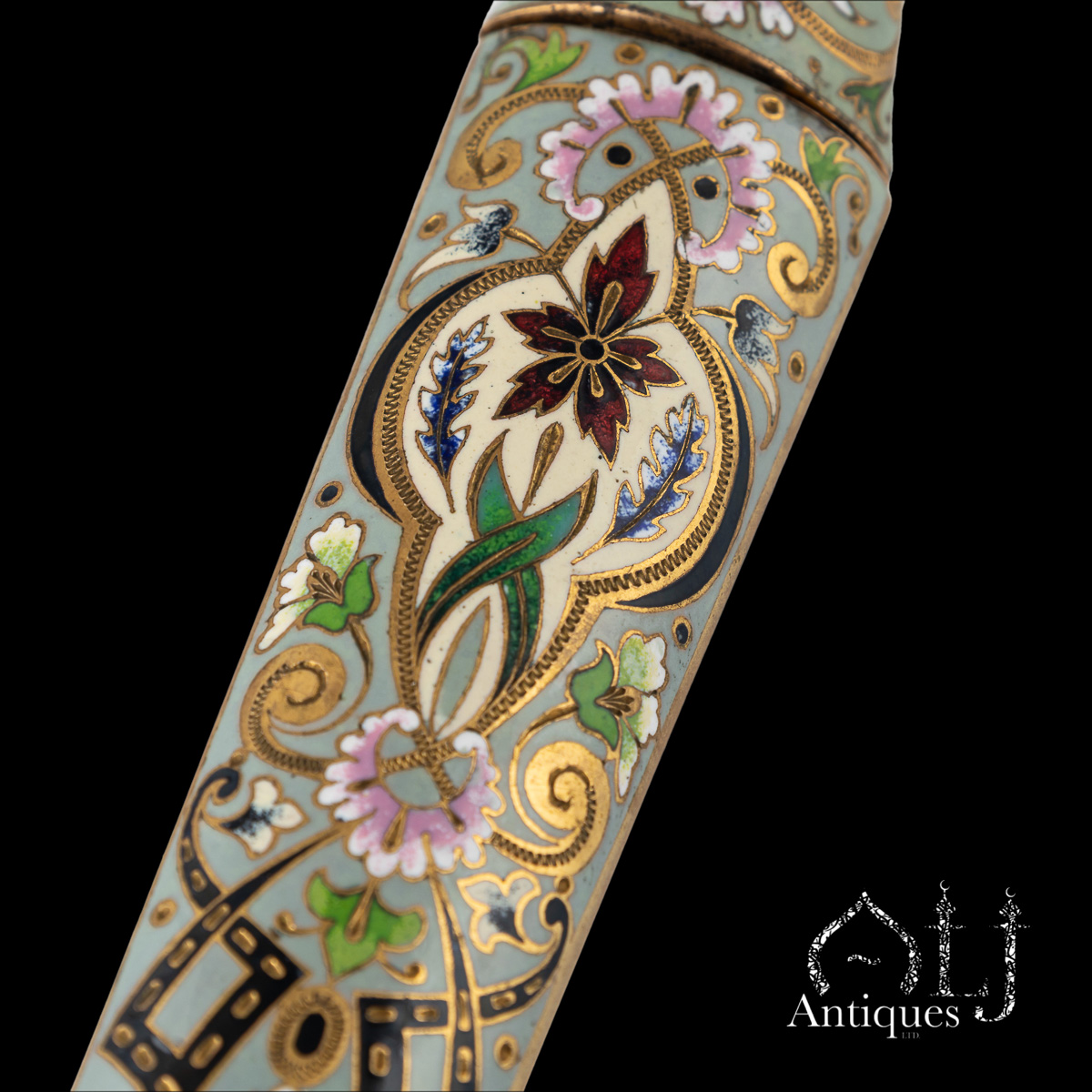
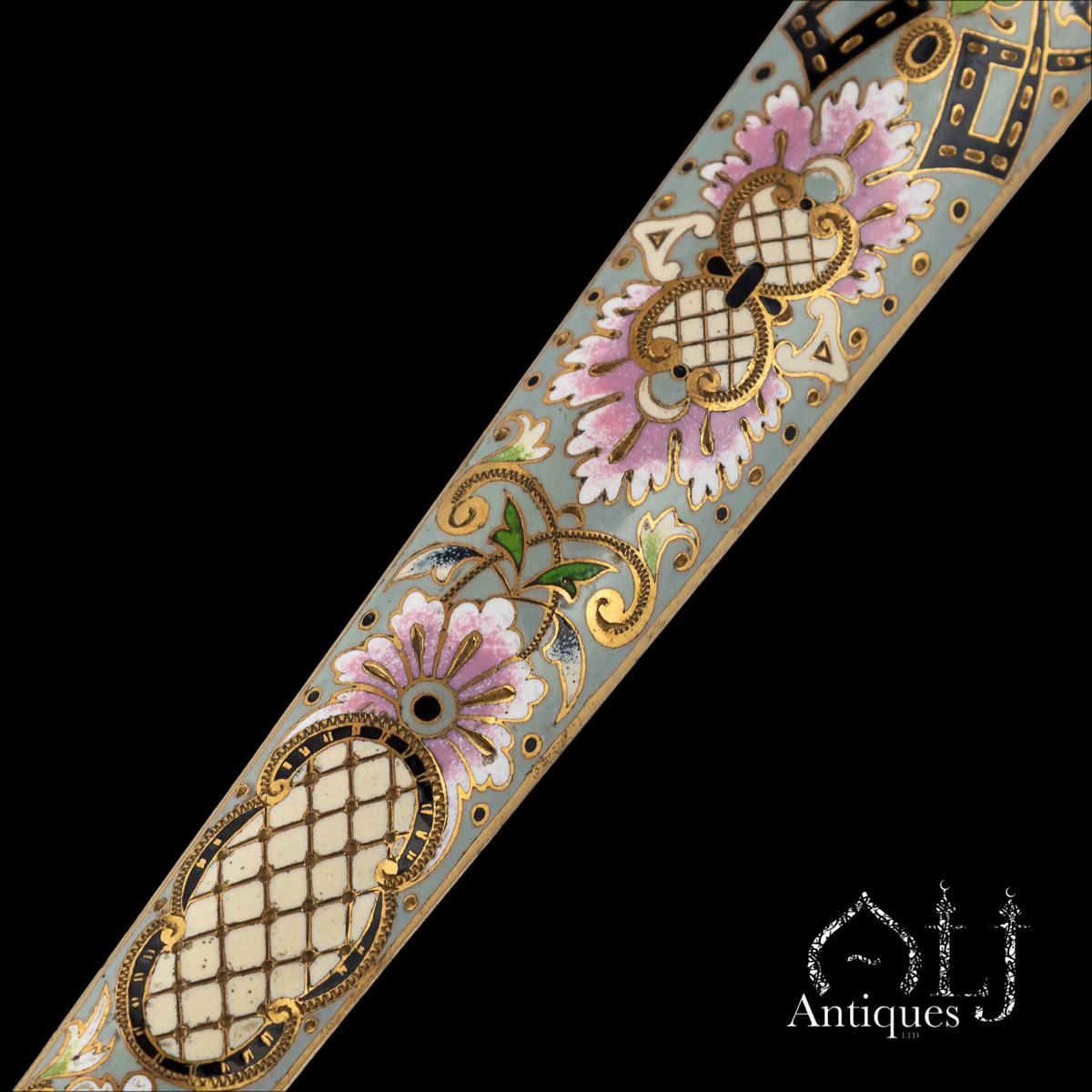
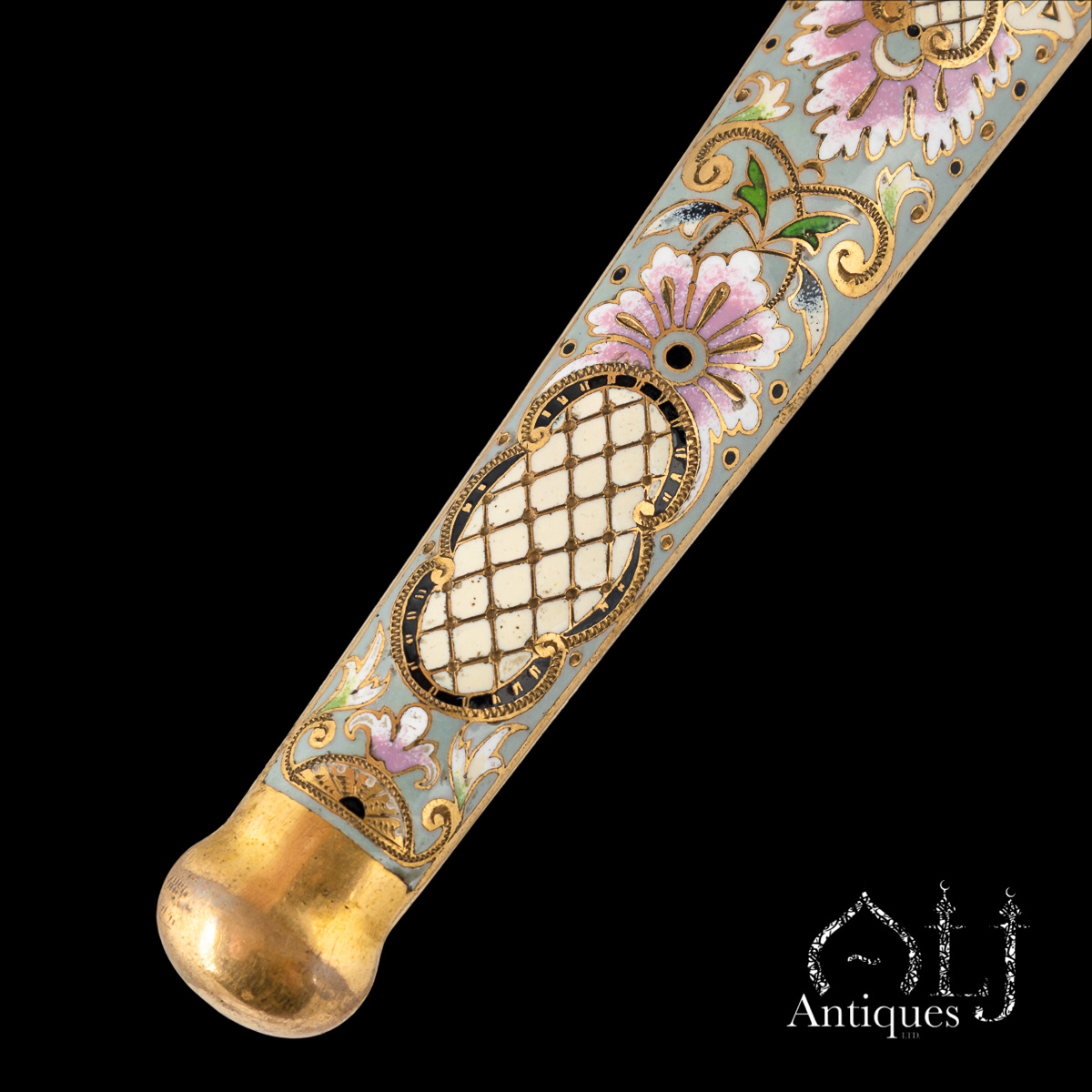
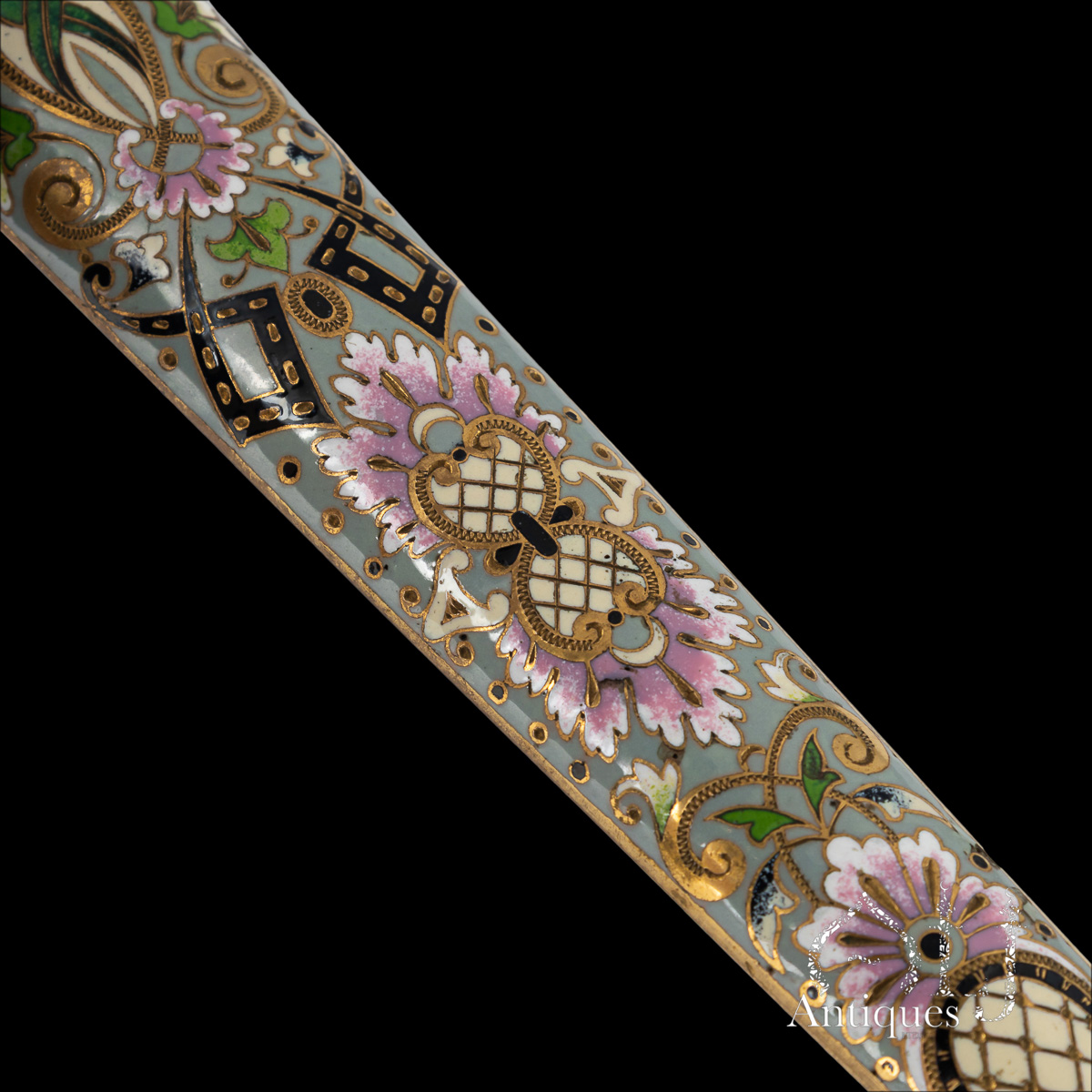
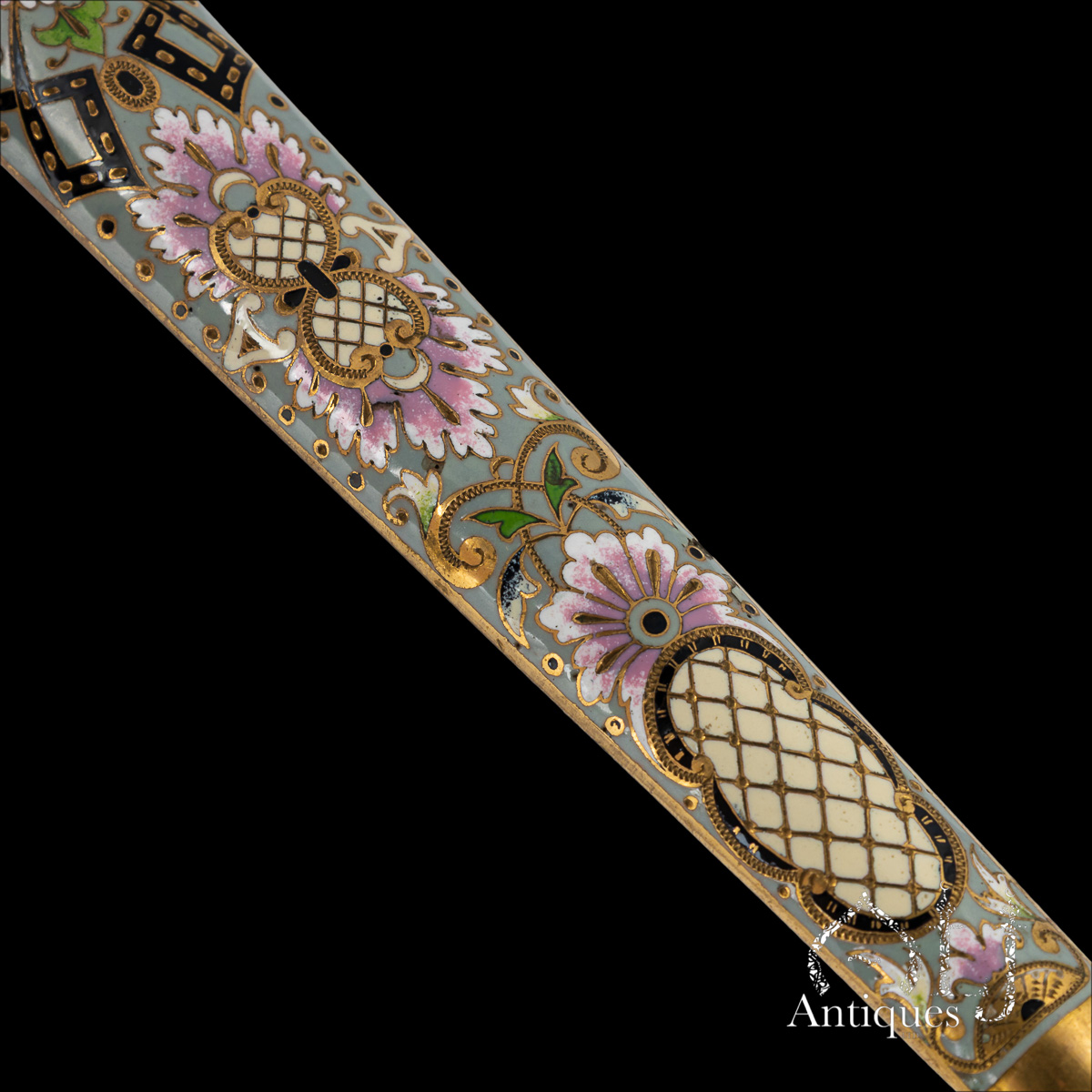
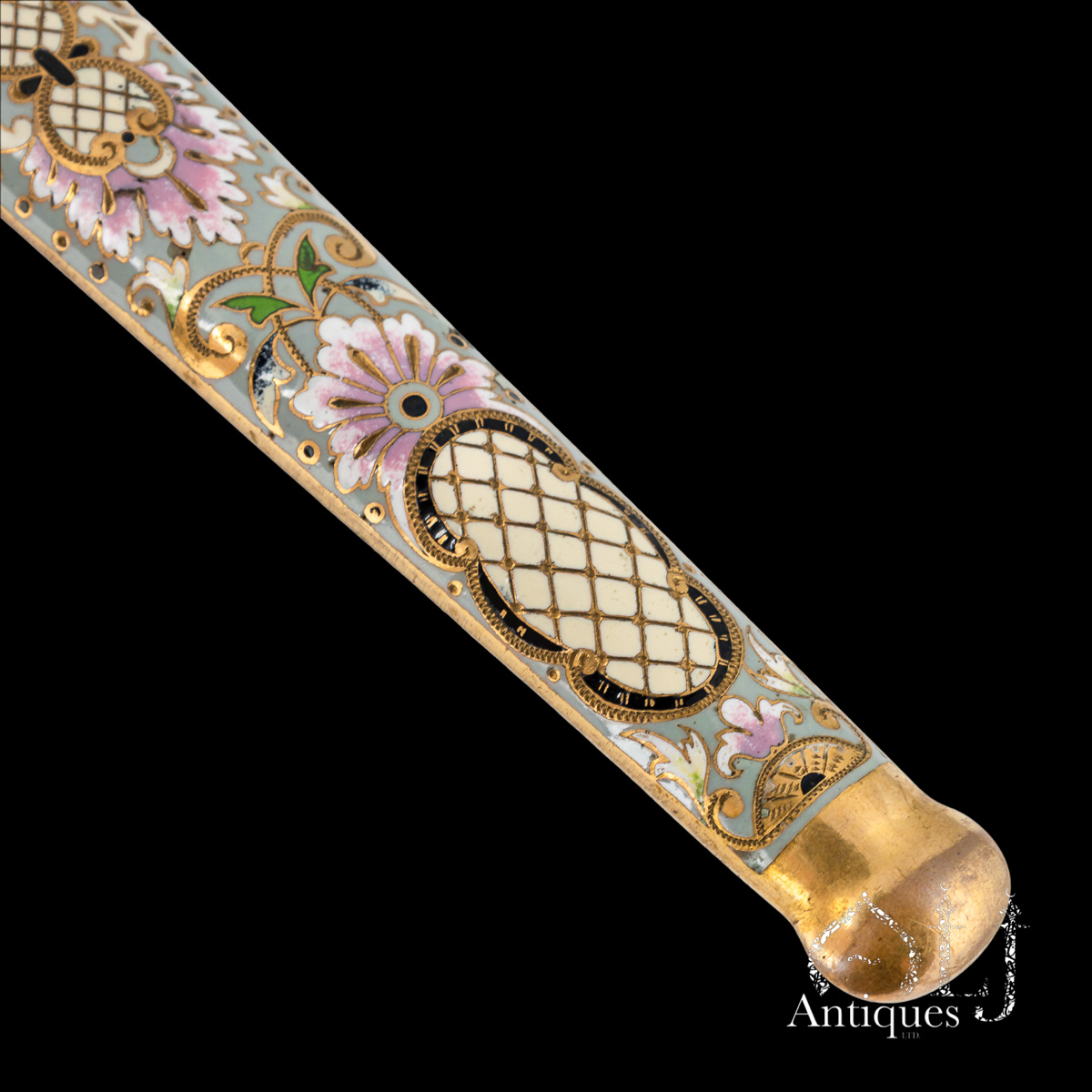
The hilt is of waisted baluster form, widening toward both the guard and the pommel. It is constructed from gilt copper (tombac) and richly decorated with finely engraved and gilded scrolling vegetal ornament enriched with polychrome enamel in tones of turquoise, pink, white, cobalt blue, black, and green.
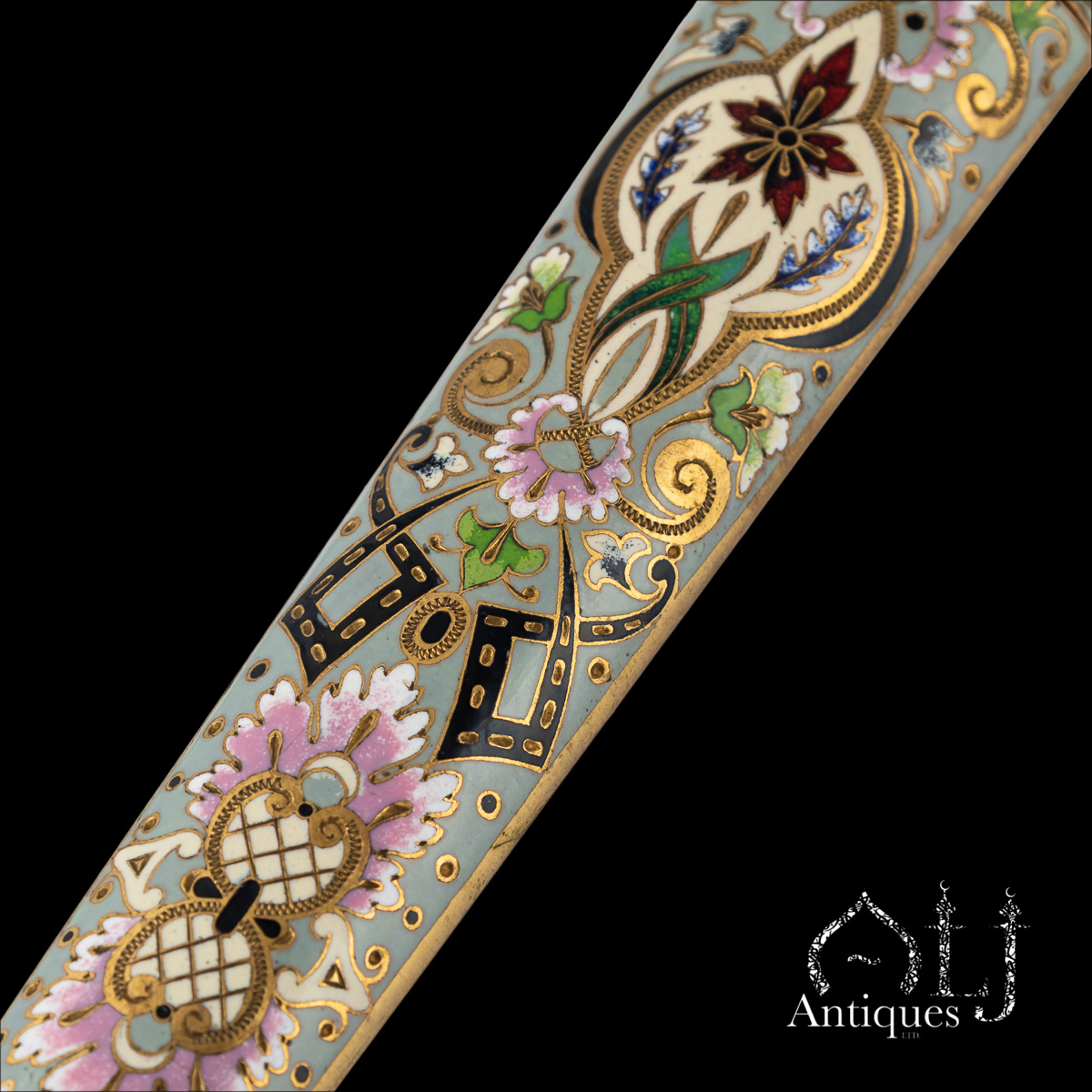
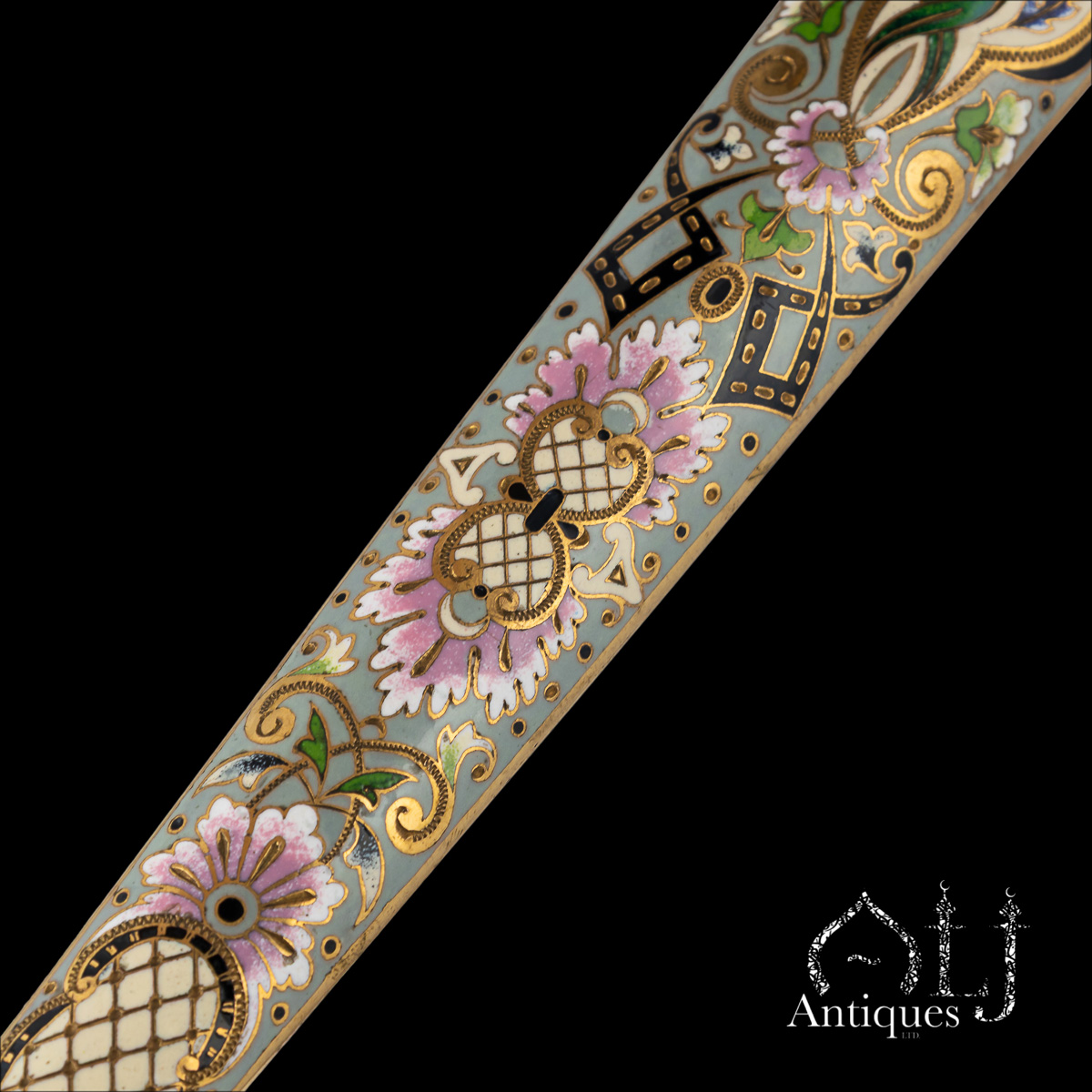
The decorative programme consists of dense floral scrolls, stylised blossoms, and ornamental cartouches arranged harmoniously across both the hilt and the scabbard. Oval panels filled with lattice-like enamel designs are framed within delicate gilded borders and black enamel reserves, creating a striking contrast against the pale turquoise ground.
Particularly notable is the presence of flowing vegetal scrolls and elaborate cartouches influenced by Rococo ornament, reflecting the stylistic exchange between Ottoman and European decorative traditions during the later eighteenth century. Rococo elements—characterised by fluid curves, ornate cartouches, and lively floral motifs—were widely absorbed into Ottoman decorative arts and reinterpreted within the empire’s own aesthetic vocabulary.
Small architectural motifs resembling stylised windows or pavilion forms appear integrated within the scrolling foliage. Such imagery frequently appears in Ottoman decorative arts, where architectural and garden motifs symbolised refinement, prosperity, and the cultivated environment of elite Ottoman society.
The scabbard continues the same decorative scheme, with alternating floral panels and enamel cartouches framed by delicate gilt arabesques. The terminal chape is finished in smooth gilt copper, providing a restrained conclusion to the otherwise richly ornamented surface.
Materials and Decorative Technique
The hilt and scabbard are crafted from tombac, a copper alloy extensively used in Ottoman luxury metalwork and finished with mercury fire-gilding, producing the rich golden surface associated with high-quality Ottoman objects.
The engraved ornament is enhanced with polychrome enamel, carefully applied within recessed compartments framed by fine gilded outlines. The palette of turquoise, pink, white, green, and black is characteristic of Ottoman enamelled metalwork produced during the late eighteenth and early nineteenth centuries.
Comparable enamelled tombac decoration appears not only on arms but also on luxury objects such as bowls, ewers, and vessels. Related examples of enamelled Ottoman metalwork can be found in the Islamic Art Collection of the Benaki Museum in Athens, illustrating the broader artistic tradition of gilt copper and enamel decoration in Ottoman decorative arts.
Such works are often associated with what scholars sometimes describe as “Süleymaniye” or “Suleimani” enamel work, produced in provincial Ottoman workshops where Greek and Armenian craftsmen were active as metalworkers and enamelists.
Attribution and Artistic Significance
The exceptional quality of the present knife deserves particular attention. At first glance, the refinement of its engraving, the precision of its enamelling, and the sophistication of its overall design might suggest production in one of the great European centres of luxury metalwork, such as Geneva, Paris, or Vienna, all of which supplied decorative objects to elite Ottoman patrons during the eighteenth and nineteenth centuries.
Closer examination, however, strongly supports an Ottoman attribution. The form of the weapon, the character of its floral ornament, the extensive use of gilt copper (tombac), and the distinctive palette and application of the enamel are all deeply rooted in Ottoman artistic traditions. While European Rococo influences are clearly visible in the flowing cartouches and animated vegetal scrolls, these motifs have been fully absorbed and reinterpreted within an Ottoman decorative vocabulary rather than copied directly from European prototypes.
The manufacture of such an object required the collaboration of highly specialised craftsmen and reflects a remarkable level of technical accomplishment. The copper metal was carefully formed and engraved with extraordinary precision, creating a rich decorative programme of floral scrolls, cartouches, and ornamental details. The recessed areas were then enriched with vibrant coloured enamels, executed with exceptional control and accuracy. Particularly noteworthy is the treatment of the exposed metal surfaces, which were further enhanced with delicate engraved textures, including characteristic zigzag ornament that provides visual contrast and emphasises the brilliance of the surrounding enamelwork.
The remarkable harmony between engraving, enamelling, and gilt-metal decoration reveals the hand of a master craftsman working at the highest level of his profession. Every element of the composition demonstrates confidence, precision, and a sophisticated understanding of both technical and aesthetic principles. The result is not merely a functional weapon, but a work of decorative art in which every surface has been carefully considered and refined.
Although a definitive workshop attribution remains elusive, the technical and artistic characteristics of the piece are consistent with traditions associated with Armenian and Greek craftsmen active within the Ottoman Empire, many of whom specialised in luxury metalwork, engraving, and enamel decoration. These highly skilled artisans were responsible for some of the finest decorative objects produced for the Ottoman court and the empire’s elite classes.
Recent scholarship has increasingly recognised the remarkable achievements of Ottoman workshops and has challenged the long-standing assumption that objects of such refinement must necessarily have been produced in Europe. Rare masterpieces such as the present knife demonstrate that Ottoman craftsmen possessed both the technical expertise and artistic confidence to create works equal to the finest contemporary European productions. Rather than imitating European models, they produced distinctive luxury objects that successfully combined international influences with deeply rooted Ottoman artistic traditions.
The present knife should therefore be regarded as an exceptional example of Ottoman decorative art, reflecting the highest standards of craftsmanship and artistic sophistication achieved within the empire during the late eighteenth and early nineteenth centuries.
For comparison, please see the exactly similar techniques used with our lot identification number 669.