Description
Comprehensive Description
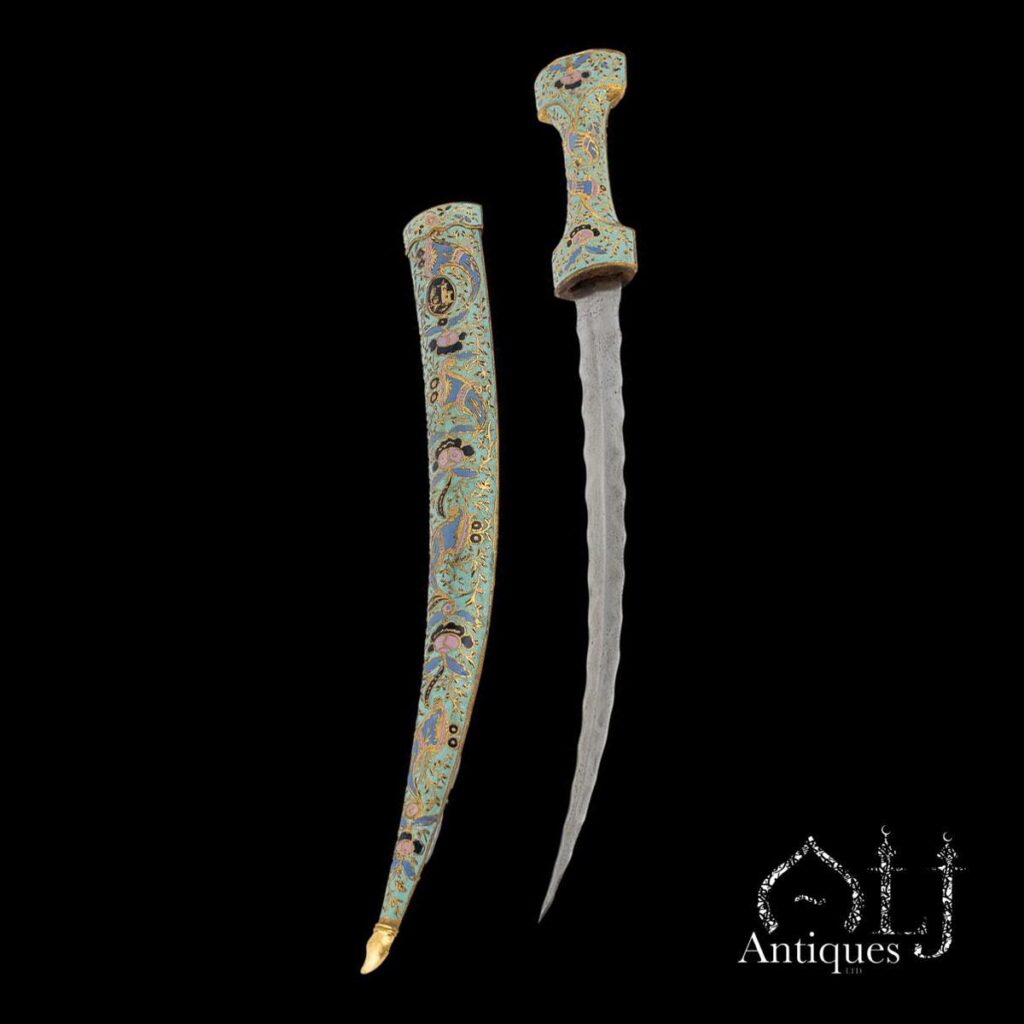
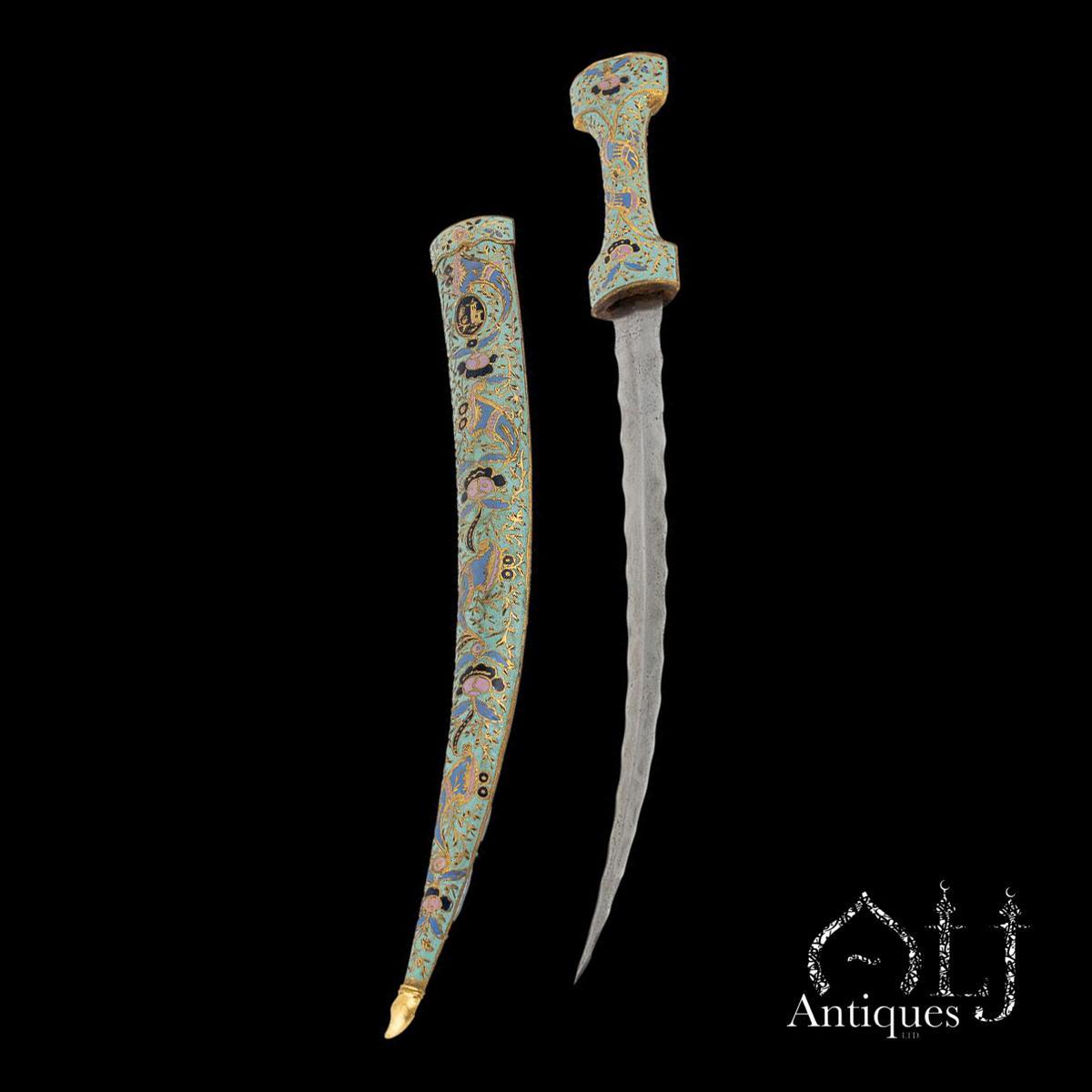
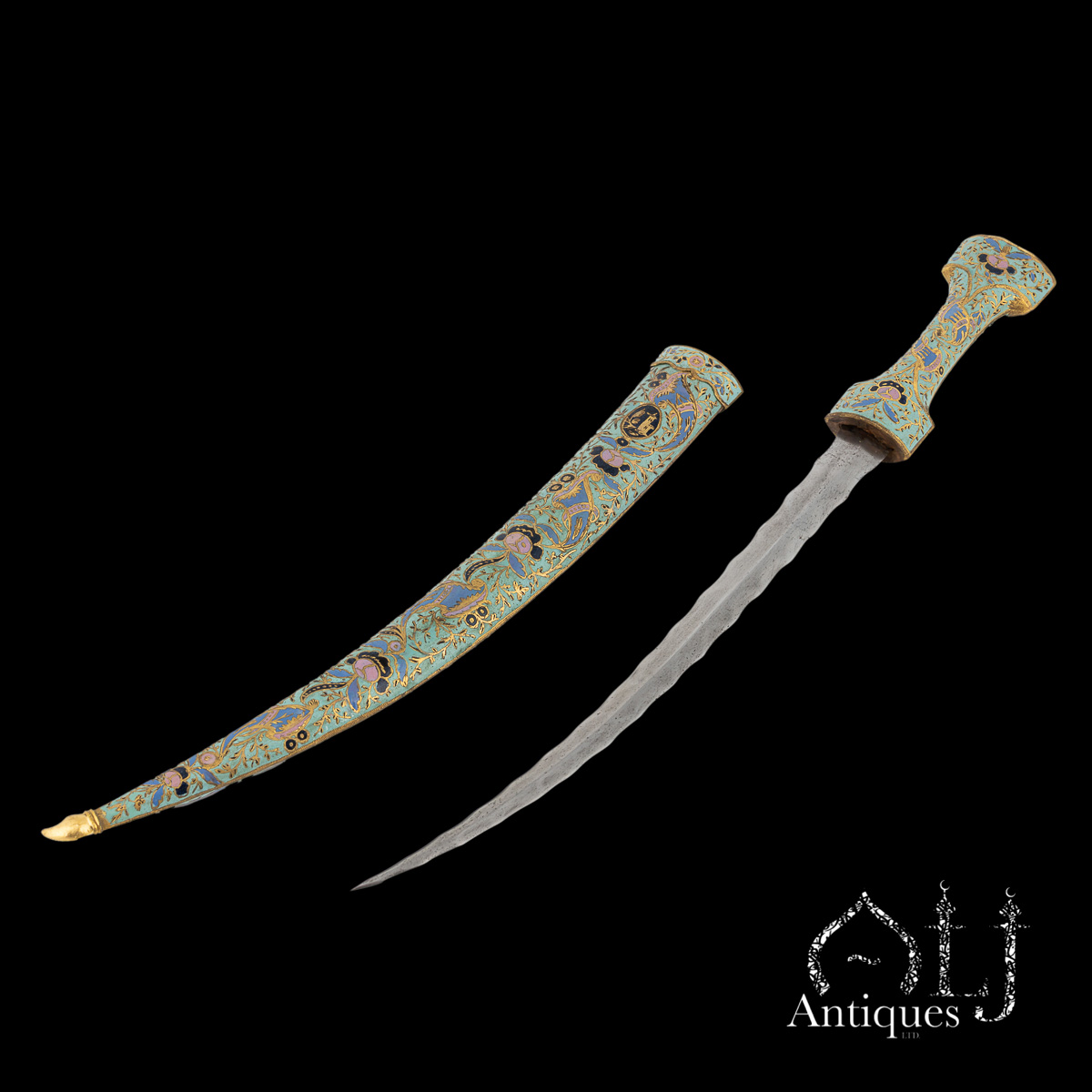
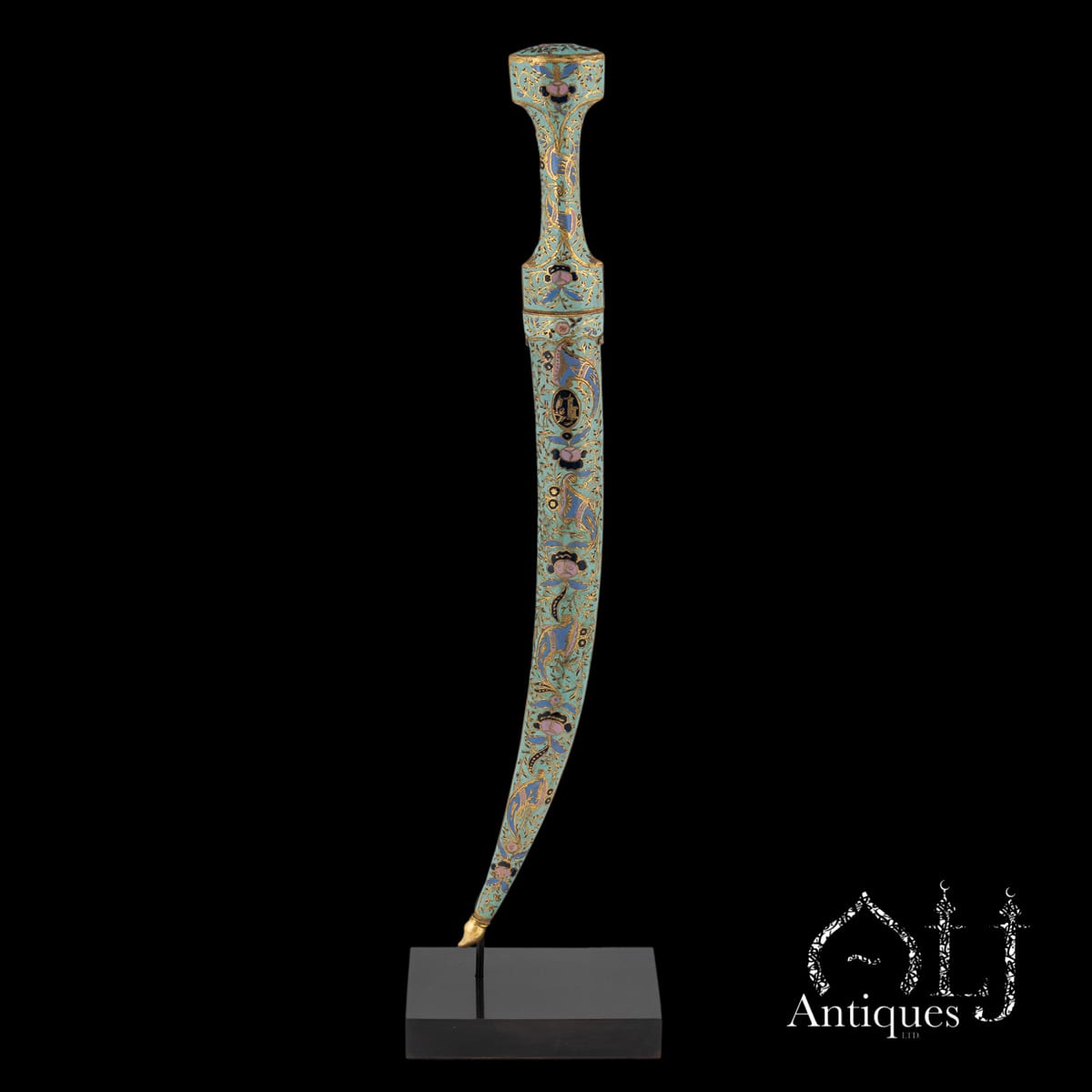
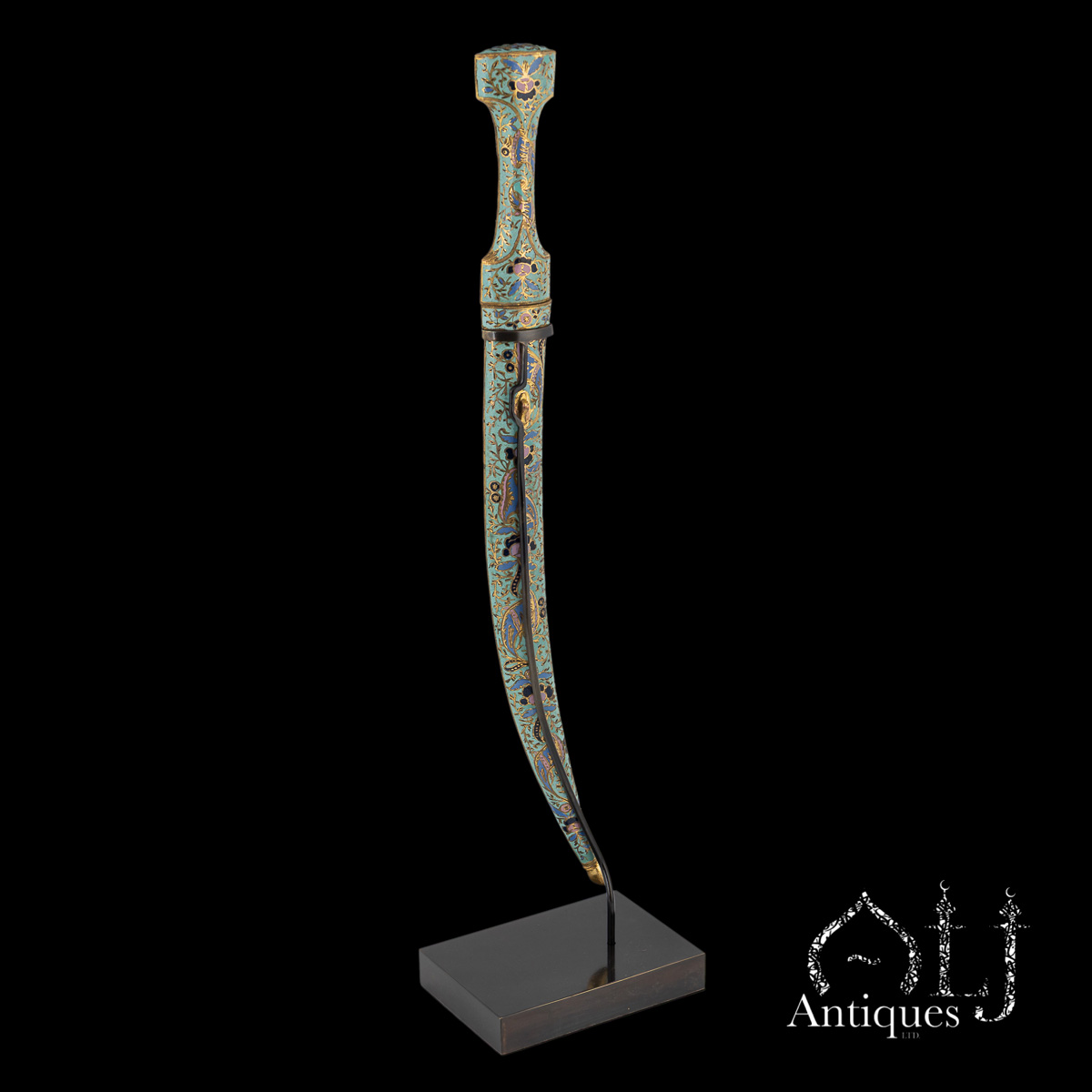
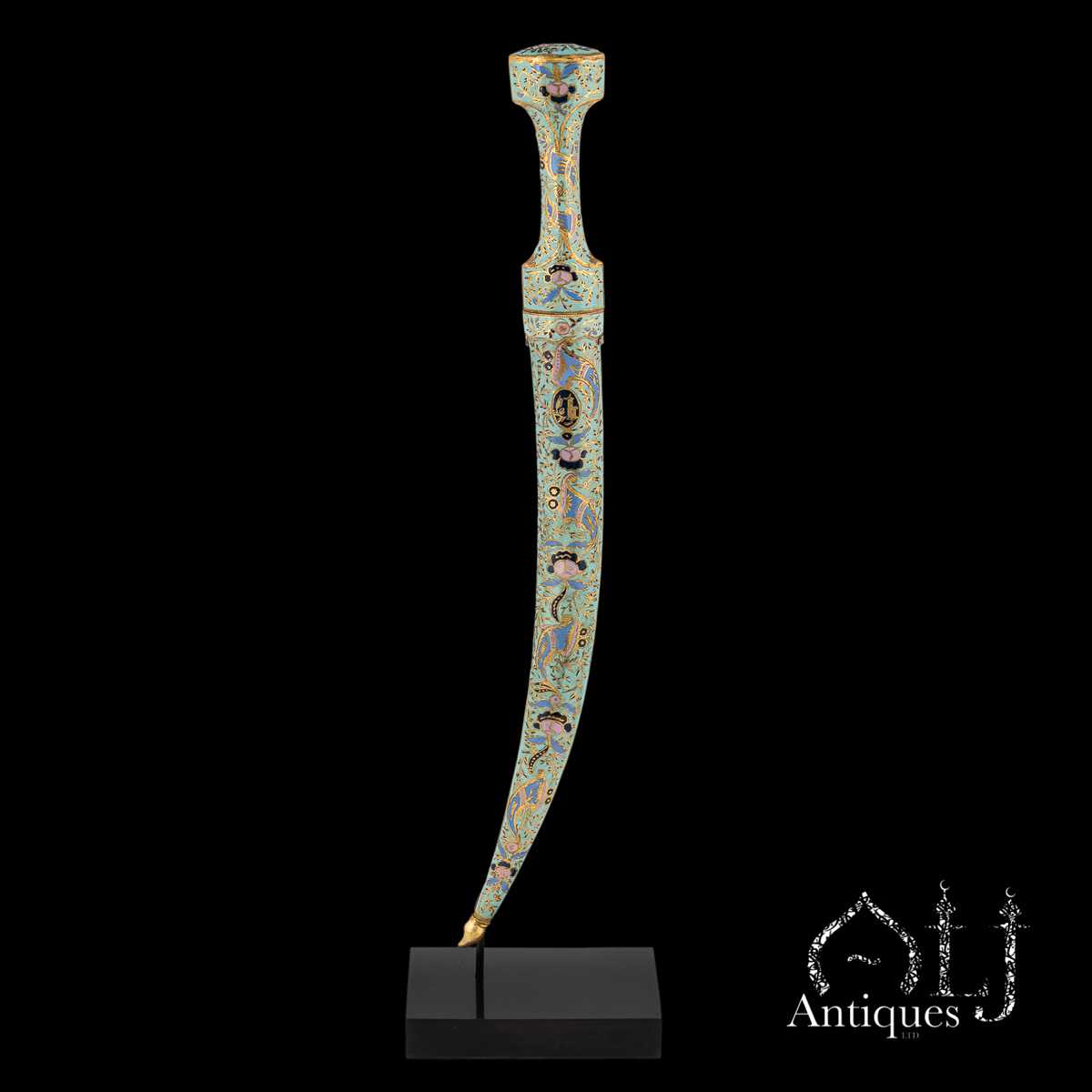
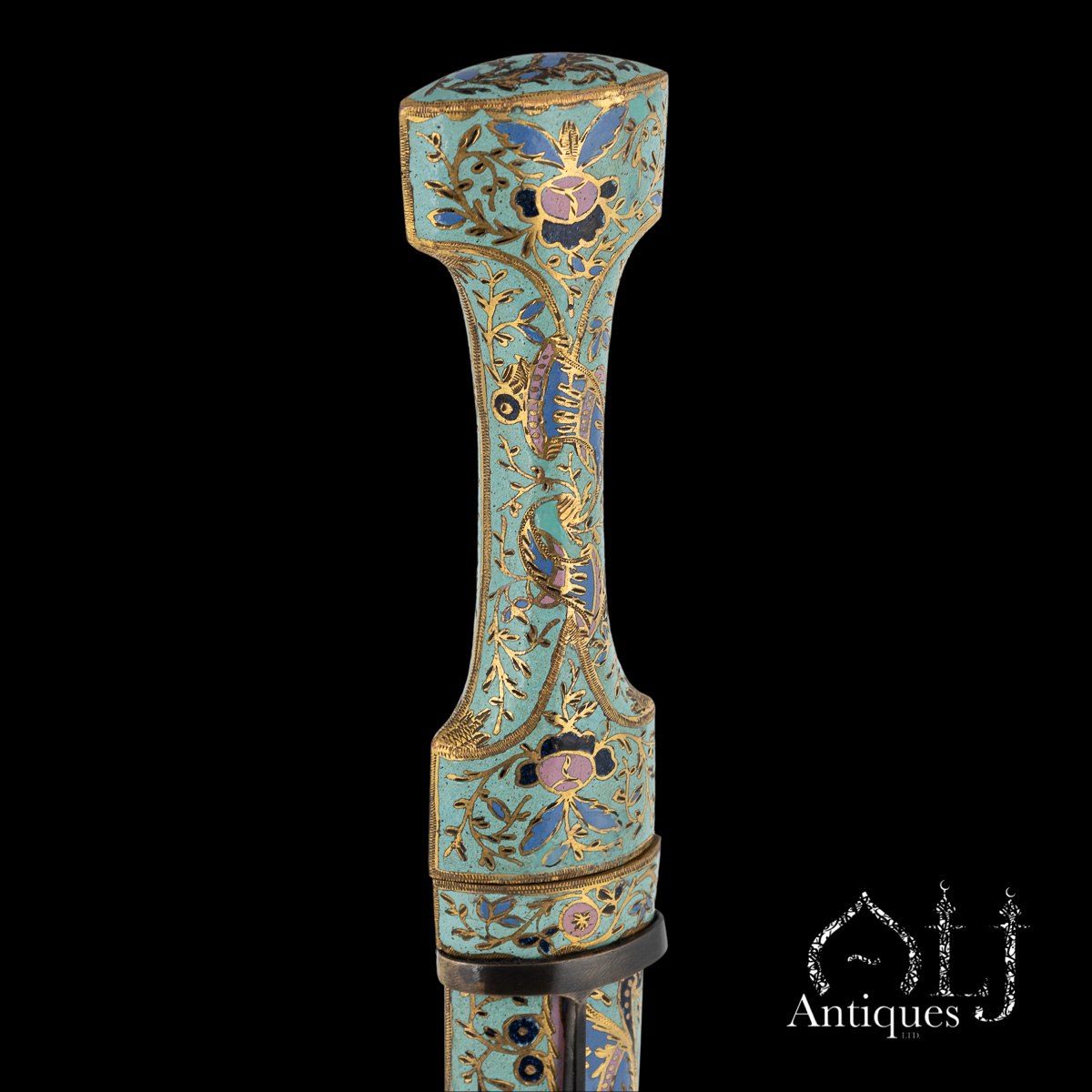
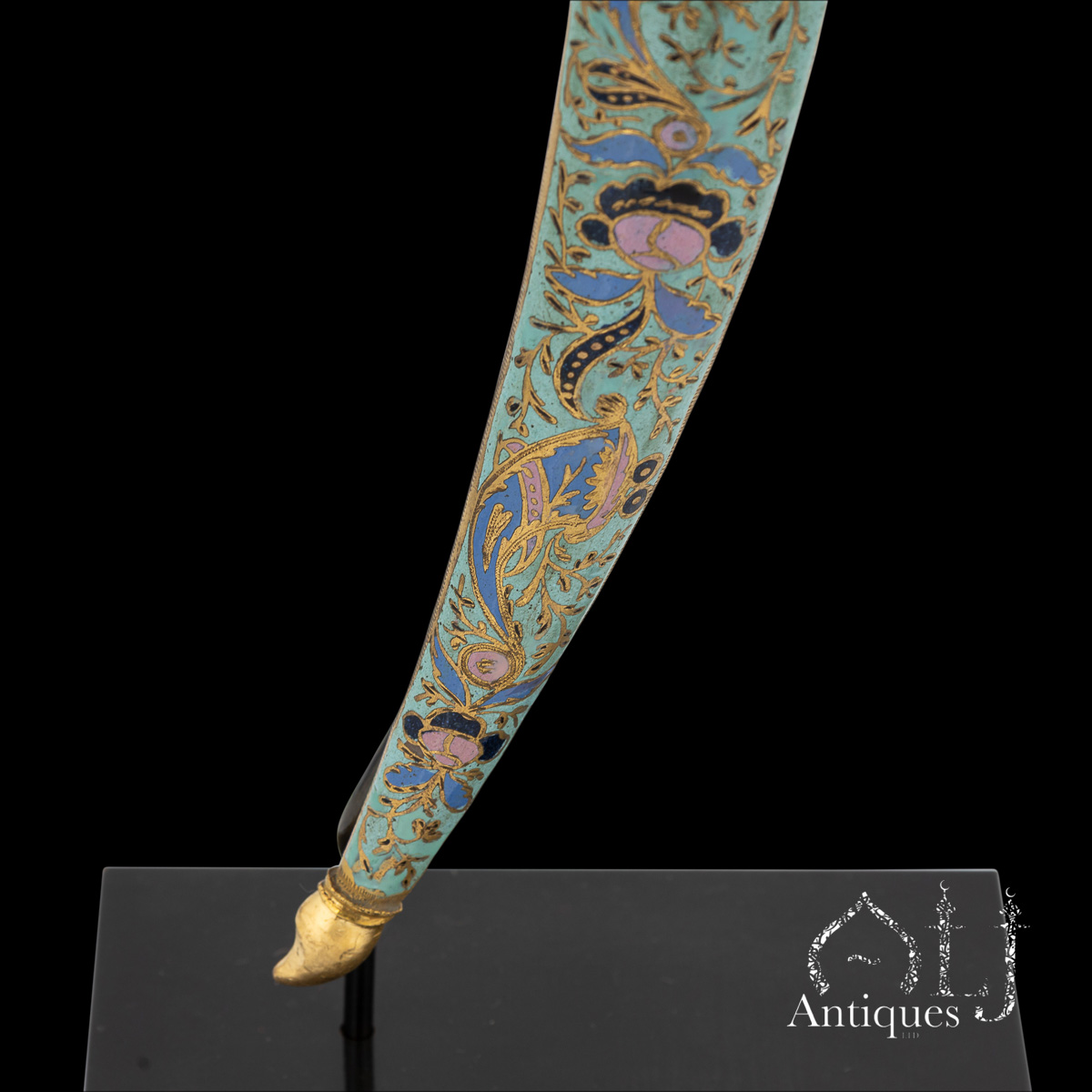
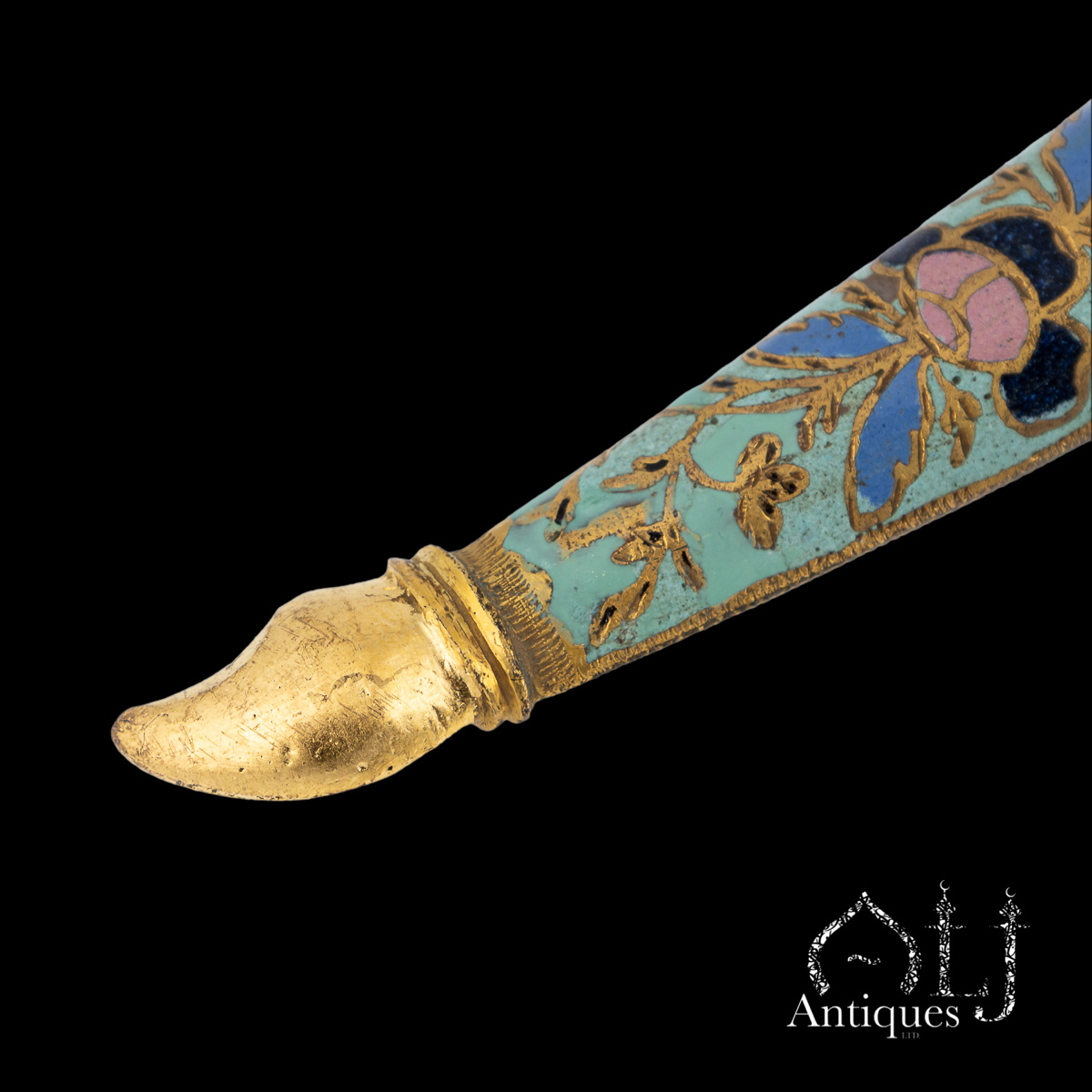
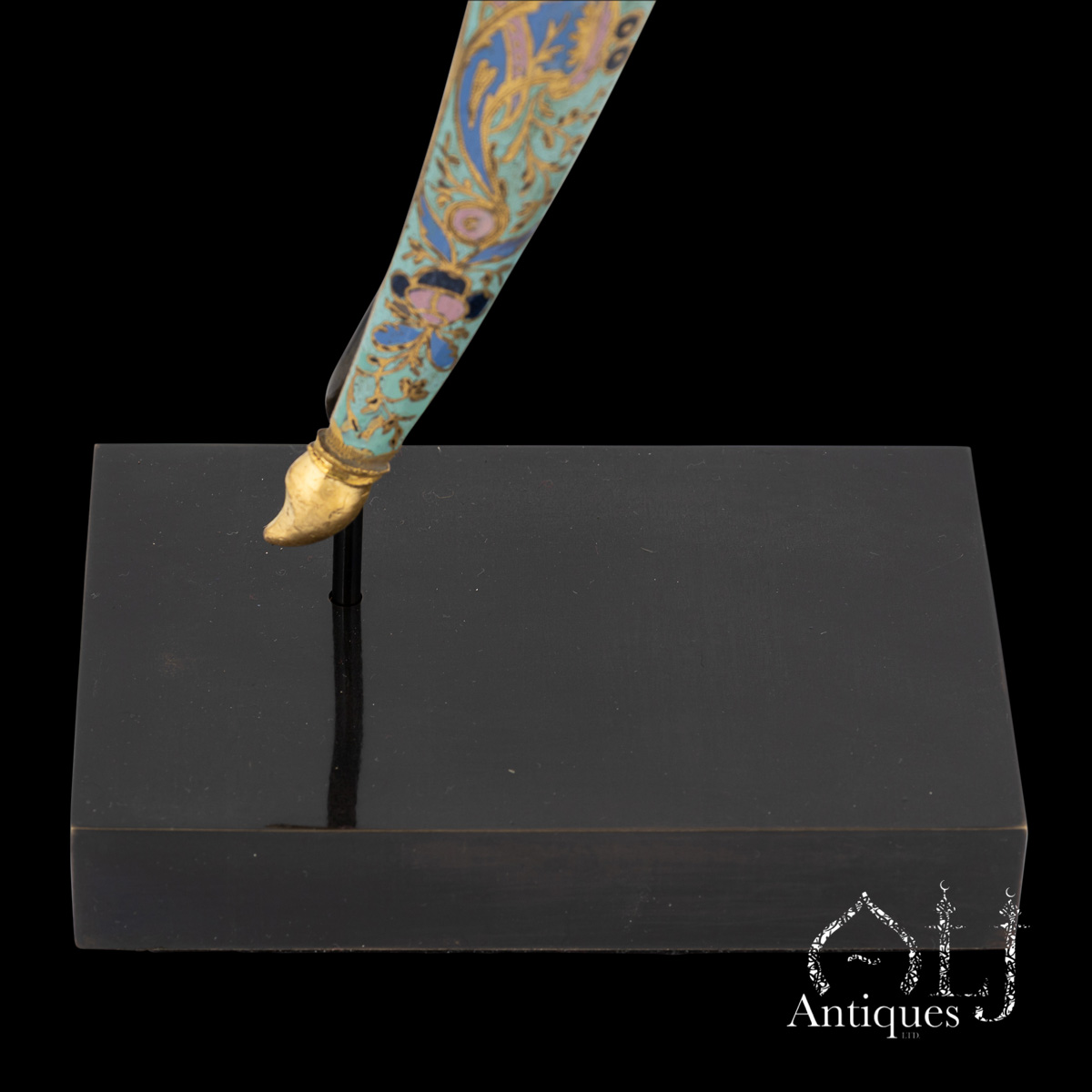
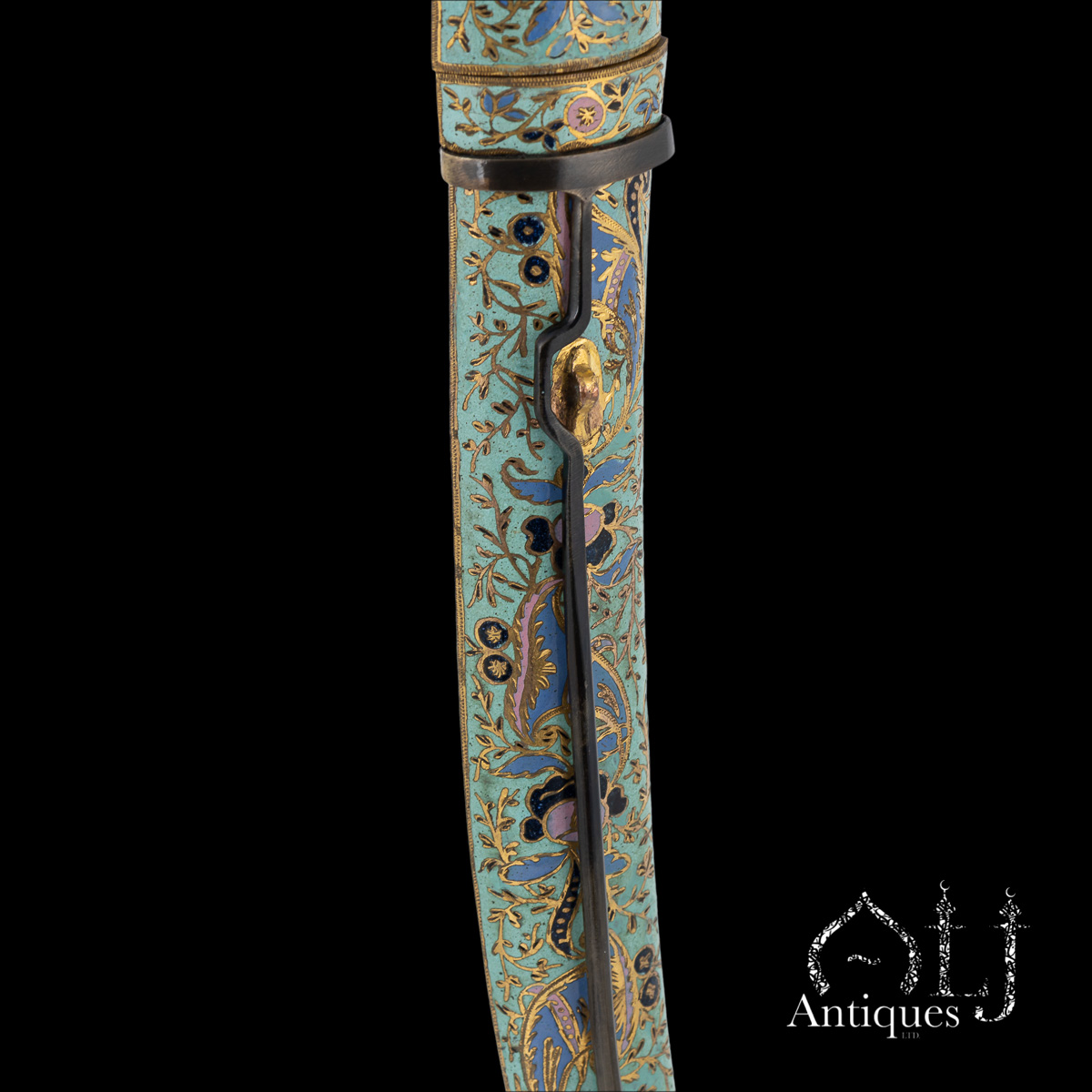
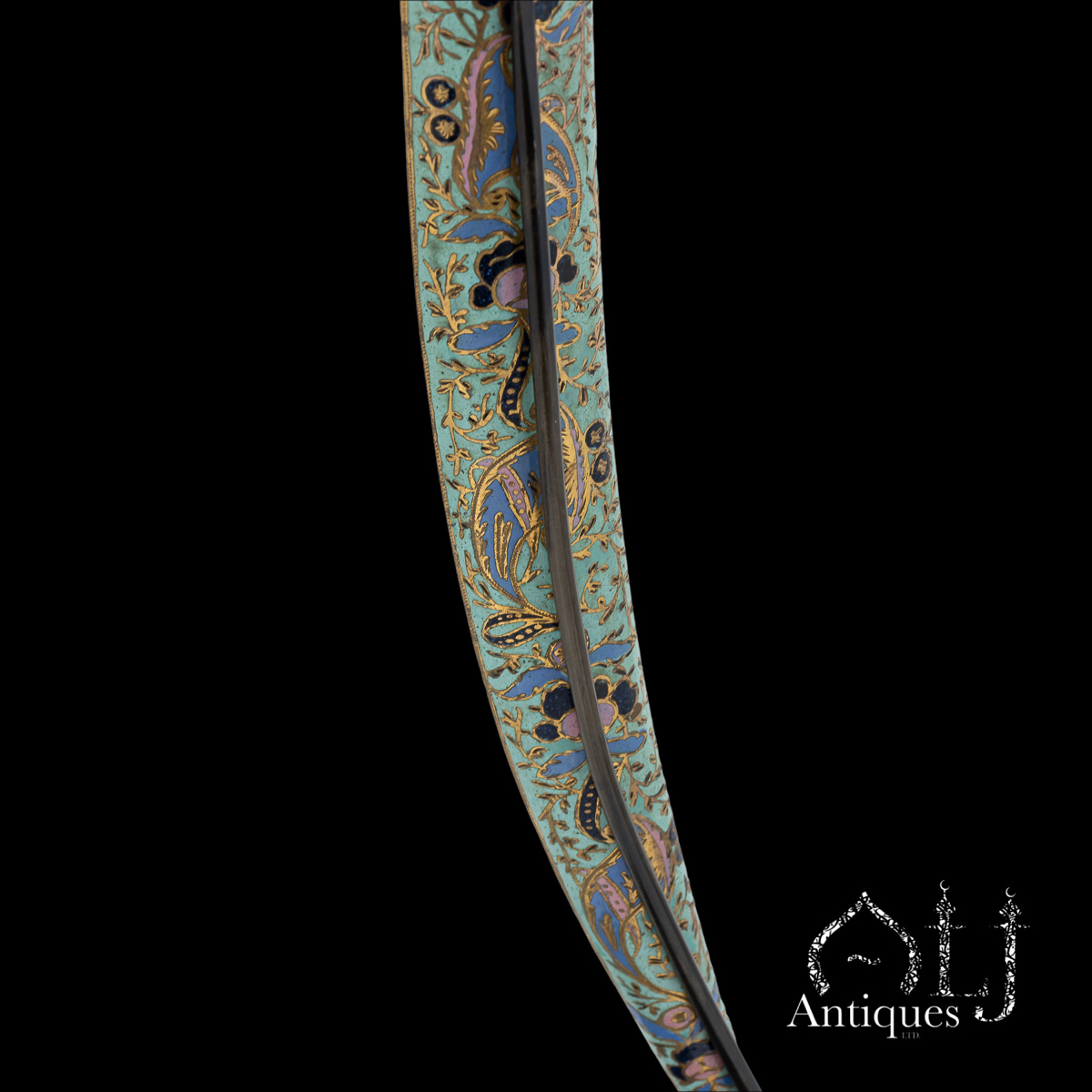
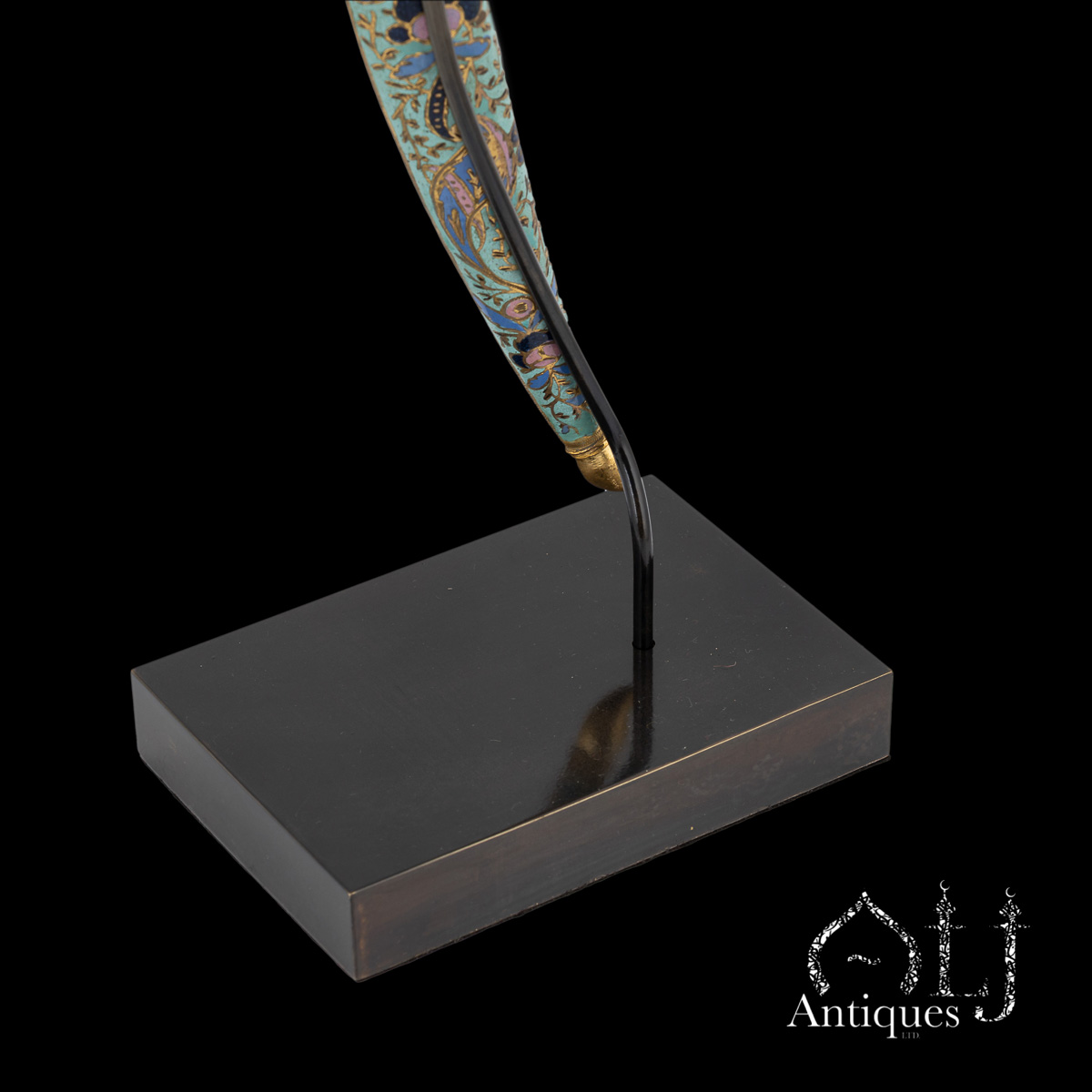
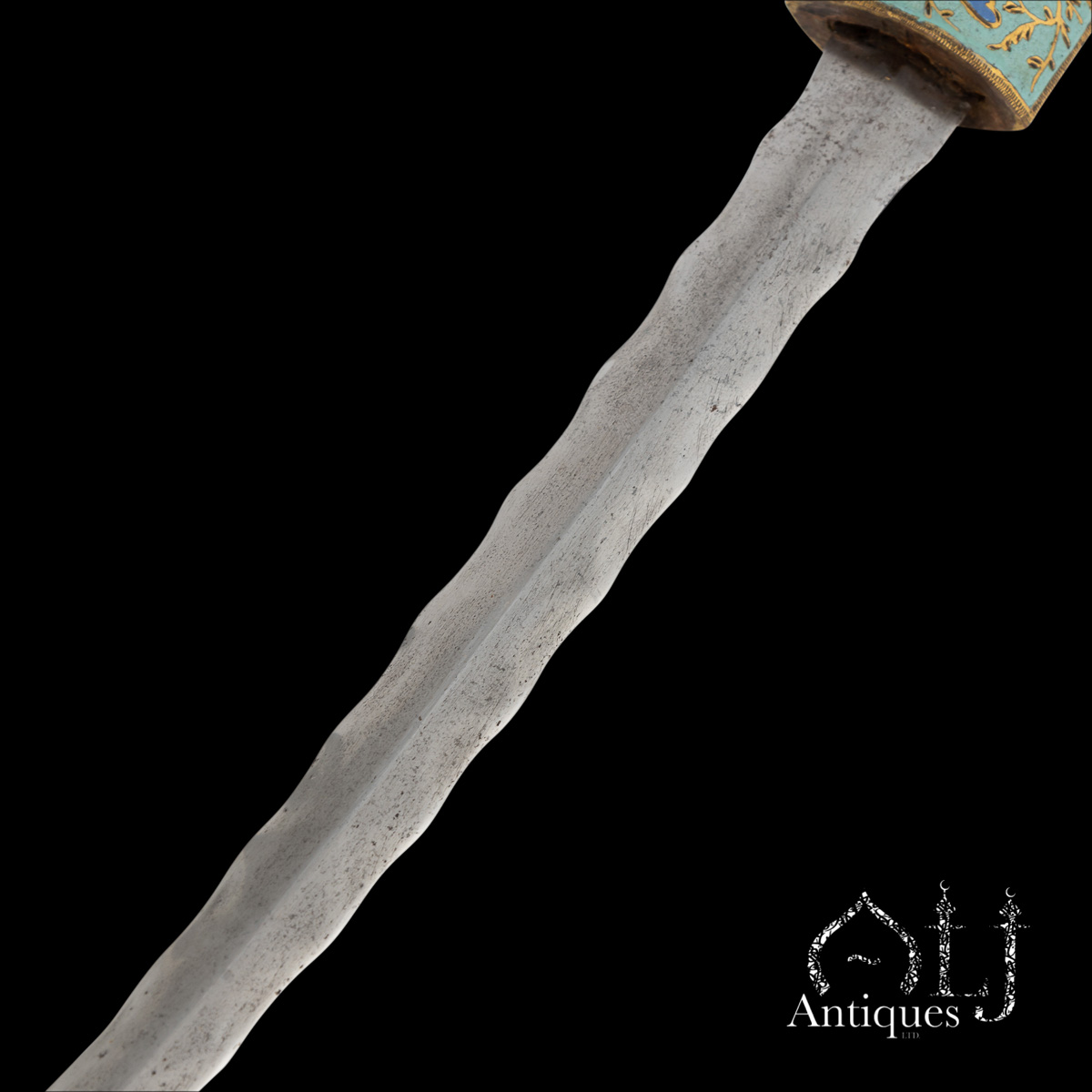
A rare and finely decorated Ottoman ceremonial dagger (bıçak or jambiya) distinguished by its elegant serpentine or undulating steel blade and richly ornamented gilt copper (tombac) hilt and scabbard decorated with polychrome enamel.
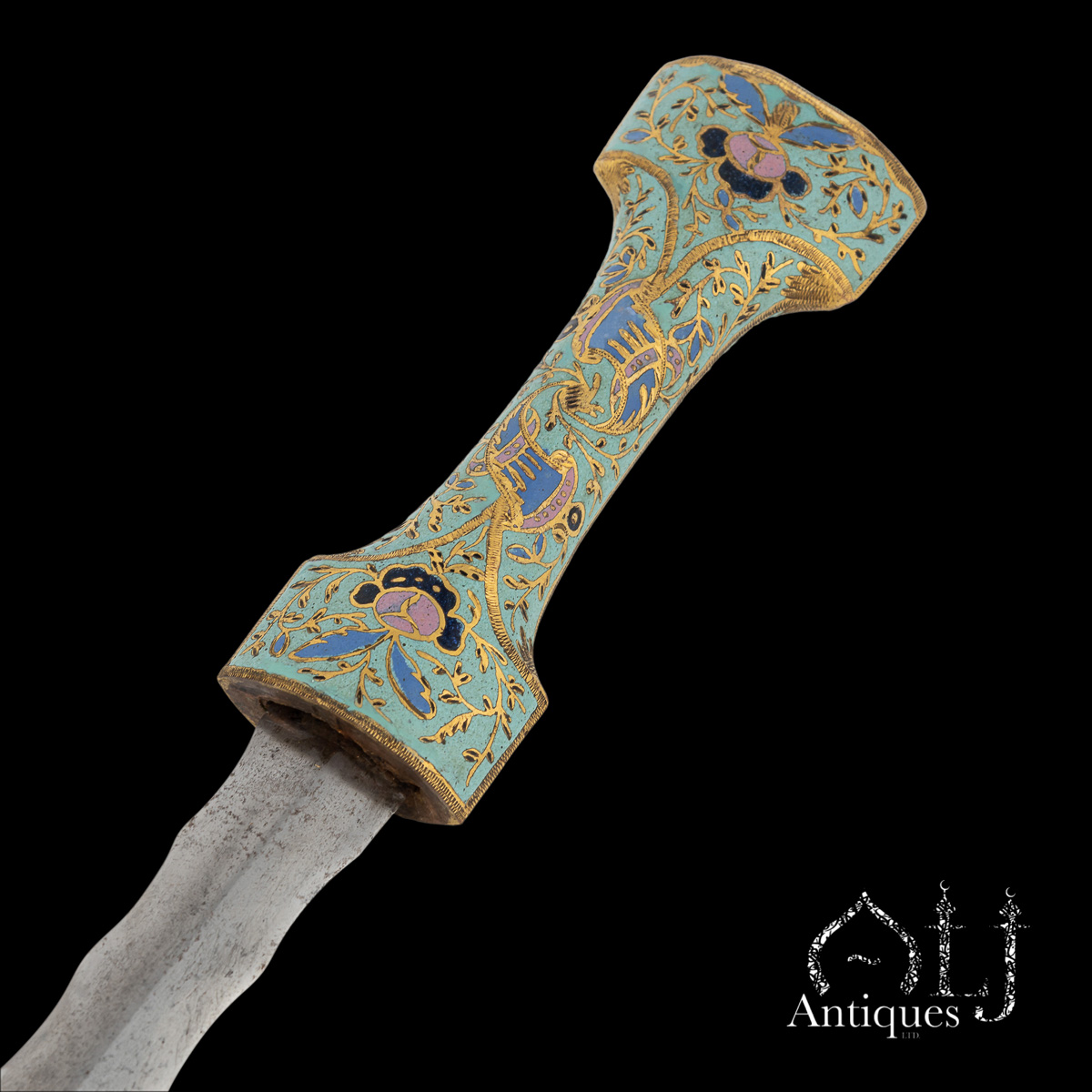
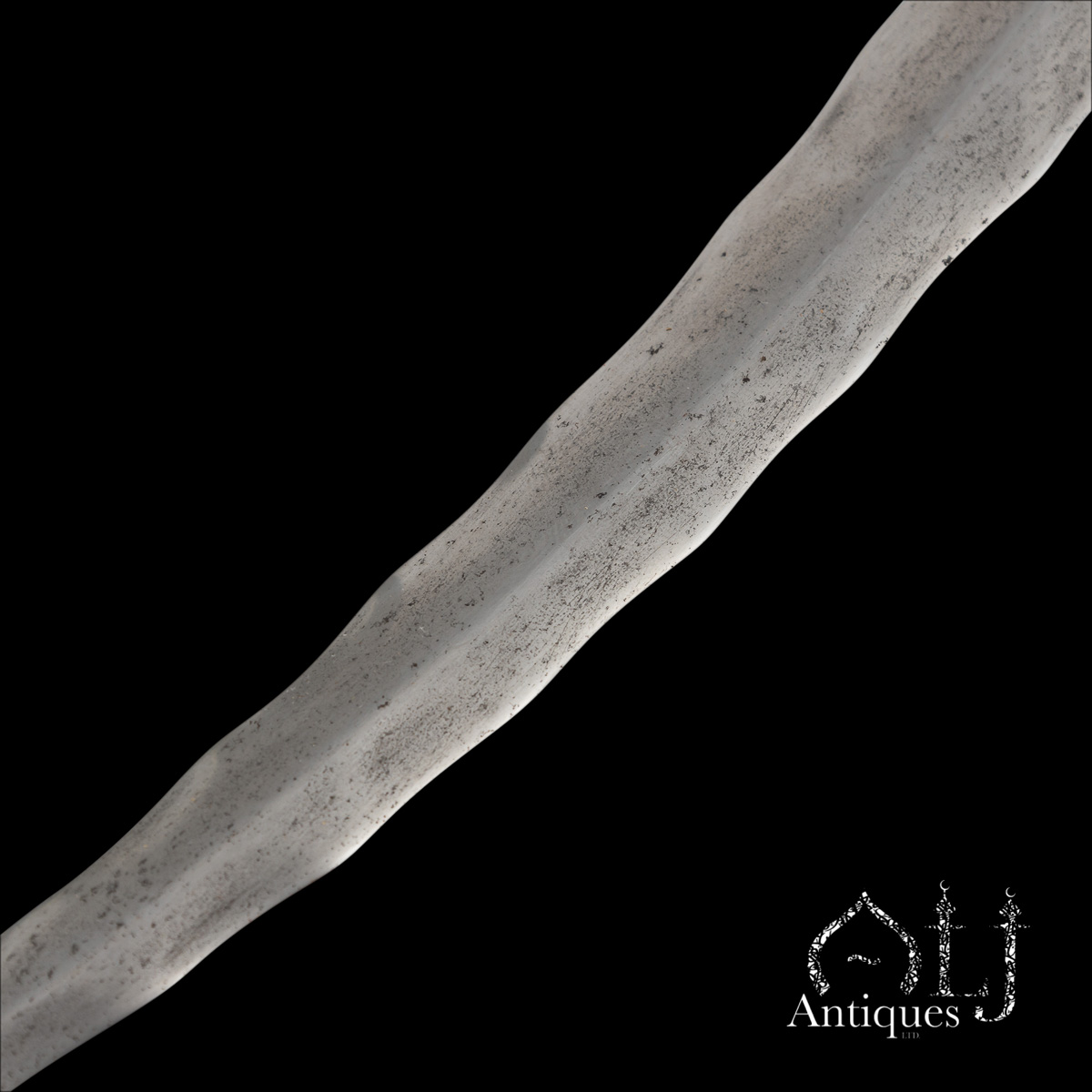
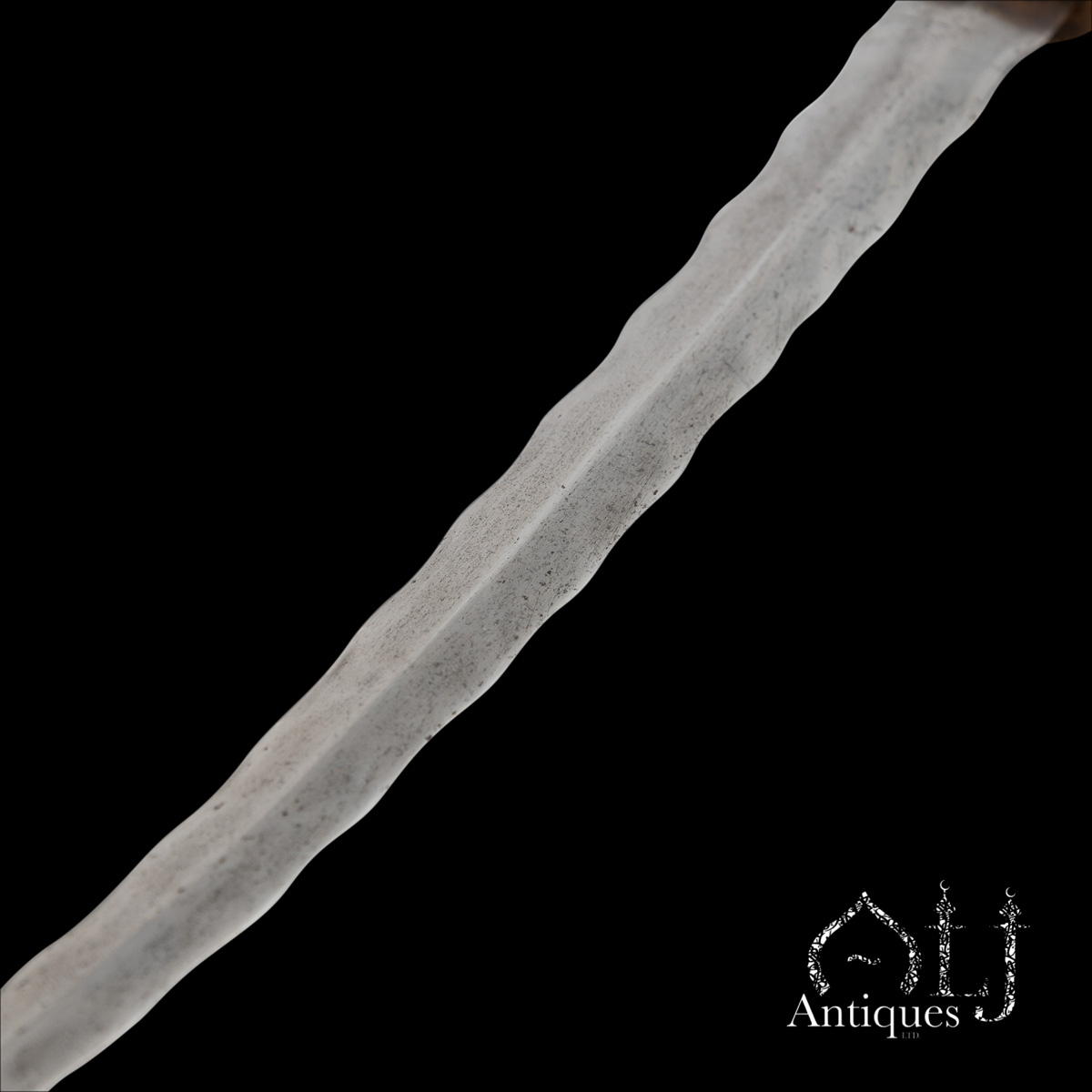
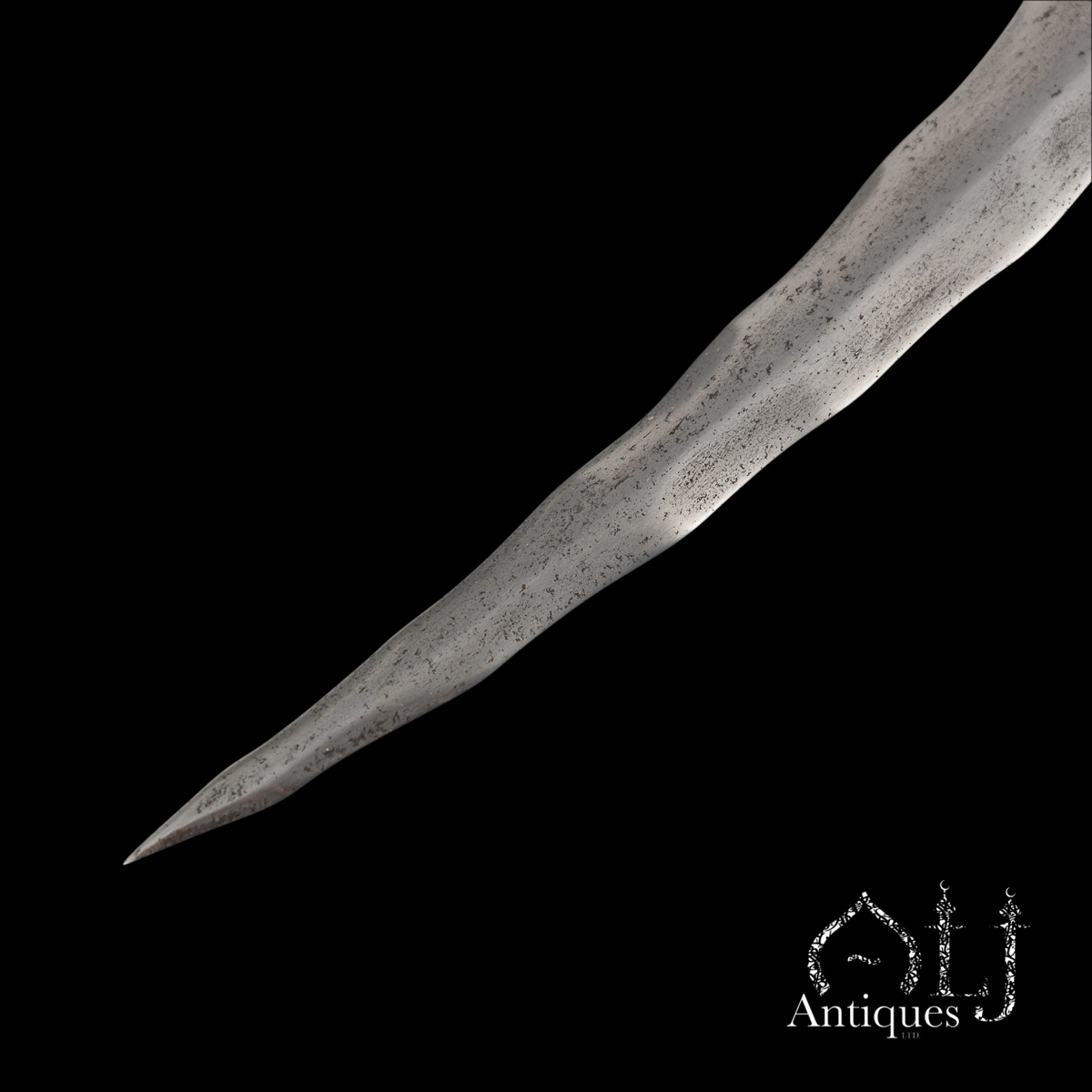
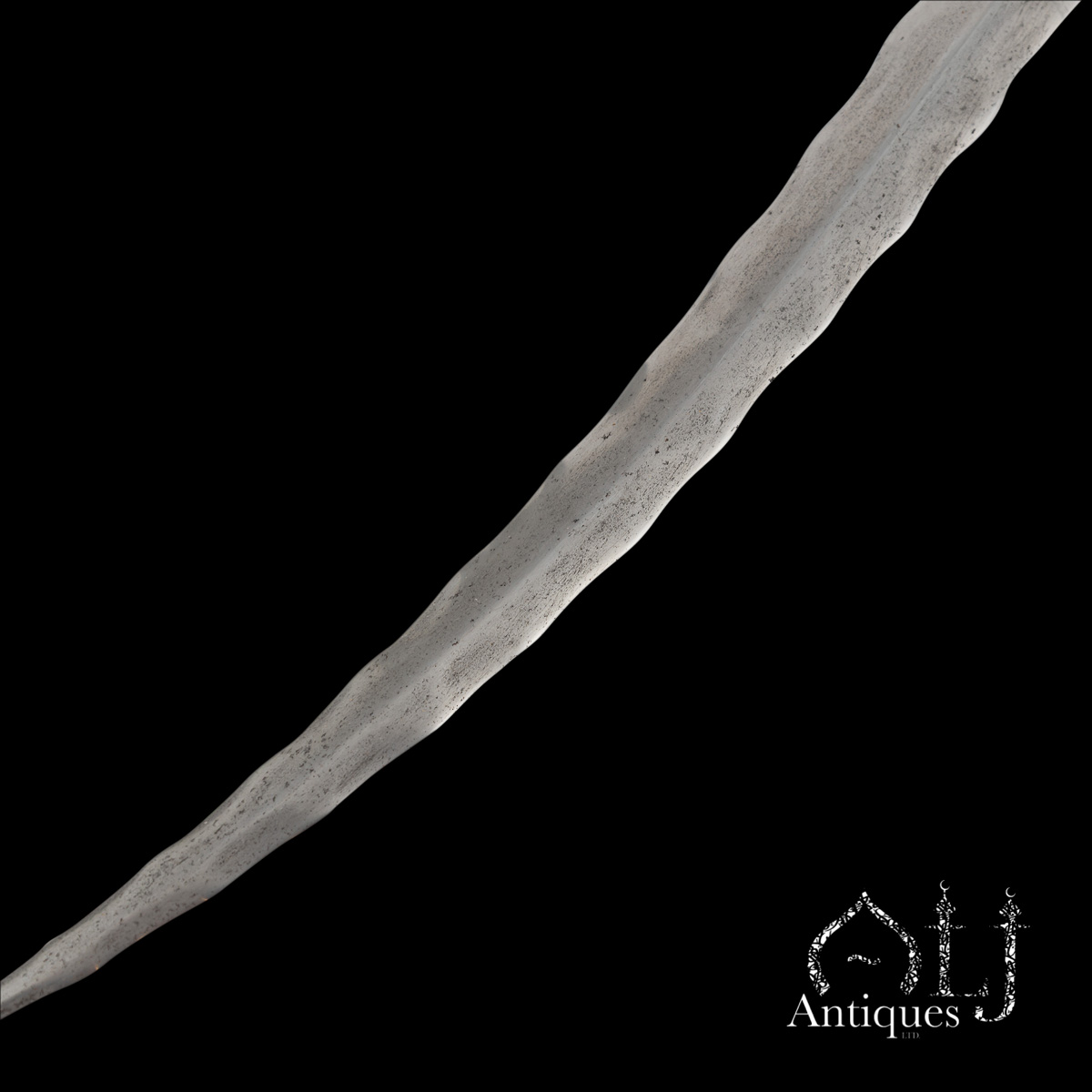
The blade is forged from watered steel, formed with a distinctive serpentine or wave-like profile along the cutting edge, creating a rhythmic undulation that culminates in a sharply tapering point. Blades of this form are comparatively uncommon and are generally associated with luxury weapons produced for ceremonial use and elite display, rather than purely functional combat.
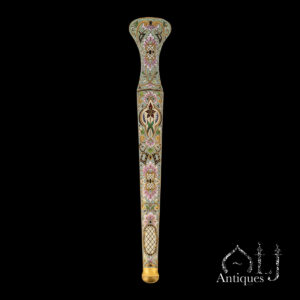
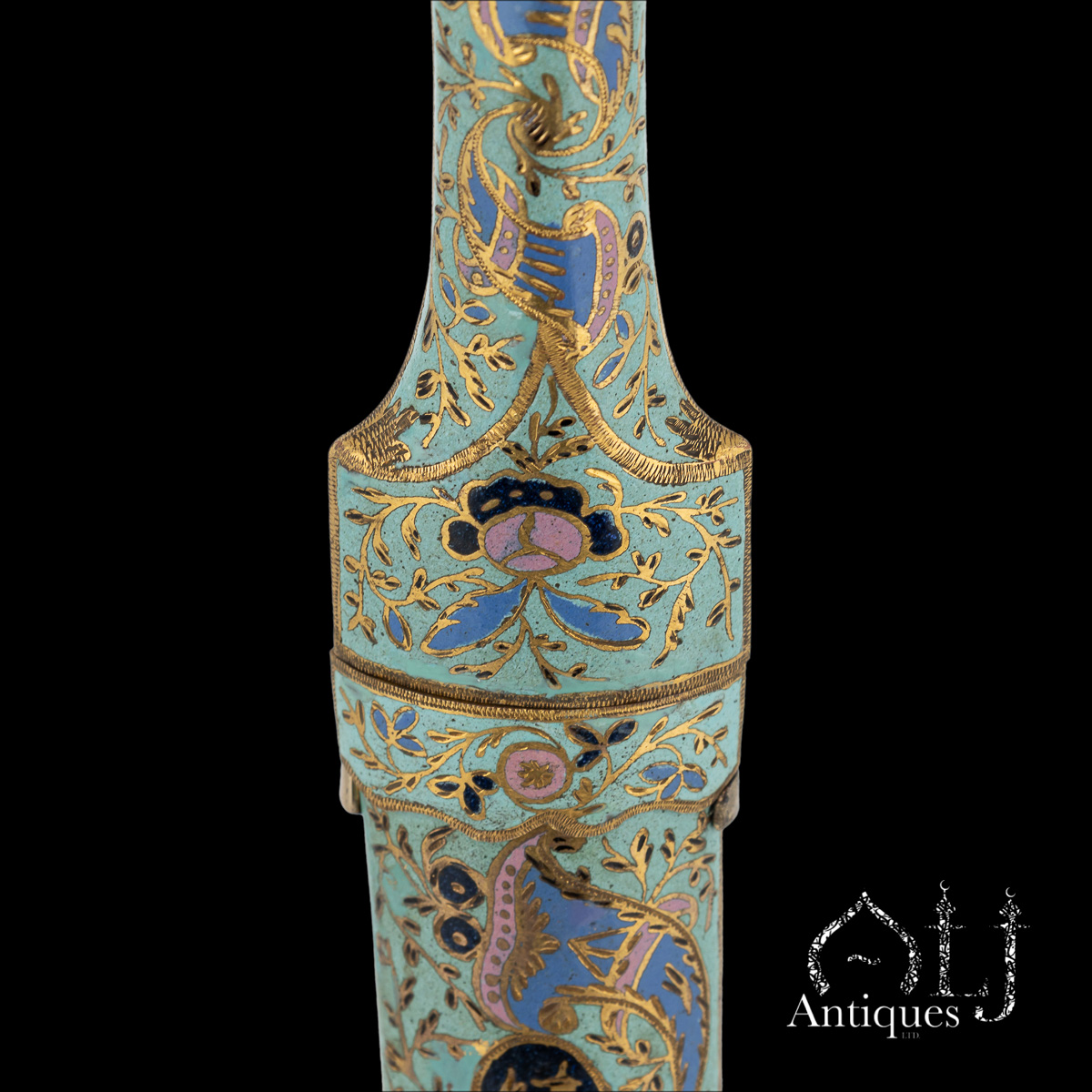
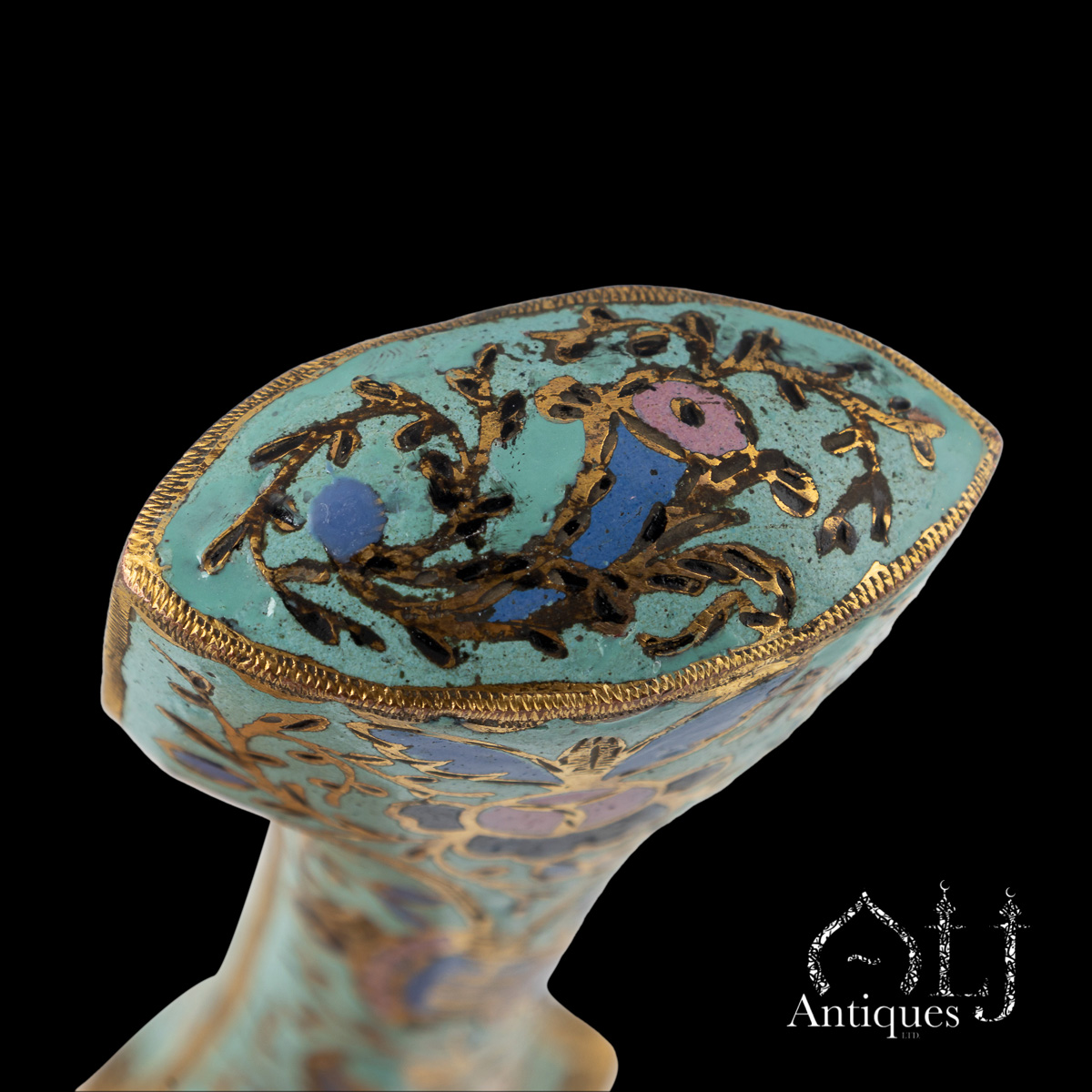
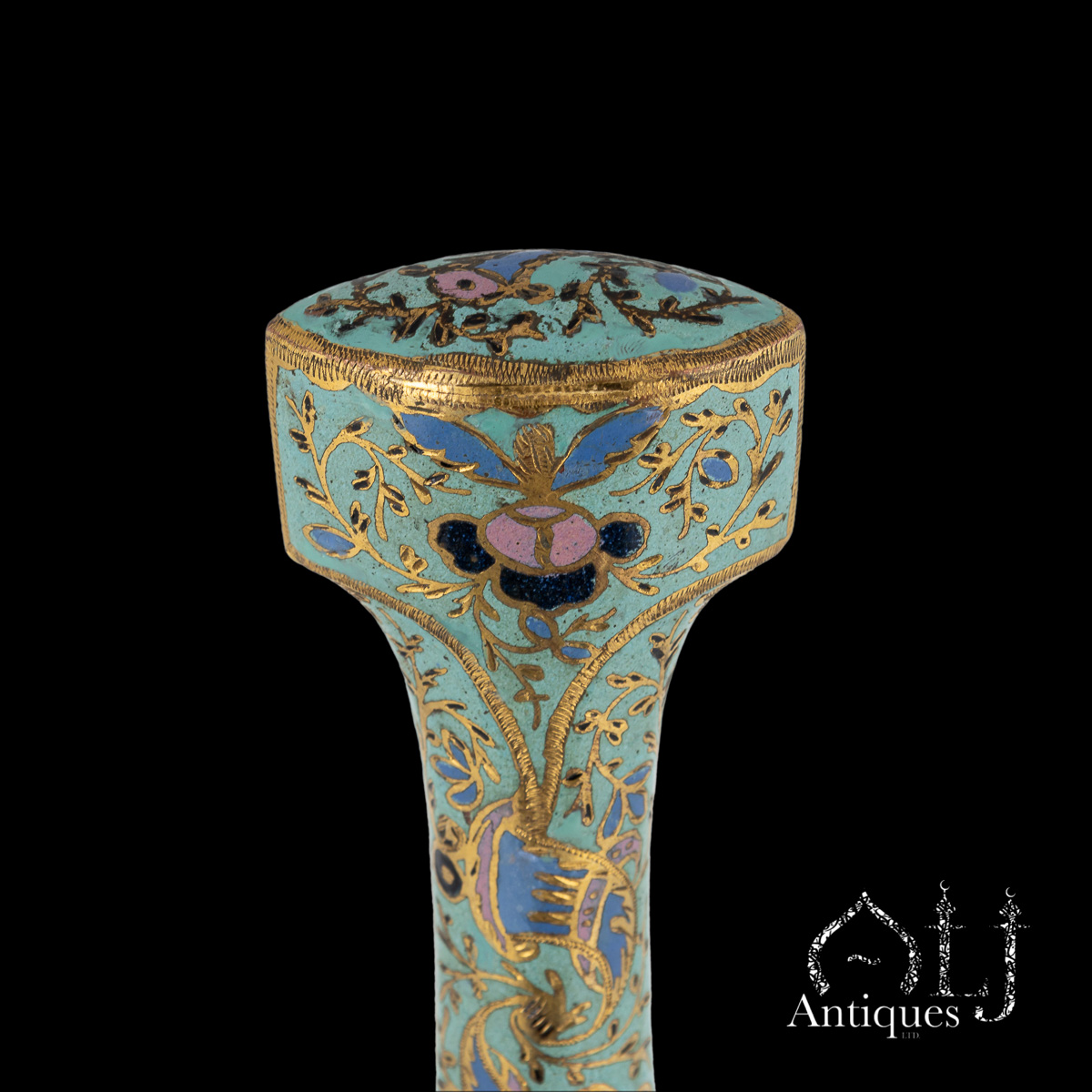
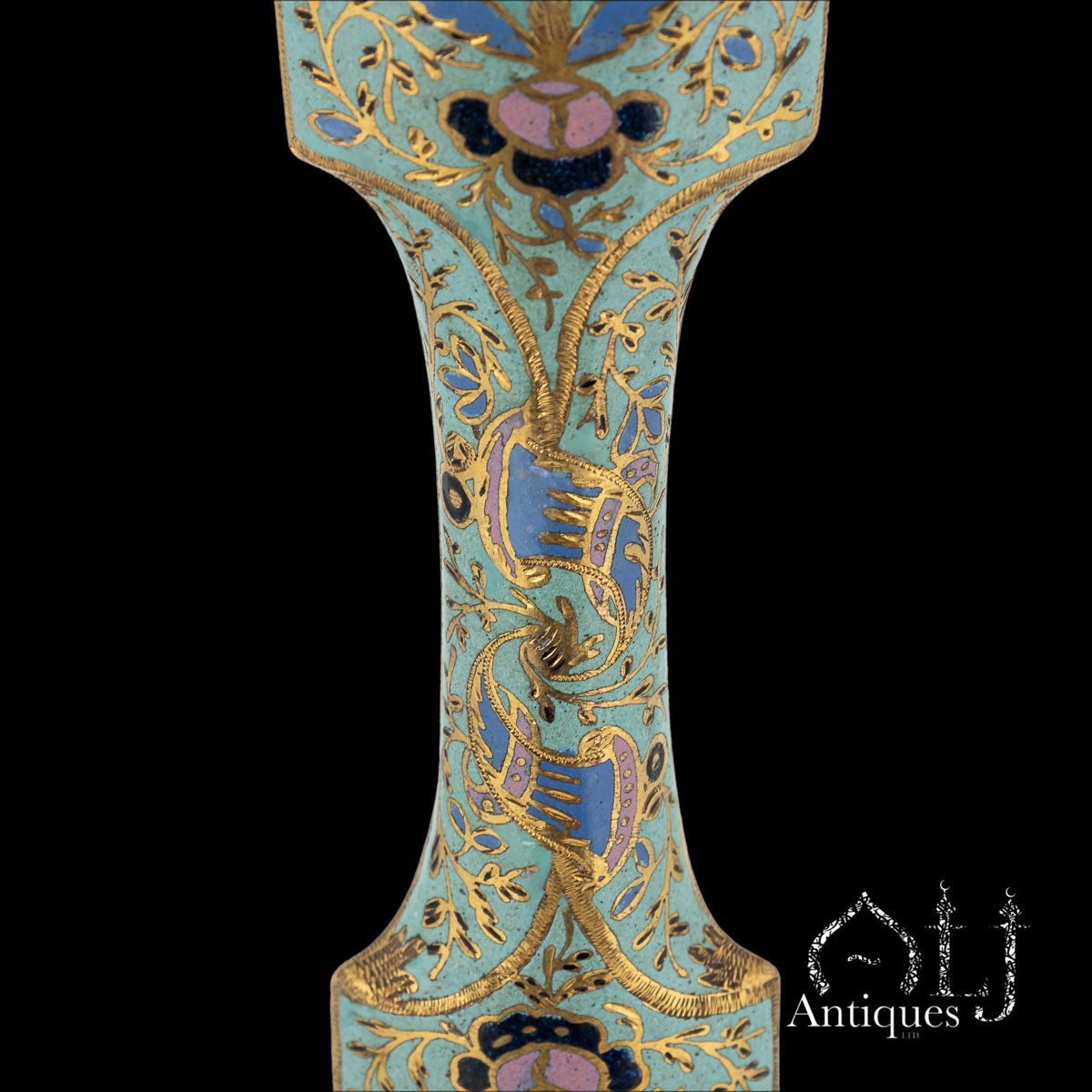
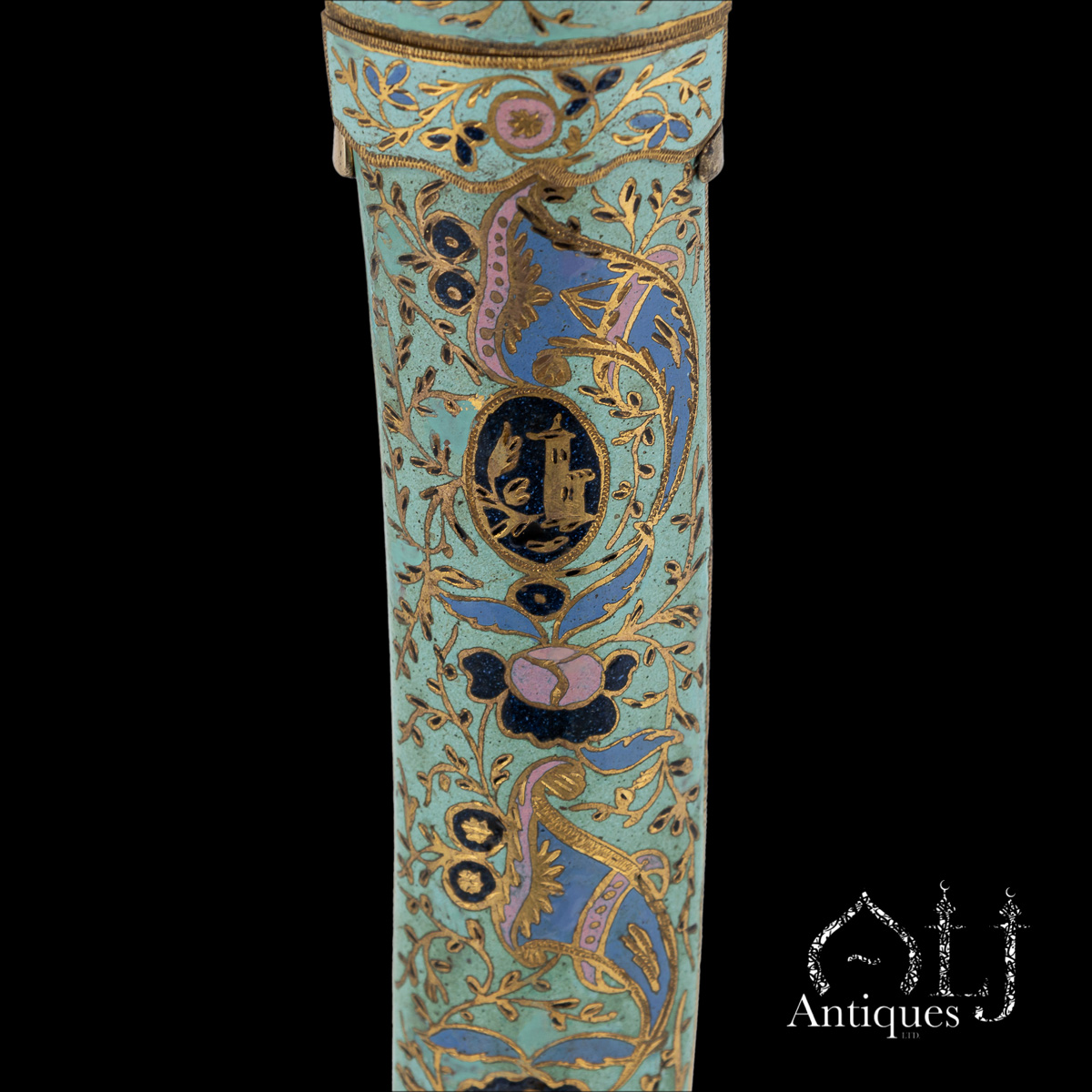
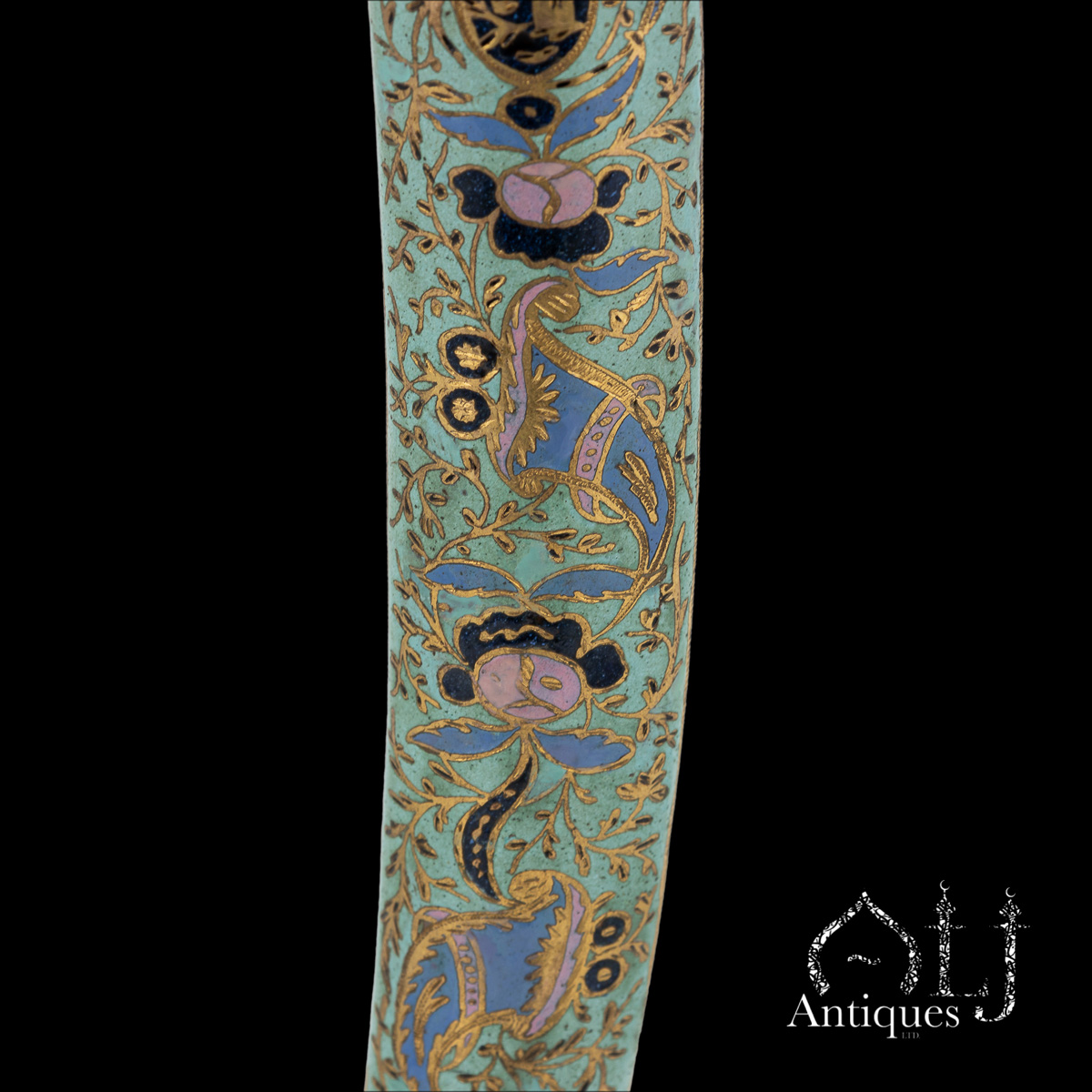
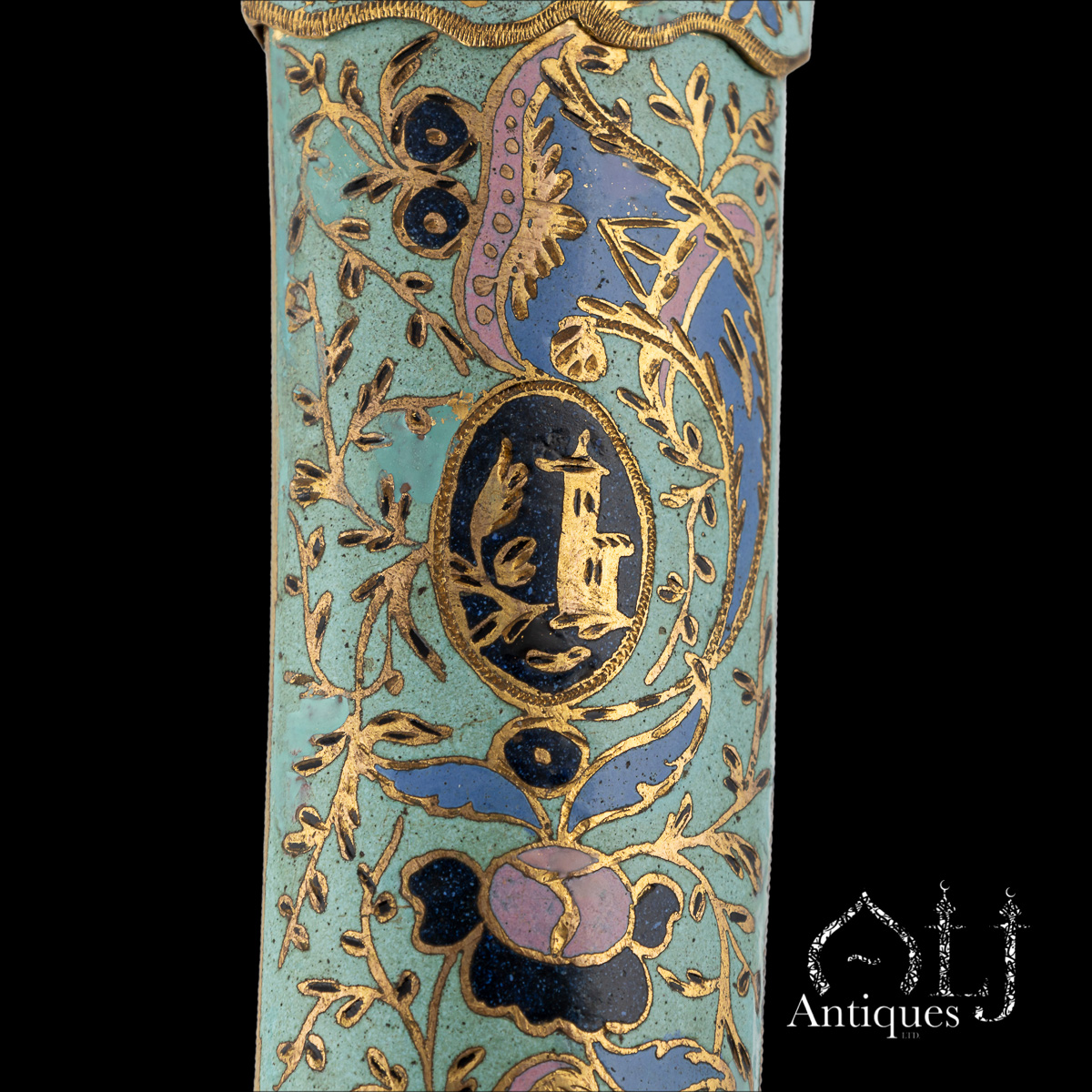
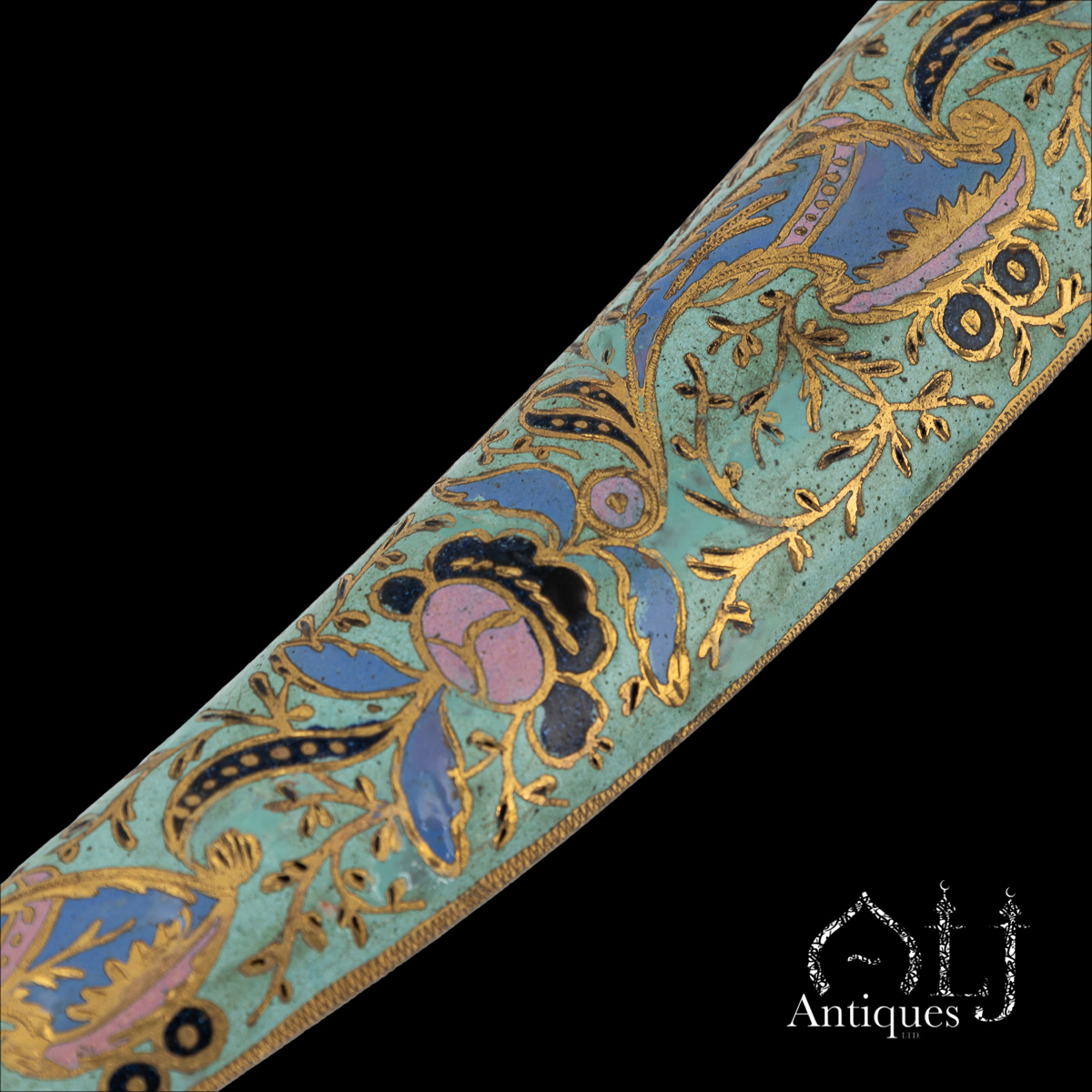
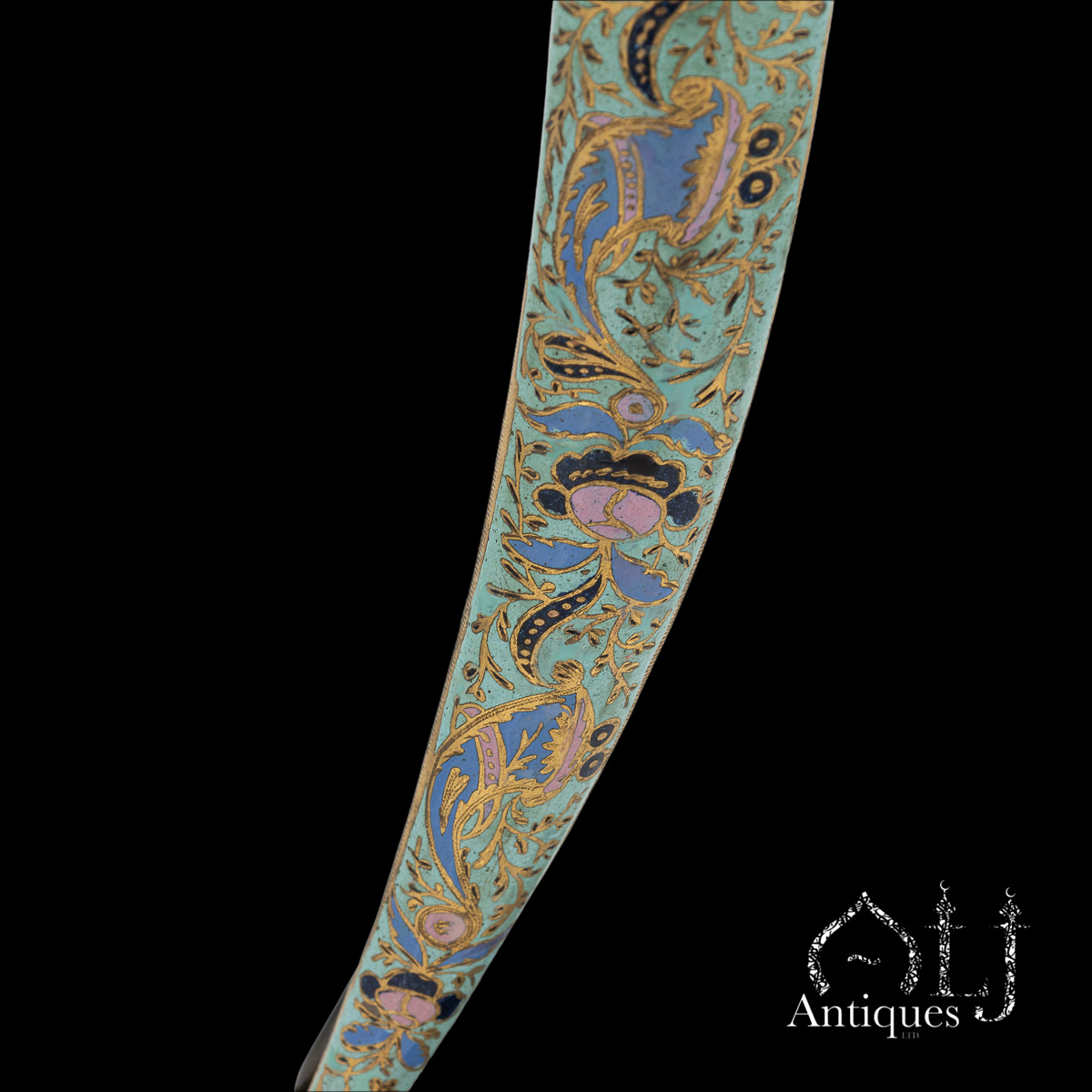
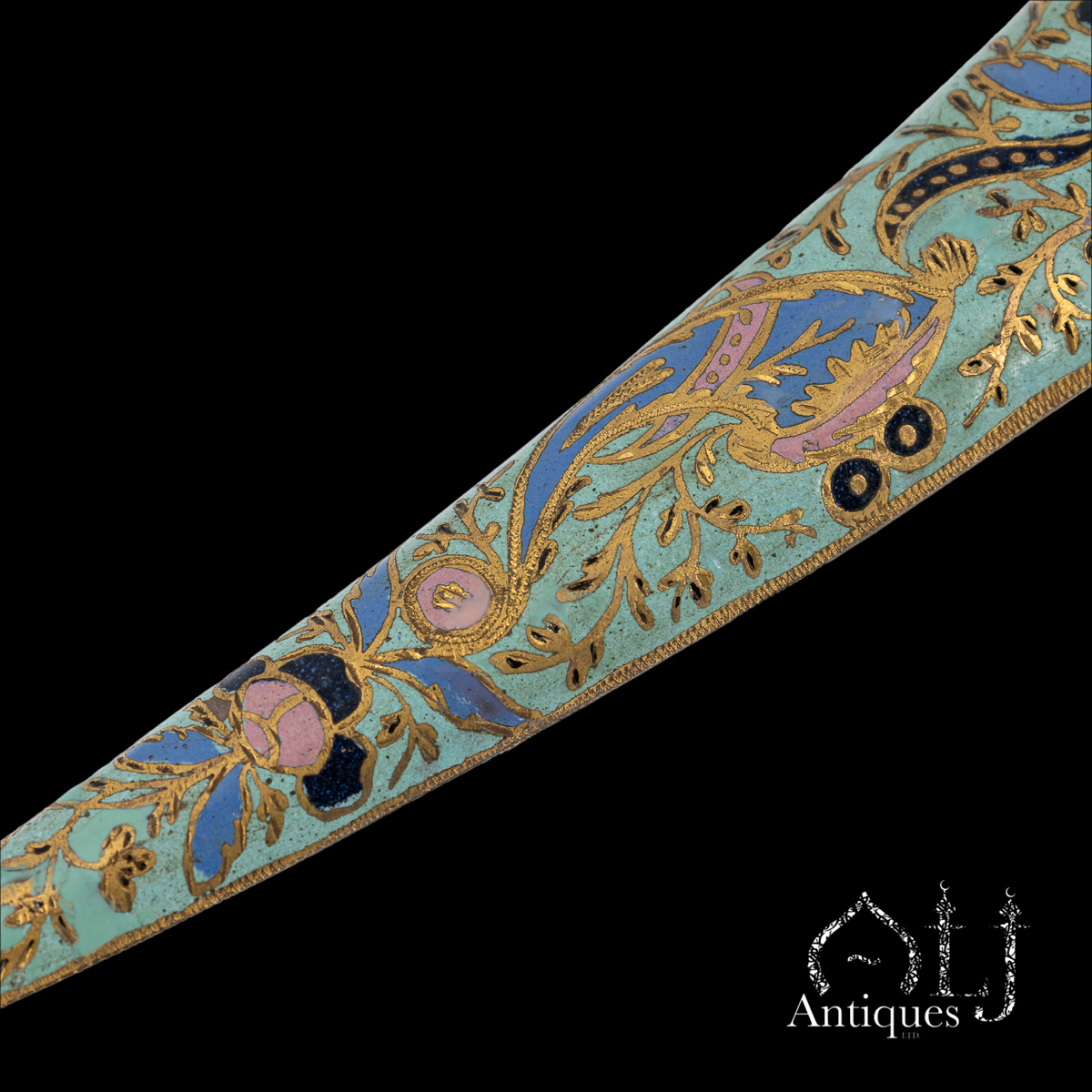
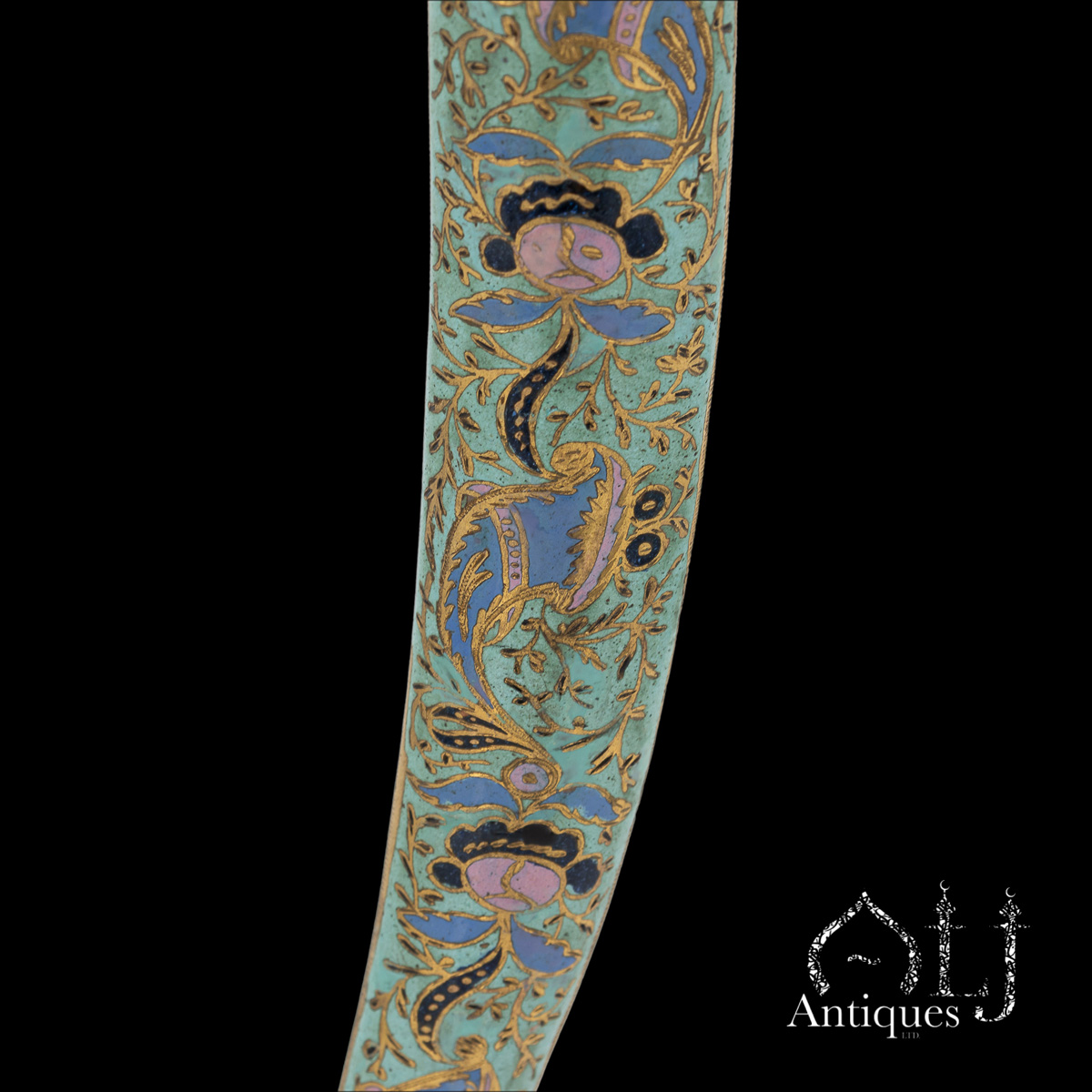
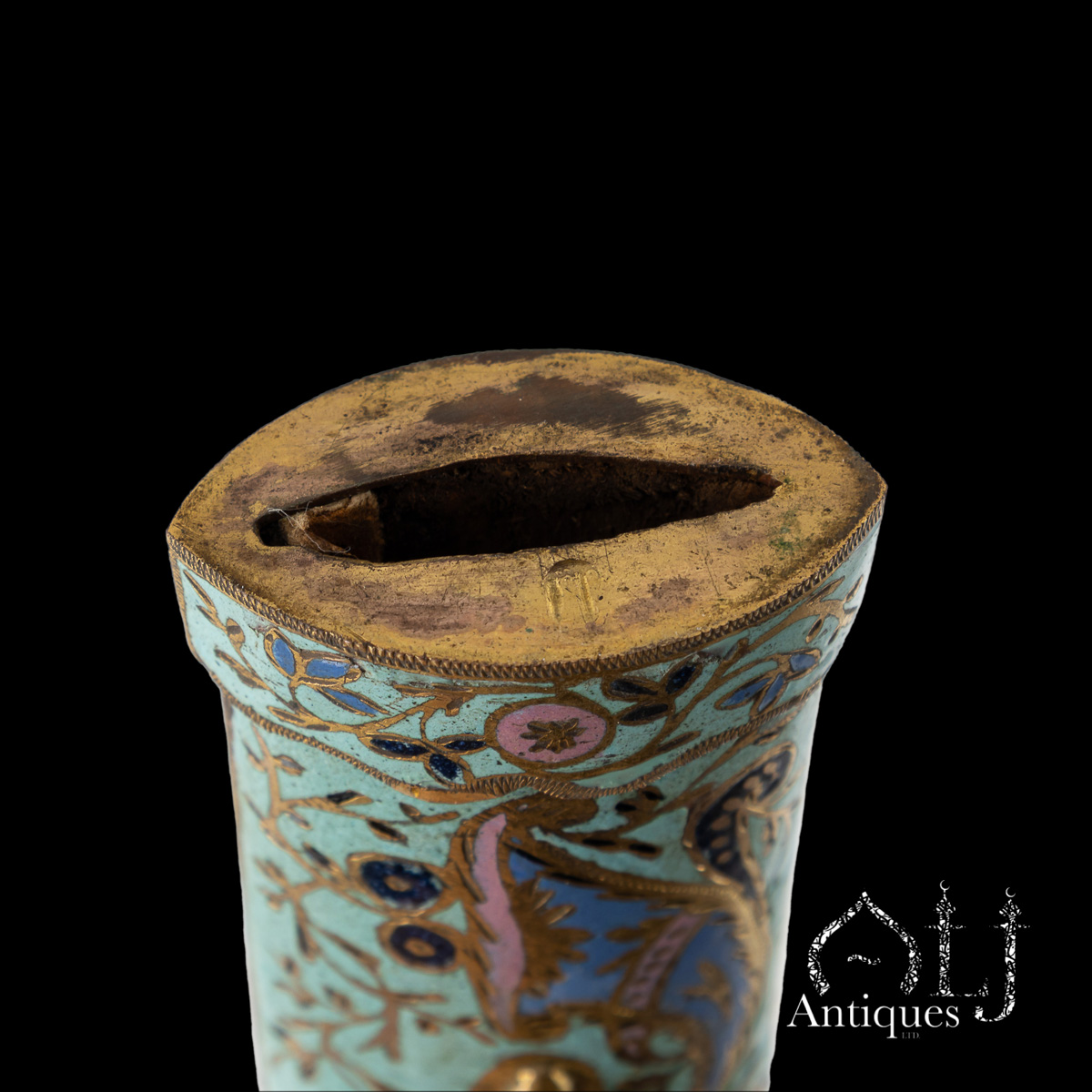
The hilt is of characteristic waisted baluster form, widening toward both the pommel and the guard. It is constructed from gilt copper (tombac) and decorated overall with finely engraved and gilded scrolling vegetal arabesques enriched with polychrome enamel in tones of turquoise, cobalt blue, lavender, pink, and black.
The decorative programme consists of dense floral vines and stylised blossoms, reflecting the naturalistic floral aesthetic that became prominent in Ottoman decorative arts from the seventeenth century and continued into the late eighteenth and early nineteenth centuries. Incorporated within the ornament are symbolic elements including a horn-shaped vessel resembling a cornucopia, traditionally associated with prosperity and abundance, as well as small architectural cartouches depicting stylised buildings or pavilions.
Such imagery echoes the broader artistic vocabulary of Ottoman decorative arts, in which garden imagery, flourishing vegetation, and architectural motifs symbolised harmony, prosperity, and the cultivated environment of the imperial court.
The sophisticated enamel decoration and gilded ornamentation place this dagger within a group of luxury Ottoman enamelled arms, likely produced in provincial Ottoman workshops during the late eighteenth to early nineteenth century, possibly by Greek or Armenian craftsmen who played an important role in Ottoman metalworking and enamelling traditions.
Subtle aspects of the ornament—particularly the fluid vegetal scrolls and ornamental cartouches—also reveal a Rococo stylistic influence, reflecting the artistic dialogue between Ottoman decorative arts and contemporary European design during this period.
Materials and Decorative Technique
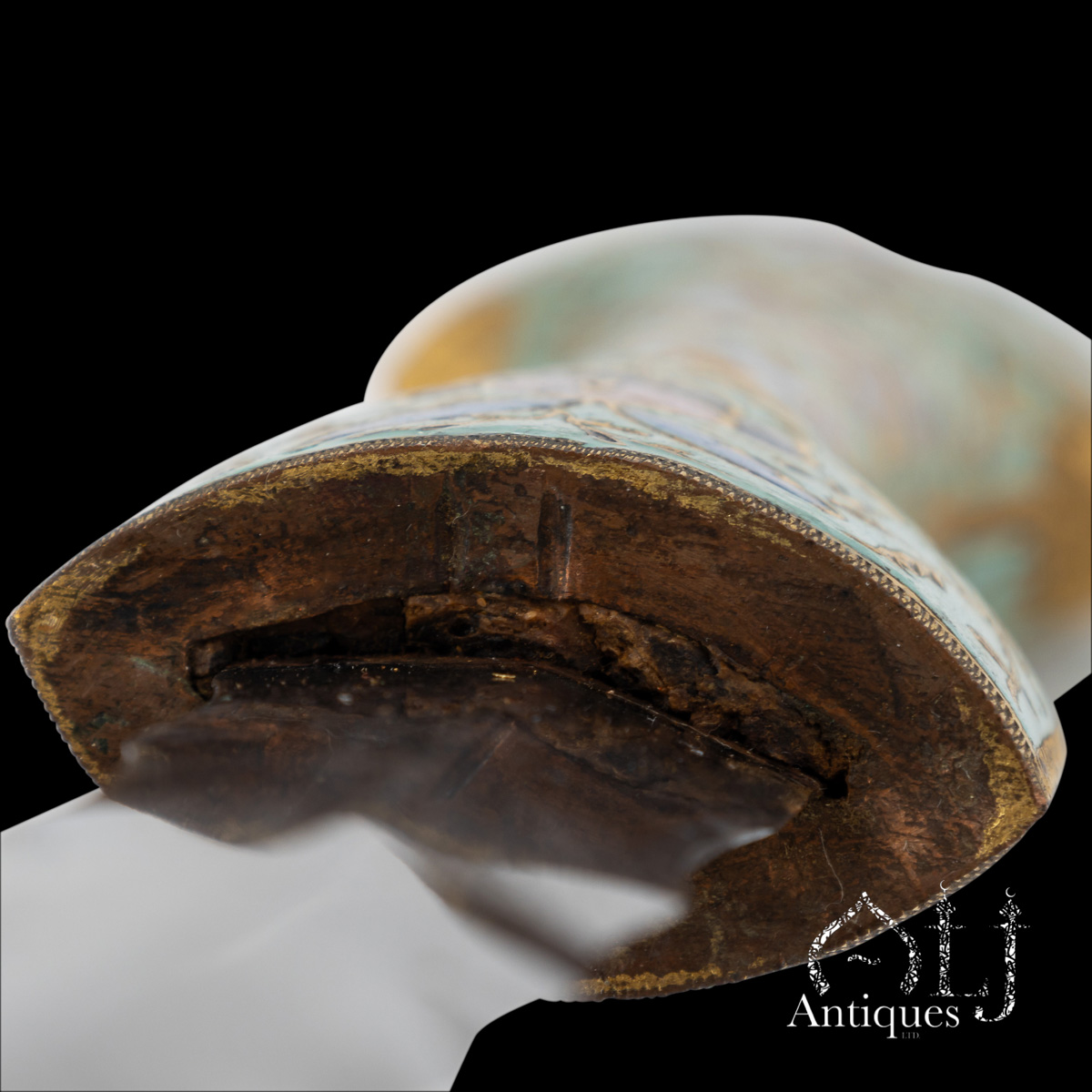
The hilt is constructed from tombac, a copper alloy extensively used in Ottoman decorative metalwork and often finished with mercury fire-gilding to produce a rich golden surface.
The engraved and gilded decoration is complemented by areas of polychrome enamel, creating a vibrant contrast between the gold arabesques and coloured grounds.
Comparable enamelled tombac metalwork appears not only on weapons but also on luxury objects such as:
- bowls
- ewers
- vessels
- decorative fittings
Examples of similar enamelled Ottoman metalwork can be found in the Islamic Art Collection of the Benaki Museum in Athens, where bowls and vessels decorated with comparable gilt copper and enamel arabesques illustrate the broader artistic tradition to which this dagger belongs.
Scholars often associate this group of objects with what is sometimes referred to as “Süleymaniye” or “Suleimani” enamel work, characterised by:
- gilded copper surfaces
- vibrant polychrome enamel decoration
- dense floral arabesques
- architectural or symbolic cartouches.
This tradition reflects the multi-cultural nature of Ottoman artistic production, where Turkish, Armenian, and Greek craftsmen frequently worked together within imperial and provincial workshops.
Serpentine Blade Form
The undulating serpentine blade is a distinctive feature that enhances both the aesthetic impact and symbolic character of the dagger.
Such blades are occasionally encountered in Ottoman and Persian luxury arms and may have been inspired by earlier Near Eastern blade forms that emphasised movement and visual drama.
Beyond their striking appearance, these blades served to demonstrate the technical mastery of the bladesmith, while also reinforcing the dagger’s role as a prestigious personal weapon worn as part of ceremonial or courtly dress.