
Description
Description
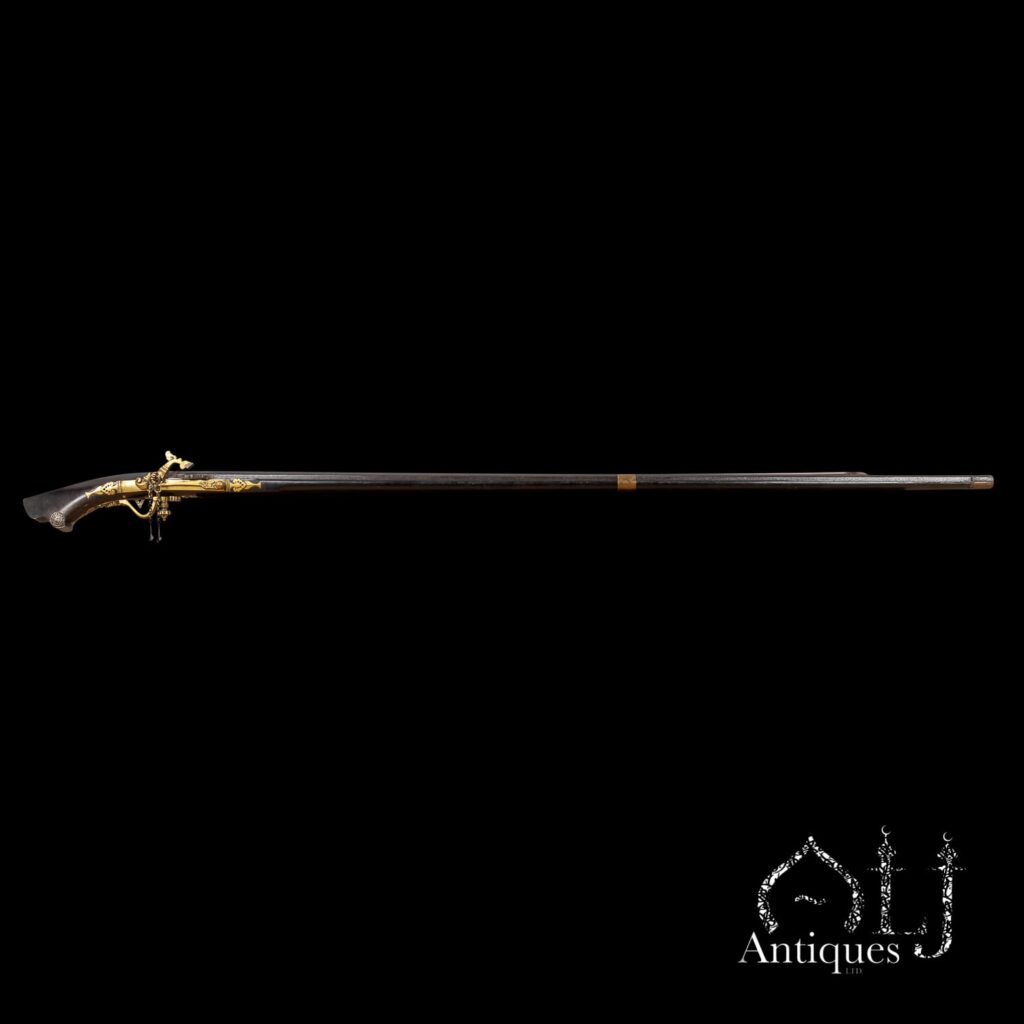
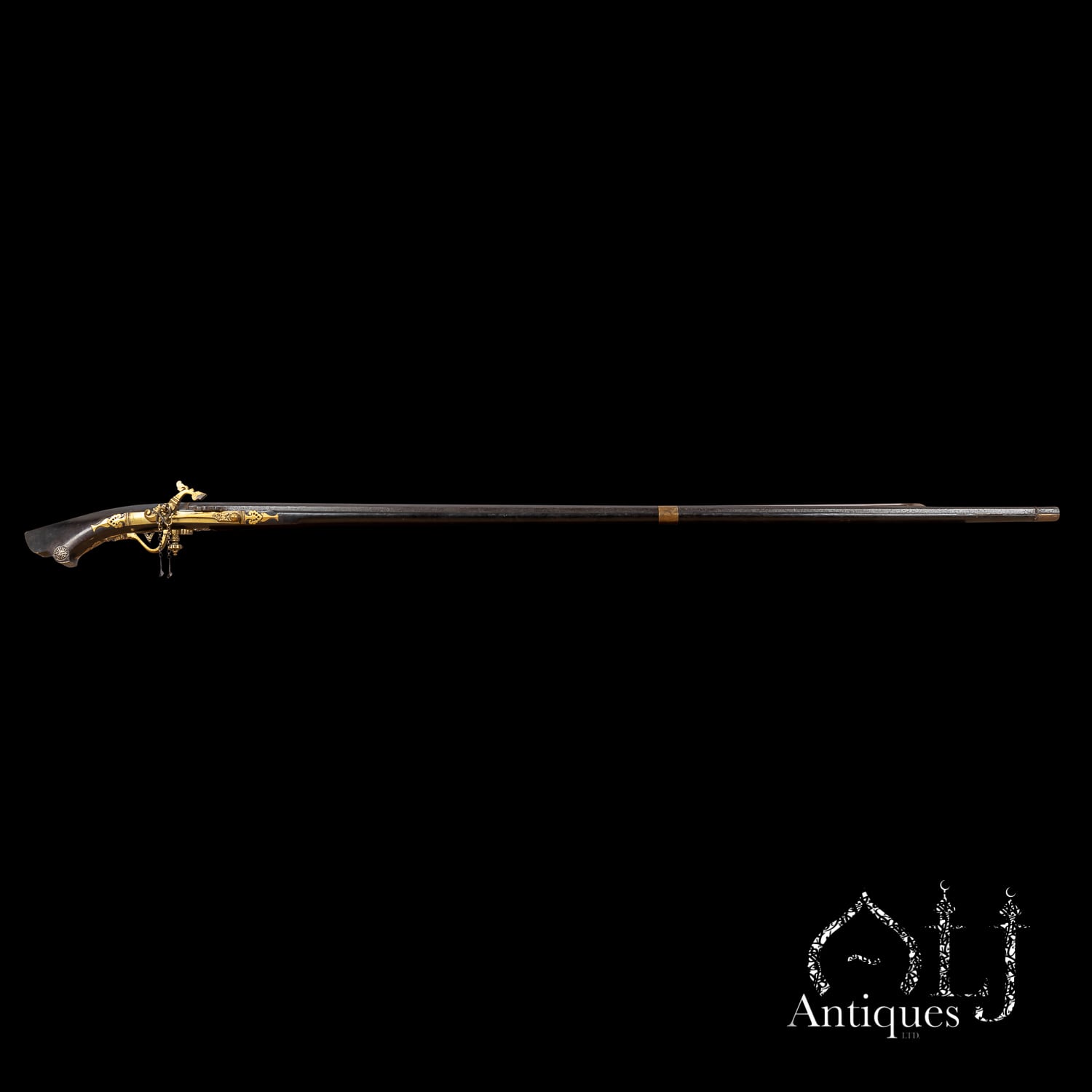
An exceptionally rare and monumental Minangkabau matchlock rifle, known locally as an Istinggar or Badil Satengga, originating from West Sumatra in the Malay world. Firearms of this type are closely associated with the Minangkabau culture of the Padang Highlands and are sometimes referred to in historical Dutch literature as Padri guns (Padri-geweer) due to their association with the Padri Wars (1803–1837).
The term Istinggar is believed to derive from the Portuguese word espingarda, meaning musket or firearm, reflecting the introduction of European firearms technology to Southeast Asia following the Portuguese conquest of Malacca in 1511. Local craftsmen subsequently adapted the mechanism into distinctive Southeast Asian firearms, combining European matchlock technology with indigenous Malay weapon forms.
One of the earliest scholarly discussions of these rifles was published by L. C. Westenenk in 1908 in his article “Het Padri-geweer,” in which he describes the distinctive long Minangkabau matchlock guns encountered in West Sumatra.
Construction and Mechanism
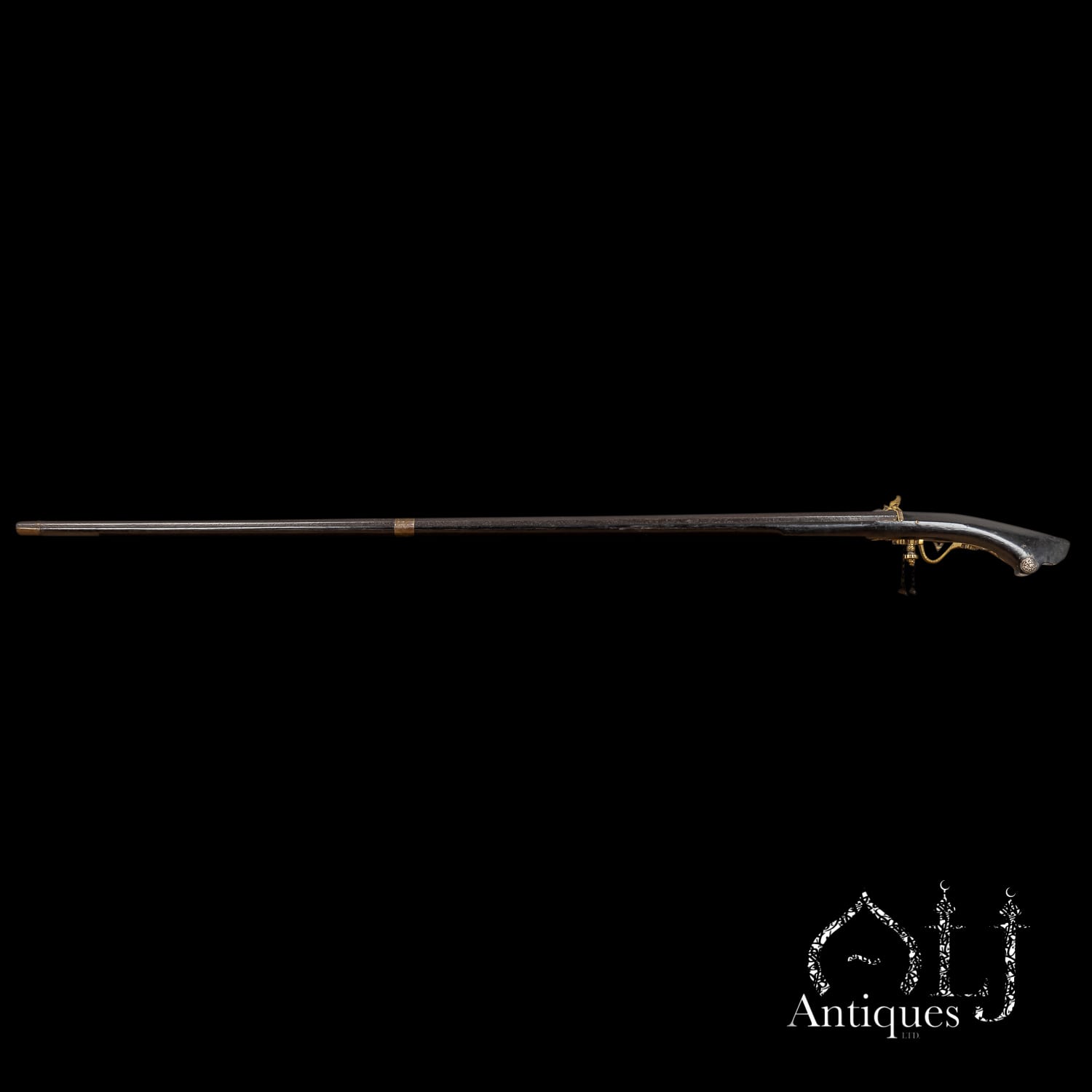
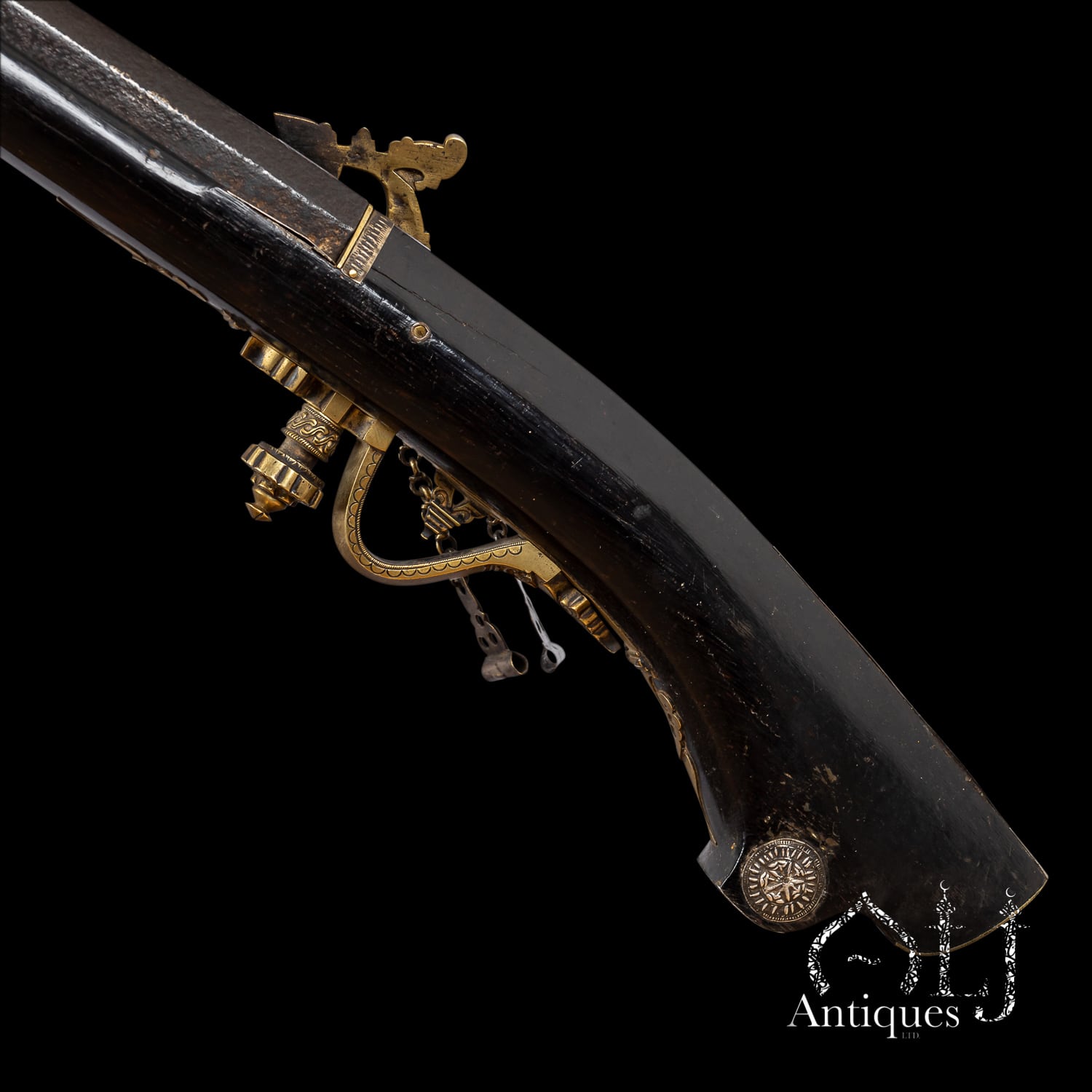
The rifle follows the classic form of the Malay Istinggar matchlock, distinguished by its extremely long heavy barrel and deeply curved hardwood butt, often described as having a “chicken-wing” profile, characteristic of many Southeast Asian firearms.
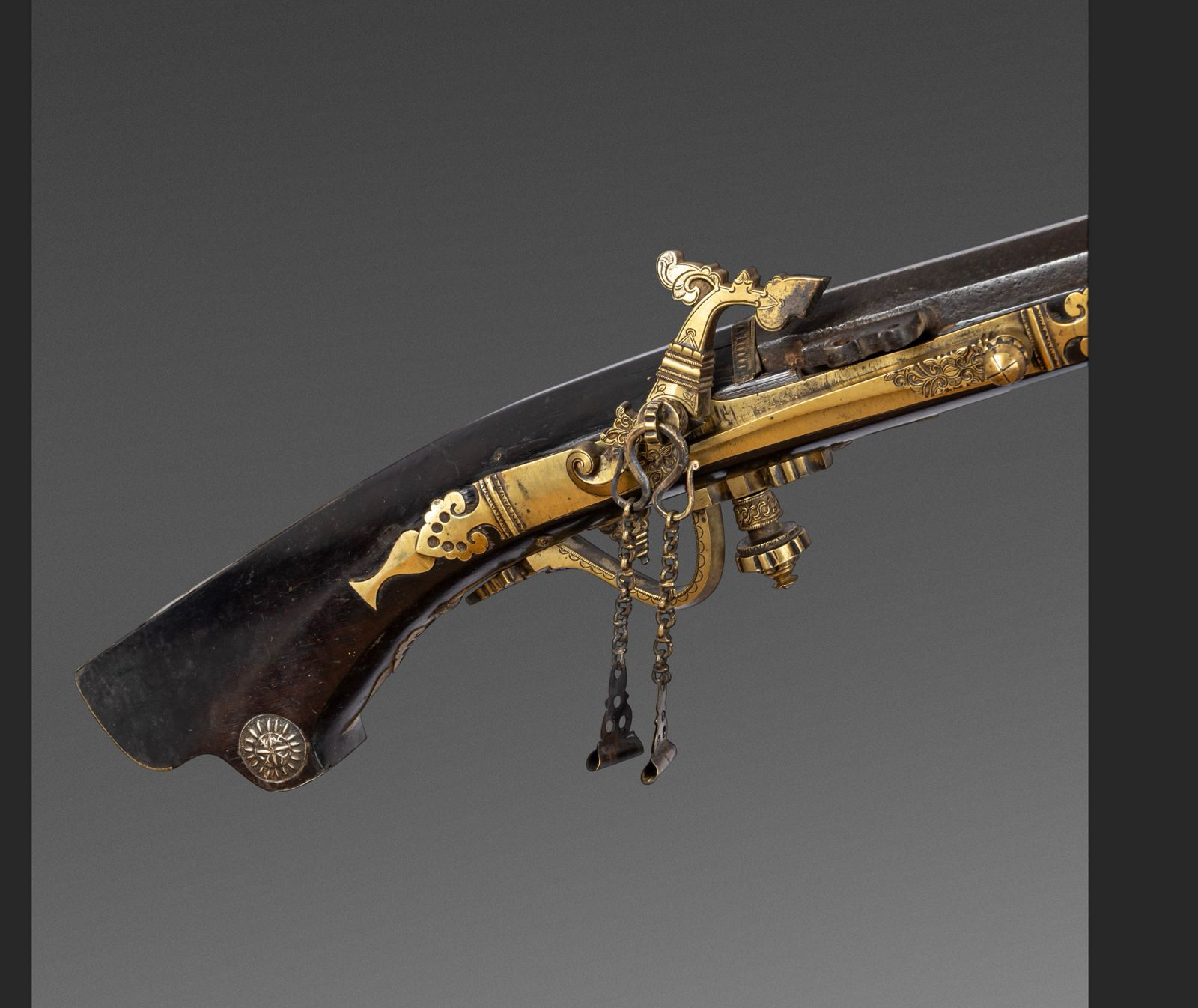
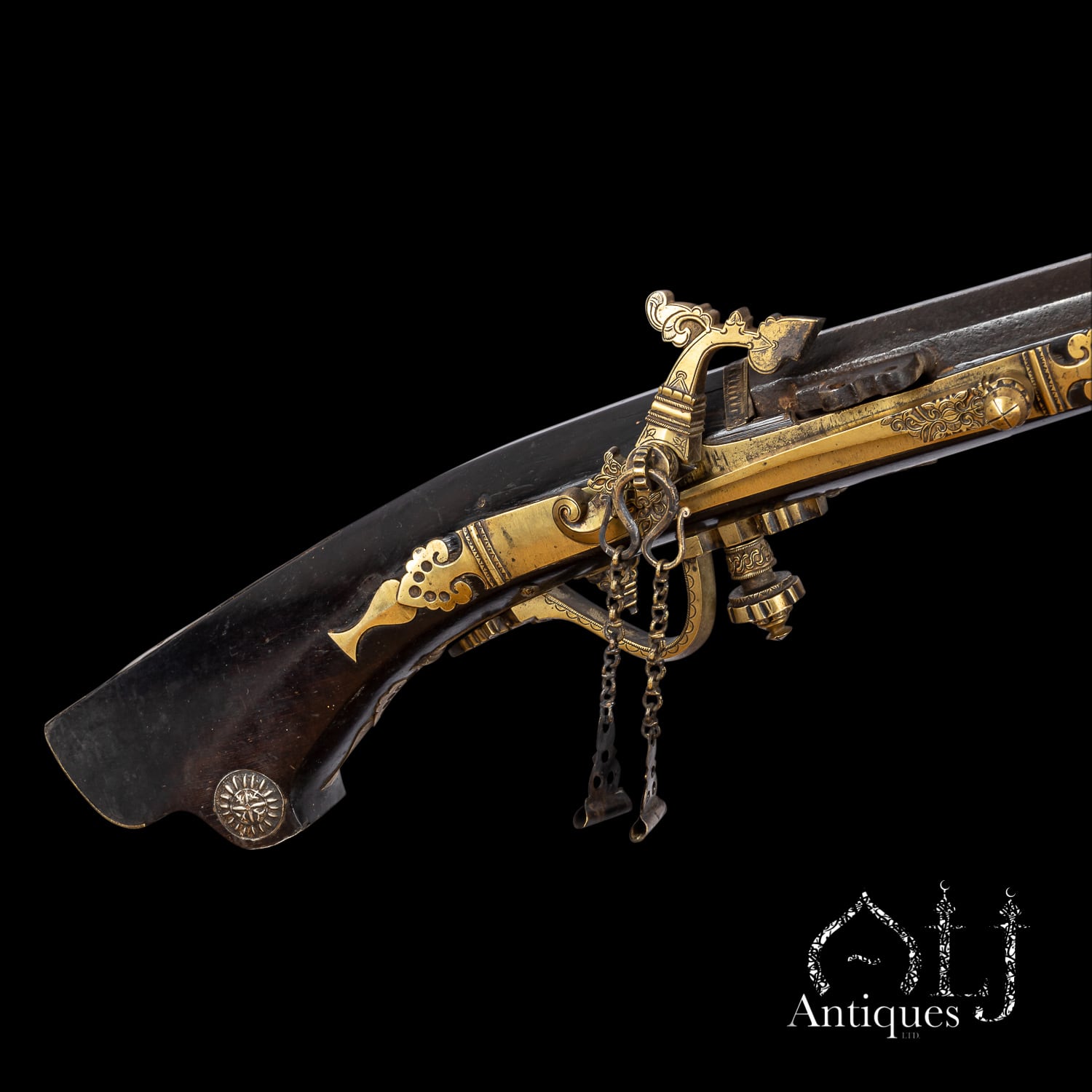
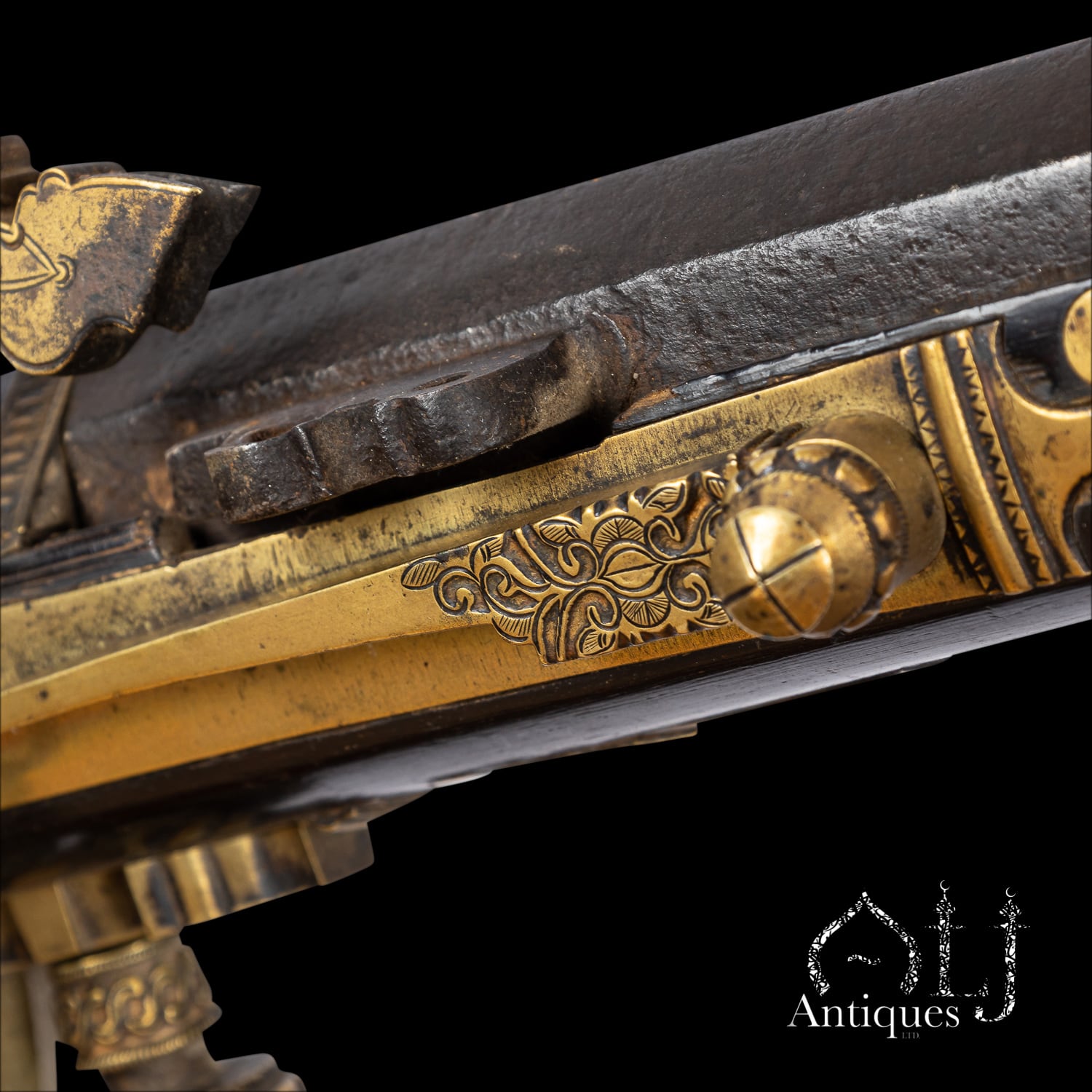
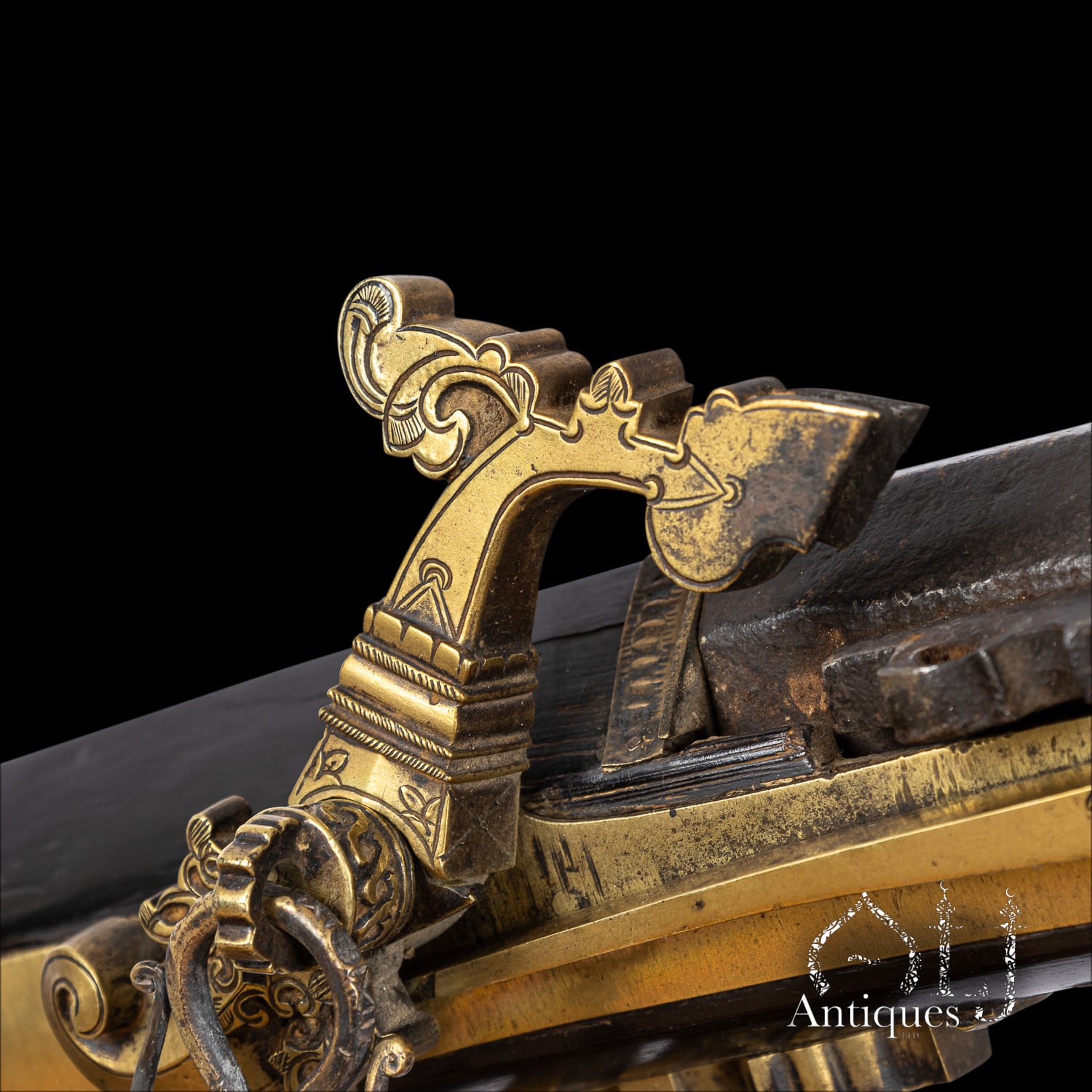
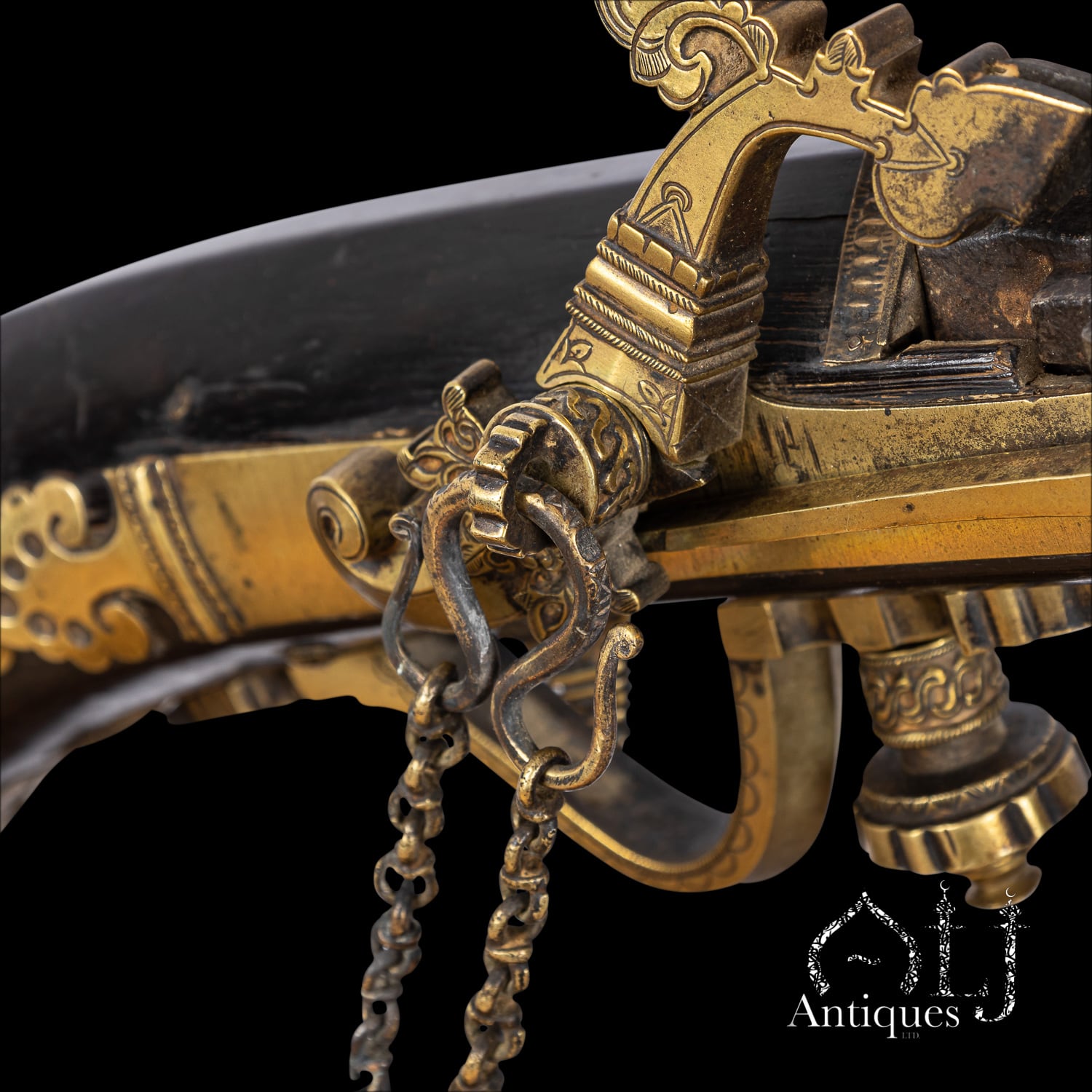
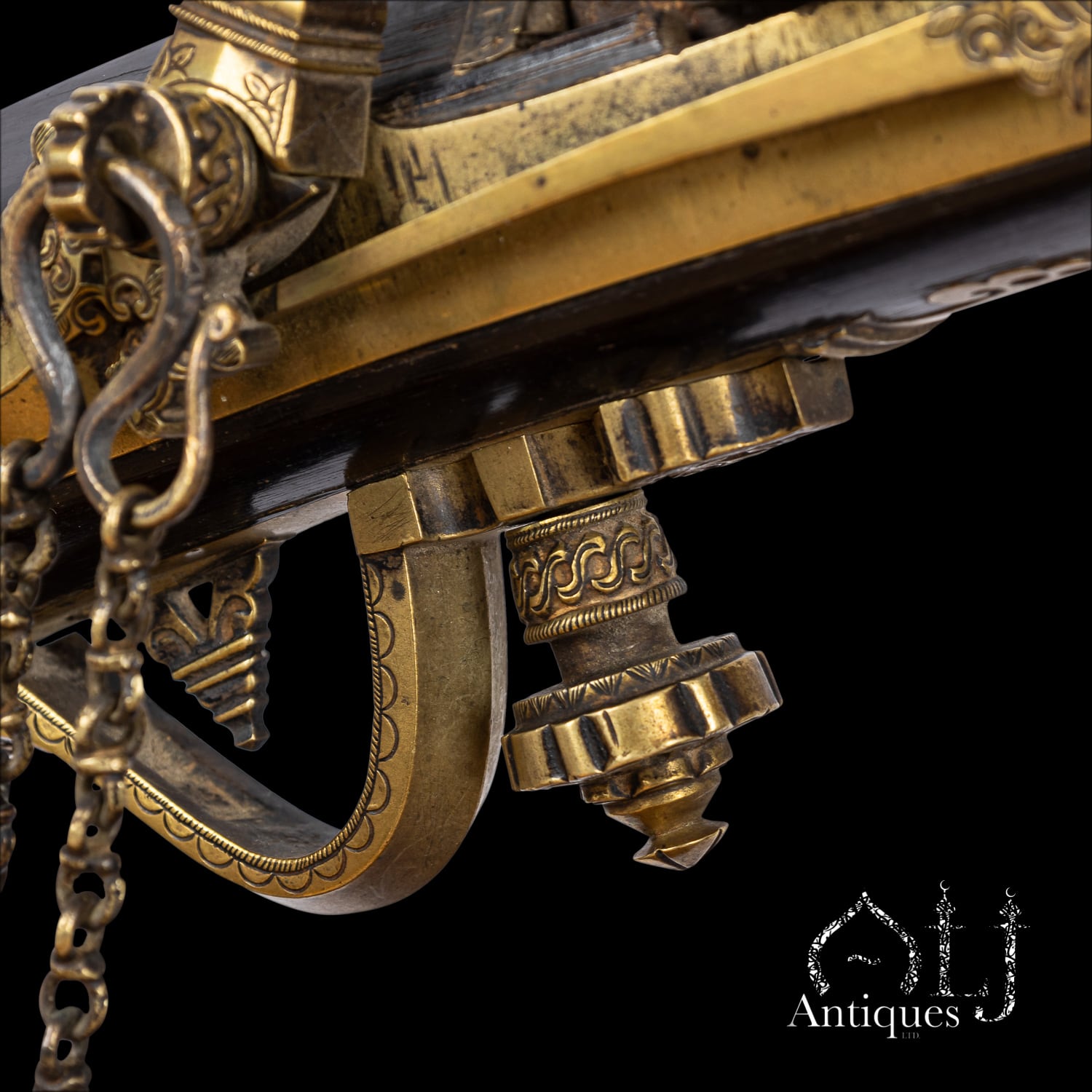
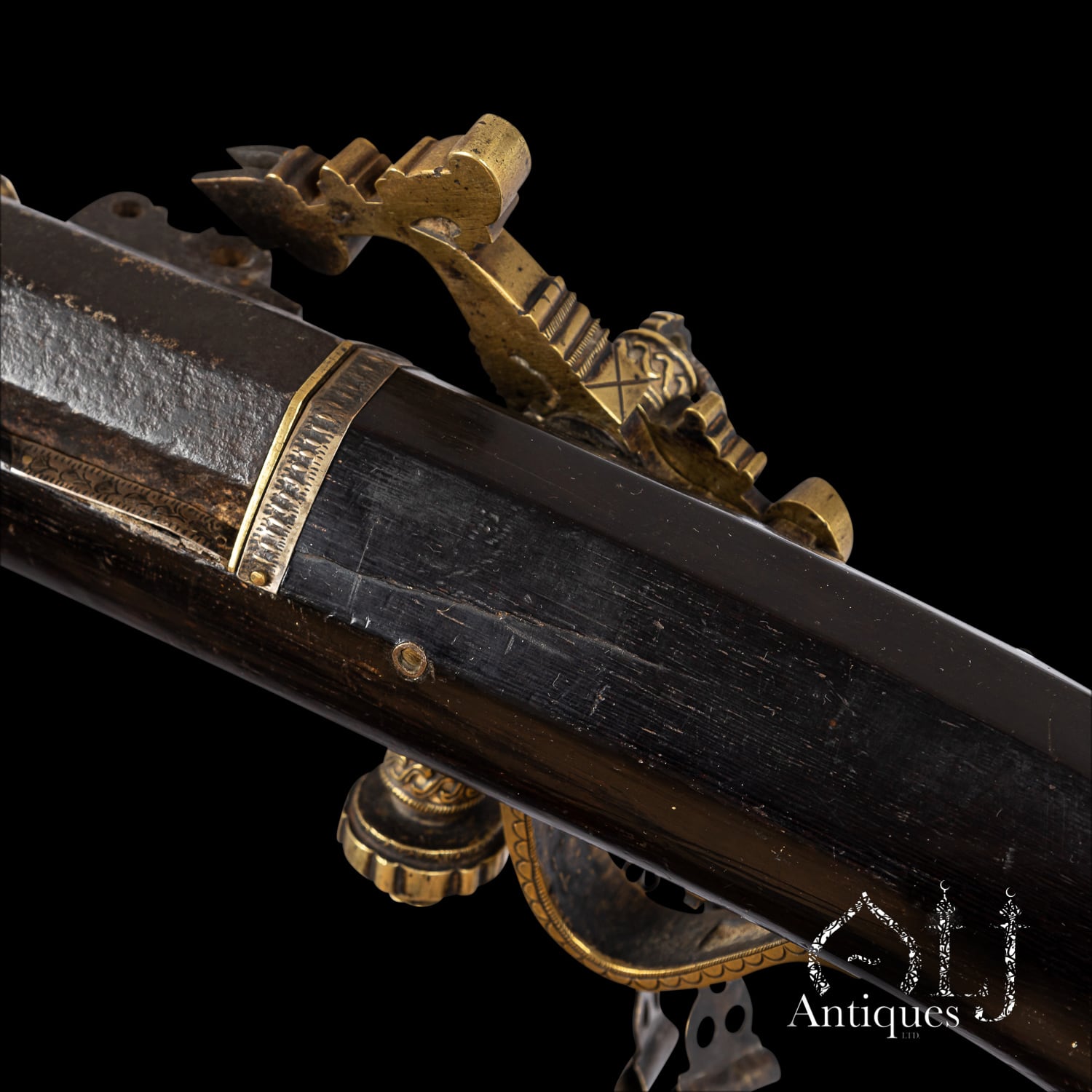
The weapon functions through a traditional matchlock ignition system consisting of a curved serpentine match holder that lowers a burning match cord into the priming pan when the trigger is activated.
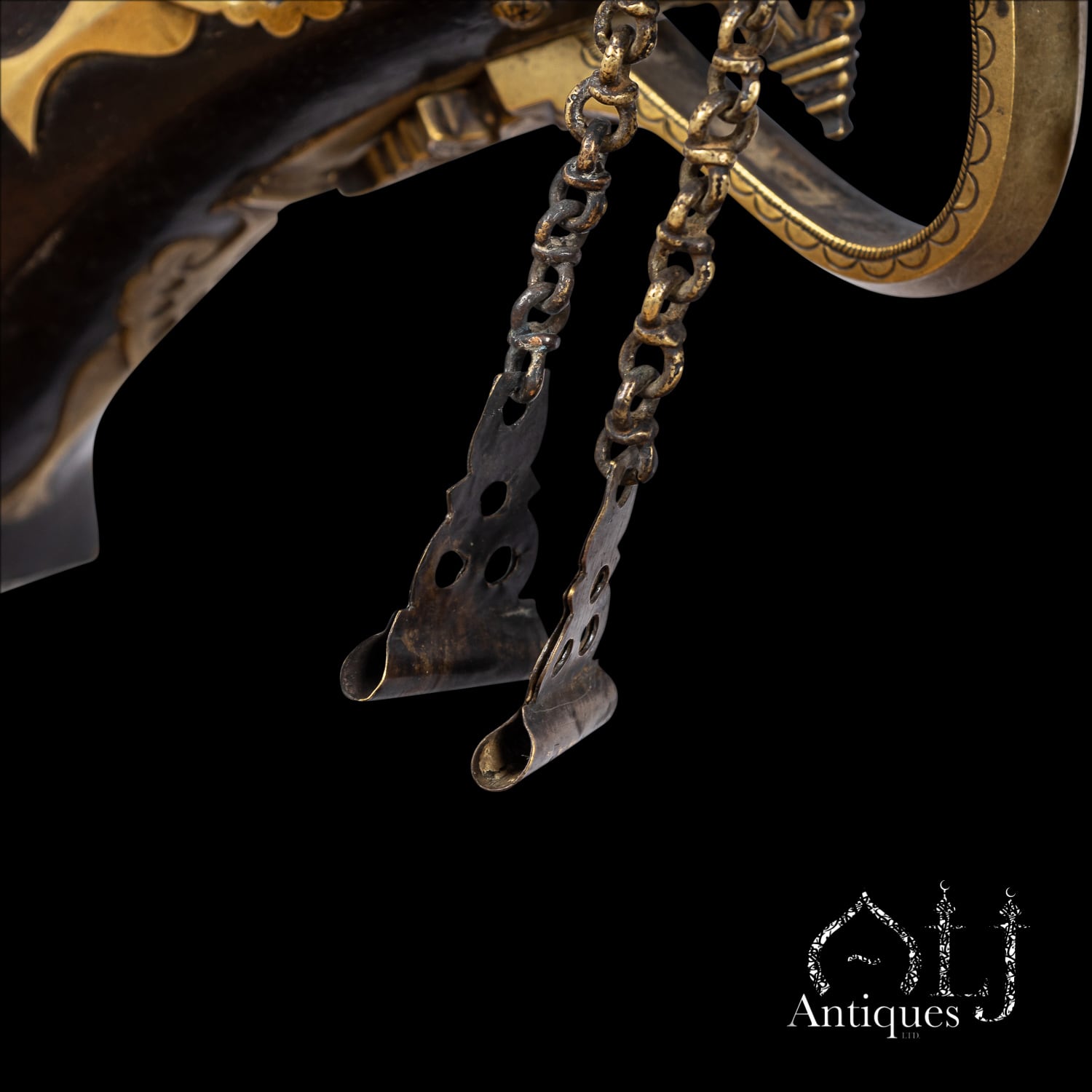
Suspended beneath the mechanism is a chain used to stabilise and secure the serpentine, ensuring the correct position of the match during firing.
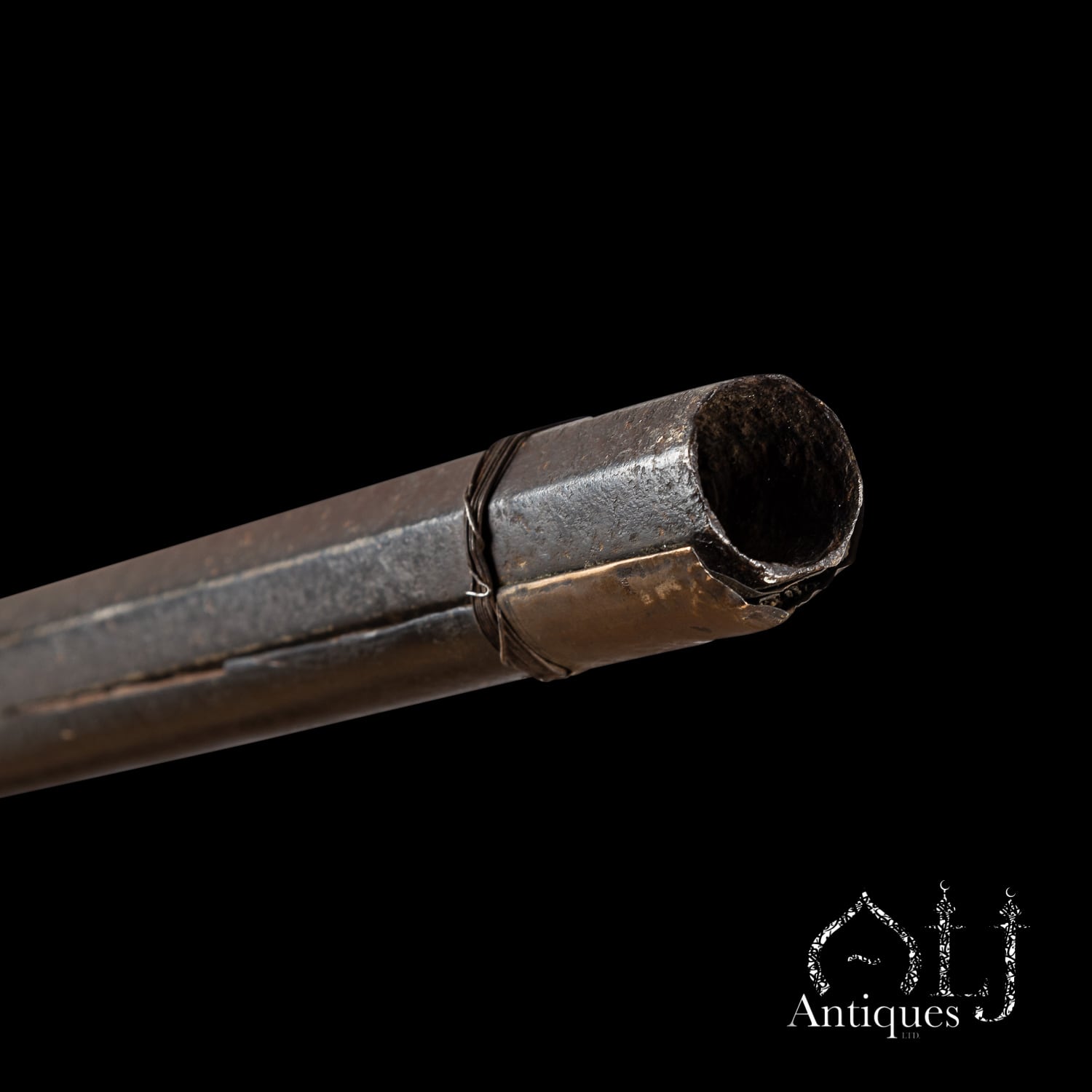
The barrel is heavy and faceted with an octagonal profile, a feature also encountered on certain Asian firearms such as Japanese Tanegashima matchlocks, reflecting the broader spread of firearms technology across maritime Asia following early European contact.
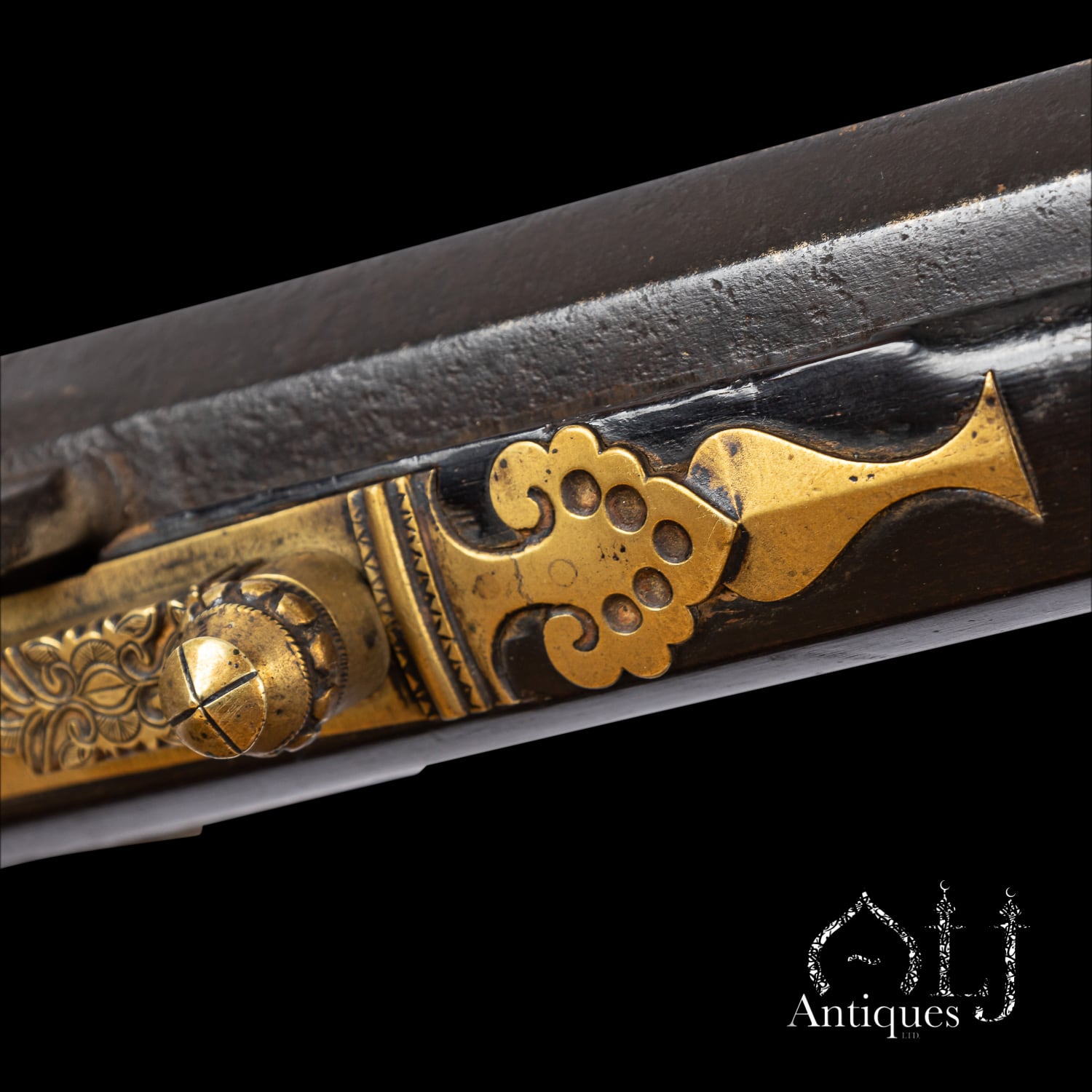
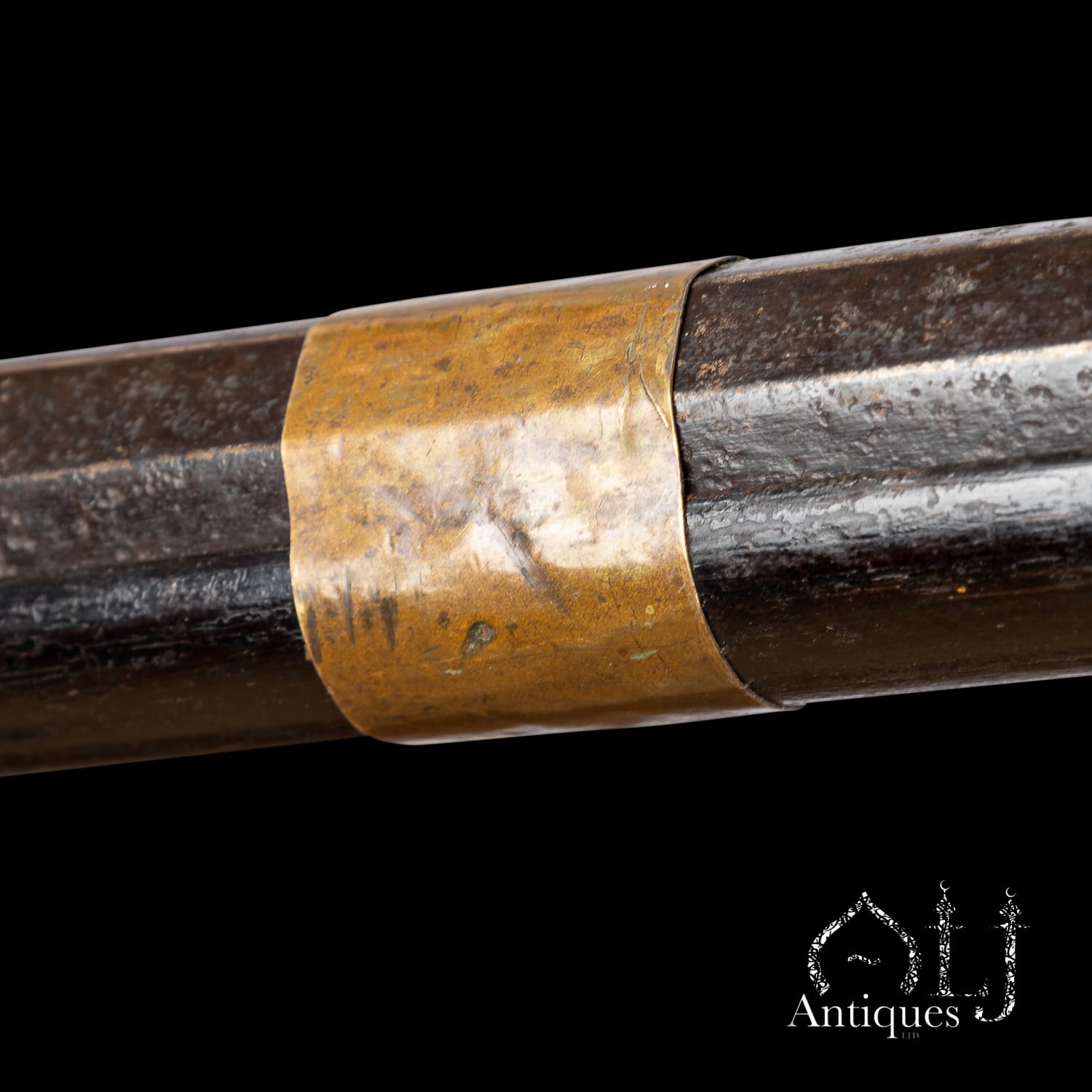
Toward the forward section of the barrel the firearm is fitted with a wooden sleeve secured with fine brass wires along the upper surface, providing reinforcement and decorative detail.
Decoration
The rifle displays a sophisticated decorative programme combining brass mounts with silver embellishment.
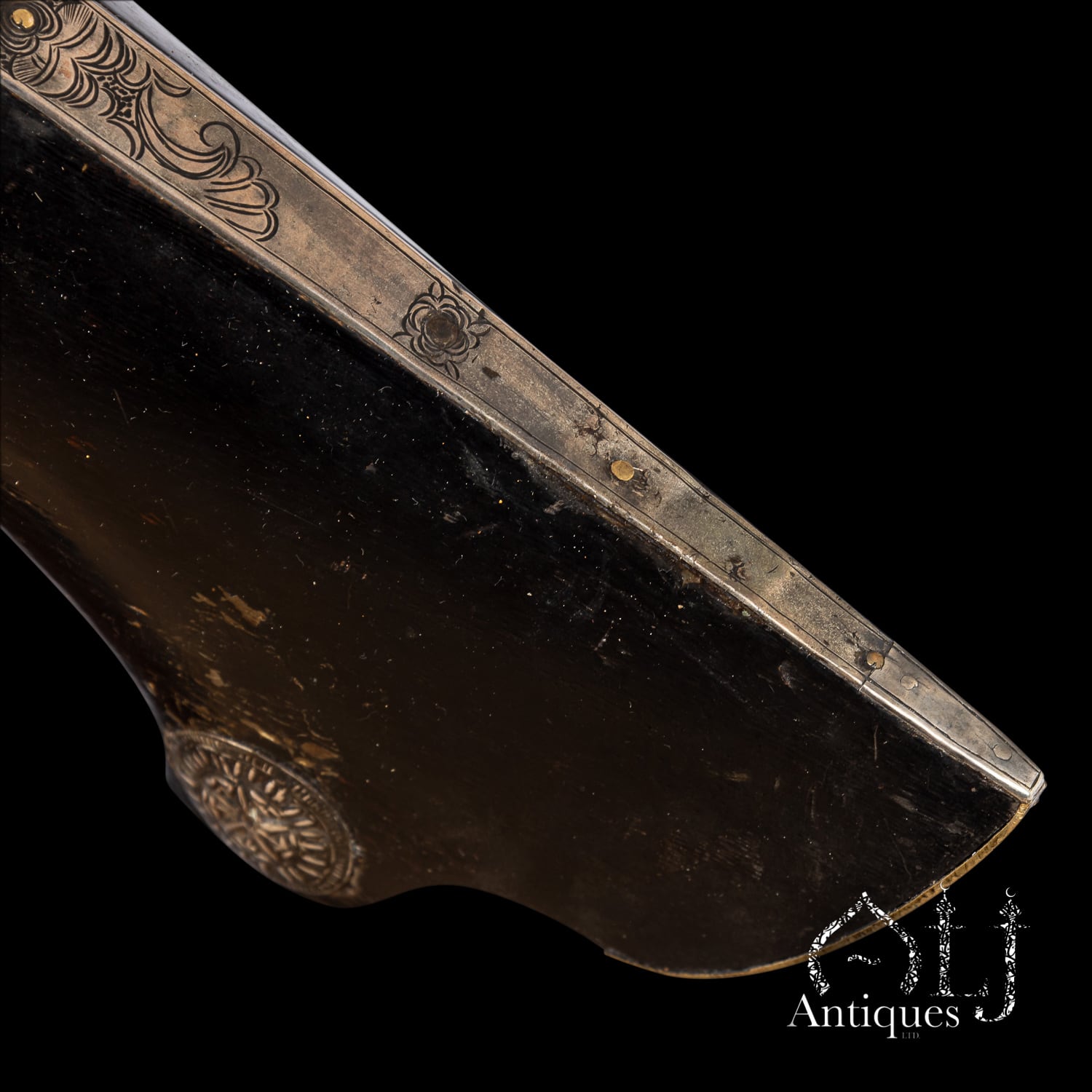
A single engraved silver panel is mounted along the flat spine of the butt, forming the principal decorative feature of the stock.
Each side of the butt is further decorated with silver coin-like roundels shaped as stylised floral rosettes, applied symmetrically to the wooden surface.
The lower curved butt finial is reinforced with a protective shaped brass sheet, carefully fitted to strengthen the end of the stock.
Additional brass decorative mounts appear along structural points of the rifle, forming elongated and geometric reinforcing plates that both strengthen and ornament the firearm.
The combination of silver floral roundels, engraved silver butt panel, and brass mounts indicates a firearm that likely held prestige or ceremonial significance, rather than being purely utilitarian.
Monumental Size and Rarity
Malay Istinggar rifles are rare survivals of Southeast Asian firearms traditions. Most surviving examples measure approximately 120–140 cm in length.
The present rifle is exceptional for its monumental scale, measuring 178 cm in length, placing it among the largest recorded examples of Minangkabau matchlock rifles.
Such extended barrels were historically associated with greater stability and improved accuracy, and Malay marksmen often fired these firearms from a supported position.
Examples of this size are considerably scarcer, making the present firearm a particularly impressive survival of the Minangkabau martial tradition.
Historical Note
During the Padri Wars (1803–1837) between Minangkabau reformist groups and Dutch colonial forces, firearms of this type were widely used throughout West Sumatra. Following the conflict, numerous examples were collected by Dutch administrators and scholars and eventually entered museum collections in the Netherlands.
Today, these Padri or Minangkabau matchlock rifles survive primarily in Dutch museum collections, making privately preserved examples such as the present rifle particularly rare.