Description
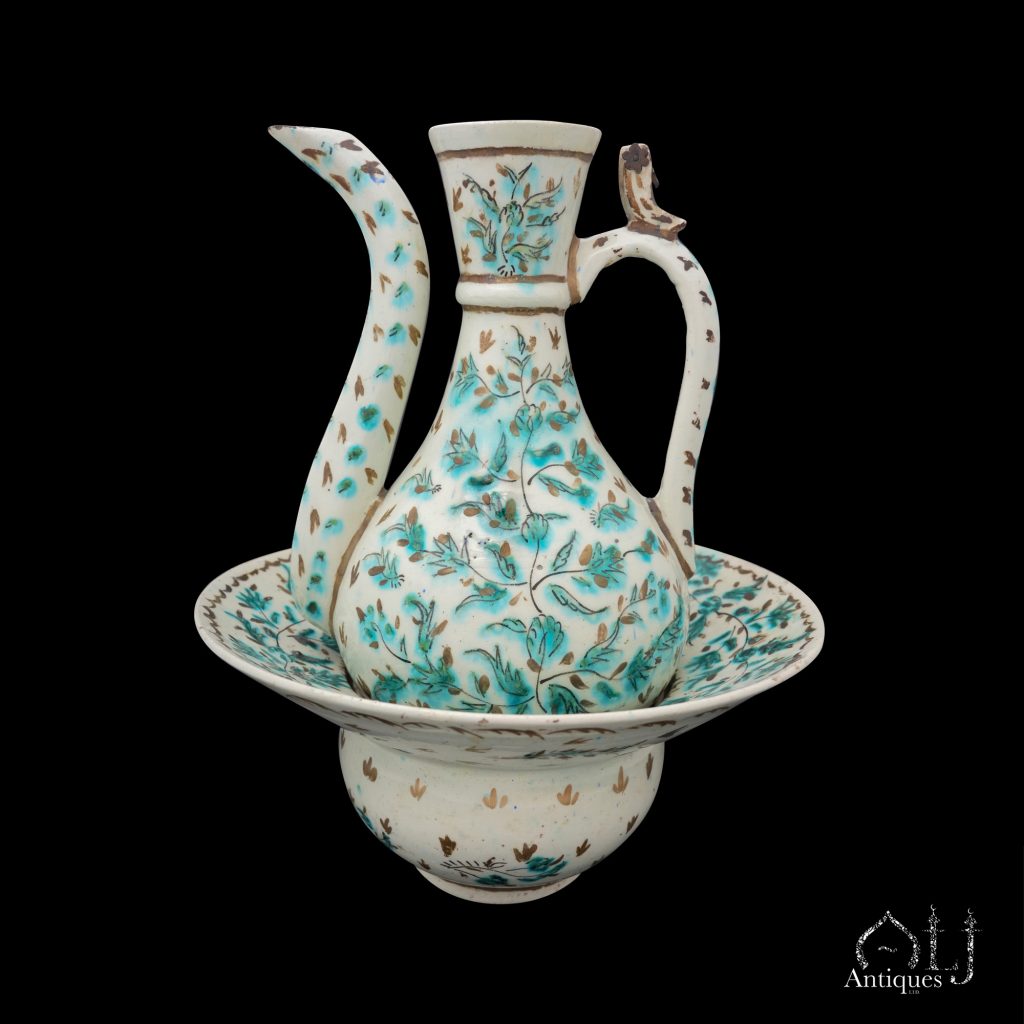
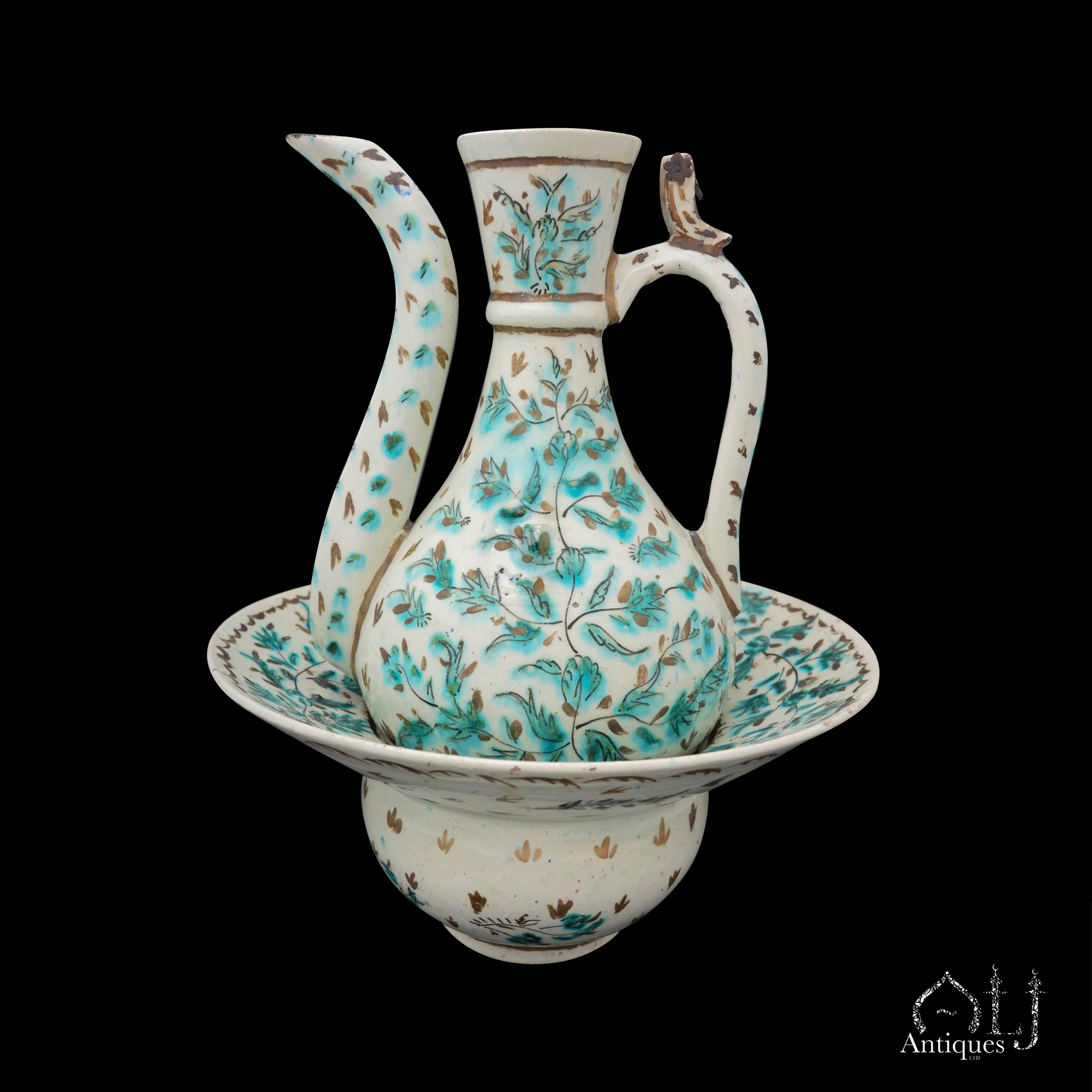
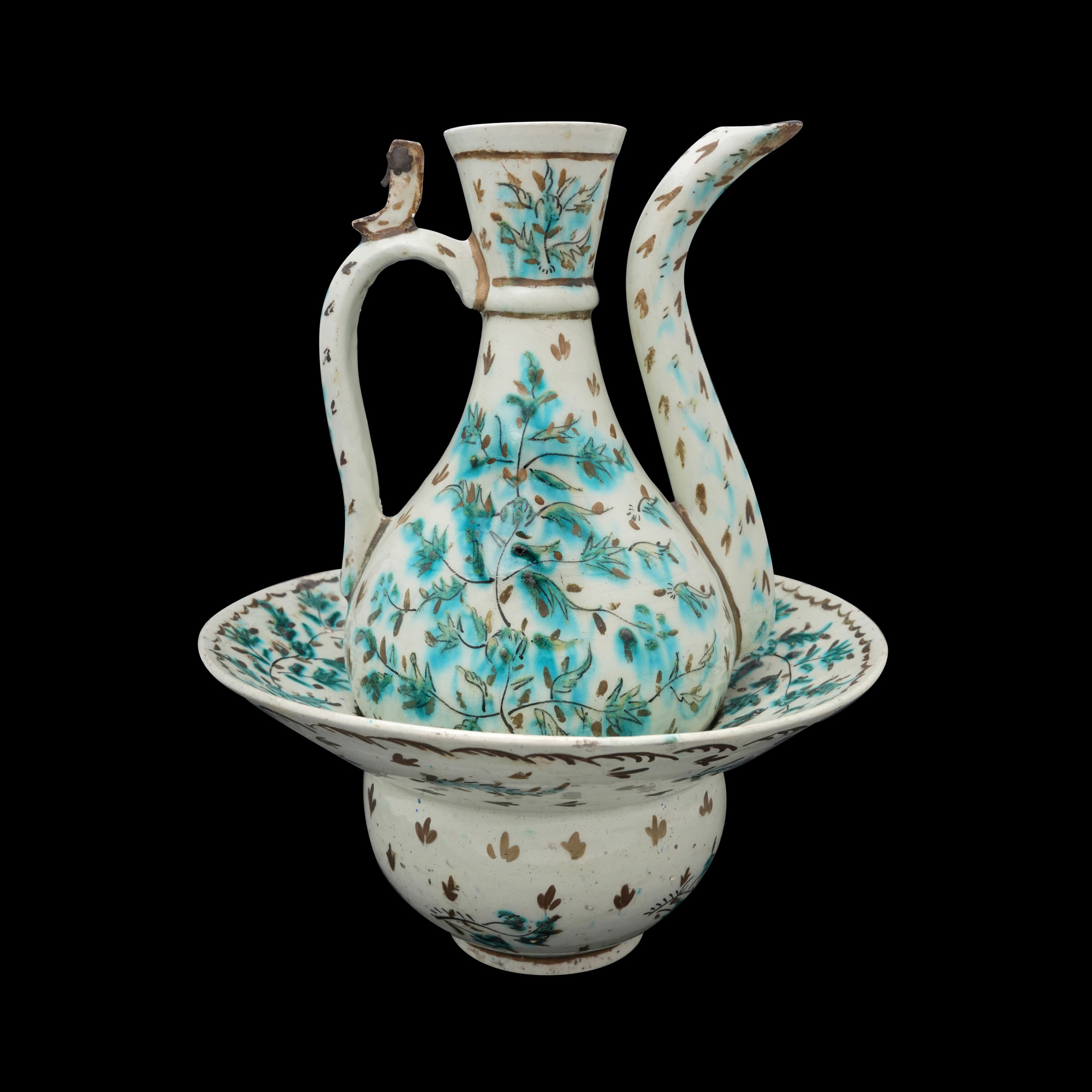
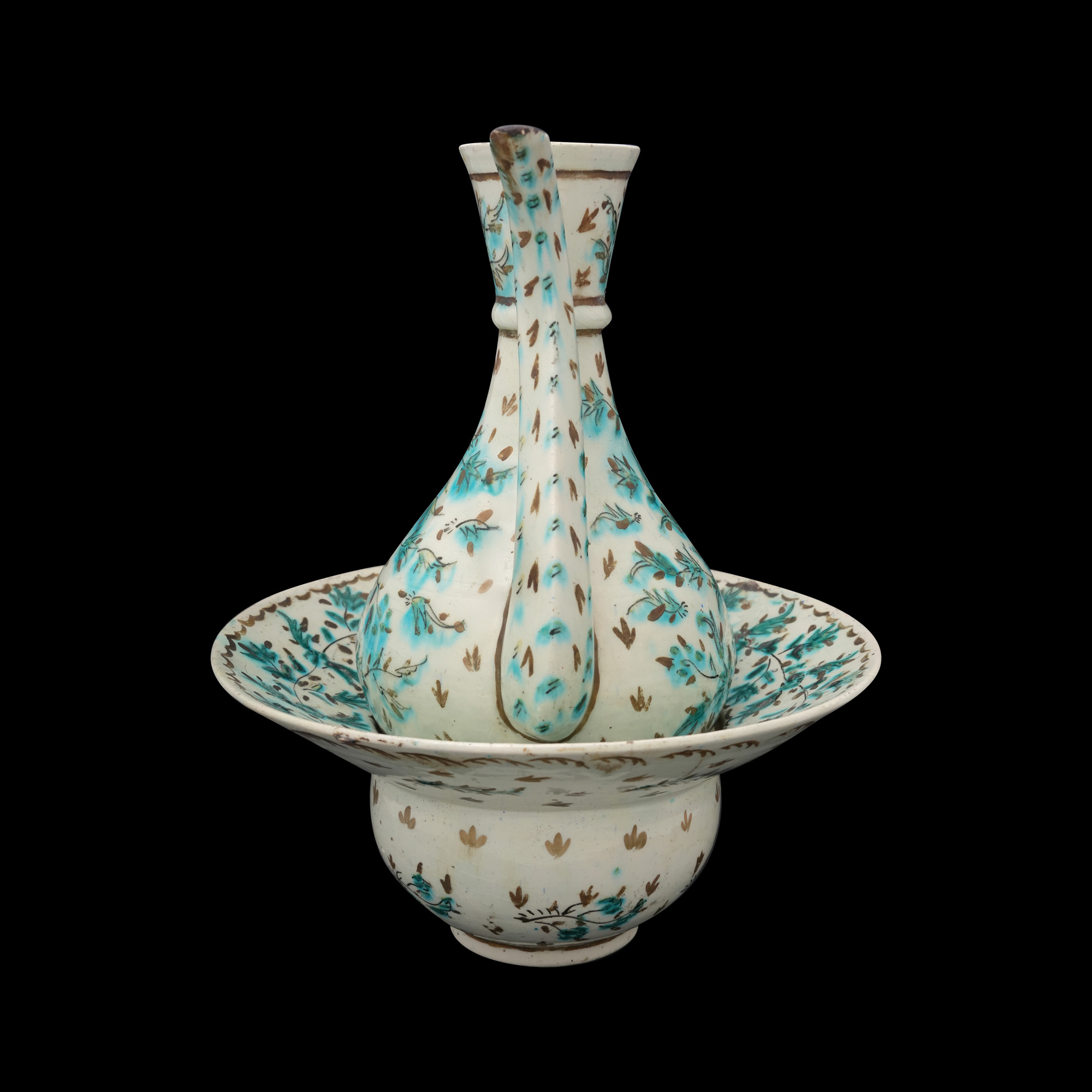
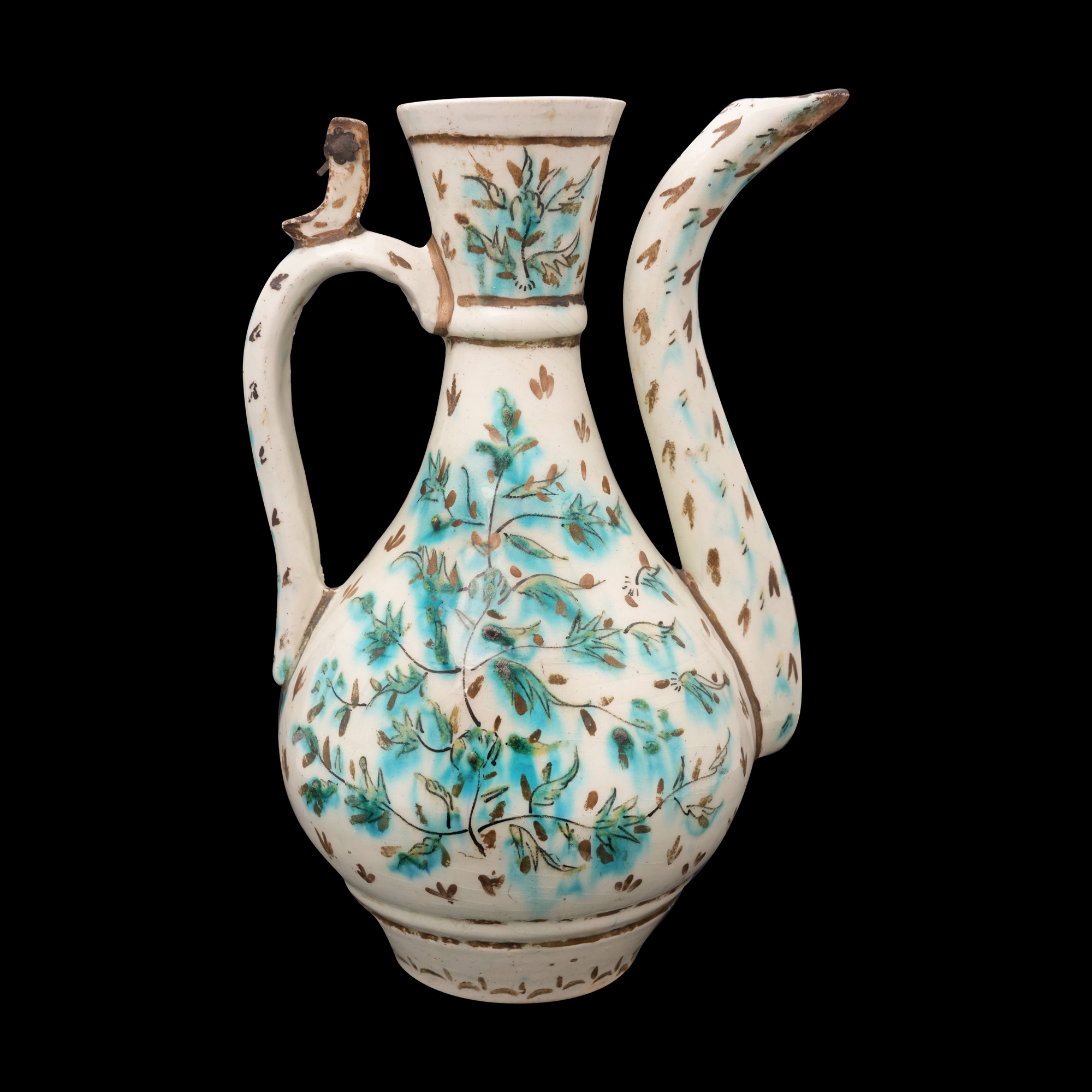
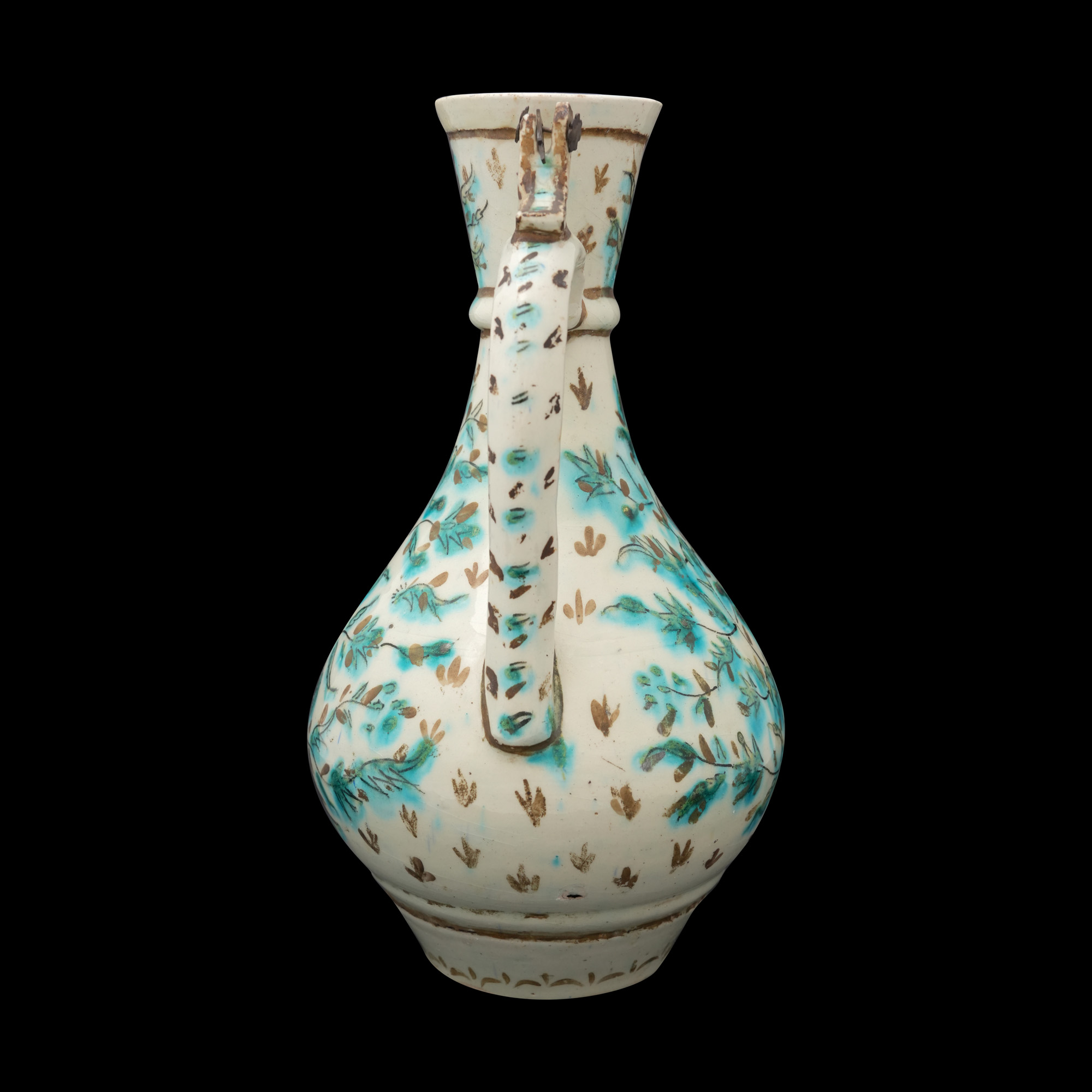
An exceptional and remarkably rare Ottoman Kütahya pottery hand-washing set, İbrik ve Leğen, produced by the Armenian potters of Kütahya during the second half of the eighteenth century.
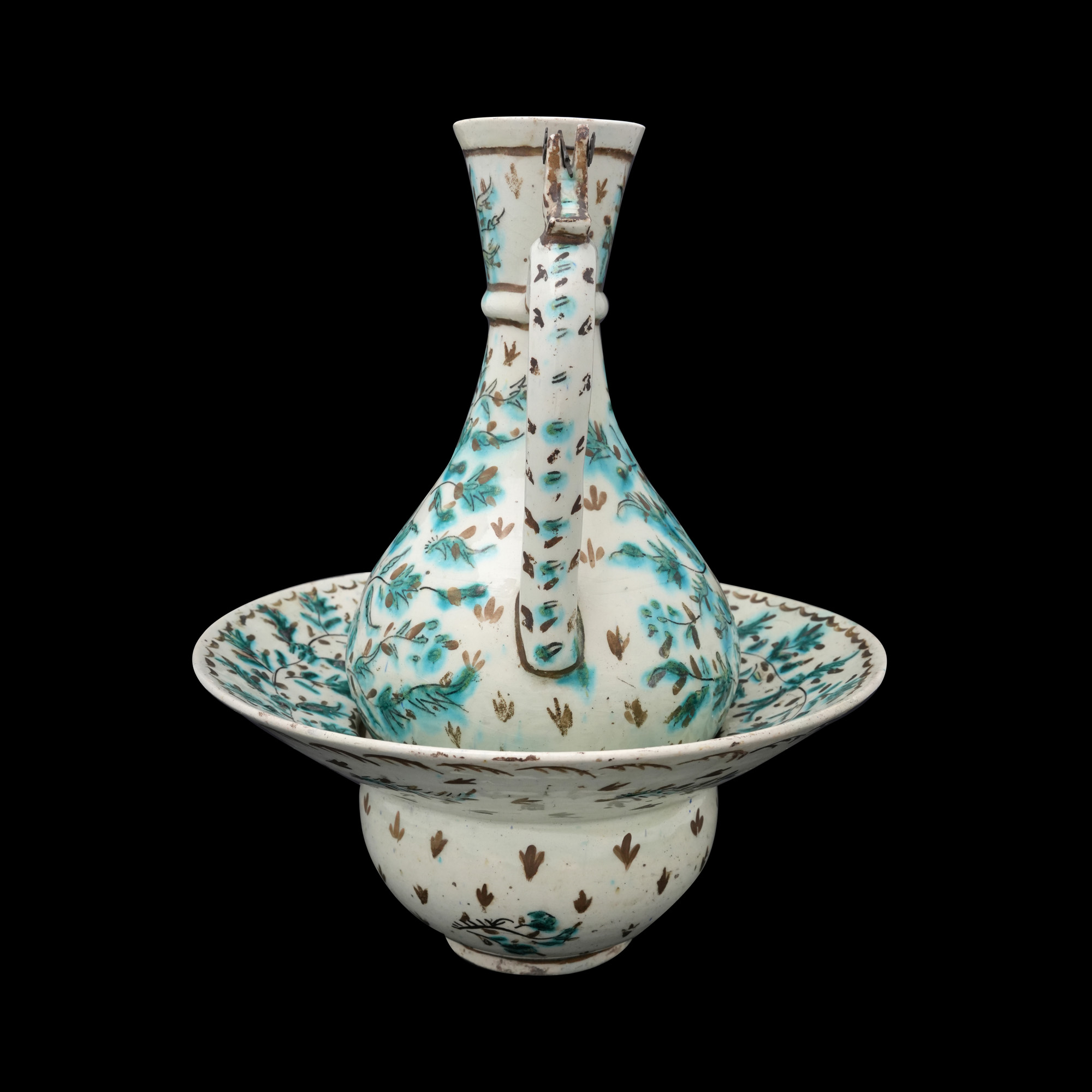
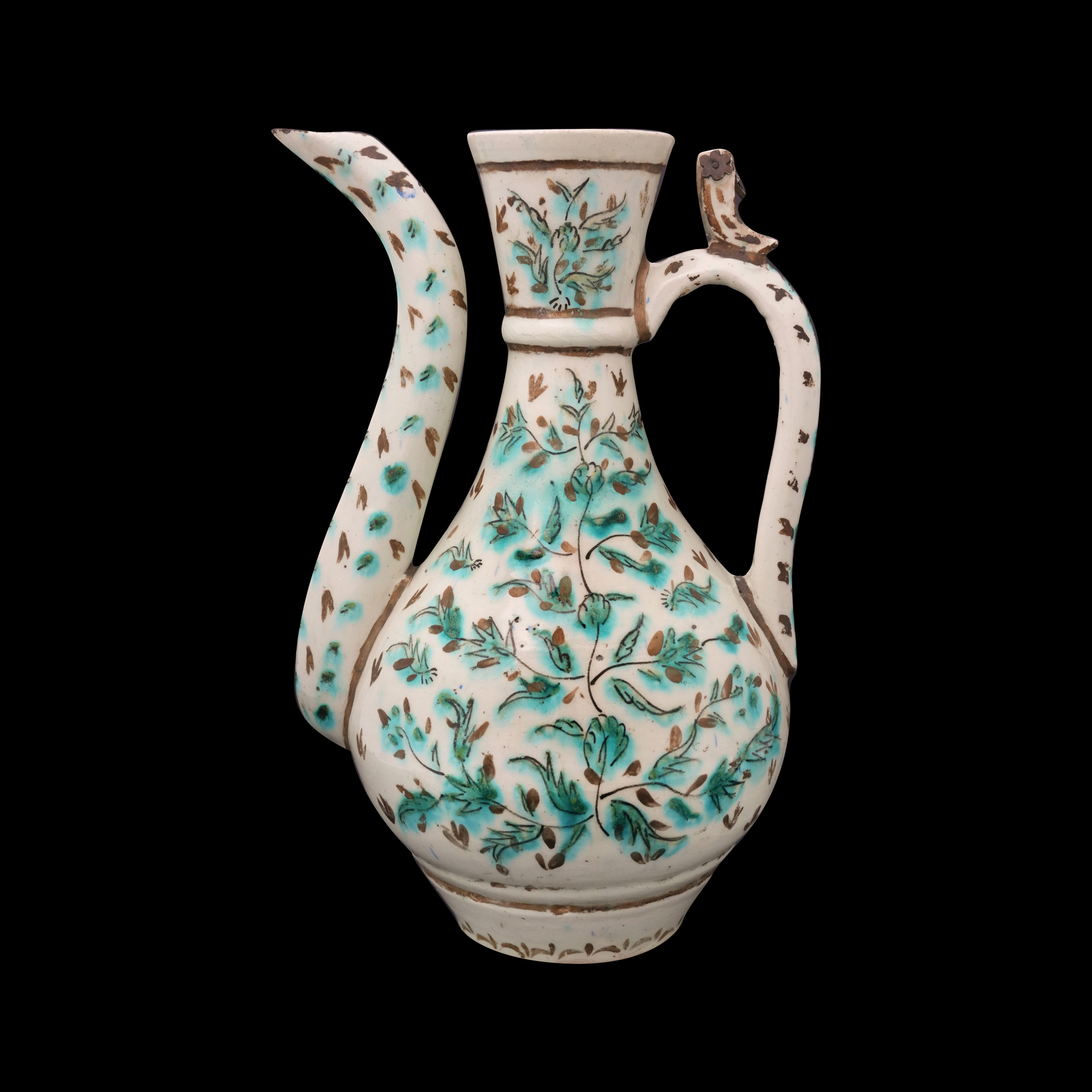
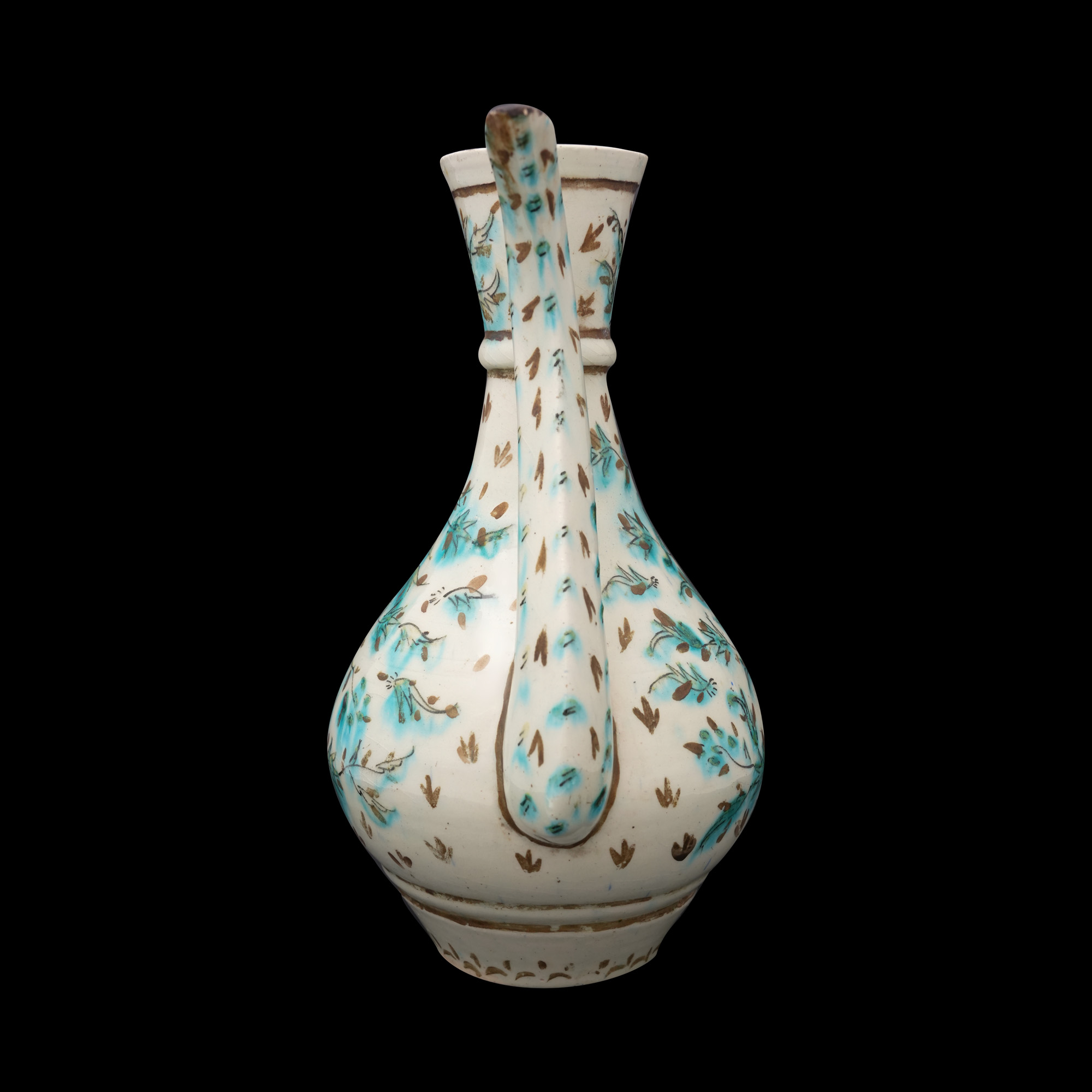
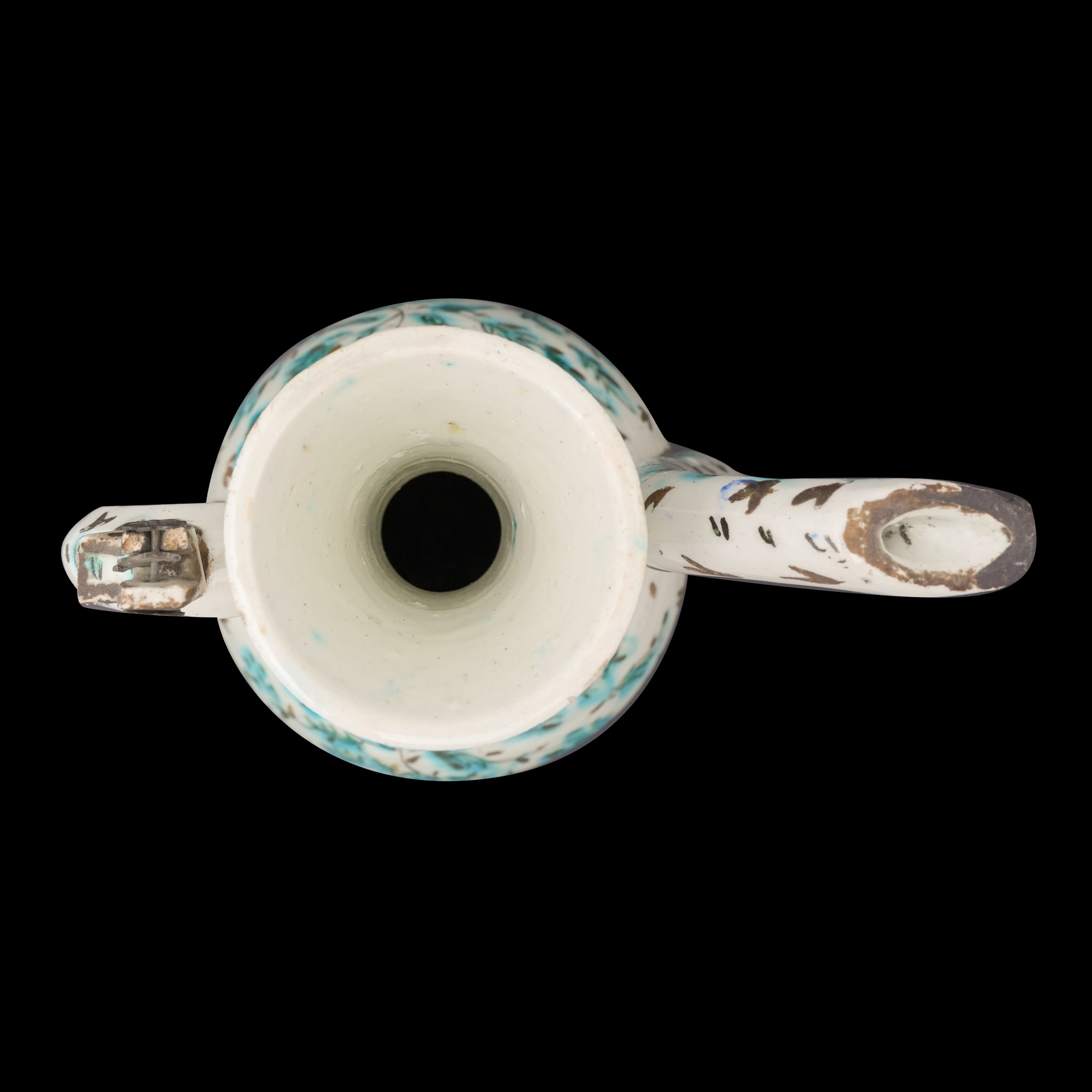
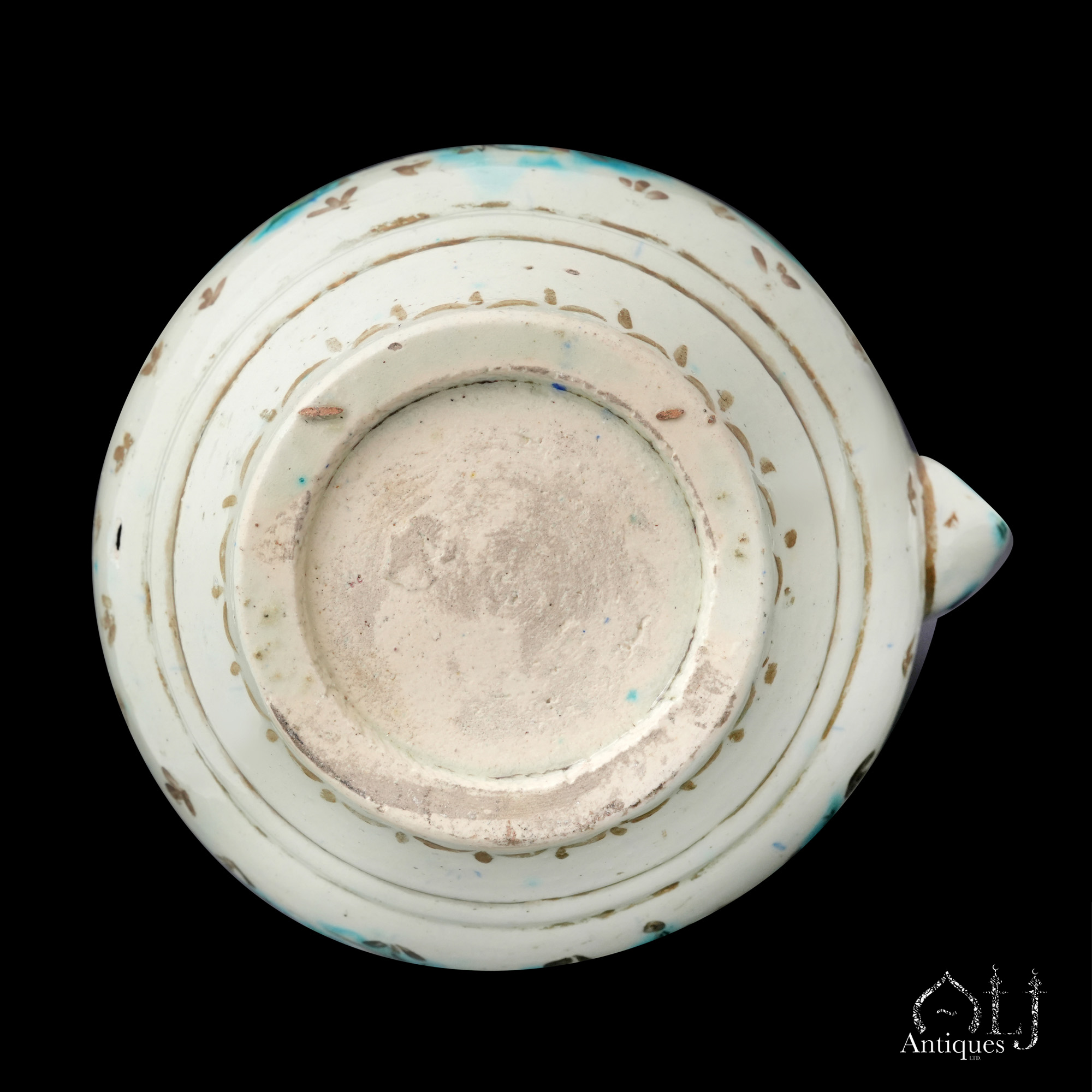
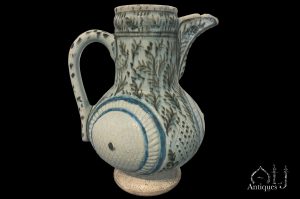
The set comprises a beautifully proportioned pear-shaped ewer (İbrik) with a tall cylindrical neck, an elegant loop handle terminating in a graceful scroll, a long tapering spout supported by a modelled ceramic strut, and a spreading circular foot. Characteristic of Ottoman ewers, the spout rises almost to the level of the neck opening, producing the balanced and refined silhouette associated with Ottoman ibriks from the seventeenth century onwards.
The form ultimately derives from contemporary Ottoman metalwork prototypes produced in brass, copper, silver and gilt copper (tombak), demonstrating the manner in which the Kütahya potters translated prestigious Ottoman metal vessels into ceramic.
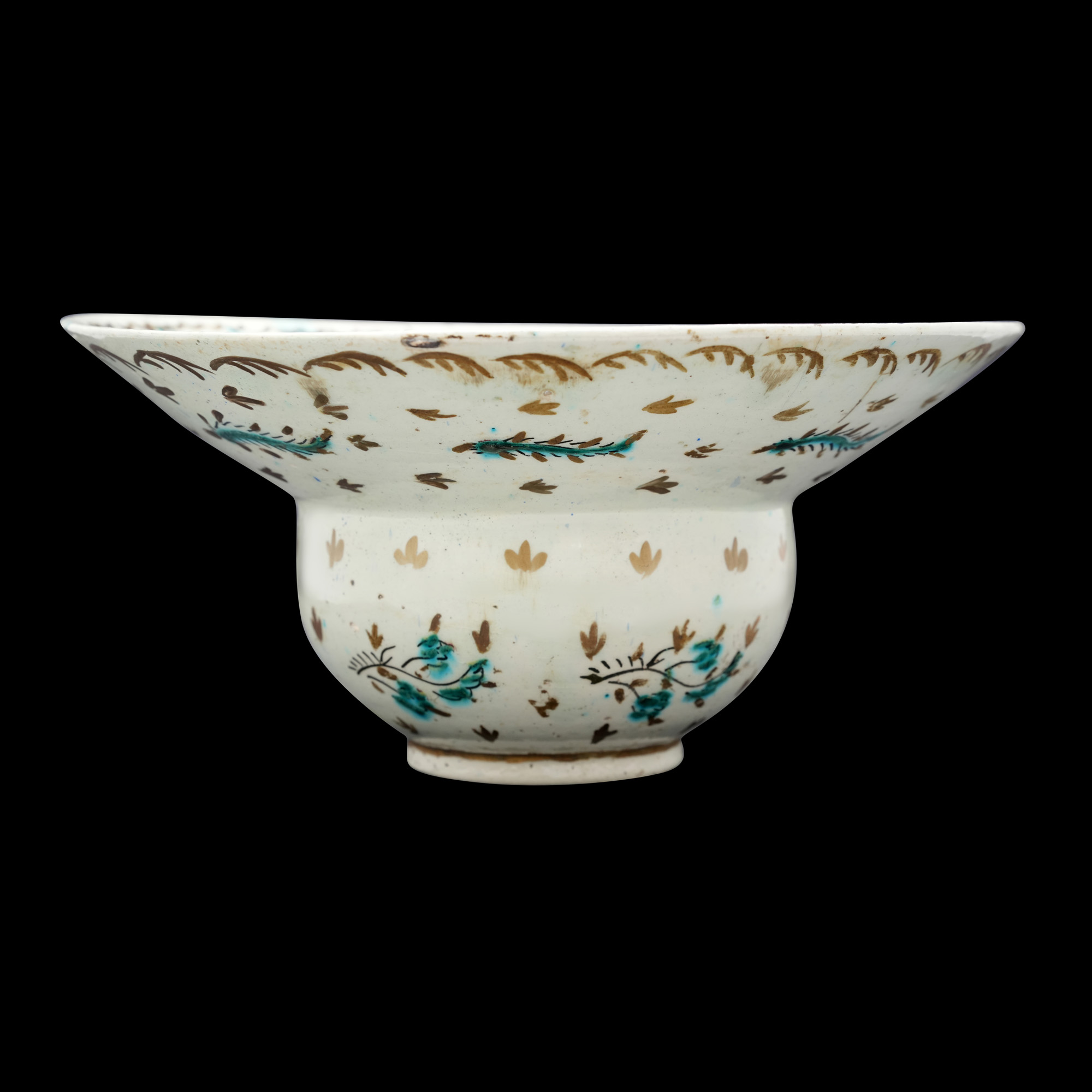
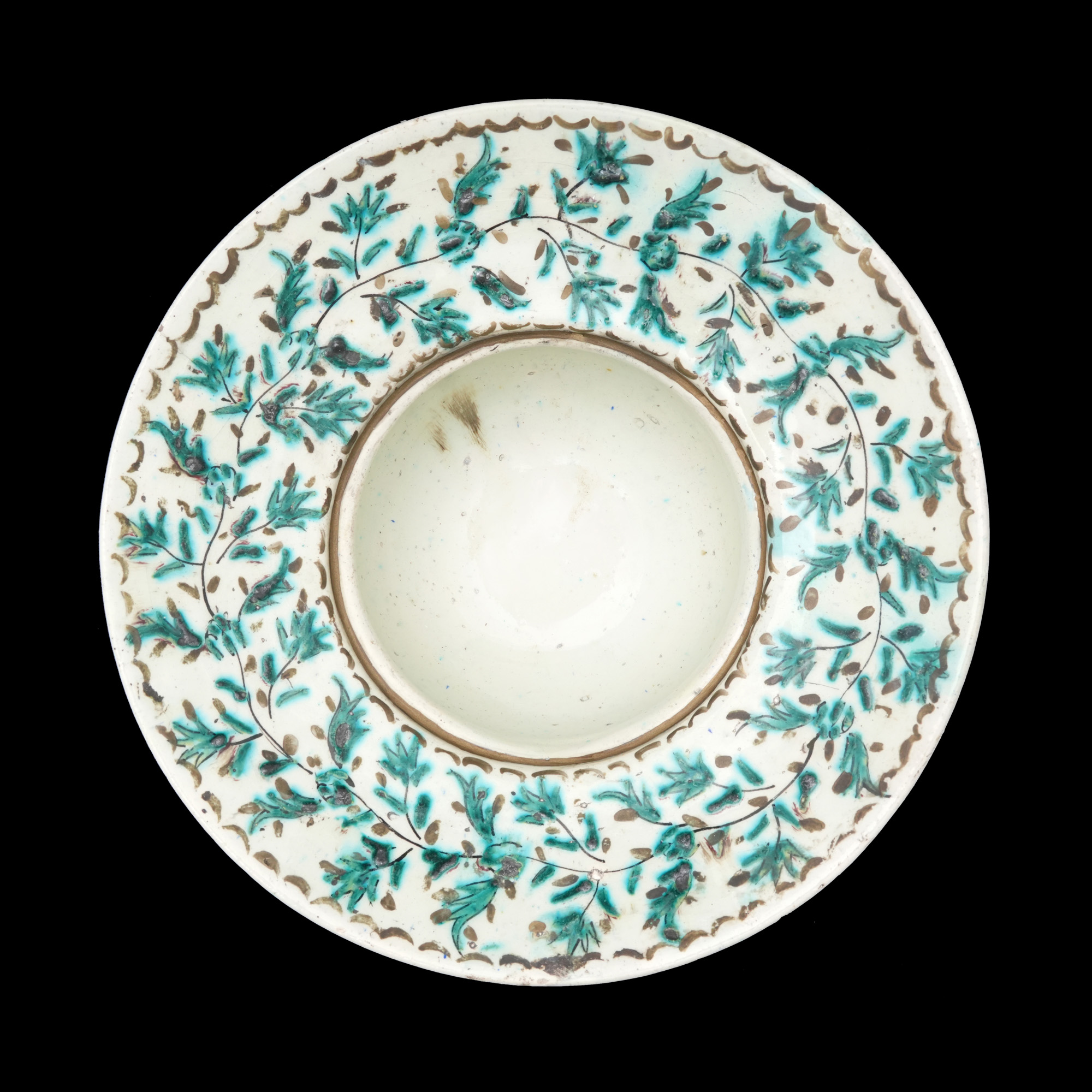
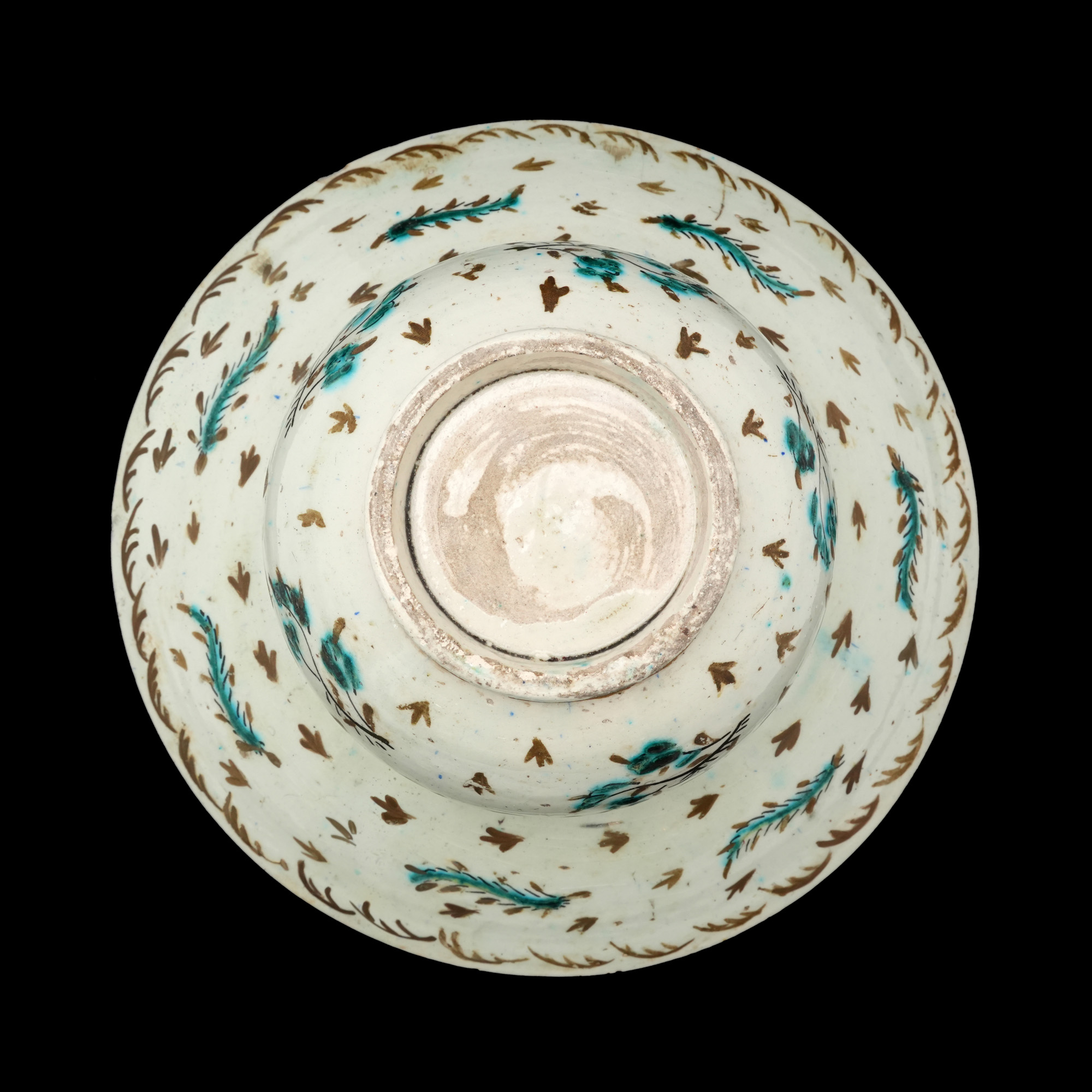
The accompanying basin (Leğen) is of broad circular form, with a deep central well raised upon a high foot ring and designed to receive the ewer when the two pieces are displayed or stored together. Its form corresponds closely with surviving eighteenth-century Kütahya basins in museum and ecclesiastical collections. Many surviving examples have unfortunately become separated from their original ewers or basins; consequently, the survival of the present two components together is of particular significance.
The set belongs to the long-established Ottoman tradition of the İbrik ve Leğen, the ewer and basin employed for pouring water over the hands before and after meals, for personal washing and, where appropriate, ablution. Unlike certain Persian washing services incorporating a separate pierced strainer or draining element, the Ottoman arrangement was characteristically conceived as a two-piece ensemble, with the ewer resting directly within the basin.
Both vessels are formed from the characteristic creamy-white Kütahya fritware body and painted beneath the transparent glaze with freely executed floral and vegetal decoration. Scrolling branches, stylised blossoms and saz-inspired leaves are vigorously outlined in black and enlivened principally with emerald green and small touches of yellow.
The drawing possesses the spontaneous, almost calligraphic quality associated with eighteenth-century Armenian Kütahya production. Closely related freely painted vegetal ornament occurs on contemporary Kütahya Easter eggs, gülâbdans (rosewater sprinklers), mataras (pilgrim flasks), coffee cups, bowls and other domestic and ecclesiastical vessels.
Of particular interest are the surviving brown henna-coloured pigment accents applied to selected areas of the rims, foot, handle, spout and raised details. These appear visually and technically distinct from the principal black, green and yellow underglaze decoration and seem to have been applied over the glaze.
Comparable use of brown and henna-coloured surface pigments can be encountered on Ottoman ceramics, including later Çanakkale wares. It therefore remains possible that these brown accents represent a secondary decorative intervention rather than part of the original Kütahya decorative scheme. Their precise date of application cannot presently be established with certainty, and they should consequently be considered separately from the principal black, green and yellow underglaze decoration.
A particularly important decorative comparison is provided by the Kütahya sahan, Cairo, inv. no. 6285, with freely drawn black-outlined vegetal ornament and green and yellow colouring provide a close parallel for the principal underglaze decoration of the present set.
Complete eighteenth-century Kütahya İbrik ve Leğen ensembles are considerably rarer than individual surviving ewers and basins. The preservation of the present two-piece service is therefore particularly significant, retaining both the decorative relationship between the vessels and the original visual and functional conception of the Ottoman hand-washing set.
The elegant Ottoman form, characteristic Armenian-Kütahya decoration, unusual brown henna-coloured surface accents and rare survival of the corresponding basin make the present ensemble an important example of late eighteenth-century Ottoman Kütahya ceramic production.
Dimensions
Ewer (İbrik)
Height: 29 cm
Width (handle to spout): 19 cm
Diameter of neck: 7.5 cm
Basin (Leğen)
Diameter: 28 cm
Diameter of inner well: 15 cm
Height: 13 cm
Diameter of foot: 8.5 cm
Overall, Height (displayed together)
34 cm
Condition
Overall, in very good condition, particularly considering the age and utilitarian function of an eighteenth-century ceramic hand-washing set.
The ewer and basin remain structurally sound and stable, retaining an attractive historic surface with age-related wear. There is some glaze crazing and minor firing irregularity, together with small chips and localised glaze losses around the rims and extremities, consistent with age and use.
The lid of the ewer is missing. The precise original form and material of the missing lid cannot now be established with certainty.
It may originally have been a ceramic lid corresponding in manufacture and decoration to the body of the ewer, as encountered on other Kütahya vessels.
There is, however, another possibility.
Ottoman ewers were on occasion provided with metal lids, and the missing cover could therefore have been made of copper or gilt copper (tombak), possibly surmounted by a small finial or crescent-shaped ornament. Ottoman craftsmen also occasionally adapted or employed small metal covers related in form to those used on coffee pots and other pouring vessels.
Consequently, without the survival of the original lid, it is not possible to determine whether the present ewer was originally fitted with a ceramic cover or an Ottoman metal cover.
The surviving brown henna-coloured pigment applied to selected areas of the ewer and basin shows natural fading, rubbing and wear. This pigment appears to have been applied over the glaze and may represent a later decorative addition. Its precise date of application cannot presently be established with certainty.
The brown henna-coloured pigment should therefore be considered separately from the principal black, green and yellow underglaze decoration, which is characteristic of the original Kütahya decorative scheme.
Otherwise, the set is remarkably well preserved and retains considerable integrity for an eighteenth-century utilitarian ceramic ensemble.
Provenance
The European Art Market.
References
References and Comparative Material
John Carswell and C. J. F. Dowsett, Kütahya Tiles and Pottery from the Armenian Cathedral of St. James, Jerusalem, 2 vols., Oxford, Clarendon Press, 1972.
Of particular importance is the dated Kütahya ewer and basin of 1716 in the Armenian Patriarchal collection, Jerusalem. This provides an important securely dated early eighteenth-century comparison for the ceramic interpretation of the Ottoman İbrik ve Leğen form.
Garo Kürkman, Magic of Clay and Fire: A History of Kütahya Pottery and Potters, Suna and İnan Kıraç Foundation, Istanbul, 2006.
This extensive study of Kütahya pottery and its Armenian potters provides important historical and stylistic context for the production of eighteenth-century Kütahya ceramics.
Şebnem Akalın and Hülya Bilgi (eds.), Yâdigâr-ı Kütahya: Suna ve İnan Kıraç Koleksiyonunda Kütahya Seramikleri, Suna and İnan Kıraç Foundation, Istanbul, 1997.
The Suna and İnan Kıraç Foundation / Pera Museum, Istanbul, preserves an important collection of eighteenth-century Kütahya ceramics, including pear-shaped ewers with cylindrical necks, projecting spouts and spreading feet, together with gülâbdans, mataras, cups, bowls and other domestic vessels displaying related floral ornament.
The Armenian Cathedral of St James, Jerusalem, preserves one of the most significant collections of historic Kütahya pottery, including the celebrated ewer and basin dated 1716, which constitutes an especially important comparison for the present ensemble.
A particularly close decorative comparison is the Kütahya sahan, Cairo, inv. no. 6285, displaying related freely drawn, black-outlined vegetal ornament enlivened with green and yellow.
Comparable eighteenth-century Kütahya vessels are also preserved in the Musée du Louvre, Paris, including fritware vessels painted beneath a transparent glaze.
Further comparisons may be made with eighteenth-century Kütahya ewers preserved in international museum collections.
A second-half-of-the-eighteenth-century Kütahya ewer in the Khanenko Museum, Kyiv, for example, demonstrates the continuation of the characteristic pear-shaped ceramic ewer form during the period proposed for the present set.
The broader formal tradition should additionally be compared with Ottoman İbrik ve Leğen services manufactured in brass, copper, silver and gilt copper (tombak).
Such metalwork examples demonstrate the prestigious Ottoman prototypes from which the ceramic versions ultimately derived.
Principal Bibliography
Carswell, John and Dowsett, C. J. F., Kütahya Tiles and Pottery from the Armenian Cathedral of St. James, Jerusalem, Oxford, Clarendon Press, 1972.
Kürkman, Garo, Magic of Clay and Fire: A History of Kütahya Pottery and Potters, Istanbul, 2006.
Akalın, Şebnem and Bilgi, Hülya (eds.), Yâdigâr-ı Kütahya: Suna ve İnan Kıraç Koleksiyonunda Kütahya Seramikleri, Istanbul, 1997.