
Description
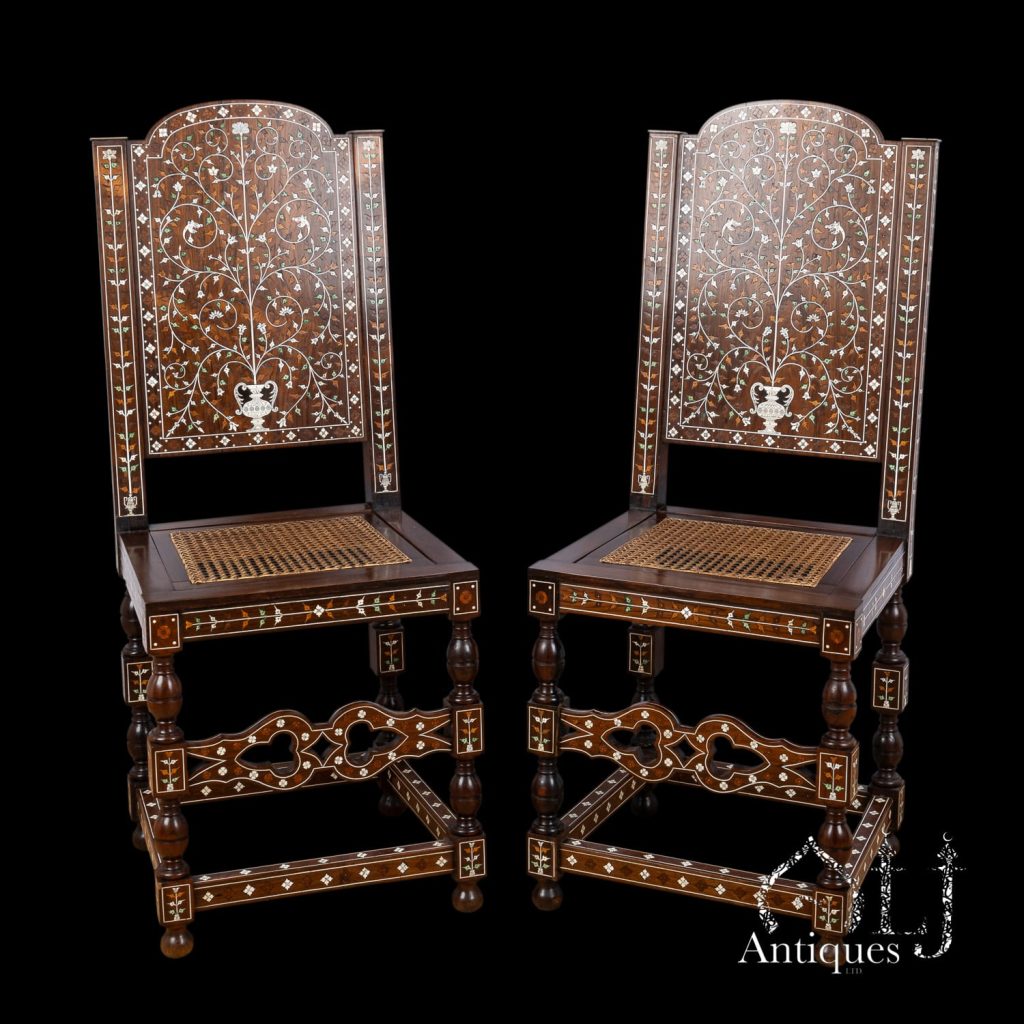
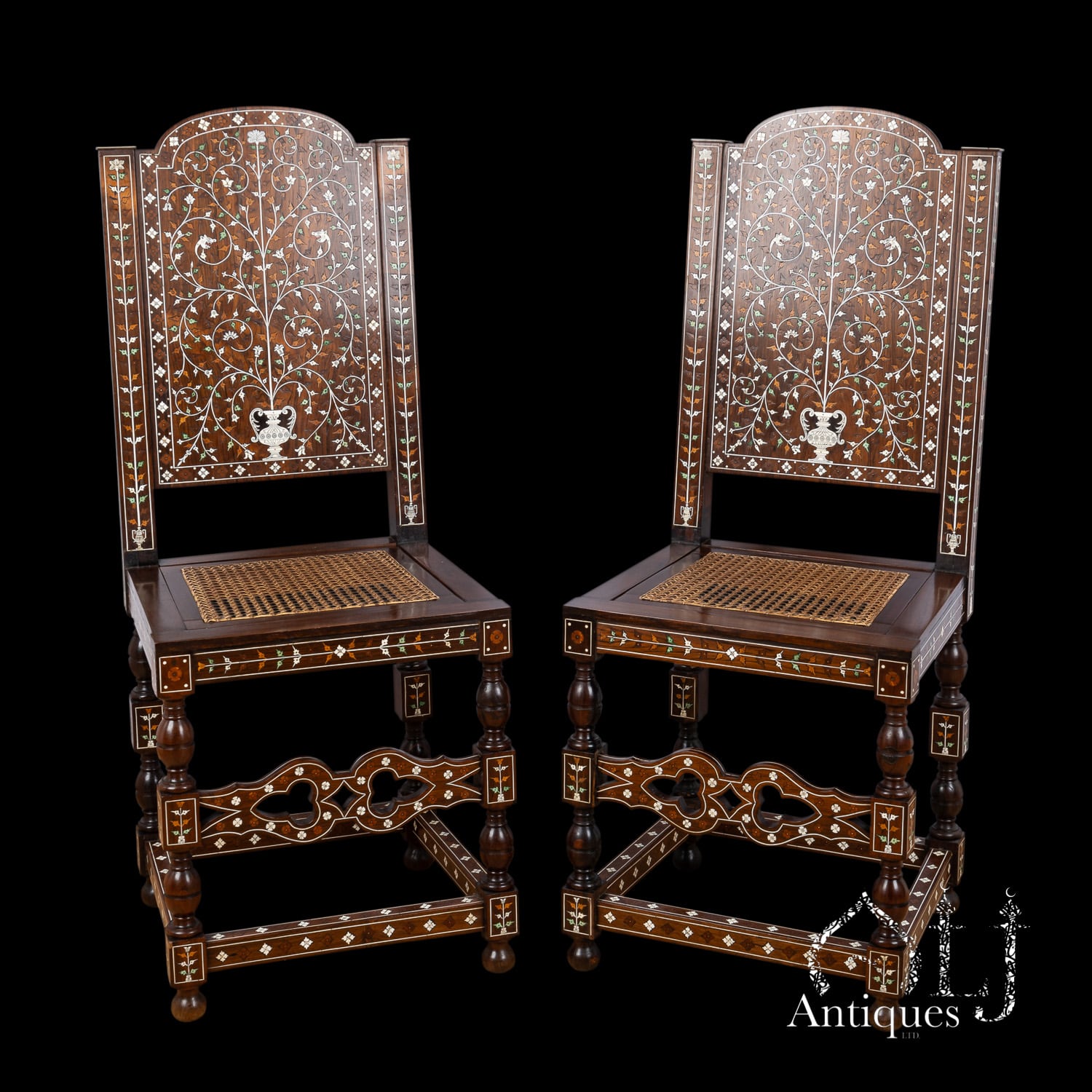
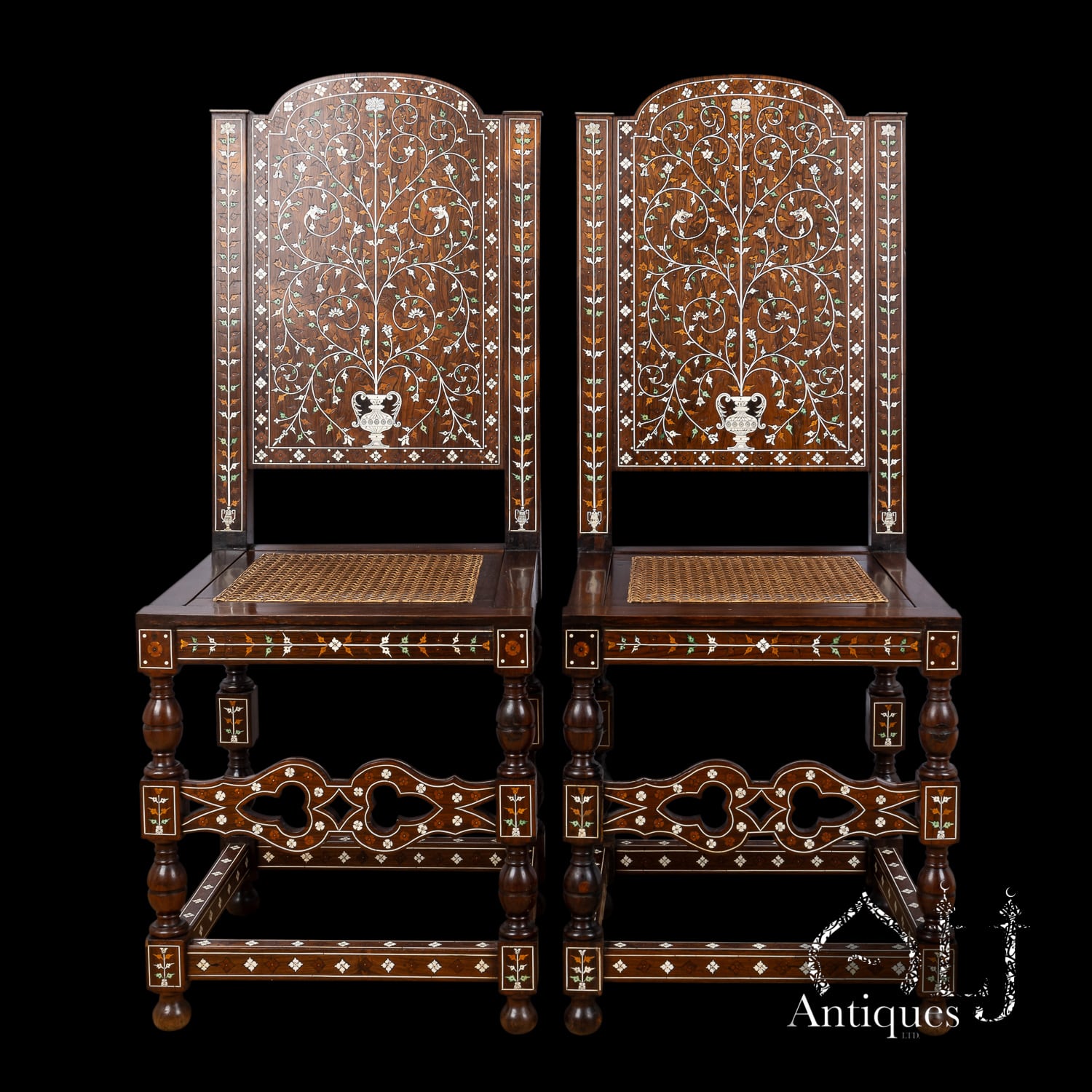
This exceptionally rare pair of seventeenth-century Indo-Portuguese high-back chairs, combining the distinctive furniture-making traditions of the Coromandel Coast of southern India with an unusually rich programme of Western Indian, Mughal-inspired marquetry and inlay.
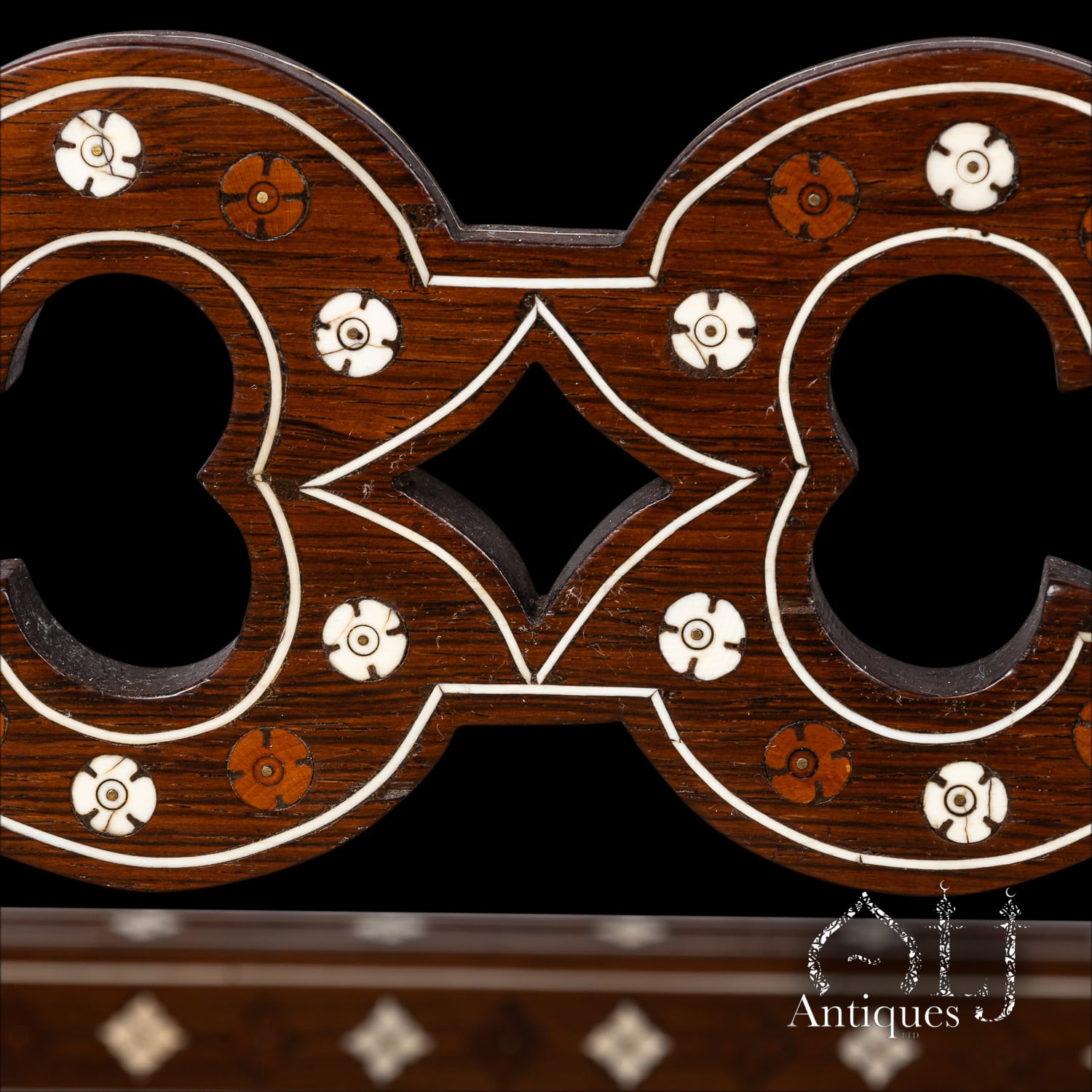
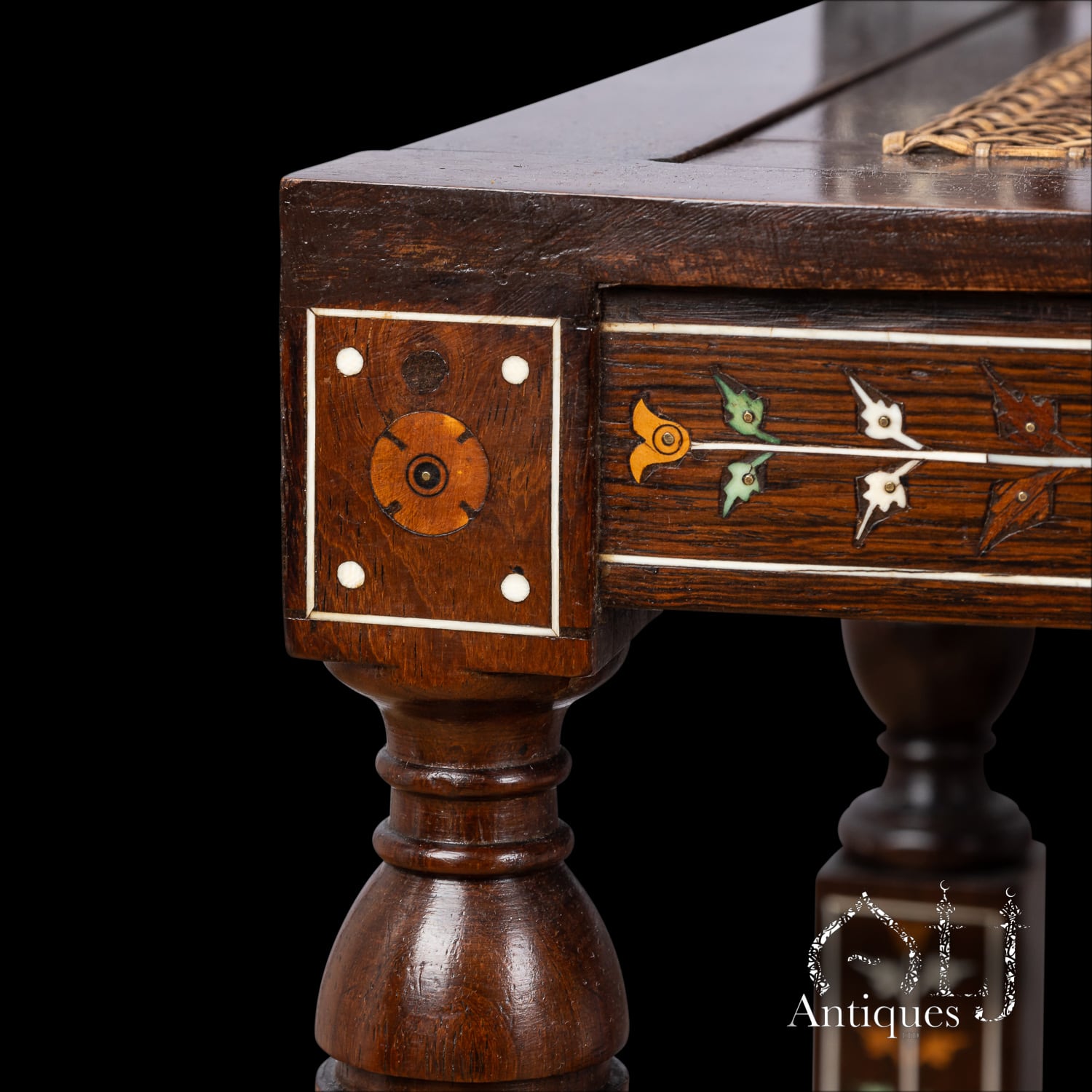
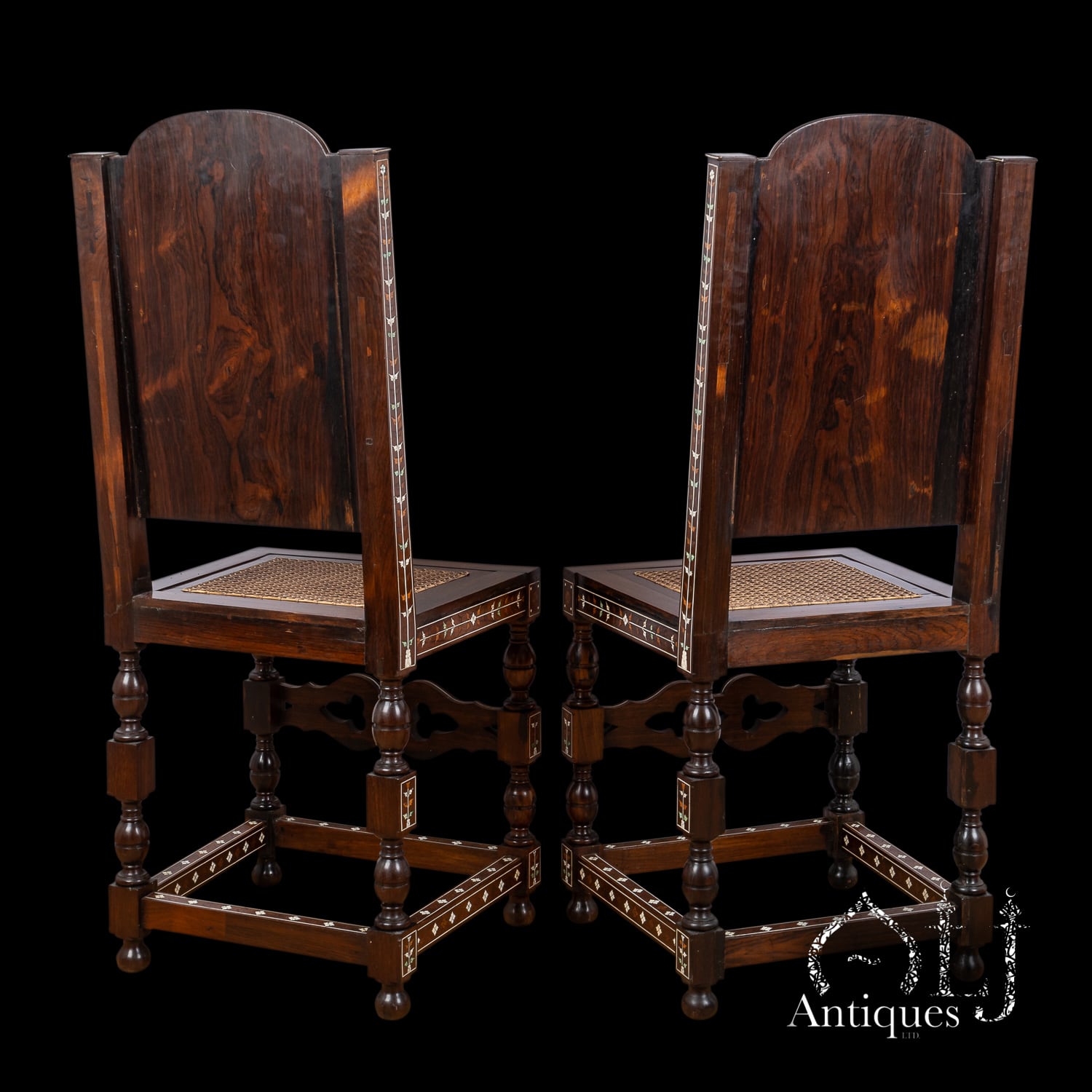
The chairs are constructed in a dense dark tropical hardwood, probably teak or a related South Indian hardwood, their tall backs, turned elements and European-derived form belonging to a well-documented family of furniture manufactured during the seventeenth century in the principal woodworking centres of the Coromandel Coast.
Jan Veenendaal, in Asian Art and Dutch Taste, records the extensive manufacture of furniture in ebony and kaliatur in southern India during the seventeenth century. In particular, during the period circa 1650–1680, considerable quantities of such furniture were produced in the region extending from northern Tamil Nadu into southern Andhra Pradesh, with important centres including Pulicat, Machilipatnam (Masulipatnam) and Madraspatnam (Chennai).
Much of this furniture was made for European patrons and circulated through the Portuguese, Dutch and other European trading networks operating around the Indian Ocean.
The fundamental construction and form of the present chairs are closely related to this Coromandel tradition. Their tall architectural backs, European-derived seating form and turned structural elements reflect the adaptation by Indian craftsmen of European furniture types to locally available hardwoods and established South Indian woodworking practices.
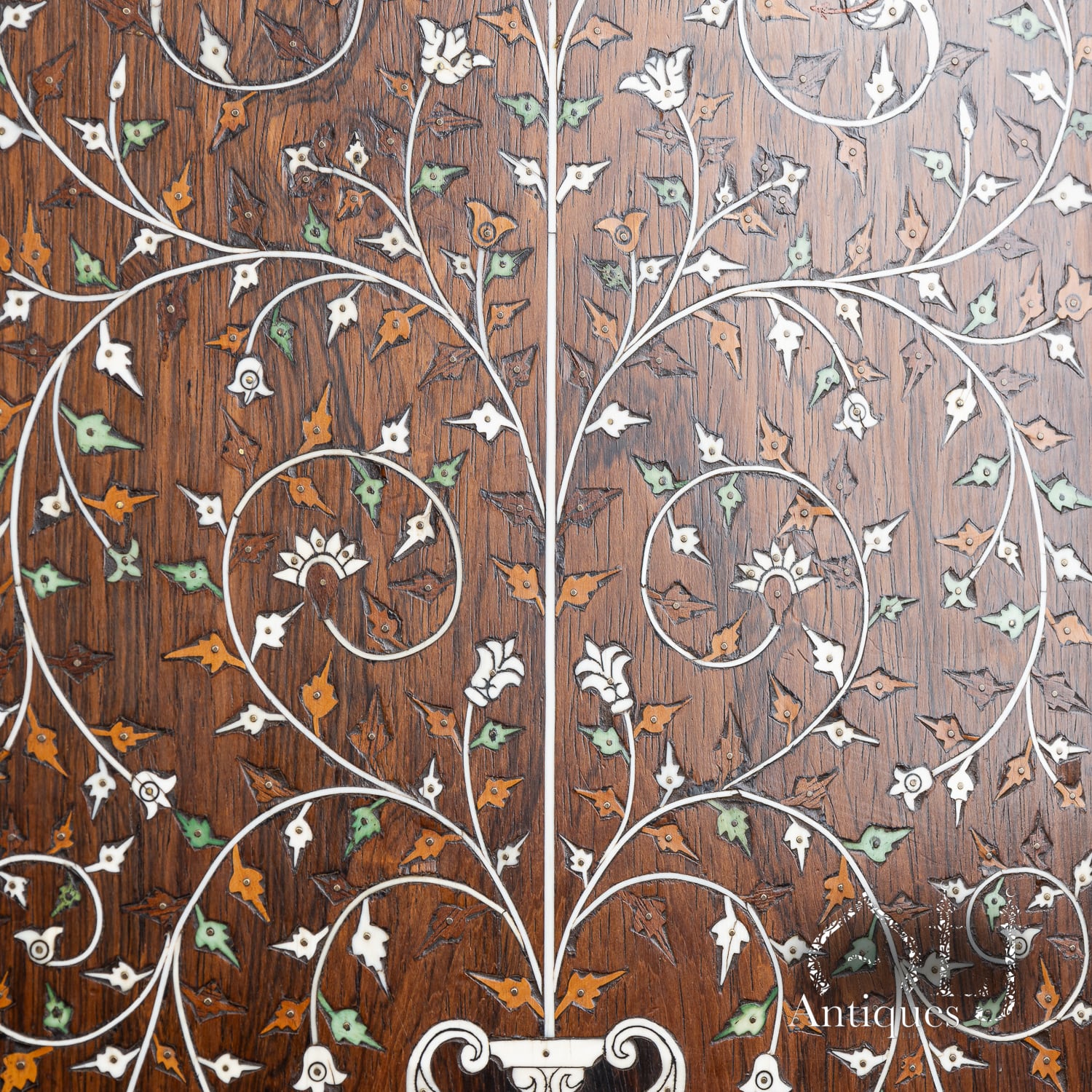
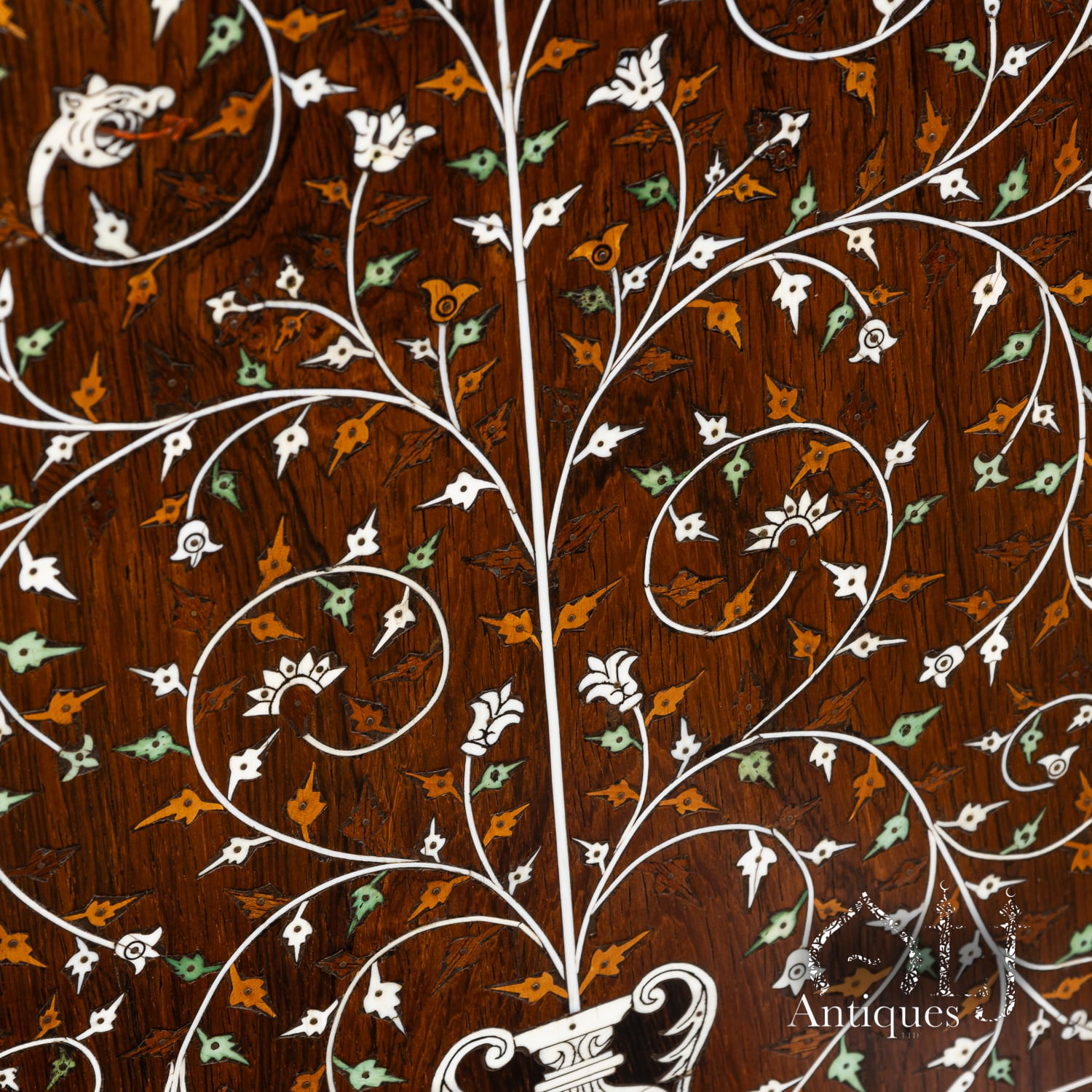
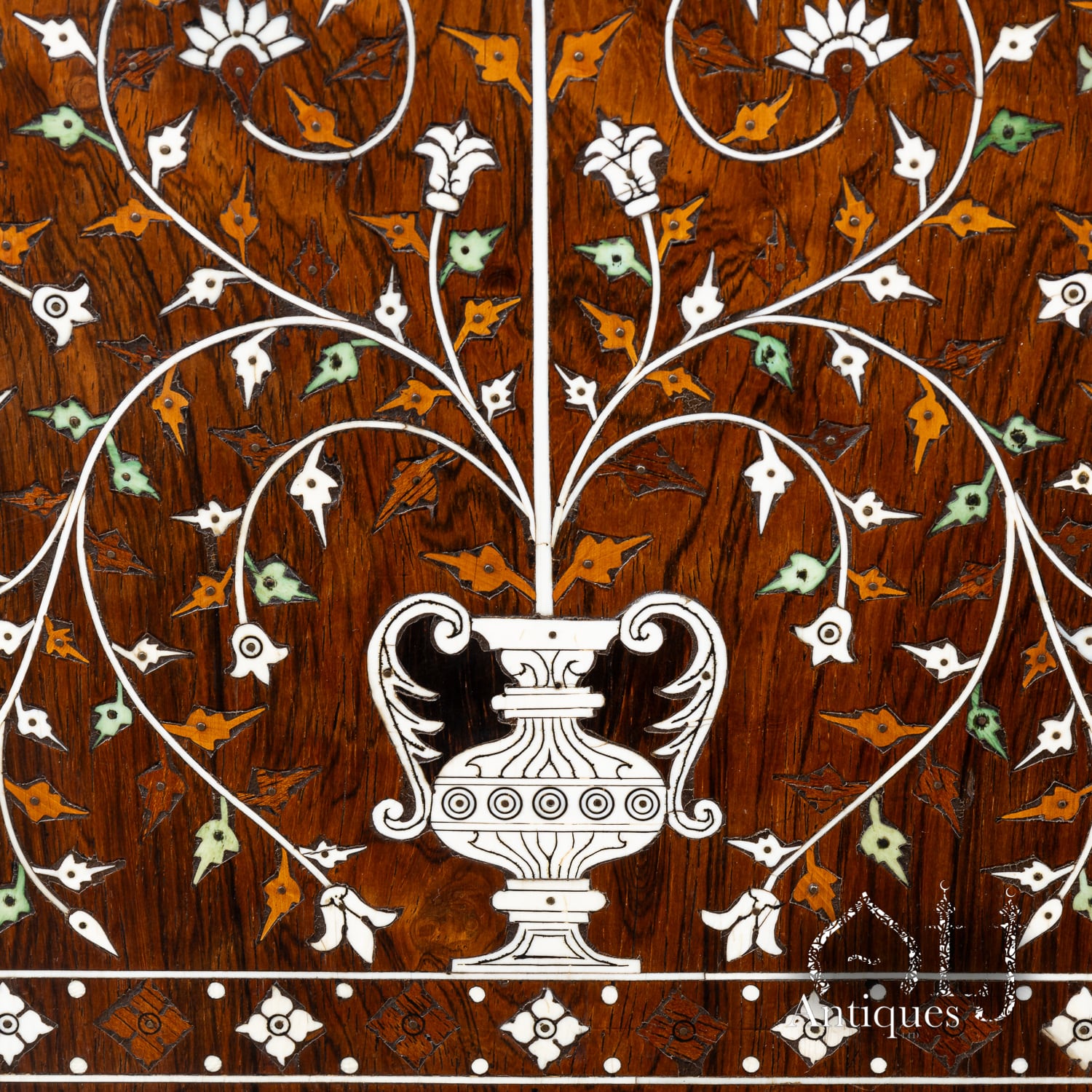
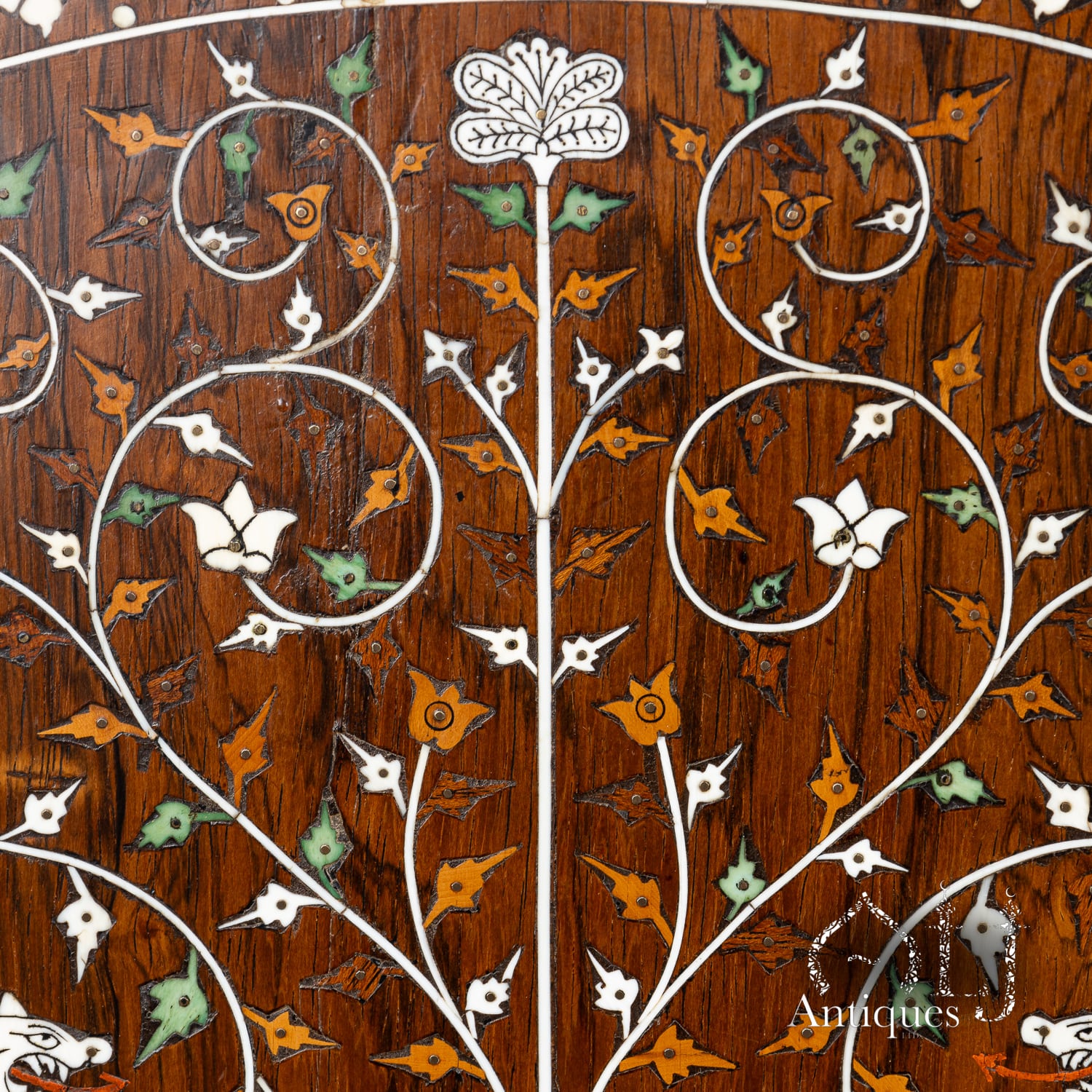
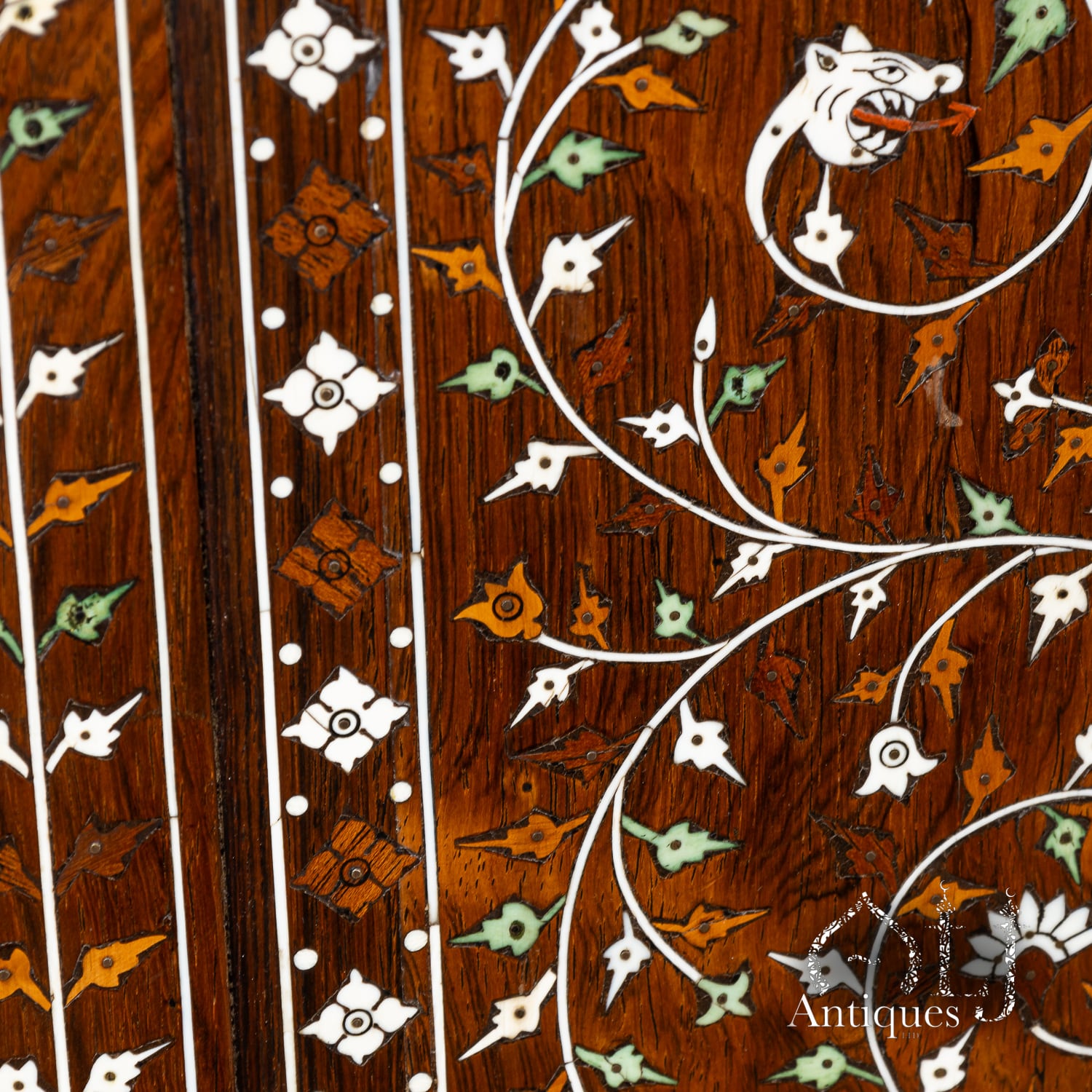
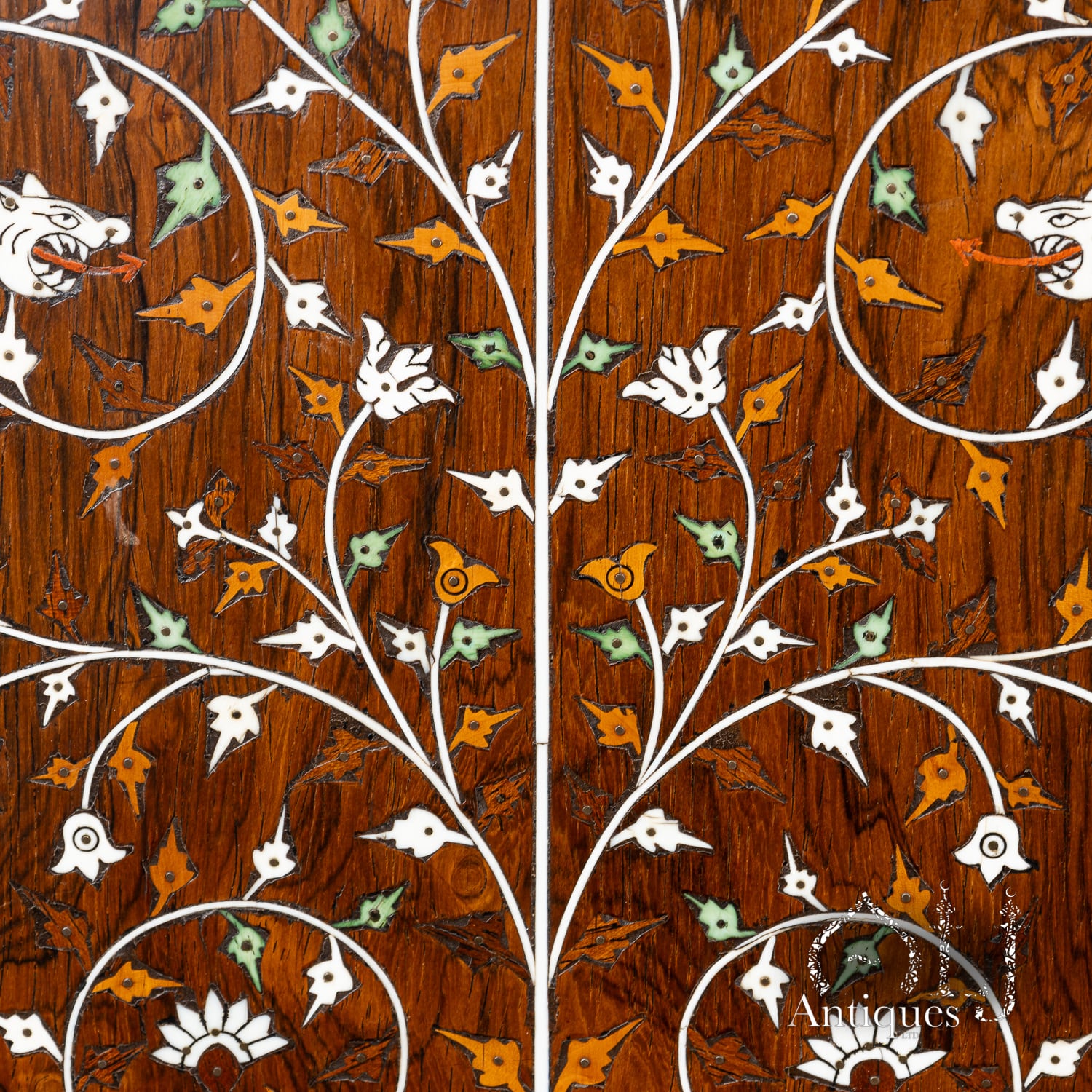
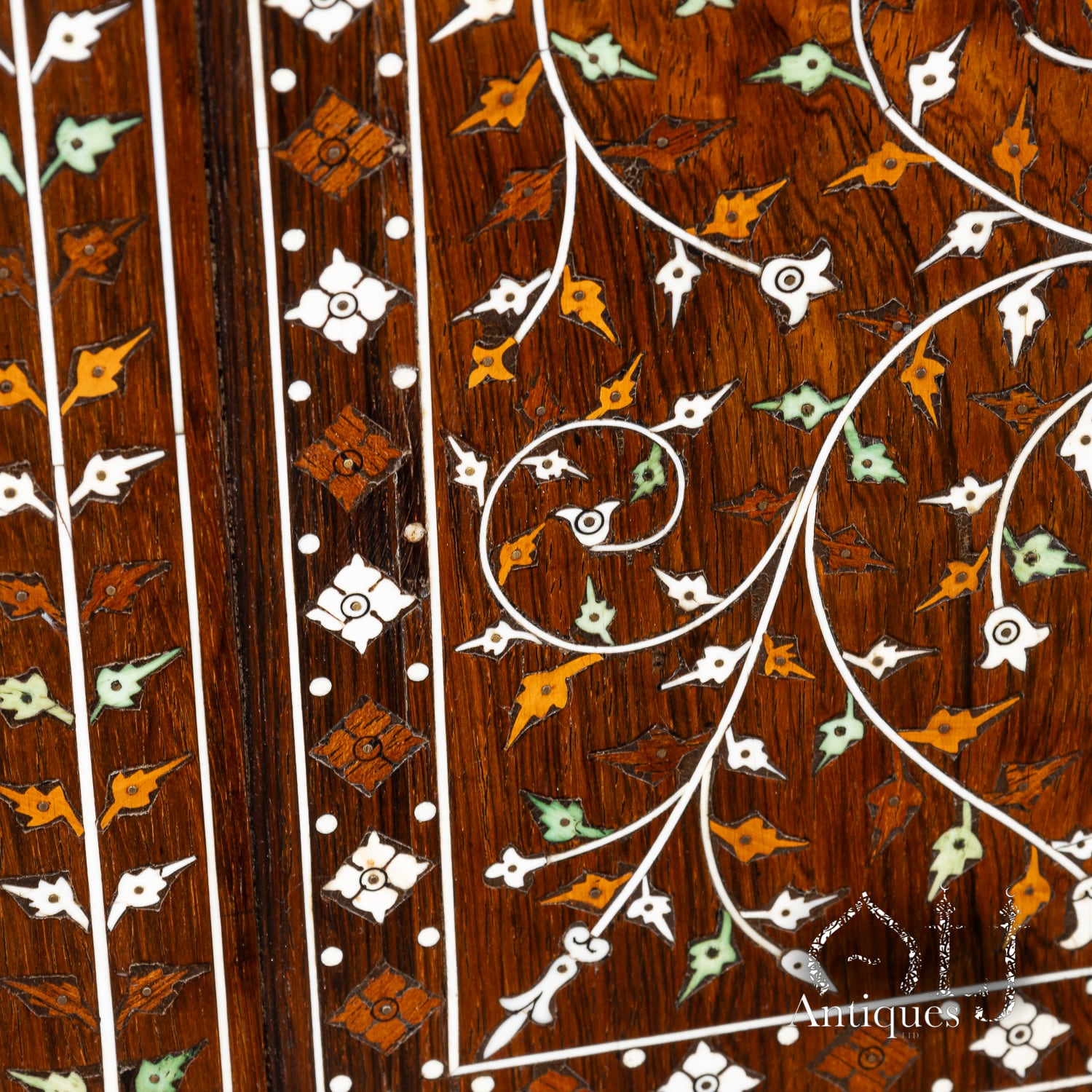
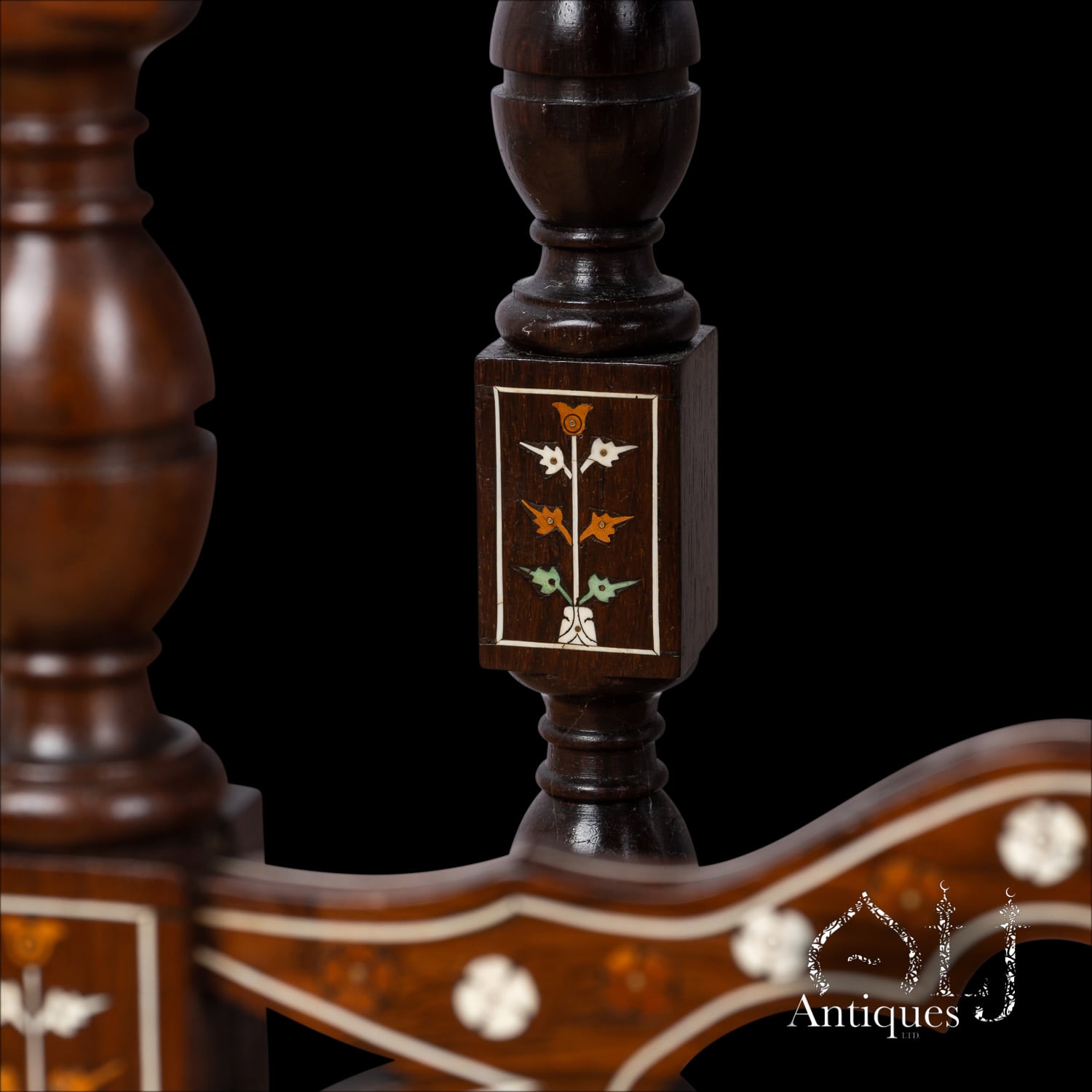
What distinguishes the present pair, however, is their exceptionally elaborate inlaid decoration. The chairs are profusely ornamented, engraved and inlaid with finely cut pieces of natural and green-stained ivory or bone and contrasting exotic woods some of which are carefully fitted to the wooden structure of the chair with fine metal pins, forming elaborate vegetal and floral compositions. The decoration is dominated by scrolling stems, leaves, blossoms and symmetrical arrangements ultimately indebted to the luxuriant flowering-plant vocabulary of seventeenth-century Mughal decorative art.
This ornamental language has important parallels in luxury furniture associated with Western India, particularly Gujarat, where craftsmen had developed a highly sophisticated tradition of decorating teak and other woods with ivory, bone, mother-of-pearl and contrasting timbers.
A particularly significant comparison is the fall-front cabinet in the Victoria and Albert Museum, London (inv. 569-1890), attributed to Gujarat and dated circa 1570–1630. Constructed in teak, veneered with various woods and inlaid with ivory, it demonstrates the established Western Indian practice of creating intricate floral and scrolling decoration through contrasting inlay. The museum further records the use of black lac on many such Gujarati cabinets and portable objects, selectively worked to accentuate their ivory or mother-of-pearl decoration.
The Western Indian decorative vocabulary continued into the seventeenth century and became increasingly intertwined with Mughal ornament. The furniture discussed by Amin Jaffer in Luxury Goods from India: The Art of the Indian Cabinet-Maker demonstrates the remarkable synthesis of European forms with Indian and Indo-Persian imagery achieved by Indian cabinet-makers. His celebrated communion table, attributed to Gujarat or Sindh and dated circa 1600–1610 (V&A, inv. IS.15-1882), provides particularly important evidence for sophisticated furniture manufactured in Western India for European, and specifically Christian, patrons.
Further comparisons are provided by seventeenth-century Indo-Portuguese writing boxes, cabinets and contadores published in Via Orientalis and De Goa à Lisboa: L’Art Indo-Portugais, XVIe–XVIIIe siècles. These demonstrate the widespread use of teak, sissoo and other exotic woods combined with natural and sometimes coloured ivory to produce elaborate floral, vegetal and geometric marquetry strongly influenced by Mughal decorative art.
The particularly rich decoration of the present chairs consequently appears stylistically distinct from their underlying Coromandel construction. This raises the compelling possibility that the chairs were initially constructed in one of the important furniture-making centres of the Coromandel Coast and subsequently transported to Western India, possibly Gujarat, where they were enriched with their elaborate inlaid decoration. Such an interpretation would accord with the extensive movement of objects, materials, craftsmen and patrons between the principal commercial and artistic centres of seventeenth-century India.
The pair therefore embodies two complementary artistic traditions: the highly developed South Indian furniture-making tradition of the Coromandel Coast and the sophisticated Western Indian tradition of Mughal-inspired luxury marquetry and inlay.
Their European-derived form further reflects the cosmopolitan environment in which such objects were produced. Indian craftsmen responded to commissions from Portuguese, Dutch and other European patrons while retaining and adapting indigenous materials, techniques and decorative vocabularies. The result was not simply European furniture manufactured in India, but a genuinely hybrid artistic tradition in which European forms were transformed through Indian craftsmanship and ornament.
The survival of a pair, rather than an isolated chair, is particularly noteworthy, and the exceptionally extensive inlaid decoration elevates them considerably beyond the more commonly encountered seventeenth-century Coromandel chairs. Preserved together and retaining the integrity of their elaborate decorative scheme, they constitute a particularly compelling example of the movement of artistic traditions between southern and western India during the seventeenth century.
Date and Attribution
India, circa 1650–1680
The chairs probably constructed in southern India, Coromandel Coast, possibly in the region of Pulicat, Machilipatnam or Madraspatnam (Chennai), and believed subsequently to have been decorated in Western India, possibly Gujarat, in the Mughal-influenced Indo-Portuguese tradition.
Materials
Dense South Indian hardwood, probably teak or a related tropical hardwood, with contrasting exotic-wood marquetry and finely cut natural and green-stained ivory or bone inlay; detachable caned seat frames.
Registration of an Item with Percentage of Ivory Submission Reference
F5DTD9AP