
Description
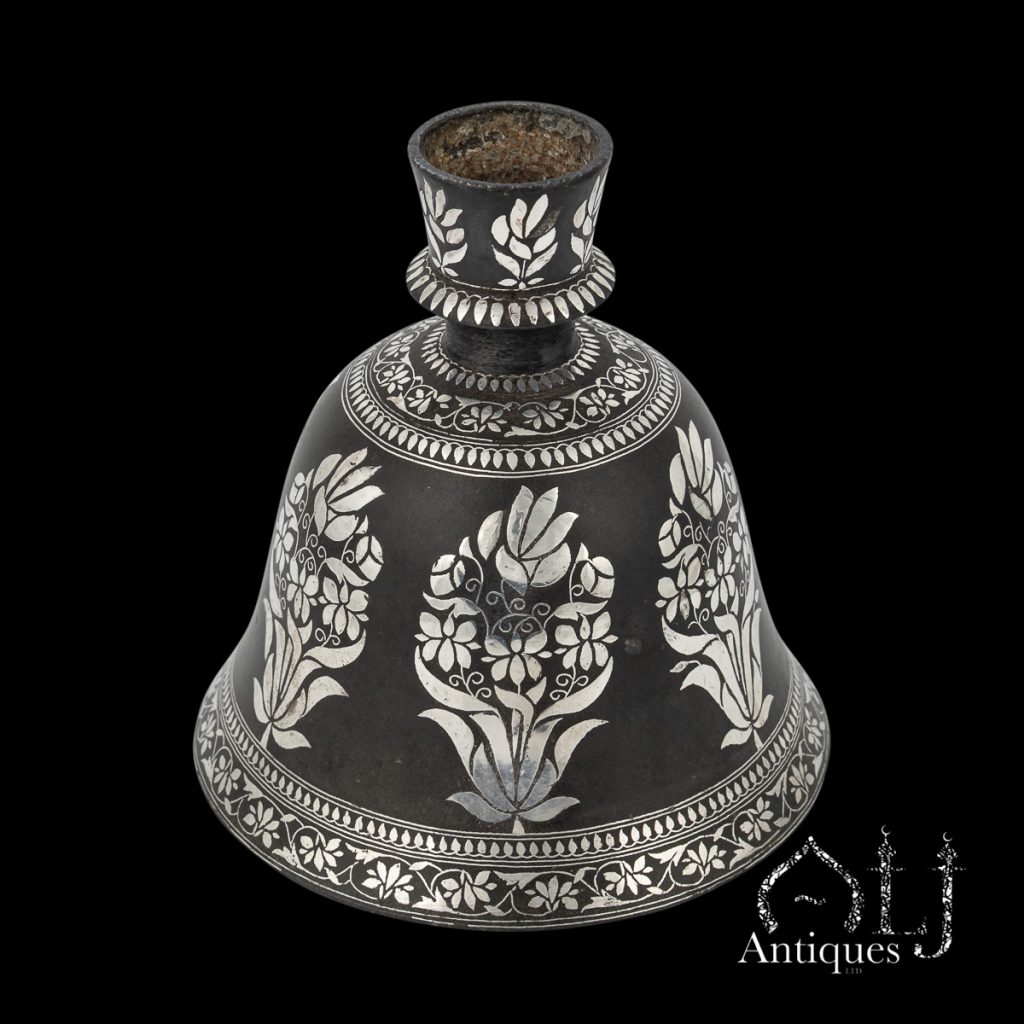
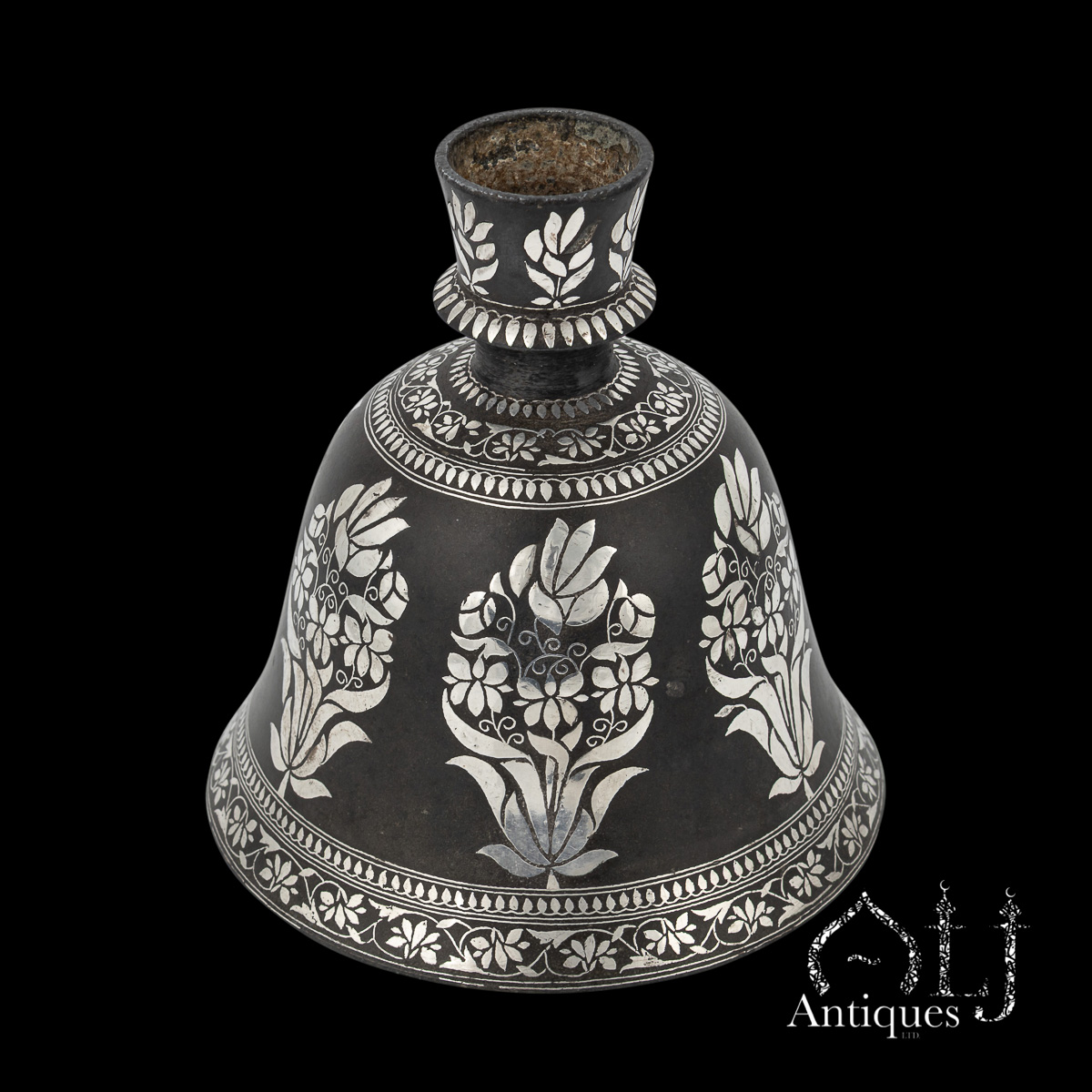
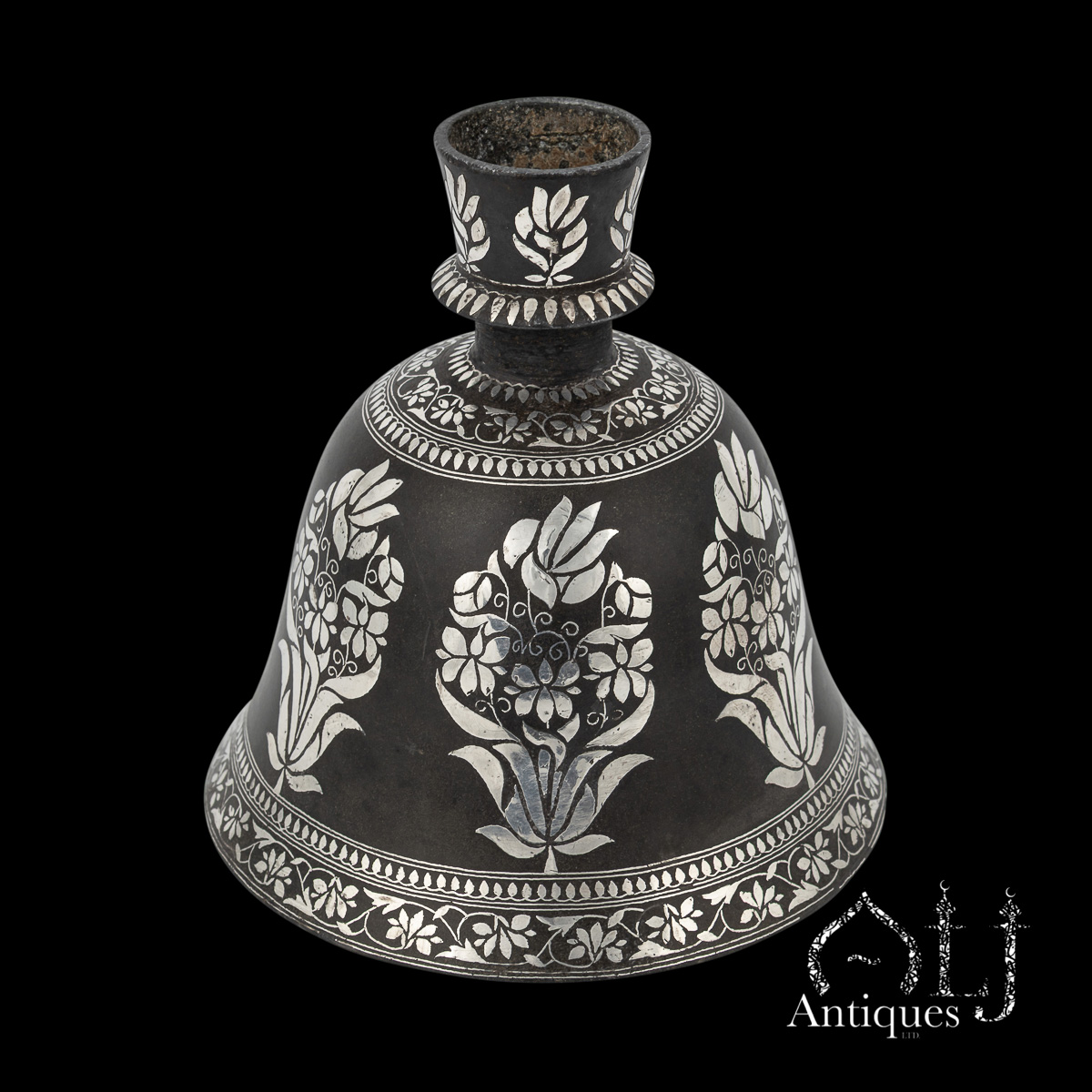
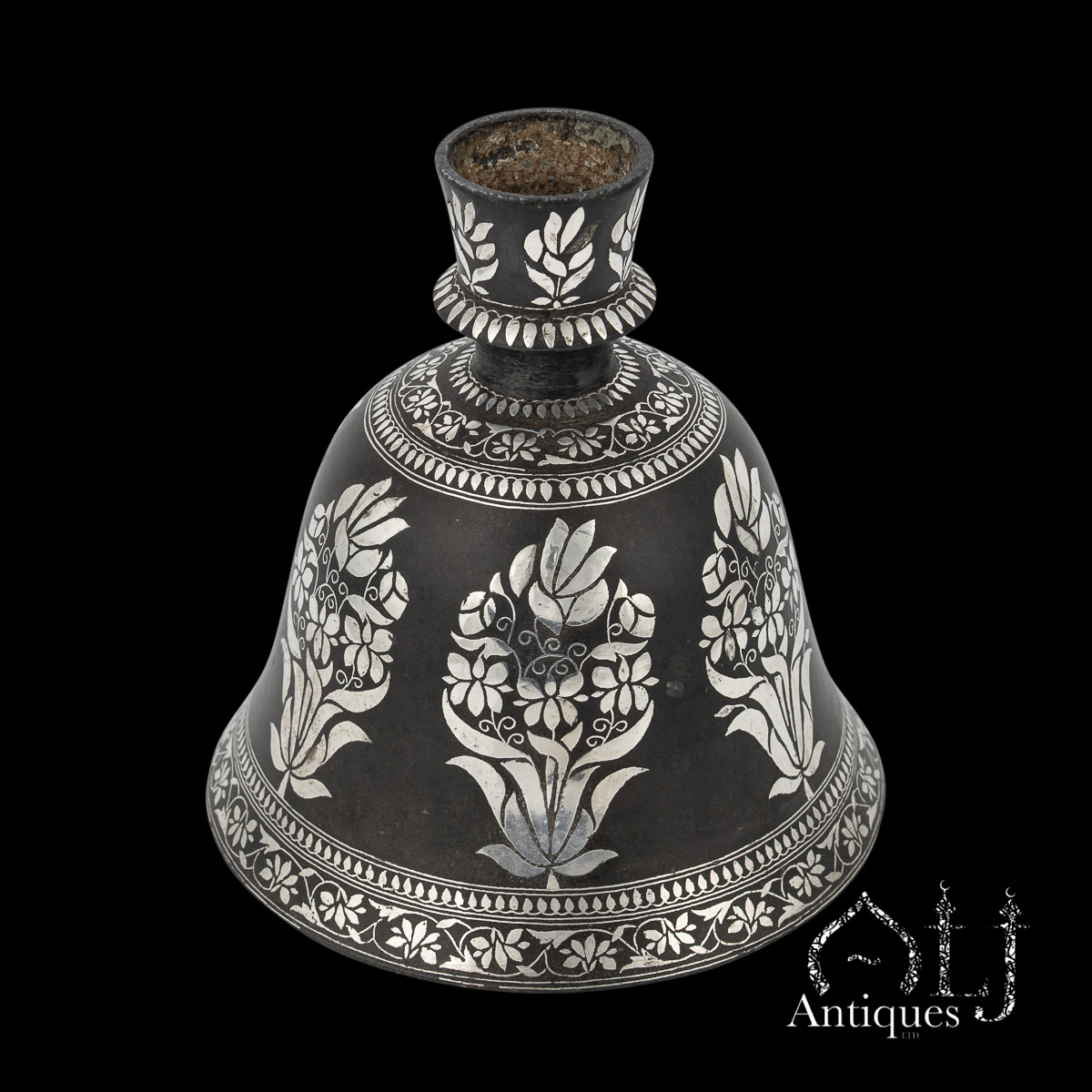
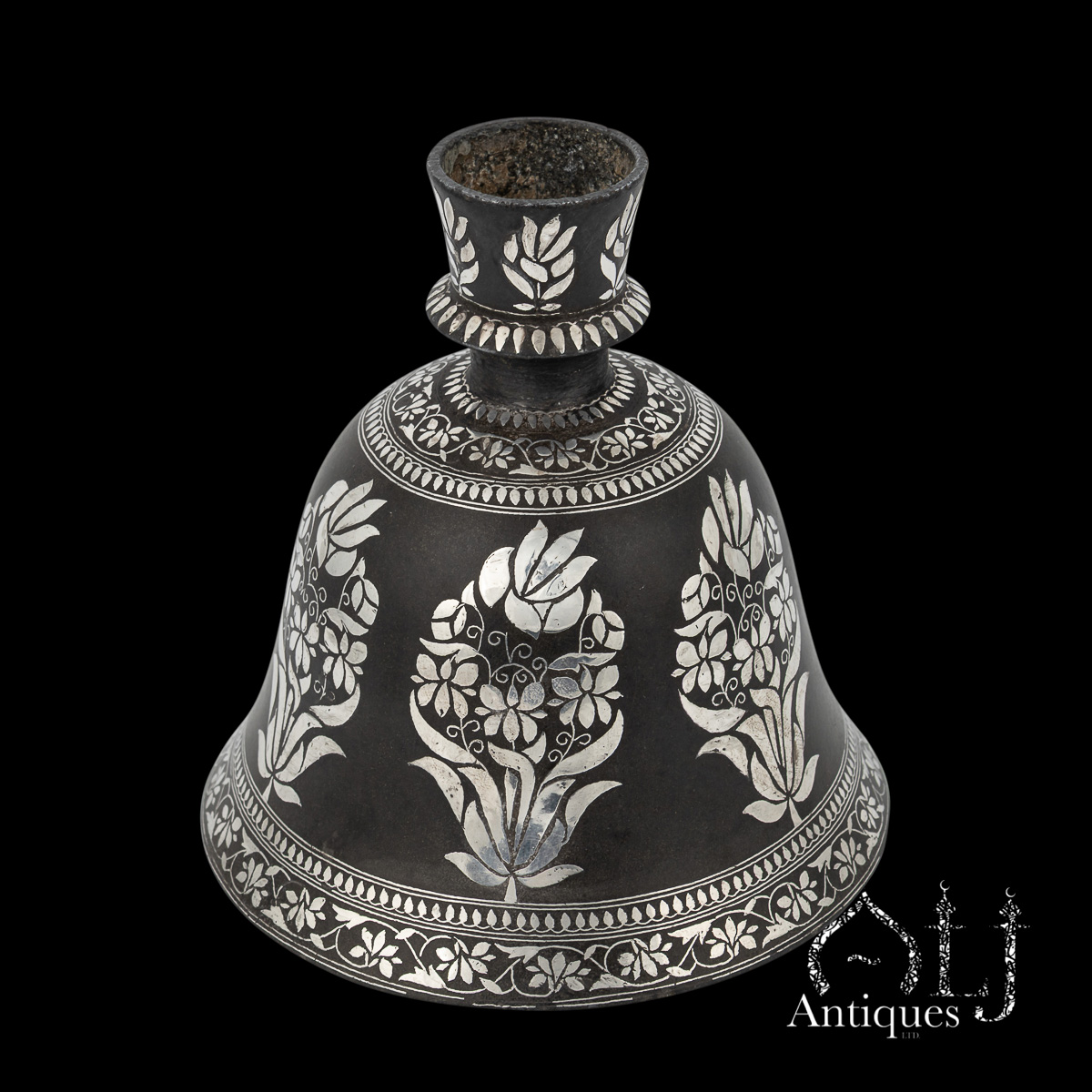
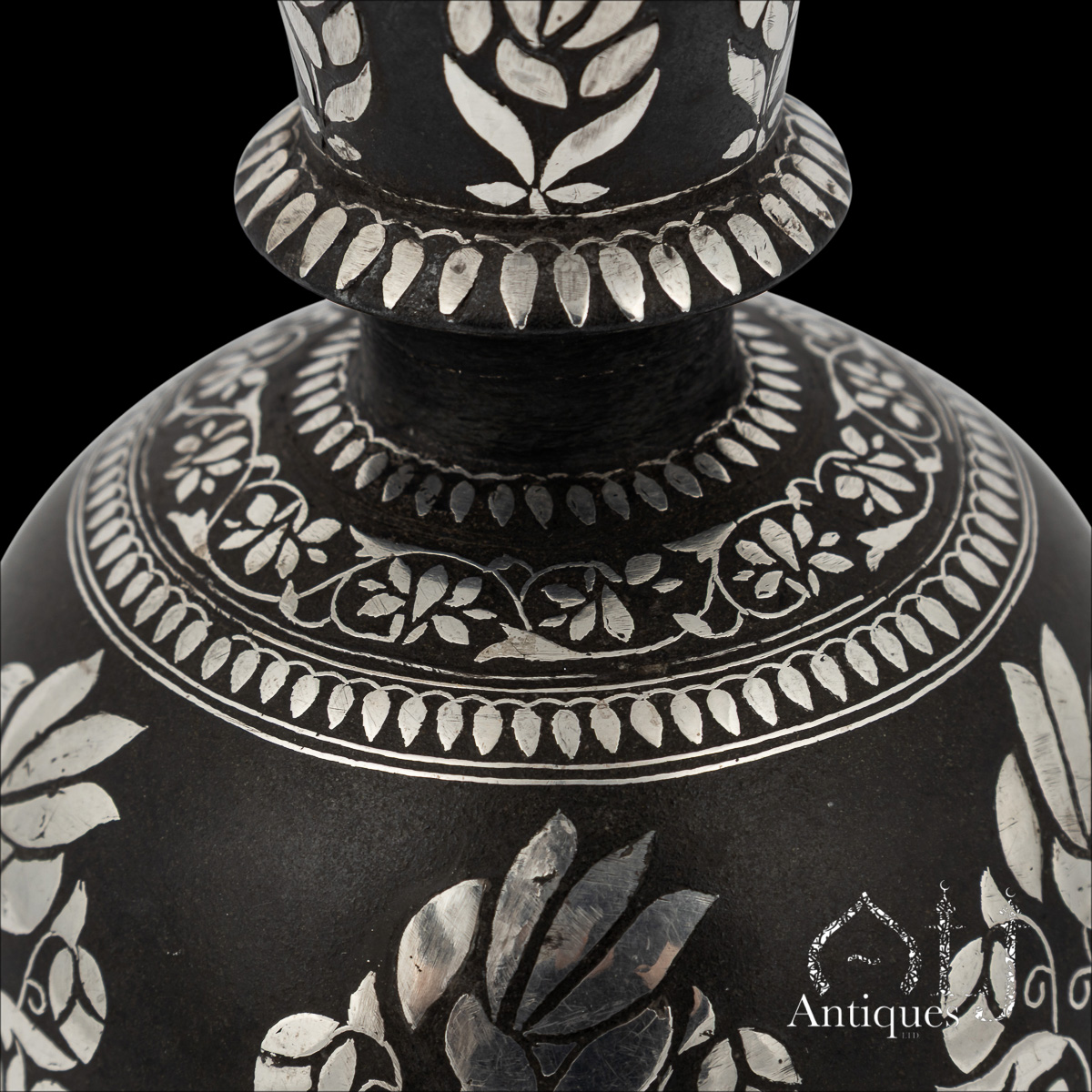
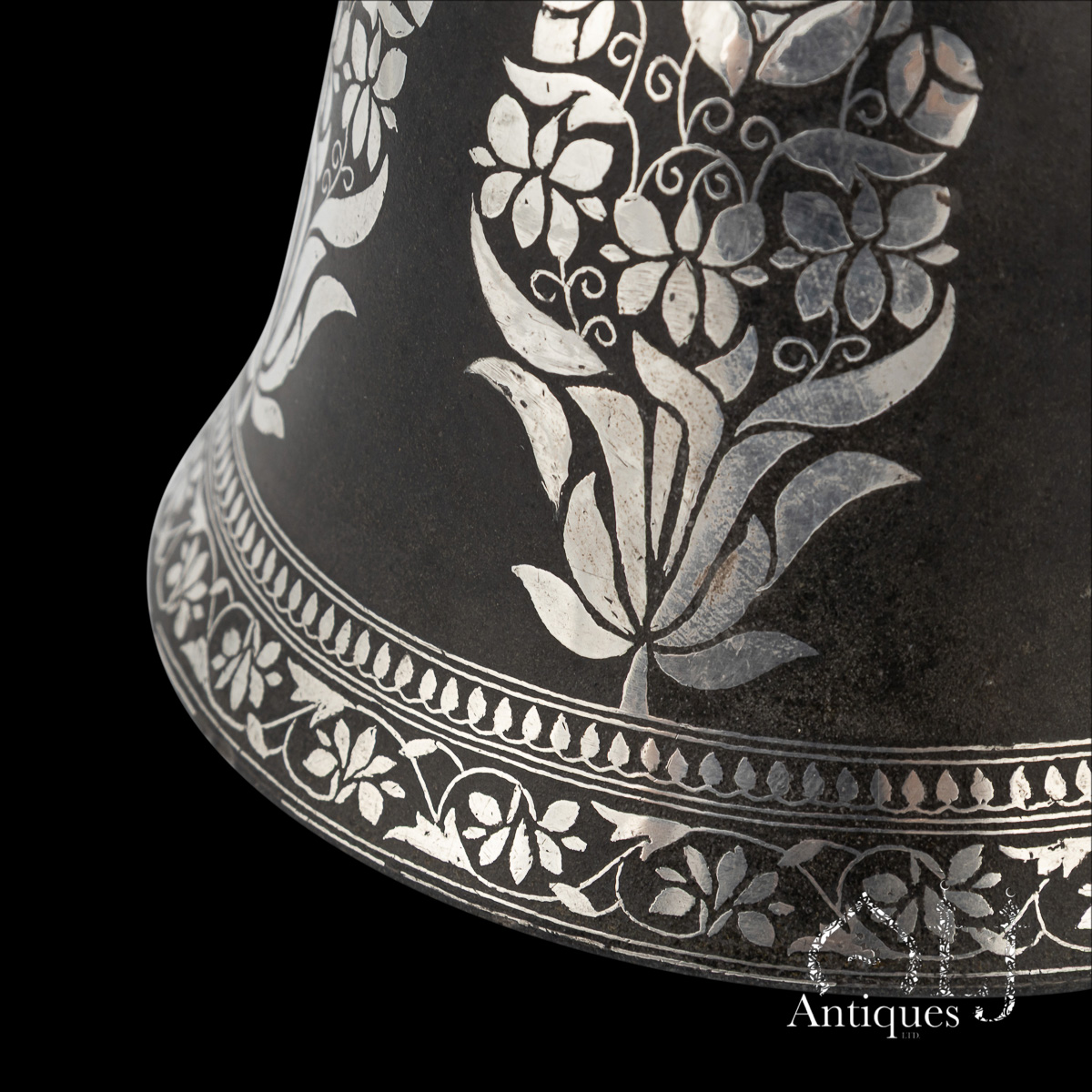
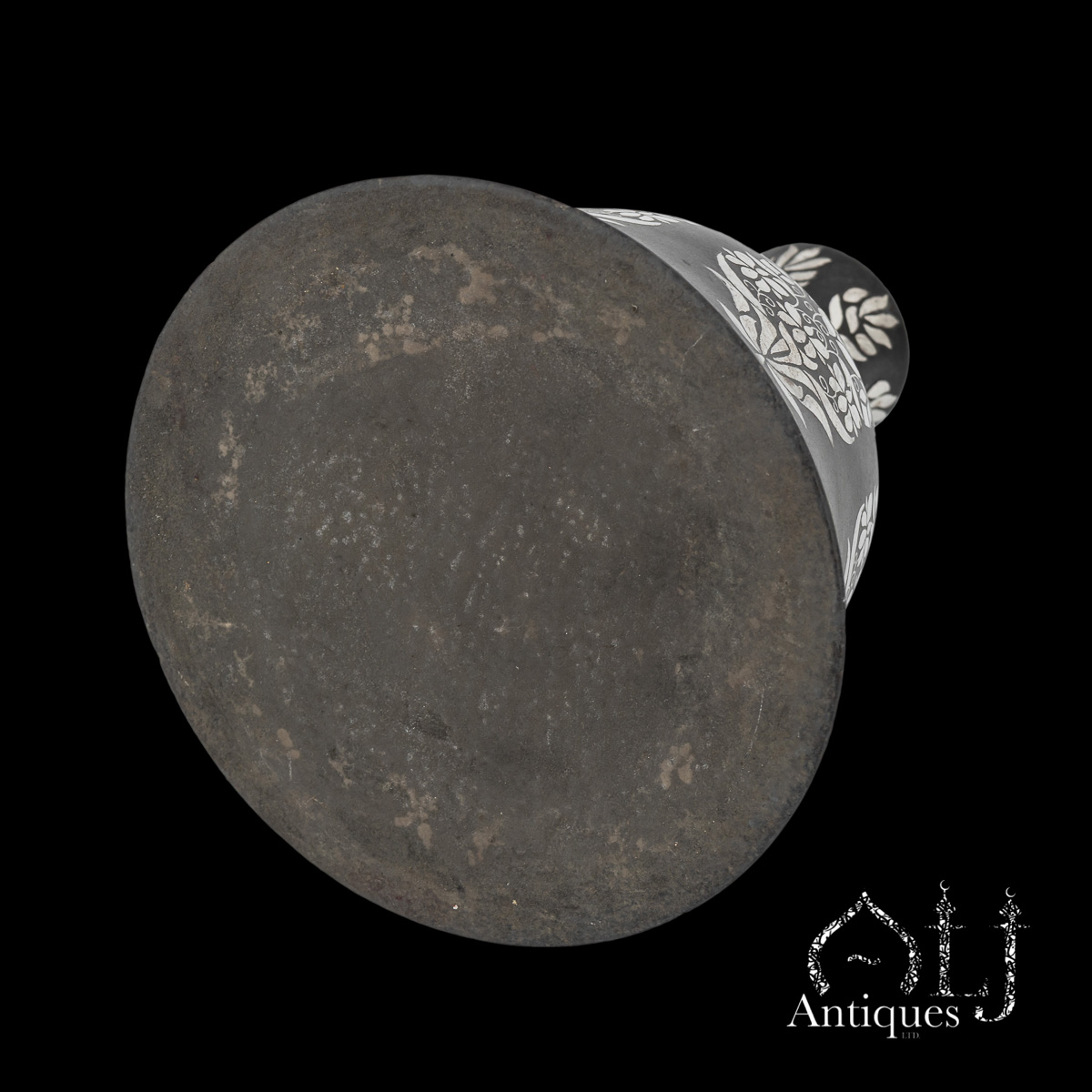
This refined huqqa or Hookah base, with a flaring bell-shaped body rising to a slightly concave waist and a short cylindrical neck with an everted rim, is crafted from a blackened zinc alloy and richly inlaid with silver sheets. Produced in the renowned Bidri workshops of Bidar—once a major artistic centre of the Deccan Sultanates—it likely dates to the middle decades of the 18th century. According to Mark Zebrowski, bell-shaped huqqa bases first appeared between 1730 and 1740, becoming progressively more desirable toward the latter half of the century (Zebrowski, Gold, Silver & Bronze from Mughal India, 1997, p. 236).
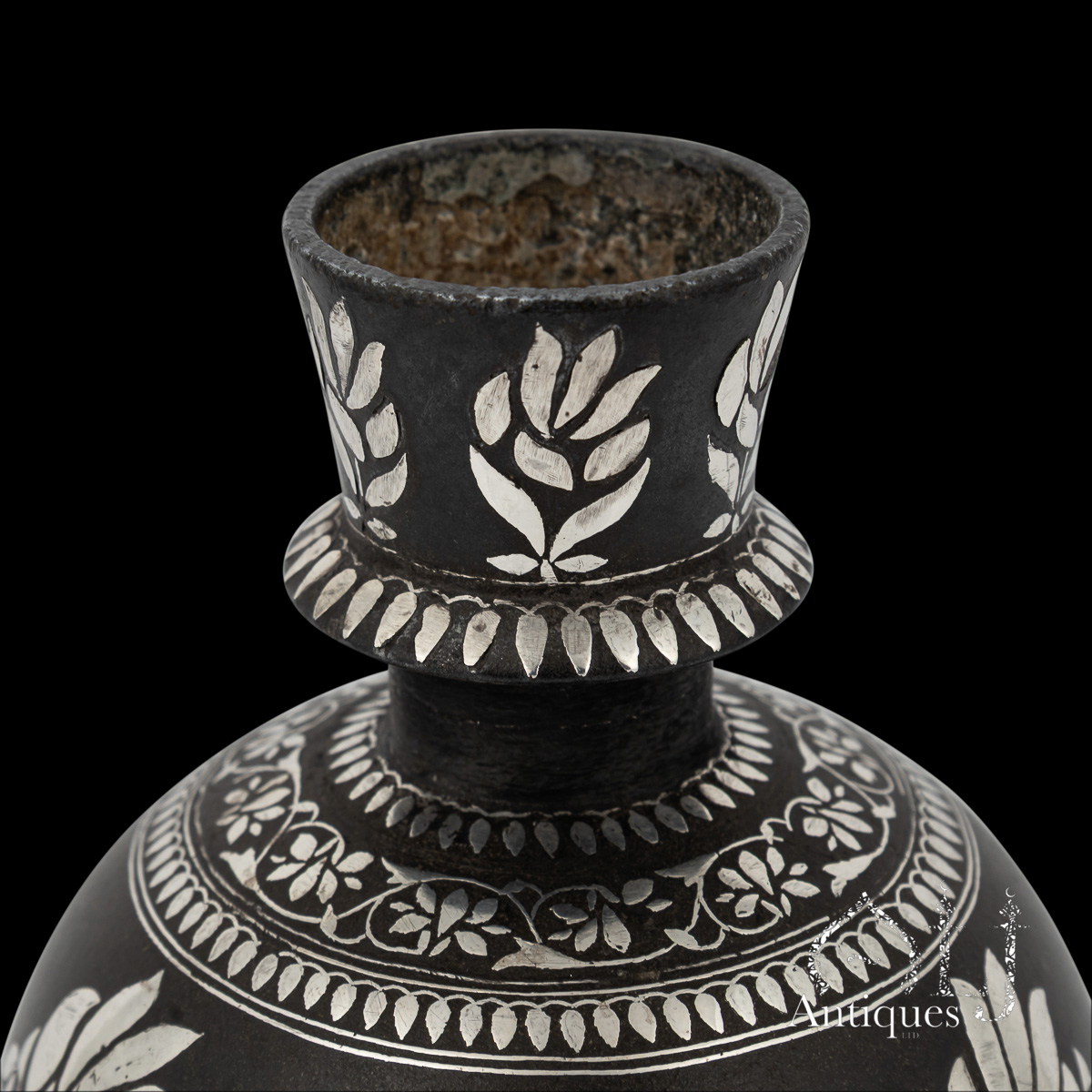
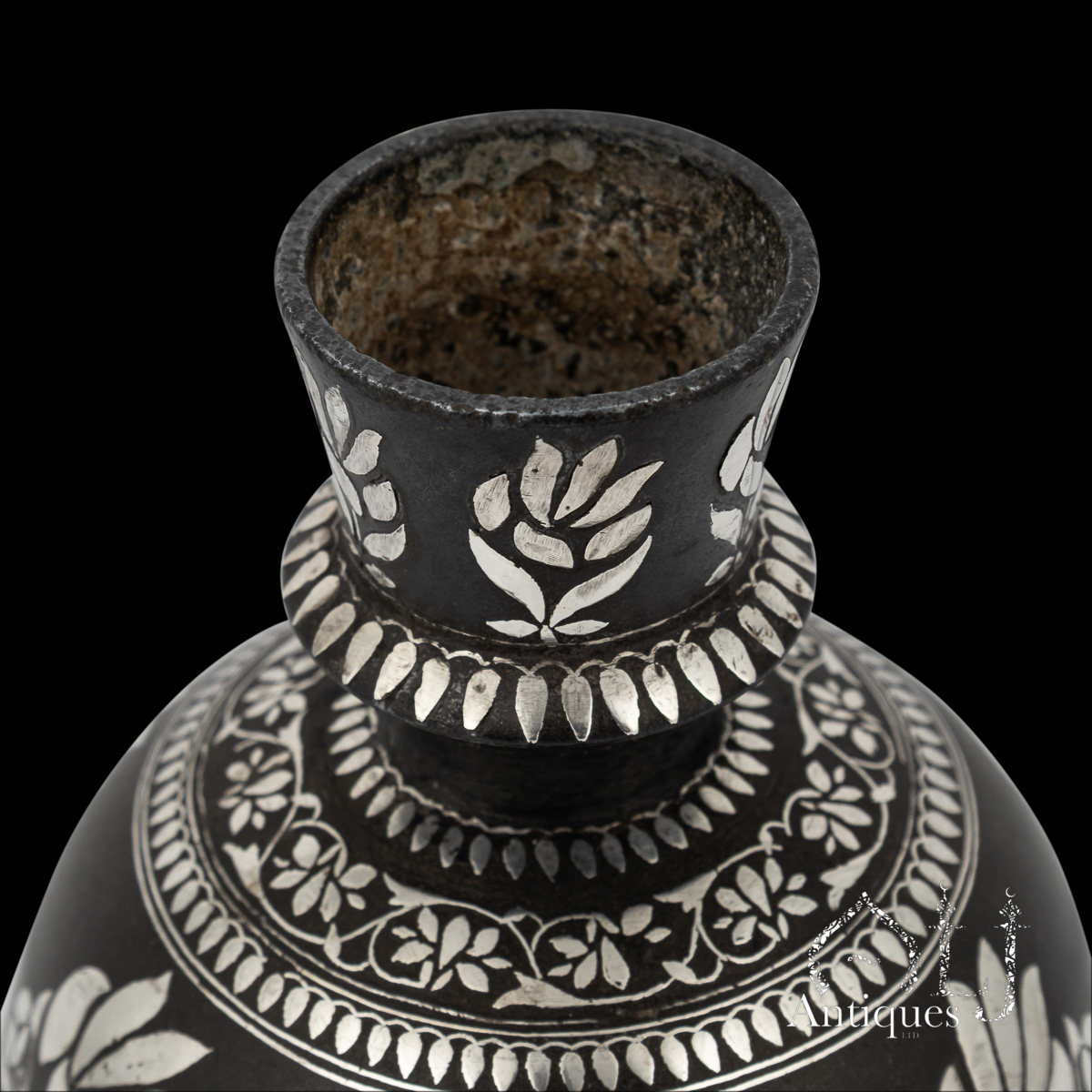
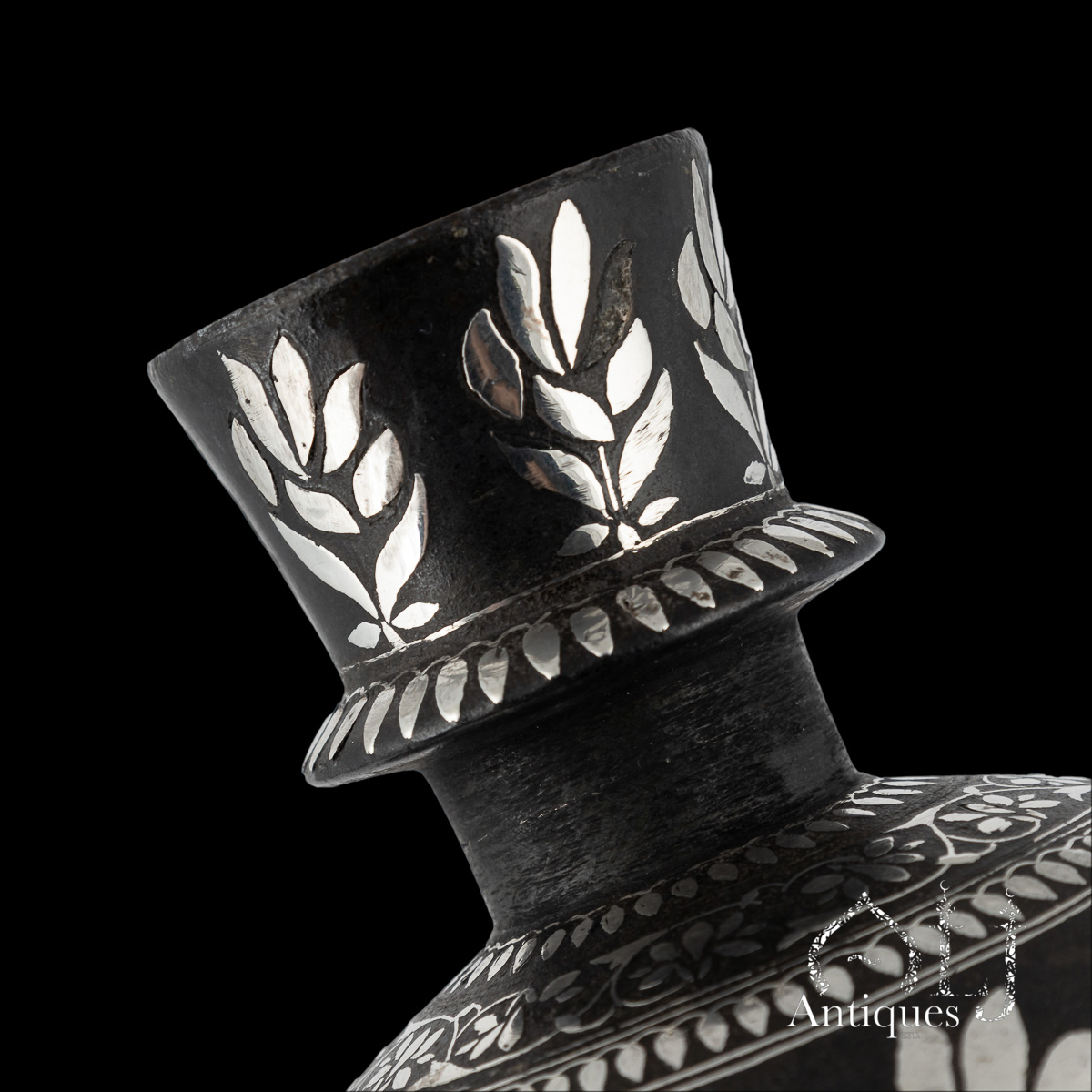
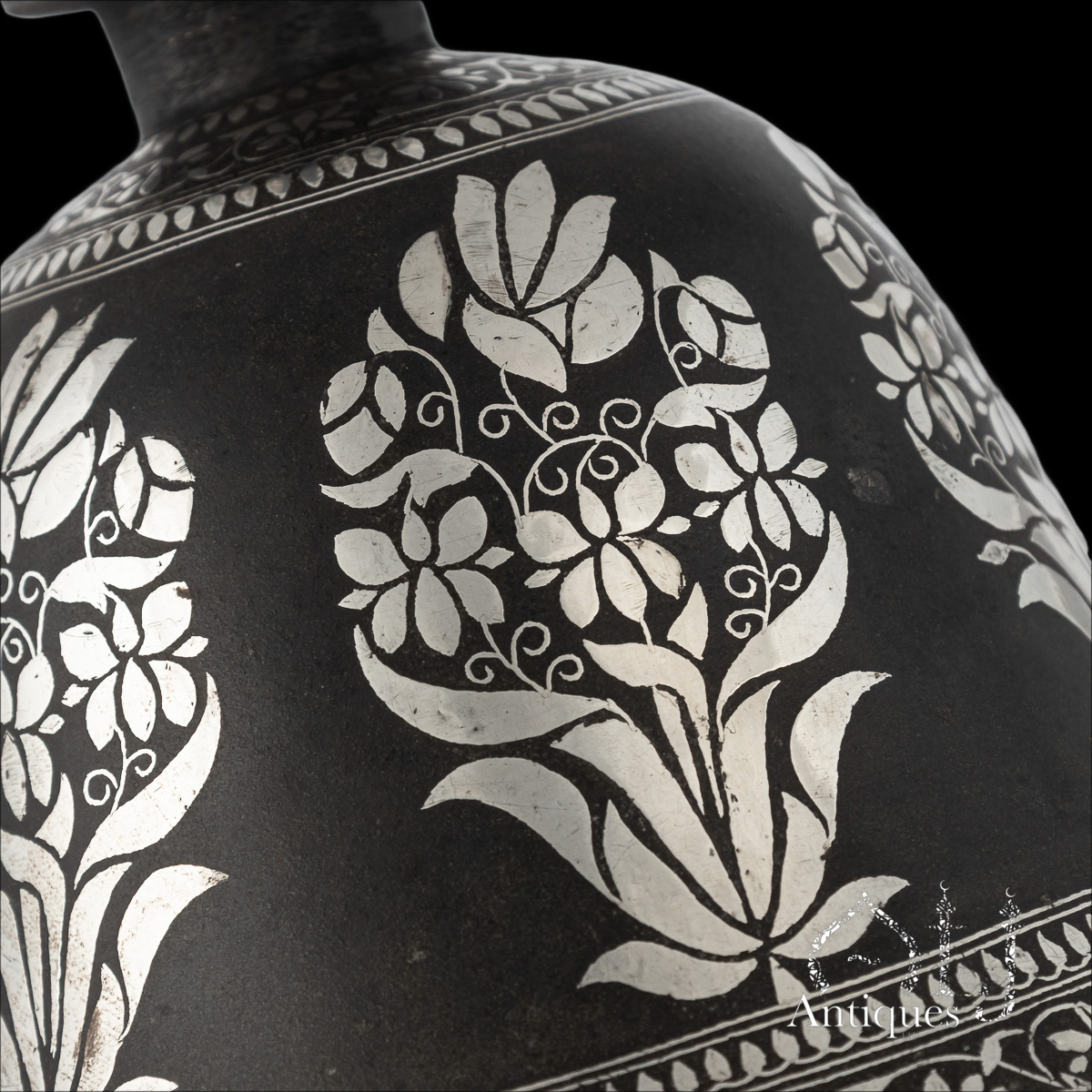
The vessel displays an elegant, architecturally harmonious silhouette. Its dense silver inlay is organised with almost sculptural precision and reflects the mid-18th-century Mughal courtly taste for stylised naturalism. The main decorative register on the body features exquisitely rendered upright bouquets composed of Mughal-style poppies, lotus blossoms, and hyacinths rising from long, fleshy leaves. The shoulders and base are adorned with overlapping friezes of drop-shaped motifs and lotus sprays, while the neck carries individually placed floral blossoms arranged with rhythmic, jewel-like regularity.
The artistic language of this huqqa base reflects the dynamic visual dialogue between the imperial Mughal aesthetic and older Deccani decorative traditions. Its striking contrast—bright silver floral motifs set against a deep, jet-black ground—embodies the essence of Bidri metalwork. Comparable visual solutions appear on a Hyderabadi bell-shaped huqqa base in the Ashmolean Museum, Oxford, attributed to the second half of the 18th century, and on another bell-shaped example in the Krishna Riboud Collection, published in Zebrowski, also, please see other related examples: (pp. 236–237, cat. nos. 395, 398 & 399). A closely related brass-inlaid, globular huqqa base in the Metropolitan Museum of Art, New York (inv. 1984.221), dated to the late 17th century, demonstrates the continuity and evolution of this decorative vocabulary across regions and materials.
A masterful example of Deccani Bidri inlaid metalwork, this huqqa base stands as both an object of exceptional aesthetic refinement and as a document of the cosmopolitan tastes circulating between Mughal and Deccan courts during the early modern period.
Acknowledgment
The above text and literature were produced with the valued collaboration of Ms. B. C. (with thanks).