
Description
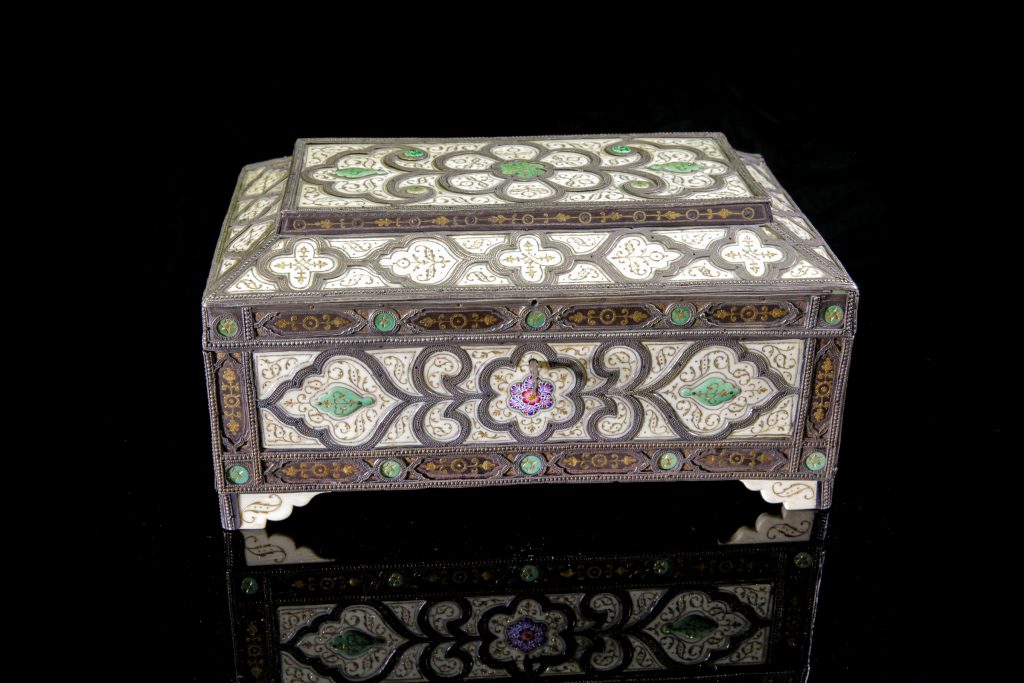
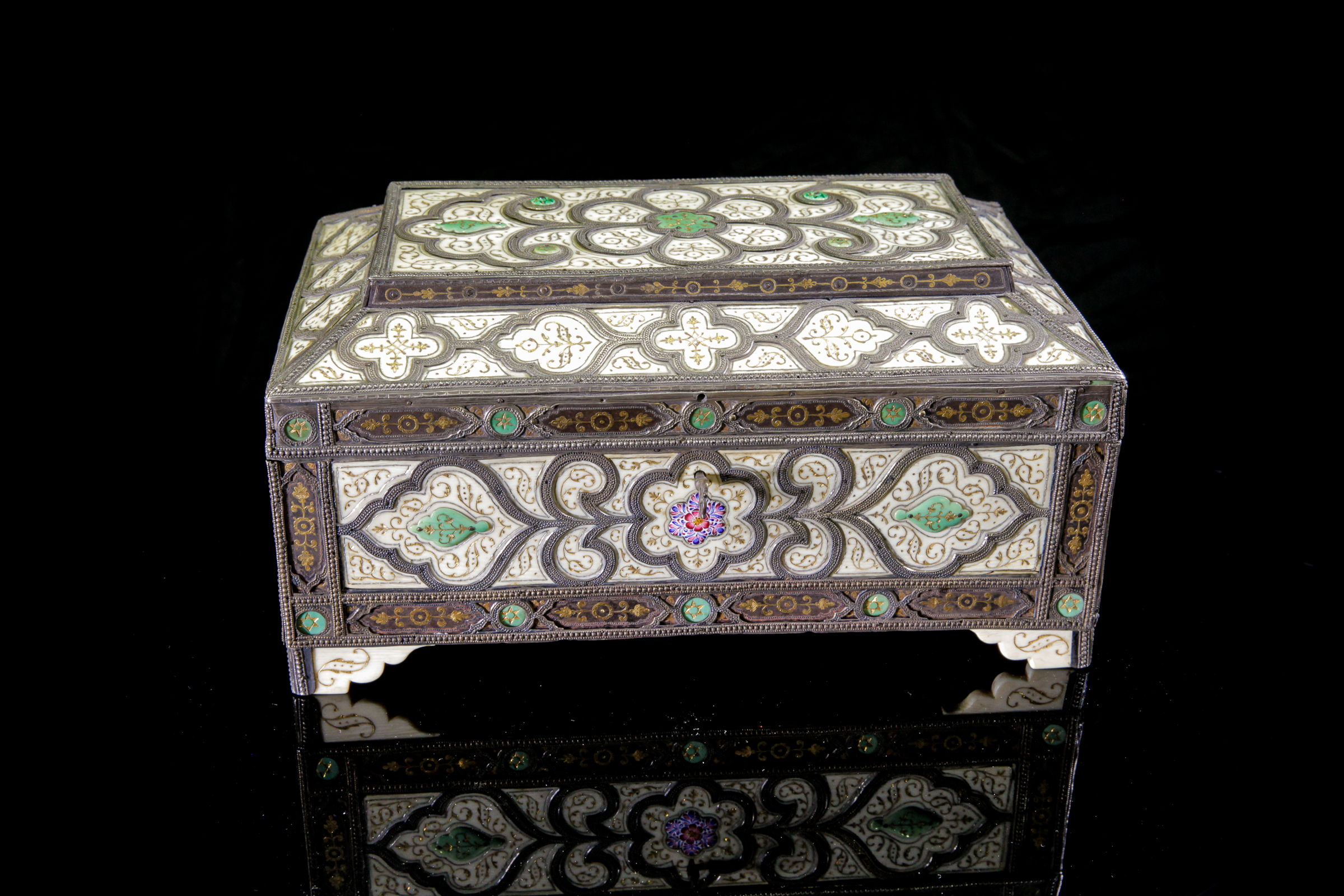
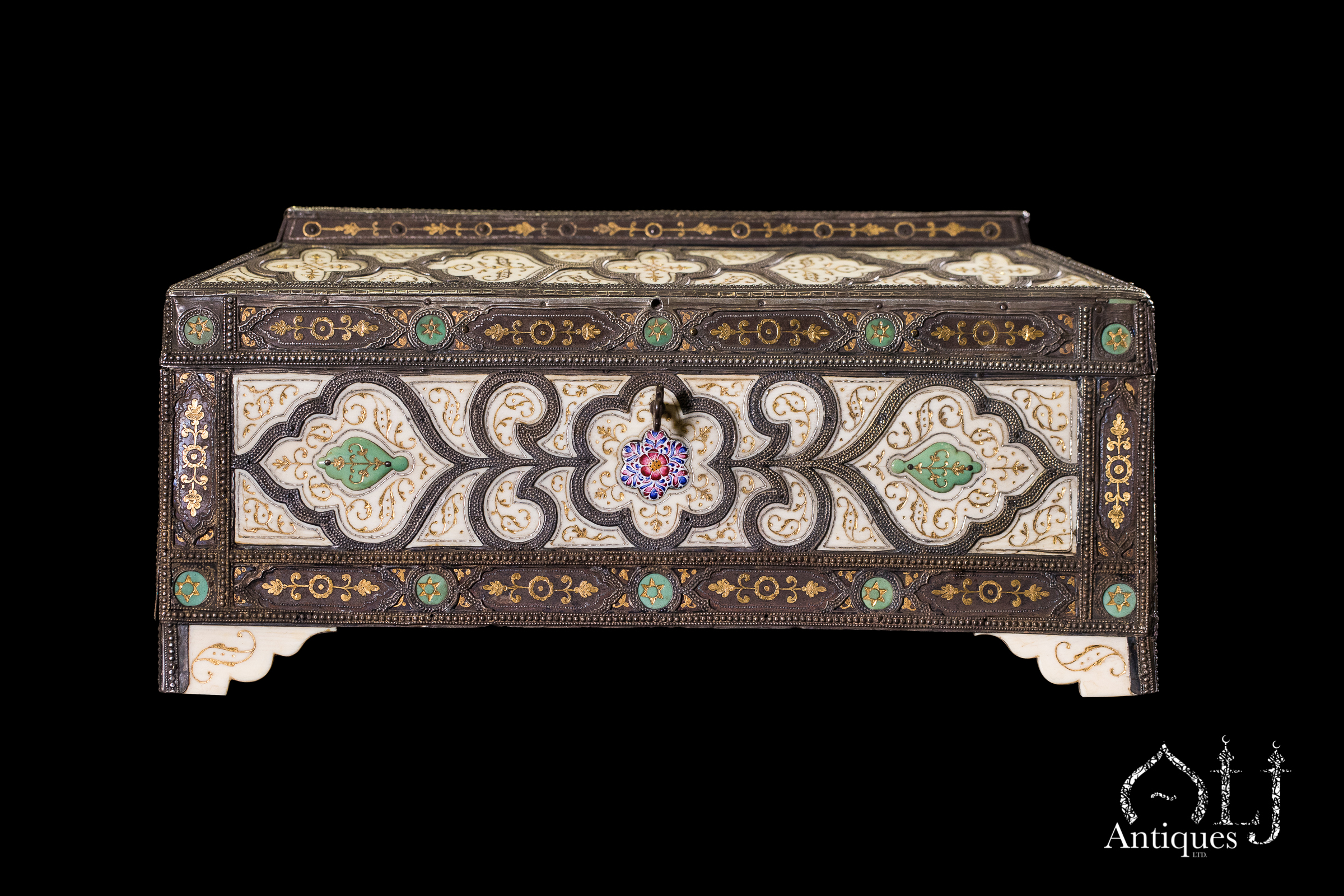
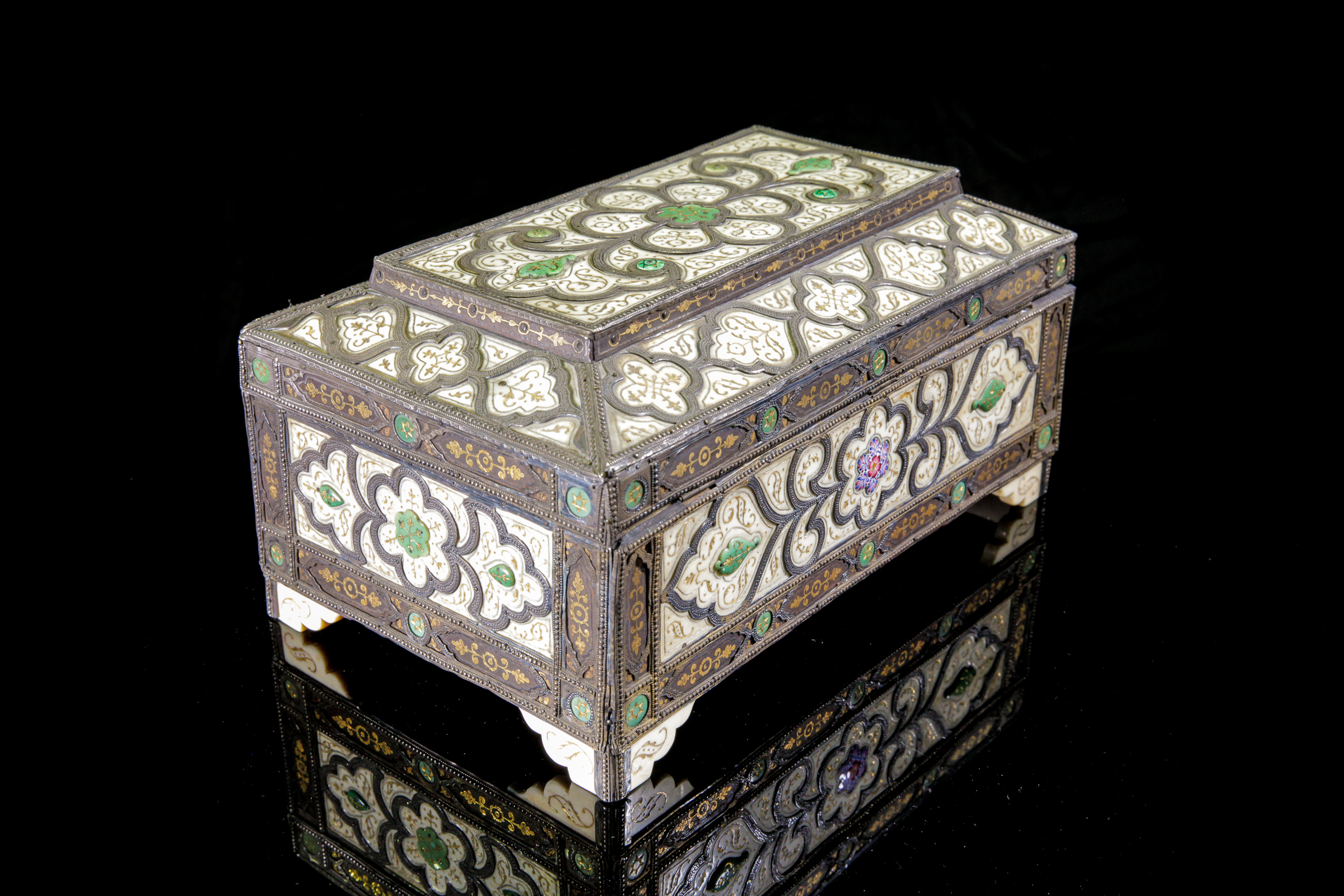
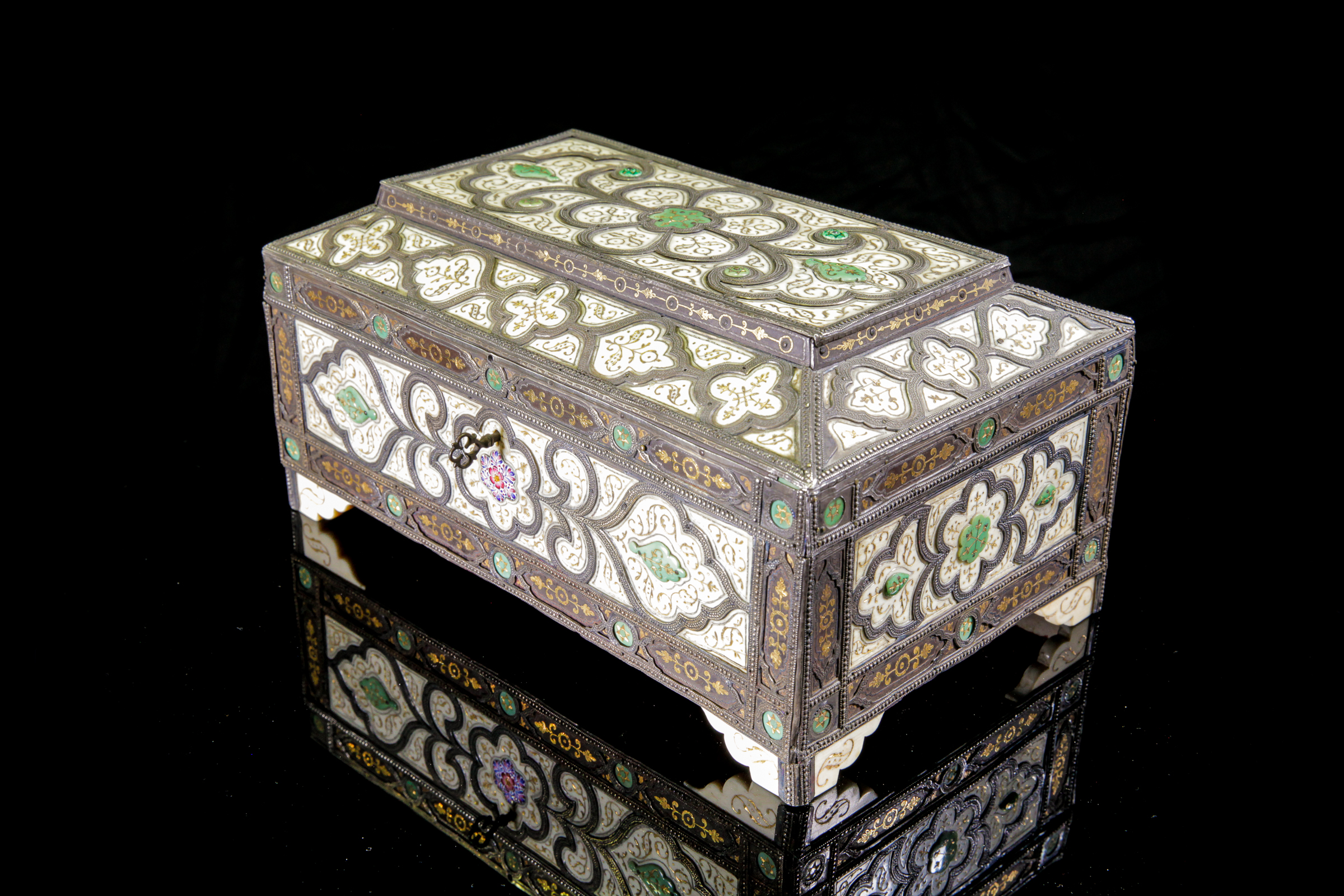
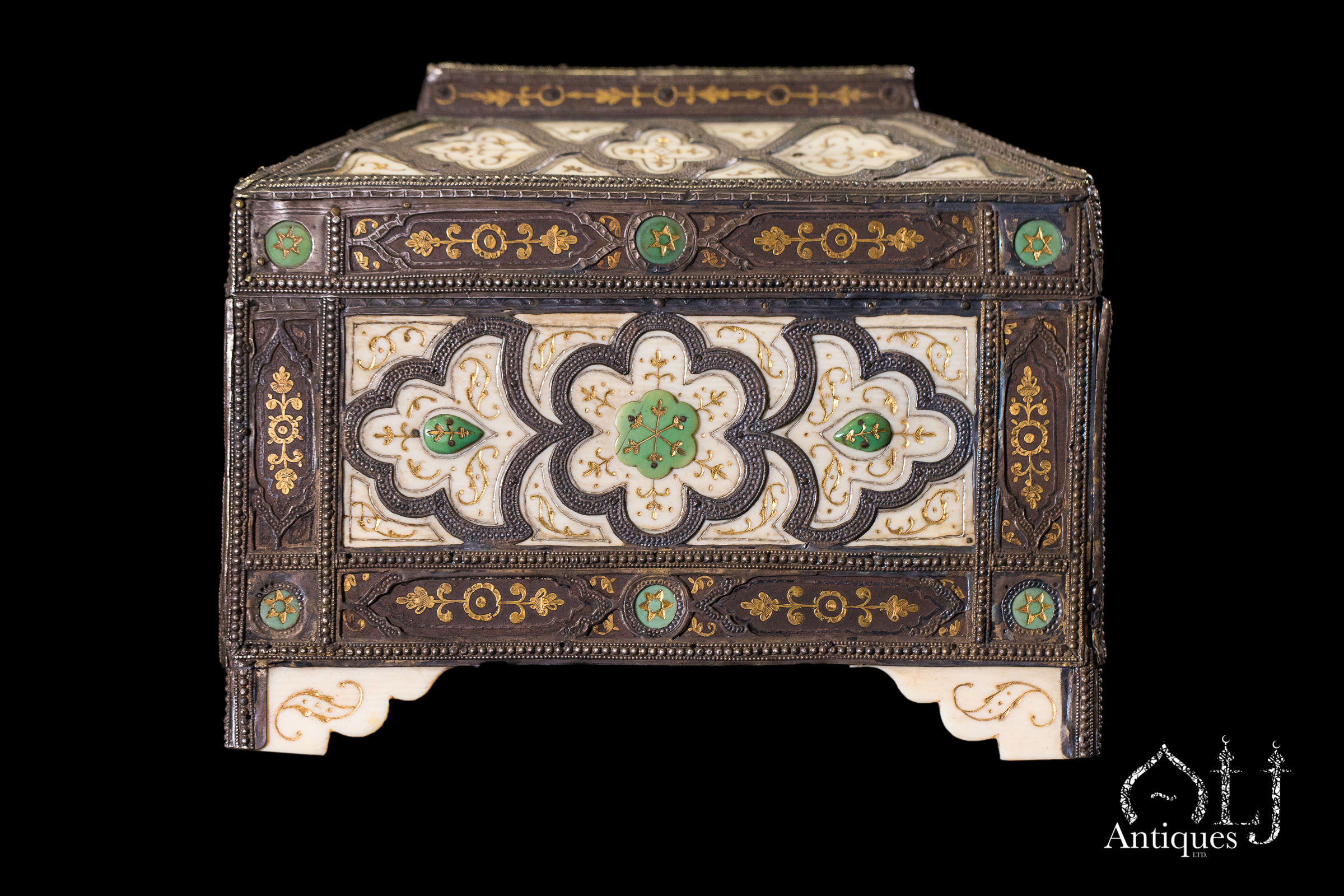
This finely crafted casket which was probably made during the first half of the 19th century from Kubachi, in the Dagestan region of the Caucasus, represents one of the most sophisticated expressions of regional luxury craftsmanship within the wider context of Islamic art. Kubachi was historically celebrated for its highly skilled metalworkers, jewellers, glazed pottery, luxurious Arms and armour, producing exceptional objects that reflect both local artistic identity and transregional cultural exchange. This casket exemplifies that legacy through its remarkable combination of materials, refined artistic vocabulary, and technical complexity.
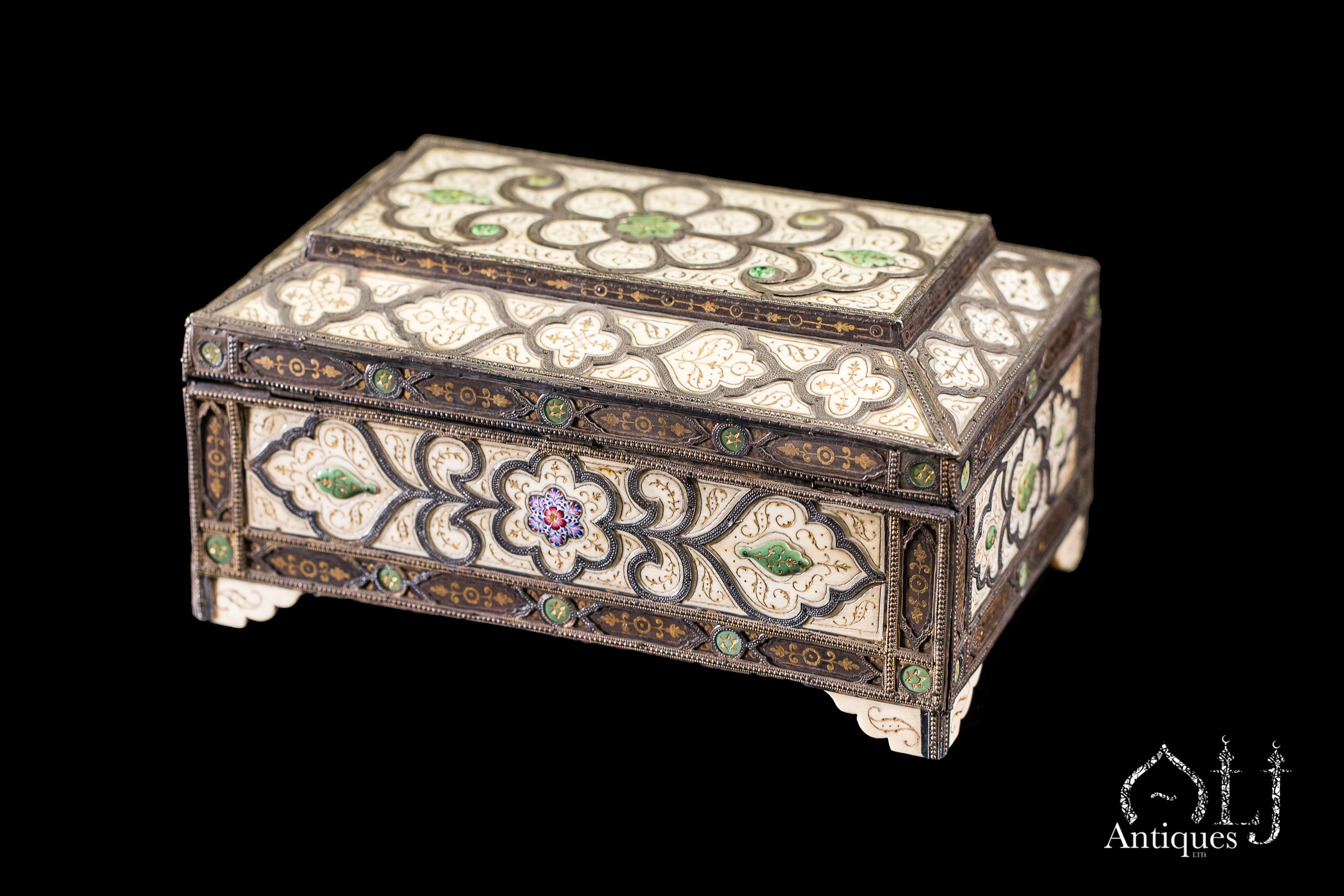
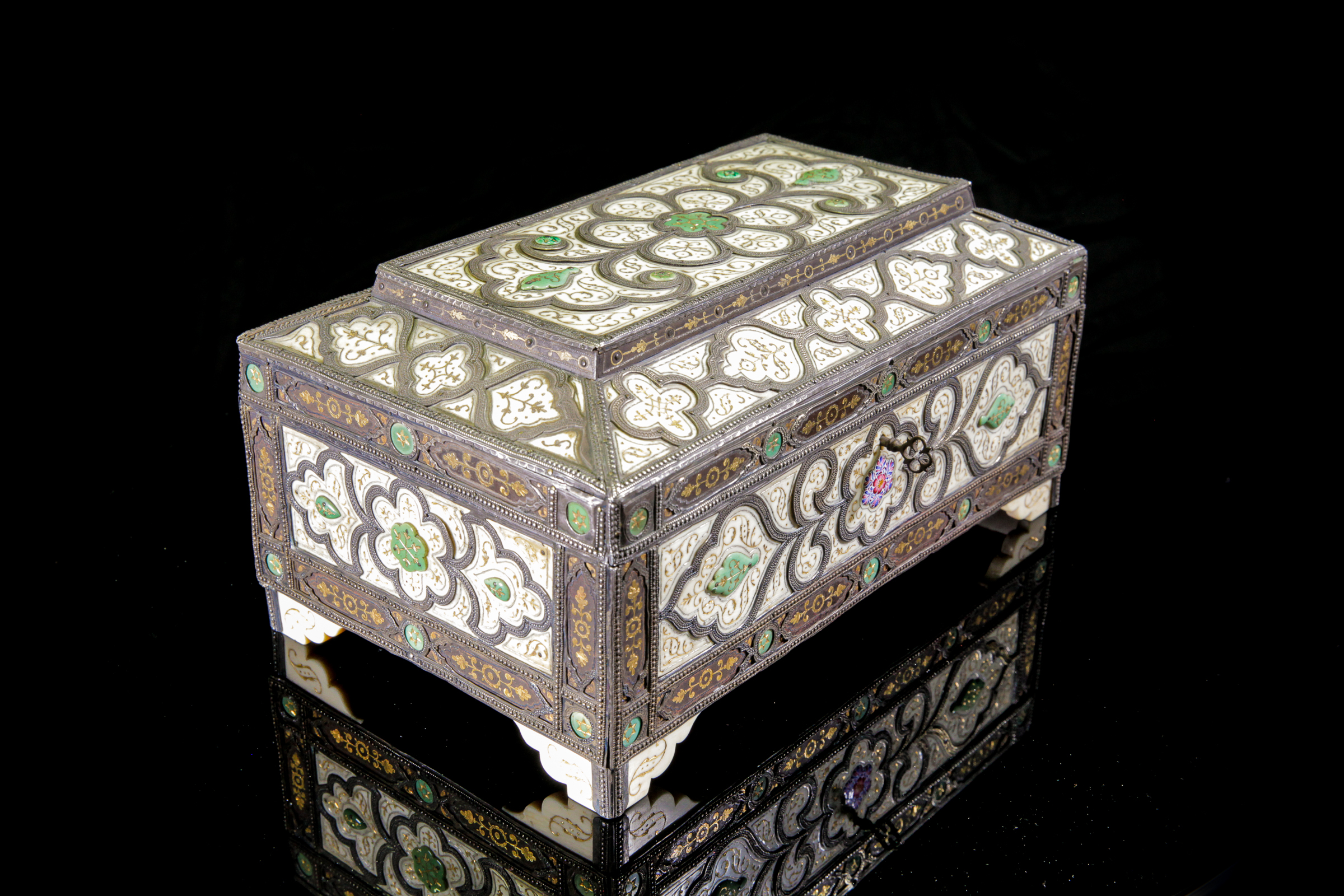
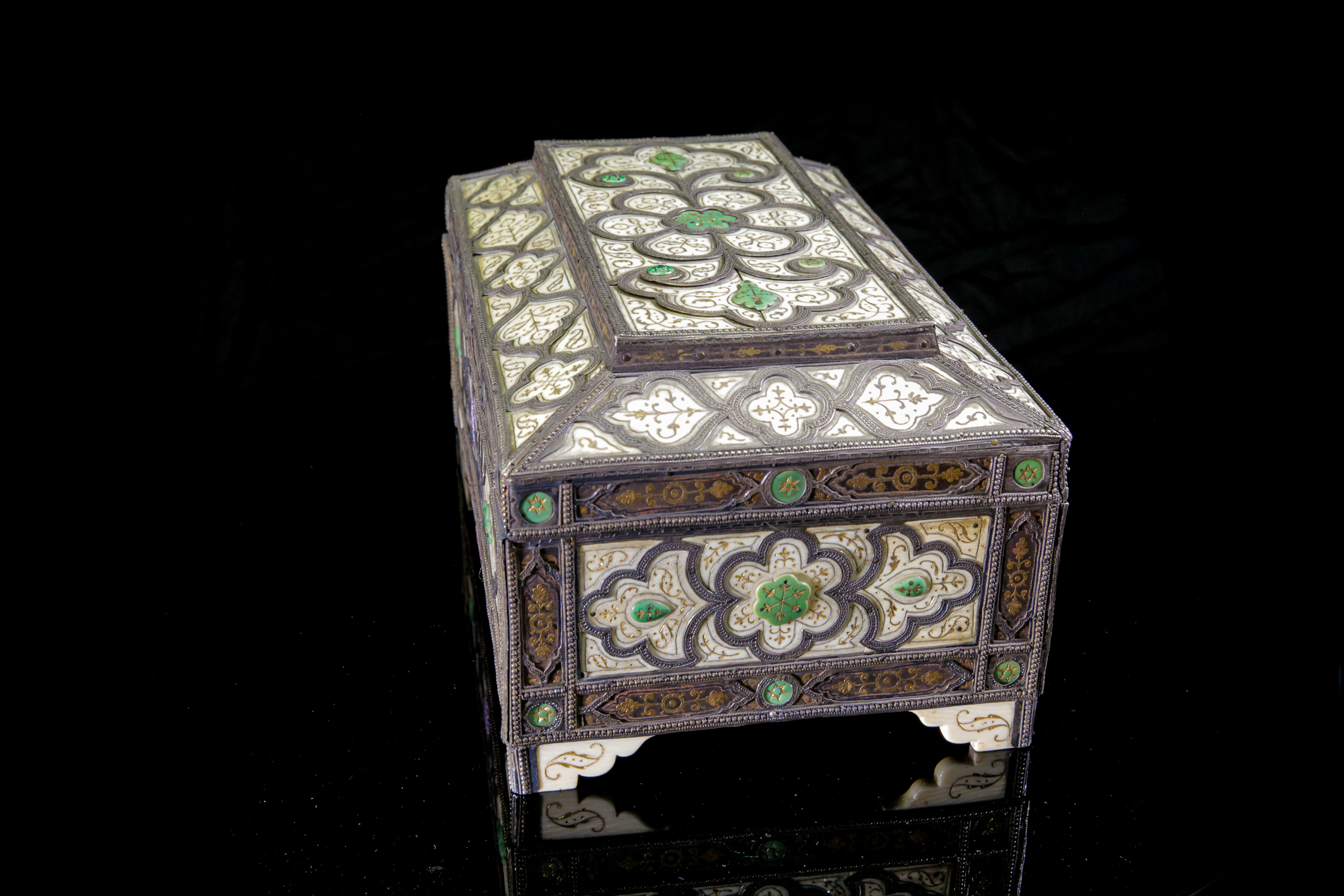
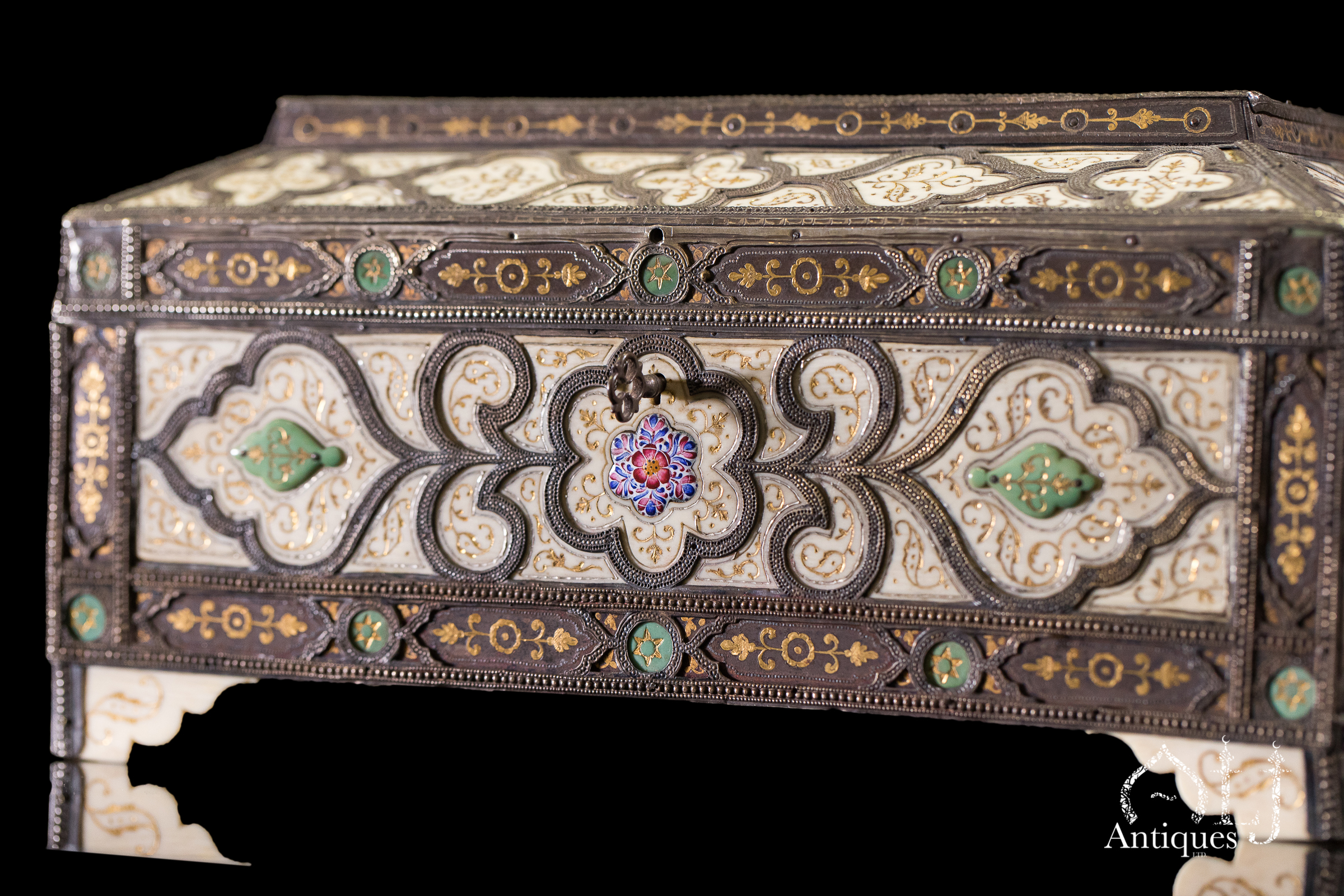
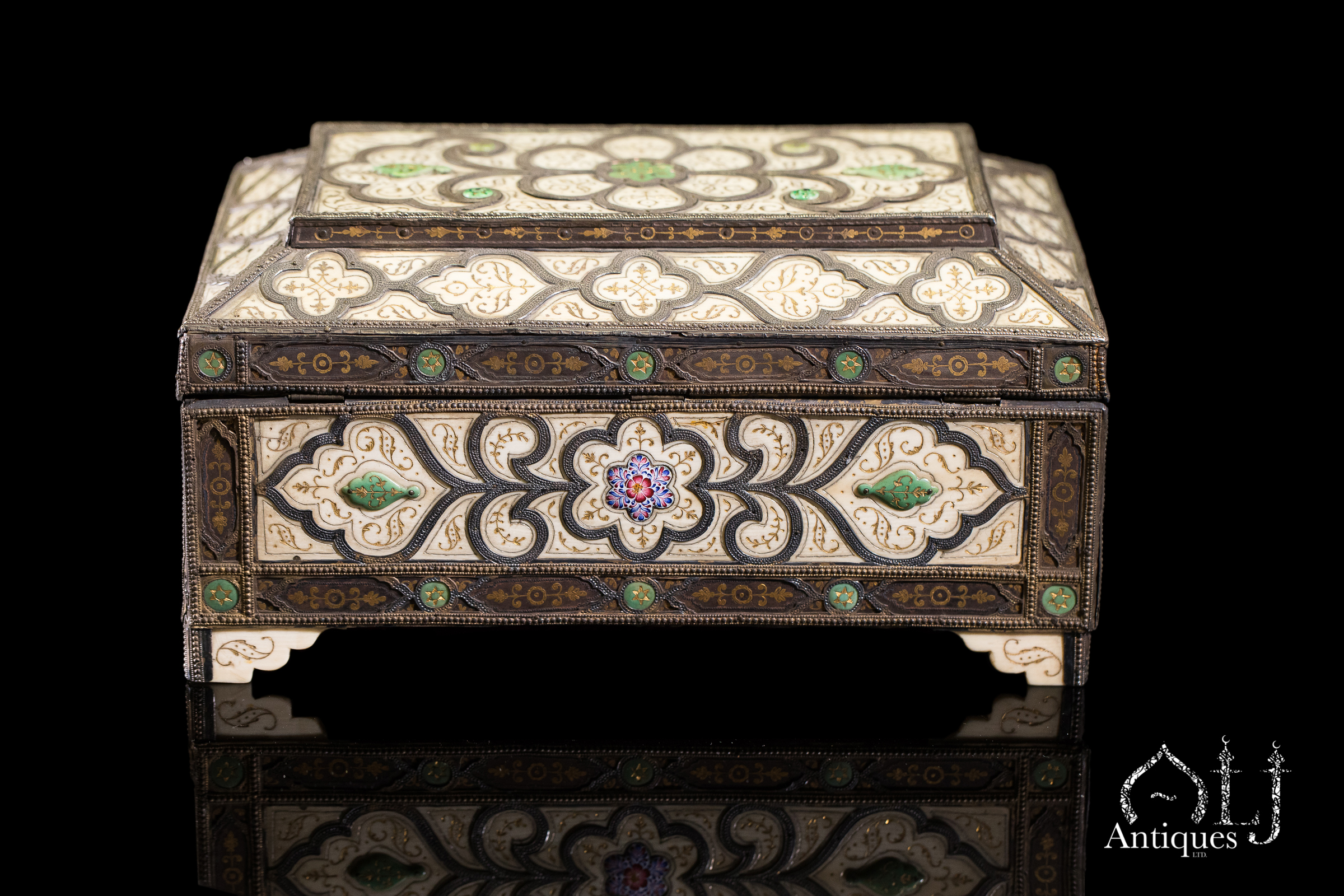
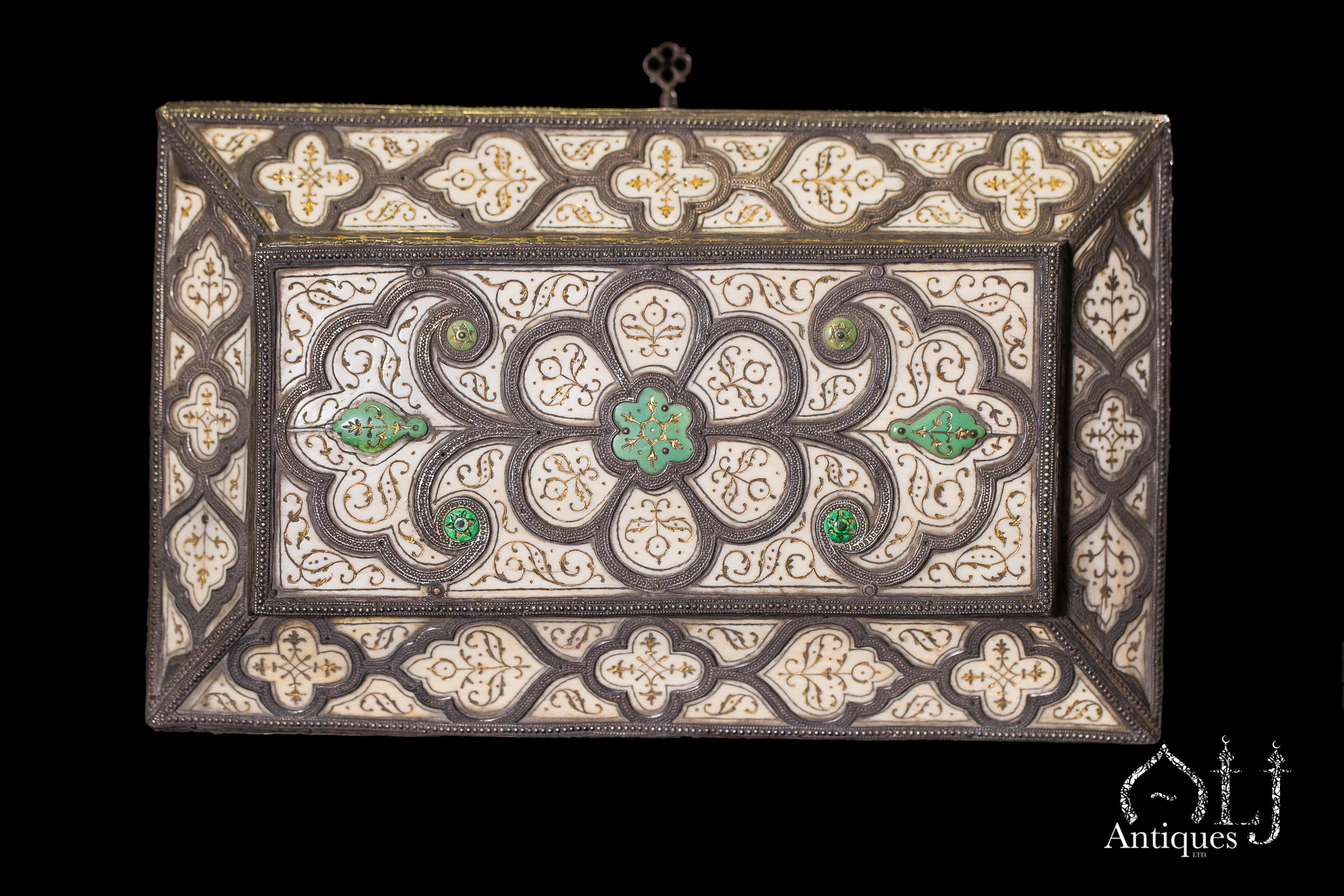
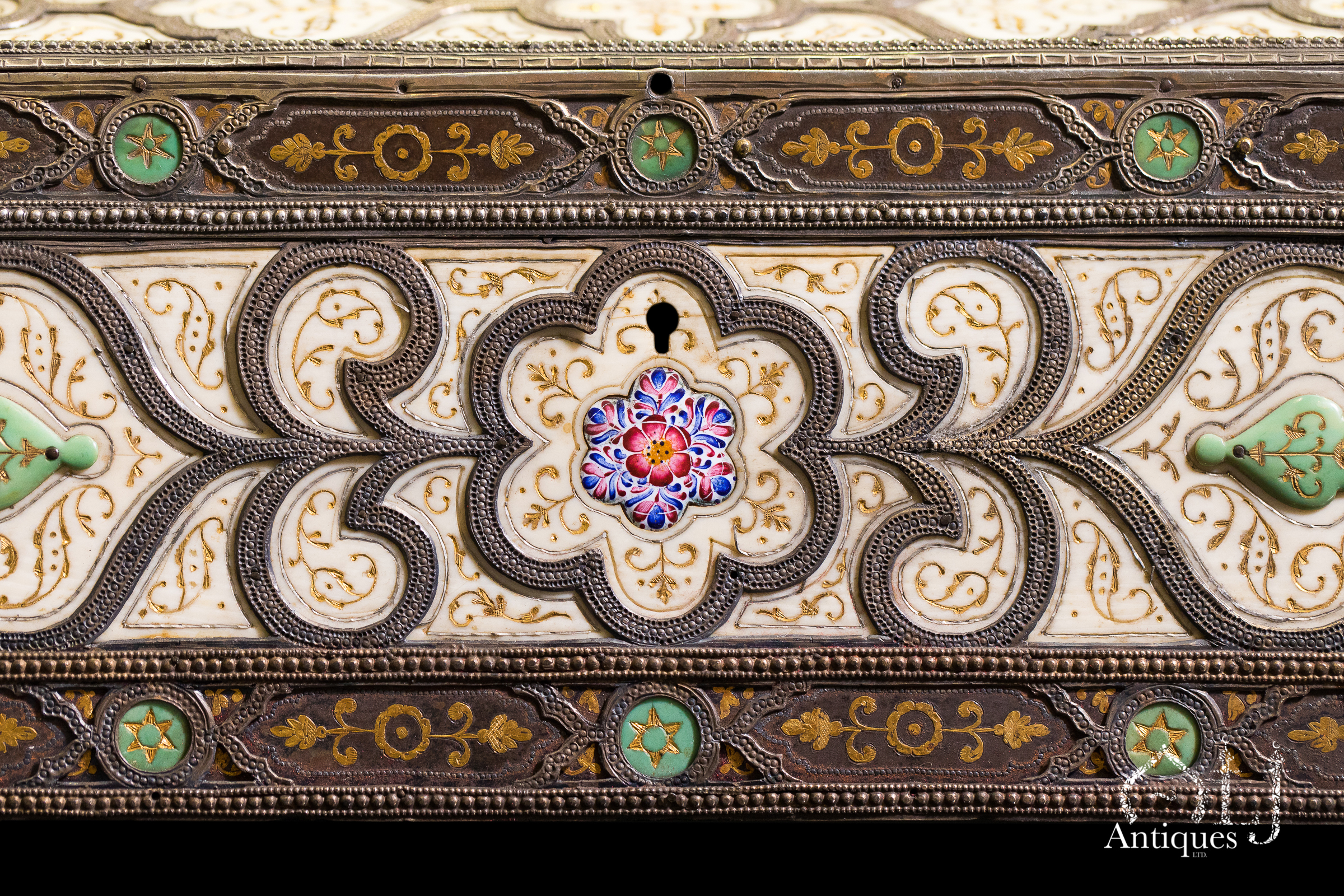
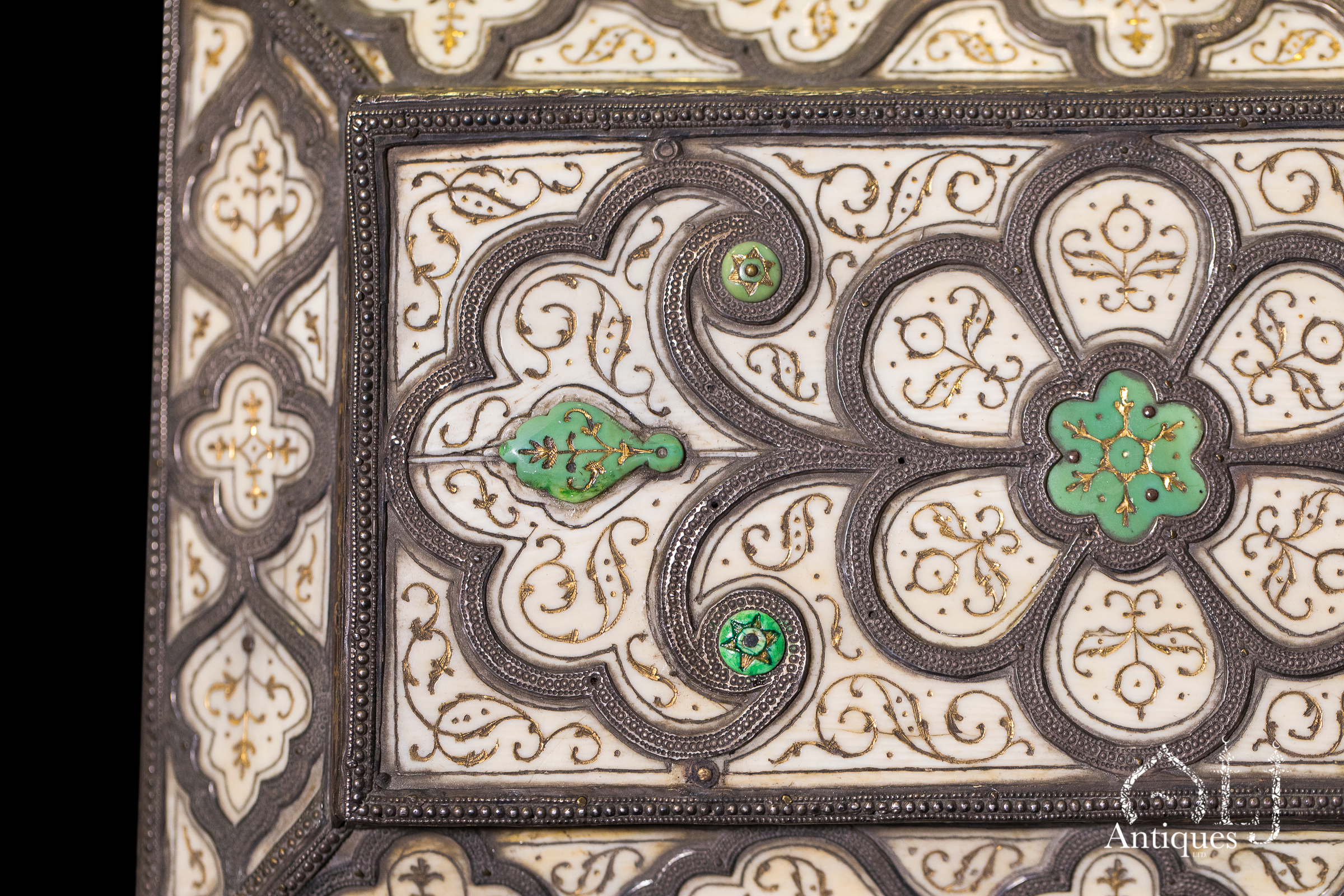
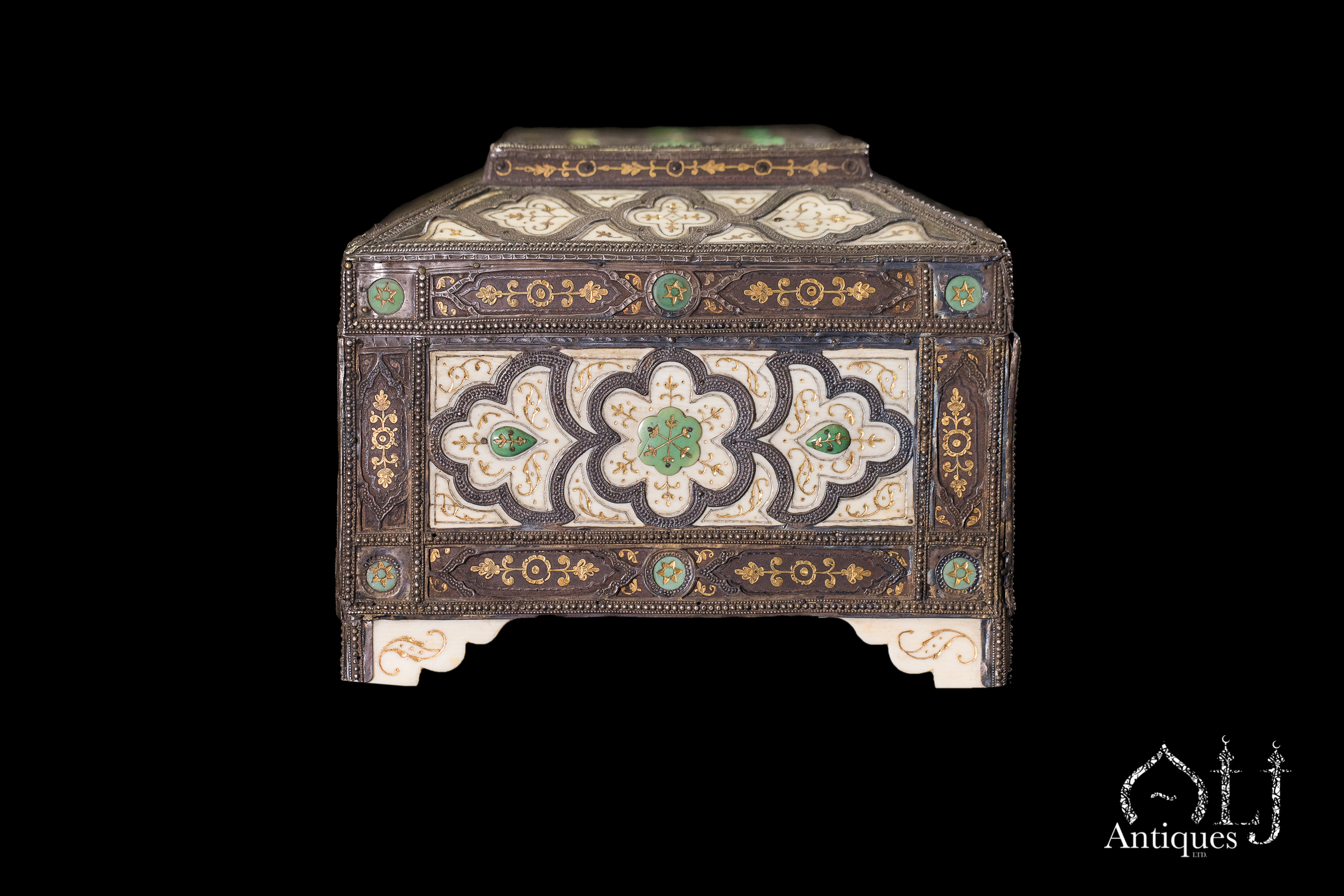
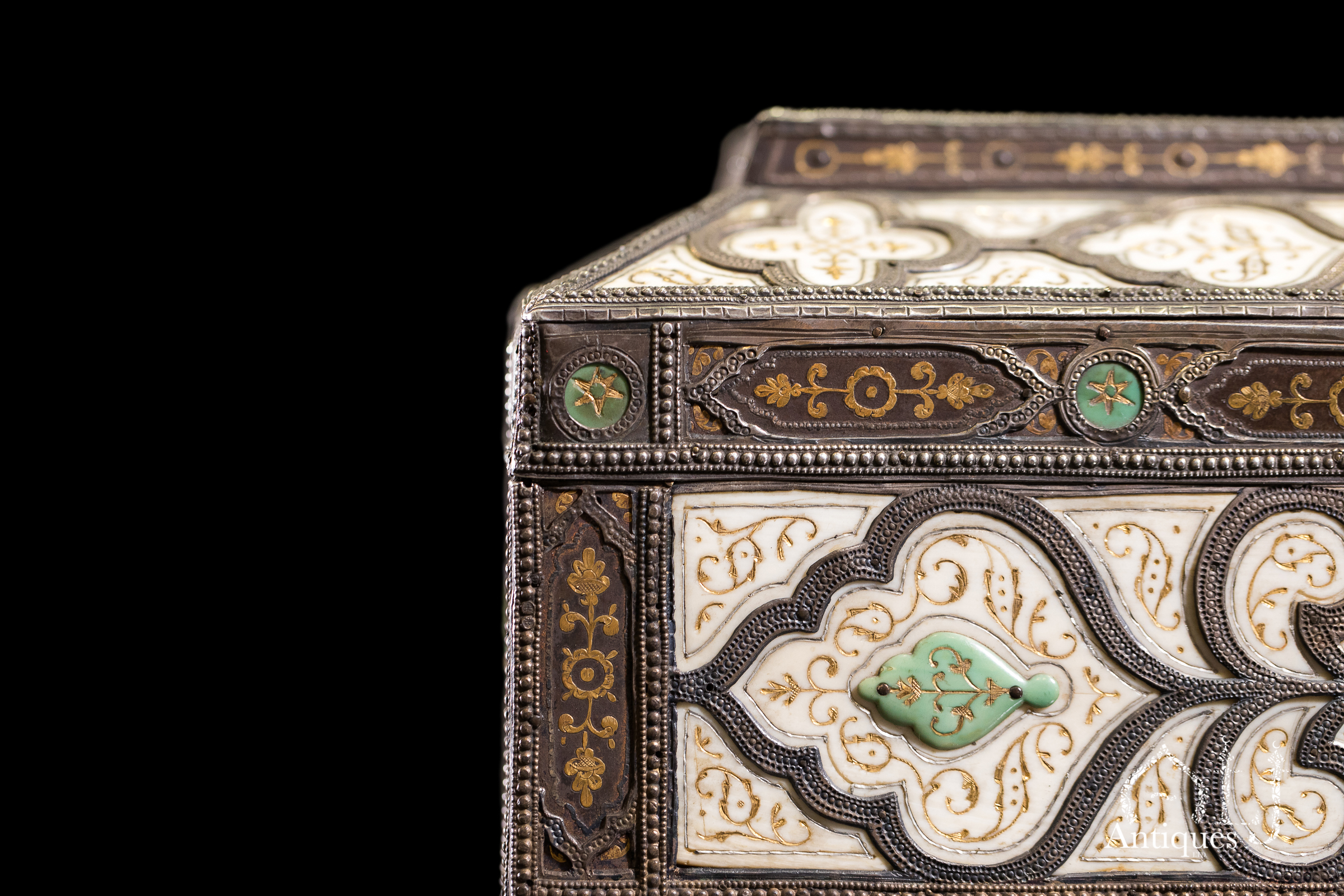
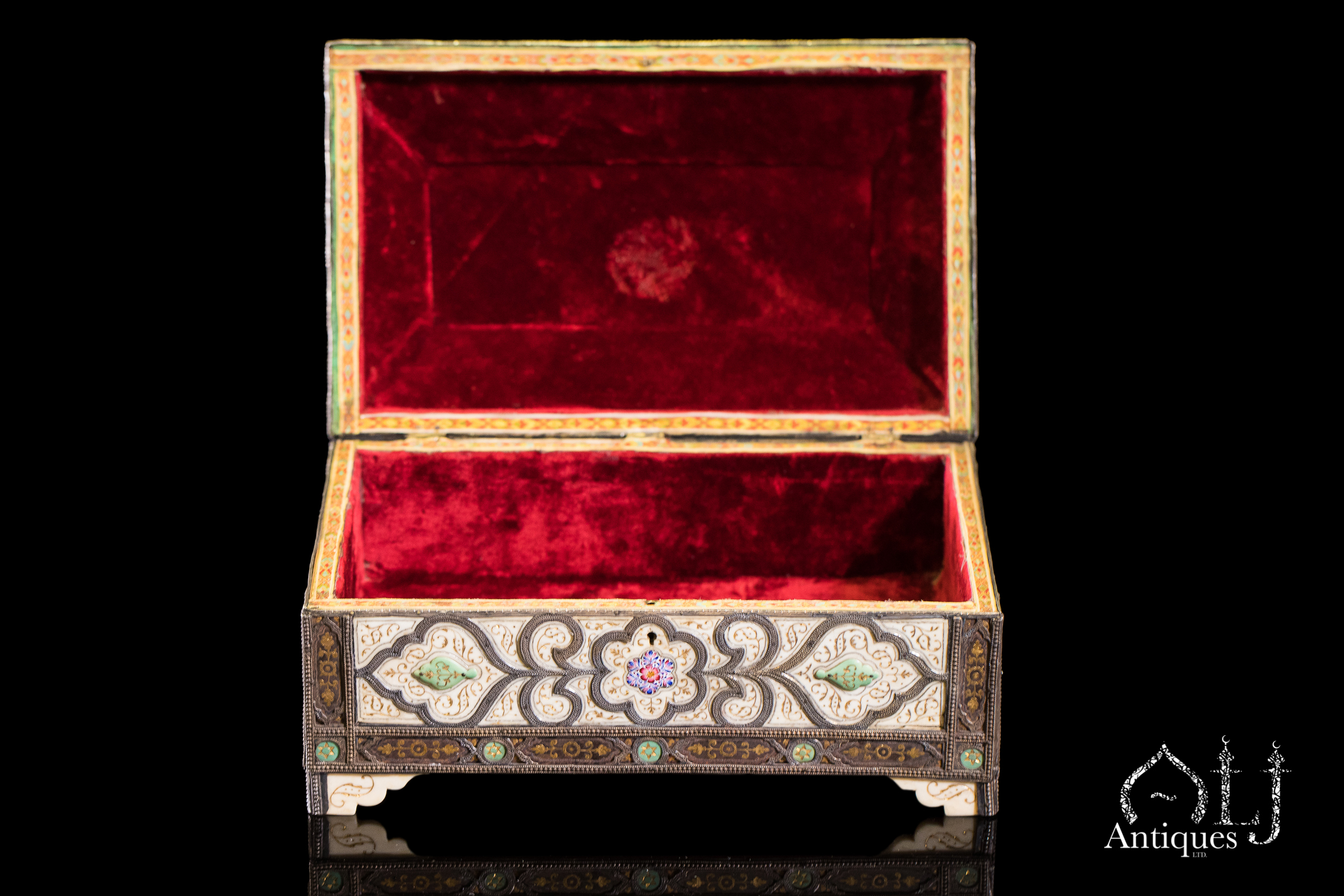
Constructed around a wooden core, the exterior is fully covered in an elegant and carefully planned decorative scheme that integrates gold-damascened steel panels, engraved and pinned silver elements, small finely cut pieces of carved and stained ivory components, and enamelled copper roundels.
The thoughtful coordination of these materials demonstrates the workshop’s deep knowledge of multi-disciplinary craftsmanship. The stained ivory pieces—coloured to imitate precious stones such as turquoise or jade—display a sophisticated understanding of material transformation and aesthetic refinement, adding depth, contrast, and a jewel-like quality to the surface.
The casket’s architectural design is a key aspect of its visual impact. The sides are arranged in a panelled system of floral and arabesque cartouches framed by silver divisions, establishing a rhythmic decorative order that continues seamlessly across each surface. The lid presents a stepped rectangular form with sloping borders that mirror the structural language of the body, reinforcing unity of design.
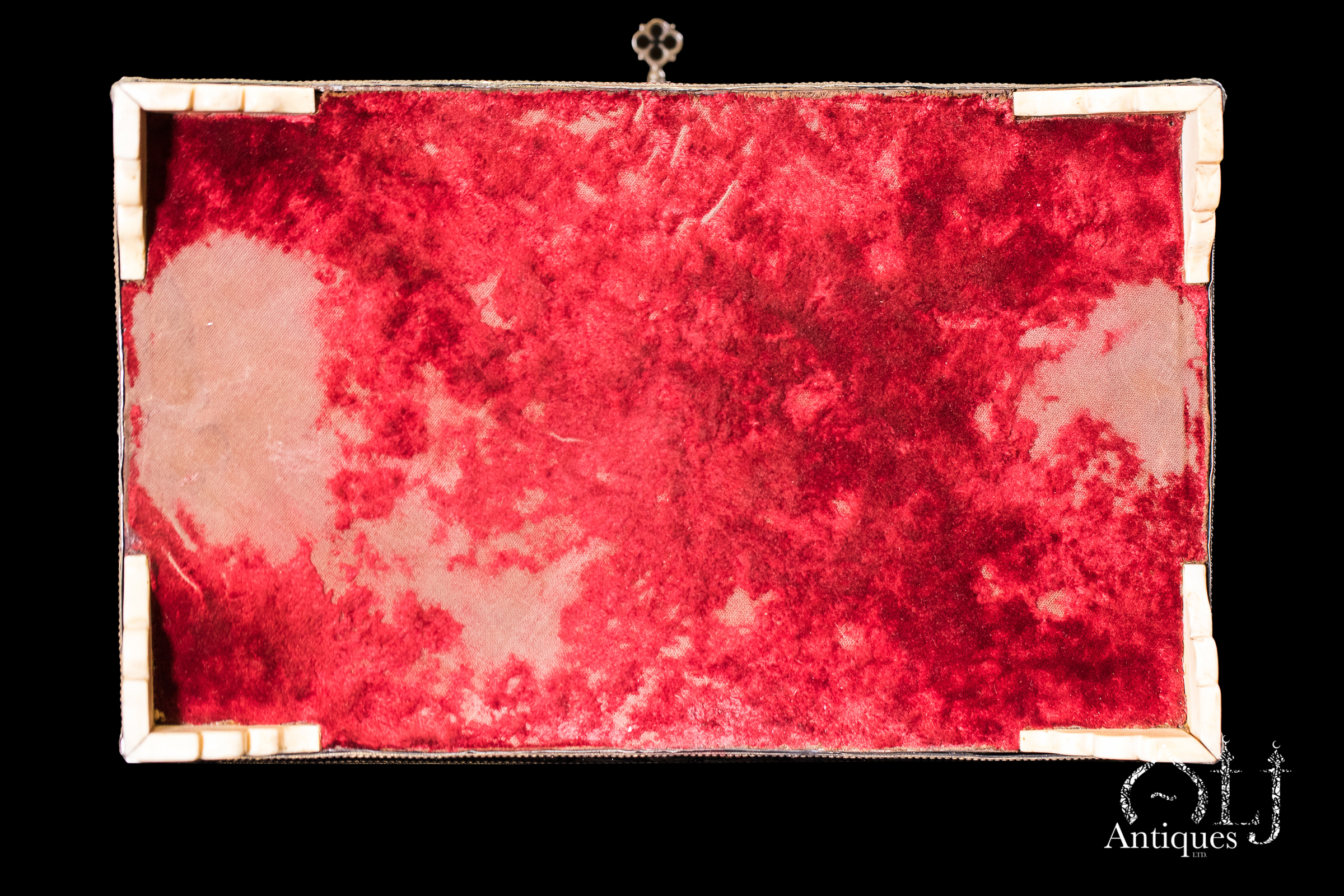
Two enamelled roundels positioned at the central axis of the front and reverse panels act as focal points, adding colour and emphasising symmetry. The interior and underside of the base are lined with red velvet, concealing the wooden structure and completing the luxury finish.
A particularly noteworthy feature is the treatment of the corner supports.
Rather than attaching the feet as independent components, the maker extended the silver frame itself, allowing the same metal sheets to continue downwards to form the supports. These extensions are decorated with small carved and gold-inlaid ivory pieces on their outer sides, serving not only as embellishment but also as discreet reinforcement. This inventive structural solution highlights the silversmith’s technical ingenuity and contributes to the casket’s refined, cohesive appearance.
Cultural and Artistic Context
Kubachi occupied a unique artistic position at the crossroads of Persia, Anatolia, Central Asia, and the Caucasus. The town became known for absorbing and adapting artistic influences circulating through the Islamic world, while maintaining a distinctive regional character. This casket encapsulates that balance.
The combination of damascened steel, silverwork, carved ivory, enamel, and mixed-material ornamentation echoes the refined courtly arts associated with major Islamic artistic centres. Yet its execution reflects the particular sensibilities of Kubachi craftsmanship, recognised for its intricate metalwork, elegant surface finishing, and inventive integration of materials.
The Caucasus itself was historically a meeting point of diverse cultural, religious, and political spheres—Persian, Ottoman, and later Russian.
Workshops such as those in Kubachi thrived within this environment of exchange.
Objects like this casket provide valuable insight into how regional artisans interacted with broader artistic traditions, selectively adopting motifs, methods, and materials, and reinterpreting them within a local aesthetic framework. As a result, the casket is more than a luxury object: it is a document of cultural dialogue.
Techniques and Craftsmanship
The making of this casket required a high level of coordination across specialised crafts. The wooden core demanded precise carpentry to ensure stability and an accurate fit for the veneer elements. The gold-damascened steel and engraved silver panels reflect sophisticated metalworking and surface-decoration techniques. The carved ivory pieces—particularly the stained examples imitating gemstones—demonstrate advanced skill in both carving and colour treatment. The enamelled copper roundels required expertise in preparing and firing enamel to achieve a durable and vibrant finish. The careful mounting of all materials using pins, gluing, and secure setting methods reveals a strong level of technical planning and workmanship.
The unification of these different crafts into a coherent decorative programme illustrates both artistic intelligence and workshop organisation. Nothing appears arbitrary; every material plays a role in the visual and structural conception of the piece.
Art Historical Significance and Research Value
This casket is significant for understanding regional luxury object production in the Islamic world. It highlights the interplay between local craftsmanship and transregional artistic ideas, making it an important reference point for research into cultural interconnectedness. Scholars and curators can draw upon this example to examine how techniques such as damascening, ivory staining, enamelwork, and silver mounting were transmitted and adapted across regions.
Its cultural value is matched by its research potential. The casket offers a tangible case study for exploring workshop practices, materials, and design systems in the Caucasus during a period of rich artistic exchange. It contributes to the narrative of how regional centres participated in, and shaped, the visual language of Islamic decorative arts.
Rarity and State of Preservation
Objects combining textiles, damascened steel, silver, enamel, and carved ivory were historically produced for elite patrons and have rarely survived in such structurally coherent condition. Ivory and fabric components are particularly vulnerable to climate-related deterioration, making intact examples uncommon. The survival of this casket with its decorative elements largely preserved enhances its significance for museum acquisition, academic study, and comparative analysis.
According to the Department for Environment, Food and Rural Affairs, This item was identified that it was made pre-1918 and is considered of outstandingly high artistic, cultural or historical value and meets the requirements for the Ivory exemption under the Ivory Act (2018), Certificate number LQMQTP3T, the certificate was issued on 28th/01/2026.