Description
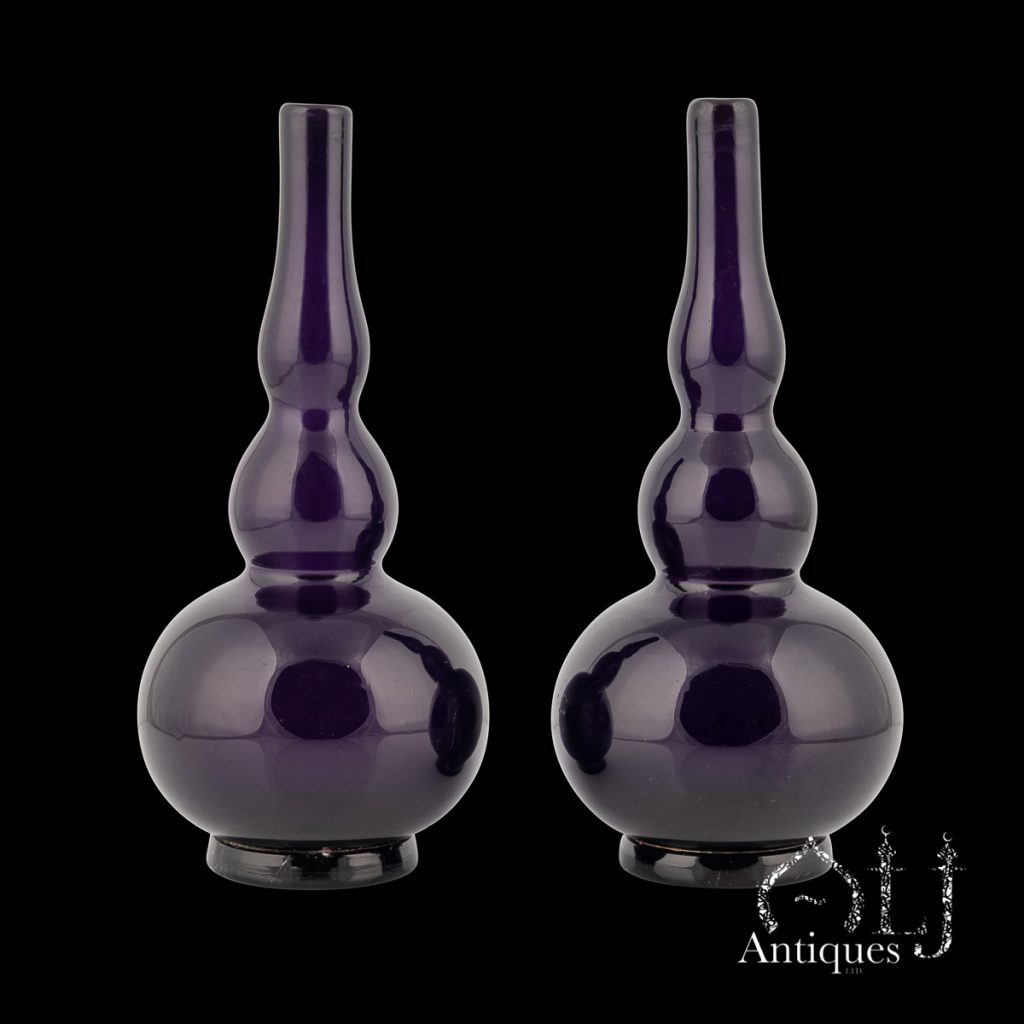
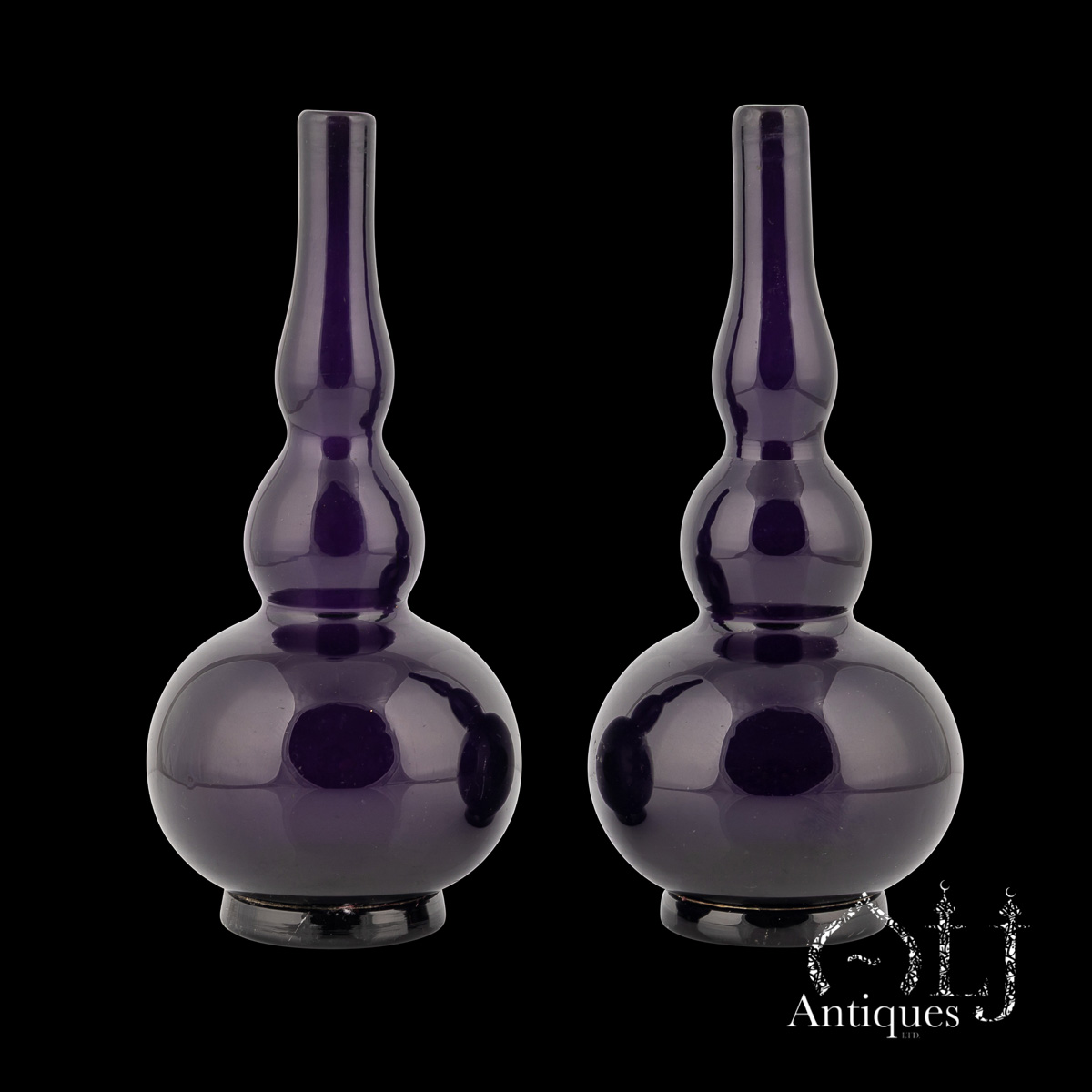
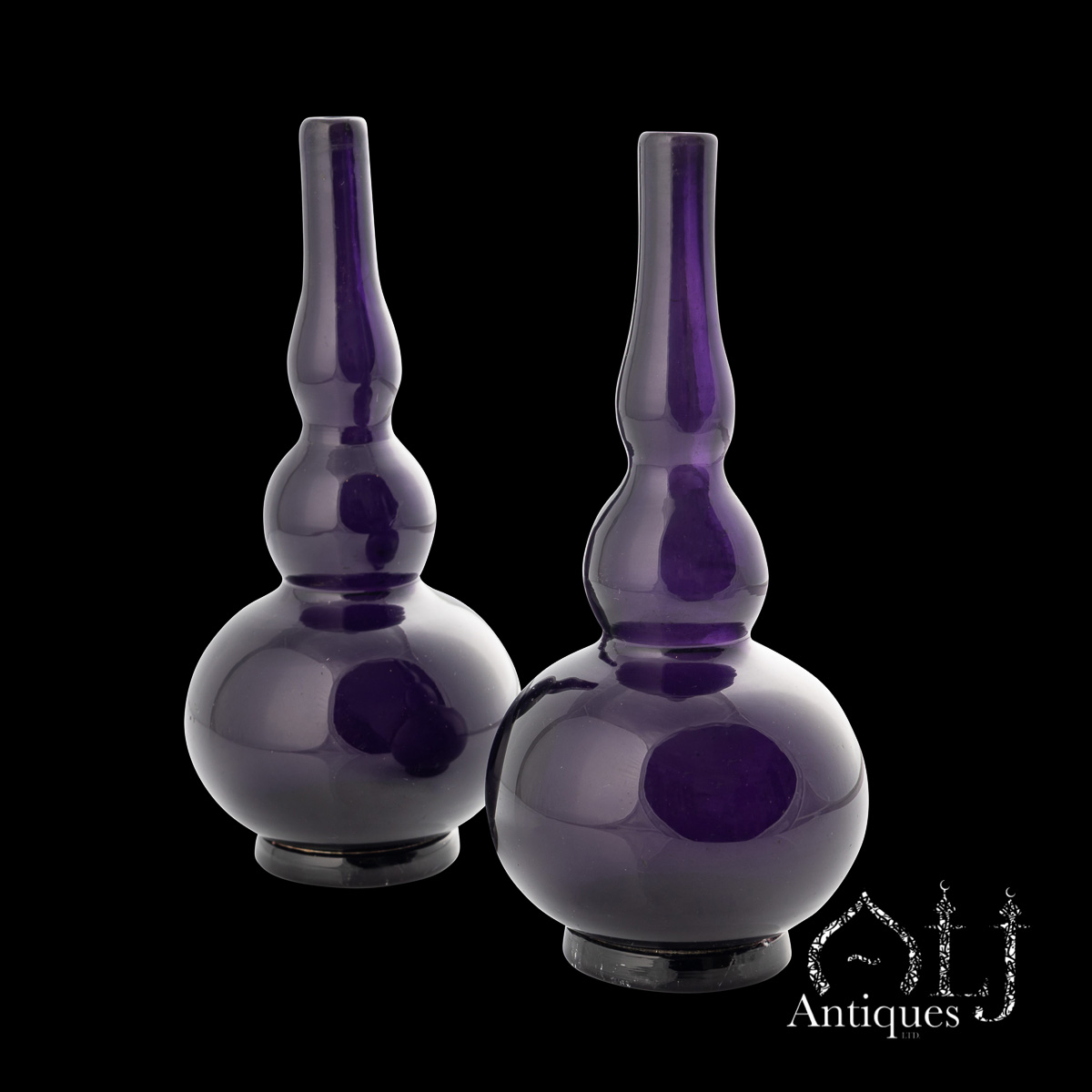
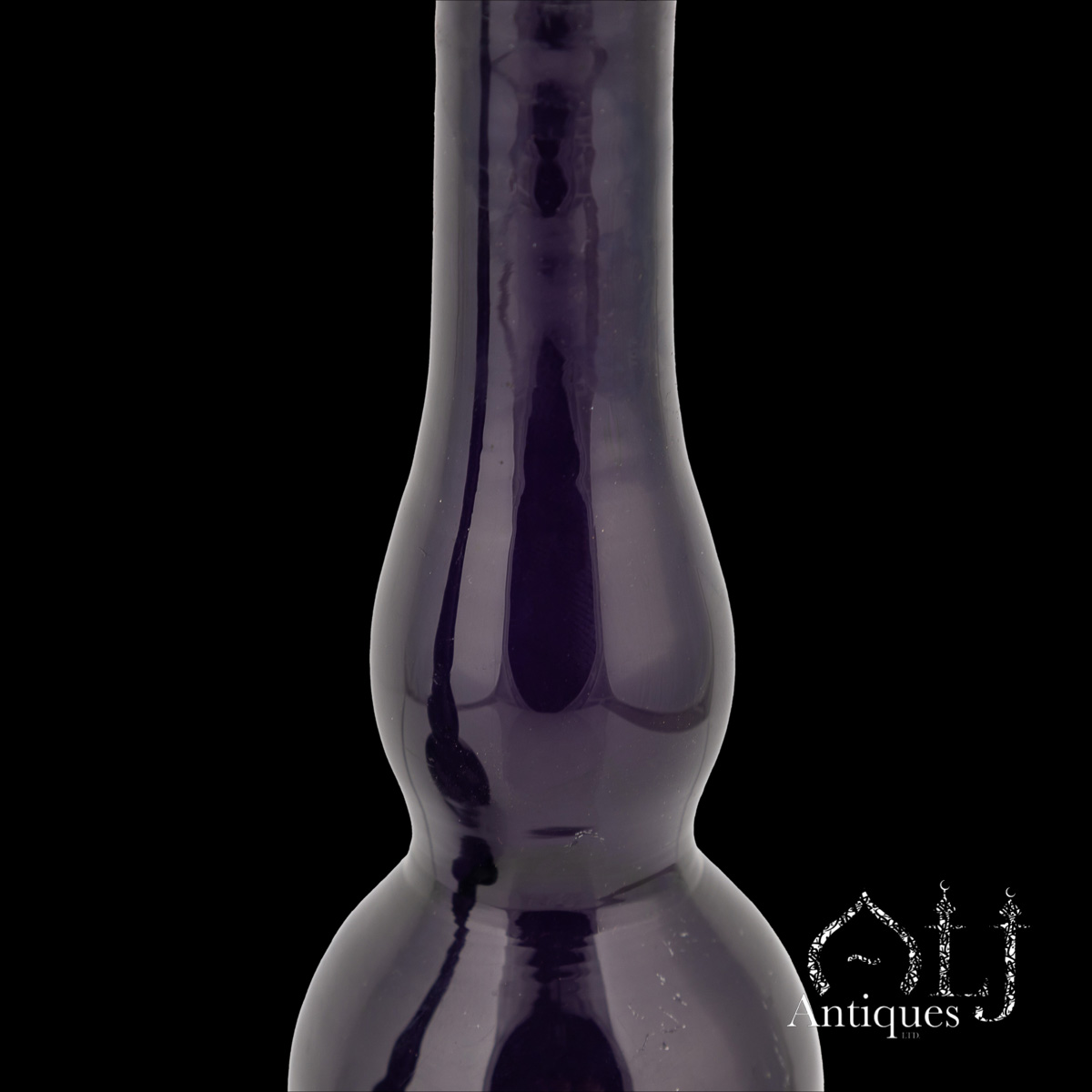
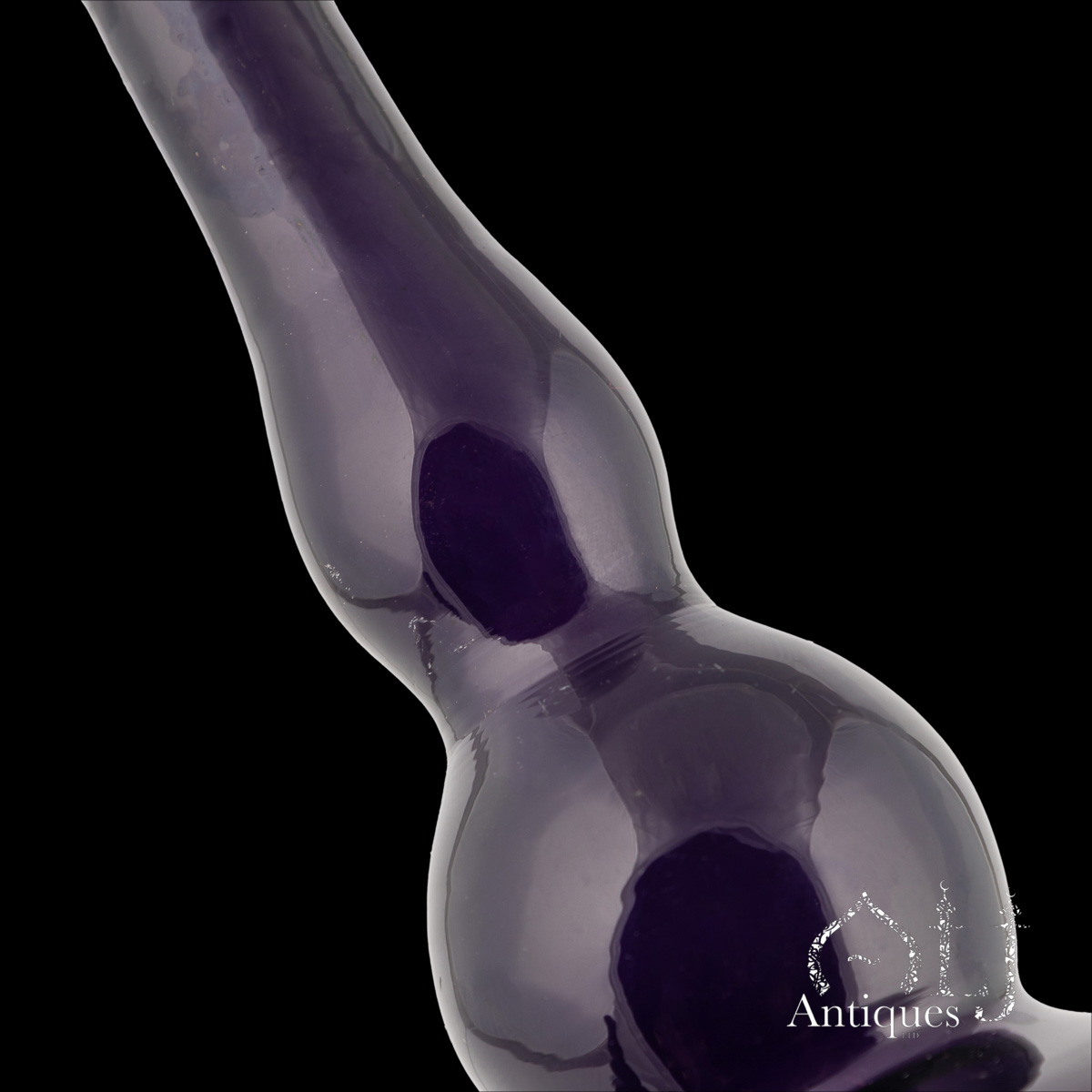
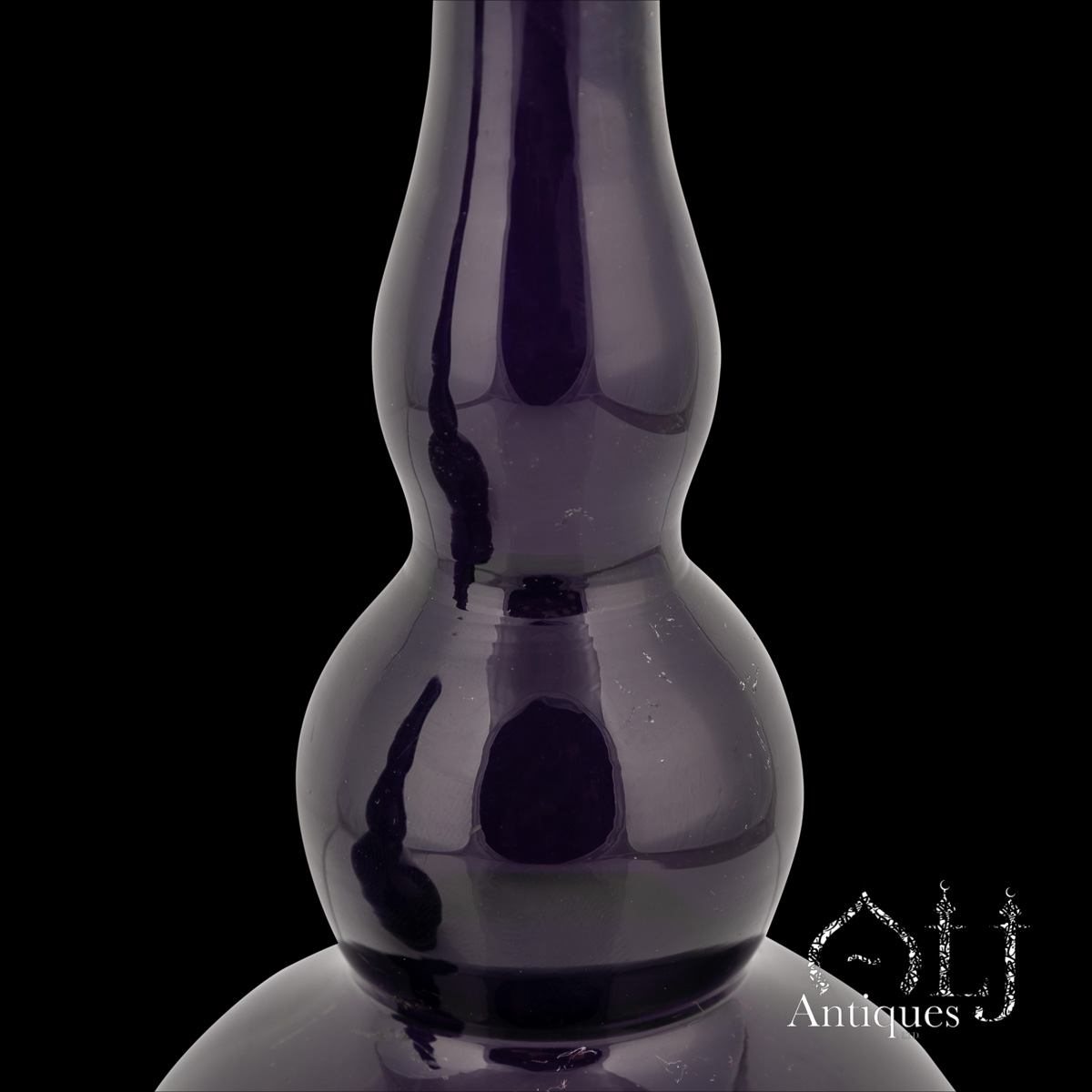
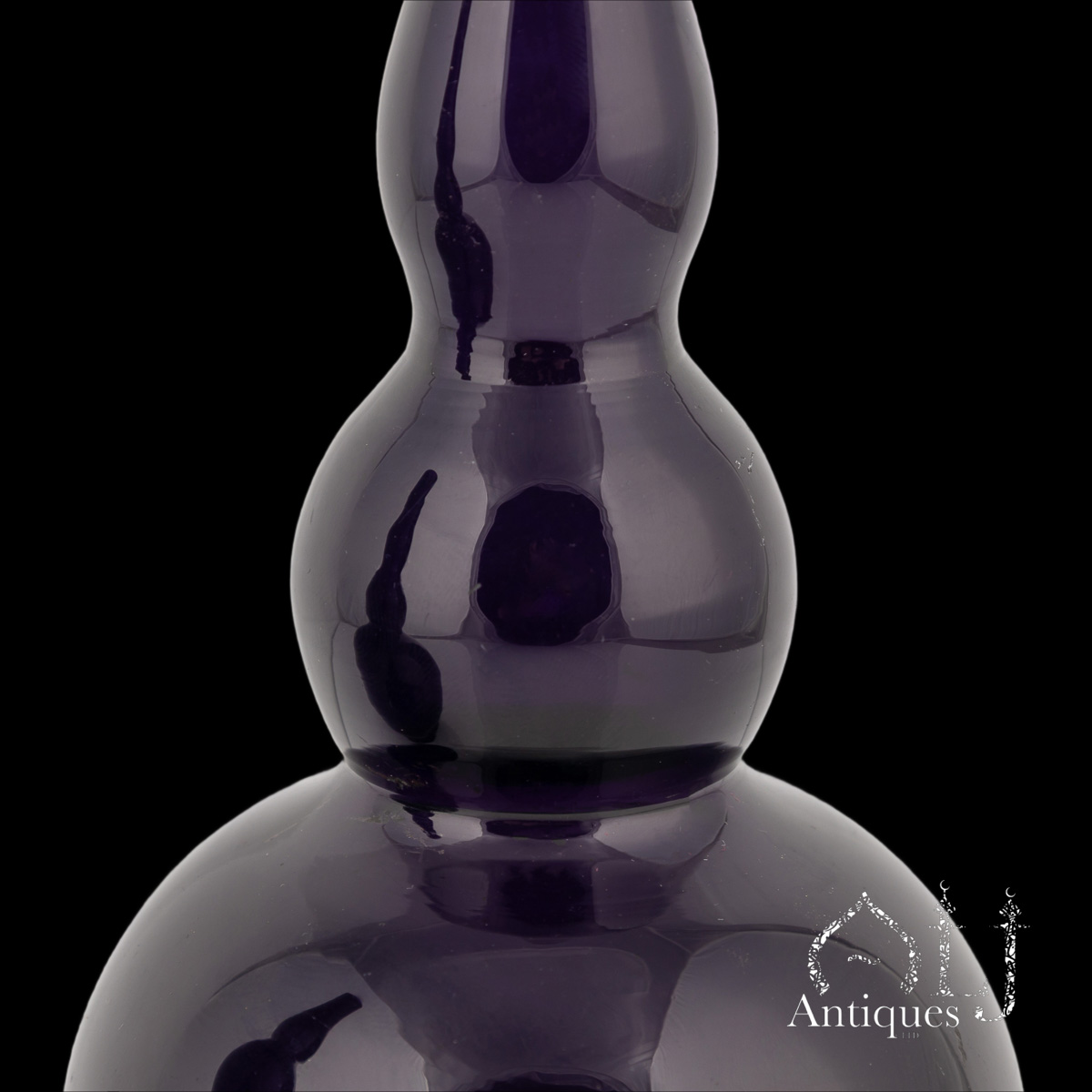
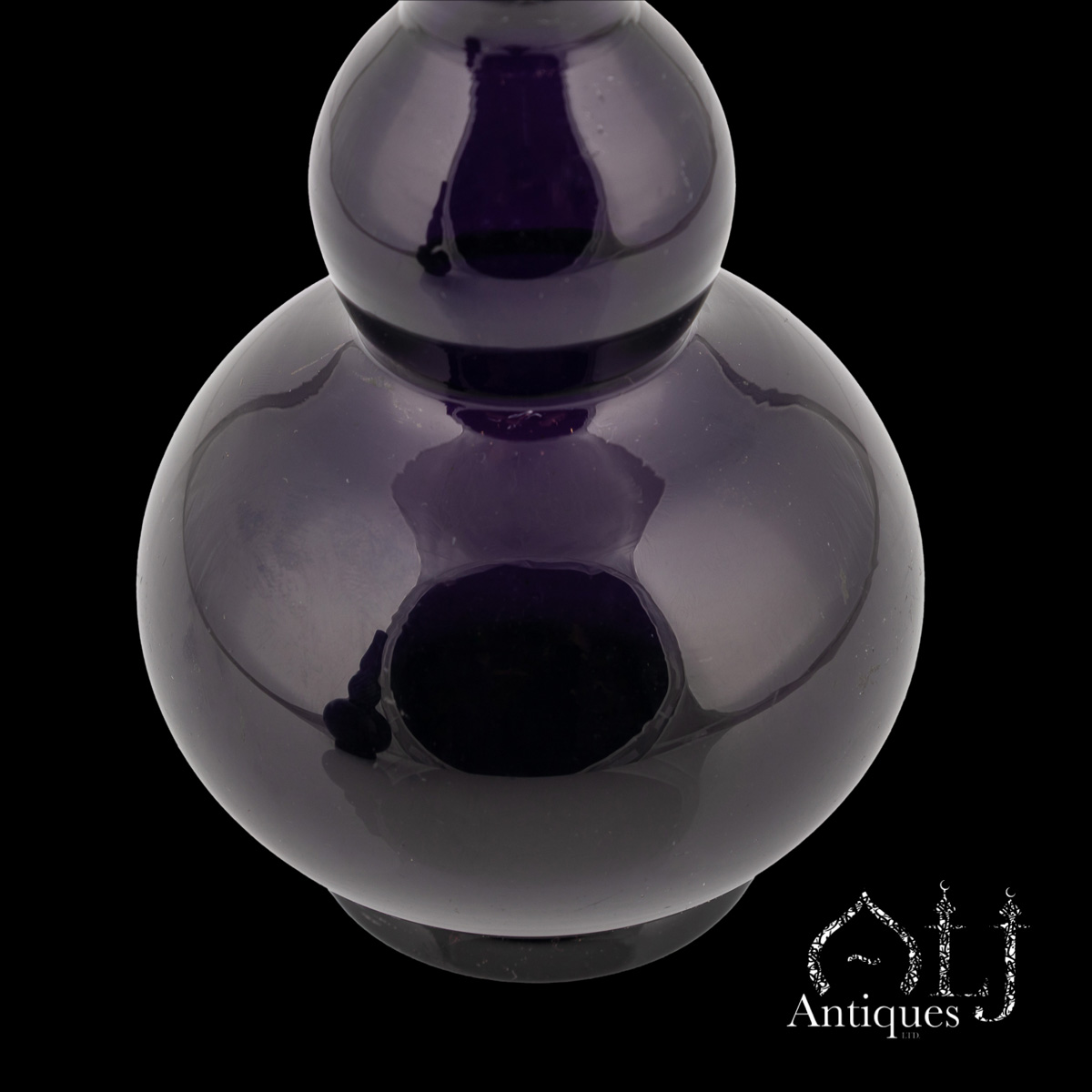
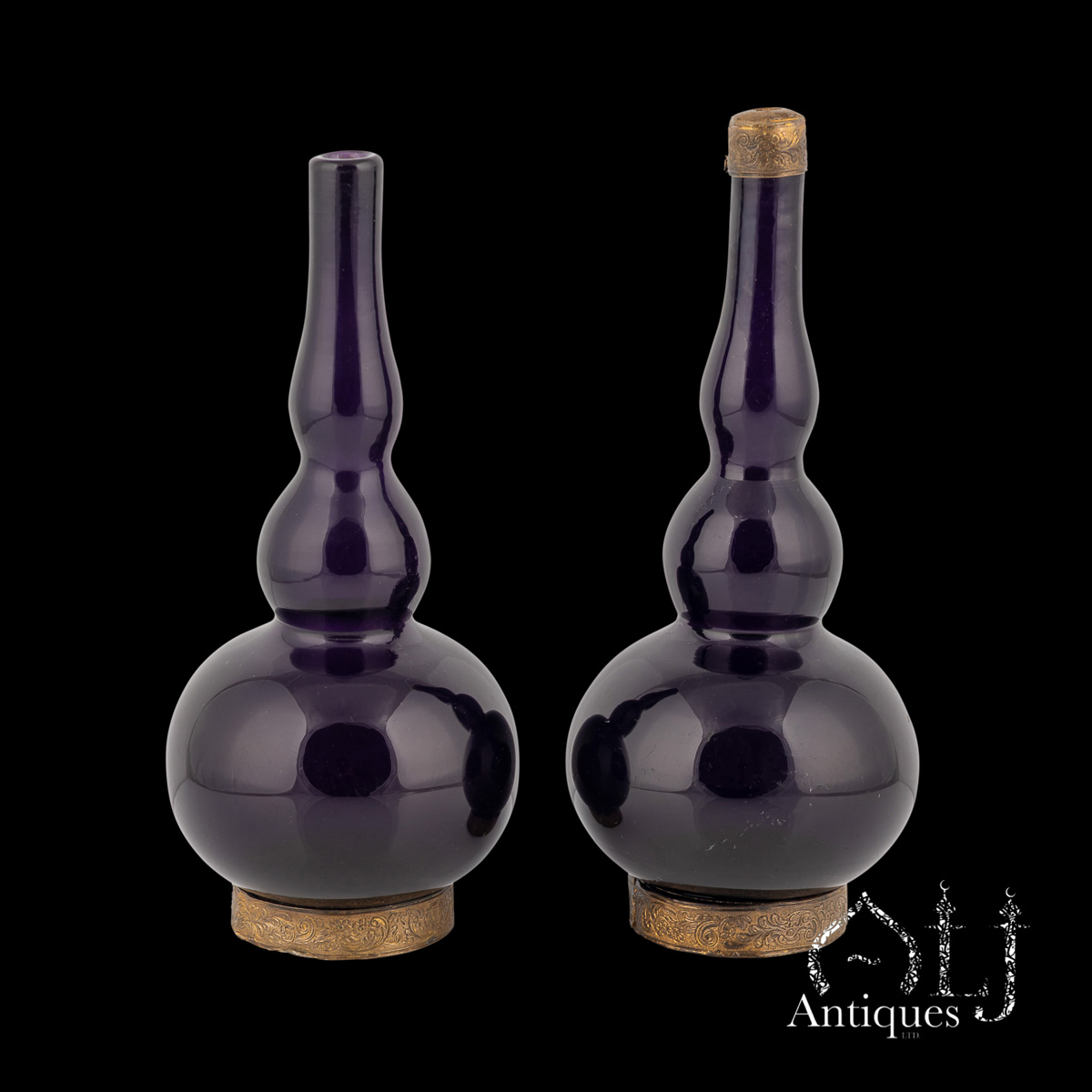
A rare and beautifully preserved pair of Mughal Dynasty amethyst-coloured mould-blown glass rosewater sprinklers, known as Qumqum (قُمقُم), each crafted in an elegant triple-gourd form with a smooth, glossy surface typical of high-quality Gujarati glass production during the 18th century.
Each sprinkler features a rounded, perfectly formed spherical lower body, rising to a baluster mid-section, and an elongated, tapering neck that terminates in a small aperture. Two distinct bulges appear near the base of the neck — a diagnostic feature associated with Kapadwanj workshops in Gujarat, which flourished under late-Mughal patronage.
Both vessels rest on circular applied feet, a characteristic of Indian mould-blown glass. The purity of the amethyst tone, the symmetry of the gourd-like profile, and the clarity of the glass all reflect the artistic refinement of Gujarati glassmakers.
Historically, such sprinklers were incorrectly attributed to 18th–early 19th century English glasshouses producing luxury wares for the Indian market. However, modern compositional analysis has conclusively demonstrated that these vessels were made in Gujarat, India, confirming the region as a significant centre for Mughal-period glass manufacture.
This pair is notable for its intact survival, its vibrant colour, and its strong resemblance to examples in major museum collections, including those in Kuwait, New York, London, and Copenhagen.
These sprinklers would have been used to dispense rosewater during elite Mughal ceremonies, courtly rituals, and domestic hospitality — symbols of refinement, purity, and luxury within the Indo-Islamic cultural sphere.
Dimensions
Sprinkler No. 1
Height: 9.2 cm
Width: 9.5 cm
Diameter of top opening: 1.9 cm
Diameter of base: 5.3 cm
Sprinkler No. 2
Height: 9 cm
Width: 9 cm
Diameter of top opening: 1.7 cm
Diameter of base: 5.2 cm
Condition
Both sprinklers are in excellent and pristine condition.
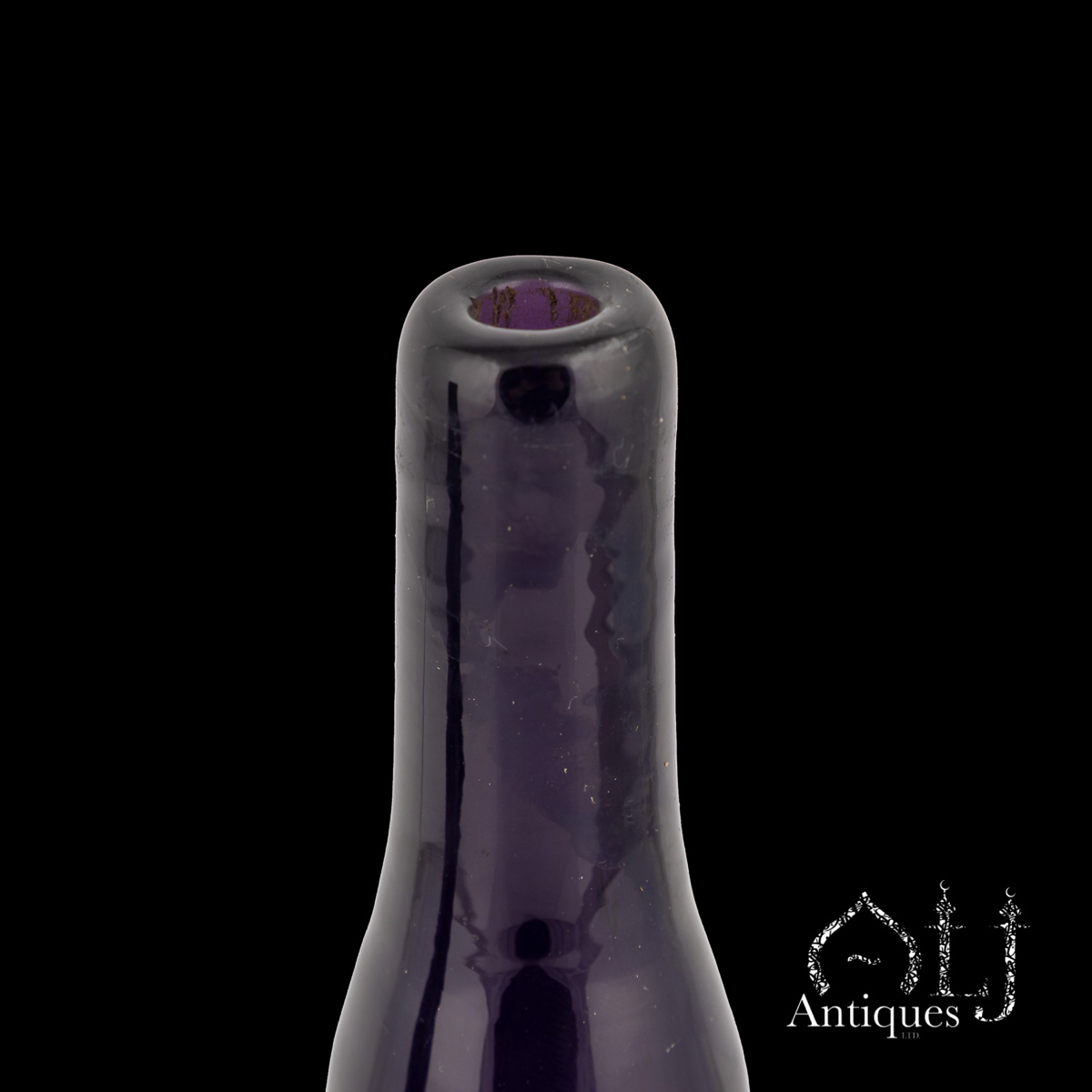
Only minute surface wear is present in the form of very fine scratches visible under magnification.
One example has two tiny chips on the underside of the base rim, fully invisible during display — likely caused during the historical removal of the pontil scar.
The interior of each vessel exhibits a slight cloudy film, consistent with the evaporation of perfumed liquid over time.
The two sprinklers were originally found with later 19th century European mounted pressed brass basses and with one lid (the other lid was missing) most likely the brass mounts were of French moulded with pressed decoration depicting floral motifs), all mounts have been removed but saved.
Provence
The European Art Market.
References
Primary Reference:
Glass from Islamic Lands, The Al-Sabah Collection, Kuwait National Museum, Stefano Carboni, Thames & Hudson, 2001. ISBN: 0-500-97607-4.
For similar rosewater sprinklers of related form, see the 10th–11th century Abbasid examples, Cat. 3.21, p.188.
For additional parallels, including Persian 10th–11th century mould-blown flasks with twisted vertical ribs, see Cat. 51b, pp.206–207; also, the 14th-century Mamluk enamelled and gilt flask, Cat. 101, pp.366–367; and Cat. 37a, pp.150–160.
Related 12th-century Syrian ribbed perfume sprinkler: Cat. 60, pp.224–225.
For directly comparable Gujarati / Mughal rosewater sprinklers, see Cat. 107a–j, pp.391–393.
Additional Comparative Examples:
Glass of the Sultans, The Metropolitan Museum of Art & The Corning Museum of Glass, Carboni & Whitehouse, 2001.
Early bottle form: 9th-century example, Fig. 92, p.102; Persian rosewater sprinklers, 12th–13th century, Lots 18 & 19, pp.92–93.
Near-identical sprinkler forms, likely from the same production centre: Cat. 143 & 144, pp.289–290.
Further Related Material:
Sensual Delight: Incense Burners and Rosewater Sprinklers from the World of Islam, Joachim Meyer, The David Collection, Copenhagen, 2015.
See Lot 23, pp.62–63 for similar Gujarati mould-blown sprinklers.