
Description
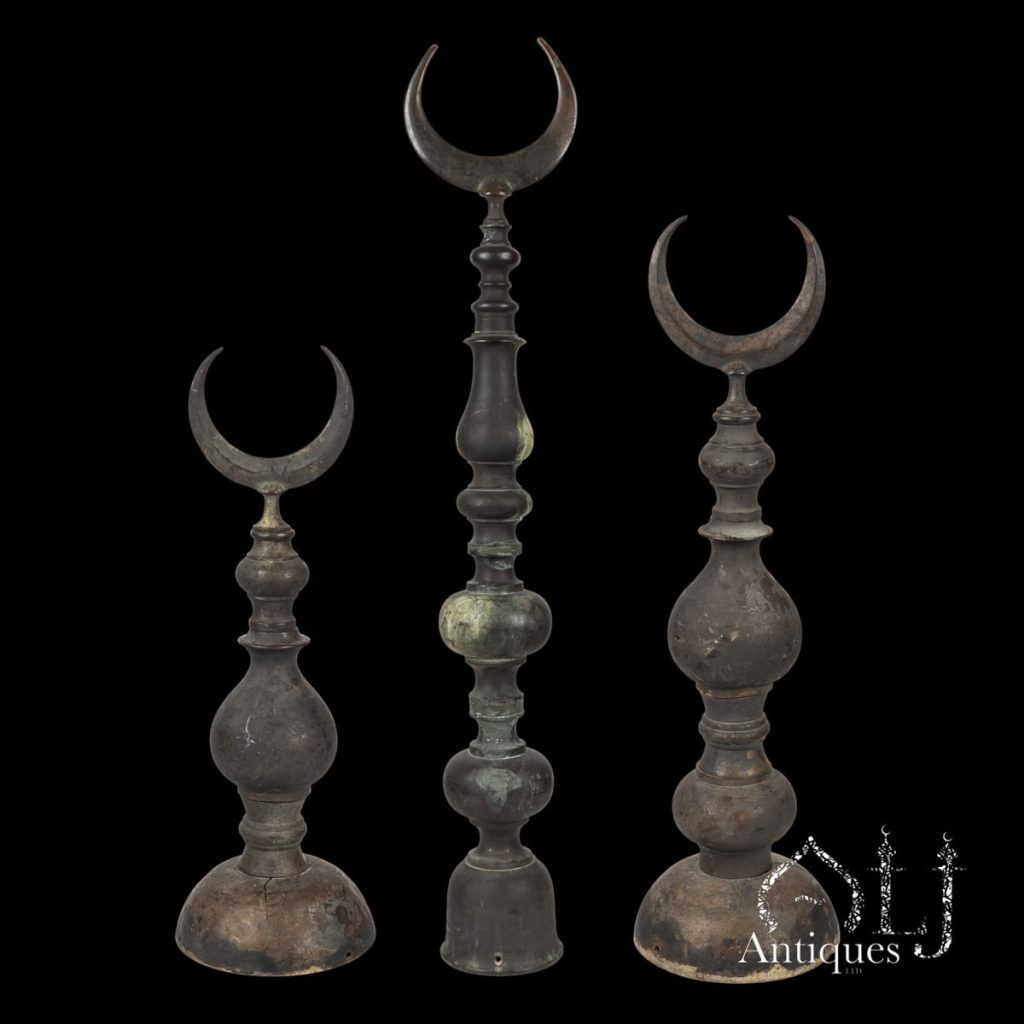
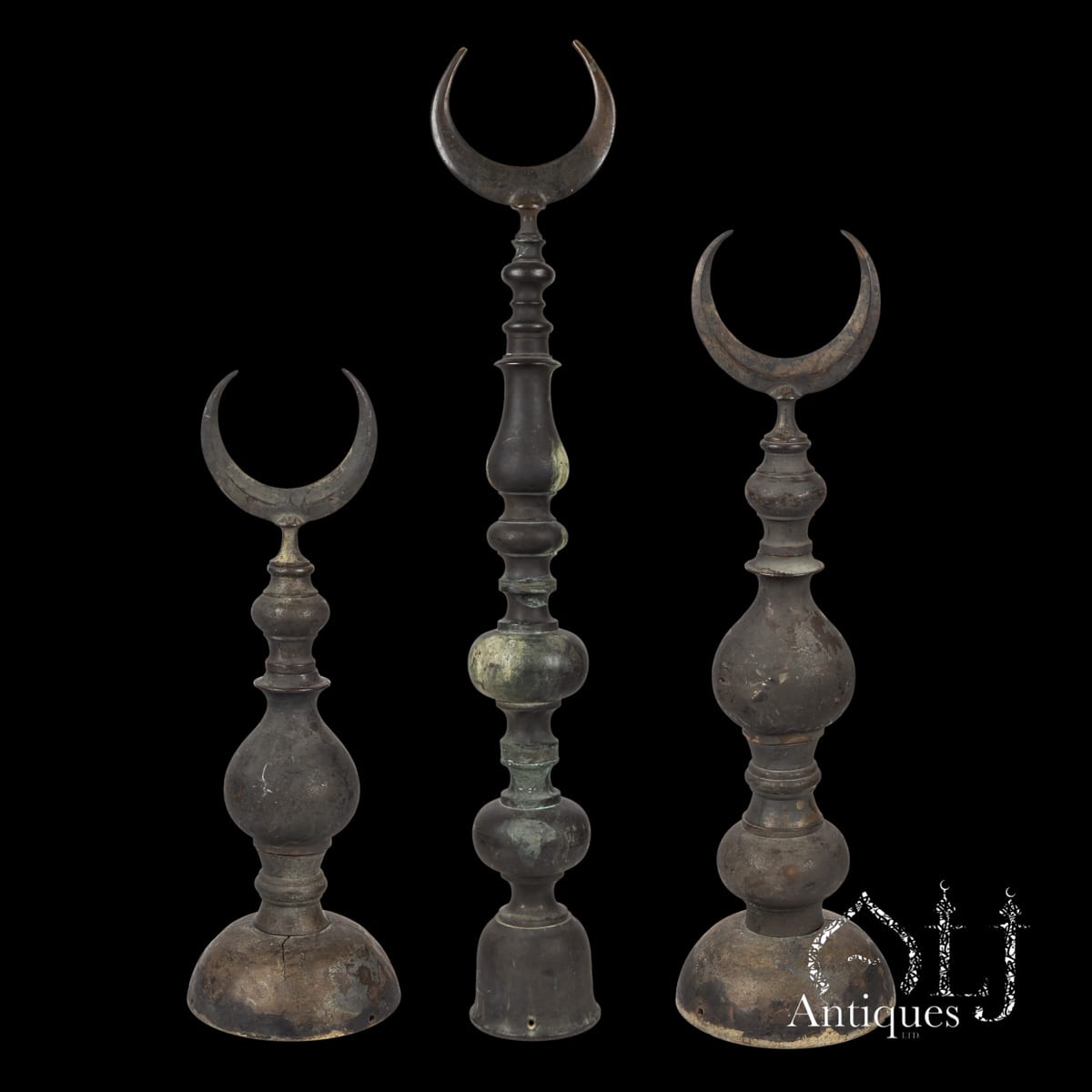
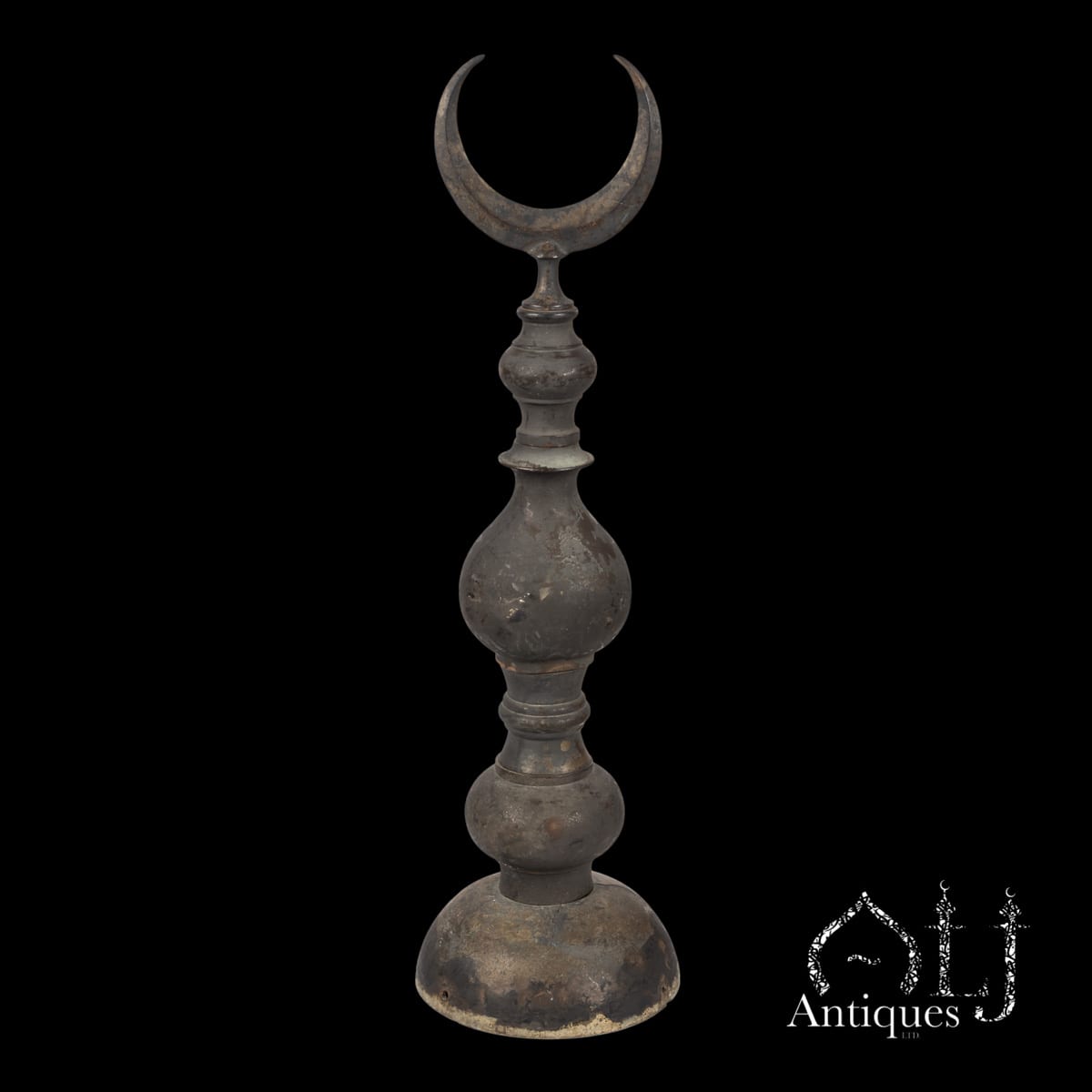
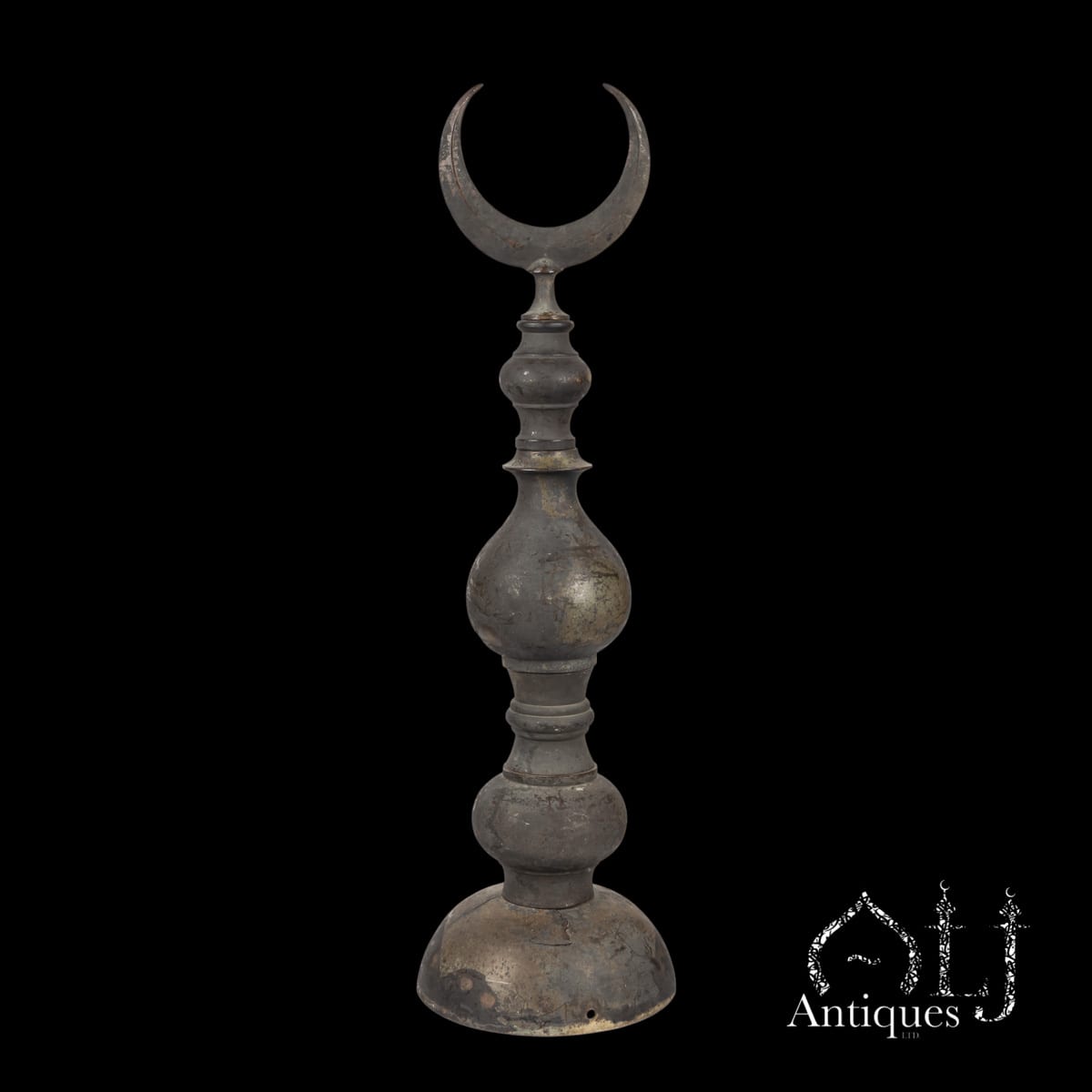
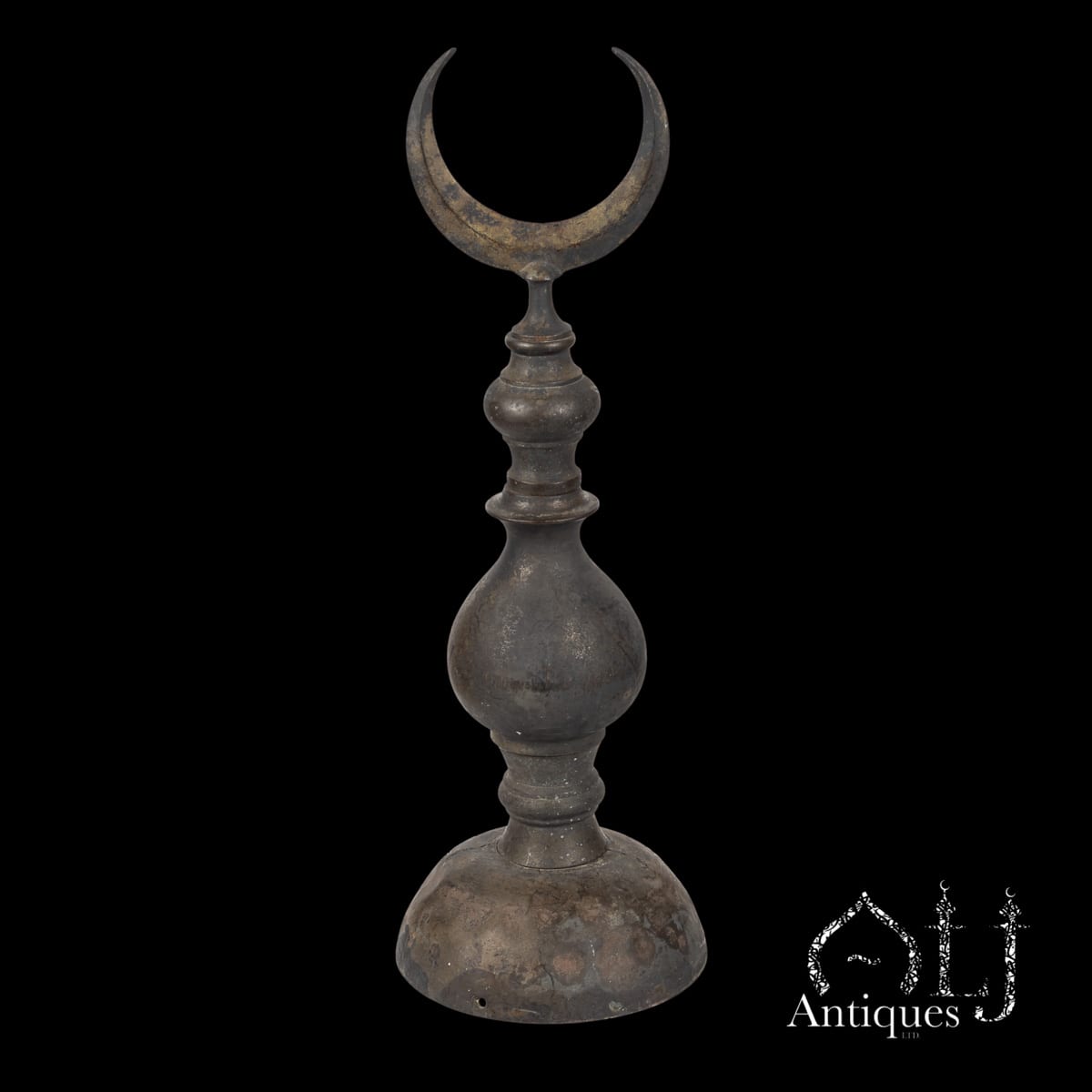
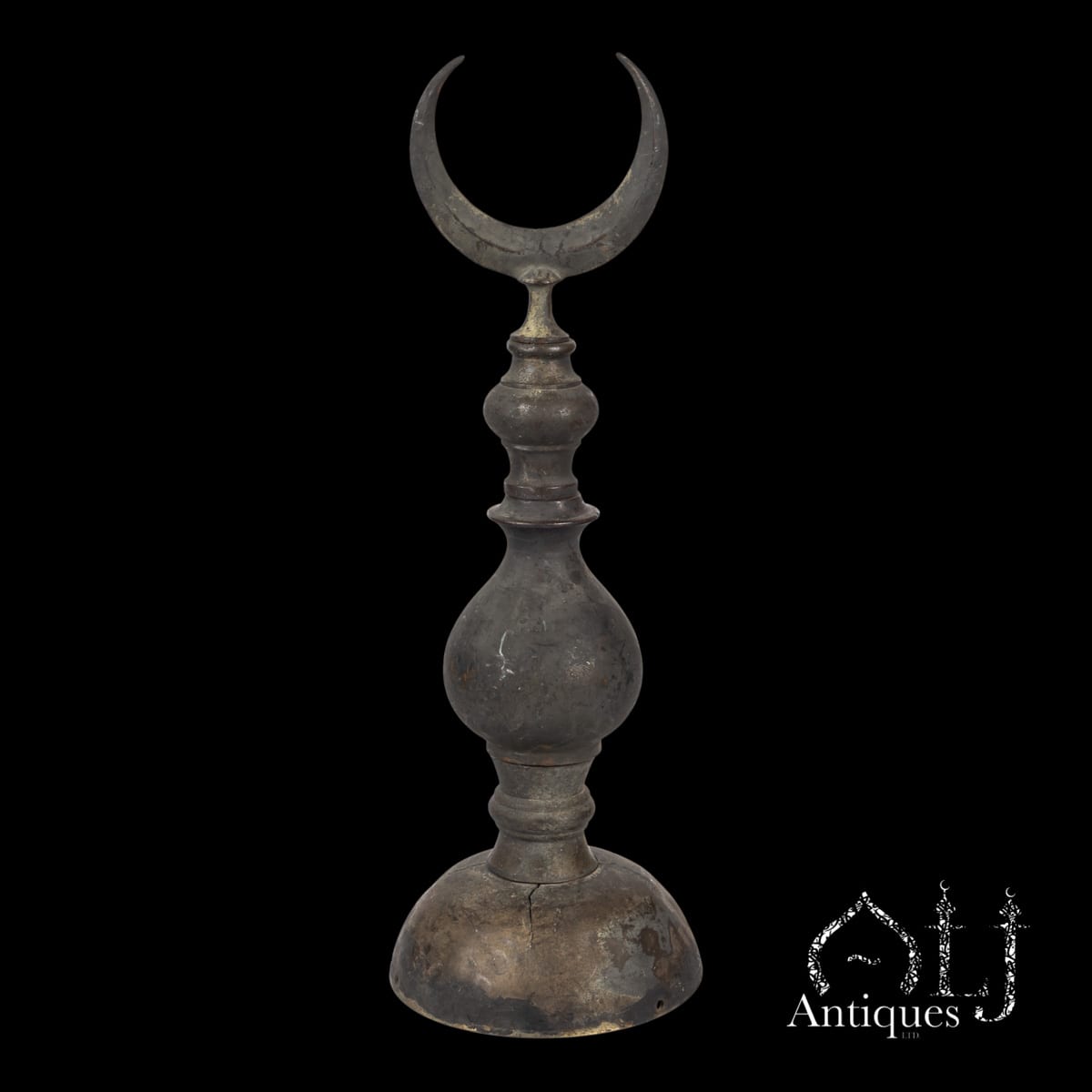
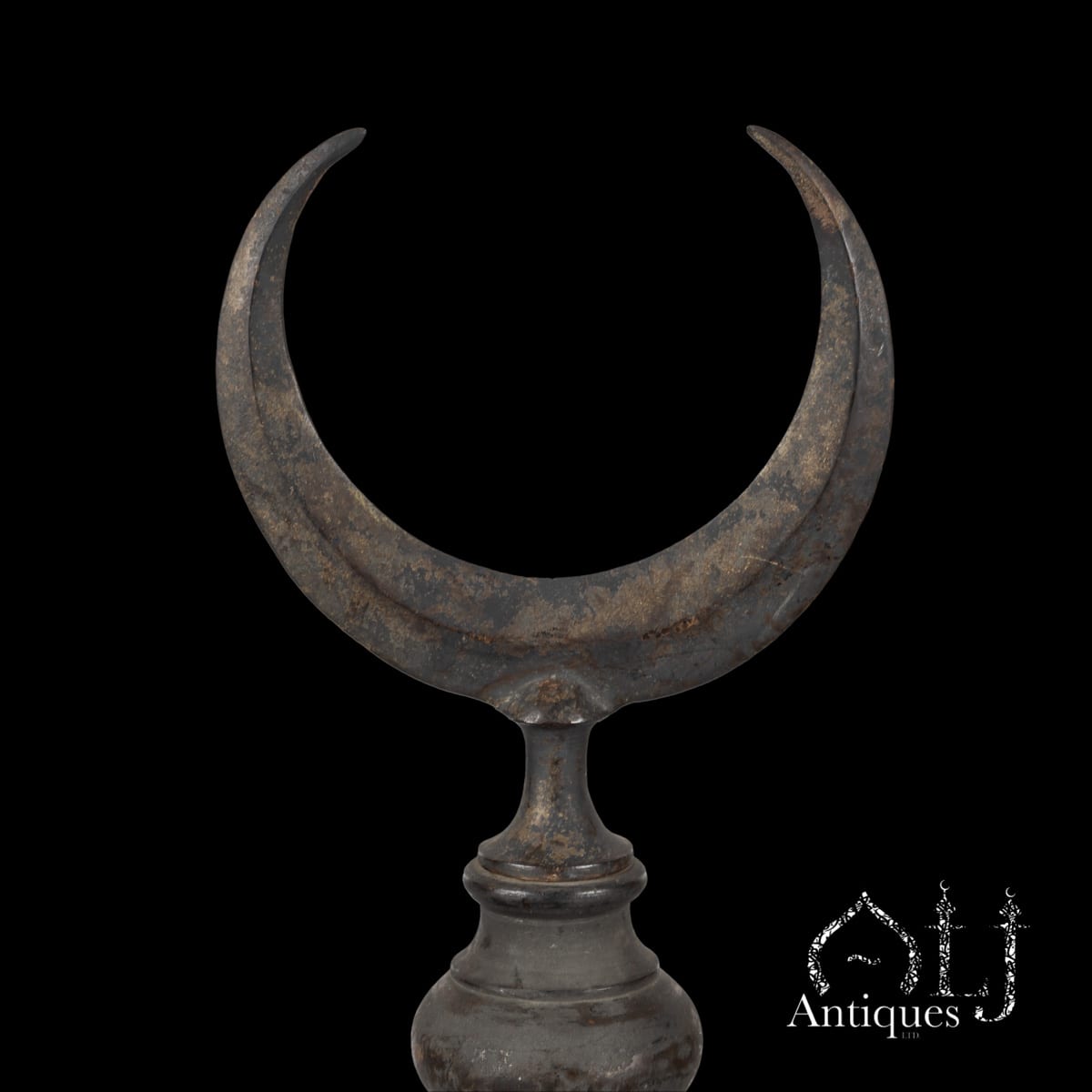
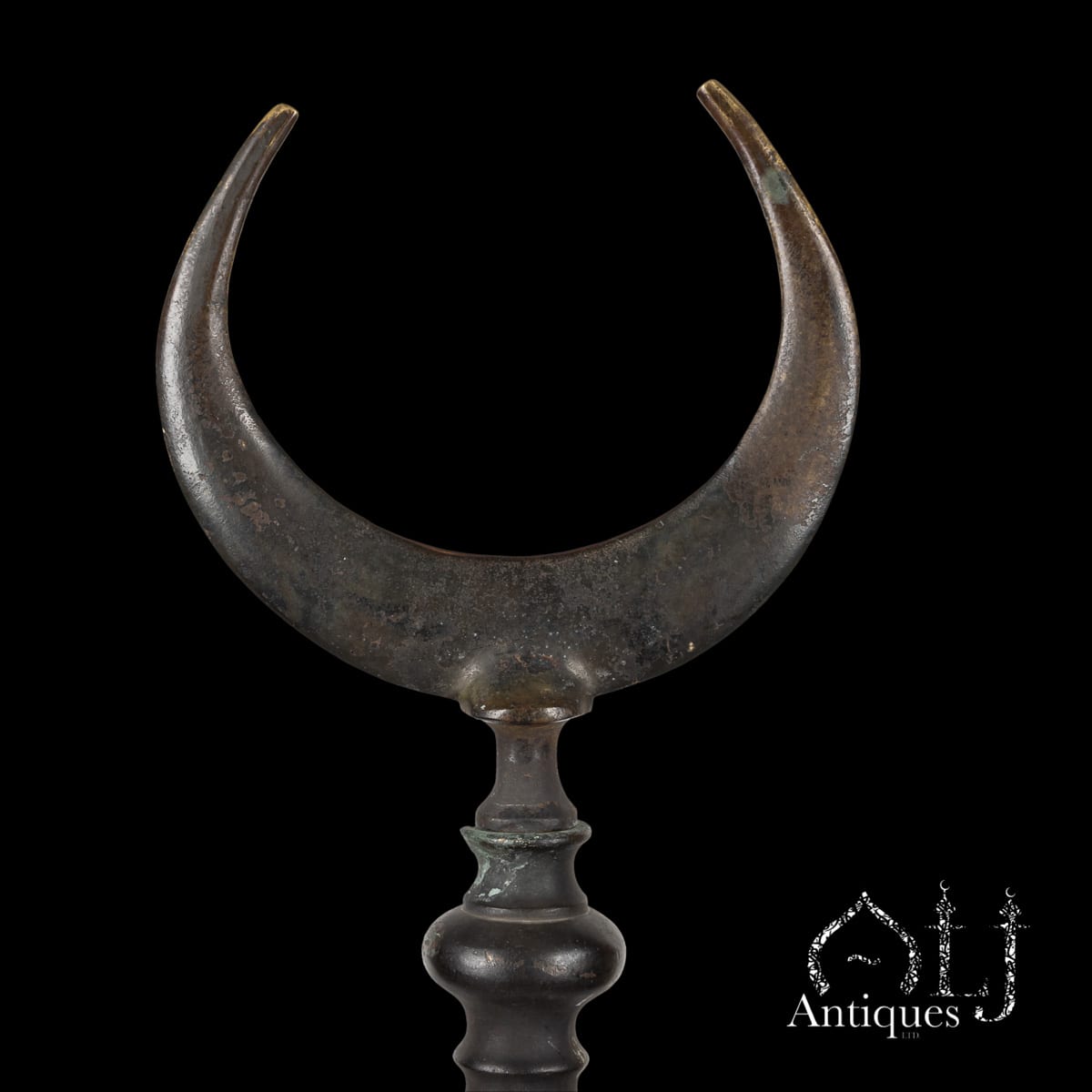
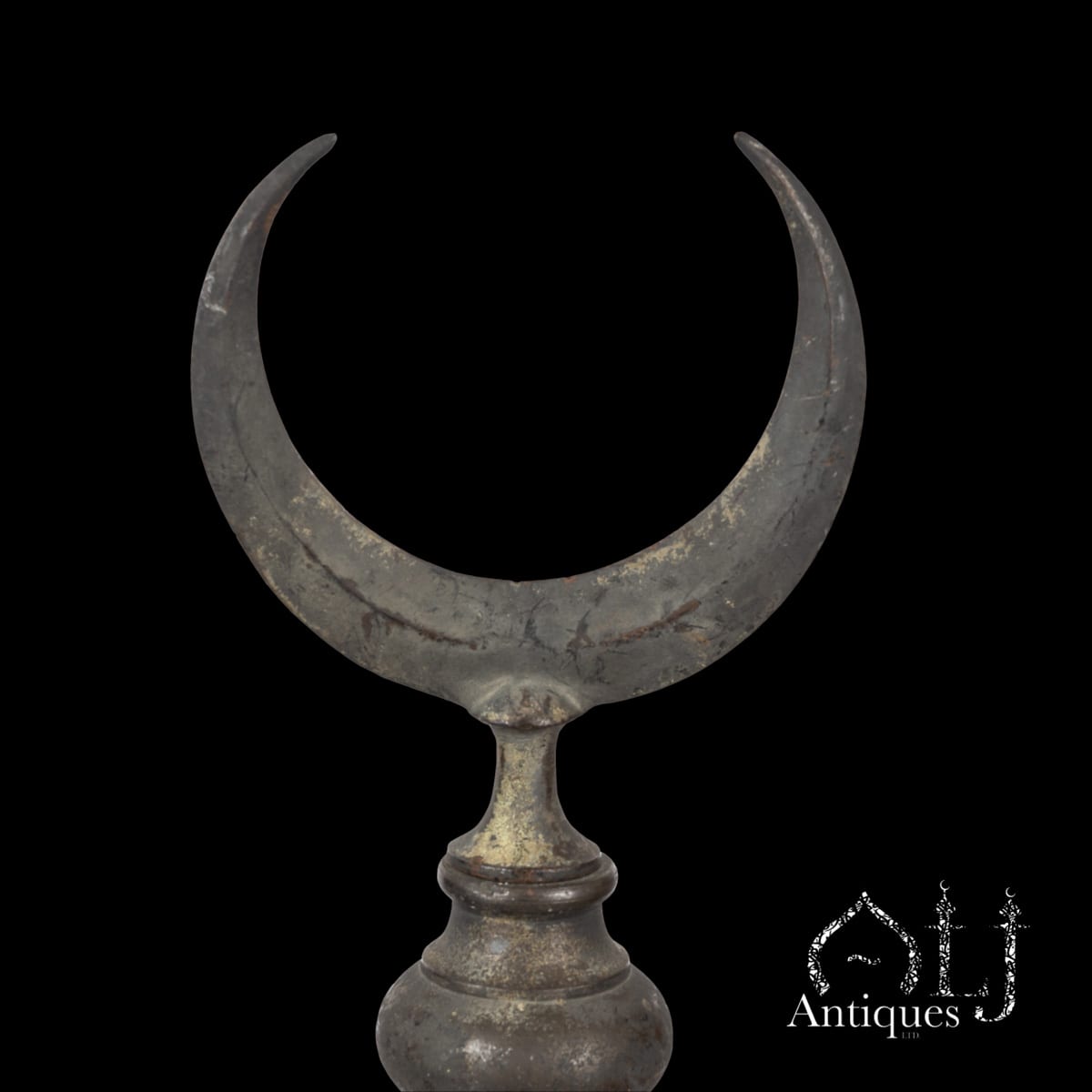
This remarkable collection of three monumental Ottoman metal crescent finials, most likely fashioned from brass and known in Turkish as Hilâl Âlemi (Hilâl Alemi) and in Arabic as Hilāl al-‘Alam (هلال العَلَم), represents an exceptionally rare survival of Ottoman metalwork. Originally created to crown the domes (Kubbe – قبة), minarets (Minare – منارة), mausolea (Türbe – تربة), mosques (Cami – جامع / Mescid – مسجد), madrasas (Medrese – مدرسة), fountains and other important religious monuments, they were also employed on a smaller scale to surmount important mosque furnishings, most notably the Minber (Turkish) or Minbar (Arabic: منبر), the pulpit from which the Imam delivered the Friday sermon. Together they formed one of the most recognisable symbolic expressions of Ottoman Islamic art and faith.
The present collection most likely originated from different regions of the Ottoman Empire, potentially including Turkey, Mecca, Madina, Egypt, the Balkans, Iraq, North Africa or other former Ottoman provinces, and may be broadly dated between the seventeenth and nineteenth centuries.
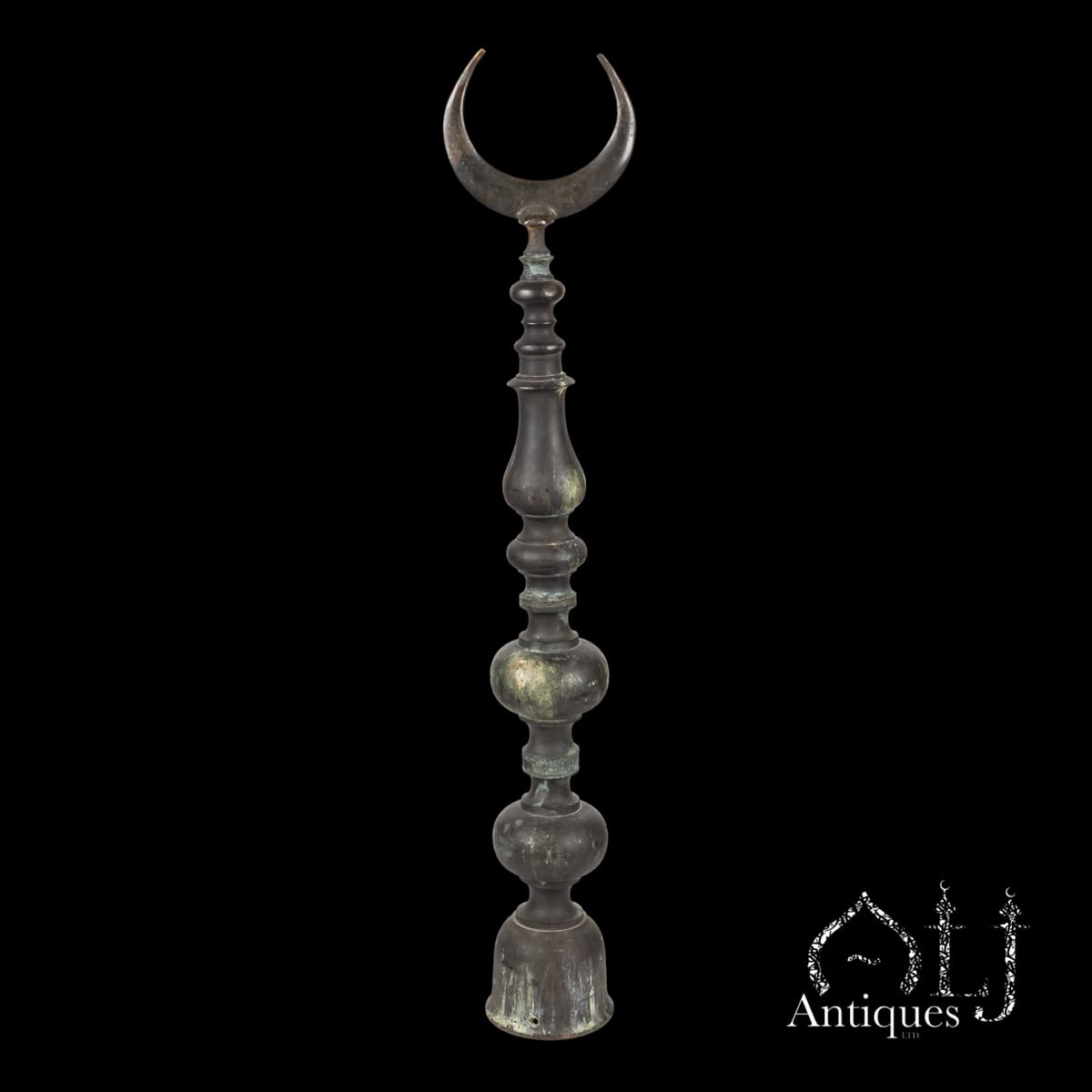
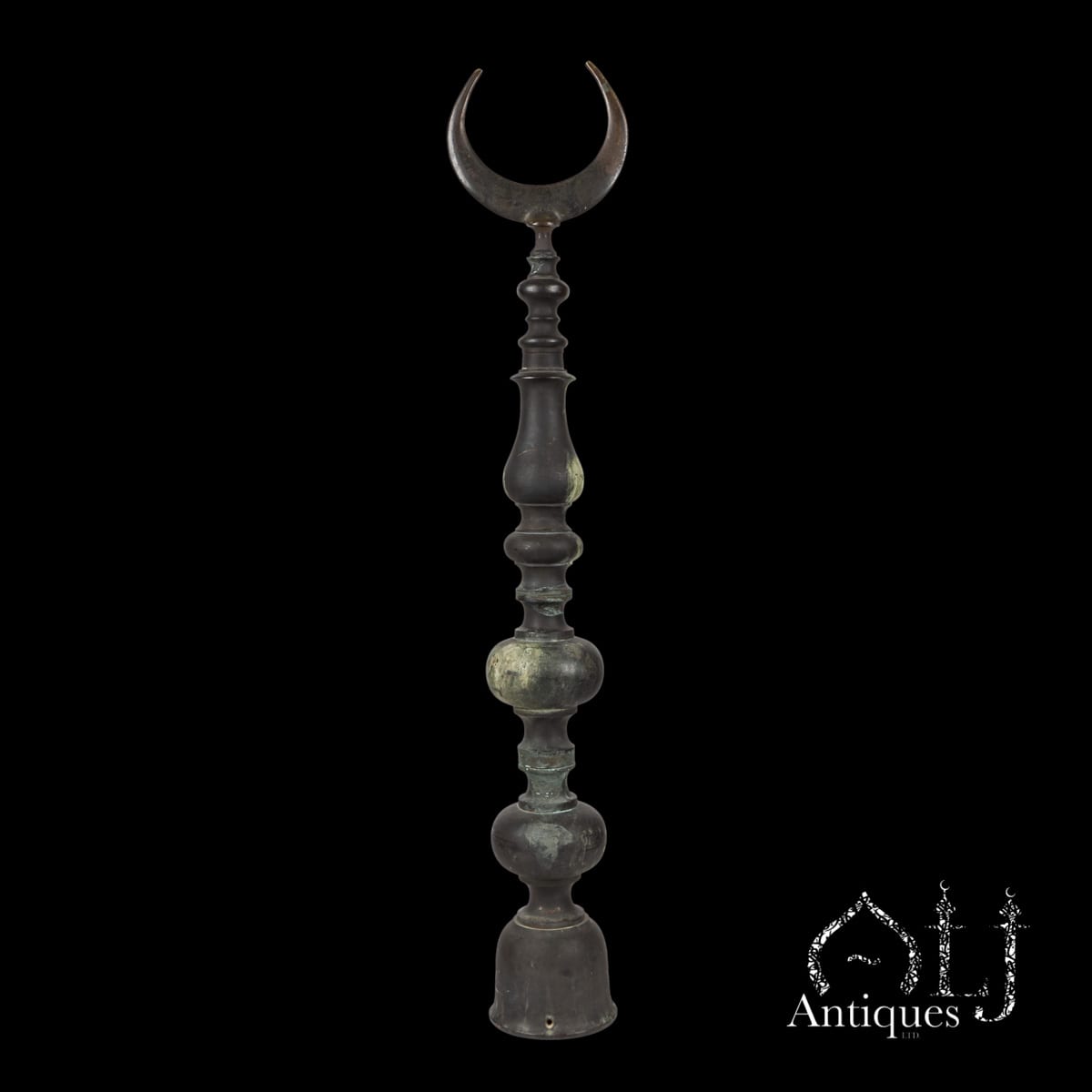
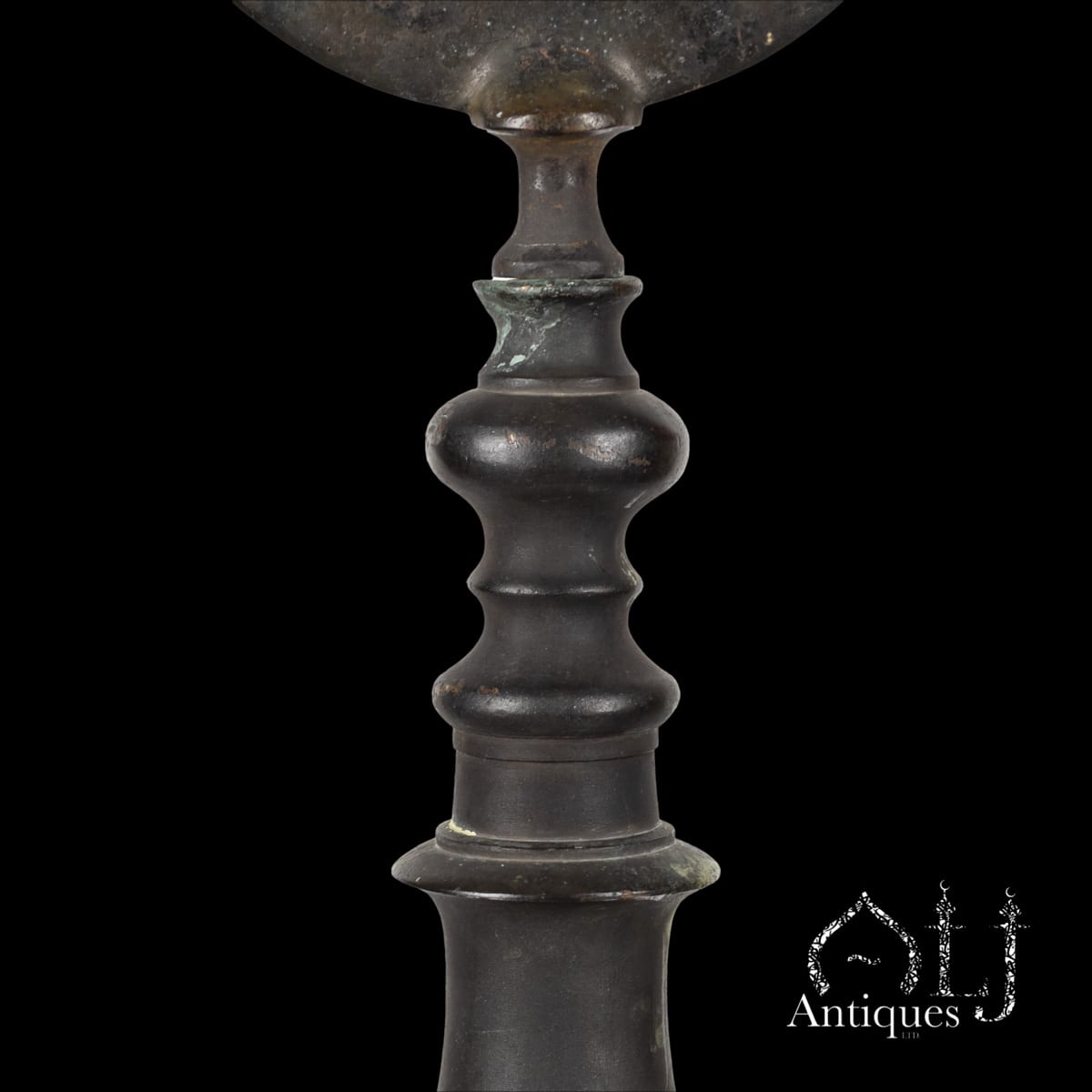
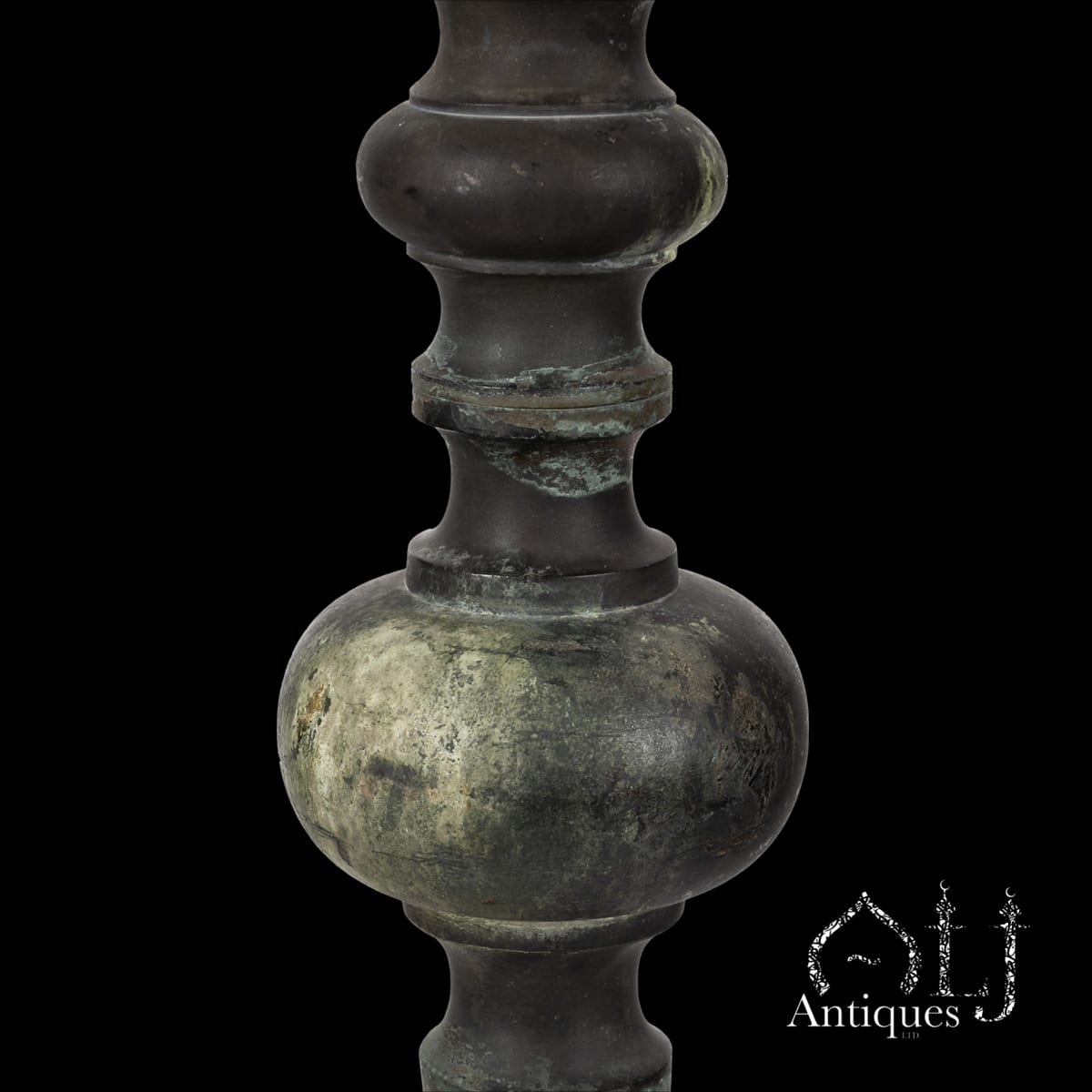
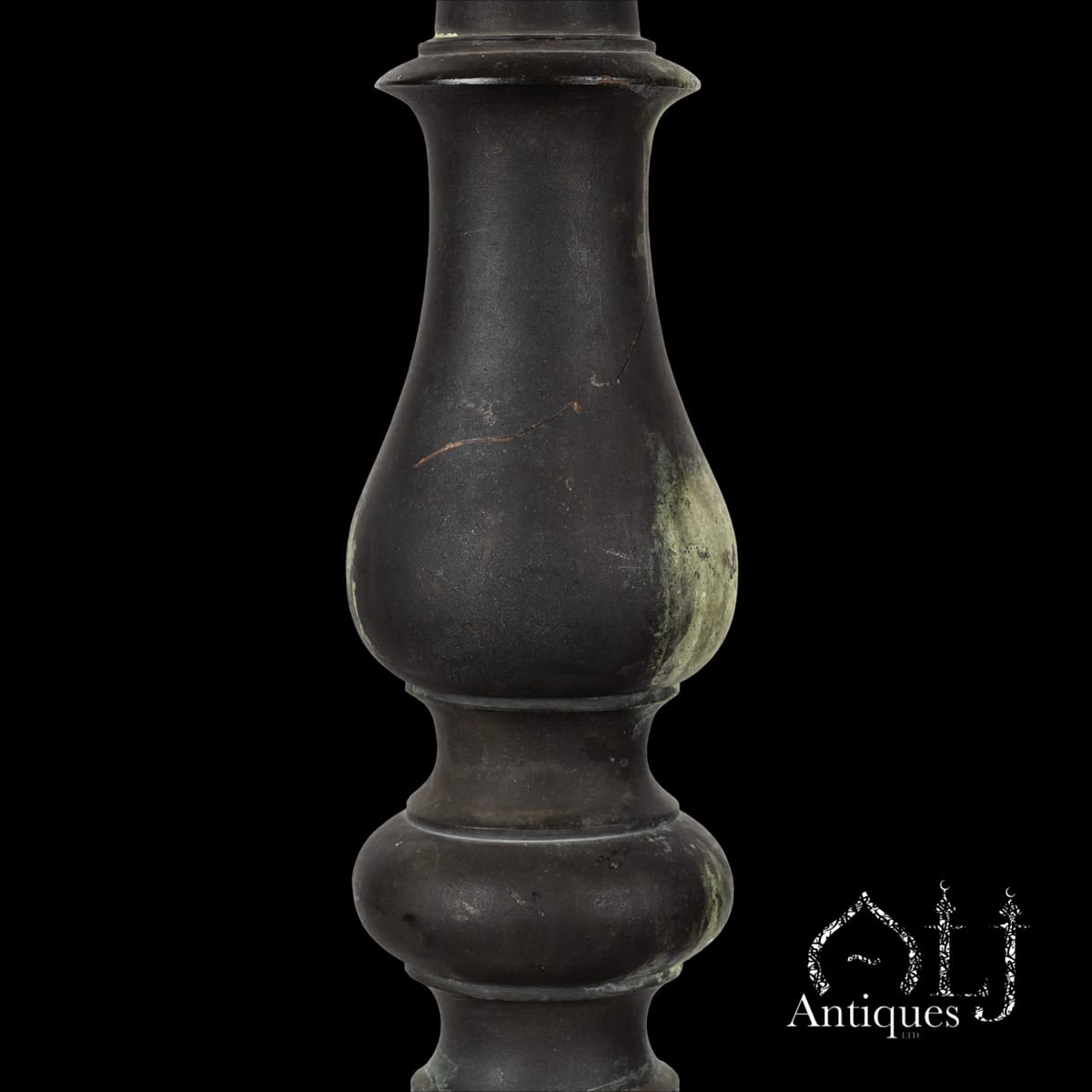
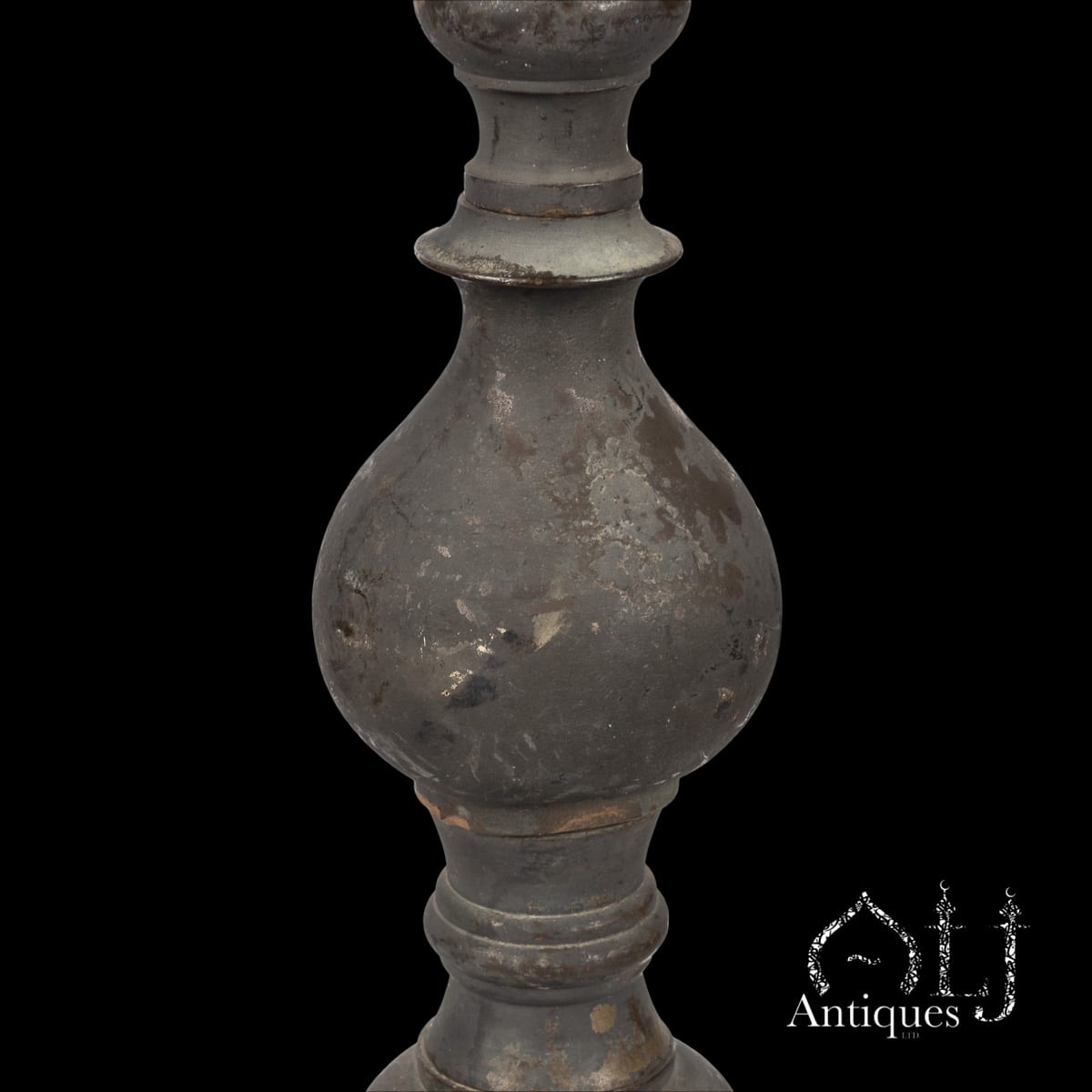
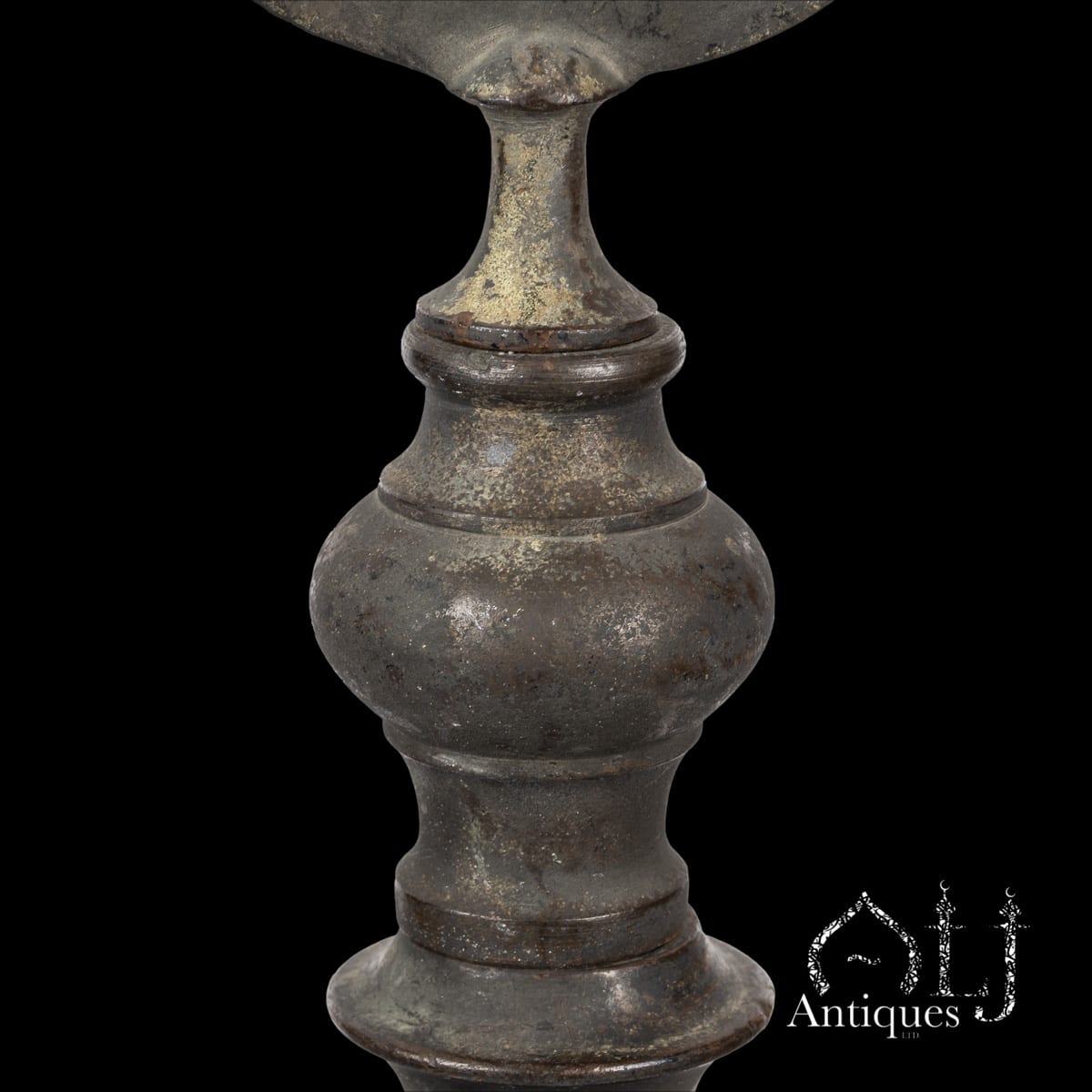
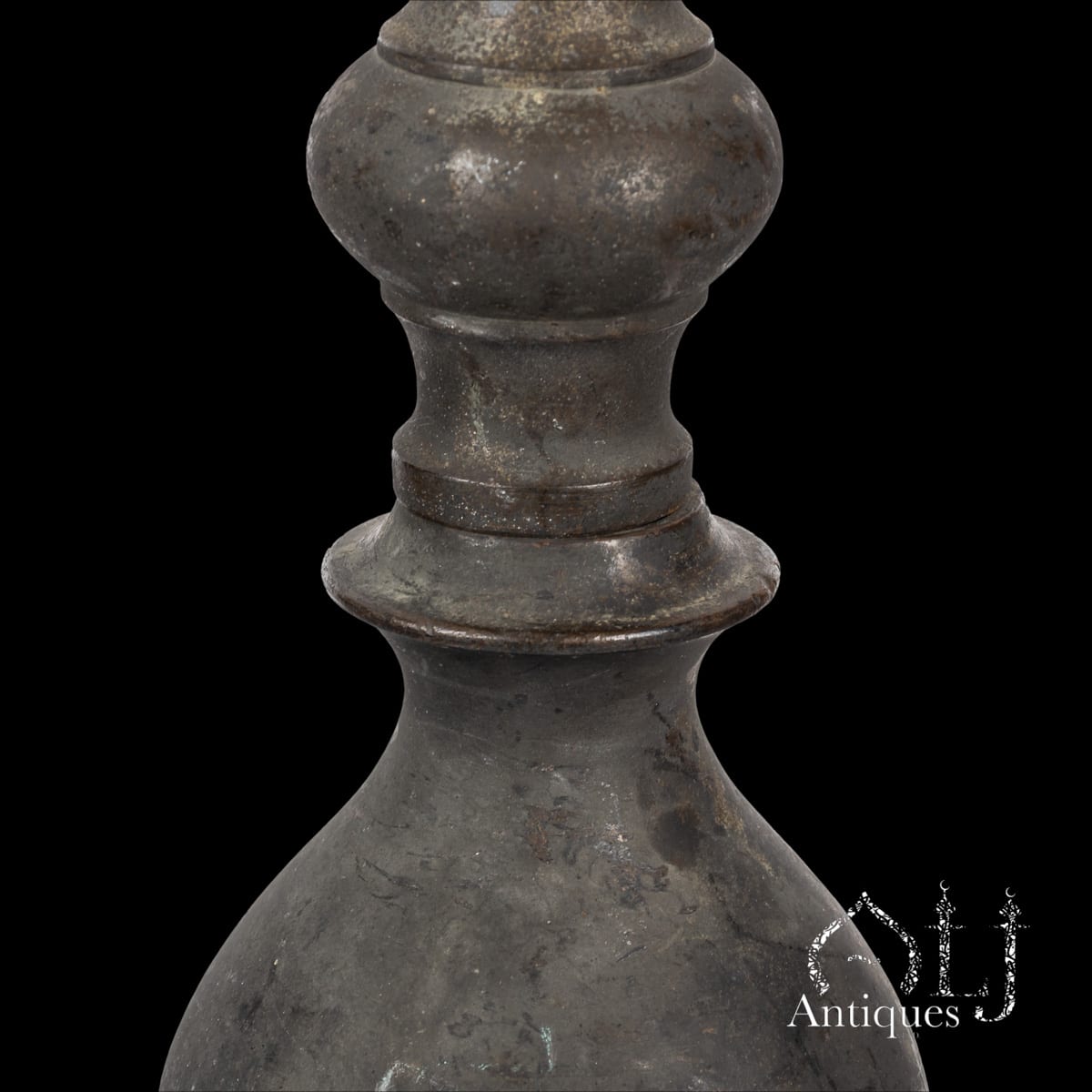
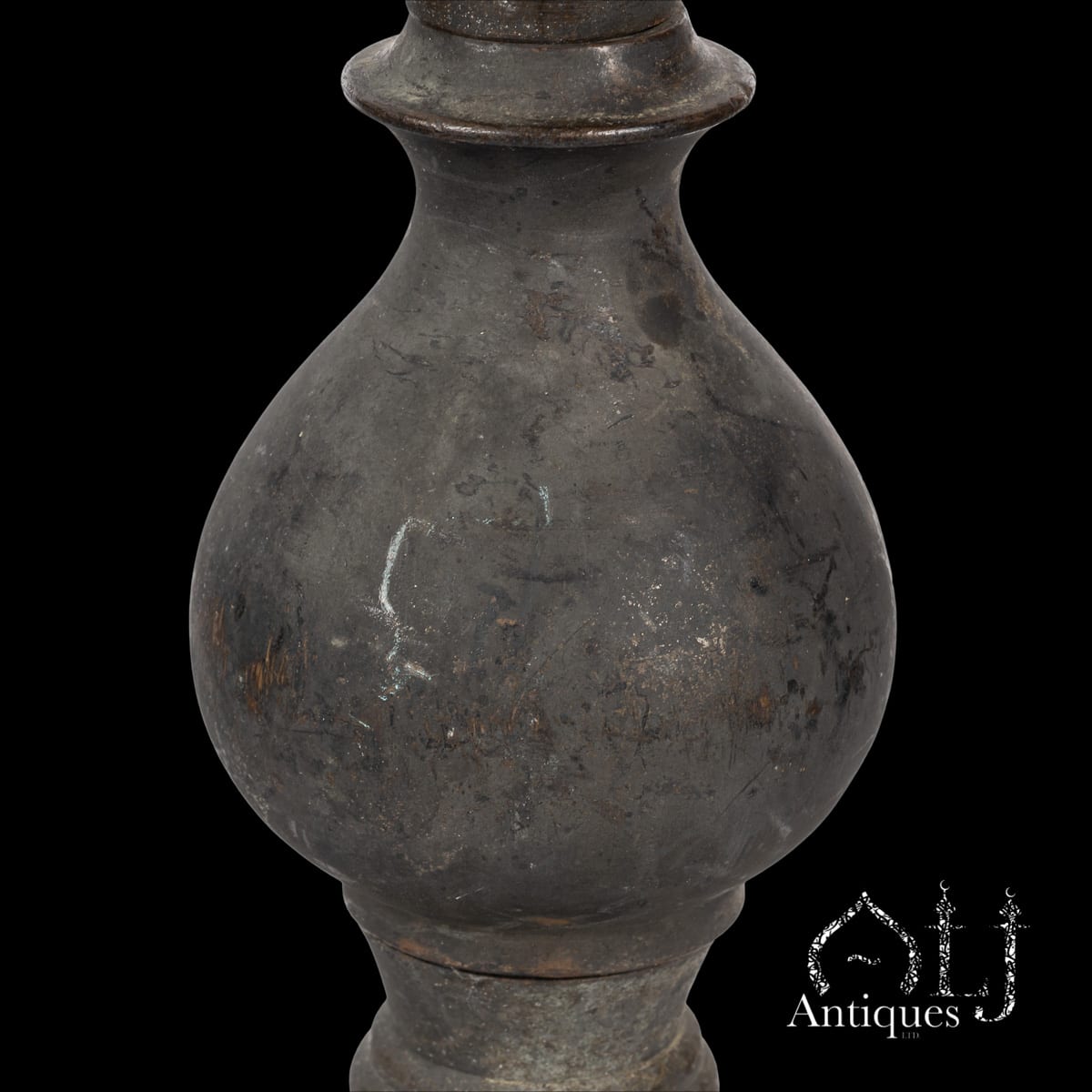
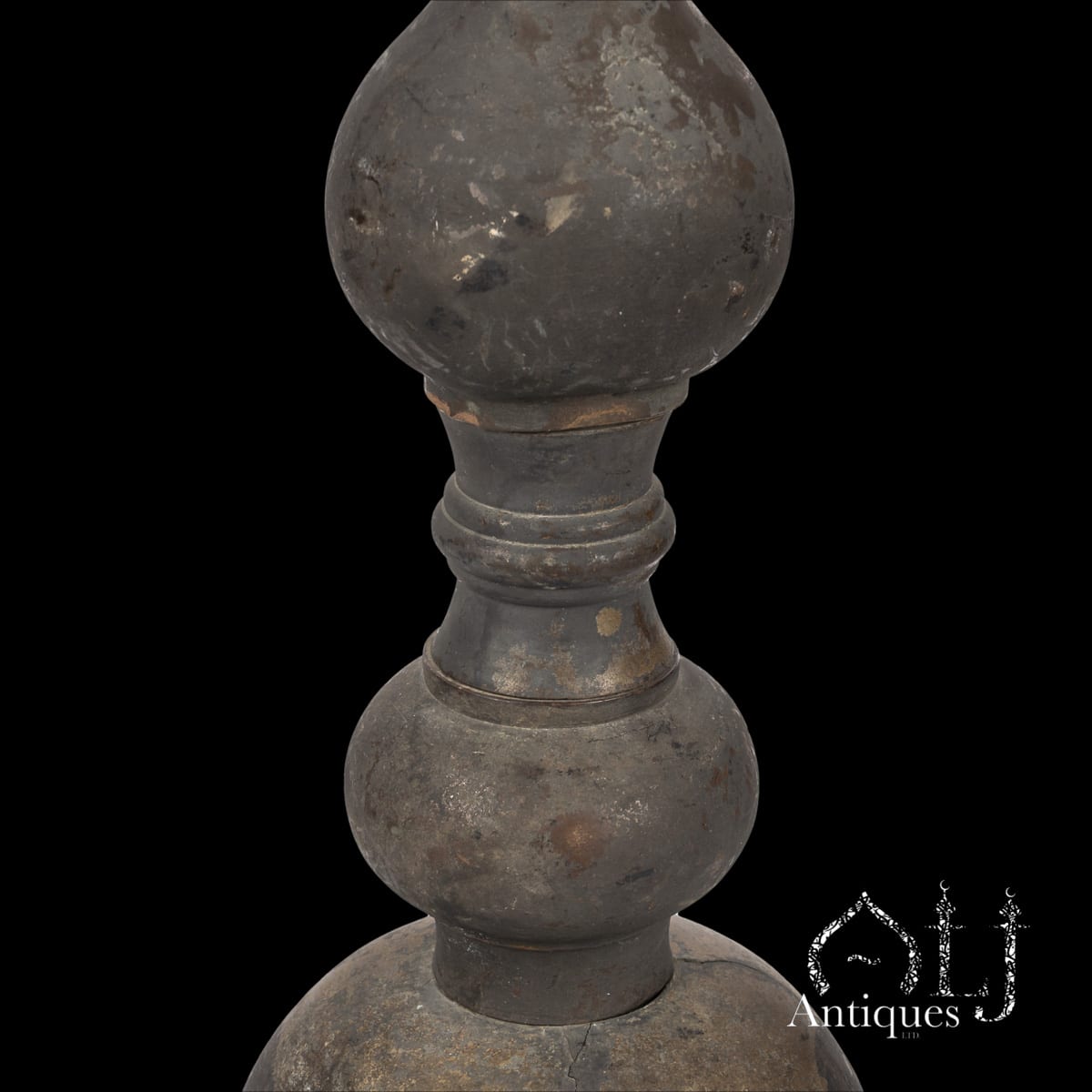
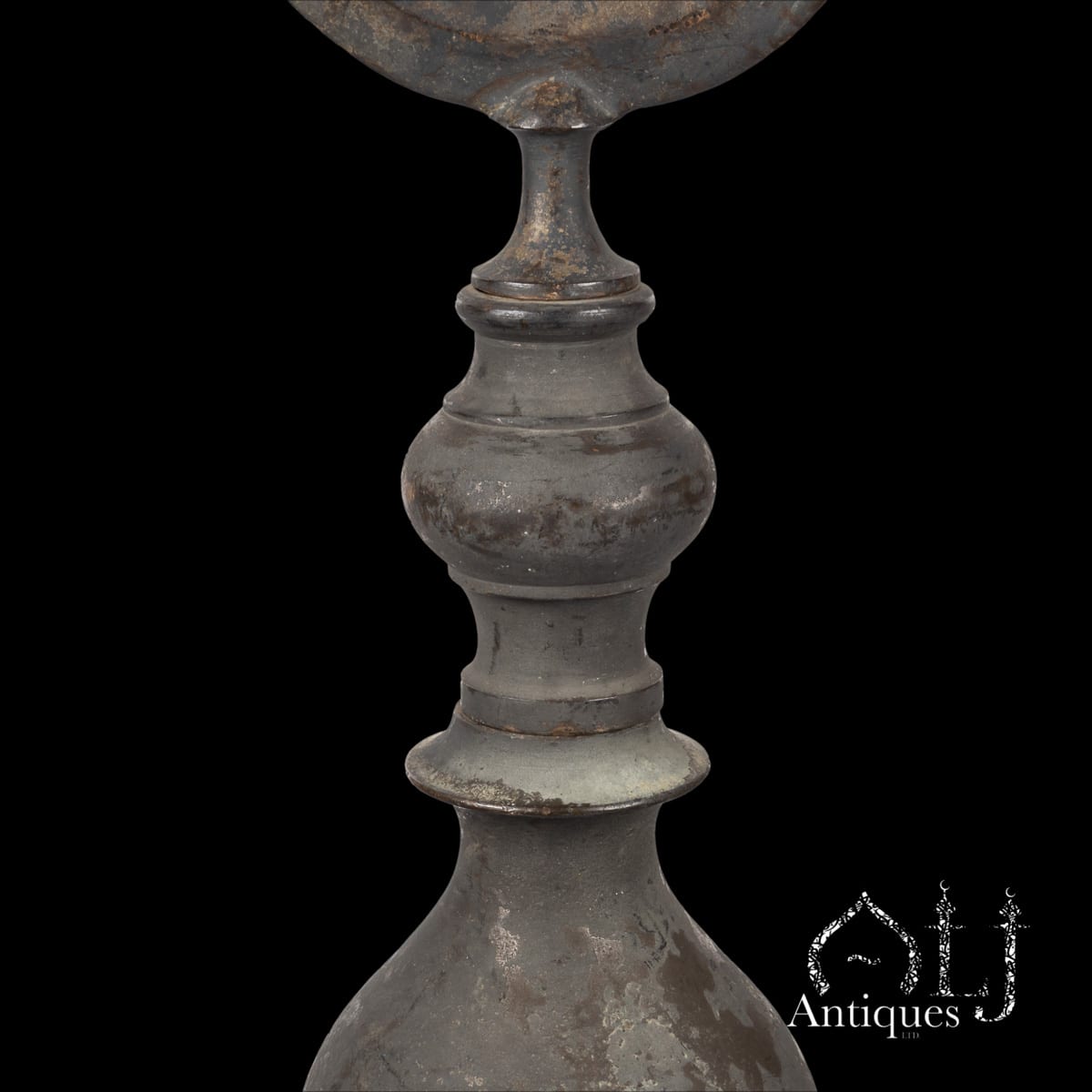
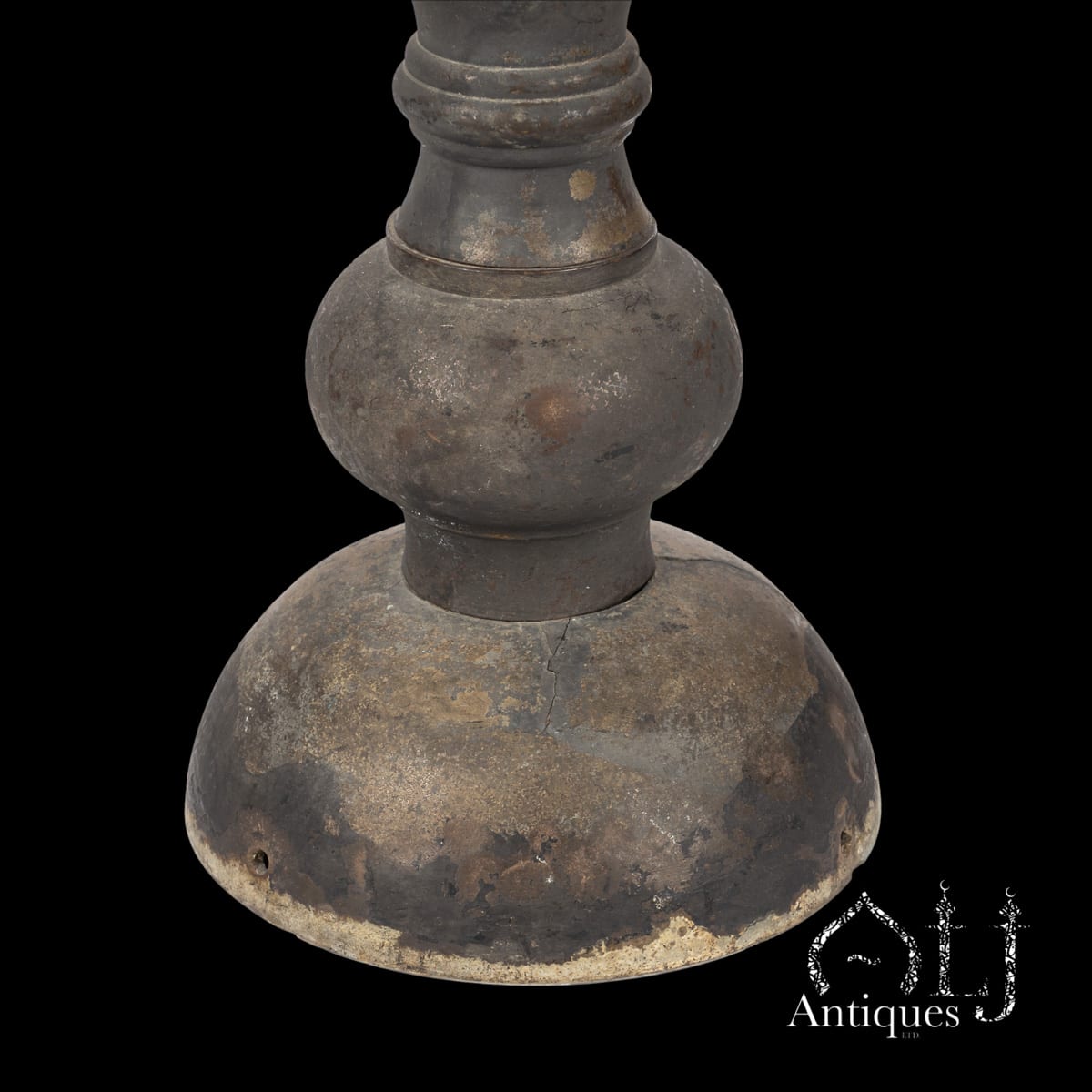
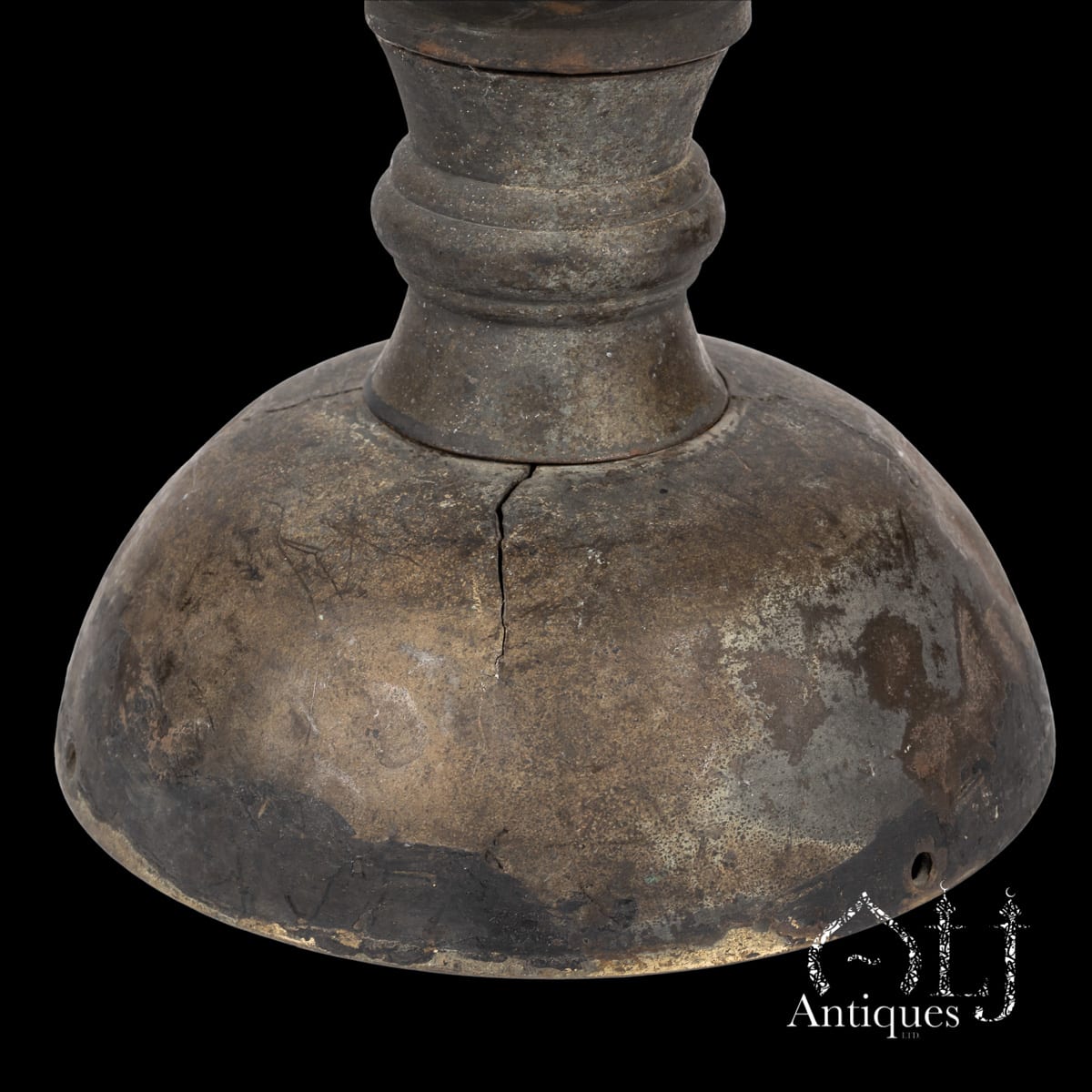
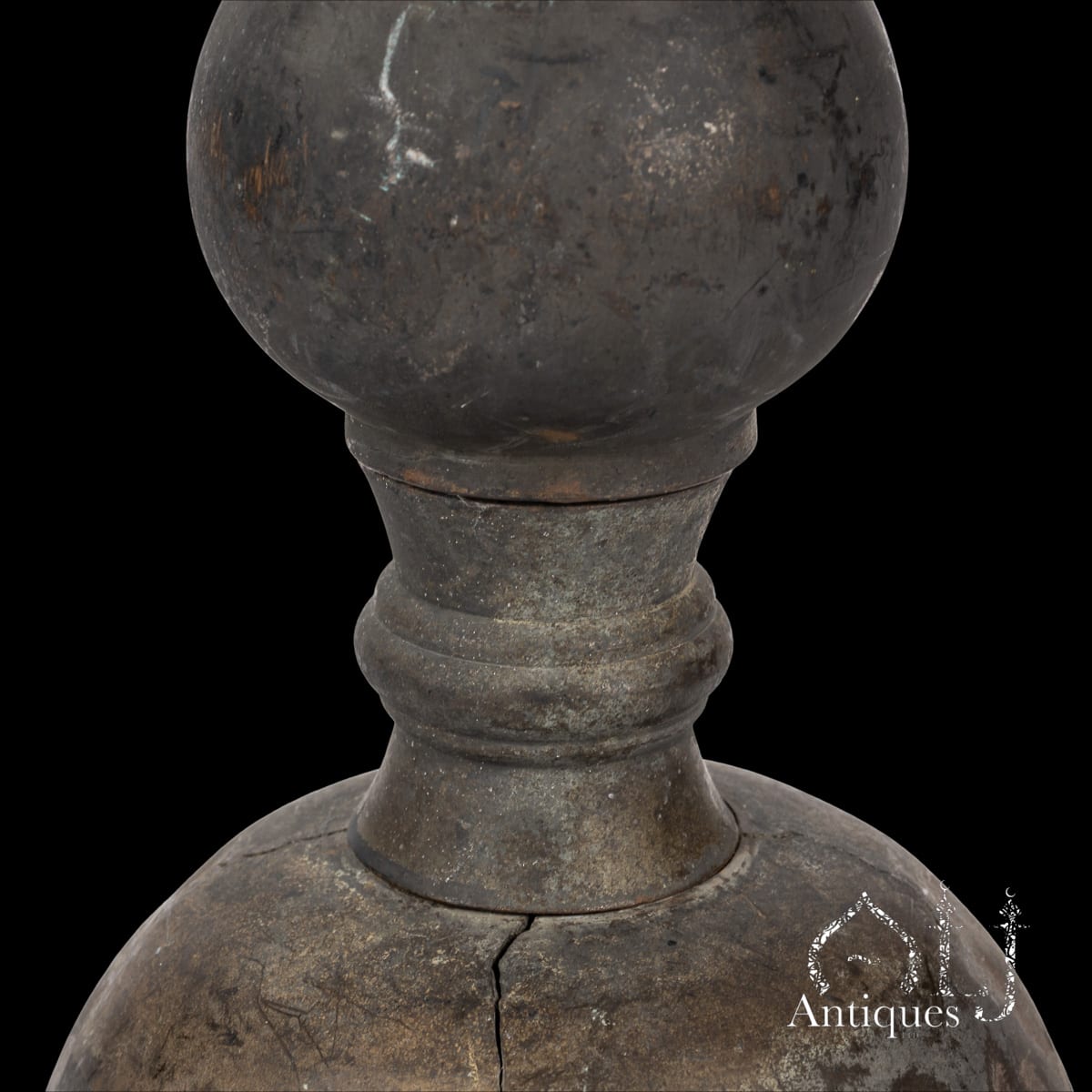
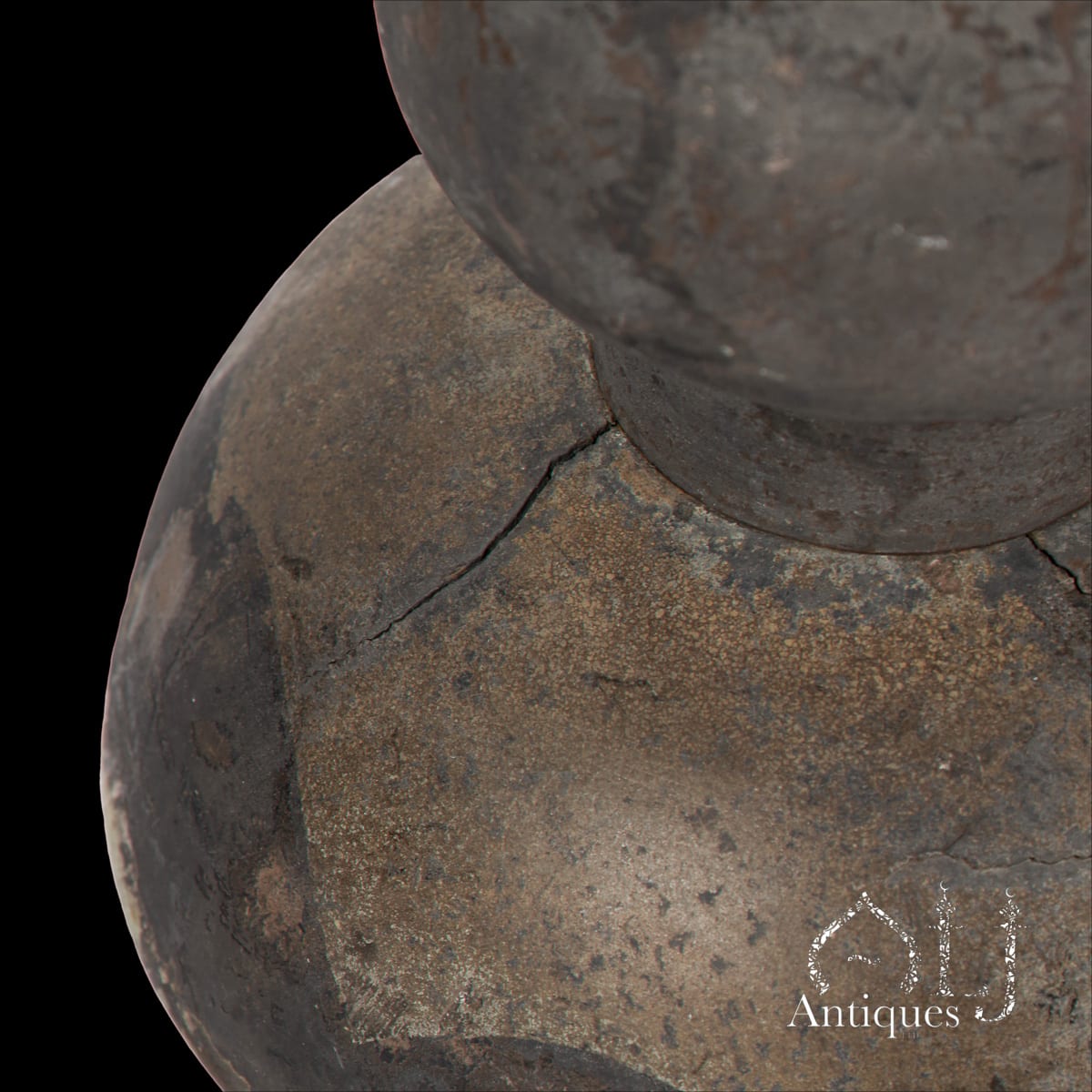
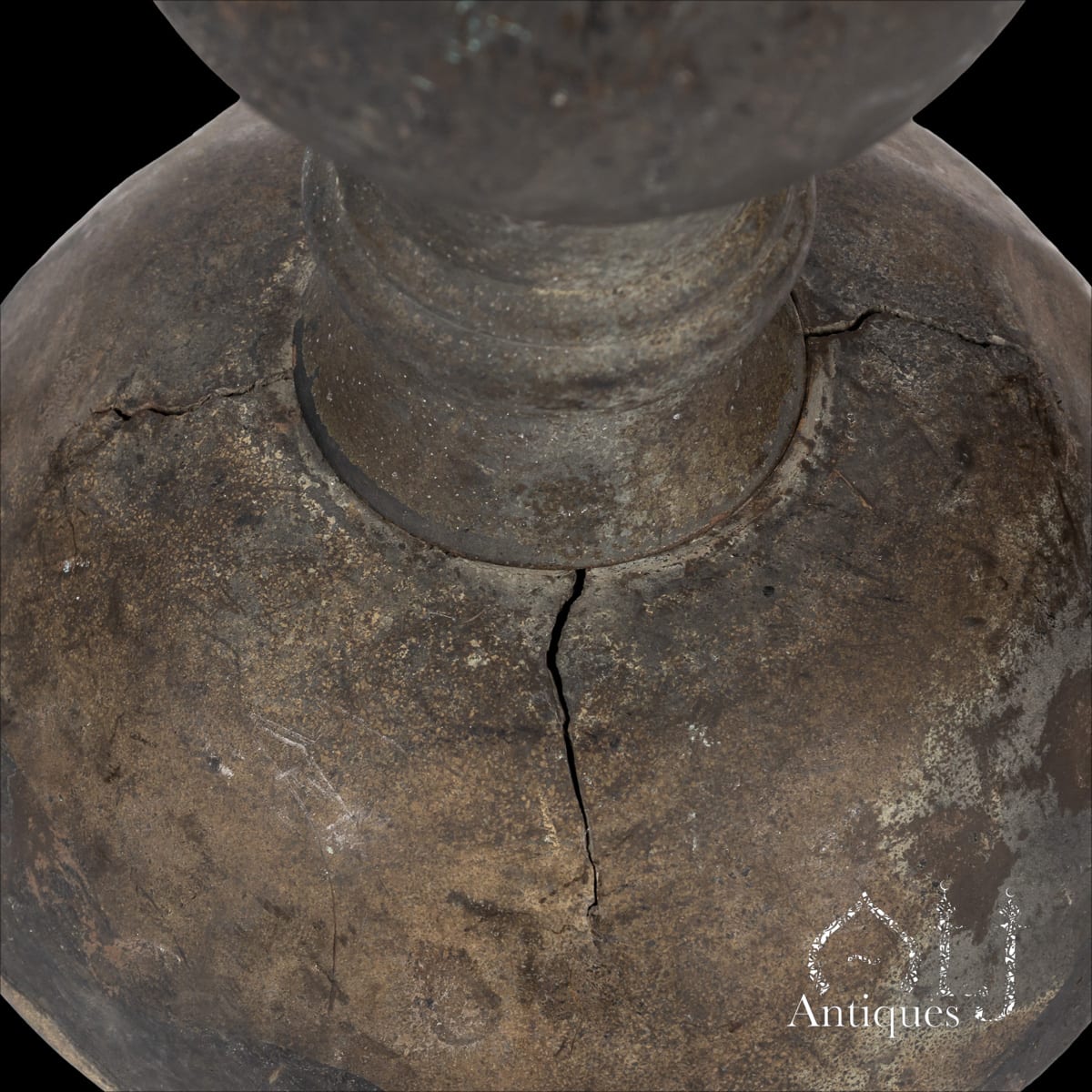
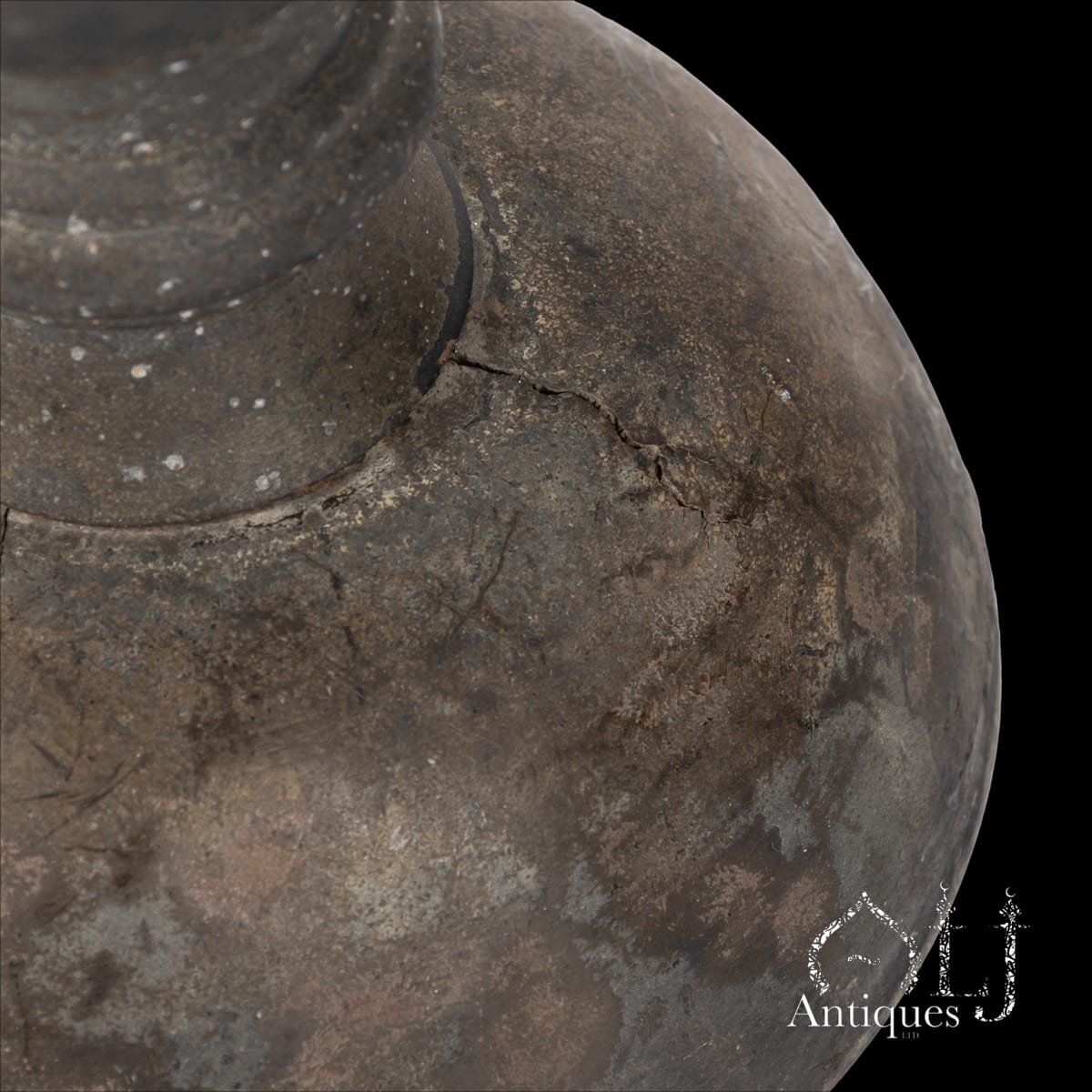
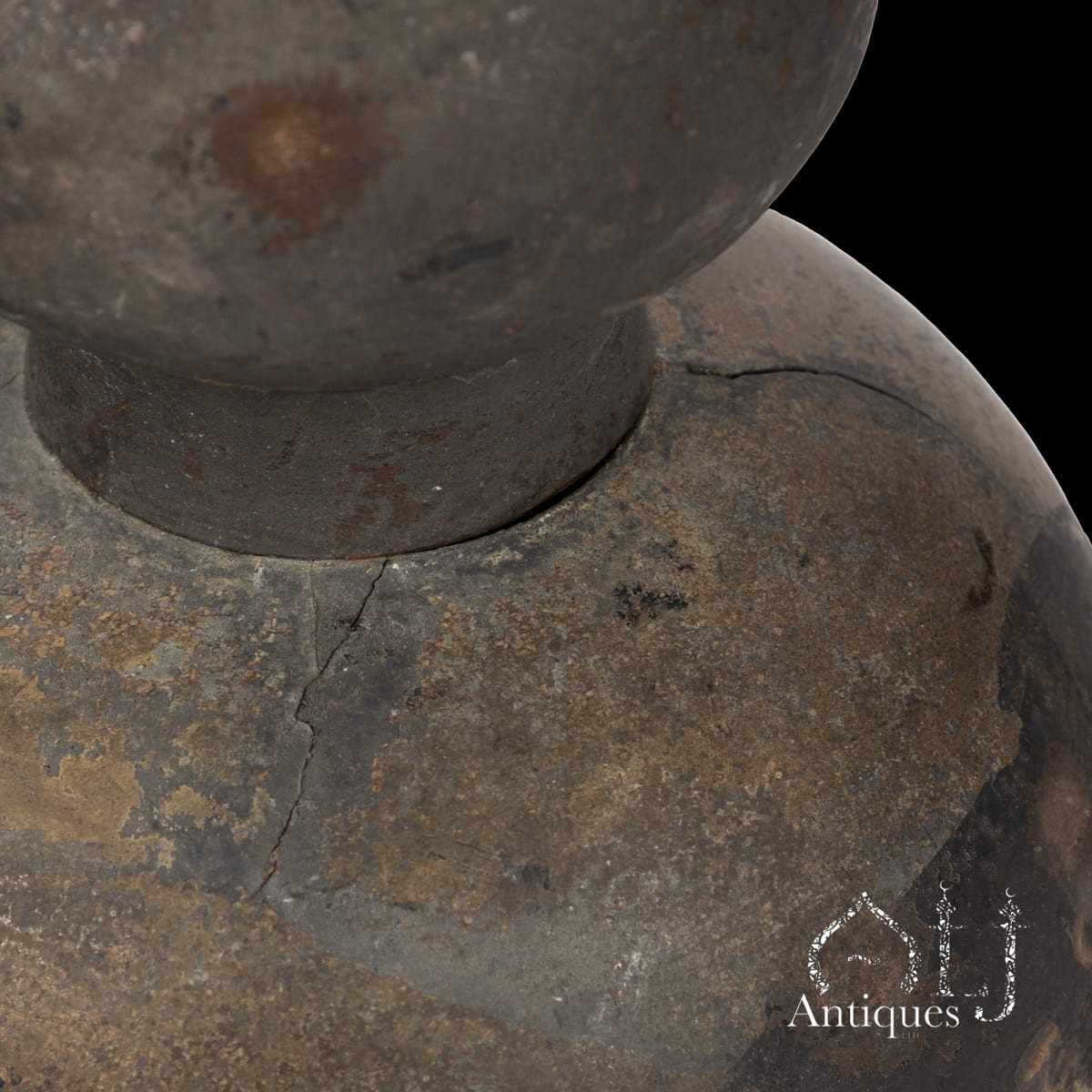
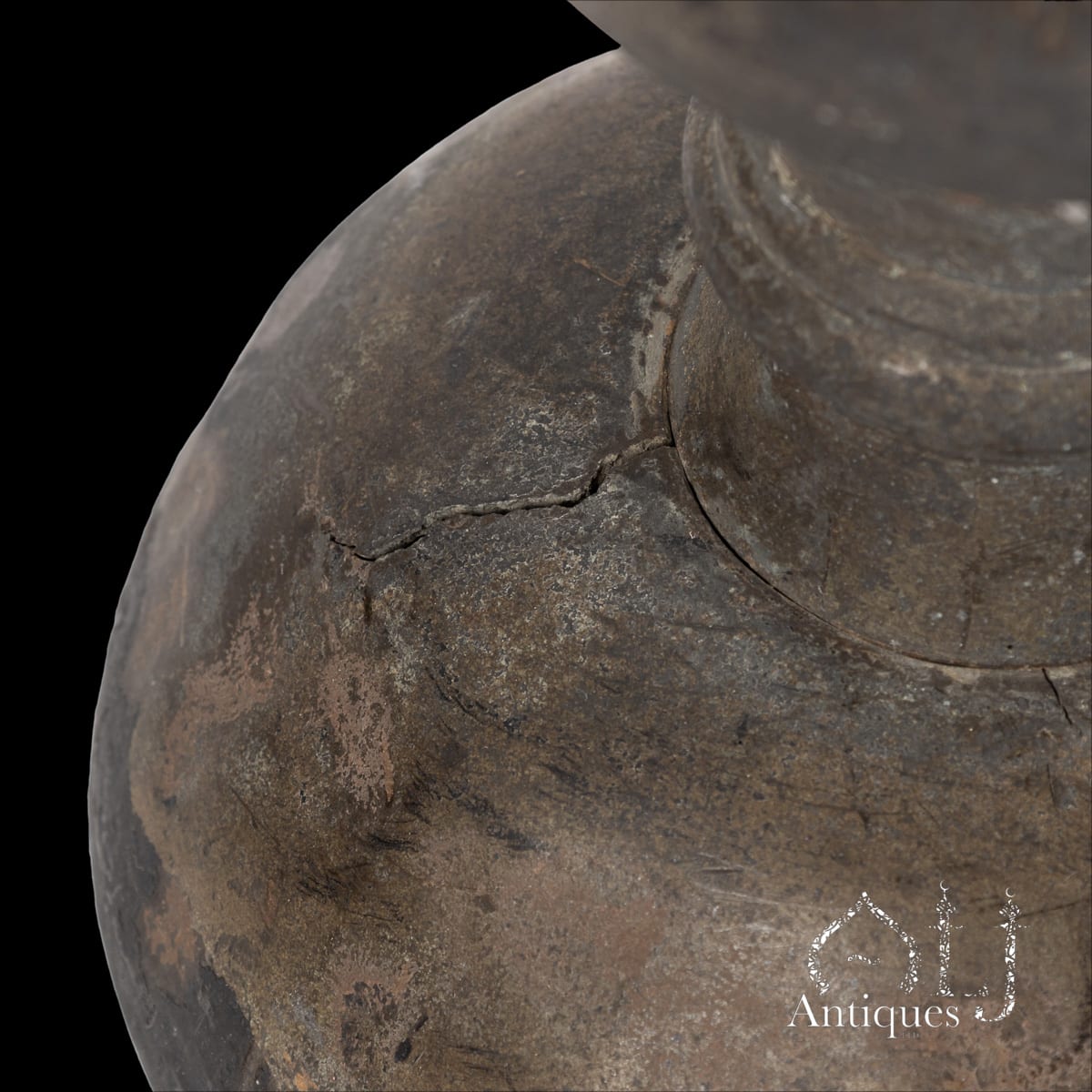
Each finial is constructed from a number of individually made and threaded sections terminating in a finely forged crescent (Hilâl – هلال). This ingenious modular construction enabled the finials to be dismantled for transport, restoration and installation at considerable heights. Once assembled, the sections were secured internally by a substantial iron or steel rod, creating a strong yet relatively lightweight structure capable of withstanding centuries of exposure. Their elegant profiles, composed of domed bases, baluster shafts, compressed globes and crescent terminals, reflect the refined design vocabulary that characterised Ottoman religious monuments throughout the Empire.
Although preserved today as a single collection, the three finials should not necessarily be regarded as originating from the same monument or even the same region. Careful examination reveals noticeable differences in scale, proportions, construction and profile, suggesting that they may have been produced by different workshops and removed from separate locations. The largest and heaviest example appears to belong to a somewhat later tradition, whereas the medium and smaller finials display more restrained forms that may represent earlier types. Consequently, a broad dating from the seventeenth to the nineteenth century is considered the most appropriate scholarly attribution.
Comparable examples continue to crown numerous Ottoman monuments throughout the former Empire, including the imperial mosques of Istanbul, Edirne, Bursa and İzmir, as well as religious buildings in Mecca, Medina, Cairo, Jerusalem, Bethlehem, Baghdad and many other cities across the Ottoman dominions. Their widespread distribution reflects the remarkable continuity of Ottoman artistic traditions across an empire extending over three continents.
The crescent (Hilâl – هلال) held profound religious and symbolic significance within Islamic culture. According to a long-standing tradition, the open face of the crescent has often been associated with the direction of the Qibla (قبلة), the sacred orientation of prayer towards the Kaaba (الكعبة) in Mecca. Whether this symbolism was intentionally observed in every instance remains a matter of scholarly discussion; nevertheless, the crescent became one of the most enduring emblems of Ottoman Islamic identity.
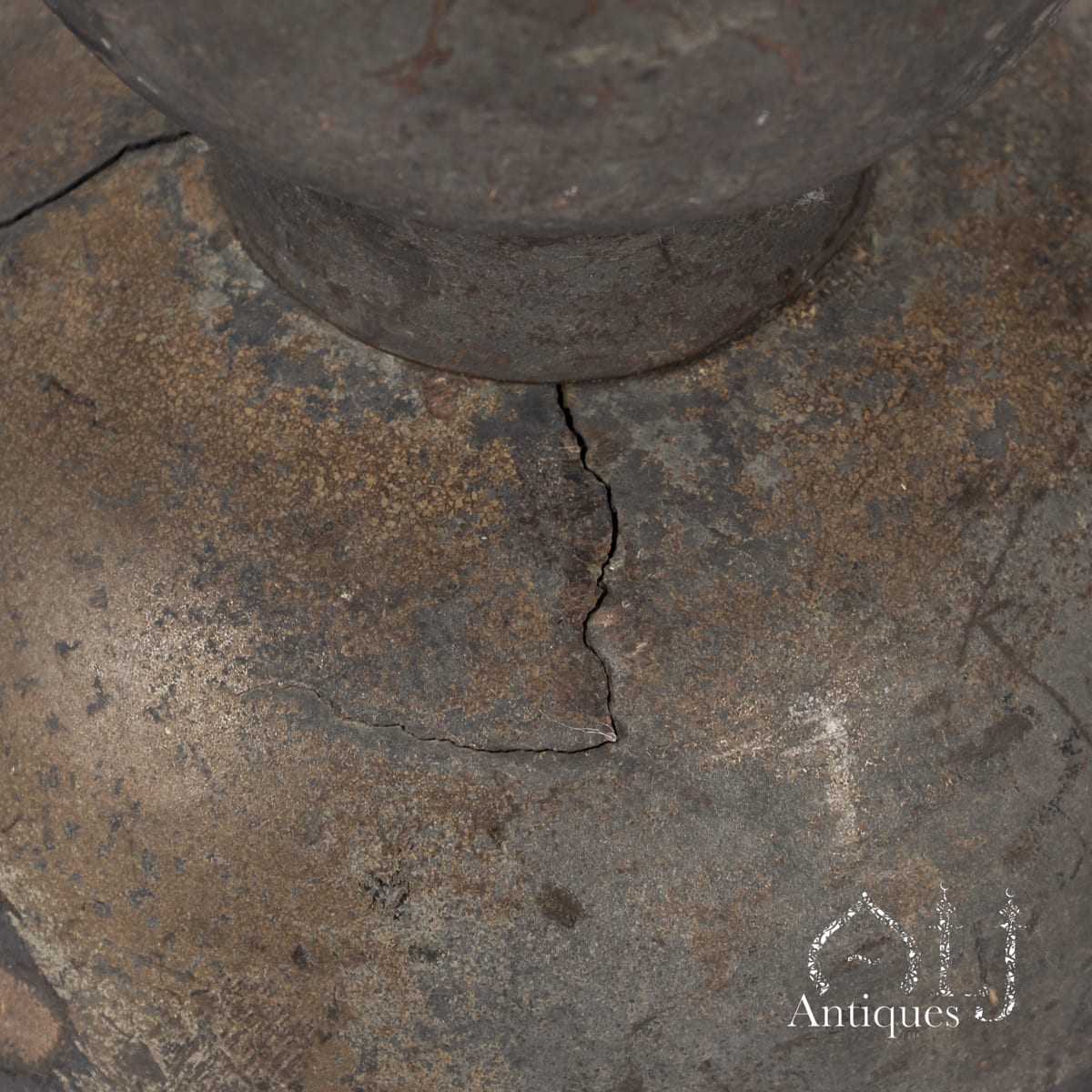
Although the present finials now display a rich dark brown patina acquired through centuries of exposure, it is highly possible that one or more originally possessed a mercury-gilt surface traditionally known in Ottoman Turkish as Tombak or Tombac. Monumental finials were frequently produced in gilt copper or gilt brass so that their brilliant surfaces reflected the rising and setting sun, creating the luminous silhouettes so often admired in Ottoman cities. No attempt has been made to remove the historic patina or investigate possible traces of surviving gilding beneath the surface, the collection having deliberately been left untouched in order to preserve its archaeological integrity and historical authenticity.
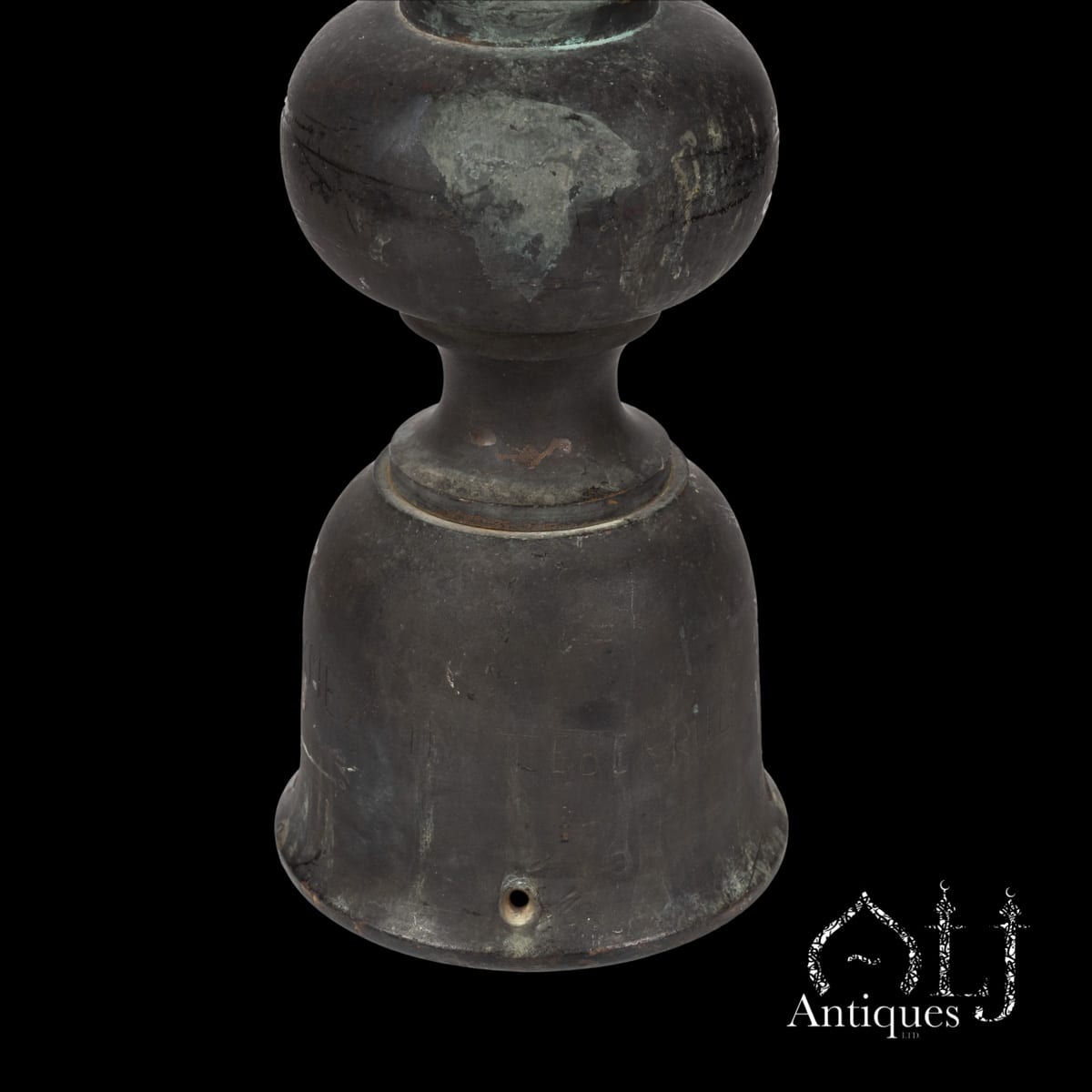
The base of the tallest and heaviest finial bears a hand-engraved inscription incorporating the Turkish word “Teberru”, derived from the Arabic Tabarru’ (تبرع), meaning “donation”, together with the date 1959. This almost certainly records the date on which the finial entered a collection or institution through donation rather than indicating its manufacture. Its preservation at that time may well have saved it from destruction during restoration or rebuilding works.
Original Ottoman crescent finials of this scale are today exceptionally rare outside museum collections. Their survival provides an important insight into the artistic, religious and cultural heritage of the Ottoman Empire and serves as a tangible reminder of the monumental skylines that once defined cities from the Balkans to North Africa and the Middle East.