
Description
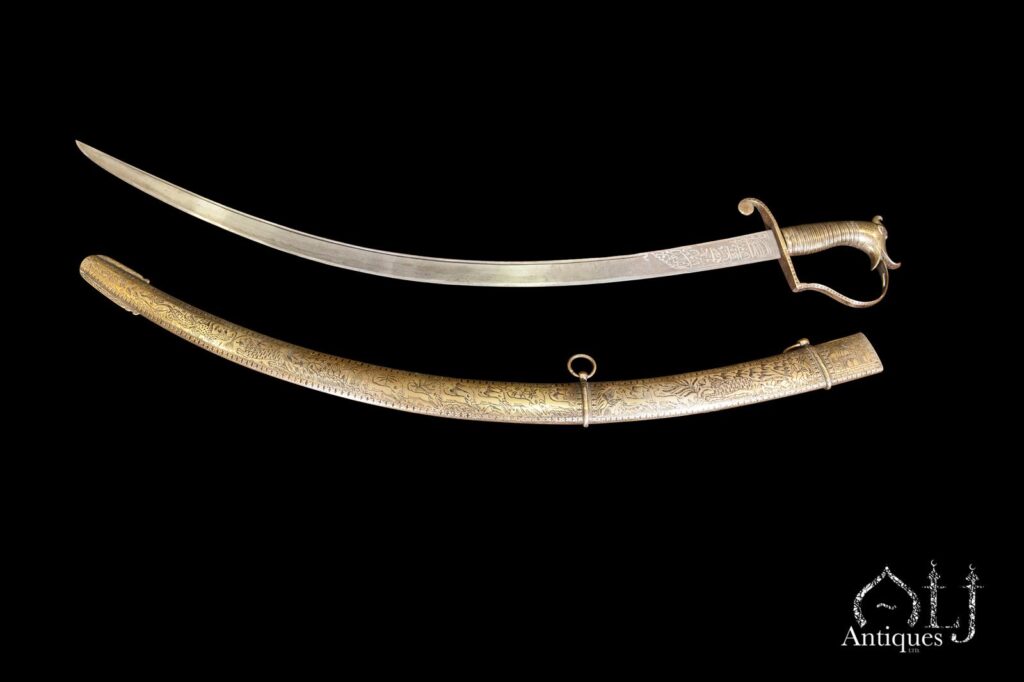
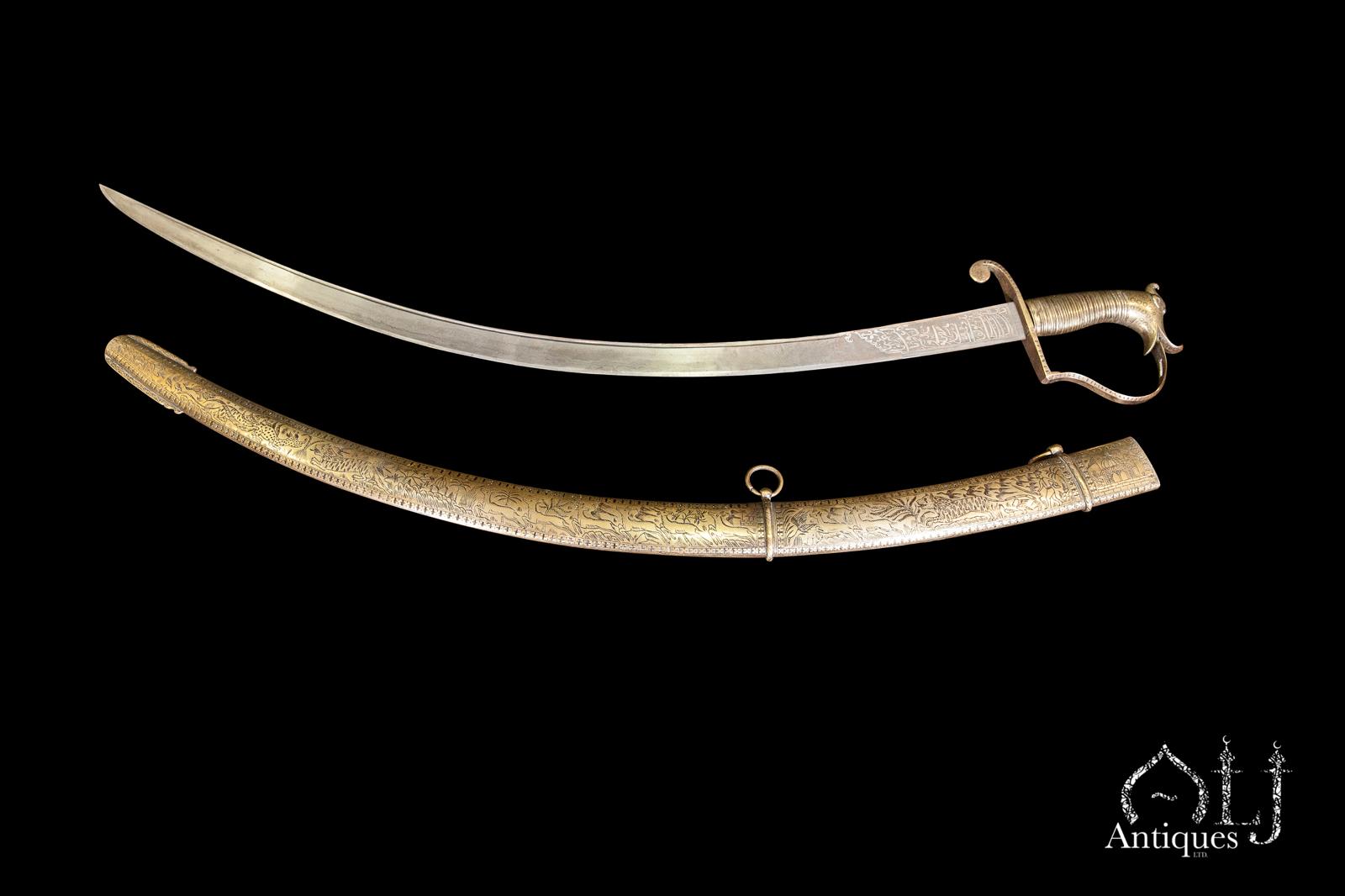
This rare and finely decorated shamshir (curved sword) represents an elegant example of Indo-Islamic courtly weaponry of the eighteenth century. The sword is distinguished by its watered crucible steel (wootz) blade, richly engraved and lac-inlaid mounts, and a sculptural zoomorphic makara-head hilt, combining northern Indian decorative traditions with stylistic elements associated with Deccan arms.
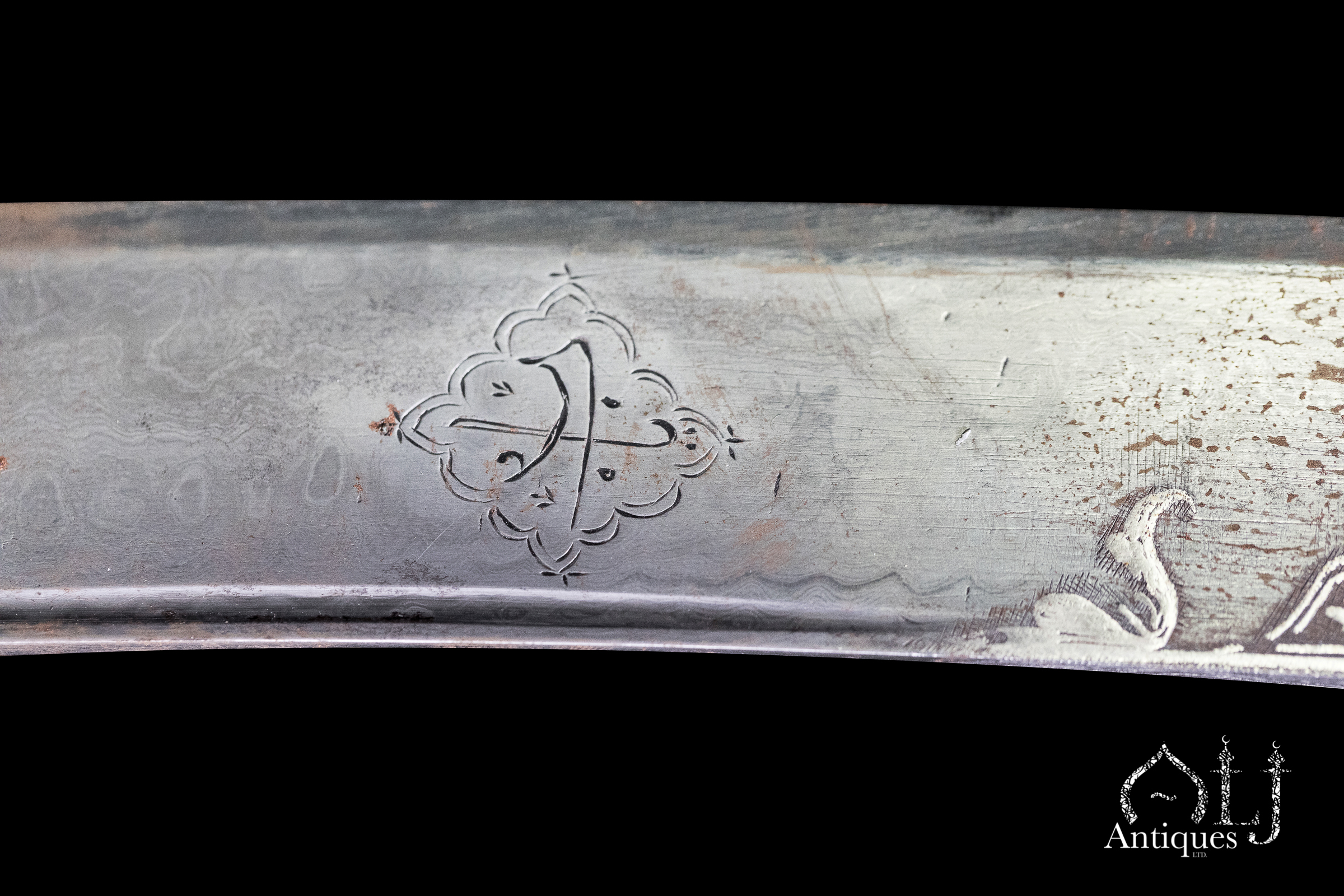
The curved blade is forged from watered crucible steel, displaying the characteristic flowing surface pattern produced by high-quality wootz steel manufactured in the Indian subcontinent. Such blades were highly prized across the Islamic world for their strength, resilience, and distinctive aesthetic appearance.
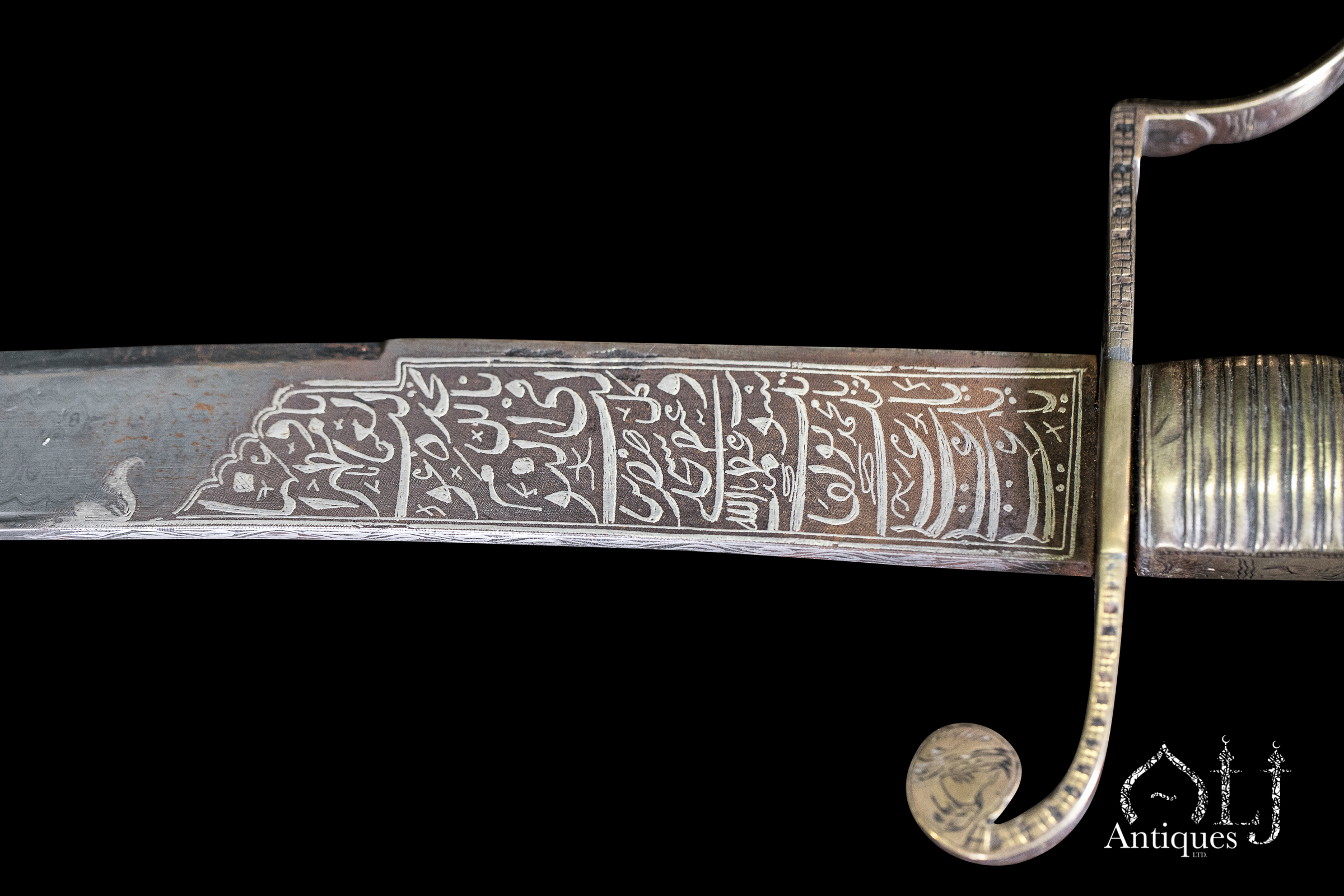
Near the forte, both sides of the blade are engraved and silver-damascened with devotional inscriptions invoking Imam ‘Ali, forming part of the well-known Naad-e-Ali supplication. This prayer calls upon ‘Ali ibn Abi Talib, cousin and son-in-law of the Prophet Muhammad and one of the most revered heroic figures in Islamic tradition, seeking divine assistance and protection.
In addition to these damascened inscriptions, one side of the blade contains a separate engraved cartouche, executed without damascening, within which appears the invocation:
Arabic
يا علي
Transliteration
Yā ‘Alī
English Translation
“O Ali”
This brief devotional phrase constitutes a direct supplication to Imam ‘Ali and frequently appears on Indo-Islamic arms as a protective invocation, symbolising courage, divine support, and spiritual strength for the bearer.
The Naad-e-Ali Invocation
The phrase “Ya ‘Ali” derives from the widely known devotional prayer Naad-e-Ali, which was particularly popular in Indo-Persian martial culture and often engraved on arms, armour, and banners. A commonly cited portion of the prayer reads:
Arabic
نَادِ عَلِيًّا مَظْهَرَ الْعَجَائِبِ
تَجِدْهُ عَوْنًا لَكَ فِي النَّوَائِبِ
Transliteration
Nādi ‘Alīyan maẓhar al-‘ajā’ib,
tajidhu ‘awnan laka fī al-nawā’ib.
English Translation
“Call upon Ali, the manifestation of wonders;
you will find him a helper in times of hardship.”
Such invocations were believed to invoke divine aid and were therefore frequently engraved on weapons carried by Muslim warriors.
Decoration
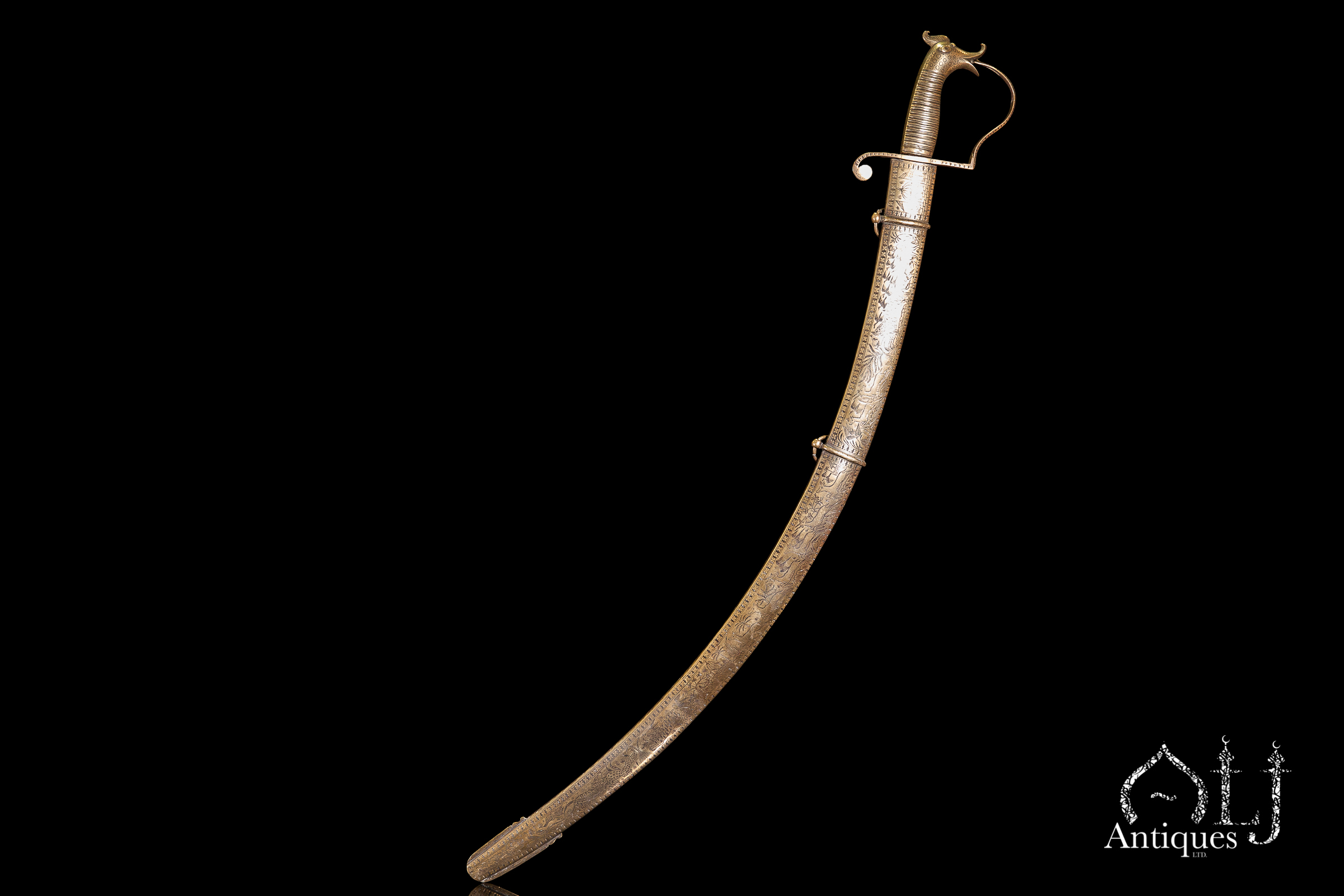
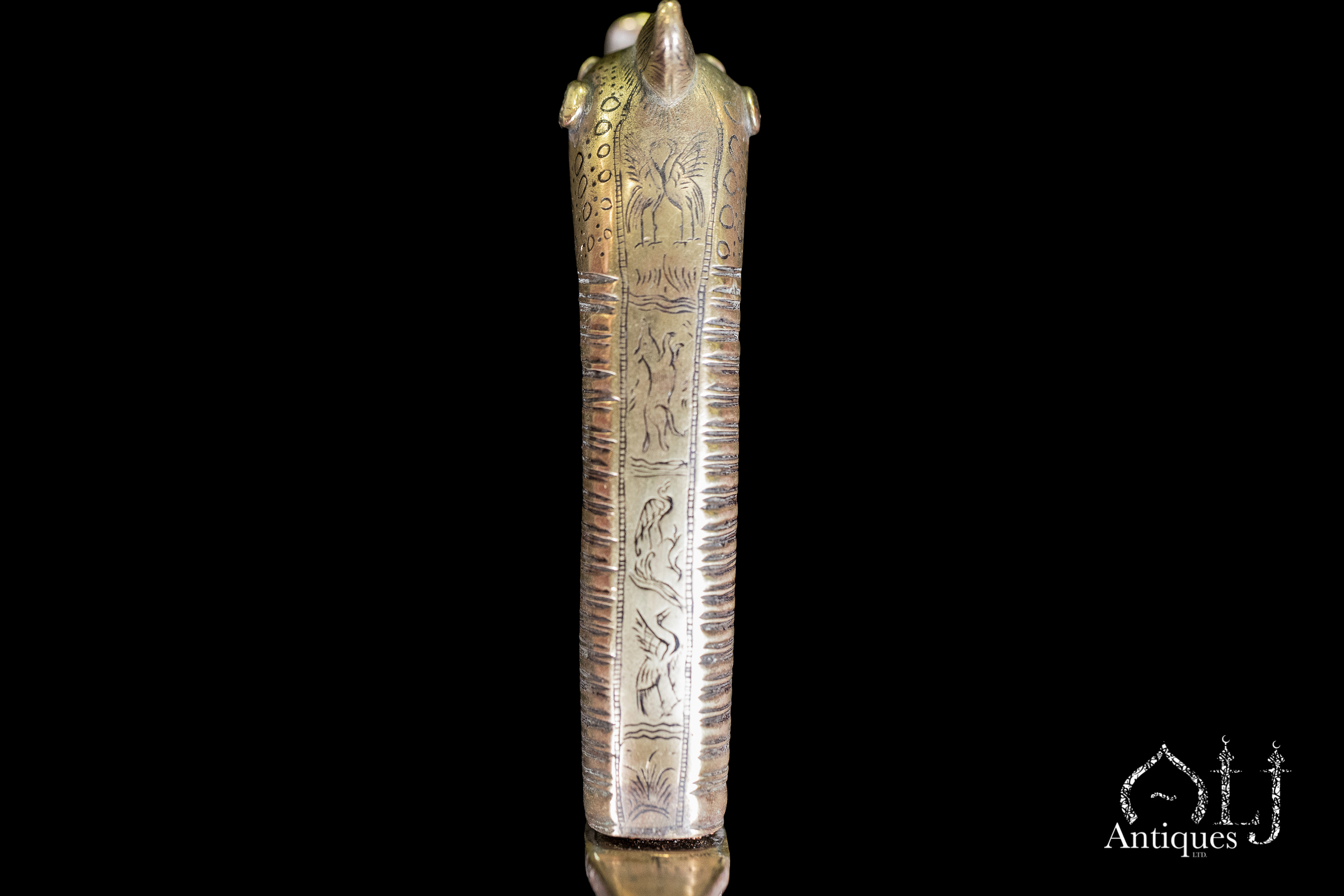
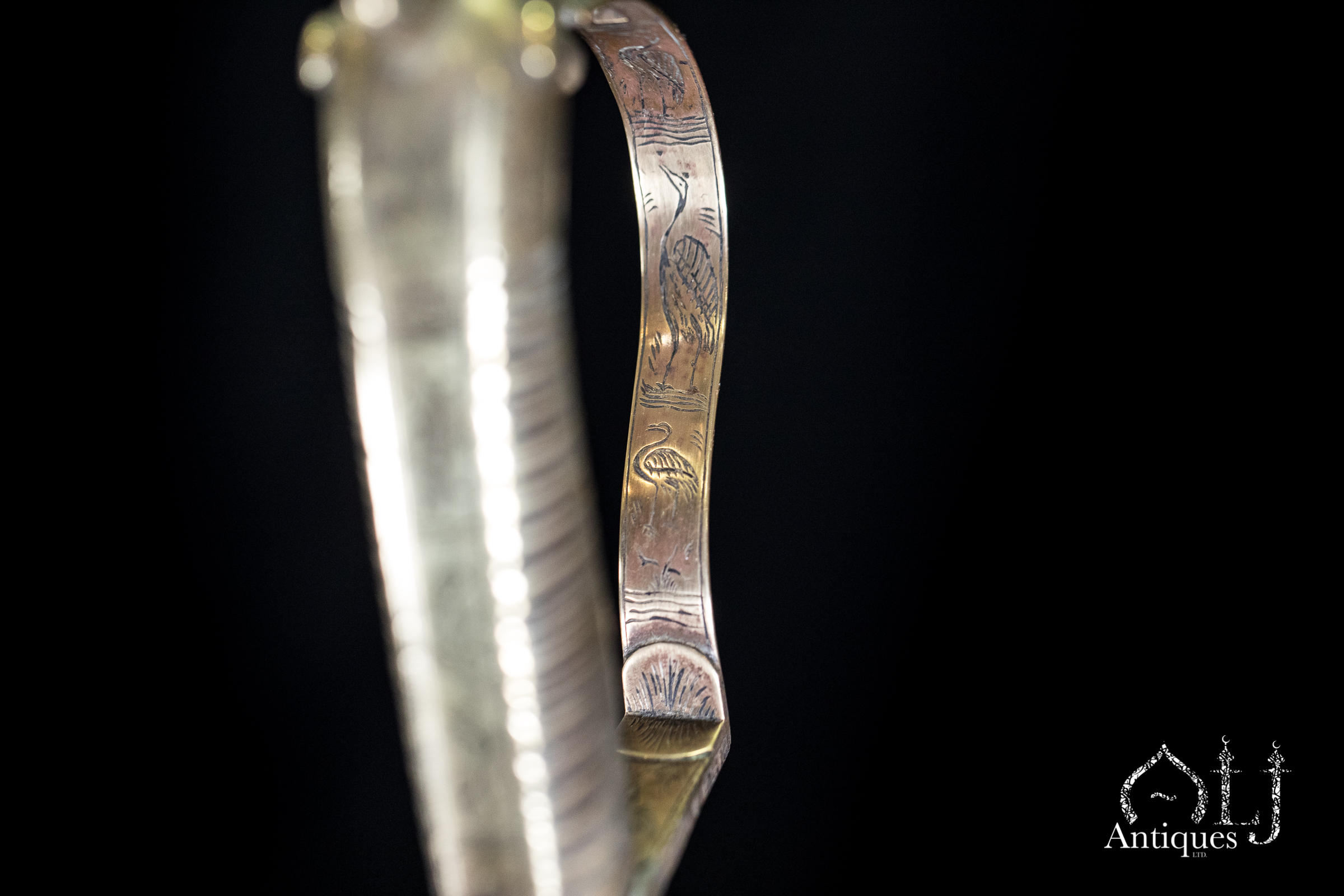
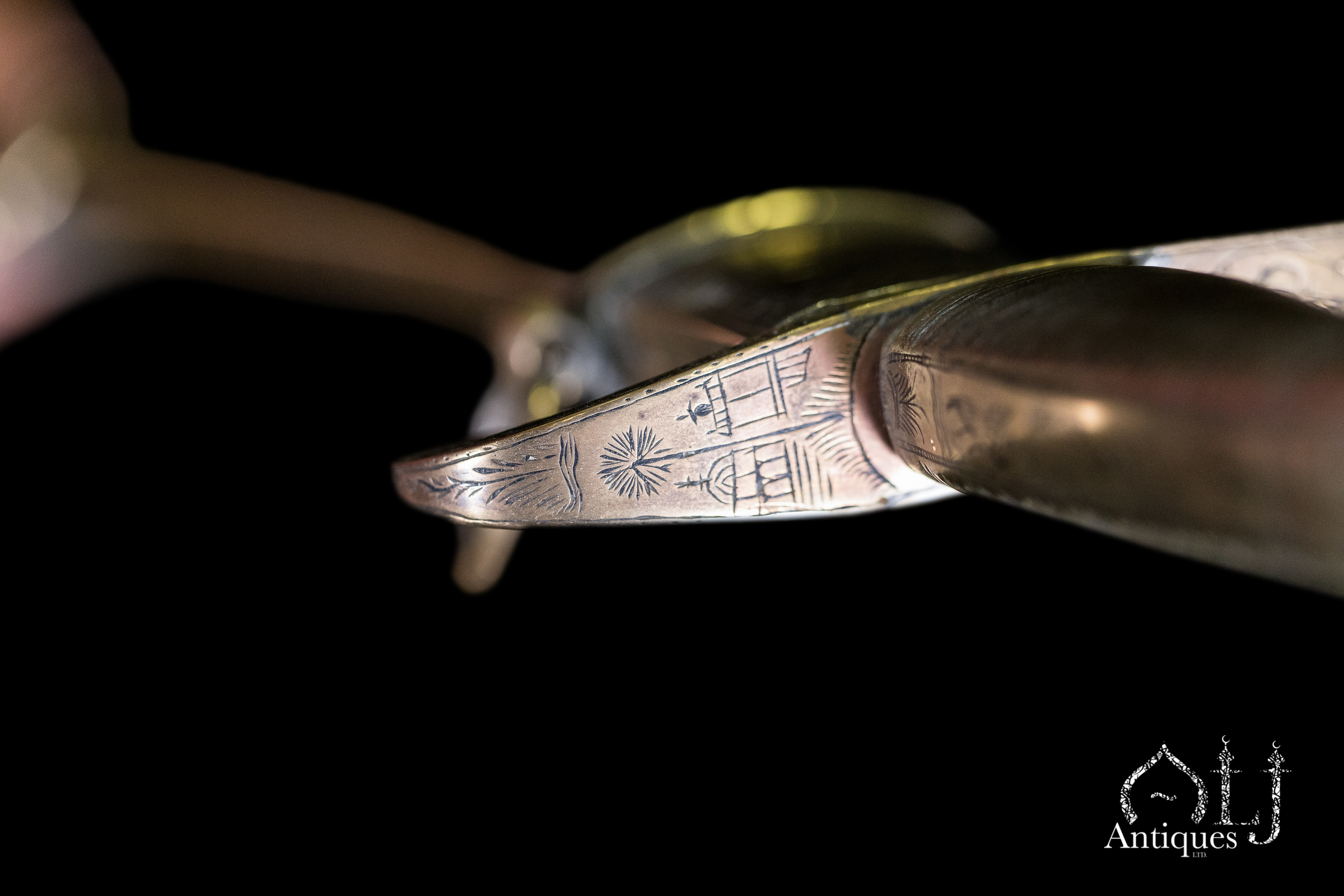
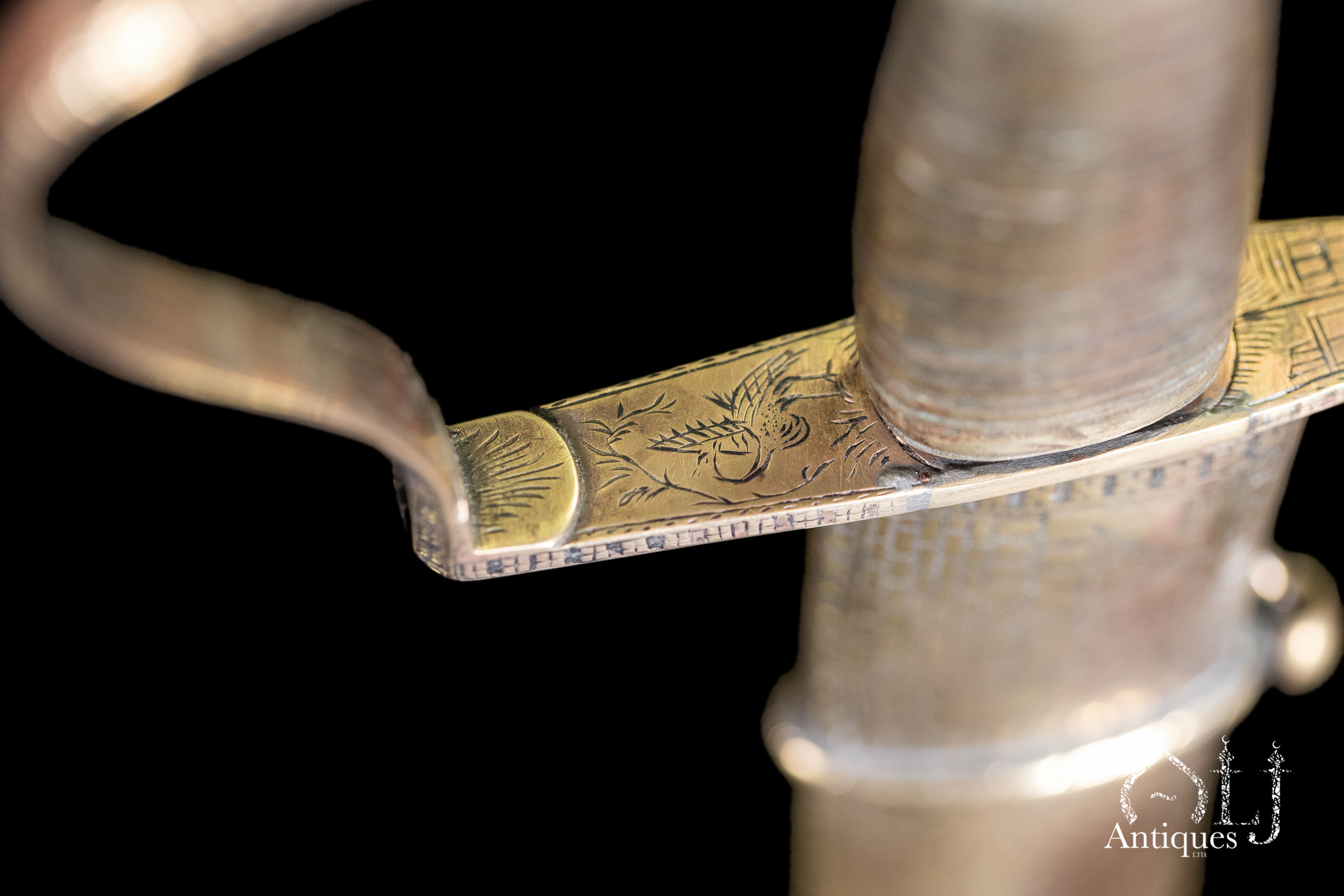
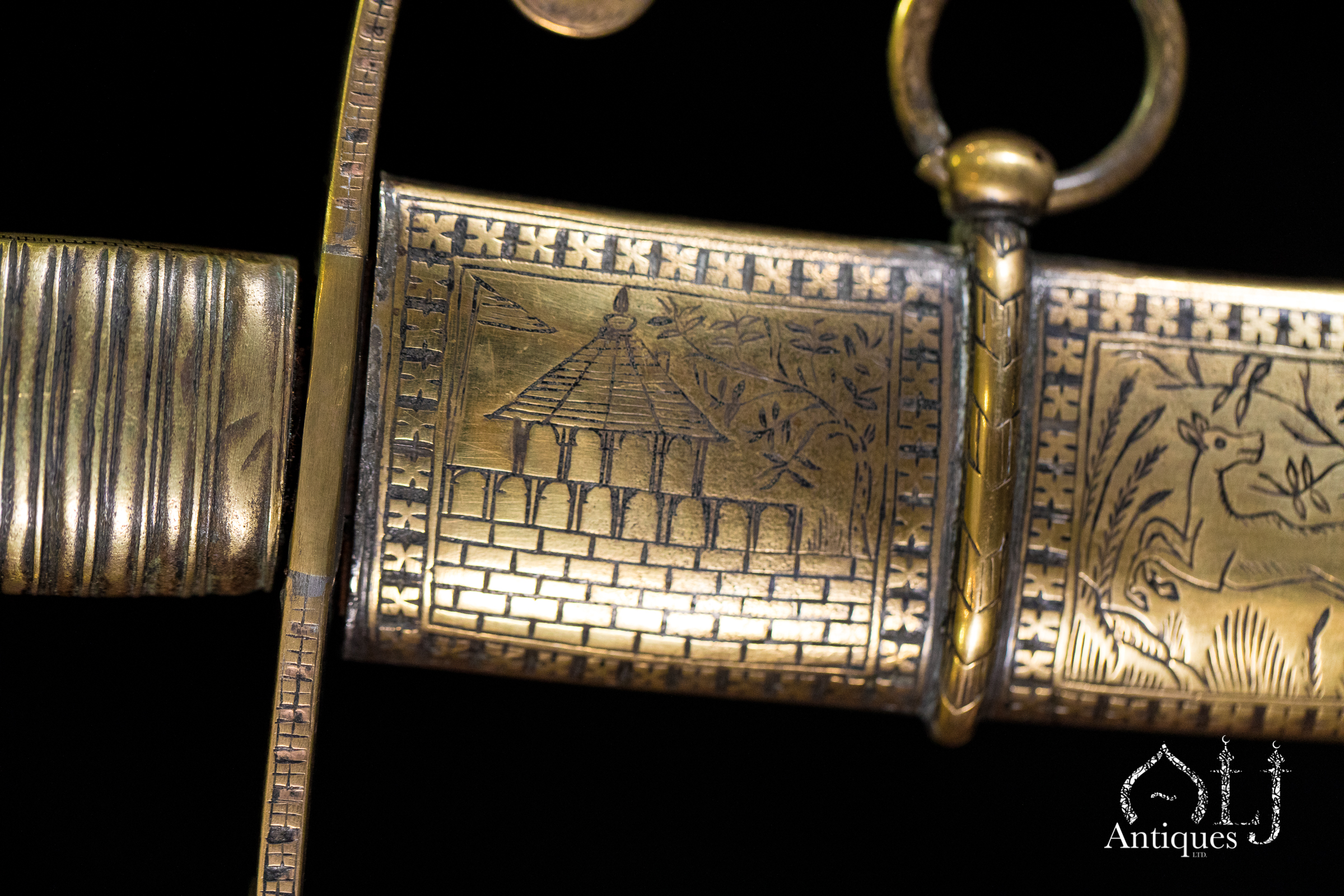
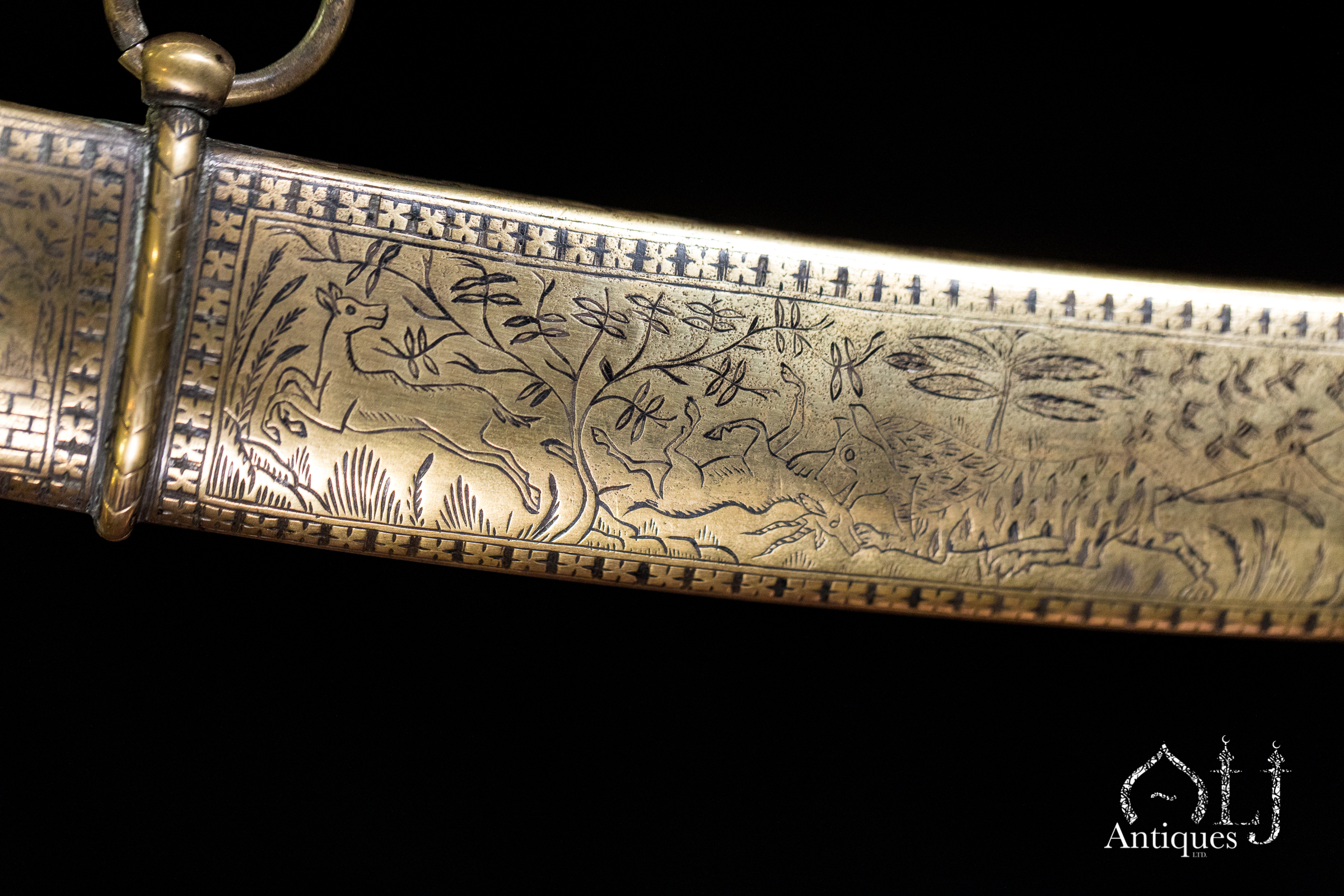
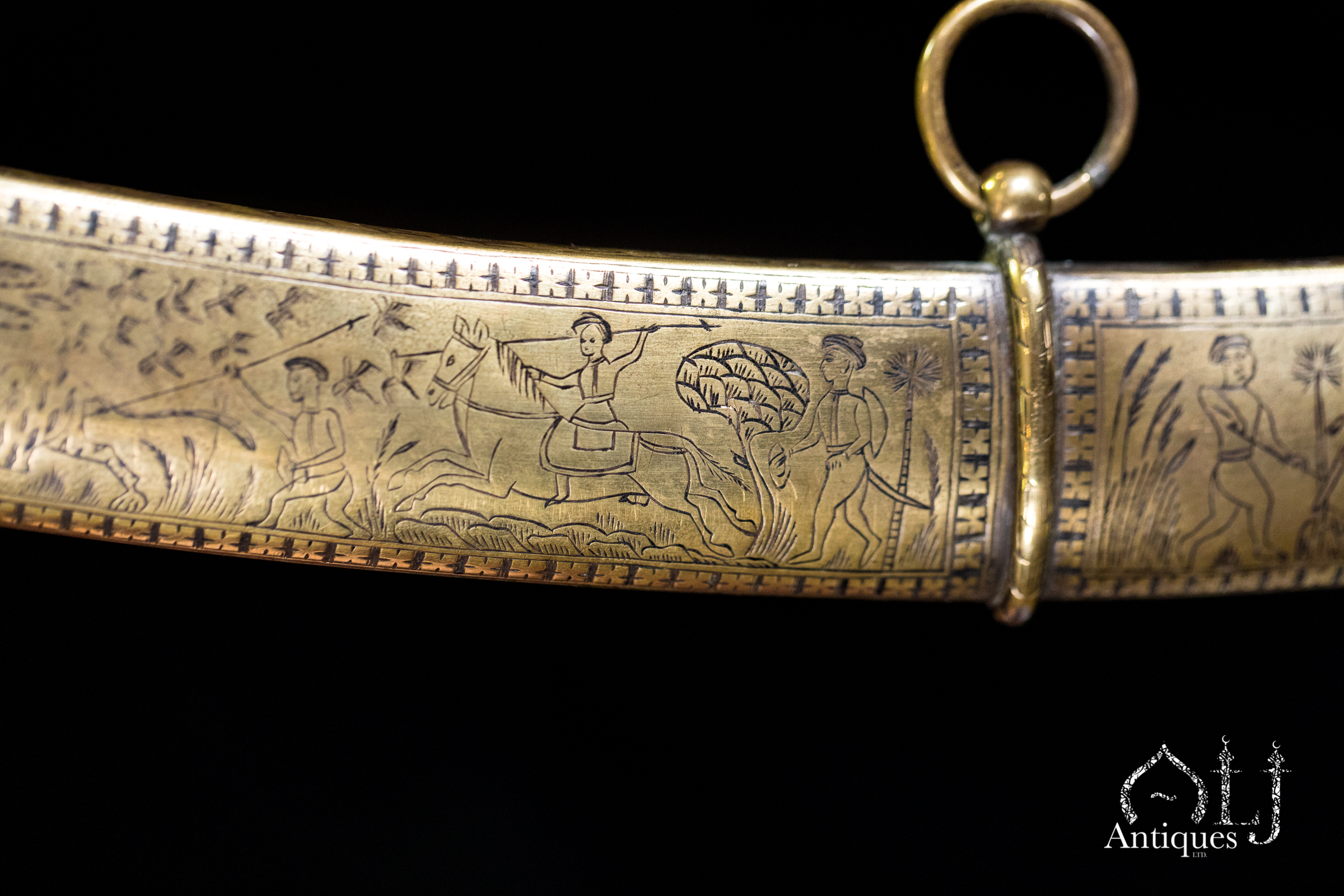
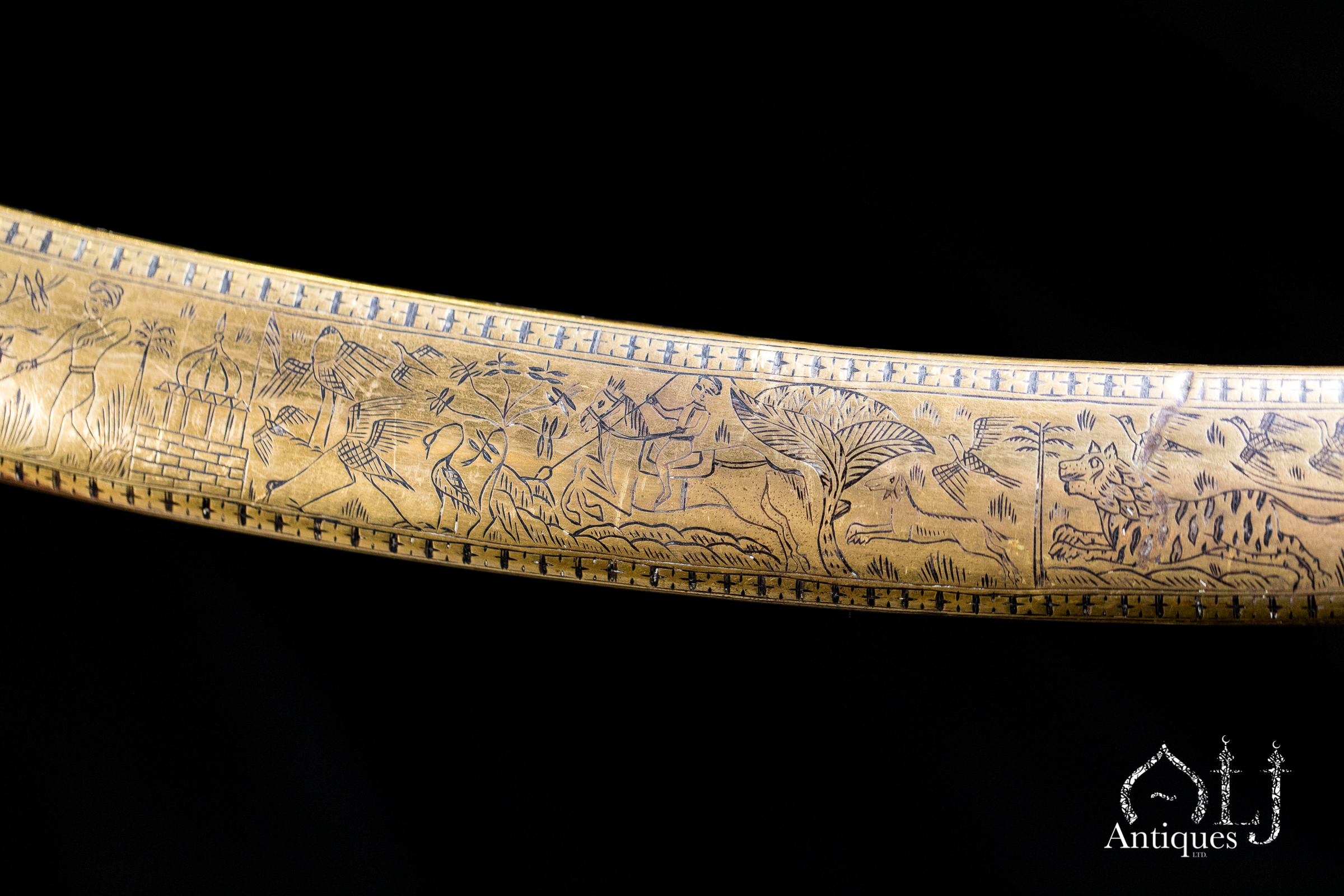
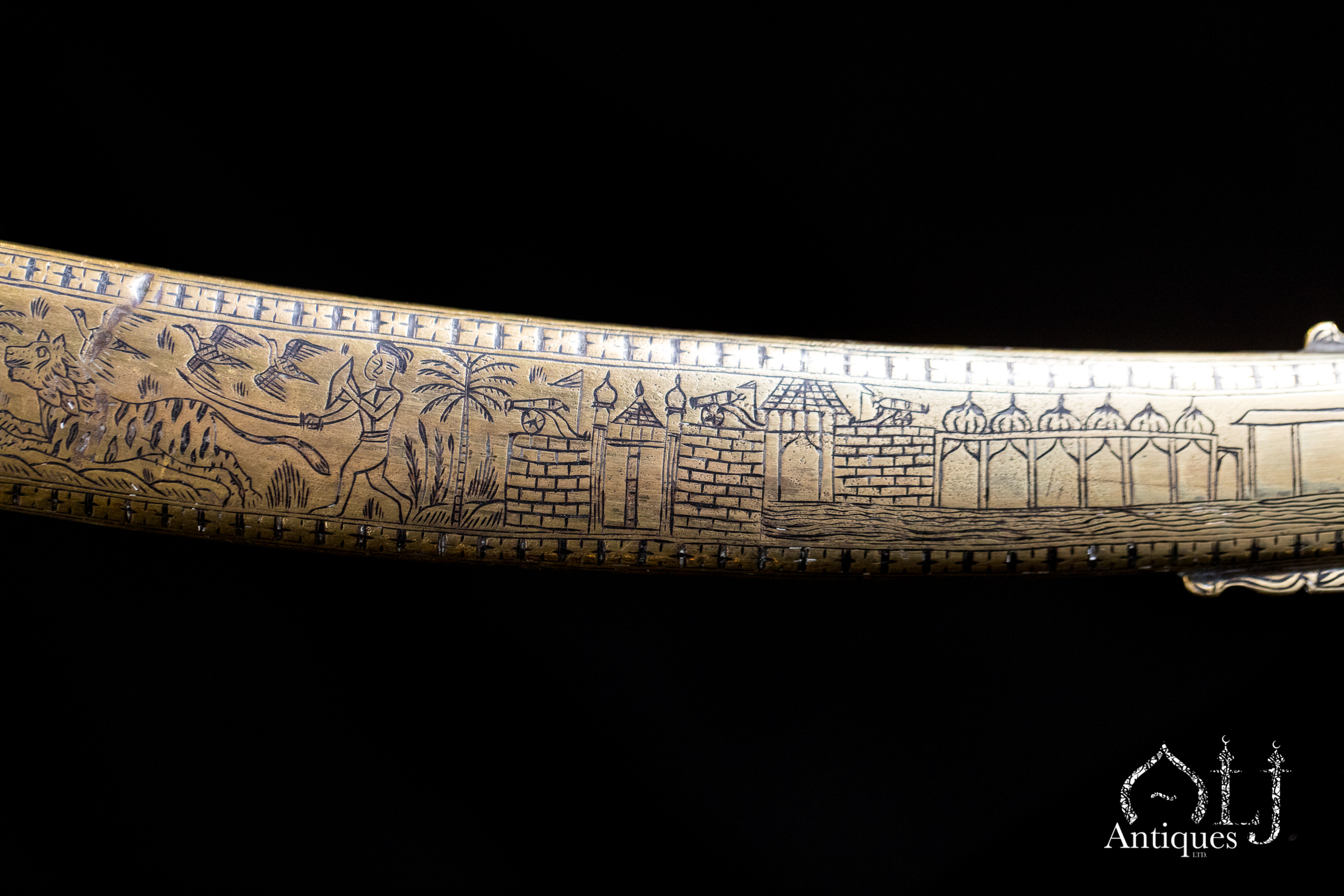
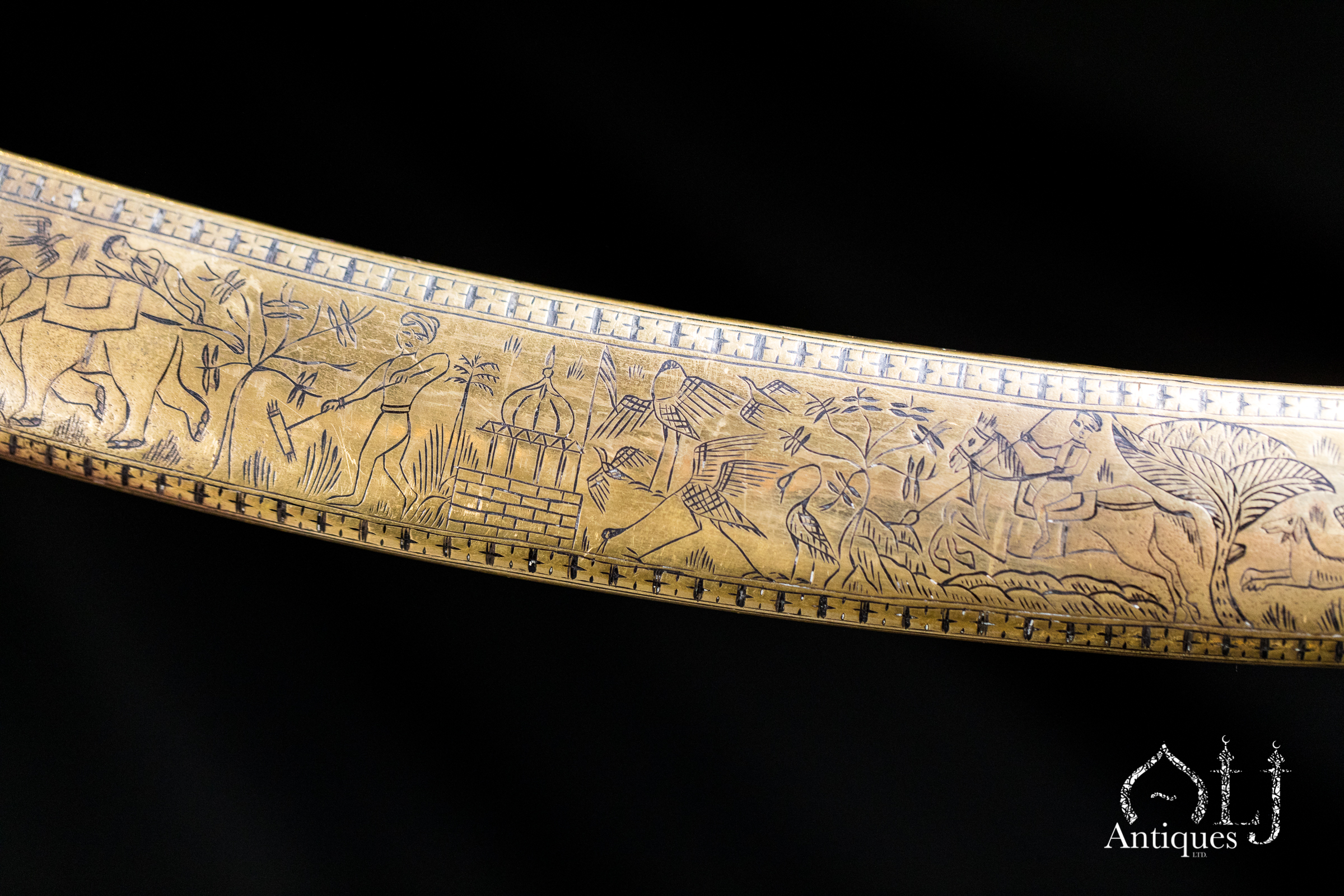
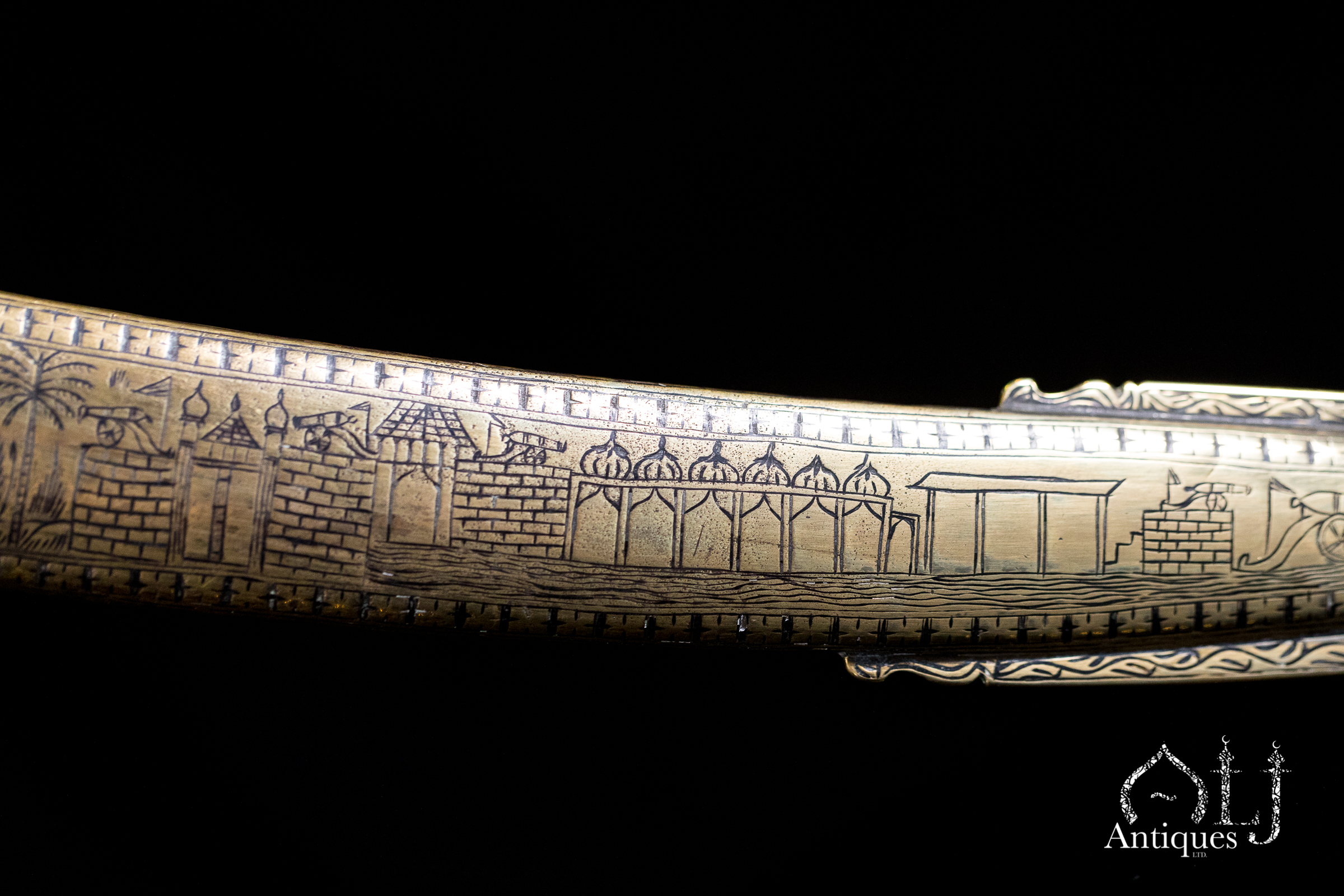
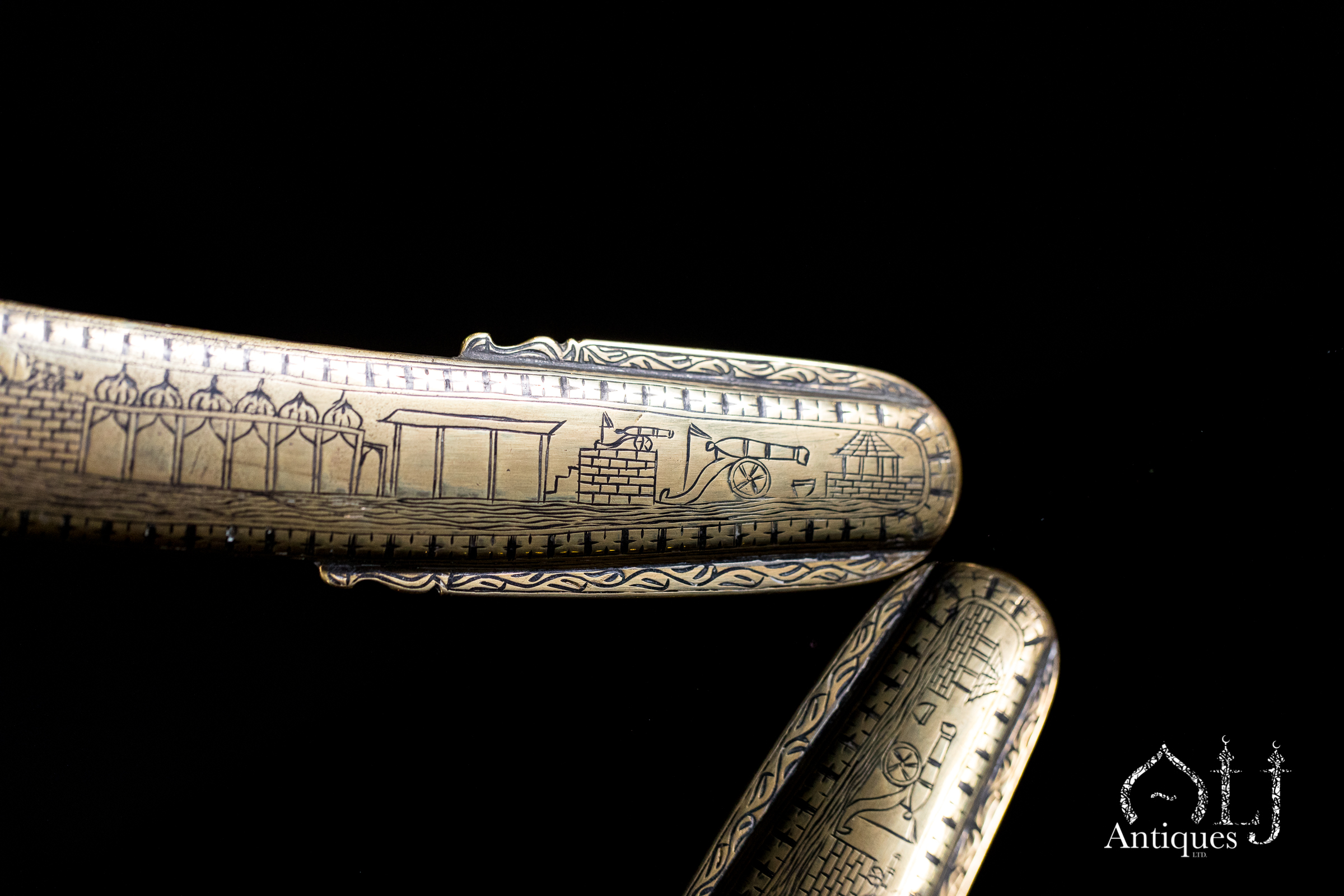
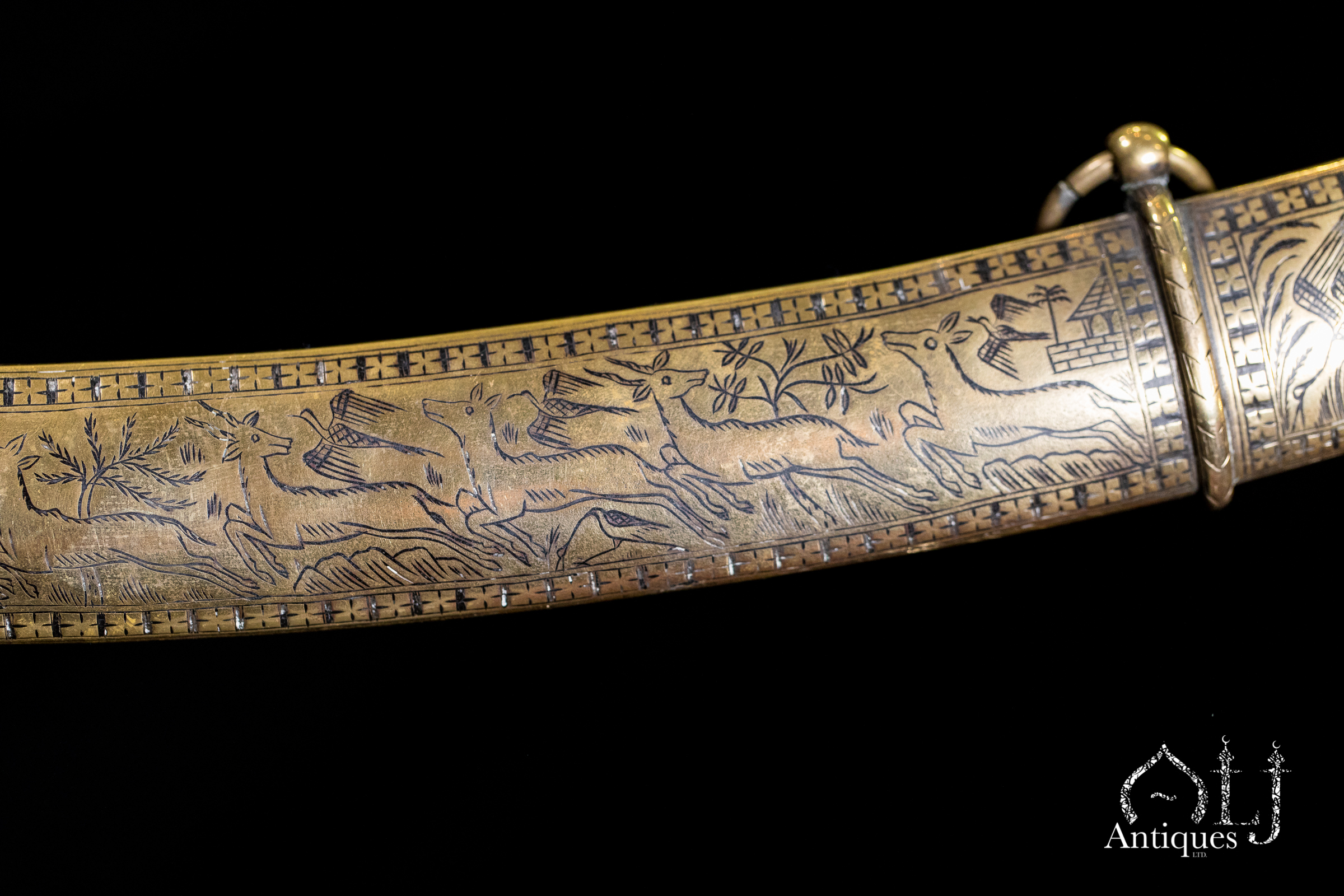
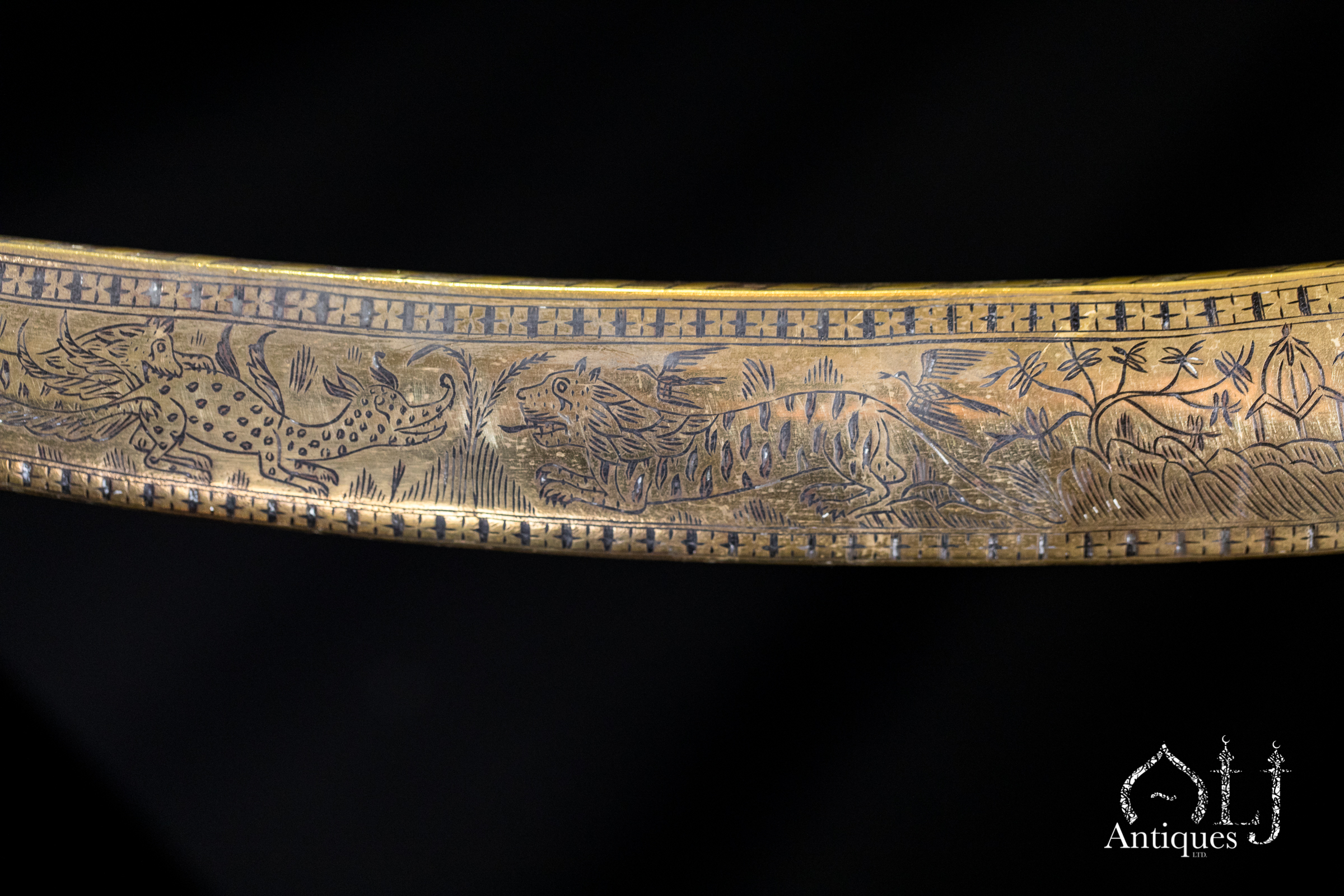
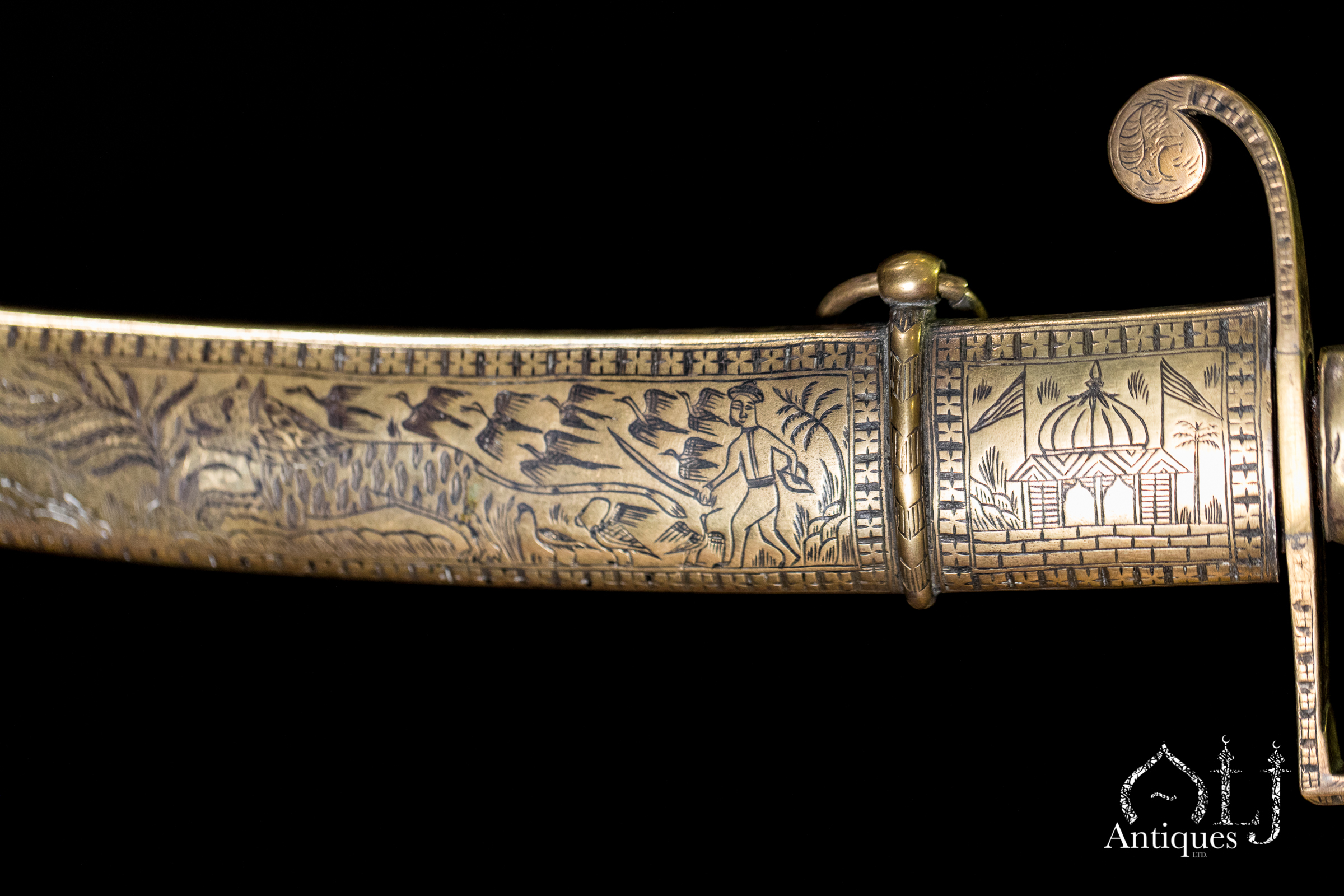
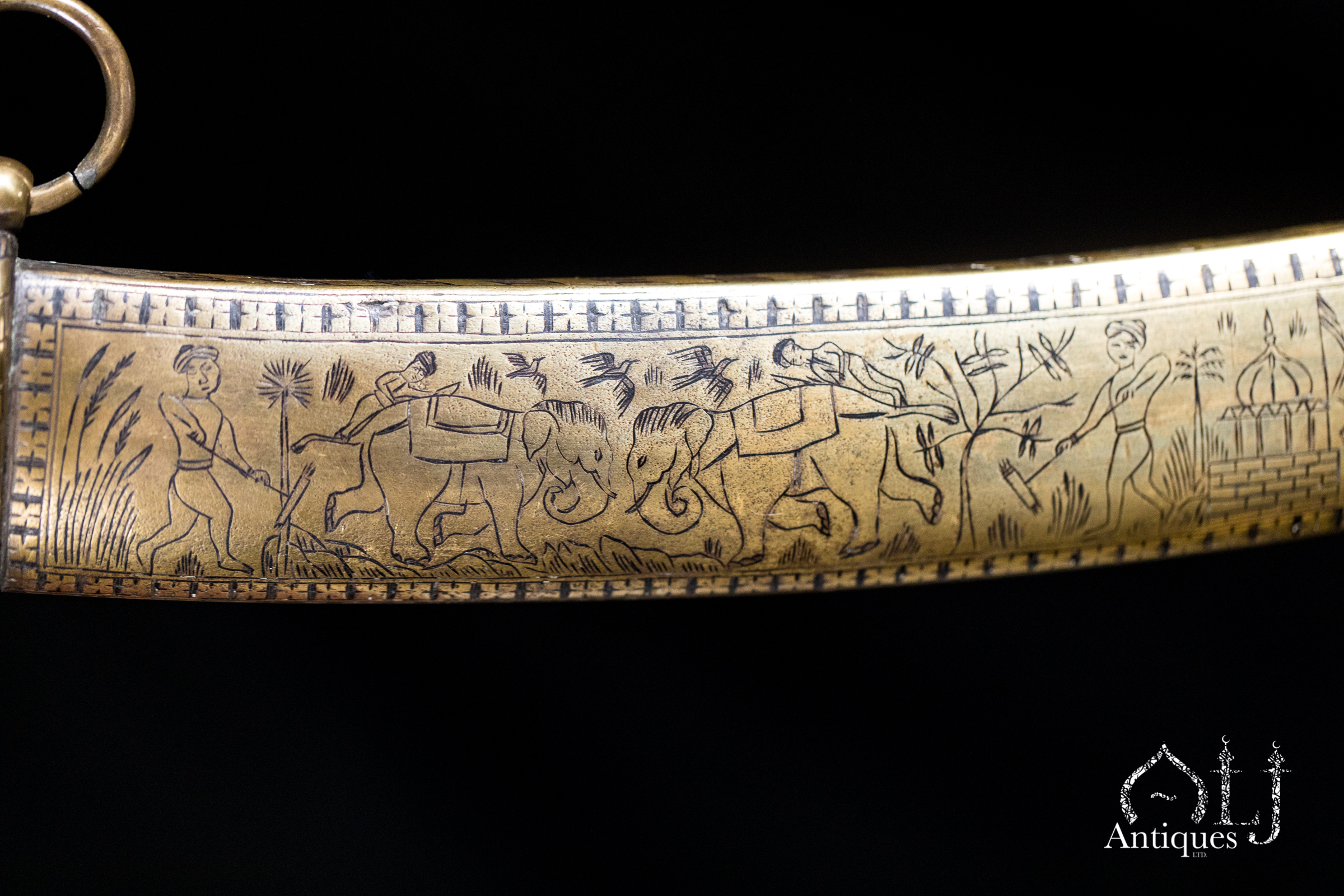
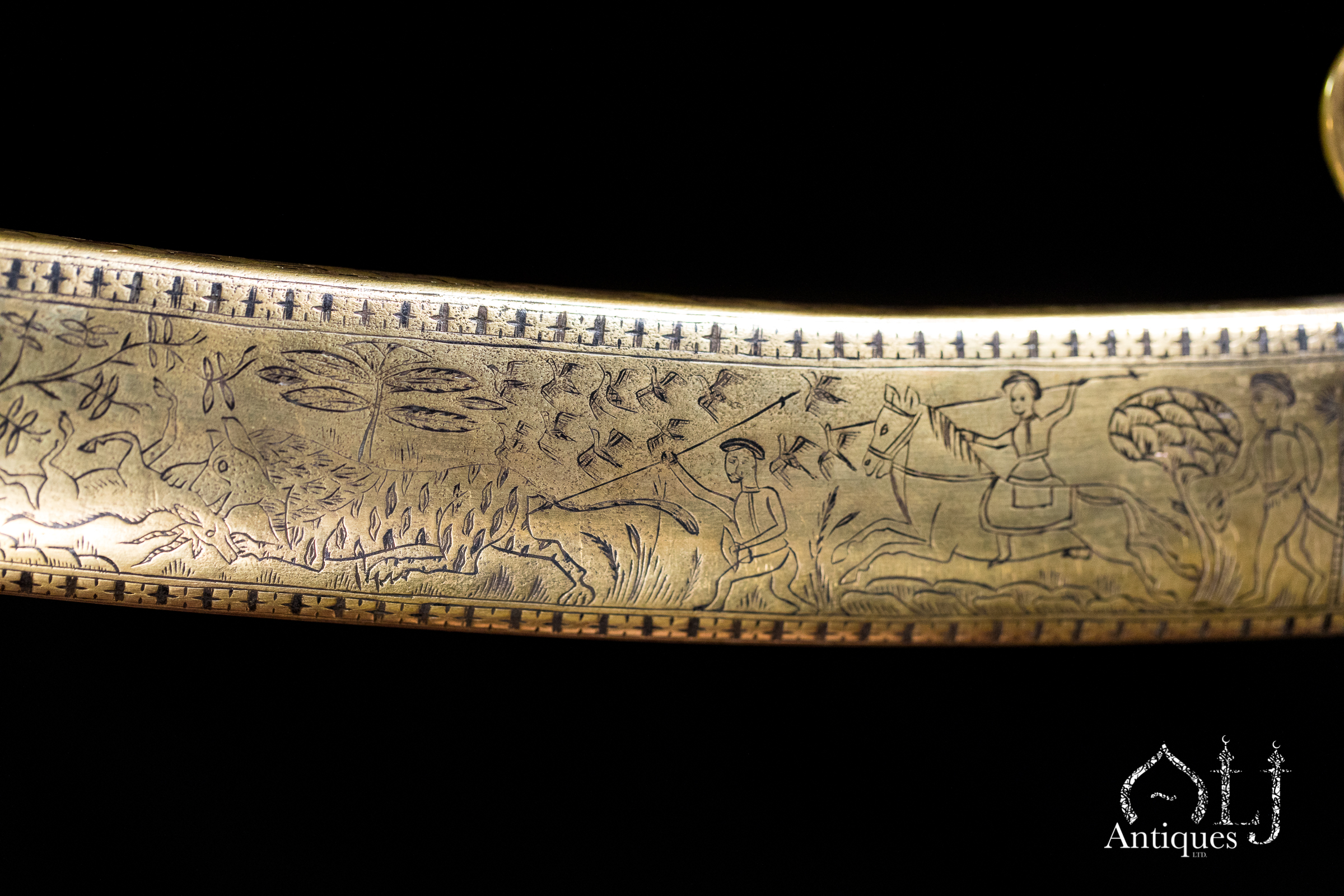
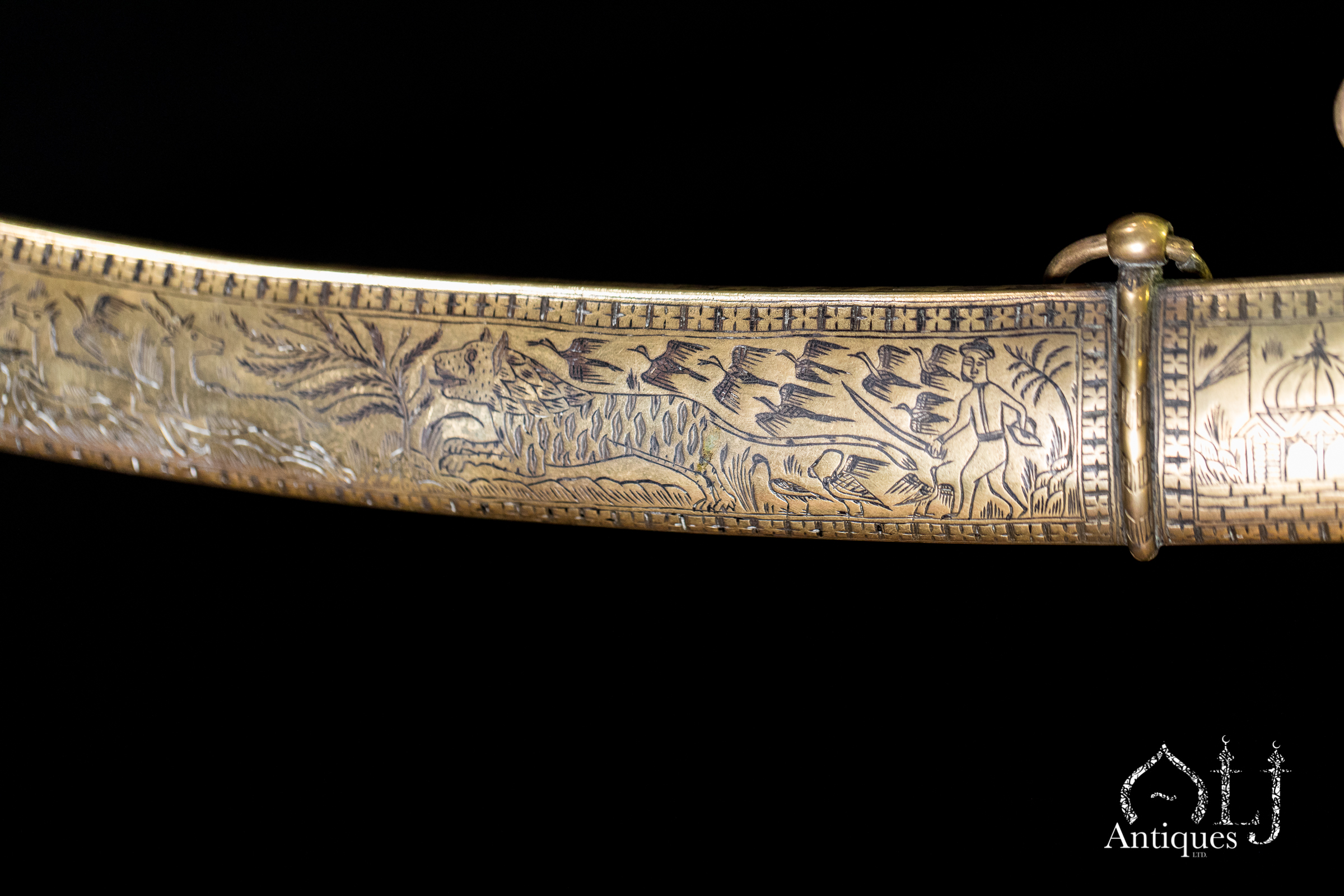
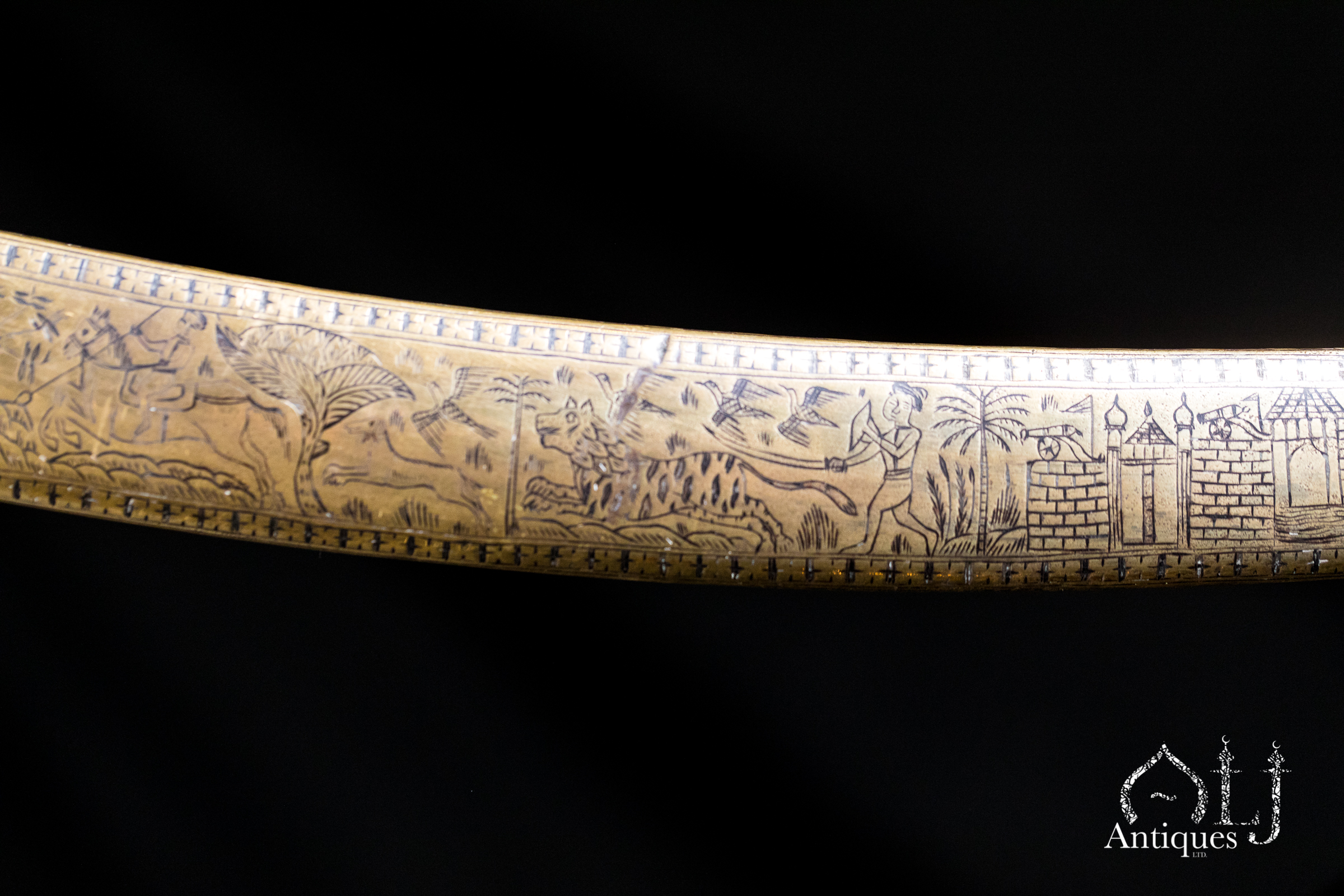
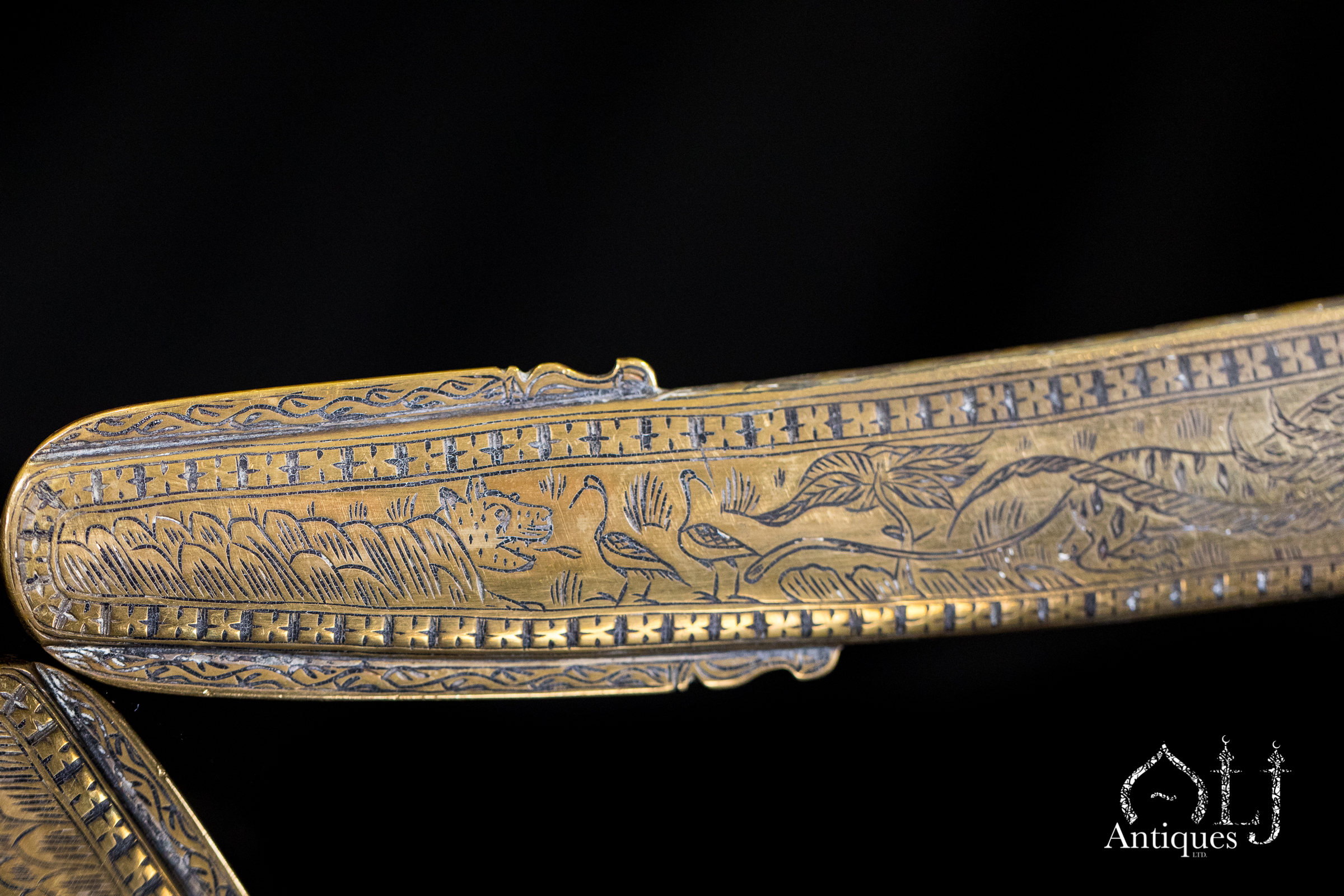
The hilt and scabbard mounts are richly engraved with animated narrative scenes depicting animals, birds, trees, architectural structures, hunting scenes, and martial imagery, including small cannons and fortified buildings. These lively compositions evoke the visual language of Indian miniature painting, translated into engraved metalwork.
The engraved lines are filled with black lac, a decorative technique widely used in North Indian metalwork to emphasise engraved ornament and create strong visual contrast.
A particularly distinctive element of the decoration is the continuous ribbon-like border composed of repeating “X”-shaped motifs, framing the narrative panels. This decorative border closely resembles the framing bands found on Lucknow champlevé enamel metalwork, where similar ribbon motifs divide panels of animals, birds, and floral ornament. In the present sword, the same ornamental vocabulary appears translated into engraved brass with lac inlay rather than enamel.
At the lower curved end of the scabbard appears a finely engraved vegetal motif composed of branching leaves resembling fin-like foliage. This ornament is particularly significant because it closely corresponds to the silver-damascened vegetal decoration found on the blade, indicating that the blade and scabbard were conceived as part of a unified decorative scheme.
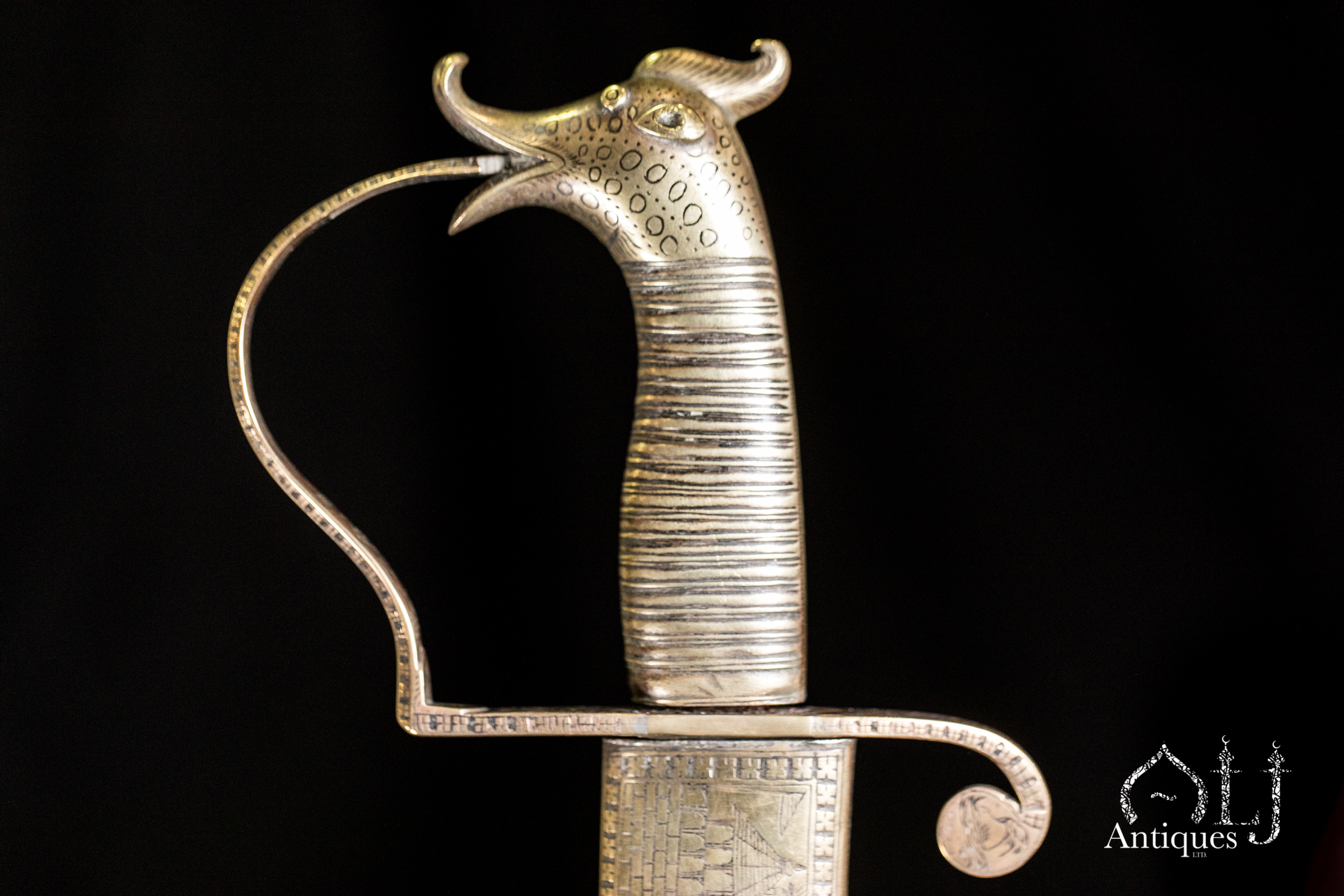
Makara-Head Hilt
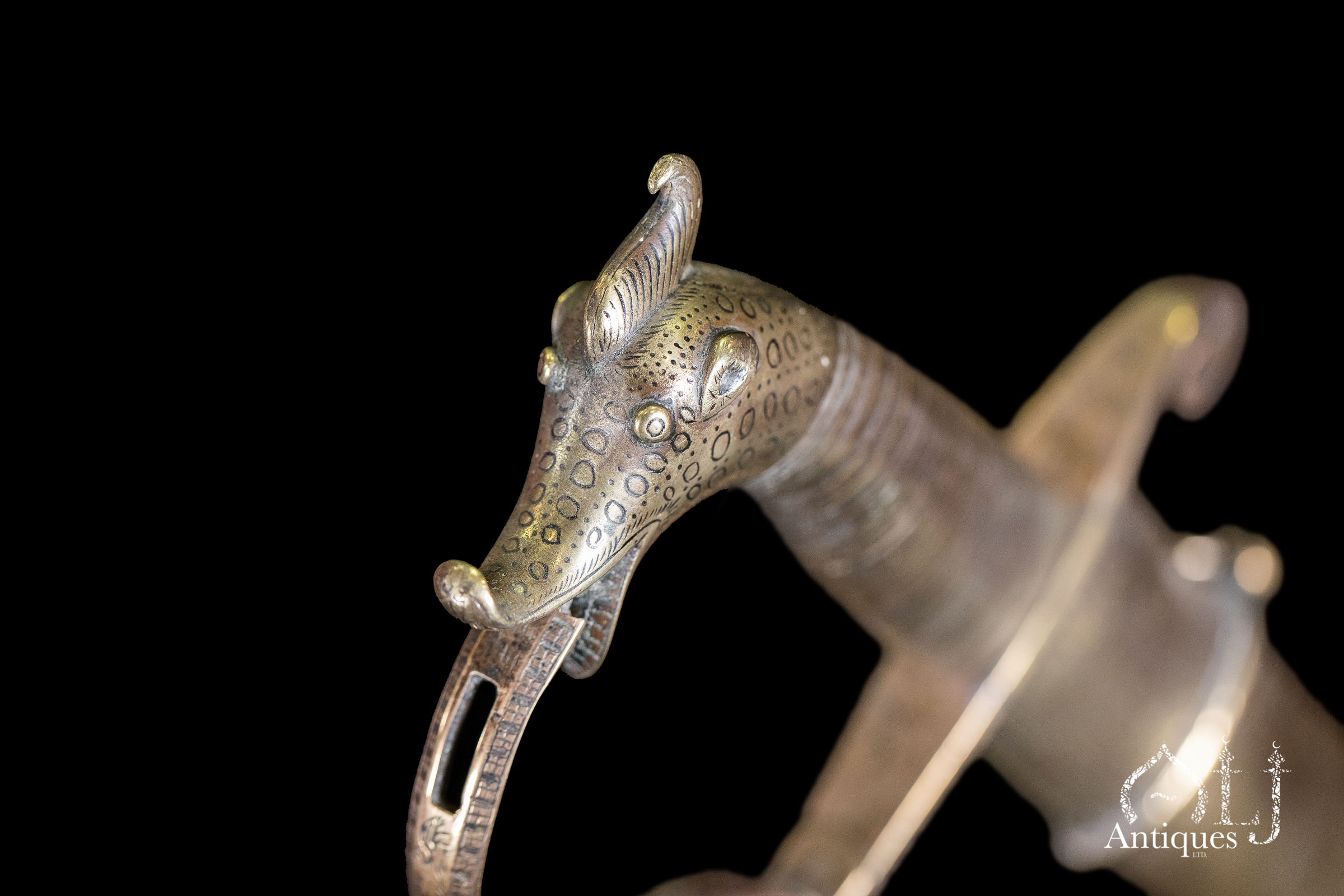
The hilt terminates in a sculptural makara-head pommel, forming a striking zoomorphic feature. The makara is a mythical aquatic creature prominent in Indian mythology and artistic traditions, often combining elements of crocodile, fish, and other animals. Makara motifs appear widely in Indian temple architecture, sculpture, jewellery, and weapon hilts, symbolising power, protection, and cosmic authority.
Zoomorphic hilts of this type are particularly associated with South Indian and Deccan weapons, including arms produced for courts such as Hyderabad and Mysore. The presence of the makara-head pommel may therefore reflect Deccan artistic influence or suggest that the sword was commissioned for a patron connected with southern courts, while the engraved narrative decoration reflects northern stylistic traditions.
Attribution and Historical Context
The engraved decoration, lac-filled ornament, and distinctive ribbon-like borders strongly suggest production in Lucknow, one of the principal artistic centres of North India during the eighteenth century. Lucknow workshops were renowned for luxury metalwork, enamelled objects, jewellery, and richly decorated arms produced for the Nawabs of Awadh and their courtly elite.
A particularly relevant comparative example is a weapon sold at Sotheby’s, London, in The Sven Gahlin Collection, 6 October 2015, Lot 146, described as a knife with lac-inlaid decoration of animals and birds, North India, probably Moradabad, circa 1770. That piece features comparable narrative scenes of animals, birds, and landscapes with engraved lines filled with black lac.
Although Sotheby’s cautiously suggested a Moradabad attribution, the style of landscape composition, rhythmic borders, and narrative ornament closely aligns with the broader Lucknow decorative tradition.
The presence of the makara-head hilt introduces an additional southern element, suggesting the possibility that the sword may have been commissioned for a Deccan or Mysorean patron, a situation not uncommon in the eighteenth century when luxury arms circulated between regional courts.
Taken together, the stylistic and technical evidence suggests that the sword was most likely produced in Lucknow during the eighteenth century, possibly for a patron connected with the Deccan or Mysore.