Description
Overview
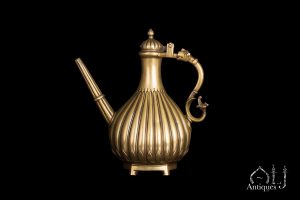
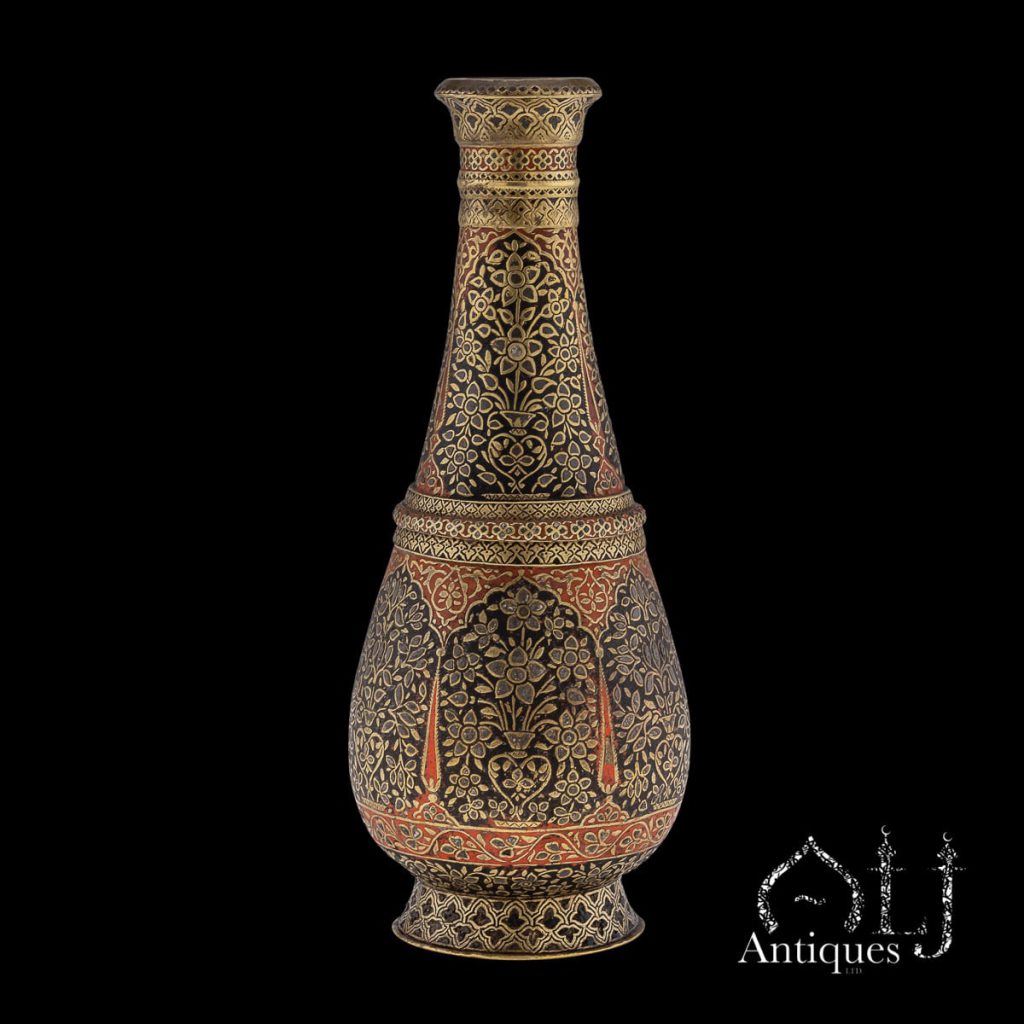
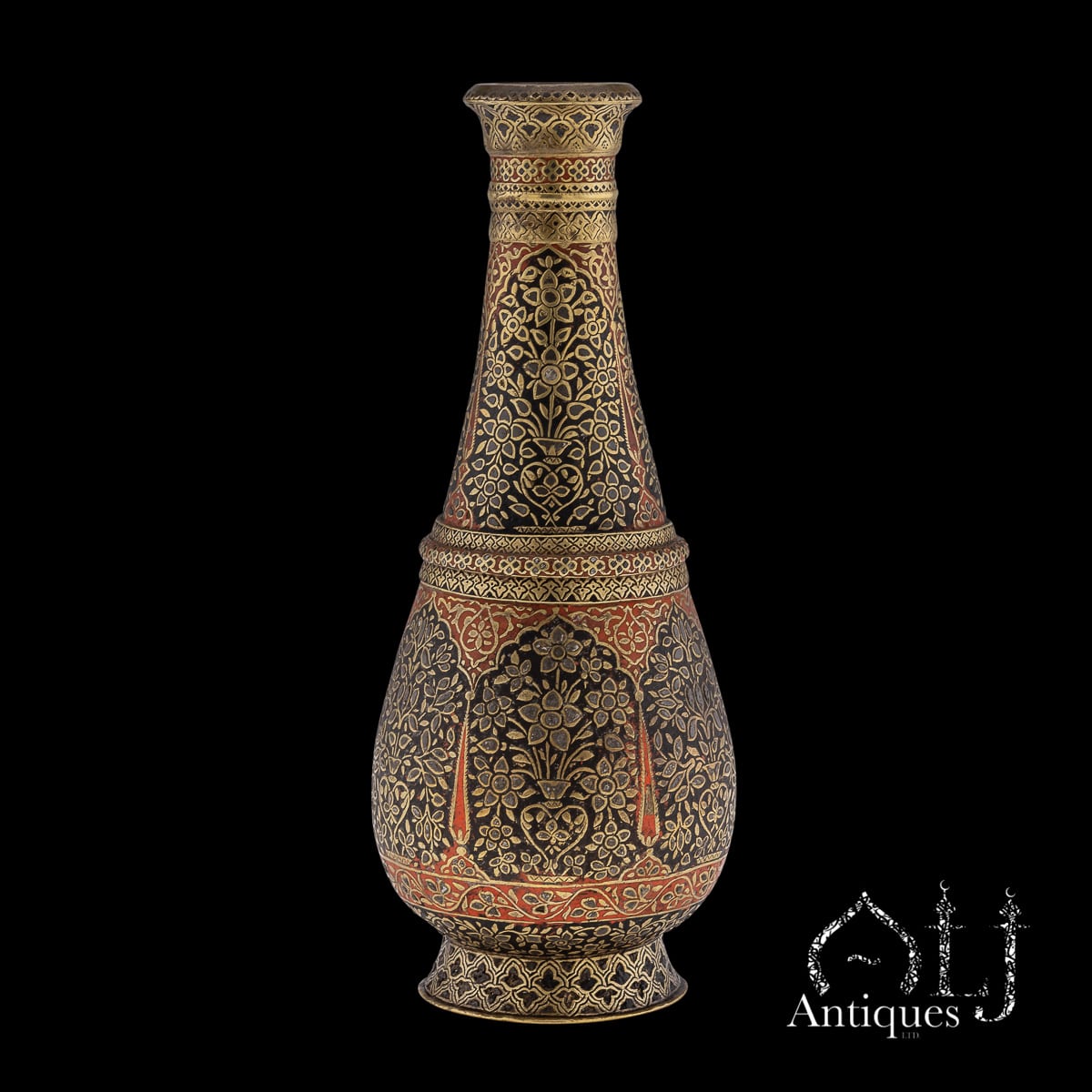
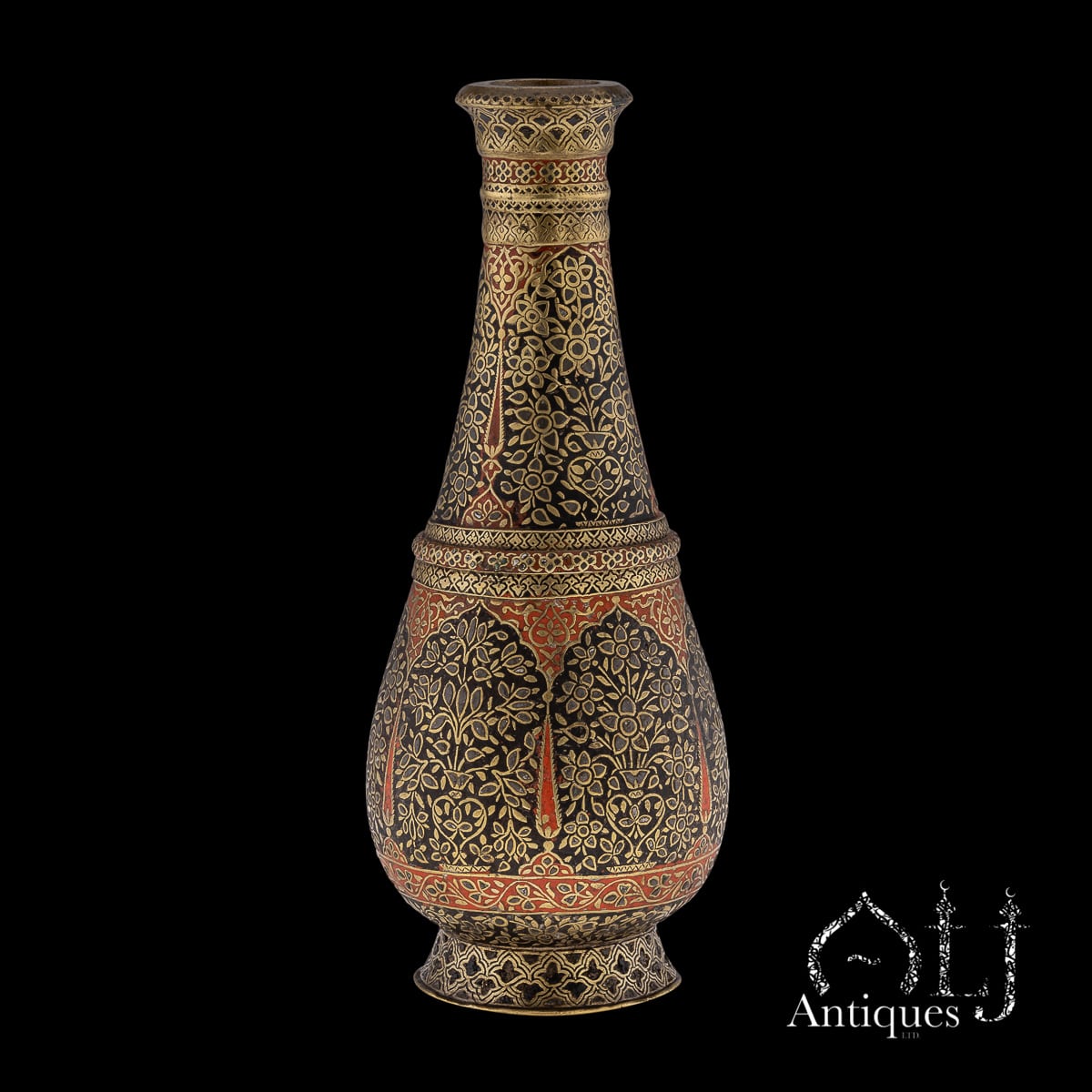
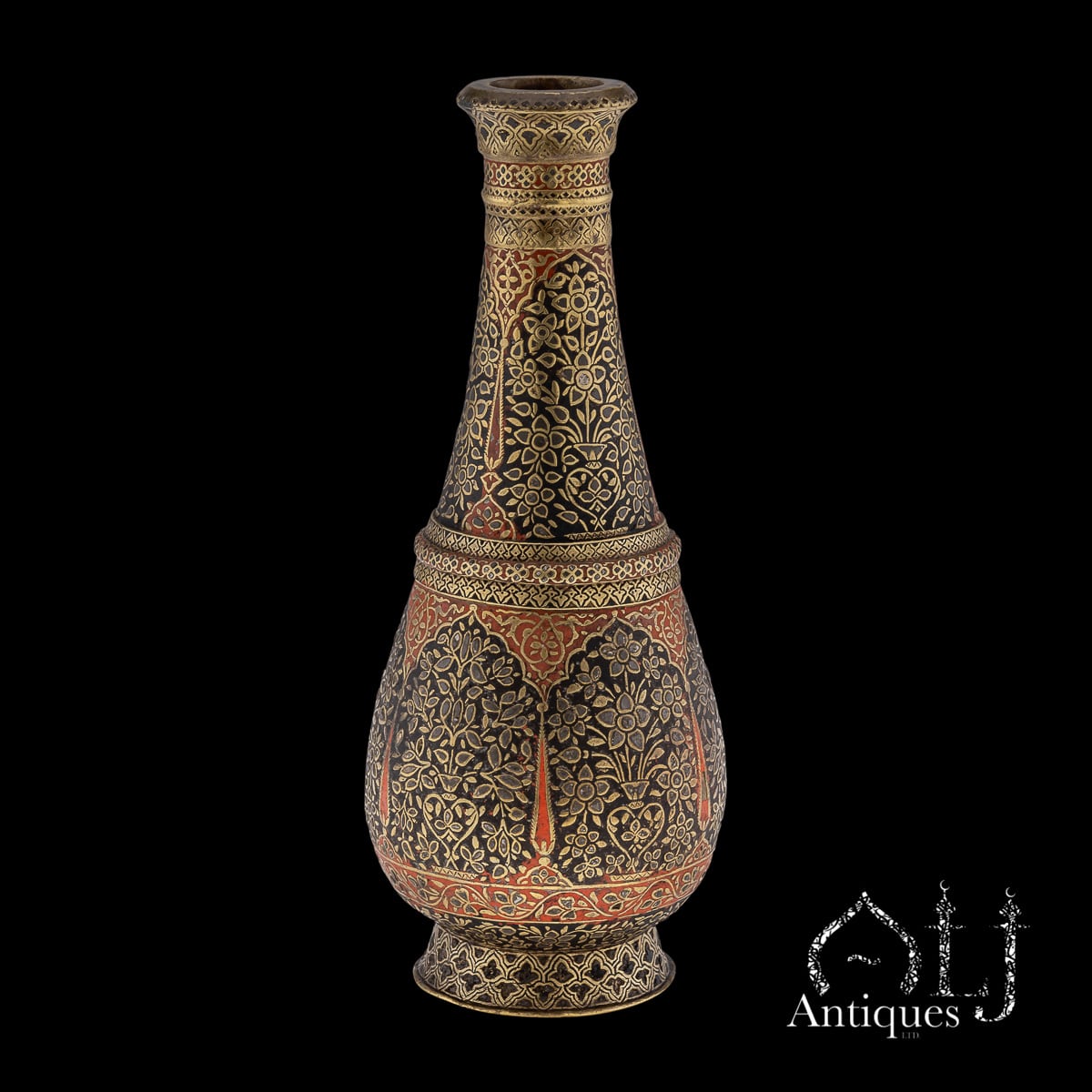
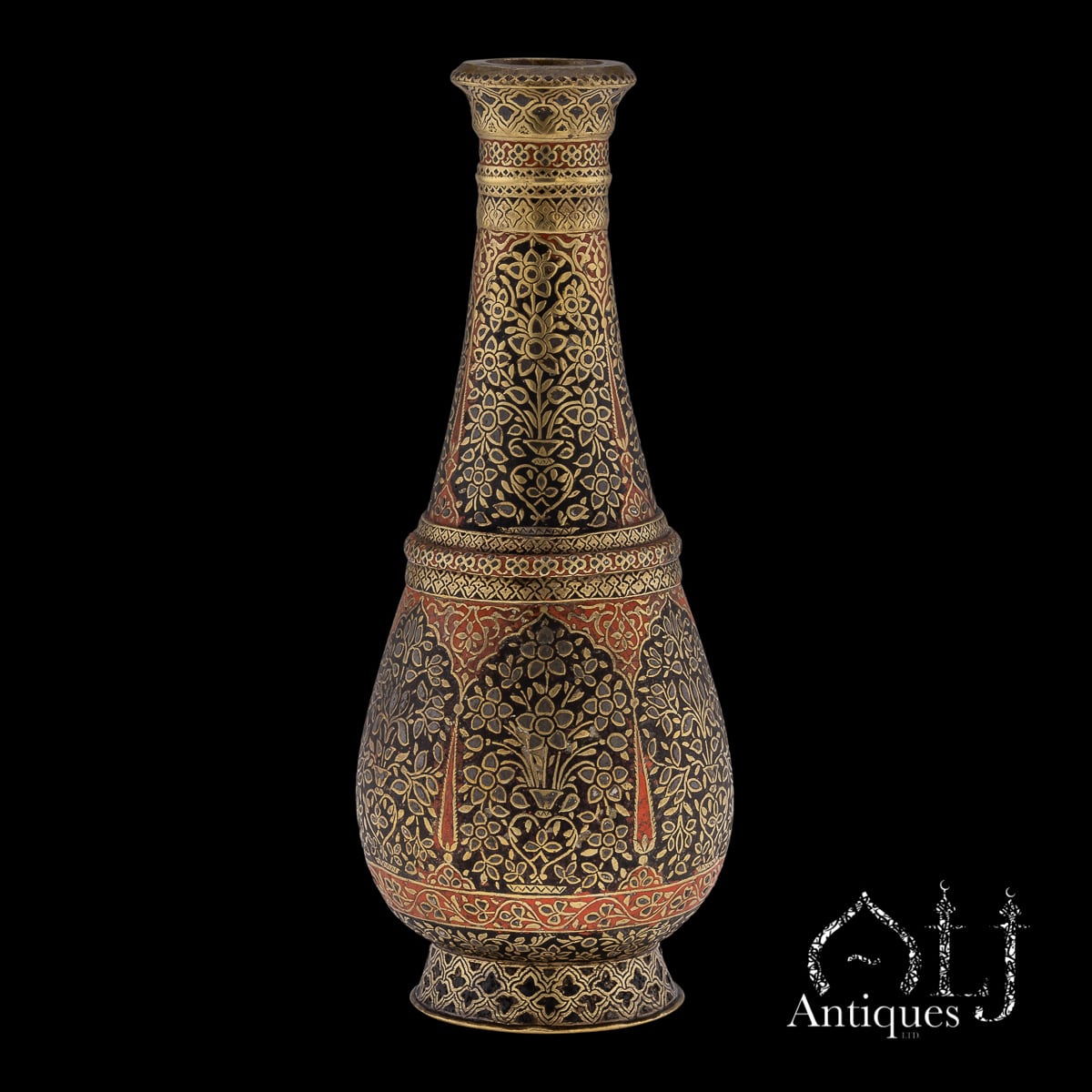
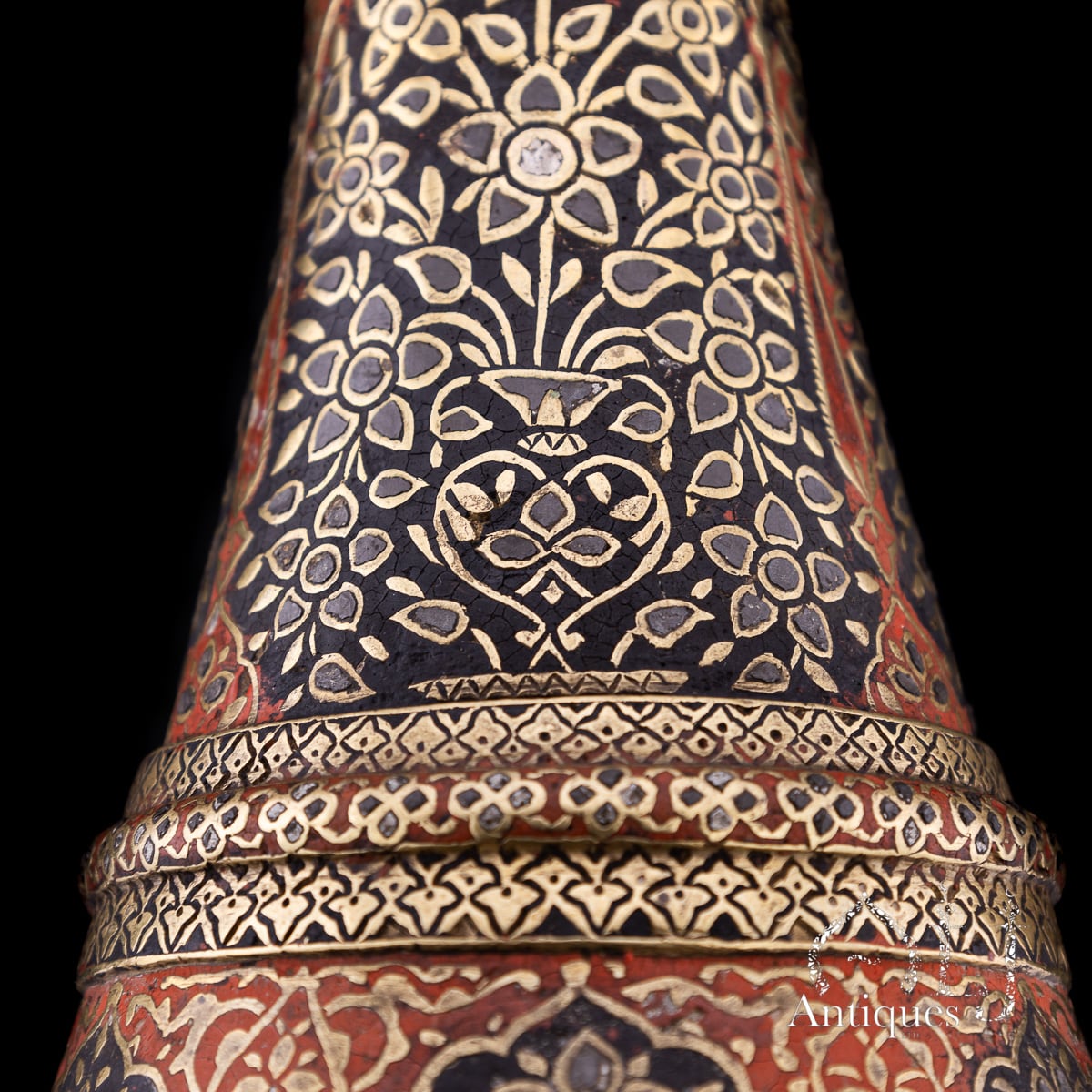
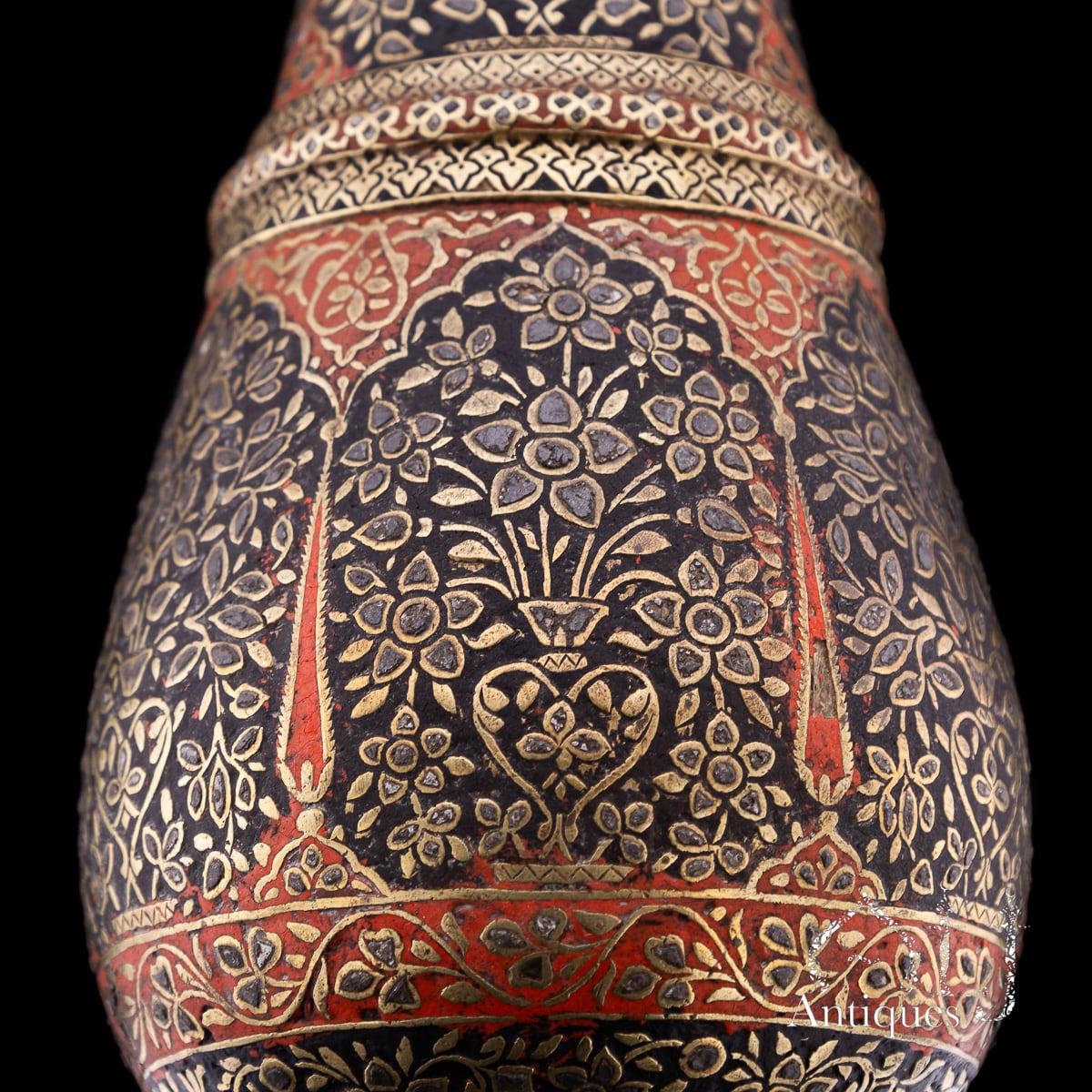
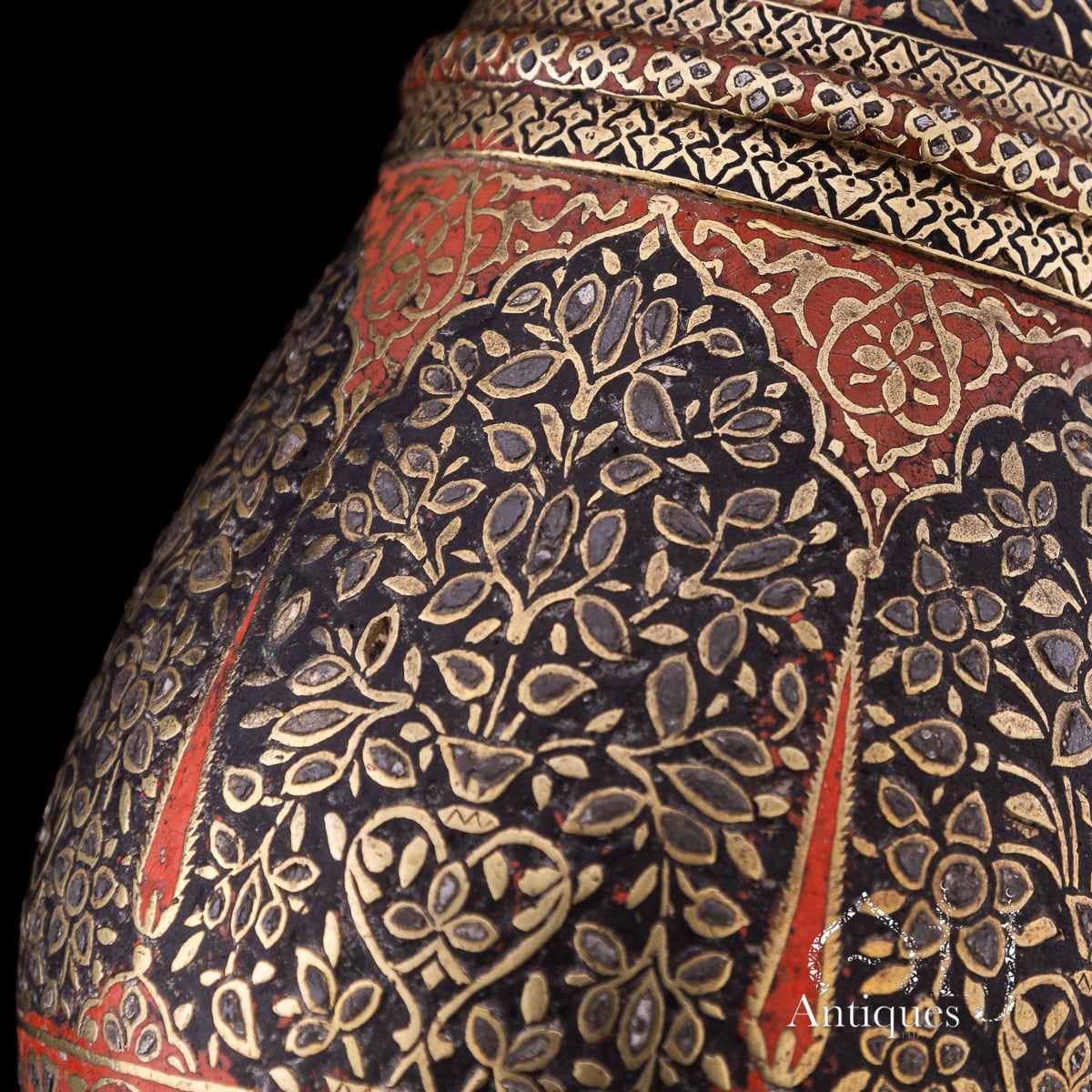
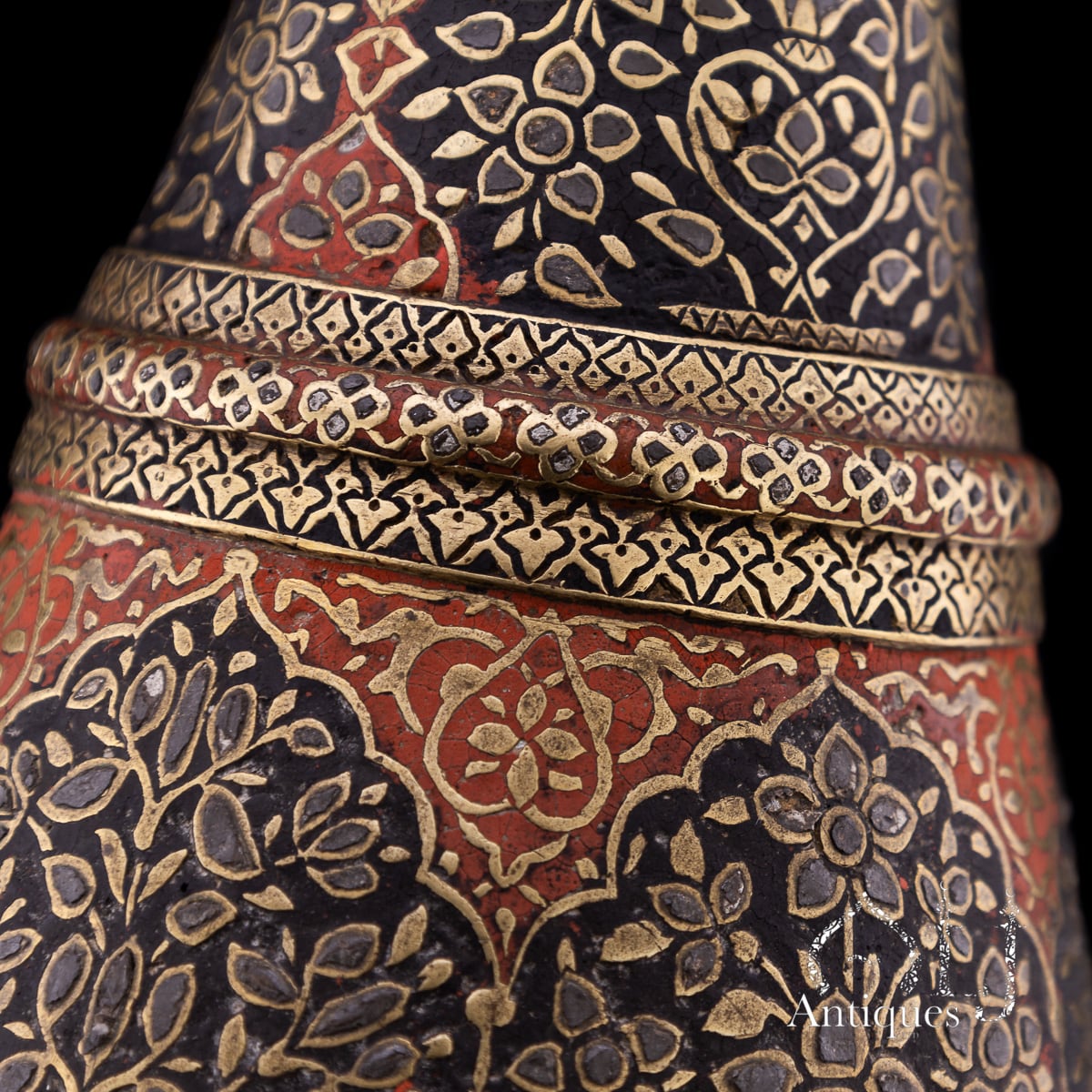
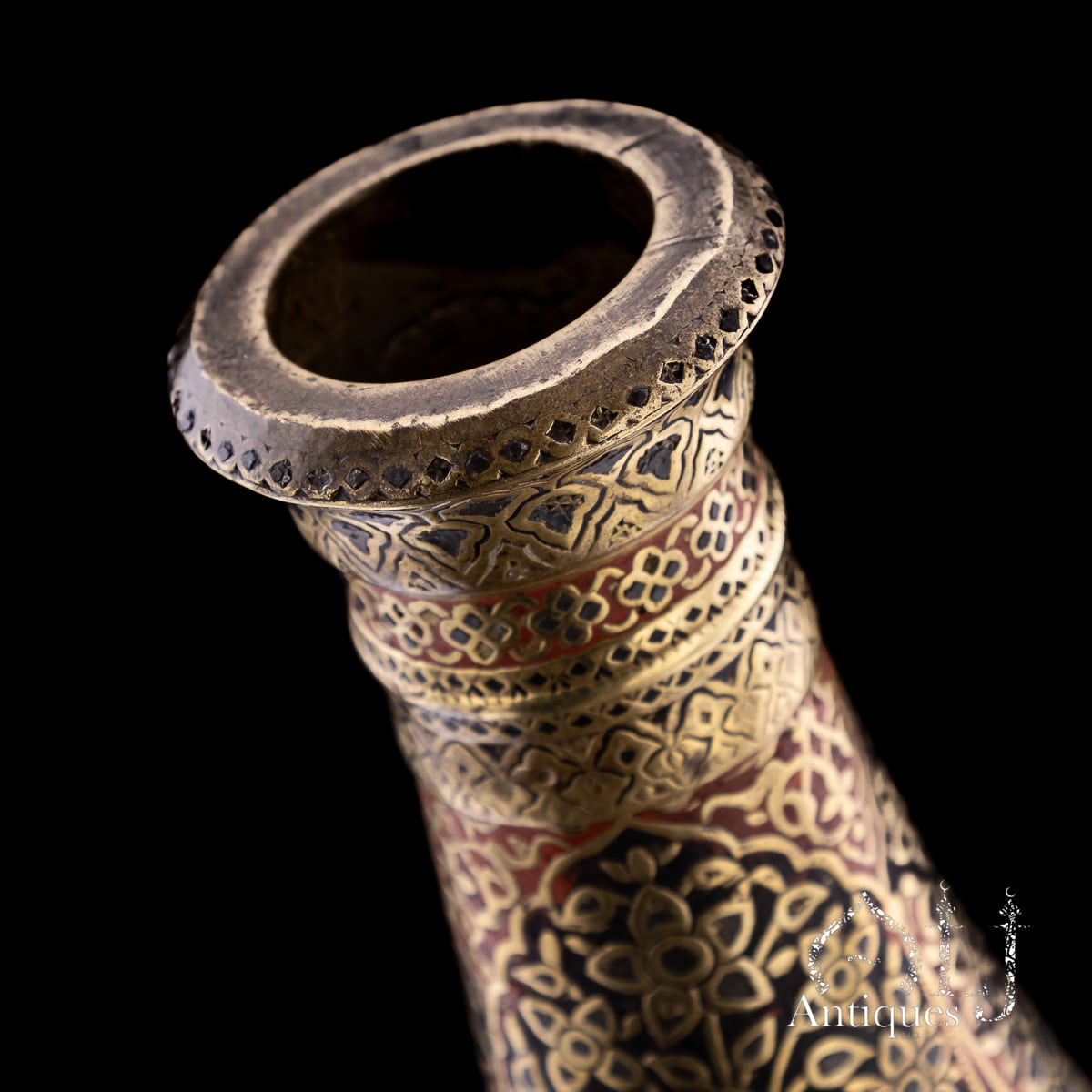
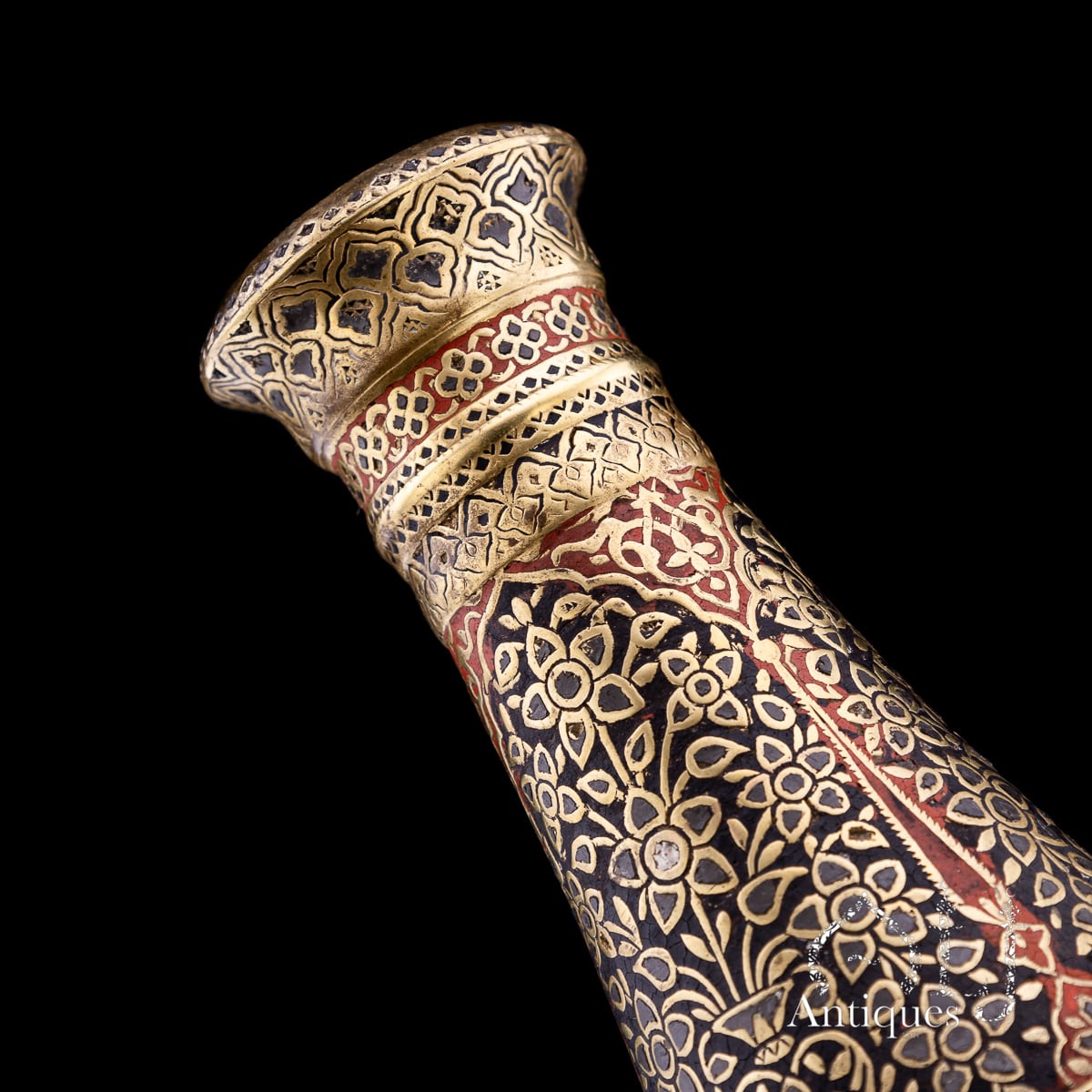
This exceptional Mughal-period brass hookah base (shisha) dates to the early 18th century and represents the refined decorative metalwork tradition of Lahore under the Mughal Dynasty. Finely engraved and enriched with red and black lac, together with lead and zinc inlay, the vessel displays classic Mughal floral iconography and architectural balance, combining visual richness with functional elegance.
Description of the Item
The vessel is fluted in form and lined internally with a brass sheet, rising from a splayed circular base into a tall, tapering cylindrical neck. The surface is divided into three principal decorative zones, unified by a highly sophisticated engraved programme.
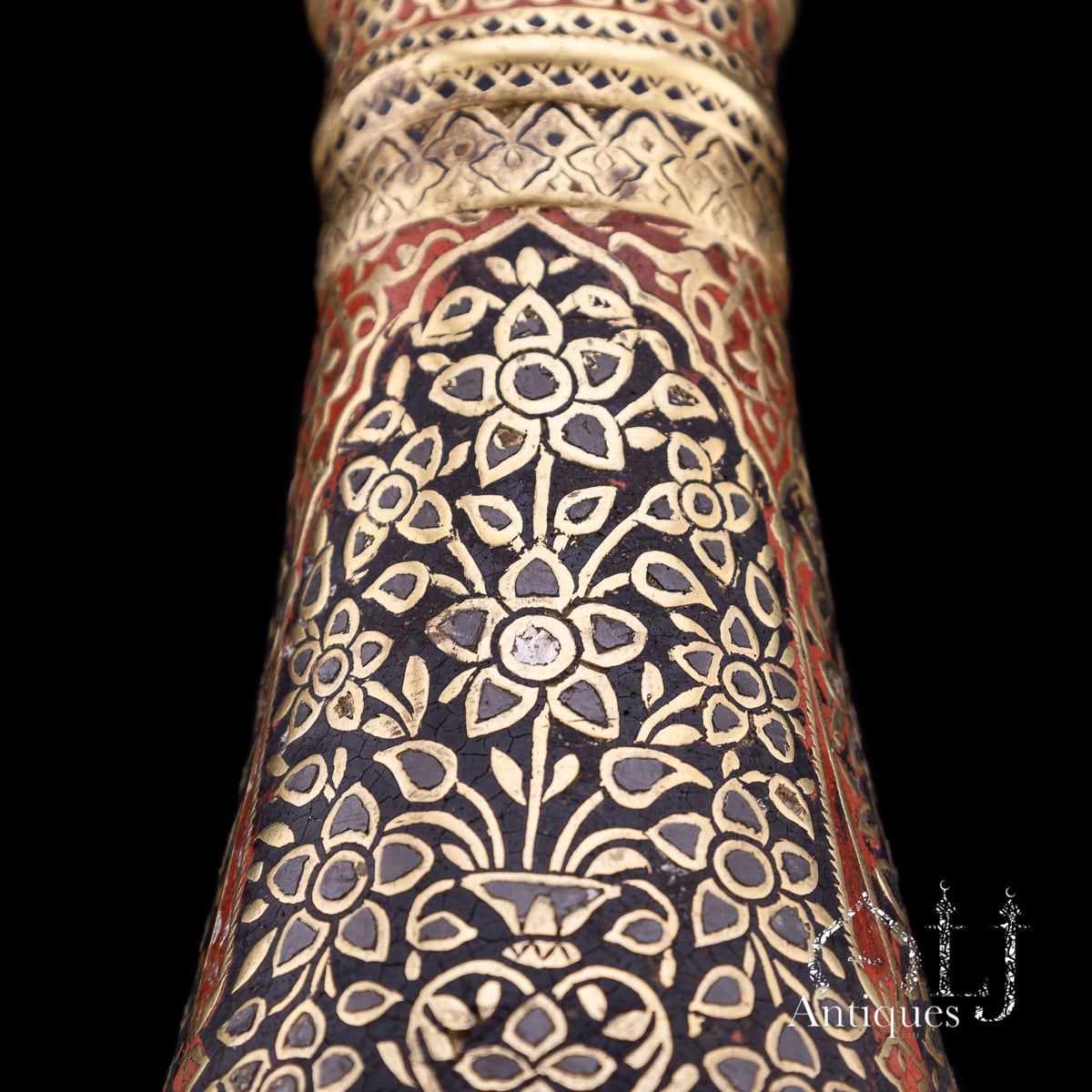
The broadest central section of the body is articulated into six arched panels, each framed by stylised cypress-tree columns—a powerful Mughal symbol of eternity and paradise. Within these arches appear alternating floral compositions representing the Tree of Life, blossoming from a heart-shaped vase. Two distinct arrangements are used: one composed of six blossoming lotus flowers, and another of eight flowering blooms, creating a rhythmic alternation around the body.
The upper neck section echoes this scheme on a smaller scale, reinforcing the visual harmony of the design. The base is encircled by two horizontal bands of repeating alternating palmettes and leaves, engraved in chain-like succession, while the neck and foot are bordered with finely worked geometric and foliate bands.
The use of red and black lac—remarkably well preserved for an object of this age—adds depth and contrast to the engraved brass surface. Given the fragility of these inlaid materials and the vessel’s intended functional use as a hookah base (or potentially as a vase), its survival in such condition is extraordinary. The preservation strongly suggests generations of careful ownership and reverence.