


Description
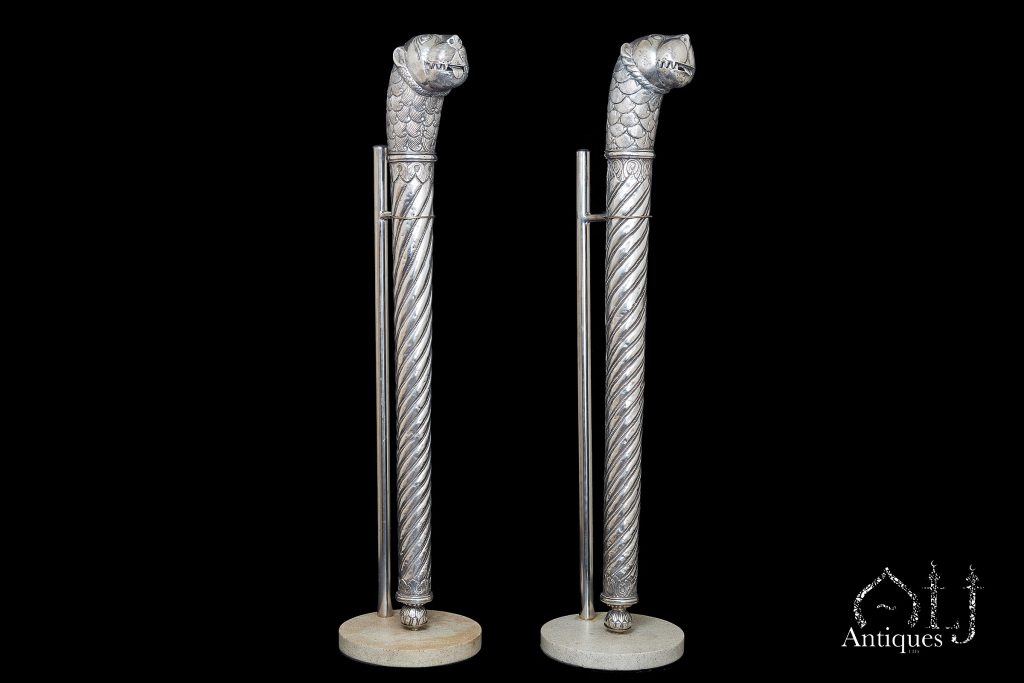
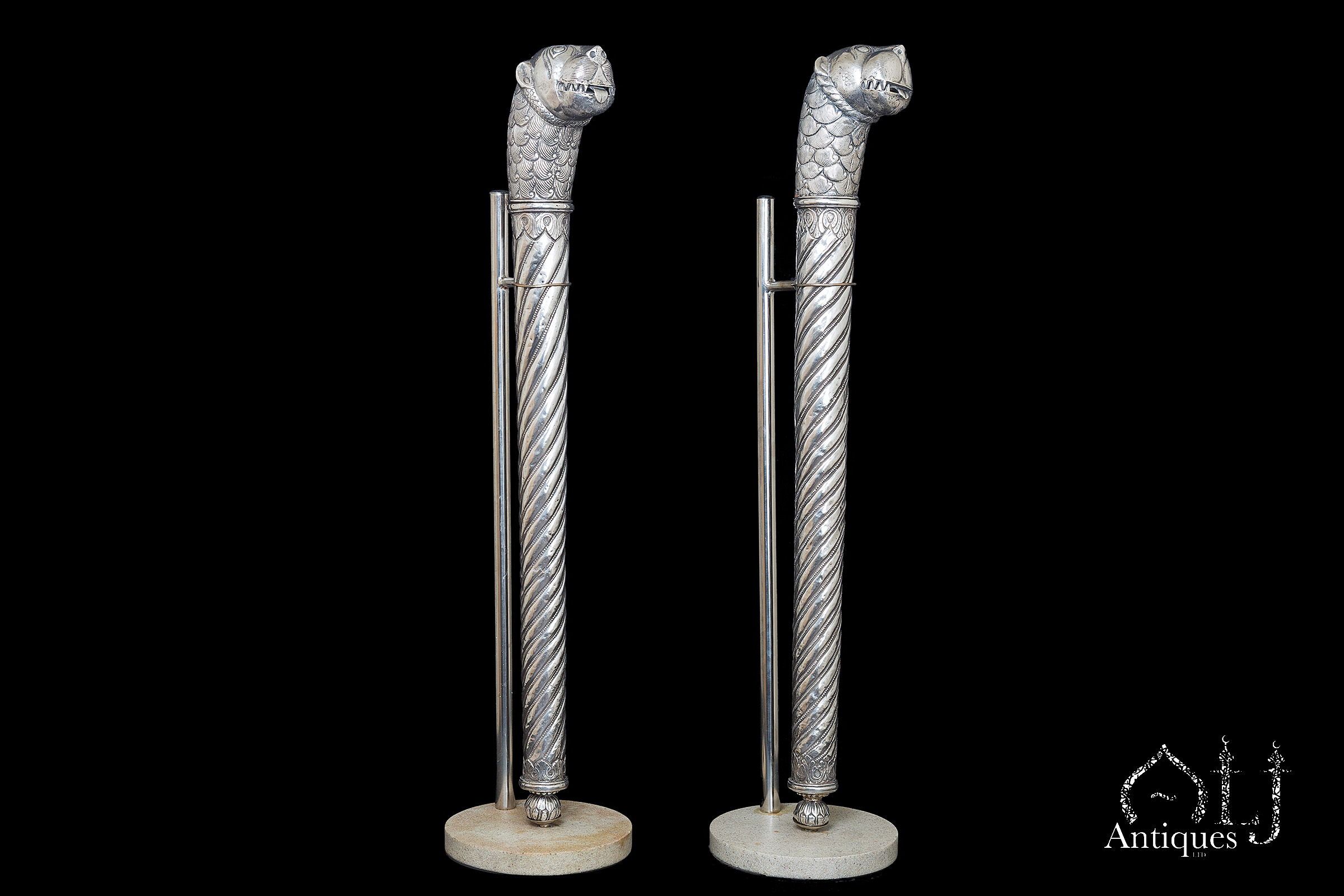
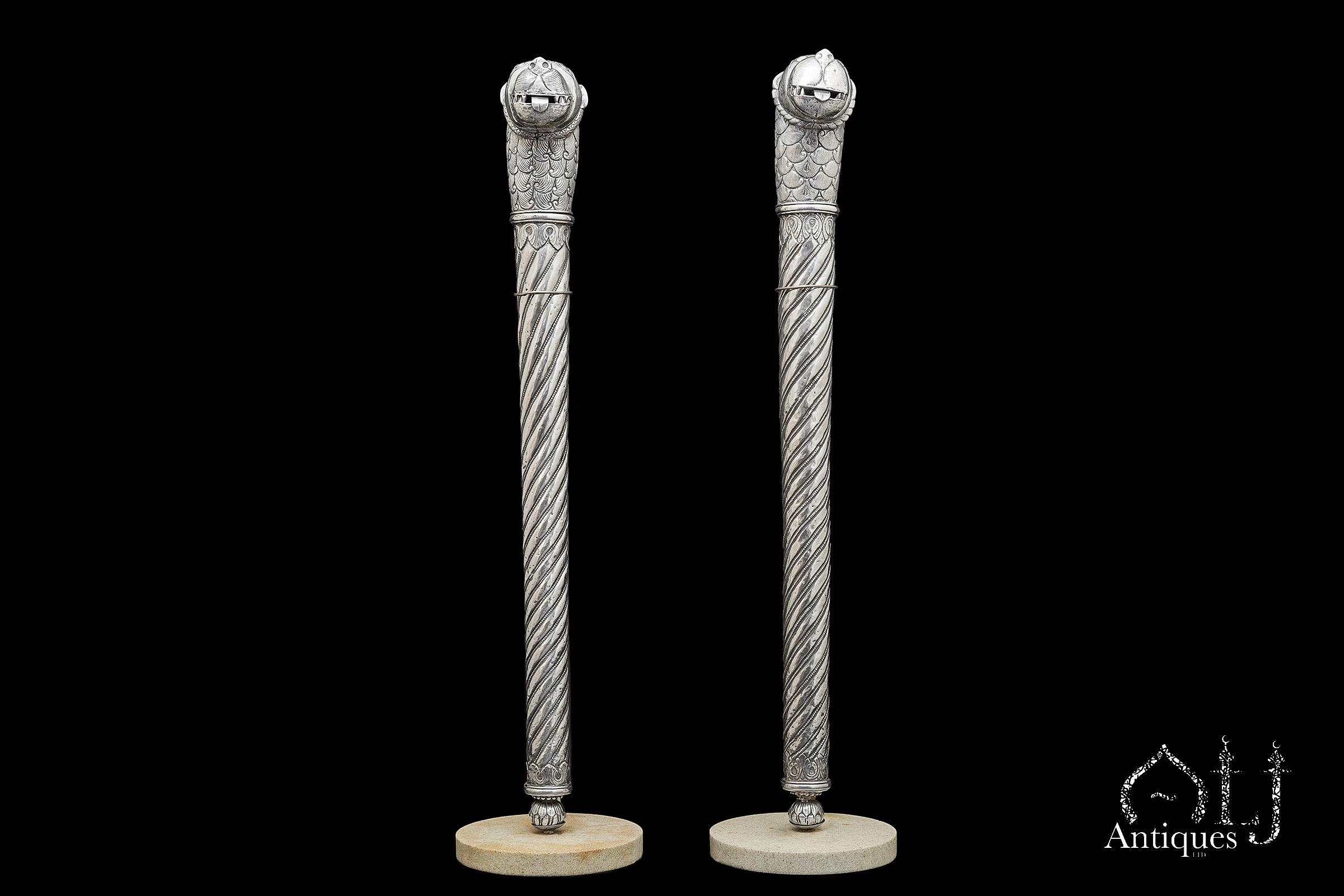
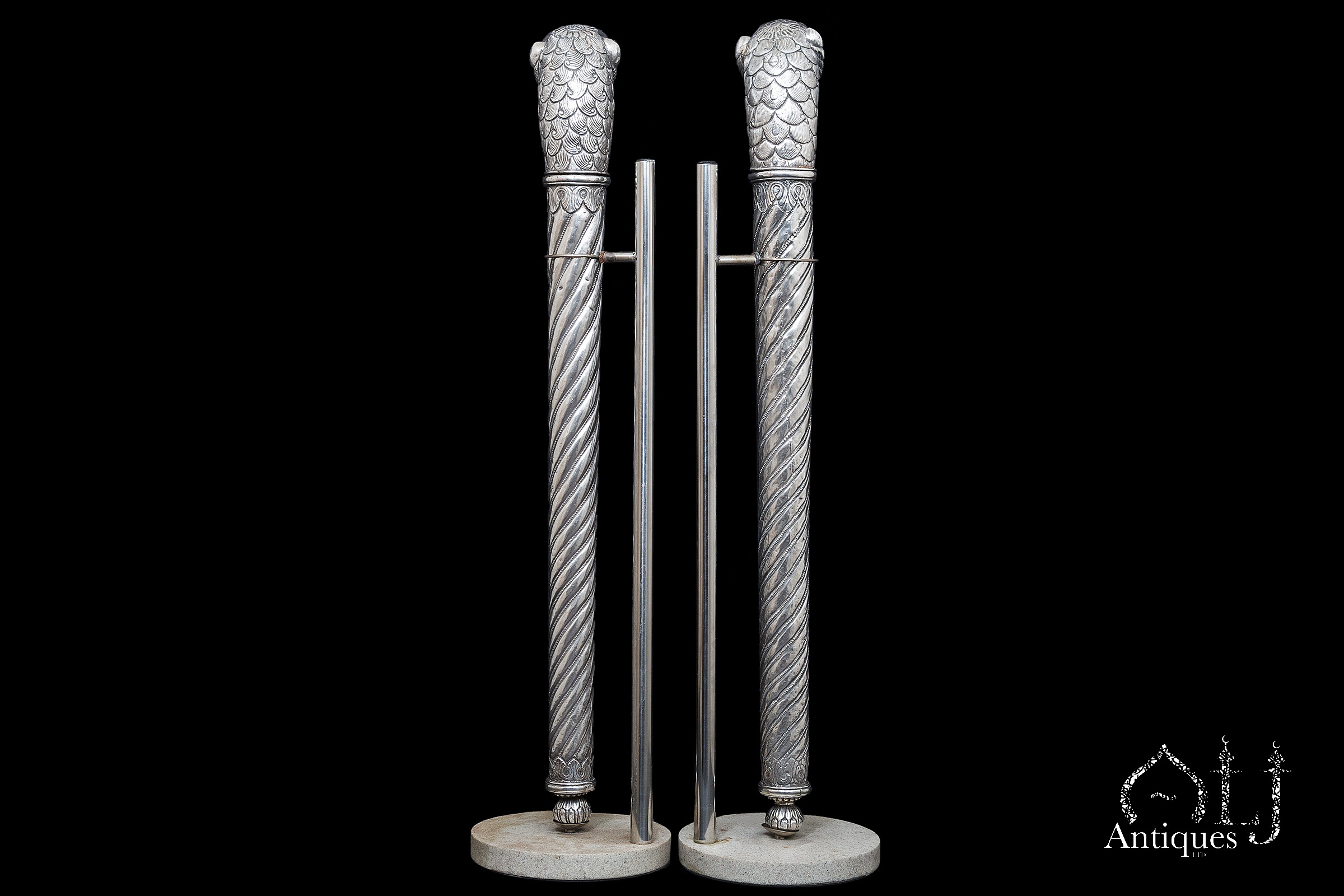
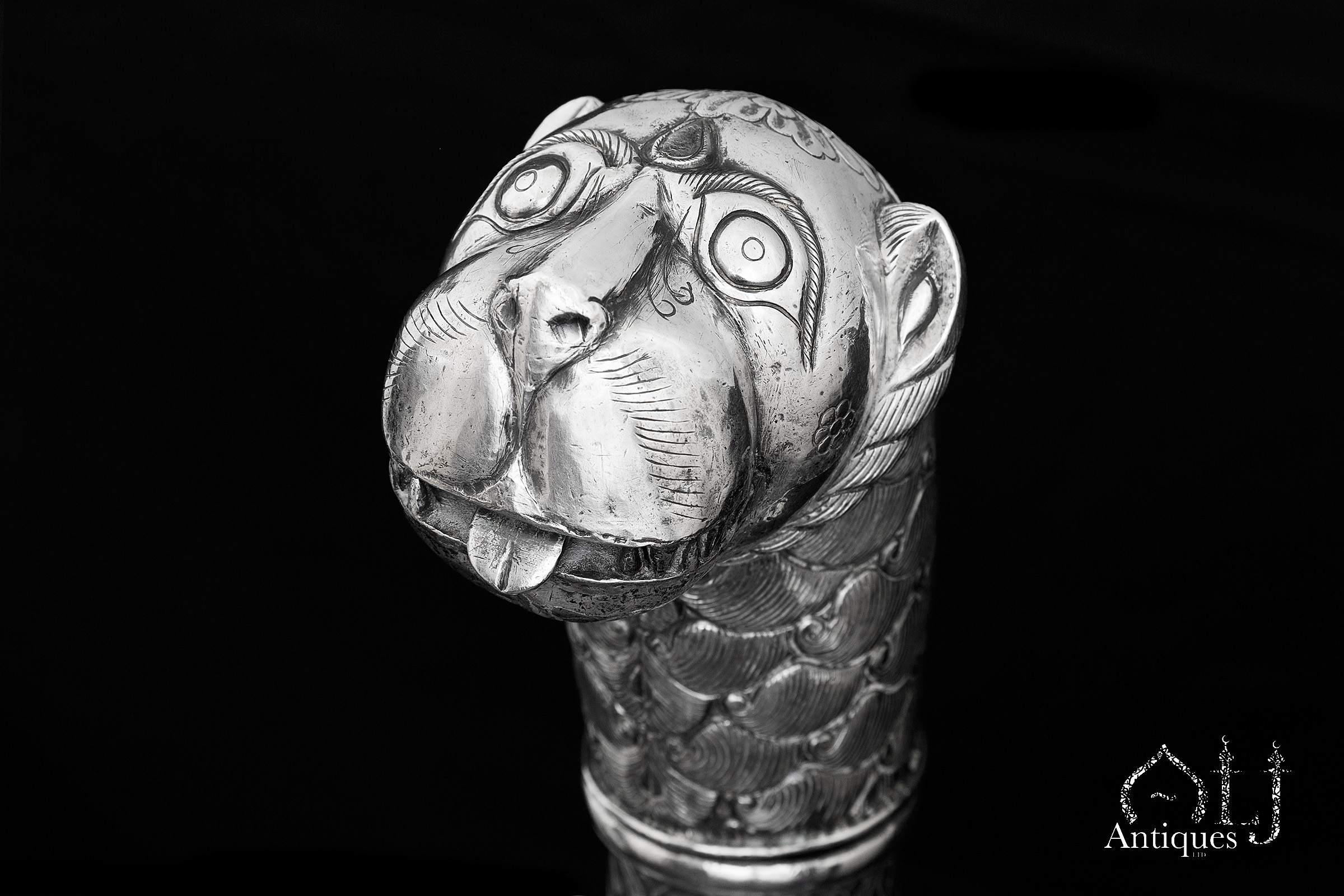
This impressive royal pair of ceremonial silver staves, these Soontas (also known as Soutas, or ceremonial maces of office) form an important and authoritative element of the lawājāma—the formal regalia of the Indian royal household.
Such objects were indispensable to courtly display, state ritual, and royal procession, accompanying rulers in darbars, temple ceremonies, and public appearances across the Mughal, Deccani, Rajput, and Sikh courts.
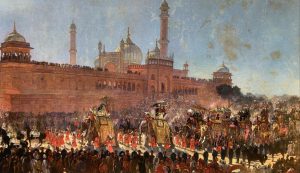
Roderick Dempster MacKenzie’s celebrated painting of the Delhi Durbar of 1903 showcasing the Lawajama carried out During the Royal procession.
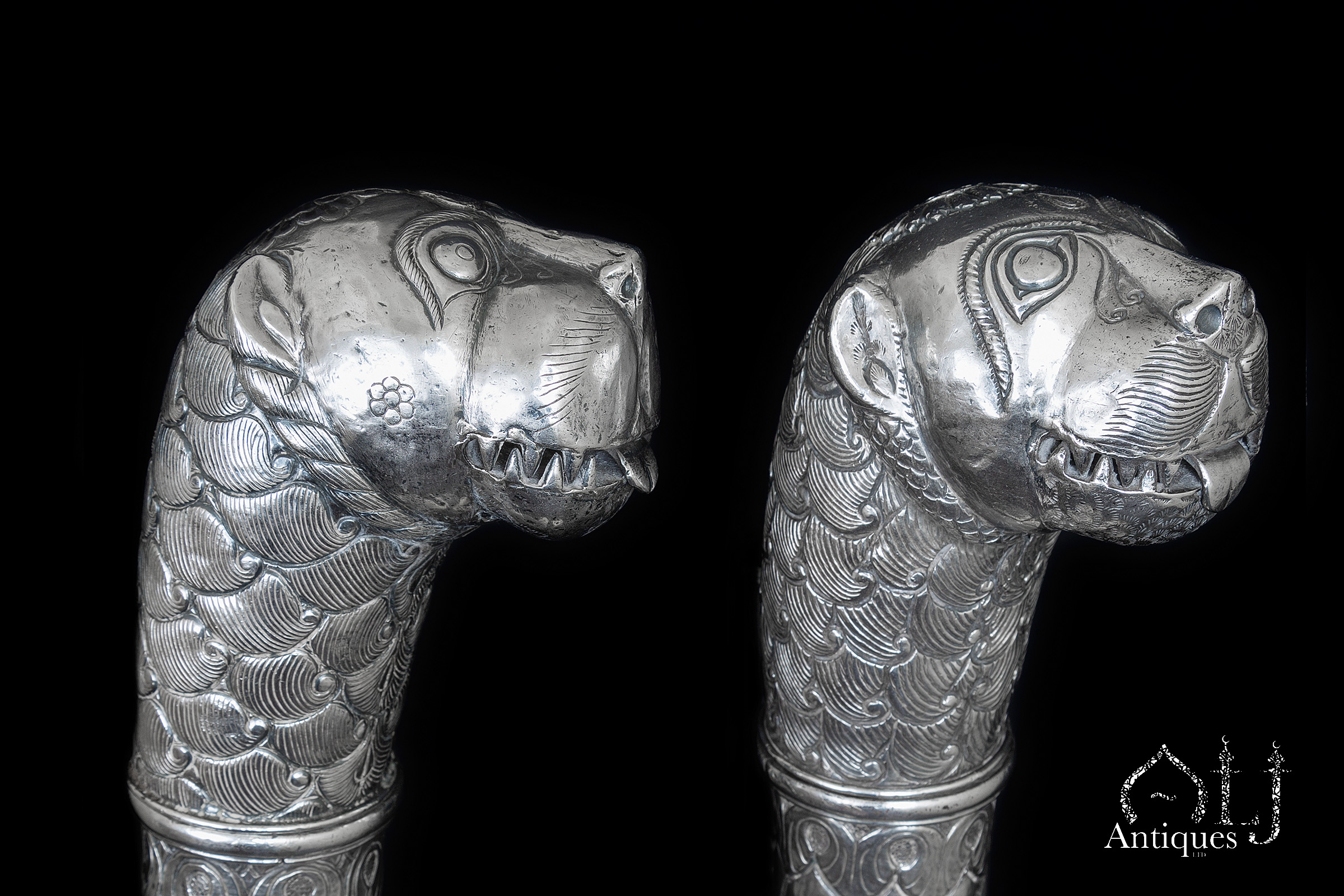
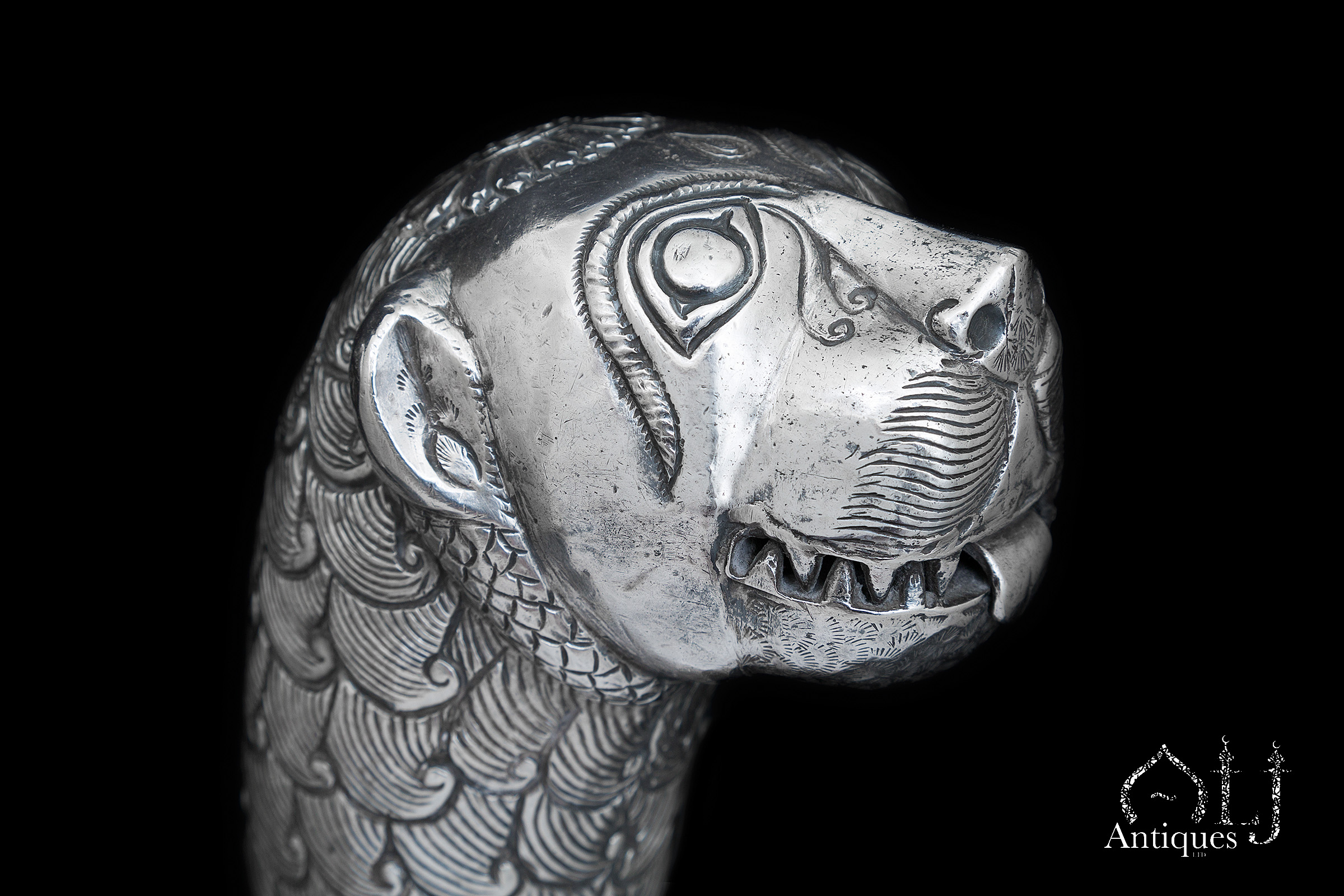
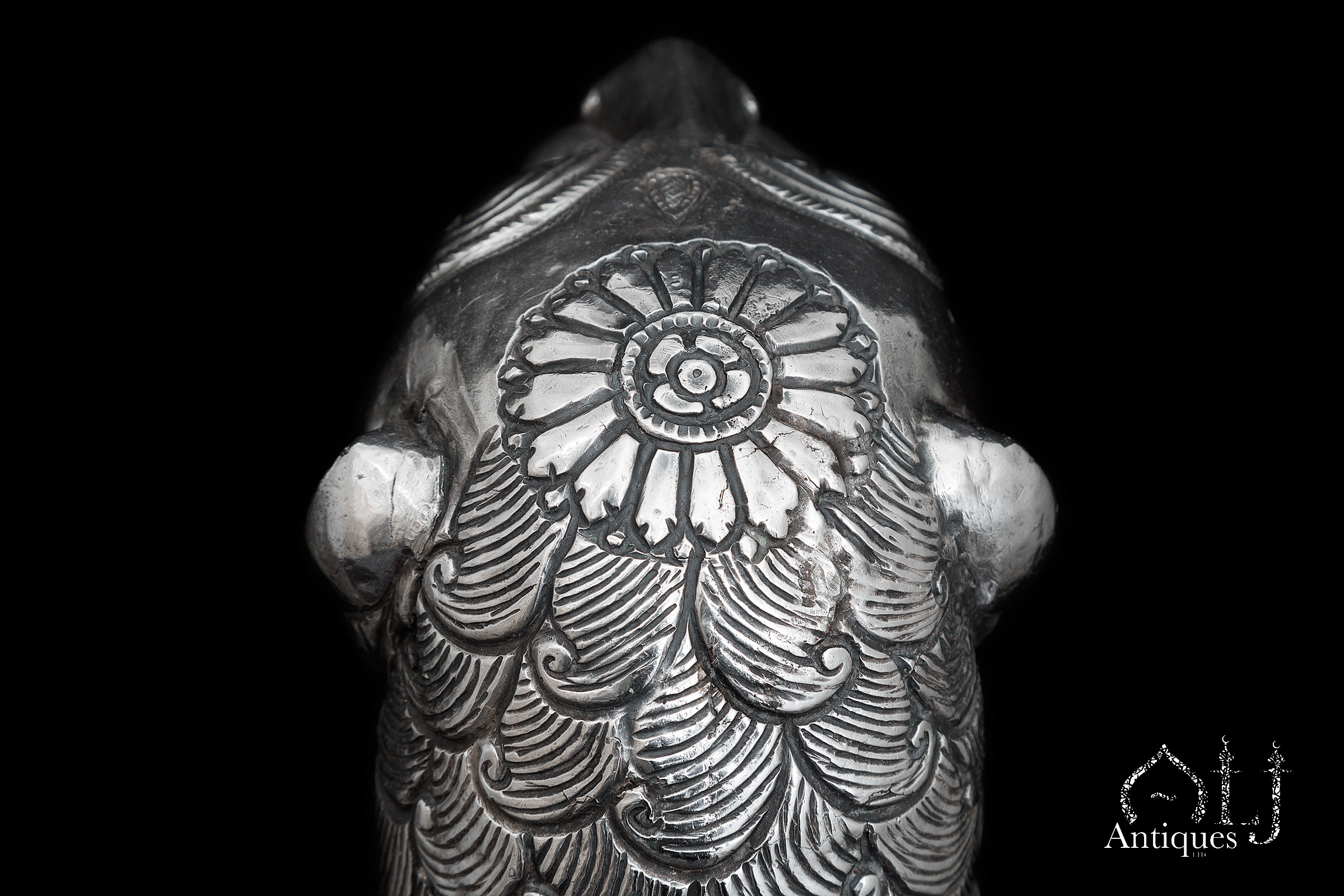
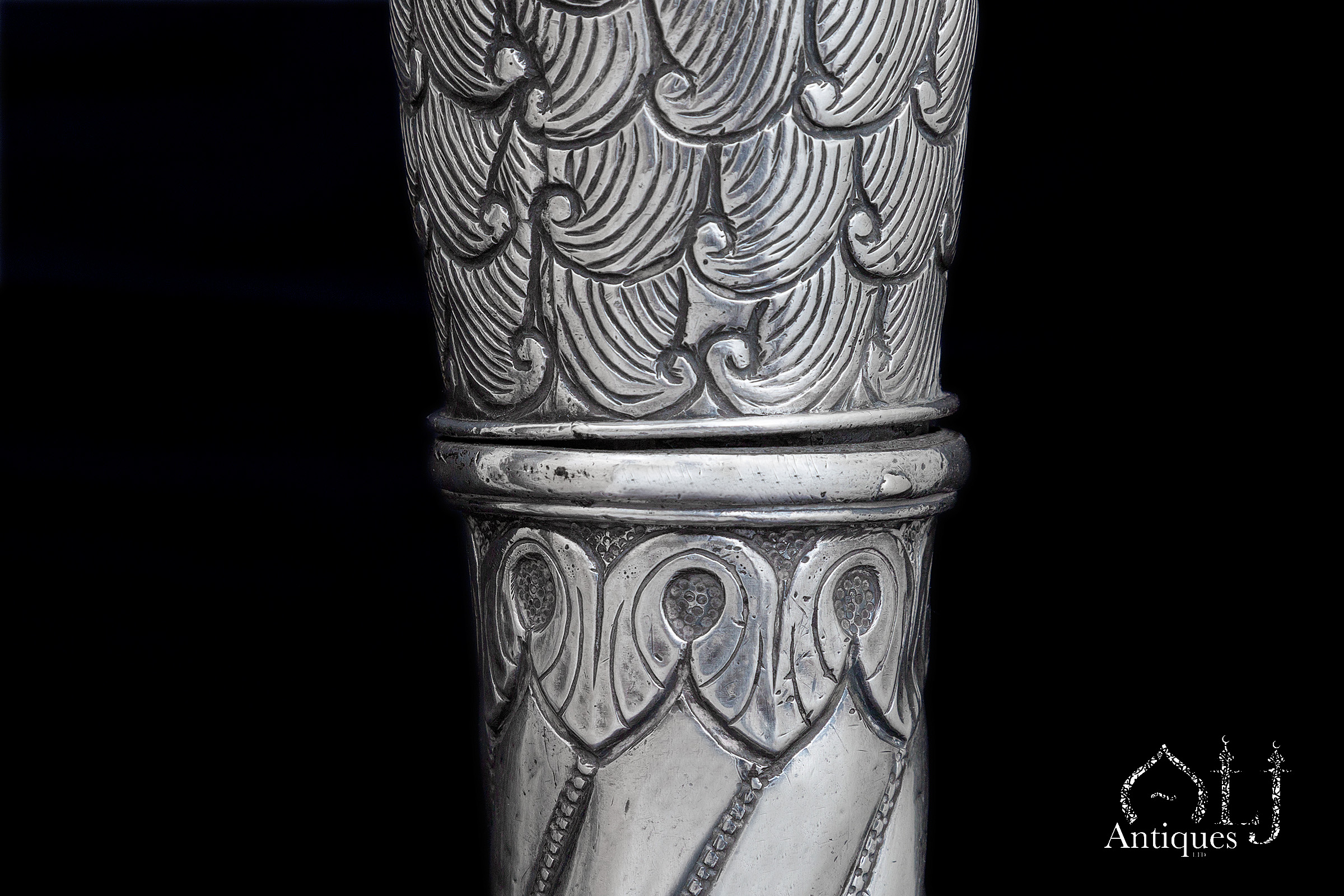
Made of finely chased and repoussé high-grade silver, each tapering shaft rises to a fierce lion-head finial, rendered with open fangs, bared teeth, and finely chased manes, both lion’s foreheads are decorated with a Bindi.
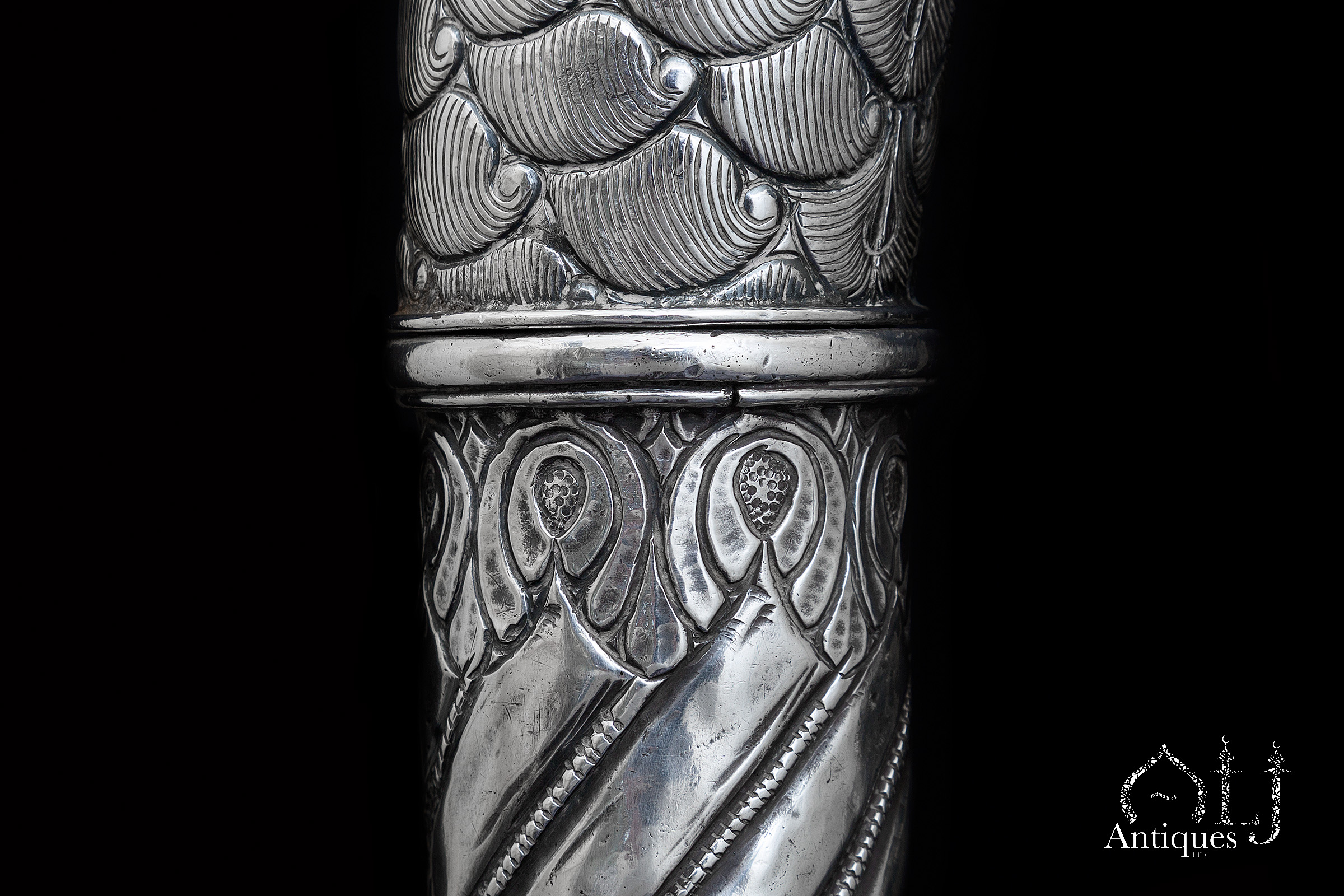
The shafts are decorated with a single row of fleshy palmette leaves at both the top and base, spiralling ribs bordered by delicate beaded bands along the centre, and a bulbous floral terminal. The overall design demonstrates the virtuosity of nineteenth-century Indian court silversmiths, combining martial symbolism with refined ornamental techniques typical of elite regalia produced for princely use.
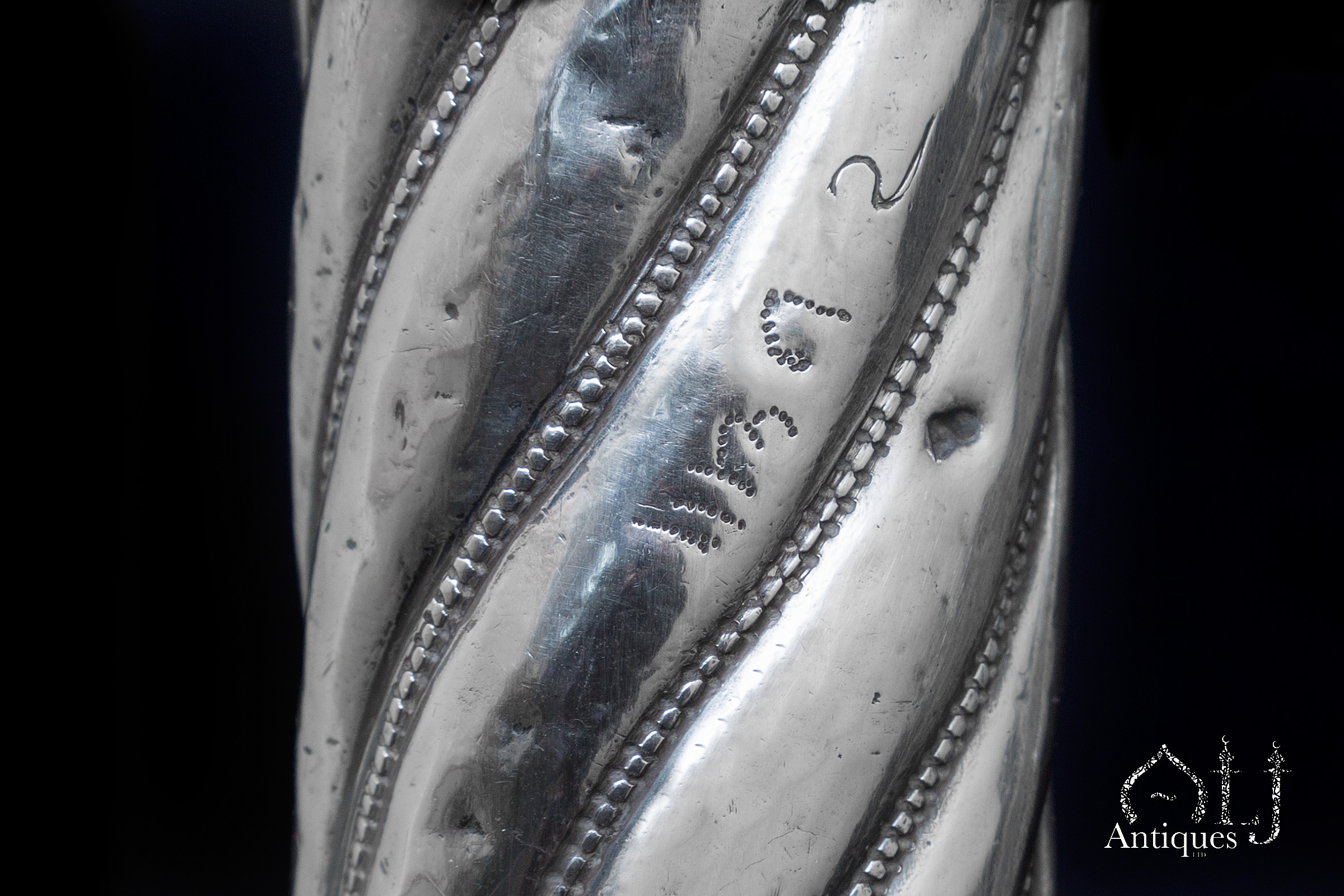
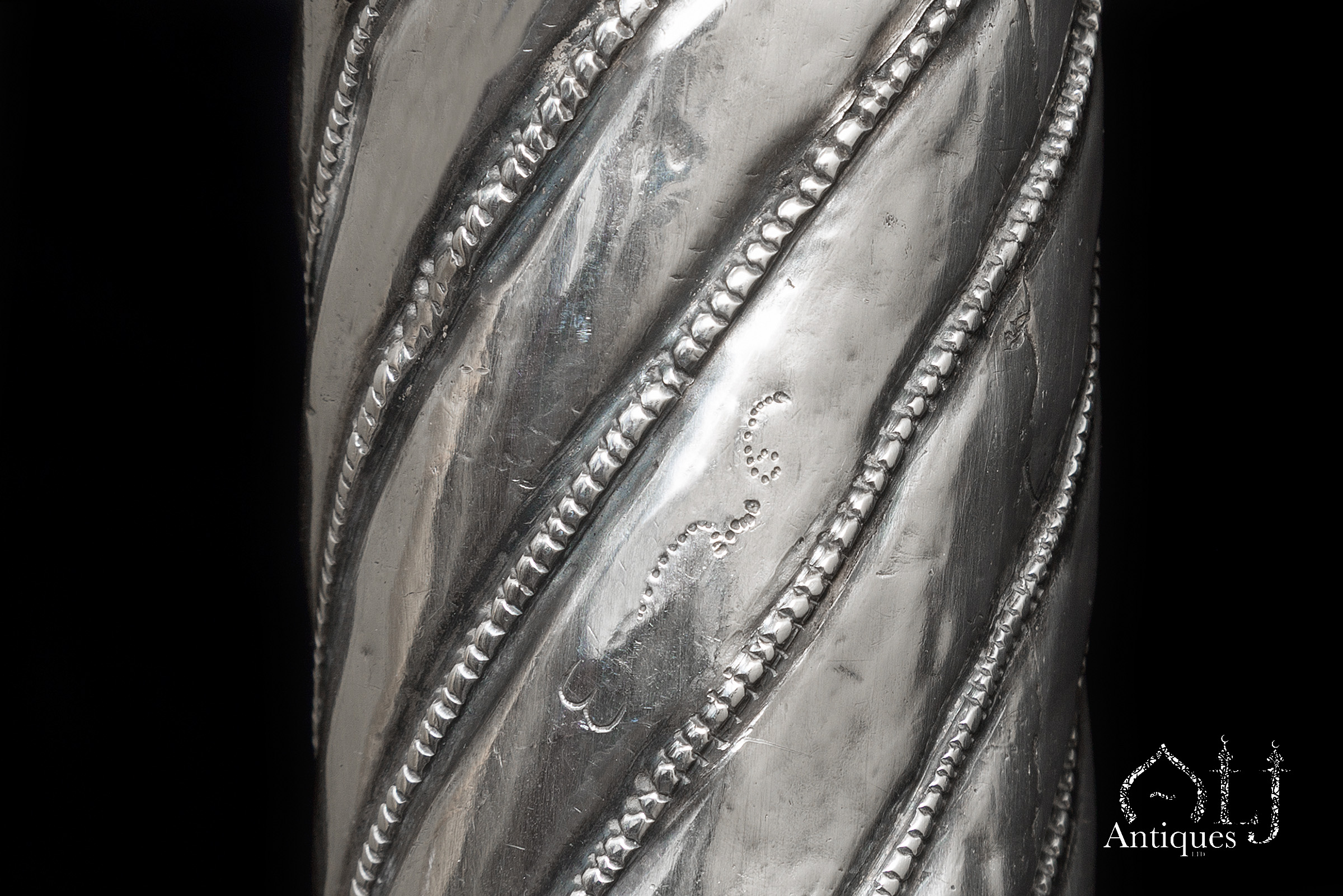
Both shafts bear dotted punch marks composed of minuscule circular impressions forming combinations of Devanagari letters—such as घ (Gha) or ध (Dha)—and Indian numerals (2 and 3 or 6, depending on orientation).
These marks are characteristic of nineteenth-century Indian silver regalia and are generally understood to represent internal Karkhana (workshop) or maker’s identifiers, rather than official assay stamps.
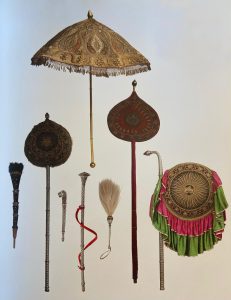
Within the hierarchy of the Indian court, the Soonta was a critical emblem of authority, rank, and ceremonial order. Carried by specialised attendants known as Soonta berdars, these maces visually announced the presence and status of the individual they accompanied. As recorded in Indian miniature painting and historical accounts, Soontas were borne alongside Morchals (PLEASE VISIT OUR LOT IDENTICAL NO. 660), standards, parasols, swords, and other insignia of sovereignty, forming an essential part of the ruler’s moving entourage. When not in use, they were often wrapped in protective cloths and formally displayed with other state regalia.
The lion (Siṃha), emblem of courage, kingship, and divine power, was a favoured motif in Deccani and North Indian court art, resonating across both Hindu and Islamic traditions. Its presence here underscores the symbolic authority invested in these ceremonial maces.
Comparable examples underline the significance and rarity of such objects. A closely related pair of Deccani lion-headed silver maces was sold at Christie’s London, 7 October 2011, lot 433. An elephant-headed Soonta, formerly belonging to a Greek diplomat stationed in Delhi in 1963–64, appeared in the same rooms on 25 May 2017, lot 106. Another related lion-headed mace, with a more curved profile than the present pair and also attributed to the Deccan, is preserved in The Wallace Collection, London (inv. no. OA 1760), published in Mughal Silver Magnificence (XVI–XIXth Century), exhibition catalogue, 1987, p. 64, cat. no. 43.
Together, these examples affirm the enduring ceremonial, artistic, and symbolic importance of the Soonta as a core component of royal processional culture in India, from the Deccan sultanates to the Mughal and northern princely courts.
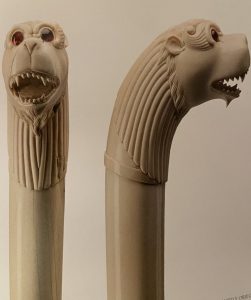
Comparable example made out of carved ivory and encrusted with gold and ruby eyes, (courtly objects) are found in the Royal Collection Trust (RCIN 11409), also illustrated in Splendours of the Subcontinent: A Prince’s Tour of India 1875–6 (Kajal Meghani, 2017, pp. 81).
Acknowledgment
The above text and literature were produced with the valued collaboration of Ms. B. C. (with thanks).