Description
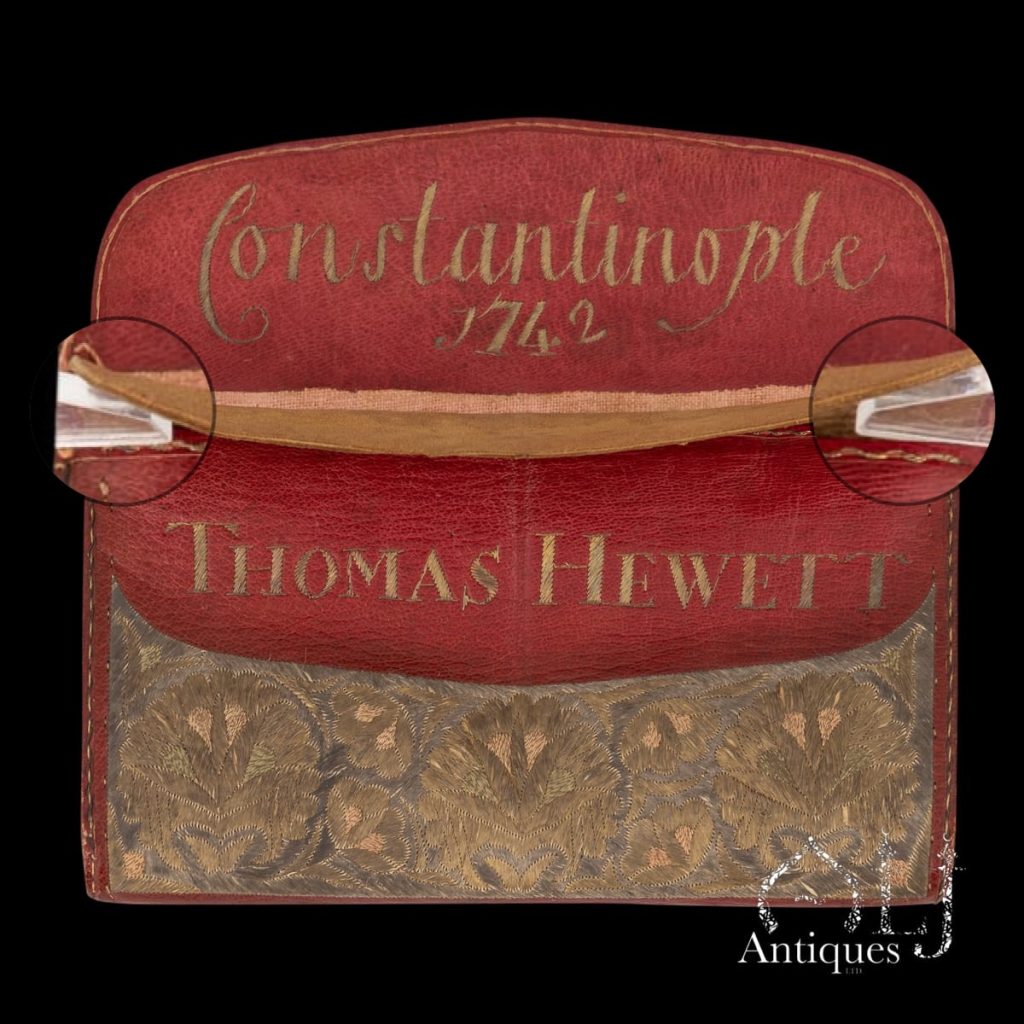
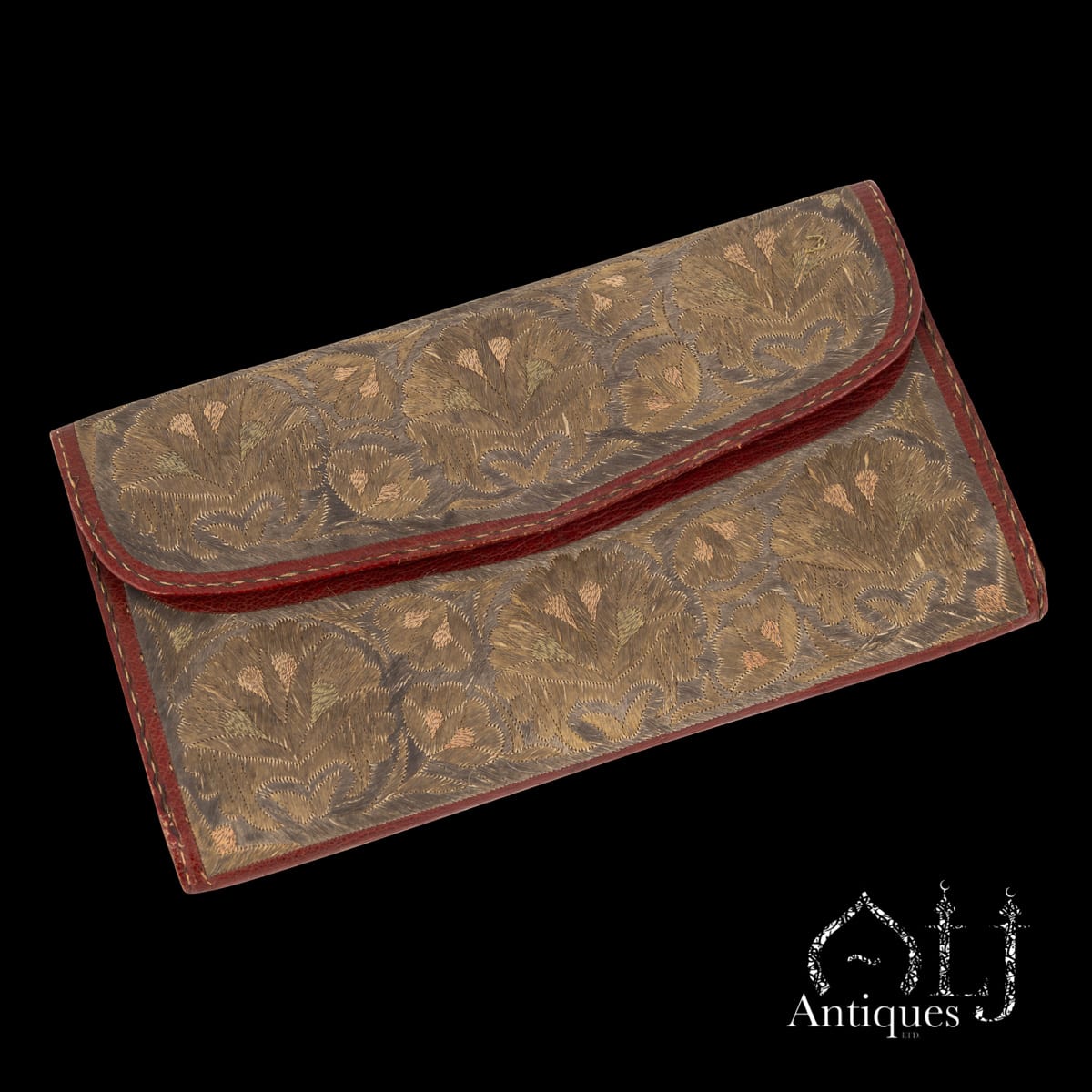
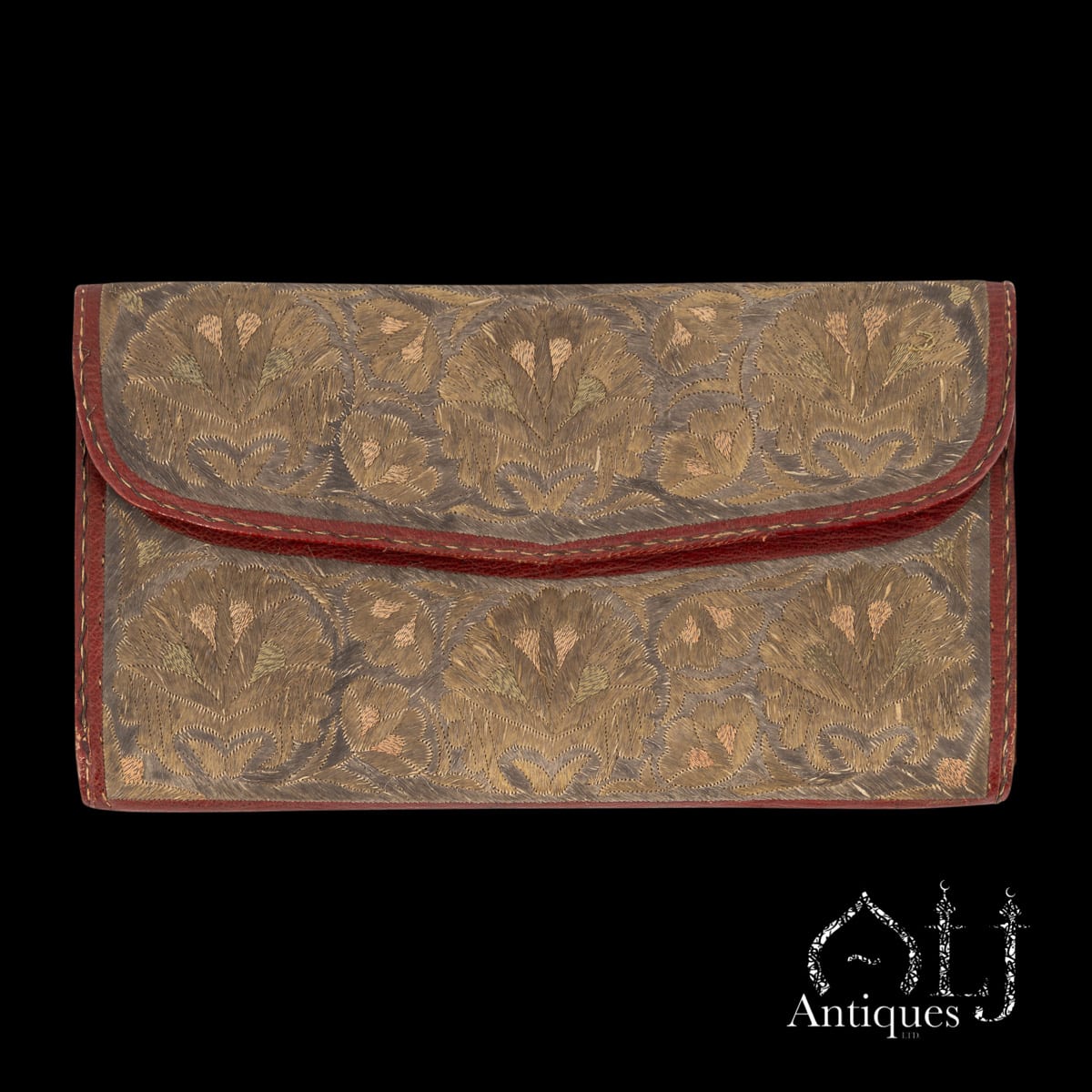
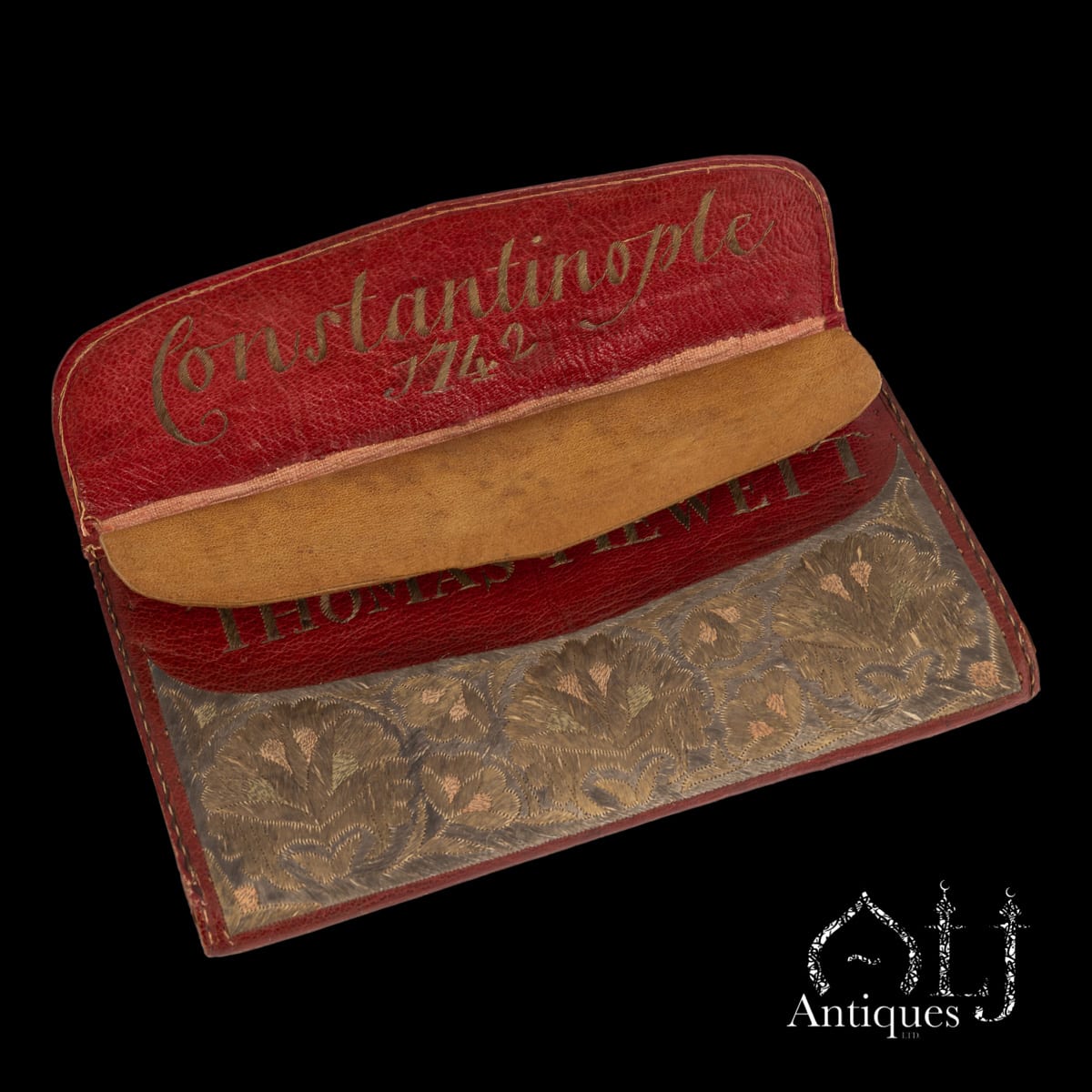
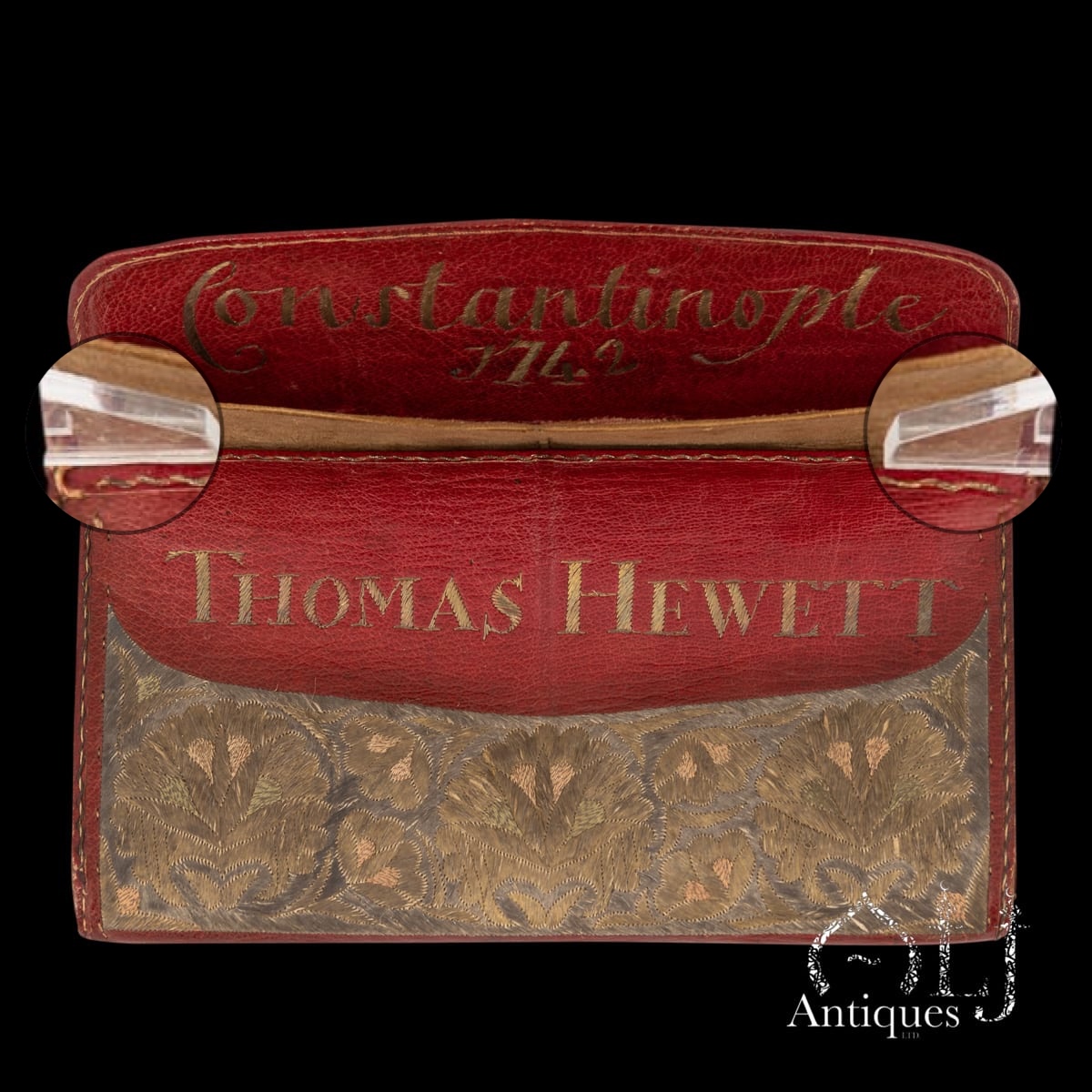
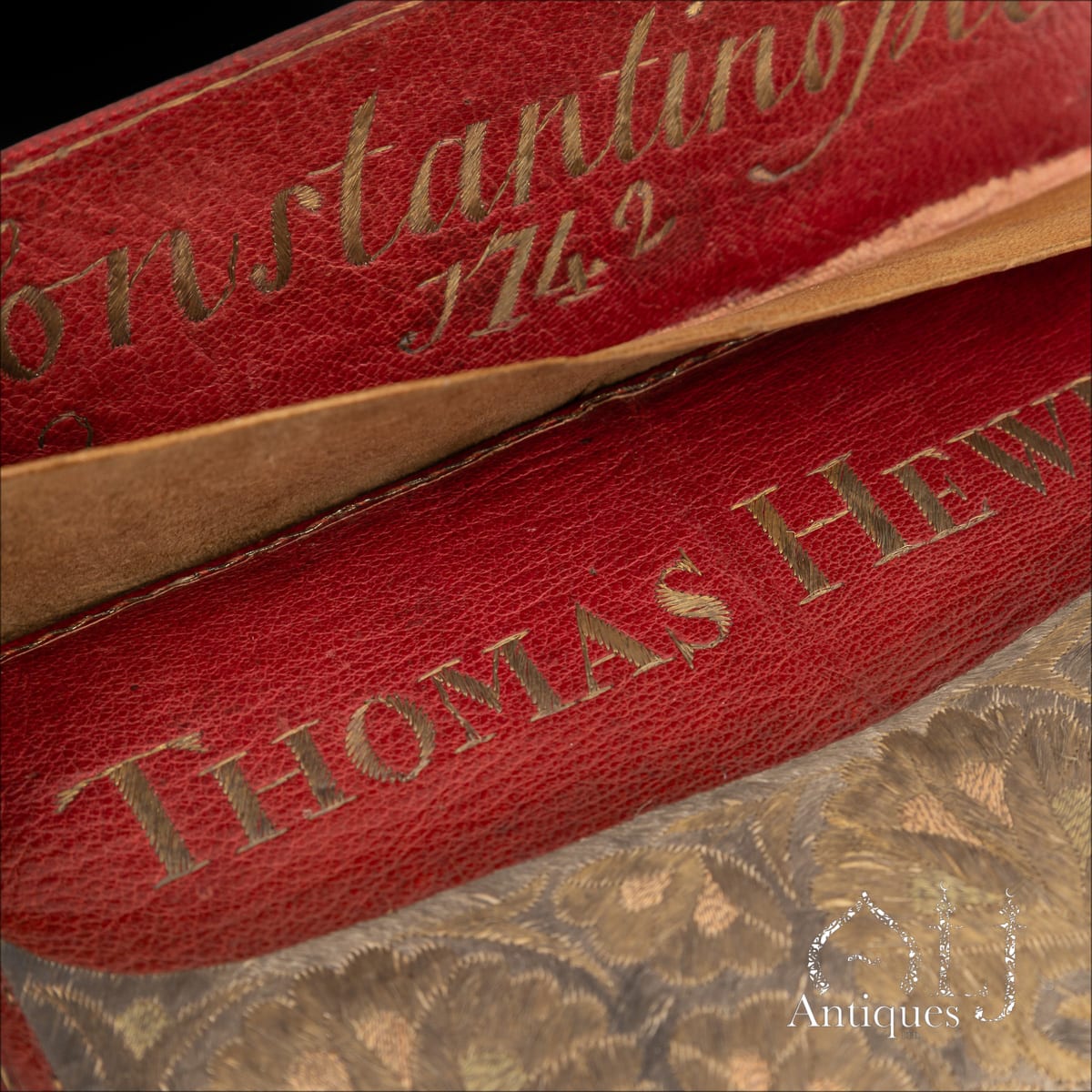
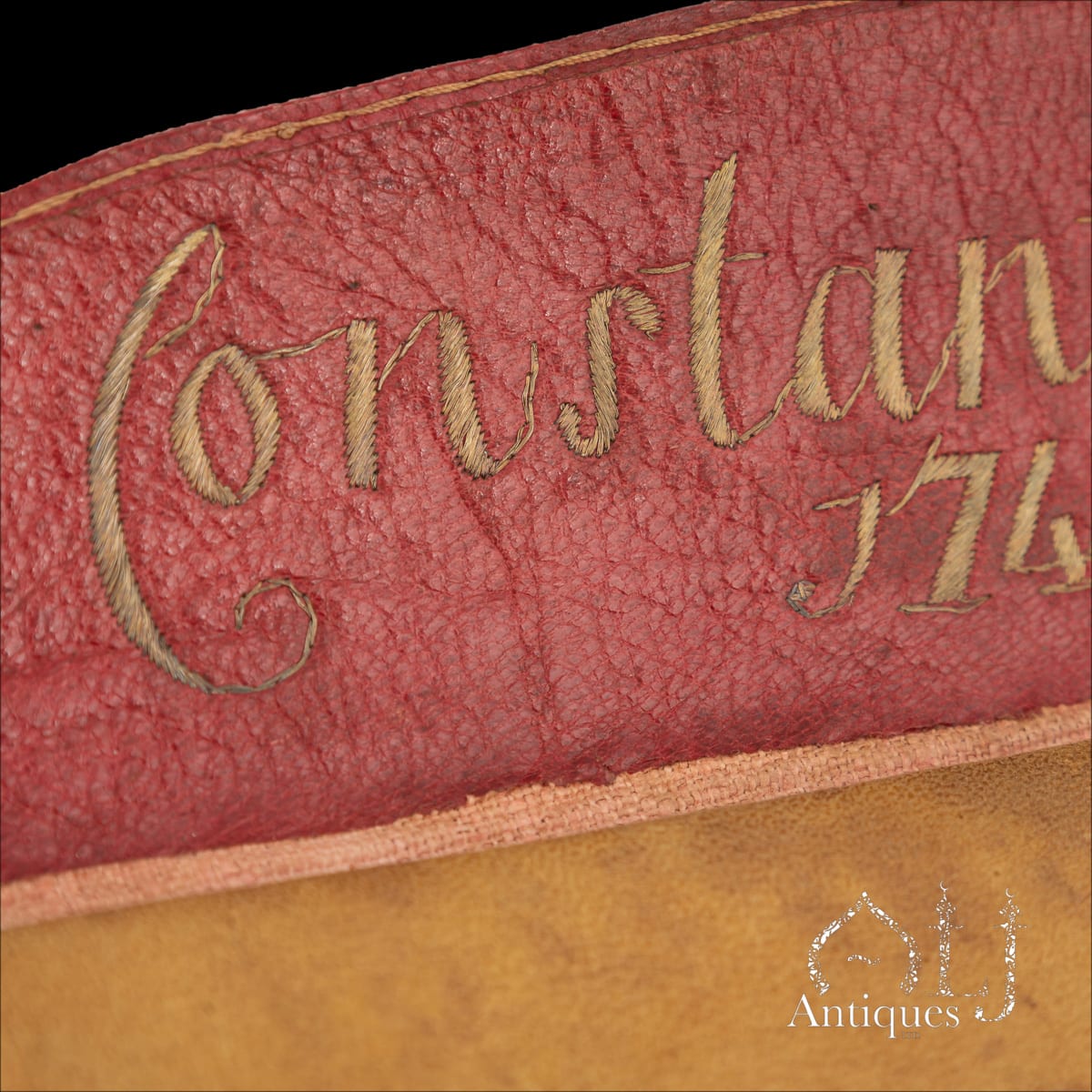
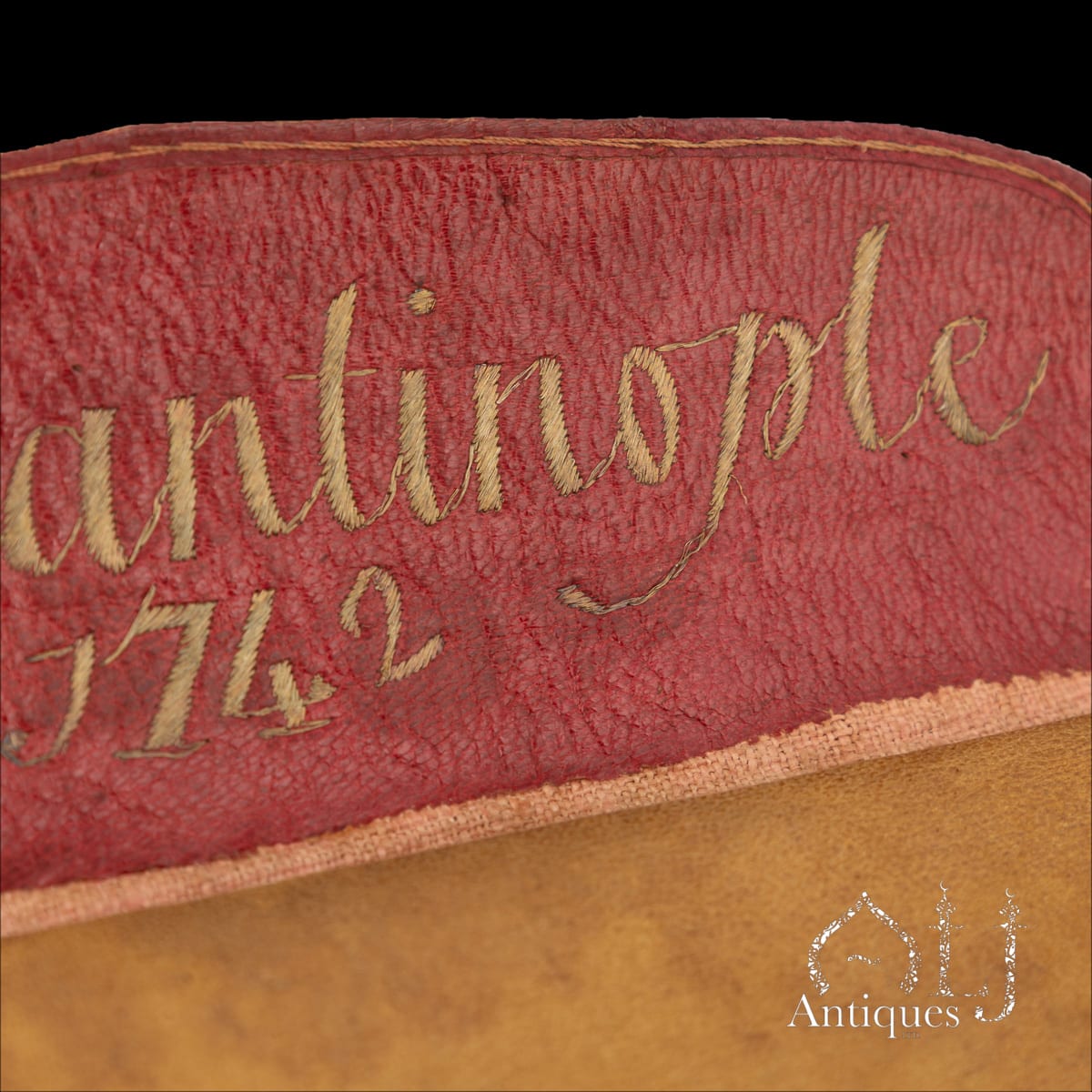
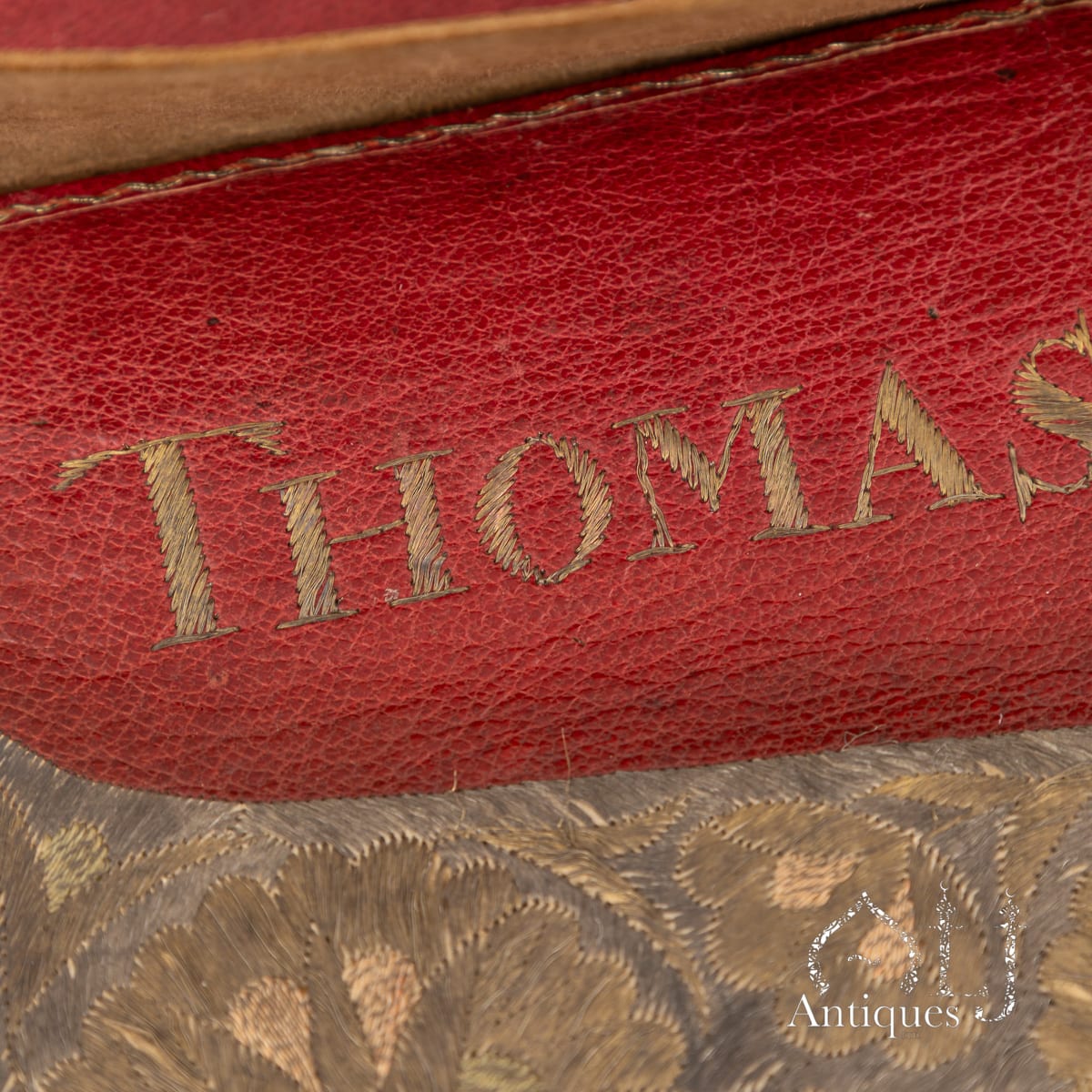
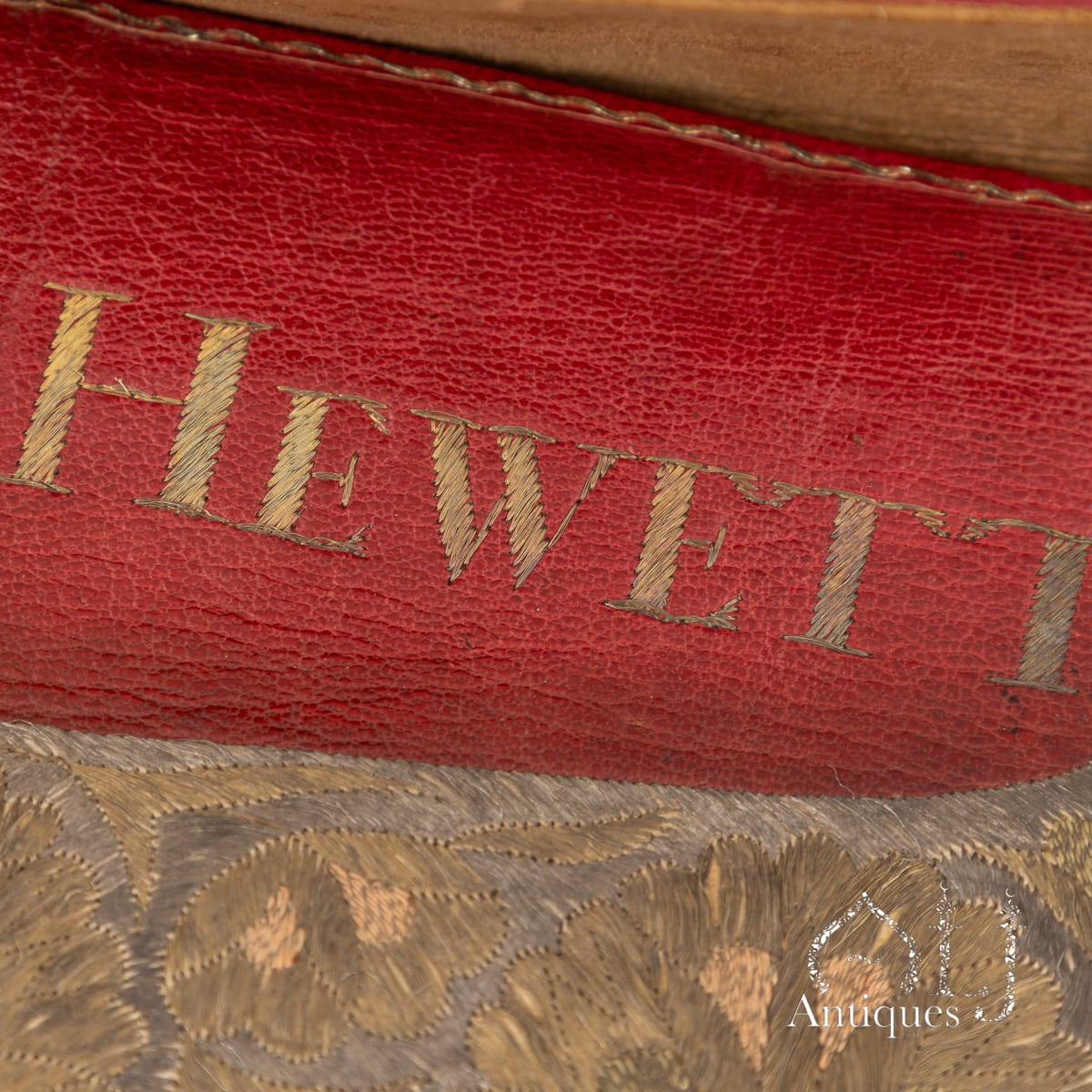
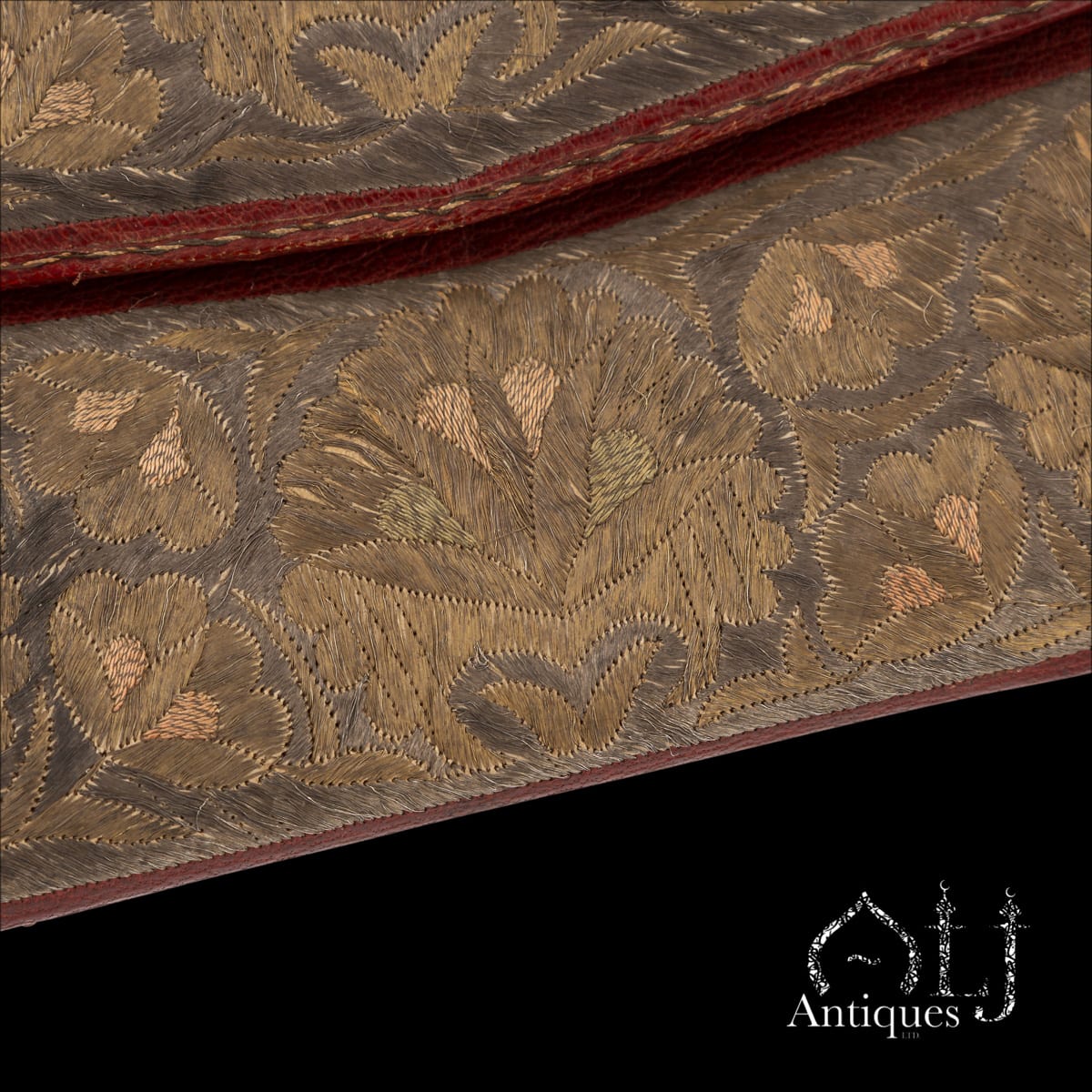
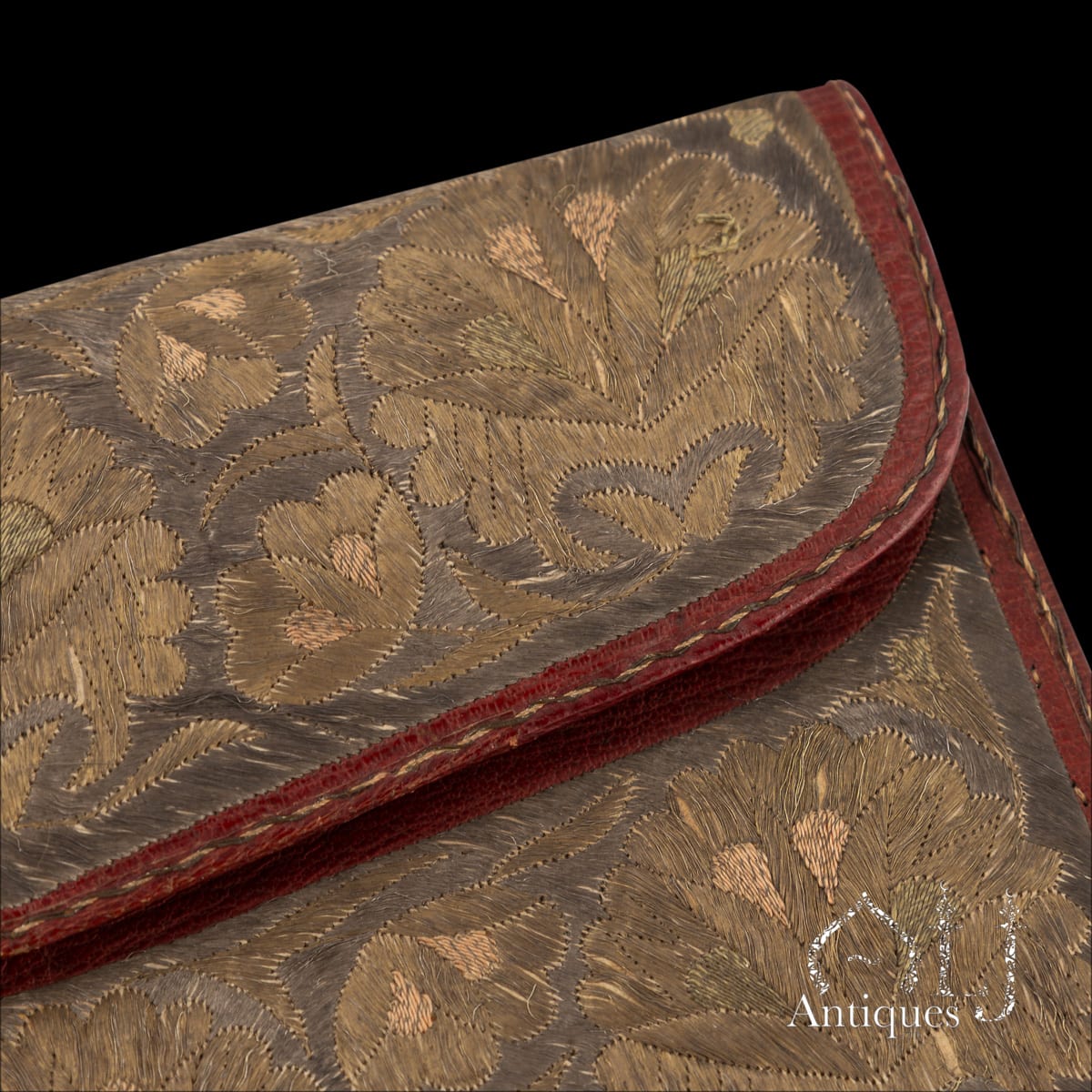
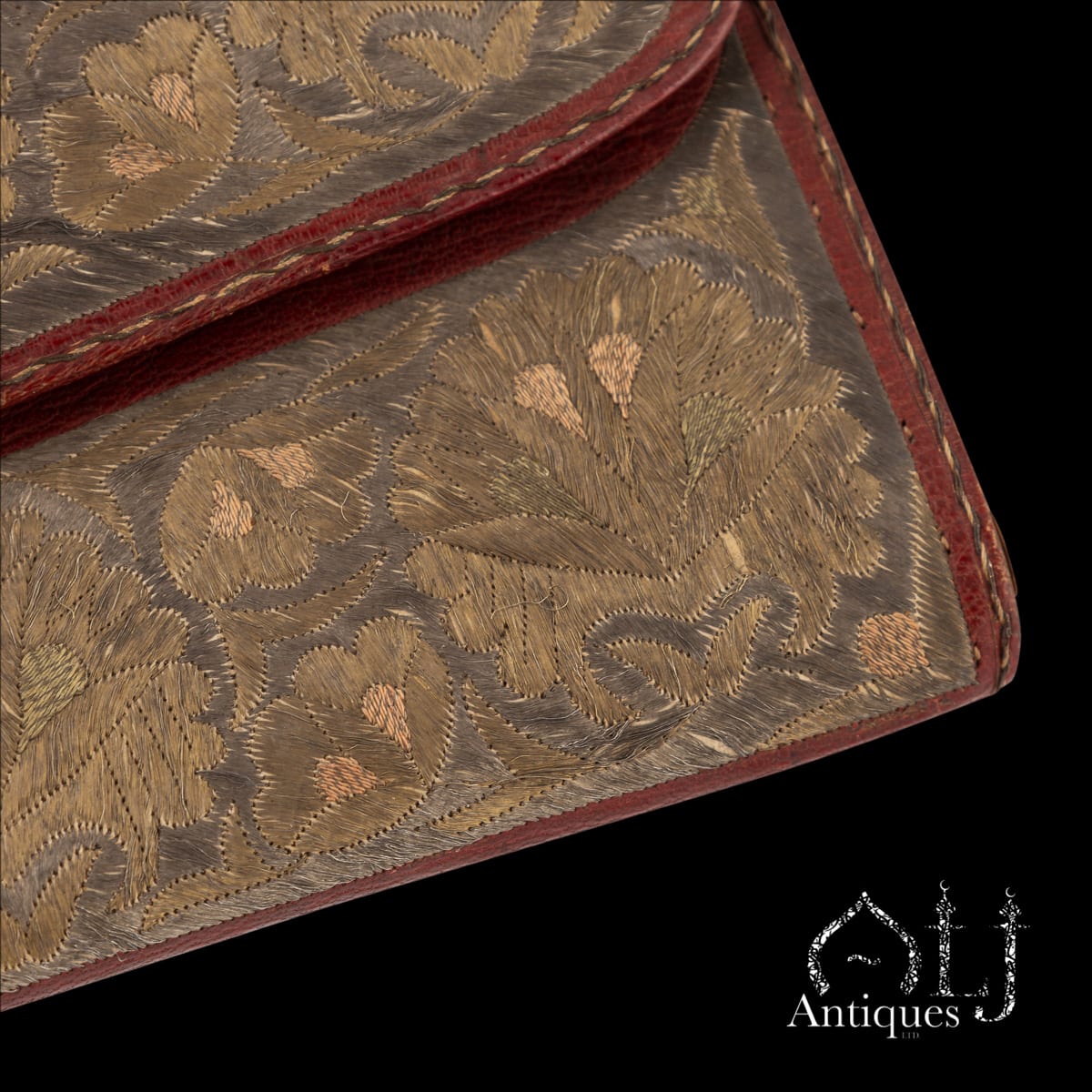
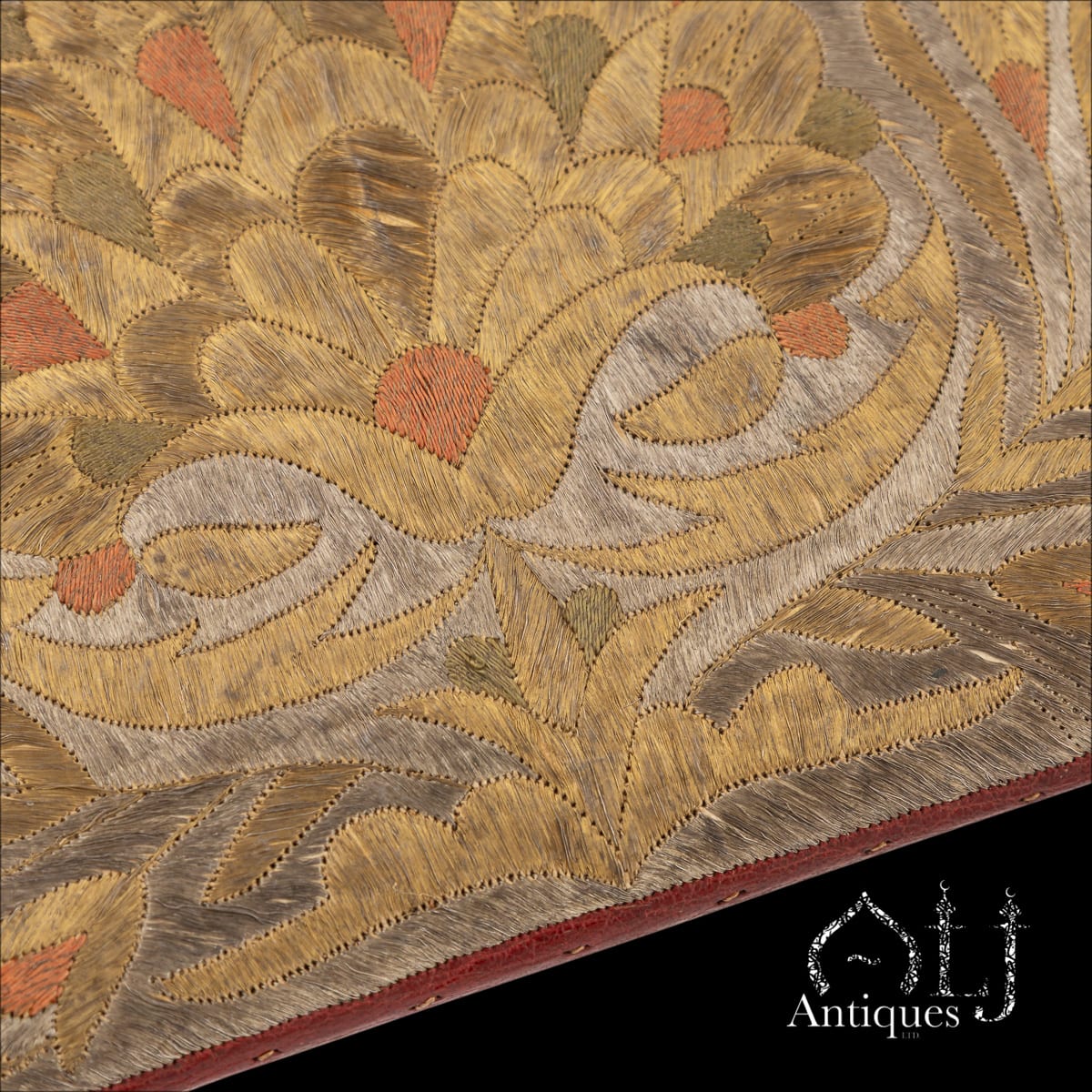
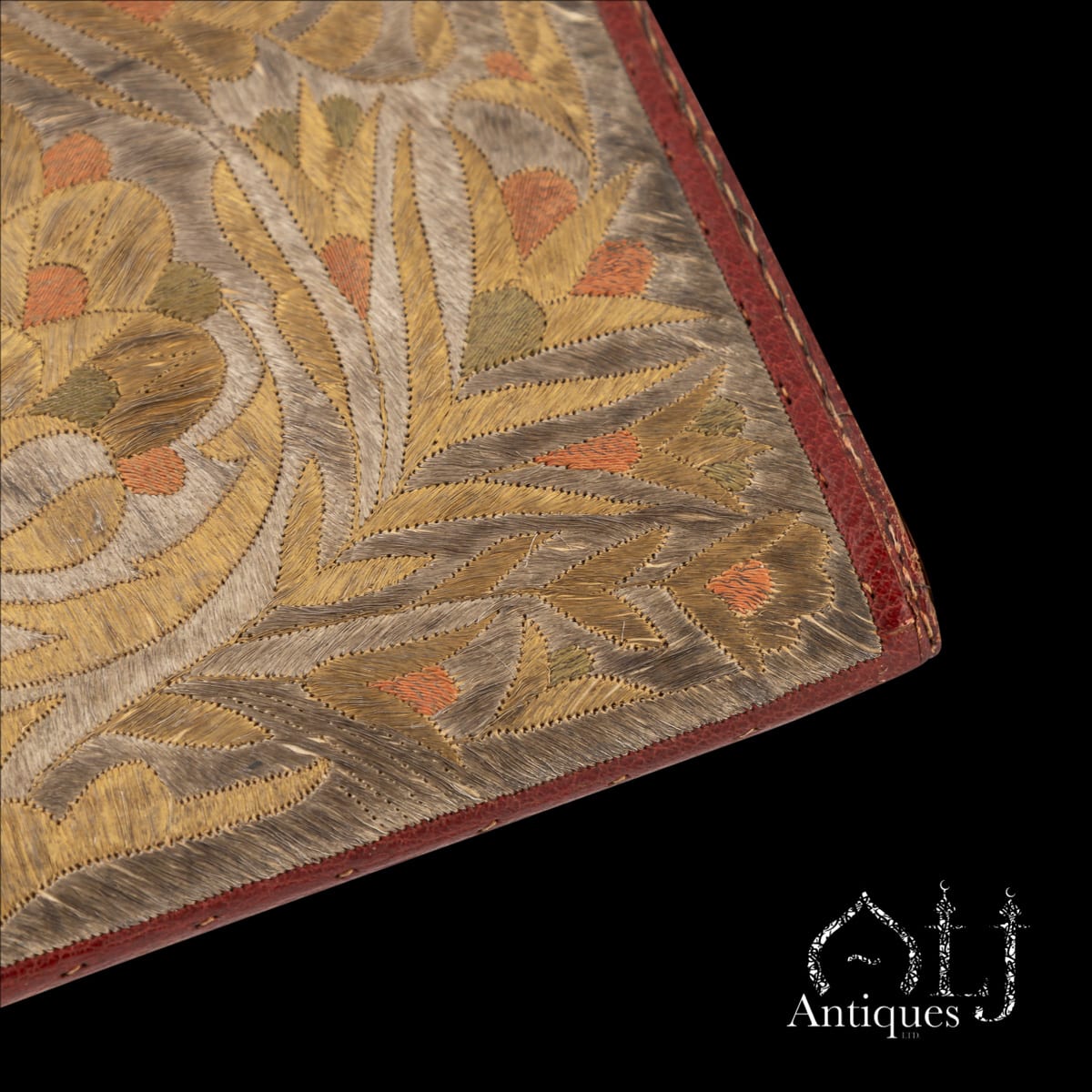
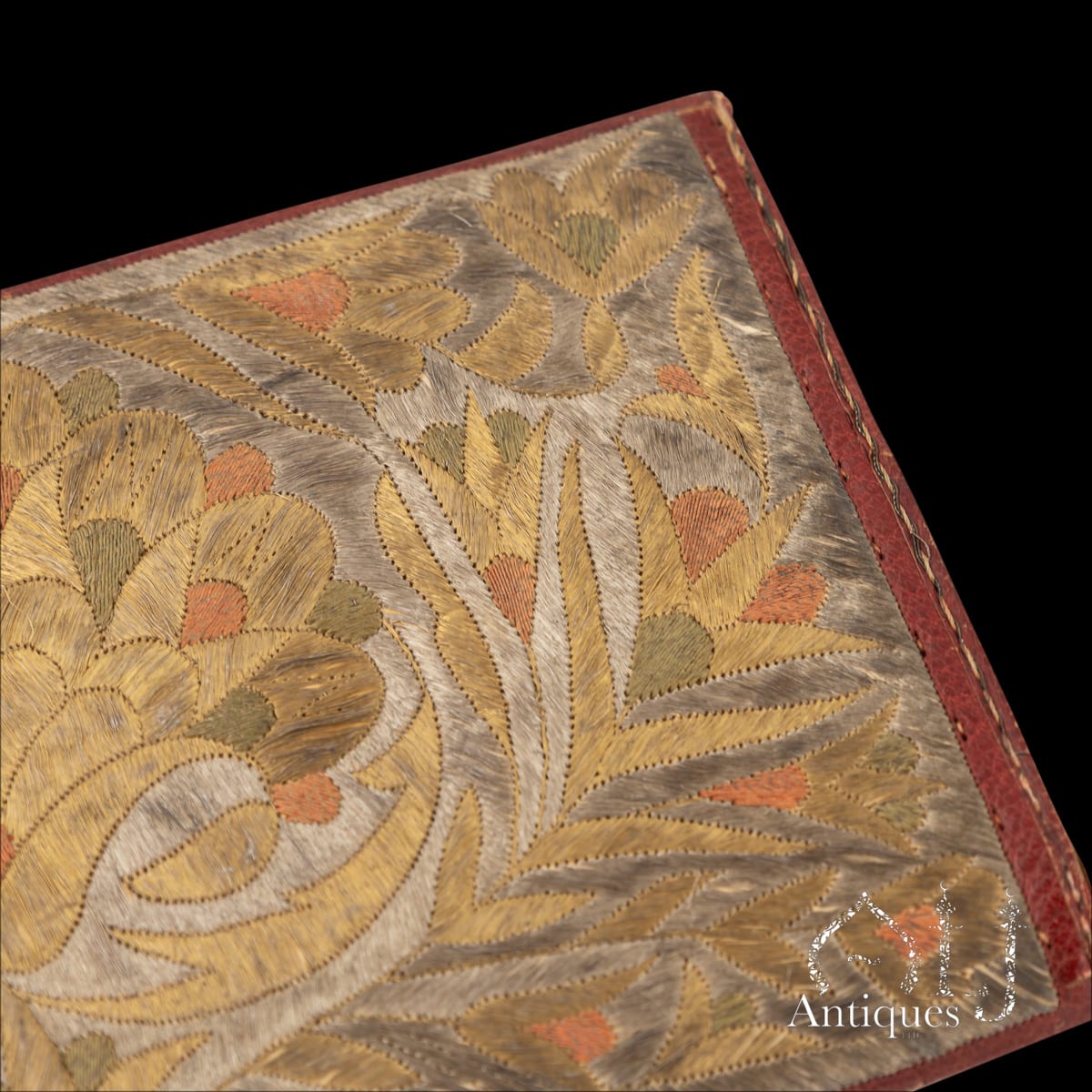
This exceptional Ottoman embroidered Morocco leather letter and document wallet (Brieftasche) represents one of the finest surviving examples of eighteenth-century Ottoman luxury leatherwork. Produced in Constantinople (Istanbul) and embroidered with the inscription “Constantinople 1742” together with the name “Thomas Hewett”, it belongs to a rare and highly distinctive group of personalised leather document wallets produced in the Ottoman capital for European diplomats, merchants, military officers and distinguished travellers.
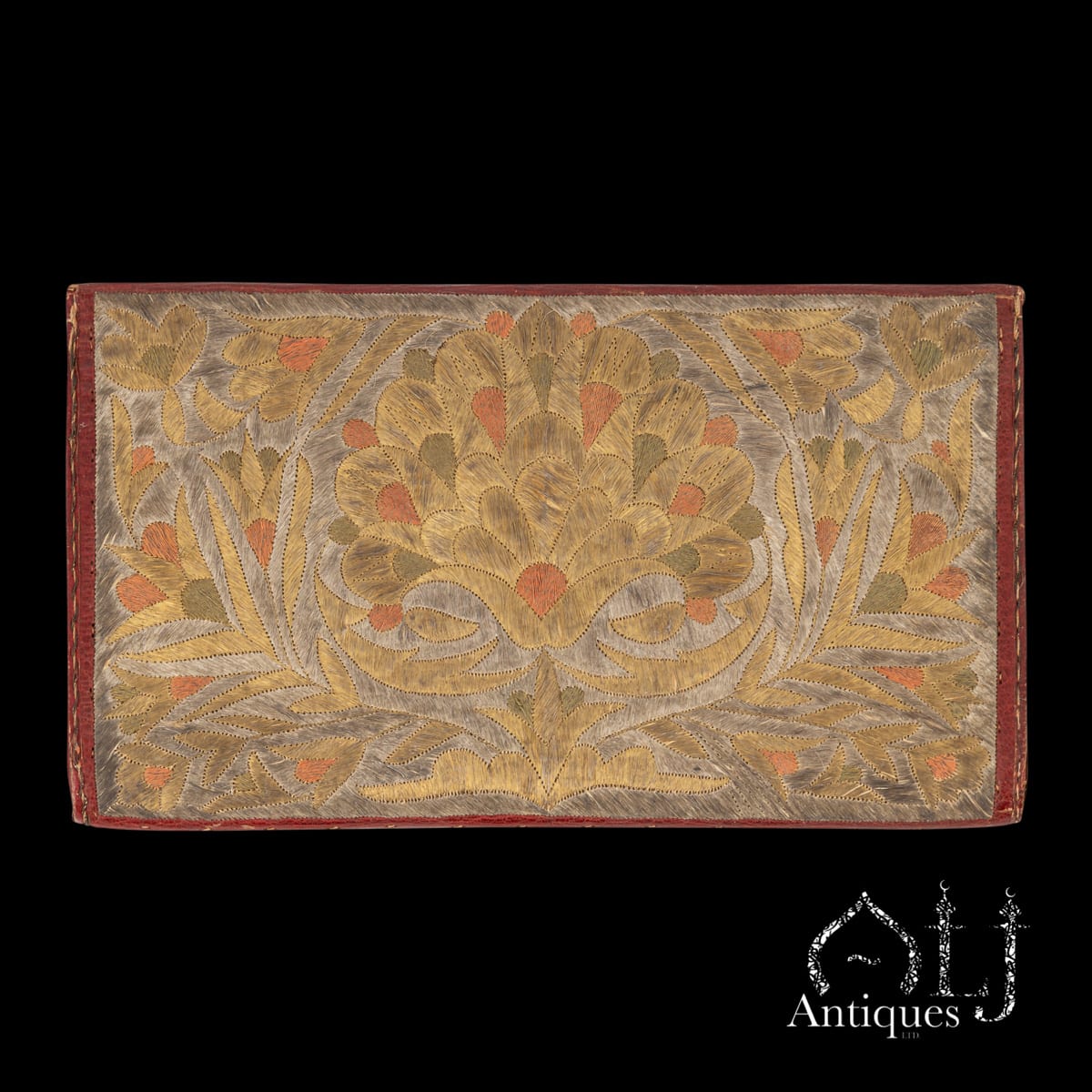
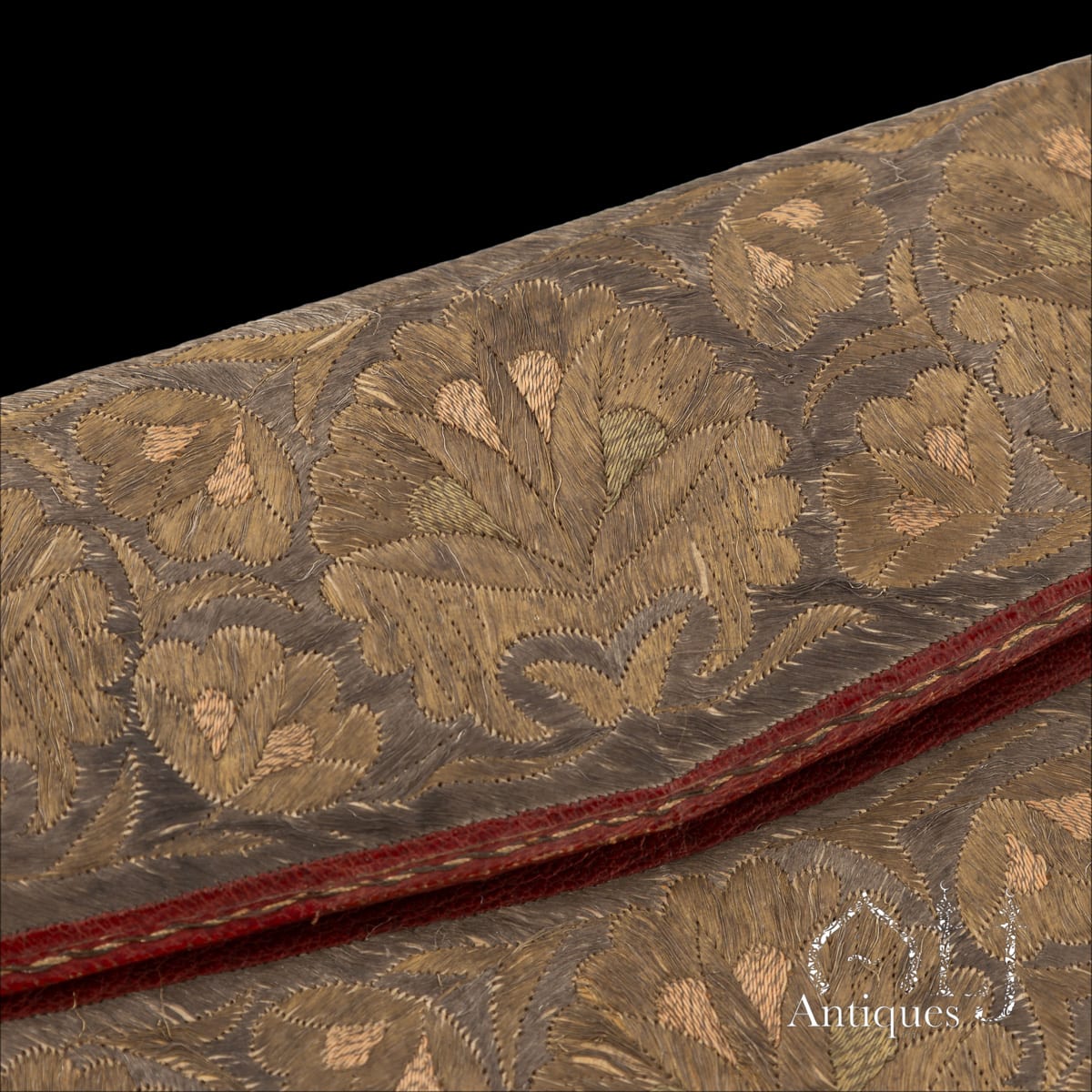
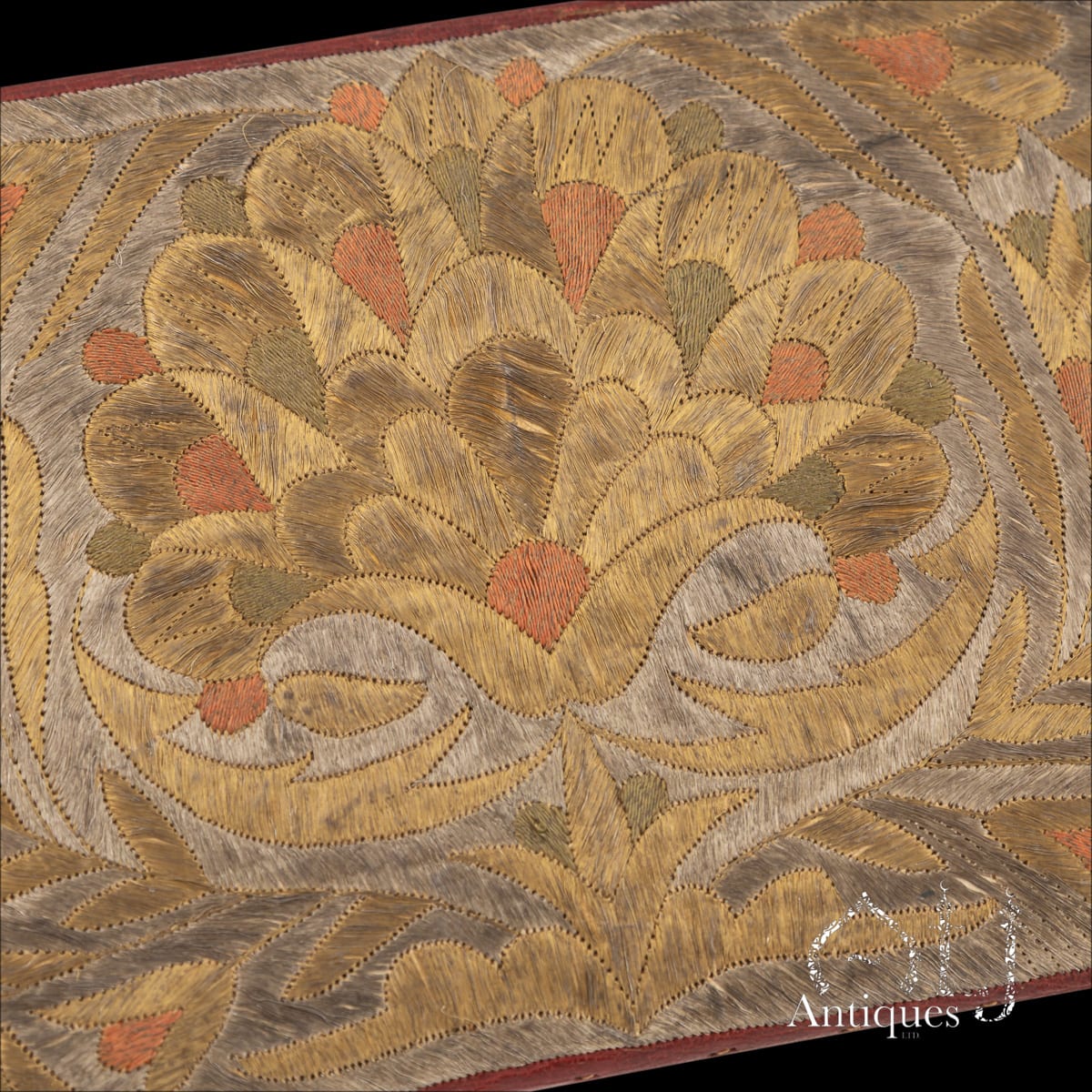
Finely constructed from crimson Morocco goatskin leather, the wallet is richly embroidered in appliqué technique with finely couched gold and silver wrapped metal threads, beautifully highlighted with sandy-pink and green silk embroidery. The elegant decoration comprises stylised tulips, carnations, palmettes, scrolling vines and split-leaf arabesques arranged in harmonious symmetry, reflecting the refined decorative vocabulary of the imperial embroidery workshops of Constantinople during the first half of the eighteenth century.
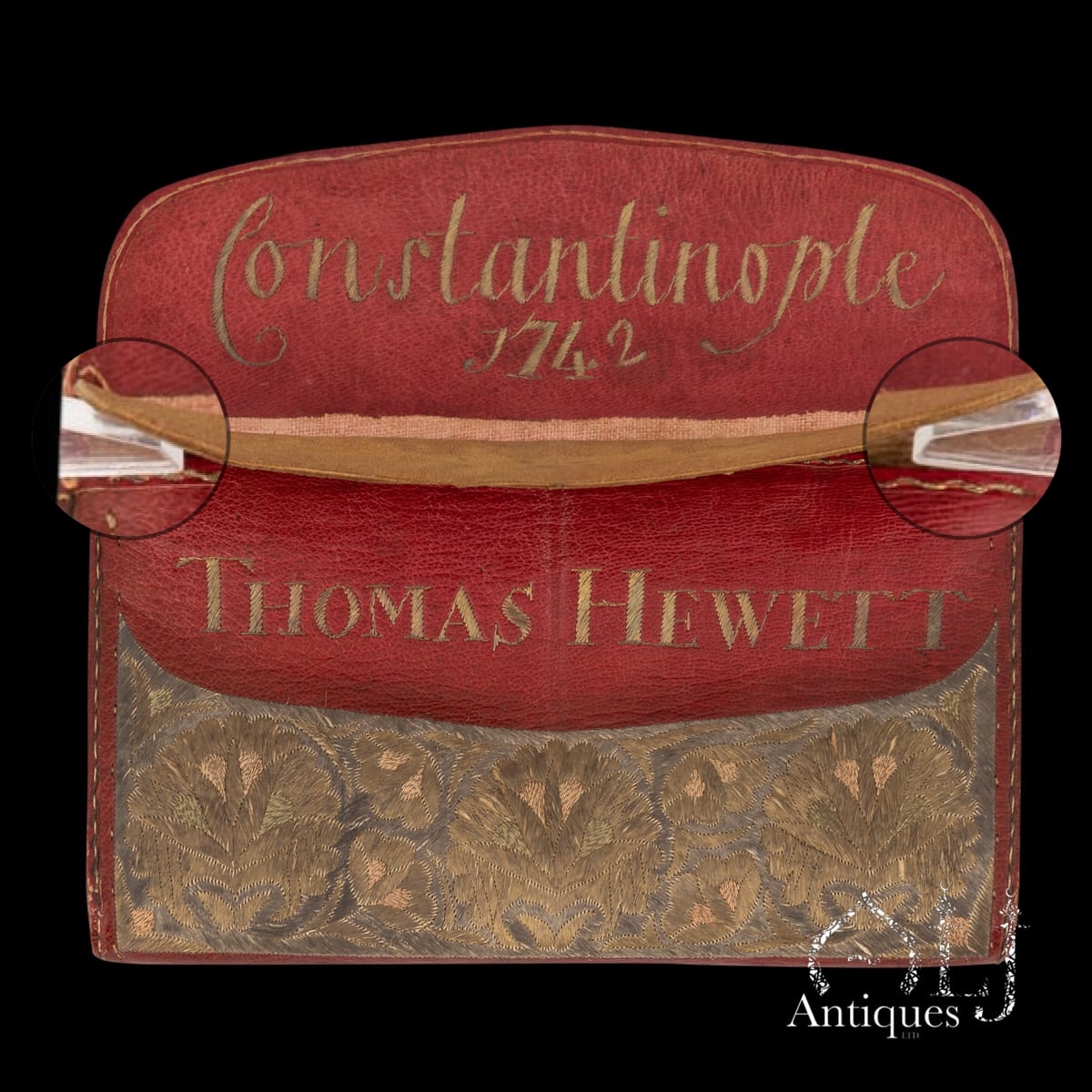
The embroidered inscription “Constantinople 1742”, together with the name “Thomas Hewett”, identifies an early recorded owner and provides an exceptionally rare documentary record of the wallet’s eighteenth-century history. Although Thomas Hewett’s precise identity has not yet been established with certainty, the inscription firmly places the wallet within a well-documented group of Ottoman embroidered leather wallets personalised for European visitors to the Ottoman capital.
Opening the wallet reveals its original interior fitted with three leather-lined compartments separated by an accordion-style folding divider, designed for carrying letters, passports, bills of exchange, official documents and personal correspondence. Modern scholarship recognises these objects not as ordinary money purses but as luxurious travelling letter and document wallets, reflecting the practical needs of diplomats, merchants and military officers travelling throughout the Ottoman Empire and the Mediterranean.
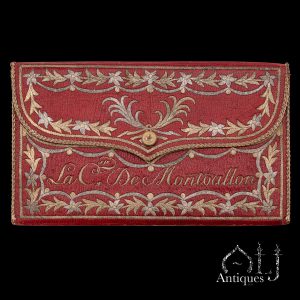
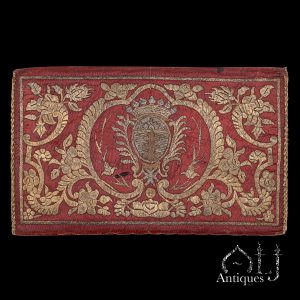
Comparable examples are preserved in major museum collections, including the Victoria and Albert Museum, the Staatliche Kunstsammlungen Dresden (Türckische Cammer), the Badisches Landesmuseum Karlsruhe, the Sadberk Hanım Museum, the Rijksmuseum, and the Ömer M. Koç Collection, while numerous further examples have been published in important scholarly studies. Together these demonstrate that such embroidered wallets formed a prestigious category of Ottoman luxury craftsmanship from the late seventeenth through the late eighteenth century.
The wallet was later preserved together with a remarkable group of family objects associated with General Sir John Doran KCB (1831–1904), a distinguished British Army officer whose military career extended throughout India, Afghanistan and the North-West Frontier. Accompanying the wallet are a Christian devotional medal depicting Jerusalem, a lock of hair preserved with a handwritten note dated September 1868, and a notebook belonging to Georgina Magrath, General Doran’s daughter. The Jerusalem medal raises the intriguing possibility that the wallet accompanied one of its later owners during a pilgrimage or journey through the Holy Land. While this cannot be confirmed with certainty, the accompanying objects strongly suggest that the wallet remained a treasured personal possession for successive generations, travelling with its owners throughout the Ottoman world and beyond.
Combining exceptional craftsmanship, outstanding preservation, remarkable documentary inscriptions and an unusually well-recorded history, this wallet ranks amongst the finest surviving examples of Ottoman embroidered leatherwork and offers a rare insight into the artistic refinement, diplomatic culture and international connections of eighteenth-century Constantinople.
- Comparable Dated Examples
Comparable Ottoman embroidered leather letter and document wallets are known dated:
- 1682 – Victoria and Albert Museum.
- 1696 – Comparable silver-thread embroidered wallet.
- 1709 – Staatliche Kunstsammlungen Dresden (Türckische Cammer).
- 1741 – Comparable personalised embroidered wallet.
- 1765 – Comparable gilt-thread embroidered wallet.
- 1767 – Comparable Ottoman embroidered wallet.
- 1768 – Comparable silver-thread embroidered wallet.
- 1772 – Comparable personalised wallet inscribed “Constantinople 1772” and “Don Francisco de Llovera.”
- 1775 – Comparable embroidered wallet.
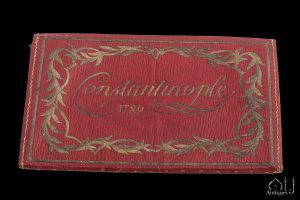
- 1789 – Comparable Constantinople embroidered wallet.
Together, these examples demonstrate the continuous production of this distinctive type of luxury embroidered leather letter and document wallet in Constantinople from the late seventeenth through the late eighteenth century.