
Description
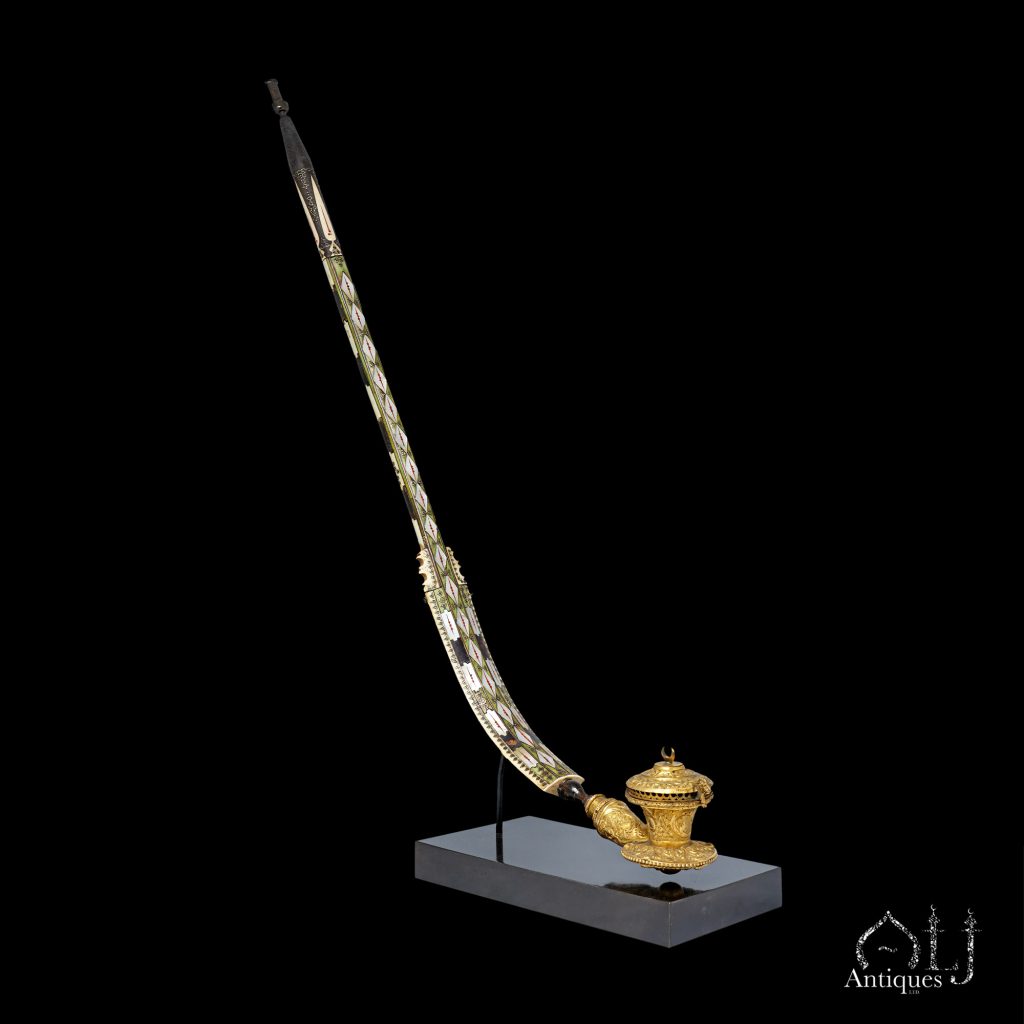
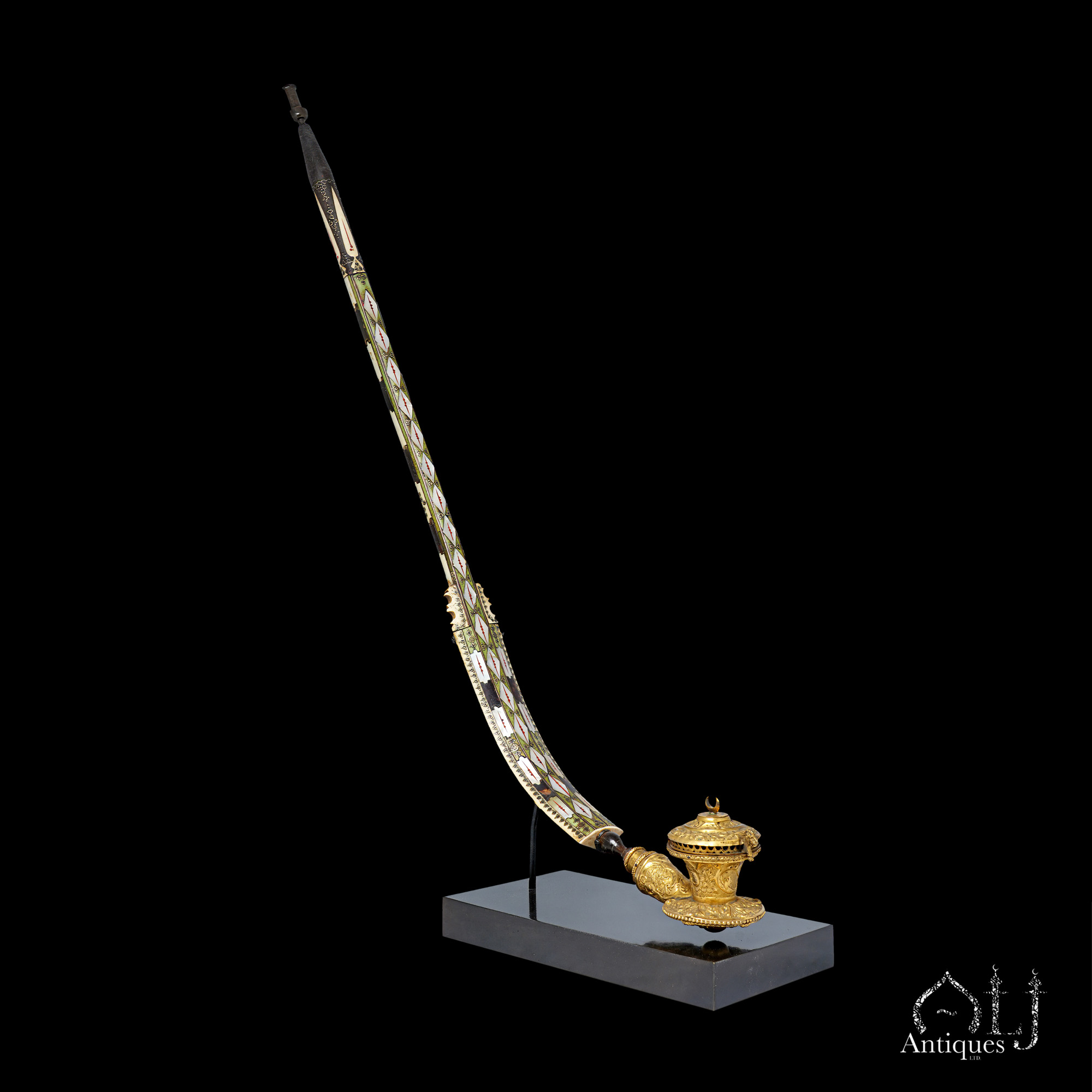
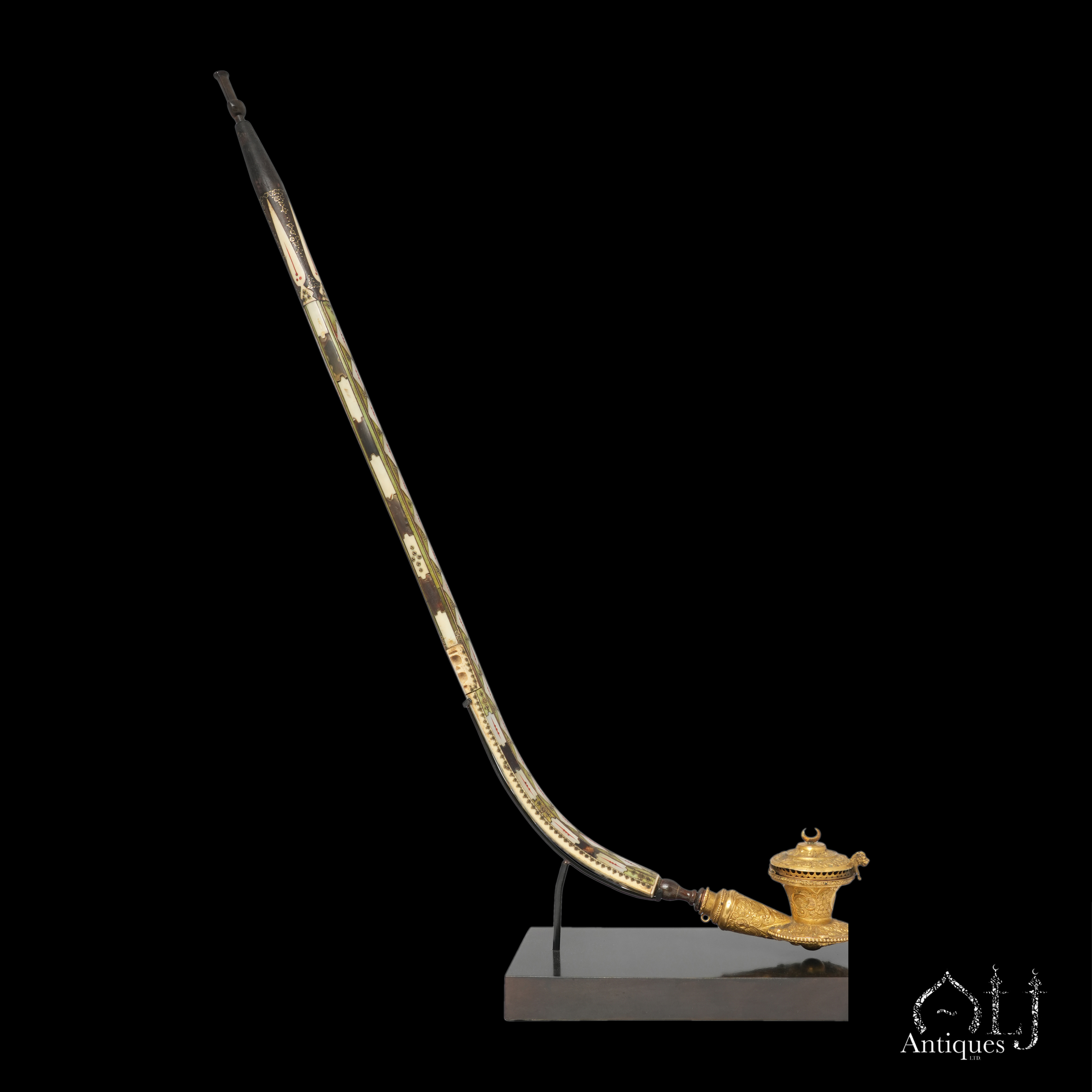
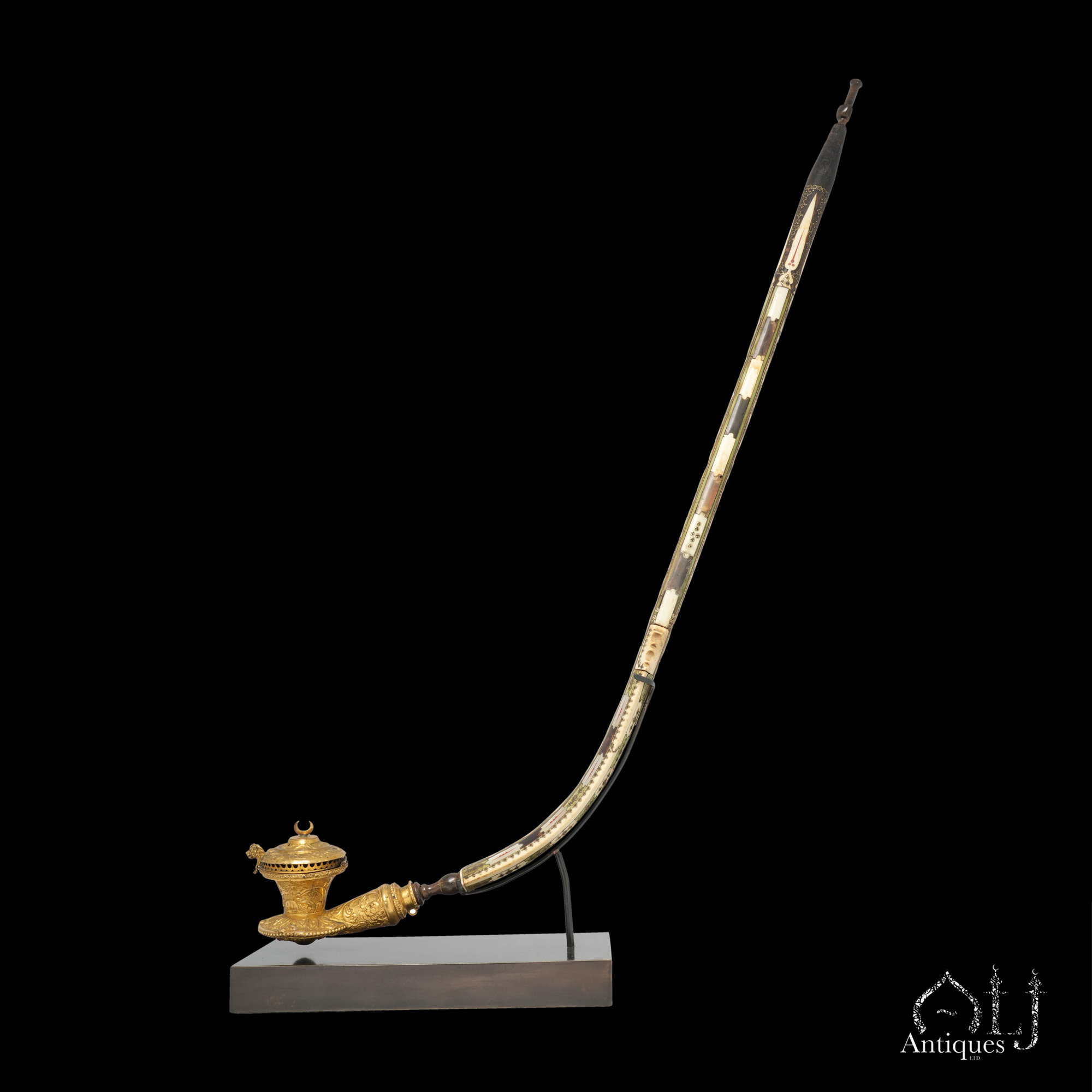
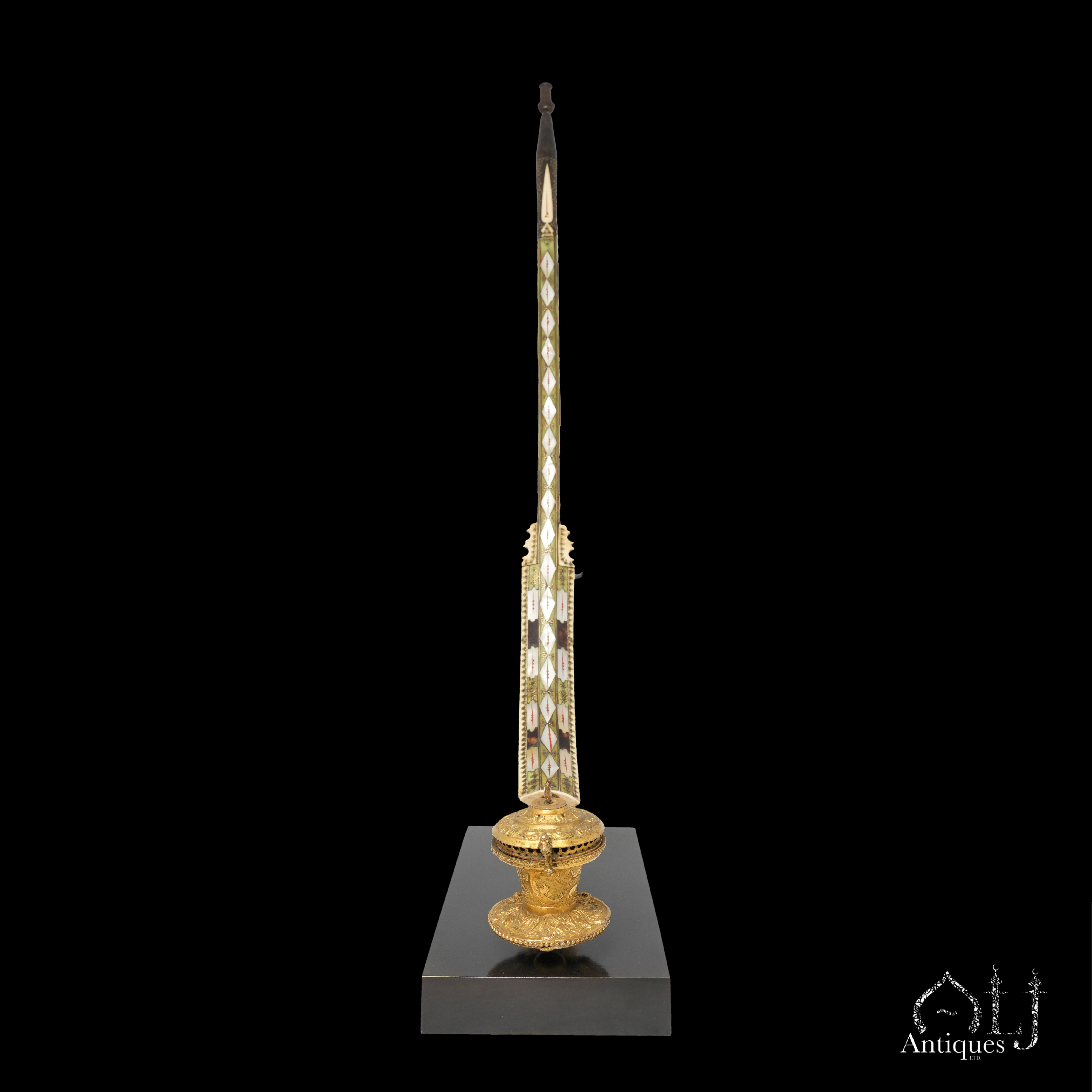
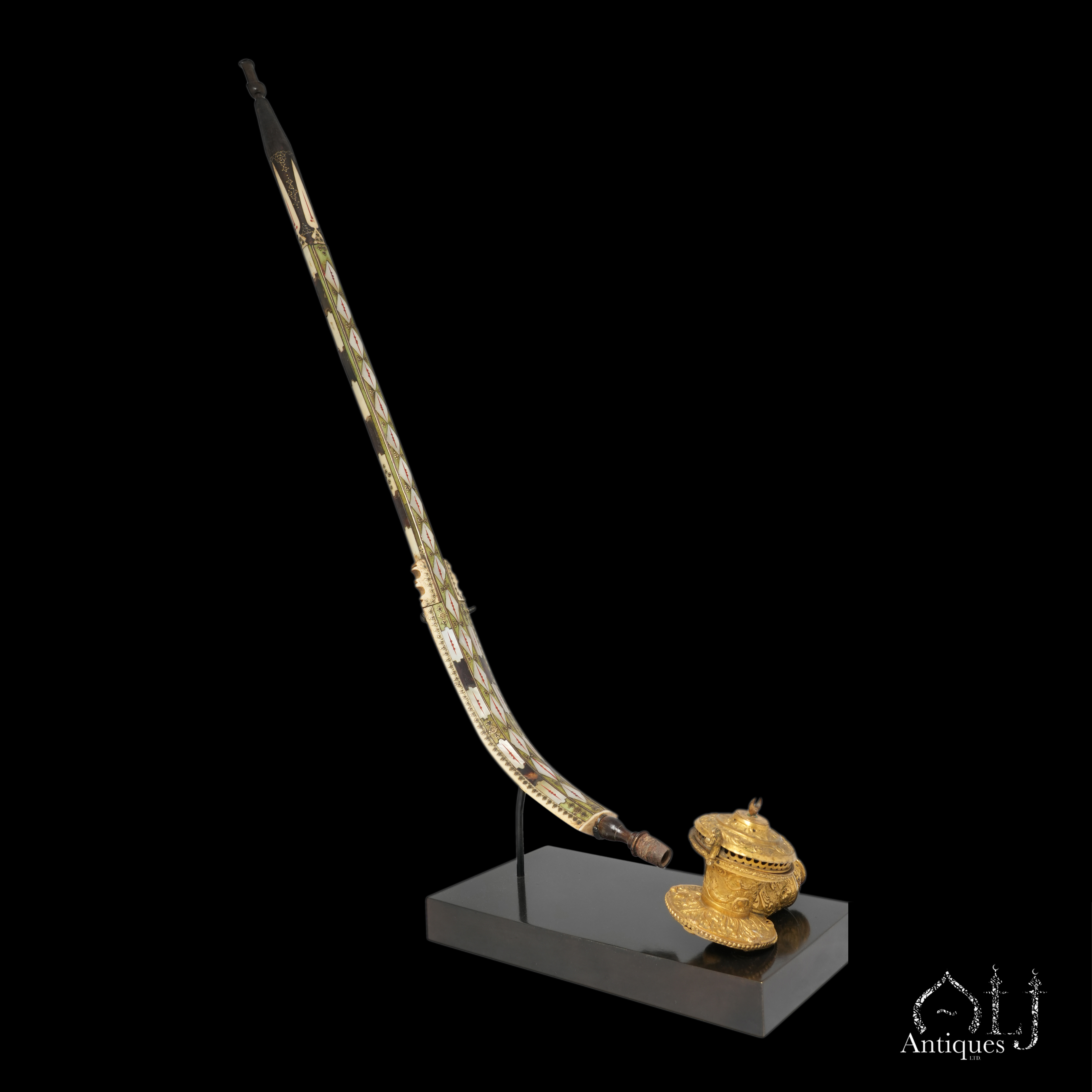
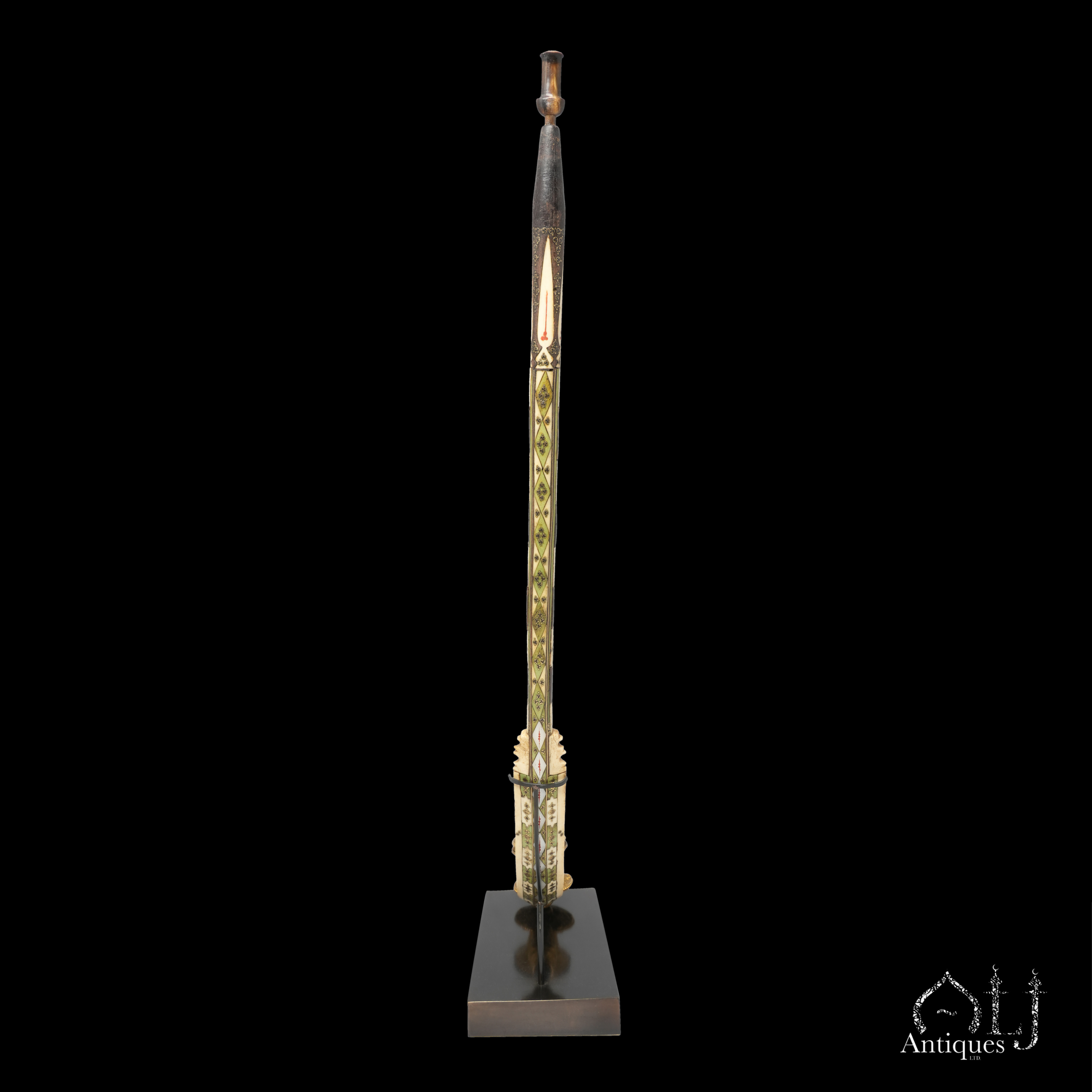
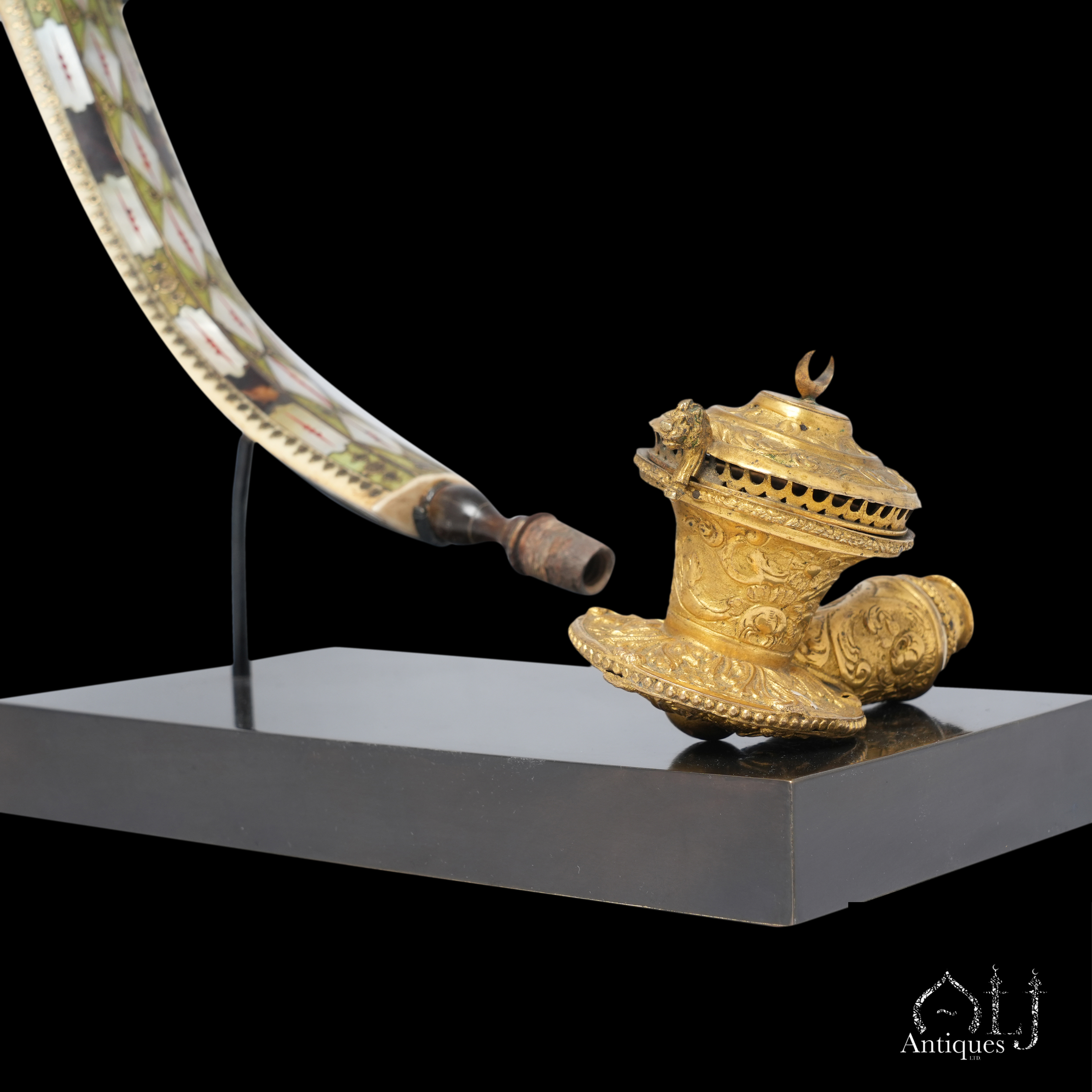
This exceptional and highly refined Ottoman çubuk long smoking pipe, composed of a gracefully curved wooden shaft richly veneered with bone, green-stained bone, horn and mother-of-pearl, forming an elegant sequence of elongated geometric panels running along the shaft.
The decorative elements are carefully framed and separated by extremely fine brass wire borders, which articulate the individual panels and create a sophisticated geometric rhythm across the entire pipe. These brass elements also secure the veneered materials into the wooden core, demonstrating the remarkable technical precision of the craftsman.
The decoration is further enriched with delicate brass micro-mosaic inlays, forming small circular and geometric motifs embedded into the bone and green-stained bone panels. These miniature compositions display a variety of intricate designs, including:
- clusters of fine dotted brass pinwork
- circular brass motifs containing three triangular elements
- micro-mosaic brass circles forming six-pointed star patterns
These motifs are executed using extremely fine brass pins set into the surface, often combined with small areas of lacquer inlay, producing a subtle yet highly sophisticated decorative texture.
The mother-of-pearl panels are enhanced with slender red lacquer inlaid lines, frequently punctuated with a distinctive three-dot motif, adding a vibrant contrast to the pale iridescence of the shell and the green-tinted bone.
At the upper end, the pipe is fitted with a beautifully carved horn mouthpiece, carefully mounted onto the wooden shaft. A second intricately carved horn connector forms the transition between the shaft and the tobacco bowl, elegantly joining the wooden pipe to the metal container.
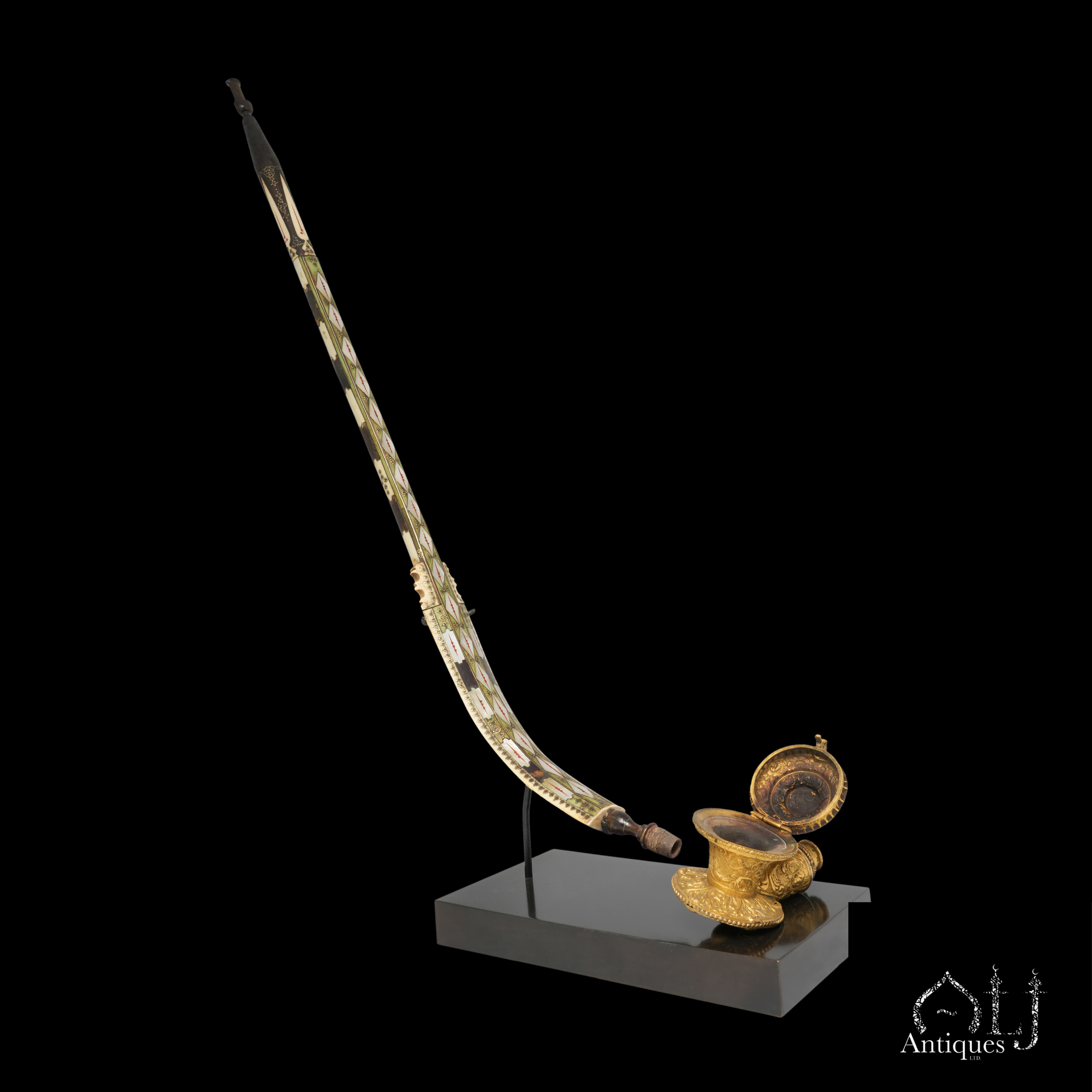
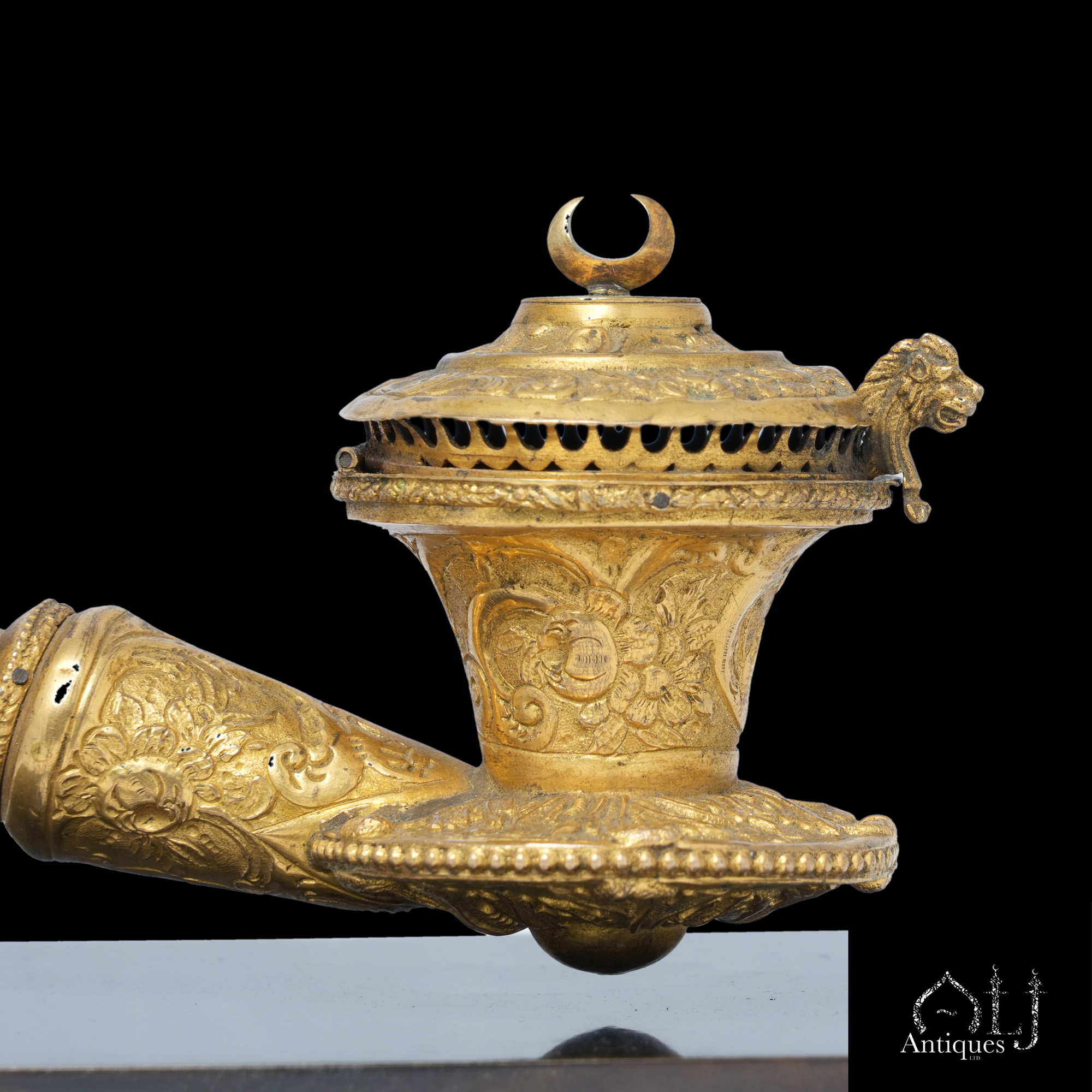
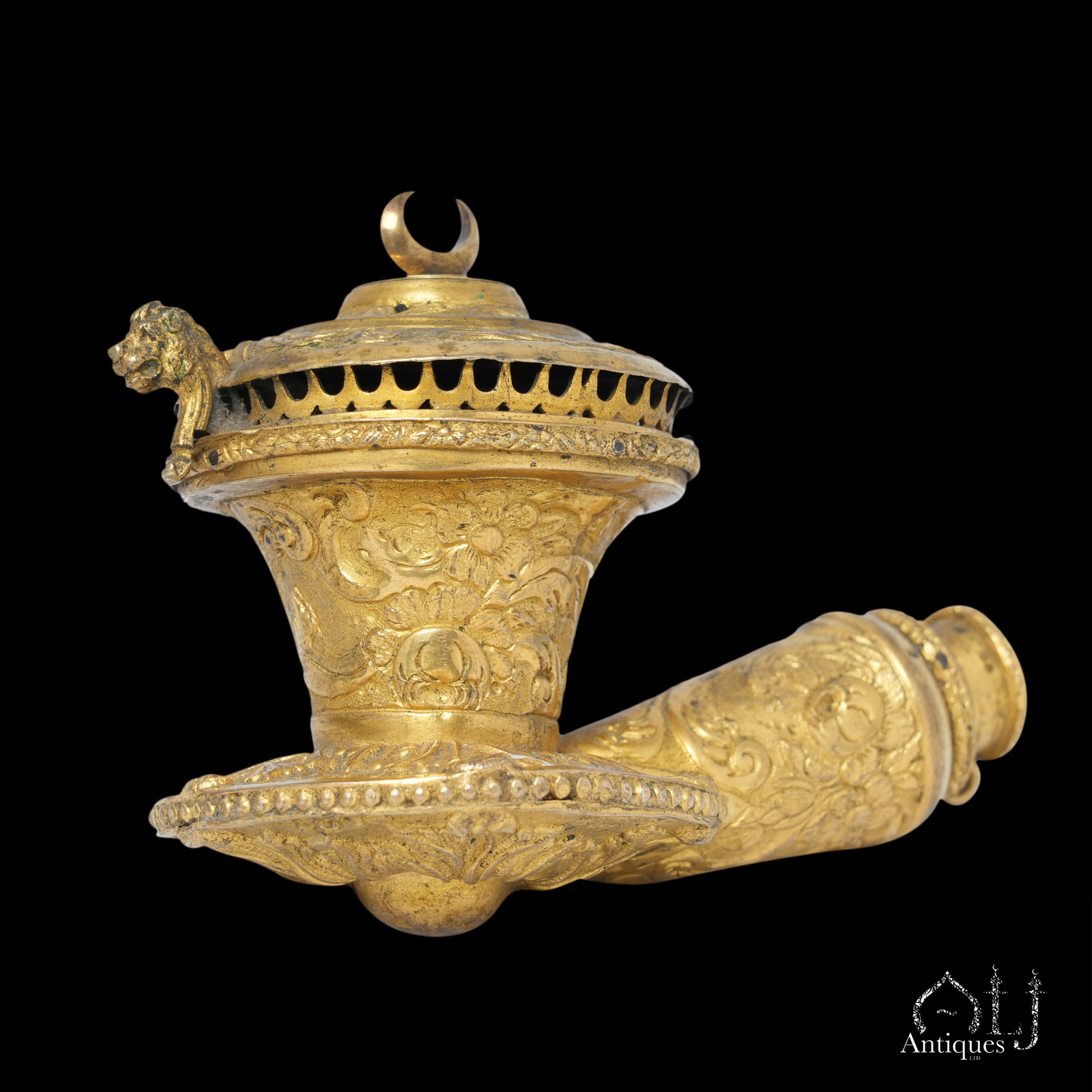
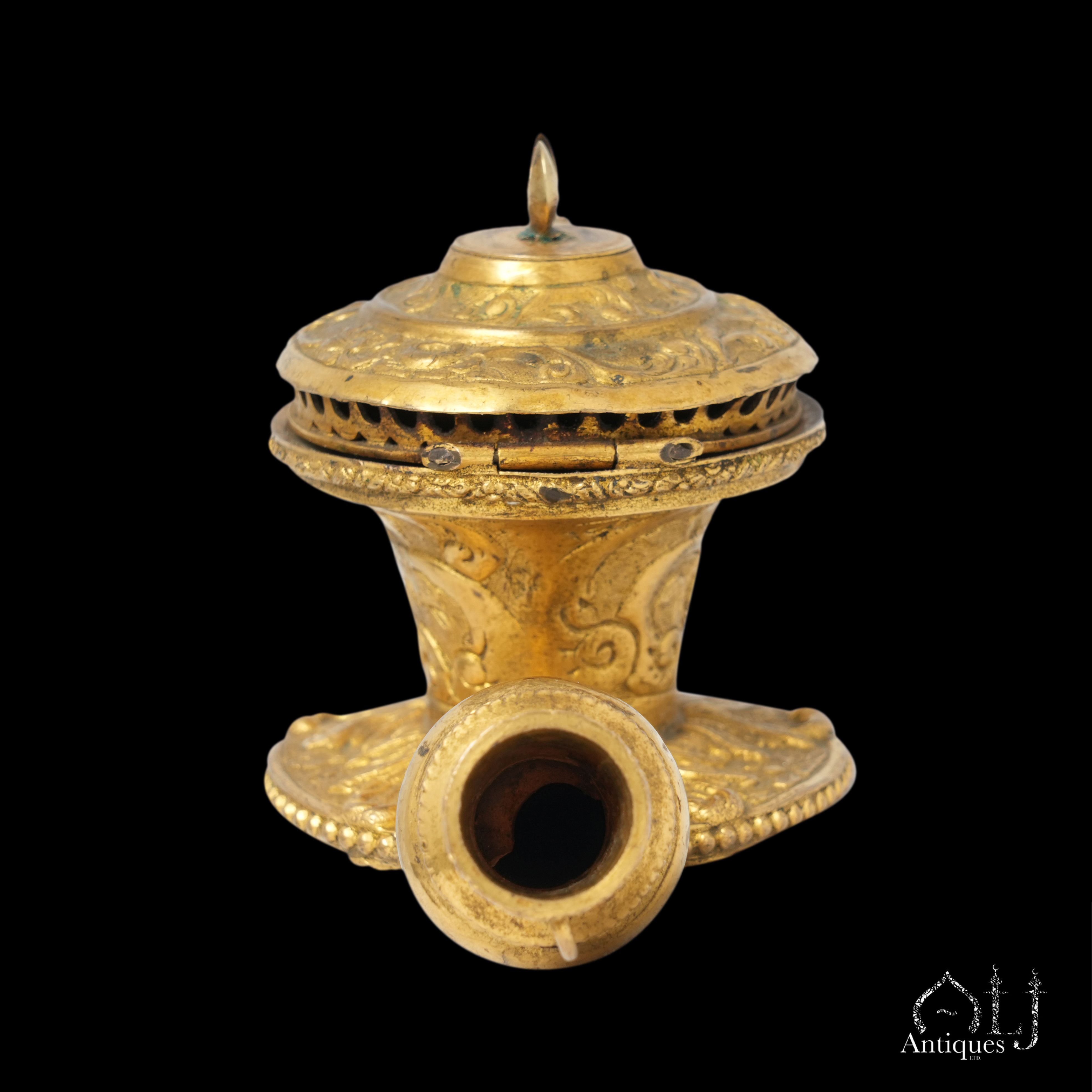
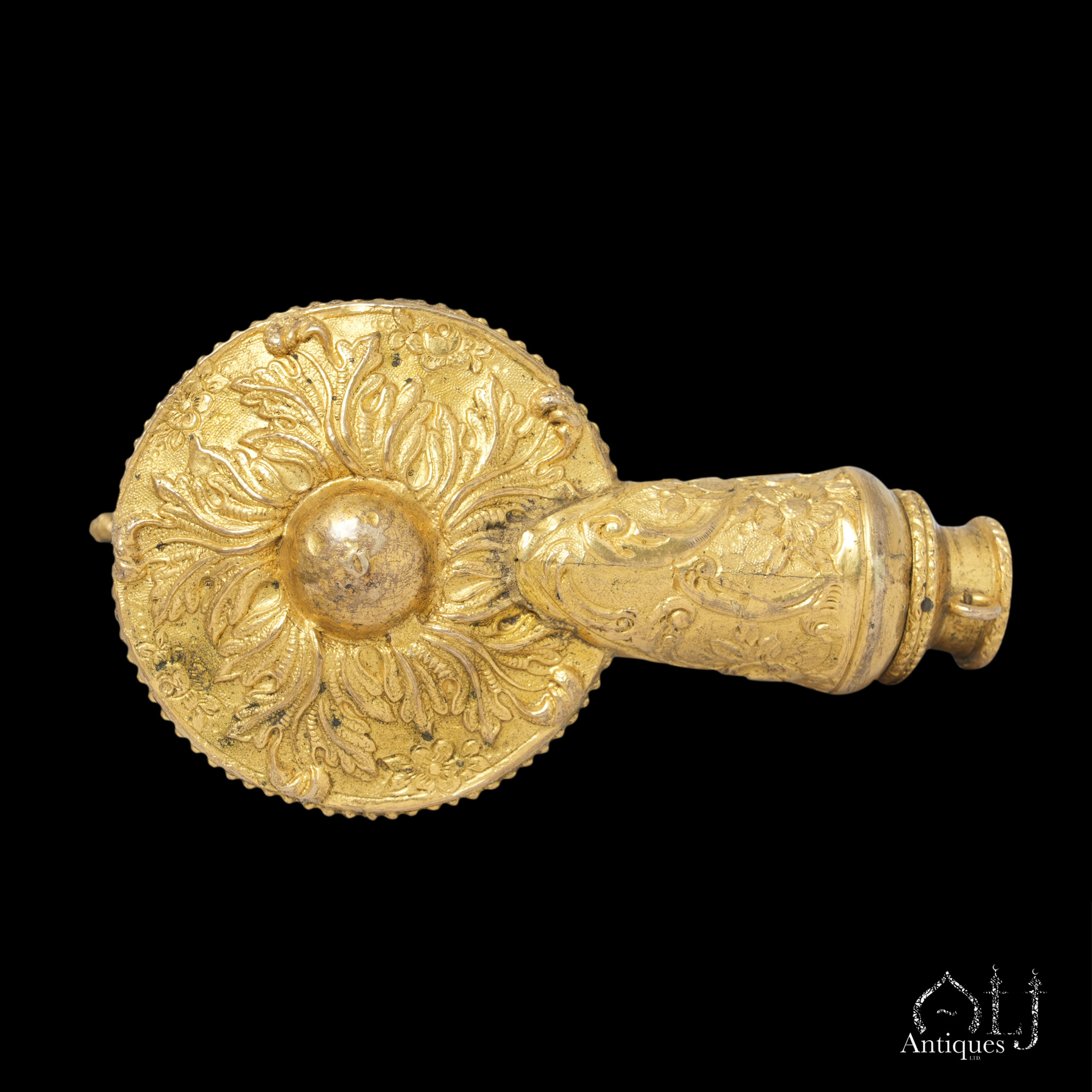
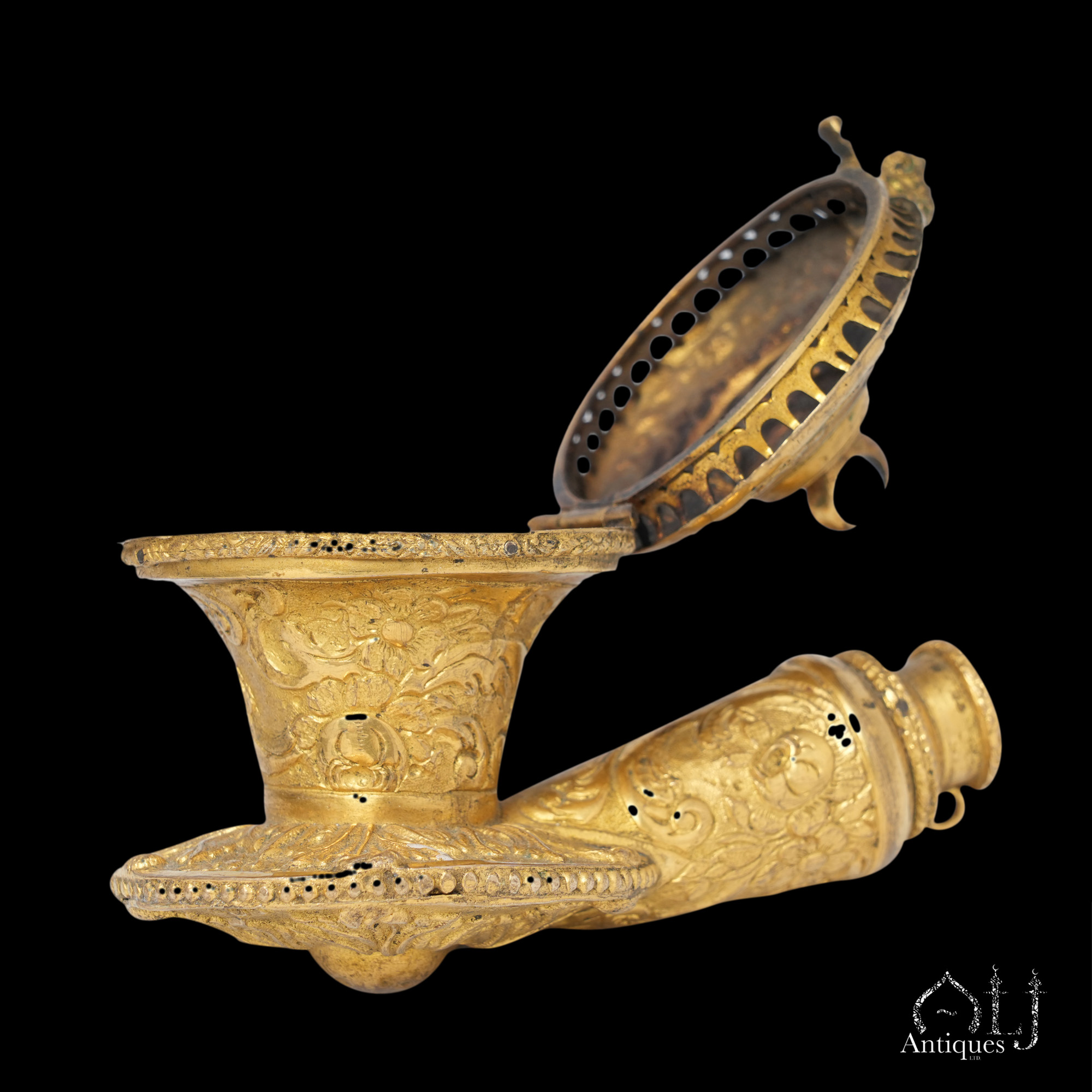
The pipe terminates in a finely executed repoussé copper-gilt (tombak) pipe bowl, richly decorated in relief with scrolling vegetal ornament. The hinged lid is surmounted by a crescent finial and opens by means of a finely modelled lion-head knob. The lid itself features pierced openings, allowing smoke to escape while the tobacco burns.
Inside the metal bowl is a removable terracotta liner, designed to hold the tobacco. This clay insert protects the surrounding tombak metalwork and the pipe shaft from direct heat, preventing the intense temperature of the burning tobacco from affecting the metal components or the pipe structure itself.
The elaborate veneering and micro-mosaic inlay techniques seen on the shaft closely parallel decorative practices employed by Ottoman craftsmen working on luxury objects such as rifle stocks produced in Istanbul gunmaking workshops. Comparable bone, horn and mother-of-pearl inlay decoration can be observed on Ottoman firearms preserved in the Topkapı Palace and illustrated in:
Sultanların Silahları: Topkapı Sarayı Silah Koleksiyonu,
see decorated Ottoman rifles pp. 138–139, inventory numbers T.S.M. Env. No. 1/1673, 1/1762 and 1/1902.
Given the exceptional complexity of its materials and workmanship, this highly exotic and luxurious pipe was most likely commissioned by a high-ranking individual within the Ottoman Empire. Objects of this quality were typically produced in important workshops in Istanbul closely connected to the Ottoman court, where master craftsmen specialised in creating richly decorated luxury objects for members of the imperial elite and distinguished patrons.
Long pipes of this type formed an important element of Ottoman courtly and social culture, and elaborately decorated examples such as the present piece served not only as smoking instruments but also as refined status objects reflecting the taste, prestige and sophistication of their owners.