Description
Lot Description
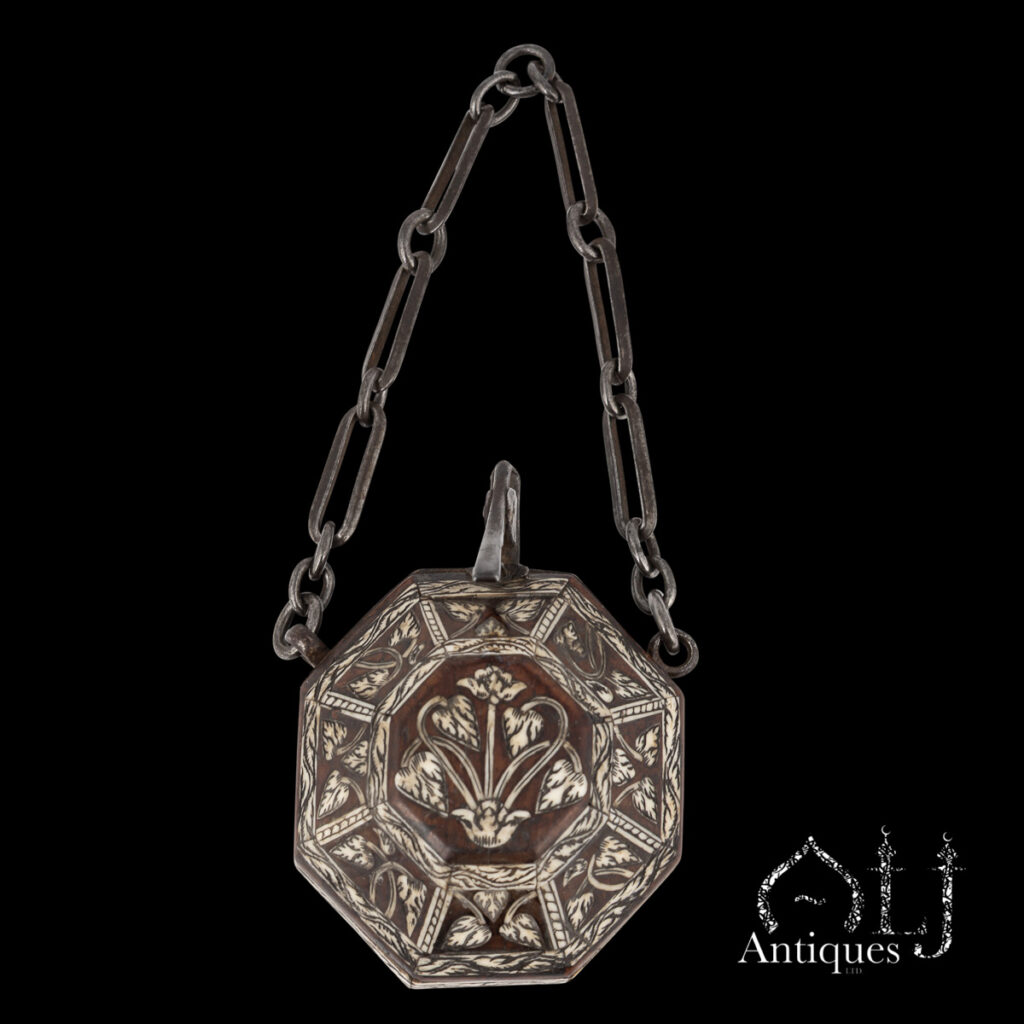
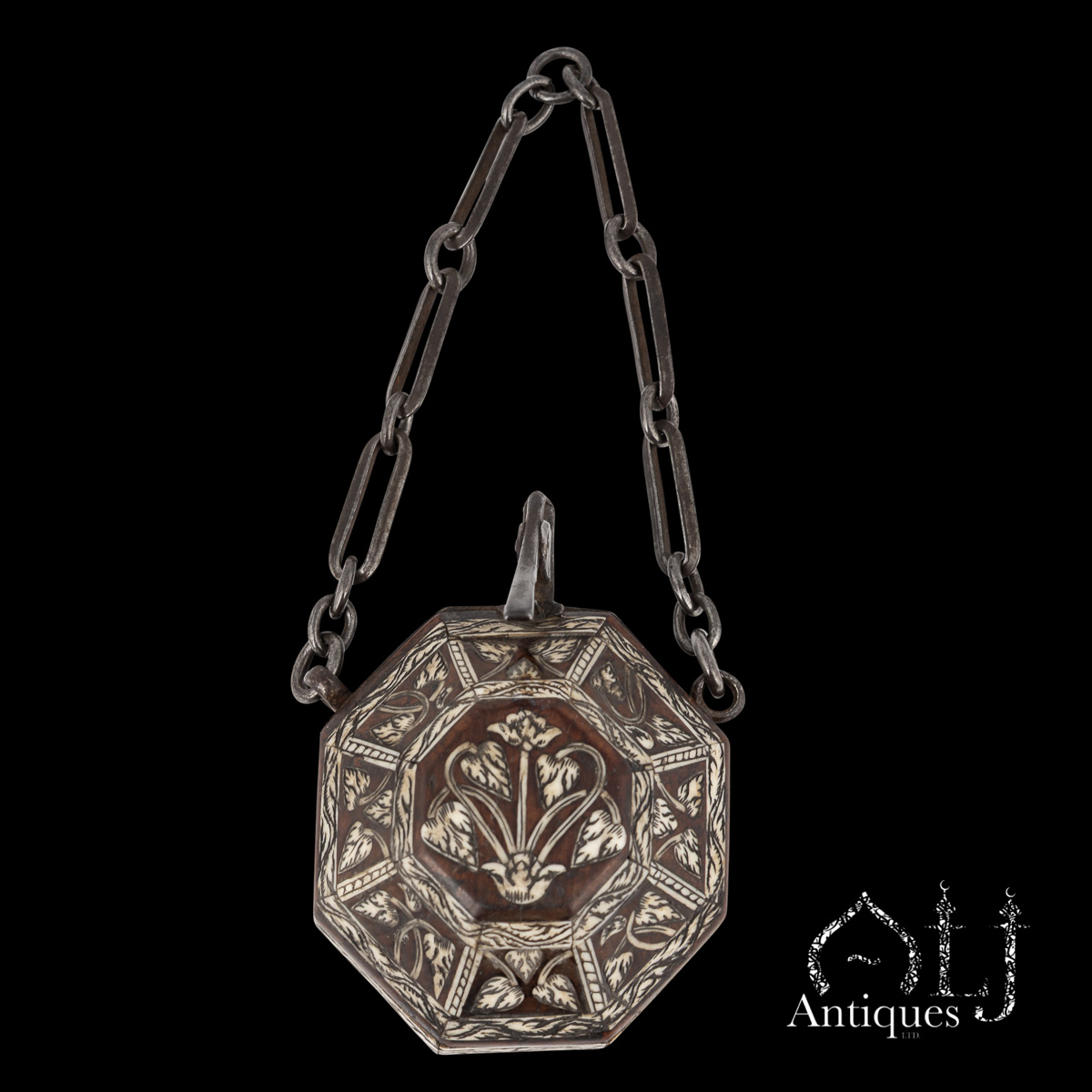
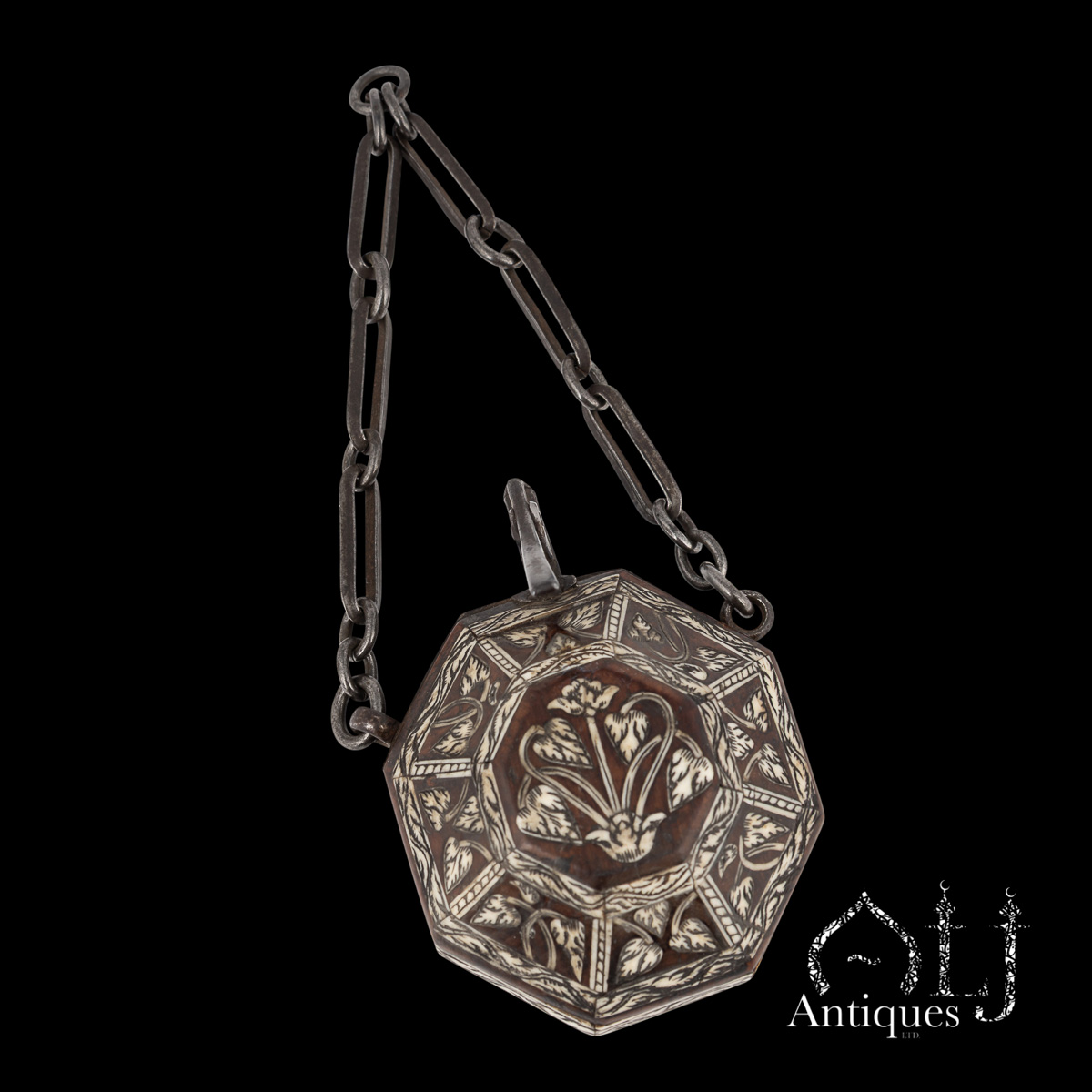
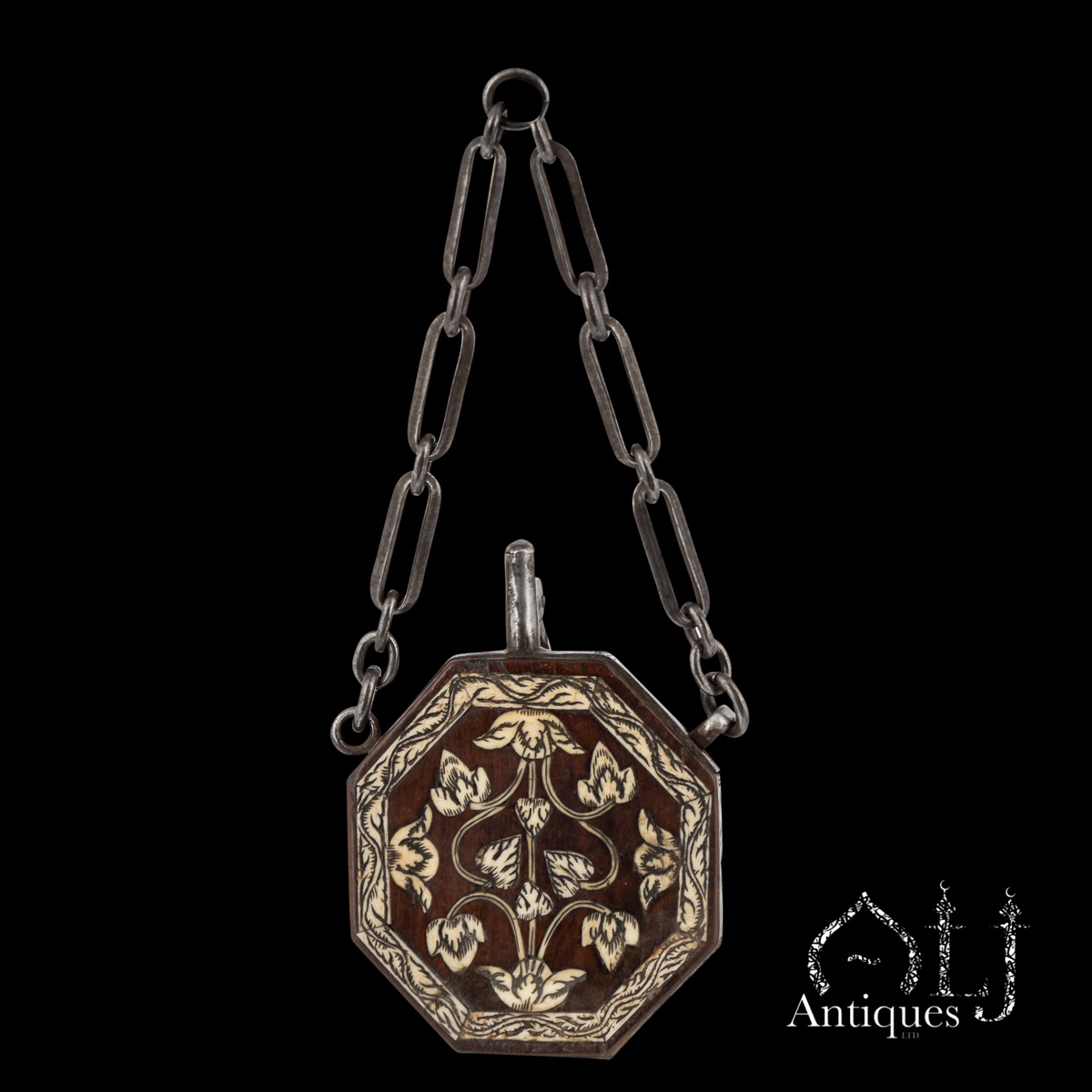
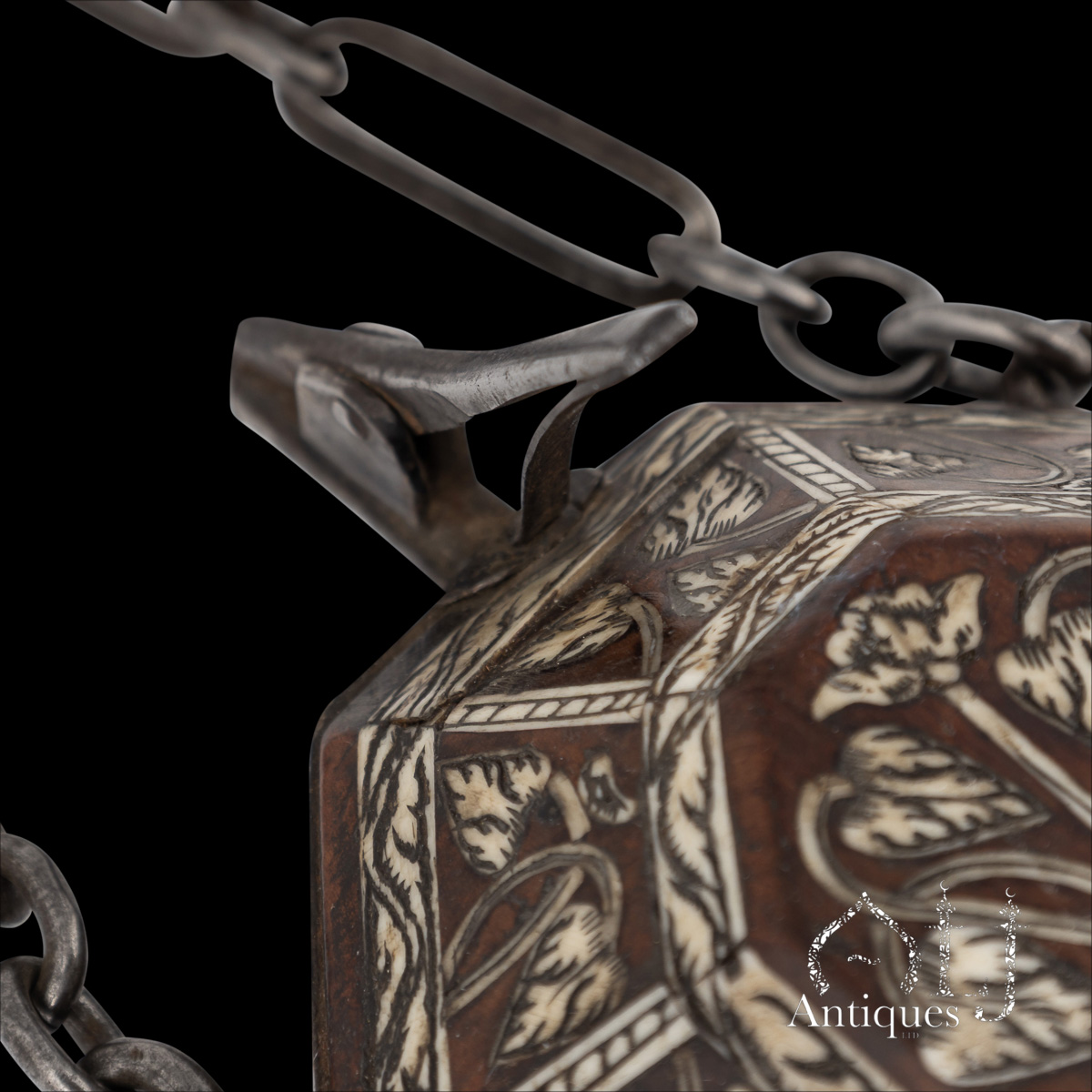
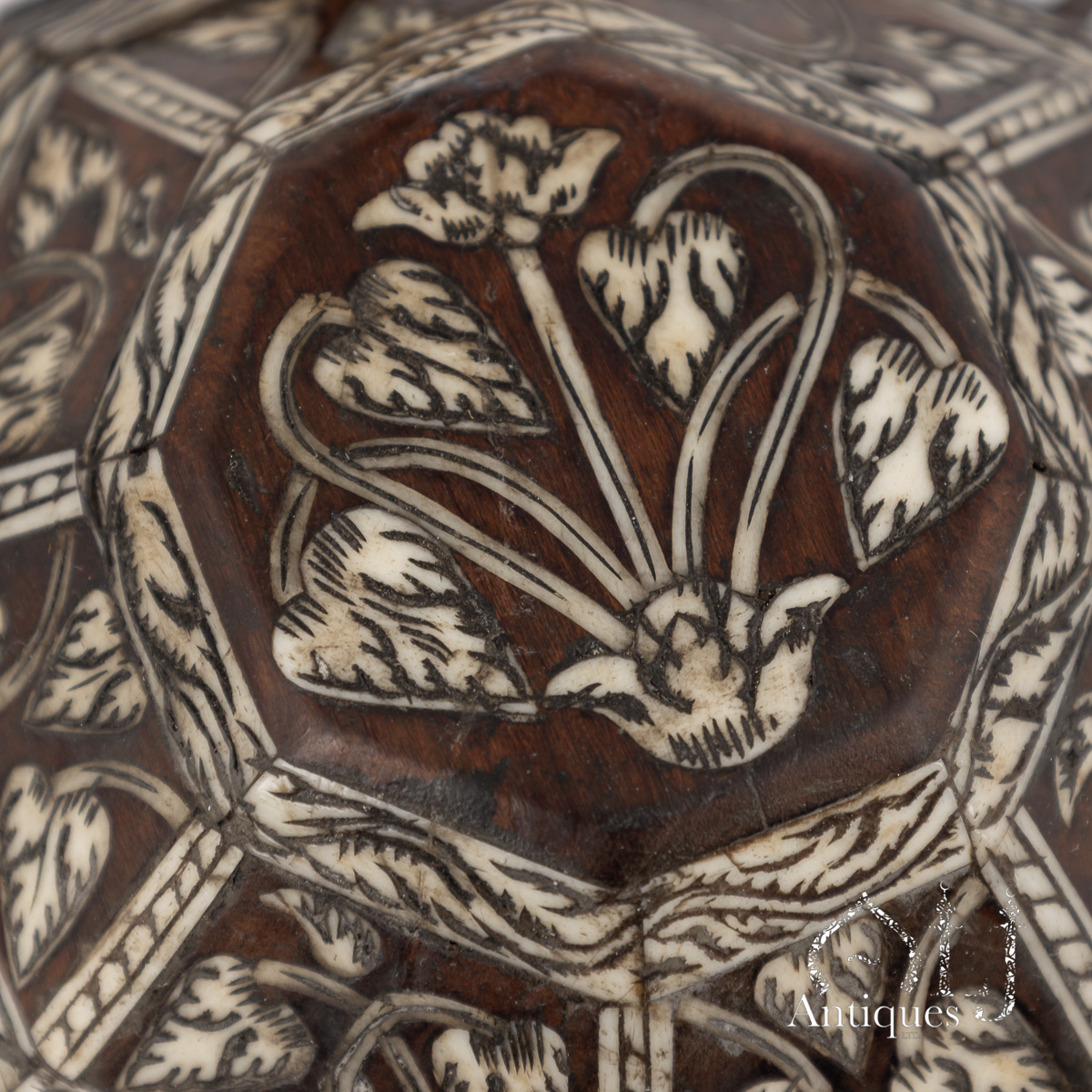
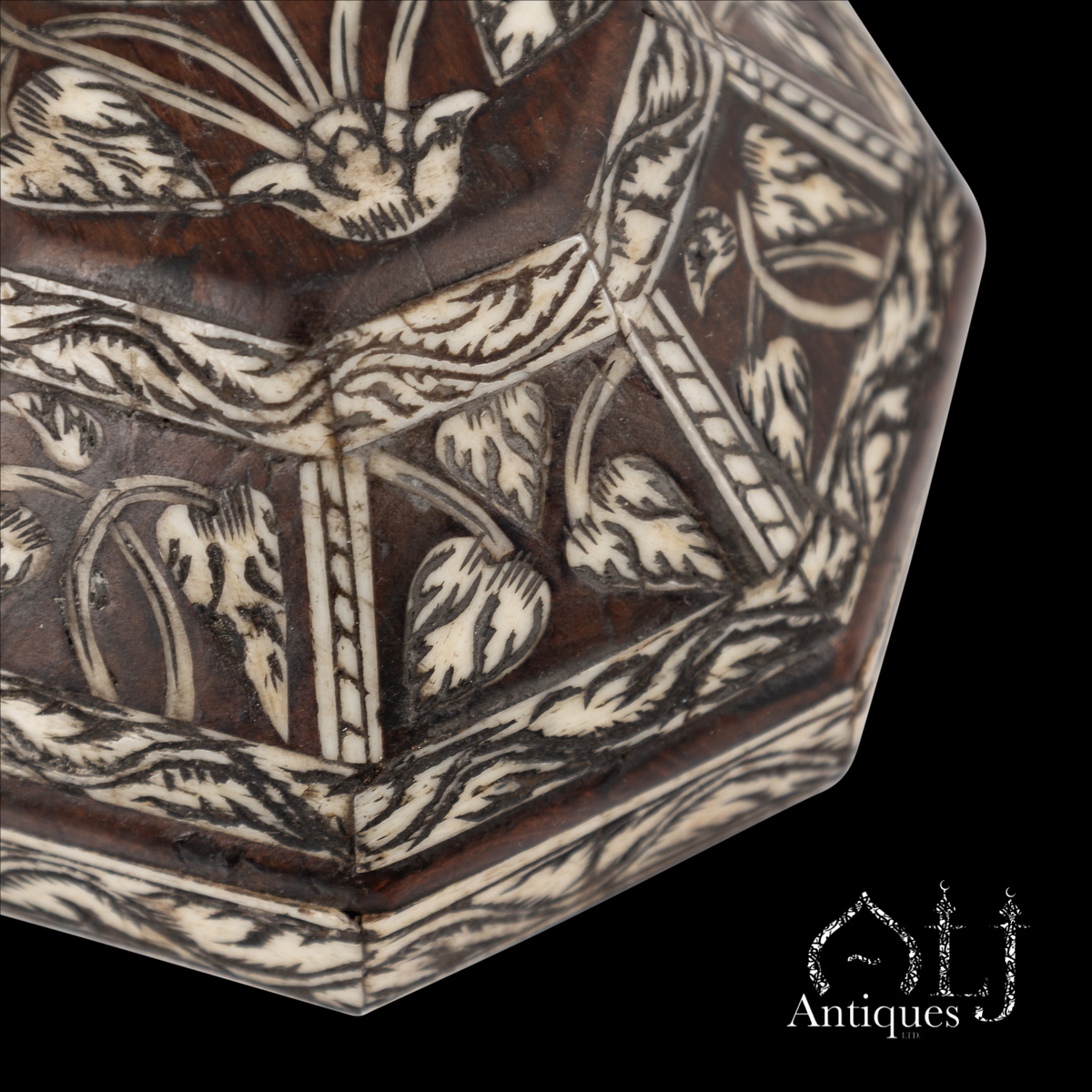
An exceptionally rare and finely crafted gunpowder flask carved from teak wood, formed as a compact faceted octagonal container resembling a cut gemstone, and richly decorated with engraved bone inlay highlighted with black lacquer. The decorative programme reflects the Mughal fascination with naturalistic botanical ornament and stylised vegetal compositions, a defining characteristic of Mughal decorative arts during the late seventeenth century.
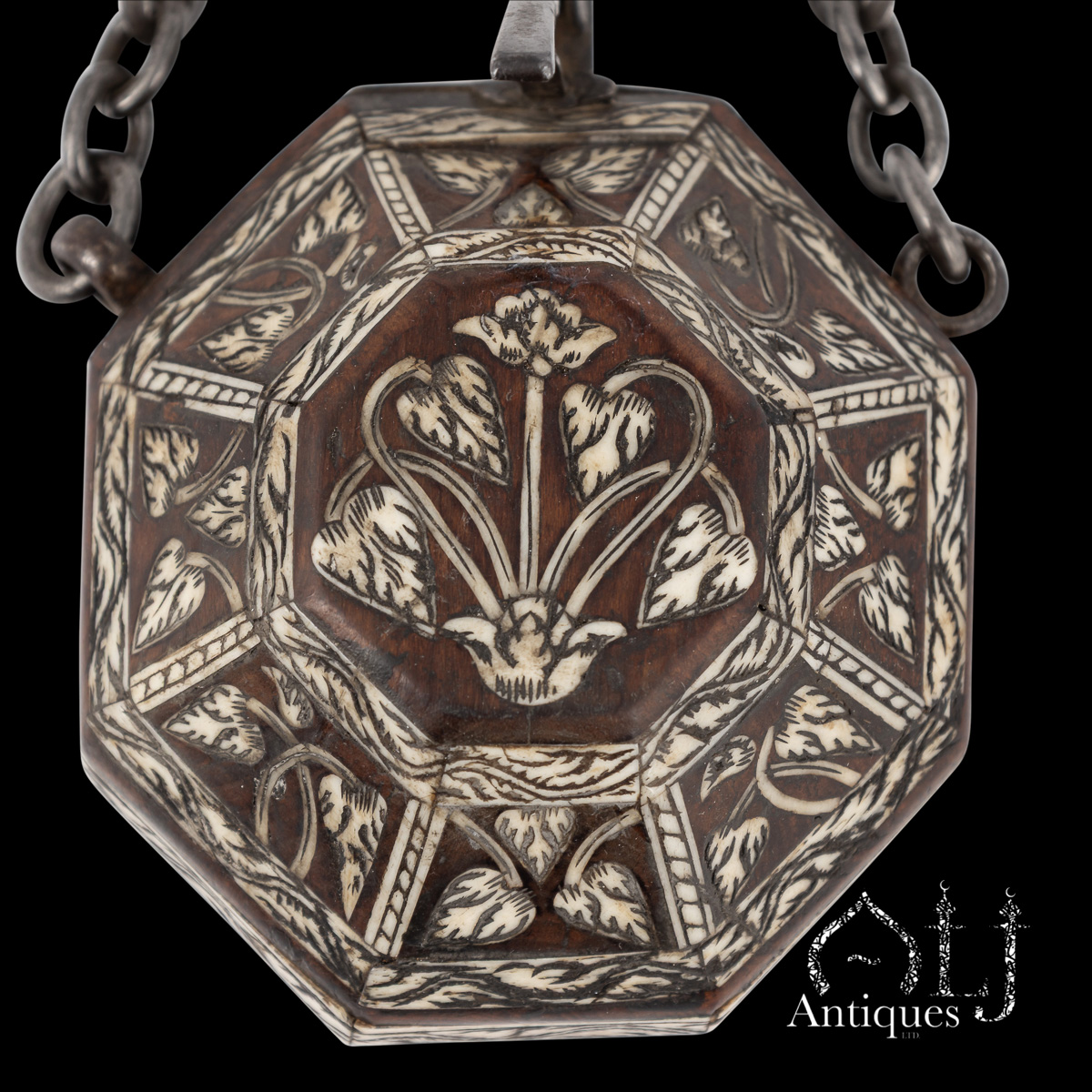
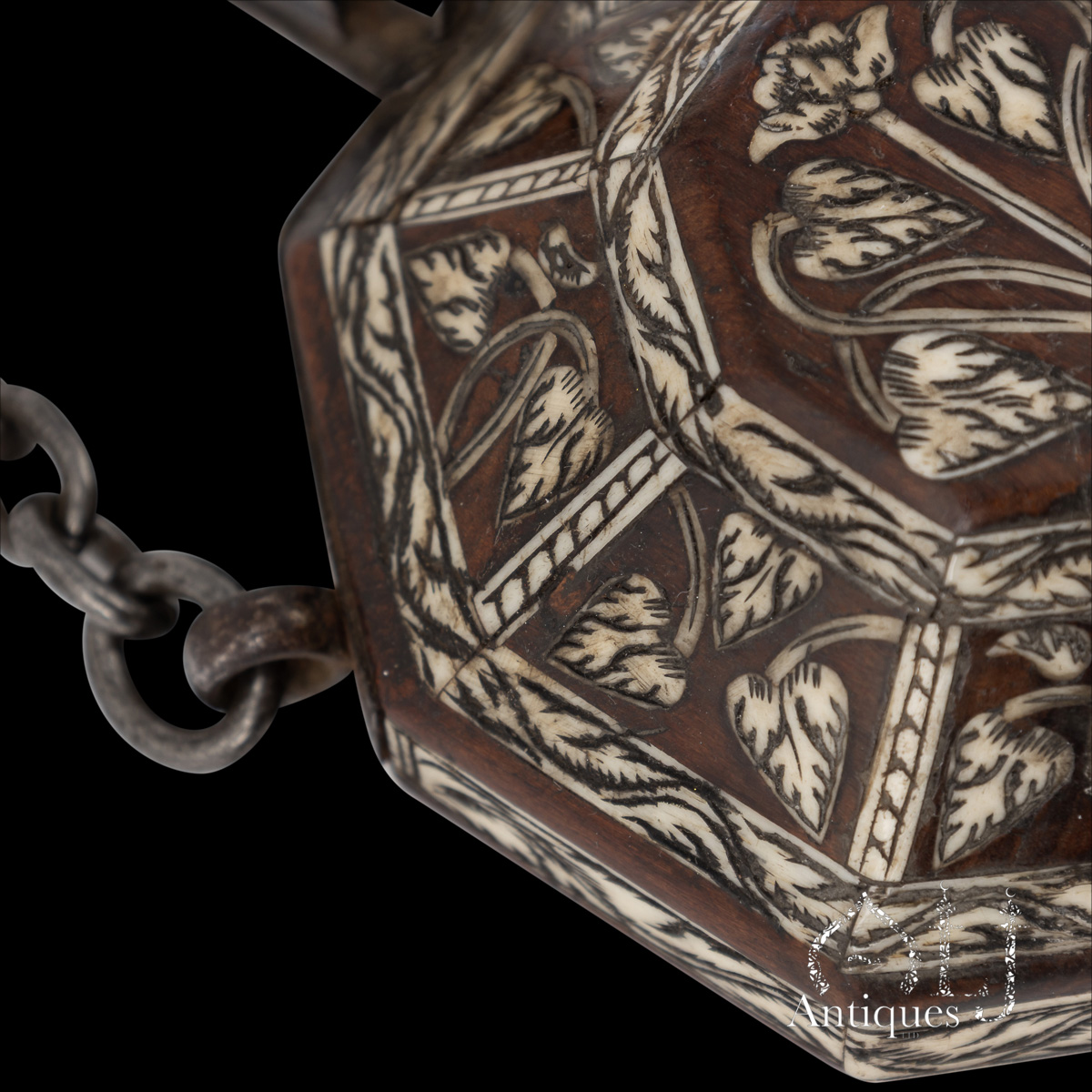
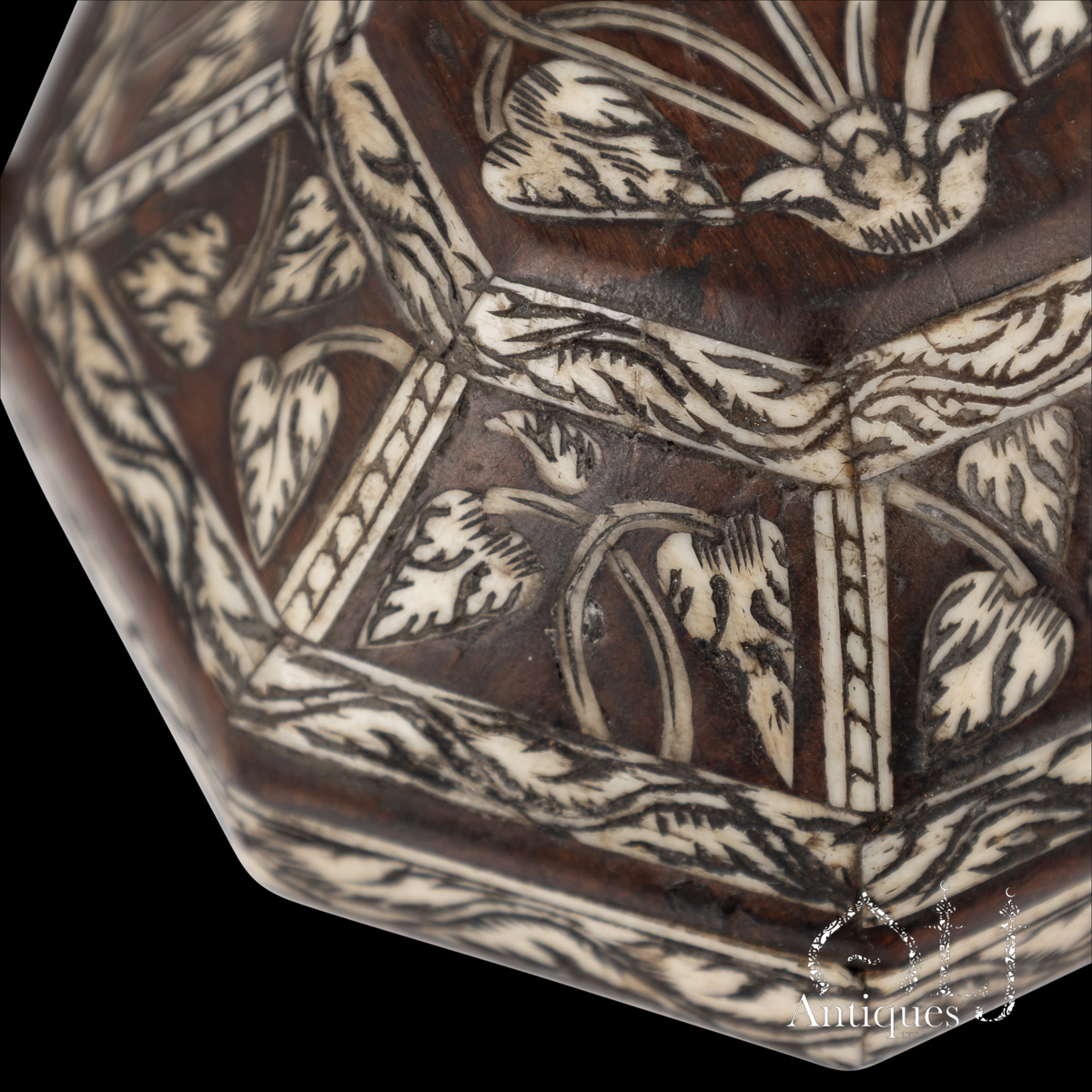
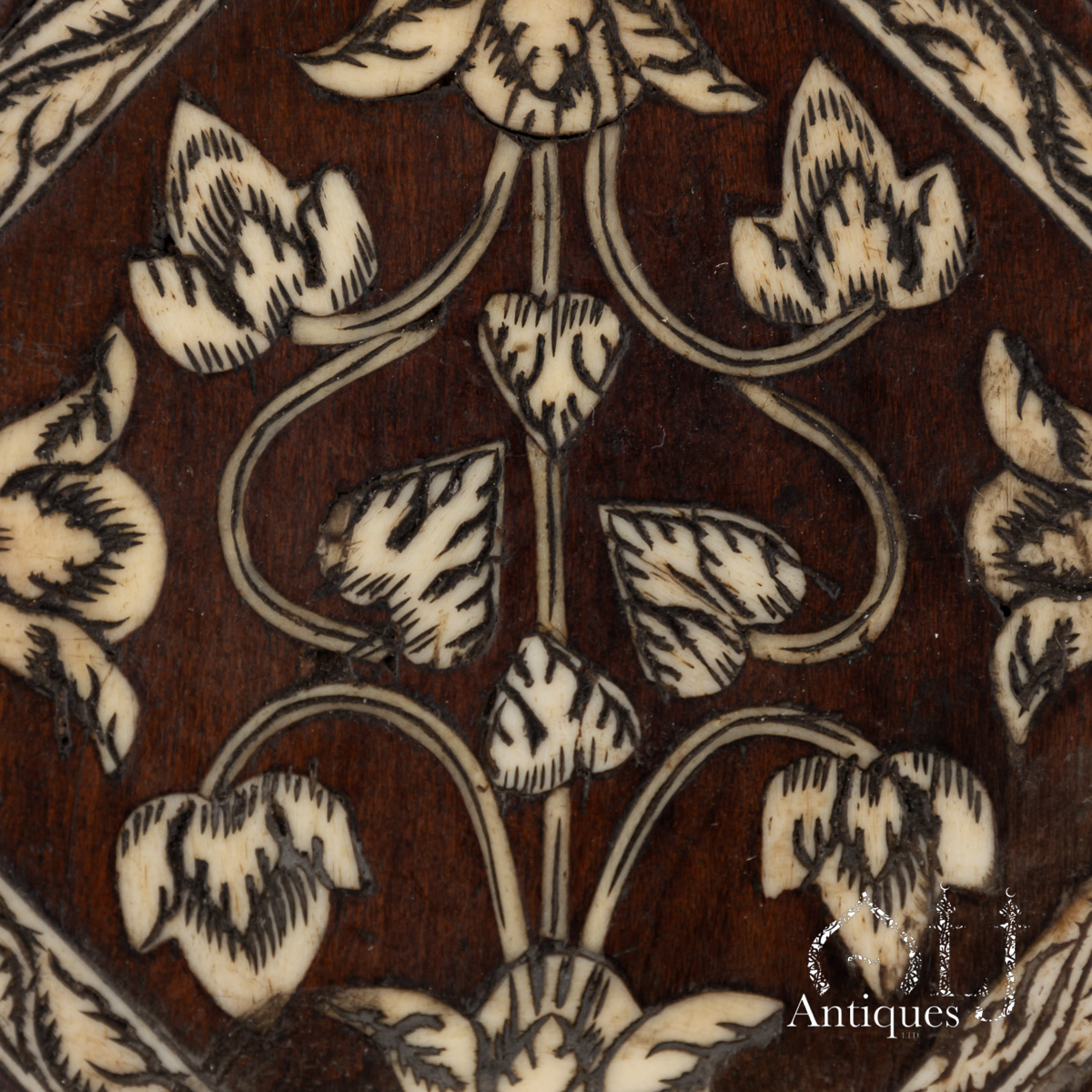
The front of the flask is composed of eight sloping facets, creating the appearance of a finely cut jewel. Each facet is inset with engraved plaques depicting stylised leafy shoots rising upward on slender stems. Although the panels generally display three leaf forms, each is rendered slightly differently, suggesting independent vegetal shoots emerging from below rather than forming a single plant. The engraved lines are filled with black lacquer, producing a striking contrast between the pale inlay and the darker teak ground.
Separating the panels are narrow vertical borders engraved in the form of linked chains, reinforcing the rhythmic geometry of the faceted structure.
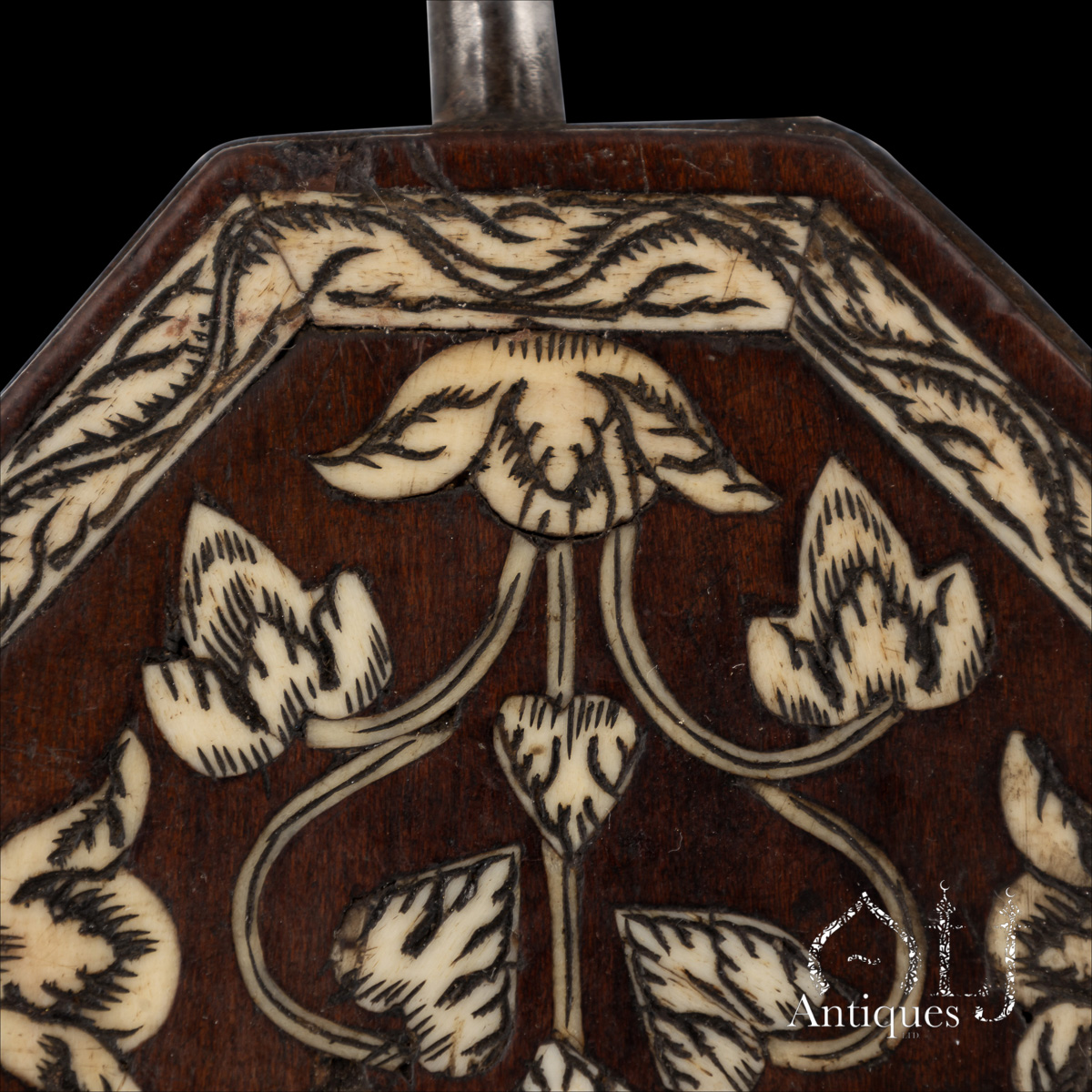
At the upper front, where the sloping facets converge, a small hexagonal panel forms the upper façade of the flask. This panel displays a stylised Mughal floral composition, consisting of a central flower rising on a vertical stem and flanked by outward-curving leafy branches.
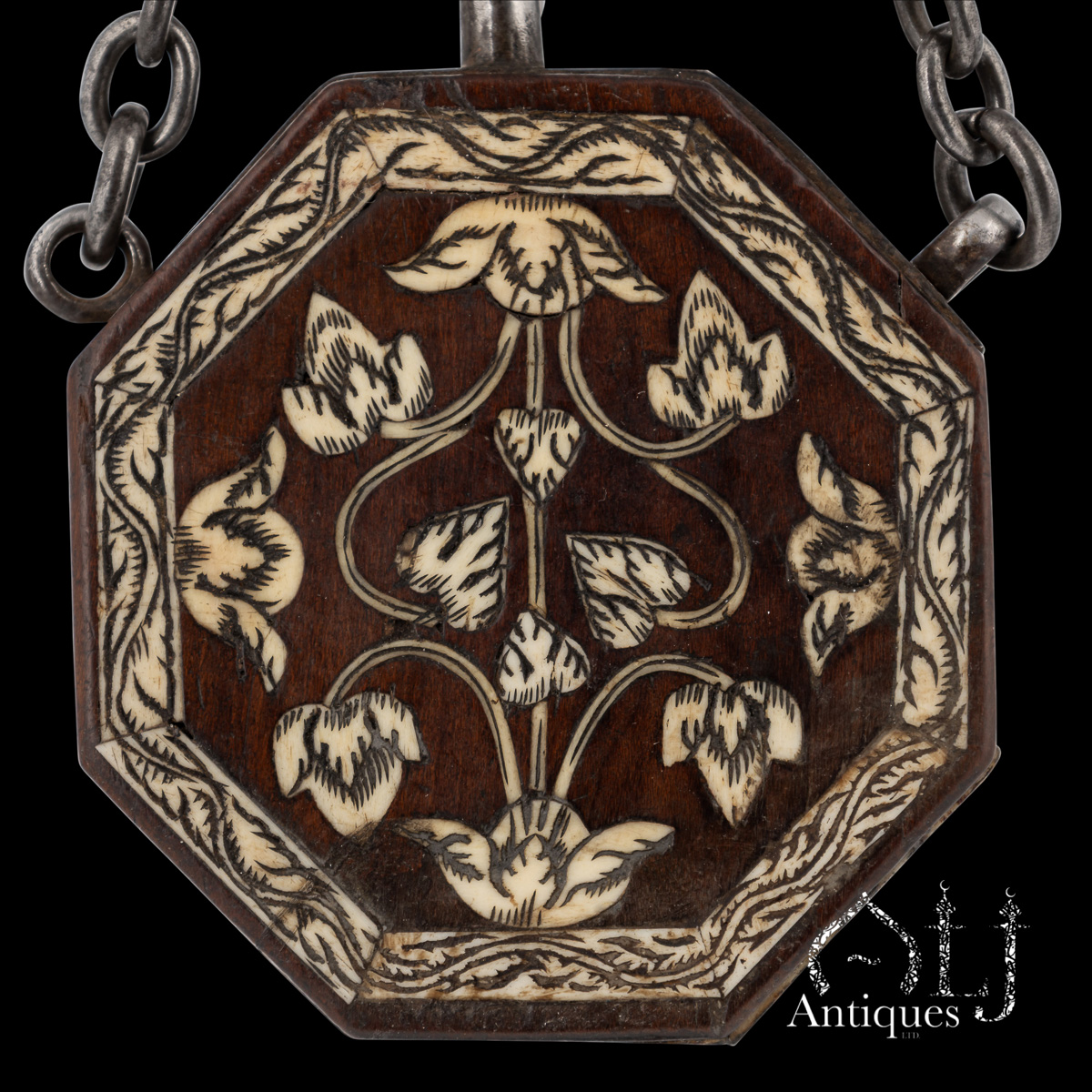
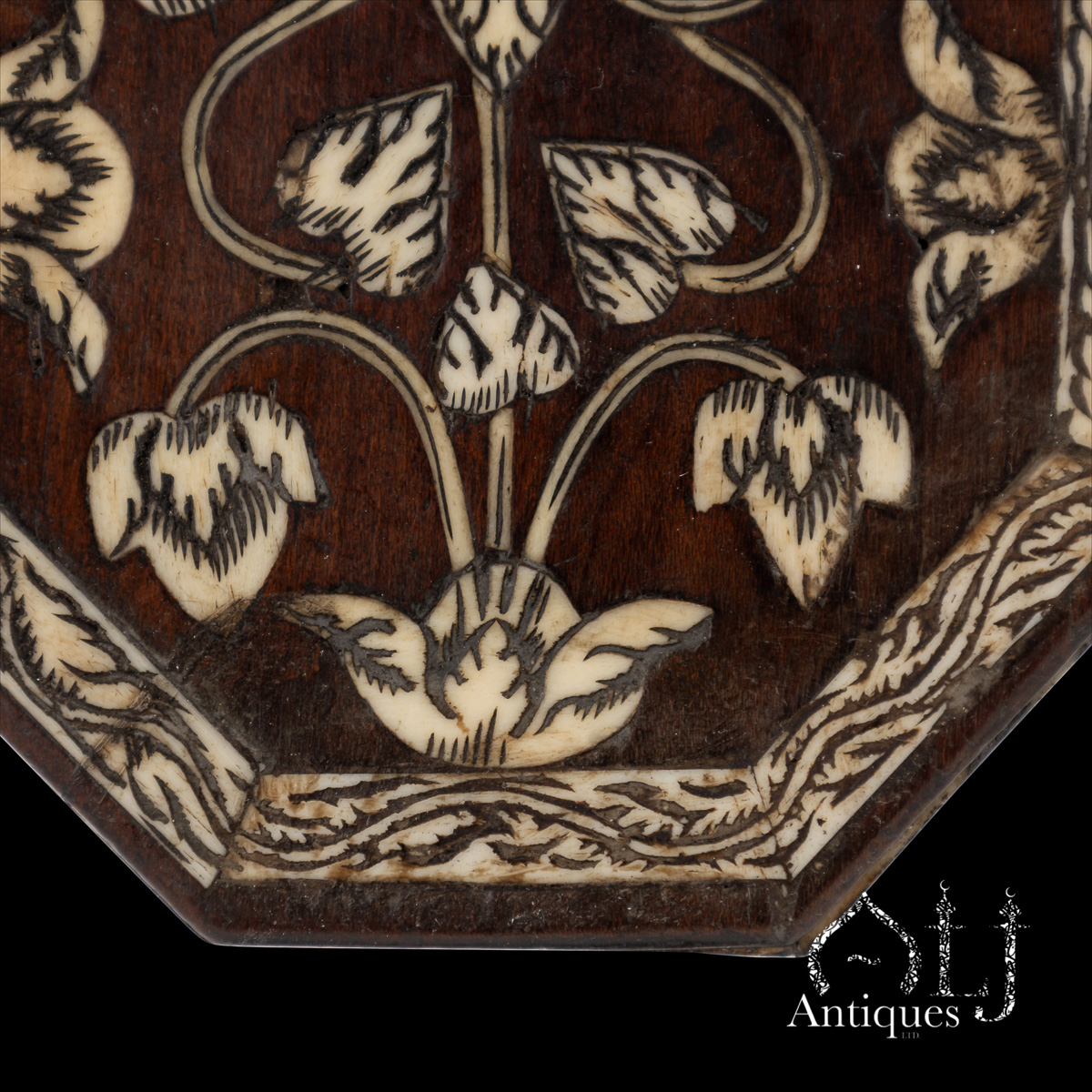
The reverse side of the flask is centred on a flat octagonal panel, framed by a ribbon-like border engraved with flowing vegetal veins. Within the field appears a symmetrical botanical composition, with leaves and shoots radiating from a central stem, again engraved and filled with black lacquer.
The distinctive faceted gem-like form of the flask may also carry symbolic significance. India was historically one of the world’s most important sources of precious stones, including the celebrated diamonds of Golconda, which were widely traded across Asia, the Middle East, and Europe. Mughal decorative arts frequently celebrated the brilliance of gemstones, and jewel-like forms were echoed in jewellery, architecture, and luxury objects. The faceted geometry of the present flask therefore evokes the appearance of a cut gemstone, transforming a functional firearm accessory into a miniature work of art.
Construction
The container is carved from a single hollowed block of teak, forming the internal powder chamber.
At the top is a steel mounting bracket forged from a single piece of steel, forming a triangular bridge-like structure spanning the upper section of the flask. This bracket secures the dispensing mechanism and provides attachment points for the suspension chain.
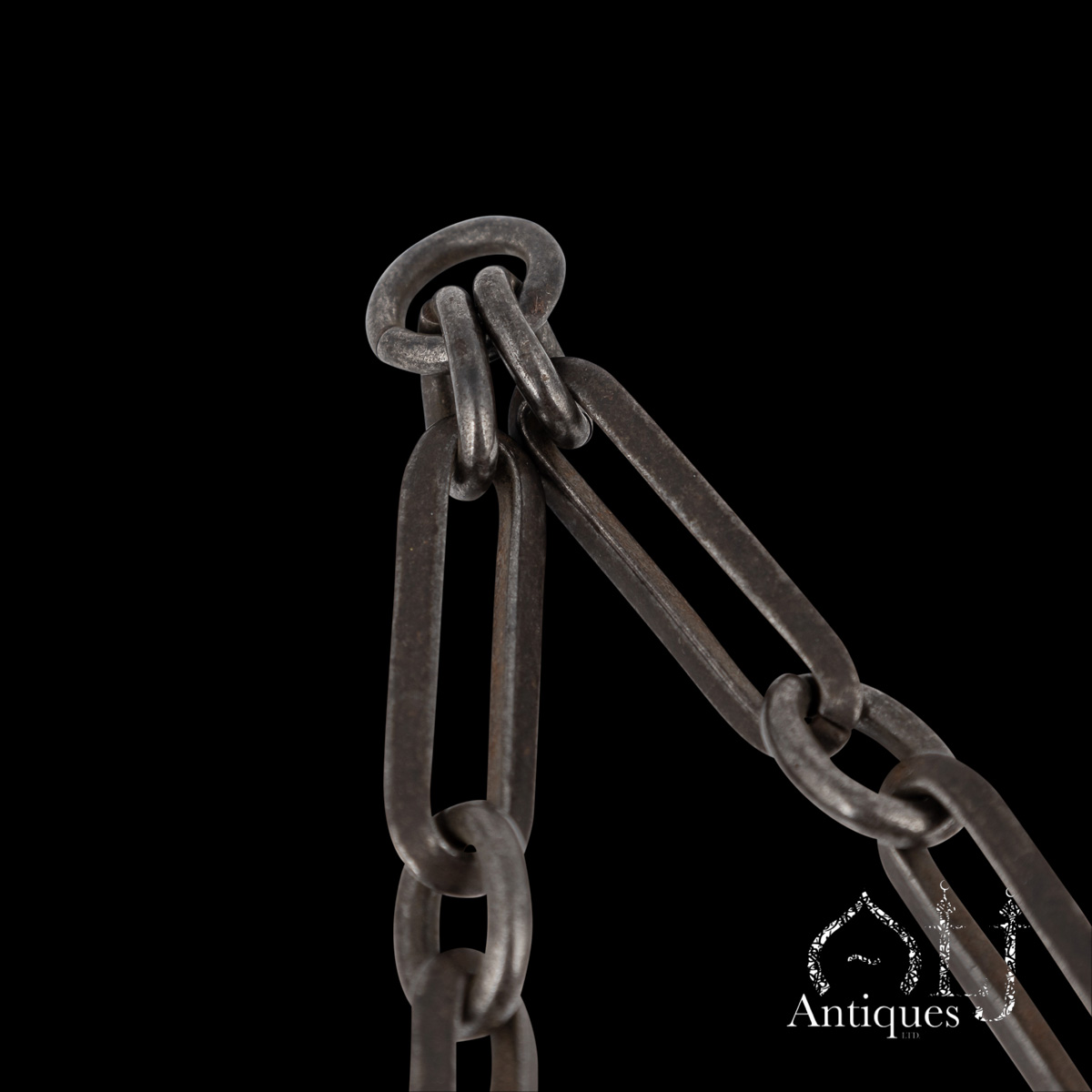
At each end of the bracket are circular suspension rings, from which hangs the original steel chain composed of alternating elongated oval and circular links, allowing the flask to be suspended from a belt or bandolier.
At the centre of the bracket is mounted a tubular dispensing nozzle fitted with a spring-loaded valve, which opens when pressed to release gunpowder and closes automatically when released.
Materials and Artistic Context
The decoration appears to be executed predominantly in engraved bone inlay, most likely camel bone, a material widely used by Indian craftsmen as an alternative to ivory. The majority of the inlaid elements display the small natural pores characteristic of bone, supporting this identification. Some pieces appear smoother and more compact in structure, and it is therefore possible that a small number of inlays may incorporate ivory.
The decorative technique closely corresponds with bone-inlaid wooden furniture and caskets produced in Gujarat and Vizagapatam workshops, where engraved plaques were inserted into hardwood surfaces and the engraved lines filled with black lac.
The form of the flask also reflects a broader cross-cultural exchange between European and Indian artistic traditions. Powder flasks of related sculptural form are known in German and Central European examples of the seventeenth century, suggesting that the general shape may ultimately derive from European hunting equipment. Indian craftsmen appear to have reinterpreted these forms within their own artistic vocabulary, enriching them with engraved bone inlay and Mughal-inspired floral ornament.
During the late seventeenth and early eighteenth centuries, Indian workshops supplied luxury goods to a wide international clientele, including Mughal nobles as well as European merchants and residents such as Portuguese and English traders. Powder flasks such as the present example would have accompanied firearms used during hunting expeditions and outdoor pursuits, activities enjoyed by both Mughal elites and European officials in India.
GOV.UK Registration for an item with Ivory content: (VPR5RW9K).