
Description
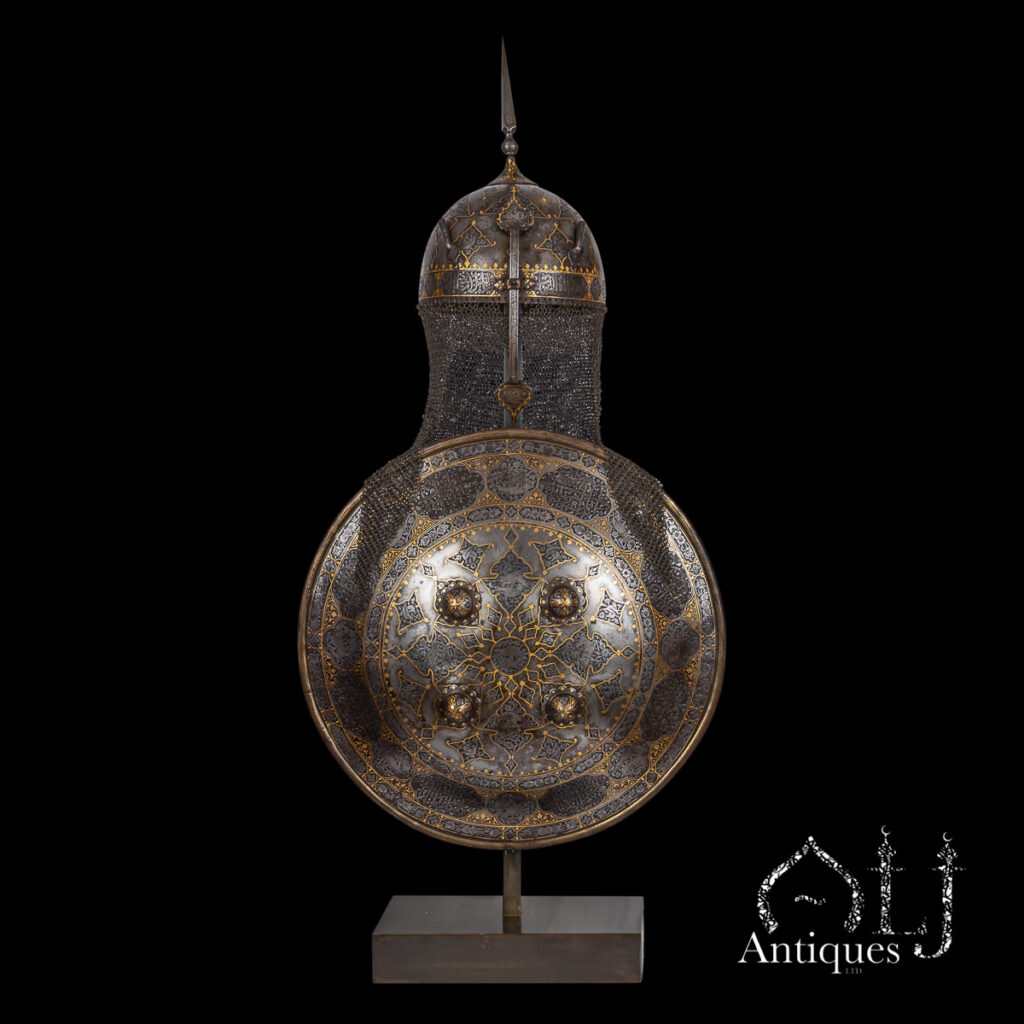
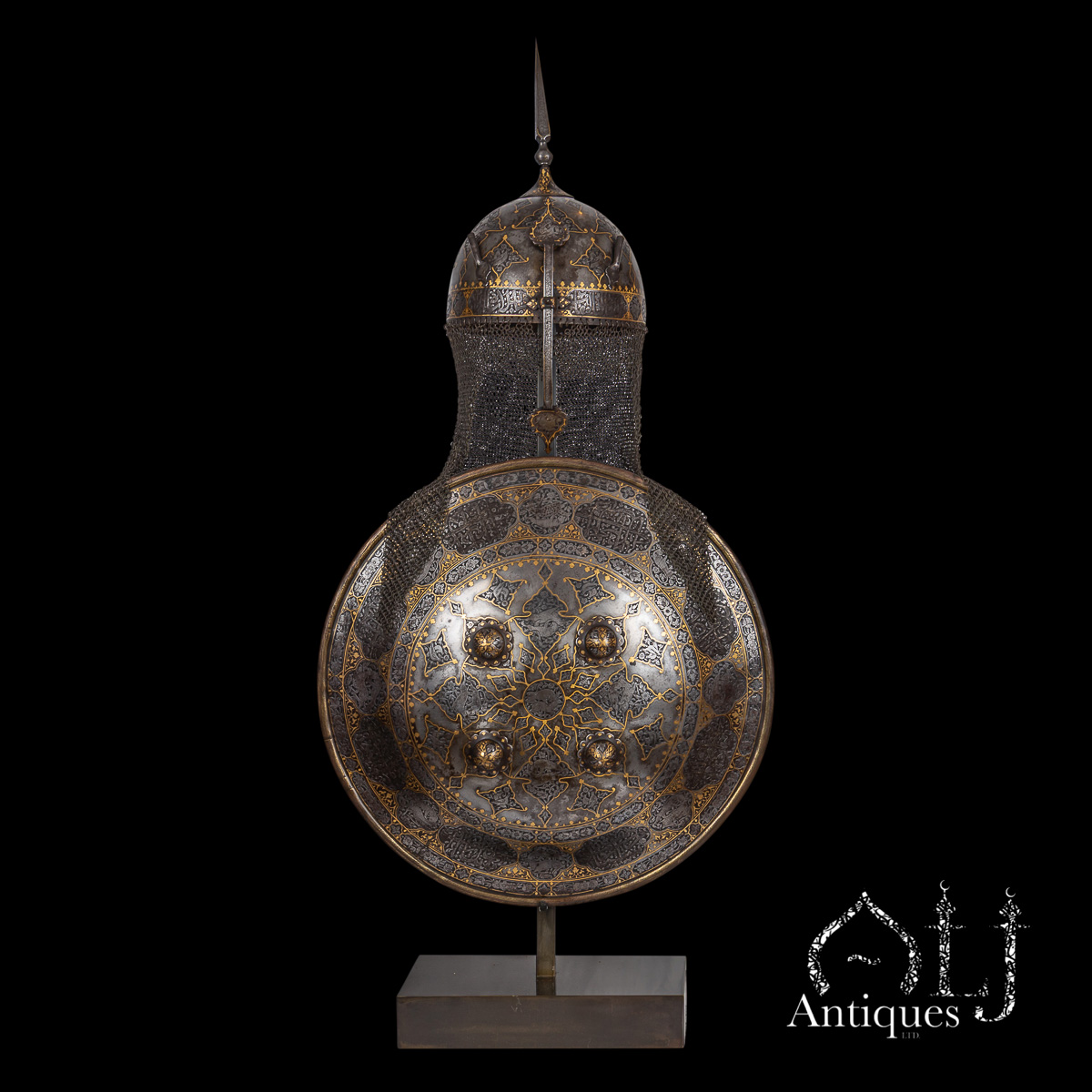
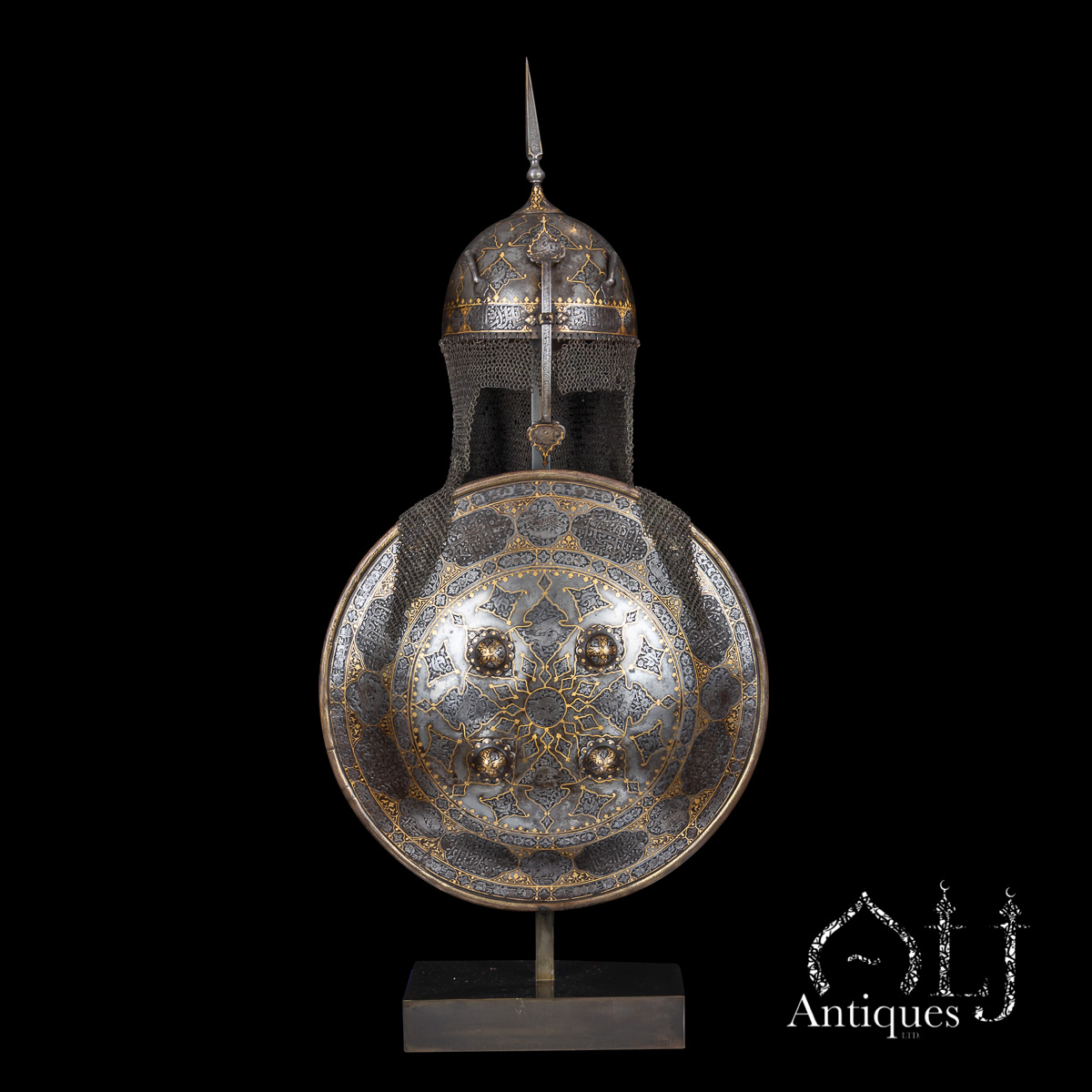
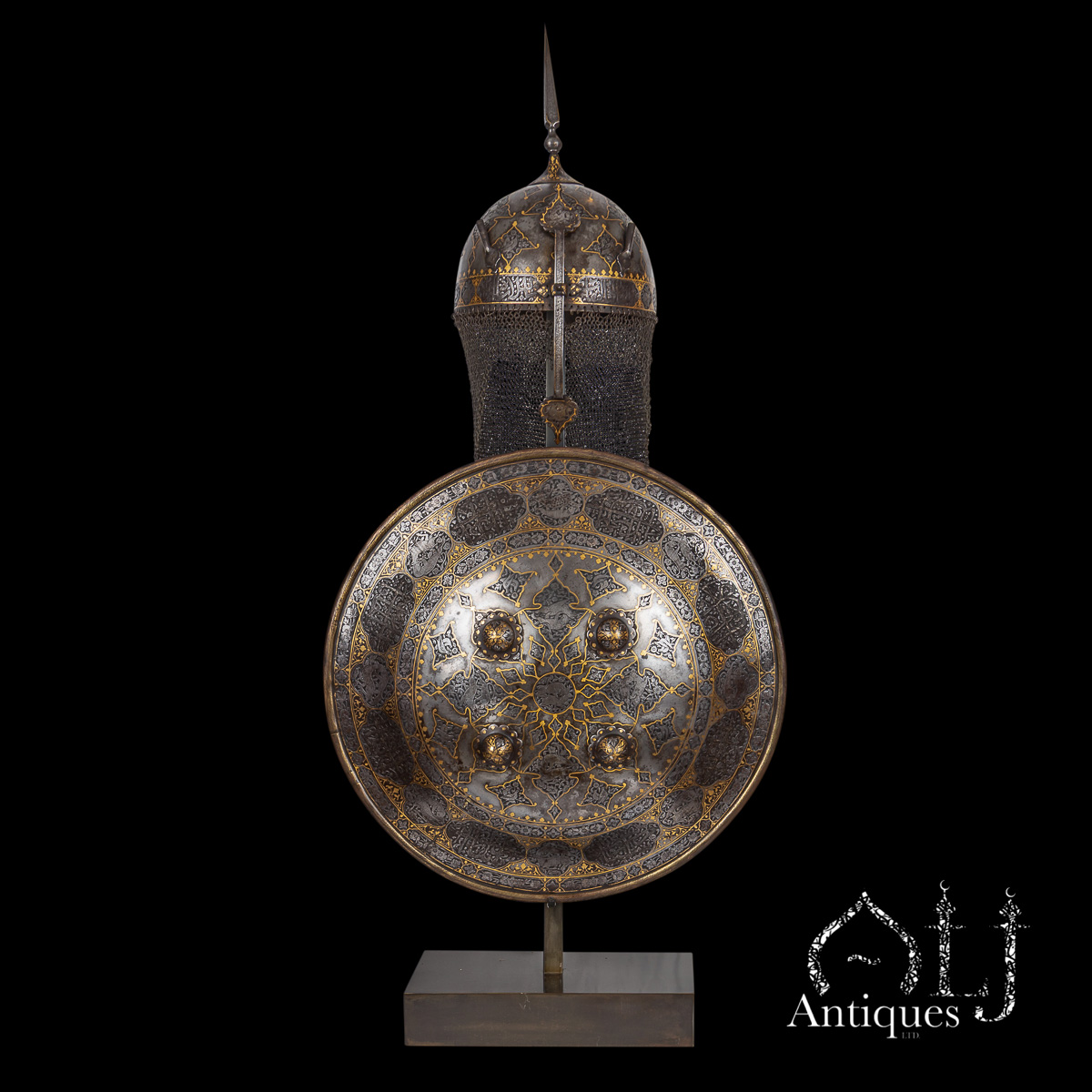
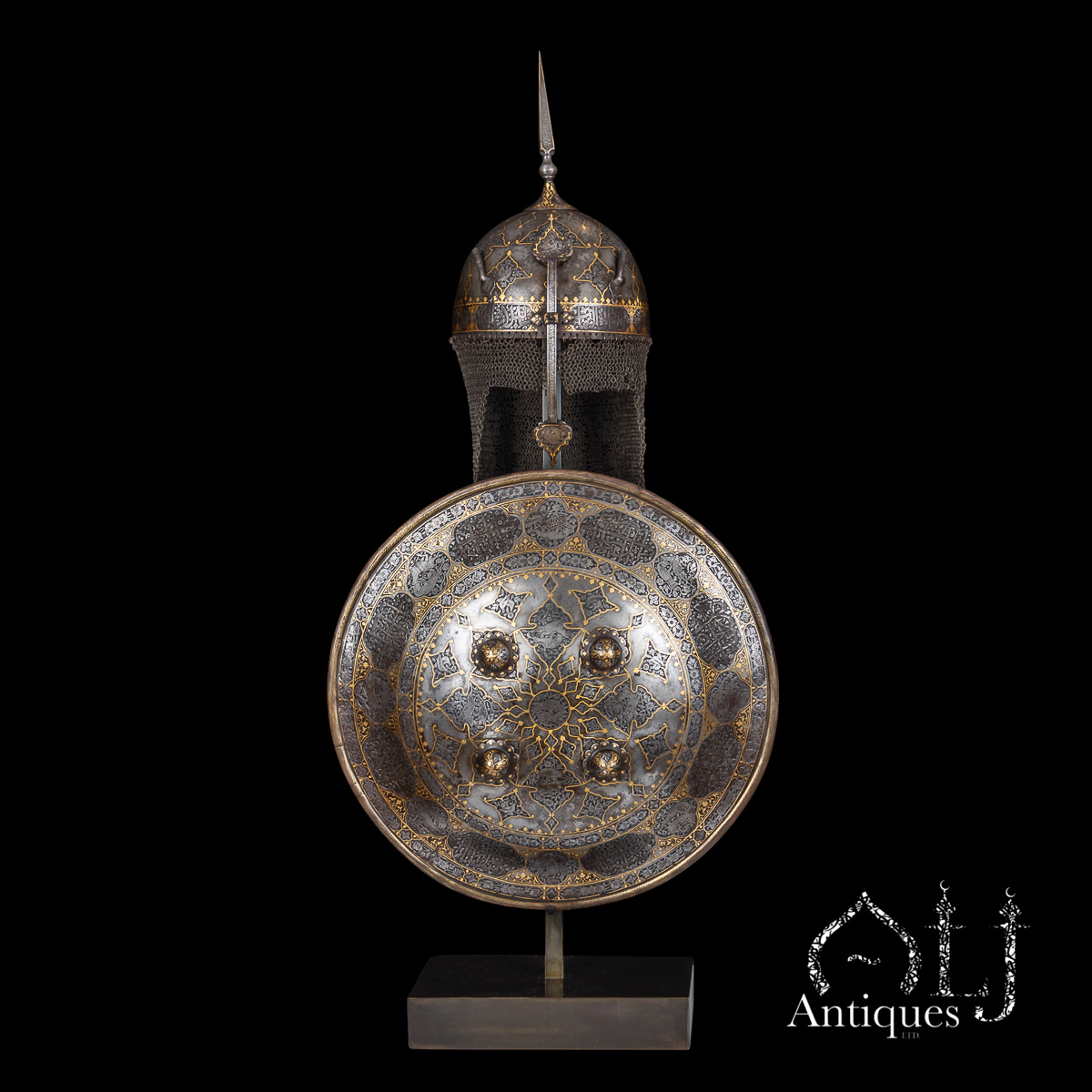
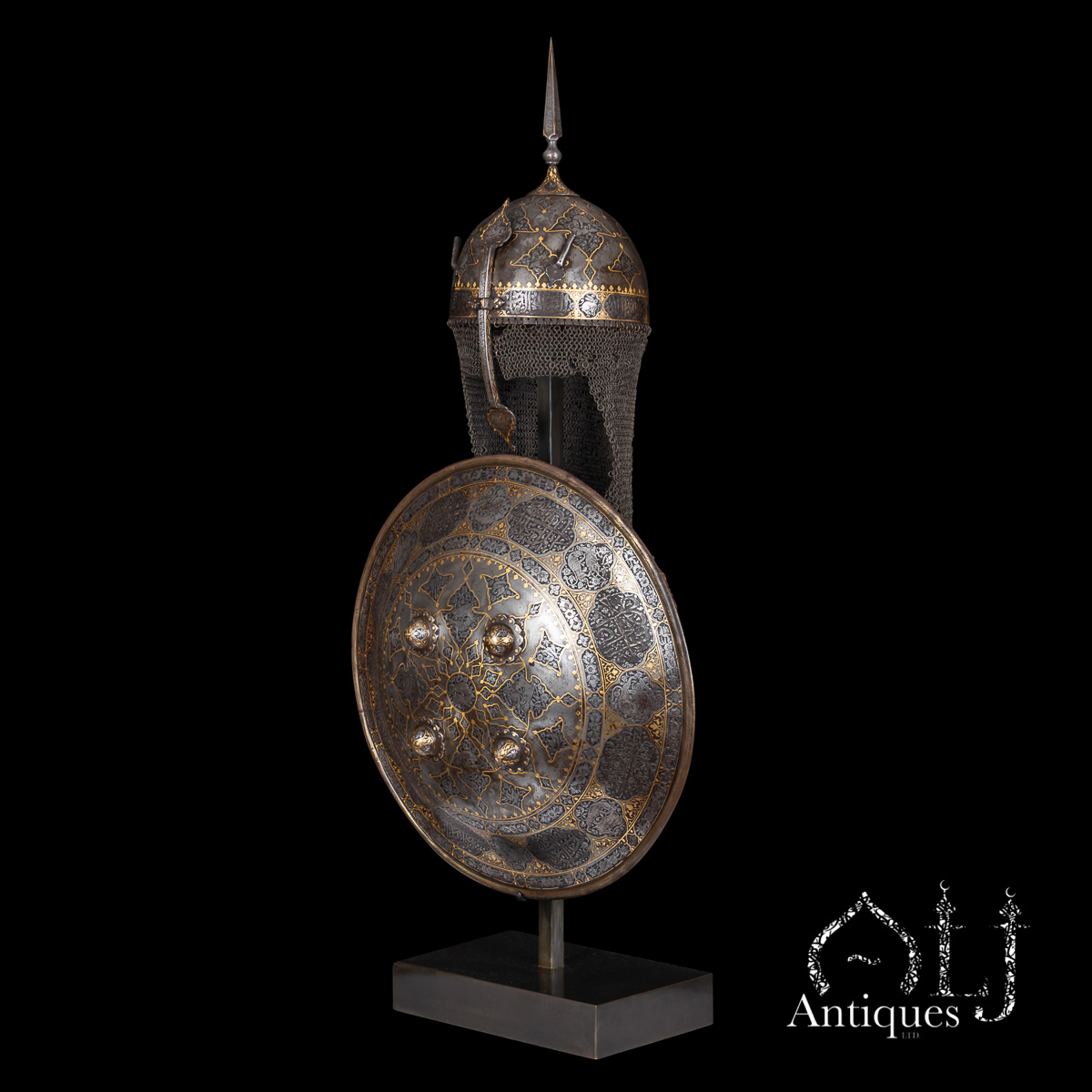
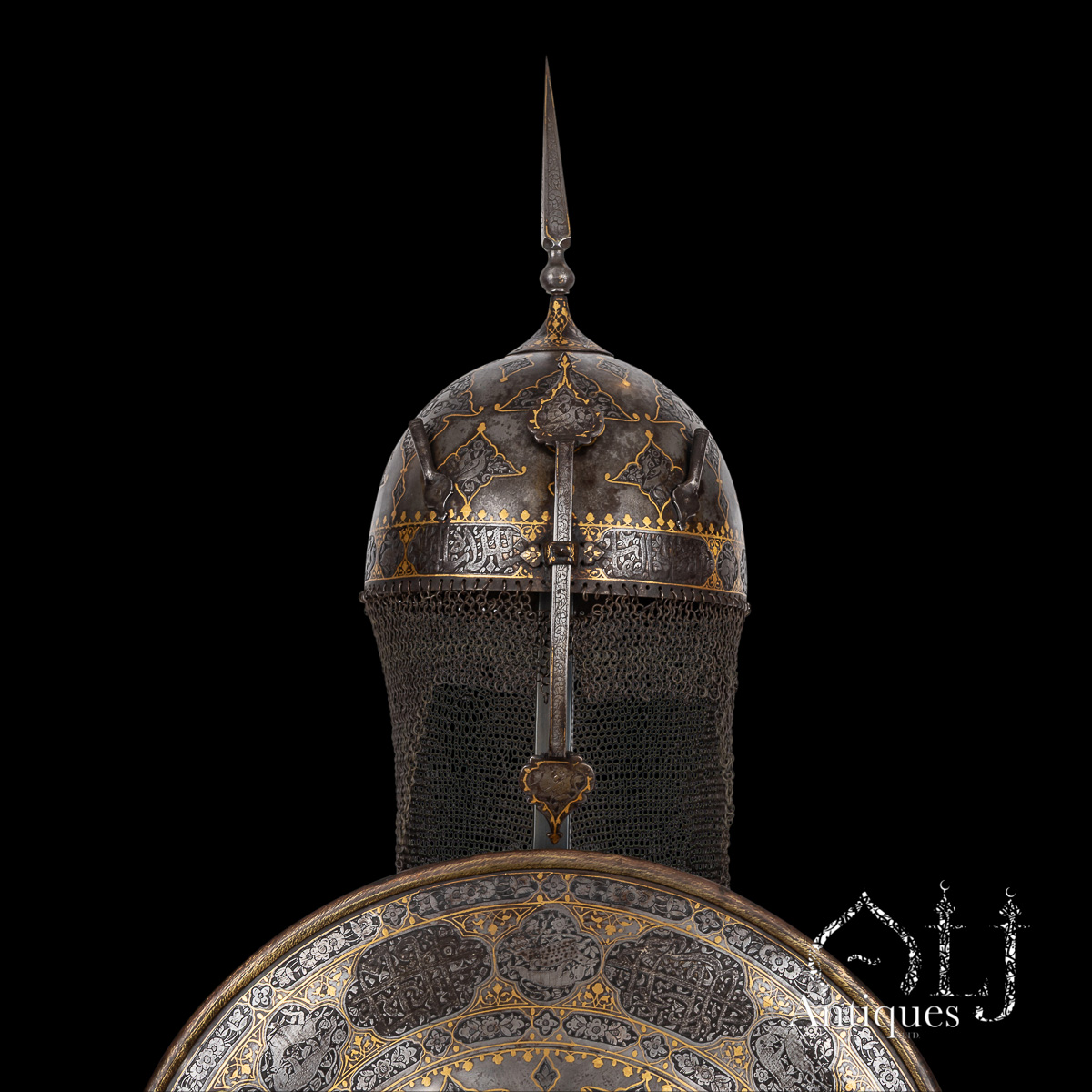
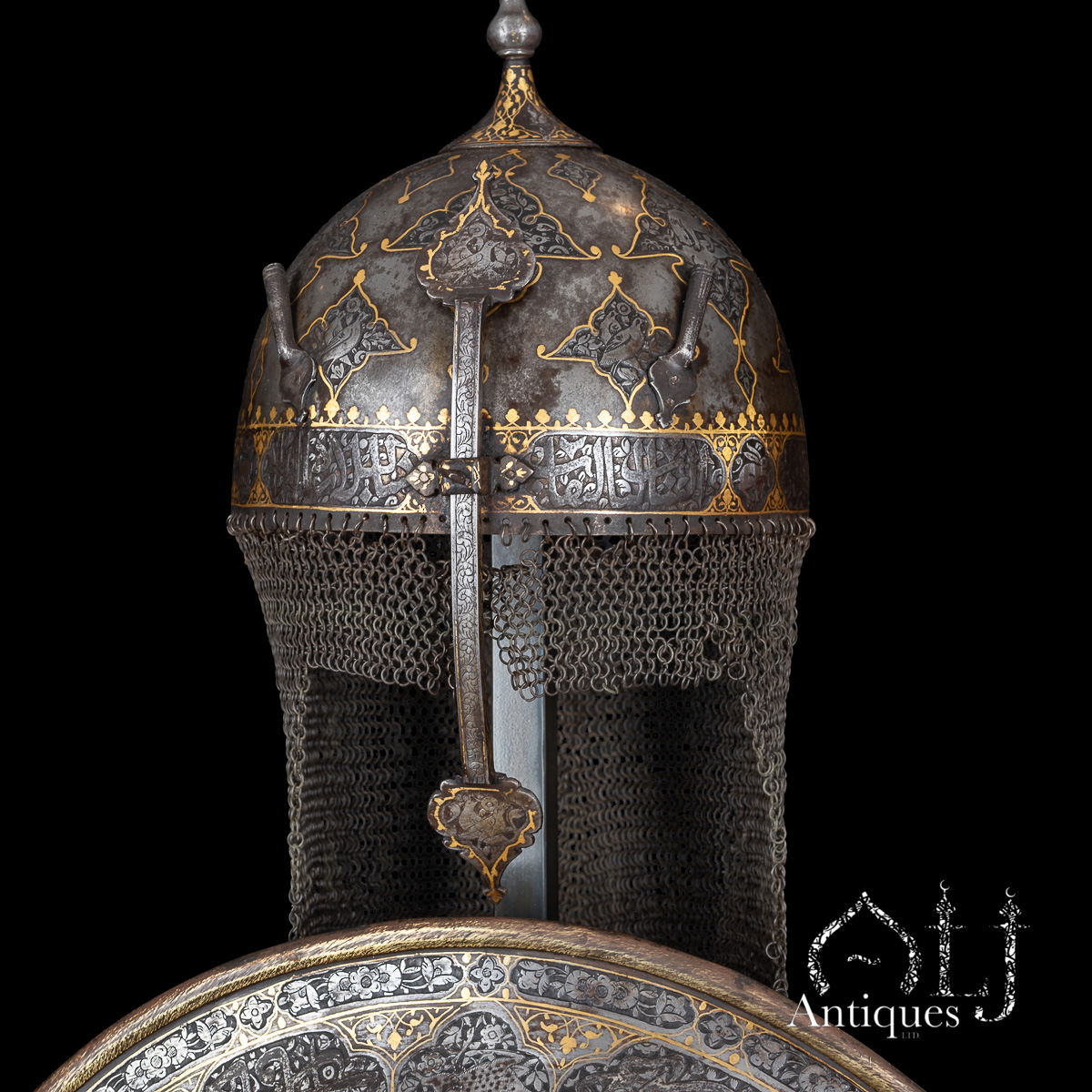
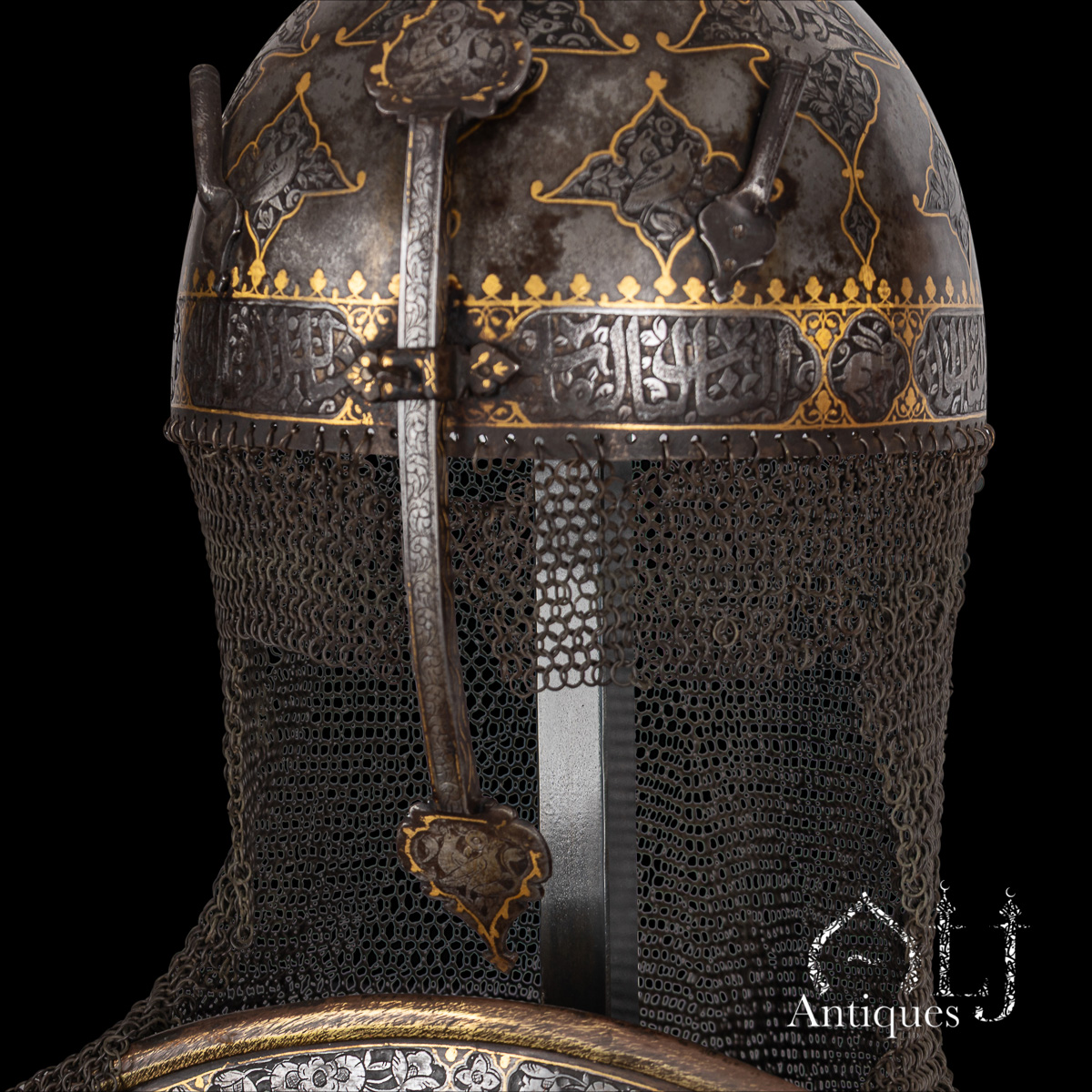
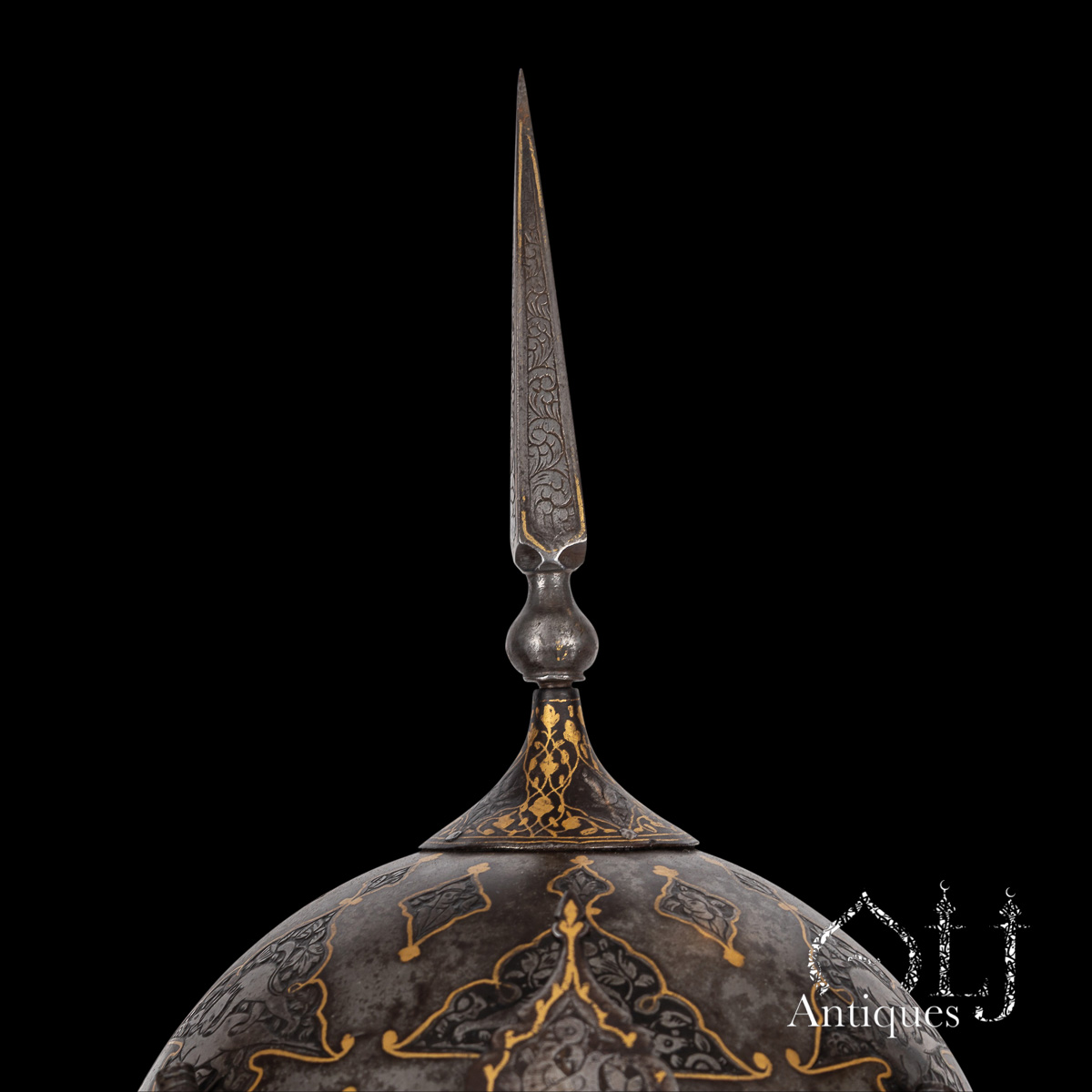
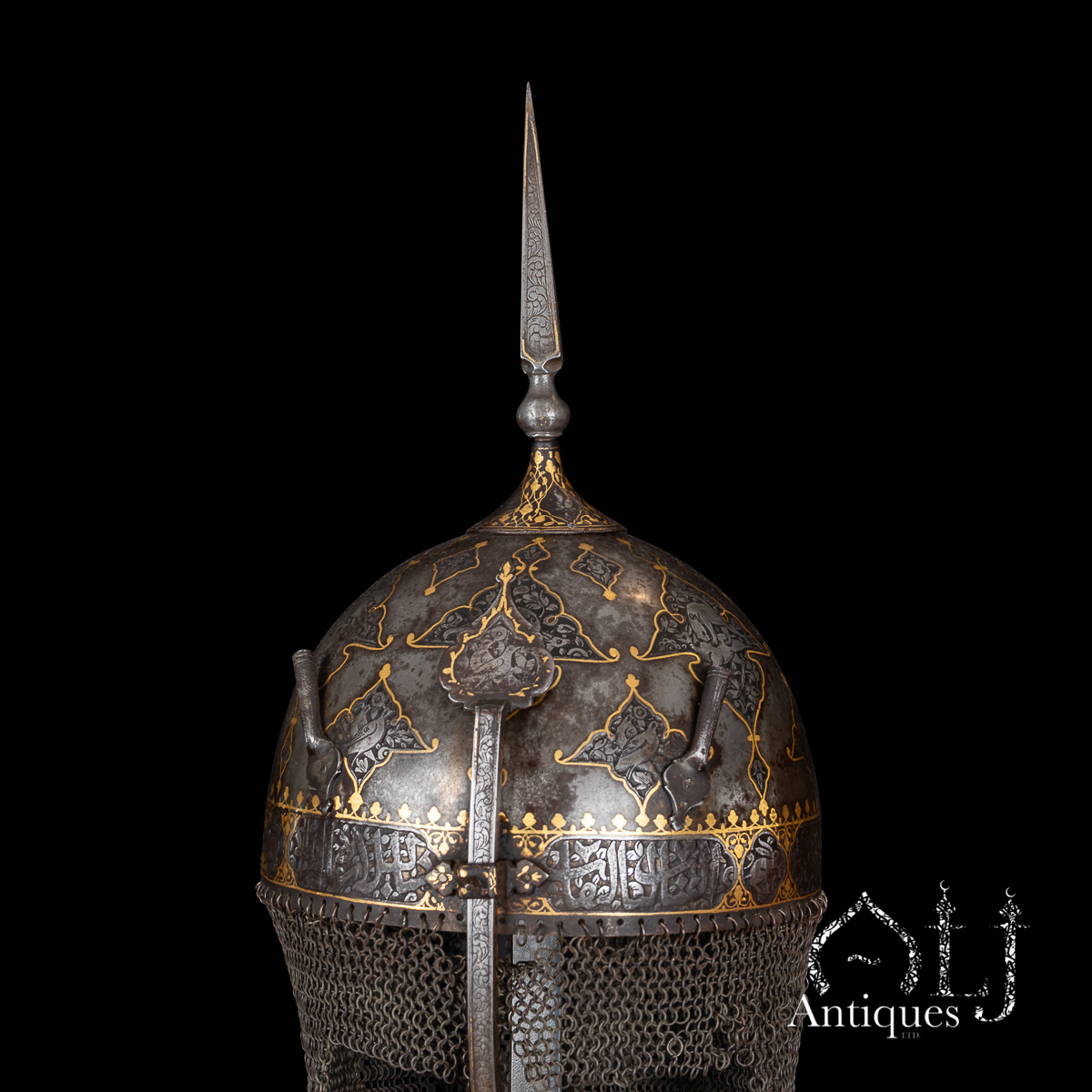
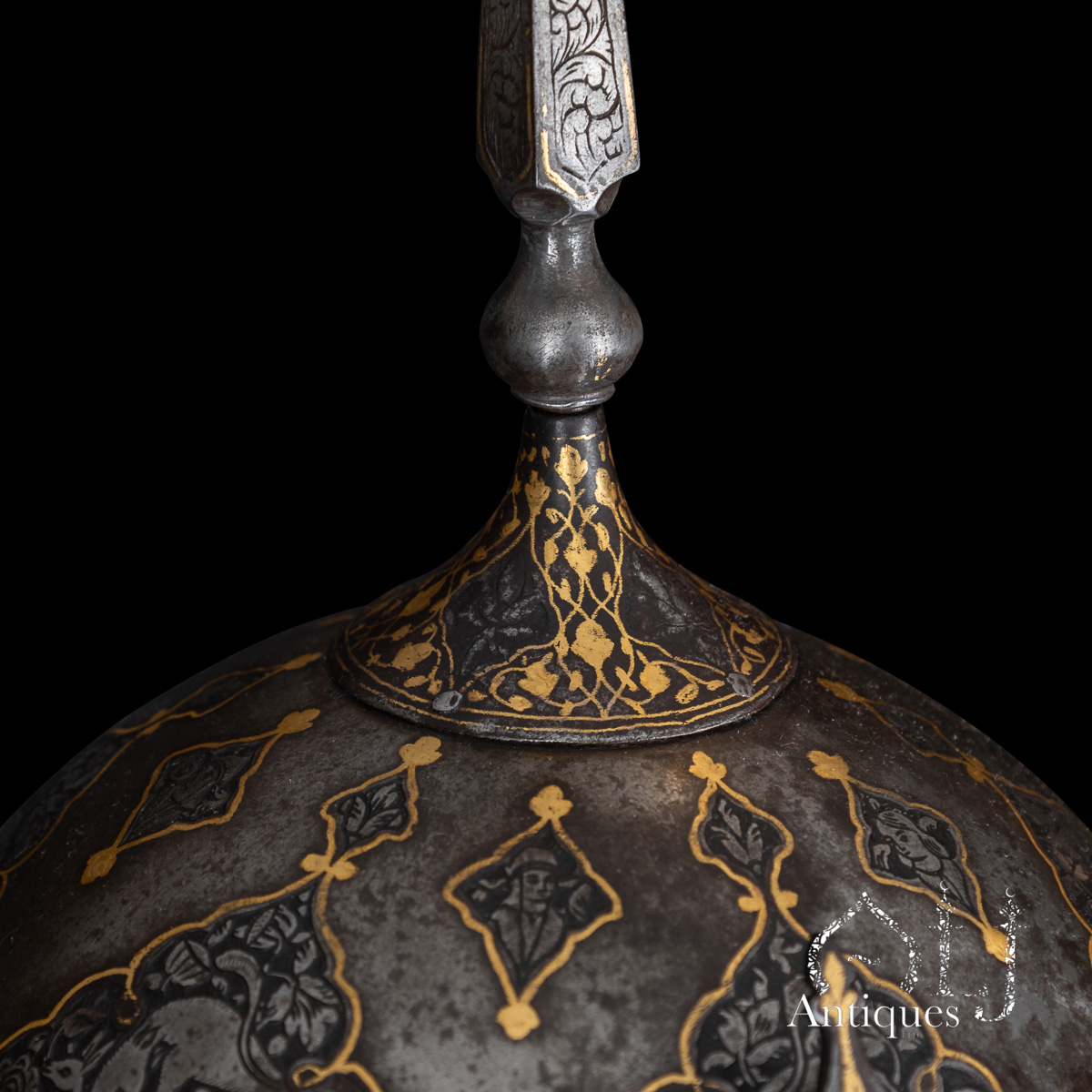
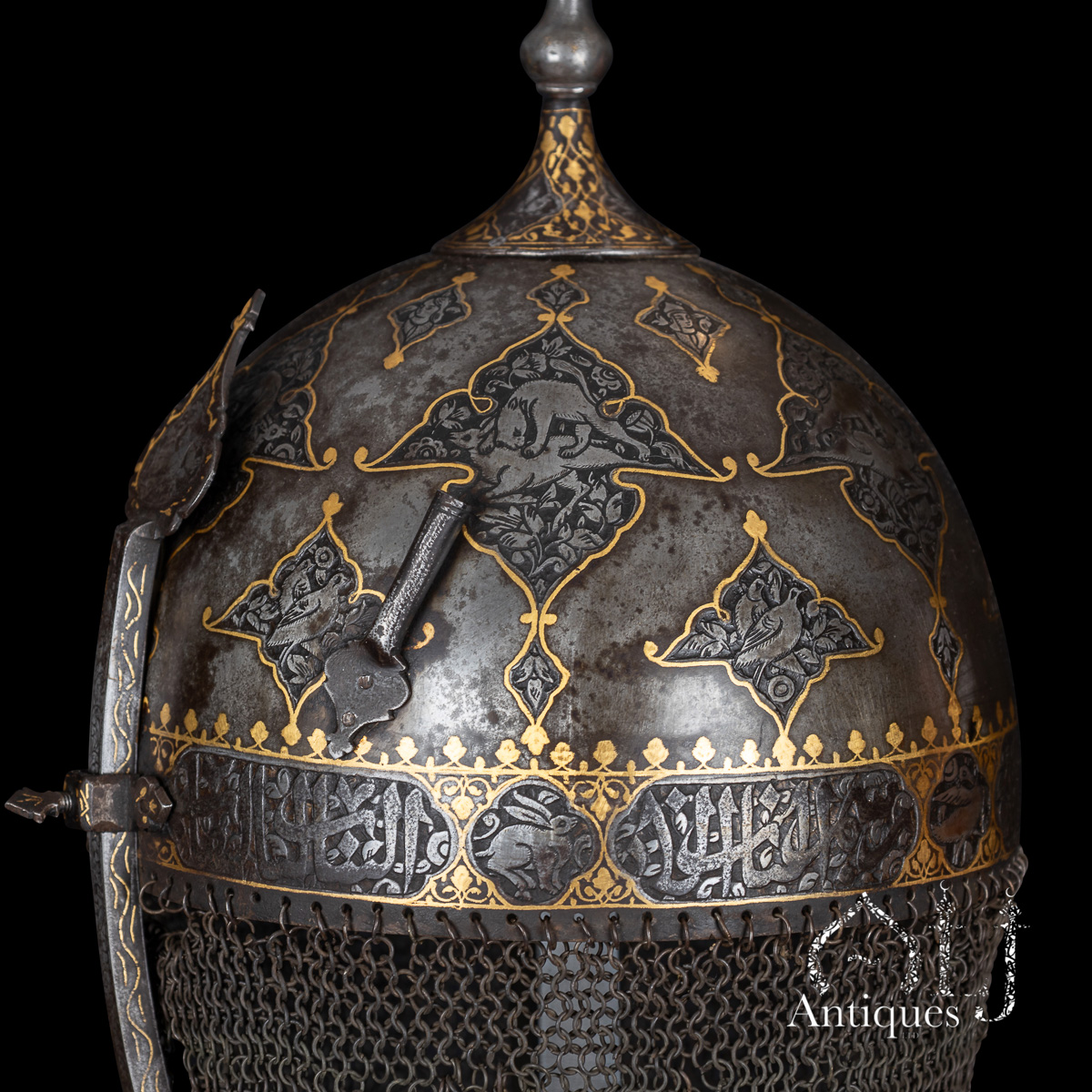
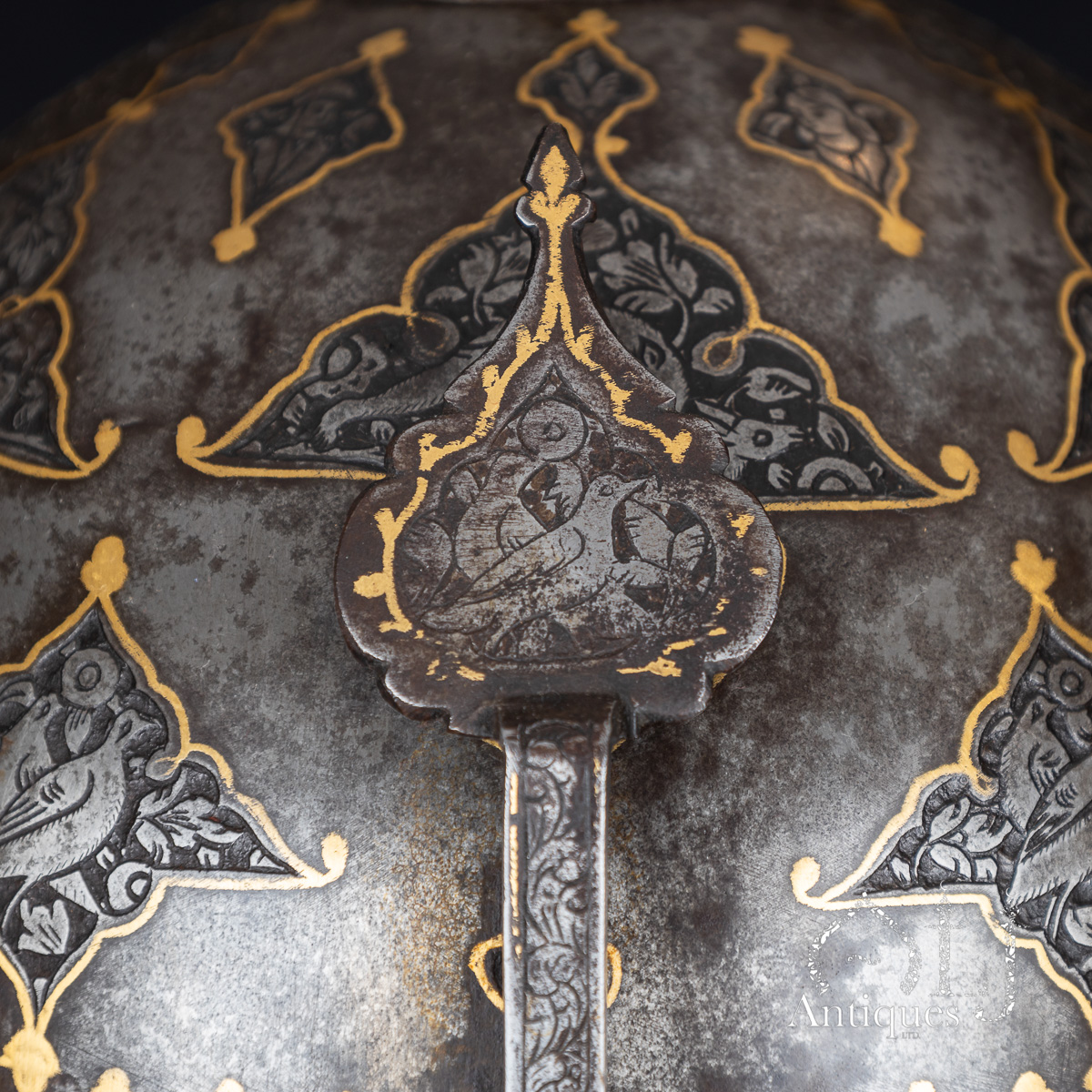
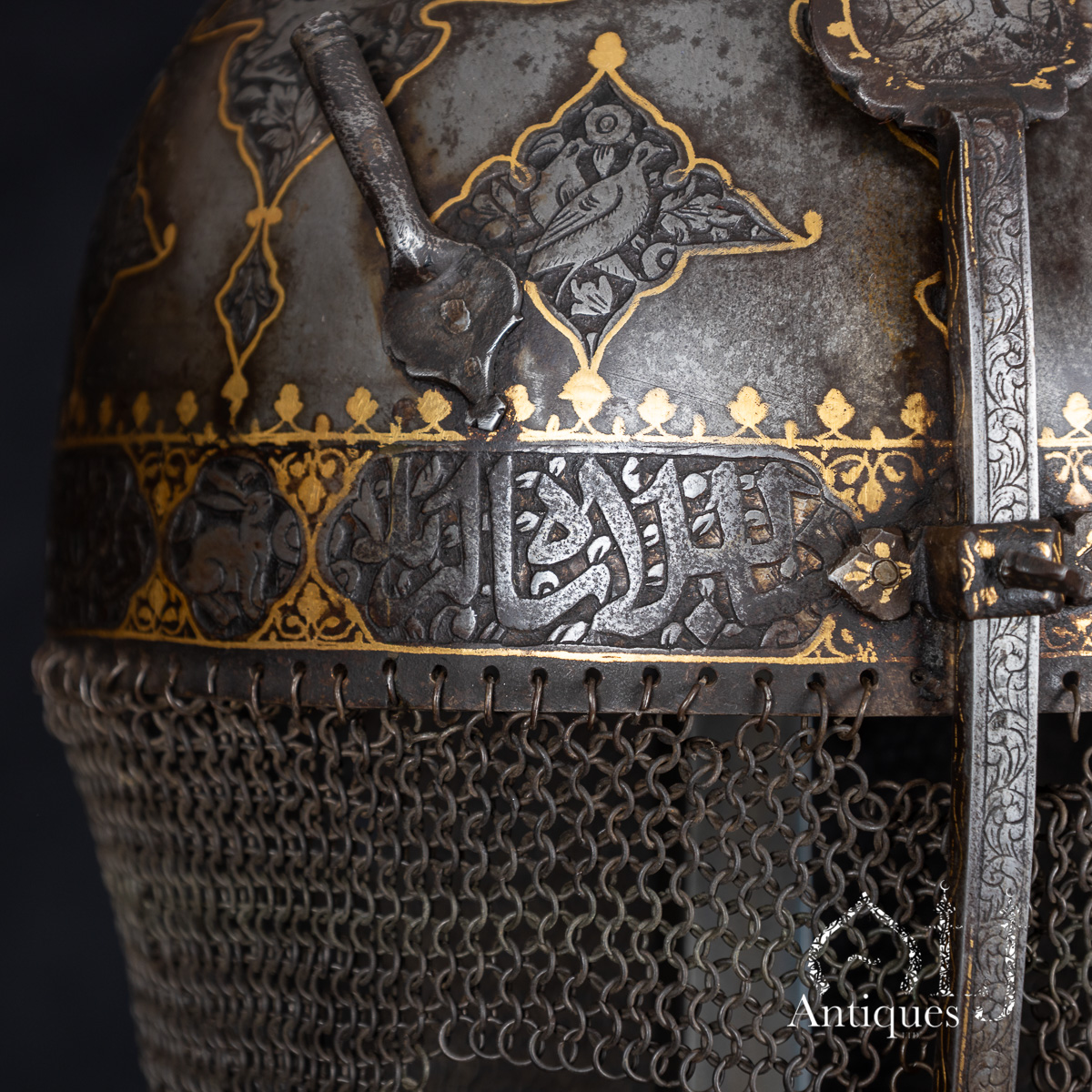
The helmet is of traditional domed form surmounted by a tall spike finial and fitted with a sliding nasal guard terminating in a palmette-shaped plaque. The helmet retains its original butted chainmail aventail, protecting the neck and shoulders. The steel surface is intricately engraved with medallions and cartouches depicting hunting animals and ornamental foliage, all highlighted with finely applied gold damascening.
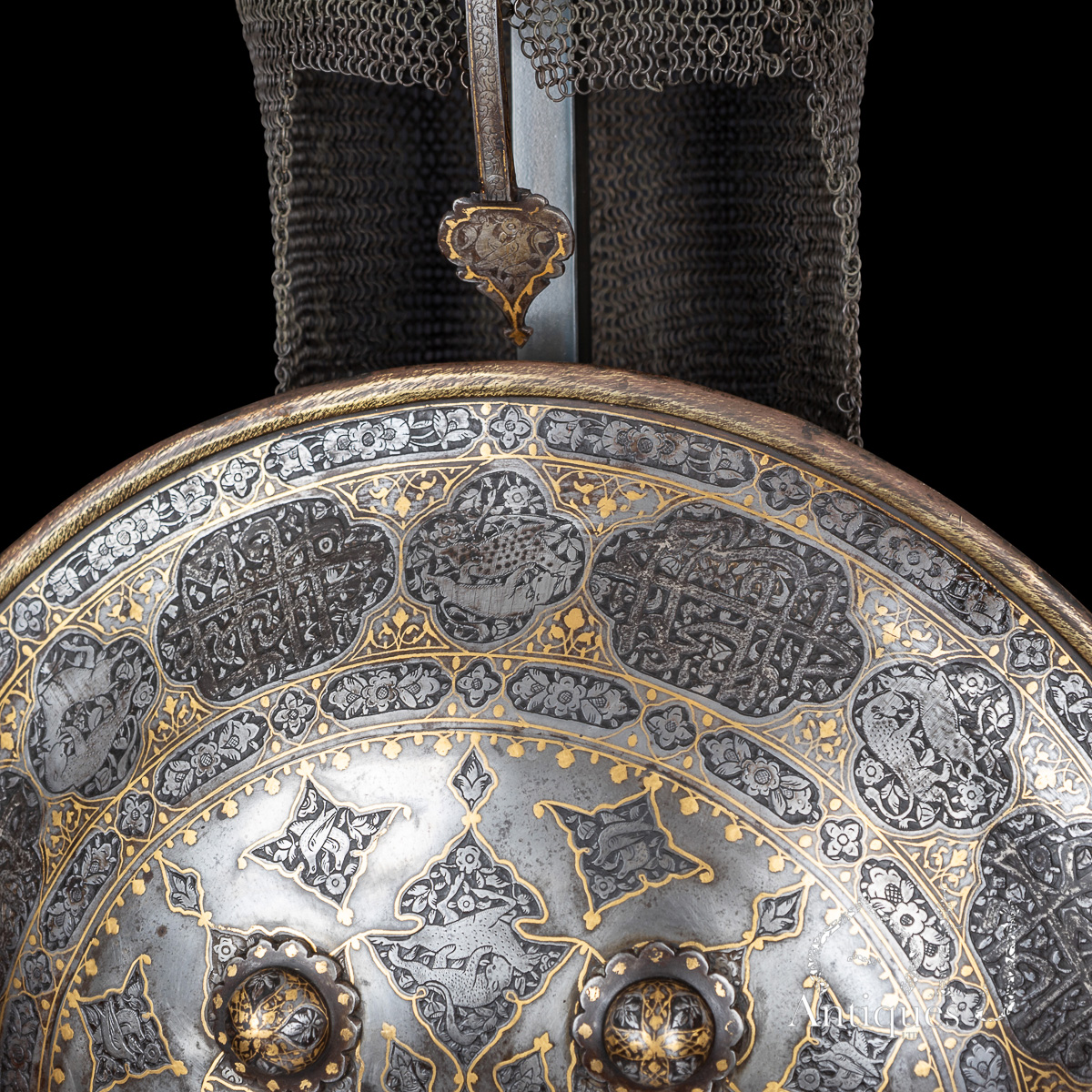
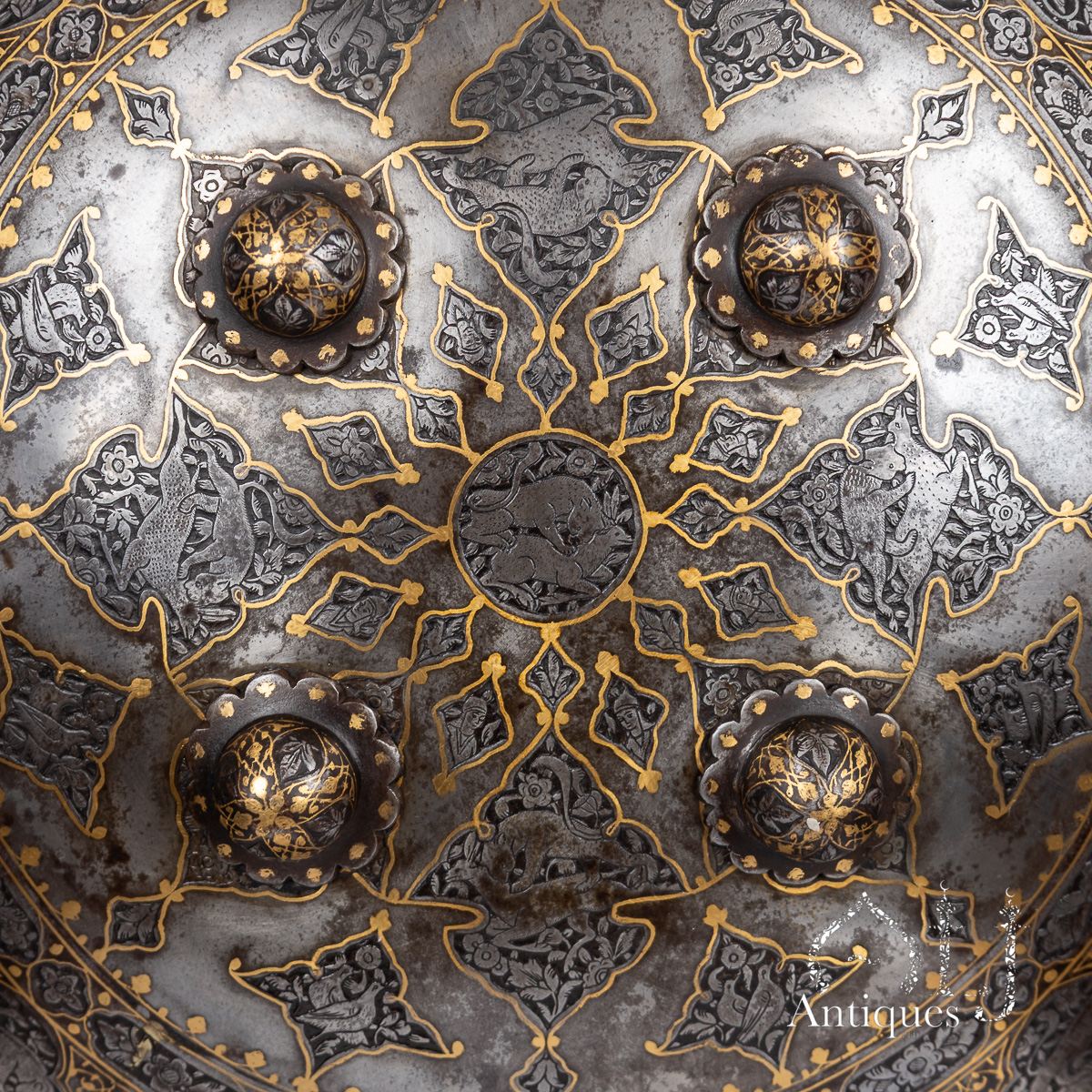
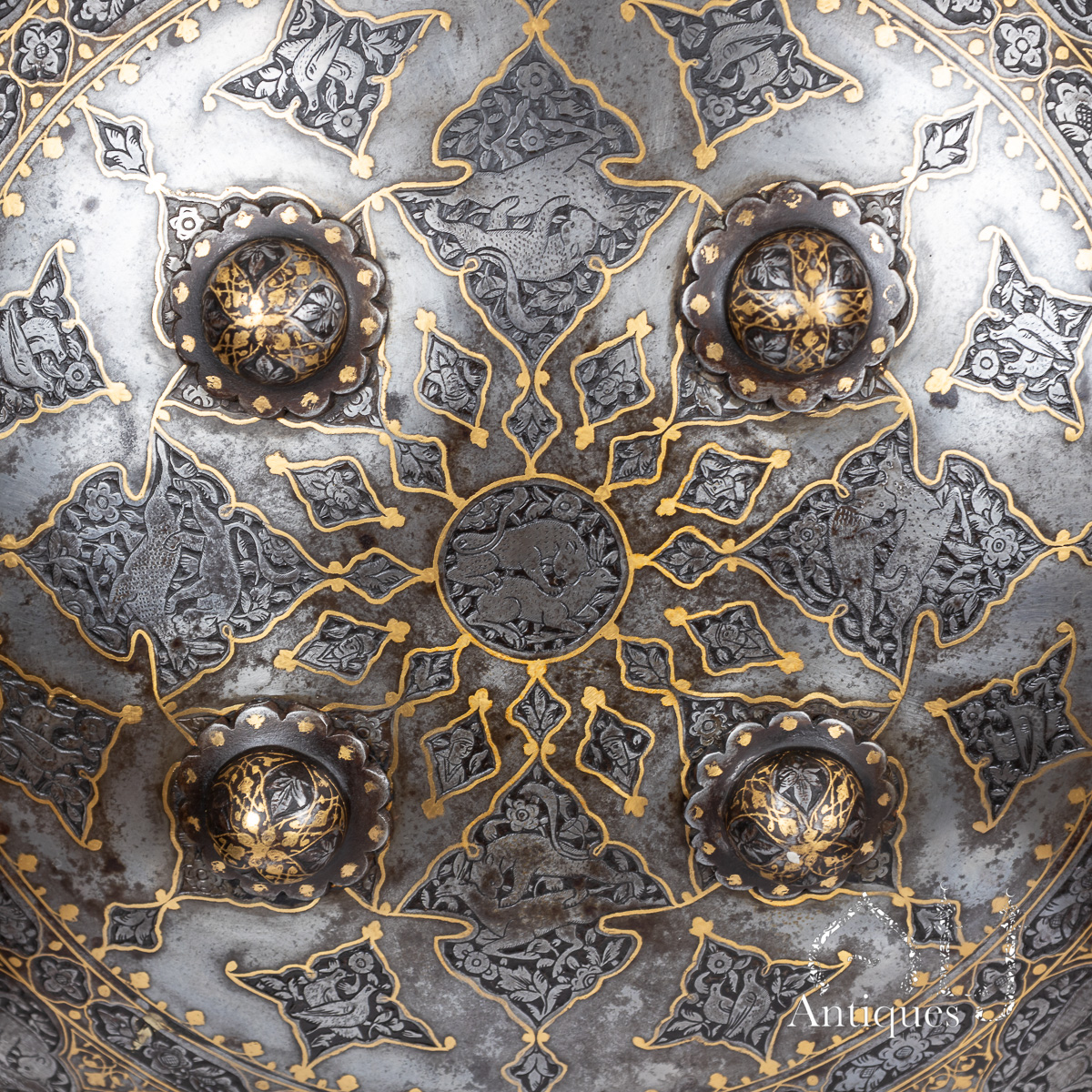
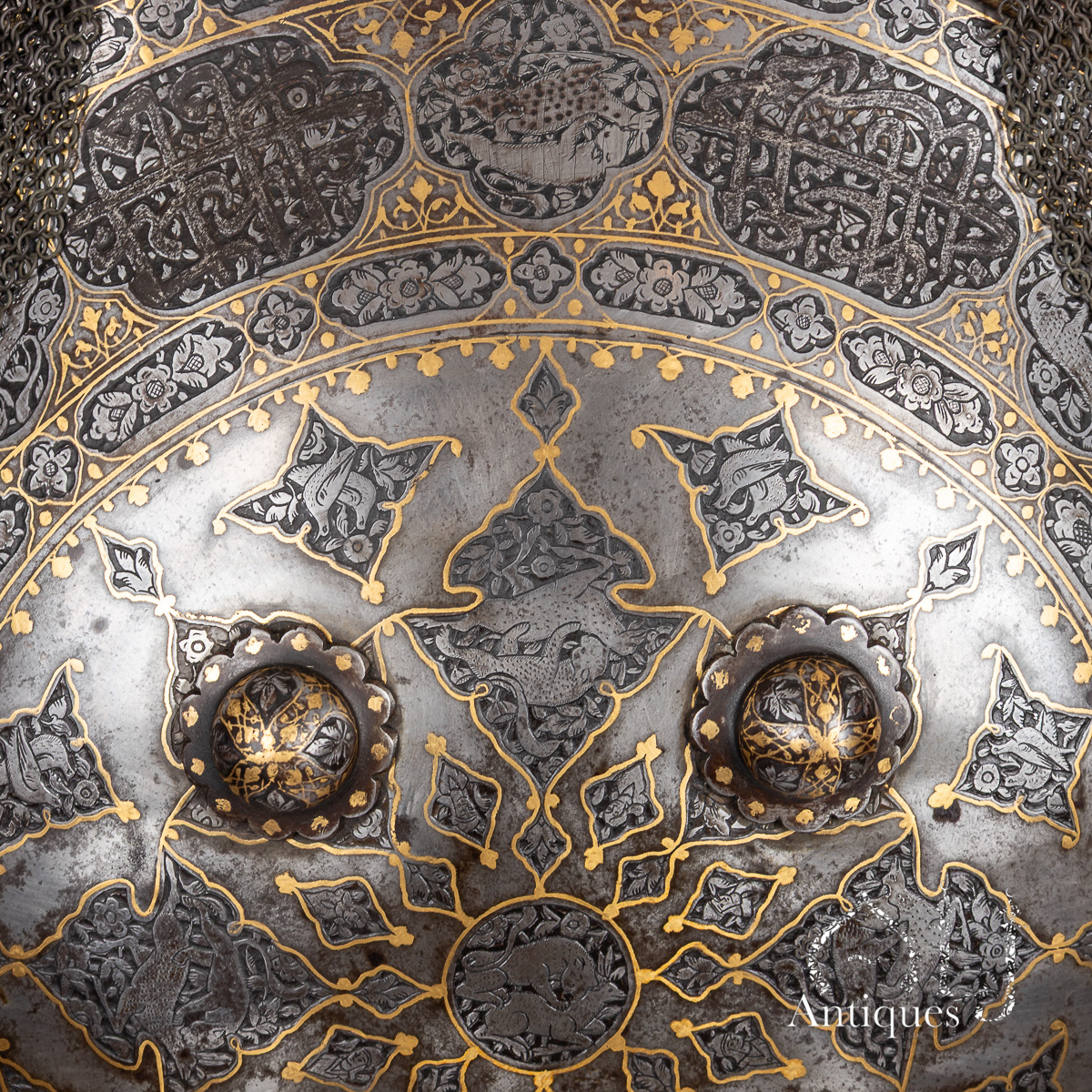
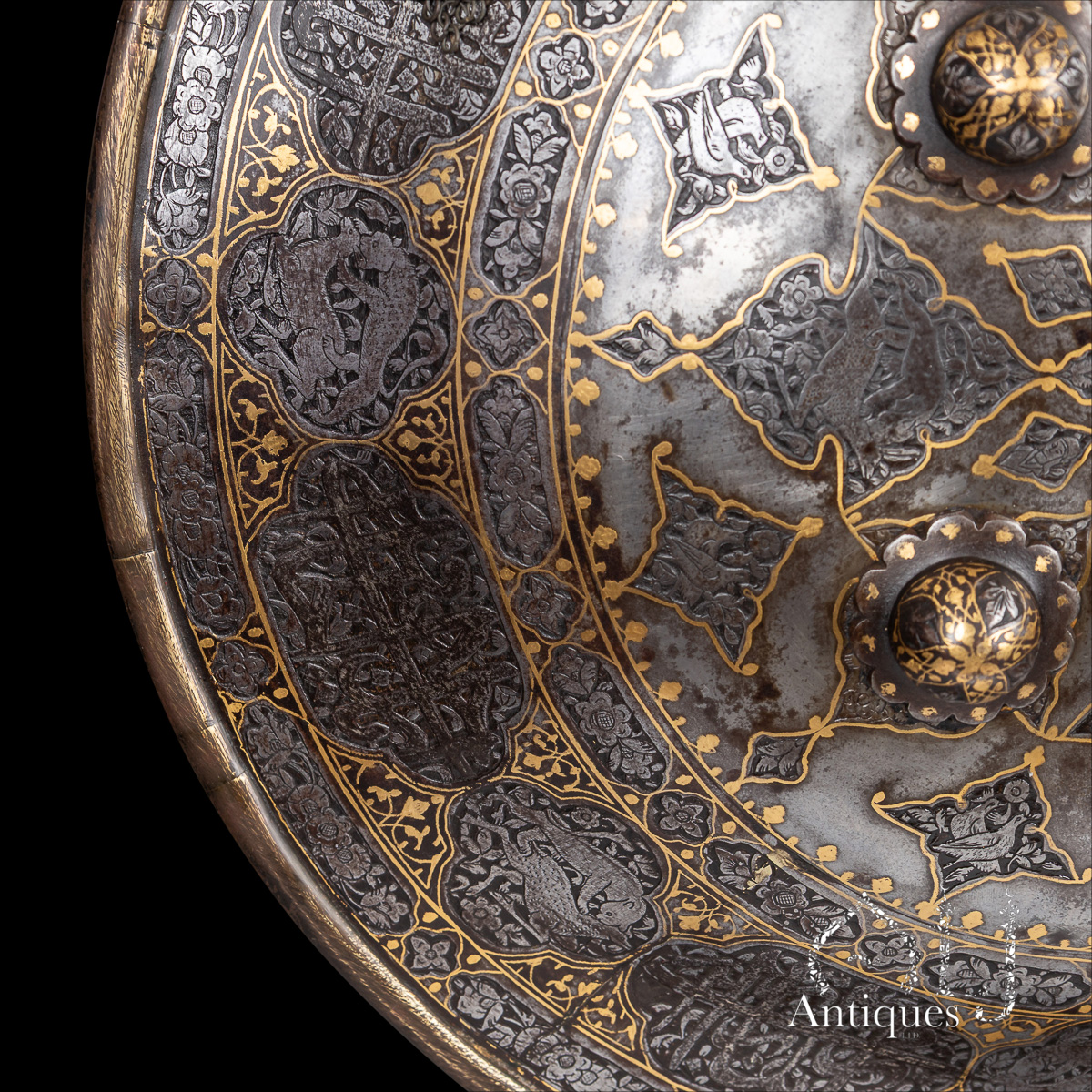
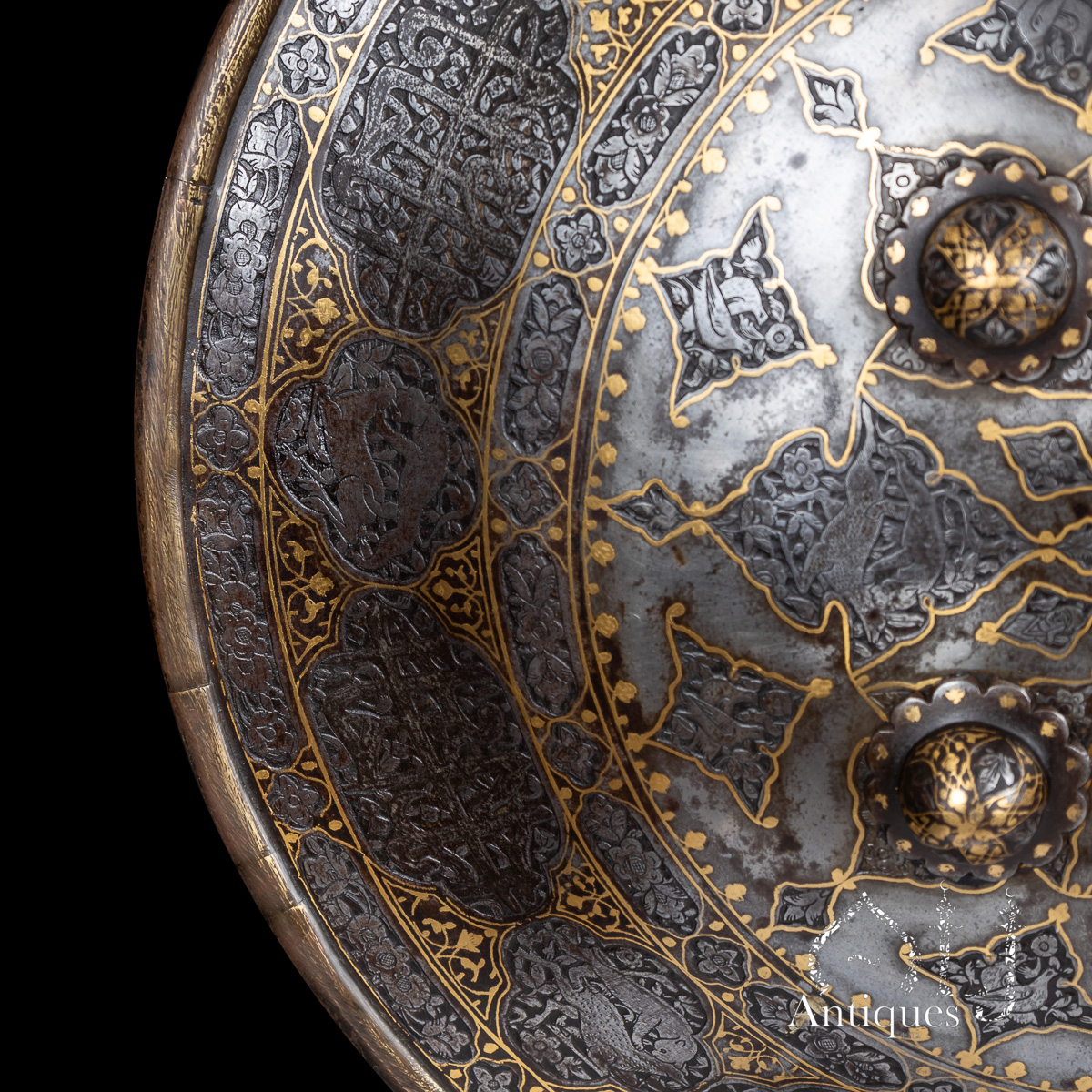
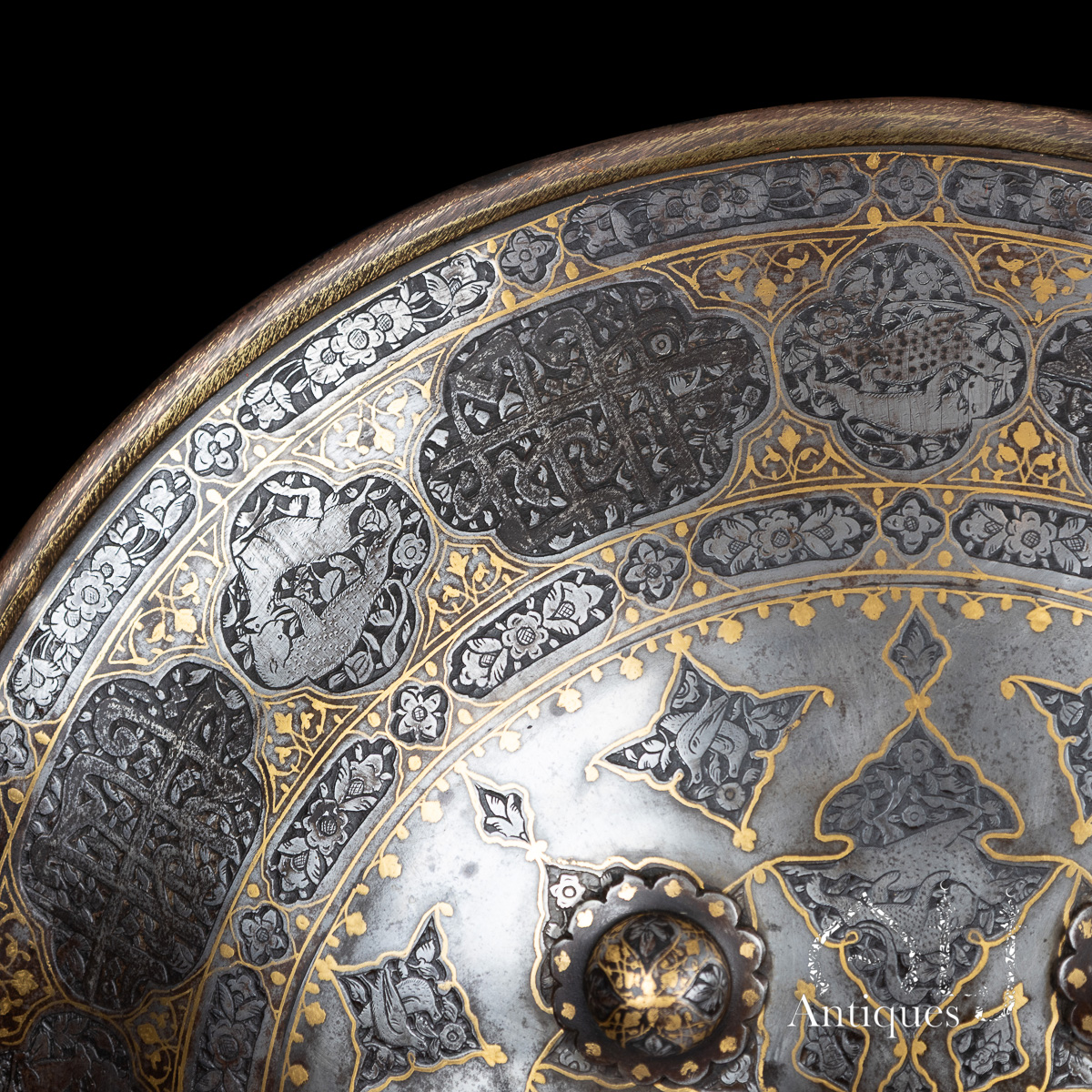
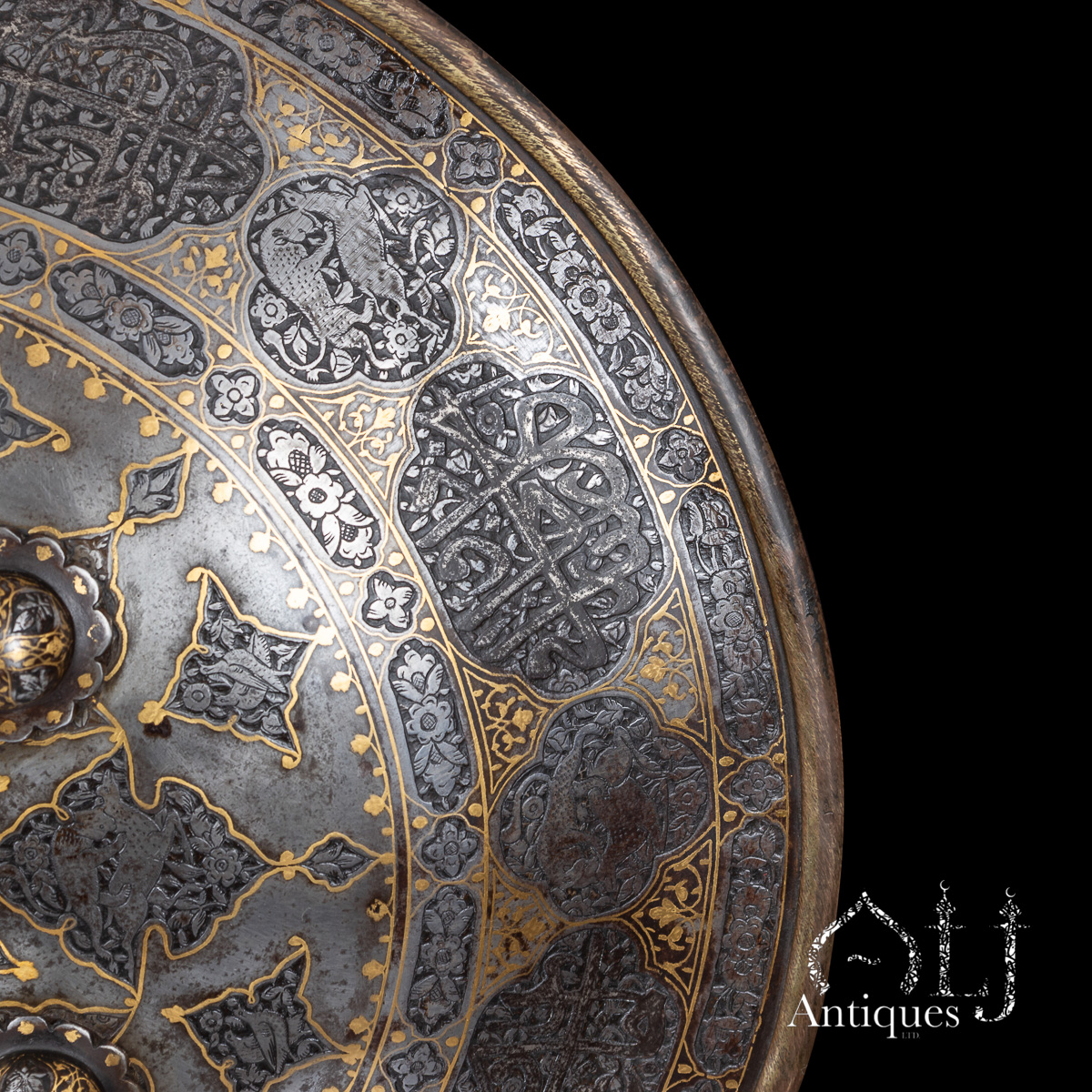
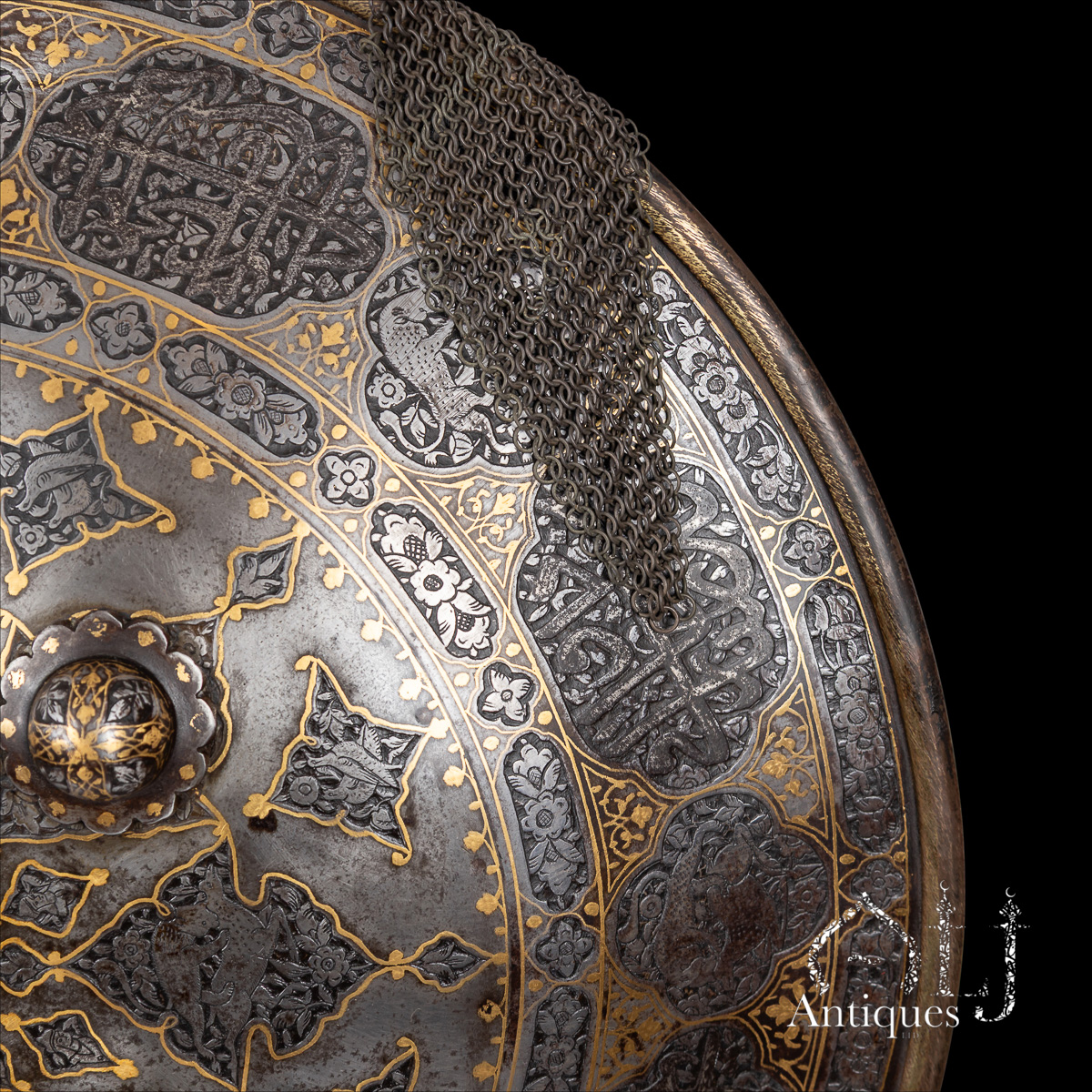
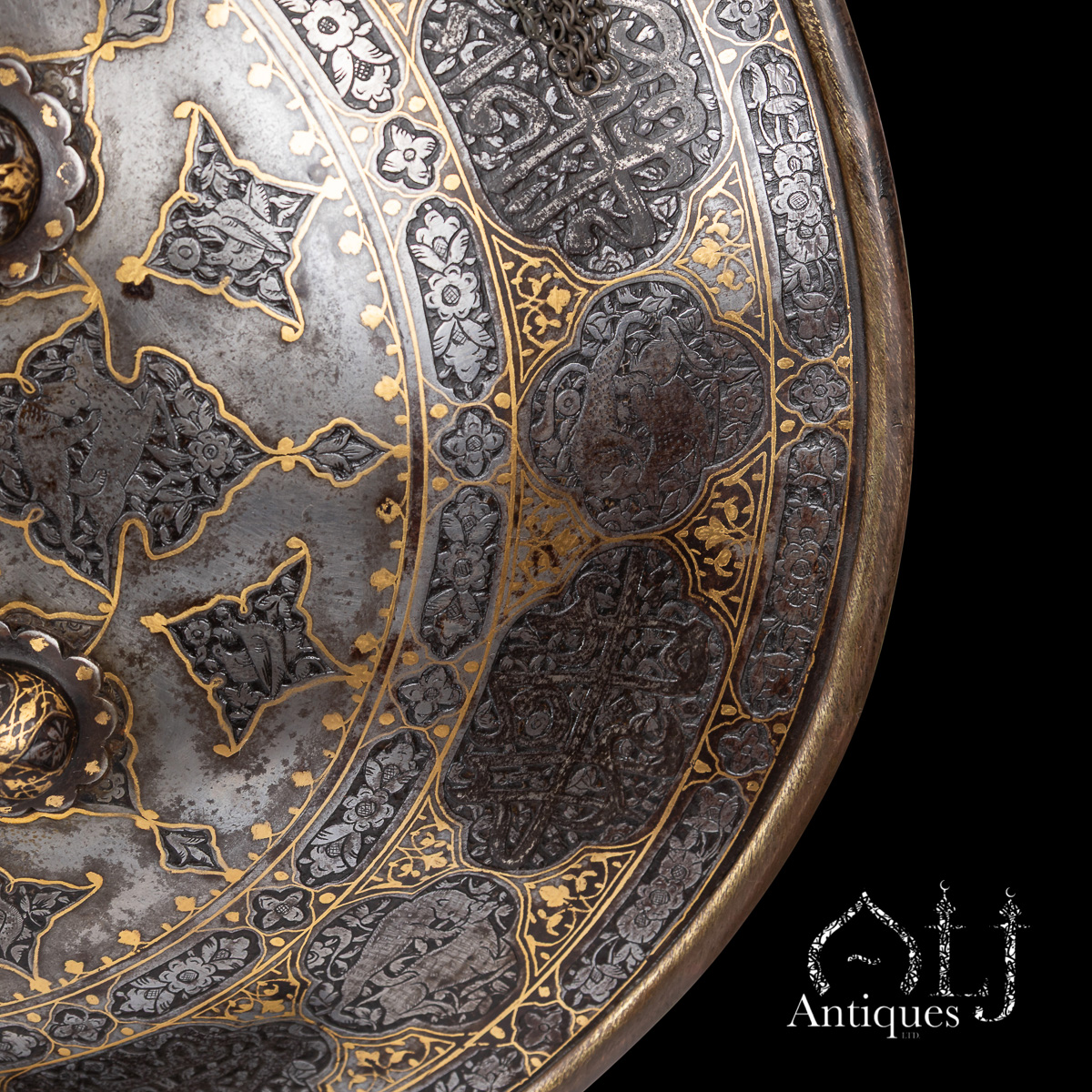
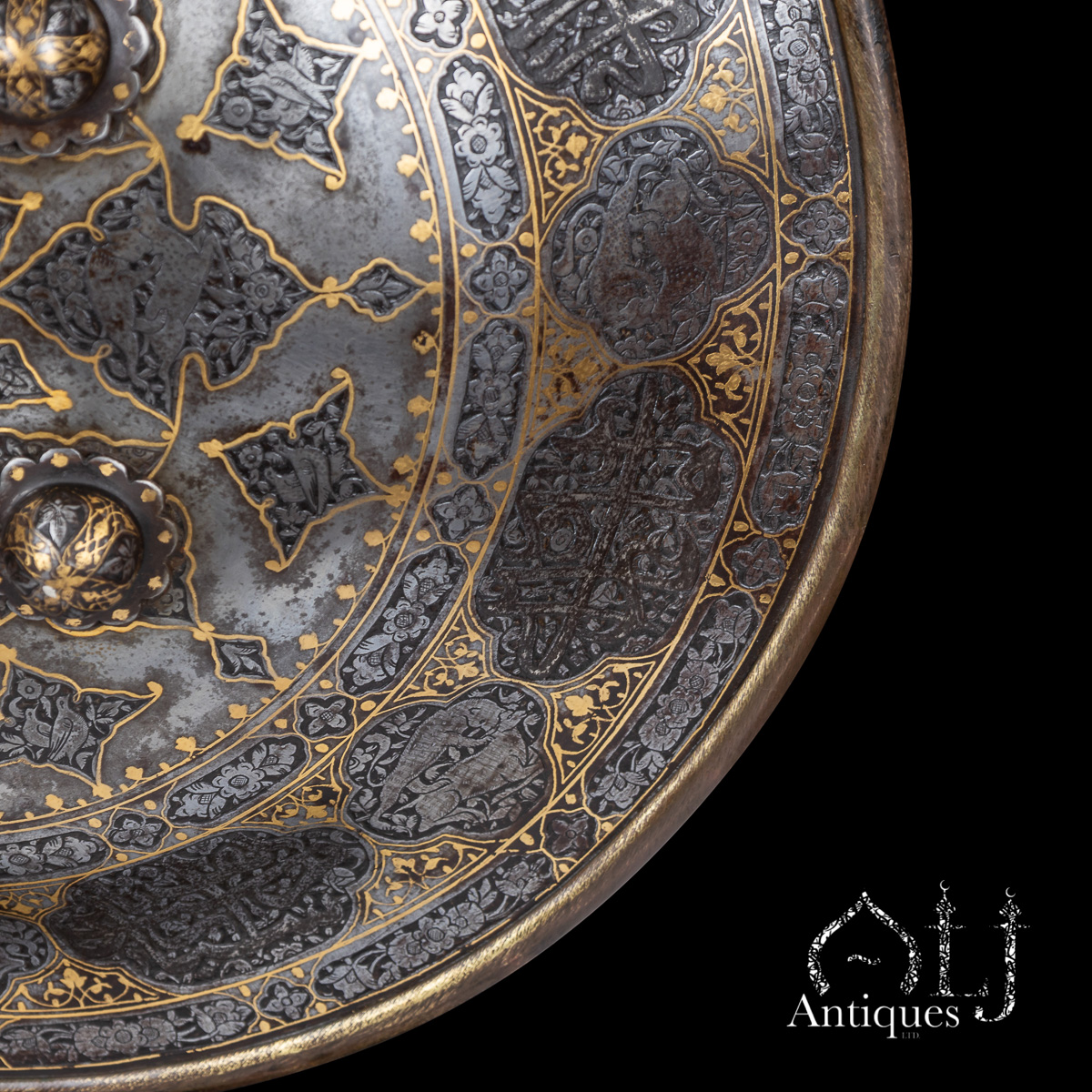
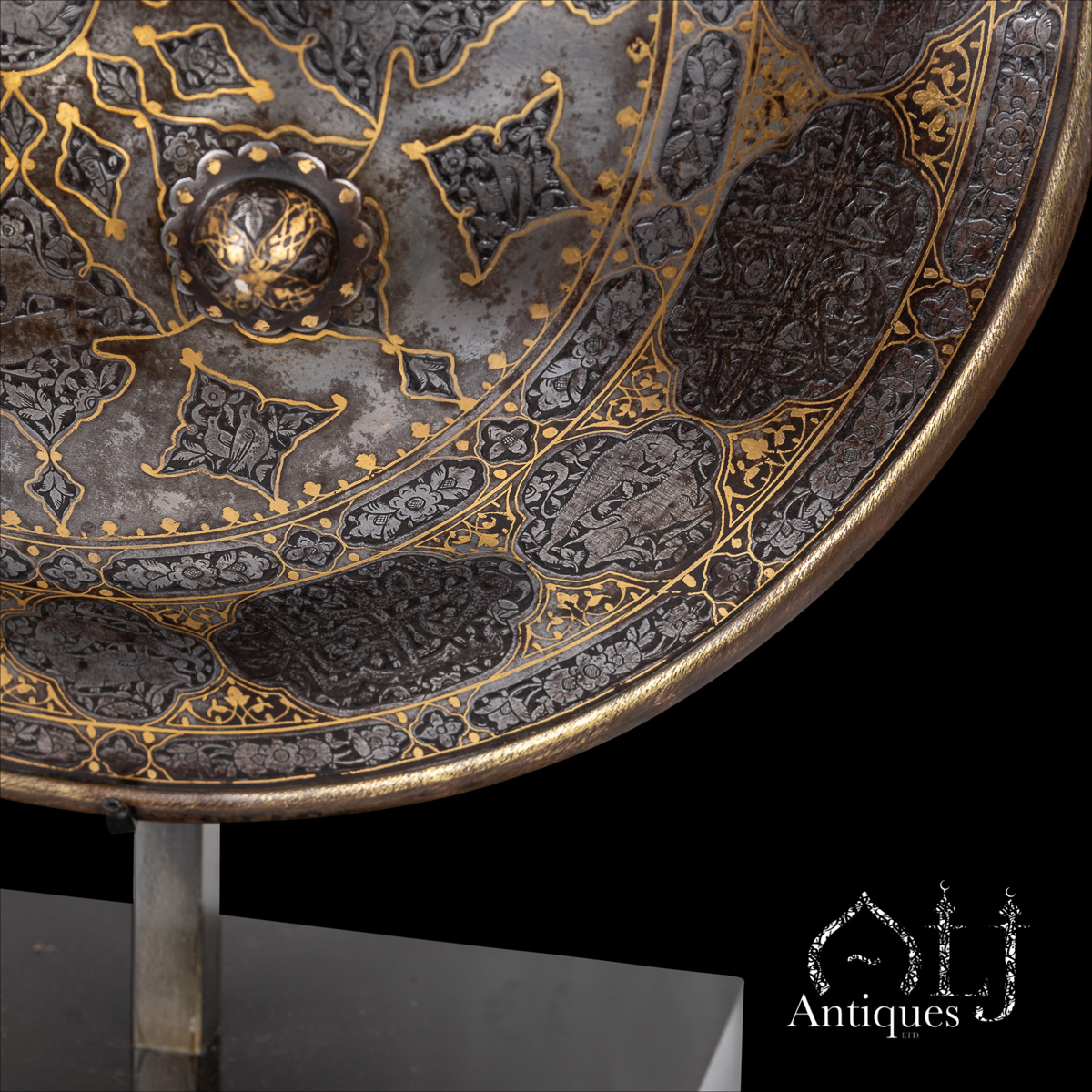
The accompanying shield (separ or sipar)—a term used in Persian sources for this convex shield form and often referred to in arms-and-armour literature as a dhal—is of circular convex form fitted with four applied bosses arranged symmetrically around the centre. The shield face is elaborately decorated with engraved animal hunting scenes within cartouches, surrounded by scrolling floral ornament and calligraphic bands, all enhanced with fine gold damascened decoration across the entire surface. The interior retains its traditional red textile lining, together with fittings for suspension and arm straps.
Armour of this type was widely produced during the Qajar period, particularly in the second half of the nineteenth century, when such pieces were often made primarily for ceremonial, courtly, or commemorative purposes rather than battlefield use. Finely decorated armour sets were associated with royal display, palace guard regalia, and religious commemorations such as the Muharram processions.
By the later nineteenth century, highly ornate Persian armour was also produced for the international market, particularly for European travellers, diplomats, and collectors fascinated by the decorative arts of the Islamic world. Many examples were exported throughout the Ottoman Empire, the Arab world, and North Africa, as well as to Europe, where they became prized as impressive decorative objects and examples of Oriental arms and armour.
The present example appears to be made from finely worked steel, possibly watered steel (wootz), a material historically valued for both its strength and its distinctive surface structure. The quality of engraving and extensive gold damascening demonstrates the high level of craftsmanship associated with Qajar metalwork.