Description
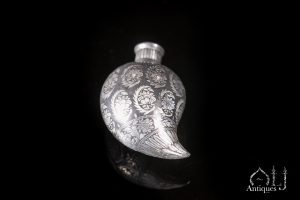
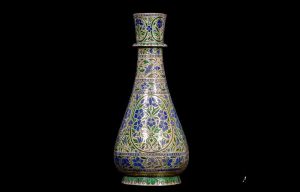
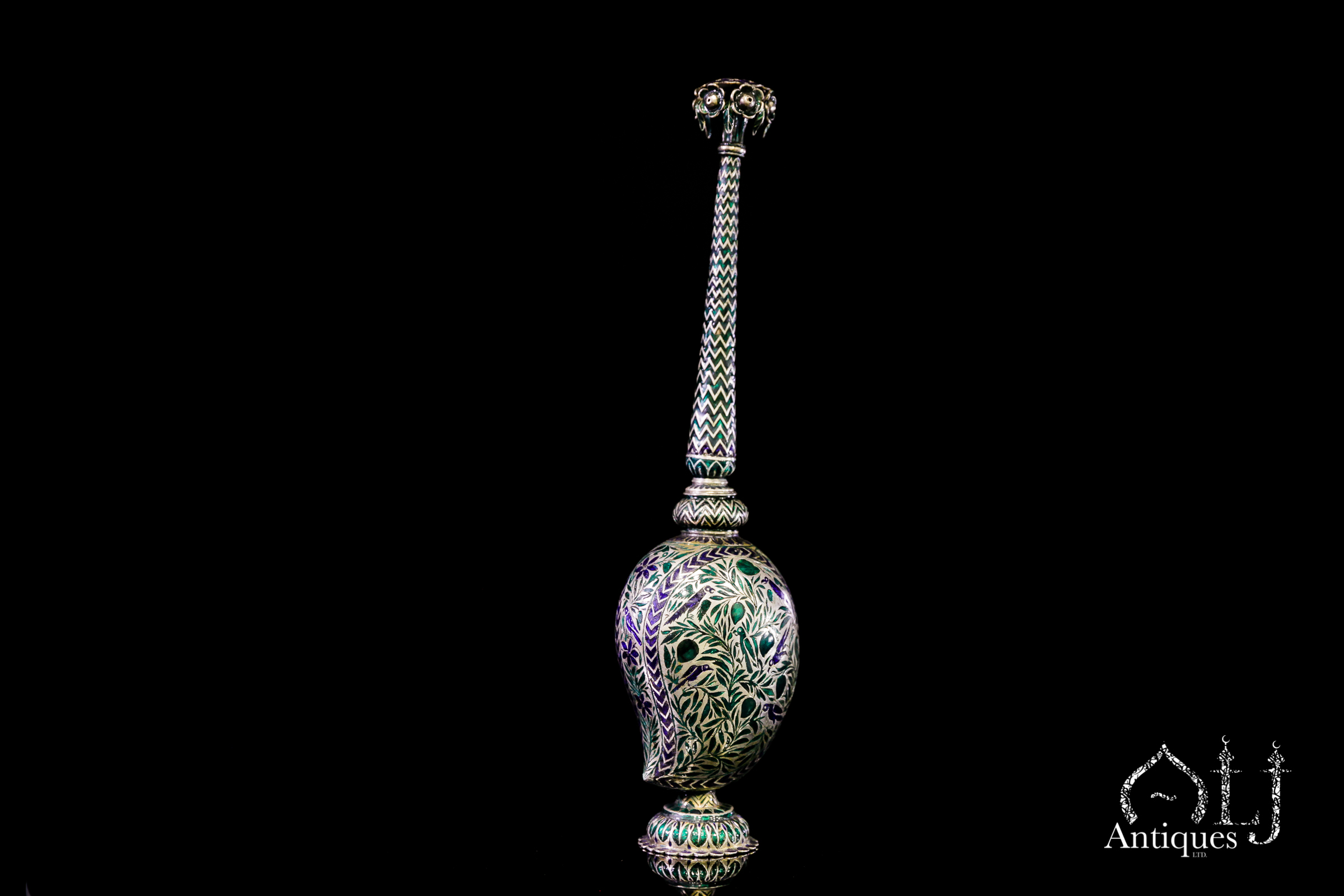
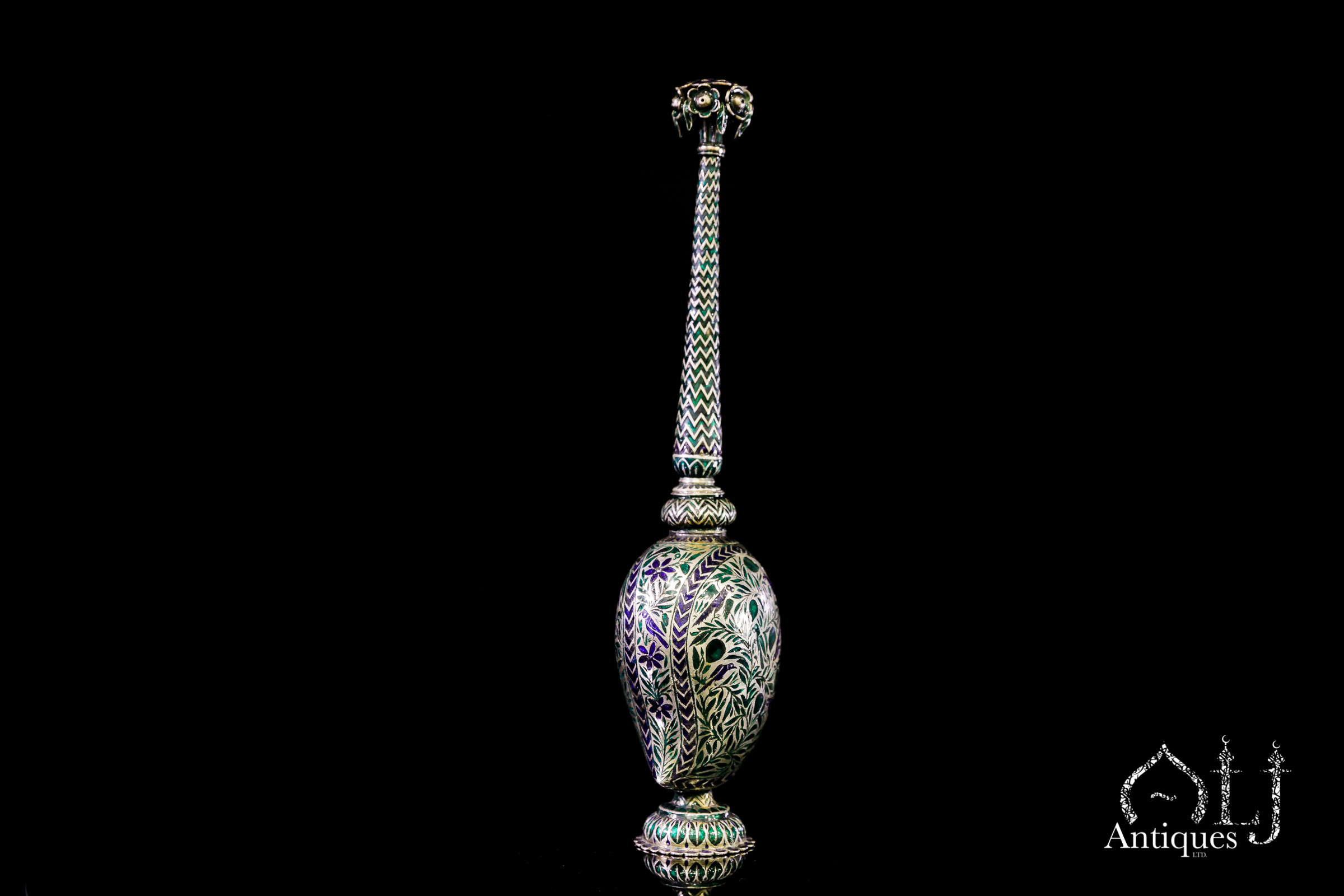
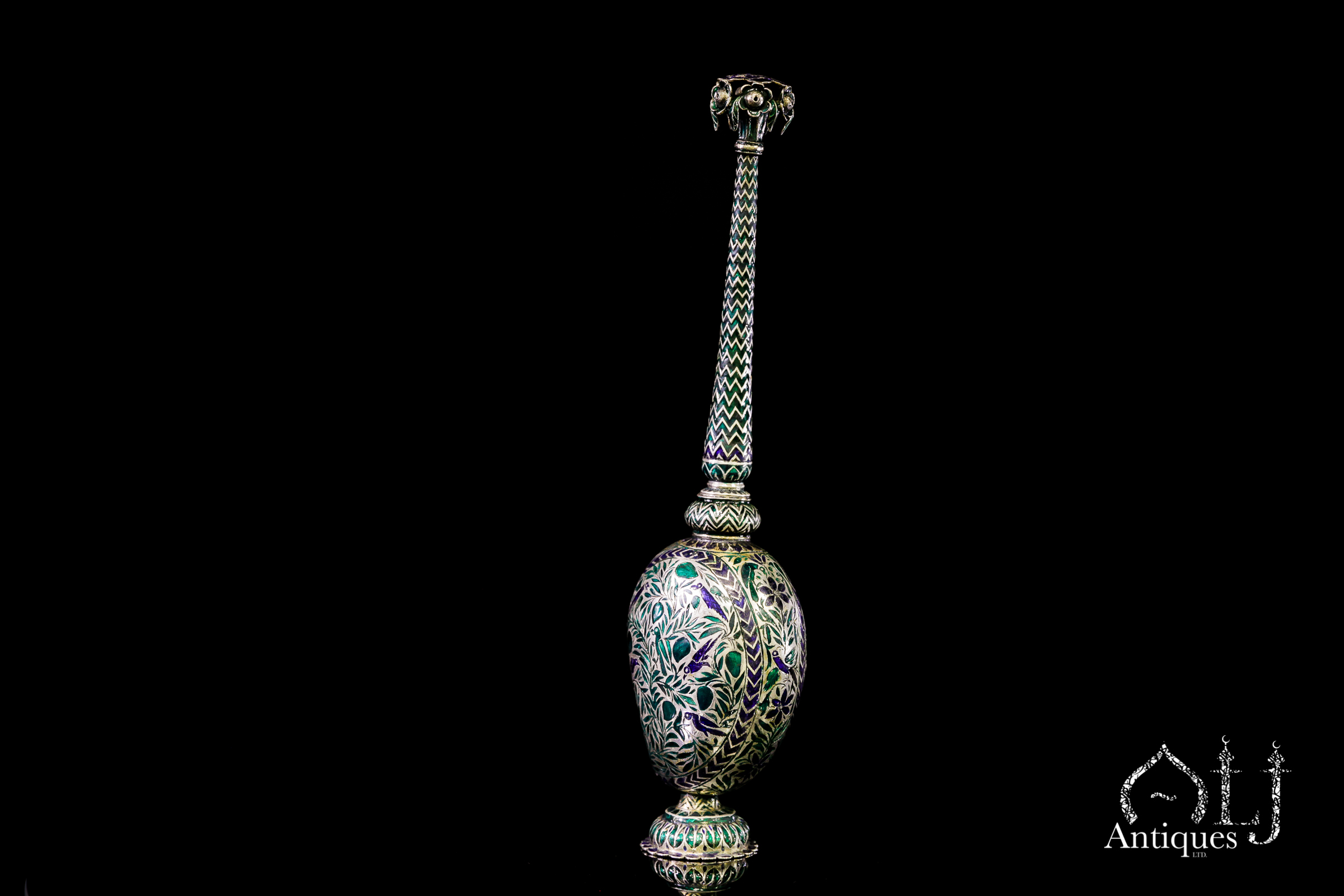
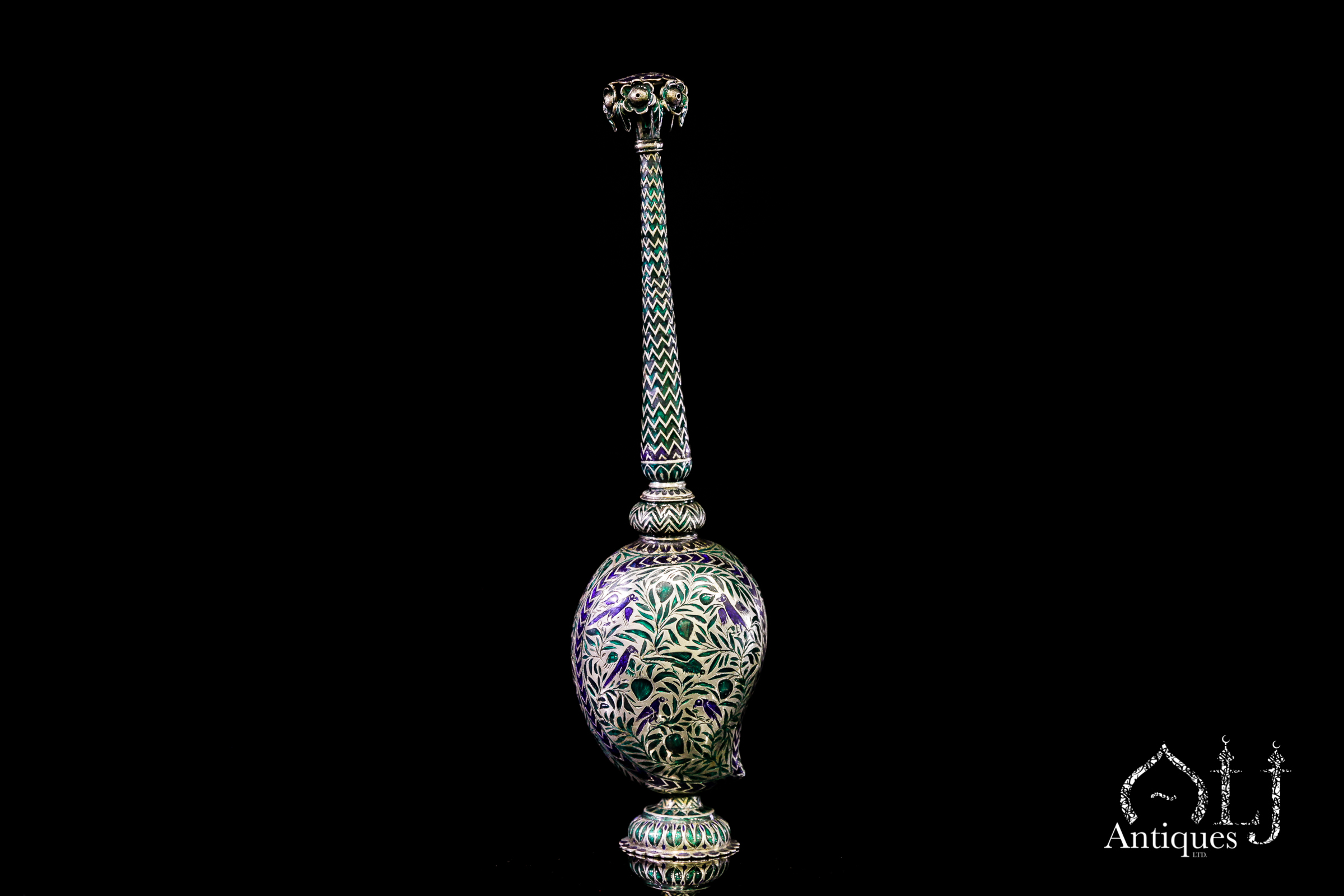
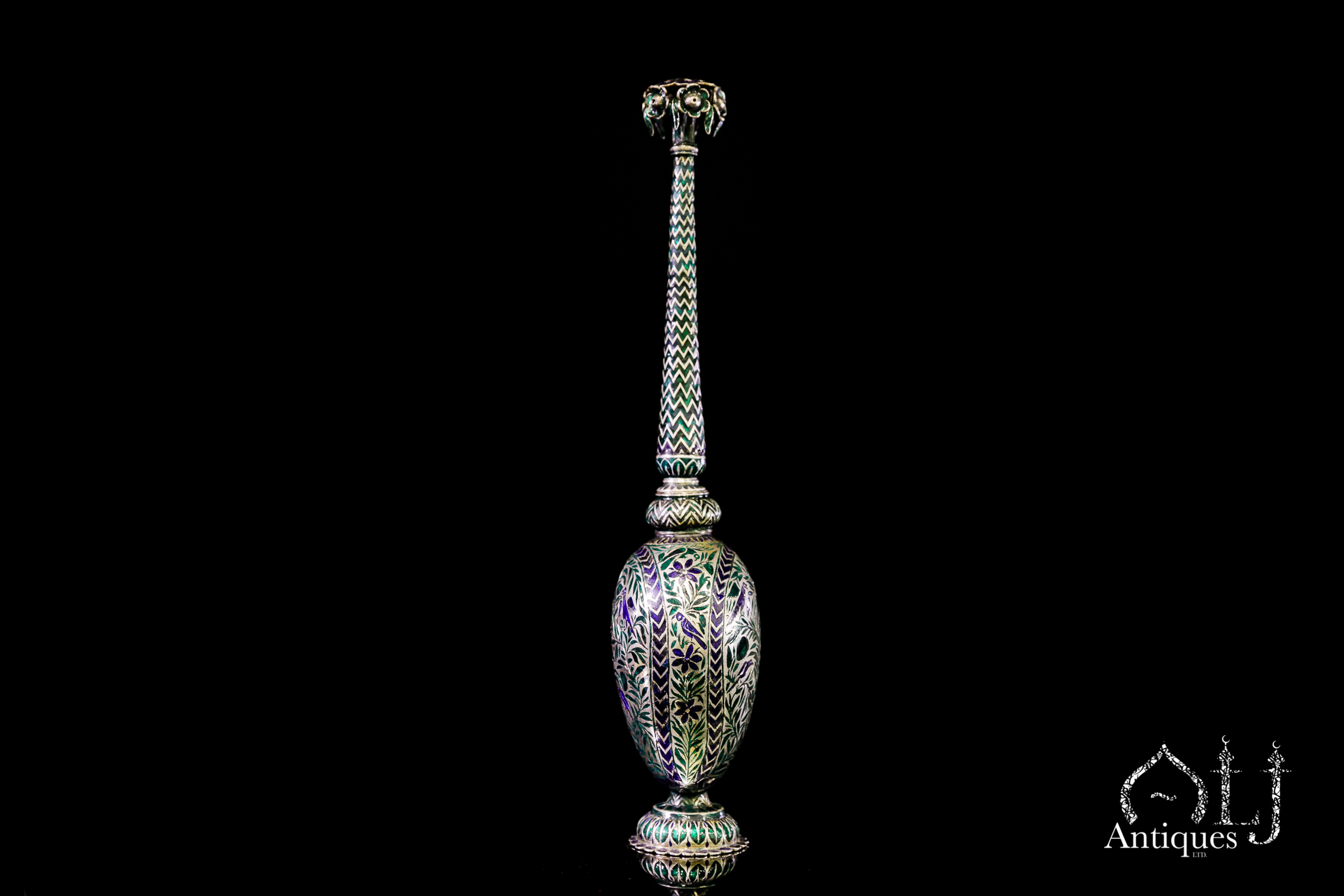
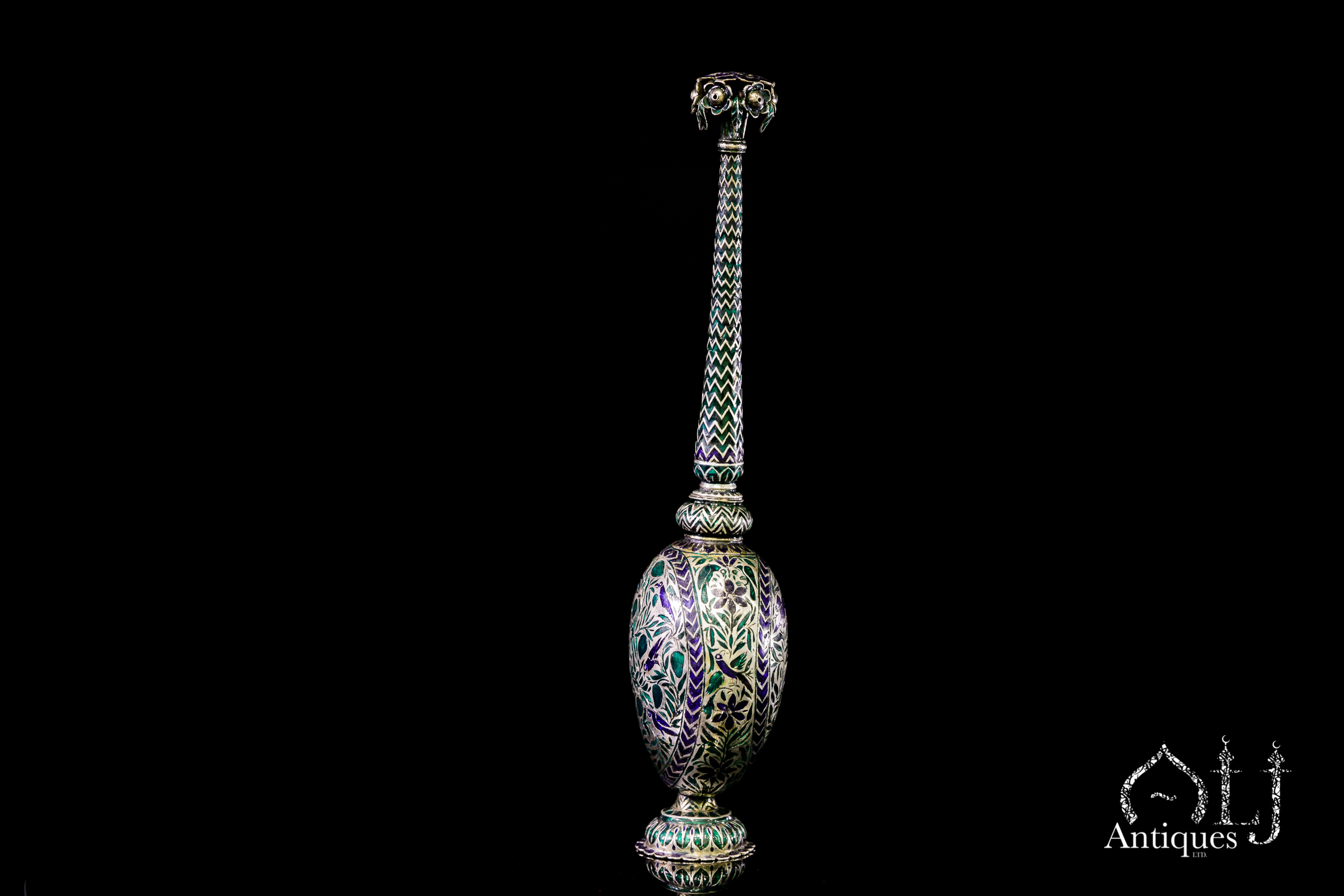
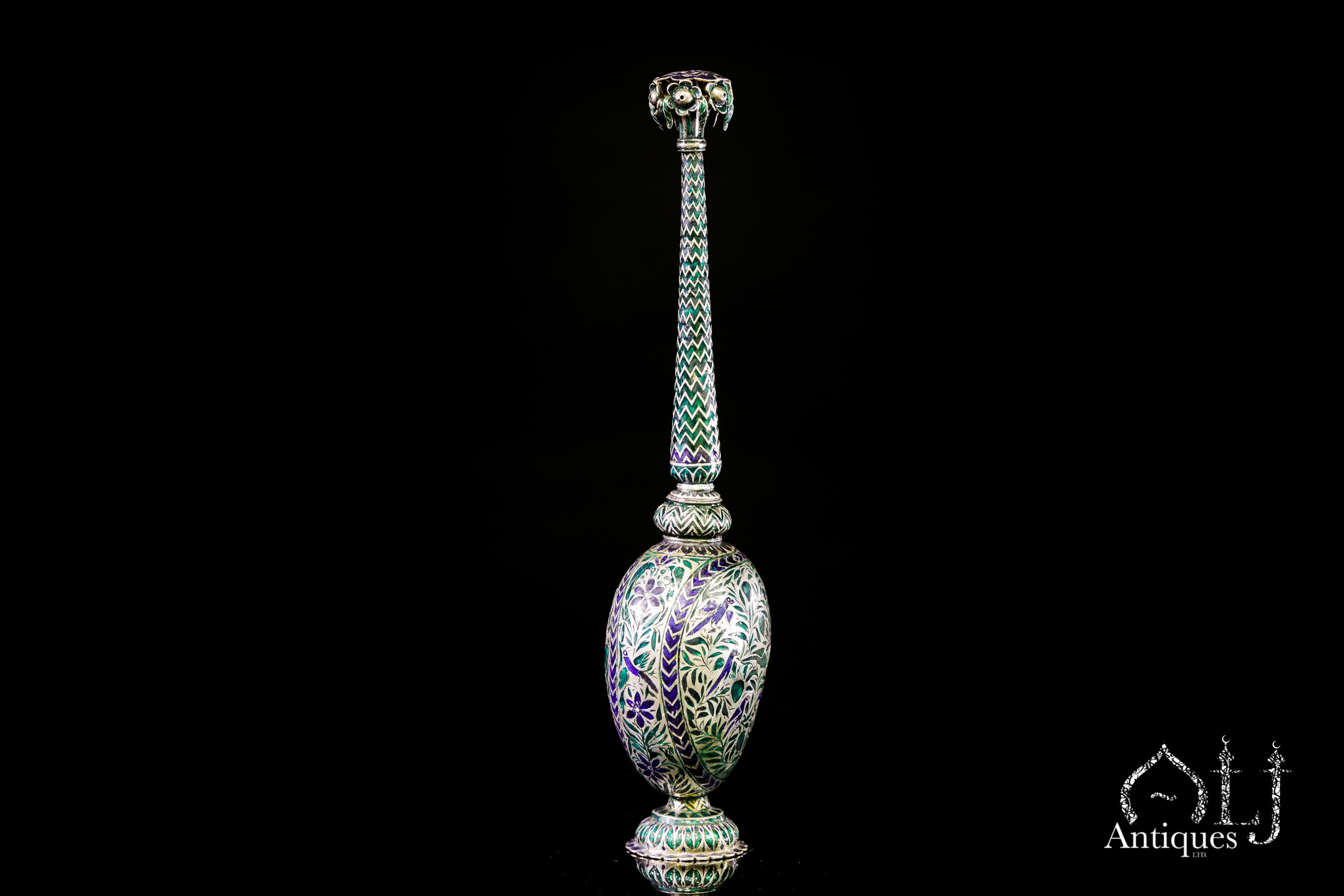
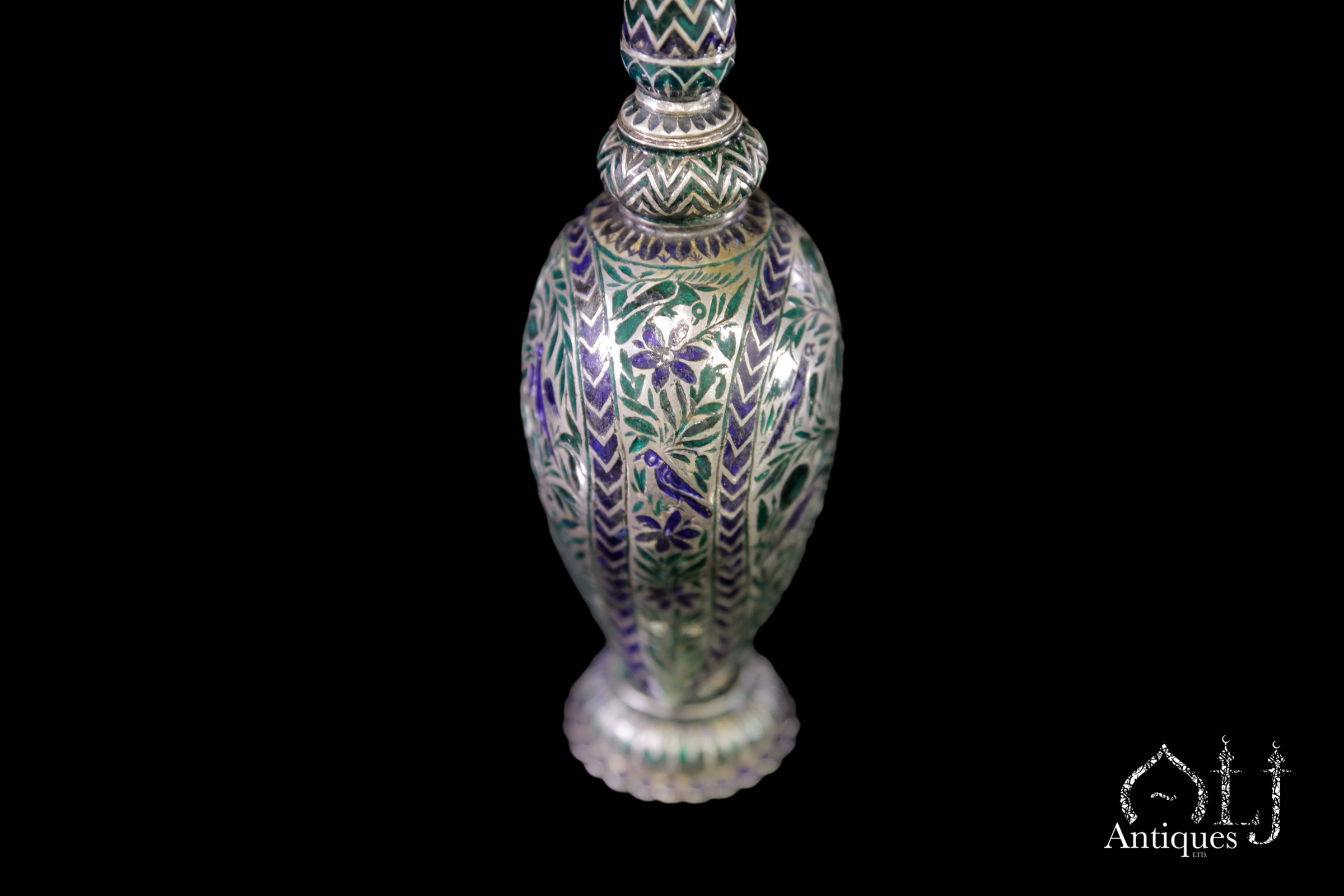
This elegant silver parcel-gilt and enamelled gulabdan (rosewater sprinkler) is an outstanding example of the luxurious decorative arts produced in the royal workshops of Lucknow during the flourishing reign of the Nawabs of Awadh in the late eighteenth century. Distinguished by its unusual mango-shaped body, graceful proportions and refined decoration executed in translucent emerald-green champlevé enamel together with cobalt-blue enamelling, it embodies the sophisticated artistic taste for which Lucknow became celebrated throughout the Indian subcontinent.
Originally introduced from Persia, rosewater sprinklers became firmly established throughout the Mughal world, where they became known as gulabpash or gulabdan. They formed an important part of courtly etiquette and ceremonial life, being used to sprinkle rosewater, orange blossom water and other fragrant perfumes upon honoured guests during royal audiences, festive celebrations and banquets. Their use gradually extended beyond the Mughal court, becoming a cherished symbol of hospitality, honour and refinement throughout India, a tradition that continues to the present day during ceremonial occasions and wedding celebrations.
During the eighteenth century, Lucknow flourished as the magnificent capital of the Kingdom of Awadh and one of the wealthiest and most cosmopolitan cities in India. Under the enlightened patronage of the Nawabs, the city attracted master craftsmen, merchants and artists from across the Indian subcontinent, together with Persian, Armenian and European communities, whose combined artistic traditions fostered one of the most accomplished schools of enamelling and luxury metalwork in India.
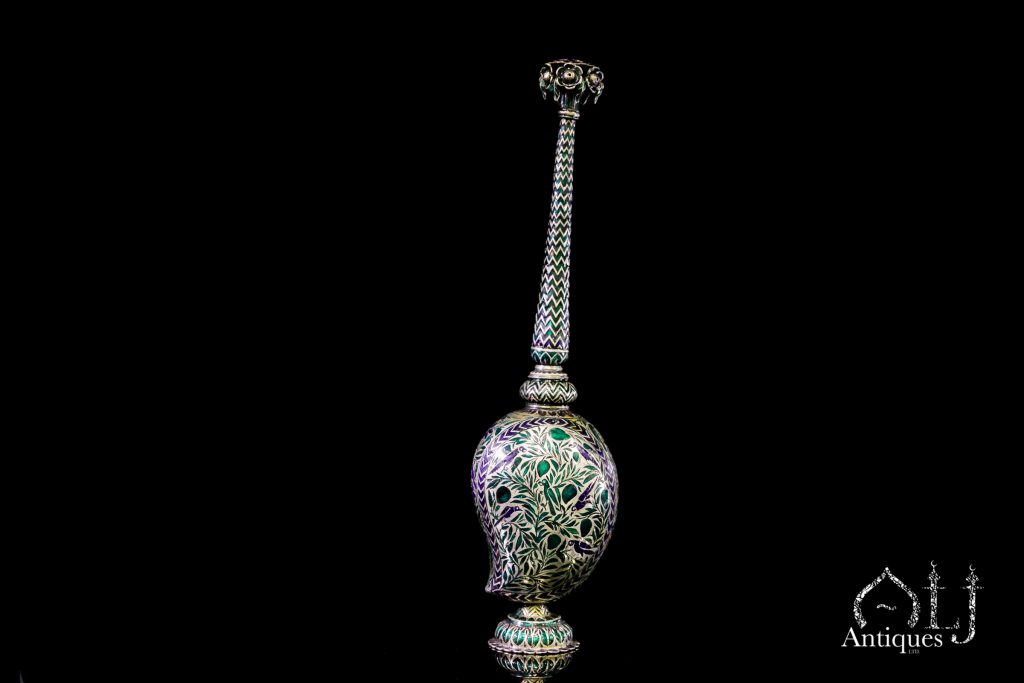
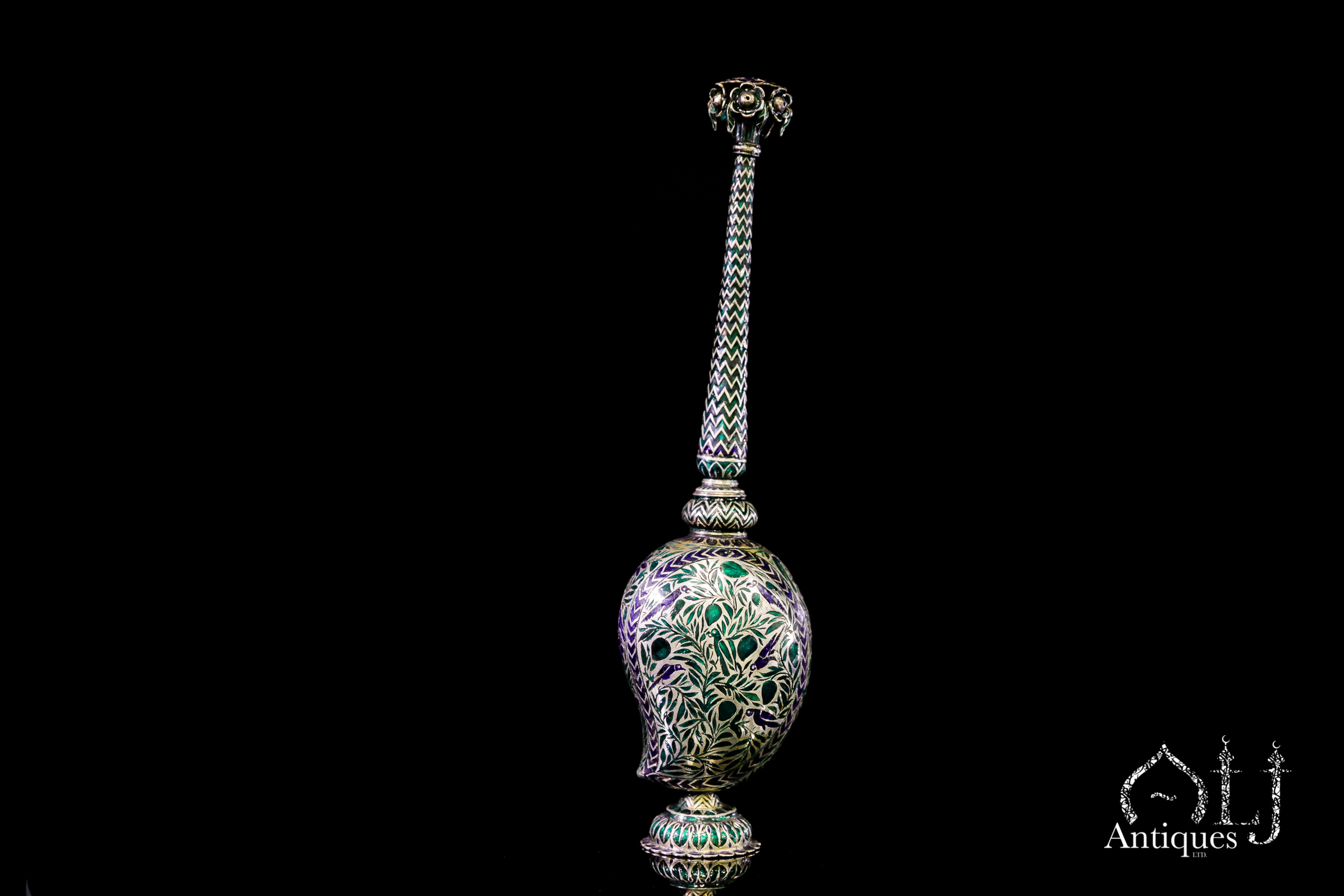
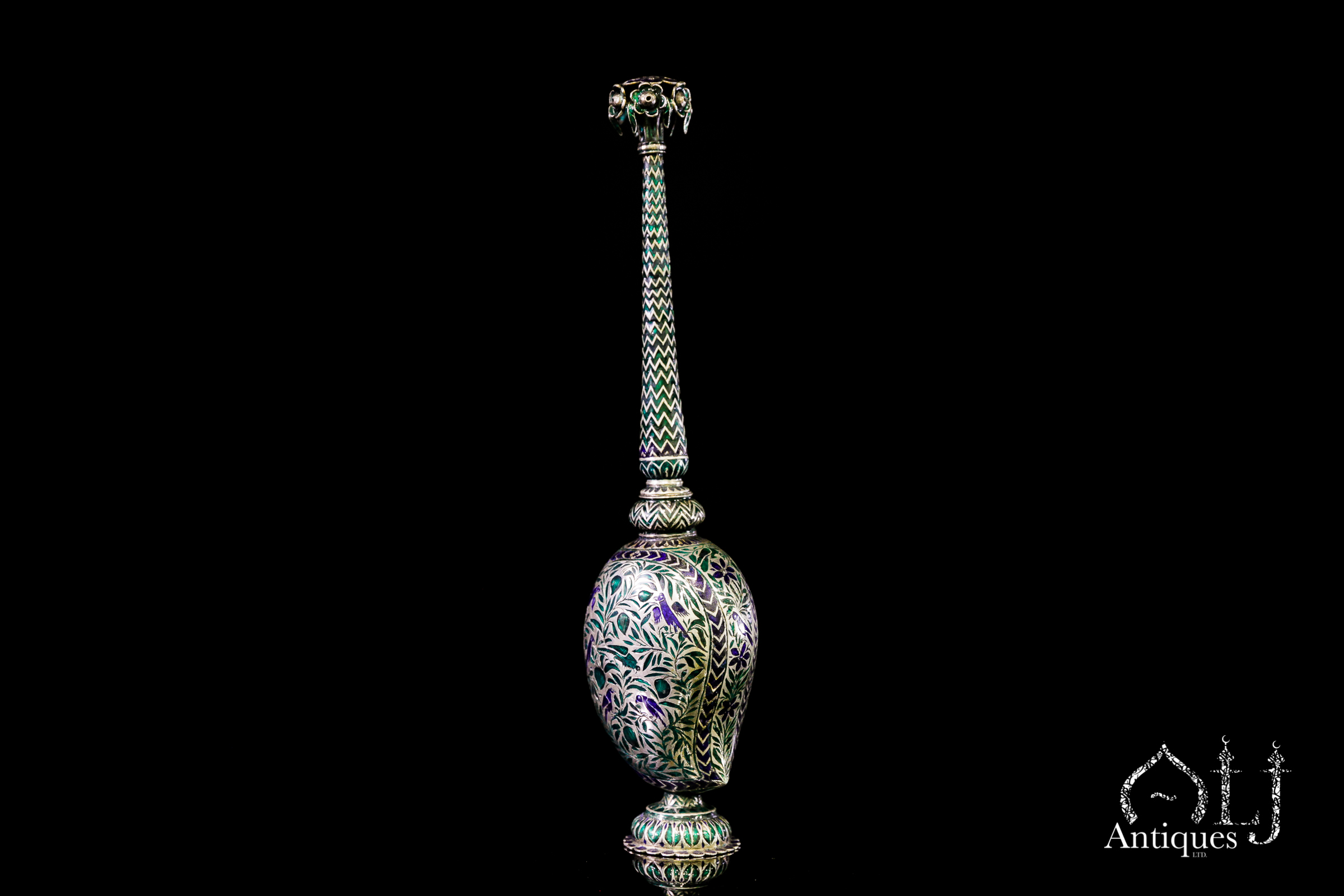
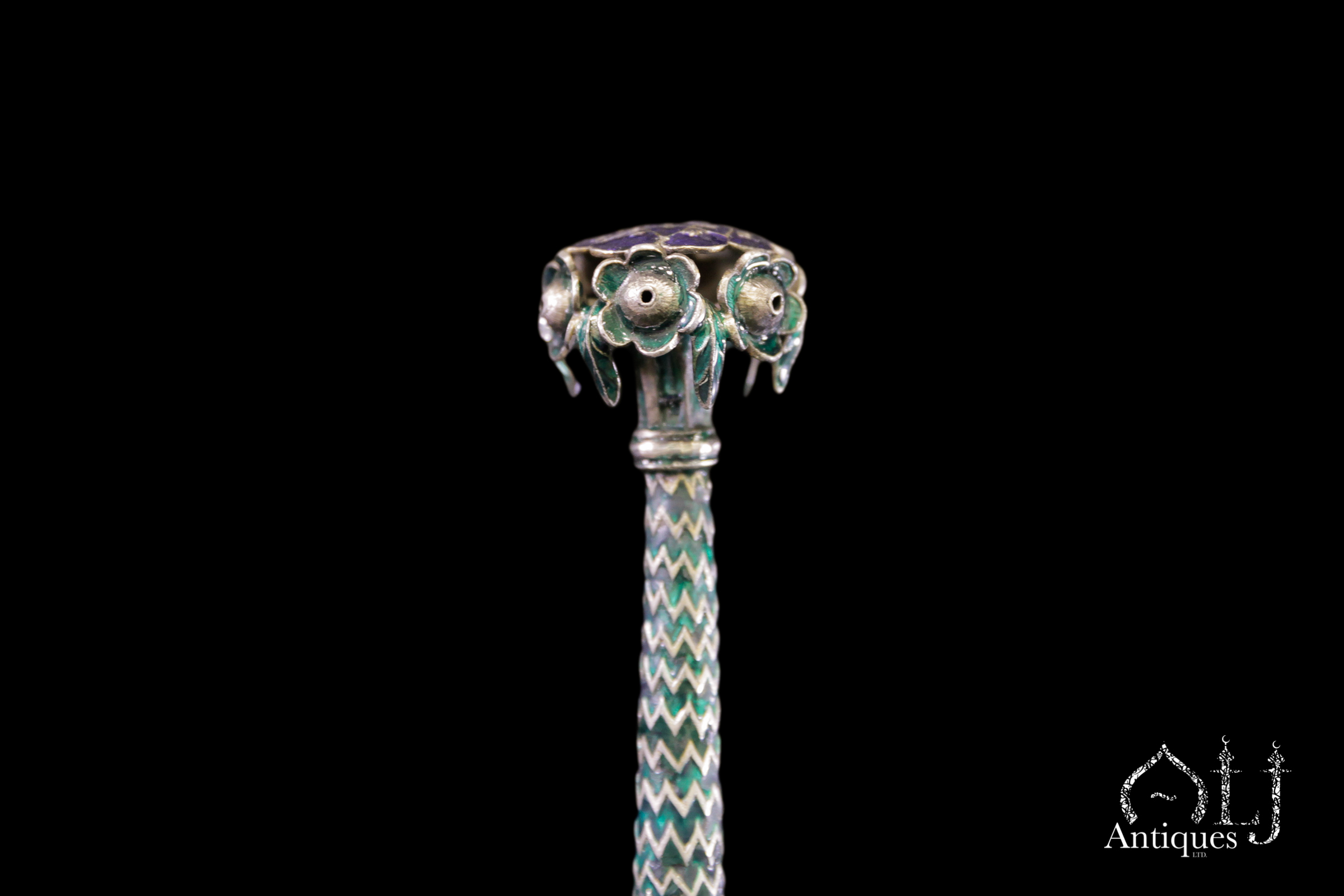
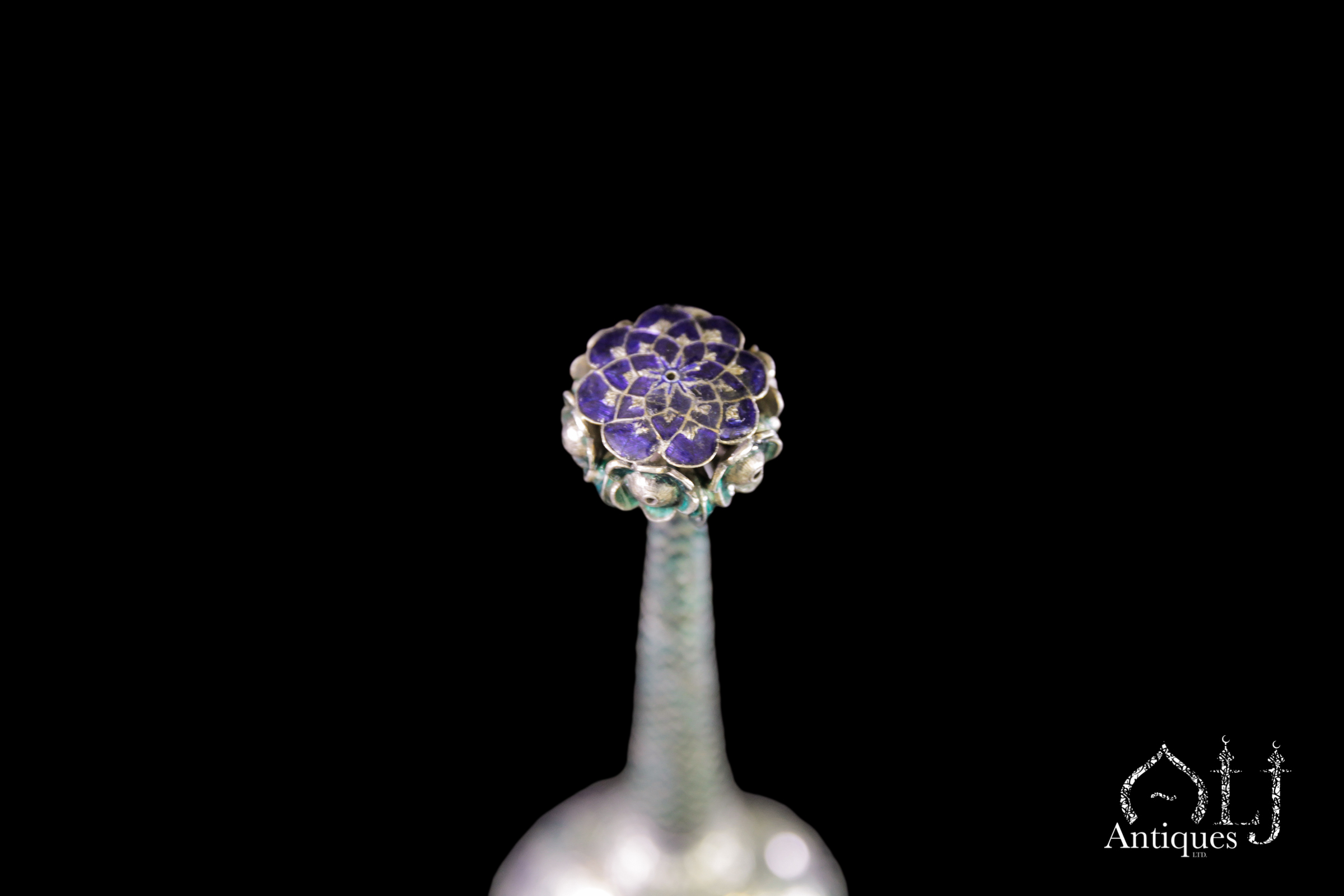
The present gulabdan is ingeniously constructed in two principal sections. The lower portion forms the reservoir in the naturalistic shape of a ripe mango, while the exceptionally long tapering neck is fitted with a concealed threaded mechanism that securely screws into the body. It terminates in a beautifully pierced floral sprinkler head, designed to release the scented liquid in a delicate spray when gently inverted.
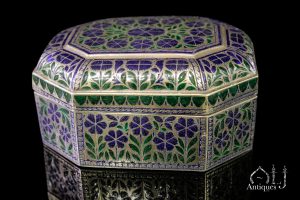
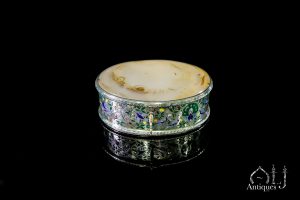
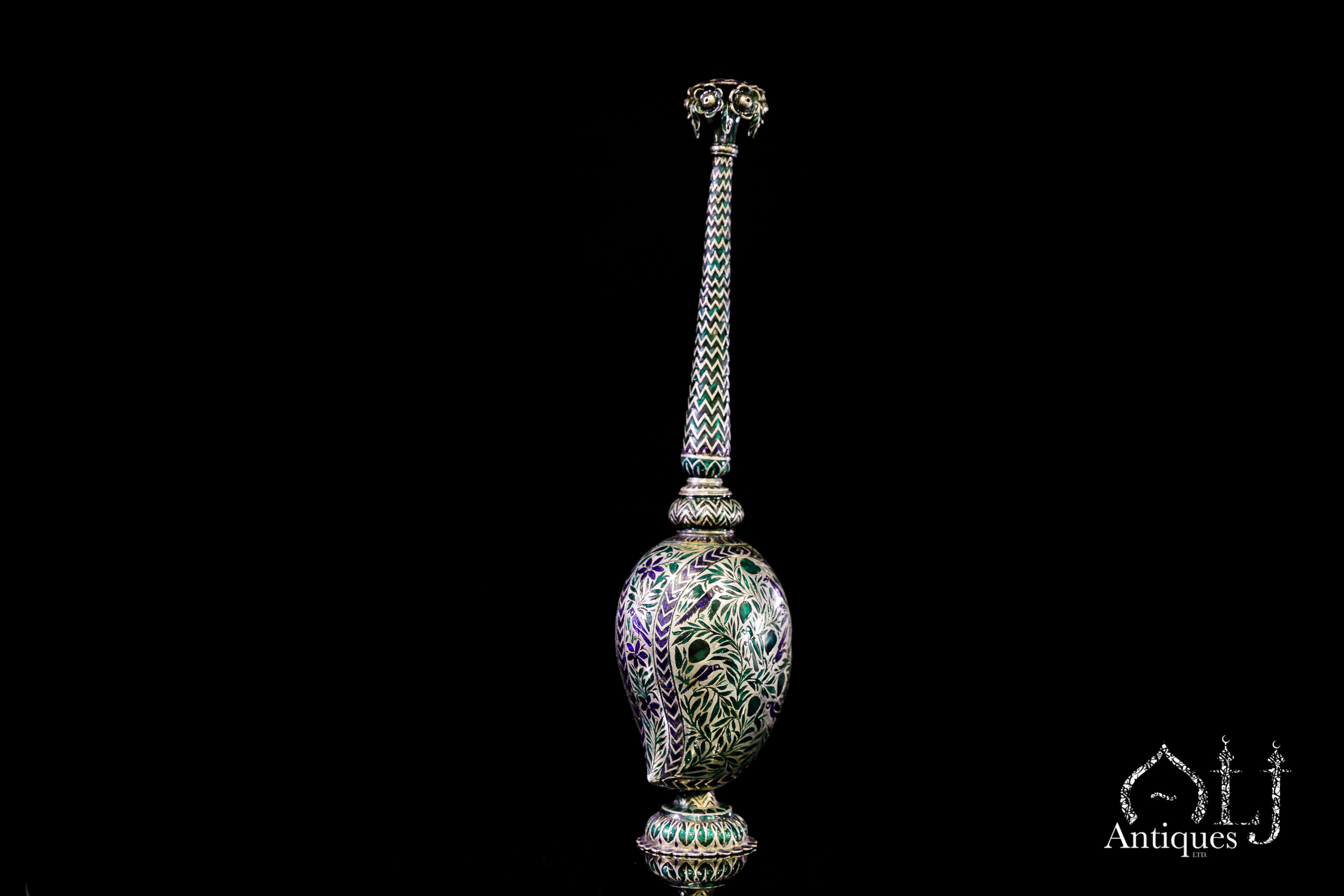
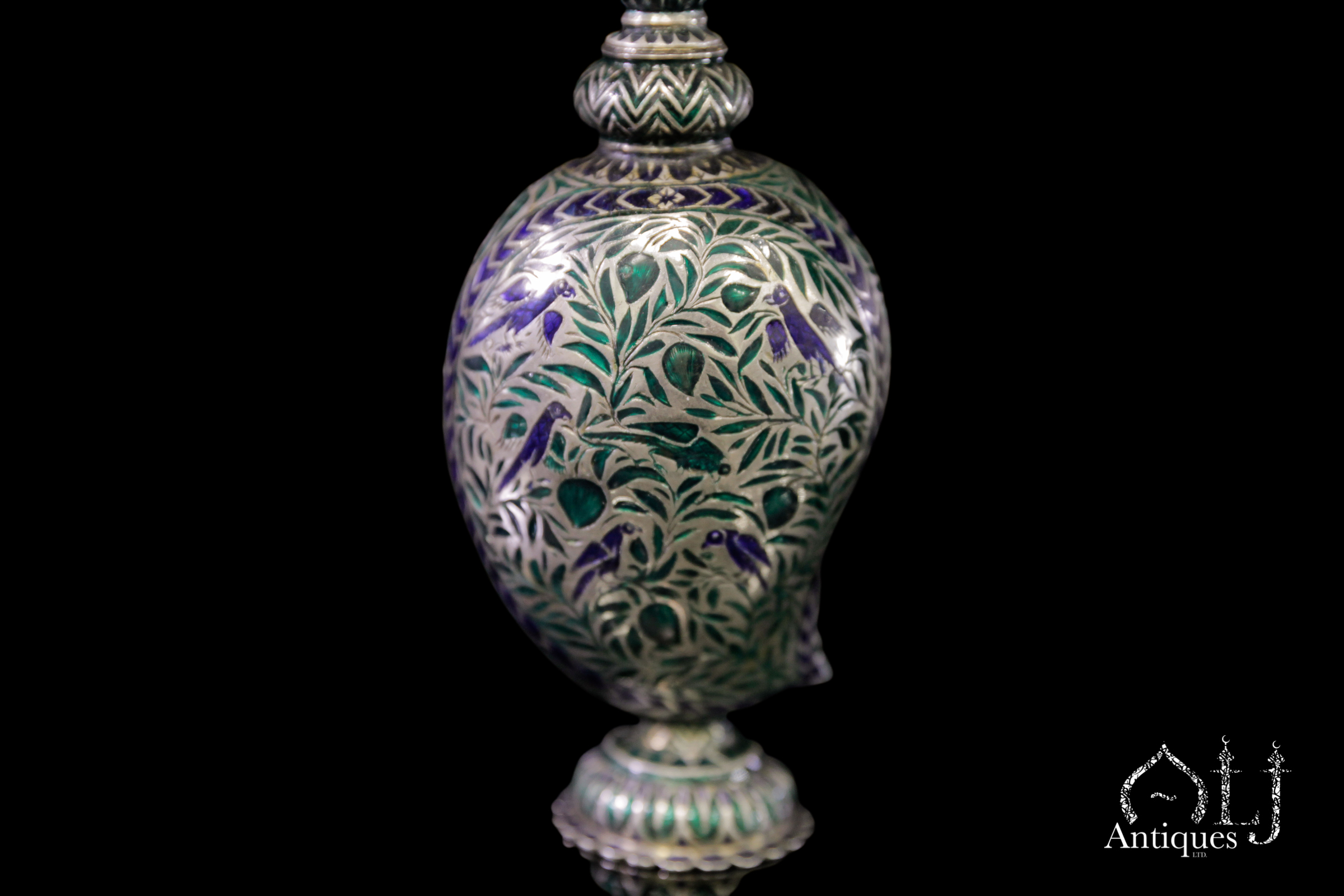
The entire surface is richly decorated with translucent emerald-green champlevé enamel together with cobalt-blue enamelling, skilfully applied over a finely parcel-gilt silver ground. Elegant scrolling foliage, flowering stems, irises and other stylised blossoms gracefully envelop the vessel, while numerous exotic birds are depicted in lively and playful poses amongst the flowering branches. Their animated character lends vitality and charm to the composition and reflects the refined naturalistic taste that distinguished the finest productions of the Lucknow enamelling tradition. The combination of translucent and opaque enamels is characteristic of the finest Lucknow workshops, where master enamellers exploited the contrast between luminous transparent colours and rich opaque tones to achieve remarkable depth and brilliance. The harmonious interplay of enamelling, delicate engraving and parcel gilding demonstrates the exceptional technical mastery of the city’s enamellers.
Particularly noteworthy is the distinctive mango-shaped body. The mango has long occupied a privileged place within the artistic vocabulary of the Indian subcontinent as a symbol of prosperity, abundance and fertility. Its elegant form was adopted by Mughal and Deccani craftsmen for some of the finest luxury objects produced in silver, bidriware, jade, rock crystal and other precious materials. Numerous huqqa bases, perfume vessels, lime containers, rosewater sprinklers and ceremonial objects survive in this celebrated form, attesting to its enduring prestige amongst royal and aristocratic patrons. Their continued appearance in major museum collections and at leading international auction houses further demonstrates the enduring appreciation of the mango form amongst collectors and institutions alike. Rosewater sprinklers fashioned in the form of a mango, however, remain exceptionally uncommon, making the present example a particularly distinguished survival.
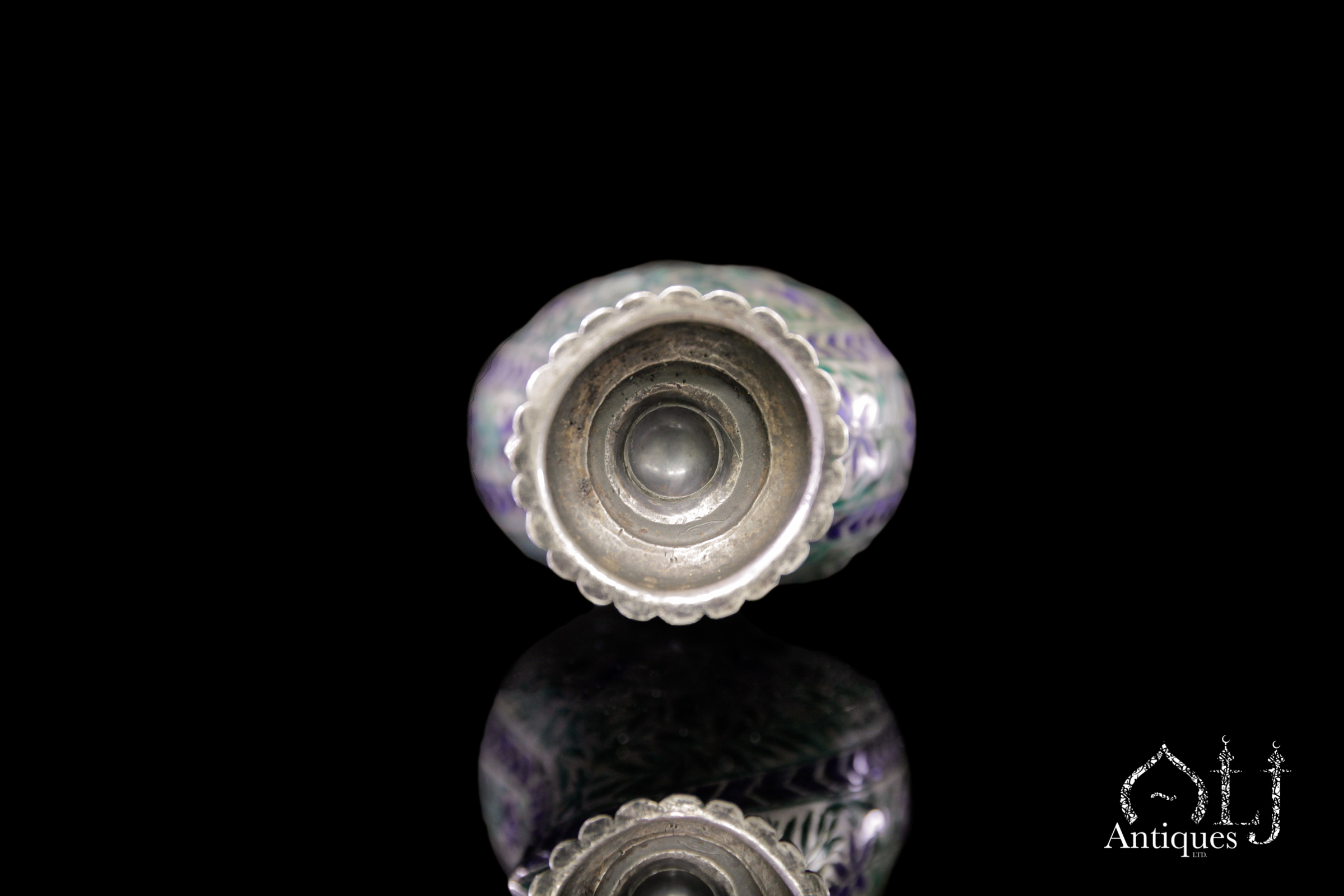
The gently swelling body rests upon an elegant oval foot decorated with a moulded border reminiscent of the classical egg-and-dart motif, while the exceptionally slender neck is enriched throughout with green enamel chevron ornament before culminating in the finely pierced stylised floral terminal. The harmonious proportions, refined enamelling and restrained elegance of the decoration beautifully illustrate the artistic vision and technical excellence that distinguished the finest productions of the Lucknow court.
Combining elegant design, exceptional craftsmanship and refined courtly taste, this distinguished gulabdan is a superb example of late eighteenth-century Lucknow silverwork and a remarkable testament to the celebrated enamelling tradition that flourished under the Nawabs of Awadh.