
Description
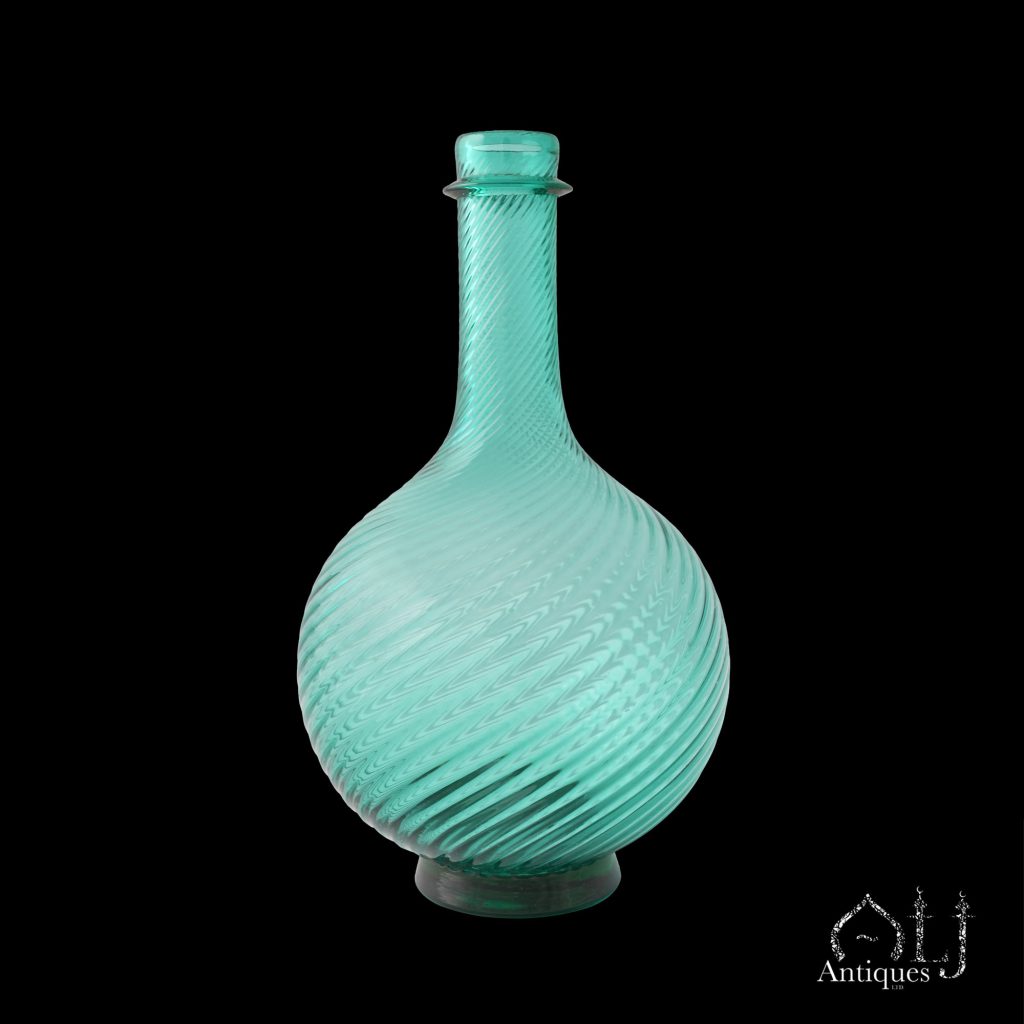
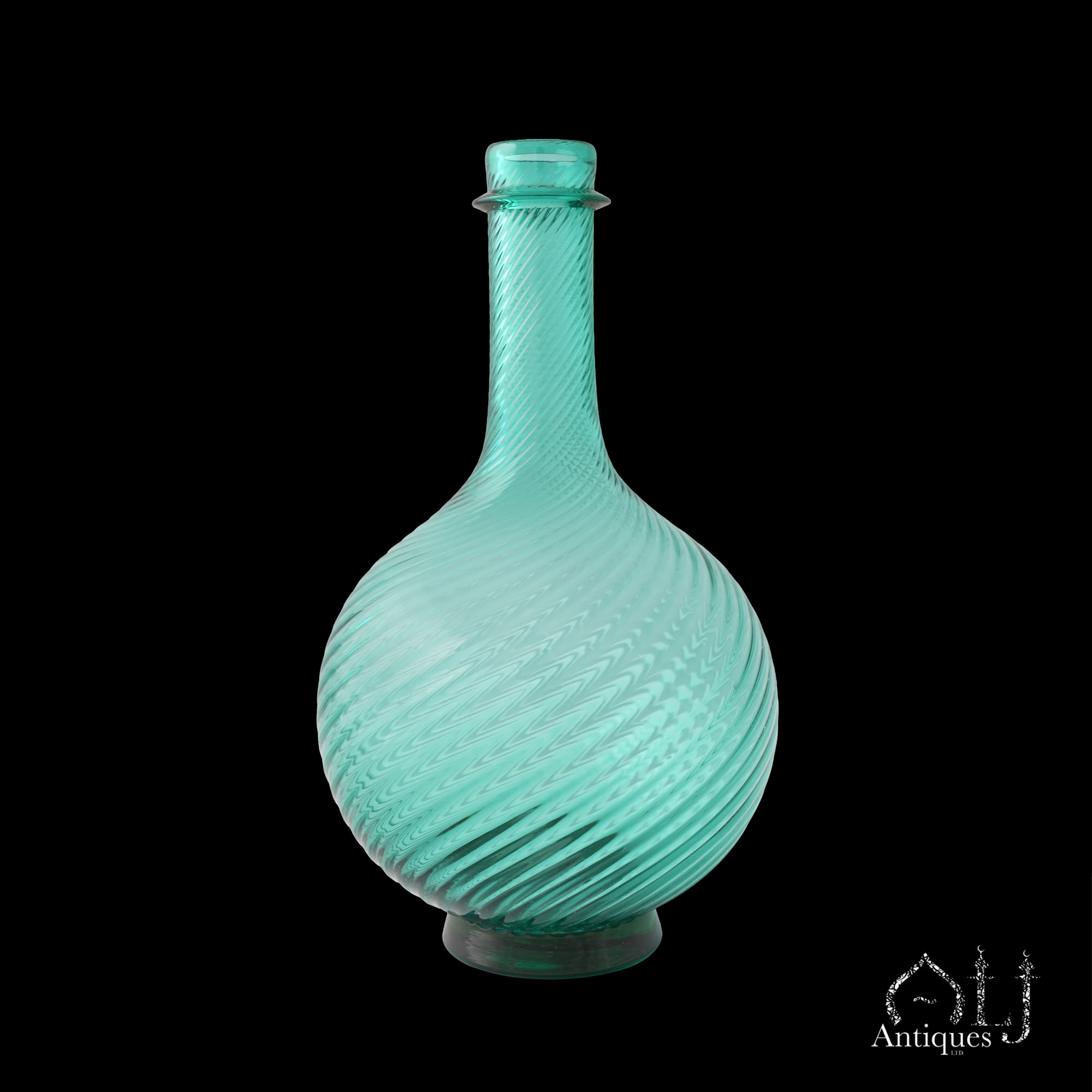
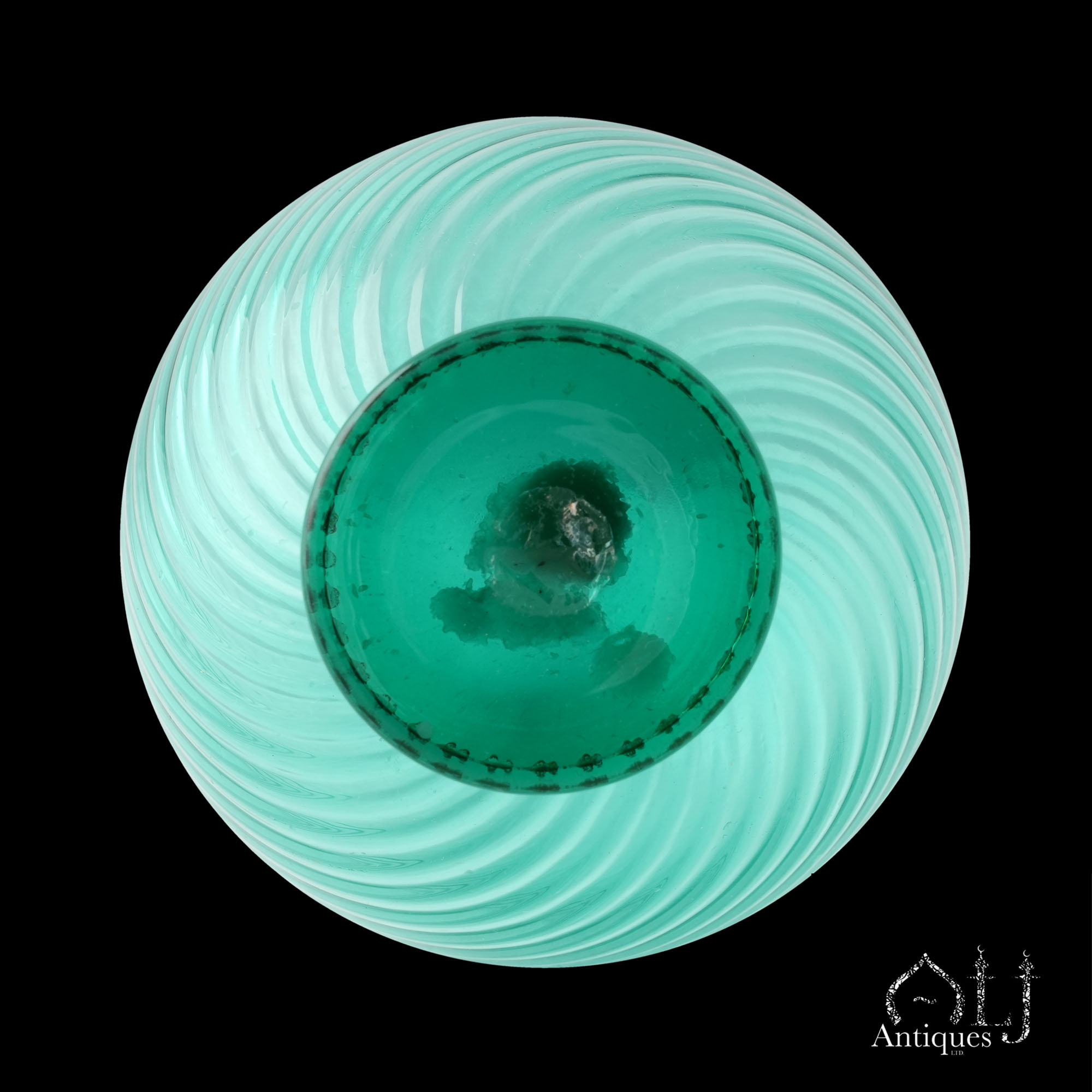
This rare Mughal emerald-green glass Surahi flask is an exceptional example of late 17th–early 18th-century Indian glassmaking, produced in one of the major Mughal centres of northern India such as Gujarat, Rajasthan, Awadh (Lucknow), or Bengal. Formed from translucent emerald-green glass, the vessel is mold-blown and hand-tooled on the pontil, with a spherical to piriform body rising into a tall, straight cylindrical neck.
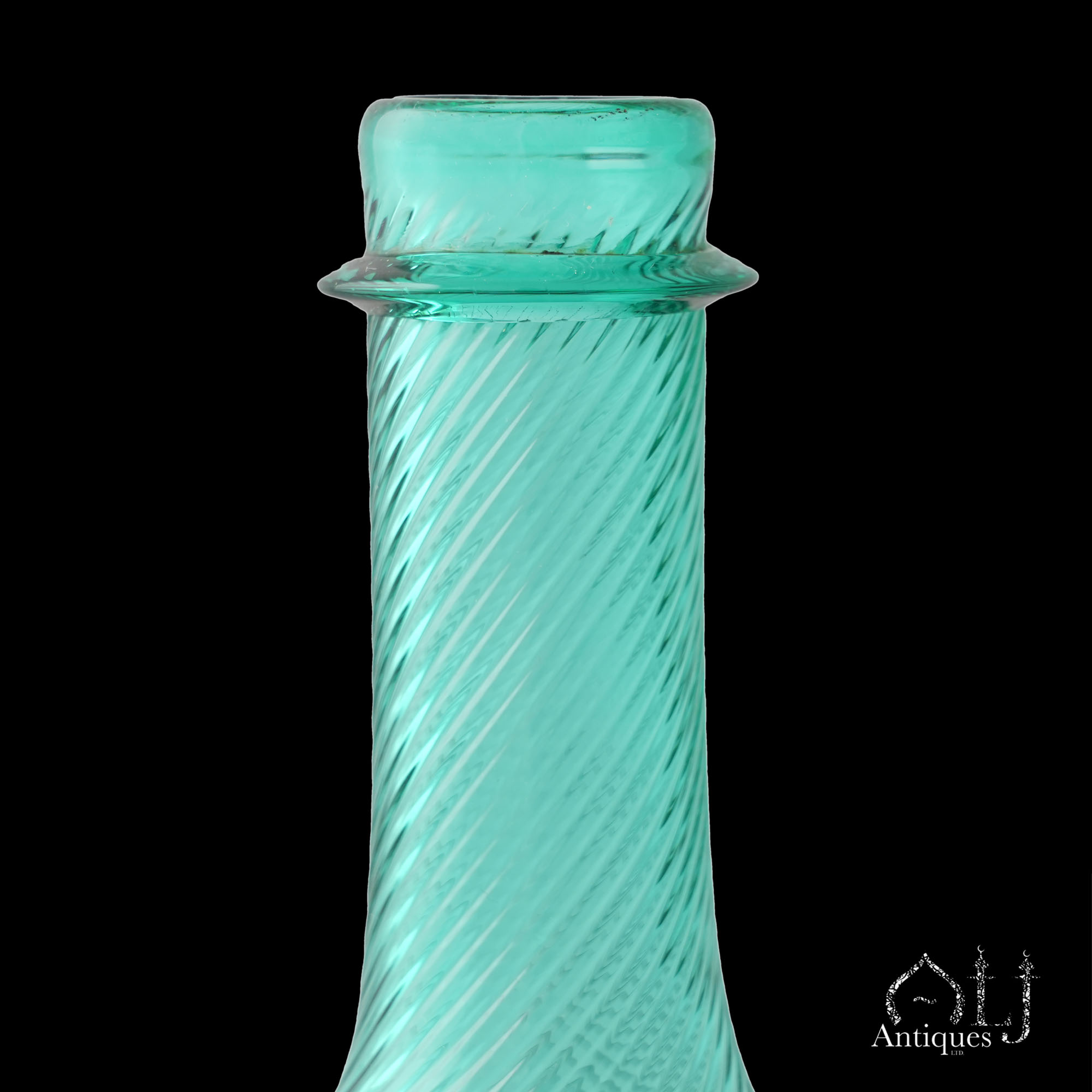
A fully applied glass ring encircles the neck approximately three-quarters of the way up—an identifying element frequently seen on Mughal Surahis, hookah bases, and related Indian glass objects. This ring is not the result of compressed blowing but is applied separately, the applied round foot base and together with the subtly uneven tooled mouth rim, strongly confirms Mughal Indian workmanship.
Surface Decoration and the Creation of the Spiral Motif
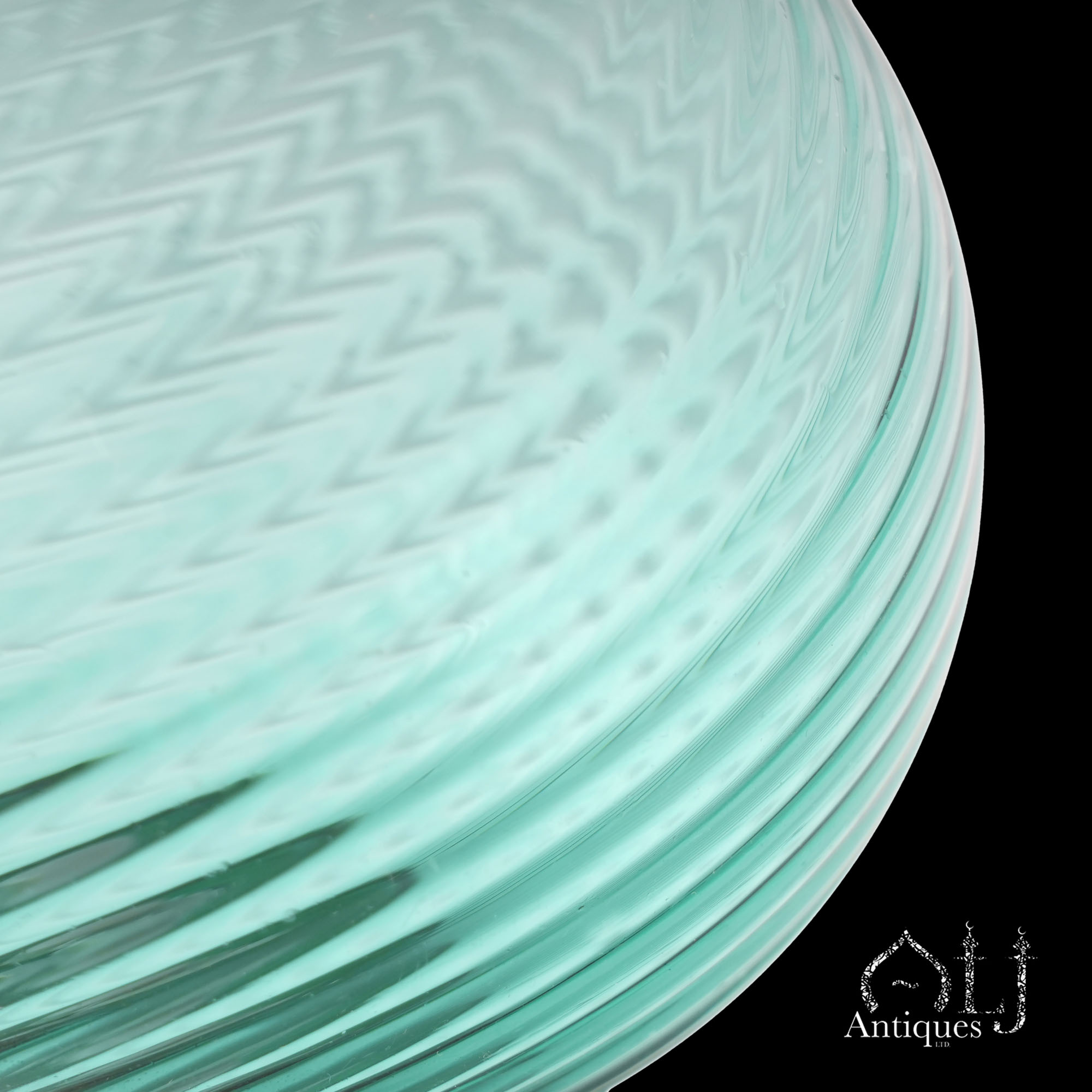
The entire surface of the flask—both body and neck—is decorated with elegant spiralling fluted ribs, one of the most distinctive and technically sophisticated features used in Islamic glass. These ribs were produced through a precise two-stage method:
- Initial Vertical Ribbing:
The vessel was first blown into an optic mold carved with perfectly equal vertical ribs. - Transformation into Spirals:
While the glass remained hot and pliable, the master glassblower twisted the vessel in a controlled motion. This twist caused the vertical ribs to rotate uniformly, creating the refined diagonal spiralling pattern that wraps fluidly around the entire flask.
This method produces a visually dynamic surface that catches light elegantly.
Form and Construction
The vessel tapers into a kicked-in base, above which a separately formed flat tubular foot ring is applied. A clear pontil scar remains at the underside, confirming hand-finishing. Despite its impressive form, the flask is remarkably lightweight—a hallmark of the technical refinement achieved in Mughal workshops.
Although spiral ribbing appears in Persian glass, the neck construction, applied ring, base form, and overall silhouette align far more closely with Mughal Indian production. Similar proportions and structural details appear in Mughal Surahis, Flasks, and Ewers crafted in Gold, Silver, Bronze and Bidriware, reinforcing its Indian origin.This elegant Surahi stands as a significant and highly desirable example of Mughal, Islamic, and early modern Indian glass art, prized for its rarity, beauty, and superb craftsmanship.
The spiral motif is deeply rooted in Islamic artistic traditions, recalling earlier architectural and decorative precedents—most notably the 9th-century Abbasid Dynasty spiral minaret of the Great Mosque of Abu Dulaf in Samara-Iraq (AD 851).
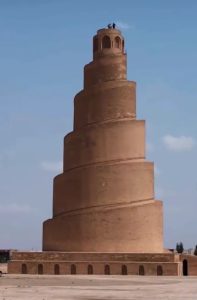
Similar spiral decorations are found on early Islamic glass from Egypt, Syria, Iraq, and Persia, and the motif continued to flourish in Mughal workshops.
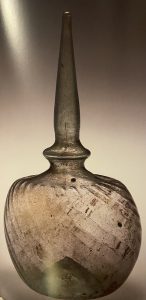
For early Islamic parallels with comparable spiral motifs—particularly flasks attributed to Egypt or Syria, 12th century—see: Glass from Islamic Lands, The Al-Sabah Collection, cat. no. 60 (LNS 37 G), the Qumqum perfume sprinkler.
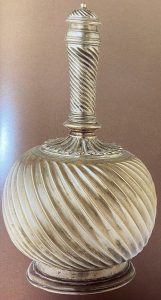
Lot 522, 17th. -18th Century, Mughal Dynasty North-Indian Bronze Flask (Surahi) Decorated with the Spiral Motive, Mark Zebrowski, Gold, Silver & Bronze from Mughal India, 1977.