
Description
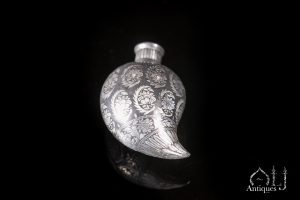
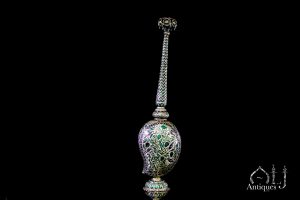
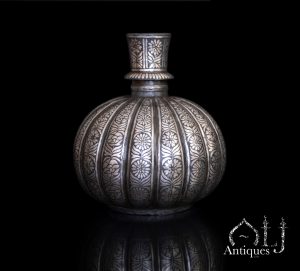
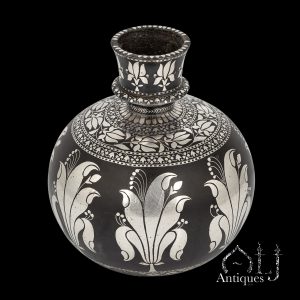
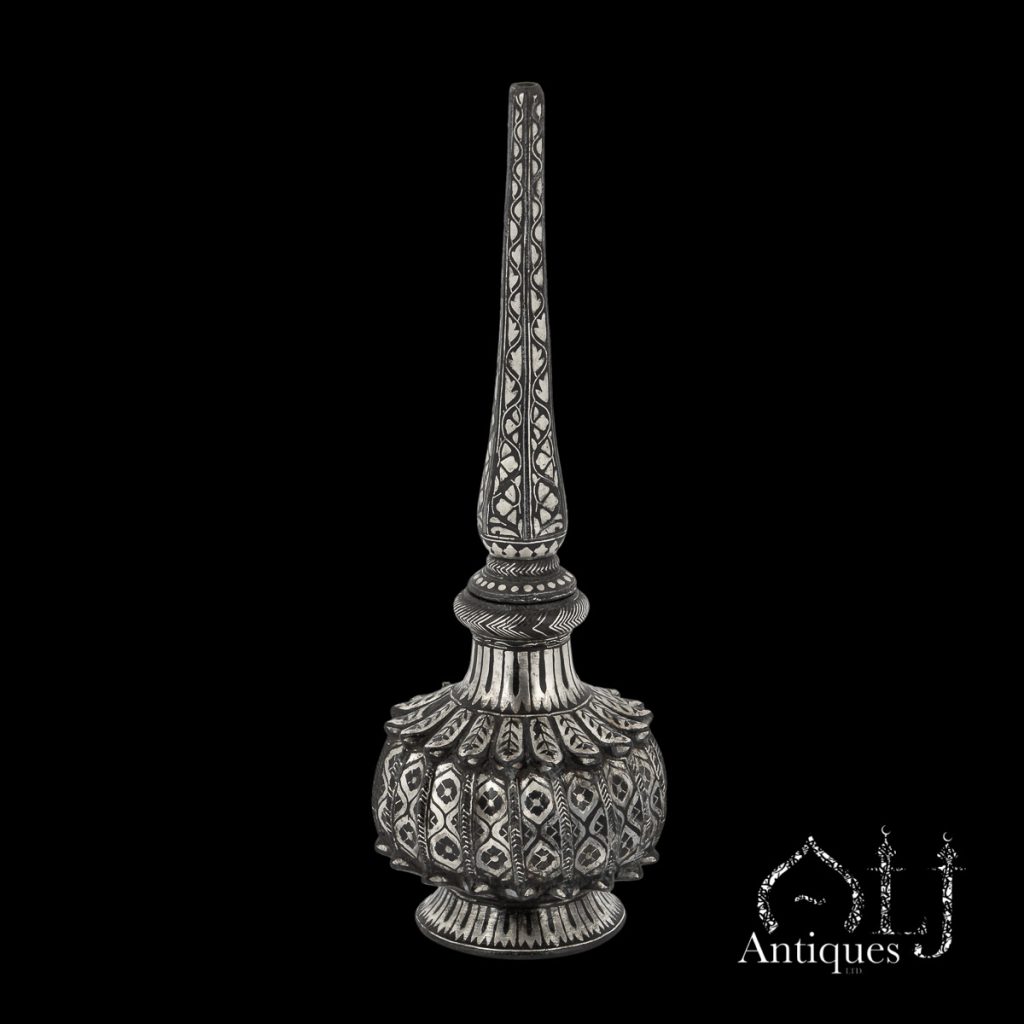
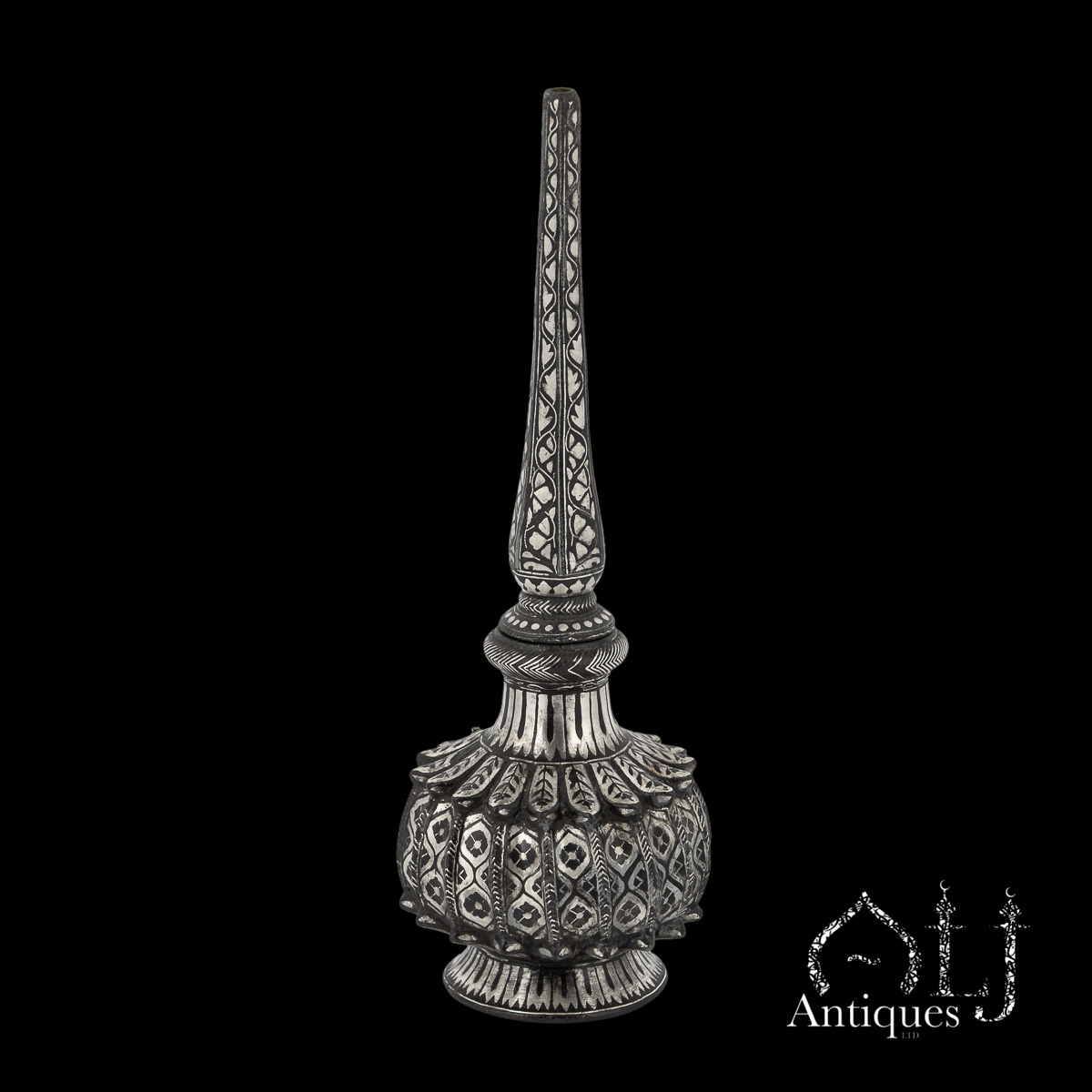
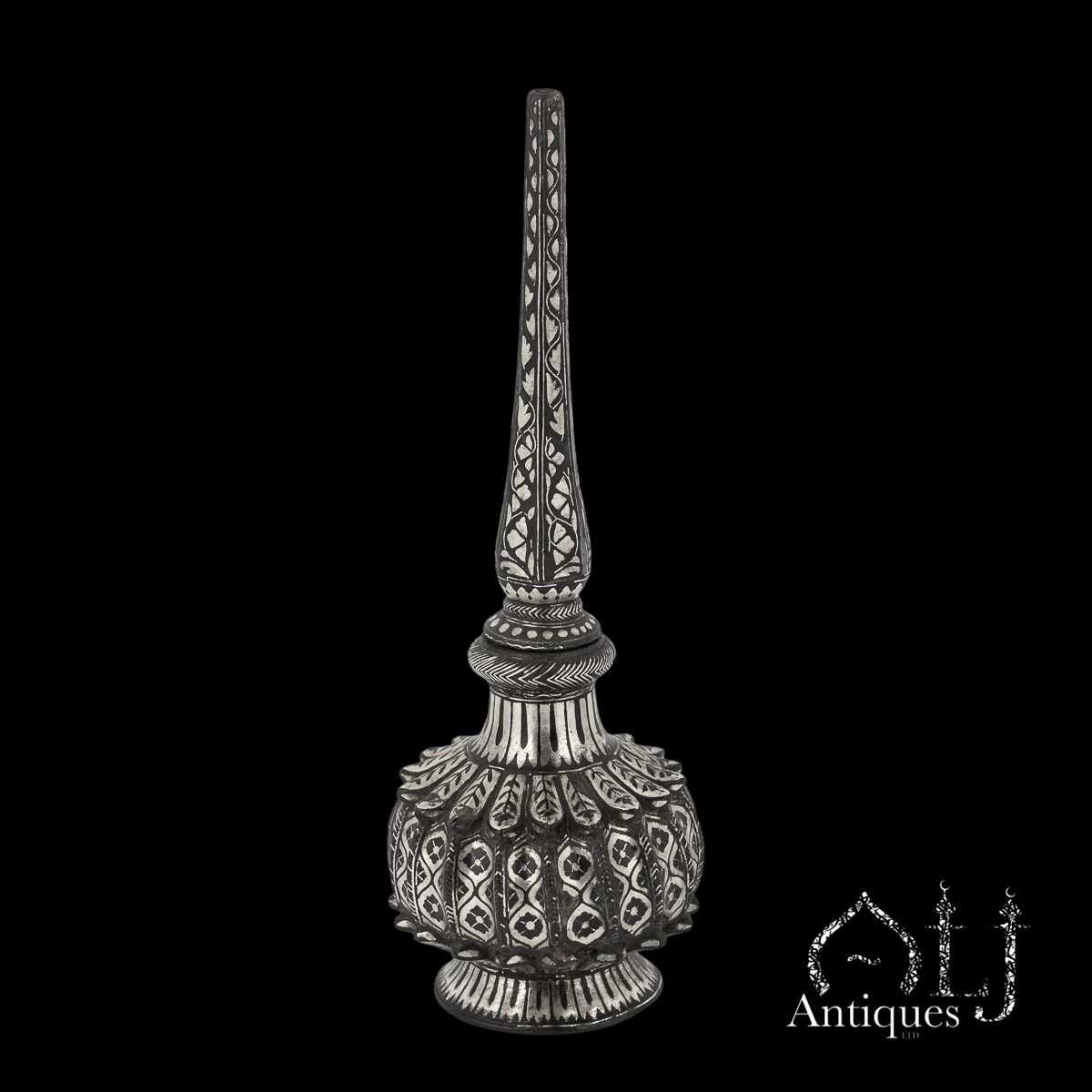
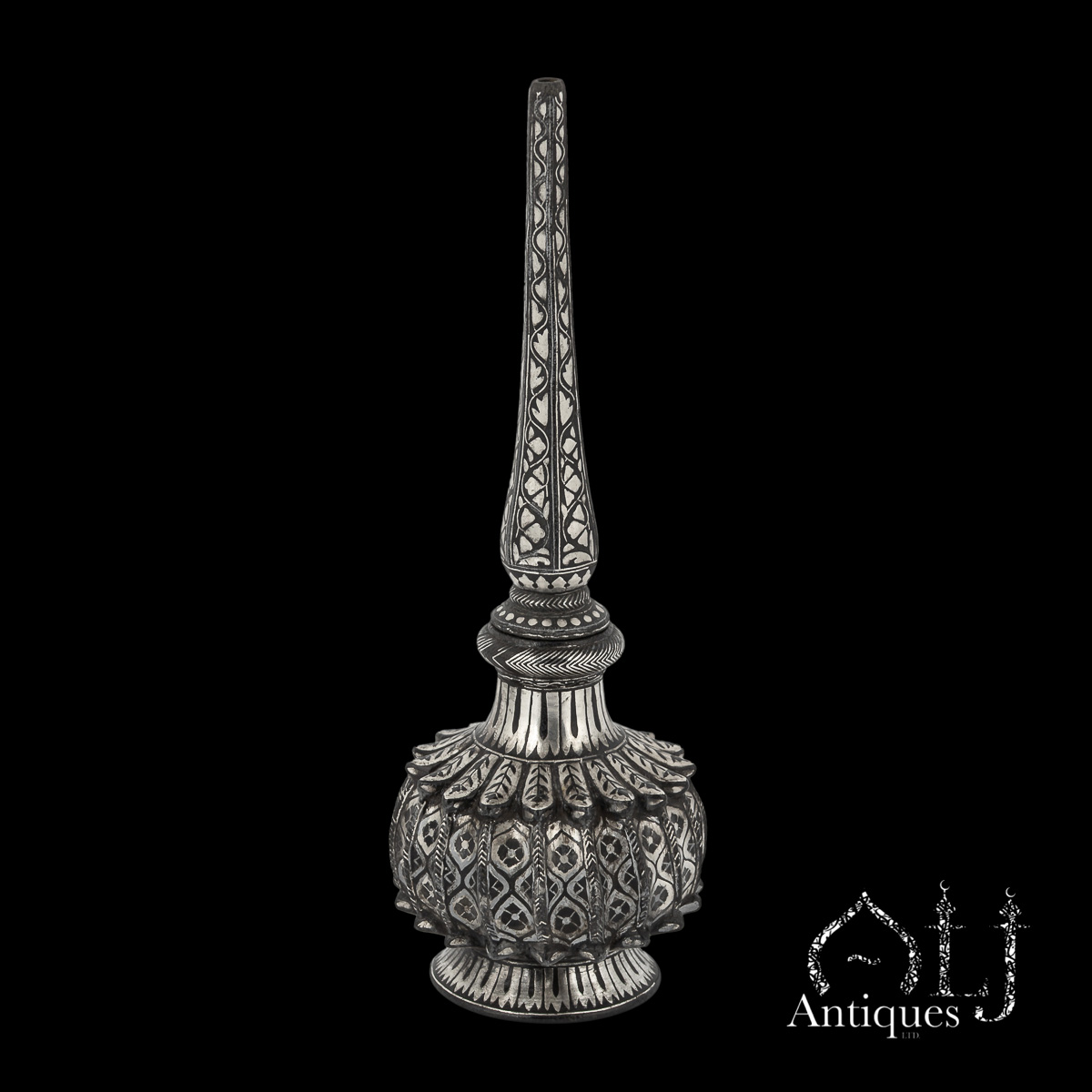
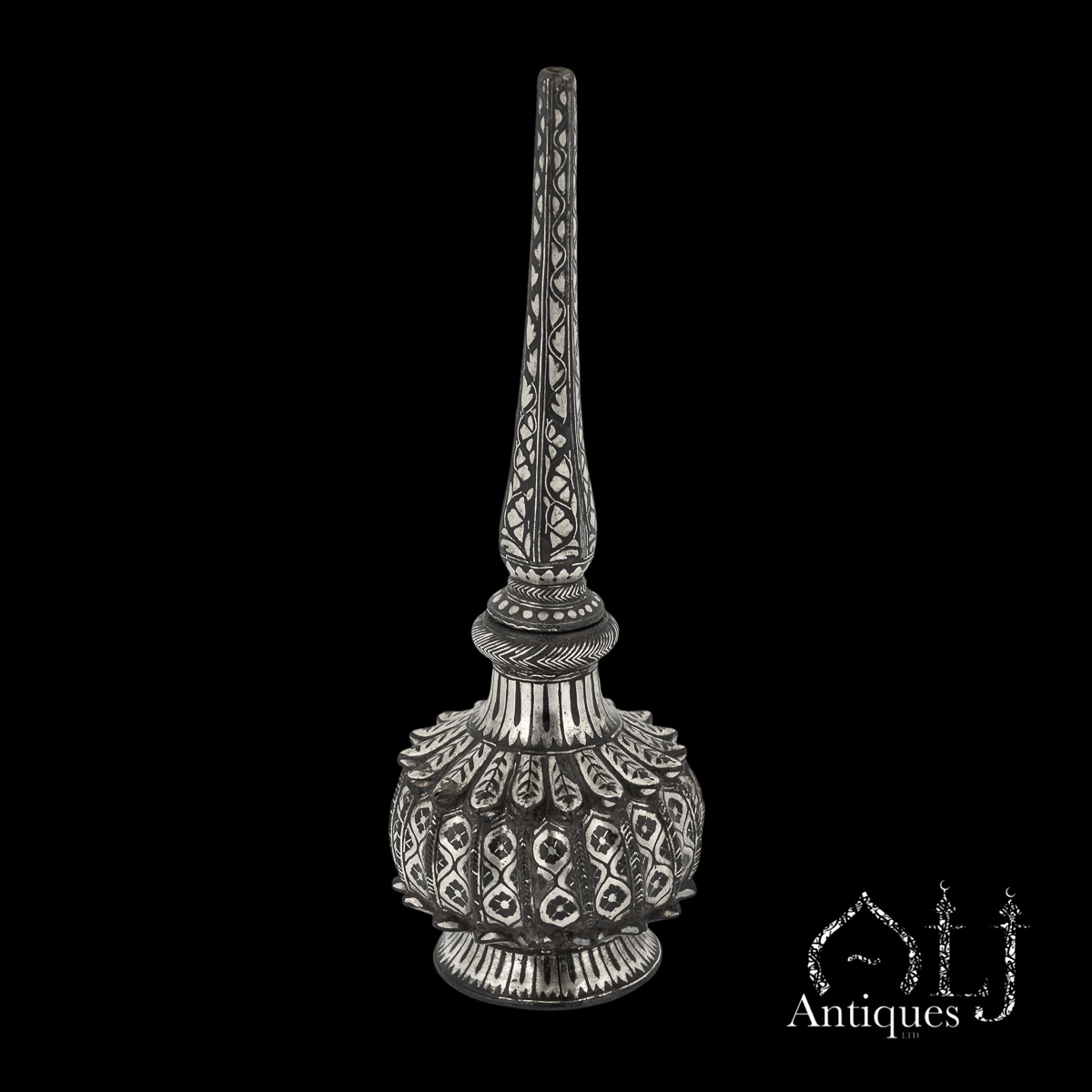
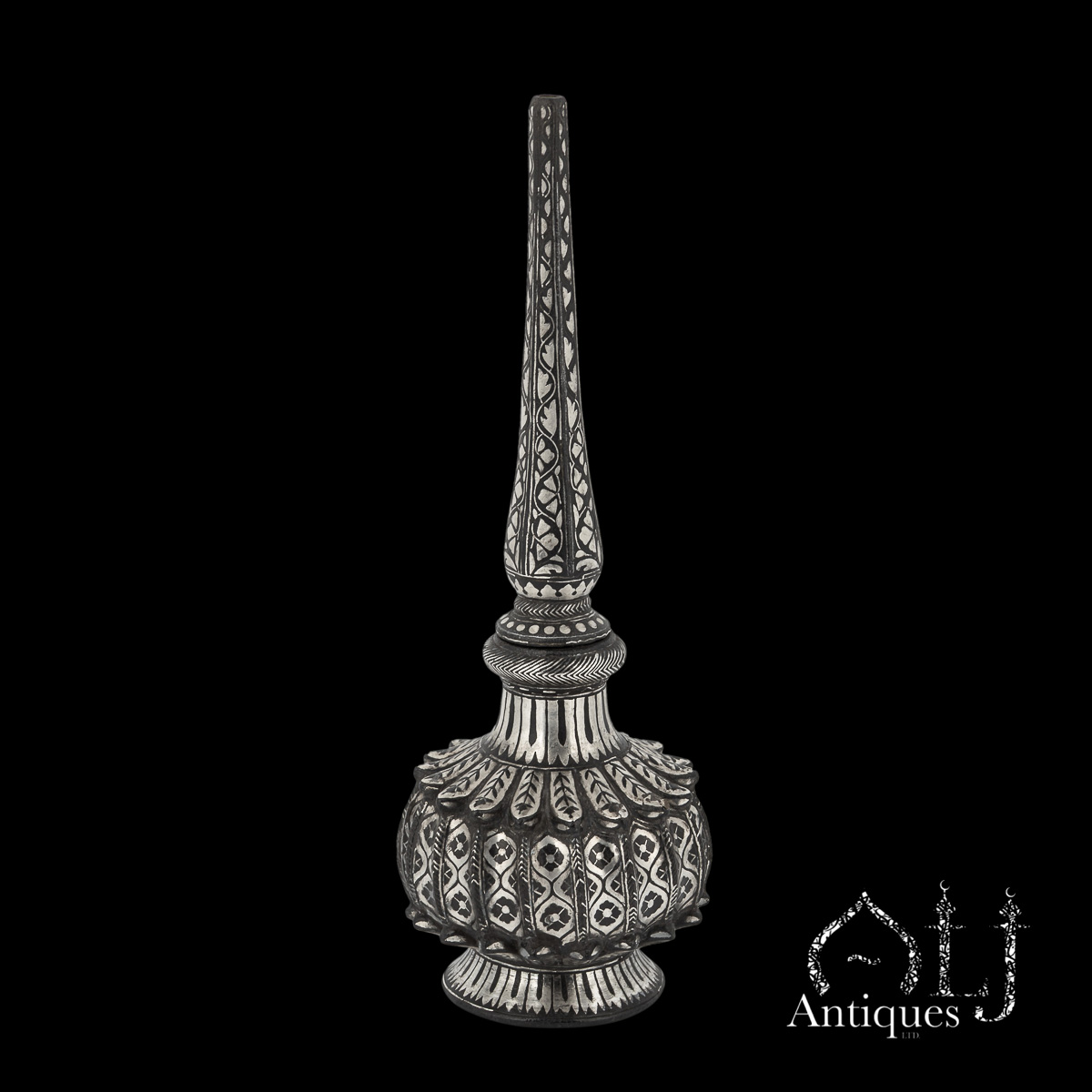
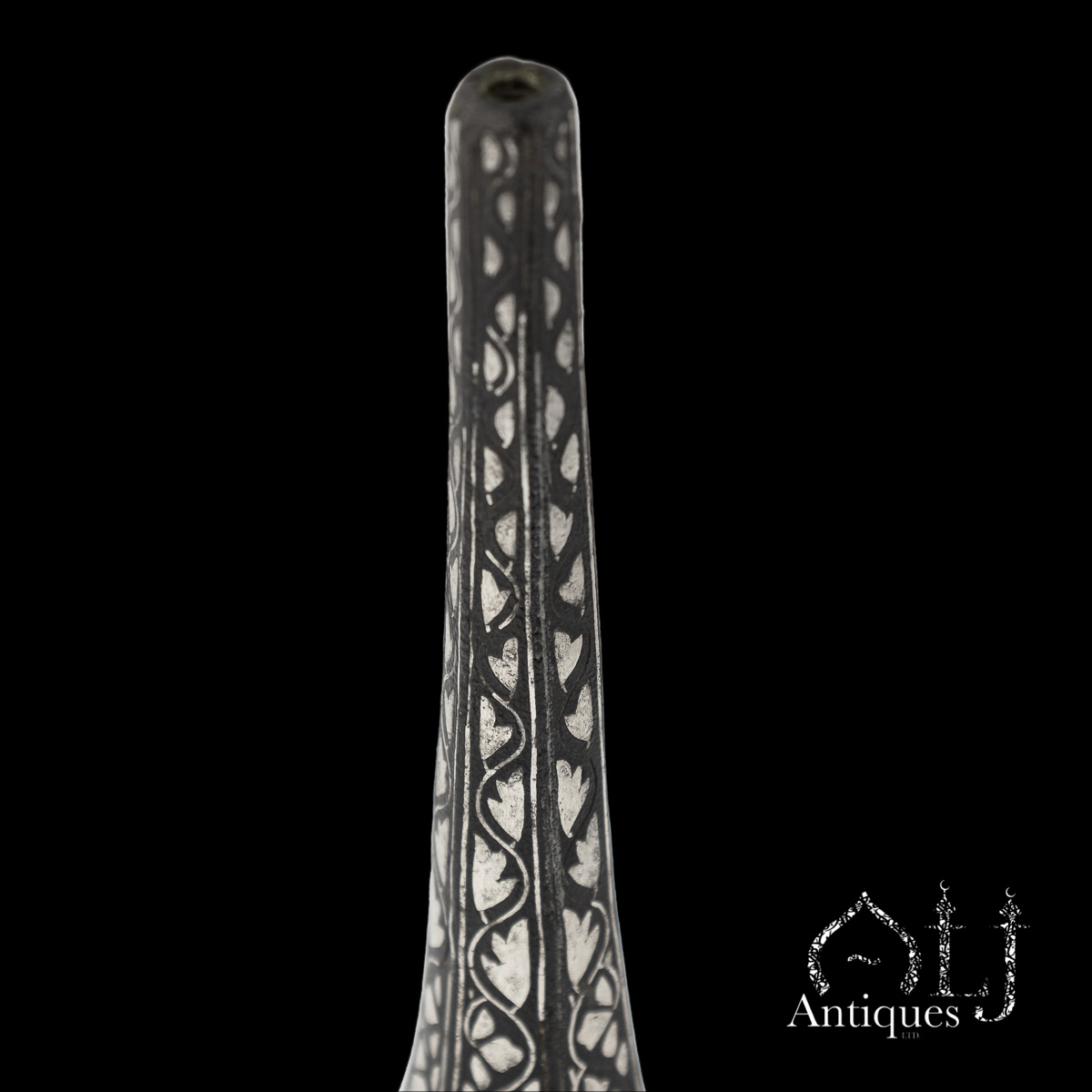
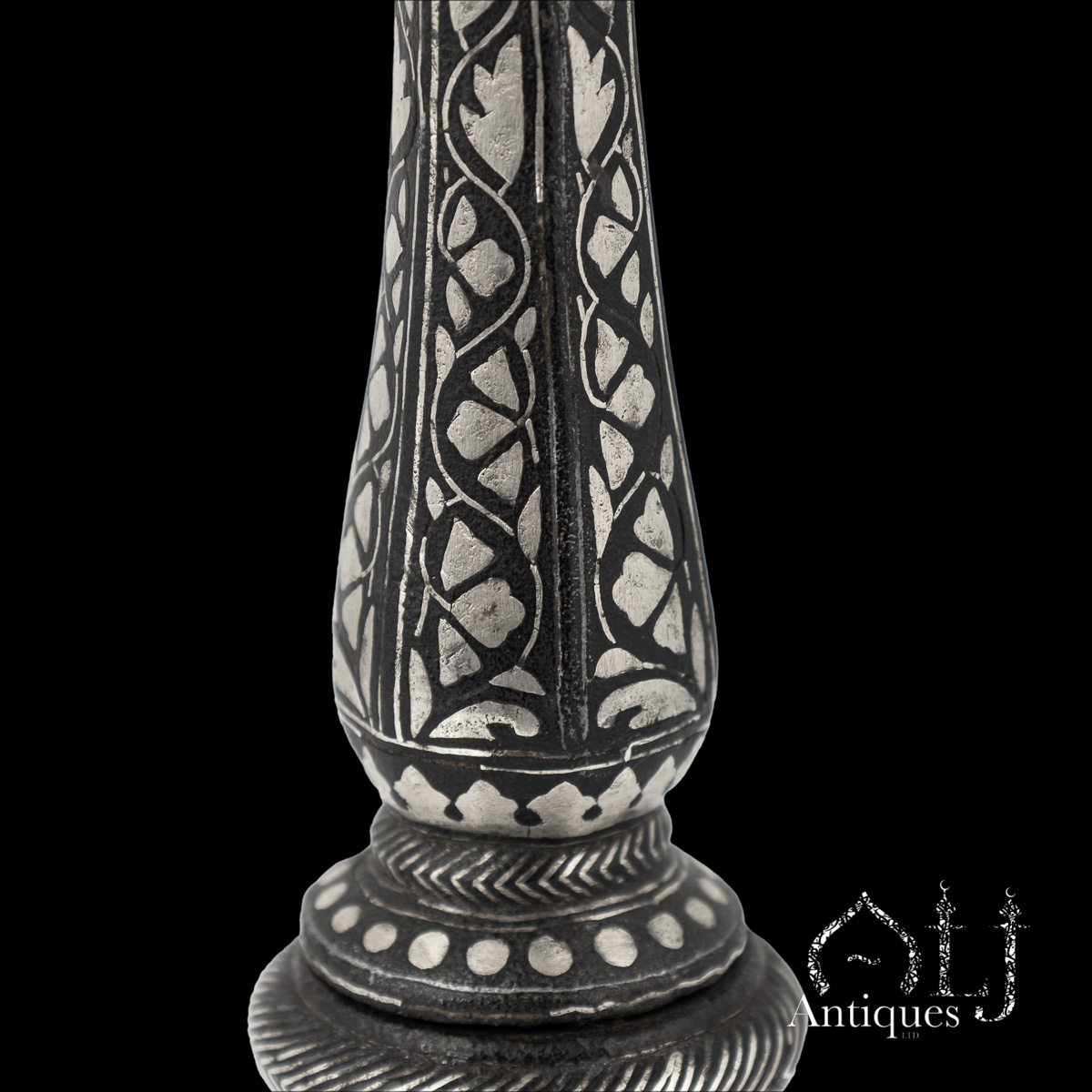
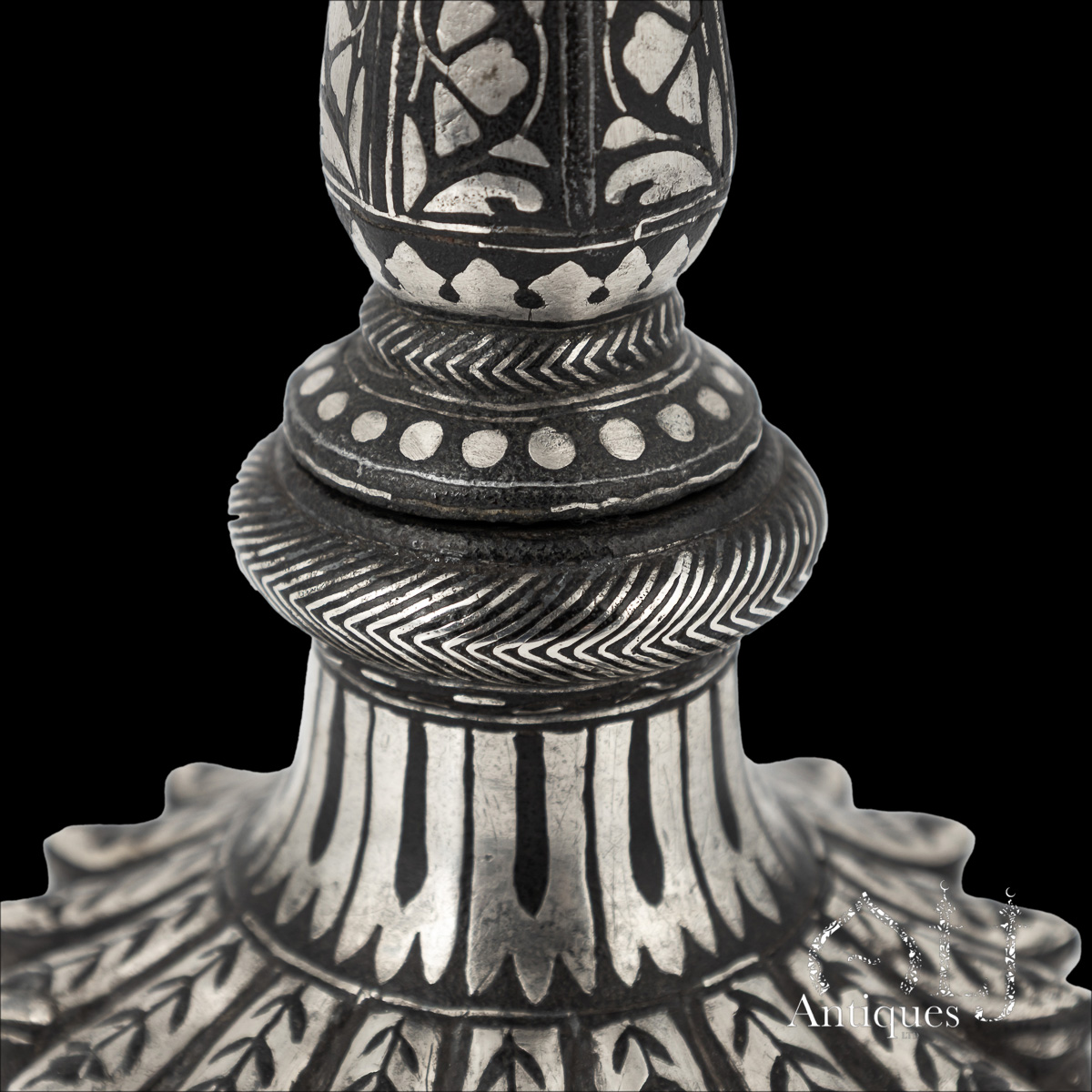
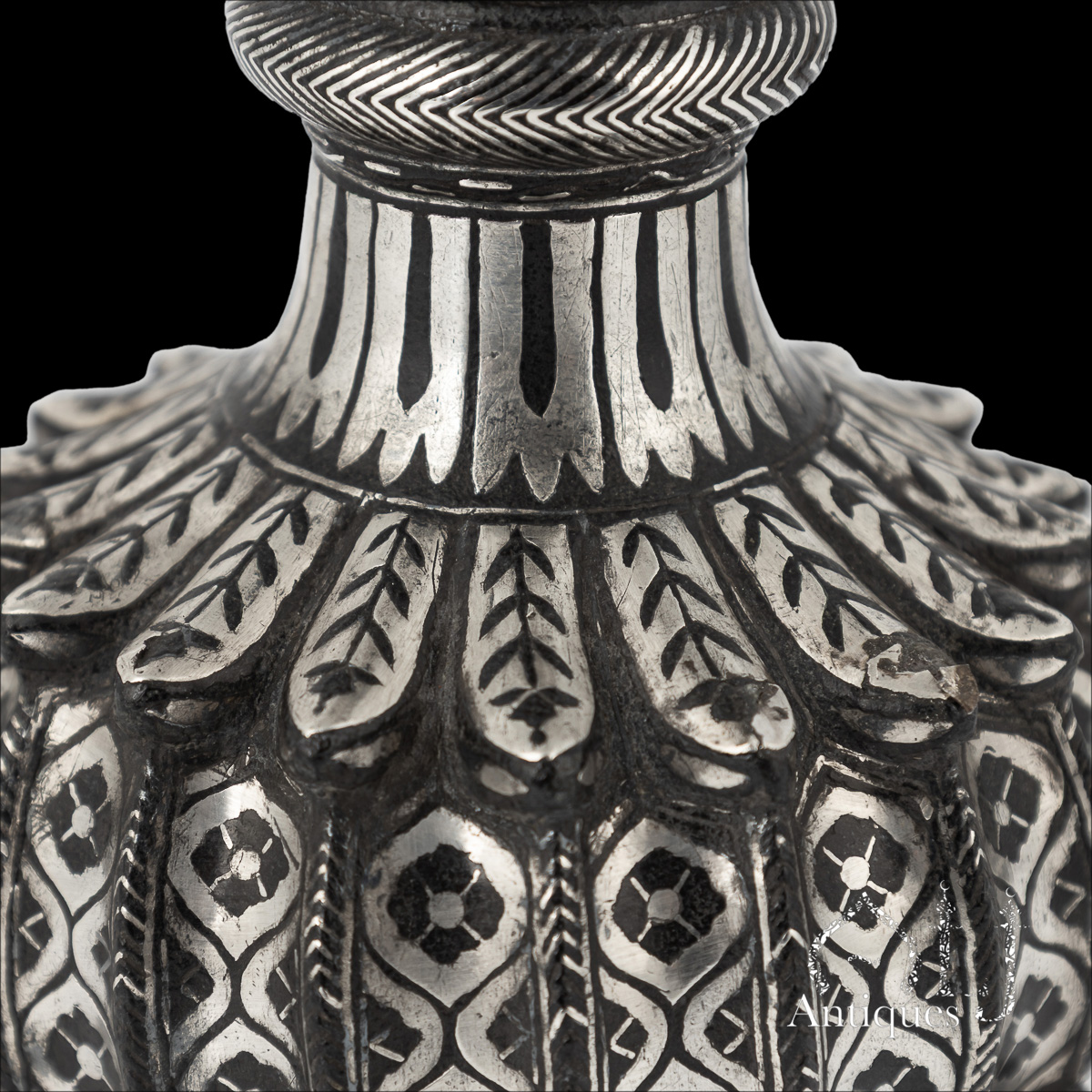
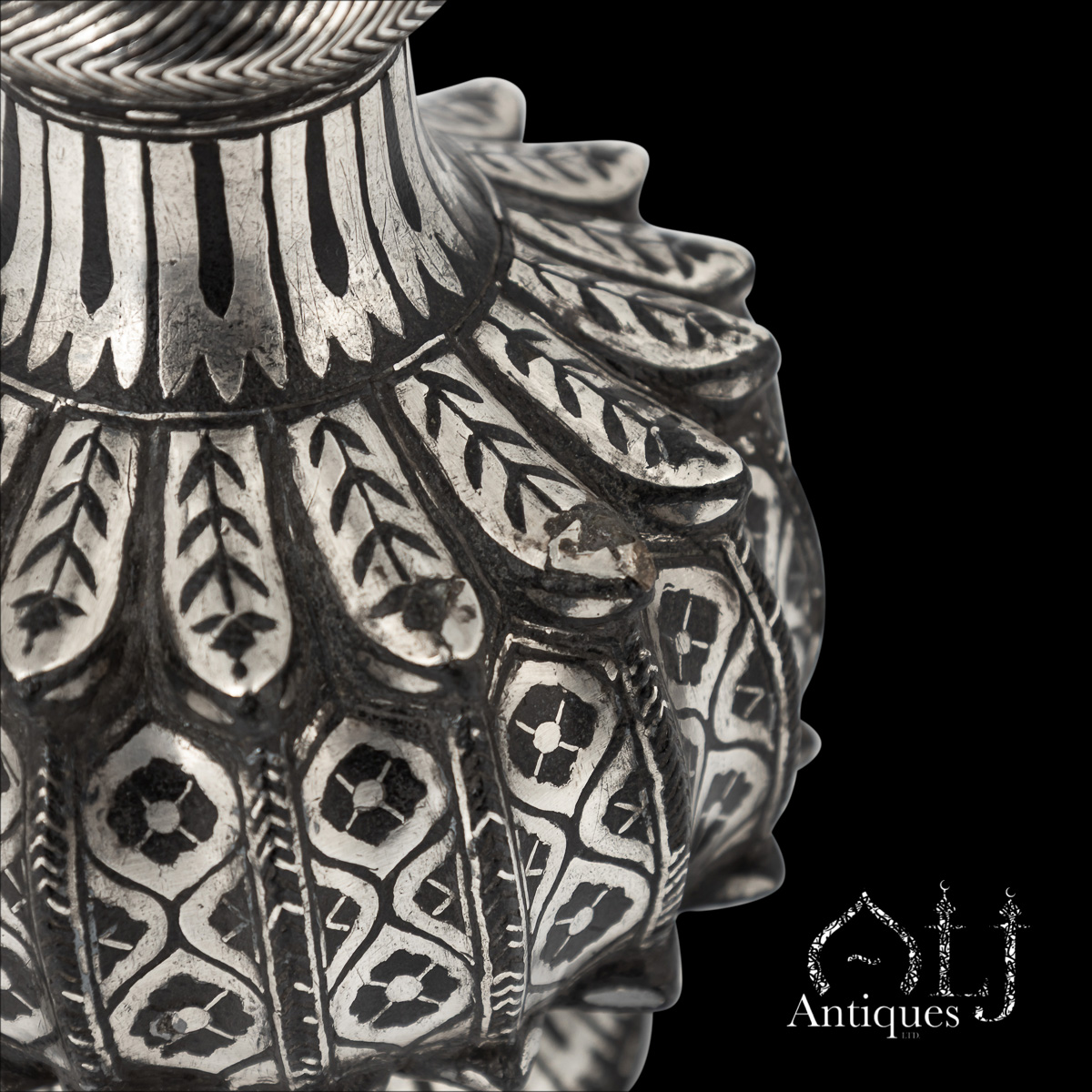
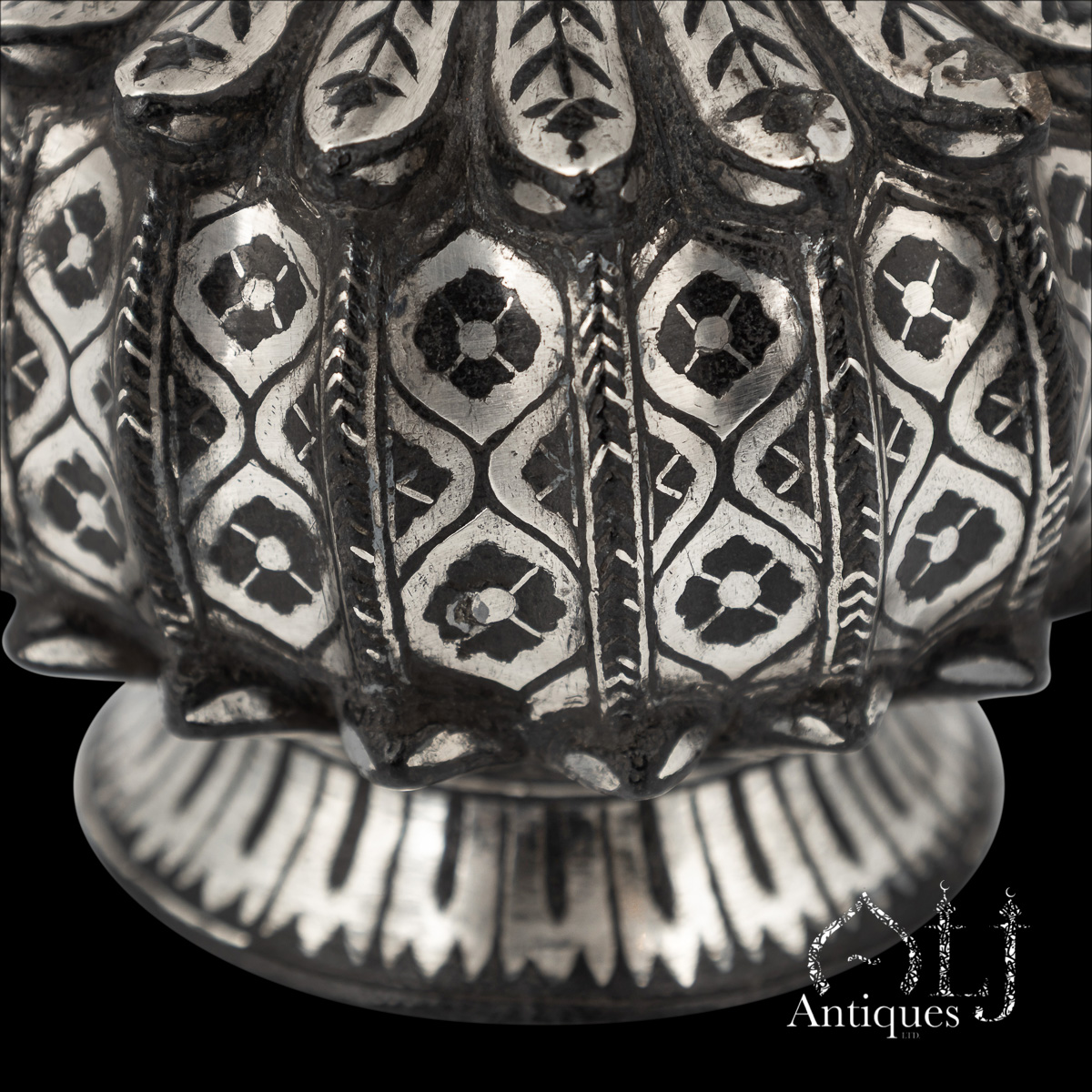
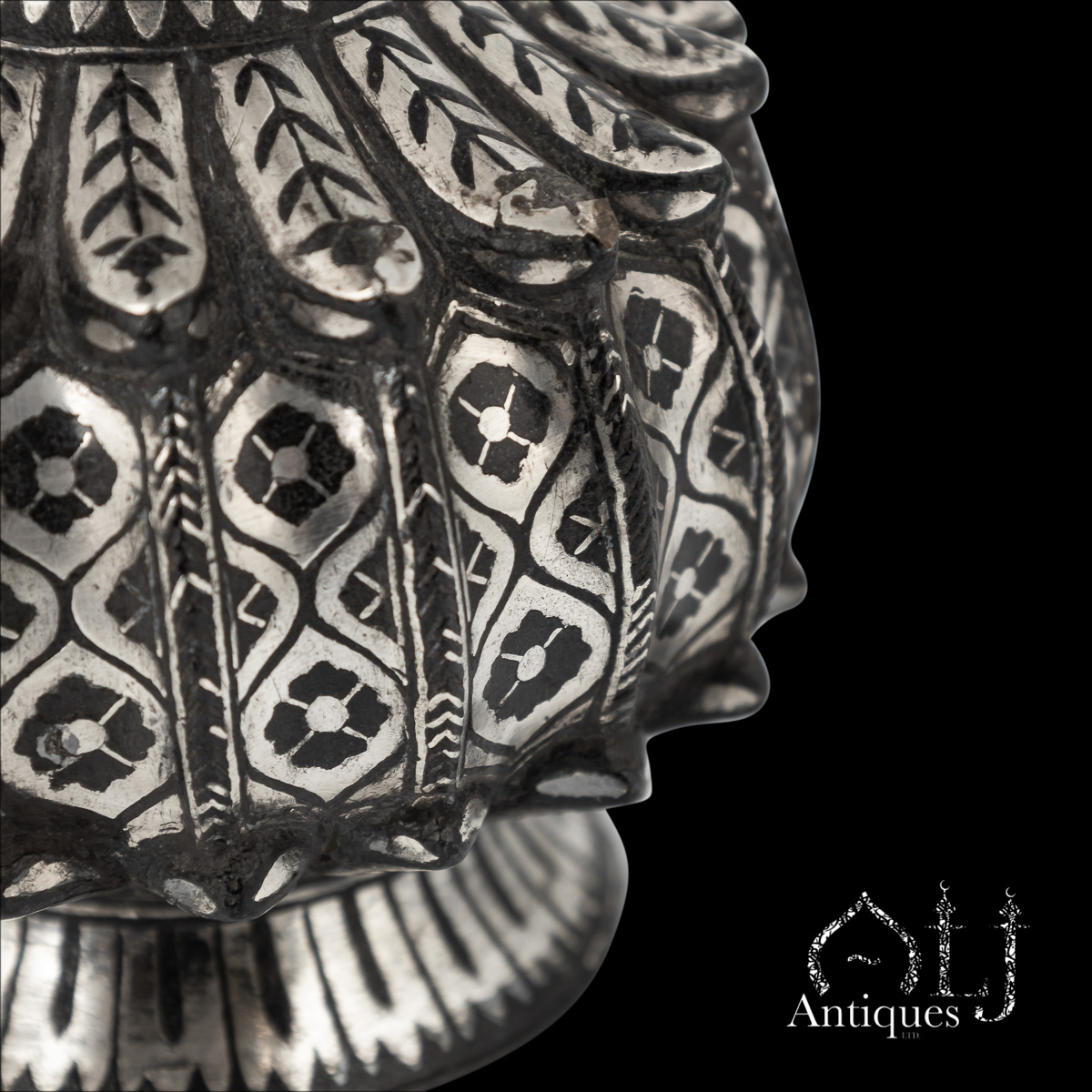
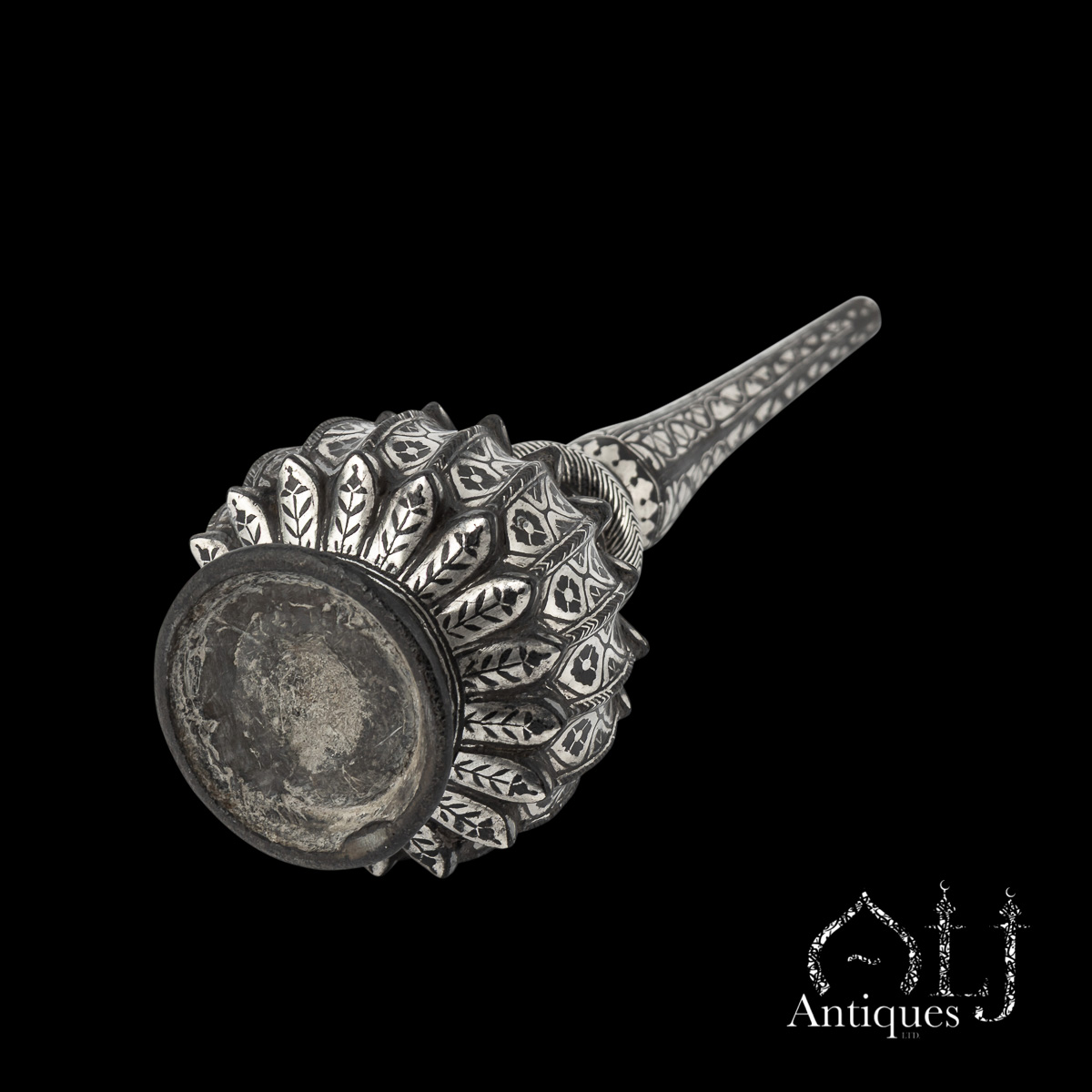
Made of blackened zinc alloy (Bidri) and inlaid throughout with silver, this Indian rosewater sprinkler (gulabdan) presents an elegant form composed of a compressed, lobed globular body rising to sloping, scalloped shoulders, a ringed shaft, and a tapering elongated neck with a minute circular rim. The entire surface is intricately decorated with masterfully executed silver inlay arranged in vertical registers of scrolling vines with serrated foliage on the neck, and stylised rosettes on the body, each compartment framed within trellis-like borders and stylised fretwork bands characteristic of high-quality Deccani metalwork of the late 17th and early 18th centuries.
The base and shoulders are articulated with deeply modelled lotus-petal lobes, each filled with alternating botanical motifs in silver, creating a dramatic interplay between the dark, oxidised Bidri surface and the bright inlay. This ‘lotus’ design is ubiquitous in the arts of 17th- and 18th-century India. Possibly inspired by the so-called lotus pedestals and lotus/acanthus columns so common in Indian and Mughal architecture (see Simon Ray, Indian & Islamic Works of Art, exhibition catalogue, 1 November–30 November 2012, p. 208, cat. no. 96), this design soon permeated the realm of metalwares, especially Bidri wares, towards the very end of the 17th century (see a Bidri spittoon attributed to 18th-century Bidar with similar recessed, lobed panels in Mark Zebrowski, Gold, Silver & Bronze from Mughal India, 1997, p. 181, cat. no. 259; and a globular Bidri huqqa base attributed to mid-18th-century Bidar in Jagdish Mittal, Bidri Ware and Damascene Work in the Jagdish & Kamla Mittal Museum of Indian Art, 2011, pp. 106–107, cat. no. 28, inv. no. 76.1249.ME.28).
The ridged lotus collar of the present sprinkler is further enriched with silver-inlaid hollow serrated palmette leaves, demonstrating a keen and attentive eye associated with elite workshops in Bidar and Hyderabad during the Mughal administration of the Deccan.
Rosewater sprinklers (gulabdan, gulābdān, gulab pash) occupy an important place in the ceremonial culture of the Deccani and Mughal courts, being recurrently employed in rituals of hospitality, perfuming social spaces, and honouring guests. In both courtly and ceremonial contexts, rosewater sprinklers were essential accoutrements of refinement and elite hospitality from the Near East to Central Asia and the Indian subcontinent. The present example stands out for its sculptural dynamism, with an unusually complex alignment of vertical lobes and trellis-pattern inlay, indicative of a high-end, skilful workshop. This decorative sophistication echoes the artistic vocabulary showcased in a late 17th-century silver- and brass-inlaid steel chauri handle (published in Jagdish Mittal, Bidri Ware and Damascene Work in the Jagdish & Kamla Mittal Museum of Indian Art, 2011, pp. 148–149, cat. no. 49, inv. no. 76.1270.ME.49), demonstrating that lotus collars and serrated leaves formed part of the core repertoire of Deccani metalworkers. Objects such as this gulabdan exemplify the peak of Bidri production in the region, balancing sculptural presence, technical refinement, and botanical ornament in a manner that remained influential throughout the 18th century.
To the best of our knowledge, perhaps the only related and surviving published 17th-century Bidri cast, engraved, and silver-inlaid zinc-alloy rosewater sprinkler (gulabpash) is that in the collection of the Minneapolis Institute of Art (MIA), Minnesota, USA, Katherine Kittredge McMillan Memorial Fund, acc. no. 82.10.2.
Acknowledgment
The above text and literature were produced with the valued collaboration of Ms. B. C. (with thanks).