Description
Lot Description
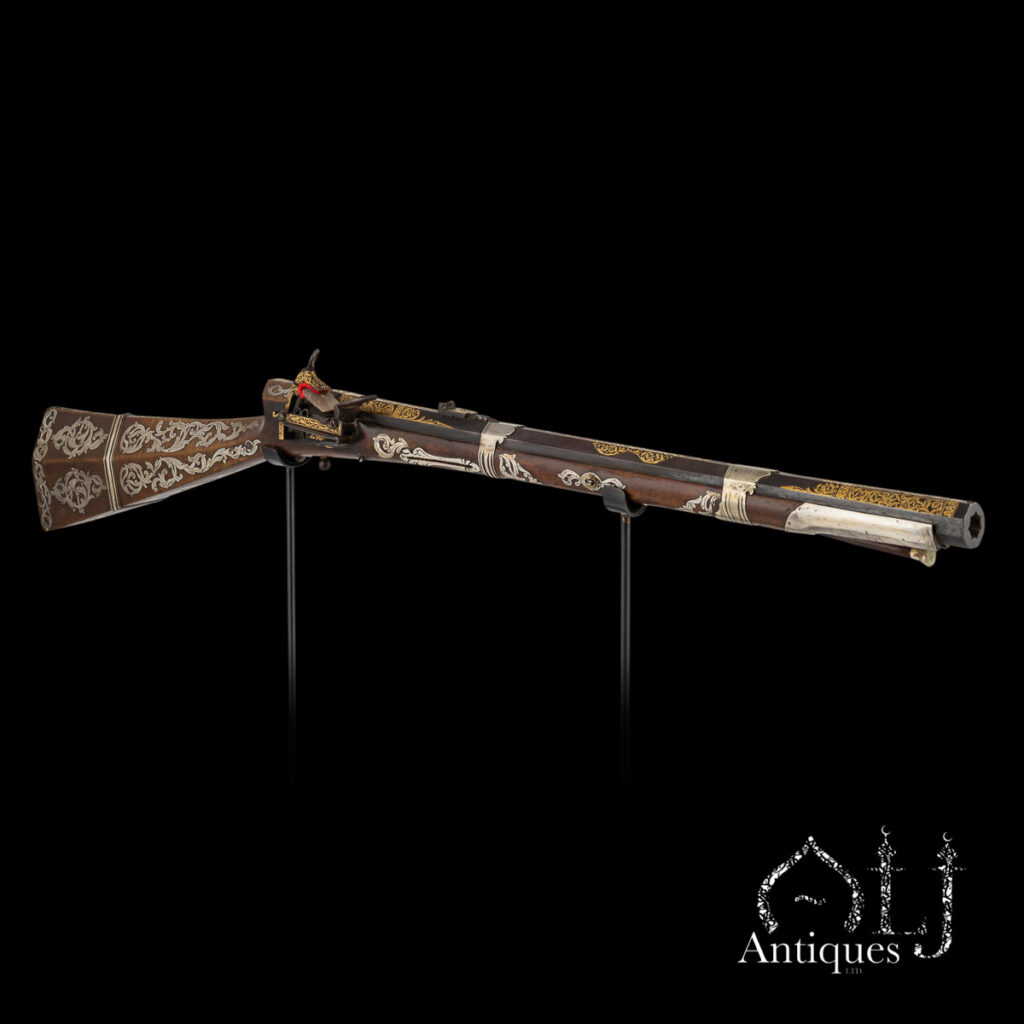
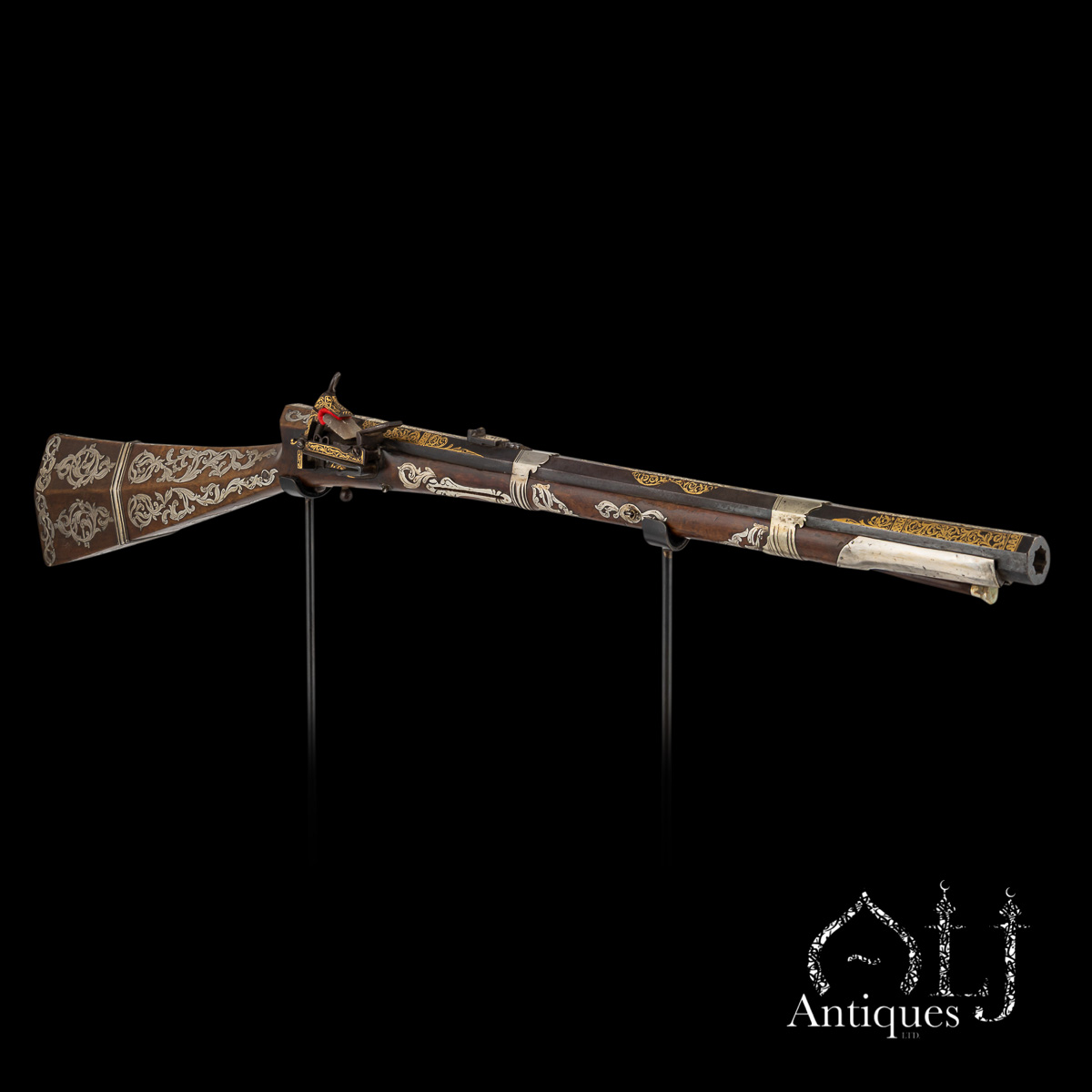
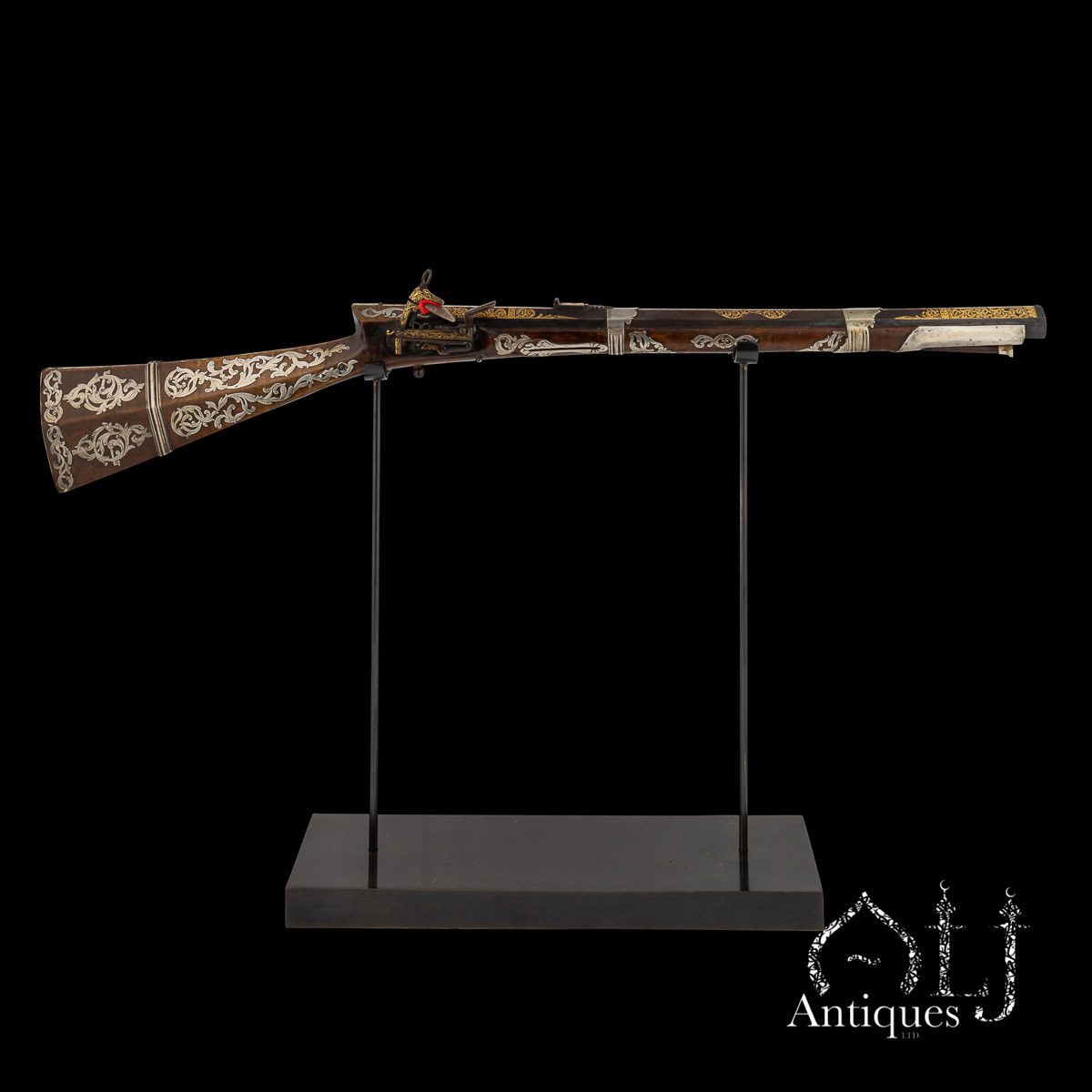
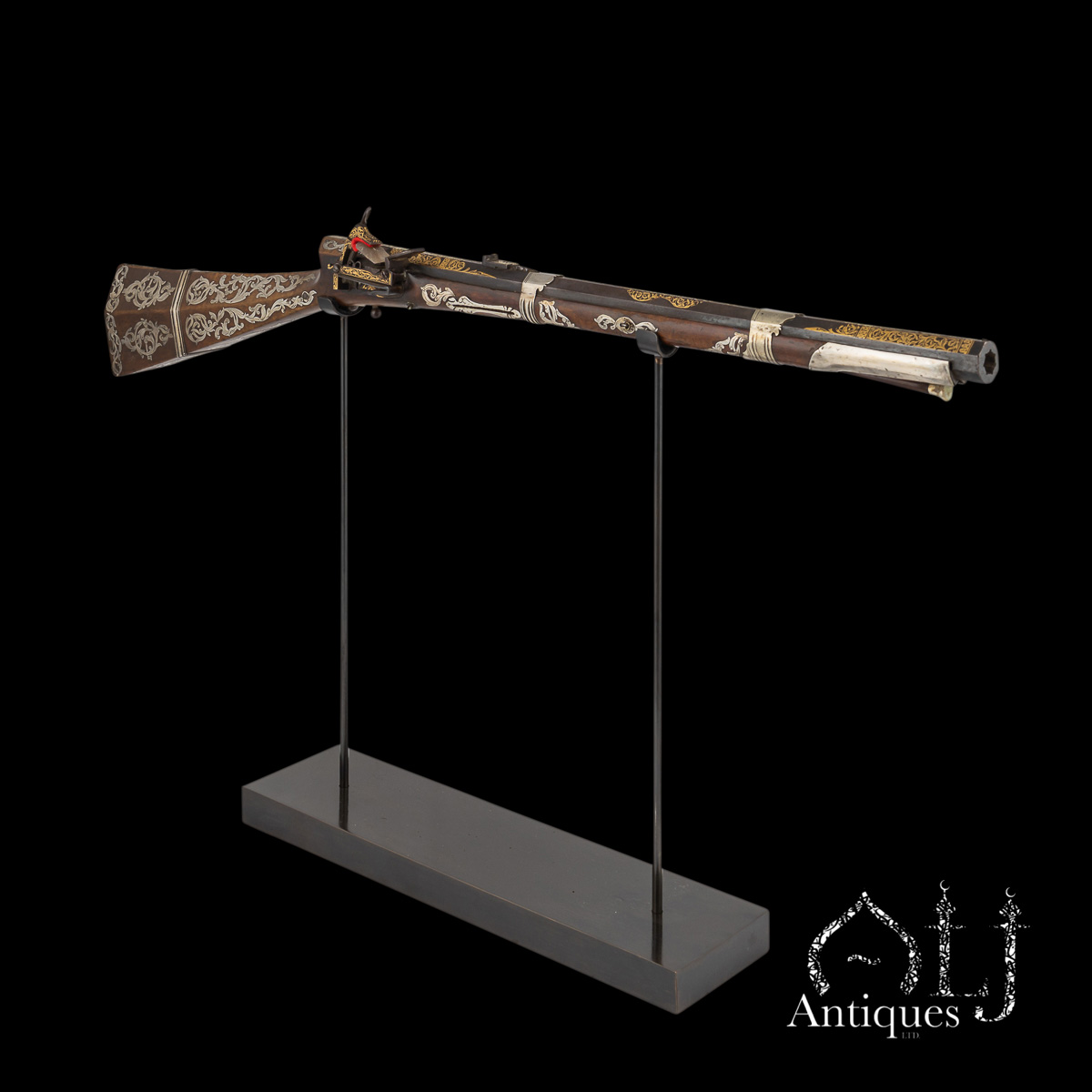
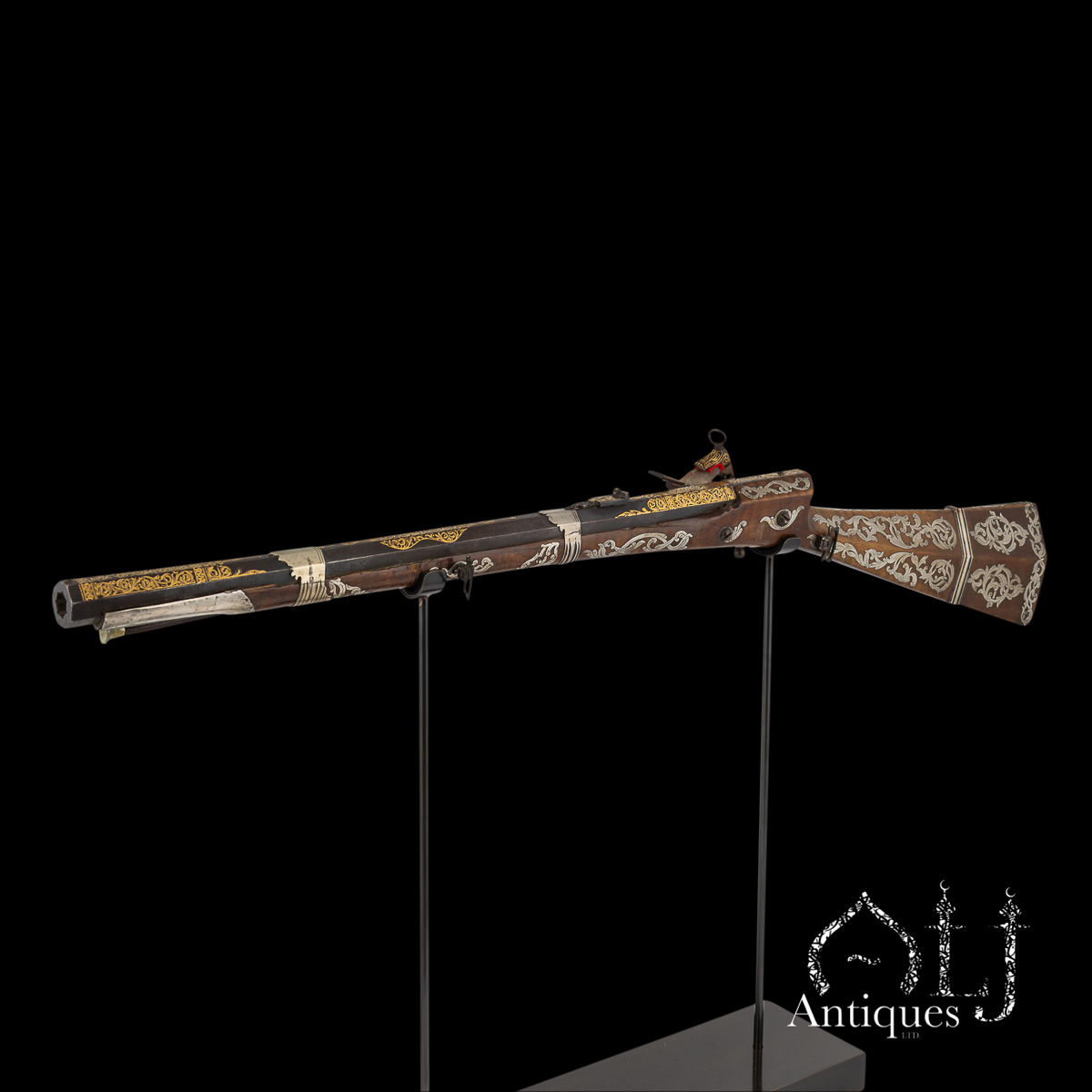
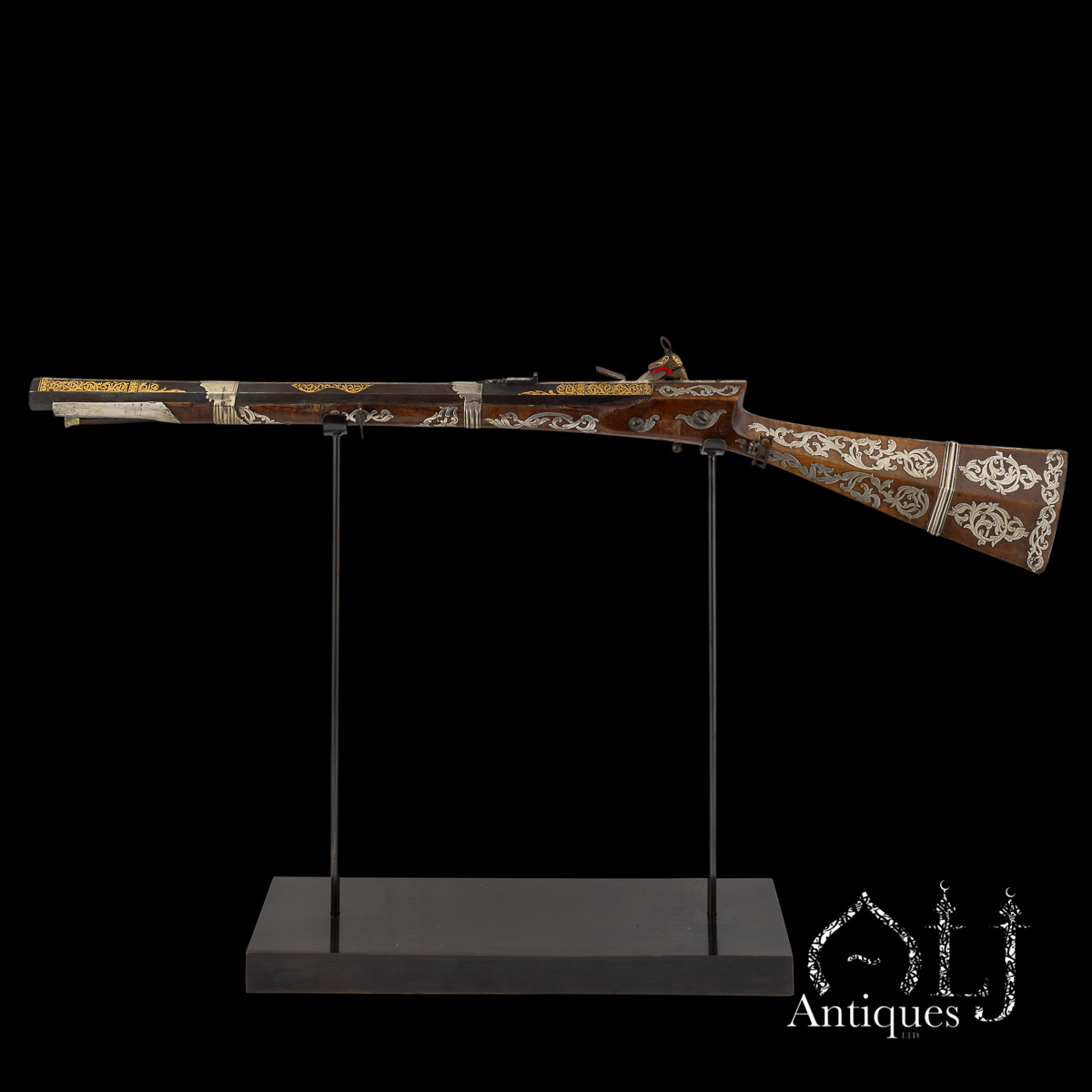
A rare and unusually compact Ottoman gold-damascened miquelet-lock carbine (tüfek) from the Balkan provinces of the Ottoman Empire, dating to circa 1800, distinguished by its exceptional richness of decoration and refined craftsmanship. The firearm belongs to the long tradition of elaborately ornamented Ottoman guns that developed from the seventeenth century onward, combining Mediterranean lock mechanisms with the sophisticated ornamental techniques characteristic of Ottoman metalwork.
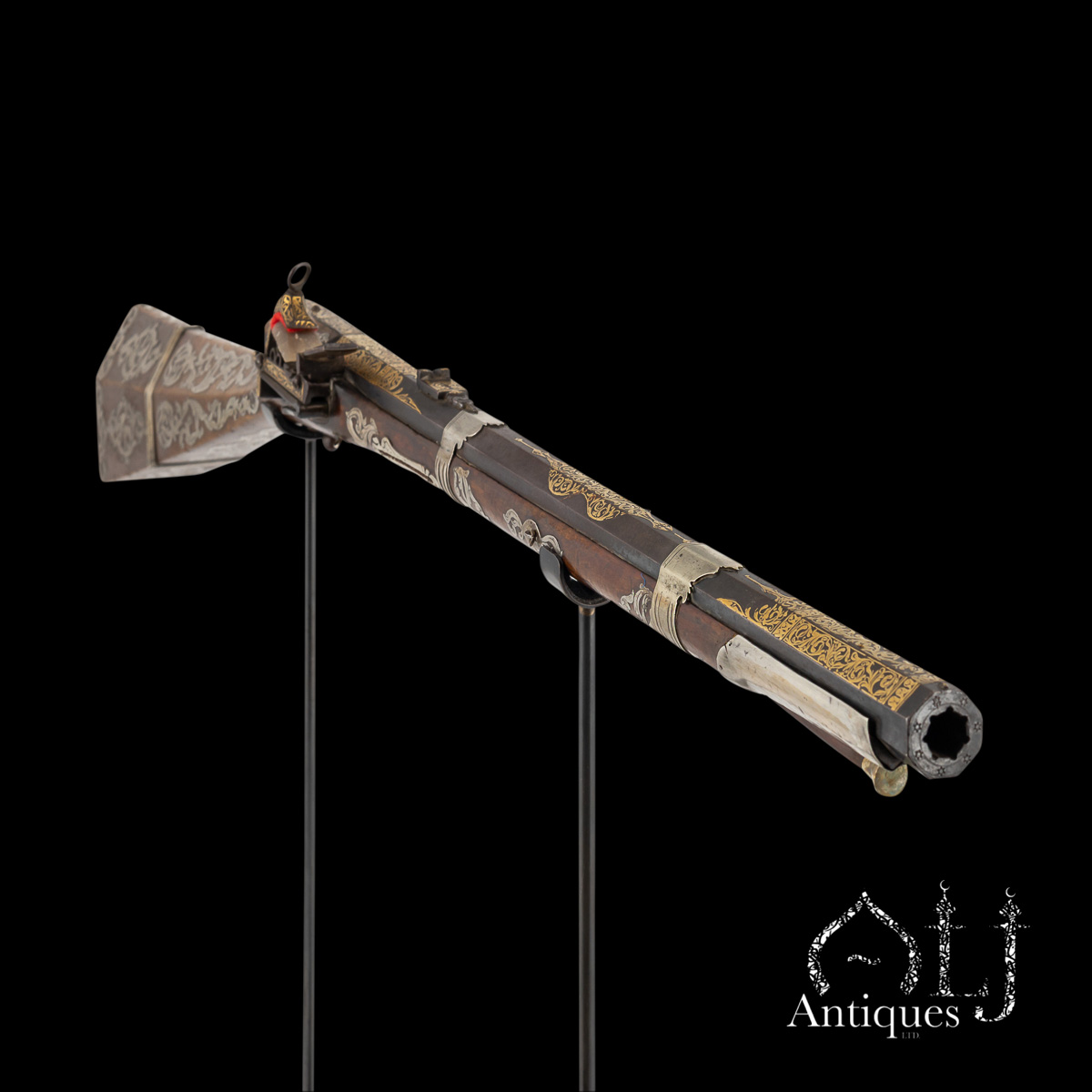
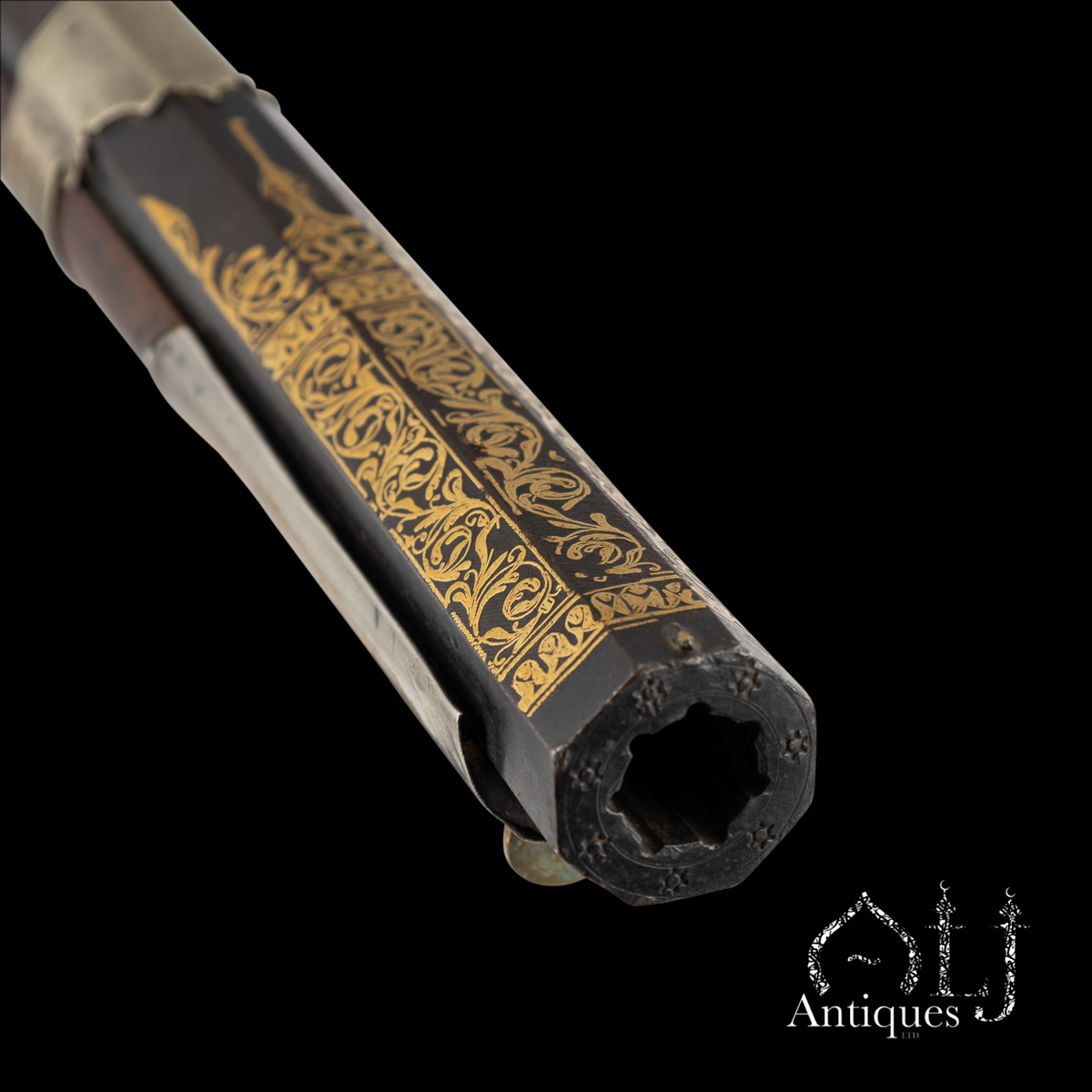
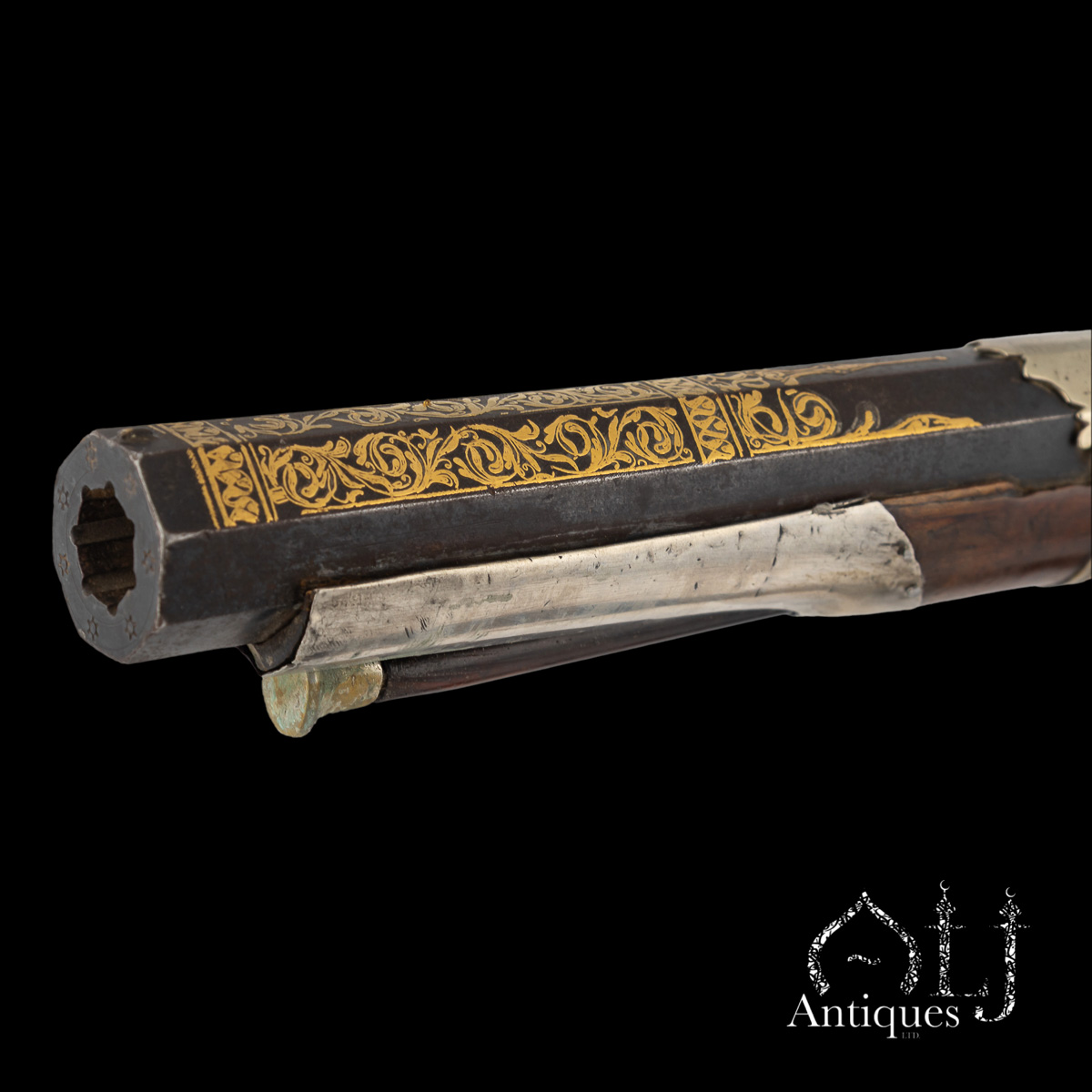
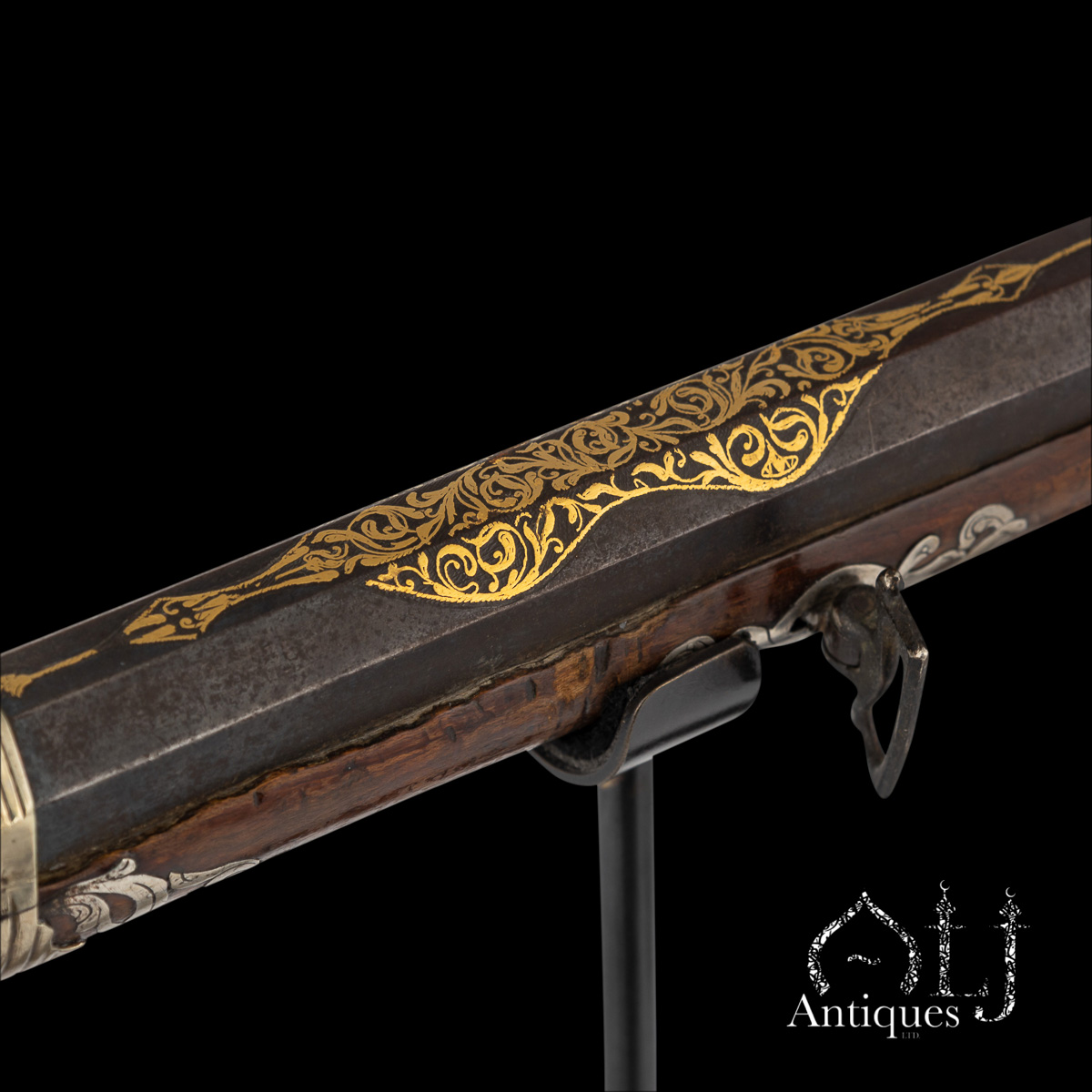
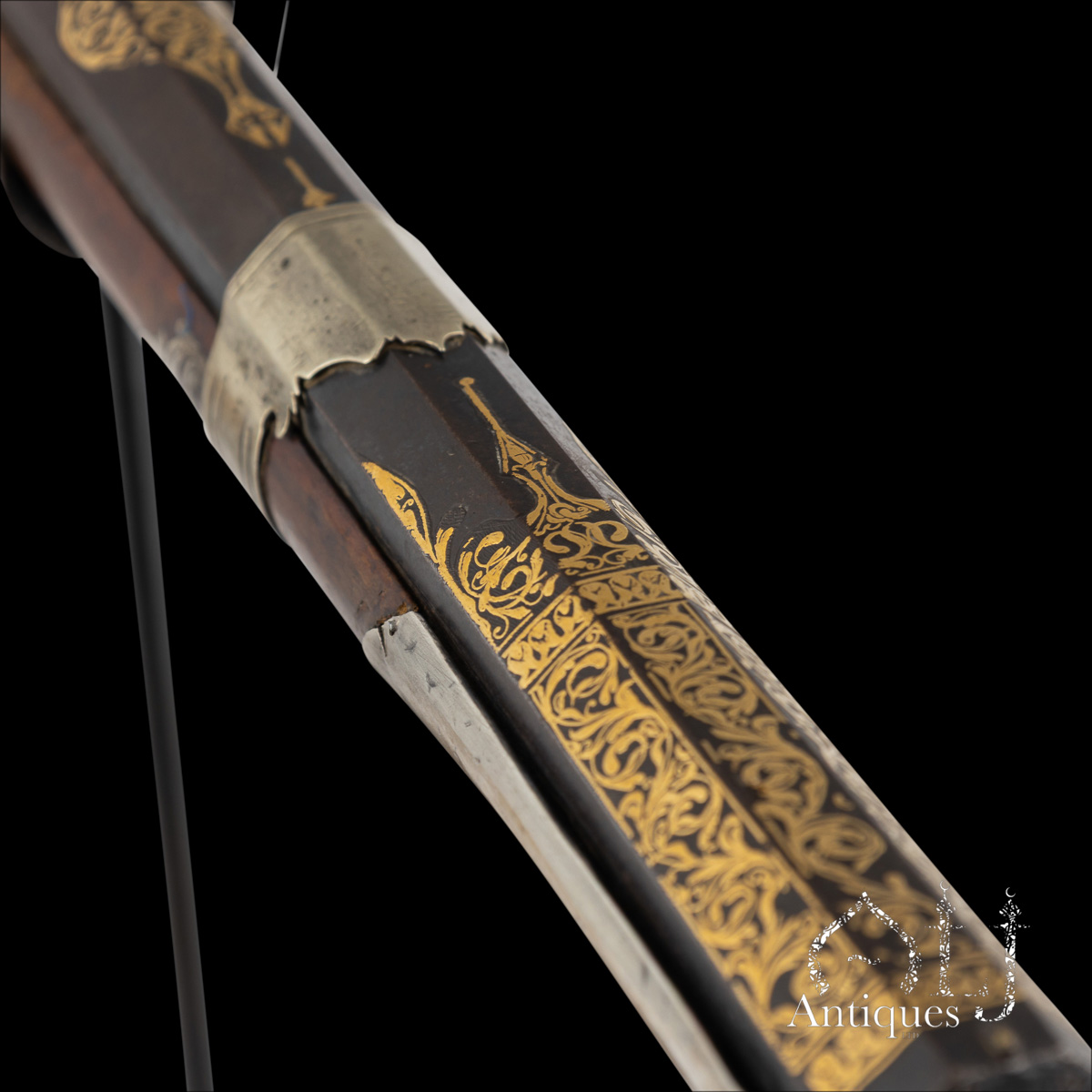
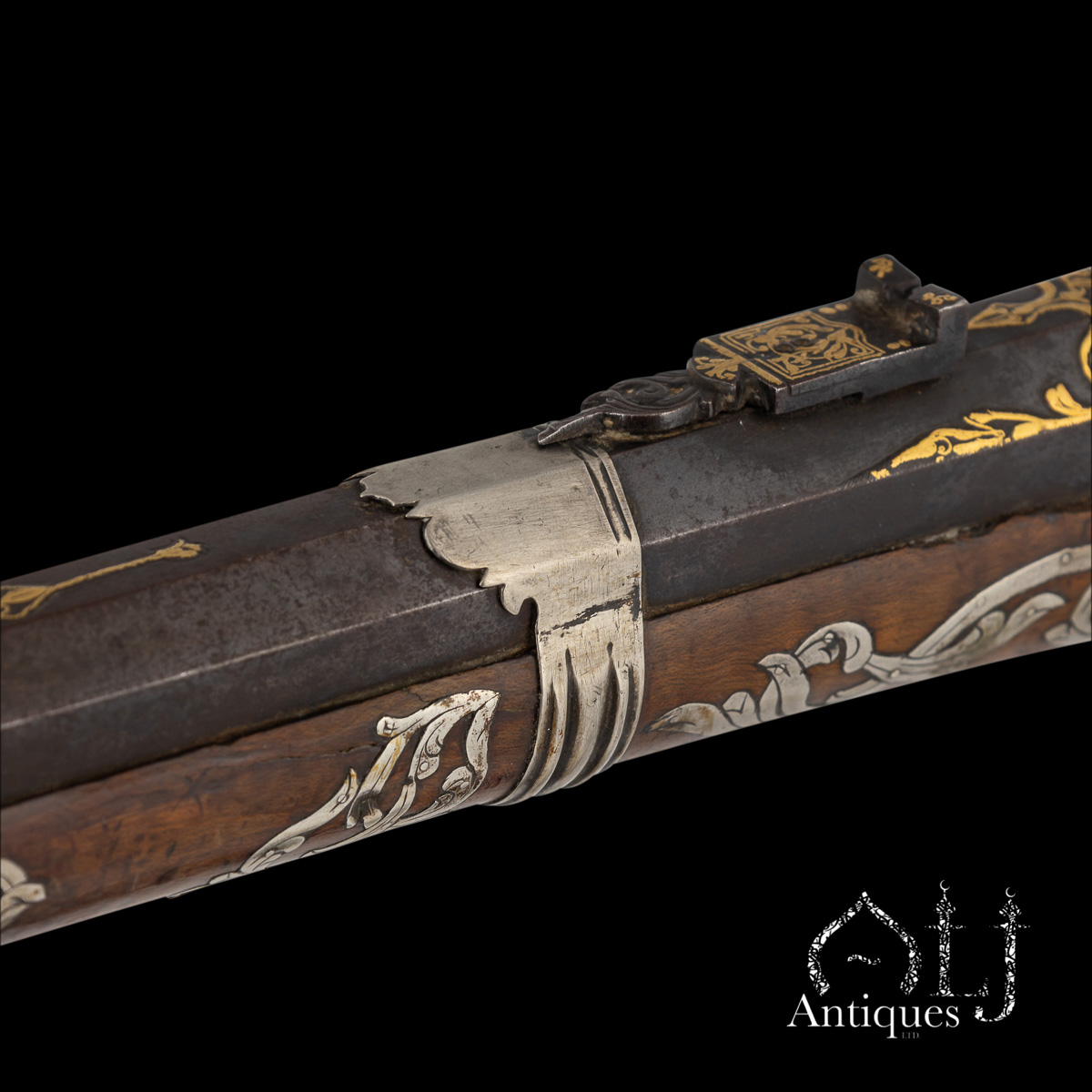
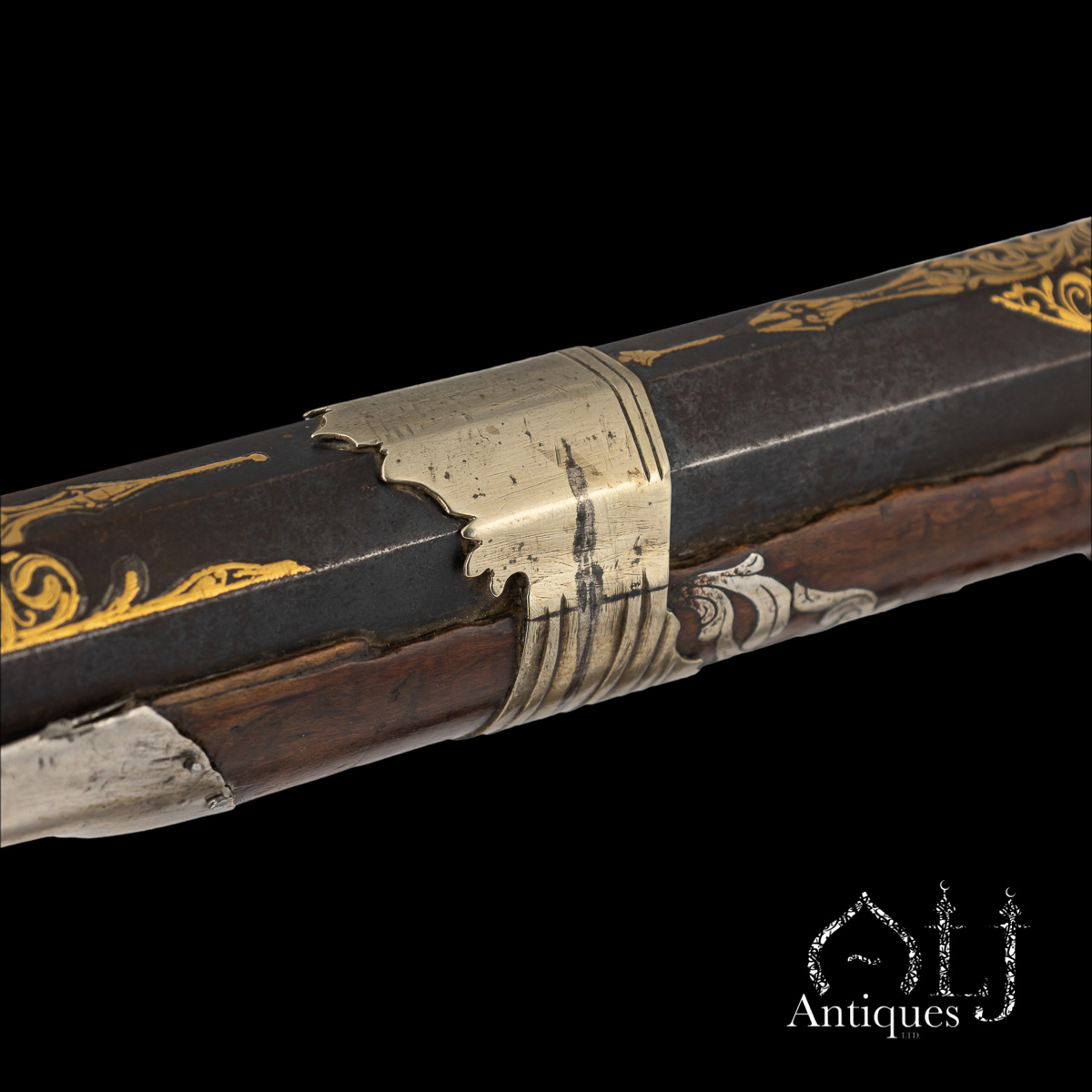
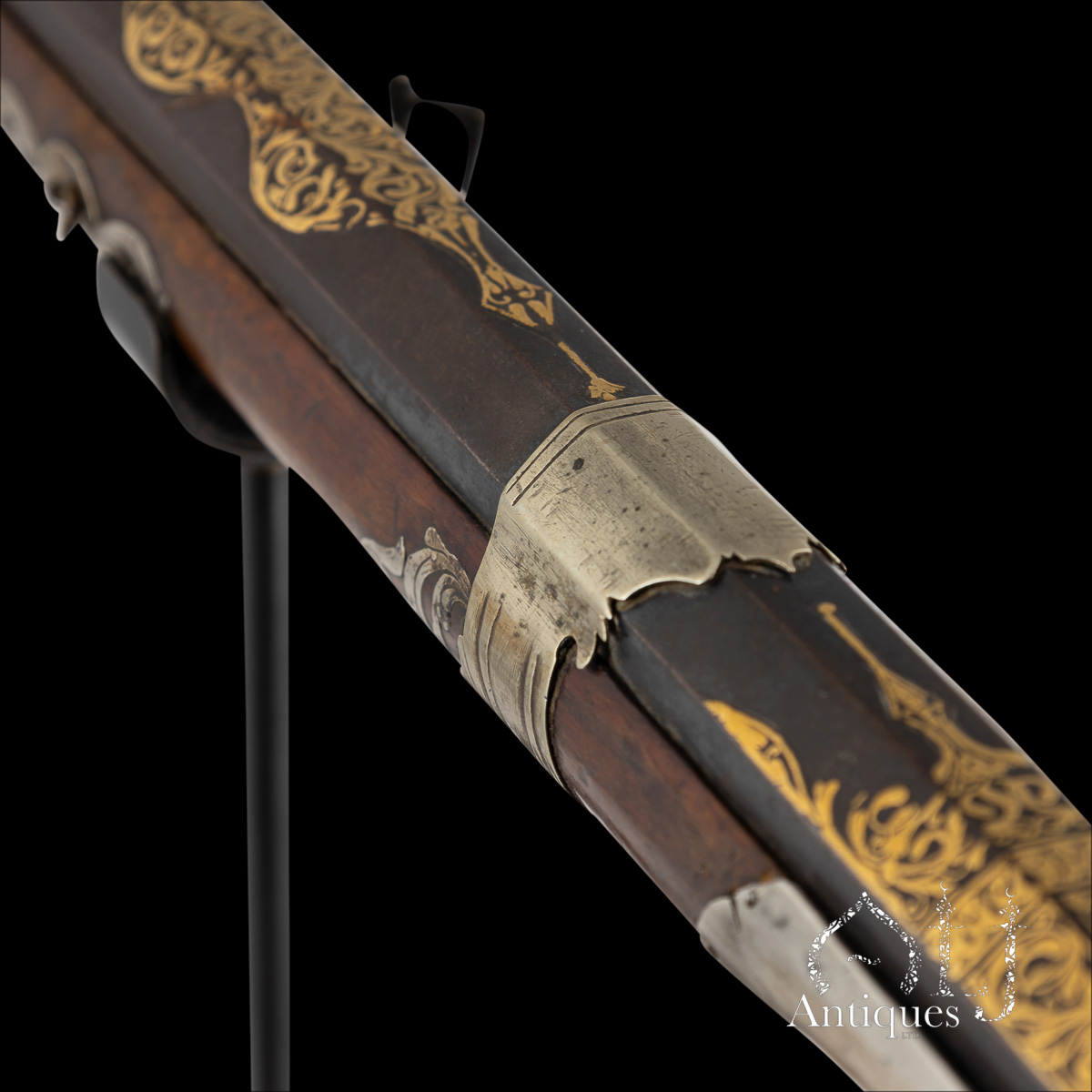
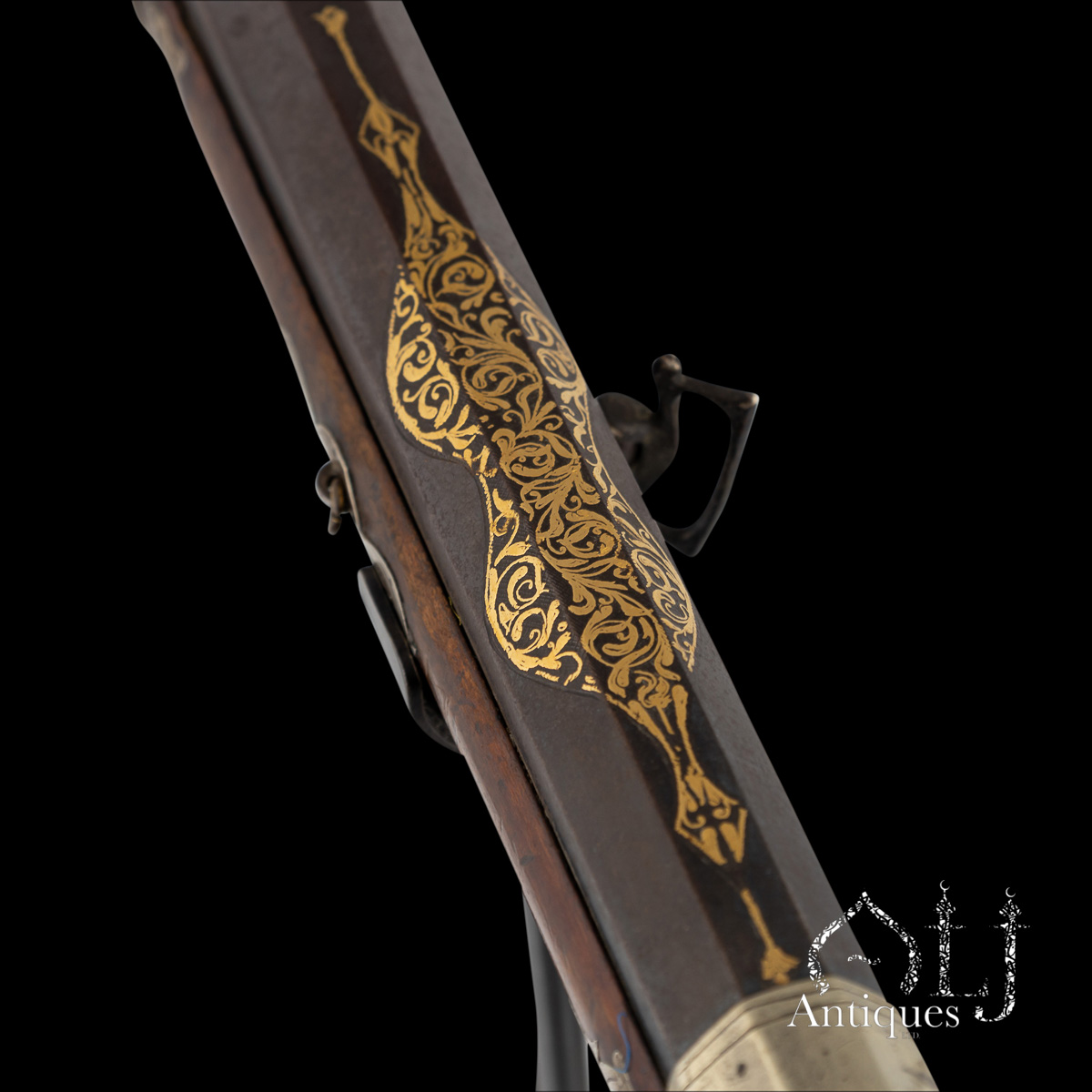
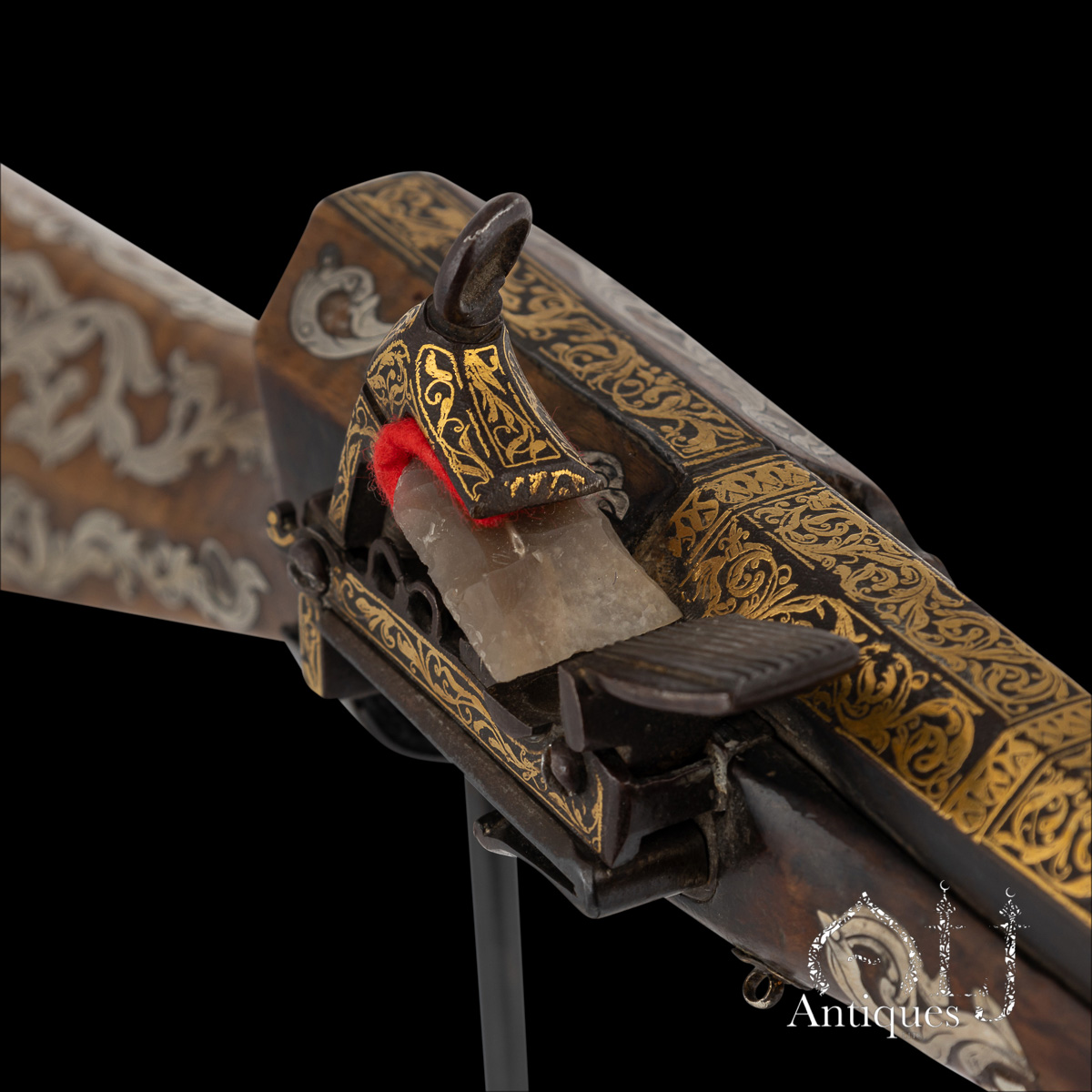
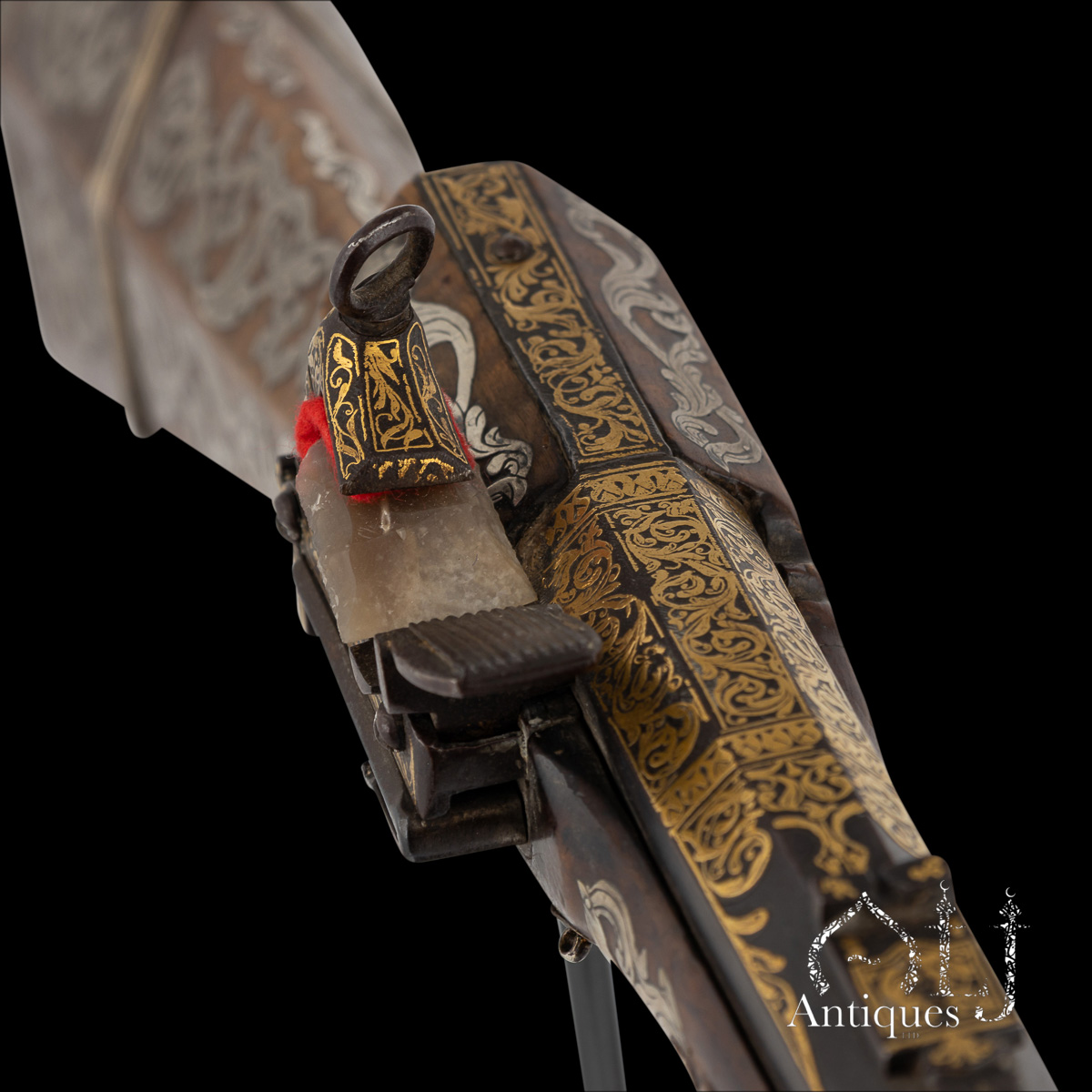
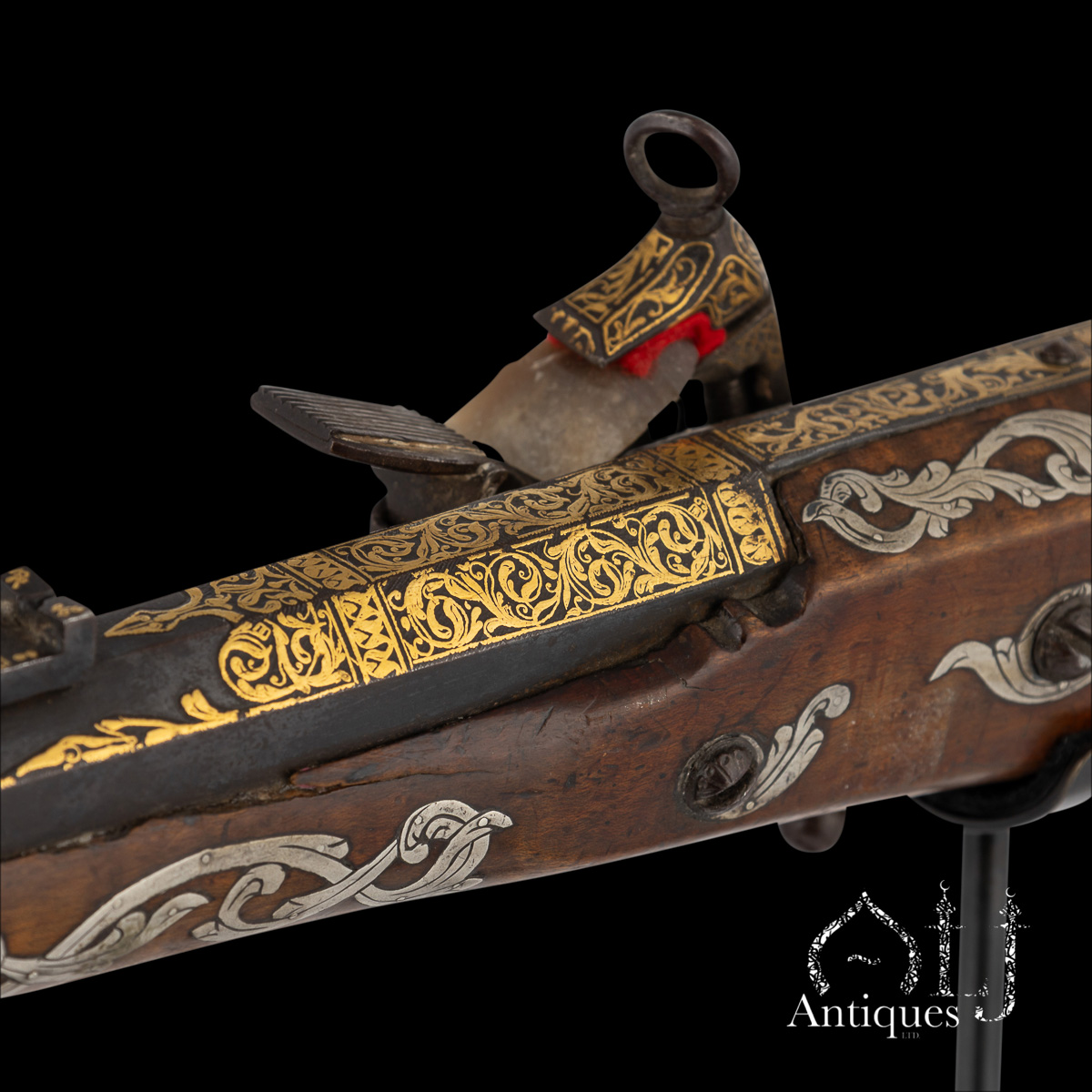
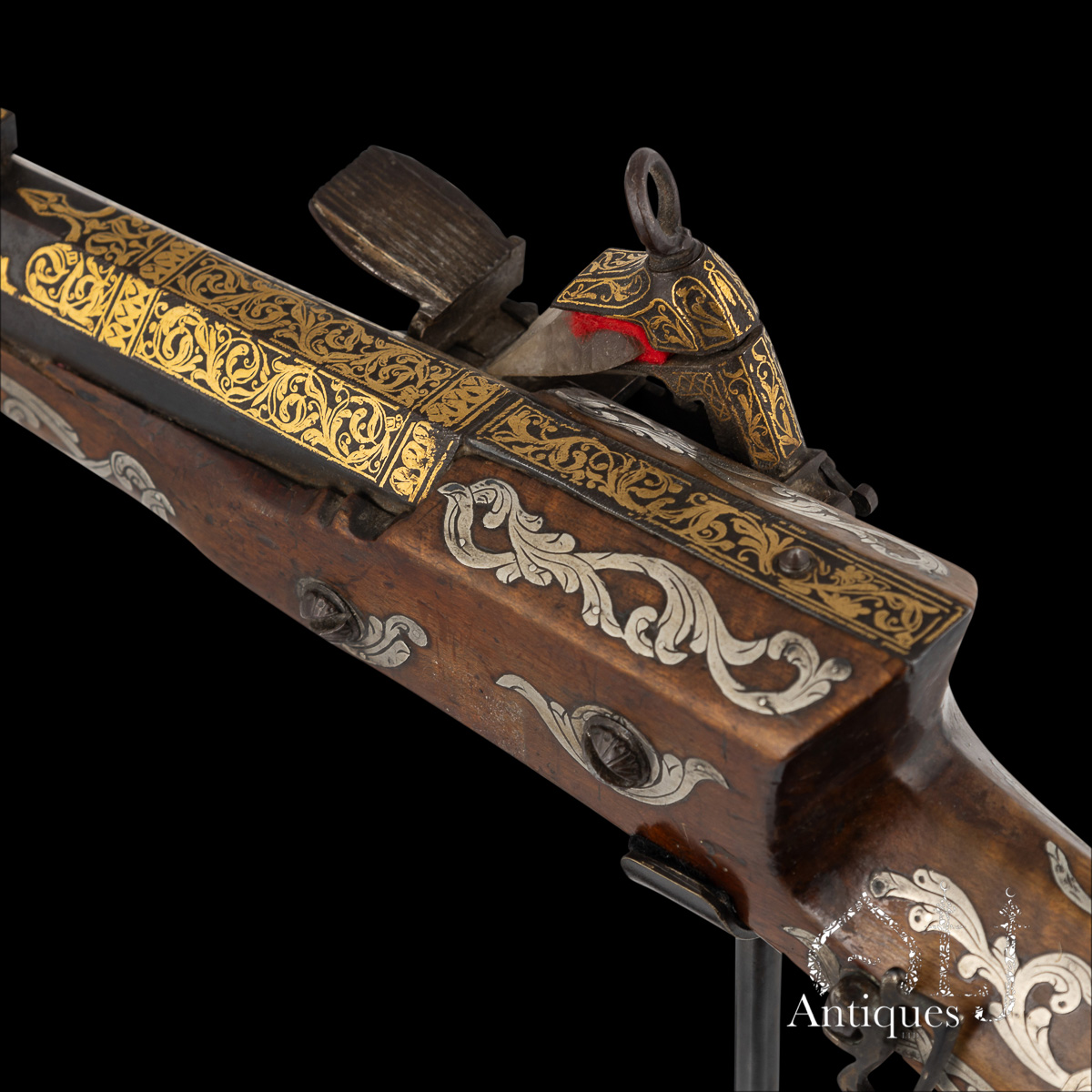
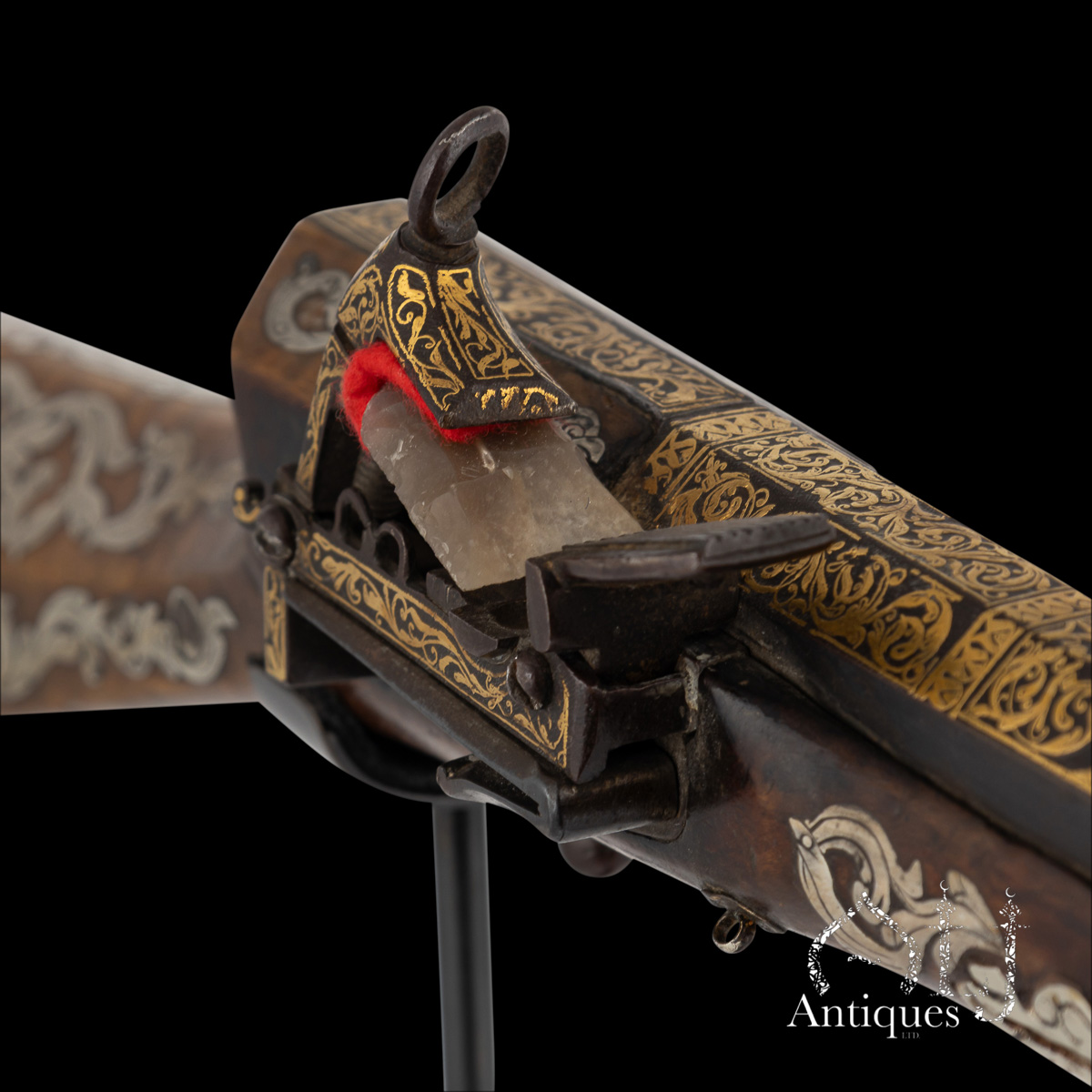
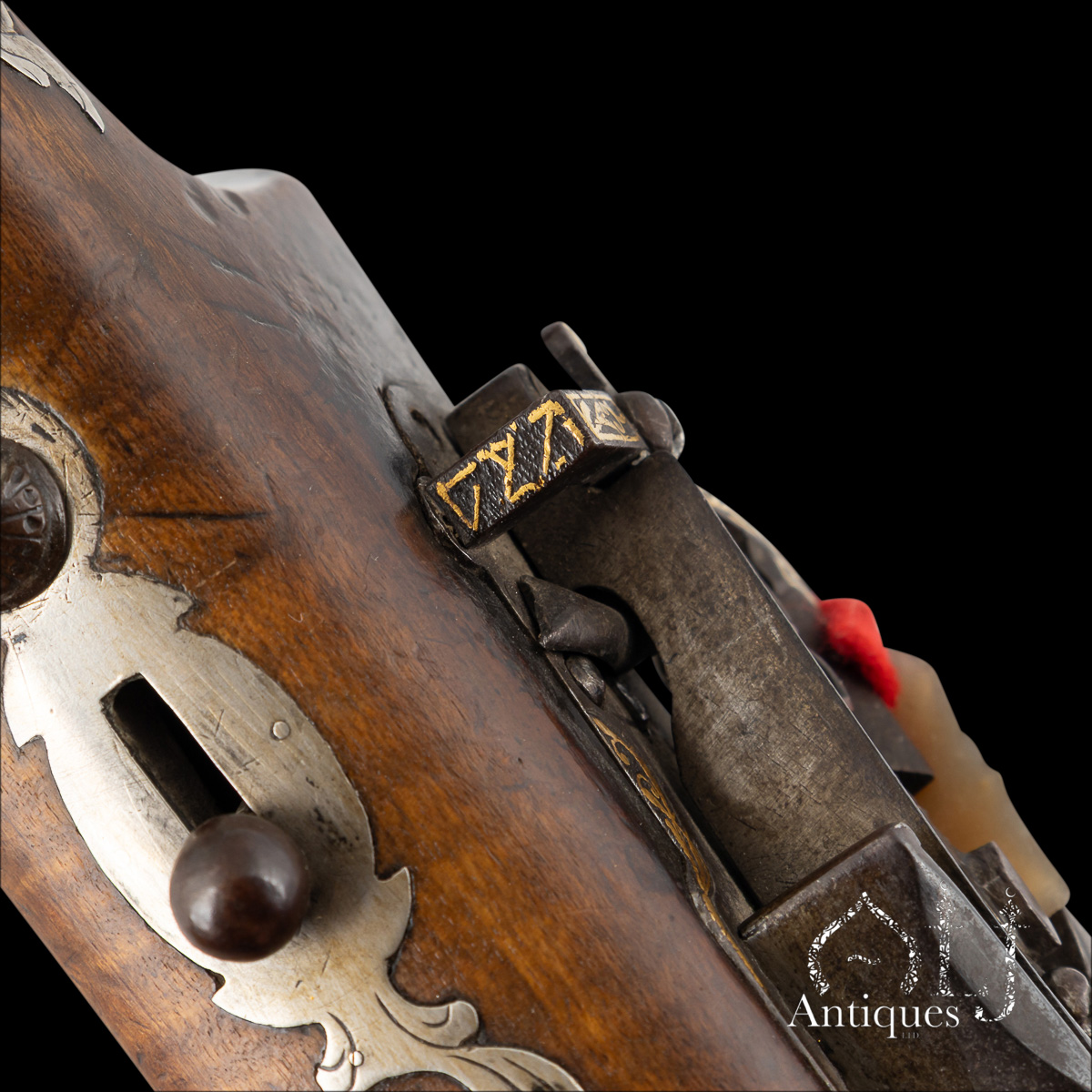
The steel components of the rifle, including the finely faceted hexagonal barrel, are richly decorated with raised high-carat gold damascening executed in the traditional Ottoman koftgari technique, whereby fine gold is hammered into prepared surfaces of steel. The gold ornamentation stands slightly proud of the surface, forming intricate scrolling vegetal and geometric designs typical of Ottoman decorative metalwork. Significantly, the damascened ornament extends even to the underside of the firearm, where decoration appears on surfaces normally concealed during use. Such an extraordinary level of embellishment strongly suggests that the rifle was produced not as a purely utilitarian weapon but as a prestige object, most likely commissioned for a wealthy patron or a high-ranking figure within the Ottoman courtly or military elite.
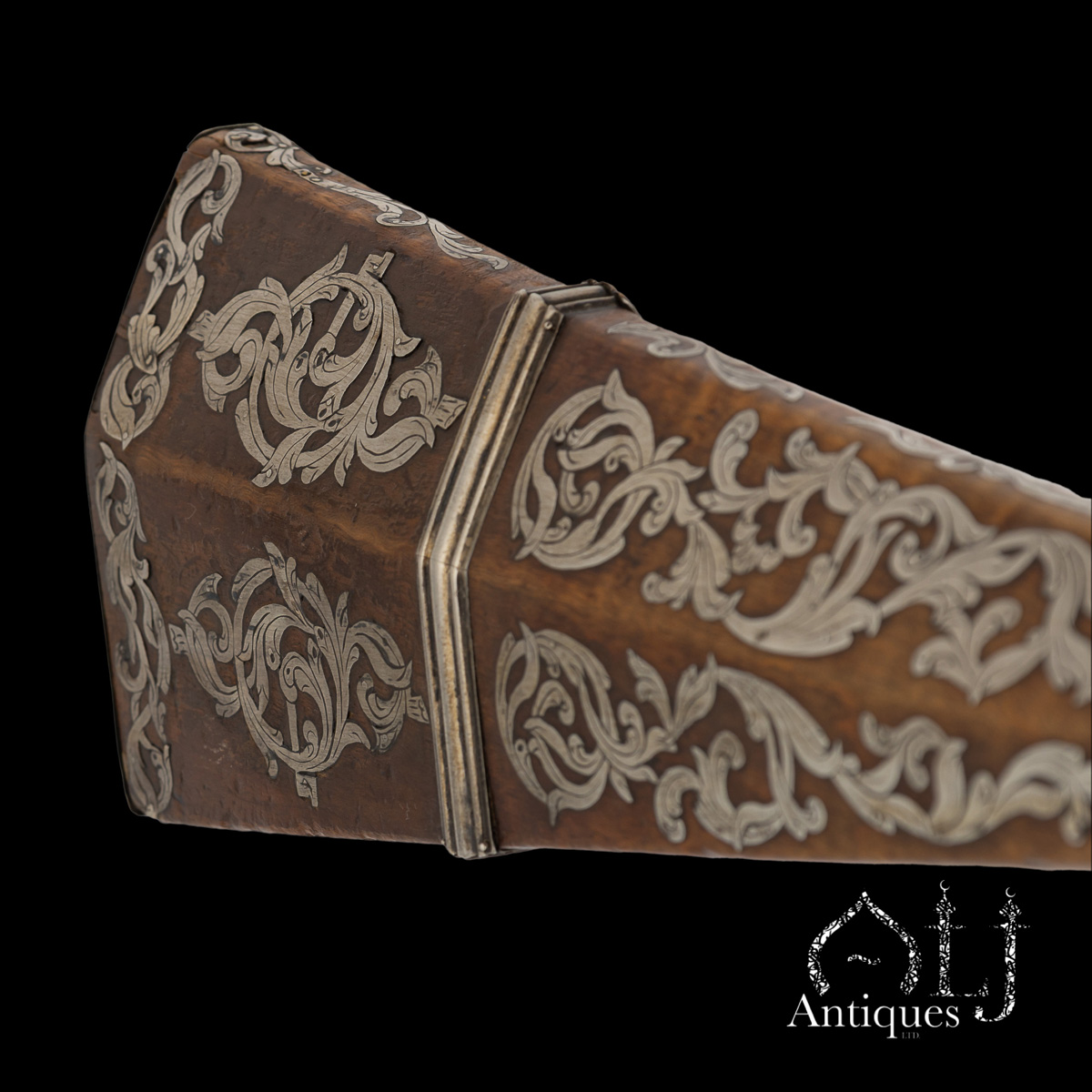
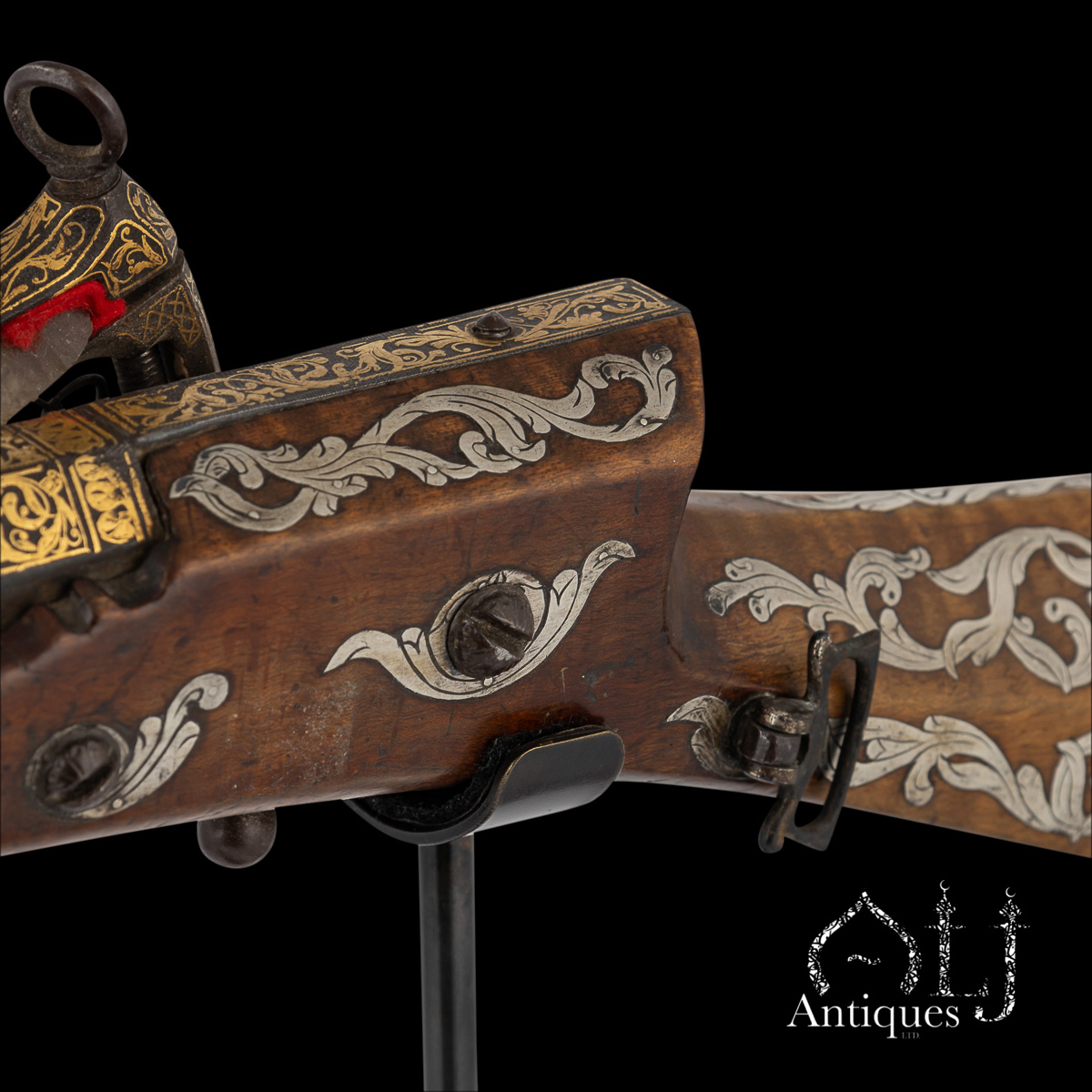
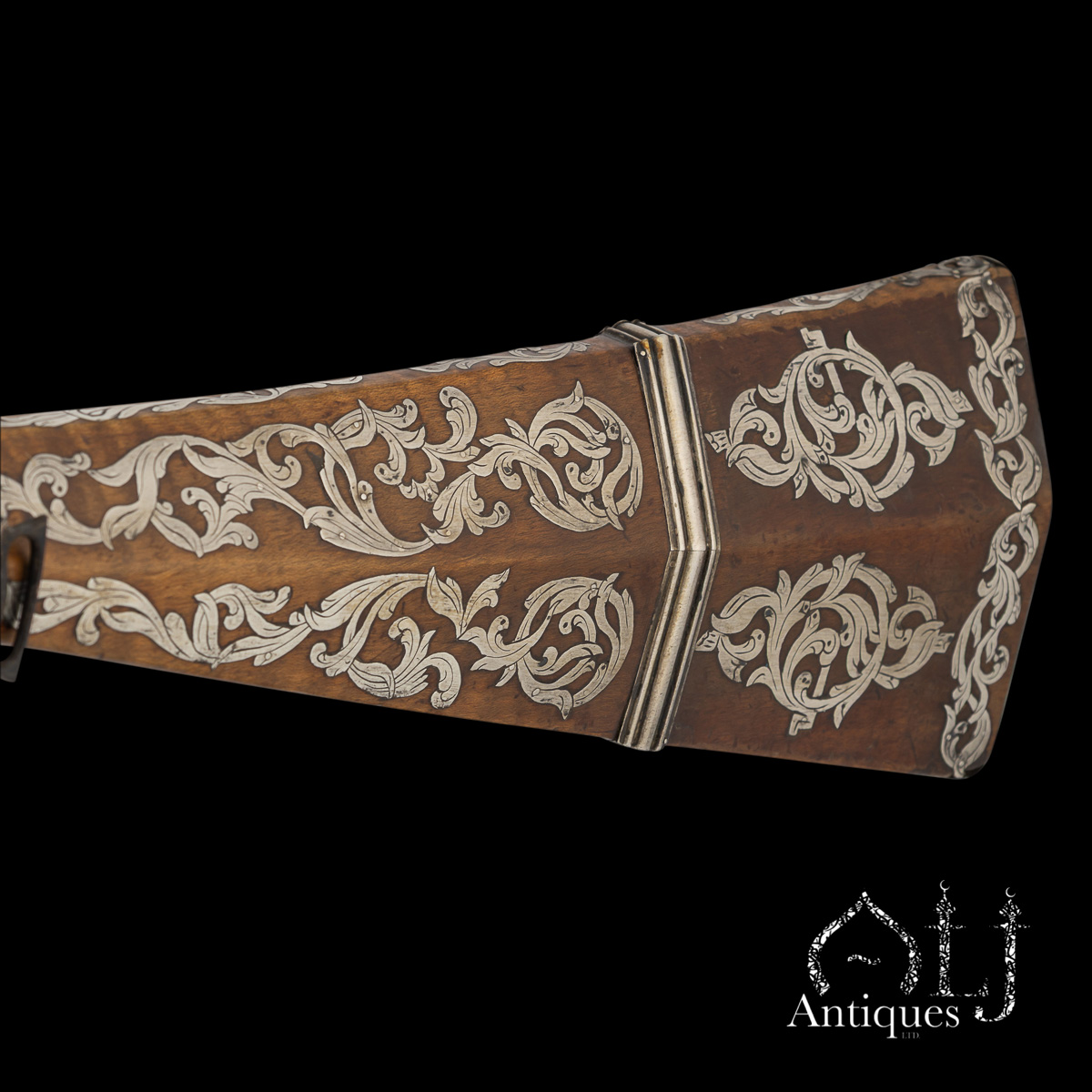
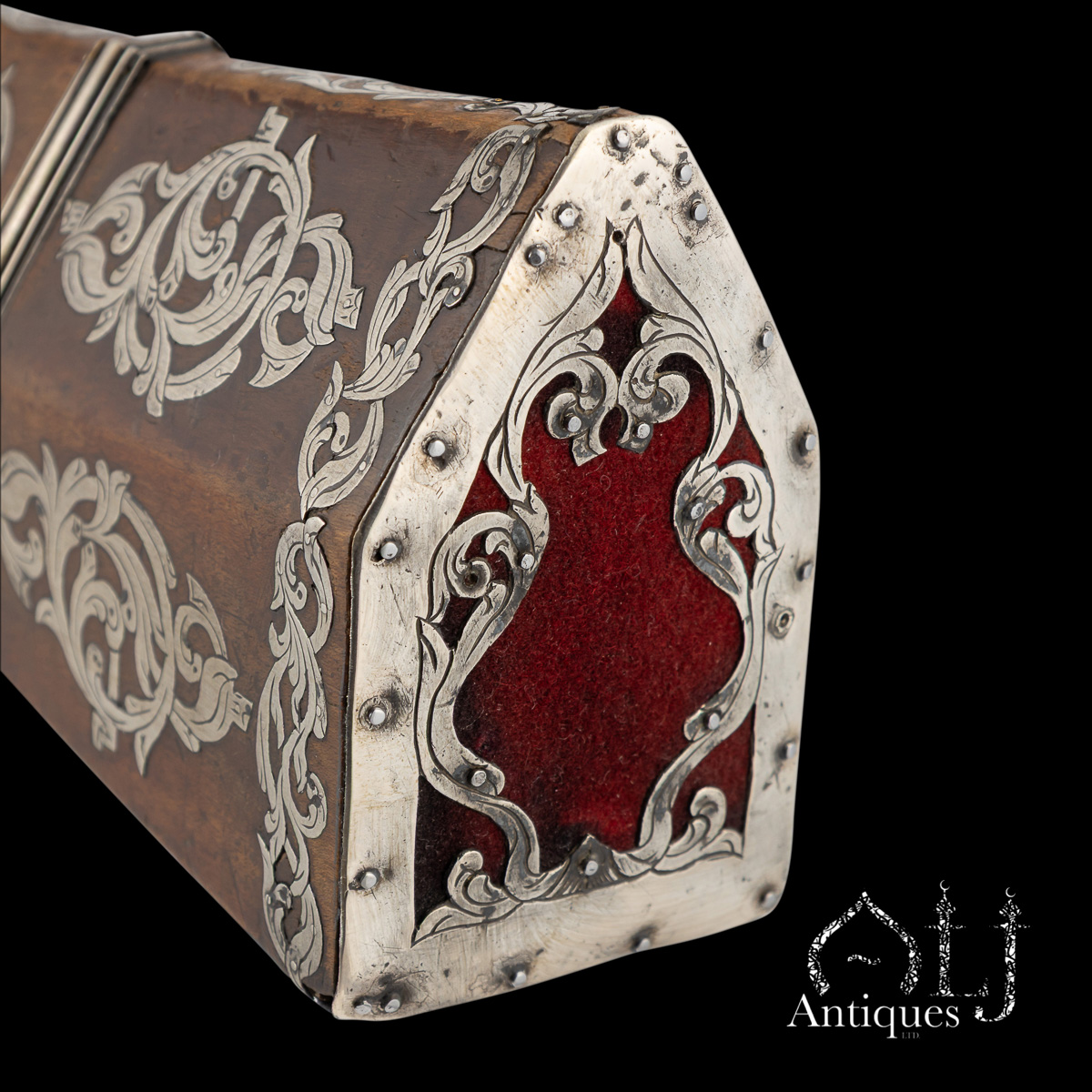
The rifle is mounted with a dark hardwood stock of characteristic Ottoman form terminating in a distinctive faceted pyramidal butt. The lower section forms a square base while the upper surfaces taper into triangular facets, creating a multi-sided geometric termination typical of firearms produced in the Balkan regions of the Ottoman Empire.
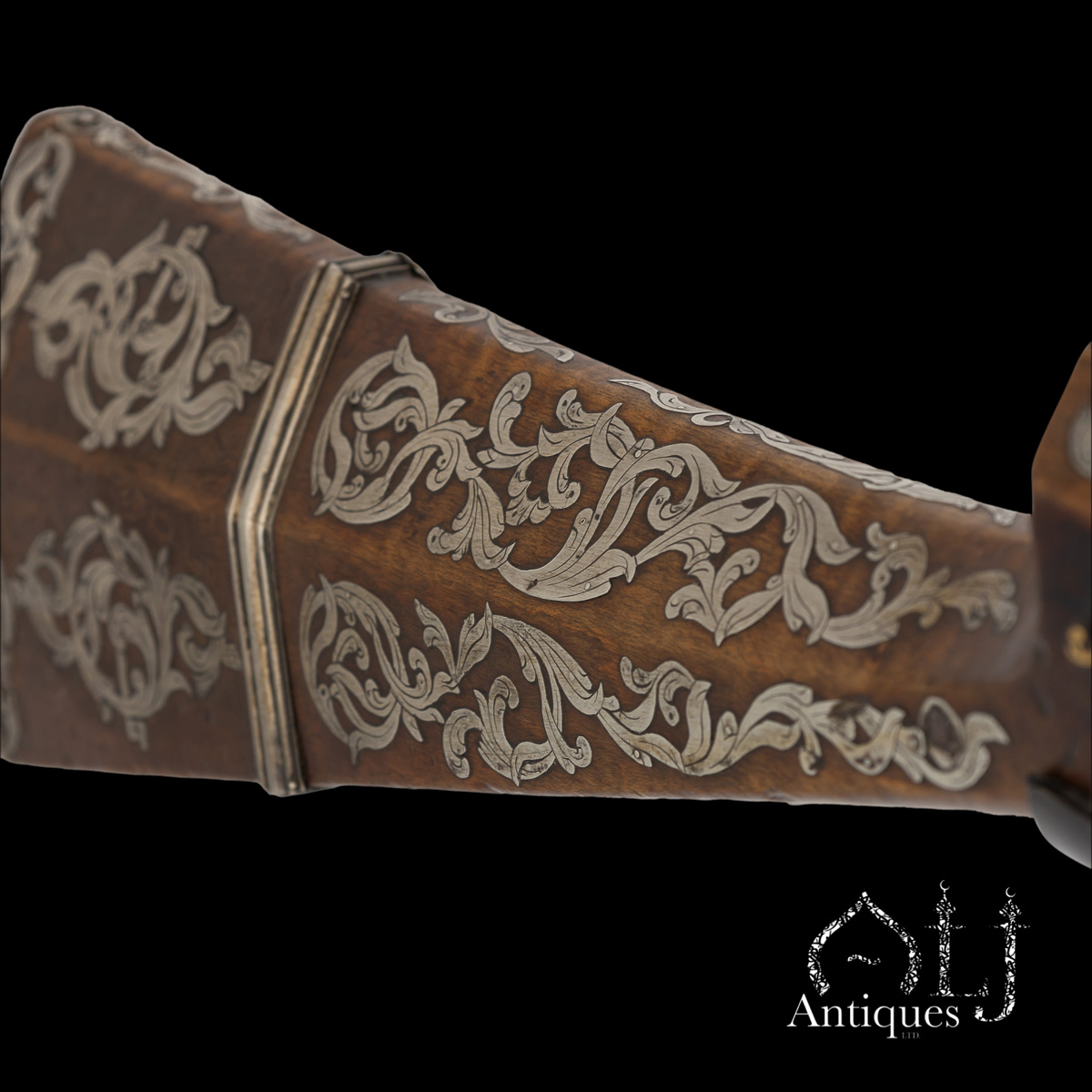
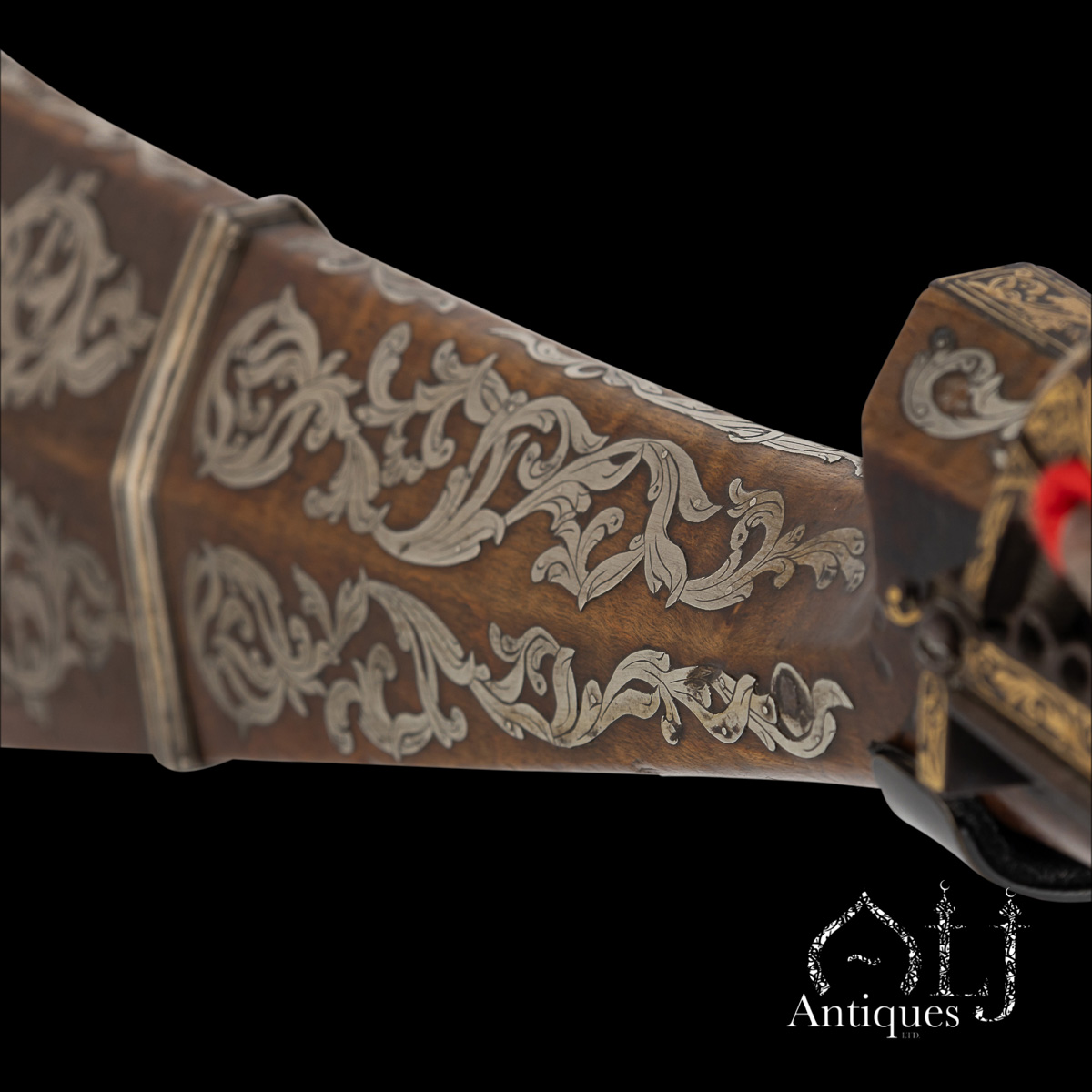
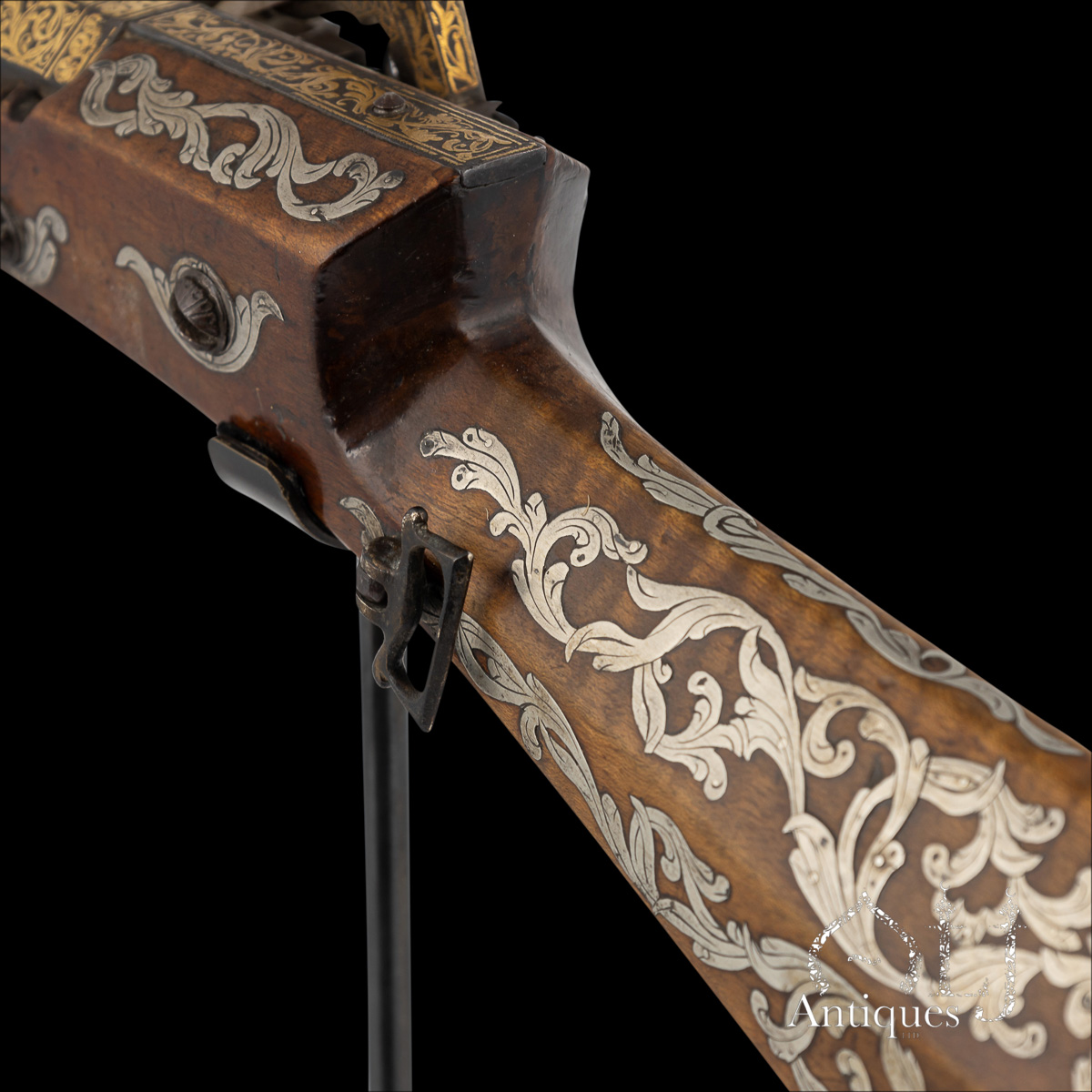
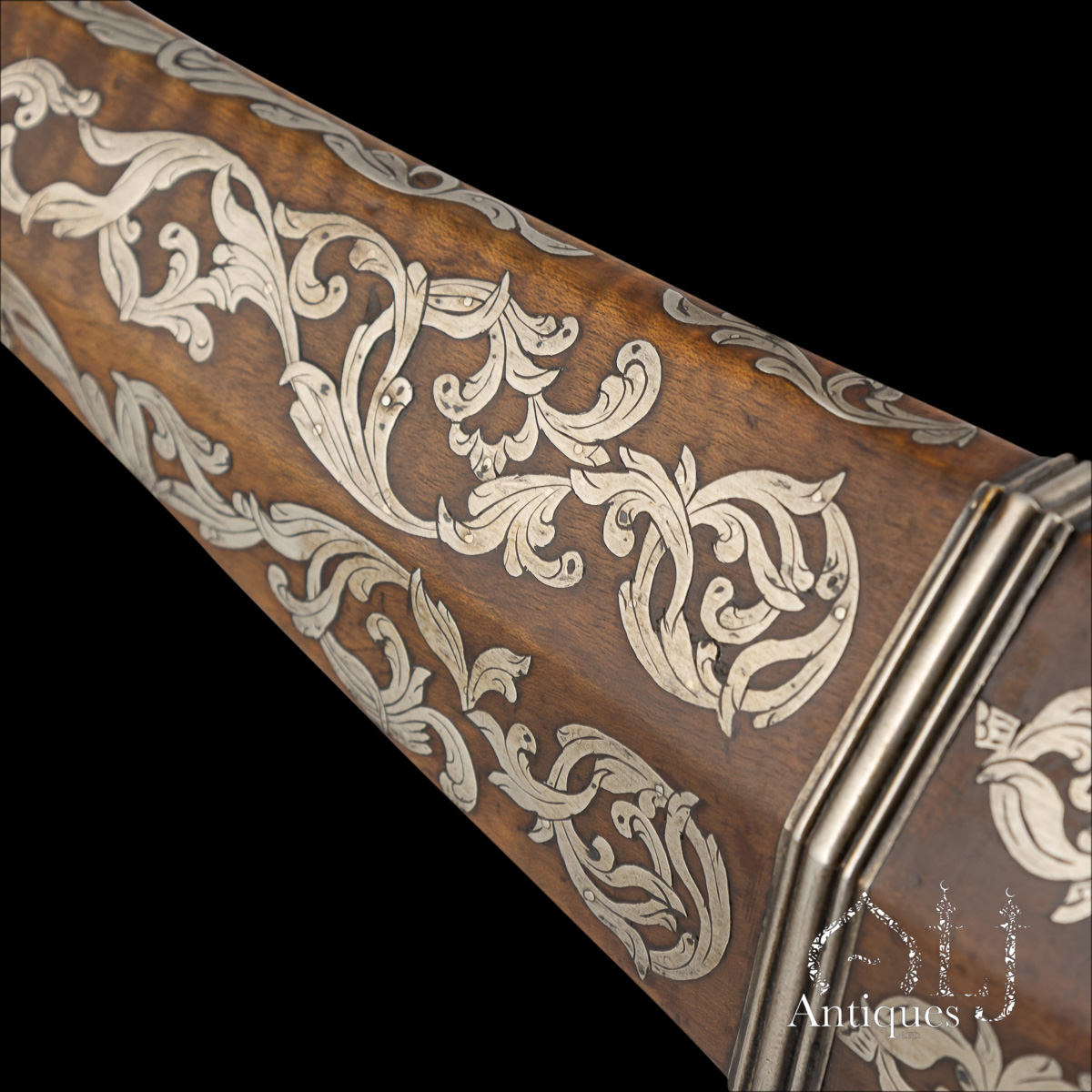
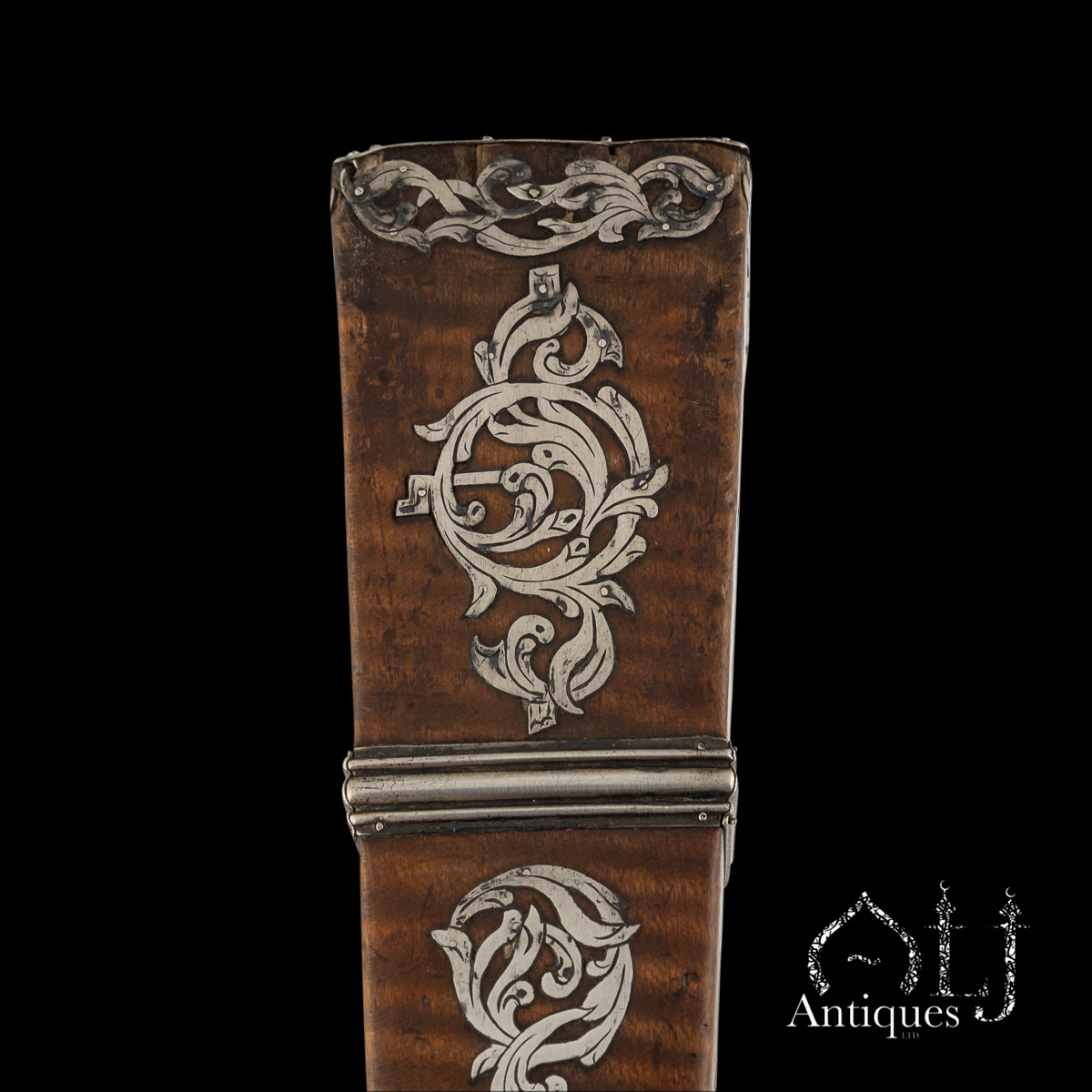
The wooden surfaces are further enriched with finely engraved silver mounts and plaques inset flush into the stock. Each plaque bears delicate arabesque and vegetal ornament characteristic of Ottoman decorative design. These mounts were crafted and engraved by a silversmith and then carefully recessed into the wood so that their surfaces sit level with the surrounding stock. They are secured with extremely fine white-metal pins, likely silver or finely finished steel, reflecting the precision and care involved in the firearm’s construction.
Encircling the faceted butt is a continuous silver band resembling a bracelet or chain that follows the geometry of the stock and visually unifies the decorated surfaces. Each facet incorporates cartouche-shaped silver panels engraved with delicate floral ornament, while additional dividing bands extend along the sides of the stock carrying elongated vegetal motifs. Even the functional elements display decorative refinement, with screws and structural fittings mounted within small silver settings shaped as floral or leaf-like forms.
The rear of the butt is framed by a silver mount with confronted openwork arabesque ornament, beneath which a red textile cushion has been inserted, providing both visual contrast and practical padding when the firearm is braced against the shoulder.
The firearm is fitted with a miquelet lock mechanism, an ignition system that originated in Spain and Italy during the sixteenth century and subsequently spread throughout the Mediterranean world. Such mechanisms became widely adopted within the Ottoman Empire, particularly in the Balkan provinces, where provincial gunsmiths frequently combined European lock mechanisms with Ottoman structural forms and decorative traditions.
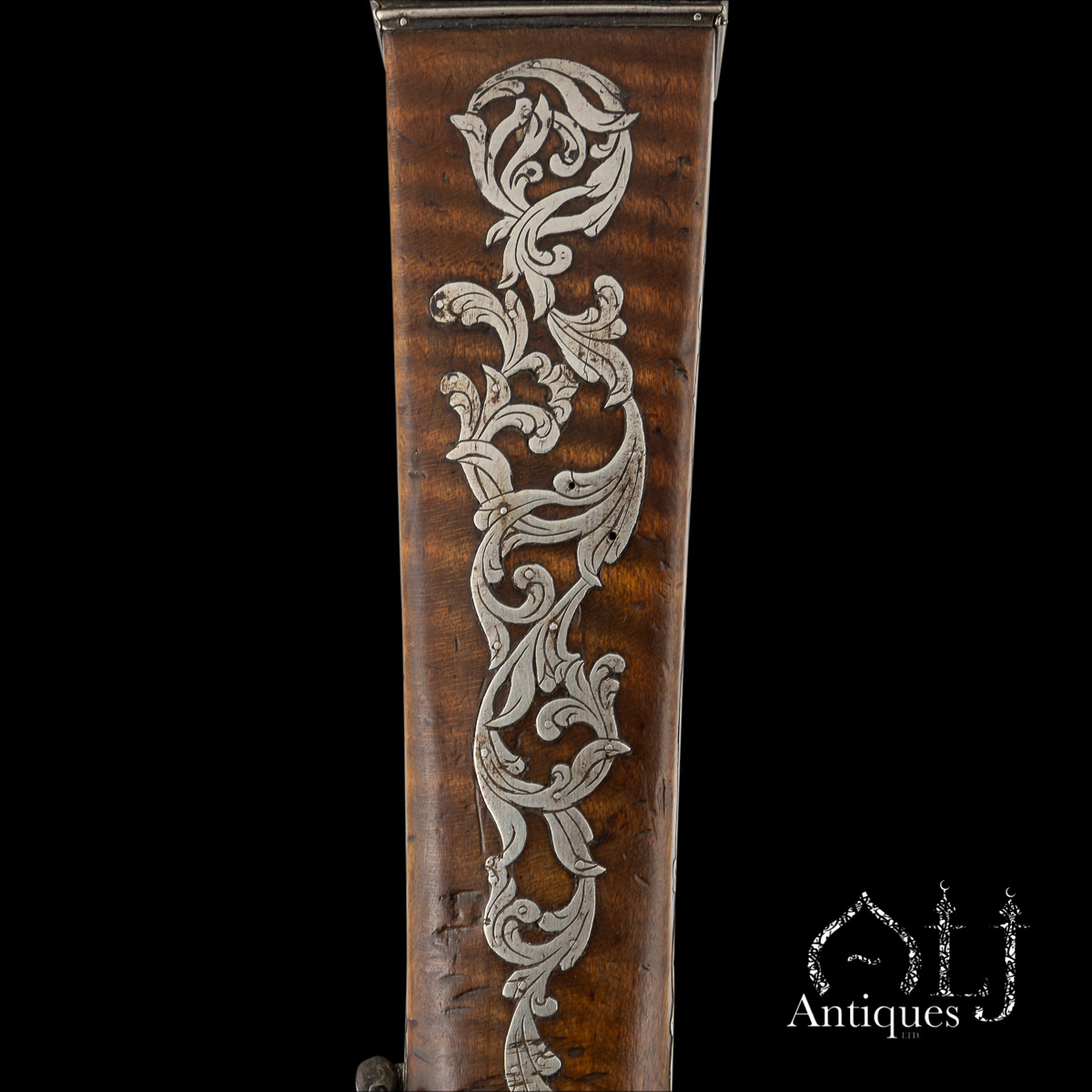
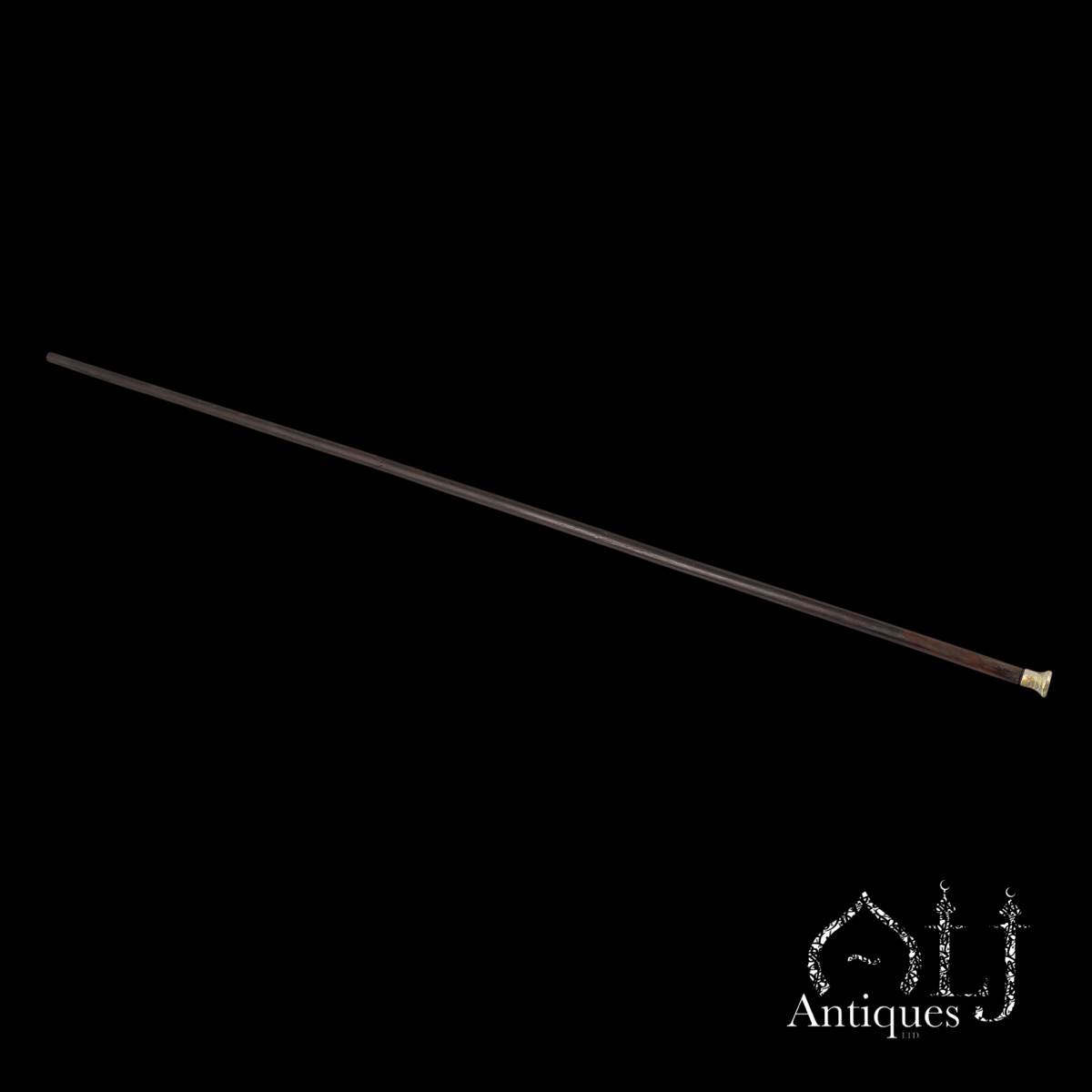
The decorative programme continues along the underside of the stock with additional silver-inlaid arabesque panels, indicating that virtually every visible surface of the firearm was carefully ornamented. The rifle also retains its original wooden ramrod, housed beneath the barrel and terminating in a metal-mounted head used for loading and cleaning.
Measuring only 76 cm in length, the firearm is notably shorter than most Ottoman rifles of the Şişhane or Boyliya tradition, which typically range between 100 and 140 cm. Its compact proportions suggest that it represents a rare carbine variant of the Ottoman tüfek, possibly intended for mounted use or personal carry.
Such richly ornamented firearms were frequently produced in the Balkan gunmaking centres of the Ottoman Empire, where skilled provincial workshops—particularly in regions such as Bosnia, Albania, Macedonia, and Bulgaria—developed a distinctive tradition that combined European lock mechanisms with Ottoman decorative aesthetics, including silver-mounted stocks and gold-damascened steel barrels.
The combination of raised gold-damascened steel surfaces, finely inset engraved silver mounts, a fabric-cushioned faceted butt, and a Mediterranean-derived miquelet lock mechanism reflects the sophisticated craftsmanship of Ottoman provincial gun-making. The rifle stands as a refined example of the luxurious decorative firearms created for elite patrons within the Ottoman Empire at the turn of the nineteenth century.