Description
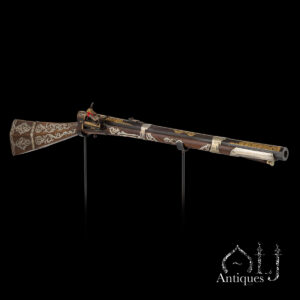
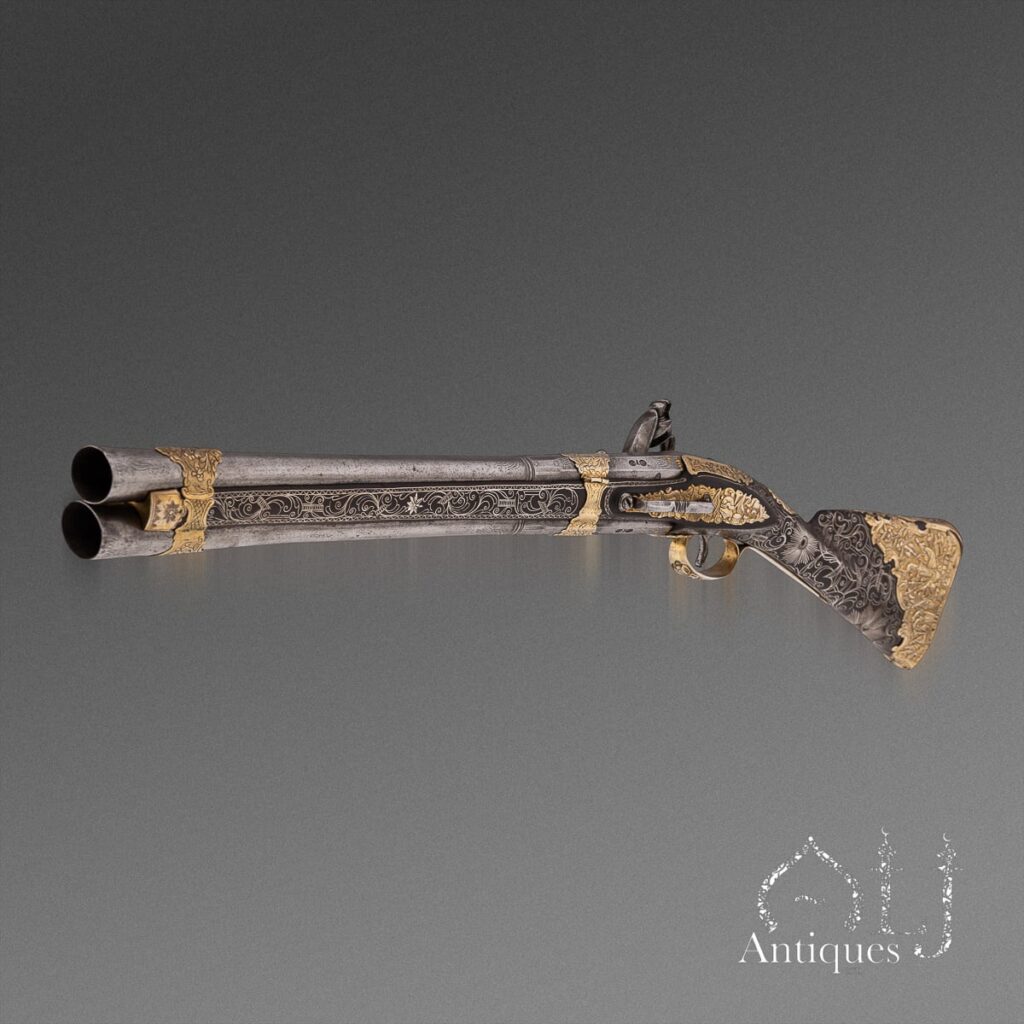
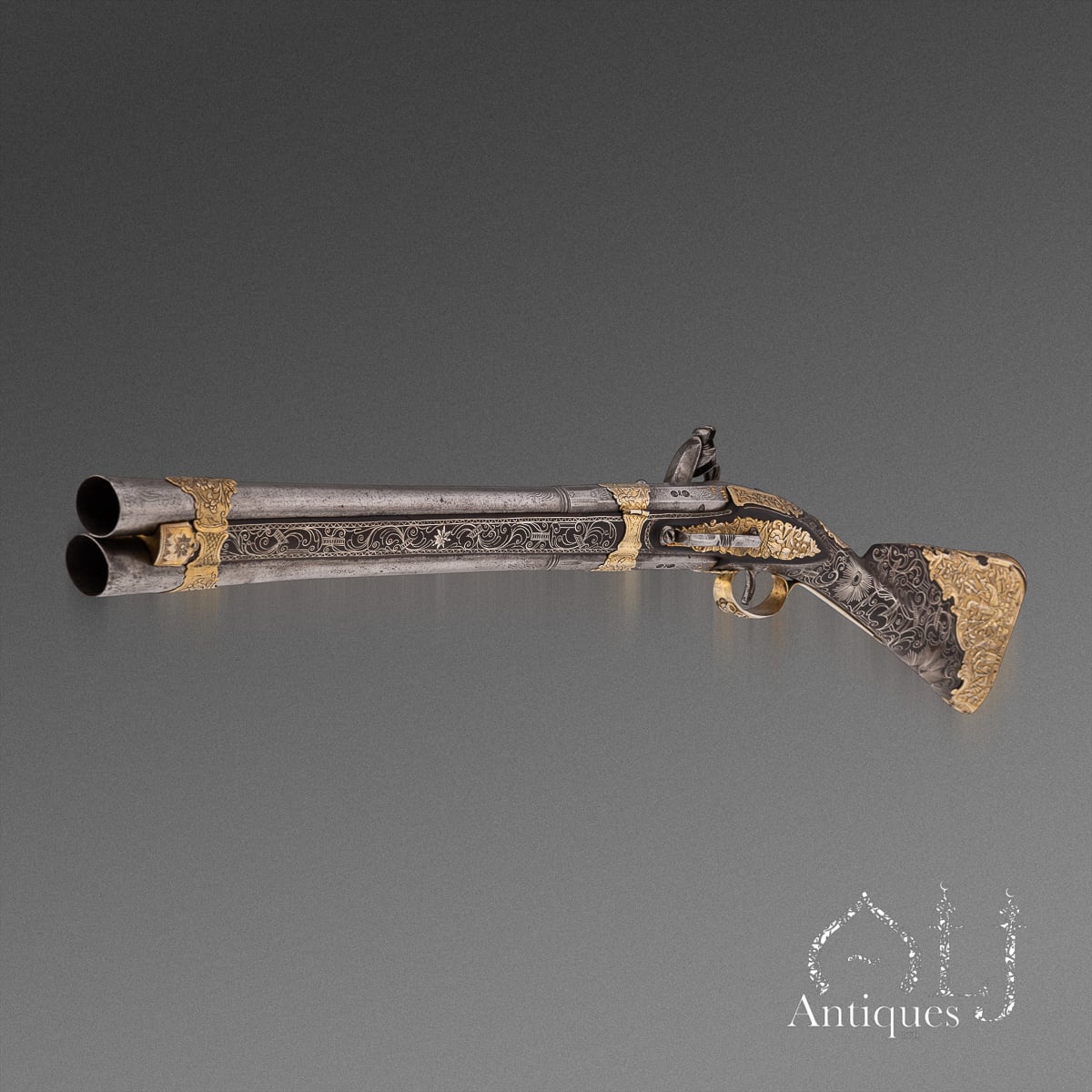
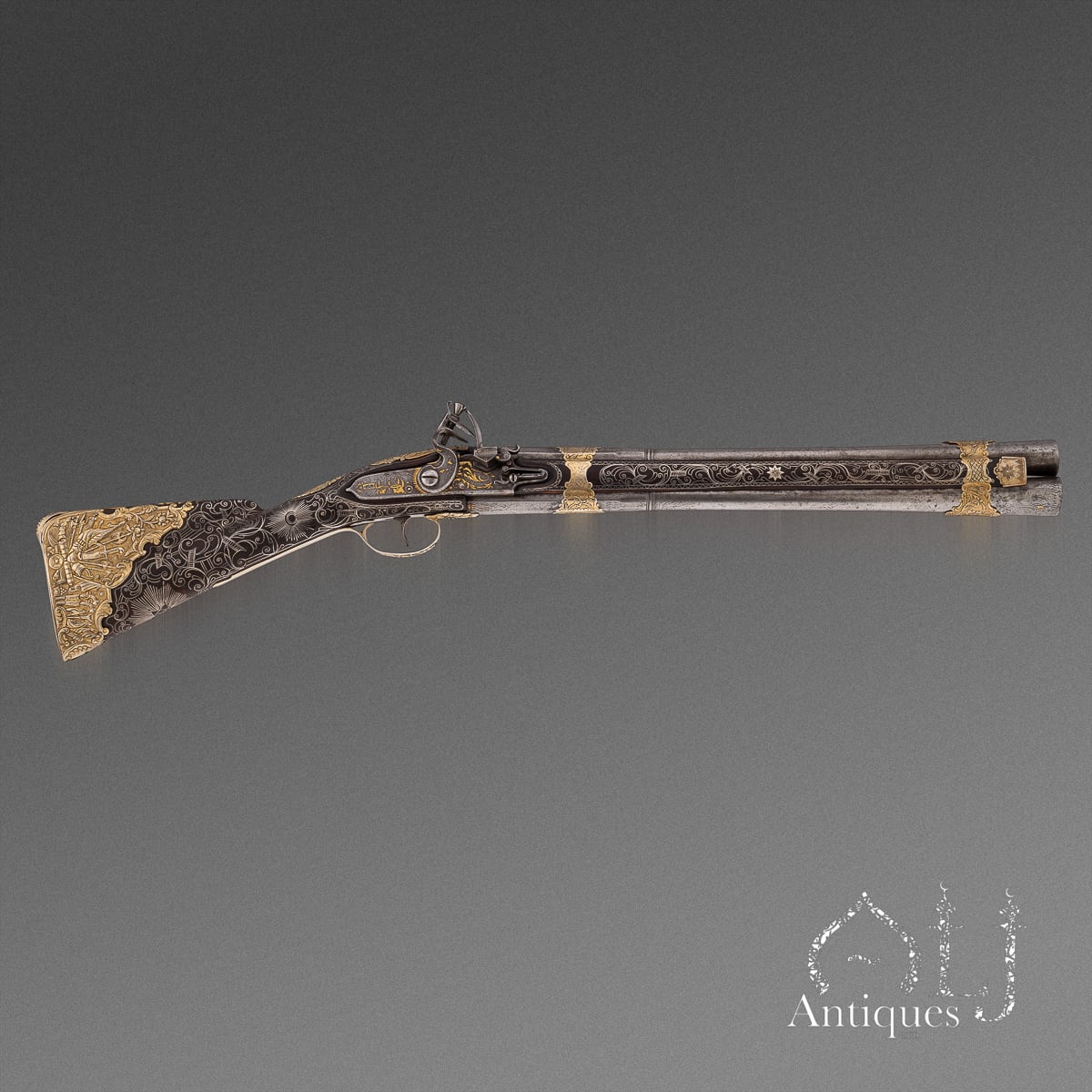
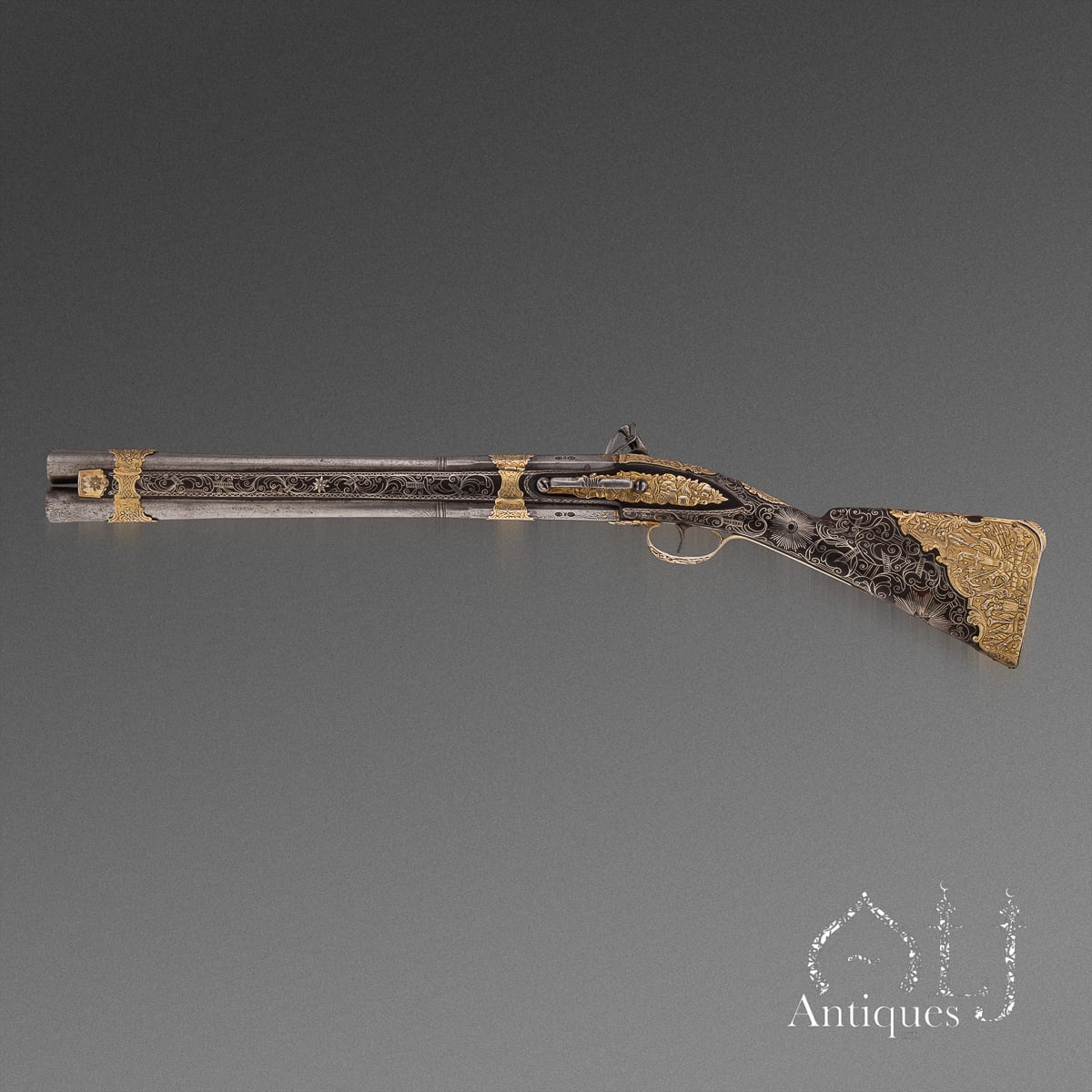
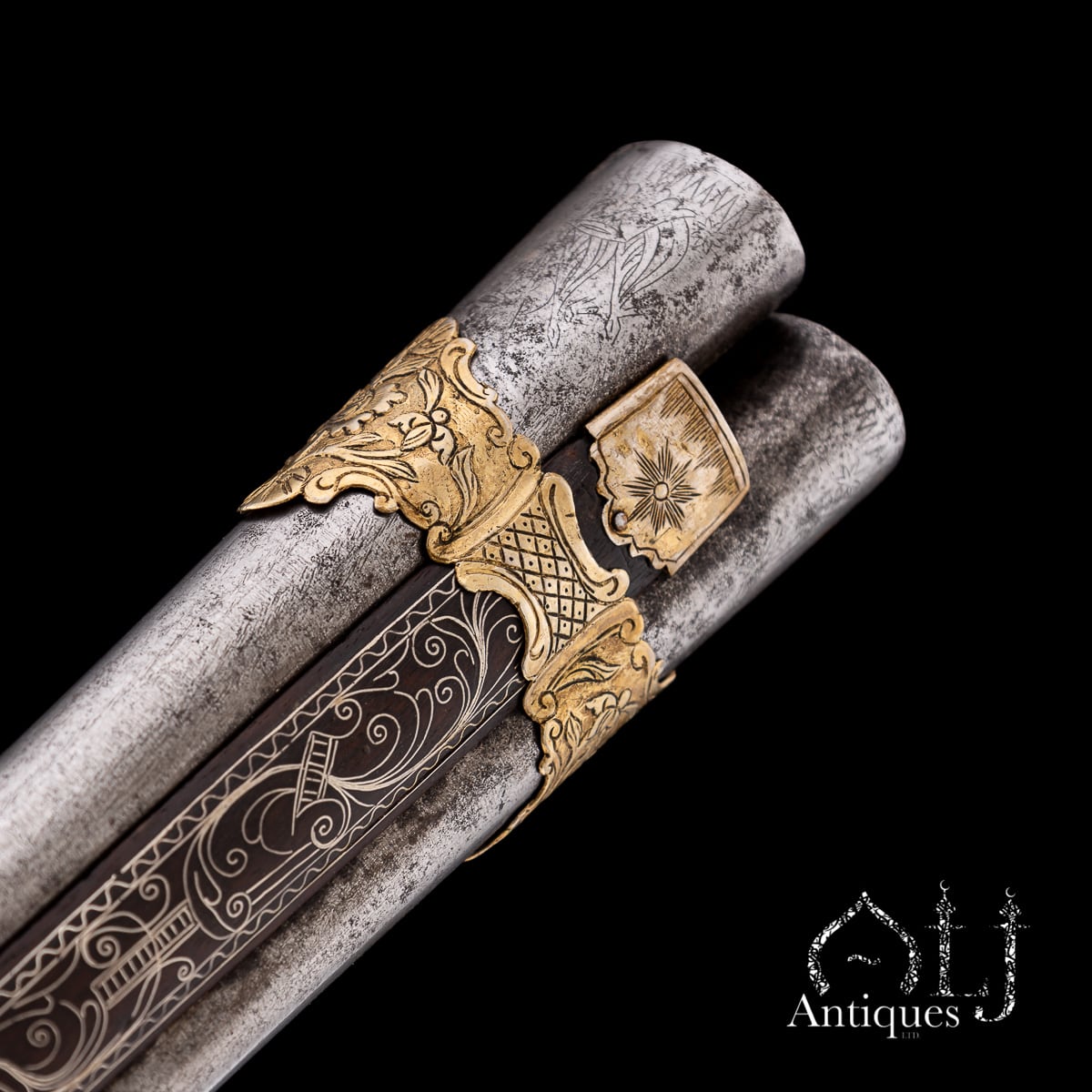
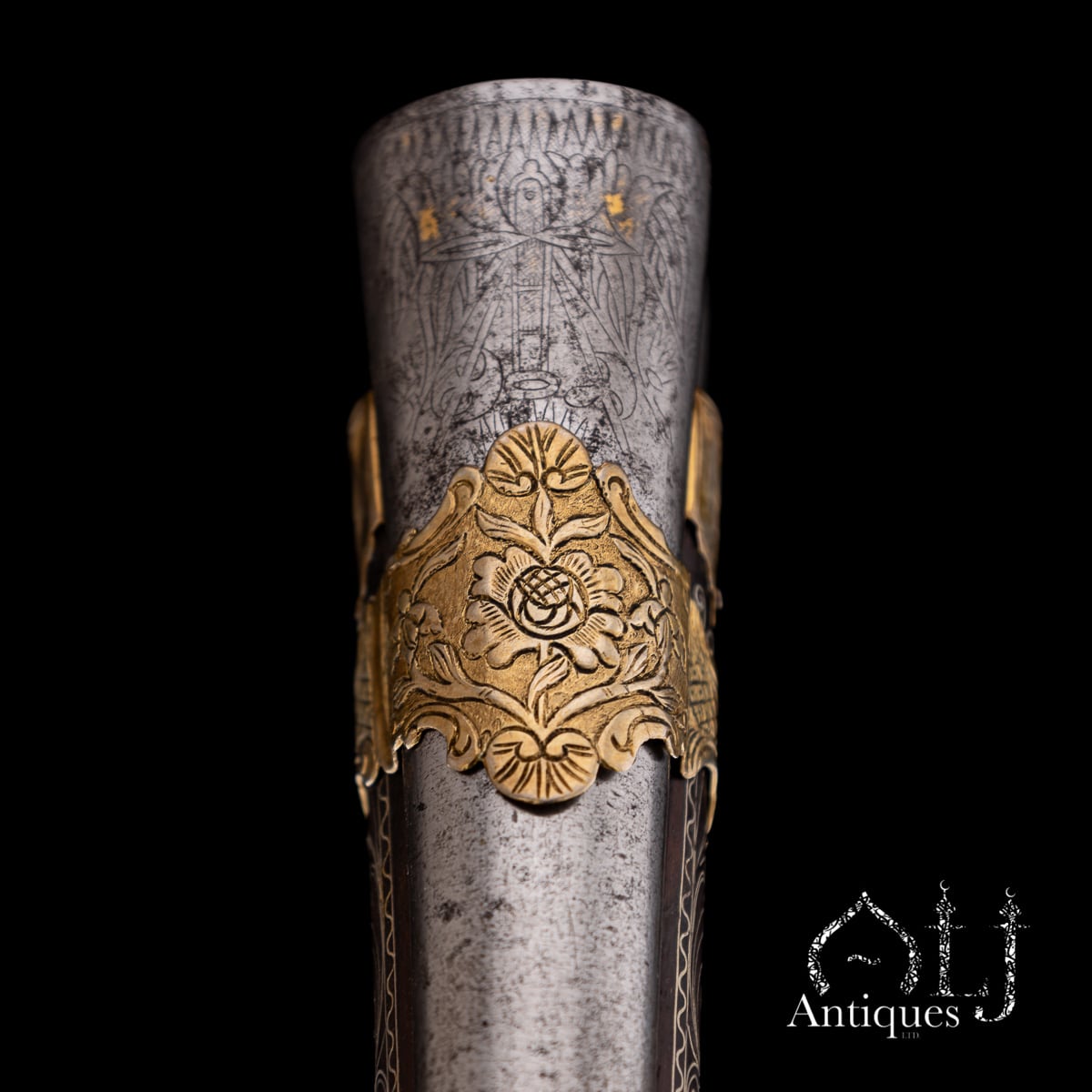
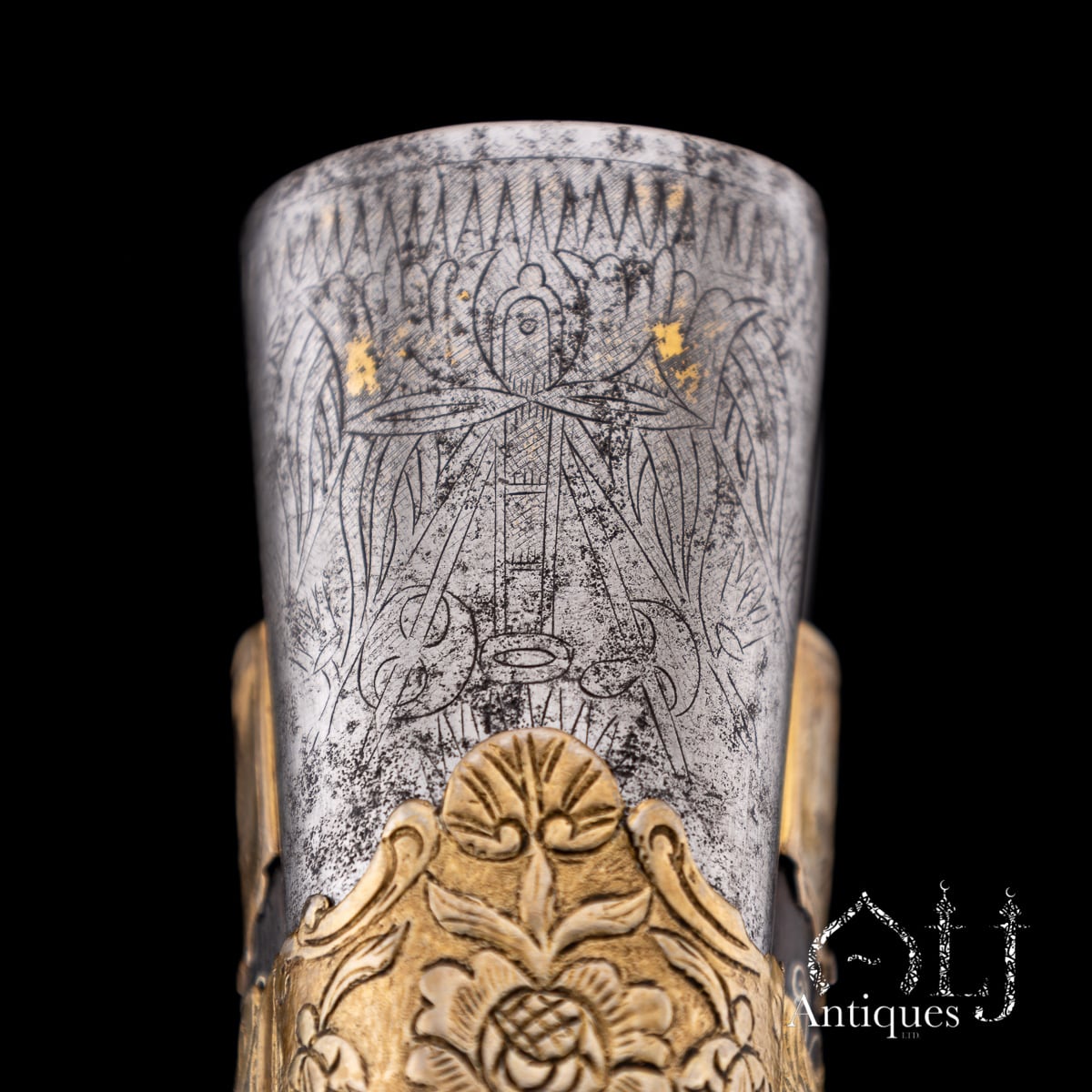
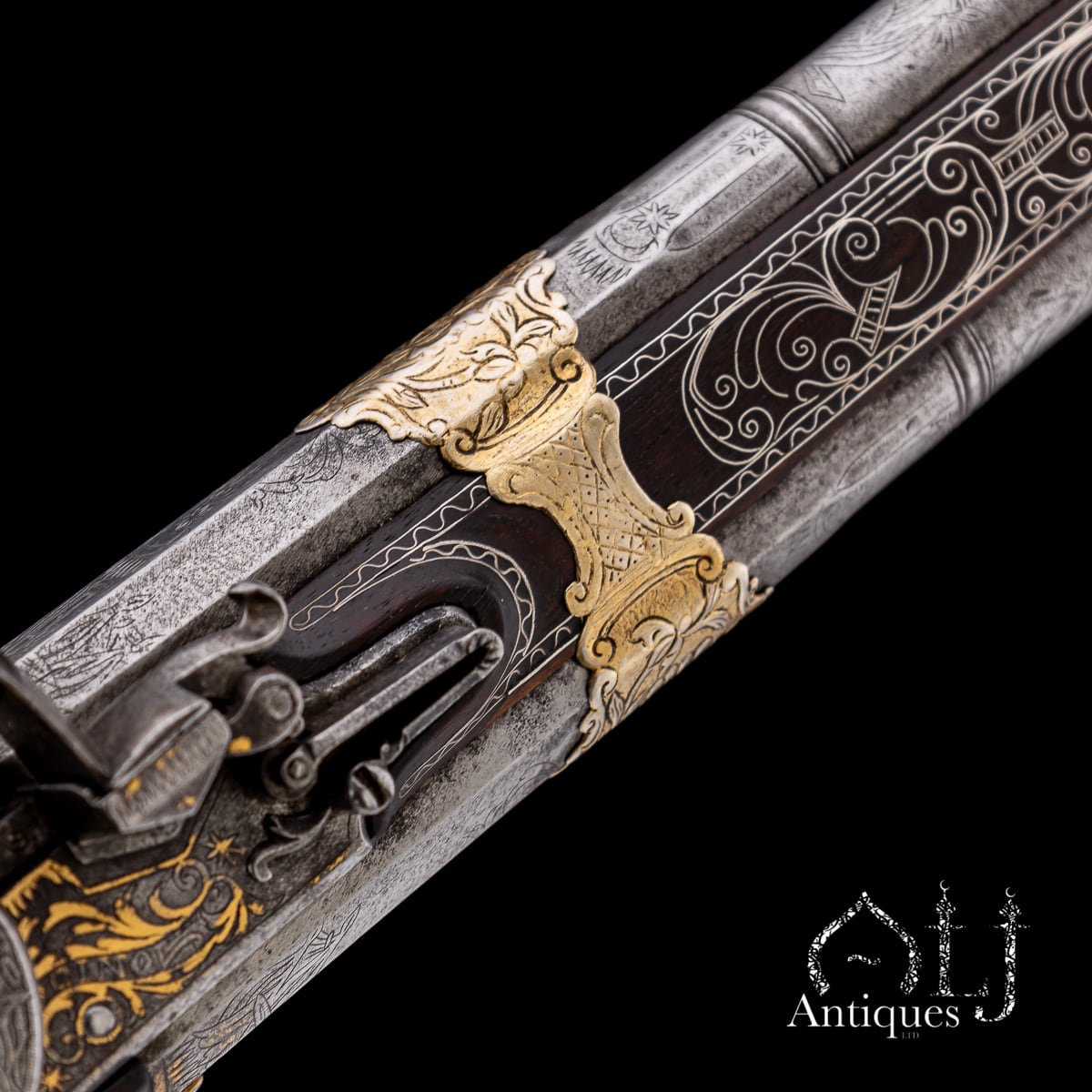
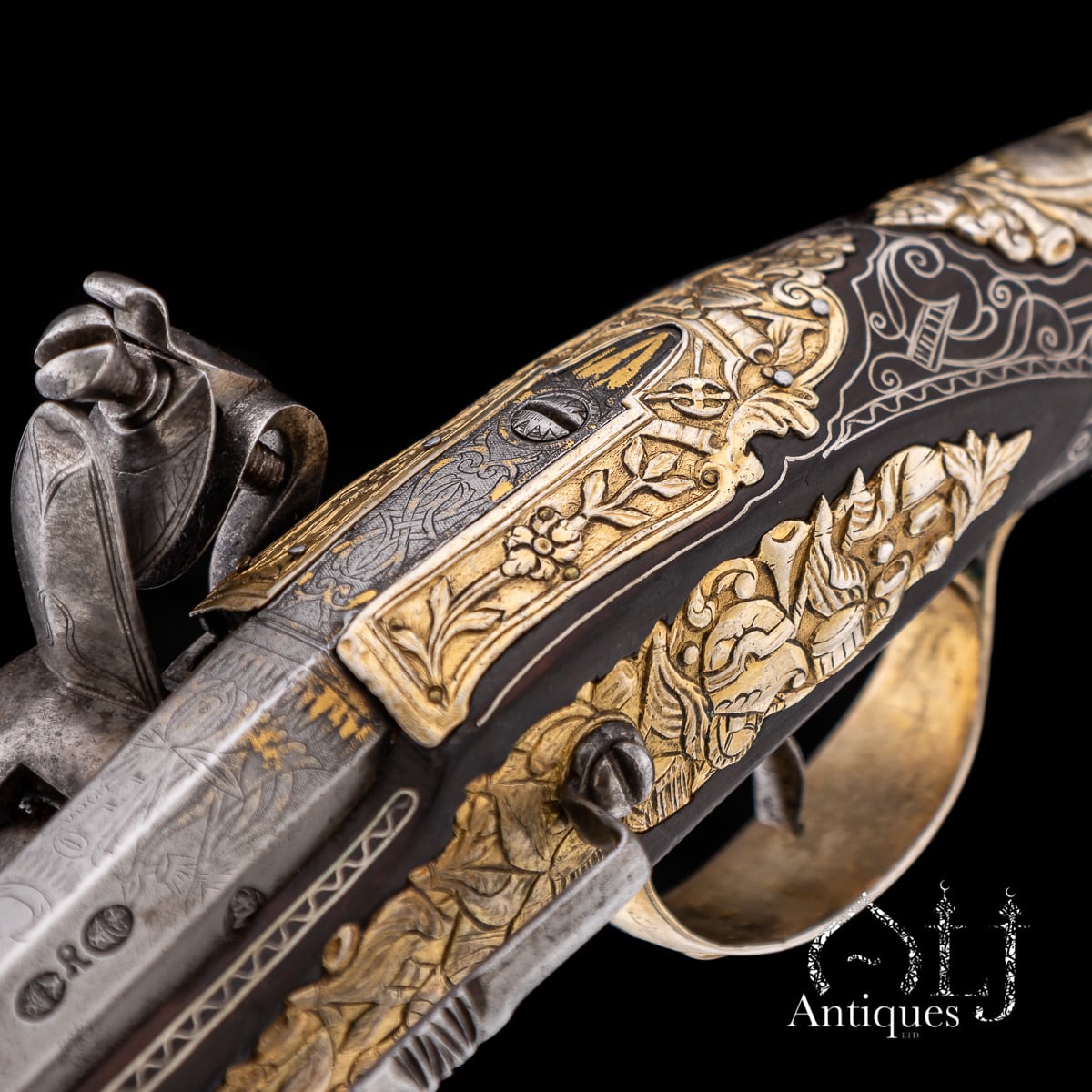
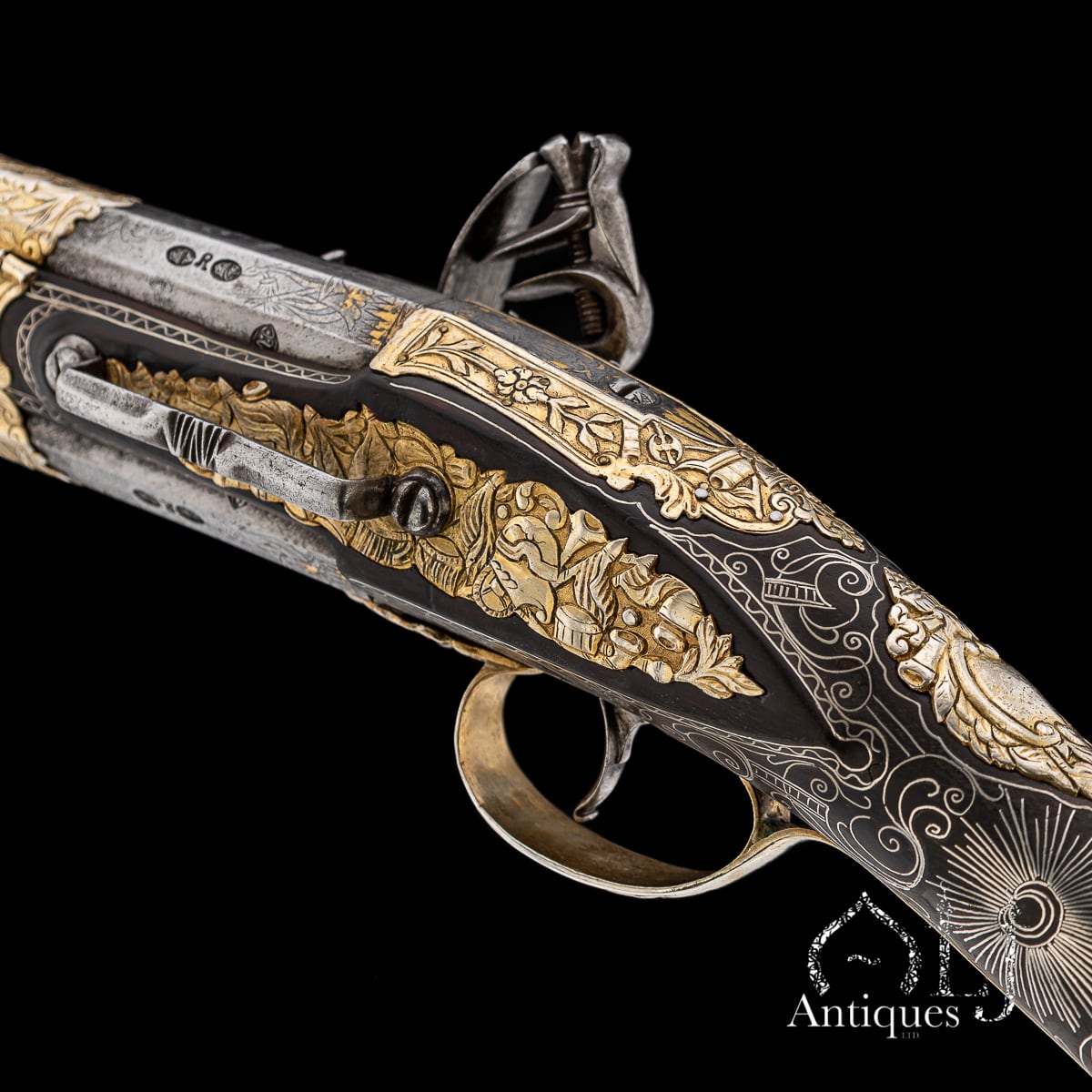
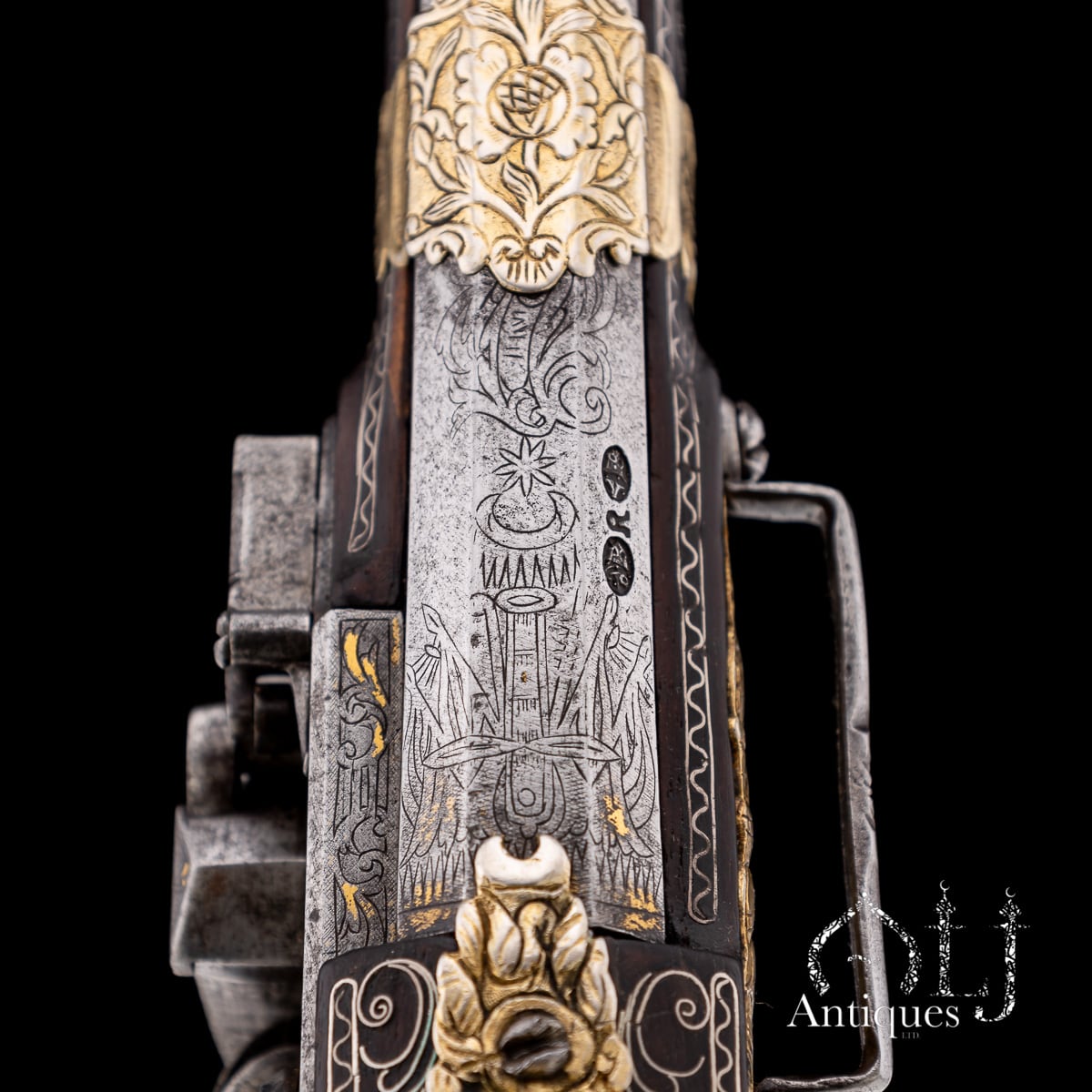
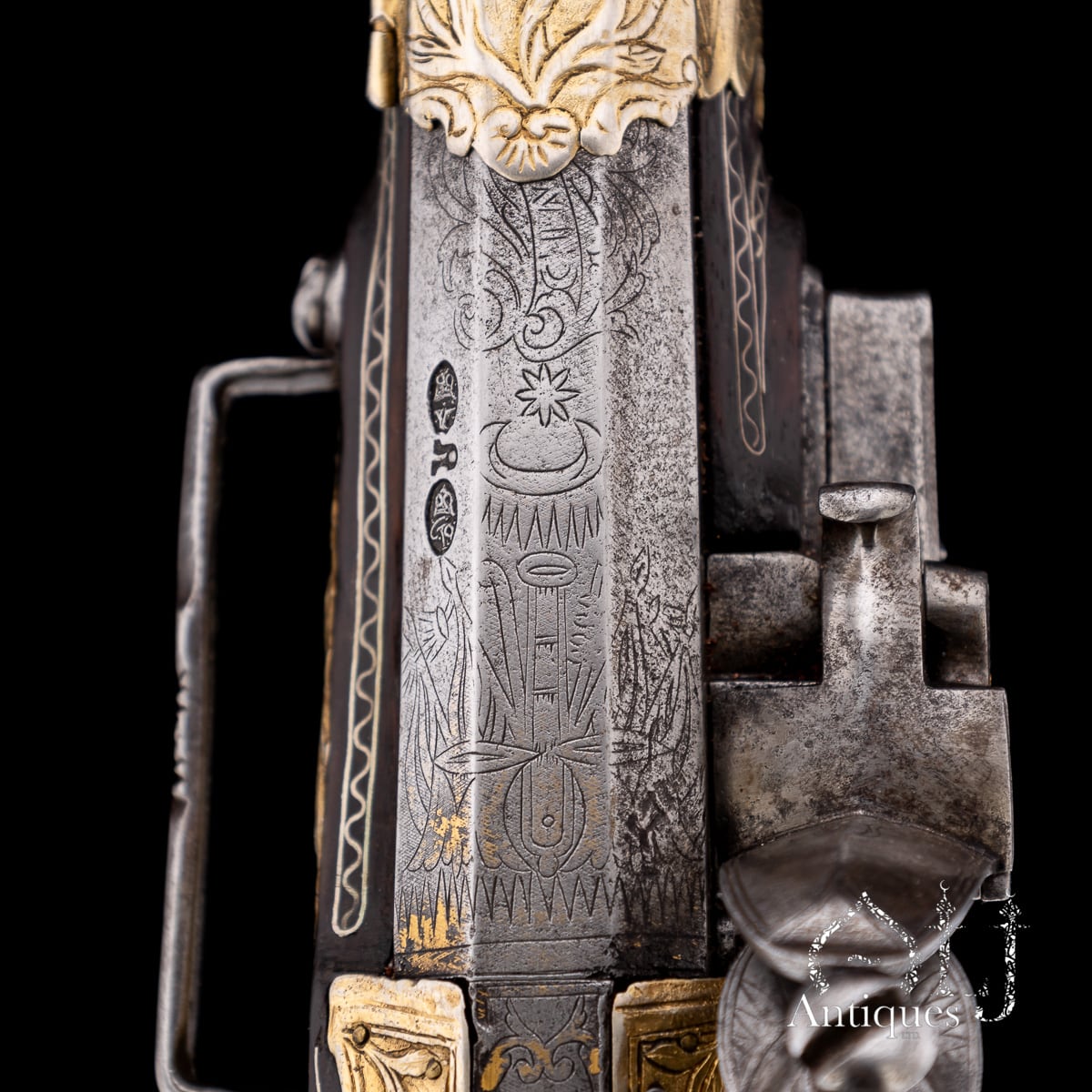
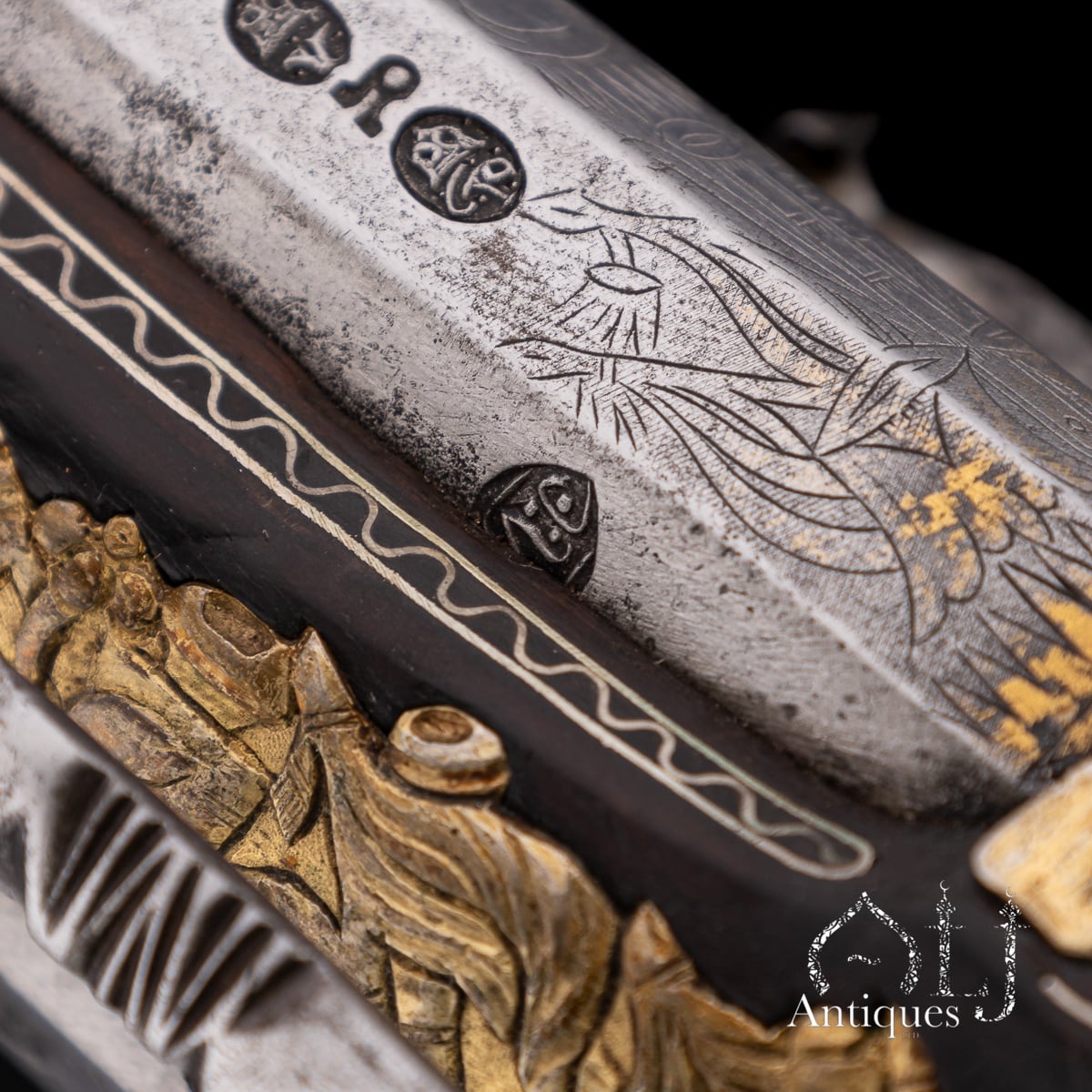
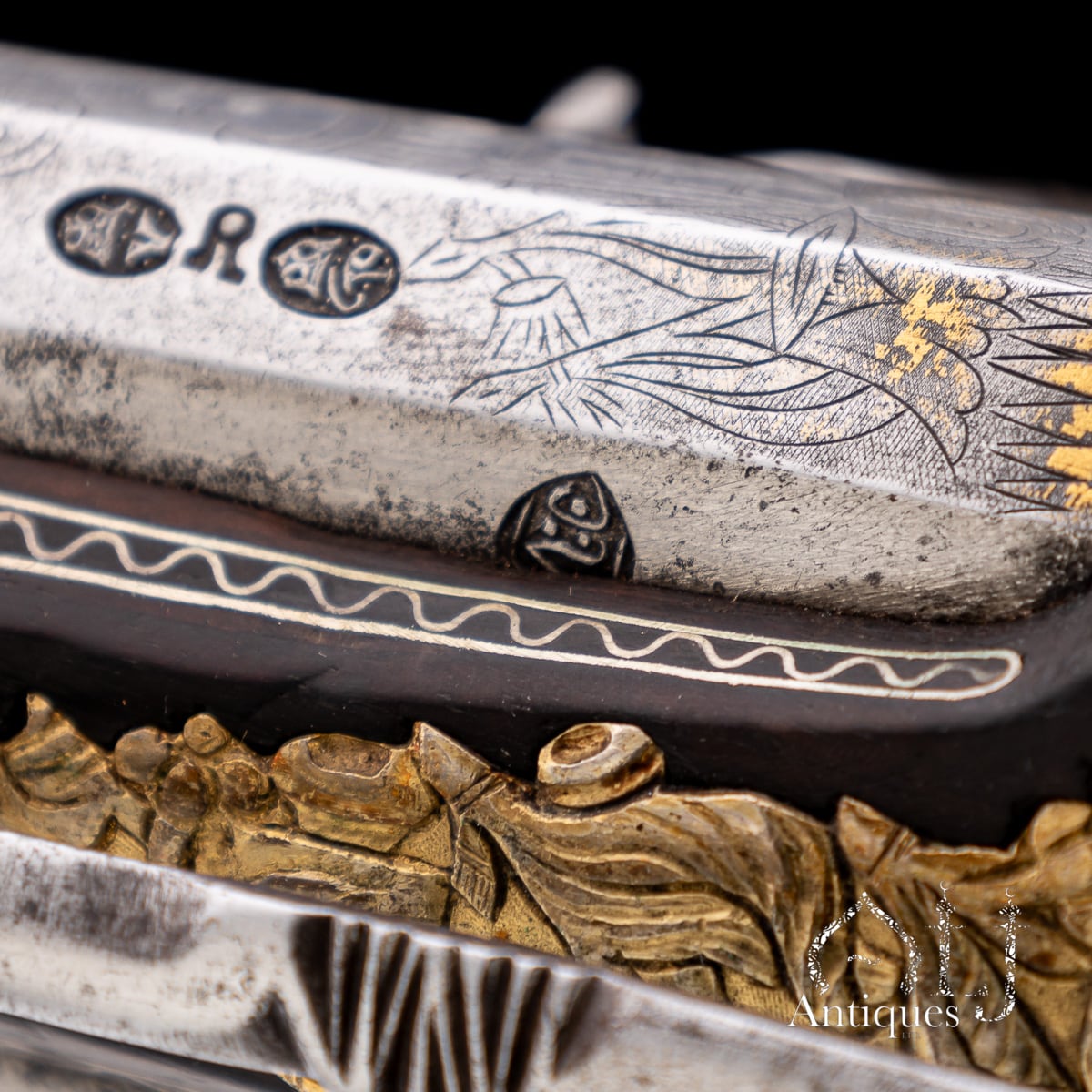
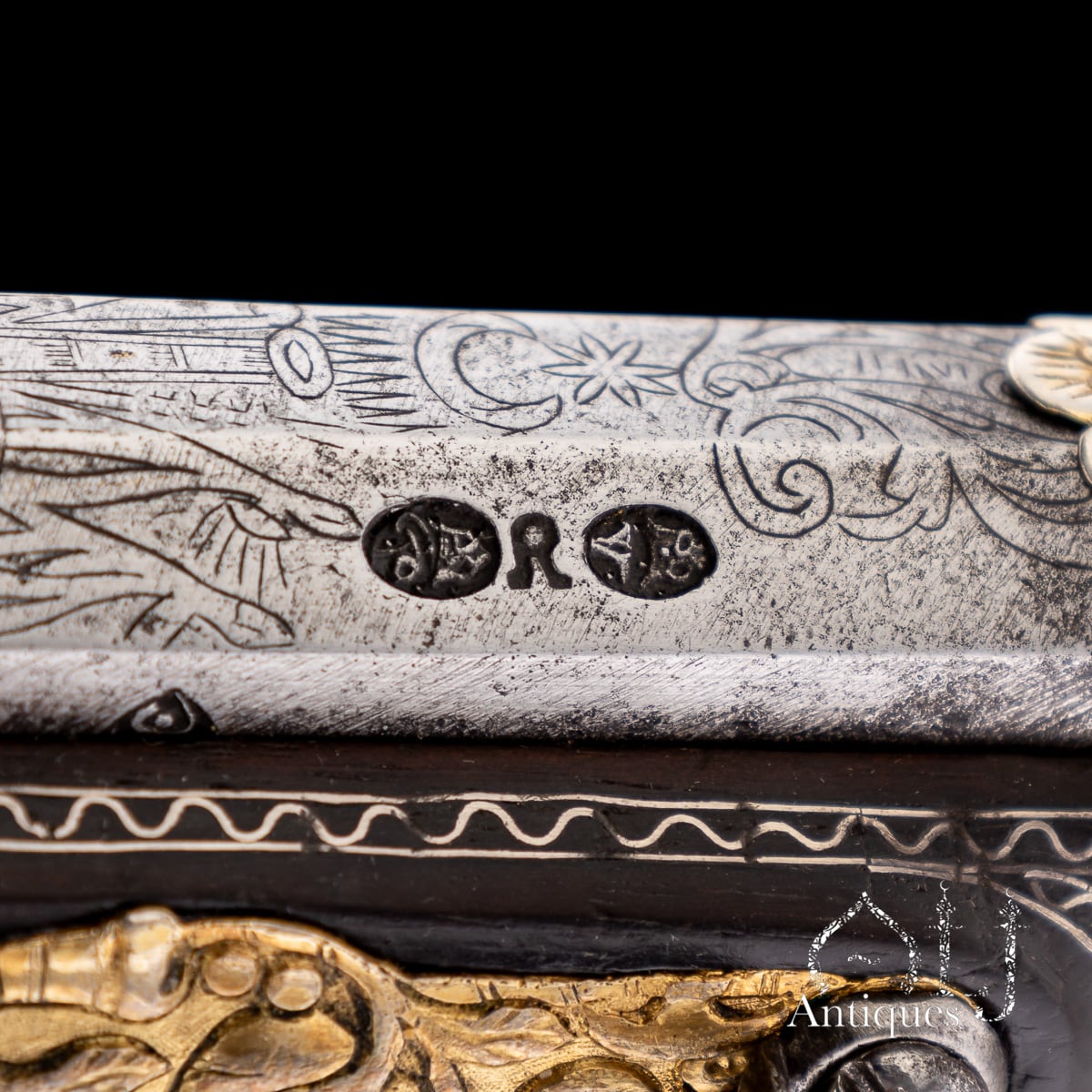
This magnificent and exceptionally rare Ottoman double-barrel flintlock blunderbuss, measuring 69 cm in overall length, the twin steel barrels dramatically flaring at the muzzle and profusely engraved with elaborate Ottoman martial trophy-of-arms motifs, including cannons, various types of arms, banners, flags, drums, crossed weapons and the Ottoman crescent-and-star emblem, the latter forming one of the principal symbols associated with the Ottoman imperial state.
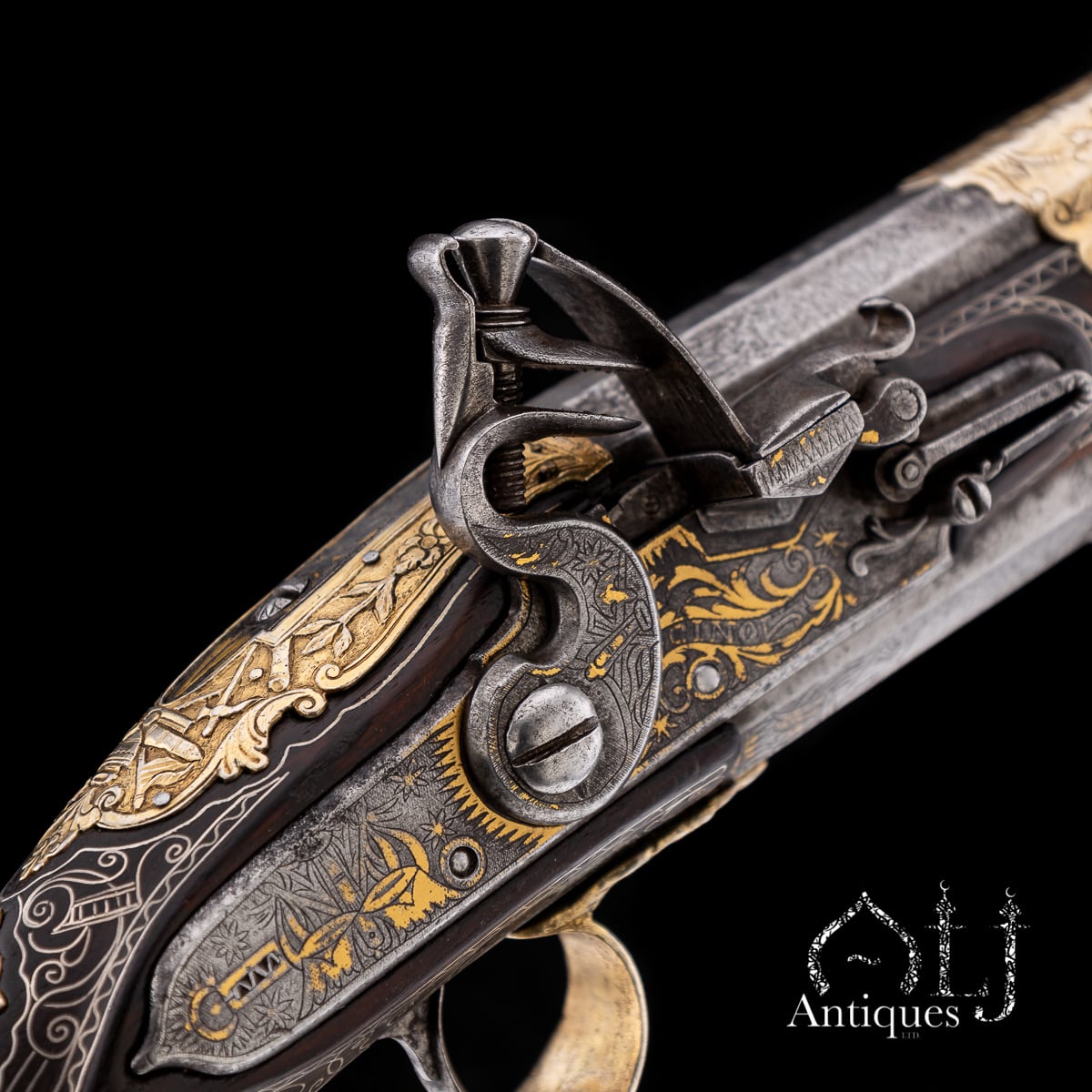
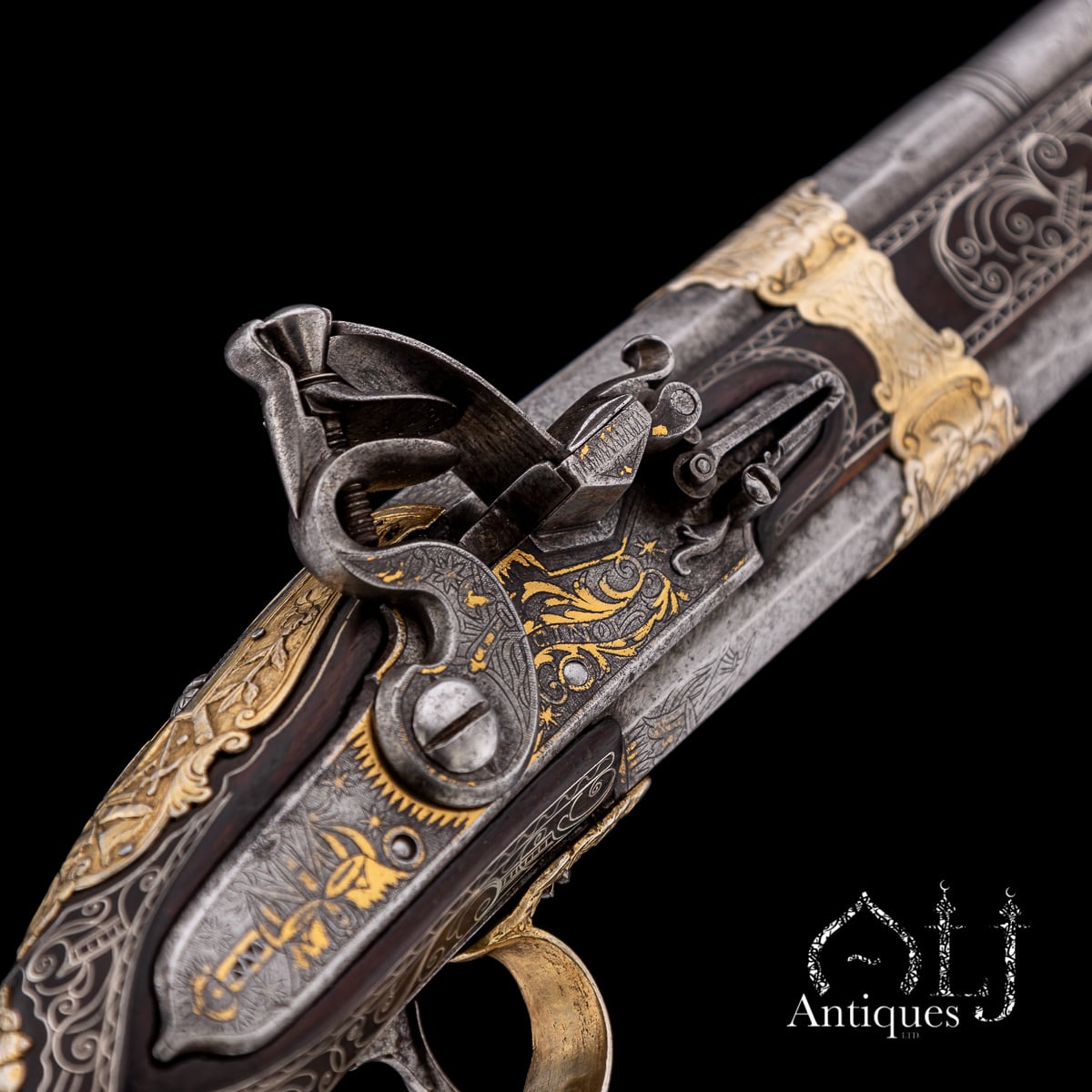
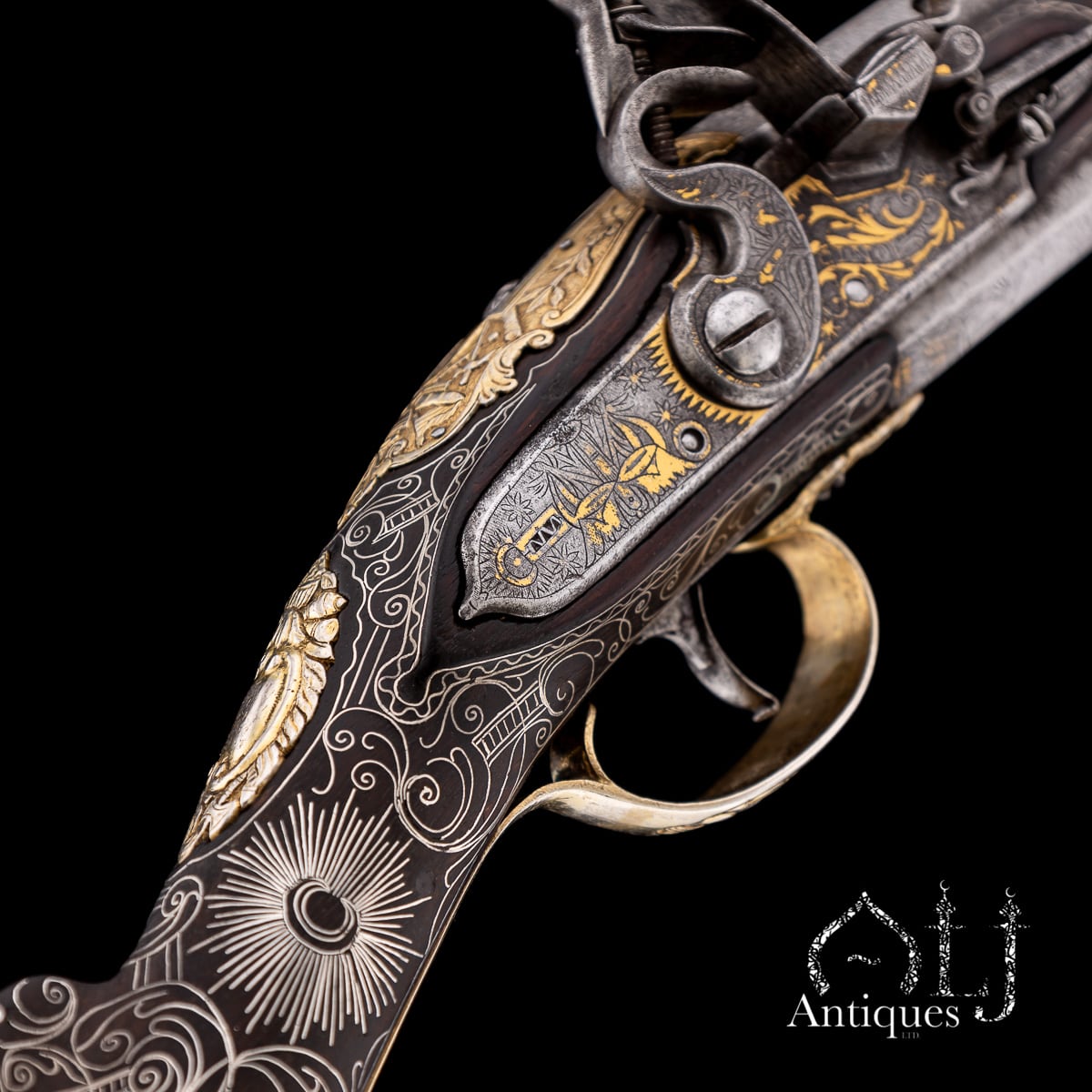
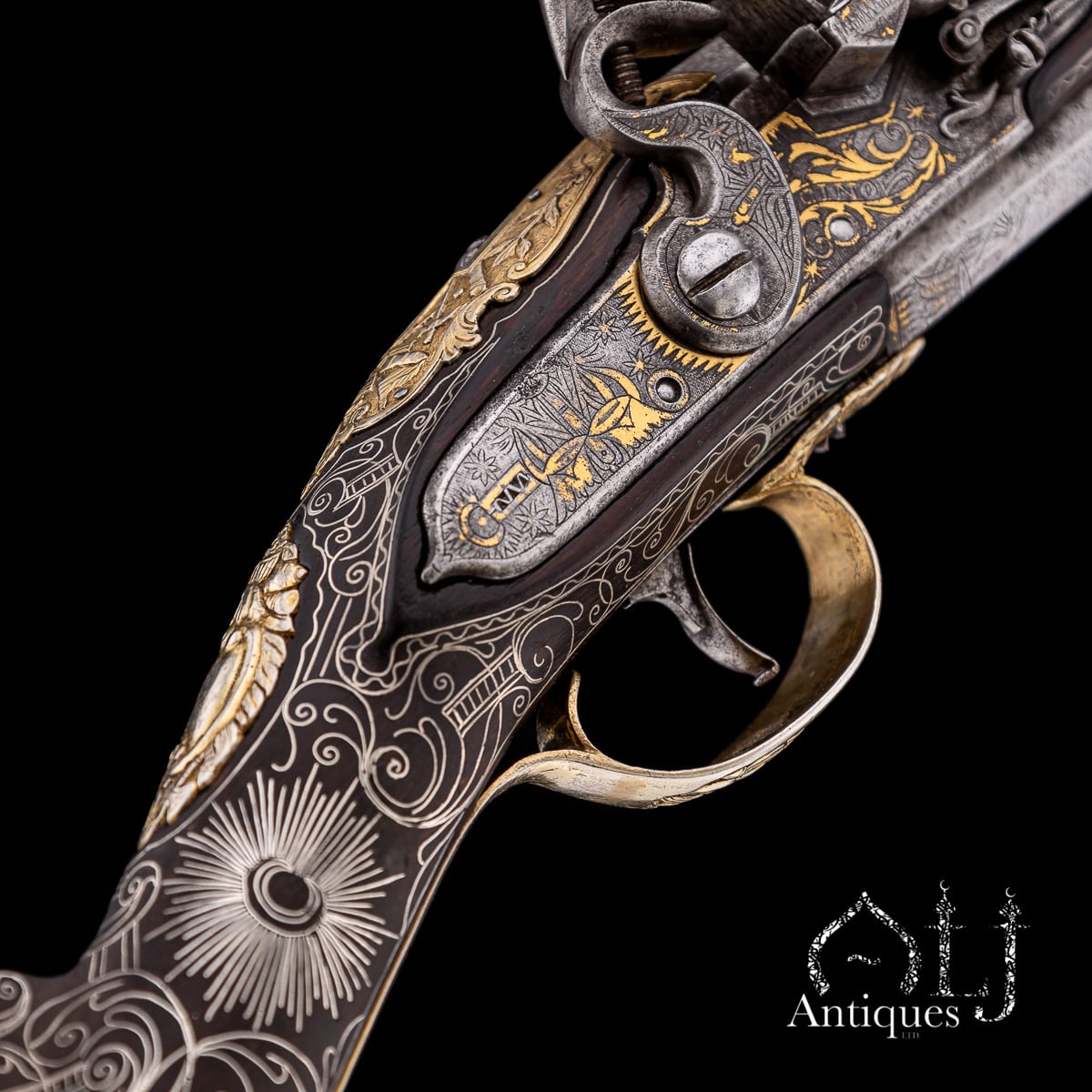
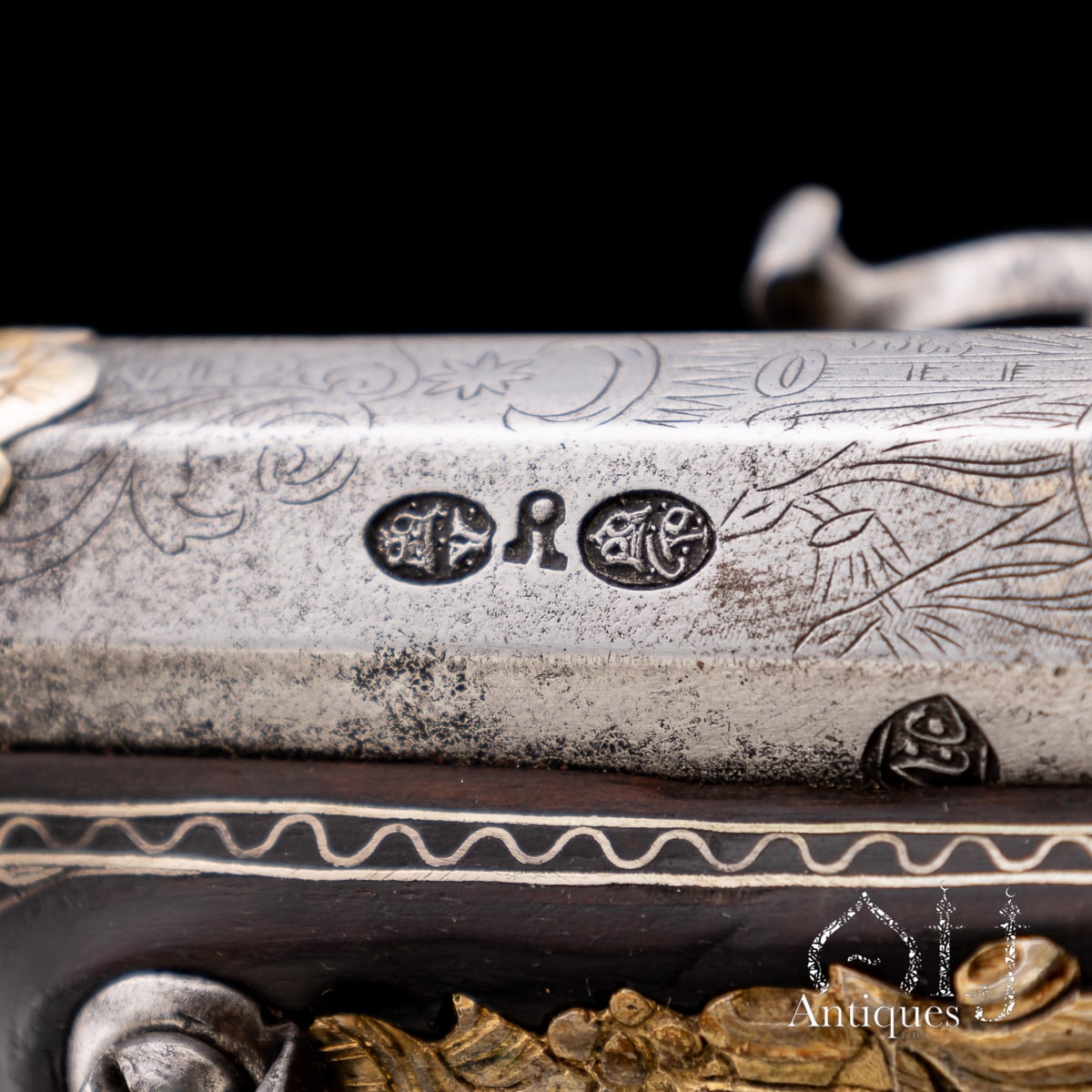
The barrels are richly engraved and ornamented with gold damascening, accentuating the decoration and creating a striking visual contrast against the darkened steel surfaces. The breech bears Ottoman inspection stamps, including the Arabic word إمتحان (Imtihan), indicating an official proof mark applied after testing. The term Imtihan, meaning “test” or “examination” in Arabic and Ottoman Turkish, was used to certify that the barrel had undergone official inspection to ensure its strength and safety.
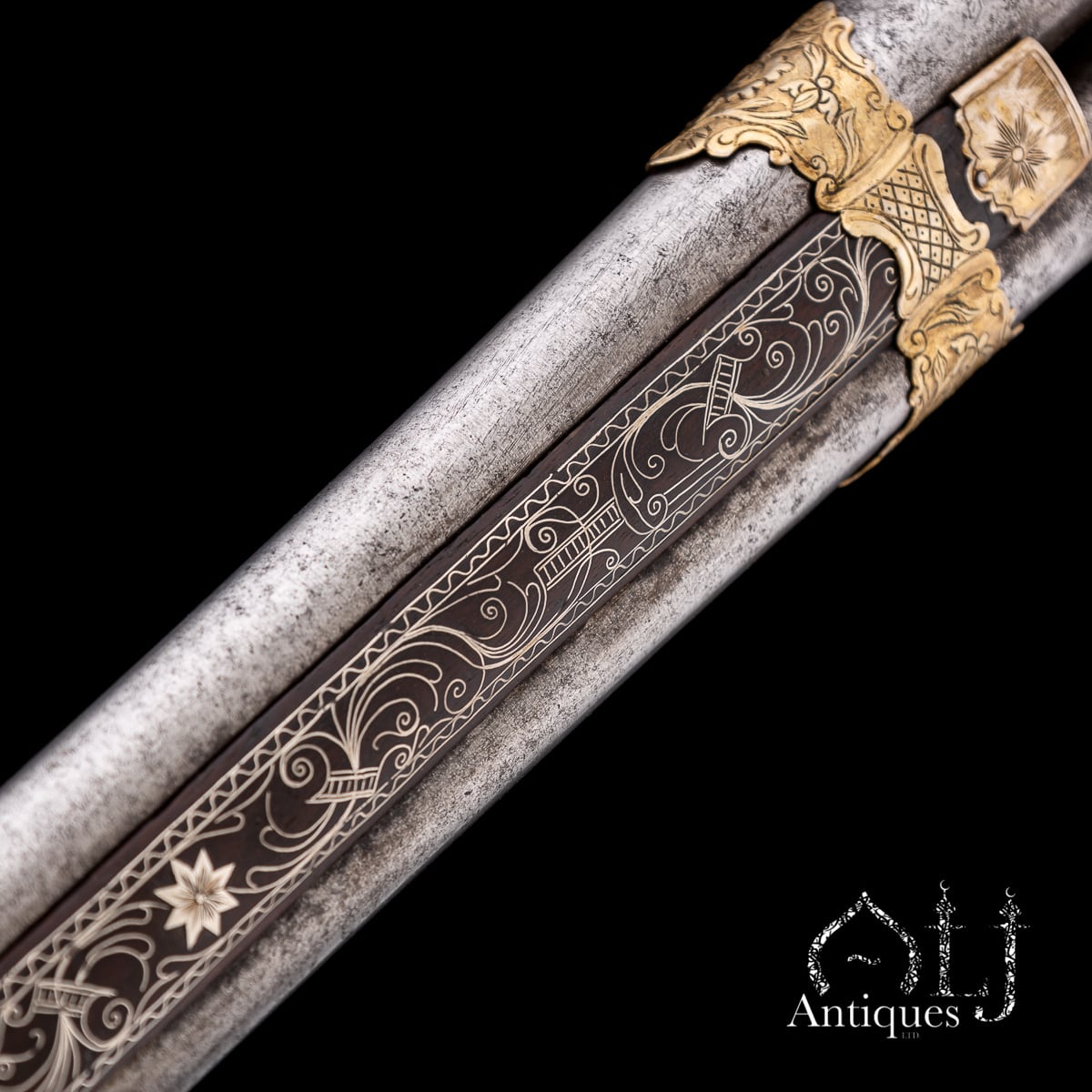
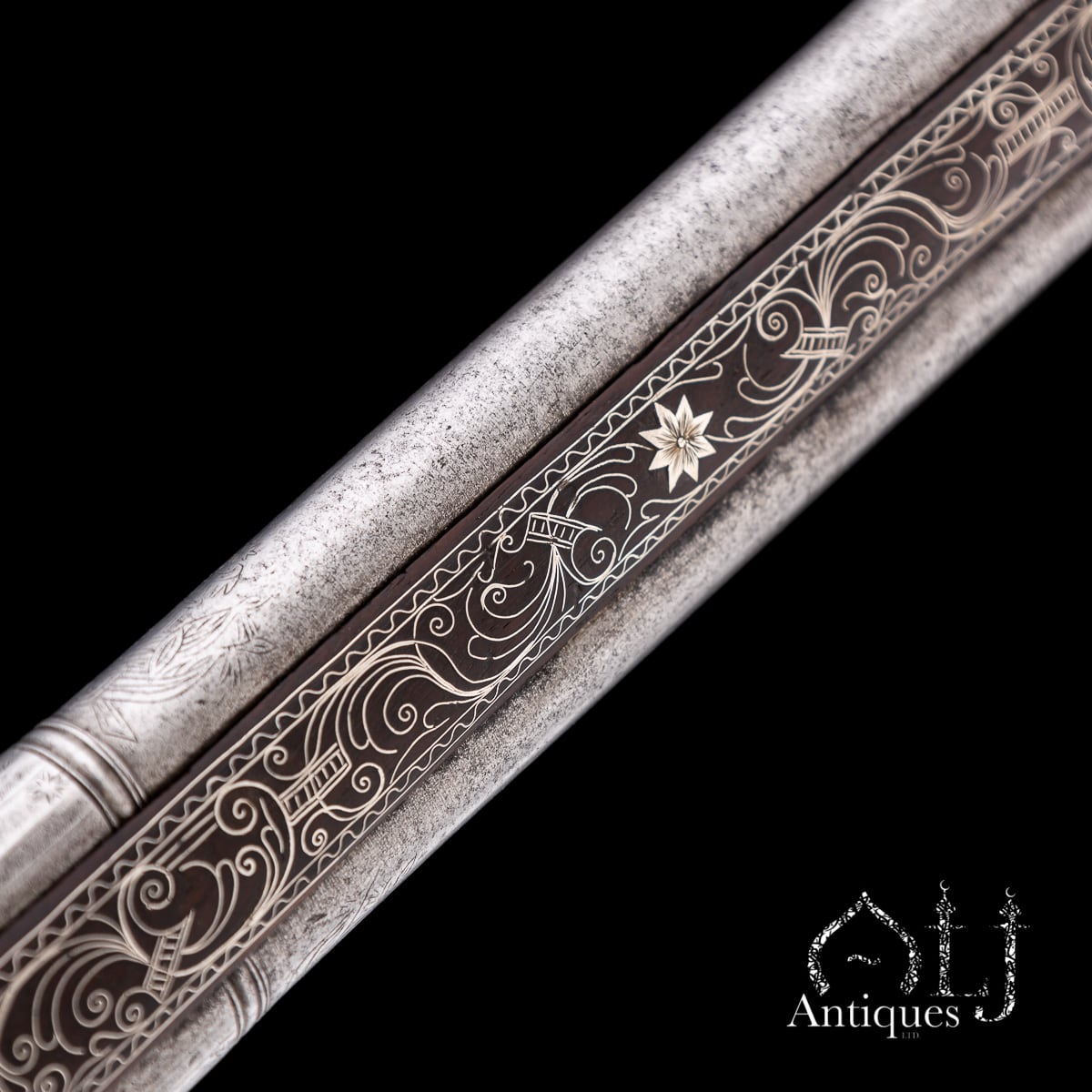
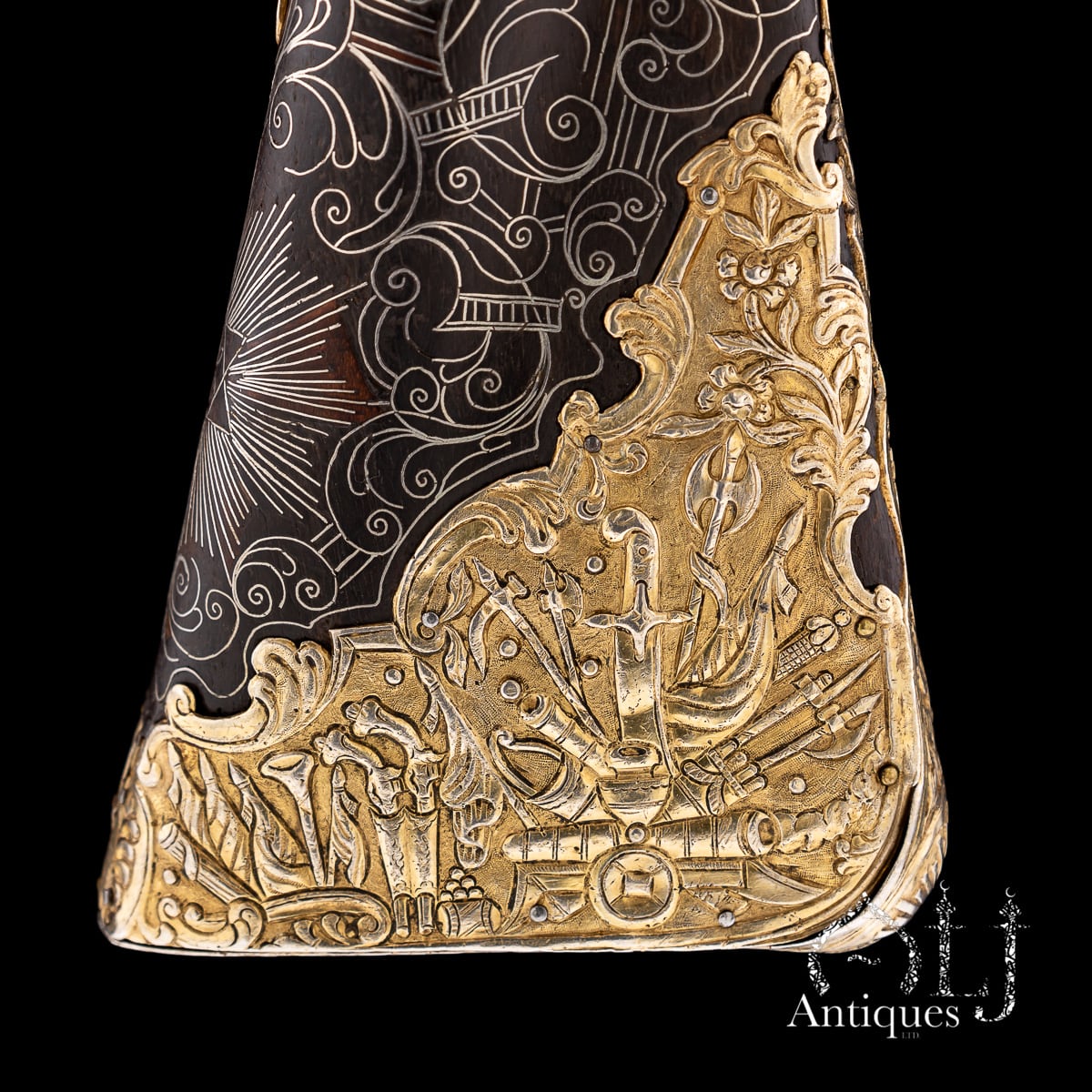
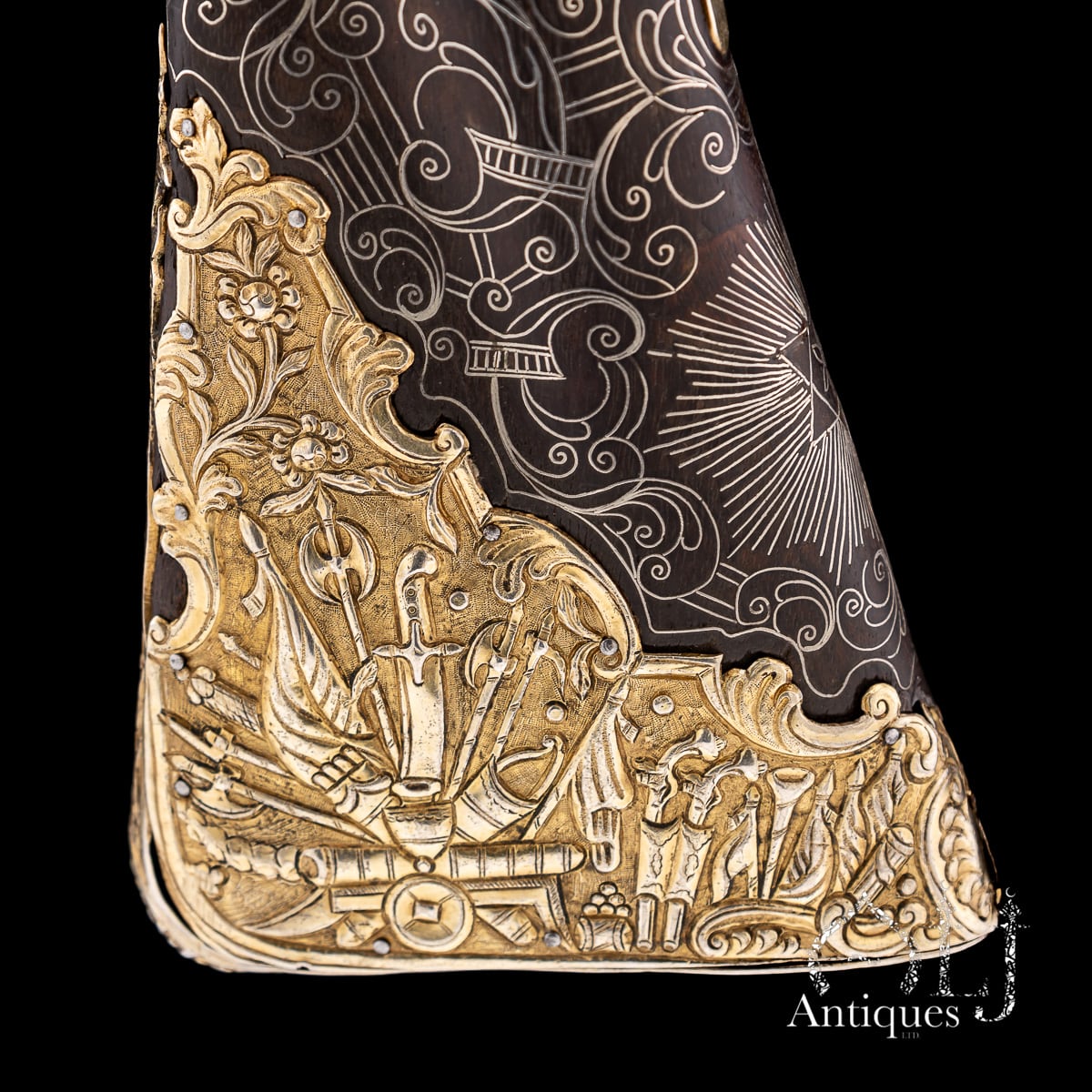
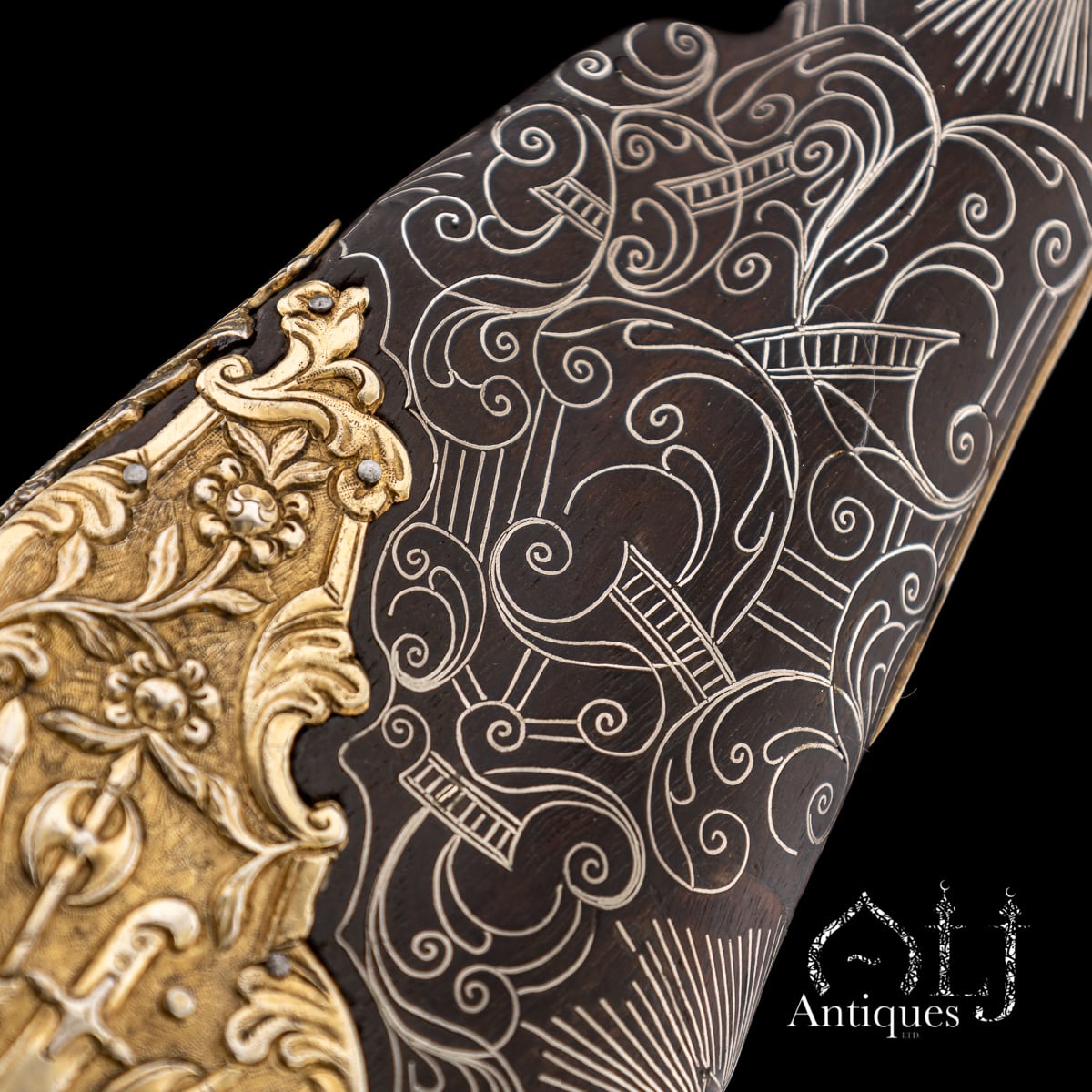
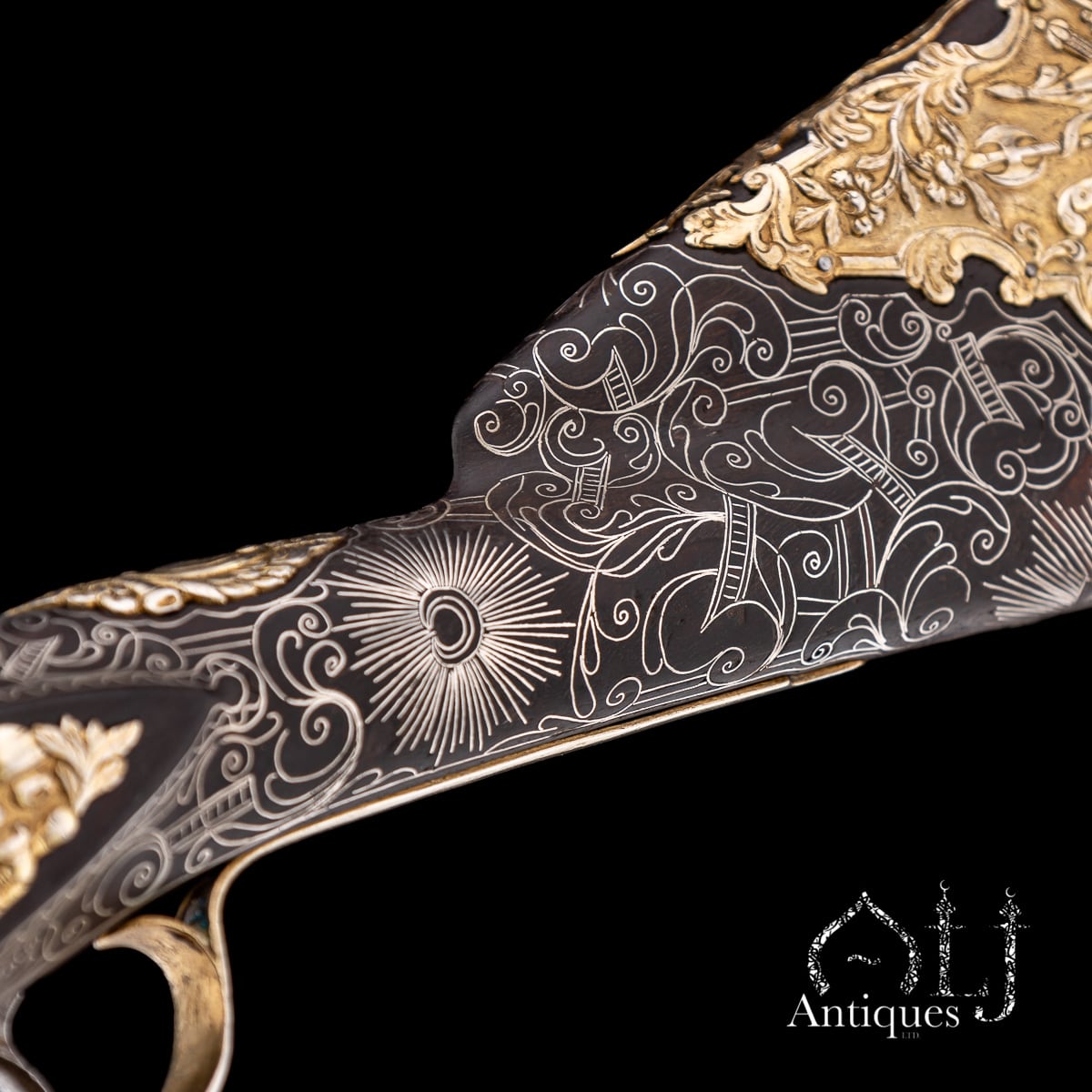
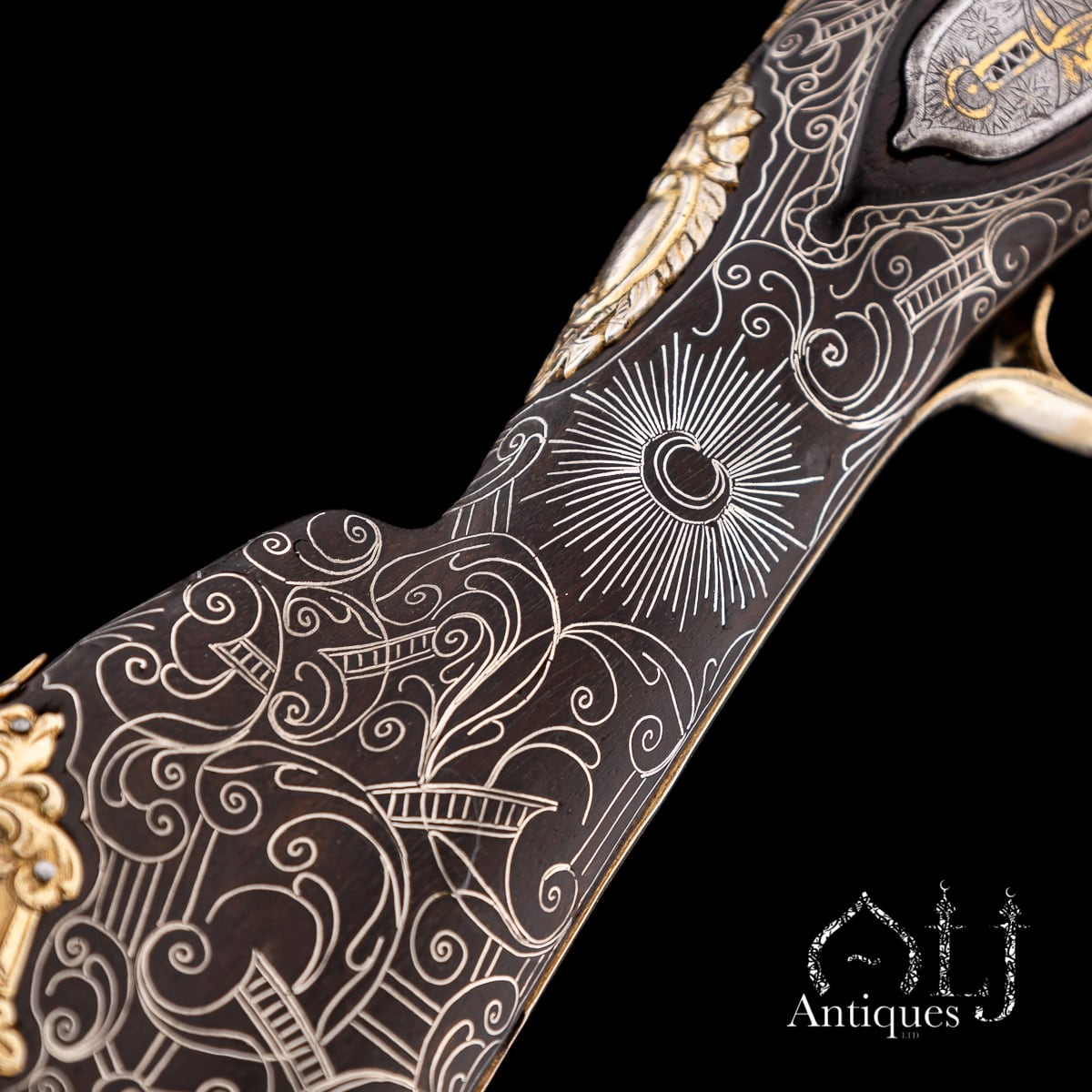
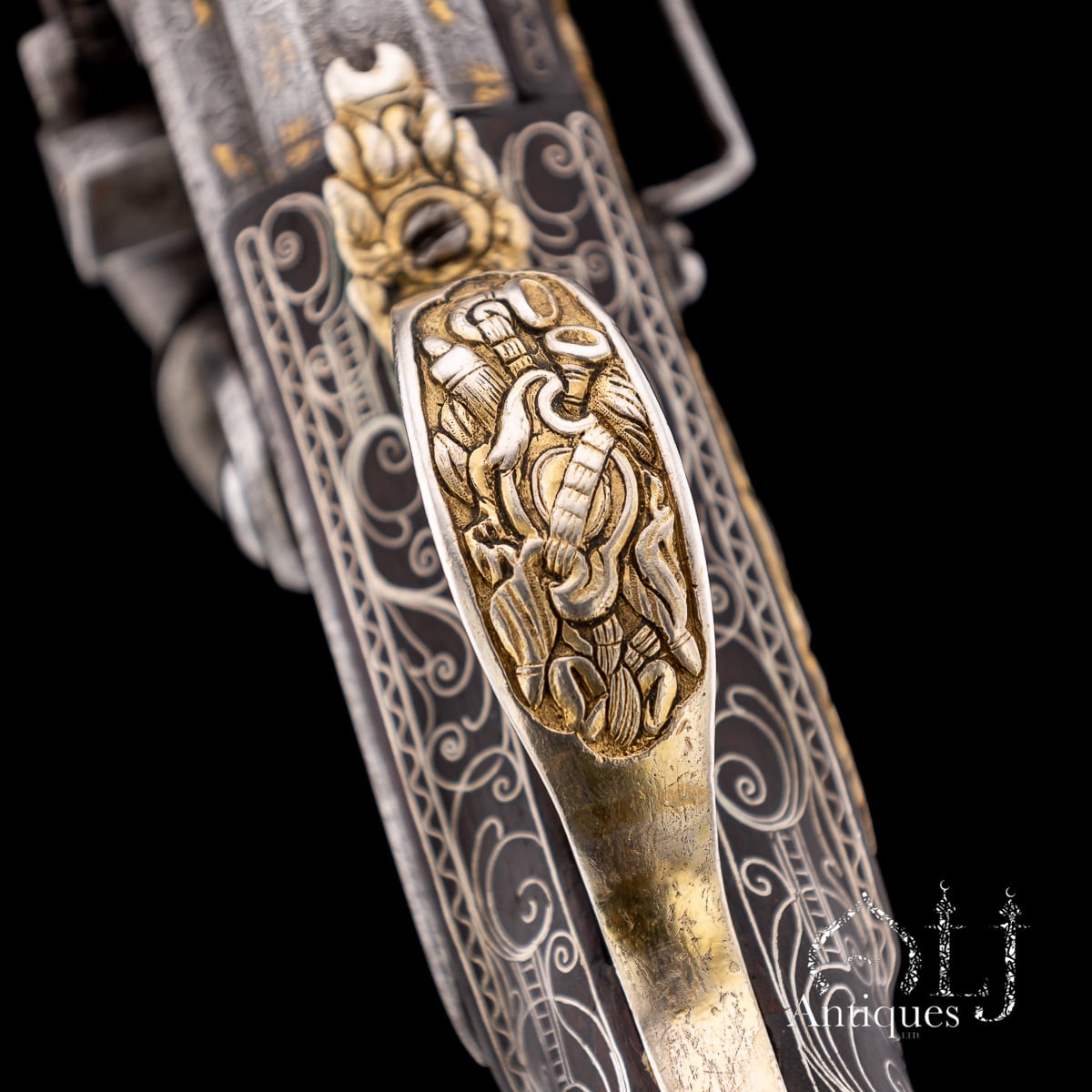
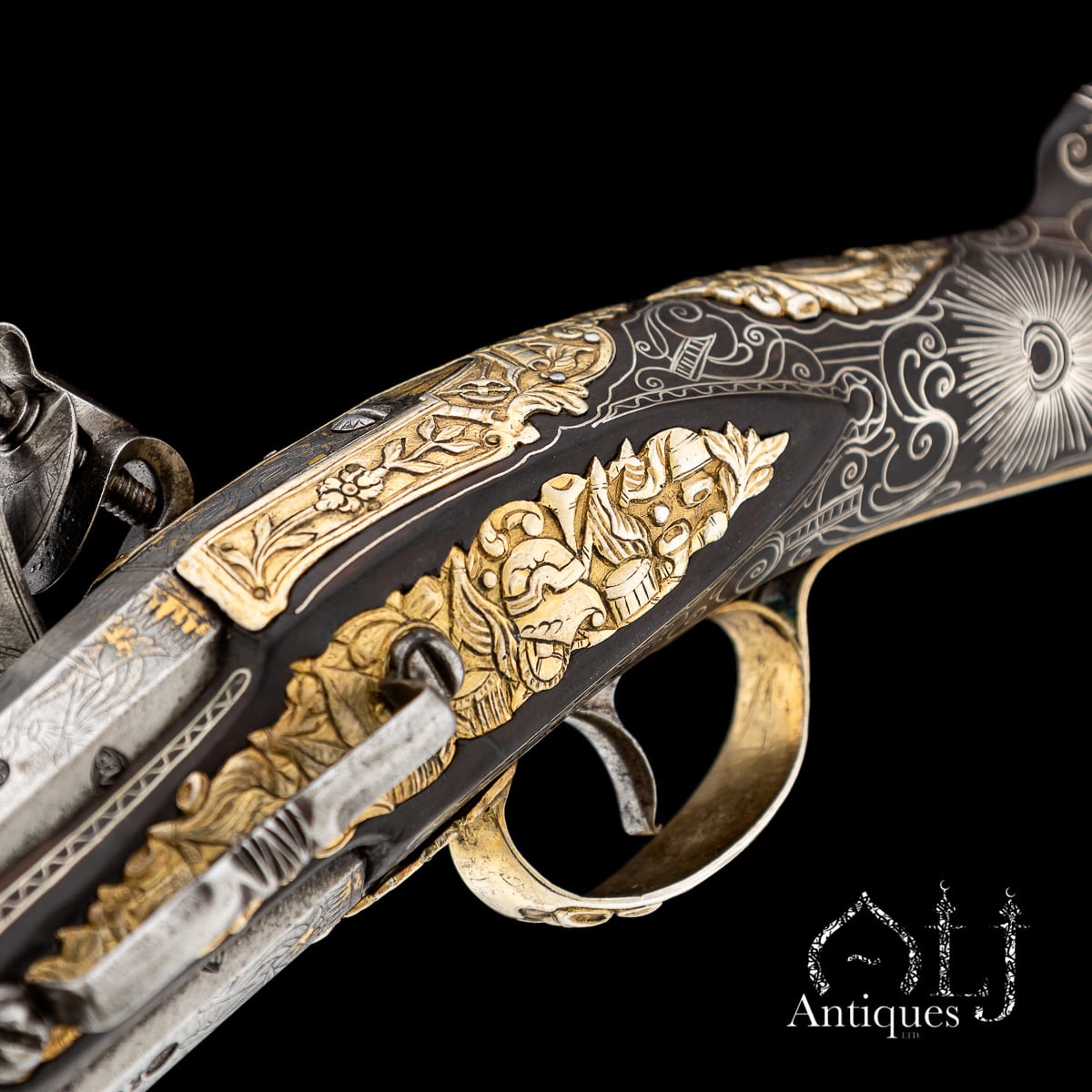
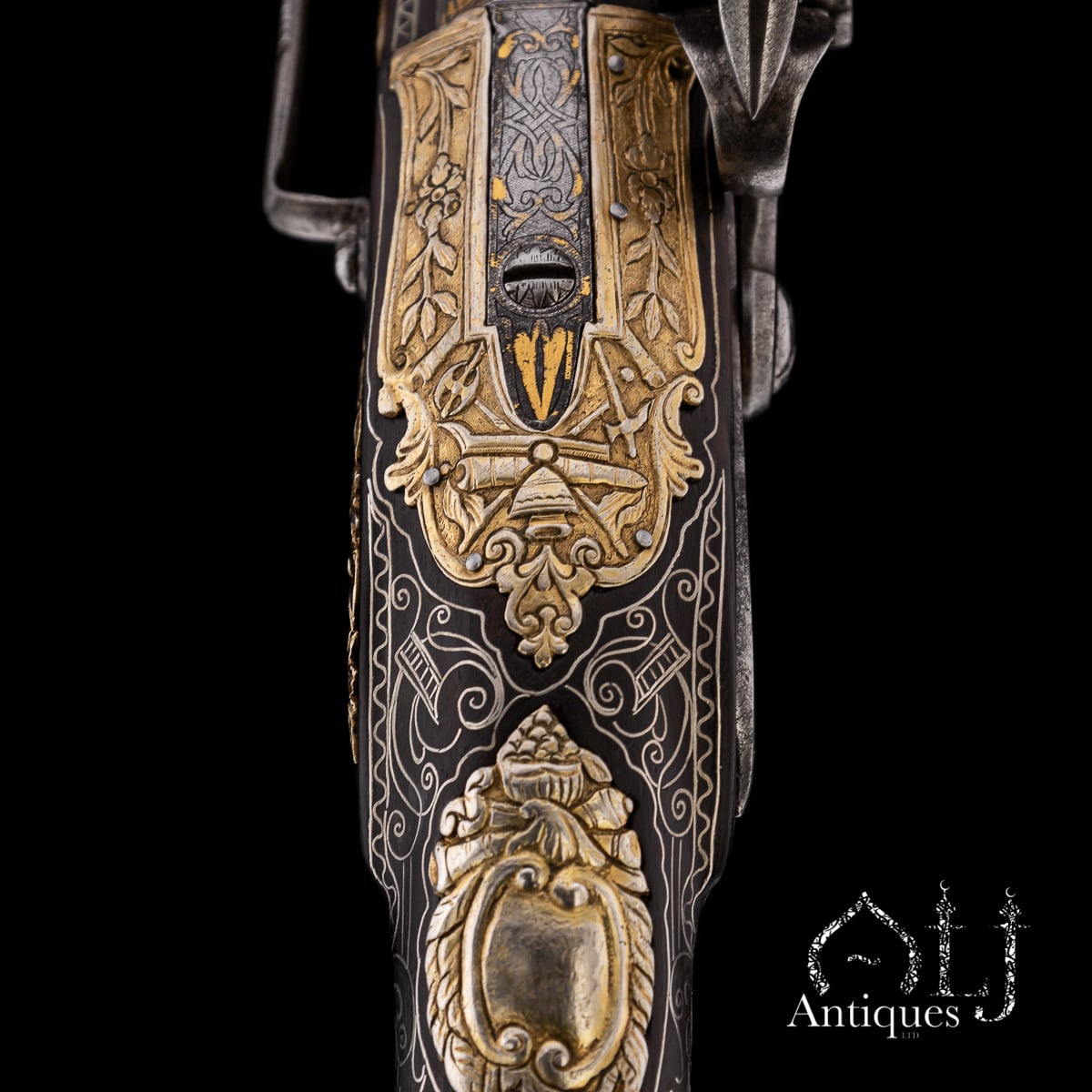
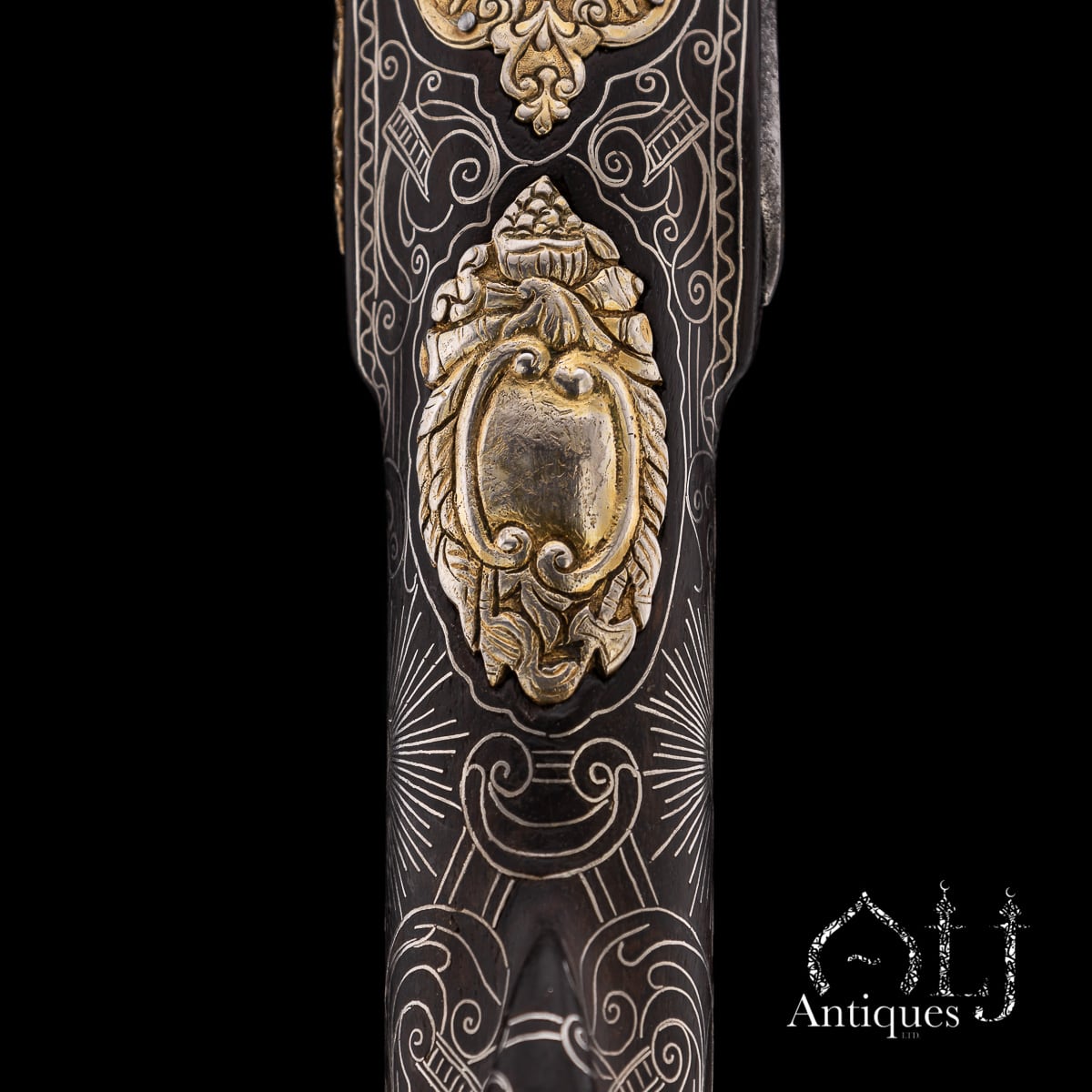
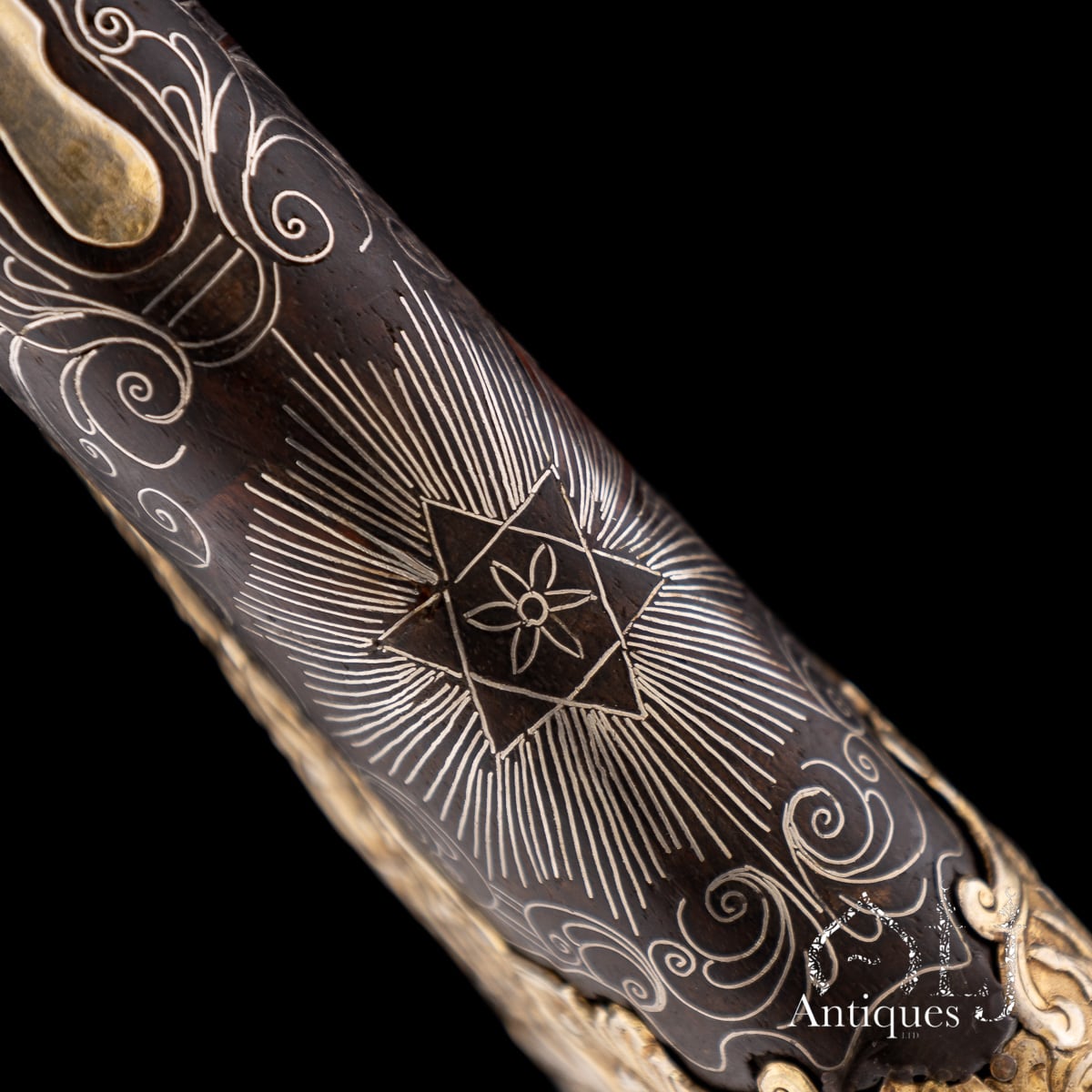
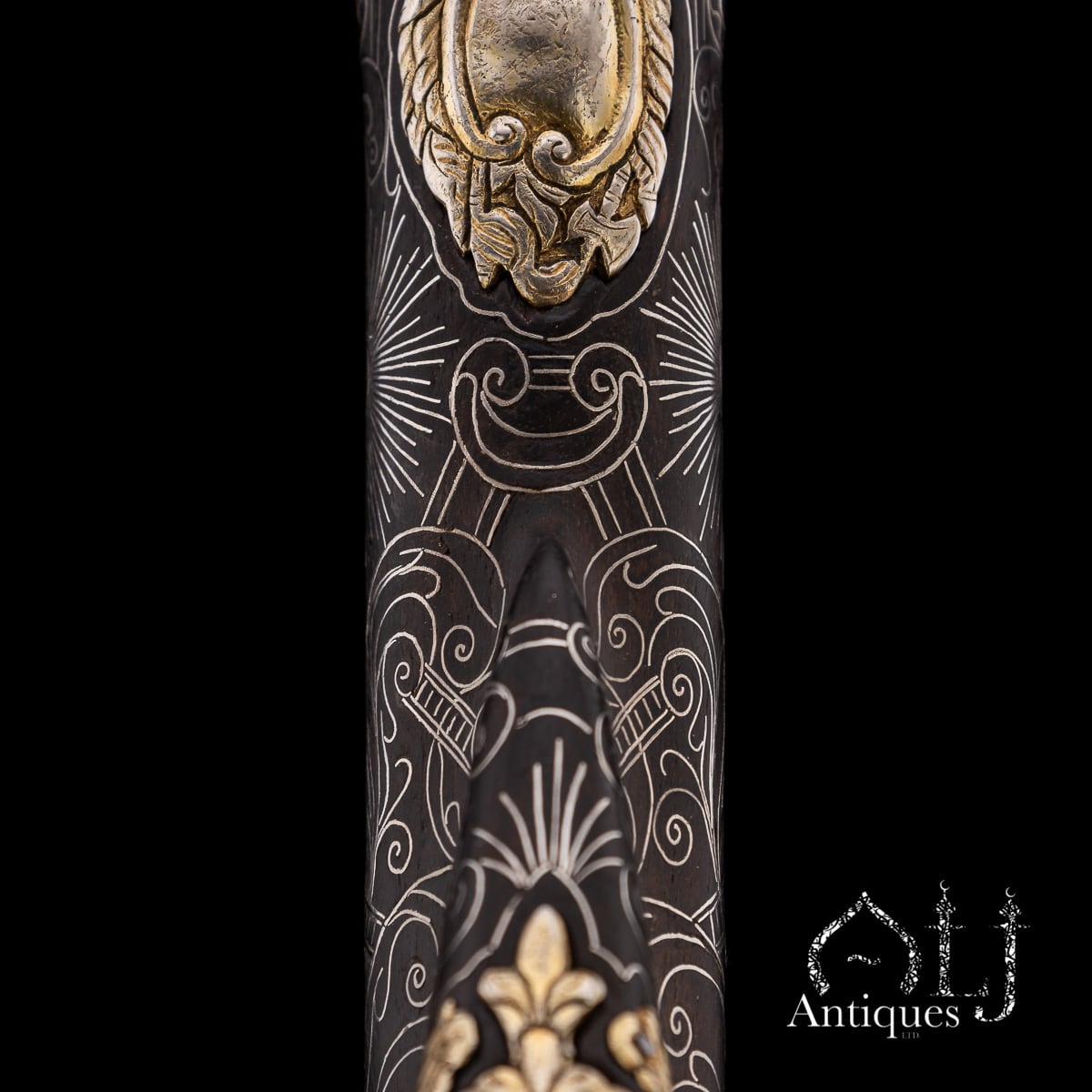
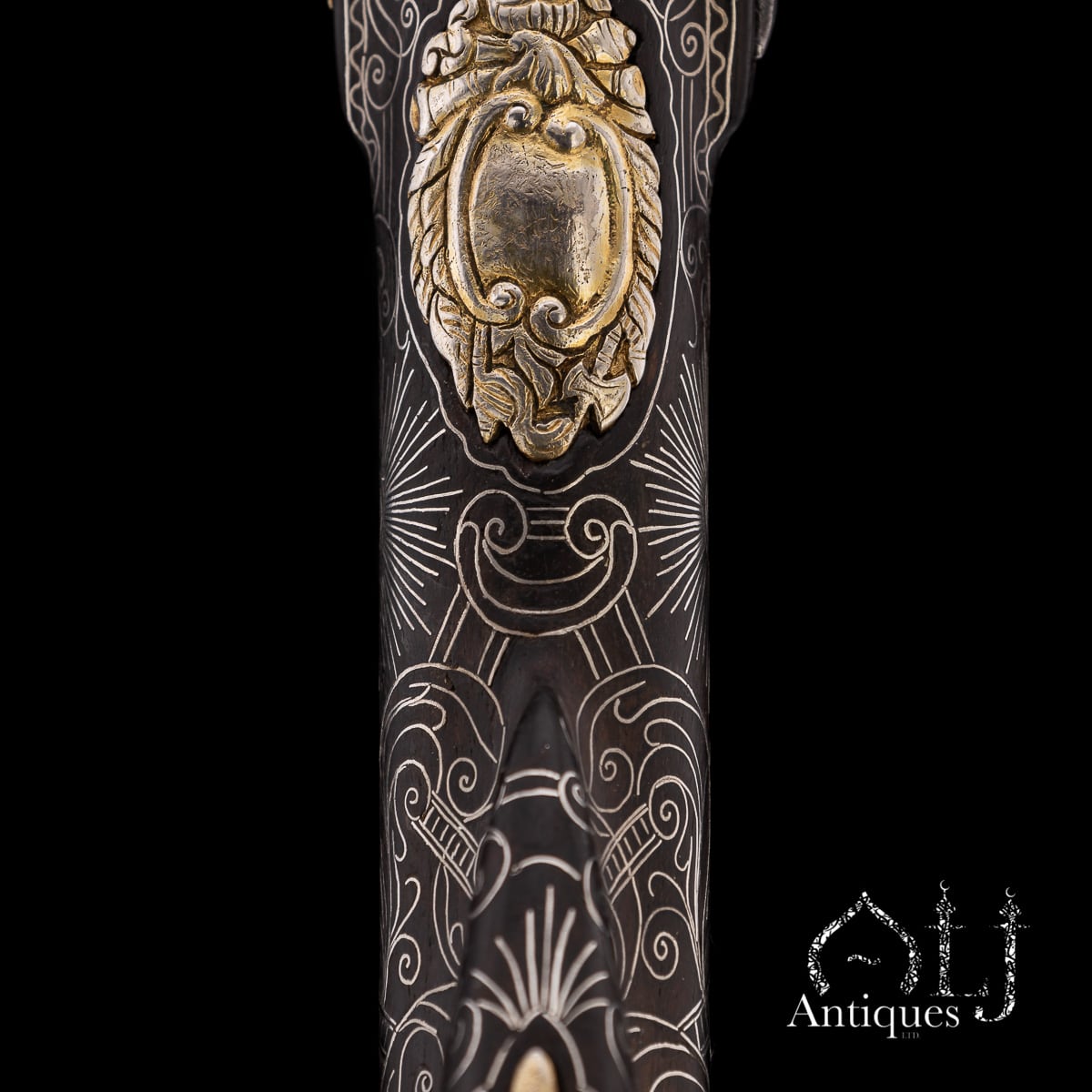
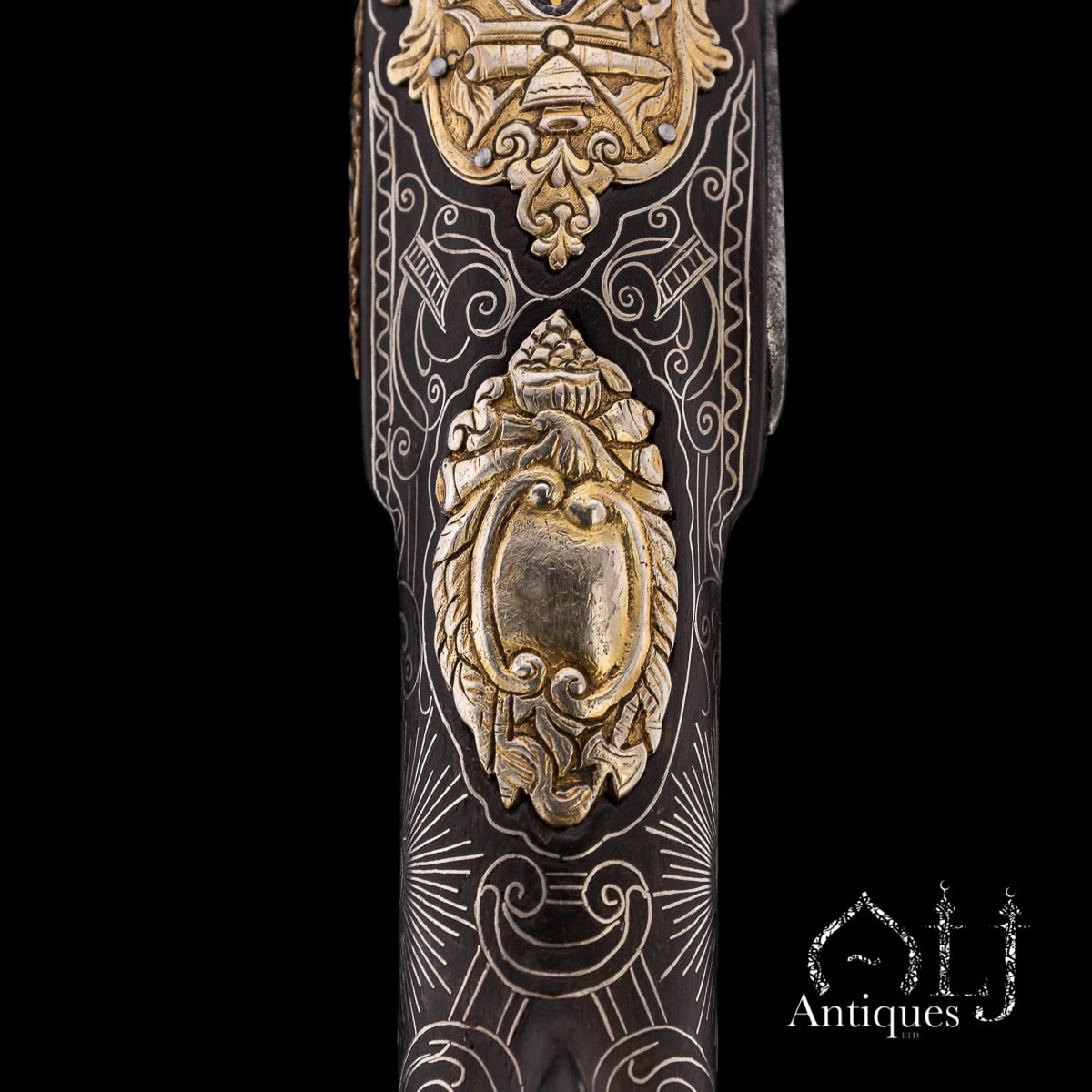
The barrels are mounted within a finely carved walnut stock beautifully engraved and extensively inlaid with delicate silver wires, forming dense arabesques and flowing Ottoman Rumi scrollwork across the wooden surfaces.
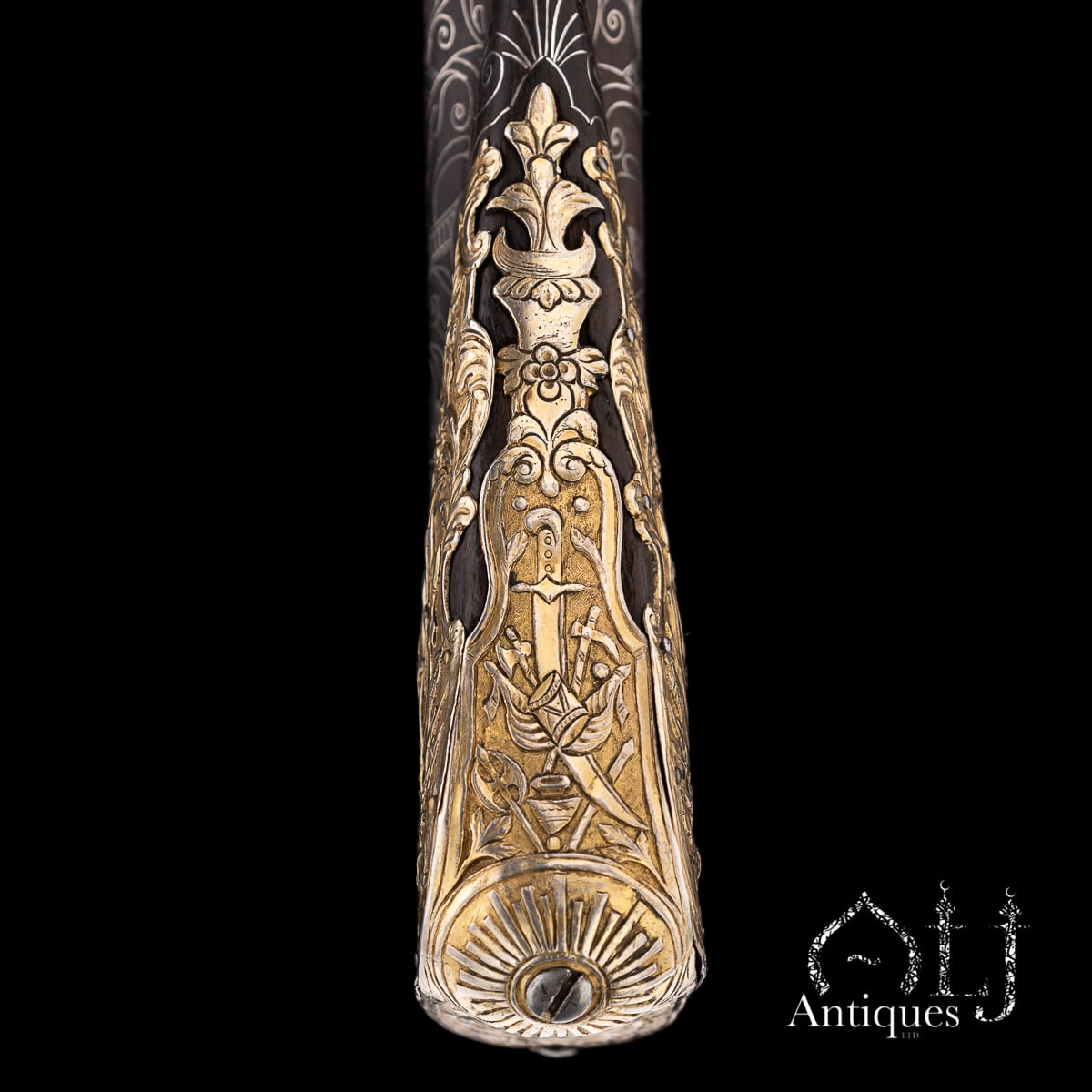
The firearm is remarkable for the extraordinary density and richness of its decoration, the entire surface being carefully worked with virtually no plain areas left undecorated. Every visible element of the weapon—barrels, stock and mounts—has been treated as a unified decorative surface.
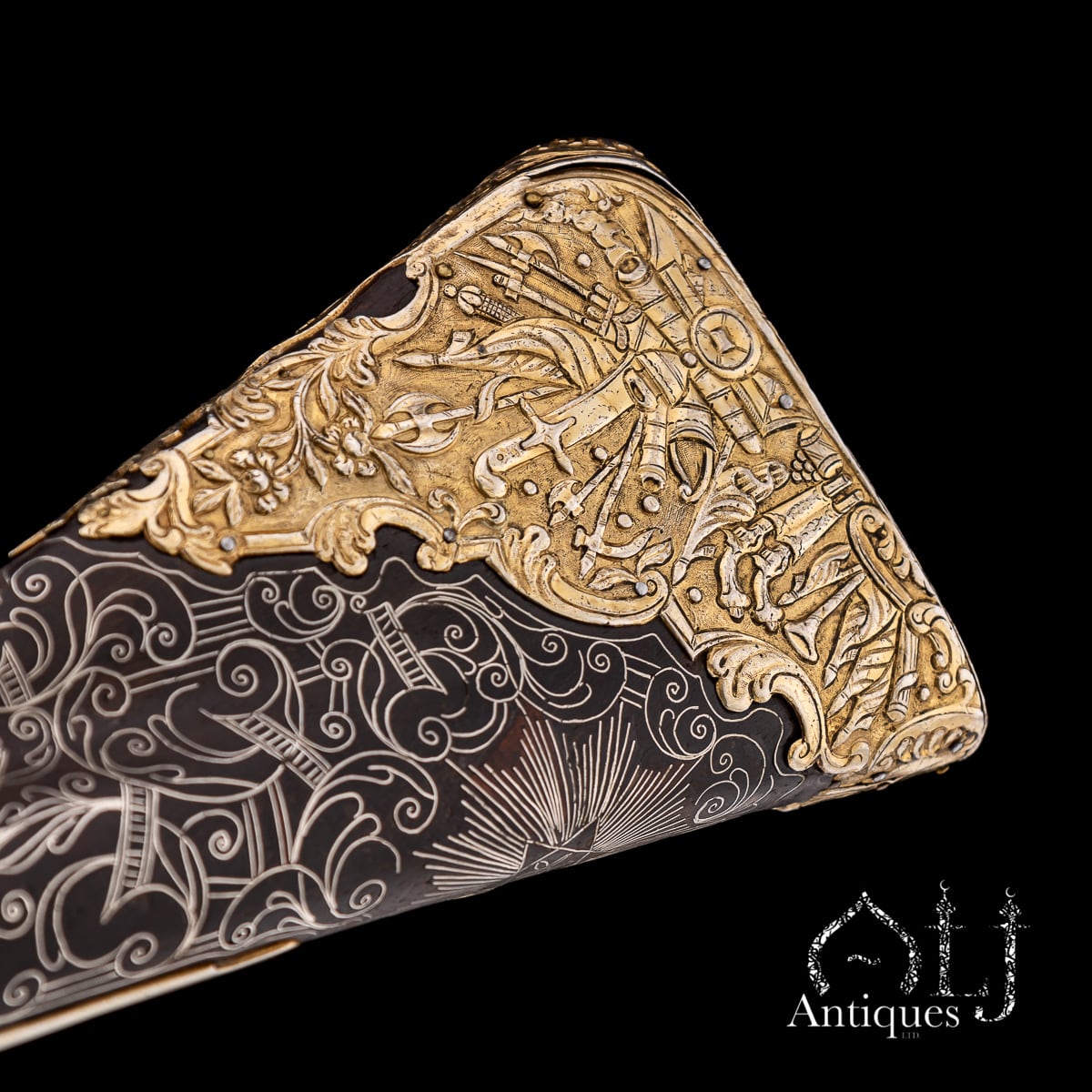
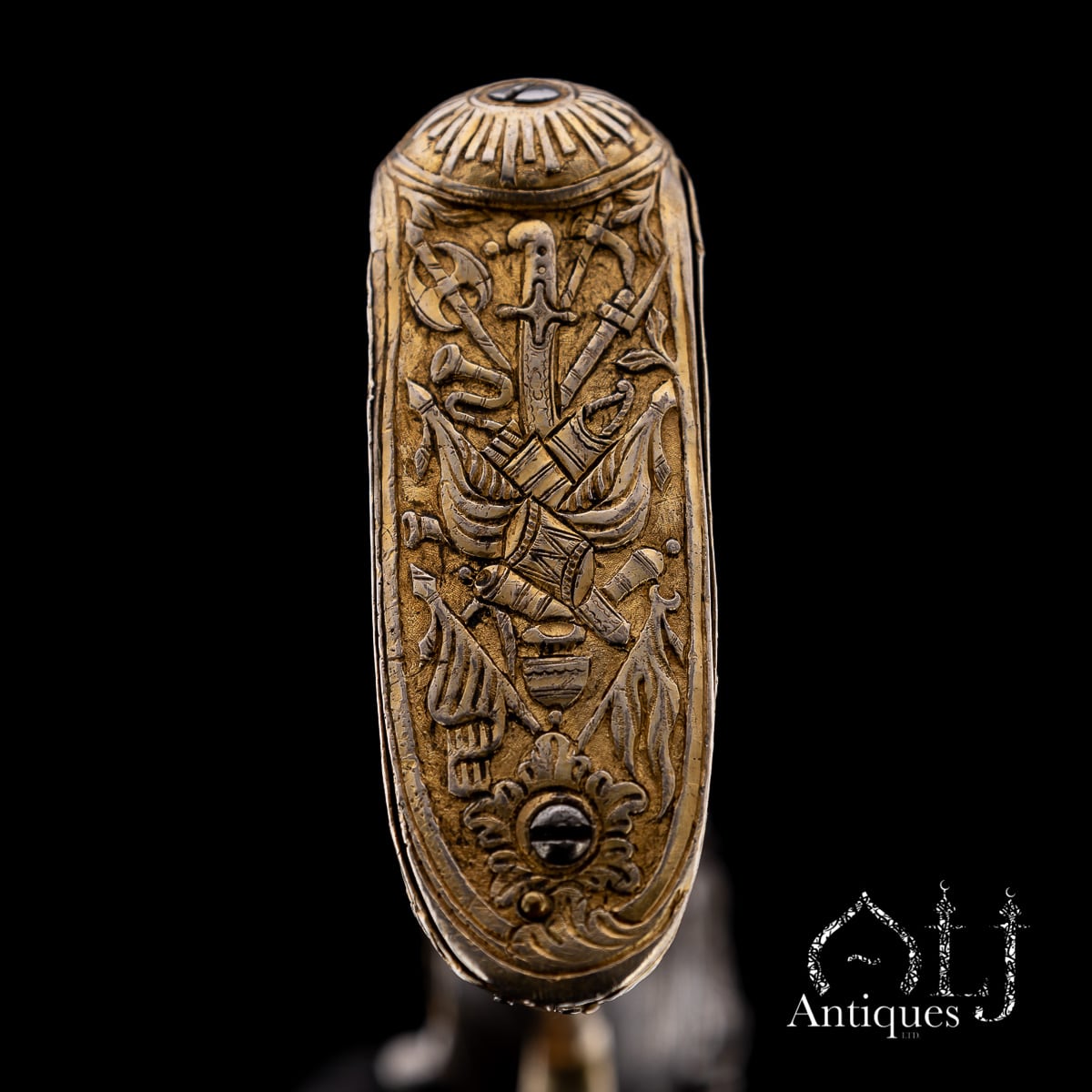
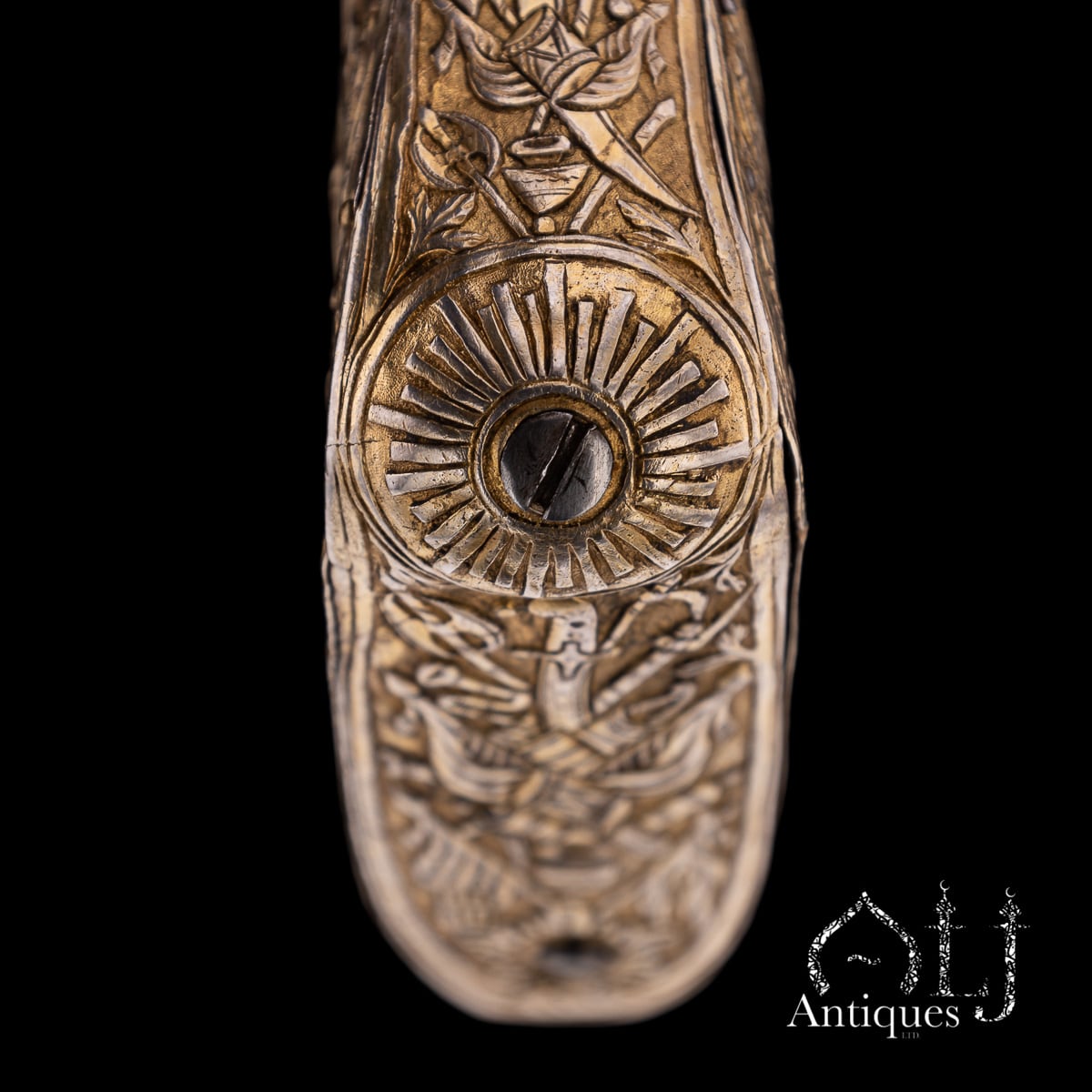
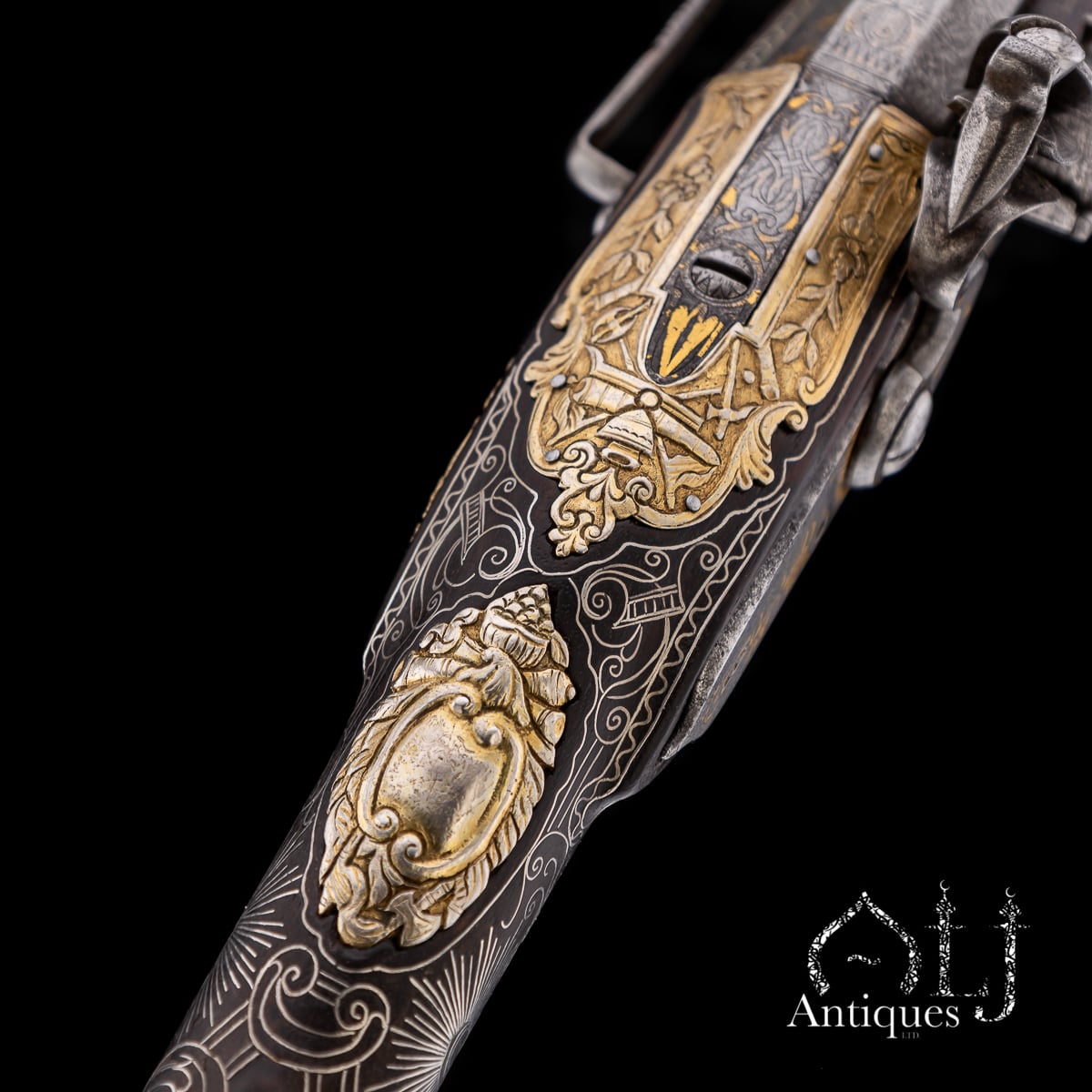
The mounts are executed in silver-gilt (gilded silver) and chased with elaborate trophy-of-arms compositions, incorporating crossed swords, muskets, banners, cannon, powder flasks and drums. These martial compositions derive in part from European heraldic and military ornament, which was widely adopted and adapted within Ottoman decorative arts during the reform period of the late eighteenth and early nineteenth centuries.
The butt is further enriched with a large shield-shaped cartouche left blank, possibly intended for an owner’s inscription, heraldic device or presentation dedication.
The remarkable richness of ornament and the use of precious materials—gold damascened steel, silver-gilt mounts and intricate silver-wire inlay—place this firearm among the highest category of Ottoman luxury arms. The exceptional quality and rarity strongly suggest that the weapon was commissioned for an elite patron of the Ottoman courtly or military hierarchy, possibly a high-ranking nobleman, senior military commander, provincial governor or member of the imperial household.
Craftsmanship and Production
Luxury Ottoman firearms of this quality were frequently the result of collaboration between several specialised workshops. Mechanical components such as barrels and flintlock mechanisms often reflect European technical influence, while the stock, mounts and decorative elements were produced by Ottoman craftsmen.
Within the Ottoman Empire, Armenian artisans were widely recognised as master metalworkers and gunsmiths, and they frequently contributed to the decoration of luxury firearms. Important centres involved in such work included Istanbul, the imperial capital and principal armoury centre, as well as Anatolian cities such as Afyonkarahisar, where Armenian craftsmen and specialist metalworkers were active.
The present firearm therefore likely represents the product of multiple Ottoman craft traditions, combining European mechanical technology with highly sophisticated Ottoman decorative artistry.
Rarity and Importance
Blunderbuss firearms with flared muzzles were widely used across Europe and the Ottoman world as short-range defensive weapons, particularly for cavalry use, carriage protection and naval boarding.
While single-barrel Ottoman blunderbusses and pistols are known, examples combining this form with a double-barrel configuration are exceptionally rare.
A closely comparable double-barrelled flintlock blunderbuss, dated to circa 1800 and preserved in the collection of the Art Institute of Chicago (acc. no. 116575), demonstrates that this unusual form was produced, albeit in extremely limited numbers. That example has traditionally been catalogued as Russian. However, the present firearm, which corresponds closely in its distinctive twin flared barrels and overall construction, displays features strongly characteristic of Ottoman craftsmanship, including dense gold damascening, extensive silver-wire inlay, and the use of flowing Rumi ornament.
It is well established that luxury Ottoman firearms of this period frequently incorporated European mechanical components—particularly barrels and lock mechanisms—while the stock, mounts and decorative elements were produced within Ottoman workshops. In this context, the attribution of the Art Institute example as Russian may reflect the European origin of certain mechanical elements rather than the place of final assembly and decoration.
The present firearm therefore contributes to the reassessment of this rare group of double-barrel blunderbusses, suggesting that such pieces may more plausibly belong within the Ottoman artistic and craft tradition.
Despite the existence of this closely related example, firearms of this specific configuration—combining double flared barrels with such extensive and refined Ottoman decoration—remain exceedingly rare.
To the best of our knowledge, only two surviving examples are currently known, including the present piece.
Final Note
A rare and significant survival of Ottoman luxury gun-making, the present firearm contributes to the reassessment of a little-studied group of double-barrel blunderbusses, suggesting a more firmly Ottoman attribution for this distinctive and highly uncommon type.