
Description
I. Introduction: The History & Function of the Pandan
The pandan—a container used for storing ingredients for betel quid (pan)—has played a central role in Indian social, domestic, and courtly life for centuries. Pan, composed of areca nut (supari), lime paste (chunam), spices, and fresh betel leaf, was offered after meals and during ceremonies as a gesture of refinement, hospitality, and honour.
From the Sultanate period through the Mughal and Deccani eras, pandans became essential courtly objects. Their craftsmanship reflected the prestige of their owners and the high status of the ritual of offering pan. By the 17th century, pandans developed into various shapes—round, polygonal, cusped, and heart- or leaf-shaped—and were frequently elaborated with rich symbolic decoration. The Deccan in particular produced highly inventive examples that combined ceremonial function, sculptural imagination, and refined metalworking traditions.
II. Description of the Present Pandan
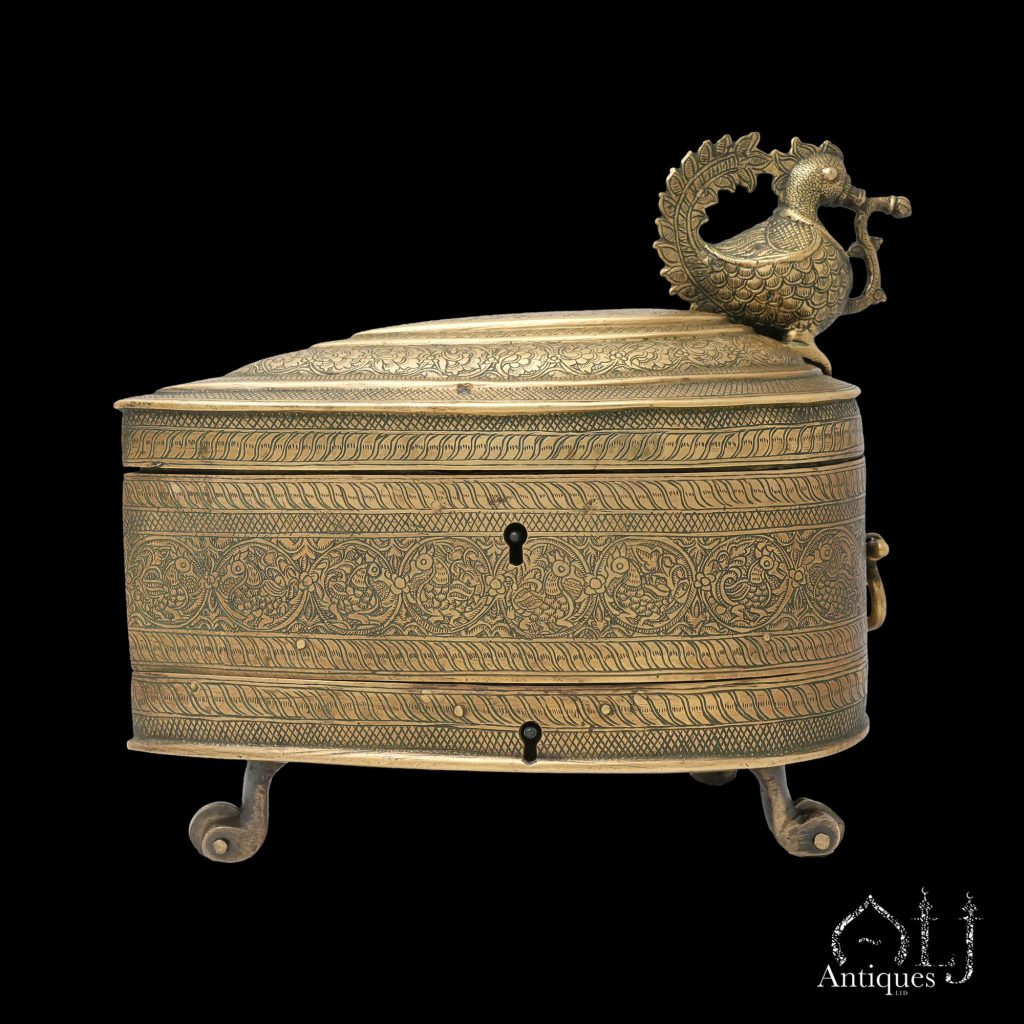
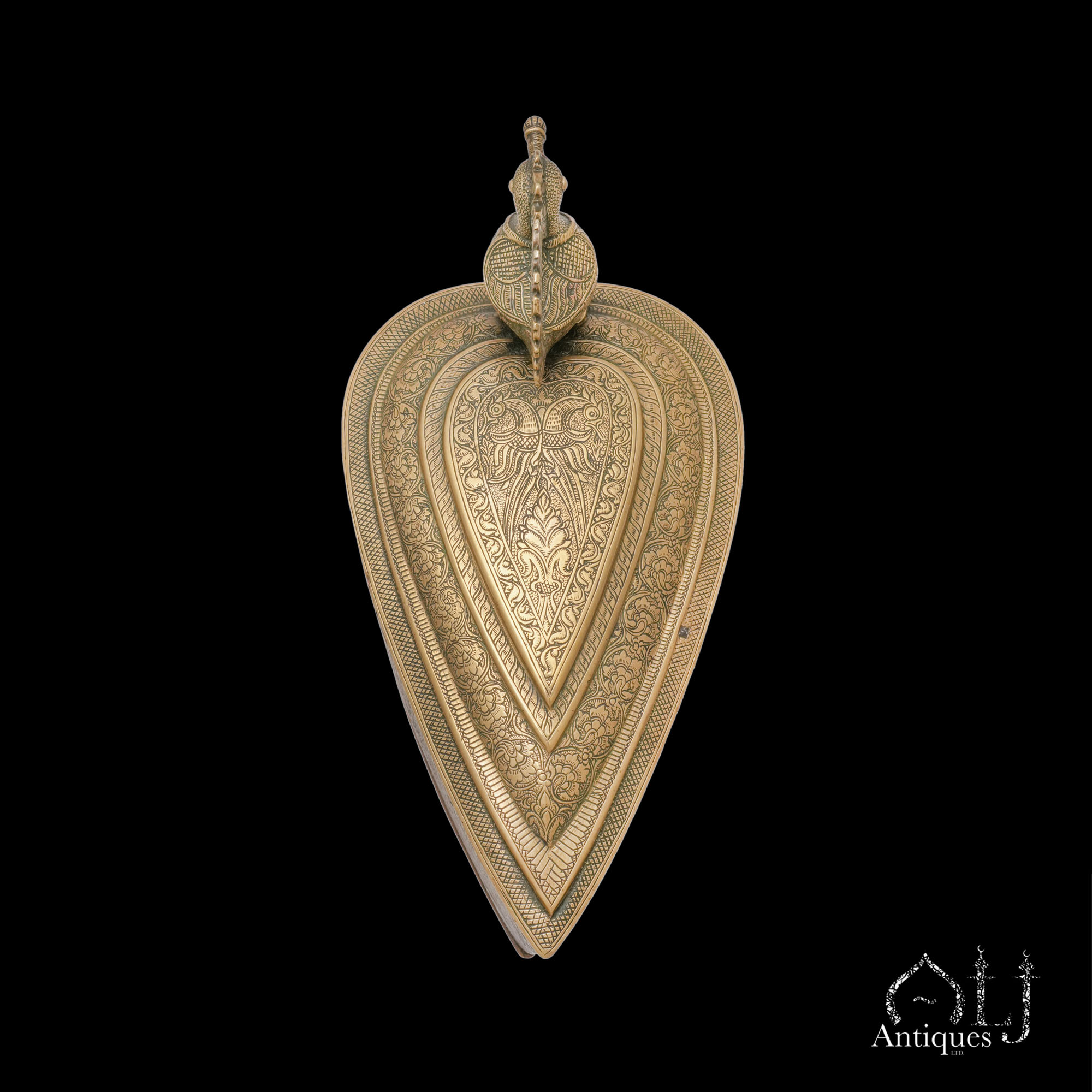
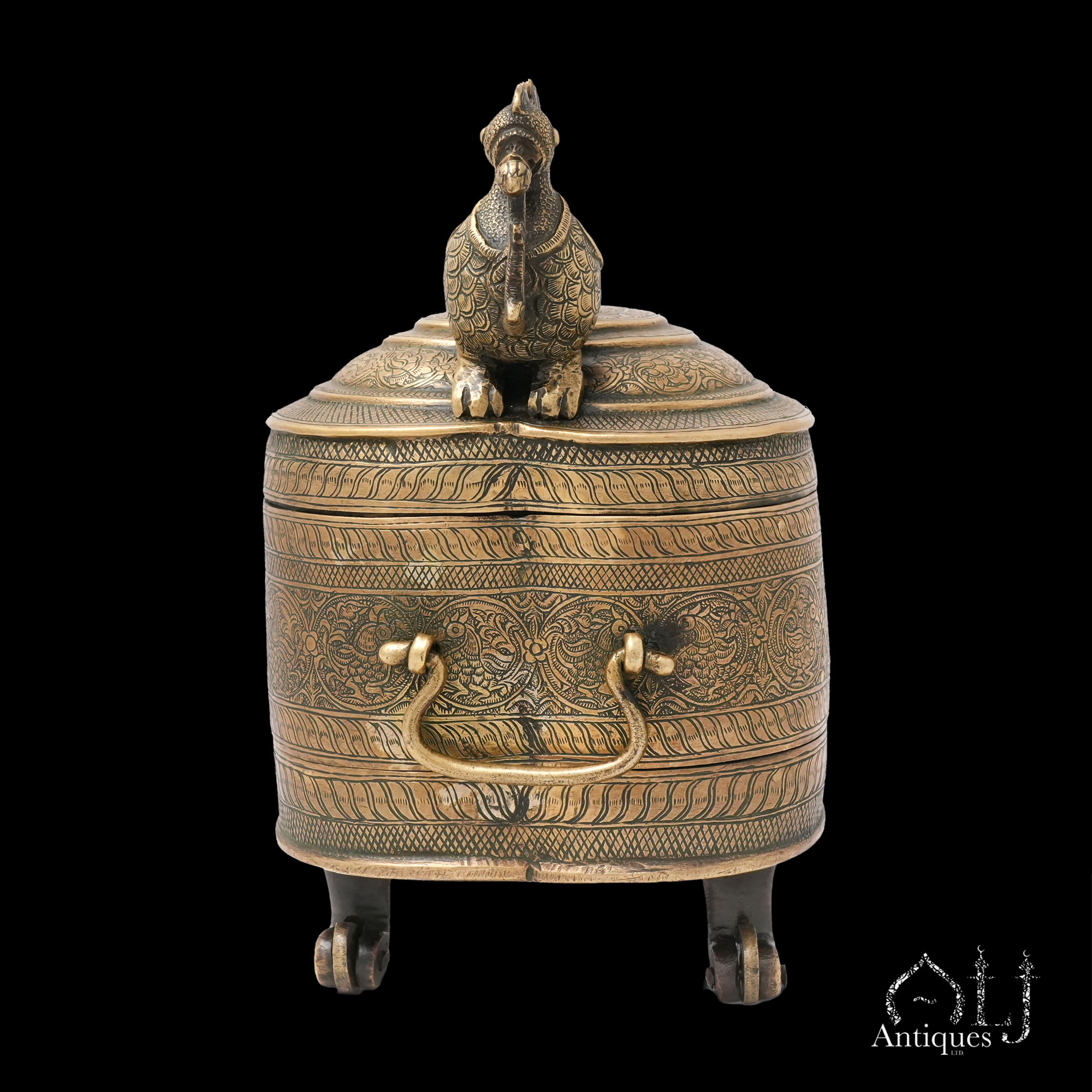
This rare two-layer Deccani brass pandan, cast in an elegant heart-shaped (betel-leaf) form, is a superb example of Central Indian craftsmanship around 1700 AD. The heart form is intimately connected with the cultural and emotional significance of the pan ritual, further enhancing the symbolic value of this container.
Exterior Decoration
The upper body and lid are richly engraved with motifs characteristic of Deccani metalwork:
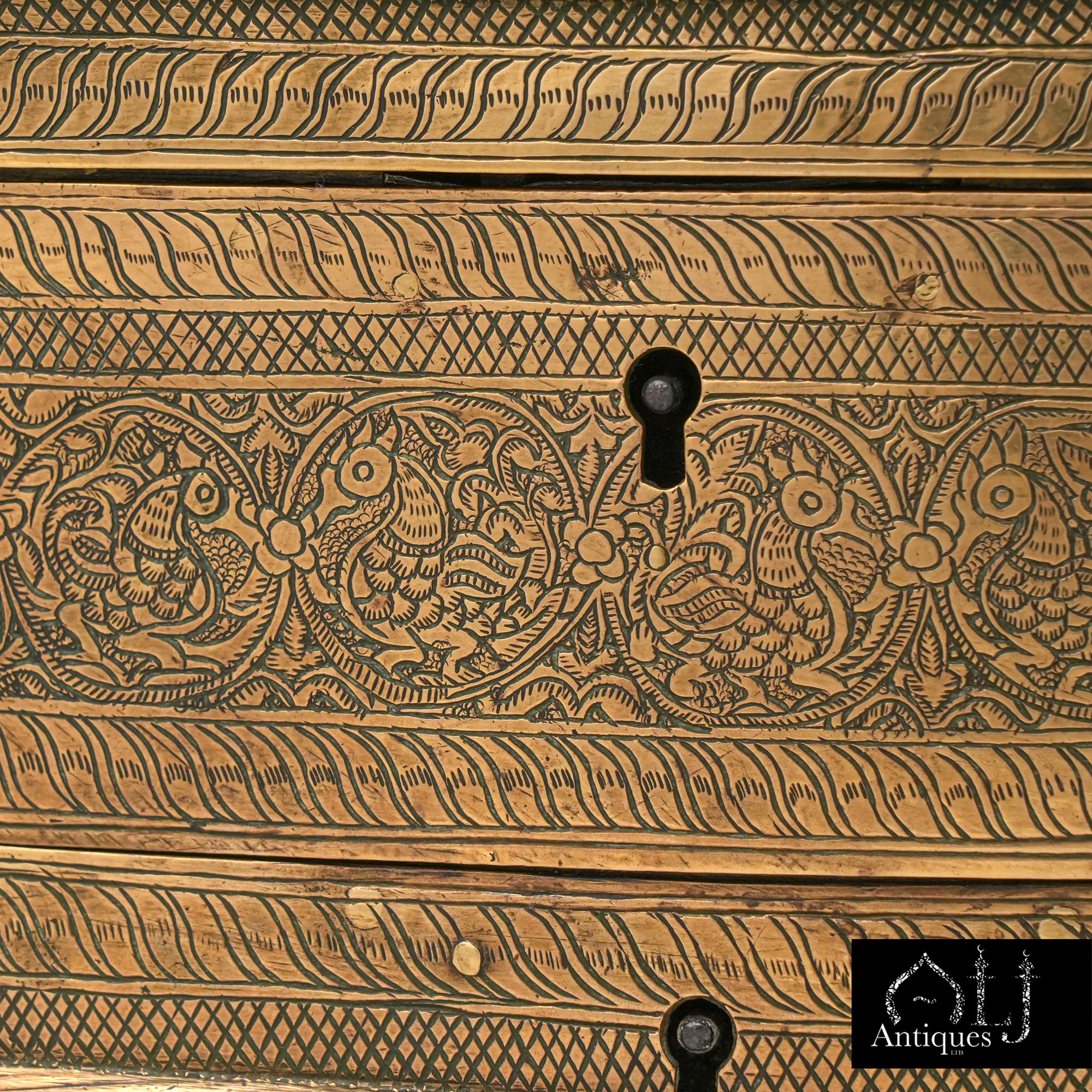
- A continuous procession of confronted Hamsa birds (Annapakshi)—symbols of purity, auspiciousness, and spiritual discernment.
- Scrolling floral work executed with controlled precision.
- A dramatic double-headed eagle (Gandaberunda) centred on the lid, a potent emblem of royal power and protection in South India.
The Tiger-Stripe (Bubri) Motif
Most significantly, the borders of the pandan—executed in multiple horizontal layers—are decorated with a repeated Tiger-stripe motif, known as the Bubri (Babri) pattern.
This stylised tiger-stripe design is a distinctive emblem of the Deccan, later famously adopted and widely propagated during the reign of Tipu Sultan of Mysore (late 18th century). The Bubri motif appears across his armour, weaponry, textiles, architectural decoration, and courtly objects.
While this pandan predates Tipu Sultan chronologically, the motif’s presence reflects an earlier Deccani visual vocabulary that later became central to Mysorean royal symbolism. The repeated, rhythmic tiger-stripe bands in this pandan emphasise its high-status function and its strong connection to Deccani court culture.
The integration of the Hamsa frieze, Gandaberunda, and Bubri borders makes this one of the most symbolically layered and visually compelling Deccani pandans known.
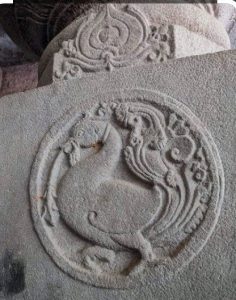
Finial: Sculpted Hamsa Bird
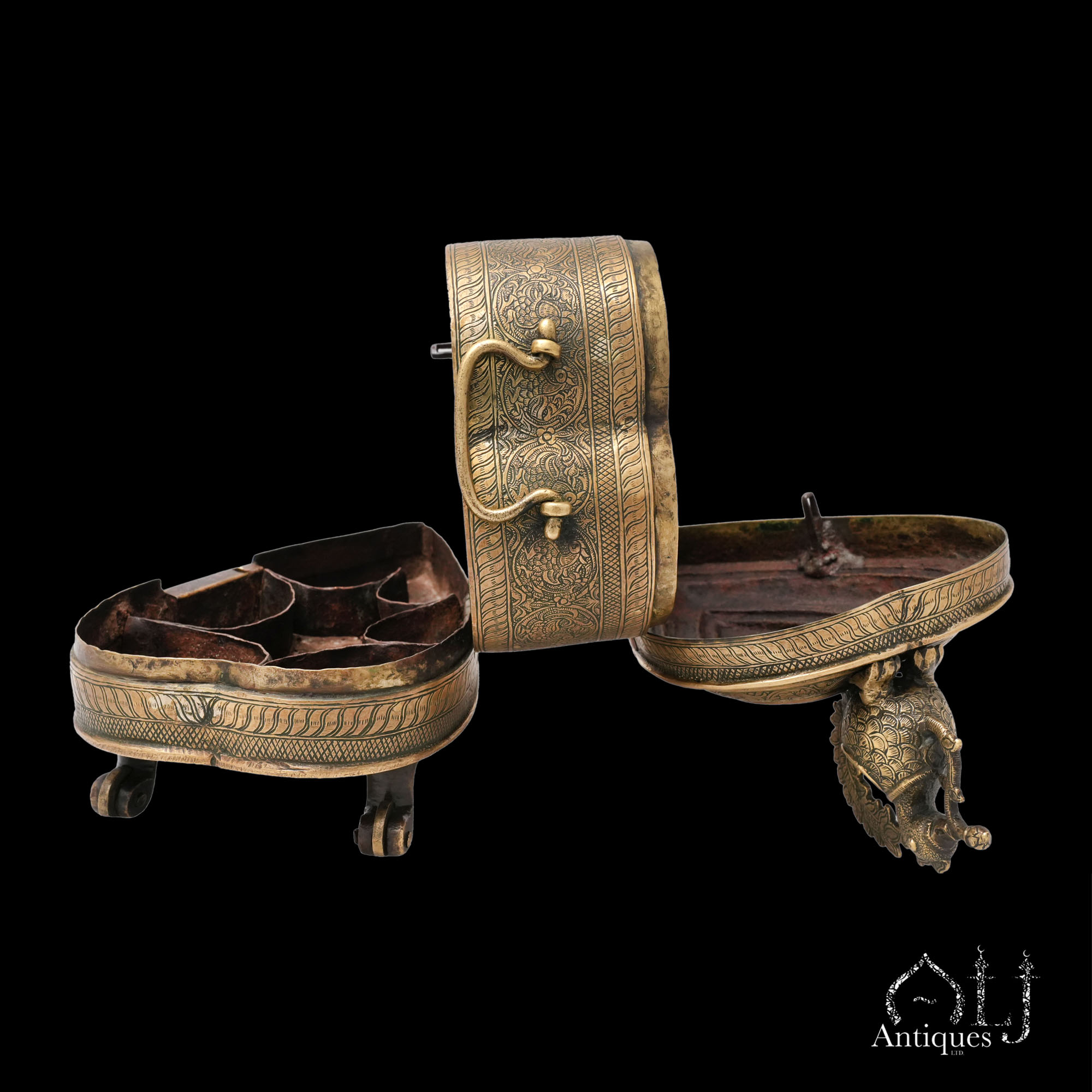
The lid is surmounted by a sculptural standing Hamsa bird, finely cast and detailed. This figure is not only decorative but functional: when the pandan is fully opened, the bird provides stabilising balance.
Construction & Mechanism
The mechanical ingenuity of the piece is exceptional:
- The body opens into two articulated layers, which fan out gracefully.
- The interior contains compartmentalised sections for supari, lime, spices, and aromatics.
- A carrying handle allows the pandan to be held like a small case.
- Two locking brackets originally secured the compartments (keys now absent).
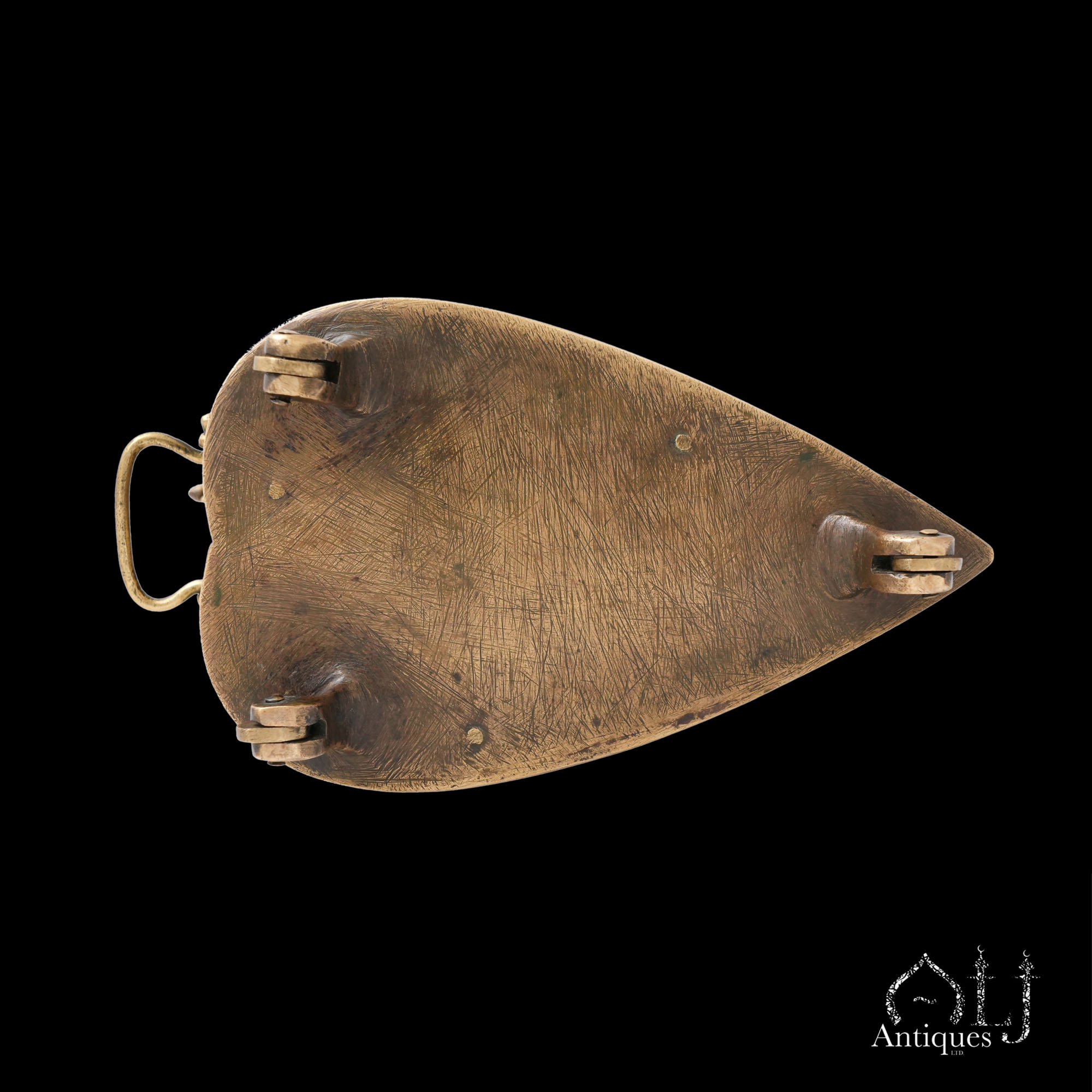
- The container stands on three wheeled feet, enabling it to be rolled across a surface for communal serving.
- The wheels are flattened on one side—a clever feature allowing the pandan to stand securely without movement.

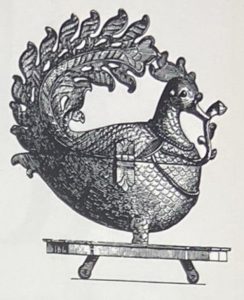
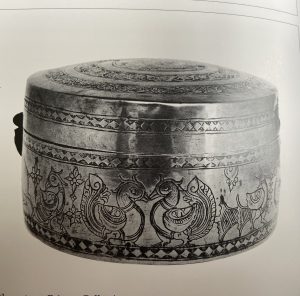
Related Deccan Pandans, Complete Hamsa shaped pandan & another engraved Hamsa friezes closely comparable to the present example, 17/18th century (nos. 462 & 104 pages 270 & 101), Mark Zebrowski, Gold, Silver & Bronze from Mughal India, 1977.
Integrated Praise of the Artist’s Skill (Your Requested Addition)
What makes this pandan truly extraordinary is the artist’s remarkable ability to combine multiple qualities into a single object: the high technical precision of Deccani metalwork, the charming primitivity seen in sculptural details such as the bird’s feet, the ingenious mechanical design of the articulated body, and the delightfully playful, almost toy-like presence of the piece. This fusion of sophistication and rustic whimsy is intentional, giving the pandan an exceptionally engaging character that appeals both intellectually and emotionally. Few objects balance craftsmanship, creativity, and charm with such natural ease.
This combination of technical engineering and how each element demonstrates the craftsman blended utility, imagination, symbolic iconography, sculptural playfulness, humour and how into an object represents the pinnacle of Deccani decorative metalwork used in elite social rituals.