Description
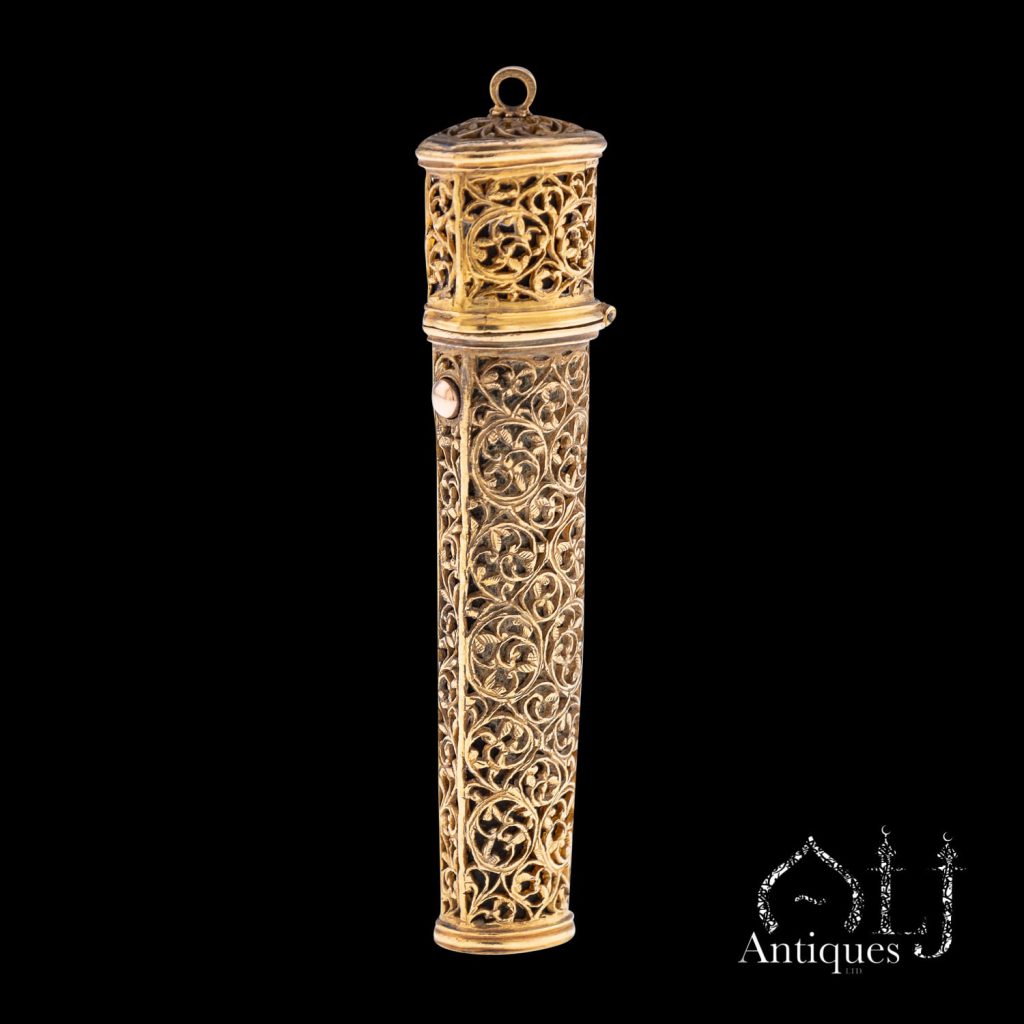
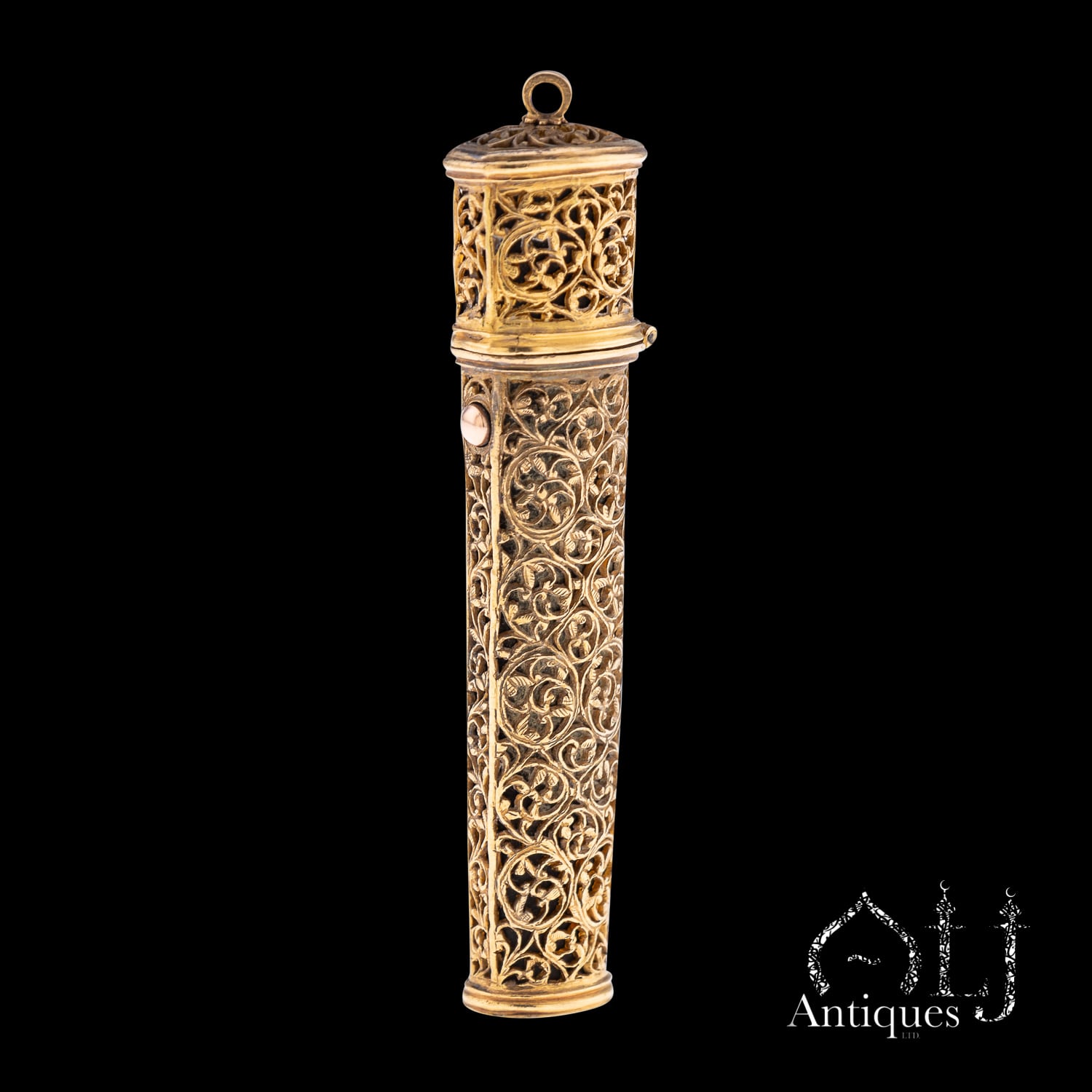
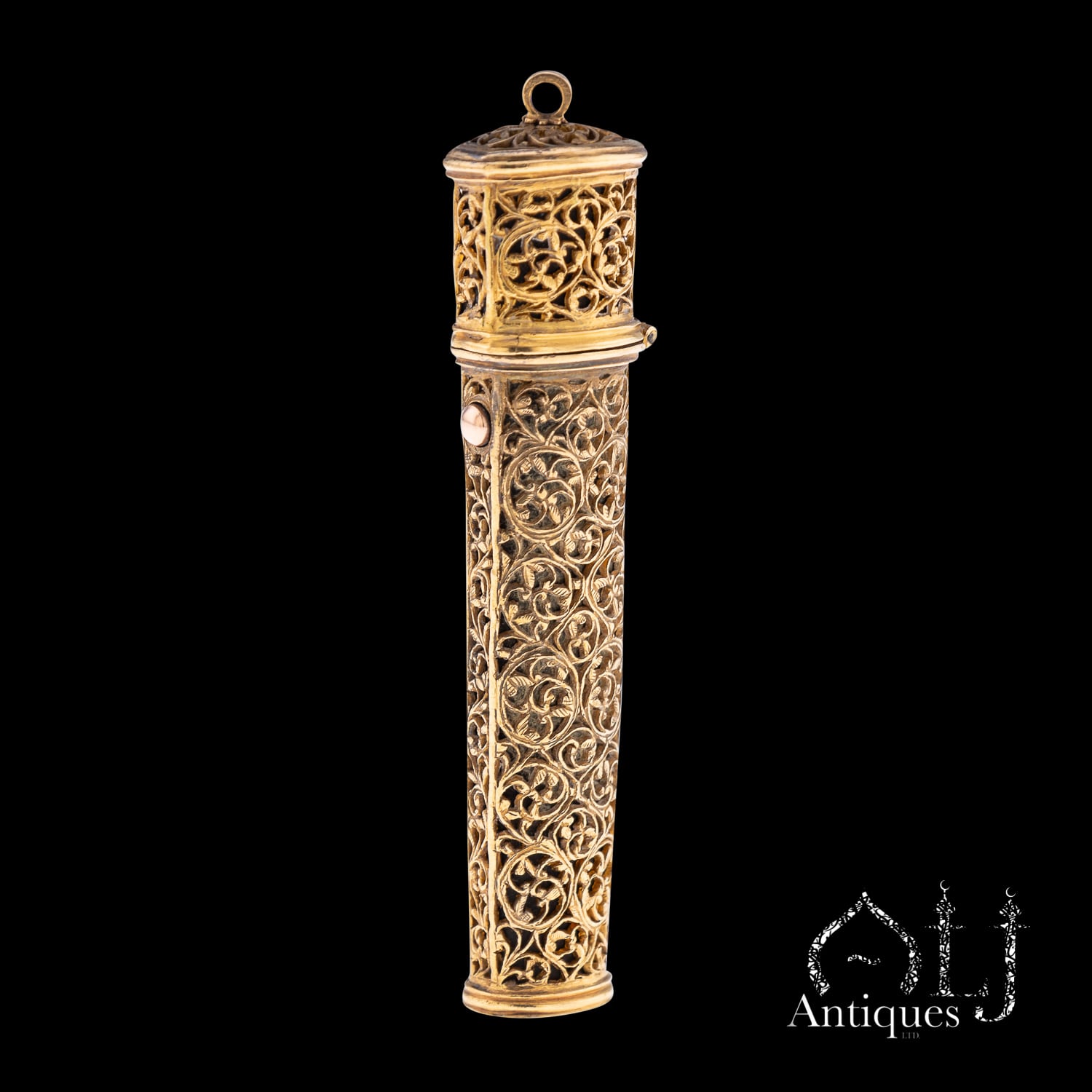
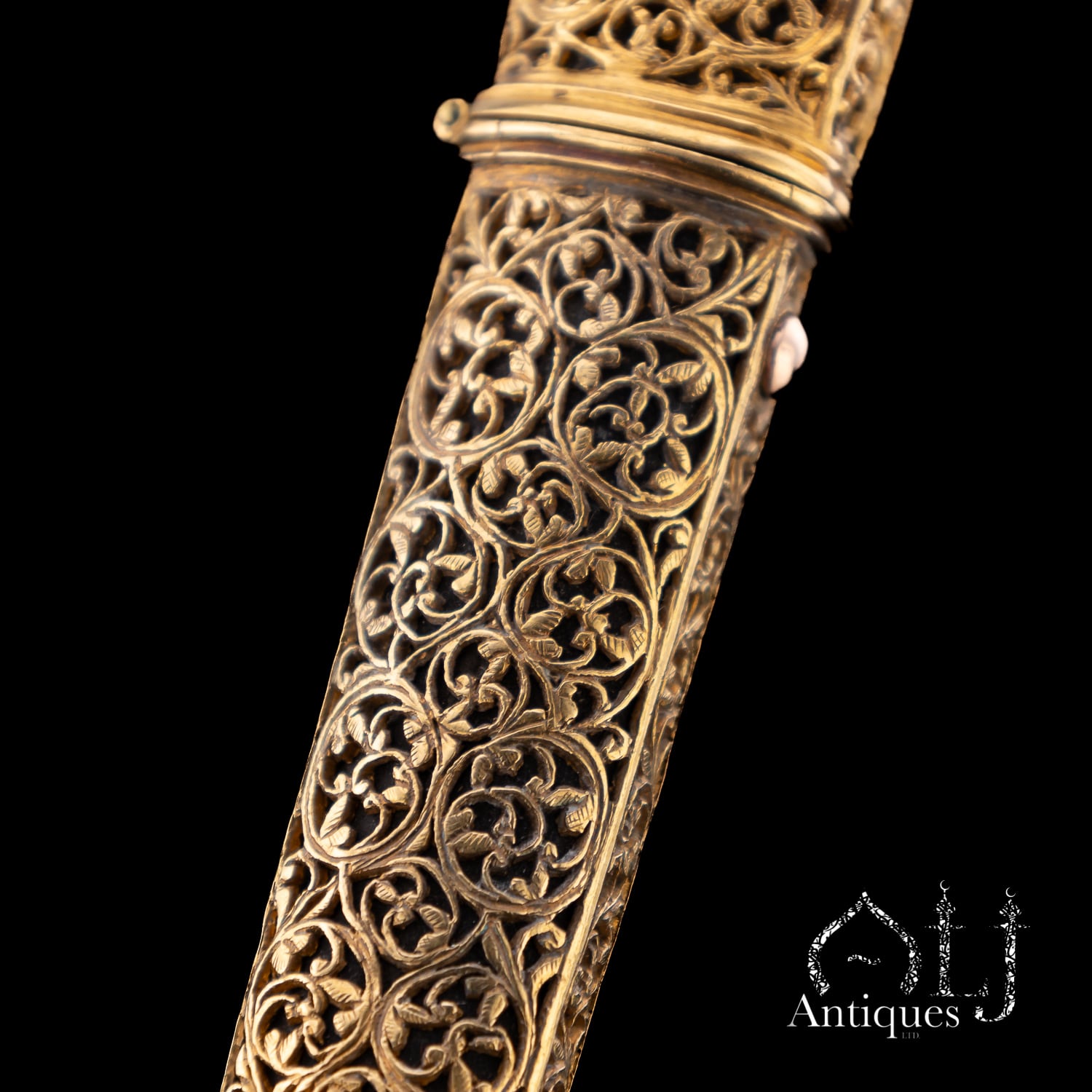
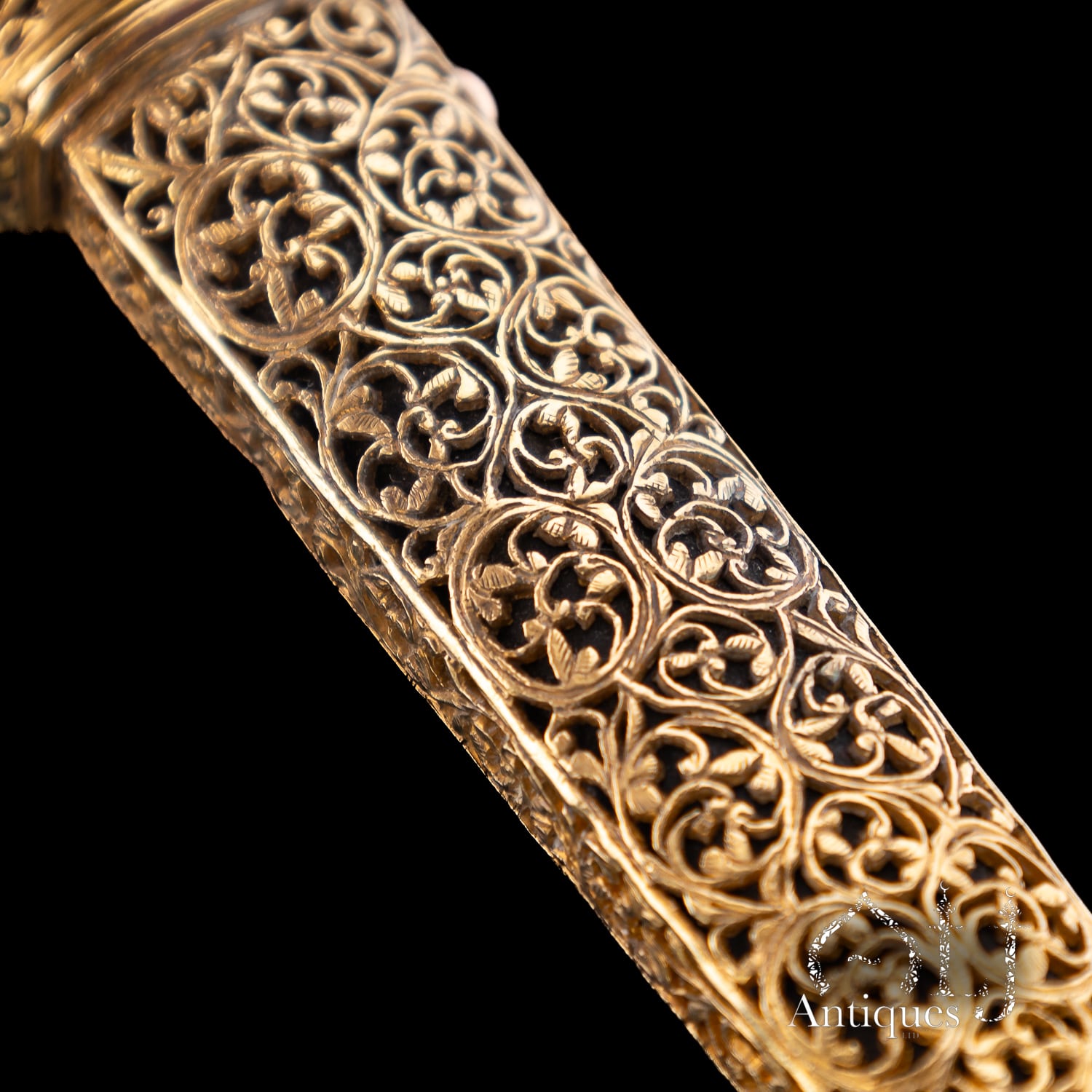
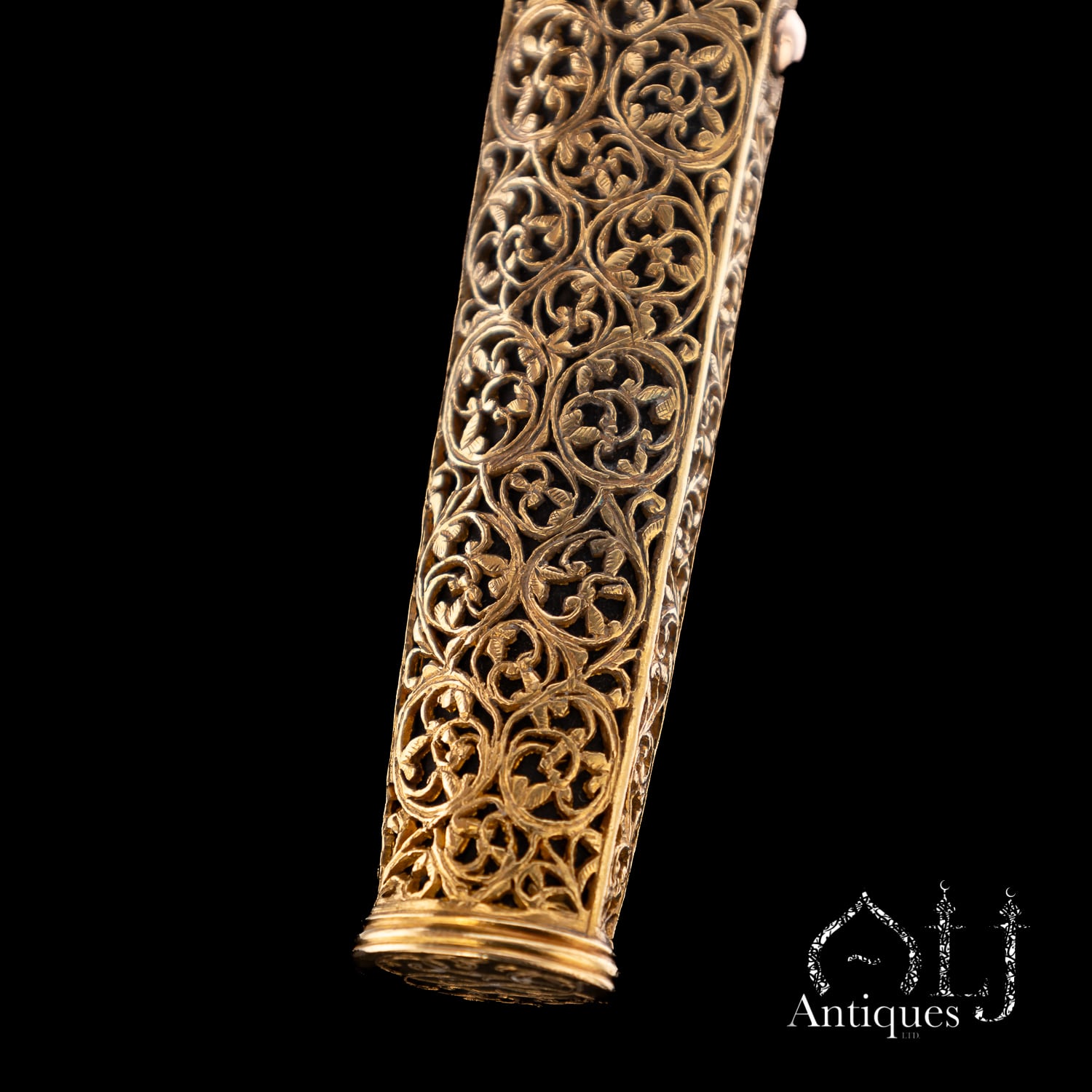
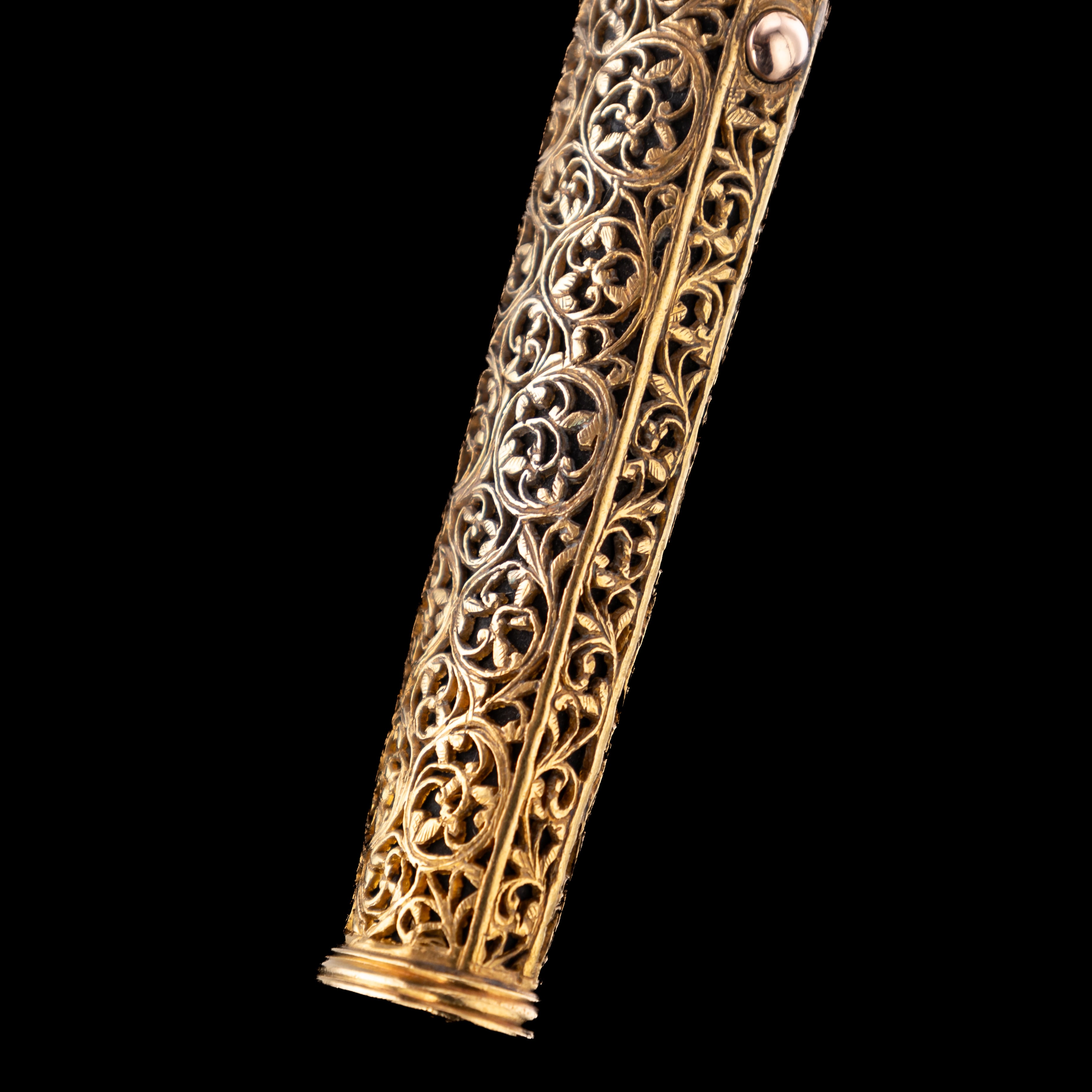
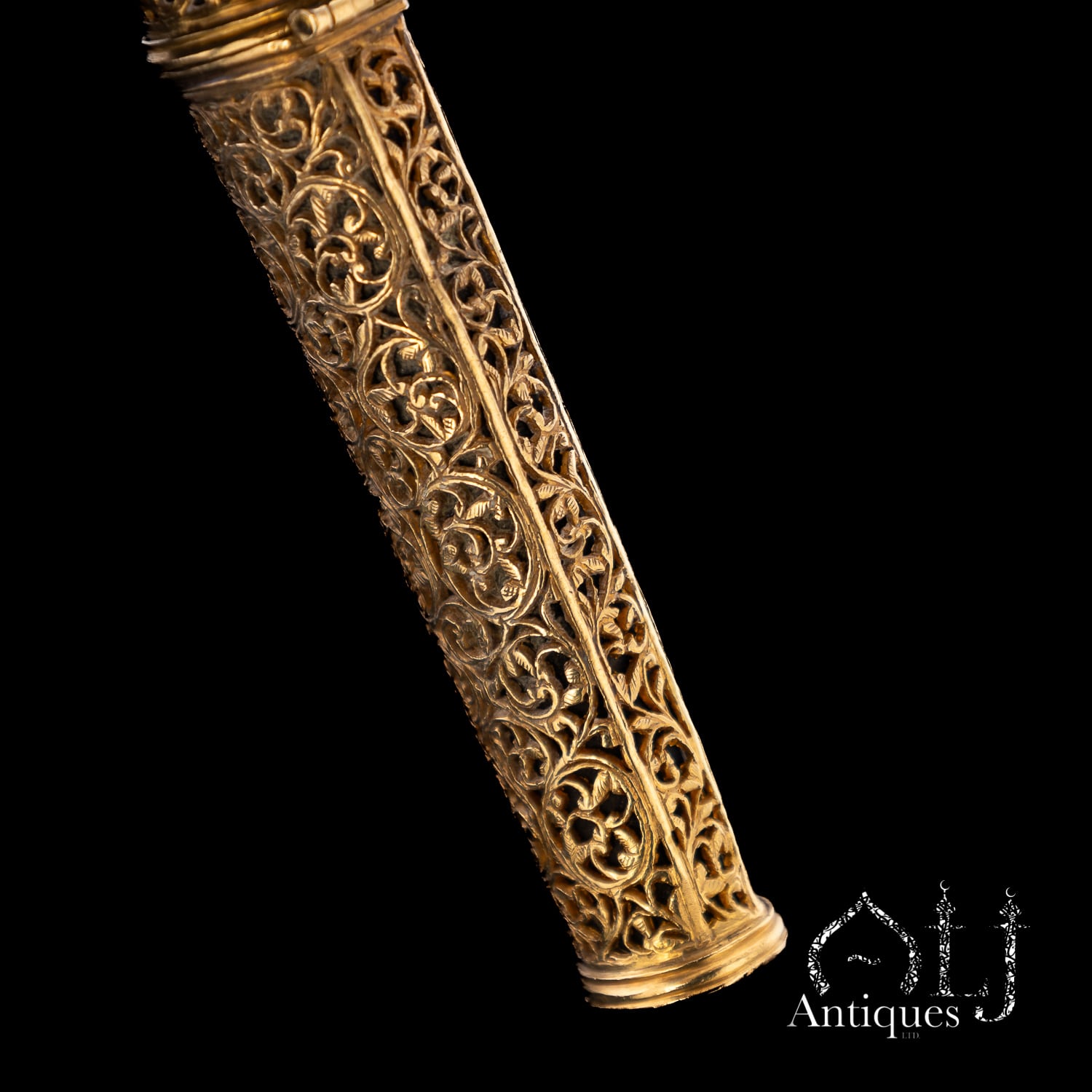
This rare Indo-Portuguese gilded silver needle case (étui), likely produced in India for a Portuguese patron in the late 17th to early 18th century, is an exceptional example of cross-cultural craftsmanship. It is finely pierced and decorated with scrolling vegetal motifs, reflecting the refined silversmithing traditions of Goa or Gujarat, two major centres of Indo-Portuguese metalwork.
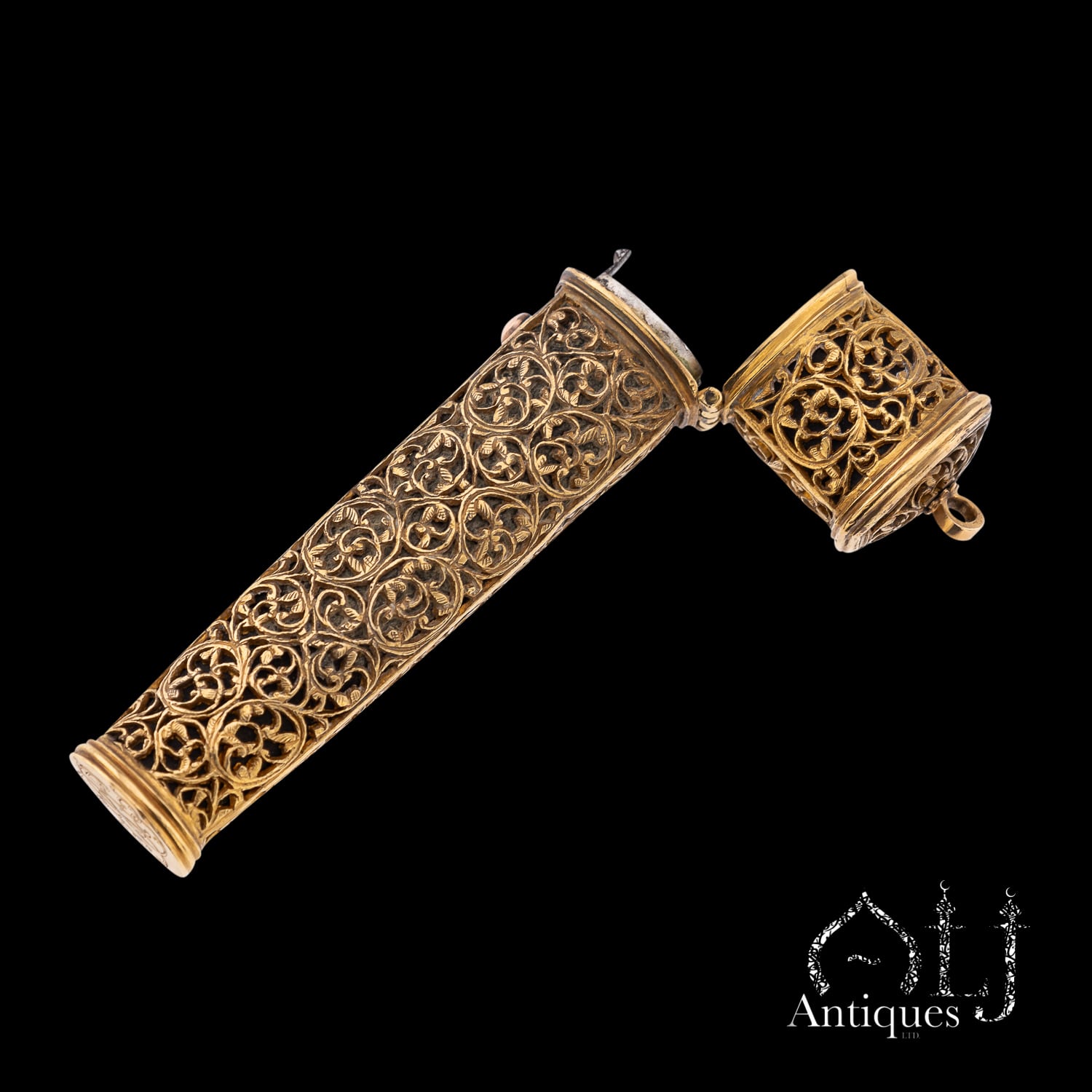
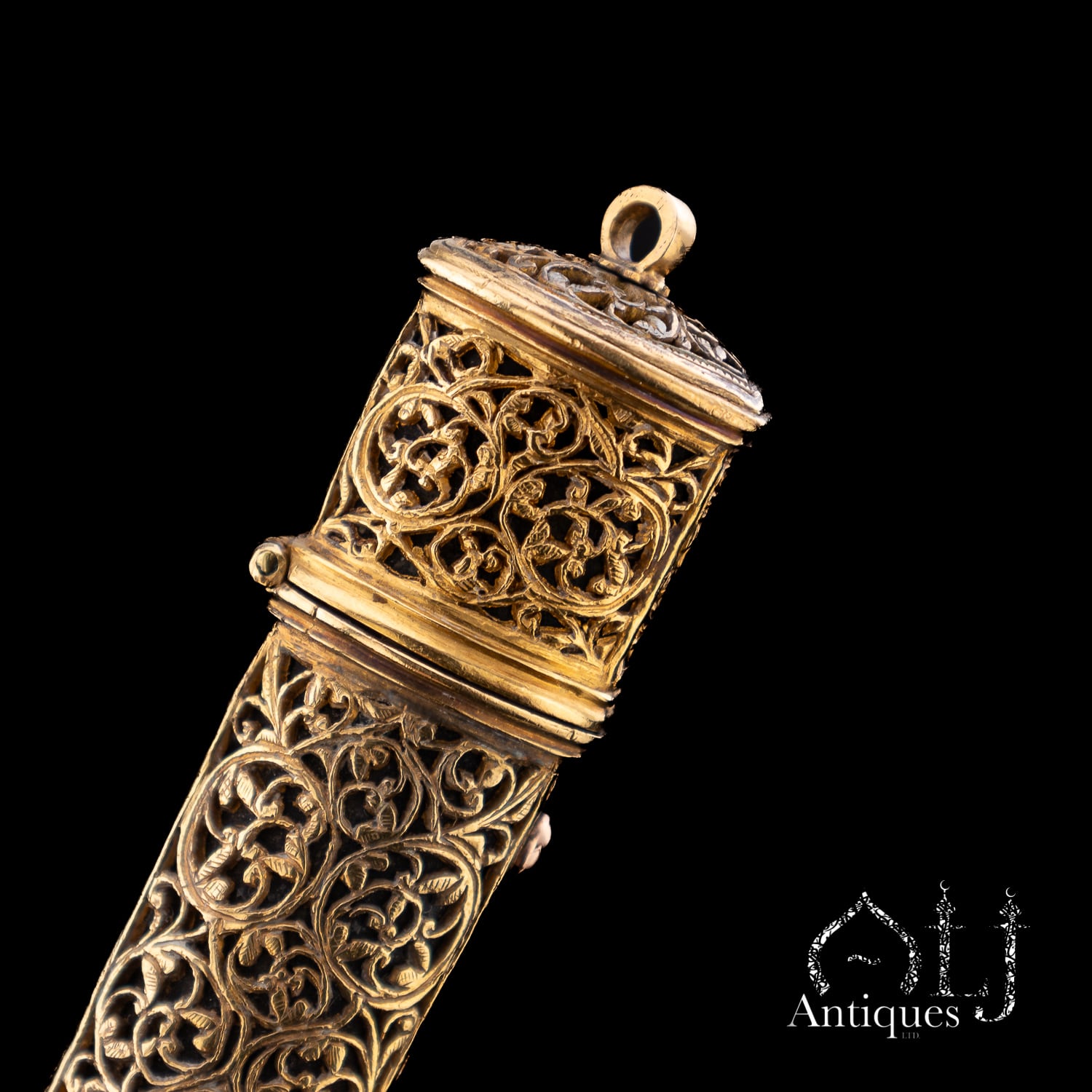
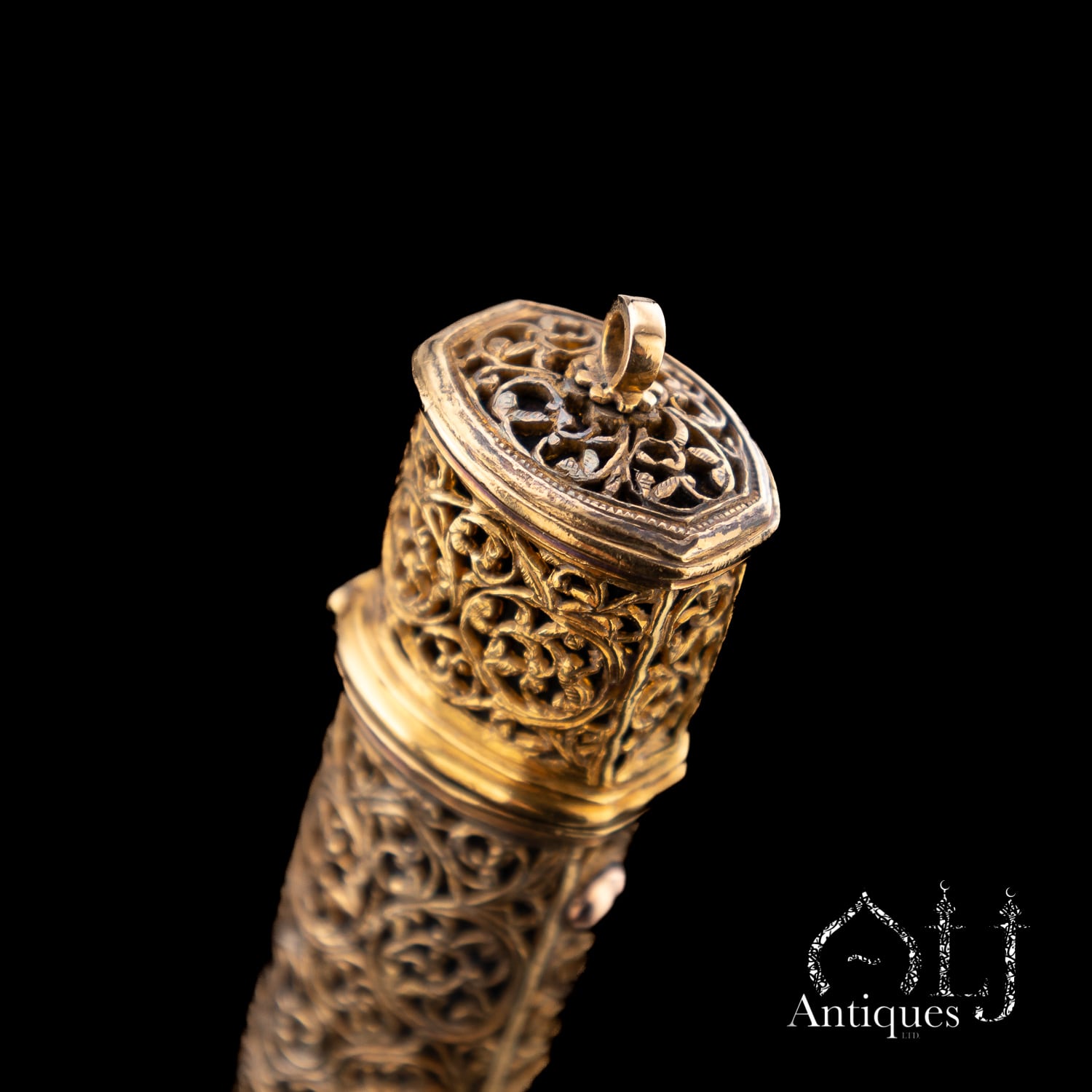
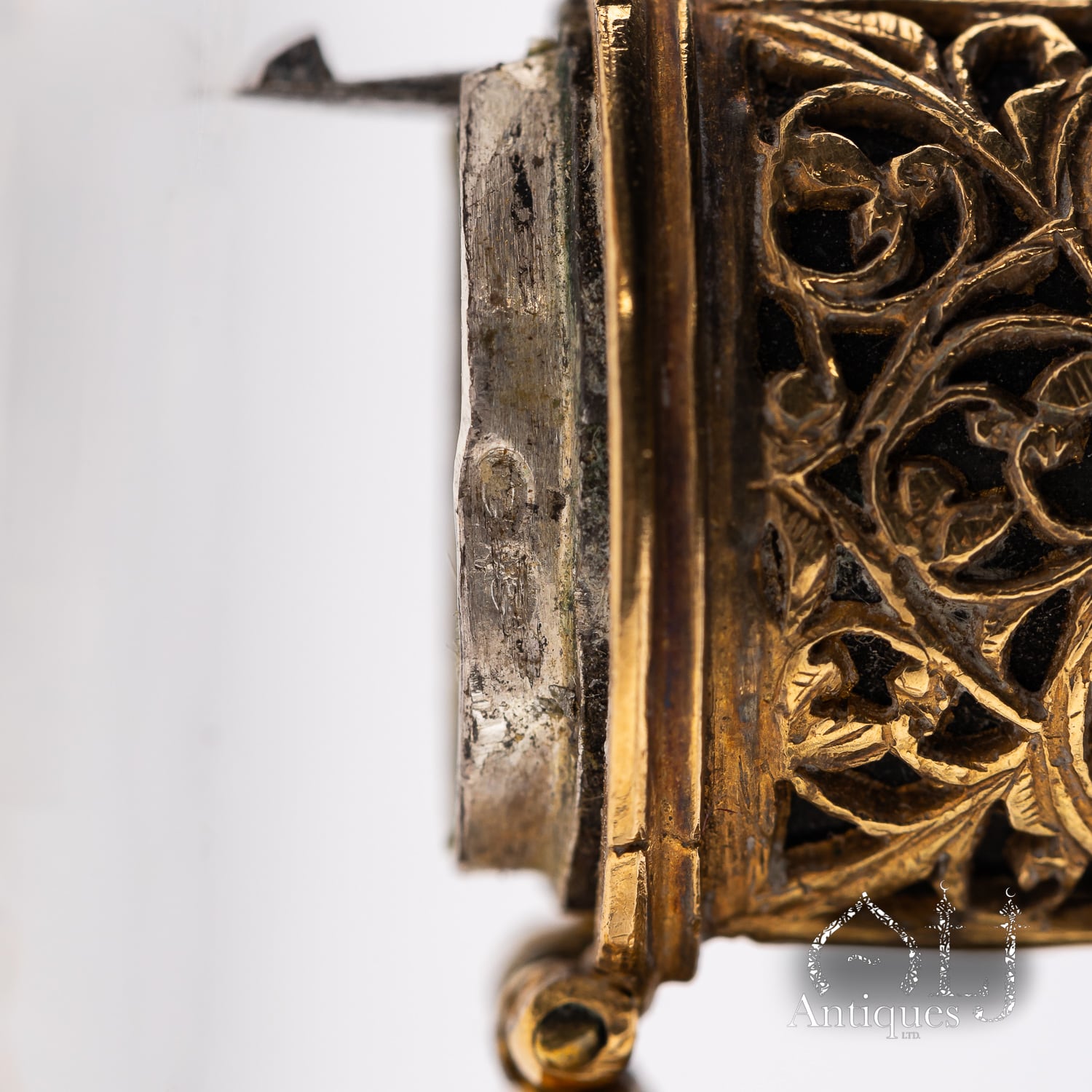
The case is lined with green velvet and consists of a two-part cylindrical body with an oval profile and a domed lid fitted with a small suspension loop. This suggests it was designed to be worn or suspended from a chain as part of a personal sewing kit. Its function was to store embroidery needles, linking it directly to the production of finely embroidered Indo-Portuguese textiles highly valued by European elites.
The exterior is richly gilded and decorated with dense scrolling foliage and leaf patterns arranged in an arabesque style. This ornamentation is characteristic of Indo-Portuguese decorative arts and also appears in related luxury objects such as lacquered furniture and silverwork produced for Portuguese colonial markets.
Comparable vegetal motifs can be seen across South and Southeast Asian luxury production made for export to Europe, including lacquered cabinets and decorative objects from regions such as Myanmar and Thailand. Similar stylistic elements are also found in other Indo-Portuguese silverwork from the same period, showing a shared ornamental vocabulary across different materials and regions.
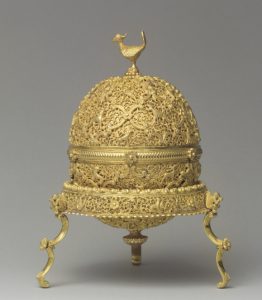
A particularly close parallel can be found in a Goa stone case in the collection of The Metropolitan Museum of Art, New York (acc. no. 1980.228.1–3). This object also features pierced, gilded silver decoration with scrolling vegetal motifs, closely related in style to the present étui.
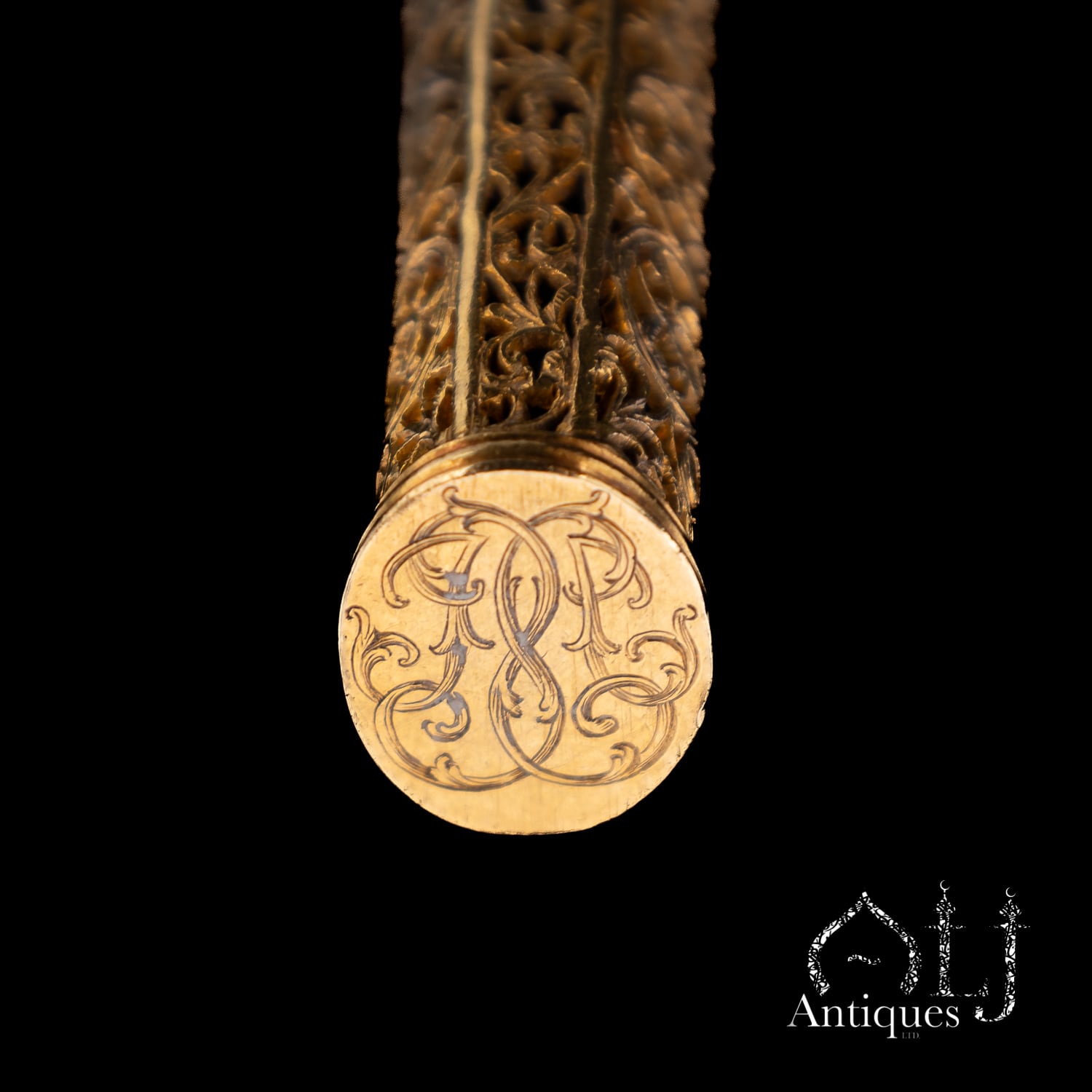
The base of the needle case is engraved with the initials “JS,” likely indicating ownership. Two small marks on the rim may represent import or assay marks, suggesting circulation within European trade networks. These details indicate that the object was part of aristocratic exchange between India and Portugal.
This piece sits within a wider tradition of Indo-Portuguese silverwork that blends Indian craftsmanship with European forms and decorative preferences. Comparable works from Goa and Gujarat demonstrate similar techniques and highlight the cultural exchange that shaped luxury production in the early modern Portuguese world.
Overall, this object is a refined example of Indo-Portuguese artistry and reflects the global trade and artistic networks of the 17th and 18th centuries. It would be a strong addition to any collection of European colonial-era decorative arts.