Description
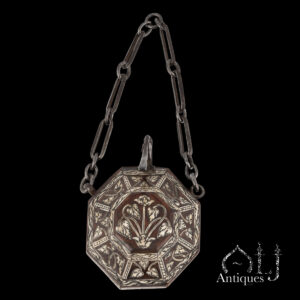
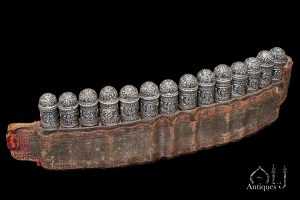
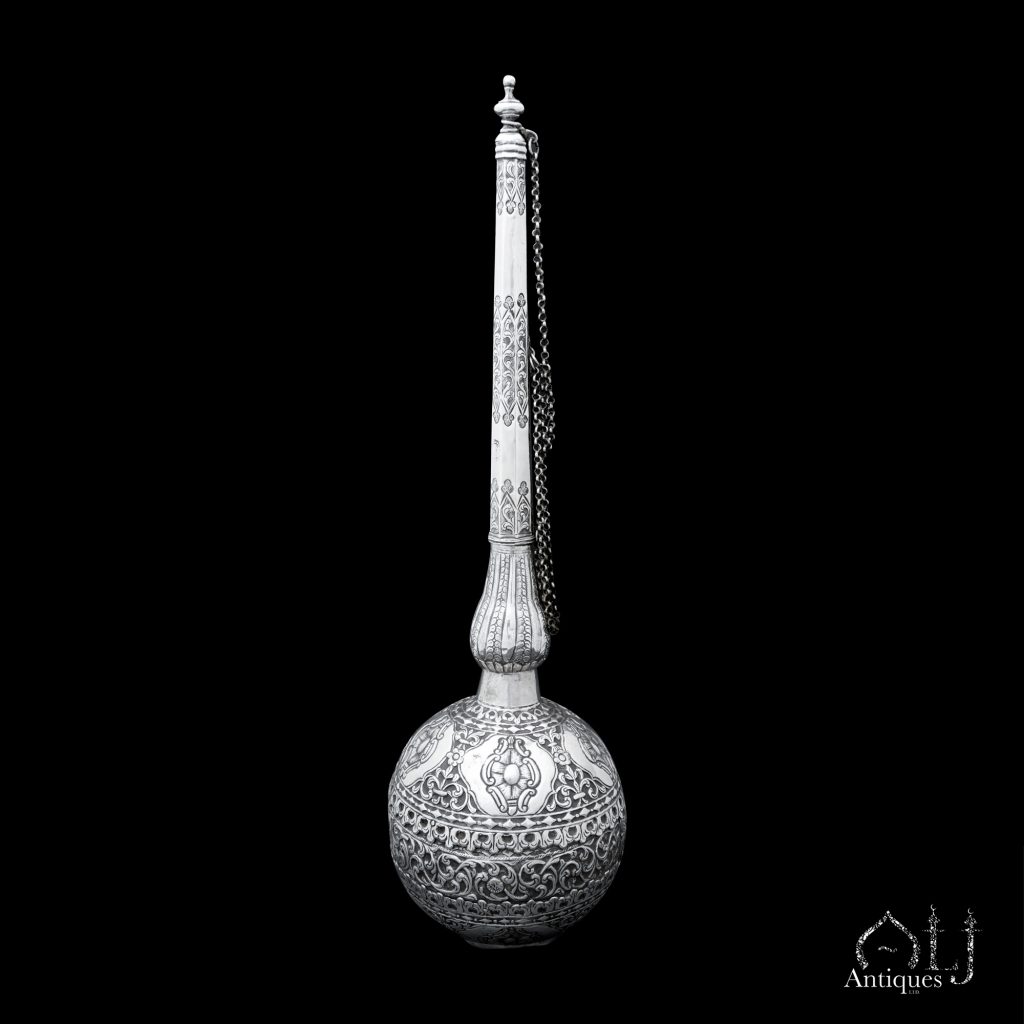
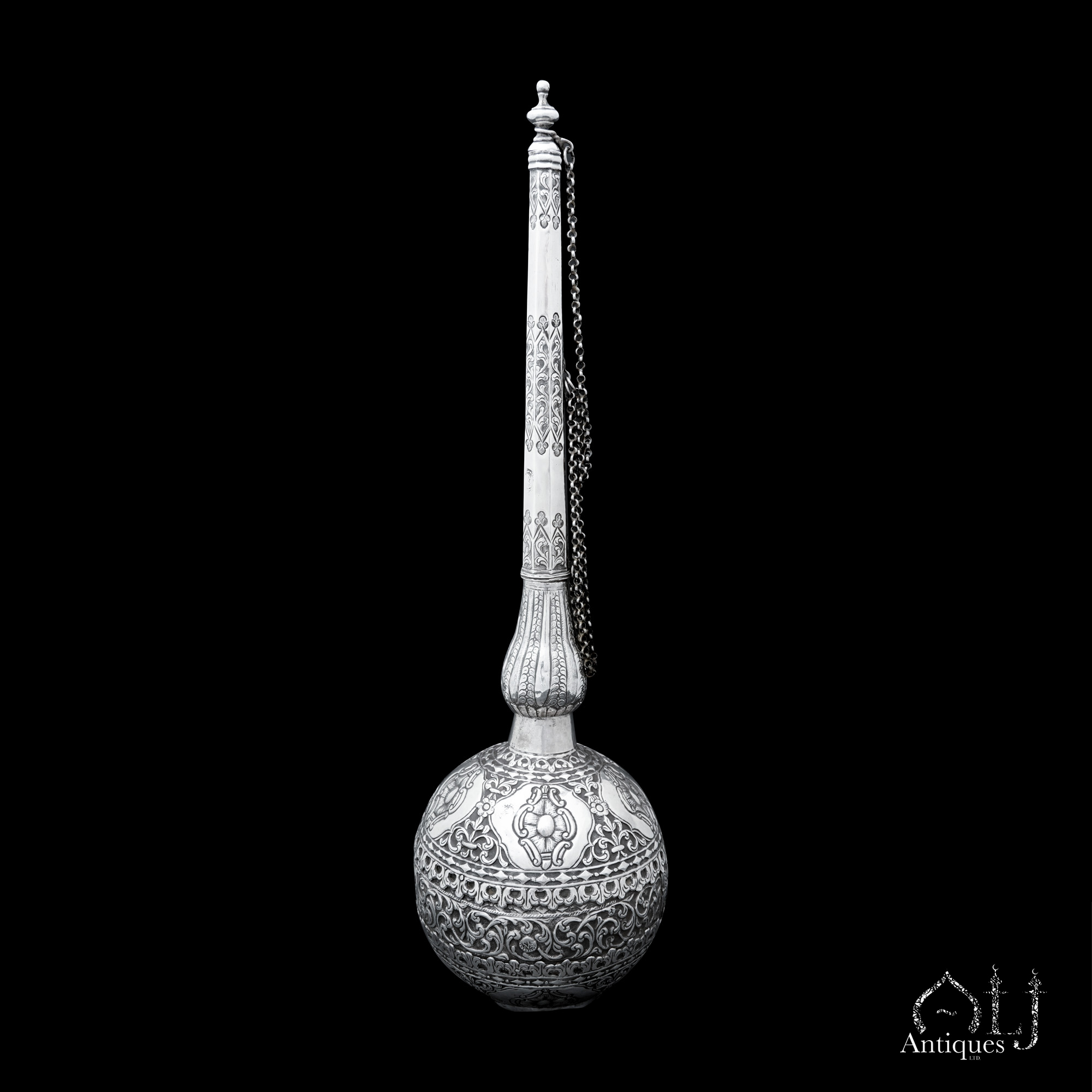
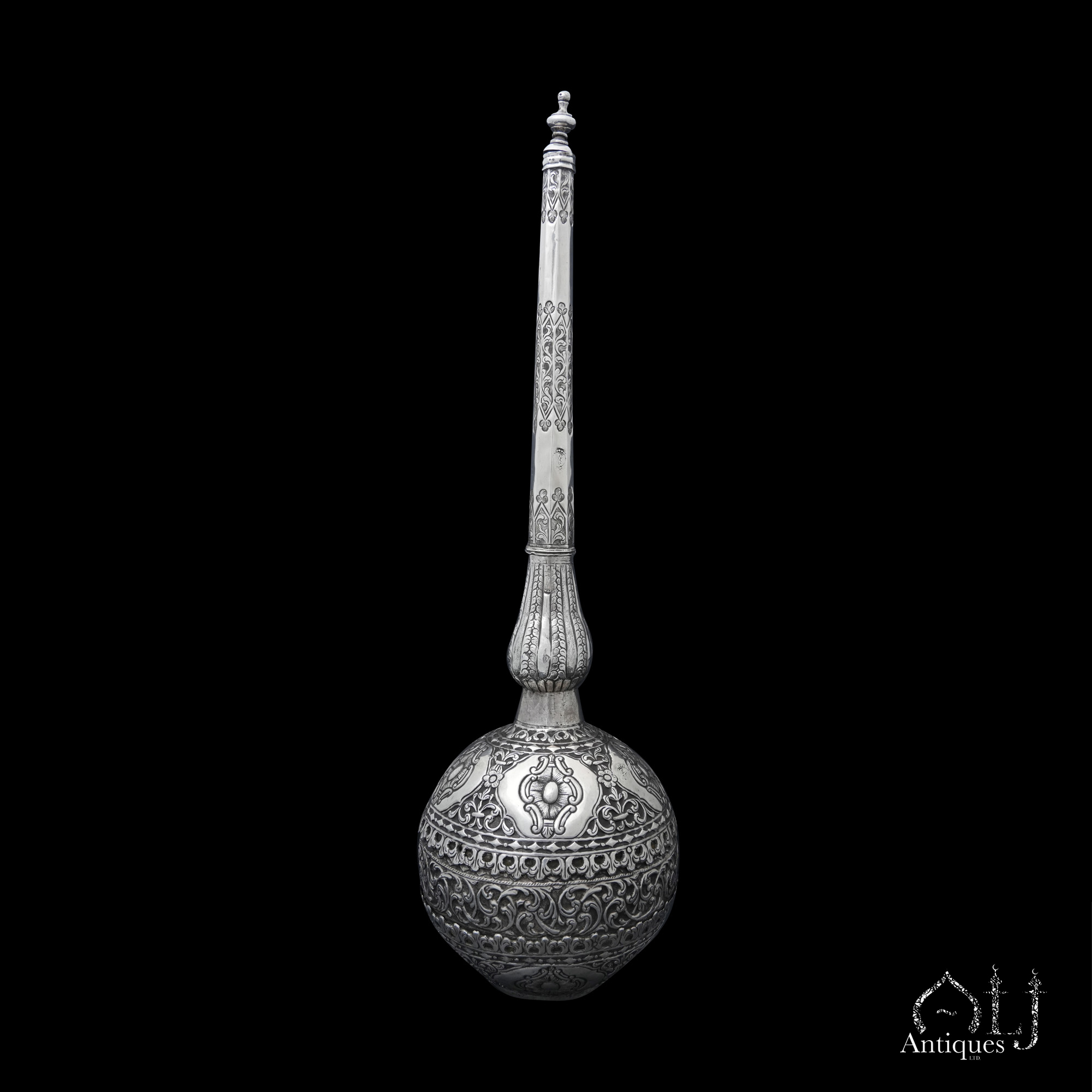
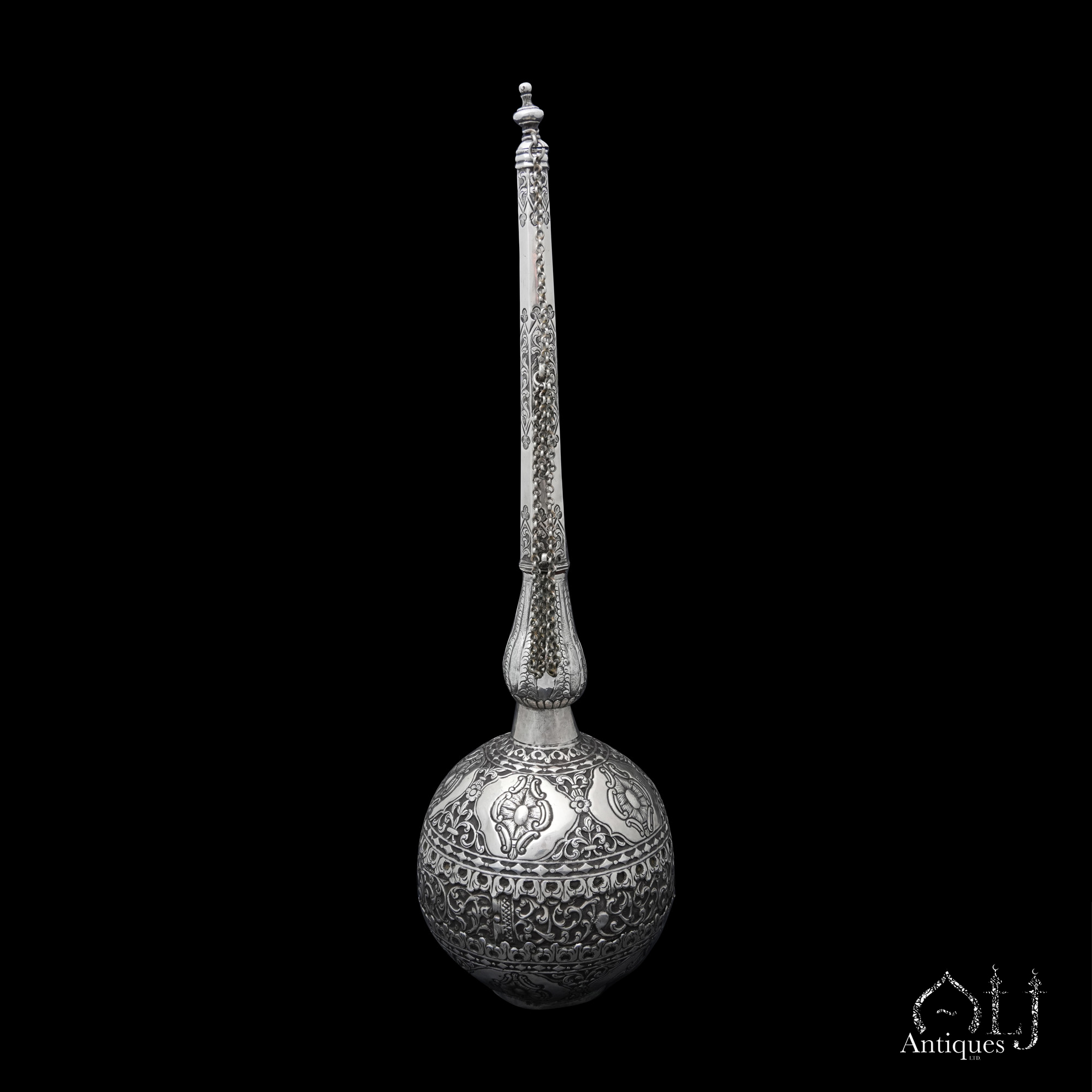
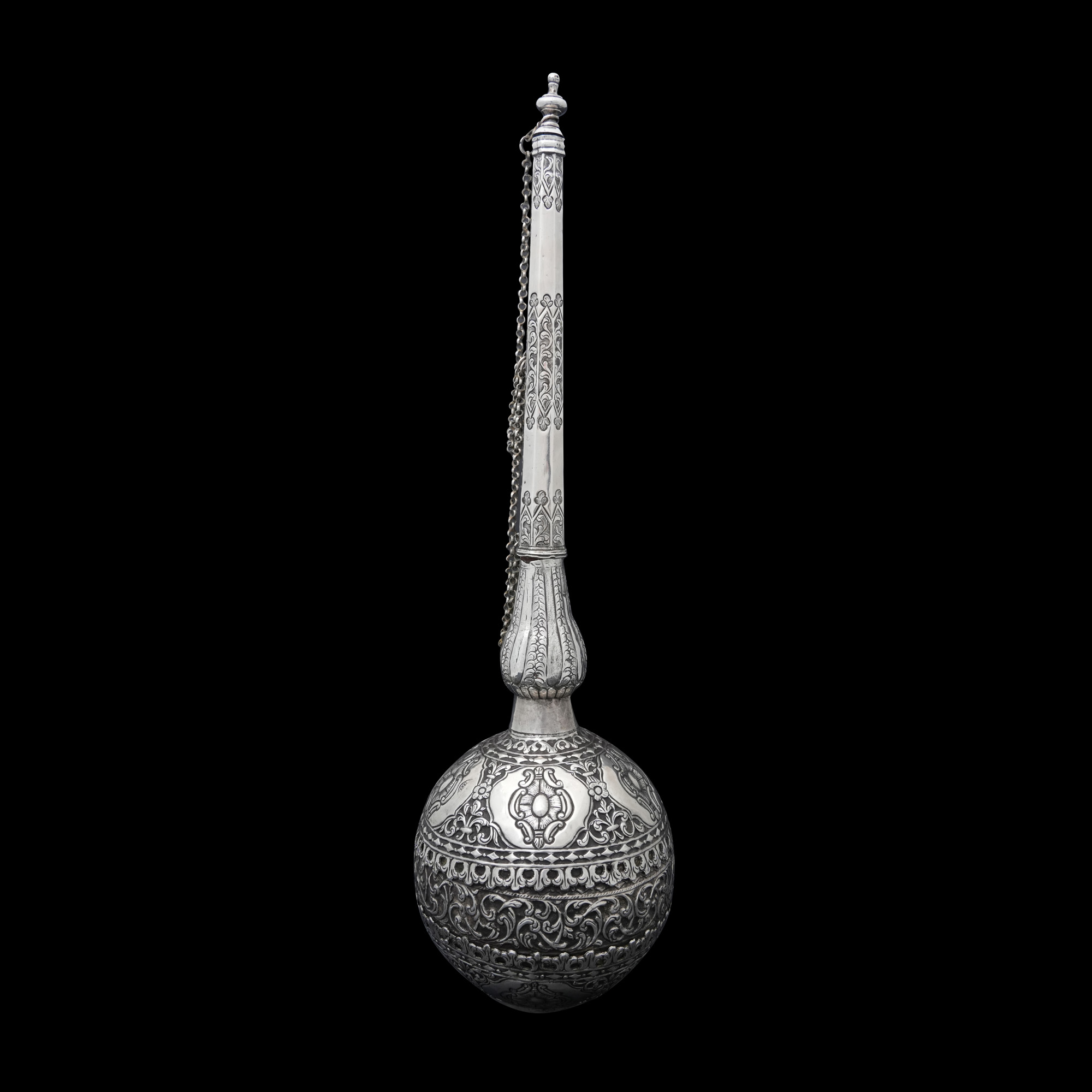
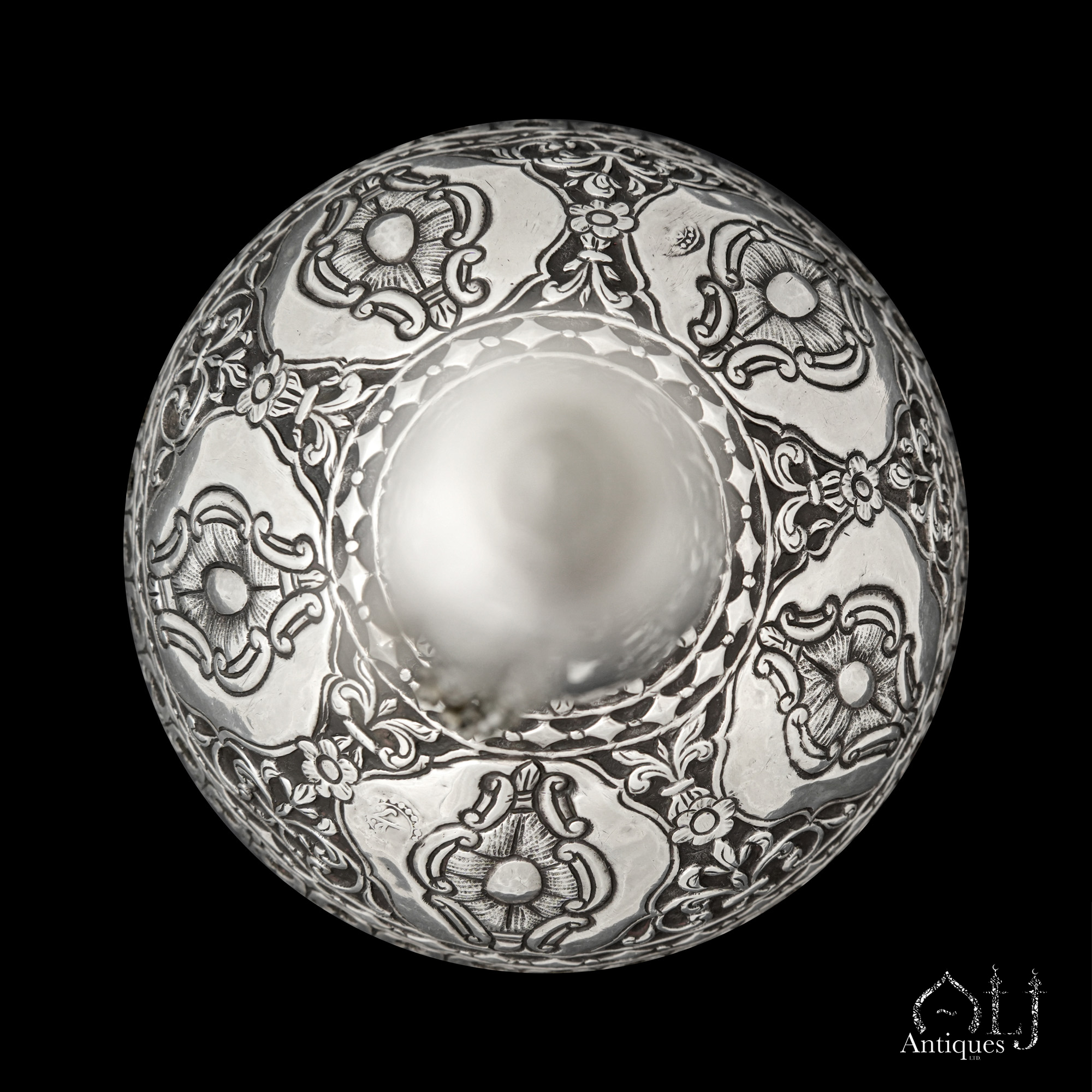
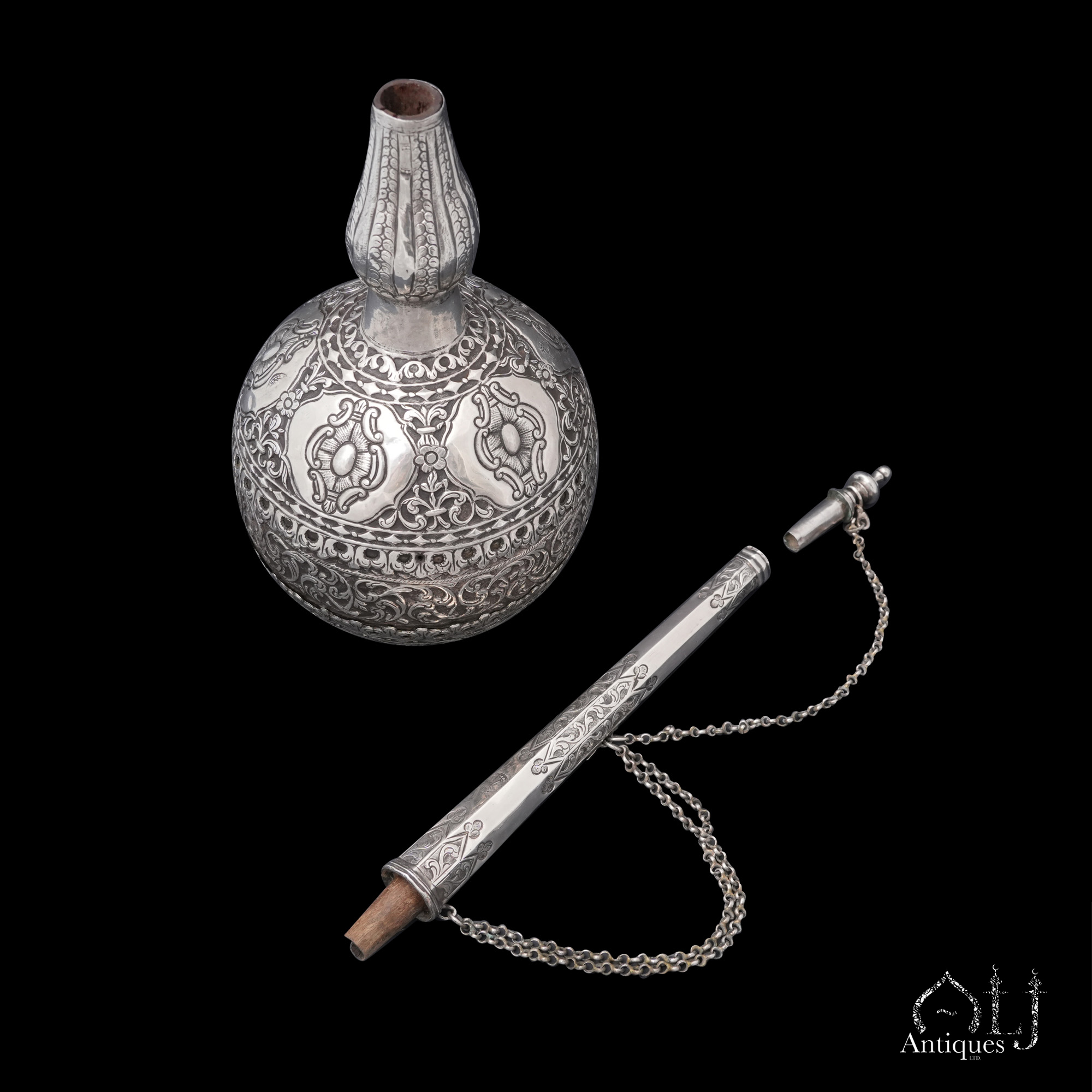
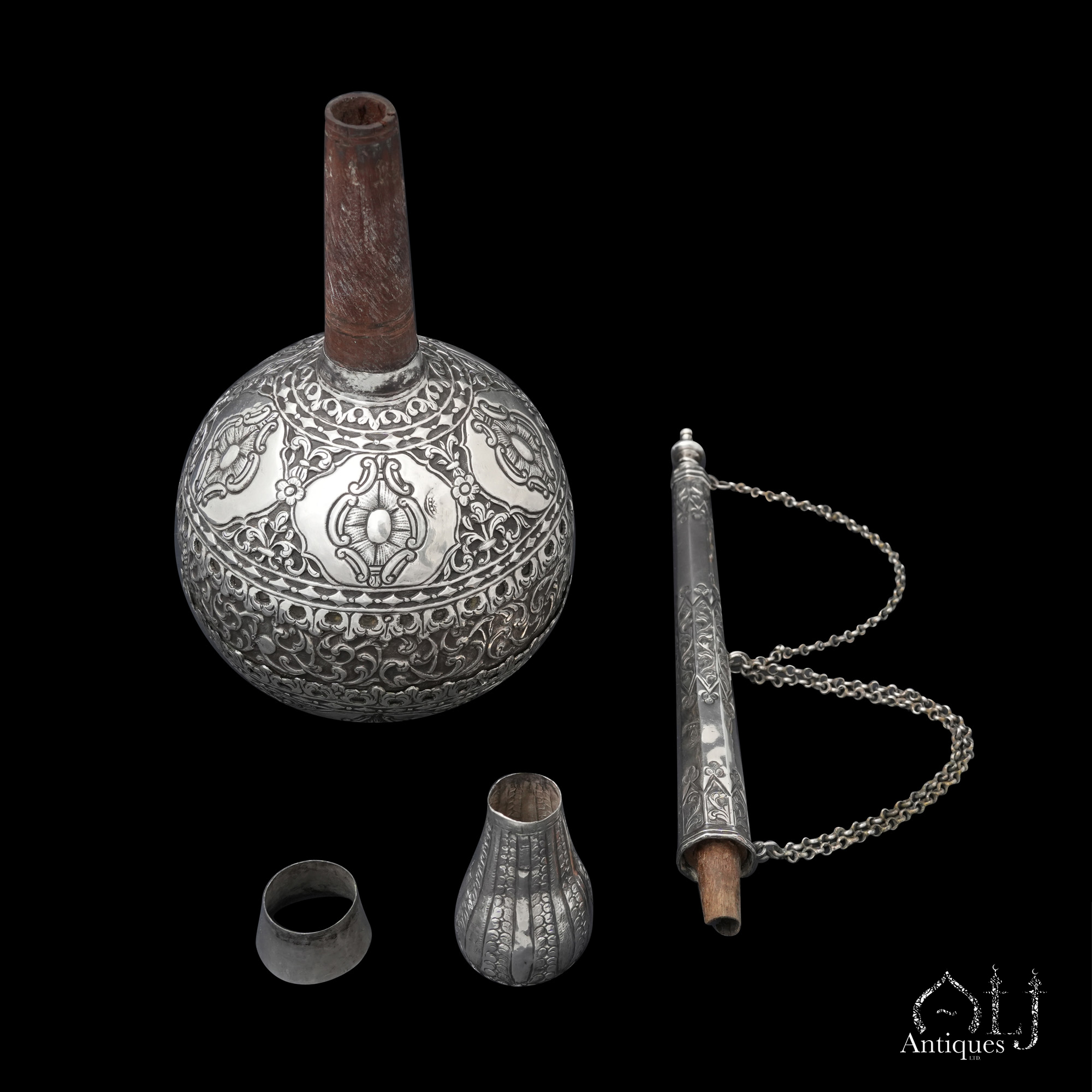
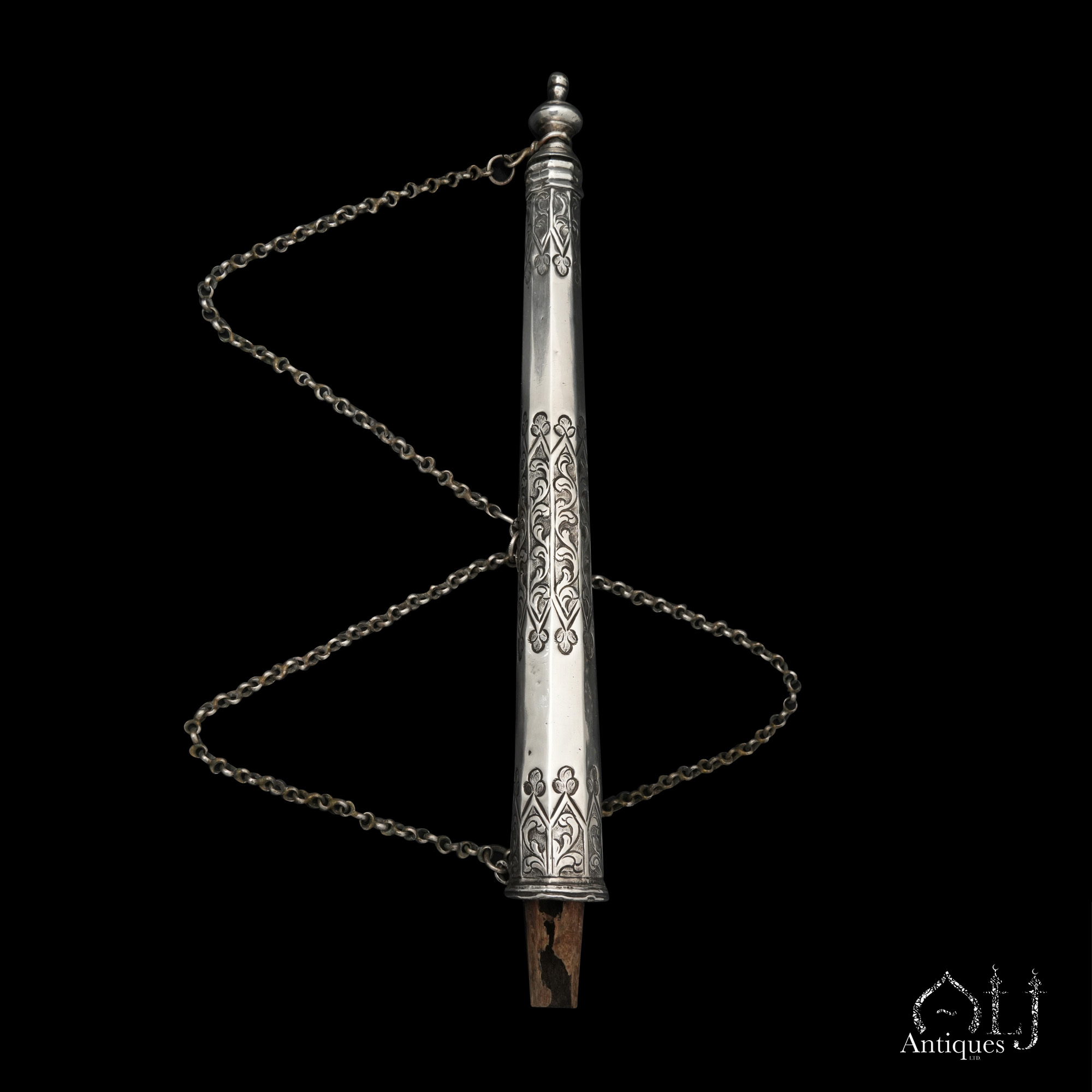
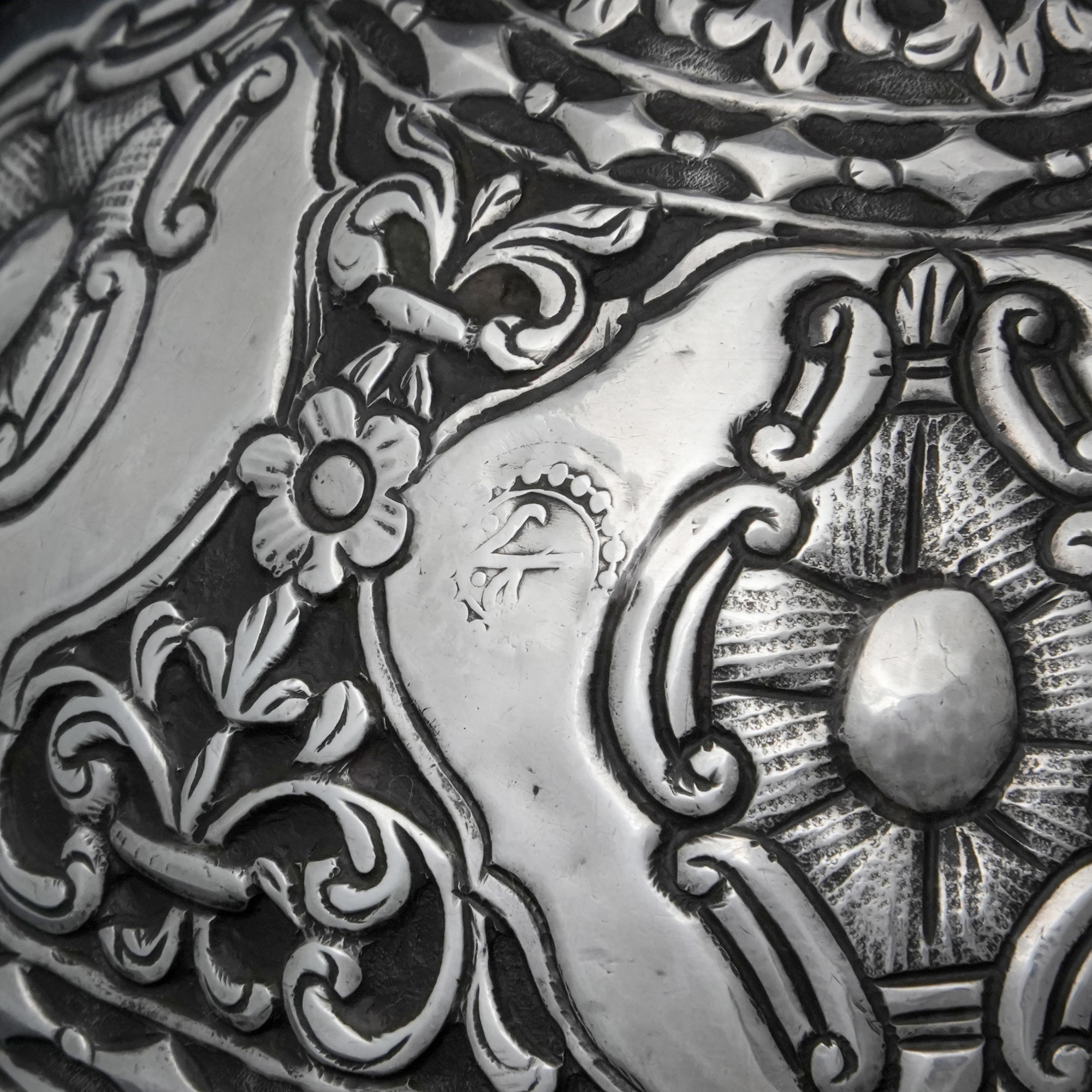
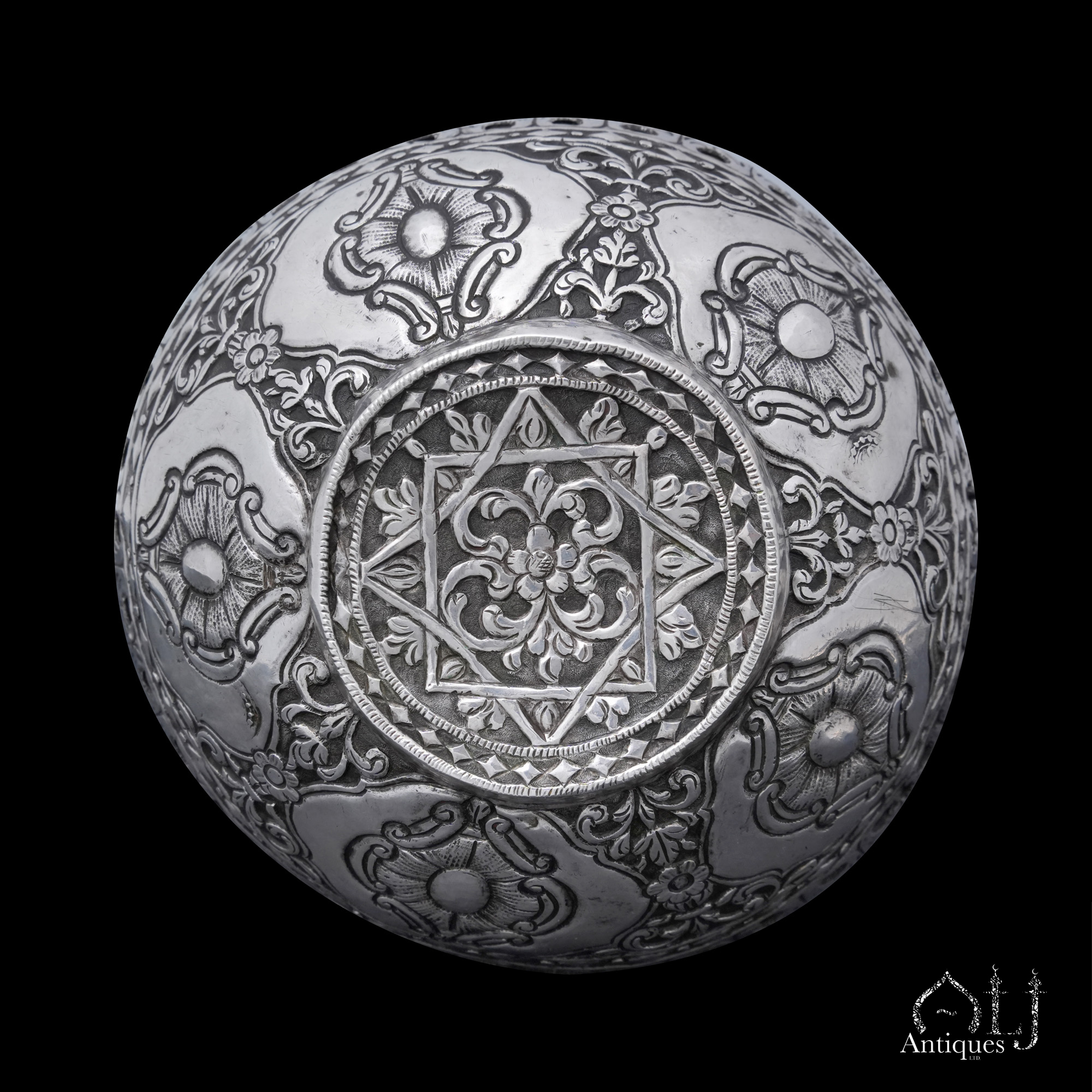
This exceptionally rare and important Algerian silver-mounted large gunpowder flask, powder bottle, canteen, or Baroudière (Arabic: بارودية), is a remarkable survival from the Regency of Algiers during the Ottoman period. Impressive in both scale and craftsmanship, the flask is constructed around a carved wooden body richly mounted with finely worked silver and fitted with a long detachable neck retaining its original stopper and suspension chains. The globular reservoir is lavishly decorated with deeply chased and repoussé floral scrollwork, rosettes, leafy arabesques, and elegant ornamental motifs characteristic of the sophisticated artistic traditions that flourished in Ottoman Algeria. The underside is centred by a prominent eight-pointed intertwined star, enclosing a floral medallion, a protective and auspicious motif widely employed throughout the Islamic world, particularly in the decorative arts of North Africa and Islamic Al-Andalus (Andalusian Spain), where such geometric designs symbolised harmony, protection, and spiritual balance.
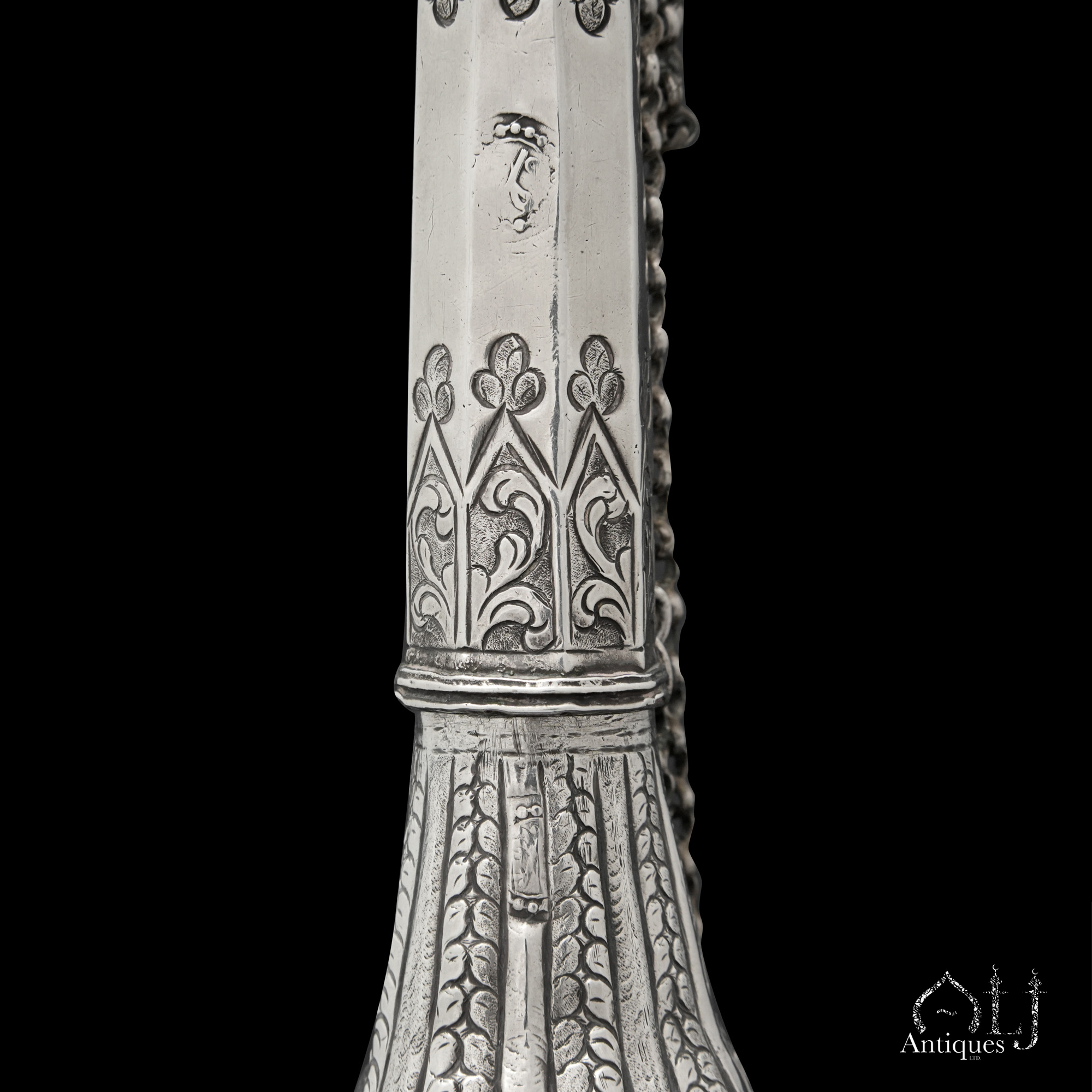
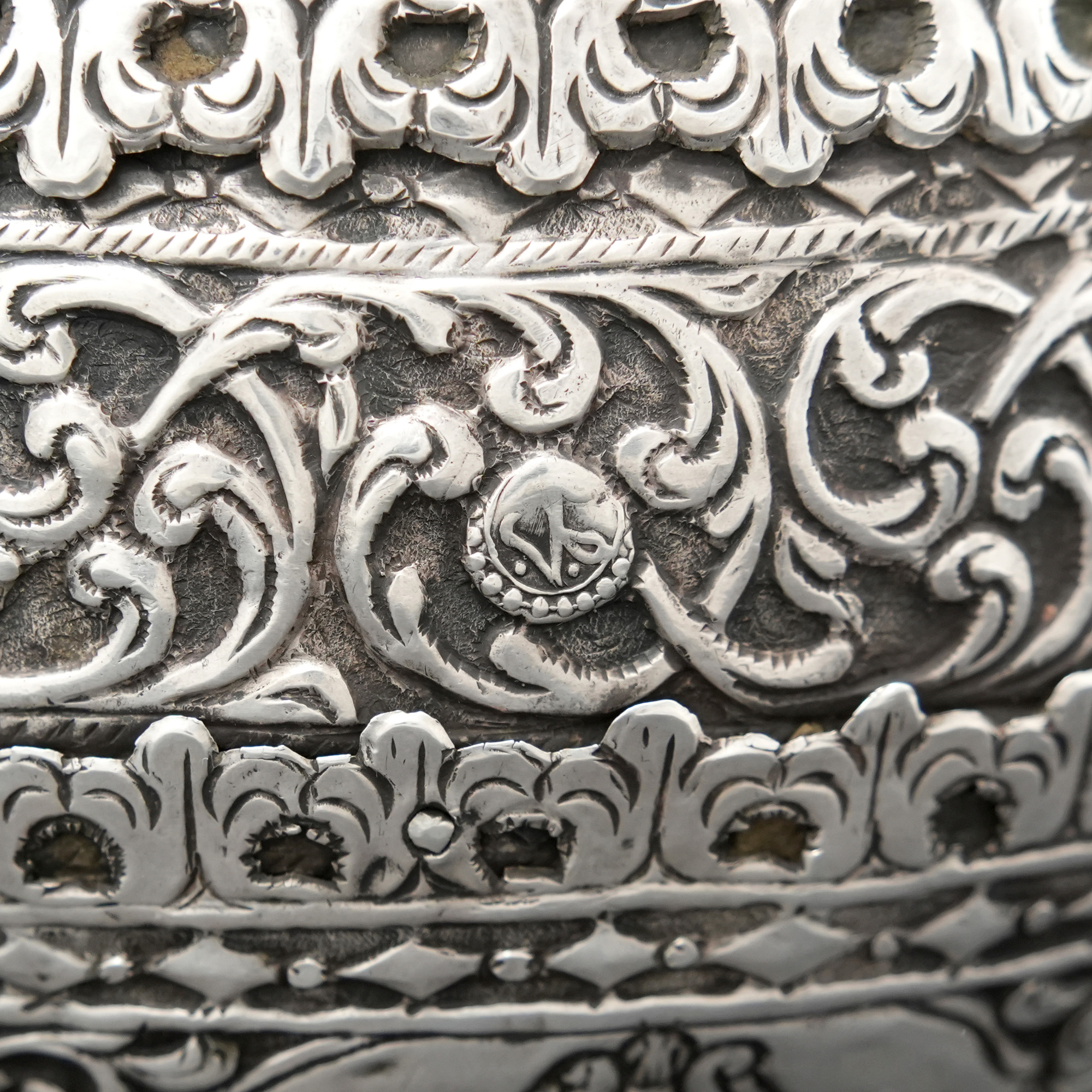
The detachable neck fits securely into the lower reservoir and retains its original functionality. The majority of the silver mounts are struck with the Algerian silver hallmark Fajara (Arabic: فجرة), also recorded in the literature as Fedjera, a historic Algerian control mark meaning “silver.” The repeated presence of this hallmark firmly associates the flask with the luxury silver-working traditions of Ottoman Algeria.
The elegant form derives from earlier Islamic vessels and rosewater sprinklers produced in glass, silver, copper, and gold-overlaid brass. By the Ottoman period, this distinctive globular form with elongated neck had become one of the most prestigious types of powder containers carried by wealthy horsemen, military officers, tribal leaders, and members of the ruling elite. The present example reflects the close political, military, and artistic ties that existed between Ottoman Algeria and the Ottoman Empire, combining indigenous North African craftsmanship with refined Ottoman courtly taste.
Importance and Rarity
Arms, armour, and related accessories produced in Ottoman Algeria, particularly in Algiers, occupy a distinguished position within the history of Islamic decorative arts. Renowned for their exceptional craftsmanship, lavish ornamentation, and extensive use of precious materials, Algerian weapons and accoutrements were frequently enriched with silver, gold, coral, enamel, pearls, precious stones, embroidered textiles, and other luxury materials. Today, these objects are highly sought after by collectors, museums, and institutions worldwide and consistently rank amongst the most desirable survivals of North African Islamic metalwork.
The finest Algerian firearms and accessories were often heavily encrusted with polished Mediterranean coral mounted in silver or silver-gilt settings, creating a distinctive artistic tradition that became synonymous with the luxury productions of Ottoman Algiers. Comparable examples are preserved in the Royal Collection at Windsor Castle, the Metropolitan Museum of Art, the Victoria and Albert Museum, the David Collection, and the Khalili Collection.
Particularly relevant is the celebrated Algerian Priming Flask, Powder Measure, and Suspension Cords in the Metropolitan Museum of Art, New York, published by David G. Alexander in Islamic Arms and Armor in the Metropolitan Museum of Art. The Metropolitan Museum example bears the Algerian hallmark Fajara / Fedjera and belongs to the same elite tradition of luxurious firearm accessories associated with Ottoman Algeria.
What makes the present Baroudière especially important is its close relationship to a small and celebrated group of Algerian powder bottles preserved in the Royal Collection at Windsor Castle. These objects formed part of a remarkable diplomatic gift presented to the British Crown in 1811 by the Dey of Algiers through the Algerian Ambassador Hadgi Hassan.
The exceptional quality of Ottoman Algerian arms, armour, and firearm accessories helps explain why several examples of this rare group were retained within the British Royal Collection rather than being dispersed over time. The powder flasks and powder bottles presented by the Dey of Algiers in 1811 were not ordinary military accoutrements but luxury works of art, combining functionality with extraordinary craftsmanship, precious materials, and sophisticated decorative design. Their preservation at Windsor Castle reflects the esteem in which such objects were held and their recognition as significant diplomatic gifts and outstanding examples of Algerian craftsmanship.
The present Baroudière belongs to this same distinguished tradition. Like the Royal Collection examples, it combines practical function with impressive scale, refined workmanship, and striking visual presence. Its substantial size, elegant proportions, finely worked silver decoration, repeated Fajara (فجرة) hallmarks, and remarkable state of preservation place it amongst the most important surviving examples of Algerian Ottoman powder flasks known outside institutional collections.
The Royal Collection examples, including CH2080, CH2082, and CH2083, are enriched with coral, gilding, enamel, pearls, precious stones, and embroidered fittings, reflecting their status as diplomatic presentation pieces. The present flask, whilst not embellished with coral or gilding, is arguably more imposing in scale and survives with its original detachable neck, stopper, chains, wooden core, and multiple Fajara hallmarks.
Of particular significance is the fact that very few comparable examples are known. The principal surviving group remains in the Royal Collection at Windsor Castle, while another related example has appeared at auction in Italy in substantially damaged and incomplete condition. By contrast, the present flask survives remarkably intact and represents one of the finest, most complete, and most substantial examples of an Algerian Ottoman powder flask presently known outside institutional collections.
Indeed, this remarkable object may be regarded as one of the most important surviving Algerian powder flasks, powder bottles, or gunpowder canteens known, belonging to the same elite artistic tradition as the diplomatic gifts exchanged between the Regency of Algiers and the British Crown during the early nineteenth century.
Historical Significance
Of exceptional importance is the research published by Niels Arthur Andersen in Gold and Coral: Presentation Arms from Algiers and Tunis (2014), which records that objects numbered CH2080–CH2111 formed part of a single diplomatic gift presented by the Dey of Algiers to the British Crown in 1811.
The group included powder flasks, powder bottles, tobacco pouches, flint pouches, cartridge boxes, horse trappings, carpets, jewellery, and other luxury objects intended to demonstrate the wealth, sophistication, and artistic achievements of Ottoman Algeria. Among these gifts were the celebrated powder bottles now preserved at Windsor Castle, several of which bear the same Algerian silver hallmark Fajara (فجرة).
The present flask belongs to this same rare artistic and cultural tradition. As such, it should be viewed not merely as a firearm accessory but as a luxury object associated with diplomatic presentation, elite ownership, and the highest achievements of Algerian Ottoman metalwork.