Description
Throughout many centuries in the grand courts of the Deccan, Mughal, Sikh, and Rajput maharajas, the lawājāma—the ceremonial regalia of the Royal Household—played a central role in public spectacle and royal procession.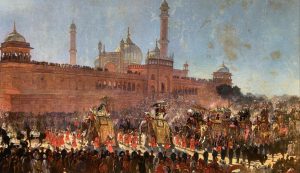
During events such as the Delhi Durbar of 1903, vividly recorded in Roderick Dempster MacKenzie’s celebrated painting, these objects included morchals (peacock feather fly whisks), chob or soota batons, parasols, standards, and other insignia of rank. Carried by a dedicated courtly entourage flanking the ruler, these ceremonial items transformed the procession into a living display of authority, legitimacy, and sacred kingship.
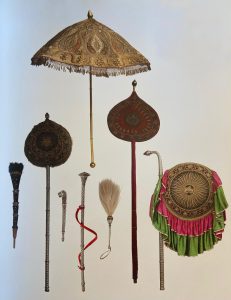
The lawājāma functioned as a shared visual language, instantly recognisable across Hindu, Muslim, and Sikh traditions, reinforcing the ruler’s presence as both a personal and public embodiment of power.
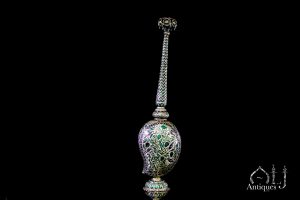
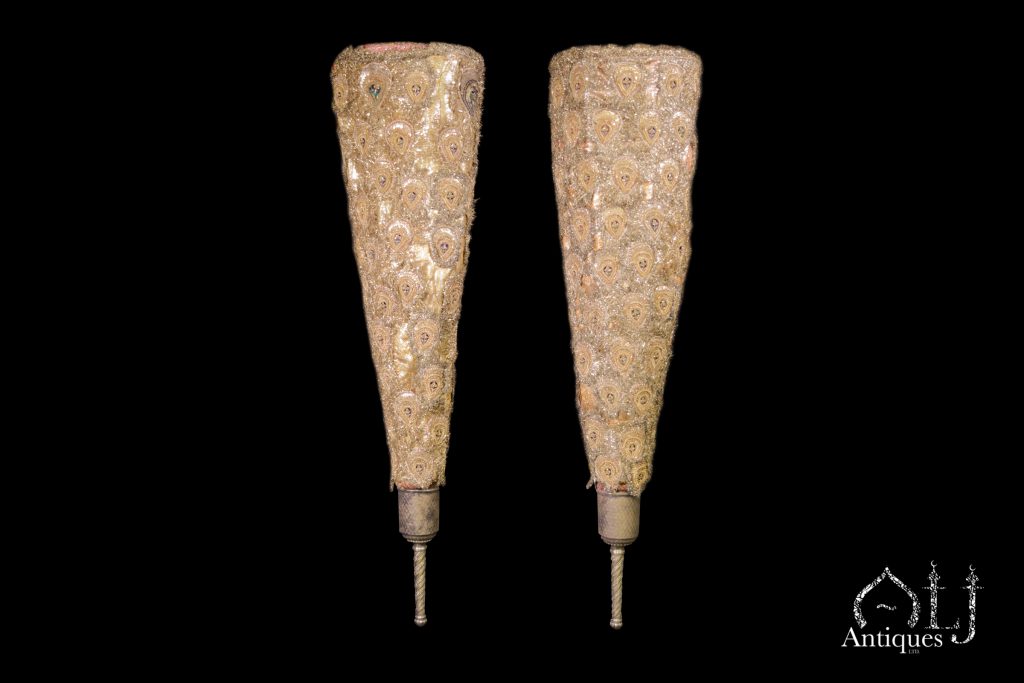
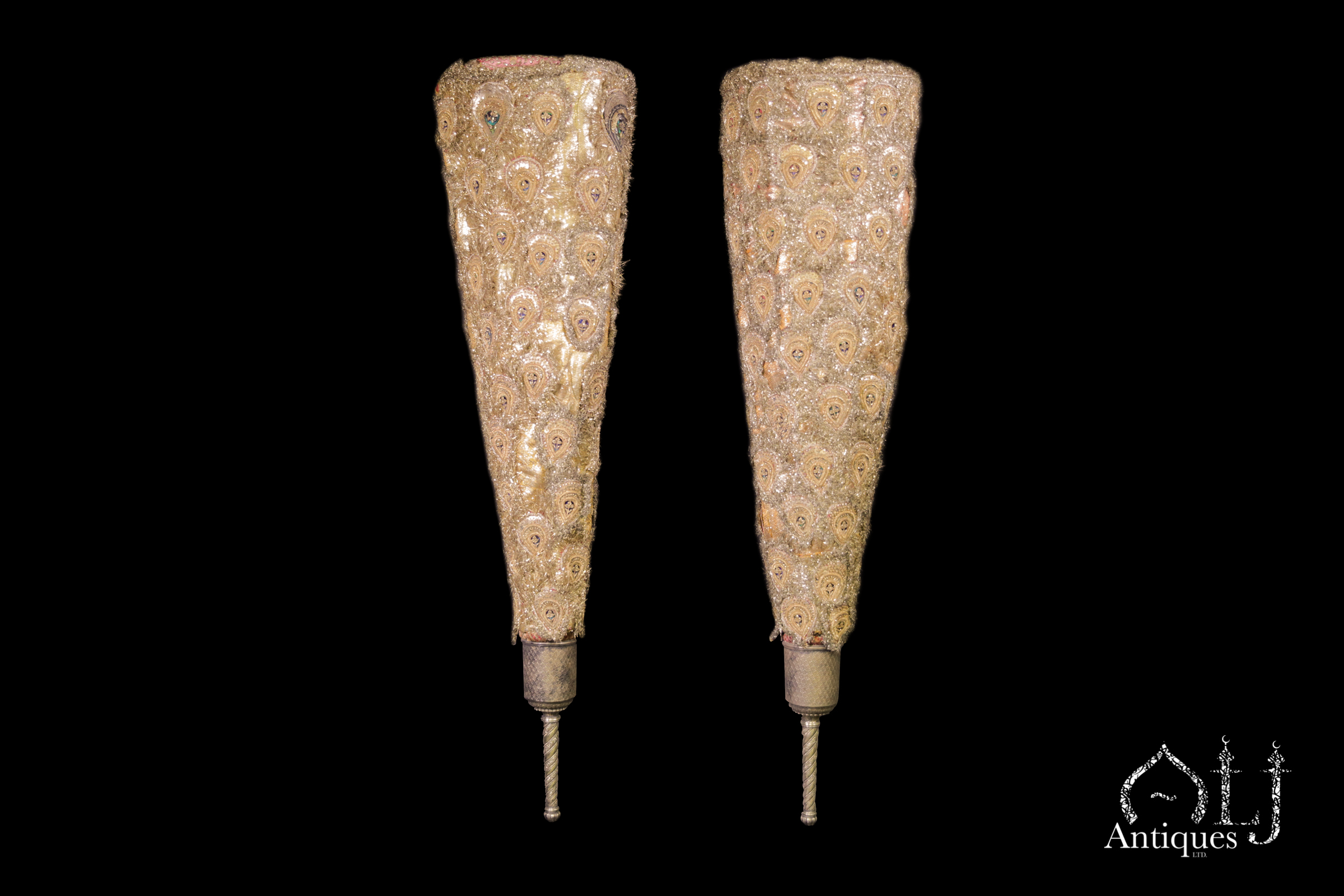
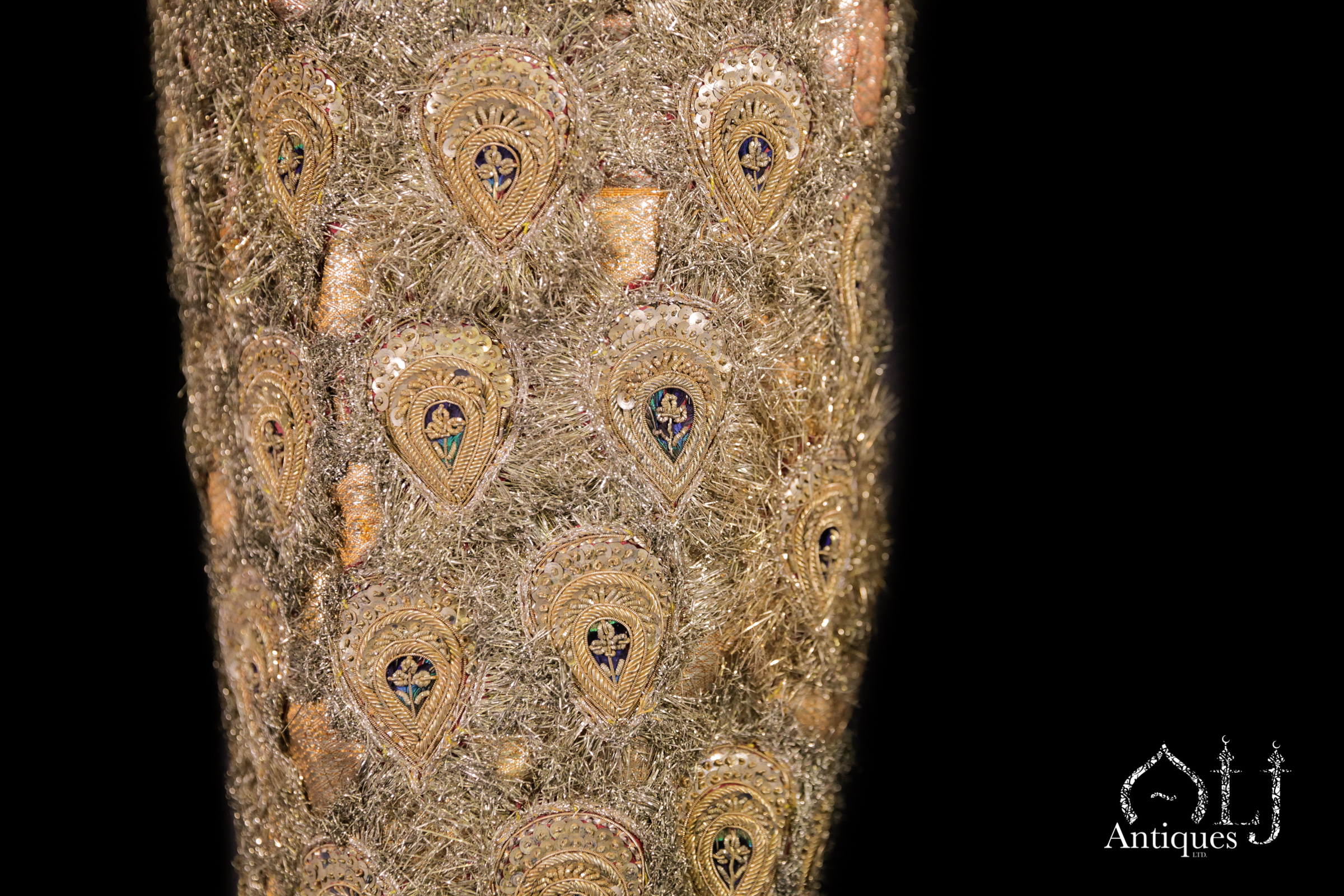
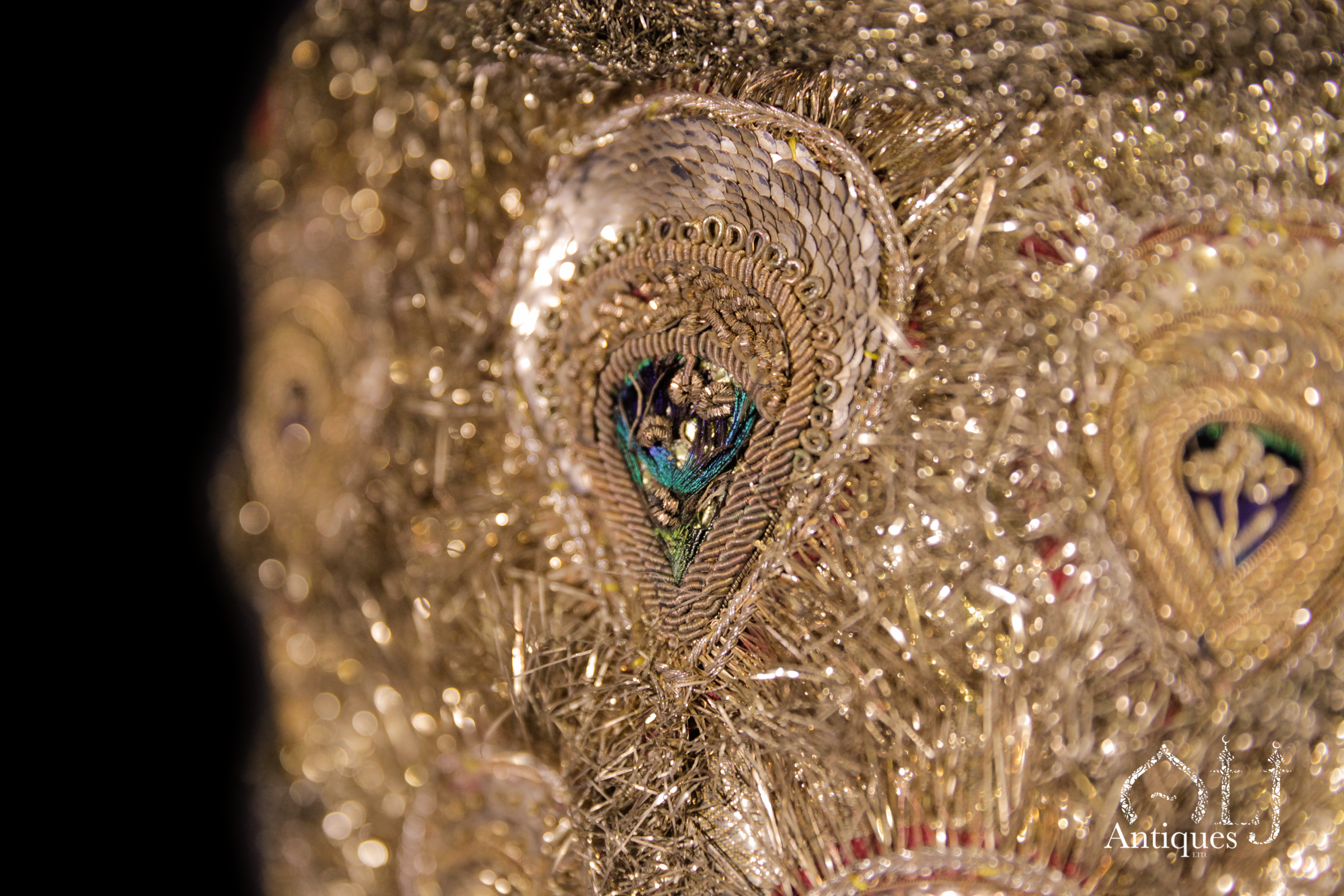
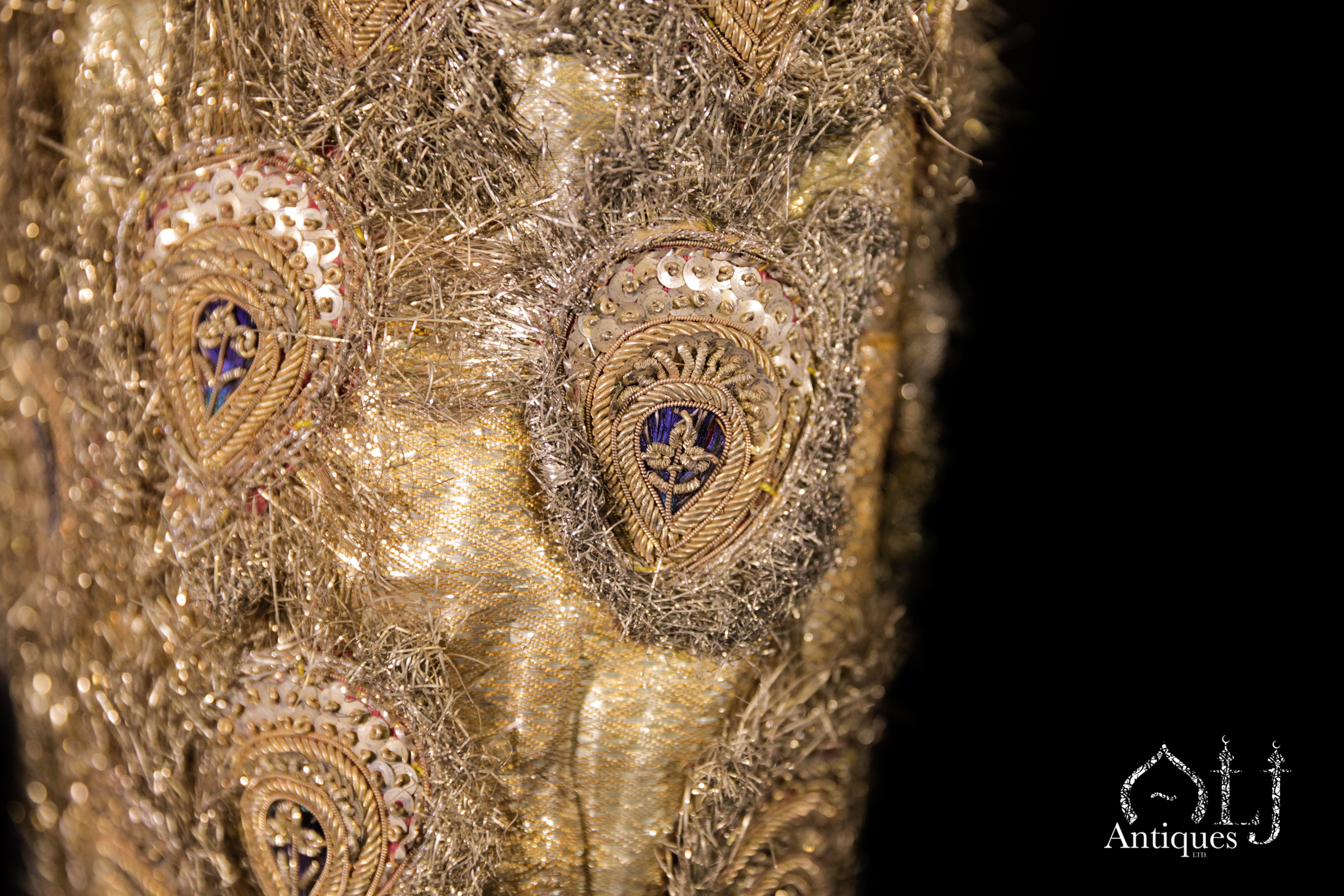
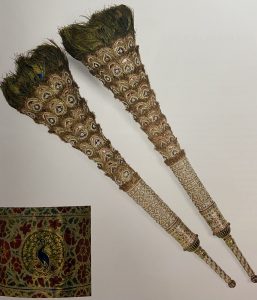
The present lot exceptionally rare matched pair of ceremonial morchals exemplifies the splendour of Indian courtly textile arts combined with fine metalwork in gold and silver. Each whisk features a tapering conical body worked in shimmering metallic thread (zari), enriched with tinsel, spangles, and sequins. The surfaces are densely embroidered in gold and silver wire to evoke the iridescent ‘eyes’ of peacock feathers, a powerful symbol of royalty and divine protection in South Asia.
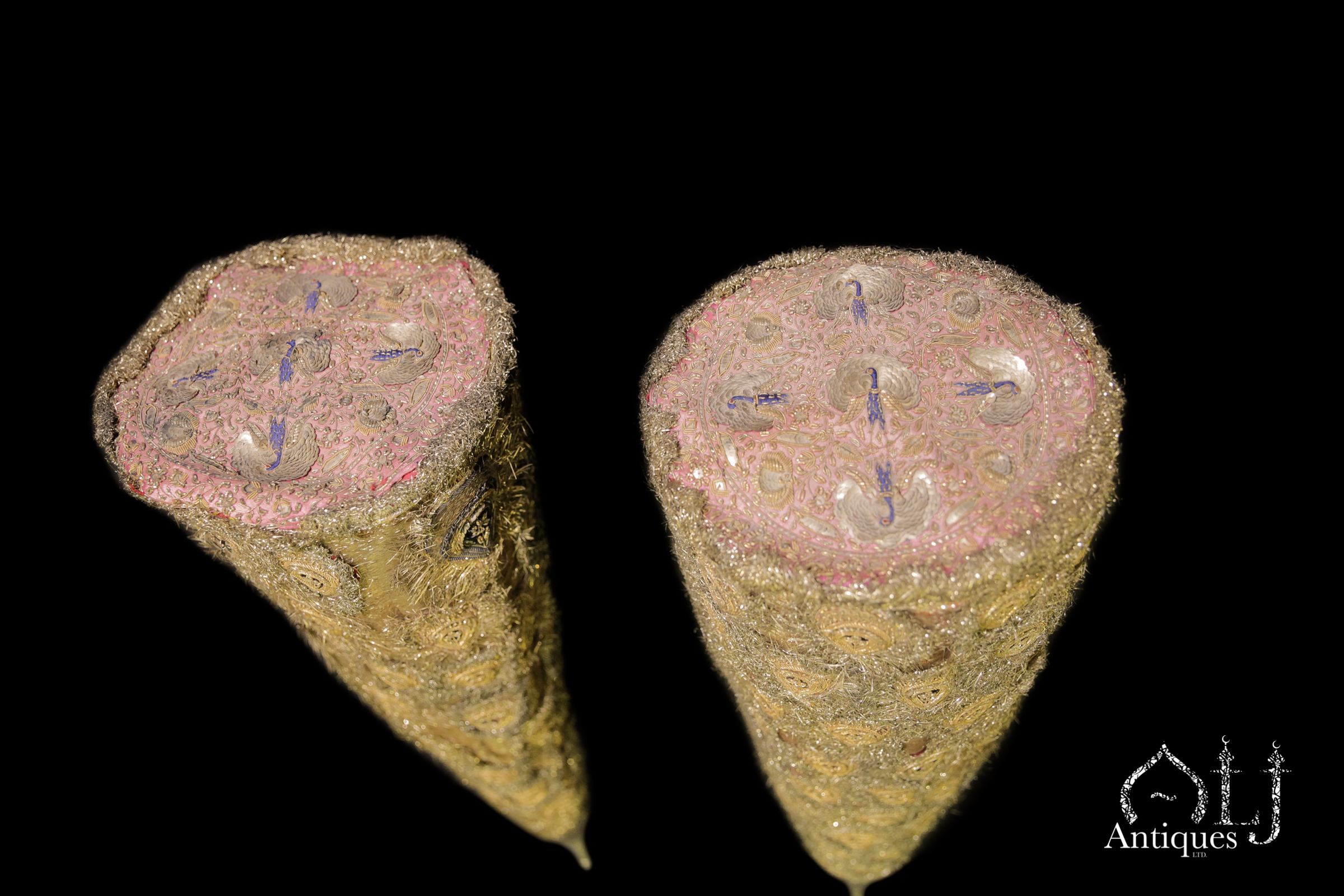
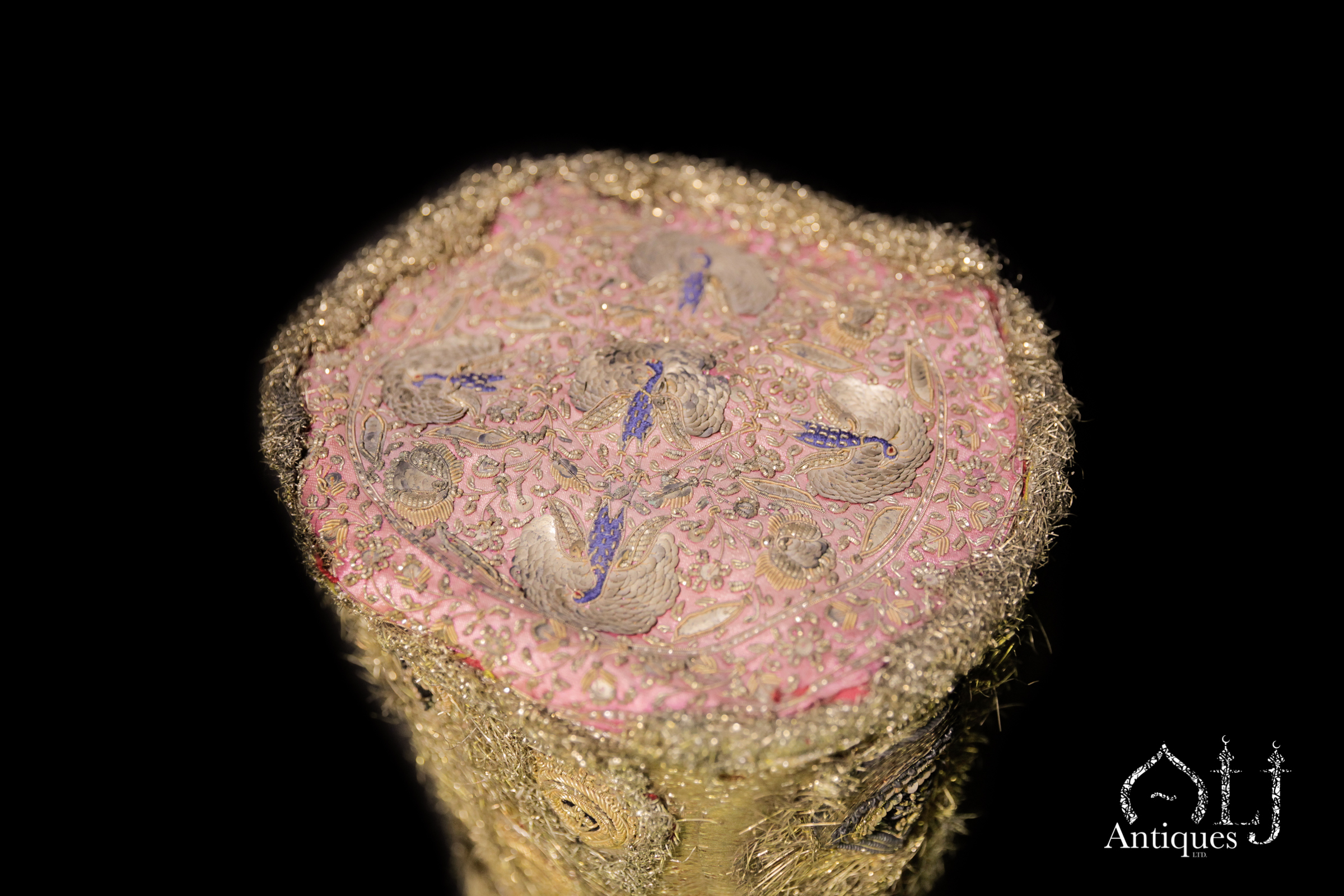
Into these embroidered motifs, genuine morpankh (peacock feathers) are carefully stitched, their natural hues enhanced by surrounding gilt threadwork, producing a richly layered and reflective surface. Each whisk head is capped with a circular pink silk covering, woven with dense floral scrolls and five stylised peacocks, and finished with a metallic fringe. The parcel-gilt cylindrical handles, terminating in tapering twisted finials, follow a traditional torch-like form commonly associated with ceremonial regalia.
Morchals (मोरछल, from mor, “peacock”) were indispensable emblems of sovereignty and divine kingship, almost invariably used in pairs and carried by attendants positioned on either side of a ruler or deity during audiences, temple rituals, and public processions. Their ceremonial use is powerfully illustrated by period visual records, including photographs and paintings depicting rulers seated in state while flanked by attendants holding tall morchals resting upon their shoulders.
The combination of actual peacock feathers and elaborate zardozi embroidery seen here is characteristic of luxury production associated with Murshidabad, one of the foremost Mughal centres for gold embroidery and courtly regalia during the eighteenth and nineteenth centuries. The refined workmanship, material richness, and formal pairing strongly suggest a high-ranking princely or temple commission. The survival of a complete matched pair is exceptionally rare, as most known examples in museum and private collections now survive only as single whisks.
Comparable examples may be found in the Victoria and Albert Museum, London (acc. no. 2488(IS)) and the Royal Collection Trust (RCIN 11409), also illustrated in Splendours of the Subcontinent: A Prince’s Tour of India 1875–6 (Kajal Meghani, 2017, pp. 82–83).
Acknowledgment
The above text and literature were produced with the valued collaboration of Ms. B. C. (with thanks).